Receiving an eviction notice creates immediate stress and uncertainty. How much time do you have? What happens next? Can you fight this? These questions race through your mind while you’re trying to figure out your next move.
An eviction doesn’t happen overnight. The process follows specific legal steps that vary significantly by state, ranging from as quick as three weeks to several months. Understanding your timeline gives you power—time to gather resources, explore legal defenses, negotiate with your landlord, or find new housing.
This eviction timeline calculator helps you understand exactly how long the eviction process takes in your state based on your specific situation. Whether you’re facing eviction for non-payment of rent, lease violations, or other reasons, you’ll get a realistic timeline and learn your rights at every stage. Use this information to make informed decisions and take action to protect yourself.
⏱️ Eviction Timeline Calculator
All 50 States + DC
Get step-by-step breakdown of eviction process, notice requirements, and your legal rights.
📋 Enter Your Situation
Enter the date you received the eviction notice to see projected dates
📅 Eviction Timeline for
Estimated timeline for
📍 Step-by-Step Timeline
How to Use This Eviction Timeline Calculator
Select your state from the dropdown menu. The calculator accounts for state-specific laws that dramatically affect your timeline.
Choose your eviction reason: non-payment of rent, lease violation, illegal activity, or no-cause eviction. Each triggers different notice periods and procedures.
The calculator provides your complete timeline broken down by stage: notice period, landlord filing time, court scheduling, trial, judgment, and writ of possession. You’ll see minimum and maximum timeframes since actual timelines vary based on court backlogs, whether you contest the eviction, and local procedures.
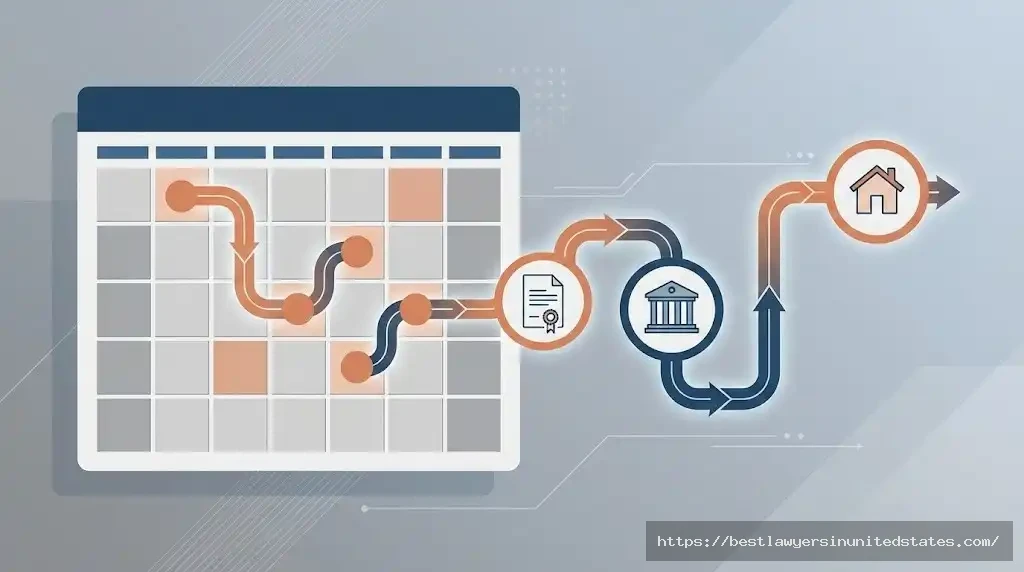
Review the specific deadlines for responding to your notice and filing court papers. Missing these deadlines can cost you the ability to defend yourself. The timeline also highlights when you should seek legal help—ideally within the first few days of receiving notice.
Eviction Timeline by State – Quick Reference Table
| State | Notice Period (Non-Payment) | Average Court Process | Total Timeline |
|---|---|---|---|
| Alabama | 7 days | 4-6 weeks | 6-10 weeks |
| Alaska | 7 days | 4-8 weeks | 6-12 weeks |
| Arizona | 5 days | 3-4 weeks | 4-6 weeks |
| Arkansas | 3 days | 3-4 weeks | 4-6 weeks |
| California | 3 days | 6-10 weeks | 8-14 weeks |
| Colorado | 10 days | 4-6 weeks | 6-10 weeks |
| Connecticut | 9 days | 6-8 weeks | 8-12 weeks |
| Delaware | 5 days | 4-6 weeks | 6-10 weeks |
| Florida | 3 days | 3-5 weeks | 4-8 weeks |
| Georgia | Immediate | 3-4 weeks | 4-6 weeks |
| Hawaii | 5 days | 4-6 weeks | 6-10 weeks |
| Idaho | 3 days | 3-4 weeks | 4-6 weeks |
| Illinois | 5 days | 4-8 weeks | 6-12 weeks |
| Indiana | 10 days | 4-6 weeks | 6-10 weeks |
| Iowa | 3 days | 4-6 weeks | 5-8 weeks |
| Kansas | 3 days | 3-5 weeks | 4-8 weeks |
| Kentucky | 7 days | 4-6 weeks | 6-10 weeks |
| Louisiana | 5 days | 3-4 weeks | 4-6 weeks |
| Maine | 7 days | 4-6 weeks | 6-10 weeks |
| Maryland | 10 days | 4-8 weeks | 6-12 weeks |
| Massachusetts | 14 days | 8-12 weeks | 10-16 weeks |
| Michigan | 7 days | 4-6 weeks | 6-10 weeks |
| Minnesota | 14 days | 4-6 weeks | 6-10 weeks |
| Mississippi | 3 days | 3-4 weeks | 4-6 weeks |
| Missouri | 5 days | 3-5 weeks | 4-8 weeks |
| Montana | 3 days | 4-6 weeks | 5-8 weeks |
| Nebraska | 7 days | 4-6 weeks | 6-10 weeks |
| Nevada | 5 days | 3-5 weeks | 4-8 weeks |
| New Hampshire | 7 days | 4-6 weeks | 6-10 weeks |
| New Jersey | 30 days | 8-12 weeks | 12-20 weeks |
| New Mexico | 3 days | 4-6 weeks | 5-8 weeks |
| New York | 14 days | 8-16 weeks | 10-20 weeks |
| North Carolina | 10 days | 4-6 weeks | 6-10 weeks |
| North Dakota | 3 days | 3-5 weeks | 4-8 weeks |
| Ohio | 3 days | 4-6 weeks | 5-8 weeks |
| Oklahoma | 5 days | 3-5 weeks | 4-8 weeks |
| Oregon | 10 days | 6-8 weeks | 8-12 weeks |
| Pennsylvania | 10 days | 6-8 weeks | 8-12 weeks |
| Rhode Island | 5 days | 6-8 weeks | 8-12 weeks |
| South Carolina | 5 days | 4-6 weeks | 6-10 weeks |
| South Dakota | 3 days | 3-5 weeks | 4-8 weeks |
| Tennessee | 14 days | 4-6 weeks | 6-10 weeks |
| Texas | 3 days | 2-3 weeks | 3-5 weeks |
| Utah | 3 days | 3-5 weeks | 4-8 weeks |
| Vermont | 14 days | 6-10 weeks | 8-14 weeks |
| Virginia | 5 days | 4-5 weeks | 5-7 weeks |
| Washington | 14 days | 6-8 weeks | 8-12 weeks |
| Washington DC | 30 days | 8-12 weeks | 12-18 weeks |
| West Virginia | 5 days | 4-6 weeks | 6-10 weeks |
| Wisconsin | 5 days | 4-6 weeks | 6-10 weeks |
| Wyoming | 3 days | 3-5 weeks | 4-8 weeks |
Note: Timelines are estimates for non-payment evictions and vary based on court schedules, whether you contest the eviction, and local procedures.
The Eviction Process Explained Step-by-Step
Written Notice
Your landlord must serve you with proper written notice before filing eviction papers. The notice states why you’re being evicted and gives you a deadline to either fix the problem, pay what’s owed, or move out. This notice period ranges from 3 to 90 days depending on your state and the reason for eviction.
Eviction Lawsuit Filing
If you don’t comply with the notice, your landlord files an eviction lawsuit (called unlawful detainer or forcible entry and detainer in some states) with the court. You receive a summons and complaint that tells you when to appear in court. You typically have 5 to 30 days to file a written response.
Court Hearing
You and your landlord appear before a judge. You can present evidence and witnesses. The landlord must prove you violated the lease or didn’t pay rent. You can raise legal defenses. Many courts handle eviction hearings quickly—sometimes the same day as your scheduled appearance, sometimes weeks later depending on the court’s calendar.
Judgment
The judge issues a decision. If you win, the case is dismissed and you can stay. If your landlord wins, the judge orders you to vacate by a specific date and may award money damages for unpaid rent. You might have a few days to appeal the decision.
Writ of Possession
If you don’t move out by the judgment deadline, your landlord requests a writ of possession (or writ of restitution). This authorizes law enforcement to physically remove you and your belongings. The sheriff typically posts a final notice giving you 24 to 72 hours before the lockout.
Eviction Notice Periods by State
Notice periods represent the first timeline variable and depend on both your state and eviction reason.
3-Day Notice States
Arizona, California, Nevada, and several other states allow 3-day pay-or-quit notices for non-payment of rent. These short notice periods mean you have very little time to pay your balance or face court proceedings.
5-Day Notice States
Illinois, Wisconsin, and other states require 5-day notices for non-payment. Some states allow tenants to pay the full amount owed within this period to stop the eviction.
7-Day to 10-Day Notice States
Florida uses 3-day notices for non-payment but 7-day notices for lease violations. Ohio requires 3-day notices for non-payment but allows longer periods for other violations. Indiana uses 10-day notices for non-payment.
14-Day to 30-Day Notice States
Connecticut, Massachusetts, and New York require longer notice periods—typically 14 to 30 days depending on circumstances. Month-to-month tenancies usually require 30-day notices for no-cause evictions.
60-Day to 90-Day States
California, Oregon, and Washington require 60 to 90-day notices for no-cause evictions when tenants have lived in the unit for a year or more. These longer periods provide substantial time to find alternative housing.
Lease violations (like unauthorized pets or excessive noise) often require cure-or-quit notices giving you a chance to fix the problem—typically 7 to 30 days depending on your state.
How Long Does the Eviction Court Process Take?
Court timelines vary dramatically based on location, court schedules, and whether you contest the eviction.

Uncontested Evictions
If you don’t respond to the lawsuit or don’t appear in court, the process moves quickly. Your landlord can get a default judgment within 7 to 14 days in most states. The entire process from notice to lockout takes 3 to 6 weeks in fast-moving states.
Contested Evictions
When you file a response and appear in court to defend yourself, timelines extend. The court must schedule a hearing, which might be 2 to 6 weeks out depending on the court’s calendar. If the case is complex or you request continuances, the process can stretch to several months.
Trial and Appeals
Some states allow immediate appeals of eviction judgments. Filing an appeal typically delays the lockout by several weeks to months while the appellate court reviews the case. However, you often must pay rent into an escrow account during the appeal.
Court Backlogs
Major metropolitan areas often have significant court backlogs. Courts in New York City, Los Angeles, and Chicago might have eviction hearings scheduled 4 to 8 weeks after filing due to volume. Rural courts might hear cases within 10 to 14 days.
Execution of Writ
After judgment, your landlord must request and receive the writ of possession, which takes 5 to 10 days in most states. Then the sheriff must schedule the physical lockout, adding another 7 to 30 days. Some jurisdictions have significant backlogs for sheriff lockouts.
The complete court process from filing to lockout averages 4 to 8 weeks in fast states and 8 to 16 weeks in slower states with stronger tenant protections.
Eviction Timelines by Reason
Non-Payment of Rent
This is the fastest eviction type. States prioritize these cases because landlords need rental income. Expect 3 to 5-day notices, quick court scheduling, and total timelines of 3 to 8 weeks from notice to lockout in most states.
Texas completes non-payment evictions in as few as 21 days total. California takes 6 to 8 weeks despite requiring only 3-day notices due to court procedures and tenant protections.
Lease Violations
Violations like unauthorized occupants, pets, or property damage typically involve 7 to 30-day cure-or-quit notices. If you fix the problem within the notice period, the eviction stops. If not, court proceedings add another 4 to 12 weeks. Total timeline: 6 to 16 weeks.
Illegal Activity
Evictions based on criminal activity, drug dealing, or violence often allow shorter notice periods—sometimes as little as 3 days with no cure option. Courts may expedite these hearings. Timeline: 4 to 8 weeks total.
No-Cause Evictions
Month-to-month tenancies can be terminated without cause in most states, but require longer notice periods—30 to 90 days. Some states like Oregon and California have eliminated no-cause evictions for many tenants. When allowed, the process takes 6 to 16 weeks from notice to completion.
States with the Fastest Eviction Processes
Texas
Texas allows 3-day notices and courts schedule hearings within 10 to 21 days. Tenants have limited appeal rights. A non-payment eviction can be completed in 21 to 28 days from notice to lockout.
Georgia
Georgia requires only a few days’ notice and allows landlords to file immediately. Court hearings happen within 7 to 14 days. Writs of possession are issued quickly. Total timeline: 28 to 45 days.
Louisiana
Louisiana’s eviction process moves exceptionally fast—sometimes completing in under 30 days for non-payment cases. The state has minimal tenant protection requirements.
Virginia
Virginia requires 5-day pay-or-quit notices and schedules court hearings within 21 days of filing. The writ of possession can be issued 10 days after judgment. Timeline: 5 to 7 weeks.
Arizona
Arizona uses 5-day notices for non-payment and allows same-day or next-day service of court papers. Hearings occur within 3 to 6 days of filing. Total process: 4 to 6 weeks.
These states share common features: short notice periods, quick court scheduling, limited tenant defenses, and streamlined writ processes.
States with the Strongest Tenant Protections

California
California requires 3-day pay-or-quit notices but extensive court procedures, mandatory settlement conferences in some counties, and strong tenant defenses extend timelines to 8 to 16 weeks. Just cause eviction requirements protect many tenants from no-cause evictions. The state also limits rent increases and provides substantial notice requirements.
New York
New York, particularly New York City, has comprehensive tenant protections including good cause eviction laws, rent stabilization, extensive court procedures, and mandatory settlement conferences. Evictions take 8 to 16 weeks minimum, often extending to 6 months or longer if contested. During COVID, backlogs extended this to over a year in some cases.
New Jersey
New Jersey prohibits eviction without good cause for most tenants. The Anti-Eviction Act provides substantial protections. Court processes include multiple hearings and strong habitability defenses. Timeline: 8 to 20 weeks.
Washington, D.C.
D.C. requires 30-day notices, provides extensive tenant defenses, requires landlords to provide relocation assistance in some cases, and has significant court procedures. Timeline: 10 to 24 weeks.
Washington State
Washington requires 14-day notices for non-payment, longer notices for other reasons, and has eliminated most no-cause evictions. Courts must allow payment plans in some situations. Timeline: 8 to 16 weeks.
Massachusetts
Massachusetts requires detailed court procedures, allows discovery, requires landlords to prove their case thoroughly, and provides strong tenant defenses. Timeline: 10 to 20 weeks.
These states balance landlord rights with tenant protections, recognizing that housing stability serves important policy goals.
Your Legal Rights During an Eviction
Right to Proper Notice
Your landlord must provide legally compliant written notice before filing eviction papers. The notice must state the specific reason for eviction, the deadline to comply or move out, and be delivered according to state law (personally served, posted and mailed, or certified mail).
Right to Court Hearing
You cannot be evicted without a court order. Your landlord cannot lock you out, shut off utilities, or remove your belongings without going through the court process. These “self-help” evictions are illegal in every state and give you grounds to sue.
Right to Defend Yourself
You have the right to appear in court, present evidence, call witnesses, and raise legal defenses. You can hire an attorney or request a court-appointed attorney in some jurisdictions. You can file written responses explaining your side.
Right to Habitable Housing
If your unit has serious health or safety violations, you may have defenses to eviction. Many states prohibit eviction when landlords fail to maintain habitable conditions or make repairs.
Protection from Retaliation
Landlords cannot evict you for exercising legal rights like reporting code violations, joining a tenant union, or requesting repairs. Retaliatory eviction is illegal and provides a complete defense.
Protection from Discrimination
Federal and state fair housing laws prohibit eviction based on race, color, religion, national origin, sex, familial status, or disability. Some states add protections for sexual orientation, gender identity, and source of income.
Right to Retrieve Belongings
If locked out, you have the right to retrieve your personal property. Your landlord must store your belongings according to state law and allow you to collect them, though they may charge storage fees.
Common Defenses Against Eviction
Improper Notice
The notice didn’t meet legal requirements—wrong notice period, incorrect information, improper service method, or missing required language. Courts strictly enforce notice requirements and dismiss cases with defective notices.
Paid Rent or Cured Violation
You paid the full amount owed before the deadline or fixed the lease violation within the cure period. Bring proof of payment or compliance to court—receipts, money order copies, bank statements, or photos showing the violation was corrected.
Landlord Breach of Warranty of Habitability
Serious health or safety violations in your unit provide a defense. Document problems with photos, videos, inspection reports, or 311 complaints. Issues must be substantial—broken heat in winter, major water leaks, pest infestations, or electrical hazards.
Retaliation
The eviction came shortly after you exercised legal rights. Document the timeline showing you complained about repairs, reported code violations, or joined a tenant organization within the past few months before receiving the eviction notice.
Discrimination
The eviction is based on your membership in a protected class. Evidence might include landlord statements, different treatment compared to similar tenants, or patterns of discrimination.
Landlord Accepted Rent
Your landlord accepted rent payments after the violation occurred or after serving notice, potentially waiving their right to evict. Many states consider this acceptance as waiving the notice.
Procedural Errors
Your landlord made mistakes in the court process—incorrect filing, missed deadlines, failure to provide required documents, or procedural violations. Courts may dismiss cases for significant procedural errors.
Payment Plan or Settlement
Many courts encourage settlement. You might negotiate a payment plan for back rent, agree to move out by a specific date in exchange for dismissal, or reach other compromises.
What to Do If You Receive an Eviction Notice

Day 1: Read Everything Carefully
Understand exactly why you’re being evicted, what you must do to stop it, and your deadline. Note the date you received the notice—this starts your time clock.
Days 1-3: Document Everything
Photograph or scan the notice. If it was posted on your door, photograph it before removing it. Save all texts, emails, and communications with your landlord. Gather rent receipts, your lease, and any repair requests.
Days 1-5: Evaluate Your Options
Can you pay what you owe? Can you fix the violation? Do you have legal defenses? Calculate whether fighting makes sense or whether negotiating a move-out date is better for your situation.
Days 1-7: Seek Legal Help
Contact legal aid organizations, tenant rights groups, or housing attorneys immediately. Many offer free consultations. Don’t wait until the court date—early legal advice helps you make better decisions. Your local bar association likely has a lawyer referral service.
Before the Notice Deadline: Take Action
Pay the full amount owed if possible, including any late fees. Fix violations if you received a cure-or-quit notice. Get proof of payment or compliance. If you can’t comply, prepare for court.
If Served with Court Papers: Respond
File a written response (called an Answer) by the deadline on your court summons. Missing this deadline may result in automatic judgment against you. Your response should admit or deny the landlord’s claims and state your defenses.
Before Court: Prepare
Gather evidence—rent receipts, photos of unit conditions, repair requests, text messages, witnesses who can testify. Organize chronologically. Prepare what you’ll say to the judge. Dress appropriately and arrive early.
At Court: Present Your Case
Be respectful, address the judge properly, present your evidence clearly, and answer questions directly. Bring extra copies of all documents for the judge and your landlord. If you have an attorney, let them speak for you.
After Judgment: Know Your Rights
If you lose, you’ll have a deadline to move out. Mark this date clearly. Determine whether you can appeal. Begin looking for new housing. If you win, get the written order and keep it safe.
Frequently Asked Questions
Can my landlord evict me without going to court?
No. Your landlord must obtain a court order to legally evict you. Self-help evictions—changing locks, removing your belongings, or shutting off utilities—are illegal everywhere. If this happens, call the police and contact an attorney immediately.
How long do I have after receiving a notice to move out?
This depends on your state and the reason for eviction. Notice periods range from 3 days to 90 days. The notice tells you the deadline. You’re not required to move during the notice period—this is your opportunity to either comply with the notice or prepare for court.
What happens if I ignore the eviction notice?
Ignoring the notice means your landlord will file a lawsuit. If you also ignore the court summons and don’t appear at the hearing, the judge will likely enter a default judgment against you. This results in a court order to vacate and a judgment that appears on your record, making it harder to rent in the future.
Can I stop an eviction by paying my rent?
Sometimes. If you receive a pay-or-quit notice, paying the full amount owed before the deadline stops the eviction. Once your landlord files court papers, some states allow you to pay and stop the case, but others don’t. Check your state’s redemption rights.
Will an eviction appear on my record?
Yes. Eviction lawsuits are public records. Even if you win the case or it gets dismissed, the filing appears on tenant screening reports. Eviction judgments stay on your record for 7 years in most states and make future rentals difficult.
Can I be evicted in winter?
Most states allow evictions year-round. However, some cities have winter eviction moratoria that prevent lockouts during cold months. Federal and state emergency rental assistance programs may also provide temporary protections during crises.
Do I have to pay rent while fighting an eviction?
This depends on your state and situation. Some courts require you to pay rent into escrow during the case. Continuing to pay rent (while disputing other issues) shows good faith and protects you if you lose. Not paying strengthens your landlord’s case.
Can I negotiate with my landlord after receiving a notice?
Yes. Many landlords prefer negotiated solutions to court costs and delays. You might negotiate a payment plan, agree to move out by a specific date in exchange for dismissal, or reach other compromises. Get any agreement in writing and signed by both parties.
What if I need more time to move out?
Ask the judge for additional time when you appear in court. Explain your situation—job search, looking for housing, family circumstances. Judges sometimes grant brief extensions (7 to 30 days). Some states allow “stay of execution” if you can show hardship.
Where can I get help paying my rent to avoid eviction?
Contact your local social services department, community action agencies, churches, or charitable organizations. Many areas have emergency rental assistance programs. The federal Emergency Rental Assistance program provided billions in aid during COVID—check whether your state still has available funds.