
What Are My Rights as a Tenant in Arizona?
Arizona tenants have strong legal protections under the Arizona Residential Landlord and Tenant Act (A.R.S. §§ 33-1301 to 33-1381). Landlords must return security deposits within 14 business days, provide 48-hour notice before entering your unit, and maintain habitable living conditions including working air conditioning.
The state limits security deposits to 1.5 times monthly rent and requires landlords to fix health and safety issues within 5 days of written notice. Arizona’s eviction process moves quickly with a 5-day notice for unpaid rent, making it critical for tenants to understand their rights and available defenses.
This guide covers everything Arizona renters need to know about tenant rights protections, from security deposits to eviction defense, with three free calculators to check your specific situation.
What’s Covered Under Arizona Landlord-Tenant Law?
Arizona’s landlord-tenant law applies to:
✅ Covered rentals:
- Residential apartments and houses
- Month-to-month and fixed-term leases
- Student housing
- Subsidized and Section 8 housing
❌ NOT covered:
- Mobile home lot rentals (A.R.S. §§ 33-1400 to 33-1449)
- RV long-term rental spaces (A.R.S. §§ 33-2100 to 33-2148)
- Hotels, motels, and recreational lodging
- Public housing projects
- Property under sales contract
Arizona Security Deposit Laws: What Landlords Can Charge

How Much Can My Landlord Charge for a Security Deposit in Arizona?
Quick Answer: Arizona law limits security deposits to 1.5 times your monthly rent (A.R.S. § 33-1321). Landlords can charge an additional reasonable cleaning fee if disclosed in writing before you sign the lease.
This limit is lower than many states. For example, California allows 2-3 months’ rent while Texas has no state limit. Arizona’s cap protects renters from excessive upfront costs.
| Monthly Rent | Maximum Security Deposit | Example Total (Deposit + First Month) |
|---|---|---|
| $1,000 | $1,500 | $2,500 |
| $1,500 | $2,250 | $3,750 |
| $2,000 | $3,000 | $5,000 |
| $2,500 | $3,750 | $6,250 |
Your landlord cannot change the security deposit amount after you sign the rental agreement. Any nonrefundable fees (like pet deposits or cleaning charges) must be clearly stated in your lease.
How Long Does My Landlord Have to Return My Security Deposit in Arizona?
Quick Answer: 14 business days (excluding weekends and legal holidays) from when you move out, return keys, and request your deposit in writing.
Arizona’s timeline is faster than most states. Texas gives landlords 30 days, while California allows 21 days. The 14-business-day clock starts only after you complete all three requirements.
The return deadline includes:
- Itemized statement of any deductions
- Payment of remaining balance
- Receipts or documentation for repairs exceeding normal wear and tear
Add 5 extra days if you mail your deposit request. For example, if you mail your request on January 1st and the landlord receives it January 3rd, they have until January 24th (14 business days from January 3rd, plus 5 mail days).
What Can Landlords Deduct From My Security Deposit?
Arizona law allows specific deductions from your security deposit. Understanding these rules helps you recover your full deposit when moving out.
✅ Allowed deductions:
- Unpaid rent and late fees (if in written lease)
- Damage beyond normal wear and tear
- Cleaning costs for excessive dirt or grime
- Unpaid utility bills (if lease requires tenant payment)
- Charges specifically listed in rental agreement
❌ NOT allowed:
- Normal wear and tear (faded paint, carpet wear from walking)
- Repairs for landlord’s failure to maintain property
- Deductions without itemized explanation
- Charges not disclosed in original lease
Normal wear and tear includes:
- Minor scuff marks on walls
- Carpet wear in high-traffic areas
- Faded paint or wallpaper
- Loose door handles from regular use
- Small nail holes from hanging pictures
What Happens If My Landlord Doesn’t Return My Deposit?
You have 60 days from when the landlord mails the itemized list to dispute any deductions. If you don’t dispute within 60 days, the landlord’s itemization becomes final and you waive all claims.
If your landlord fails to return your deposit or provide an itemized statement within 14 business days, you can sue for:
- Full deposit amount owed
- Twice the amount wrongfully withheld (2x damages)
- Court costs and attorney fees
File your claim in small claims court if the amount is under $3,500. For larger amounts, you’ll need to file in justice court or superior court. Consider consulting with a small claims lawyer to maximize your recovery.
Calculate Your Security Deposit Rights in Arizona
Moving out soon? Use our free calculator to determine if your landlord owes you a security deposit refund and by what deadline. This calculator uses Arizona’s specific security deposit laws including return timelines, allowable deductions, and penalty calculations.
/
🏠 Security Deposit Calculator
All 50 States + DC
Calculate max legal deposits, return deadlines, and penalties for violations.
📋 Enter Your Information
Special Conditions (if applicable)
✓ Results for
Based on current state law. Always verify with local regulations.
Link: https://bestlawyersinunitedstates.com/tenant-rights/security-deposit-calculator/
Calculator features:
- Arizona-specific deposit limits (1.5x monthly rent) and 14-business-day timeline
- Deduction legality checker for common landlord claims
- Penalty calculation for late returns (2x damages)
- Itemized deduction analyzer
- Next steps if your rights are violated
Questions about your security deposit or need legal help? Email: [email protected]
Arizona Eviction Process: Timeline and Your Rights
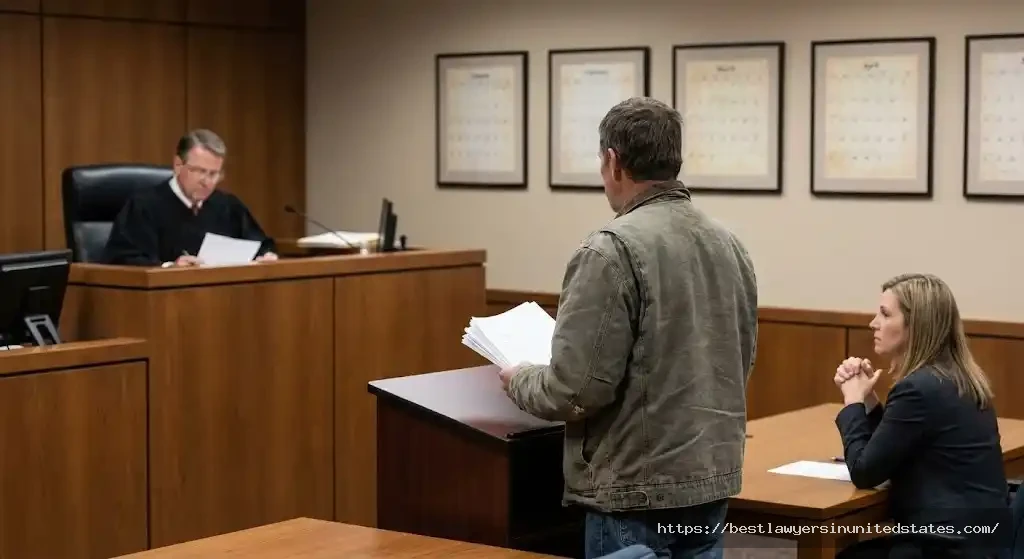
How Long Does the Eviction Process Take in Arizona?
Quick Answer: Arizona has one of the fastest eviction processes in the U.S., taking 10-15 days for non-payment of rent and as little as 3-7 days for material breaches like illegal activity.
Arizona’s eviction timeline moves faster than most states. While California evictions take 30-45 days and New York can exceed 60 days, Arizona landlords can remove tenants in under two weeks for unpaid rent.
| Violation Type | Notice Period | Can You Fix It? | Total Timeline |
|---|---|---|---|
| Non-payment of rent | 5 days | ✅ Yes (pay in full) | 10-15 days |
| Lease violation | 10 days | ✅ Yes (first time) | 15-20 days |
| Health/safety issue | 5 days | ✅ Yes (first time) | 10-15 days |
| Material breach | 24 hours | ❌ No | 3-7 days |
What Are the Grounds for Eviction in Arizona?
Arizona law allows eviction for four main reasons, each with different notice requirements and cure options.
1. Non-Payment of Rent (A.R.S. § 33-1368(B))
Your landlord must serve a written 5-day notice stating the rent owed plus any late fees allowed in your lease. You have 5 full days to pay the entire amount. Partial payments don’t stop the eviction unless your landlord signs a written agreement accepting less.
Can you still pay after 5 days? Yes. You can pay rent plus late fees plus court costs anytime before the judge enters judgment. Once you pay, your rental agreement reinstates and the eviction stops.
Critical rule: If your landlord accepts any partial rent payment without a signed written agreement, they waive their right to evict you for that month’s unpaid rent.
2. Lease Violations (A.R.S. § 33-1368(A))
Common violations include unauthorized pets, excessive noise, parking violations, or guest policy breaches. Your landlord must give you a 10-day notice to comply or quit.
First violation: You have 10 days to fix the problem. If you fix it, the eviction stops and your lease continues.
Second violation of the same rule: No cure period. Your landlord can terminate your lease immediately and file for eviction. This applies even if you fixed the first violation.
3. Health and Safety Violations (A.R.S. § 33-1368(A))
These involve conditions that materially affect health and safety, such as:
- Creating unsanitary conditions
- Refusing to remove trash
- Damaging property (broken windows, holes in walls)
- Violating fire safety codes
Your landlord gives you a 5-day notice. Like lease violations, you get one chance to fix it. A second health and safety violation means immediate termination with no cure period.
4. Material and Irreparable Breach (A.R.S. § 33-1368(A))
These serious violations allow your landlord to give you just 24 hours to vacate:
Cannot be cured:
- Illegal drug manufacturing, sale, or use
- Violent criminal activity on the premises
- Prostitution or illegal business operation
- Intentional and substantial property destruction
- Discharge of a firearm (except lawful self-defense)
- Acts that threaten immediate harm to others
The court must schedule your hearing within 3 days of the landlord’s filing. If you’re facing a 24-hour notice, contact an eviction defense attorney immediately.
How Does the Eviction Court Process Work?
Once the notice period expires and you haven’t fixed the problem or moved out, your landlord can file an eviction complaint in justice court.
Eviction process steps:
- Landlord files complaint in justice court (usually $35-$50 filing fee)
- You receive summons 3-6 days before hearing (24-hour notice cases get 1-3 days)
- Court hearing where both sides present evidence (bring all documents, photos, receipts)
- Judgment issued same day or within 24 hours
- 5-day move-out period (or 12-24 hours for material breach judgments)
- Writ of Restitution if you don’t move (sheriff changes locks)
What Are Valid Defenses to Eviction in Arizona?
You can fight an eviction even if you owe rent or violated your lease. Valid defenses include:
✅ Strong defenses:
- Landlord failed to maintain habitable unit (counterclaim under A.R.S. § 33-1365)
- Retaliation for reporting code violations (within 6 months of complaint)
- Improper notice (wrong information, incorrect timeline, improper service)
- Landlord accepted rent after serving notice (without written agreement)
- Discrimination based on protected class (race, religion, family status, etc.)
- Landlord violated lease terms first
Documentation you need:
- Photos of property conditions
- Copies of all notices and communications
- Rent payment receipts
- Repair requests and landlord responses
- Witness statements
Time-sensitive: You must file your written answer or counterclaim before or at your hearing. Missing the hearing results in automatic judgment against you.
Can I Appeal an Eviction Judgment?
You have 5 calendar days from the judgment date to file a Notice of Appeal with the justice court. If day 5 falls on a weekend or holiday, you get until the next business day.
Two bonds required:
1. Cost Bond: Covers court filing fees (approximately $200-$300). You can request a fee waiver if you cannot afford it by filing an Application for Deferral of Court Fees.
2. Supersedeas Bond: Allows you to stay in your rental unit during the appeal. Amount equals:
- Court costs and attorney fees from judgment
- Plus rent from judgment date until next rent due date
- Must pay before Writ of Restitution issues (often same day as judgment for material breach cases)
- Continue paying monthly rent to court during entire appeal
Critical deadlines: For material and irreparable breach judgments, landlords can apply for the Writ of Restitution the morning after judgment. You must post your supersedeas bond immediately to avoid lockout.
If you cannot afford the supersedeas bond, you must move out but can still appeal to reduce or eliminate the money judgment. Understanding how to calculate your eviction timeline helps you plan your next steps.
Calculate Your Eviction Timeline in Arizona
Facing eviction? Know exactly how long the process takes and your rights at each stage. Our calculator provides a detailed timeline based on Arizona’s eviction laws, including notice periods, court timelines, and appeal windows.
Eviction Timeline Calculator
Understand the Process in All 50 States + DC
Get a step-by-step breakdown of the eviction process, notice requirements, court timelines, and your legal rights as a tenant.
📋 Enter Your Situation
Enter the date you received the eviction notice to see projected dates
📅 Eviction Timeline for
Estimated timeline for
📍 Step-by-Step Timeline
Link: https://bestlawyersinunitedstates.com/tenant-rights/eviction-timeline-calculator/
Calculator features:
- Stage-by-stage eviction timeline for all notice types
- Arizona-specific notice requirements (5-day, 10-day, 24-hour)
- Court filing to sheriff lockout dates
- Tenant defense and answer deadlines
- Appeal window calculations and bond requirements
Questions about your eviction or need legal help? Email: [email protected]
Tenant Repair Rights and Habitability in Arizona
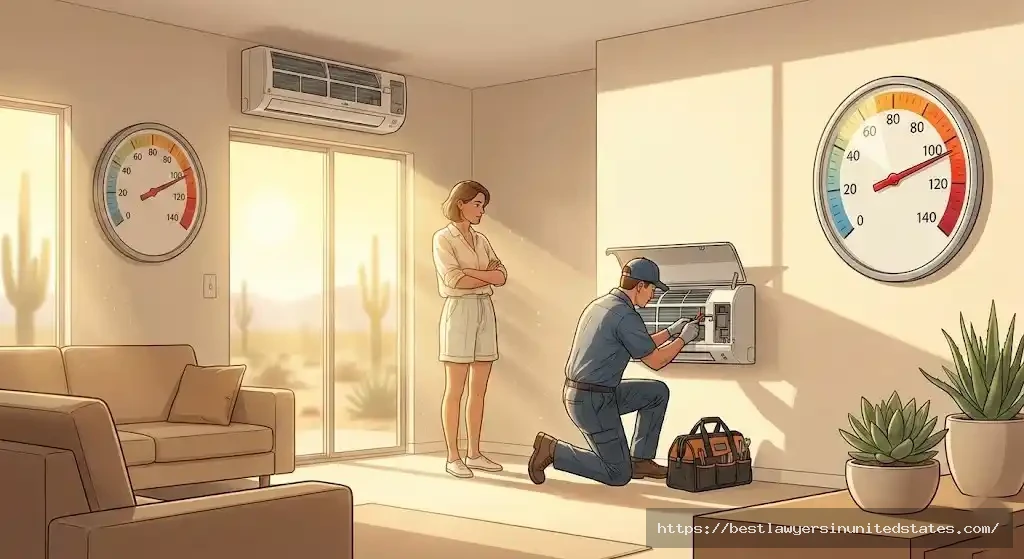
What Does “Habitable” Mean Under Arizona Law?
Quick Answer: Arizona landlords must provide safe, clean housing that meets all building codes and includes working plumbing, electricity, heating, air conditioning (if installed), hot water, and trash removal (A.R.S. § 33-1324).
Habitability requirements apply to both the rental unit and common areas. Your landlord cannot lease you a property that fails to meet these standards.
Landlords must:
- ✅ Meet all local building and health codes
- ✅ Make repairs to keep property fit and habitable
- ✅ Keep common areas (hallways, pools, laundry rooms) safe and clean
- ✅ Maintain electrical, plumbing, heating, ventilation, and AC systems
- ✅ Provide working trash removal service
- ✅ Supply running water and reasonable hot water at all times
- ✅ Provide heat and air conditioning (if installed or promised in lease)
How Do I Request Repairs From My Landlord?
Submit all repair requests in writing and keep copies for your records. Arizona law requires landlords to respond within specific timeframes based on the severity of the issue.
Repair request timelines:
- 10 days: Non-emergency repairs (leaky faucet, broken cabinet)
- 5 days: Health and safety issues (broken AC in summer, no hot water, electrical hazards)
- Immediately: Emergencies (no water, gas leak, no heat in winter, broken locks)
What counts as a health and safety issue?
- Broken air conditioning during Arizona summer heat
- Non-working heating in winter
- Electrical hazards (exposed wires, sparking outlets)
- Plumbing failures (sewage backup, major leaks)
- Pest infestations (roaches, bedbugs, rodents)
- Broken exterior door locks
- Structural damage affecting safety
What Can I Do If My Landlord Doesn’t Make Repairs?
Arizona law gives tenants three options when landlords fail to make required repairs.
Option 1: Terminate Your Lease
Send a written notice stating the problem and that you will terminate the lease if repairs aren’t completed within the deadline (10 days for general issues, 5 days for health/safety).
If the landlord doesn’t fix the problem, you can move out without penalty. Your landlord must return your full security deposit unless you owe rent or caused damage.
Option 2: Self-Help Repair Remedy
For repairs costing $300 or ½ monthly rent (whichever is greater), you can hire a licensed contractor and deduct the cost from your next rent payment.
Self-help repair process (A.R.S. § 33-1363):
- Send written 10-day notice (or less for emergencies) describing the problem and stating you’ll use self-help remedy if not fixed
- Wait the full notice period (landlord gets chance to make repairs)
- Hire a licensed contractor only (unlicensed work voids your right to deduct)
- Pay contractor and obtain:
- Itemized bill showing work completed
- Waiver of lien signed by contractor
- Send completion notice to landlord with copies of bill and waiver of lien
- Deduct repair cost from next rent payment
Example: Your monthly rent is $1,800. You can use self-help remedy for repairs up to $900 (½ monthly rent). Your AC breaks in July. Landlord ignores your 5-day notice. You hire licensed HVAC contractor who charges $600. You pay contractor, get itemized bill and lien waiver, send copies to landlord, and pay $1,200 rent ($1,800 – $600) the next month.
Critical mistake to avoid: Using an unlicensed contractor voids your ability to deduct costs from rent. Always verify the contractor’s Arizona license before hiring.
Option 3: Sue for Damages
You can sue your landlord for:
- Reduced rental value (difference between rent paid and value of uninhabitable unit)
- Cost of temporary housing while unit was uninhabitable
- Actual damages you suffered
- Court costs and attorney fees
File in small claims court for amounts under $3,500, justice court for $3,500-$10,000, or superior court for amounts exceeding $10,000.
Arizona Air Conditioning Rights: Cooling Ordinance Explained
Is My Landlord Required to Provide Air Conditioning in Arizona?
Quick Answer: Yes, if AC is installed in your unit or promised in your rental agreement. Arizona law (A.R.S. § 33-1324(A)(6)) requires landlords to maintain all installed equipment, and Phoenix has additional cooling ordinance requirements.
Unlike many states, Arizona treats air conditioning as an essential service due to extreme summer temperatures. Landlords cannot remove installed AC units or refuse to repair them.
AC is required if:
- ✅ AC unit is installed (even if lease doesn’t mention it)
- ✅ Rental agreement promises air conditioning
- ✅ Landlord installed AC during your tenancy
AC is NOT required if:
- ❌ Unit never had AC installed
- ❌ Lease explicitly states no AC provided
- ❌ You’re renting a property with evaporative cooling only (swamp cooler)
What Is the Phoenix Cooling Ordinance?
Phoenix requires landlords to maintain working cooling equipment during summer months and respond to AC repair requests within 5 days when temperatures exceed certain thresholds.
Phoenix cooling requirements:
- Landlords must repair broken AC within 5 business days
- Applies when outdoor temperatures reach 95°F or higher
- Tenants can use self-help remedy for AC repairs
- Violations subject to city code enforcement fines
What Should I Do If My AC Breaks in Arizona Summer?
Arizona’s extreme heat makes broken AC a health and safety emergency. Take immediate action to protect your rights.
Step 1: Send 5-day health and safety notice Document the broken AC in writing. Include:
- Date AC stopped working
- Indoor temperature readings
- Photos of non-working unit
- Statement that AC failure is health and safety issue
Step 2: Document temperature Take photos of thermometer showing indoor temperature at different times of day. Temperatures above 90°F inside your unit strengthen your case.
Step 3: Know your options if landlord doesn’t respond
After 5 days with no repairs, you can:
- Move to temporary housing and deduct cost from rent (up to 25% of monthly rent)
- Hire licensed HVAC contractor using self-help remedy (if repair costs under $300 or ½ monthly rent)
- Terminate lease and move out without penalty
- Sue for damages including cost of temporary housing and reduced rental value
During heat emergencies (temperatures above 105°F):
- Consider the repair an emergency requiring immediate action
- Self-help remedy timeline shortens to 24-48 hours
- Can obtain substitute housing and deduct reasonable costs
- Document all expenses with receipts
Many Arizona tenants don’t realize they can force AC repairs through the self-help remedy or terminate their lease when landlords ignore broken AC during summer. Don’t suffer through Arizona heat without taking action.
Arizona Notice Requirements: How Much Notice Do I Need?
How Much Notice Do I Need to Give to Move Out in Arizona?
Quick Answer: 30 days for month-to-month leases, 10 days for week-to-week leases. Fixed-term leases don’t require notice but check your lease for auto-renewal clauses.
Arizona’s notice requirements vary based on your lease type. You must give notice before the period you want to end, not during it.
Notice requirements by lease type:
| Lease Type | Notice Required | When to Give Notice | Example |
|---|---|---|---|
| Month-to-Month | 30 days | Month before you move | To move out June 30, give notice by May 31 |
| Week-to-Week | 10 days | Before week ends | To move out Sunday, give notice 10 days prior |
| Fixed-Term (1 year) | None | Lease expires automatically | 12-month lease ends on date specified |
Common mistake: Giving notice during the month you want to leave. If you want to move out May 31, you must give notice by April 30. Notice given May 1 terminates the lease June 30, meaning you owe May and June rent.
Auto-renewal clauses: Some fixed-term leases automatically convert to month-to-month after the initial term. Check your lease for notice requirements to prevent automatic renewal.
How Much Notice Must My Landlord Give Before Entering My Unit?
Arizona law requires landlords to give 48-hour advance notice before entering your rental unit (A.R.S. § 33-1343). This is more protective than some states that only require 24 hours.
Landlord entry rules:
| Situation | Notice Required | Details |
|---|---|---|
| Routine inspection | 48 hours | Must specify date and time |
| Non-emergency repairs | 48 hours | Must state reason for entry |
| Showing to buyers/renters | 48 hours | Can show during reasonable hours |
| Emergency | None | Fire, flood, gas leak, etc. |
| Court order | None | Authorized by court |
| Repairs you requested | None | Your request = permission for that repair |
What counts as an emergency?
- Fire, smoke, or gas leak
- Major water leak or flood
- Security threat (break-in, vandalism)
- Any condition requiring immediate action to prevent injury or major property damage
Landlord abuse of access: If your landlord enters without proper notice, at unreasonable times, or makes repeated harassing entry demands, you can sue for minimum 1 month’s rent in damages plus an injunction to stop future violations (A.R.S. § 33-1376).
Document violations: Keep a log of all unauthorized entries including dates, times, and circumstances. Take photos if landlord entered while you were away. This evidence supports your claim for damages.
Calculate Notice Periods in Arizona
Need to move out or wondering how much notice your landlord must give? Our calculator determines the exact notice period required based on your lease type and Arizona law, including notice to vacate, lease termination, and landlord entry requirements.
📬 Notice Period Calculator
All 50 States + DC
Find required notice periods for lease termination, rent increases, and landlord entry.
📋 Select Your Situation
What type of notice do you need? *
Select your role first
To calculate when notice must be given
Some states require longer notice for longer tenancies
✓ Notice Requirements for
📊 All Notice Periods for
| Notice Type | Tenant | Landlord |
|---|
Link: https://bestlawyersinunitedstates.com/tenant-rights/notice-period-calculator/
Calculator features:
- Notice requirements by lease type (month-to-month, week-to-week, fixed-term)
- Move-out notice deadlines with exact dates
- Landlord entry notice rules (48-hour requirement)
- Rent increase notice periods
- Lease termination timelines
Questions about your lease or need legal help? Email: [email protected]
What Landlords Cannot Do in Arizona: Illegal Actions
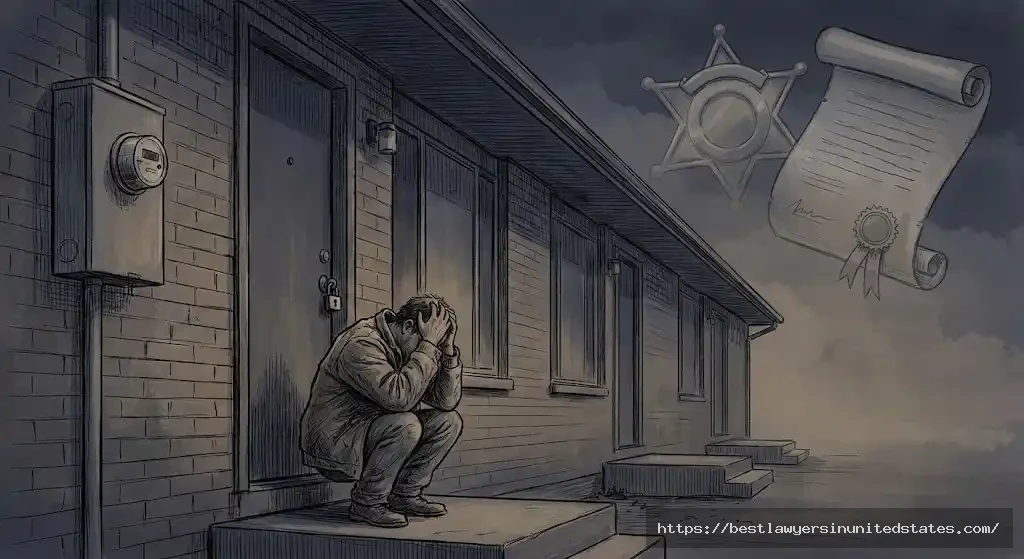
What Is an Illegal Lockout in Arizona?
Quick Answer: Your landlord cannot lock you out, change locks, or remove your belongings without a court order. Illegal lockouts carry penalties of up to 2 months’ rent or twice your actual damages, whichever is greater (A.R.S. § 33-1367).
Even if you owe rent, your landlord must go through the court eviction process. Self-help evictions are illegal in Arizona.
Your landlord CANNOT:
- ❌ Change locks while you’re away
- ❌ Remove your belongings from the unit
- ❌ Block your entry to the property
- ❌ Threaten to lock you out if you don’t pay rent
If your landlord locks you out:
- Call police immediately (illegal lockout is a criminal matter)
- Document everything (photos of changed locks, list of removed belongings)
- Send written notice demanding immediate access
- Sue for damages (2 months’ rent or 2x actual damages plus attorney fees)
Can My Landlord Shut Off My Utilities in Arizona?
No. Arizona law prohibits landlords from shutting off utilities to force you to move or pay rent, even if you’re behind on payments (A.R.S. § 33-1367).
Your landlord CANNOT shut off:
- ❌ Electricity
- ❌ Gas
- ❌ Water
- ❌ Heat
- ❌ Air conditioning (if installed)
- ❌ Any other essential service
Exception: If utilities are in the landlord’s name and you’re responsible for payment under the lease, the landlord can allow the utility company to disconnect service for non-payment. But the landlord cannot personally shut off utilities.
Remedy for illegal shutoff:
- Sue for 2 months’ rent OR 2x actual damages (whichever is greater)
- Obtain court order requiring immediate service restoration
- Recover attorney fees and court costs
Document the violation: Note date and time utilities were shut off, take photos of disconnected service panels, save any communications from landlord about utility shutoff.
Can My Landlord Take My Property?
No. Your landlord cannot seize or hold your belongings to force rent payment or compliance with lease terms (A.R.S. § 33-1367).
Examples of illegal property seizure:
- Taking your car from assigned parking
- Removing furniture or electronics from your unit
- Holding personal items until you pay rent
- Confiscating mail or packages
Your remedy: Sue for 2 months’ rent or twice your actual damages, plus return of all property.
Breaking Your Lease Legally in Arizona
Can I Break My Lease for Domestic Violence in Arizona?
Quick Answer: Yes. Arizona law (A.R.S. § 33-1318) allows domestic violence and sexual assault victims to terminate their lease with 30 days’ written notice after an incident that occurred in the rental unit.
This protection gives victims a safe way to leave dangerous situations without owing remaining rent or facing eviction on their record.
Requirements to break your lease:
- 30-day written notice after the incident
- Attach one of these documents:
- Copy of protective order issued by court, OR
- Copy of police report showing you reported domestic violence or sexual assault
- Incident must have occurred in your rental unit
- Provide landlord with abuser’s name and address (if requested)
What counts as domestic violence? Arizona defines it as dangerous crimes committed by someone you were married to, have a child with, or are related to by blood or marriage (A.R.S. § 13-3601).
What counts as sexual assault? Intentional or knowing sexual intercourse or oral sexual contact without consent (A.R.S. § 13-1406).
Landlord obligations:
- Must rekey locks at your expense (can deny key to abuser)
- Cannot charge early termination fees
- Must allow you to move out without penalty
- Can hold abuser liable for remaining rent
Critical deadline: You have 30 days from the incident date to give notice. After 30 days, you can still terminate only if the landlord agrees to waive the deadline. For immediate help escaping domestic violence, contact a restraining order lawyer in Arizona.
Can Military Members Break Their Lease in Arizona?
Yes. The Servicemembers Civil Relief Act (50 U.S.C. § 535) allows military members to terminate leases for Permanent Change of Station (PCS) or deployment of 90+ days.
Requirements:
- Written notice to landlord
- Copy of official military orders
- Orders must show PCS or 90+ day deployment
Effective date: Lease terminates 30 days after the next rent due date following proper notice. For example, if you give notice on June 15 and rent is due July 1, your lease terminates July 31.
Can I Break My Lease for Uninhabitable Conditions?
Yes. If your landlord fails to maintain habitable conditions and doesn’t make repairs within the required timeframe, you can terminate your lease without penalty.
Process:
- Send 10-day notice for general repairs or 5-day notice for health/safety issues
- Wait for deadline to expire
- If landlord doesn’t make repairs, send lease termination notice
- Move out and demand full security deposit return
Examples of conditions justifying lease termination:
- No running water for extended period
- Broken heating in winter
- Broken AC in Arizona summer
- Severe pest infestation landlord won’t address
- Major structural damage affecting safety
- Mold or sewage problems
Protect yourself: Document everything with photos, videos, written communications, and repair requests. Keep copies of all notices sent to landlord. This evidence proves you followed proper procedure if landlord tries to claim you broke the lease illegally.
Arizona Retaliation Protections: Know Your Rights
What Is Illegal Retaliation in Arizona?
Quick Answer: Arizona law (A.R.S. § 33-1381) prohibits landlords from retaliating against tenants who exercise their legal rights. Any adverse action within 6 months of a protected activity is presumed retaliatory.
Retaliation protections prevent landlords from punishing tenants who report code violations, join tenant organizations, or assert their legal rights.
Protected tenant activities:
- Complaining to government agency about building or health code violations
- Complaining to landlord about property condition or lease violations
- Organizing or joining a tenant union
- Filing complaint with wage-price stabilization enforcement agency
Retaliatory landlord actions:
- Increasing rent
- Decreasing services
- Filing eviction or threatening to evict
- Refusing to renew lease
- Changing lease terms to tenant’s detriment
How Does the 6-Month Presumption Work?
If your landlord takes adverse action within 6 months of your protected activity, Arizona law presumes the action is retaliatory. The burden shifts to your landlord to prove a legitimate, non-retaliatory reason.
Example: You report your landlord to Phoenix code enforcement on January 15 for broken plumbing. On February 1, your landlord serves a 10-day notice for a minor lease violation they previously ignored. Because this occurred within 6 months of your complaint, it’s presumed retaliatory.
Landlord’s burden: They must prove the lease violation notice would have been served regardless of your code complaint. Previous pattern of ignoring the violation weakens landlord’s case.
6-month protection ends: After 6 months, you must prove the landlord’s action was retaliatory. The presumption no longer applies but retaliation is still illegal if you can prove it.
What Are My Remedies for Landlord Retaliation?
You can:
- Defend against eviction (court should dismiss retaliatory eviction)
- Sue for damages (2 months’ rent OR 2x actual damages)
- Continue living in your unit (court can block retaliatory eviction)
- Recover attorney fees and court costs
Exceptions: Retaliation protections don’t apply if you:
- Owe rent (landlord can evict for non-payment even after your complaint)
- Violated lease terms (legitimate violations justify eviction)
- Created the code violation yourself
Document the timeline carefully. Note dates of your complaint, landlord’s adverse action, and any communications showing landlord’s motive. Text messages or emails where landlord references your complaint strengthen your retaliation claim.
Arizona Tenant Legal Resources and Free Forms
Where Can I Get Free Legal Help in Arizona?
Arizona offers several resources for tenants facing landlord disputes, evictions, or habitability issues.
Community Legal Services
- Phone: (602) 258-3434
- Services: Free legal aid for low-income tenants, eviction defense, landlord-tenant disputes
- Locations: Maricopa, Mohave, Yavapai, and Yuma Counties
- Website: Contact for intake appointment
Arizona Courts Self-Service Center
- Services: Free forms, filing instructions, court locations
- Website: Access eviction defense guides and template responses
- Help: Law library access for legal research
Phoenix Landlord-Tenant Counseling
- Phone: (602) 262-7210
- Address: 200 W. Washington St., 4th Floor, Phoenix, AZ 85003
- Services: One-on-one counseling, mediation, dispute resolution
- Free: No cost for Phoenix residents
Arizona Attorney General’s Office – Civil Rights Division
- Phone: (602) 542-5263
- Services: Housing discrimination complaints, fair housing enforcement
- Website: www.azag.gov/civil-rights
What Forms Do Arizona Tenants Need?
Arizona tenant forms must comply with the Arizona Residential Landlord and Tenant Act. Access downloadable templates at legal forms directory.
Move-in and move-out forms:
- Walk-through inspection checklist
- Notice of intent to vacate
- Security deposit request letter
- Security deposit dispute letter
Repair request forms:
- 10-day repair request (general maintenance)
- 5-day health and safety repair request
- Self-help repair notice with deduction warning
- Contractor waiver of lien
- Repair completion notice
Landlord violation notices:
- Unlawful utility shutoff notice
- Unlawful property seizure notice
- Invalid late charges dispute
- Illegal lockout notice
- Abuse of access complaint
Lease termination forms:
- Domestic violence lease termination notice
- Military lease termination notice
- Habitability lease termination notice
All forms should be sent via certified mail with return receipt requested or hand-delivered with a signed receipt. Keep copies of every document for your records.
Frequently Asked Questions About Arizona Tenant Rights
How much can a landlord charge for security deposit in Arizona?
Quick Answer: 1.5 times monthly rent maximum, plus a reasonable separate cleaning fee if disclosed in writing before lease signing (A.R.S. § 33-1321).
For a $1,500 monthly rent, your landlord can charge up to $2,250 security deposit. Arizona’s limit is lower than California (2-3 months) and Texas (no limit).
How long does my landlord have to return my security deposit in Arizona?
Quick Answer: 14 business days (excluding weekends and legal holidays) from when you move out, return keys, and request your deposit in writing.
Add 5 days if you mail your request. Landlord must include itemized deduction statement and remaining balance payment.
How long does the eviction process take in Arizona?
Quick Answer: 10-15 days for non-payment of rent, 15-20 days for lease violations, and as little as 3-7 days for material breaches like illegal activity.
Arizona’s eviction timeline is among the fastest in the nation. Use our eviction timeline calculator to see exact dates for your situation.
Can my landlord evict me without going to court in Arizona?
Quick Answer: No. All evictions in Arizona require a court order and sheriff enforcement. Self-help evictions (lockouts, utility shutoffs) are illegal and carry penalties.
Landlords who illegally evict tenants face liability of 2 months’ rent or 2x actual damages, whichever is greater.
How much notice does my landlord need to give before entering my apartment?
Quick Answer: 48 hours advance notice for routine inspections, repairs, or showings. No notice required for emergencies or court orders.
Arizona’s 48-hour requirement is more protective than states requiring only 24 hours notice.
Can I withhold rent if my landlord doesn’t make repairs?
Quick Answer: No. Never withhold rent in Arizona. Instead, use the self-help repair remedy to hire a licensed contractor and deduct costs, or terminate your lease and move out.
Withholding rent gives your landlord grounds to evict you for non-payment even if they owe you repairs.
Is my landlord required to provide air conditioning in Arizona?
Quick Answer: Yes, if AC is installed in your unit or promised in your rental agreement. Arizona law requires landlords to maintain all installed equipment (A.R.S. § 33-1324).
Phoenix’s cooling ordinance requires AC repairs within 5 business days during summer heat.
How much notice do I need to give to move out of a month-to-month lease?
Quick Answer: 30 days before the end of your last month. To move out May 31, give notice by April 30. Notice given May 1 terminates the lease June 30.
Calculate exact deadlines with our notice period calculator to avoid owing extra rent.
Can my landlord raise my rent in Arizona?
Quick Answer: Yes, unless you have a fixed-term lease. For month-to-month leases, landlords can raise rent with 30 days’ written notice. No state limits on increase amounts.
Local ordinances in some Arizona cities may provide additional protections. Check with your city housing department.
What can I do if my landlord retaliates against me?
Quick Answer: Sue for 2 months’ rent or twice actual damages. Arizona law presumes retaliation if landlord takes adverse action within 6 months of your protected activity (A.R.S. § 33-1381).
Protected activities include code complaints, tenant union membership, and asserting legal rights.
Can I break my lease if I’m a victim of domestic violence?
Quick Answer: Yes. Give 30-day written notice with copy of protective order or police report. Incident must have occurred in your rental unit (A.R.S. § 33-1318).
Landlord cannot charge early termination fees and must return your security deposit.
How do I calculate if my landlord owes me my security deposit?
Quick Answer: Use our free security deposit calculator to check Arizona’s 1.5x rent limit, 14-business-day return deadline, and penalty calculations for late returns.
The calculator analyzes allowable deductions and shows if you’re owed 2x damages for violations.
What happens if I don’t pay rent in Arizona?
Quick Answer: Your landlord can serve a 5-day notice to pay or quit. If you don’t pay within 5 days, they can file for eviction. Total process takes 10-15 days from notice to sheriff lockout.
You can stop eviction by paying rent plus late fees plus court costs before judgment.
Can I sue my landlord in small claims court in Arizona?
Quick Answer: Yes, for amounts up to $3,500. File in justice court for $3,500-$10,000, or superior court for amounts exceeding $10,000.
Common tenant claims include wrongfully withheld security deposits, illegal lockouts, and habitability issues. While Arizona doesn’t have state-specific wage protections, tenants working in minimum wage jobs can check current rates at Arizona minimum wage laws.
Does Arizona have rent control?
Quick Answer: No. Arizona has no state or local rent control ordinances. Landlords can raise rent to any amount for month-to-month leases with 30 days’ notice.
Fixed-term leases lock in rent for the lease duration but landlords can increase rent upon renewal.
Key Takeaways: Arizona Tenant Rights 2026
Arizona tenant law provides strong protections for renters while allowing landlords to quickly remove problem tenants. The key is knowing your rights and following proper procedures.
Most important protections:
- ✅ Security deposits capped at 1.5x monthly rent
- ✅ 14-business-day deposit return deadline
- ✅ Fast 5-day eviction notice for unpaid rent
- ✅ Self-help repair remedy up to $300 or ½ rent
- ✅ Required 48-hour landlord entry notice
- ✅ Working AC required if installed
- ✅ 6-month retaliation protection window
- ✅ Domestic violence victims can break leases
- ✅ 2x damages for illegal lockouts and utility shutoffs
Use our three free calculators to check your rights:
- Security Deposit Calculator (1.5x rent limit, 14-day timeline, penalty calculations)
- Eviction Timeline Calculator (notice periods, court dates, appeal windows)
- Notice Period Calculator (move-out deadlines, entry notice, lease termination)
When to get legal help:
- Facing eviction and want to fight it
- Landlord illegally withheld security deposit
- Living in uninhabitable conditions
- Experiencing landlord retaliation
- Need to break lease for domestic violence
Contact Community Legal Services at (602) 258-3434 for free tenant legal aid if you qualify.