
Your landlord just sent back half your security deposit with vague deductions for “normal wear and tear.” You’re furious because you left the apartment spotless. Sound familiar?
You’re not alone. Landlords wrongfully withhold over $1.8 billion in security deposits every year. Most tenants don’t fight back because they don’t know the specific laws protecting them in their state.
Our security deposit calculator helps you understand exactly what your landlord can and cannot deduct. You’ll get instant answers about maximum deposit limits, return deadlines, and interest requirements based on your state’s laws. Whether you paid $500 or $5,000, you deserve every penny back that’s legally yours.
Use this tool to calculate your expected refund, understand your rights, and take action if your landlord violates the law.
🏠 Security Deposit Calculator
All 50 States + DC
Calculate max legal deposits, return deadlines, and penalties for violations.
📋 Enter Your Information
Special Conditions (if applicable)
✓ Results for
Based on current state law. Always verify with local regulations.
How to Use This Security Deposit Calculator
Step 1: Select Your State Choose the state where your rental property is located. Security deposit laws vary dramatically by state, so this determines which rules apply to you.
Step 2: Enter Your Security Deposit Amount Input the total amount you paid when you moved in. Include any additional pet deposits or last month’s rent if your landlord called it a “deposit.”
Step 3: Input Your Move-Out Date This date determines your landlord’s deadline to return your deposit. Most states give landlords 14 to 60 days after you move out.
Step 4: Add Any Legitimate Deductions Enter only actual damages beyond normal wear and tear. Small nail holes, faded paint, and worn carpet don’t count as damage in most states.
Step 5: Review Your Results The calculator shows your expected refund, your landlord’s return deadline, whether you’re owed interest, and what to do if your landlord misses the deadline.
State-by-State Security Deposit Laws Quick Reference
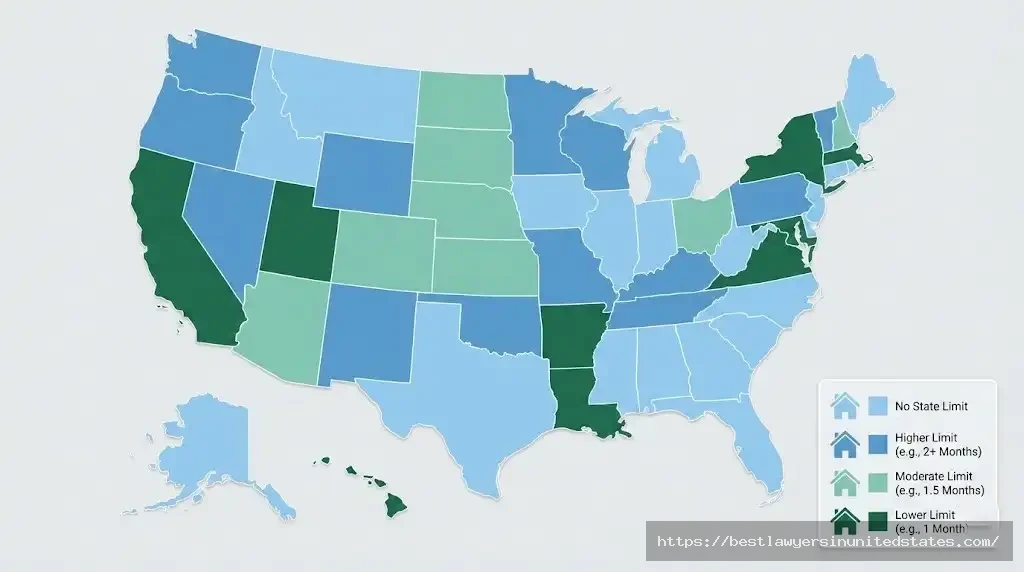
| State | Maximum Deposit | Return Deadline | Interest Required |
|---|---|---|---|
| Alabama | No limit | 60 days | No |
| Alaska | 2 months’ rent | 14 days (if proper notice) / 30 days | No |
| Arizona | 1.5 months’ rent | 14 business days | No |
| Arkansas | 2 months’ rent | 60 days | No |
| California | 2 months (unfurnished) / 3 months (furnished) | 21 days | No |
| Colorado | No limit | 1 month (no deductions) / 60 days (with deductions) | No |
| Connecticut | 2 months’ rent | 30 days (or within 15 days of receiving forwarding address) | Yes – 1.5% annually |
| Delaware | 1 month’s rent (no pets) / Up to 1.5 months (with pets) | 20 days | No |
| Florida | No limit | 15 days (no deductions) / 30 days (with deductions) | Yes – if held for 1+ years |
| Georgia | No limit | 1 month | No |
| Hawaii | 1 month’s rent | 14 days | No |
| Idaho | No limit | 21 days (or up to 30 days) | No |
| Illinois | No limit | 30-45 days (varies by county) | Yes – if building has 25+ units |
| Indiana | No limit | 45 days | No |
| Iowa | 2 months’ rent | 30 days | Yes – 5% annually |
| Kansas | 1 month’s rent (unfurnished) / 1.5 months (furnished) | 30 days | No |
| Kentucky | No limit | 30-60 days (depending on deductions) | No |
| Louisiana | No limit | 1 month | No |
| Maine | 2 months’ rent | 30 days (if written rental) / 21 days (if tenancy at will) | No |
| Maryland | 2 months’ rent | 45 days | Yes – 3% simple interest (or actual interest) |
| Massachusetts | 1 month’s rent | 30 days | Yes – 5% or actual rate |
| Michigan | 1.5 months’ rent | 30 days | No |
| Minnesota | No limit | 21 days (3 weeks) | Yes – 1% if landlord has 12+ units |
| Mississippi | No limit | 45 days | No |
| Missouri | 2 months’ rent | 30 days | No |
| Montana | No limit | 30 days (10 days if no deductions) | No |
| Nebraska | 1 month’s rent | 14 days | No |
| Nevada | 3 months’ rent | 30 days | No |
| New Hampshire | 1 month’s rent (or $100 for rent under $1,000/month) | 30 days | Yes – if held 1+ year |
| New Jersey | 1.5 months’ rent | 30 days | Yes – if held 6+ months |
| New Mexico | 1 month’s rent | 30 days | No |
| New York | 1 month’s rent (varies by rent-stabilized units) | 14 days | Yes – if building has 6+ units |
| North Carolina | 1.5 months’ rent (month-to-month) / 2 months (longer term) | 30 days | No |
| North Dakota | 1 month’s rent | 30 days | Yes – 5% if held 9+ months |
| Ohio | No limit | 30 days | Yes – 5% annually if held 6+ months |
| Oklahoma | 1 month’s rent (no pets) / Up to 1.25 months (with pets) | 45 days | No |
| Oregon | No limit | 31 days | No |
| Pennsylvania | 2 months’ rent (1st year) / 1 month (2+ years) | 30 days | Yes – if held 2+ years |
| Rhode Island | 1 month’s rent | 20 days | No |
| South Carolina | No limit | 30 days | No |
| South Dakota | 1 month’s rent | 2 weeks (14 days) | No |
| Tennessee | No limit | 30 days | No |
| Texas | No limit | 30 days | No |
| Utah | No limit | 30 days | No |
| Vermont | No limit | 14 days | No |
| Virginia | 2 months’ rent | 45 days | Yes – if deposit held in interest-bearing account |
| Washington | No limit | 21 days | No |
| West Virginia | No limit | 60 days (or within 45 days of occupancy by new tenant) | No |
| Wisconsin | No limit | 21 days | No |
| Wyoming | No limit | 30 days (or within 15 days of receiving forwarding address) | No |
| Washington D.C. | 1 month’s rent | 30 days | Yes – determined by Rent Administrator |
Important Notes:
- Deadlines typically begin from your move-out date or when you provide a forwarding address
- Some states have different rules for furnished vs. unfurnished units
- Pet deposits may be additional in some states
- Interest requirements often have minimum holding period thresholds
- Penalty damages for violations vary significantly by state
Security Deposit Laws by State – Overview
Security deposit laws aren’t federal. Each state creates its own rules about maximum deposits, return deadlines, and interest requirements.
In California, your landlord can charge a maximum of two months’ rent for an unfurnished apartment. In Texas, there’s no legal limit—your landlord could theoretically charge six months’ rent as a deposit.
Some states require landlords to return deposits within 14 days. Others allow 60 days. A handful of states mandate that landlords pay you interest on your deposit, while most states have no interest requirement at all.

These differences matter enormously. If you’re paying $1,500 monthly rent in Massachusetts, your landlord must pay you interest on your deposit and return it within 30 days. In Nevada, your landlord has no interest obligation and gets 30 days to return your money.
Understanding your state’s specific laws gives you power. You’ll know immediately if your landlord is violating the law, and you can take appropriate action.
Maximum Security Deposit Limits Explained
States fall into four categories for maximum deposit limits: one month’s rent, 1.5 months’ rent, two months’ rent, or no limit at all.
One Month’s Rent States Alaska, Kansas, Massachusetts, Nebraska, New Hampshire, New Mexico, North Carolina, North Dakota, Oklahoma, and West Virginia limit deposits to one month’s rent. If your rent is $1,200, your landlord cannot charge more than $1,200 as a security deposit.
1.5 Months’ Rent States Delaware, Maryland, and New Jersey set the limit at 1.5 months’ rent. For a $1,000 monthly apartment, the maximum deposit is $1,500.
Two Months’ Rent States California allows two months’ rent for unfurnished units and three months for furnished units. Connecticut, Hawaii, and Tennessee also use the two-month standard. A $2,000 monthly rental can require a $4,000 deposit in these states.
No Limit States The remaining states impose no maximum. Your landlord in Texas, Florida, or Arizona could legally demand four or five months’ rent upfront. Market competition usually keeps deposits reasonable, but the law doesn’t protect you.
Special Rules Some states adjust limits for furnished units, pets, or month-to-month leases. Vermont limits deposits to one month’s rent, but allows landlords to add half a month’s rent for each pet.
Security Deposit Return Deadlines by State
Your landlord doesn’t get to hold your money indefinitely. Every state sets a specific deadline for returning deposits after you move out.
14-Day States Arizona requires return within 14 business days. If you moved out on March 1st, your landlord must return your deposit by March 19th at the latest.
21-Day States California, Florida, and several other states allow 21 days. This gives landlords three weeks to inspect the property, calculate deductions, and send your refund.
30-Day States The most common deadline is 30 days. Alabama, Colorado, Georgia, Illinois, Massachusetts, Michigan, Minnesota, New York, Pennsylvania, and many others use this standard. Your landlord has one full month from your move-out date.
45-Day and 60-Day States A few states give landlords extended time. New Mexico allows 30 days, but if damages exceed the deposit amount, landlords get an additional 30 days (60 total) to send an itemized list. North Dakota allows 30 days or when you provide a forwarding address, whichever is later.
Consequences for Missing Deadlines Most states impose penalties when landlords miss return deadlines. You may be entitled to double or triple your deposit amount, plus attorney’s fees. California landlords who act in bad faith can owe tenants their entire deposit back—even if legitimate deductions existed—plus potential penalty damages.
States That Require Interest on Security Deposits
Only a handful of states require landlords to pay interest on security deposits. If you live in one of these states, you’re entitled to additional money beyond your original deposit.

Connecticut Landlords must pay interest at the rate of 1.5% annually or the actual interest earned, whichever is greater. For a $2,000 deposit held two years, you’re owed approximately $60 in interest.
Maryland Maryland requires simple interest at 3% per year (or actual interest earned if deposits are held in Maryland financial institutions). A $1,500 deposit held for one year earns $45 in interest.
Massachusetts Deposits must be held in a Massachusetts bank account earning 5% interest or the actual rate earned, whichever is less. Landlords must provide you with the bank name, account number, and amount of interest annually.
Minnesota If your landlord owns more than 12 rental units, they must pay 1% simple interest annually on deposits held longer than nine months.
New Hampshire Landlords holding deposits over one year must pay interest at the rate determined by the state banking commissioner. The current rate is approximately 0.1% annually.
New Jersey Security deposits held for six months or more must earn interest at the current rate set for NOW accounts by financial institutions in New Jersey.
New York Landlords with six or more units must deposit security deposits in New York bank accounts earning interest. You’re entitled to interest earned minus 1% administrative fee for the landlord.
North Dakota Landlords must pay 5% annual interest if they hold your deposit for nine months or longer. This is one of the highest state-mandated interest rates in the country.
Virginia If your landlord holds deposits in an interest-bearing account, you’re entitled to all accrued interest. However, landlords aren’t required to use interest-bearing accounts.
What Happens If Your Landlord Violates Security Deposit Laws
State laws impose serious penalties on landlords who wrongfully withhold deposits or miss return deadlines.
Double or Triple Damages Many states allow courts to award you two or three times your deposit amount as penalty damages. If your landlord wrongfully kept your $1,800 deposit in Texas, you could potentially recover $5,400 ($1,800 × 3) plus attorney’s fees.
California courts can award up to twice the deposit amount as a penalty when landlords act in bad faith. Georgia law specifically provides for double damages when landlords fail to return deposits within three business days of receiving your written demand.
Full Deposit Forfeiture Some states strip landlords of all deduction rights when they violate procedural requirements. If your Massachusetts landlord fails to provide required written notice of damages within 30 days, they forfeit the entire deposit—even if you actually caused $2,000 in damages.
New Jersey landlords who don’t comply with specific deposit requirements (written receipt, separate account, 5% interest) must return the full deposit regardless of any legitimate damage claims.
Attorney’s Fees and Court Costs Most state laws allow you to recover attorney’s fees when you successfully sue for wrongfully withheld deposits. This means lawyers will often take security deposit cases on contingency—you don’t pay unless you win.
Criminal Penalties A few states make willful security deposit violations a criminal offense. Michigan classifies failure to return deposits as a misdemeanor punishable by up to 90 days in jail and $1,000 fine.
Your Leverage These severe penalties give you tremendous leverage. One formal demand letter citing your state’s penalty provisions often convinces landlords to return deposits immediately rather than risk triple damages in court.
How to Get Your Security Deposit Back
Follow these steps to maximize your chances of receiving your full deposit back.

Before Moving In Document everything with photos and video. Walk through the entire unit recording pre-existing damage, stains, scratches, and wear. Send your landlord a written list of all problems you observed.
This evidence protects you from being charged for damage you didn’t cause. Your landlord can’t claim you broke the dishwasher if your move-in video shows it was already broken.
During Your Tenancy Report all maintenance issues in writing immediately. Keep copies of every email, text message, and letter you send. If your landlord fails to make repairs, document the problem with photos showing dates.
Clean regularly and fix small issues promptly. Replacing a $12 cabinet handle yourself is smarter than losing $100 from your deposit later.
Before Moving Out Review your lease for required move-out procedures. Some leases mandate professional carpet cleaning or specify that you must restore walls to original paint color.
Complete a thorough cleaning. Vacuum carpets, scrub bathrooms and kitchen, wipe down all surfaces, and clean inside appliances. Landlords can only deduct for actual damage, not routine cleaning—but proving what’s “routine” versus necessary is easier when the place is spotless.
Schedule a walk-through inspection with your landlord if possible. Point out that nail holes and carpet wear are normal and not deductible in your state. Get their acknowledgment of the property’s condition in writing.
After Moving Out Provide your forwarding address in writing immediately. Many states don’t start the return deadline clock until landlords receive your new address.
Send a formal written demand if your landlord misses the deadline or makes improper deductions. Reference your state’s specific security deposit statute by code number. State clearly that you expect full return within five business days or you’ll pursue all available legal remedies, including penalty damages and attorney’s fees.
If Your Demand Fails Small claims court is your next step. Filing fees range from $30-$100, and you don’t need a lawyer. Bring your lease, photos, correspondence, and copies of your state’s security deposit law.
Judges hear hundreds of security deposit cases and know landlord tricks. Present clear evidence that you left the property clean and undamaged, and you’ll likely win.
Frequently Asked Questions

Can my landlord charge me for cleaning? Not for routine cleaning. You’re only responsible for excessive filth beyond normal wear and tear. A dirty oven from regular cooking isn’t deductible. An oven caked with six months of burnt food might be. Most states require landlords to prove cleaning costs exceeded normal turnover cleaning.
What counts as “normal wear and tear”? Normal wear and tear includes faded paint, worn carpet in high-traffic areas, small nail holes from hanging pictures, loose grouting, and minor scuffs on walls. You can’t be charged for these items—they’re expected consequences of normal living. Large holes in walls, pet stains on carpet, and broken fixtures aren’t normal wear and tear.
Can my landlord keep my deposit if I break my lease early? Generally yes, but only for actual damages. Your landlord can deduct unpaid rent for the time it takes to find a new tenant. However, landlords have a legal duty to mitigate damages by actively seeking new tenants. They can’t just let the unit sit empty for six months and charge you the entire amount.
Does my landlord have to give me an itemized list of deductions? Almost every state requires itemized deduction lists. Your landlord must specify each damage, the repair cost, and usually provide receipts or estimates. A letter saying “cleaning and repairs: $800” isn’t sufficient. Without proper itemization, many states require landlords to return the entire deposit.
Can I be charged for repainting? Only if you caused damage requiring new paint. Most states consider repainting after three to five years of tenancy to be normal maintenance—not the tenant’s responsibility. If you lived there one year and punched holes in walls, that’s chargeable. If you lived there five years and walls need repainting from normal scuffs and fading, that’s not chargeable.
What if my landlord never returns my deposit or responds to me? Sue in small claims court. Your landlord’s silence doesn’t mean they win—quite the opposite. Courts view failure to respond as evidence of bad faith. Many states award automatic penalty damages when landlords don’t comply with deposit return requirements. Your unreturned deposit becomes their biggest liability.
Can I use my security deposit as last month’s rent? Not unless your lease specifically allows it. Your deposit secures against damages, not rent. If you withhold last month’s rent, your landlord can legally evict you for non-payment and sue for unpaid rent plus damages. Always pay through your final month and wait for your deposit return.
How long can my landlord keep my deposit? Check your state’s return deadline—typically 14 to 60 days after move-out. Some states extend this slightly if you don’t provide a forwarding address. Once the legal deadline passes, your landlord is in violation and may owe penalty damages. Time limits are strict and courts rarely excuse landlord delays.
What if I didn’t get a receipt for my security deposit? Many states require landlords to provide written receipts for security deposits. Failure to provide a receipt may entitle you to return of the full deposit regardless of any damage. Keep your cancelled check, money order receipt, or bank transfer record as proof of payment.
Can my landlord increase my security deposit during my tenancy? Only if your lease allows it or you agree to an increase. For example, if you get a dog and your lease permits pet deposits, your landlord can require additional security. Without lease authorization or your written agreement, your landlord cannot unilaterally increase deposit requirements mid-tenancy.