
Quick Answer: AngelLift is a non-invasive anti-aging brand that makes DermaStrips — thin, flexible strips worn inside the mouth to reduce wrinkles around the lips. The company appeared on Shark Tank in 2014, landed a deal with Lori Greiner that ultimately fell through, weathered a bitter founder lawsuit in 2015–2016, and has quietly grown to an estimated $5 million in annual revenue. There is no consumer class action lawsuit against the company. ogx lawsuit
What Is AngelLift?
AngelLift makes a deceptively simple product: a pair of surgical-grade plastic strips you slip between your lips and gums for 10–30 minutes a day. The idea is that gentle, consistent pressure against the tissue beneath your lower face can lift wrinkles, smooth smile lines, and restore volume to thinning lips — no injections, no surgery, no chemicals. EcoShield Lawsuit 2026
The concept isn’t new. Subdermal pressure has been used in orthodontics and dental medicine for decades — it’s the same principle behind braces reshaping a jaw over time. AngelLift applied that logic to cosmetic anti-aging, and when it worked its way onto Shark Tank in 2014, it sparked a genuine moment of mainstream fascination.
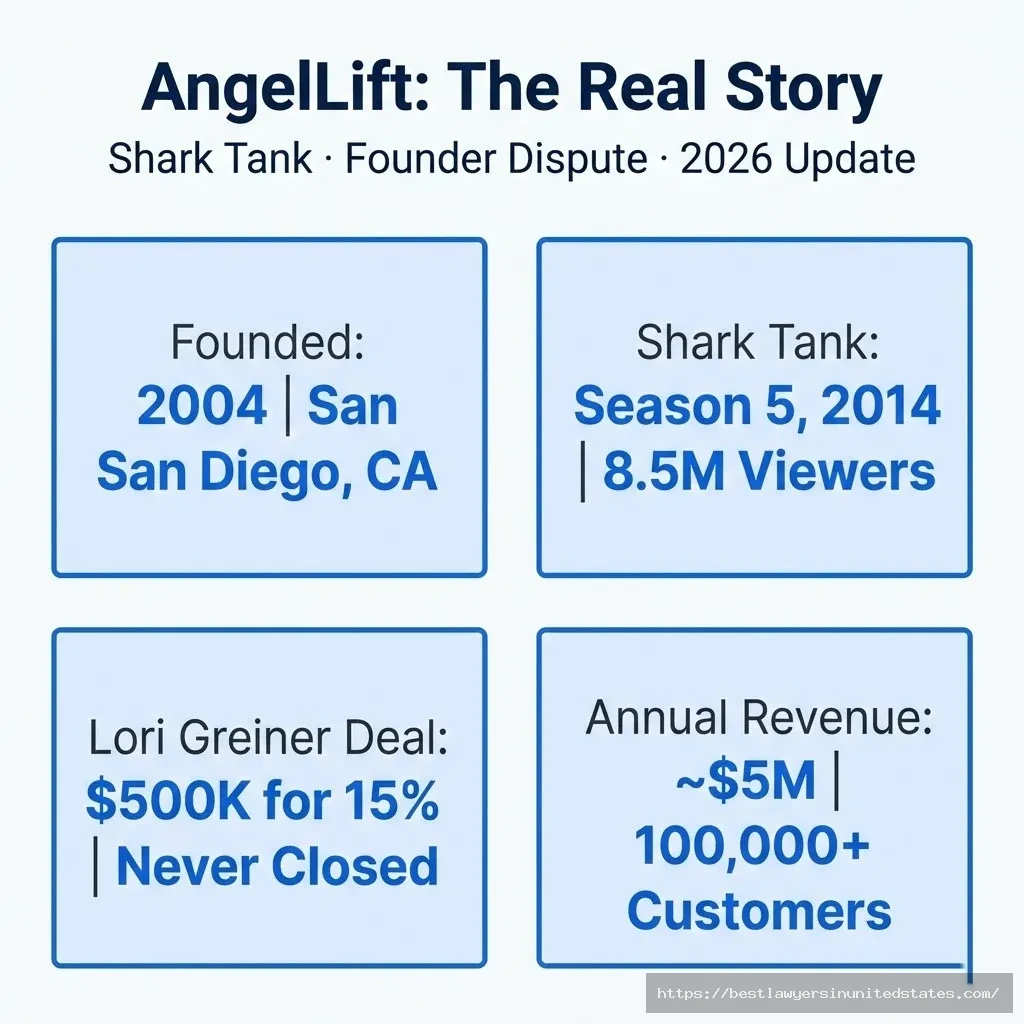
The company is based in San Diego, California, has sold to over 100,000 customers, and remains in business as of 2026 — though its path here has been anything but smooth.
The Origins: From Dental Device to Anti-Aging Product
| Year | Milestone |
|---|---|
| 2003 | AngelLift system developed; original version required professional dental installation |
| 2004 | Medical-grade strips made available to professionals only through Medical Matrix, LLC |
| 2007 | Canadian clinical study finds 84% of users saw measurable “facial improvement” |
| 2011 | Consumer-friendly DermaStrips launched over-the-counter |
| 2014 | AngelLift airs on Shark Tank Season 5, Episode 27 (May 2, 2014) |
Aaron Bruce’s background was in medical device development. According to multiple sources, the product originally came out of research into facial nerve damage — clinicians noticed that patients wearing subdermal oral devices were also seeing cosmetic improvement in the skin around their mouths. That accidental discovery became the foundation of what eventually became AngelLift.
The early version required a dentist to fit and install the device. By 2011, Bruce had redesigned it into a consumer product that anyone could use at home, and started building sales through smaller home-shopping channels. By the time he walked onto the Shark Tank set in 2013 (the episode aired in May 2014), he had already racked up millions in sales.
The Shark Tank Moment: Season 5, Episode 27
The Pitch
Kelly and Aaron Bruce walked into the Tank asking for $500,000 in exchange for 10% equity — a valuation of $5 million. Aaron demonstrated the product, explained the science, and pitched it as the only under-the-skin lifting strip in the world.
The numbers were real and impressive. AngelLift had generated $3 million in sales on a small home-shopping channel alone, producing $1.2 million in profit. QVC had already reached out, eager to carry the product. Uponor PEX Lawsuit 2026
The Sharks’ Reactions
| Shark | Decision | Reason |
|---|---|---|
| Mark Cuban | Out | Too many SKUs; pitch felt unclear |
| Barbara Corcoran | Out | Had already invested in a similar company (conflict of interest) |
| Kevin O’Leary | Out | Questioned the business model and profitability |
| Robert Herjavec | Out | Found the pitch confusing |
| Lori Greiner | Deal | Saw strong QVC potential |
Lori Greiner, known as the “Queen of QVC,” offered $500,000 for 15% equity — but with a condition: the funds had to be used exclusively for fulfilling QVC purchase orders. She also required Aaron to verify the product’s clinical claims and patent status. Aaron originally pushed for 10%, negotiated to 15%, and accepted.
The Episode That Broke a Record
This wasn’t just any Shark Tank deal. Episode 527 (part of a two-hour ABC special) drew 8.5 million viewers — a series record at the time. ABC had been promoting the episode for weeks, and the anti-aging product clearly resonated with the audience. AngelLift has credited much of its early international recognition to that single broadcast.
What Happened After the Cameras Stopped
The deal with Lori never closed. After filming wrapped, Aaron declined to appear on QVC — the central condition Lori had attached to her investment. Without that, the deal fell apart.
It’s one of the more unusual post-Shark Tank stories: a founder who walked off the set with a handshake deal, then walked away from it. Aaron has indicated the decision was about maintaining control of the brand rather than ceding distribution to a retail partner. Whatever the reasoning, AngelLift went on to build its business independently — and the exposure from the show proved to be worth far more than any investment might have been anyway.
Sales spiked to $3 million in the immediate aftermath of the episode airing. AngelLift then built out its own e-commerce platform and an Amazon presence, later pulling back from Amazon to sell direct and protect its branding.
The Founder Dispute: Bruce vs. Wells (2015–2016)
This is where the story gets complicated — and where a lot of online misinformation gets generated.
What Happened
In 2015, co-founder Aaron Bruce filed a lawsuit against fellow co-founder Jason Wells, alleging fraud and breach of contract. The core allegations, according to published reports, were:
- Wells falsely claimed to have invented the AngelLift product
- Wells failed to pay Bruce his rightful share of profits from the company
The lawsuit was a private commercial dispute between two business partners — not a consumer action, not a class action, and not a government enforcement case.
How It Ended
The case was settled out of court in 2016. The terms were never disclosed publicly. No court found Wells liable; no consumer was harmed; no damages were published. The private nature of the resolution means neither party has commented publicly on the final arrangement.
What It Means for AngelLift Today
After the dispute was resolved, Aaron Bruce remained associated with the company in a product development role. As of the current BBB profile, he is listed as Director of Product Development, with Emily Pearlson serving as Brand Director. The company operates out of San Diego, California, and received BBB accreditation in June 2025.
The 2015–2016 lawsuit is often mistakenly described online as an ongoing consumer lawsuit or a class action. It was neither.
Clearing Up the “AngelLift Lawsuit” Confusion
Search engines and AI tools have generated significant misinformation about an AngelLift “lawsuit” that supposedly involves consumers seeking compensation. AngelLift has addressed this directly on their own website: no such lawsuit exists.
There are two main sources of confusion:
1. The founder-vs-founder dispute described above. It was a private business dispute between two individuals, settled in 2016. No consumer was a party to it, no settlement fund was created, and there is nothing for consumers to file a claim about.
2. Confusion with a similarly-named company called AngelLyft. AngelLift and AngelLyft are entirely separate businesses with no affiliation. Search results and AI-generated content sometimes conflate them.
If you’ve seen articles promising claim deadlines, payout amounts, or filing instructions for an “AngelLift lawsuit” — those articles contain fabricated information. There is no settlement to claim.
AngelLift’s Product Line: What They Actually Sell
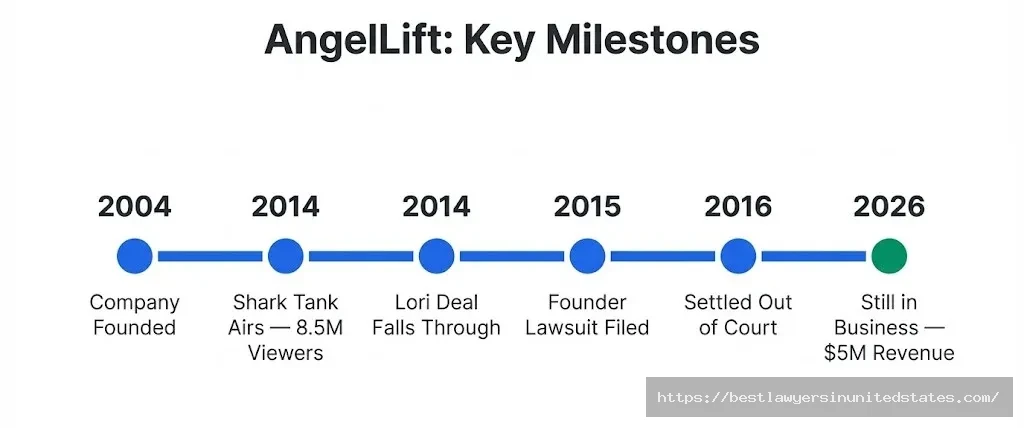
AngelLift has expanded well beyond its original single strip since 2014. Here’s what the company currently offers:
| Product | Description | Key Claim |
|---|---|---|
| Original DermaStrips | Flexible strips, beginner pressure level | Smooth nasolabial folds and smile lines |
| Professional DermaStrips | Adjustable pressure, customizable fit | Stronger lift, sold via medical/spa channels too |
| Vermilion Vital | Targets the lip border specifically | Reduces vertical lip lines (“smoker’s lines”) |
| Derma Lips | Designed to add volume and shape to thinning lips | Restores lip fullness without fillers |
| pH Kits / Fusione | Low-pH collagen fluid used with DermaStrips | Claims to support skin elasticity alongside mechanical lifting |
| DermaSome | Facial moisturizer | Used as a complement to strip treatments |
The DermaStrips themselves are made from surgical-grade hydrogel — soft, flexible, and hypoallergenic. You place one inside the mouth, between the upper or lower lip and the gum line, leave it in for 10–30 minutes while you read or watch TV, then remove it. The company recommends daily use for 30 days, then scaling down to maintenance use once per week. The Vet Life Lawsuit Outcome
How the Technology Works (or Claims To)
The science AngelLift cites is pressure-based. As gums naturally recede with age, the skin above them loses structural support — like removing a frame from under a tent. The DermaStrips are designed to replace that lost volume with mechanical pressure, which the company says stimulates collagen production and gradually lifts the surrounding skin.
This is plausible in the same way orthodontic pressure is plausible — sustained mechanical force does influence soft tissue over time. The question is whether 30 minutes a day is enough force, applied in the right way, to produce visible cosmetic change. The answer varies significantly by user.
A 2007 Canadian clinical study found that 84% of participants reported seeing “facial improvement” while using the device. That study is often cited by AngelLift in marketing. Independent dermatological reviews of the product are mixed — some find the mechanism credible, others note the lack of large-scale peer-reviewed trials.
What Customers Actually Say
Consumer reviews for AngelLift are genuinely polarized, which is worth noting for anyone considering the product.
Positive feedback tends to say:
- Noticeable improvement around smile lines and lip borders after consistent use
- Customer service is responsive and helpful
- A real alternative to Botox for people who want something non-invasive
- Results improve gradually over weeks rather than appearing overnight
Critical feedback tends to say:
- No visible results after 30 days of daily use
- Shipping delays and difficulty getting refunds processed
- The $10 “medical disposal fee” applied to returned DermaStrips (which AngelLift classifies as medical waste) surprises some customers
- Some users find the strips uncomfortable to wear for the full recommended time
The company’s Trustpilot reviews and PissedConsumer ratings skew toward mixed-to-negative (around 2.3 out of 5 on some platforms), while its own website and selected review aggregators show stronger positive sentiment. This pattern — wide variance in reported results — is common for products where outcomes depend heavily on individual physiology, consistency of use, and realistic expectations.
AngelLift’s Timeline: The Full Picture
| Date | What Happened |
|---|---|
| 2003 | Product concept developed; original dental-installed version created |
| 2004 | Medical Matrix, LLC begins supplying strips to professionals |
| 2007 | Canadian study: 84% of users see facial improvement |
| 2011 | Consumer DermaStrips launched over-the-counter |
| 2013 | AngelLift films Shark Tank Season 5 episode |
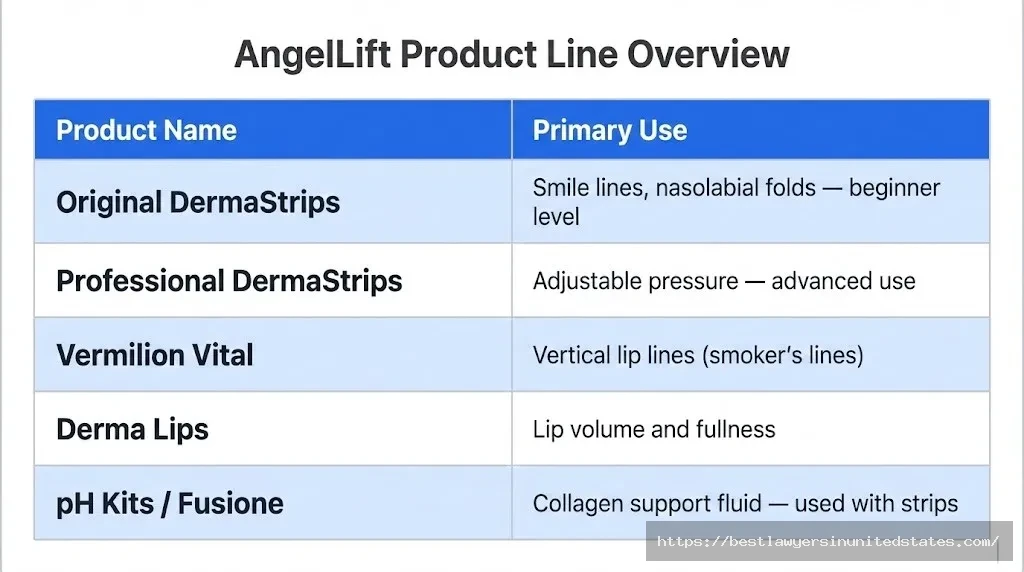
| May 2, 2014 | Episode airs; 8.5 million viewers — Shark Tank record at the time |
| 2014 | Deal with Lori Greiner falls through; AngelLift builds e-commerce independently |
| 2015 | Co-founder Aaron Bruce sues co-founder Jason Wells for fraud and breach of contract |
| 2016 | Lawsuit settled out of court; terms undisclosed |
| 2021 | Revenue reported at ~$5 million annually; company exits Amazon to sell direct |
| 2023 | 100,000+ customers served; estimated net worth ~$5 million |
| June 2025 | Receives BBB accreditation in San Diego, CA |
| 2026 | Still in business; Aaron Bruce listed as Director of Product Development |
Where AngelLift Stands Today (2026)
AngelLift is a small but durable company. It doesn’t have the explosive growth trajectory of a venture-backed startup, and it didn’t need it — the Shark Tank exposure gave it years of organic momentum, and the decision to move away from Amazon and build a direct-to-consumer brand turned out to be a smart long-term play.
The company sells exclusively through its official website (angellift.com) and select medical spas for the professional line. Annual revenue has held steady at an estimated $4–5 million for several years. It offers a 30-day money-back guarantee for first-time buyers (though the $10 medical disposal fee for returned strips and the requirement to email for an RMA number have generated some consumer friction).
Aaron Bruce remains active in product development. The company has continued releasing new products — the Vermilion and Derma Lips lines, for example — rather than resting solely on its original DermaStrips.
For what it is — a niche anti-aging device that works for some people and not for others — AngelLift has built a remarkably resilient business out of a genuinely unusual premise.
Frequently Asked Questions
Is AngelLift currently in a lawsuit? No. AngelLift’s own support team has addressed this directly. There is no active consumer lawsuit or class action involving the company. The only legal dispute in AngelLift’s history was a private 2015 founder-vs-founder case between Aaron Bruce and Jason Wells, which settled out of court in 2016 with no consumer impact.
Did the Shark Tank deal with Lori Greiner close? No. Lori offered $500,000 for 15% equity on the condition that the funds go toward QVC purchase orders. After filming, Aaron declined to appear on QVC, and the deal never finalized. AngelLift went on to build its business independently.
Who founded AngelLift? The primary public face of AngelLift is Aaron Bruce, who has been described as the founder and product developer. Jason Wells was a co-founder who was later sued by Bruce in 2015 over claims about the product’s origins and profit-sharing. The case settled in 2016. Today, Aaron Bruce is listed as Director of Product Development.
Does AngelLift actually work? Results vary considerably. The pressure-based mechanism has some scientific plausibility, and a 2007 Canadian study found 84% of participants reported improvement. Consumer reviews are split — some users see real results after consistent use, while others report no change after 30+ days. Independent dermatological reviews are mixed. Anyone considering the product should approach it with realistic expectations and take advantage of the 30-day return window if results don’t follow.
Where can I buy AngelLift? AngelLift sells directly through its official website at angellift.com. The company moved away from Amazon around 2021 to focus on direct-to-consumer sales. The Professional DermaStrips line is also available through select medical spas and dental or esthetician offices.
Is AngelLift a scam? AngelLift is a real, registered U.S. business with BBB accreditation (awarded June 2025). It has been operating for over 20 years and has served more than 100,000 customers. That said, it is a premium-priced product ($79–$119+) with highly variable results, and some customers have reported difficulty with returns and customer service. Whether it’s “worth it” depends entirely on the individual.
What’s the difference between the Original and Professional DermaStrips? The Original DermaStrips apply a standard level of pressure and are best suited for first-time users or milder concerns. The Professional DermaStrips allow for adjustable pressure and a more customized fit — they’re also sold through medical and spa channels, though the over-the-counter version is available on the website. The Professional line is generally recommended for more pronounced concerns or experienced users.
What happened to AngelLift after Shark Tank? In the months after the episode aired, sales jumped significantly — the company reported $3 million in near-immediate revenue from the show’s exposure. AngelLift expanded its Amazon presence, then later pulled back from Amazon to protect its brand and sell direct. A founder lawsuit in 2015–2016 caused internal disruption but didn’t derail the company. By 2021–2023, annual revenue had stabilized around $5 million.
