
Updated on October 19, 2025, this guide reflects how modern law firms and courtrooms interpret professional attire today. It now clarifies what qualifies as professional attire for lawyers, what to wear when meeting a lawyer for the first time, and which shoes and colors fit formal versus business-casual settings. These small but crucial updates ensure every legal professional or student projects confidence both in person and on screen.

Why Lawyer Attire Matters More Than You Think
Whether you’re stepping into a courtroom or meeting a client for the first time, your outfit says a lot before you even speak. Lawyer attire isn’t just about looking good—it’s about projecting confidence, professionalism, and credibility.
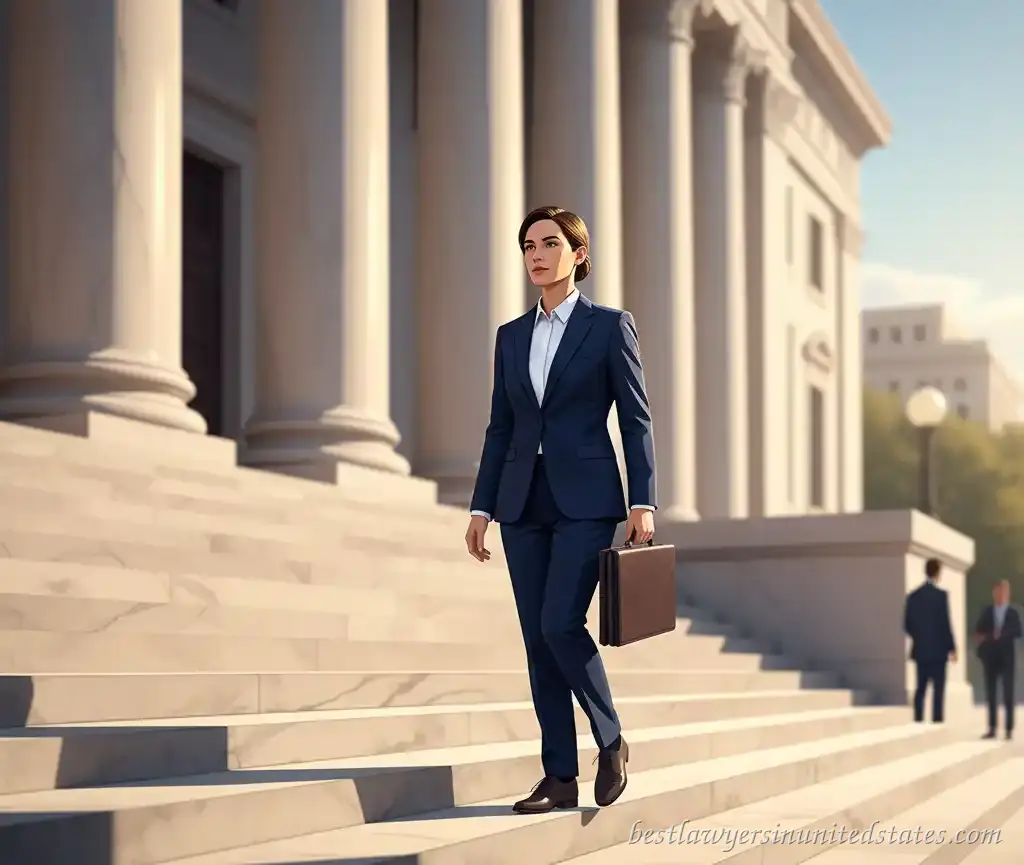
If you’re unsure what qualifies as professional attire for lawyers, think in terms of respect and confidence. A tailored dark suit, light shirt, and clean shoes show you take both your role and your client seriously.
Traditional Courtroom Dress Code
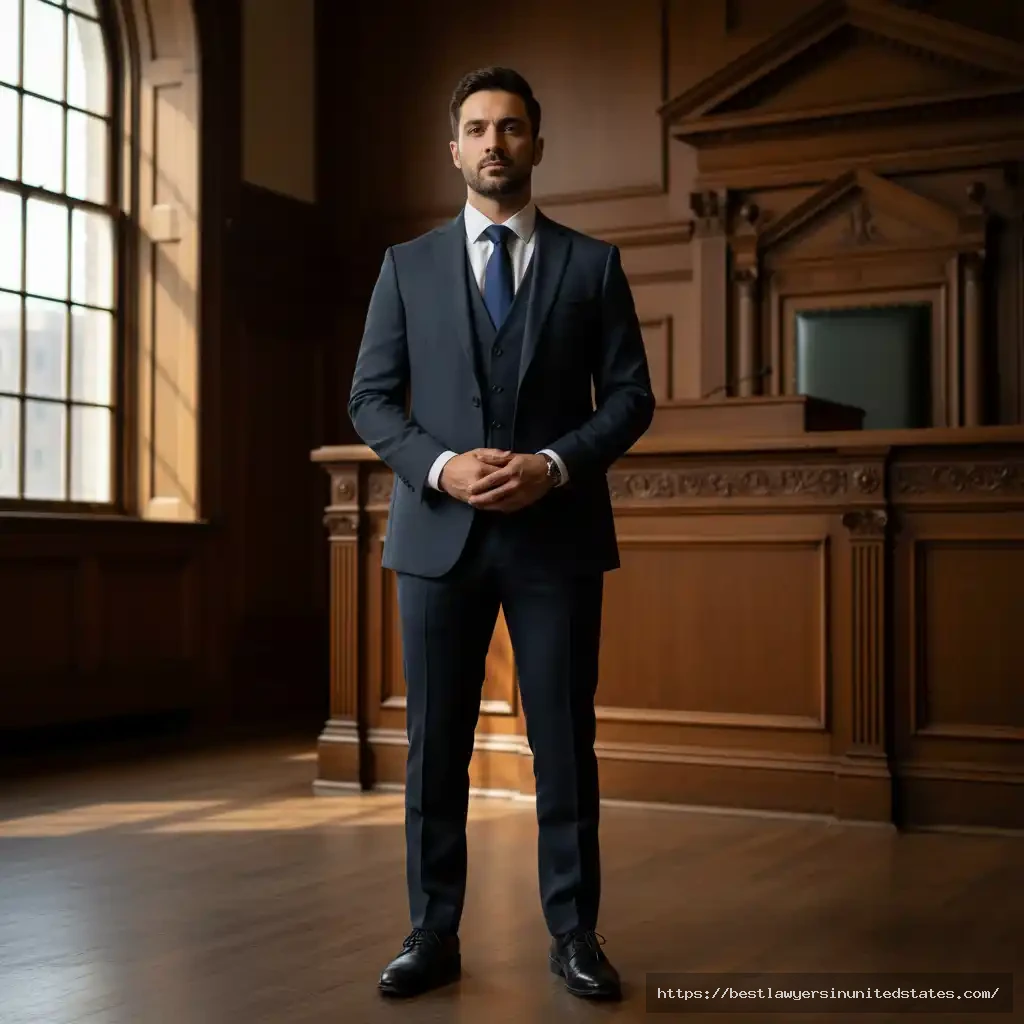
The Classic Lawyer Look
Think tailored suits, pressed shirts, and polished shoes. A classic lawyer outfit includes a dark-colored suit (like navy, charcoal, or black), a white or light-colored dress shirt, and conservative footwear. This timeless look has stood the test of time in legal settings.
Many search for what lawyers wear outside court. Most legal offices still prefer business attire, while a few modern firms allow business casual when meeting internally or working remotely.
For a deeper look at how fit and fabric choices affect confidence in court, explore these suit style tips that win cases from seasoned attorneys.
Courtroom Rules and Formality
Courts often have strict dress codes. Judges expect lawyers to wear clothing that respects the seriousness of legal proceedings. This means avoiding flashy colors, loud patterns, or anything that could distract from the case at hand.
The dress code for lawyers in court remains conservative: dark suit, crisp shirt or blouse, and well-polished shoes. Judges and juries often notice presentation before argument, making professionalism essential.
For courtroom-ready inspiration, explore these outfits that command respect in court while meeting every professional standard.
“A lawyer’s outfit isn’t about fashion—it’s about trust. The right suit tells your client you’re serious before you ever speak.”
Male Lawyer Attire Essentials
Suits and Ties
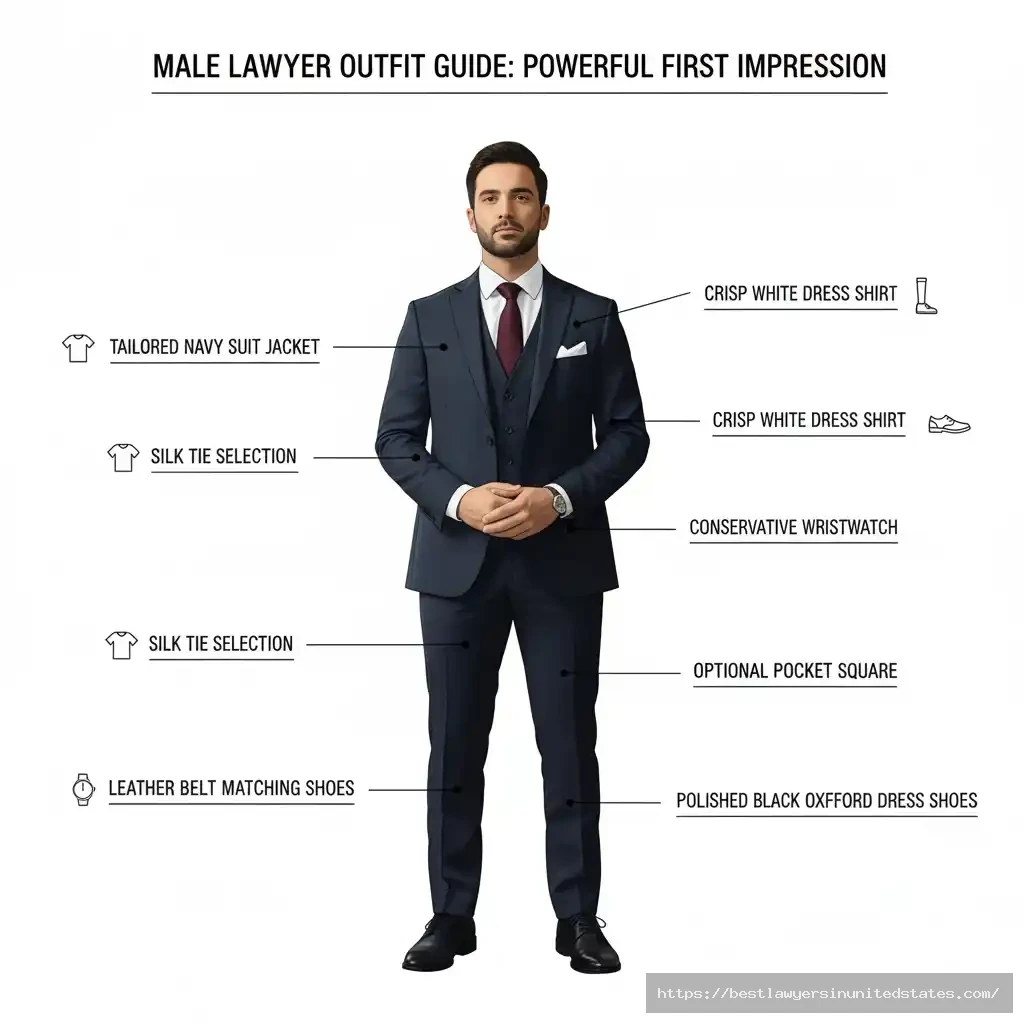
A well-fitted suit is non-negotiable for male lawyers. Opt for dark hues with minimal pinstripes. Pair it with a quality tie—nothing too bold. Solid, muted ties are a safer bet for courtroom appearances.
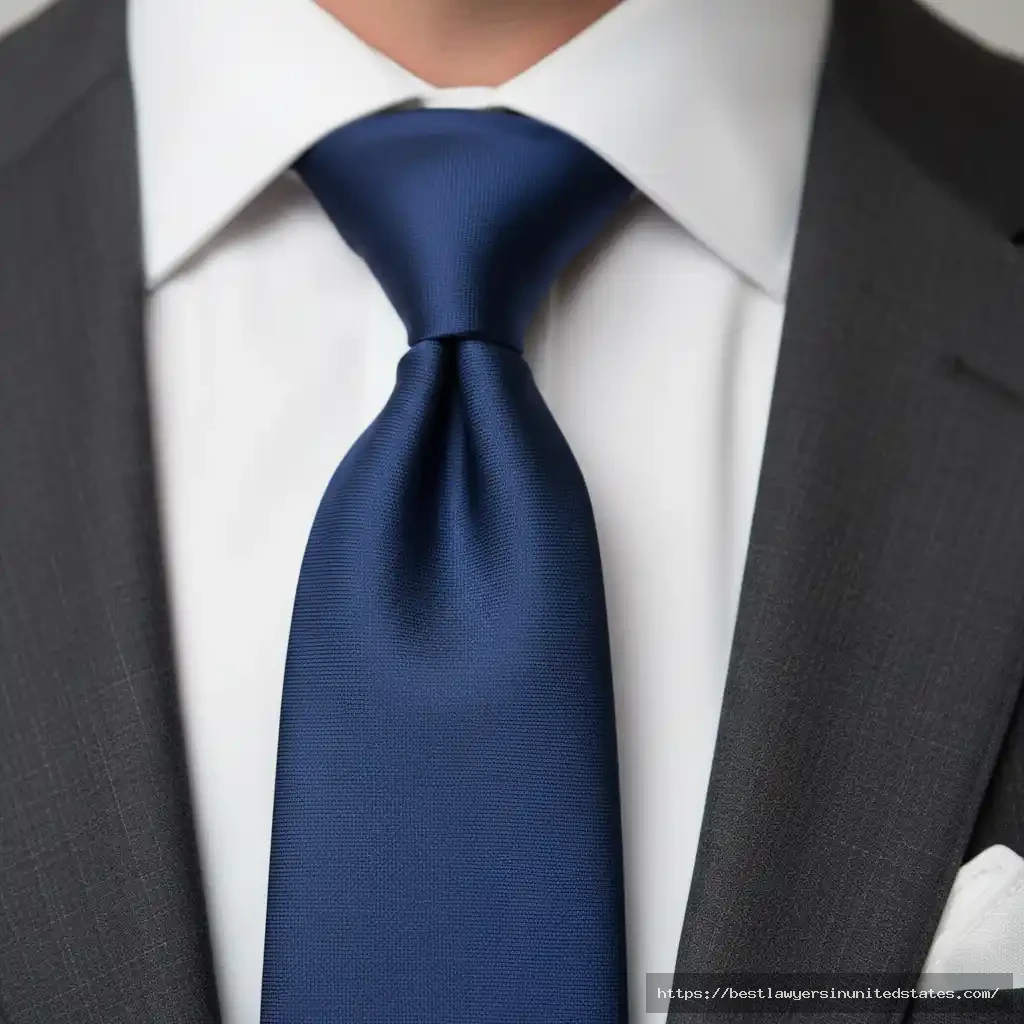
Lawyer dress code male standards favor mid-weight wool suits in navy or charcoal, paired with muted solid ties and matching belts and shoes—simple choices that project credibility.
Shirts and Accessories
Stick with white or pale blue shirts. Accessories should be minimal—think a conservative watch and maybe a pocket square (if appropriate). Avoid loud cufflinks or anything flashy.
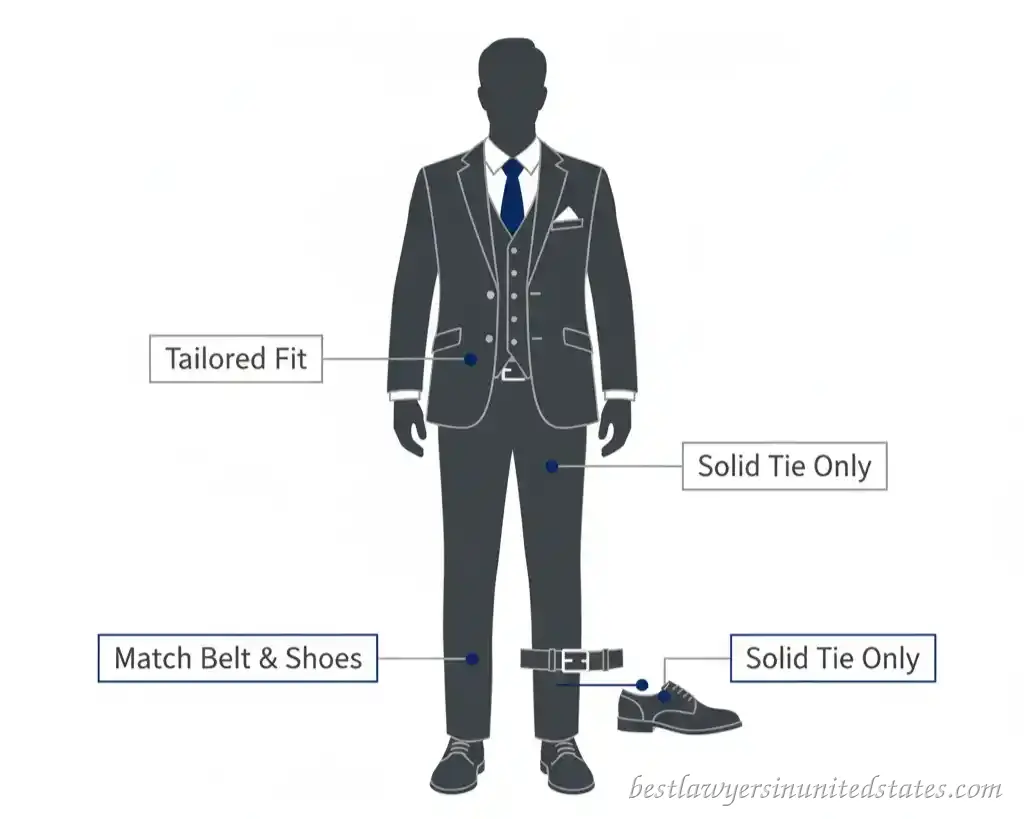
What suits do lawyers wear most often? Mid-weight wool in navy or charcoal because it holds shape year-round and pairs easily with white or light-blue shirts.
Female Lawyer Attire Essentials
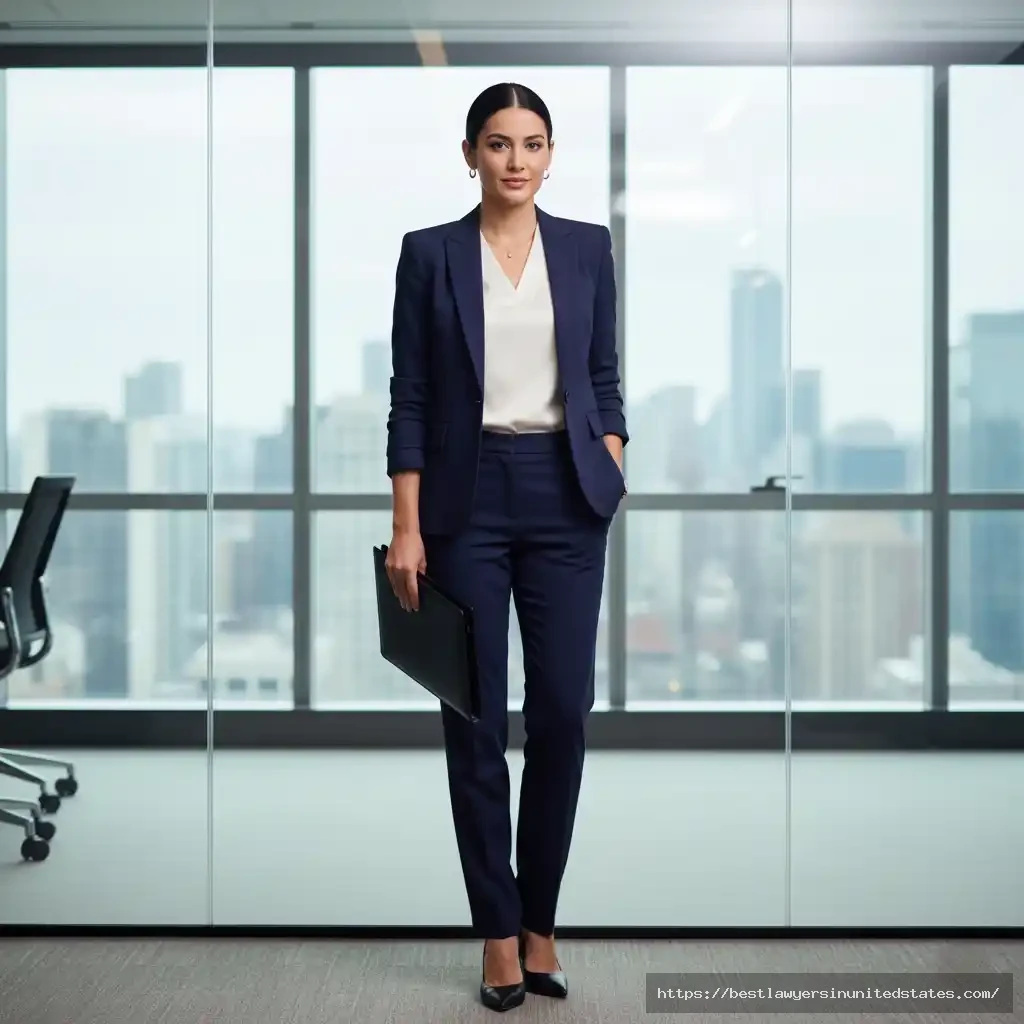
Professional Suits and Dresses
Women lawyers have flexibility but should still maintain a polished look. Tailored pantsuits, skirt suits, or knee-length professional dresses work well. Stick to neutral tones like black, navy, or gray for formal court settings.

For readers comparing lawyer attire female options, structured pantsuits and sheath dresses with blazers remain court-approved, combining polish with practicality.
You can also check this female lawyer dress code guide for more examples of modern yet courtroom-appropriate looks.
Footwear and Accessories Courtroom Rules and Formality
Closed-toe pumps or low heels are recommended. Flats are acceptable if they’re clean and professional. Keep jewelry minimal and elegant. Avoid overly bright nail polish and large bags or purses.
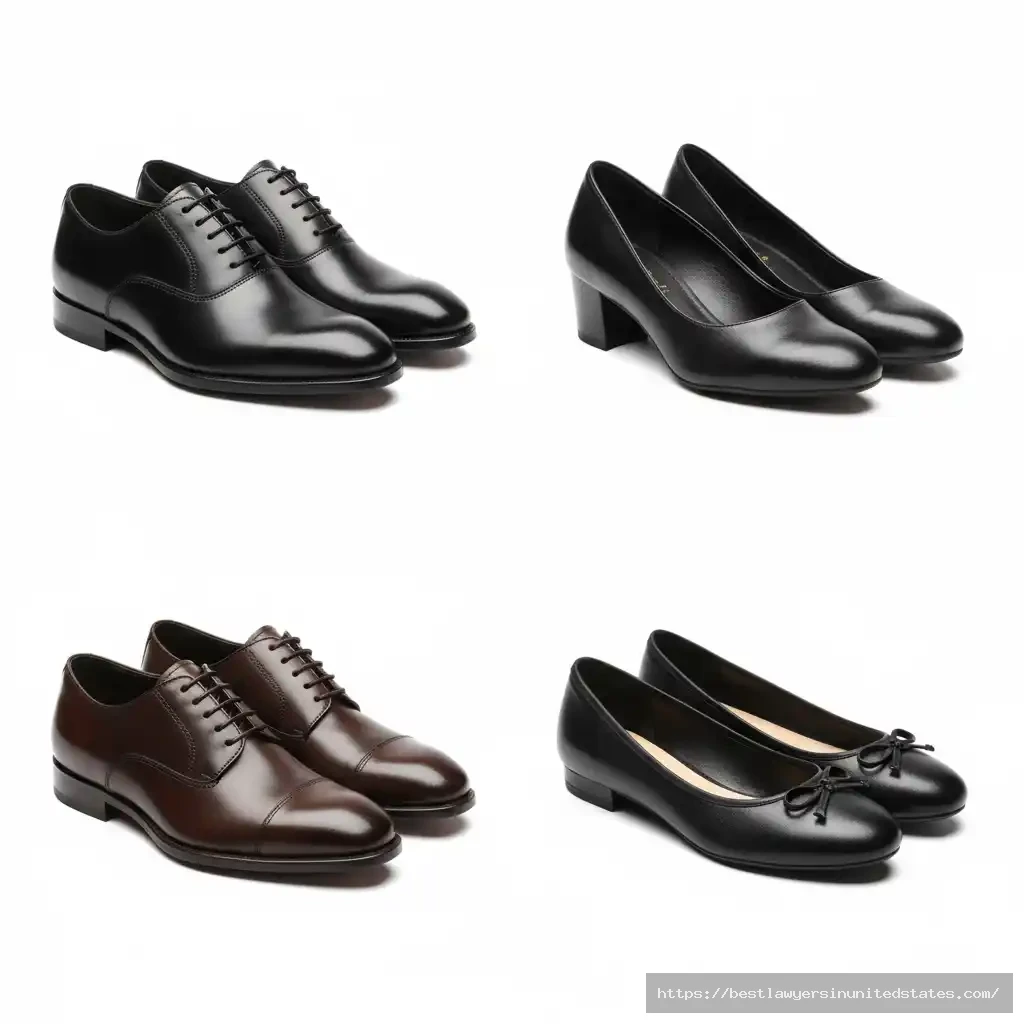
Shoes for lawyers should be classic and understated—closed-toe heels or flats that are neat and comfortable enough for long proceedings.
Subtle grooming and posture choices also matter—see how small adjustments can refine your professional image and aesthetics for lawyers.
What Not to Wear as a Lawyer
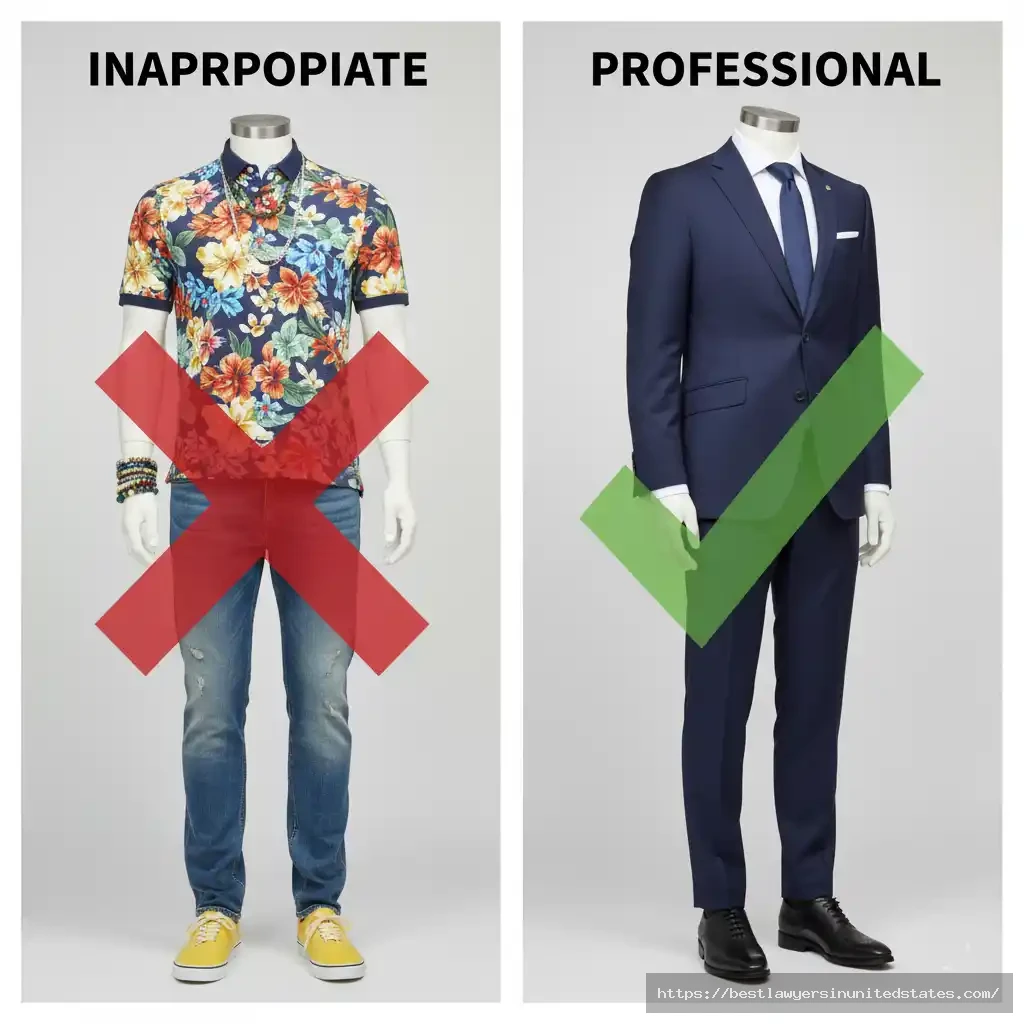
Avoiding Casual or Distracting Clothes
Denim, sneakers, bright colors, and casual tops have no place in most legal settings. Even in less formal environments like mediation or arbitration, it’s wise to stick with business attire that communicates professionalism.
When in doubt, lean toward neutral tones and structured pieces that show respect for your role.
Over-accessorizing
Too many accessories or flashy personal style statements can undermine your credibility. Keep your look focused on your expertise—let your words, not your wardrobe, make the impression. Simple jewelry, clean lines, and minimal patterns maintain authority and trust.
Dressing for Different Legal Settings
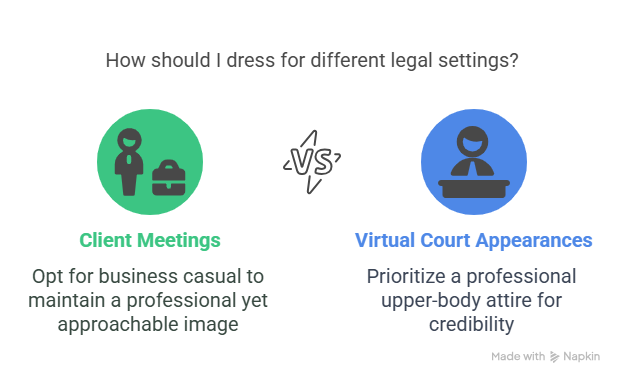
Client Meetings

Depending on the client and setting, you can dress slightly less formally but still project confidence. Business casual works when tailored—think slacks or a knee-length skirt with a blazer instead of a full suit.
Law firm dress code policies vary, so confirm your office standard. When unsure, business attire is the safest choice; it looks respectful in client-facing situations and photographs well for firm profiles or websites.
Virtual Court Appearances
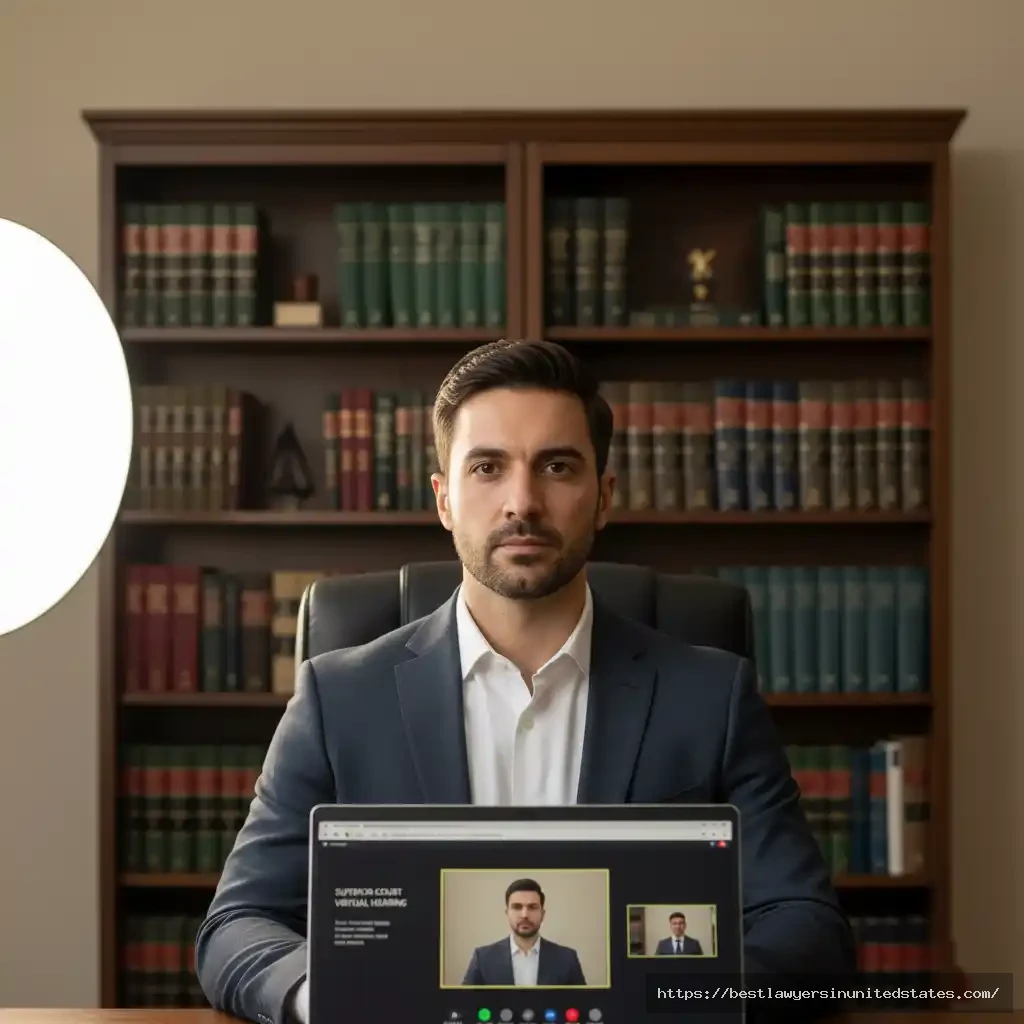
With the rise of remote hearings, presentation still matters. Wear a structured blazer or suit jacket with a crisp shirt, avoiding loud prints or shiny fabrics that reflect on camera.
Legal professional attire applies online, too—matte textures and solid colors convey polish even through a screen.
Seasonal Lawyer Attire Tips
Summer
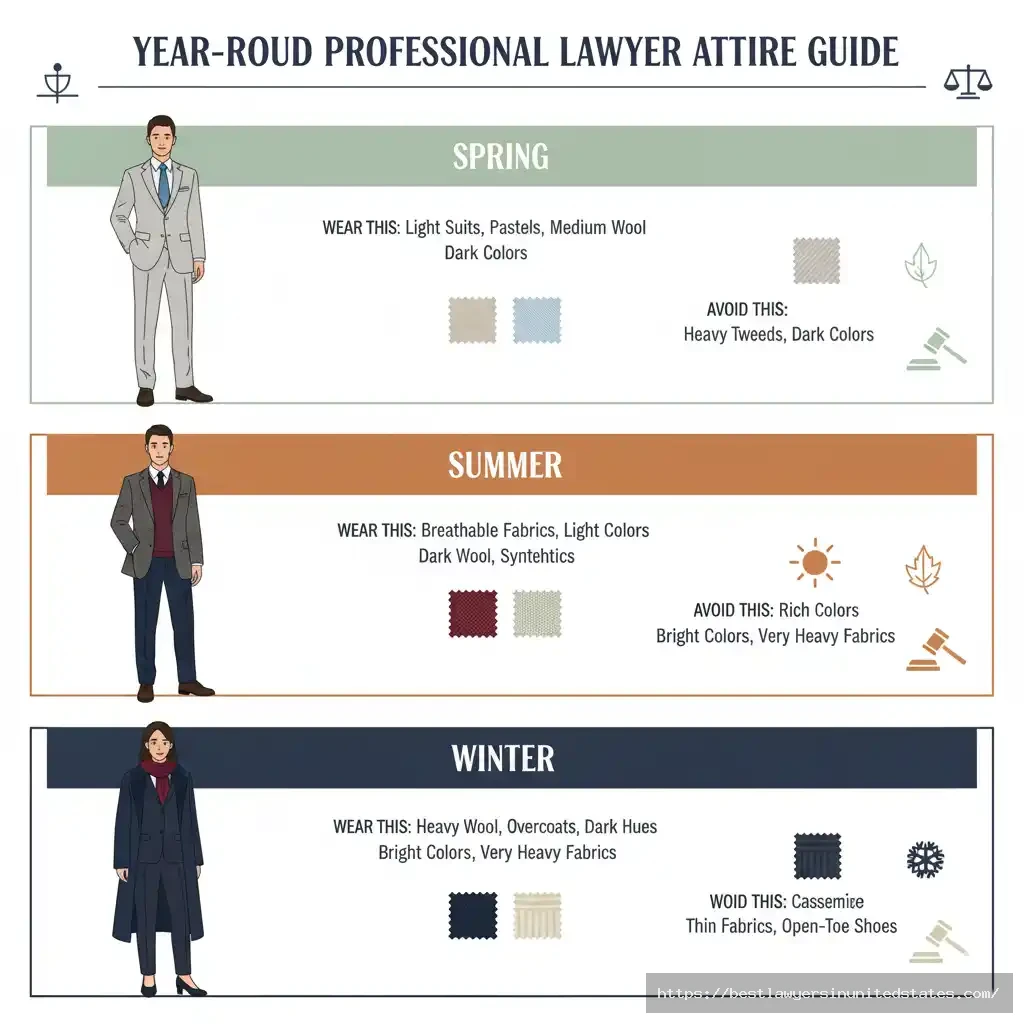
Casual lawyer outfits belong outside the courtroom. Even in warm weather, avoid short sleeves, sandals, or overly light fabrics that wrinkle easily.
| Season | Fabric Choice | Recommended Colors | Avoid |
|---|---|---|---|
| Summer | Linen blends, lightweight wool, cotton | Light gray, stone, sky blue | Short sleeves, sandals, thin linen |
| Winter | Wool, tweed, layered cotton | Charcoal, navy, burgundy | Bulky scarves, casual outerwear |
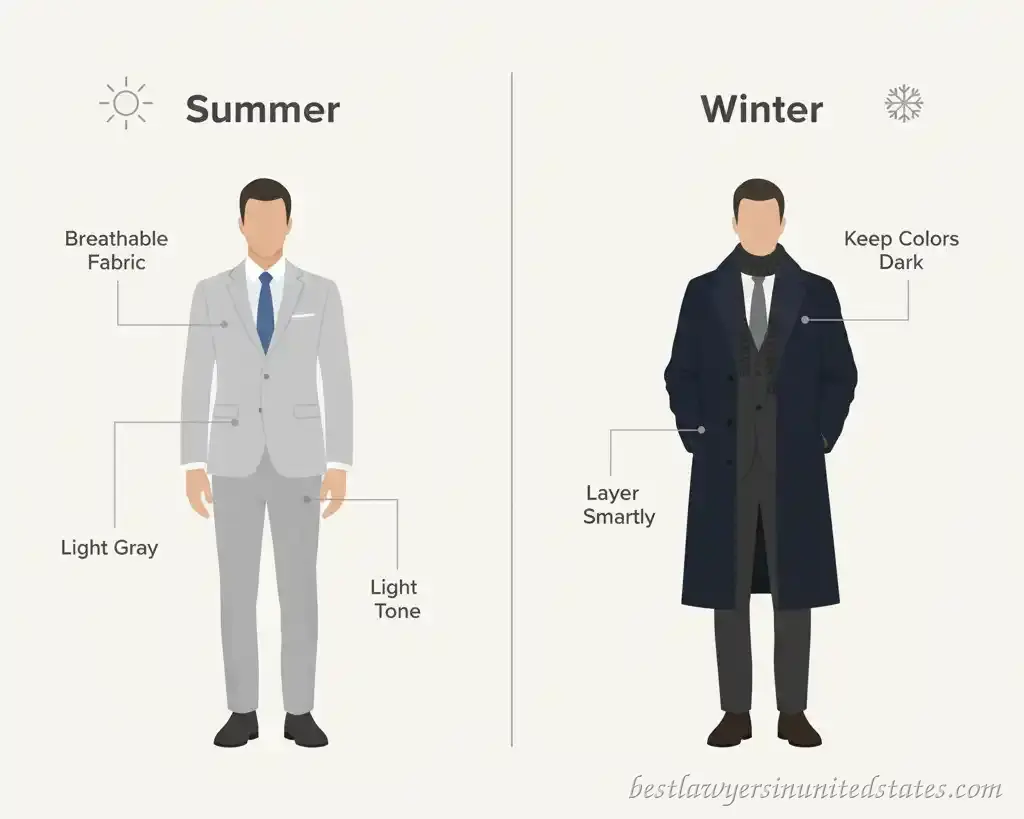
Choose breathable materials like linen blends or lightweight wool in lighter shades such as stone, light gray, or sky blue—still professional but seasonally smart.
Winter
Layer with tailored precision. Wool suits, cashmere blends, and long overcoats keep you warm while maintaining a formal silhouette. Add gloves and scarves in muted tones that complement your suit.
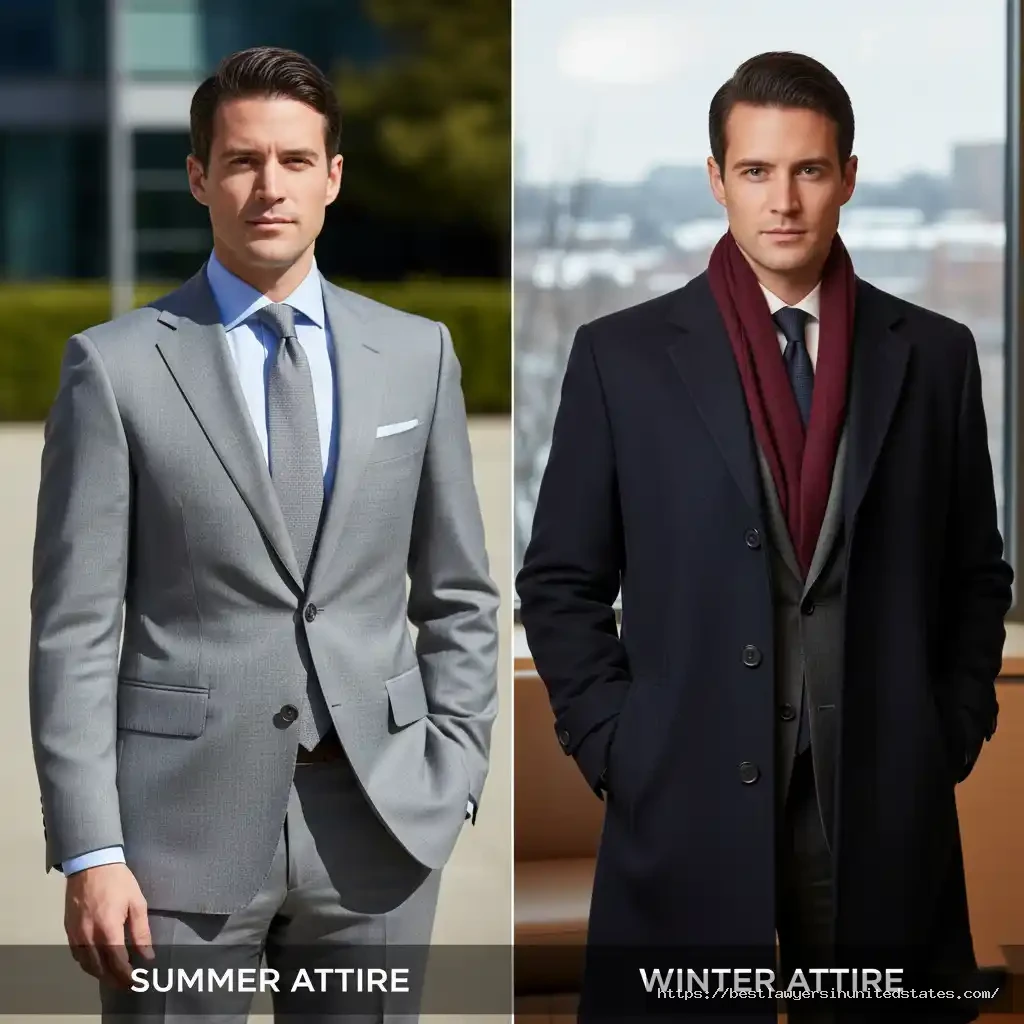
A structured look in cold months signals discipline and attention to detail.
Lawyer Attire Around the World
UK Legal Attire
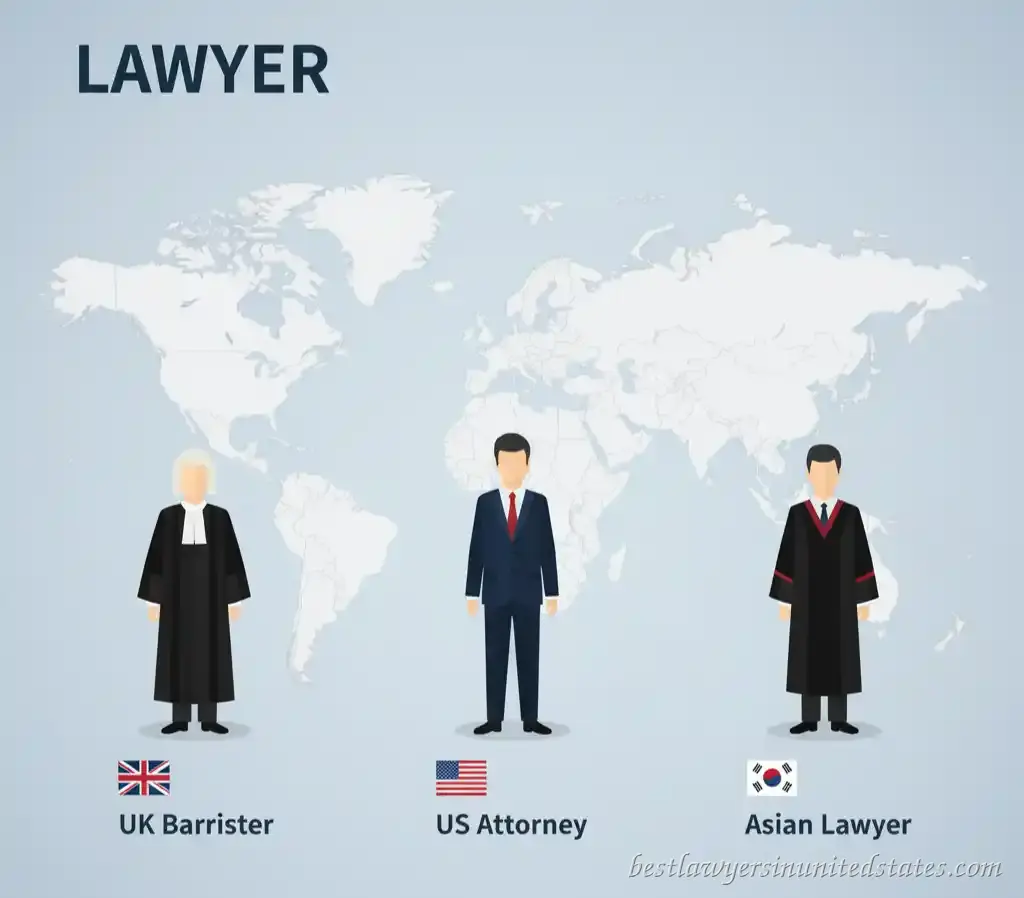
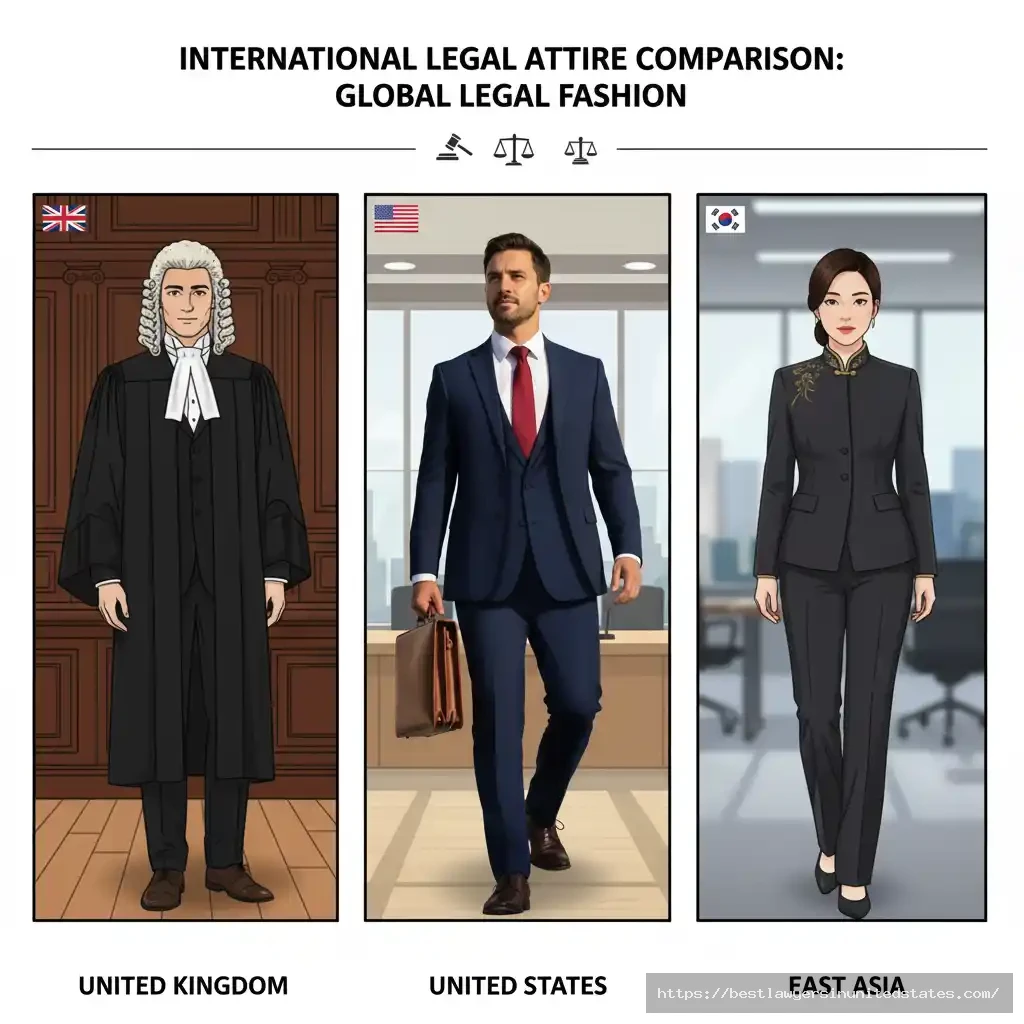
In the UK, barristers traditionally wear wigs and gowns, symbolizing continuity and formality in court. Solicitors and other legal professionals typically wear dark, conservative suits that align with the formality of proceedings.
United States Style
In the United States, most lawyers follow business formal attire for court appearances—suits in navy, charcoal, or black with light shirts. Law offices may permit business casual on non-court days, but professionalism remains the rule.
Other Cultural Variations
In many countries, local customs and ceremonial robes define legal dress. Always research the specific region’s traditions before appearing in an international or cross-border legal event to ensure you meet expectations respectfully.
Lawyer Dress Code Male vs Female

While courtroom standards apply equally to everyone, small distinctions exist between male and female lawyer attire. Male lawyers typically wear structured two-piece or three-piece suits in dark colors, paired with muted ties and polished dress shoes.
Female lawyers often choose tailored pantsuits, skirt suits, or sheath dresses with blazers in neutral tones. The goal for both is identical—project confidence and authority while maintaining understated professionalism.
| Aspect | Male Lawyers | Female Lawyers |
|---|---|---|
| Core Outfit | Two or three-piece dark suit (navy, charcoal, or black) | Tailored pantsuit, skirt suit, or sheath dress with blazer |
| Shirts / Blouses | White or pale blue dress shirt | White, ivory, or pastel blouse or shirt |
| Shoes | Polished leather shoes, matching belt | Closed-toe pumps or flats, minimal heel |
| Accessories | Conservative tie, simple watch, no flashy cufflinks | Minimal jewelry, neat hairstyle, classic bag |
| Common Mistakes | Loud ties, unpressed shirts | Bright nail polish, oversized bags |
| Best Practice | Keep color palette neutral and formal | Match outfit tone to client or court setting |
Modern Trends in Lawyer Fashion

Business Casual Law Offices
Some modern law firms have embraced a relaxed approach, but professionalism still applies. Jeans may be acceptable only when paired with a blazer and formal shoes. When in doubt, lean conservative—first impressions in legal settings still matter.
Sustainable and Ethical Fashion
Eco-conscious attire is gaining ground in the legal community. Recycled fabrics, organic cotton, and ethically made suits align with modern professionalism and responsibility. Sustainable fashion reflects a lawyer’s awareness of broader ethical values.
Tips to Build a Lawyer Wardrobe on a Budget
Invest in Staples First
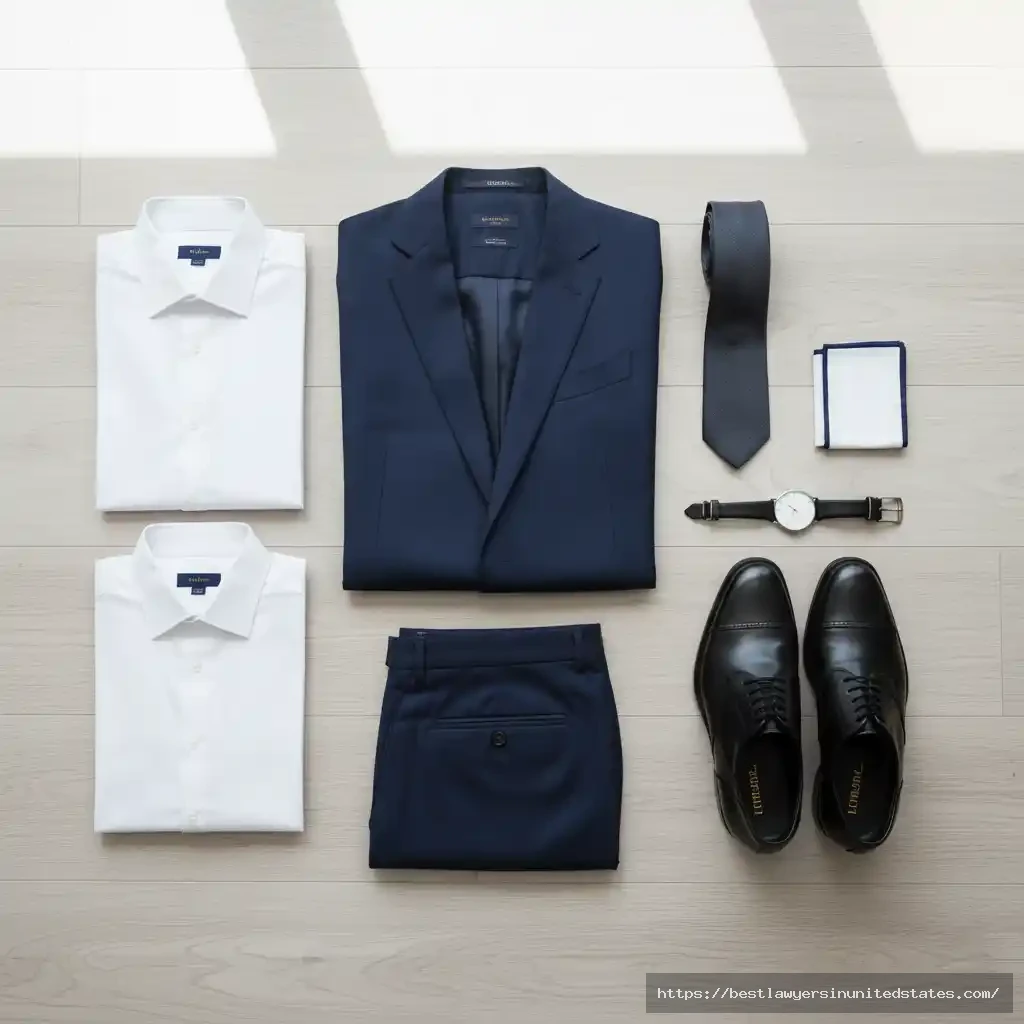
Start small and strategic—one quality dark suit, two shirts, polished dress shoes, and a classic tie or scarf create a foundation for professionalism. Quality basics save money over time because they last longer and maintain shape.
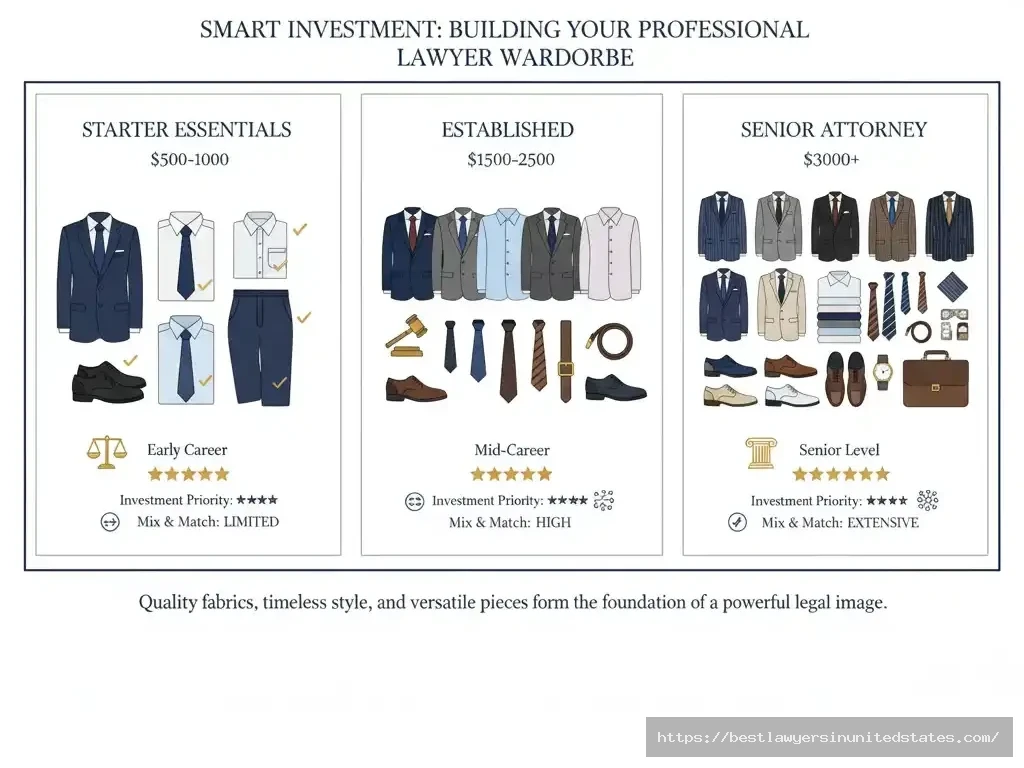
Buying one premium suit that fits perfectly is better than owning several cheap ones. A well-tailored outfit builds authority, lasts longer, and can be restyled for any legal setting.
Quick Budget Tip
Mix and Match Basics
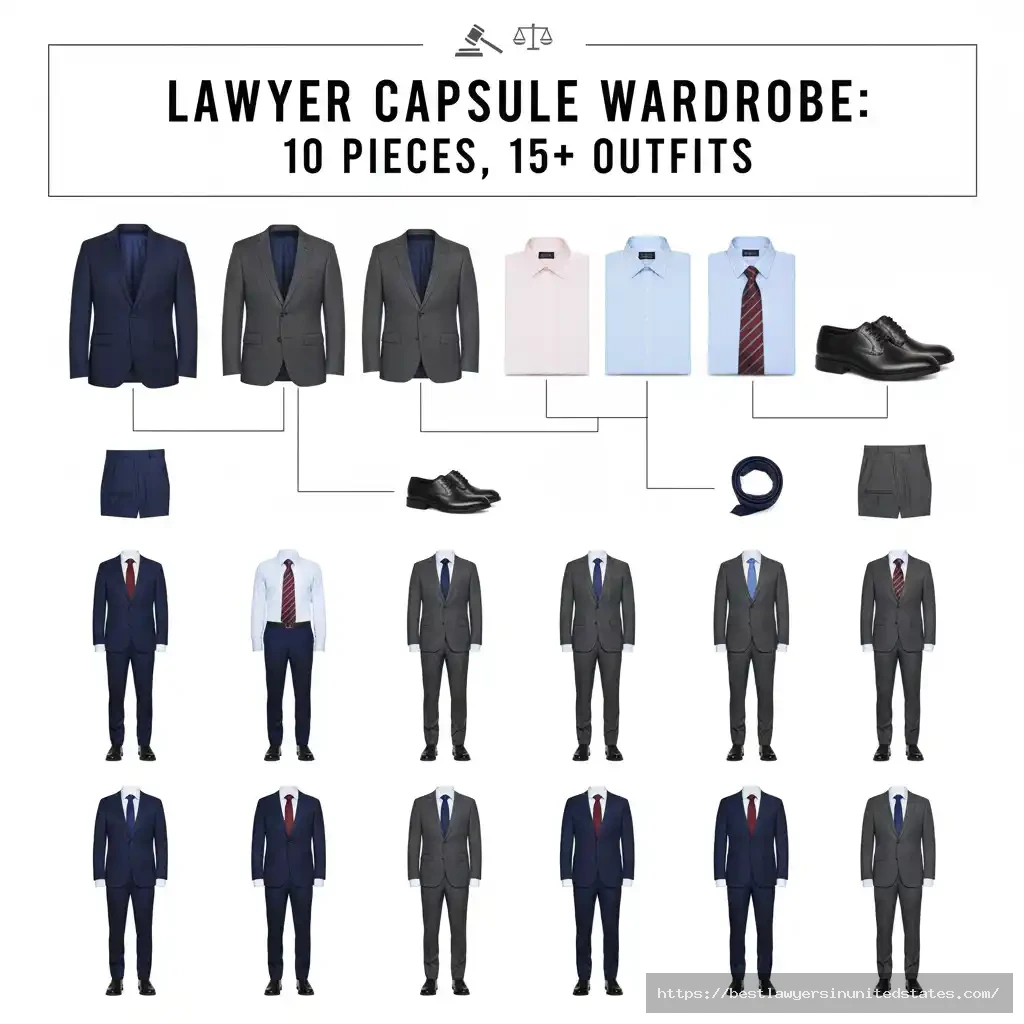
Neutral colors such as navy, black, gray, and white let you create multiple outfits from limited pieces. Combine blazers, pants, and shirts for fresh looks without overspending. A well-curated capsule wardrobe ensures you’re always courtroom-ready.
Conclusion
Lawyer attire plays a huge role in how you’re perceived in the legal field. Whether you’re meeting clients, arguing a case, or attending a virtual hearing, your appearance should reflect your professionalism. A clean, conservative, and well-fitted outfit helps build trust and authority. Remember, in law, you never get a second chance to make a first impression—so dress the part.
If a query or reference comes from pop culture or regional custom, check the local court’s posted rules to avoid confusing fashion trends with formal legal dress standards.
FAQs About Lawyer Attire
1. Can lawyers wear casual clothes at work?
Some firms allow business casual, but formal court appearances always require a suit.
2. Are female lawyers allowed to wear pants?
Absolutely. Pantsuits are fully professional and widely accepted.
3. What colors should a lawyer avoid?
Neon, bright red, and overly patterned clothes can be distracting and are best avoided.
4. Can lawyers wear sneakers?
No. Even in casual settings, sneakers are generally too informal.
5. How should law students dress for internships?
Dress like a professional lawyer—dark suits, simple accessories, and polished shoes are best.
What qualifies as professional attire for lawyers?
Professional attire for lawyers means a dark suit, light shirt or blouse, conservative shoes, and minimal accessories—showing respect for the court and client.
What do lawyers wear to work?
Most lawyers wear business formal outfits like suits or blazers with dress pants or skirts. Some firms allow business casual only on non-client days.
What shoes should a lawyer wear?
Closed-toe leather shoes or modest heels with a polished finish are preferred. Sneakers, sandals, or flashy footwear are not considered professional.
Can lawyers wear jeans in the office?
Only in rare business-casual settings and never in court. When permitted, jeans should be dark, plain, and worn with a blazer and dress shoes.
What is the difference between formal and professional attire for lawyers?
Formal attire suits courtroom or client presentations—think full suits—while professional attire can be slightly relaxed but still sharp and conservative for daily office work.

Comments
I love my people