
Choosing the right lawyer suit isn’t just about looking professional—it’s about projecting authority, earning client trust, and commanding respect in the courtroom. Whether you’re a new associate building your first professional wardrobe or a seasoned attorney refining your style, the suits you wear directly impact how clients, judges, and colleagues perceive you.
In the legal profession, your appearance speaks before you do. A well-fitted, appropriately styled suit signals competence, attention to detail, and respect for the profession. But with countless options for colors, fabrics, fits, and price points, how do you choose the right lawyer suit?
This comprehensive guide covers everything you need to know: from selecting the best suit colors and fabrics to understanding when to wear a two-piece versus a three-piece suit, how much to invest, and how to dress appropriately for court versus office settings. For broader professional appearance advice, see our complete lawyer attire guide.

Whether you’re male or female, working in a large firm or running your own practice, you’ll find actionable advice to build a professional wardrobe that enhances your credibility and career.
What Is a Lawyer Suit & Why Appearance Matters
A lawyer suit is the cornerstone of professional legal attire—a carefully chosen ensemble that communicates credibility, professionalism, and authority. Unlike casual business wear, lawyer suits follow conservative, time-tested standards designed to maintain courtroom decorum and client confidence.
Why Your Suit Matters in the Legal Profession
First impressions form within seconds. When you walk into a courtroom, client meeting, or networking event, your appearance immediately signals your professionalism and preparedness. Research shows that professionally dressed attorneys are perceived as more competent, trustworthy, and successful.
Beyond perception, many courts have explicit dress codes requiring formal business attire. Judges expect lawyers to dress in a manner that shows respect for the legal process. Additionally, clients—especially those paying premium hourly rates—expect their legal counsel to look the part. Your suit is an investment in your professional image and, ultimately, your career success.
The traditional lawyer suit aesthetic remains conservative and timeless: think navy, charcoal, or dark gray suits paired with crisp dress shirts and understated accessories. While fashion trends come and go, the legal profession values consistency, tradition, and respect for established norms.
Types of Lawyer Suits Explained
Understanding the different types of lawyer suits helps you choose the right option for various professional settings.

Two-Piece Suits
The two-piece suit is the workhorse of any lawyer’s wardrobe. It includes a matching jacket and trousers—nothing more, nothing less.
This is your go-to option for everyday office wear, client consultations, and most court appearances. It’s versatile, professional, and never out of place. Most lawyers own multiple two-piece suits in different colors and rotate them throughout the week.
Three-Piece Suits
A three-piece suit adds a matching vest (waistcoat) to the jacket and trousers. This creates a more formal, polished appearance that conveys extra authority.
Three-piece suits work particularly well for:
- Important court appearances
- High-stakes client meetings
- Formal legal events and conferences
- Colder months when you want added warmth without wearing your jacket constantly
The vest also gives you flexibility—you can remove your jacket in the office while still looking fully dressed and professional.
Single-Breasted vs. Double-Breasted Suits
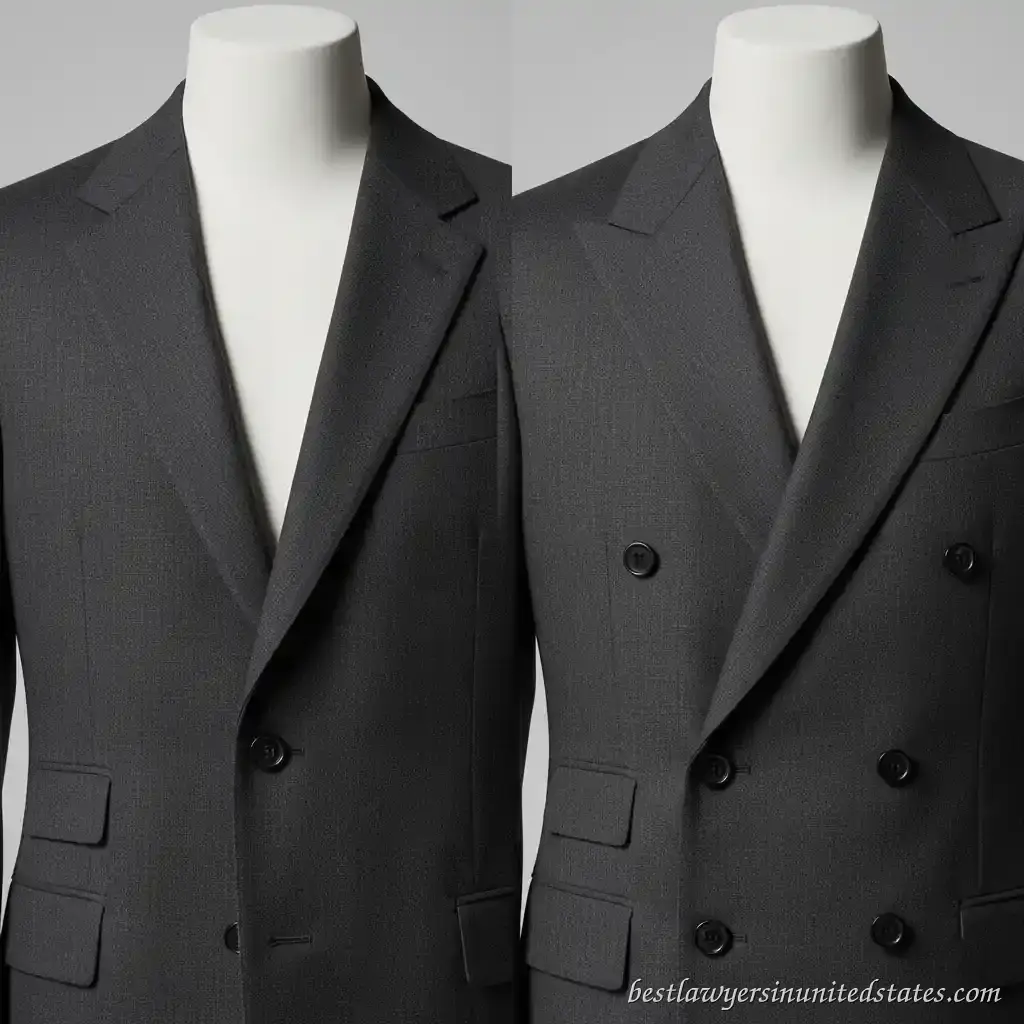
Most lawyer suits are single-breasted, meaning the jacket has one row of buttons and a simple overlap in front. This style is classic, versatile, and appropriate for all professional settings.
Double-breasted suits have two parallel rows of buttons and a wider overlap. They look more formal and commanding but can appear overly traditional or even dated if not styled correctly.
For lawyers, single-breasted suits are the safer, more practical choice. Save double-breasted styles for special occasions or if you have a strong personal style preference.
Custom vs. Made-to-Measure vs. Off-the-Rack
Here’s where your budget and fit preferences come into play:
Off-the-Rack:
These are pre-made suits in standard sizes available at most retailers. They’re the most affordable option, typically ranging from $200 to $800. You’ll likely need minor alterations (hemming pants, adjusting sleeve length) to get a proper fit.
Made-to-Measure:
You choose from existing patterns, but the suit is constructed based on your specific measurements. Prices typically range from $800 to $2,500. This option offers significantly better fit than off-the-rack without the premium cost of full bespoke.
Custom/Bespoke:
A tailor creates a unique pattern specifically for your body, with multiple fittings throughout the construction process. These suits start around $2,500 and can exceed $5,000 for luxury tailors. The fit is perfect, but the investment is substantial.
For most practicing attorneys, investing in 2-3 quality made-to-measure or well-altered off-the-rack suits provides the best balance of fit, quality, and value.
How Much Does a Lawyer Suit Cost?
One of the most common questions new lawyers ask: “How much should I spend on a suit?”
The answer depends on your career stage, practice area, and how often you need to wear suits. Just as legal service costs vary by specialization, professional wardrobe budgets differ based on your practice needs. Here’s a realistic breakdown:
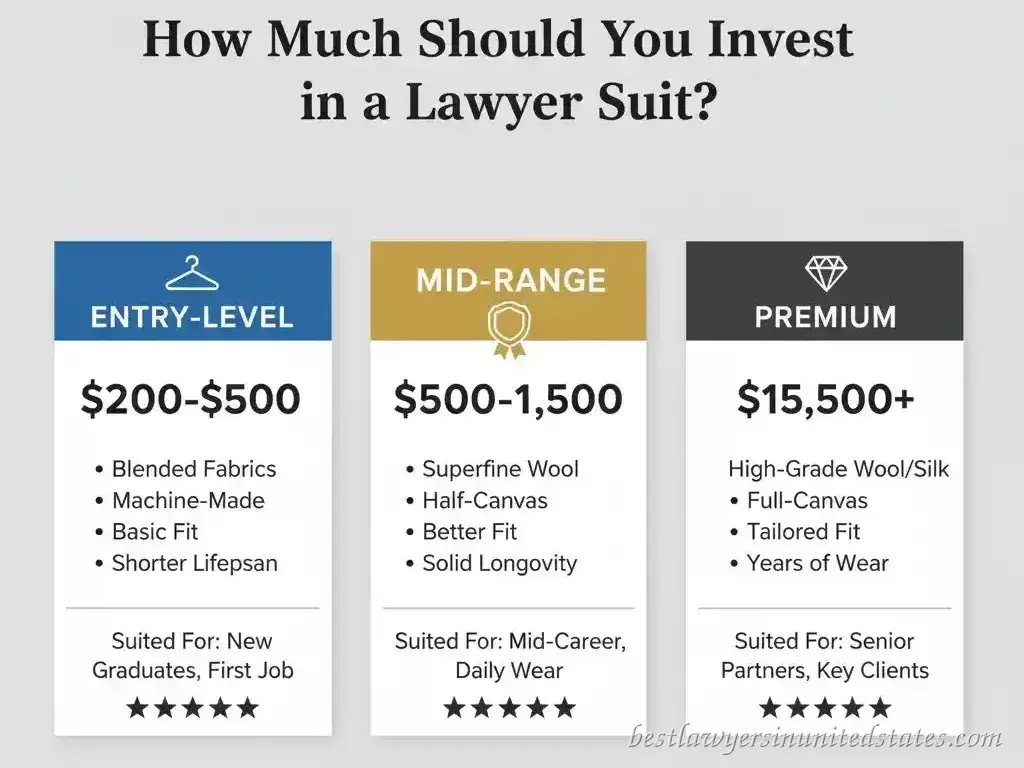
Entry-Level Budget ($200-$500 per suit)
Retailers like Jos. A. Bank, Men’s Wearhouse, Macy’s, and Nordstrom Rack offer decent quality suits in this range. You won’t get premium fabrics or construction, but with proper tailoring, these suits can look professional.
Best for: Law students, new associates building their first wardrobe, or lawyers who rarely appear in court.
Mid-Range Investment ($500-$1,500 per suit)
This sweet spot includes brands like Brooks Brothers, Suitsupply, J.Crew Ludlow, and Hugo Boss. You’ll get better fabric quality, improved construction, and styles that hold up over years of regular wear.
Best for: Most practicing attorneys who wear suits regularly. This range offers the best value for quality and durability.
Premium/Luxury ($1,500-$5,000+ per suit)
High-end options include made-to-measure services, Tom Ford, Ermenegildo Zegna, Brioni, and bespoke tailors. These suits feature exceptional fabrics, perfect fit, and meticulous craftsmanship.
Best for: Senior partners, trial attorneys who spend significant time in court, or lawyers who view their wardrobe as a key professional investment.
What You Should Actually Spend
As a general rule: invest in at least 2-3 quality suits in the $700-$1,200 range rather than 5-6 cheap suits. Quality suits look better, last longer, and can be tailored to fit perfectly.
Your first suit investment should prioritize fit over brand. A $400 suit that fits perfectly will always look better than a $1,500 suit that doesn’t.
Best Colors for Lawyer Suits
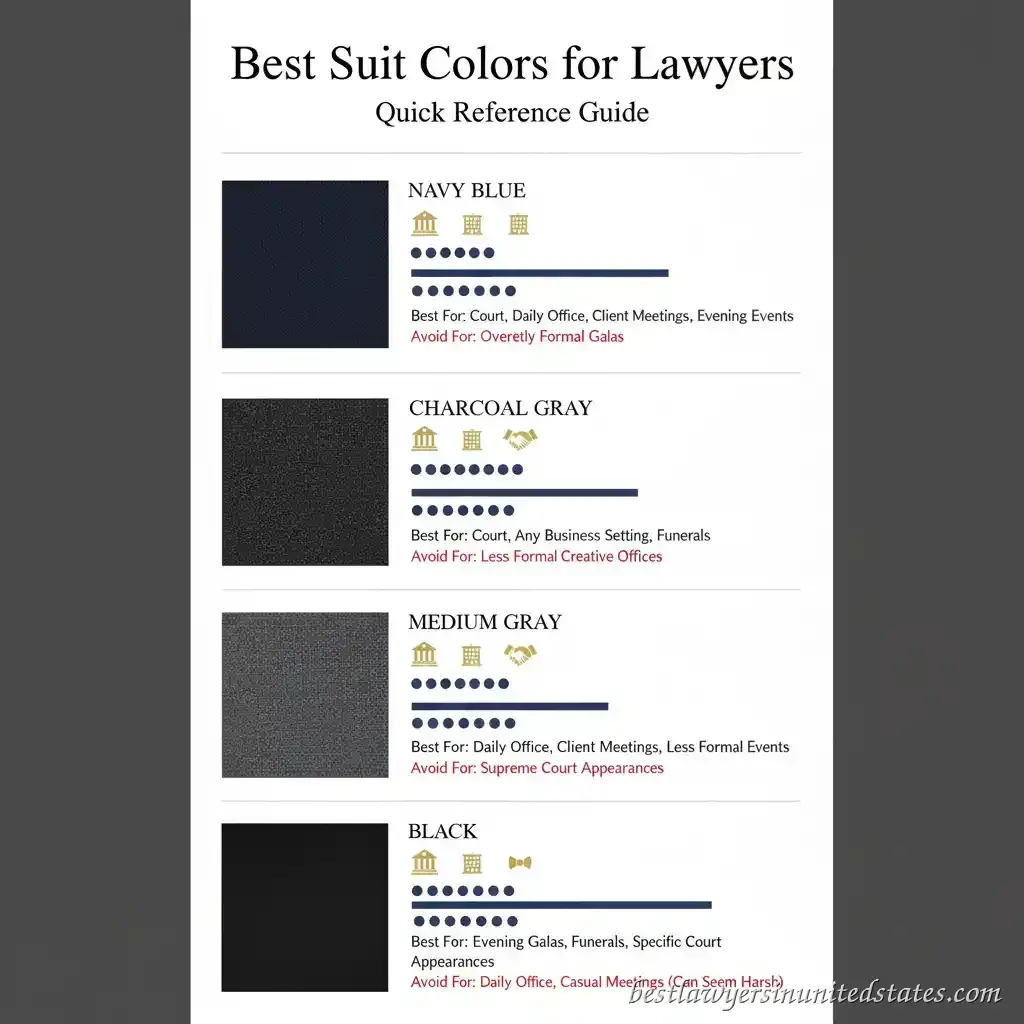
Color choice matters. Your suit color influences how clients, judges, and colleagues perceive you. Stick to these proven options:

Navy Blue – The Gold Standard
Navy is the most versatile and universally appropriate color for lawyers. It projects confidence, trustworthiness, and professionalism without being as severe as black.
Navy works for everything: court appearances, client meetings, networking events, and daily office wear. It pairs easily with almost any shirt and tie combination.
If you’re buying your first lawyer suit, make it navy.
Charcoal Gray – Classic Authority
Charcoal gray is the second essential color in any lawyer’s wardrobe. It’s formal, authoritative, and particularly effective in courtroom settings.
This color works especially well for litigation attorneys and trial lawyers. It commands respect while remaining neutral and professional.
Medium Gray – Professional Versatility
Medium or light gray offers a slightly softer, more approachable look while maintaining professionalism. It’s less formal than charcoal but still completely appropriate for most legal settings.
This works well for office days, client consultations, and less formal court appearances. It’s also a good option for warmer months when darker colors can feel heavy.
Black – Use Sparingly
Black suits are extremely formal and can appear too severe for everyday legal work. They’re most appropriate for:
- Evening events and formal functions
- Funerals
- Very formal courtroom appearances
For regular office or court work, navy and gray are better choices. Black can make you look like you’re attending a funeral rather than practicing law.
Colors to Avoid
Stay away from:
- Brown suits (too casual for most legal settings)
- Light colors like tan or cream (lack authority)
- Any bold colors like green, burgundy, or bright blue
- Pinstripes that are too wide or contrasting (can look dated or flashy)
Traditional pinstripes in subtle patterns are acceptable, but solid colors are always the safest choice.
Quick Reference: Lawyer Suit Colors
| Color | Best For | Formality Level | Versatility |
|---|---|---|---|
| Navy Blue | Court, office, clients, all occasions | High | Excellent |
| Charcoal Gray | Court, formal meetings | Very High | Excellent |
| Medium Gray | Office, clients, business casual settings | Medium-High | Very Good |
| Black | Evening events, funerals, very formal court | Extremely High | Limited |
| Brown/Tan | Not recommended for legal profession | Low | Poor |
Choosing the Right Fabric and Weight
The fabric of your suit affects comfort, durability, appearance, and how appropriate it is for different seasons.
Wool – The Default Choice
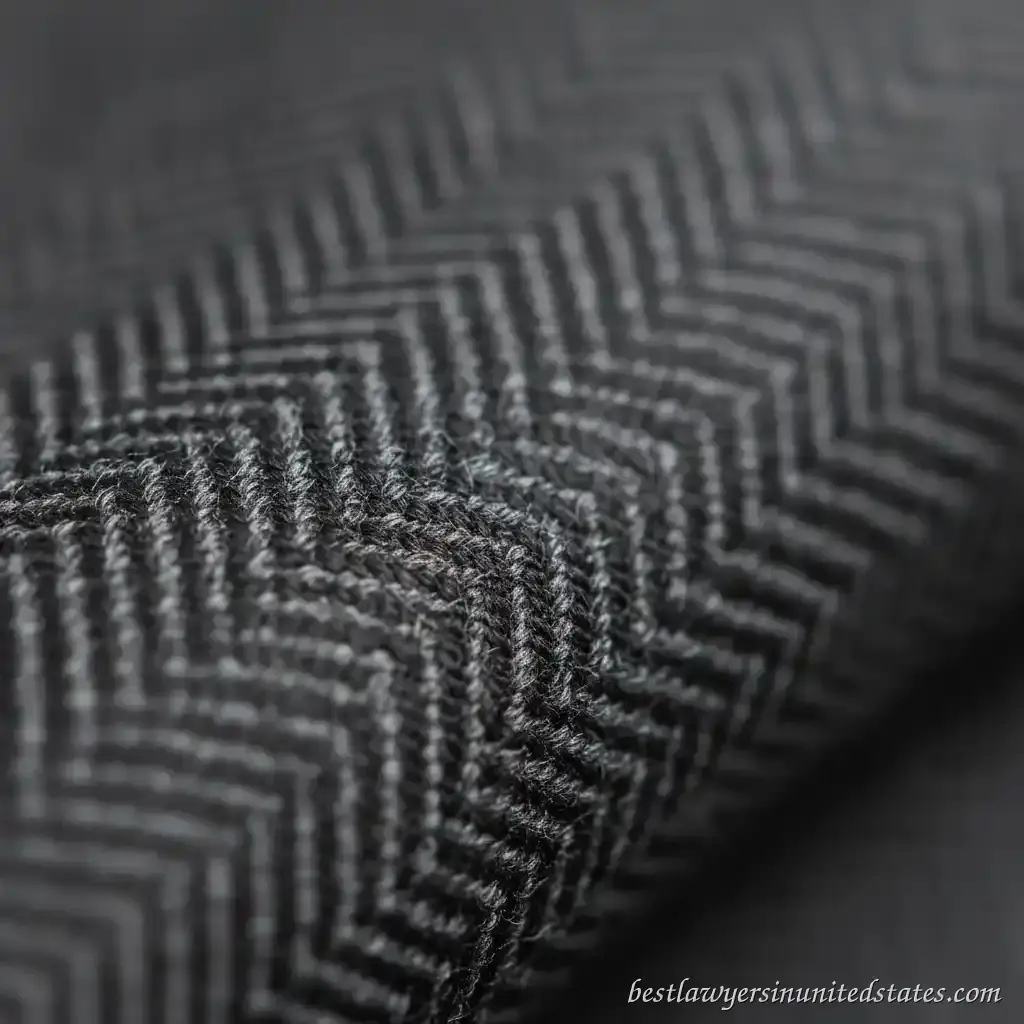
Wool is the standard fabric for lawyer suits, and for good reason. It’s durable, naturally wrinkle-resistant, breathes well, and maintains its shape over time.
Worsted wool is the most common type. It has a smooth, fine texture and works year-round in most climates.
Flannel wool is slightly heavier with a softer texture, perfect for fall and winter months.
Understanding Suit Fabric Weight
Suit fabrics are measured in “Super” numbers (Super 100s, Super 120s, etc.). The number indicates the fineness of the wool fibers.
- Super 100s-120s: Durable, practical, best for lawyers who wear suits daily
- Super 130s-150s: Softer, more luxurious, but less durable with heavy use
- Super 180s+: Very delicate, best reserved for special occasions
For working lawyers, Super 100s to 120s offers the best balance of quality, comfort, and durability.
Seasonal Fabric Options
Summer/Warm Weather:
- Lightweight tropical wool
- Wool-linen blends
- Cotton-wool blends
These fabrics are breathable and help you stay cool during hot months or in warm climates.
Winter/Cold Weather:
- Heavier wool (14-16 oz)
- Flannel
- Tweed (more casual, better for office than court)
What to Avoid
Skip polyester-heavy blends unless you’re on an extremely tight budget. They don’t breathe well, can look shiny or cheap, and don’t age gracefully. Pure wool or wool blends with small amounts of synthetic fiber (for stretch) are your best options.
The Importance of Proper Fit and Tailoring

Here’s the truth: fit matters more than brand, price, or even fabric quality.
A $400 suit that fits perfectly will always look better and more expensive than a $2,000 suit that doesn’t fit properly.
Key Fit Points to Check
Shoulders: The seam should sit right at the edge of your shoulder, not drooping down your arm or pulling across your back.
Jacket Length: The jacket should cover your seat. When your arms hang naturally at your sides, the jacket hem should reach the middle of your hand or your knuckles.
Sleeve Length: Sleeves should end at your wrist bone, allowing about ¼ to ½ inch of shirt cuff to show.
Trouser Length: Pants should have a slight break (small fold) where they meet your shoes. No pooling of fabric, no flooding (showing too much sock).
Jacket Closure: When buttoned, you should be able to slip a flat hand between the jacket and your chest. No pulling, no gaping.
Why Professional Tailoring Is Non-Negotiable
Even expensive suits rarely fit perfectly off the rack. Budget at least $50-150 for alterations when buying a new suit.
Common alterations include:
- Hemming sleeves and pant legs
- Taking in or letting out the waist
- Adjusting the jacket length
- Tapering pants for a modern silhouette
A good tailor is worth their weight in gold. Find one you trust and build a relationship with them.
Context-Specific Dressing: Office, Court, and Client Meetings
Not all professional situations require the same level of formality. Here’s how to adjust your approach:

Courtroom Attire – Maximum Formality
Court is where you should be most conservative. Judges expect lawyers to dress in a way that respects the legal process. Judges expect lawyers to dress in a way that respects the legal process. Learn more courtroom outfit strategies that demonstrate authority and professionalism.
Stick to:
- Dark suits only (navy or charcoal)
- White or light blue shirts
- Conservative ties with minimal pattern
- Polished black or dark brown shoes
- Minimal accessories
Avoid anything that could be considered distracting or disrespectful: bright colors, bold patterns, casual fabrics, or trendy styles.
Some courtrooms have explicit dress codes. Federal courts and appellate courts tend to be more formal than state courts. Following the American Bar Association’s guidelines on courtroom decorum ensures you meet professional standards. When in doubt, overdress rather than underdress.
Client Meetings – Professional but Approachable
Client meetings allow slightly more flexibility while maintaining professionalism.
You can:
- Wear medium gray or lighter navy suits
- Try subtle patterns (small checks, faint pinstripes)
- Choose more interesting tie patterns
- Skip the tie in very casual practice areas (though this is rare)
The key is reading your client and practice area. Corporate clients expect traditional formal attire. Some younger tech startup clients might find a full suit too stuffy, though you should still err on the side of professionalism.
Office Days – Smart Professional
If you’re not seeing clients or going to court, you have the most flexibility.
Options include:
- Lighter colored suits
- Suit separates (blazer with dress pants in different colors)
- Business casual on designated days (if your firm allows it)
- Removing your tie during the workday
However, always be prepared. Keep a fresh shirt, tie, and suit jacket accessible in case an unexpected client meeting or court appearance arises.
Networking Events and Conferences
Legal conferences and bar association events typically call for business professional attire, but expectations vary by event.
Evening events may be more formal, sometimes requiring your sharpest three-piece suit. Daytime conference sessions usually accept standard two-piece suits in any appropriate color.
Check the event invitation for dress code guidance.
Complete Outfit Guide: Shirts, Ties, and Accessories
Your suit is the foundation, but the details complete your professional appearance.

Dress Shirts – Keep It Simple
Best Colors:
- White – The most formal and versatile option
- Light blue – Professional and universally flattering
- Pale pink or lavender – Acceptable in most settings, adds subtle personality
Patterns: Solid colors are safest. If you want patterns, stick to subtle pinstripes or micro-checks.
Fabric: 100% cotton is the gold standard. It breathes well and looks crisp. Cotton-synthetic blends are acceptable and may wrinkle less.
Fit: Your collar should button comfortably without gaping or choking you. Sleeve length should allow about ½ inch of cuff to show beyond your jacket sleeve.
Ties – Subtle Sophistication
Your tie adds the only real opportunity for personality in traditional legal attire, but restraint is still key.
Safe Choices:
- Solid colors in burgundy, navy, or dark red
- Classic diagonal stripes (repp stripes)
- Small geometric patterns
- Subtle dots or neat patterns
Avoid:
- Novelty ties (cartoon characters, sports teams, holidays)
- Extremely bright or neon colors
- Overly wide or skinny ties (stick to 3-3.5 inches)
- Anything you wouldn’t wear to a funeral
Tie length: The tip should reach your belt buckle, not above or below.
Accessories – Less Is More
Watches: Choose a classic dress watch with a leather band or simple metal bracelet. Avoid smart watches in court (some judges view them as disrespectful), oversized sports watches, or anything flashy.
Belts: Always match your belt to your shoes. Black shoes = black belt. Brown shoes = brown belt. Simple leather with a modest buckle.
Pocket Squares: Optional but can add a touch of sophistication. Keep them white or in subtle colors that complement your tie. Avoid matchy-matchy tie and pocket square sets.
Briefcases: A structured leather briefcase in black or brown completes the professional look. Avoid backpacks or casual messenger bags in formal settings.
Cufflinks: Only wear them if your shirt requires them (French cuffs). Keep them simple and understated—silver or gold metal, nothing flashy or novelty.
Jewelry: Men should limit jewelry to a wedding ring and watch. Women can wear modest earrings, a simple necklace, and a watch, but avoid anything large, dangling, or distracting.
Footwear and Belts for Lawyers
Your shoes can make or break an otherwise perfect outfit. Many people notice shoes first.
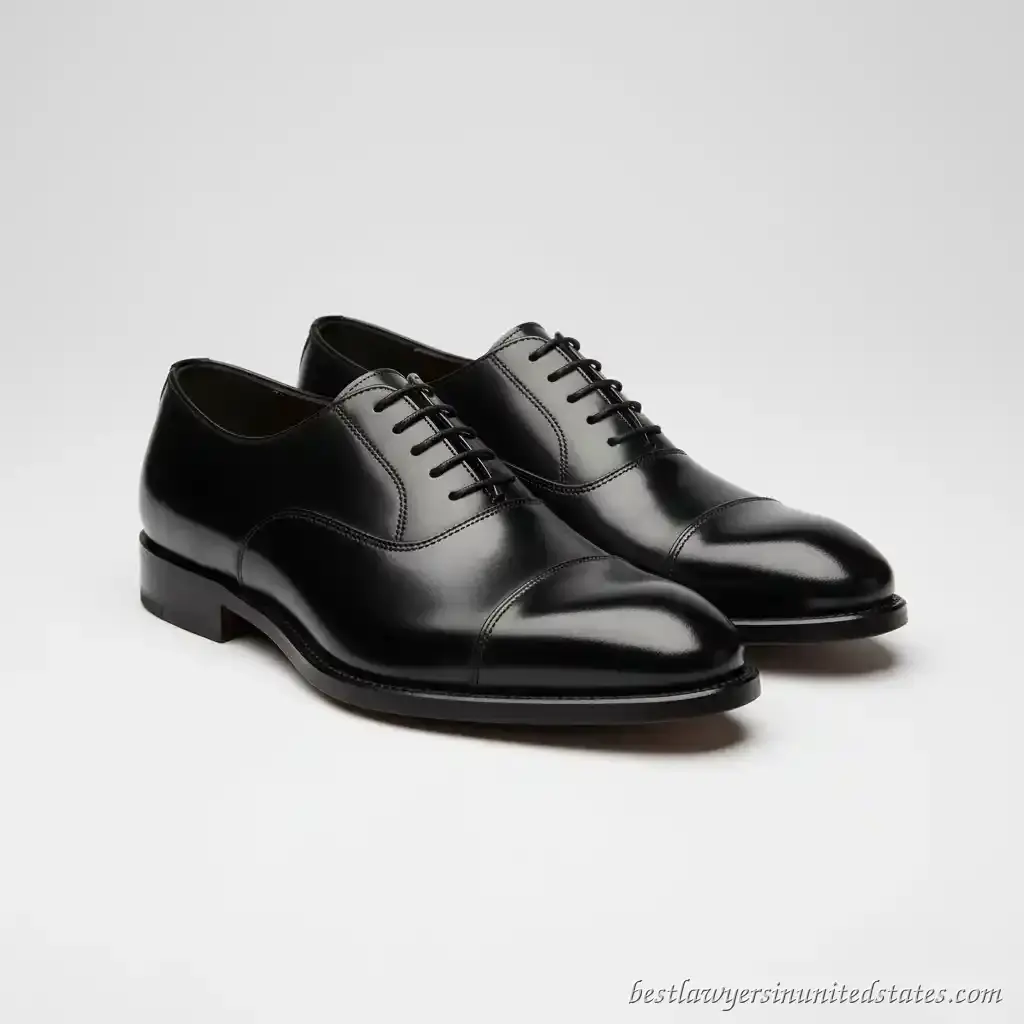
Best Shoe Styles for Lawyers
Oxford Shoes: The most formal option. Characterized by closed lacing (the laces are stitched under the vamp). Perfect for court and formal meetings.
Derby Shoes: Slightly less formal with open lacing. Still completely appropriate for all legal settings.
Cap-Toe Oxfords: A classic choice featuring a separate piece of leather across the toe. Very traditional and professional.
Colors: Stick to black or dark brown. Black is more formal and works with navy, charcoal, and black suits. Brown works well with gray and navy suits but never with black suits.
What to Avoid:
- Square-toed shoes (dated and unflattering)
- Overly pointy shoes (too trendy)
- Loafers with suits (too casual for court, acceptable for office)
- Any shoe that’s scuffed, worn down, or unpolished
Shoe Care Matters
Keep your shoes polished and in good repair. Worn heels or scuffed leather immediately undermines your professional appearance.
Invest in:
- Quality shoe polish
- A horsehair brush
- Cedar shoe trees (prevent creasing, absorb moisture)
- Regular rotation (never wear the same shoes two days in a row)
Belts – Match Your Shoes
This is simple: your belt must match your shoes in both color and finish.
- Black shoes = black leather belt
- Brown shoes = brown leather belt
- Keep the buckle simple and proportional
Width should be about 1.25 to 1.5 inches. Anything wider looks casual; anything thinner looks too fashion-forward for conservative legal settings.
Complete Guide to Women Lawyer Suits and Courtroom Attire
Women lawyers have more style options than their male counterparts, but this flexibility comes with additional considerations about appropriateness and professionalism. For more detailed advice on professional appearance standards, check our comprehensive women’s lawyer dress code guide.

Pantsuit vs. Skirt Suit – Both Are Professional
Pantsuits have become the dominant choice for women lawyers. They’re practical, comfortable, and convey the same authority as men’s suits.
Benefits:
- More mobility and comfort
- No concerns about skirt length or hosiery
- Equally appropriate in all legal settings
- Weather-friendly
Skirt suits remain perfectly acceptable and professional. Some women prefer them for important court appearances or formal client meetings.
If choosing a skirt suit:
- Keep the skirt at or just above the knee (never more than 2 inches above)
- Avoid anything too tight or form-fitting
- Pencil skirts are classic and professional
- A-line skirts work well for a slightly softer look

Best Colors for Women’s Lawyer Suits
The same color rules apply:
- Navy blue – Most versatile and authoritative
- Charcoal gray – Formal and commanding
- Medium gray – Professional and approachable
- Black – Very formal, best for evening events
Additional acceptable options for women:
- Deep plum or burgundy – Professional with personality (office and client meetings, not court)
- Camel or taupe – Business professional but too soft for courtroom use
Avoid: Bright colors, pastels (except for blouses), bold patterns, or anything trendy.
Blouses and Shirts
Safe colors:
- White and ivory
- Light blue
- Pale pink or lavender
- Soft neutrals (beige, cream)
Styles:
- Button-front blouses
- Shell tops under a suit jacket
- Tailored blouses with modest necklines
Avoid:
- Low-cut or revealing necklines
- Sleeveless tops (always wear a jacket over them)
- Overly sheer fabrics
- Anything with ruffles, bows, or excessive detailing
Jewelry and Accessories for Women Lawyers
Women have more accessory options, but restraint remains important.
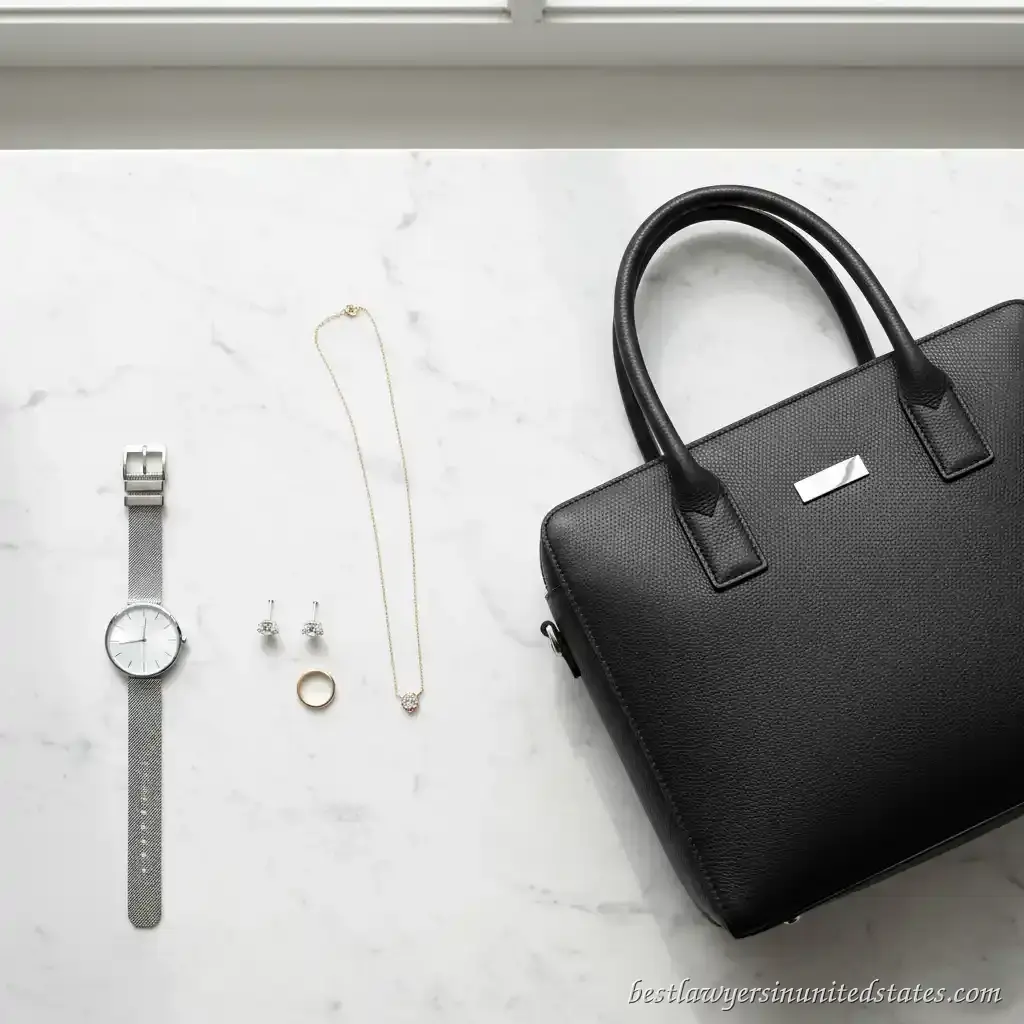
Jewelry guidelines:
- Small to medium stud or hoop earrings
- Simple necklaces (avoid statement pieces in court)
- Professional watch
- Wedding/engagement rings
- One or two other rings maximum
Avoid:
- Large, dangling earrings
- Multiple bangles that make noise
- Anything flashy, sparkly, or distracting
Bags:
- Structured tote or briefcase in leather
- Black, brown, or navy
- Large enough for laptop and documents
- Avoid oversized casual bags or tiny purses
Footwear for Women Lawyers
Court and formal settings:
- Closed-toe pumps with 2-3 inch heels
- Black, brown, or navy leather
- Conservative style with no embellishments
Office wear:
- Low heels or kitten heels
- Professional flats (leather, closed-toe)
- Ankle boots in conservative styles (fall/winter)
Avoid:
- Very high heels (4+ inches)
- Open-toed shoes in court
- Casual flats (ballet flats are borderline)
- Trendy or colorful shoes
- Visible wear or scuffs
Hair and Makeup for Court
Keep everything professional and understated:
Hair:
- Clean, neat, and away from your face
- Conservative styles (pulled back, neat cut, professional updo)
- Natural or conservative colors
- Avoid extreme styles or bright colors
Makeup:
- Natural and polished
- Neutral tones
- Nothing overly dramatic or bold
- Well-groomed eyebrows
The Pantyhose Question
This remains debated. Some courts and senior lawyers still expect women to wear pantyhose with skirt suits. Others consider it outdated.
Safe approach:
- Wear neutral pantyhose in formal courtrooms and with older judges
- Skip them for office days and less formal settings
- Always keep an extra pair in your office for emergencies
Building a Women’s Lawyer Wardrobe
Start with these essentials:
- 2 navy pantsuits (different styles or fabrics)
- 1 charcoal gray pantsuit
- 1 black pantsuit or skirt suit
- 5-6 professional blouses in neutral colors
- 2 pairs professional pumps (black and nude/brown)
- 1 professional tote or briefcase
This foundation covers all professional situations while allowing you to mix and match.
How Many Suits Should a Lawyer Own?
The short answer: at least 3-5 quality suits, but it depends on your practice.
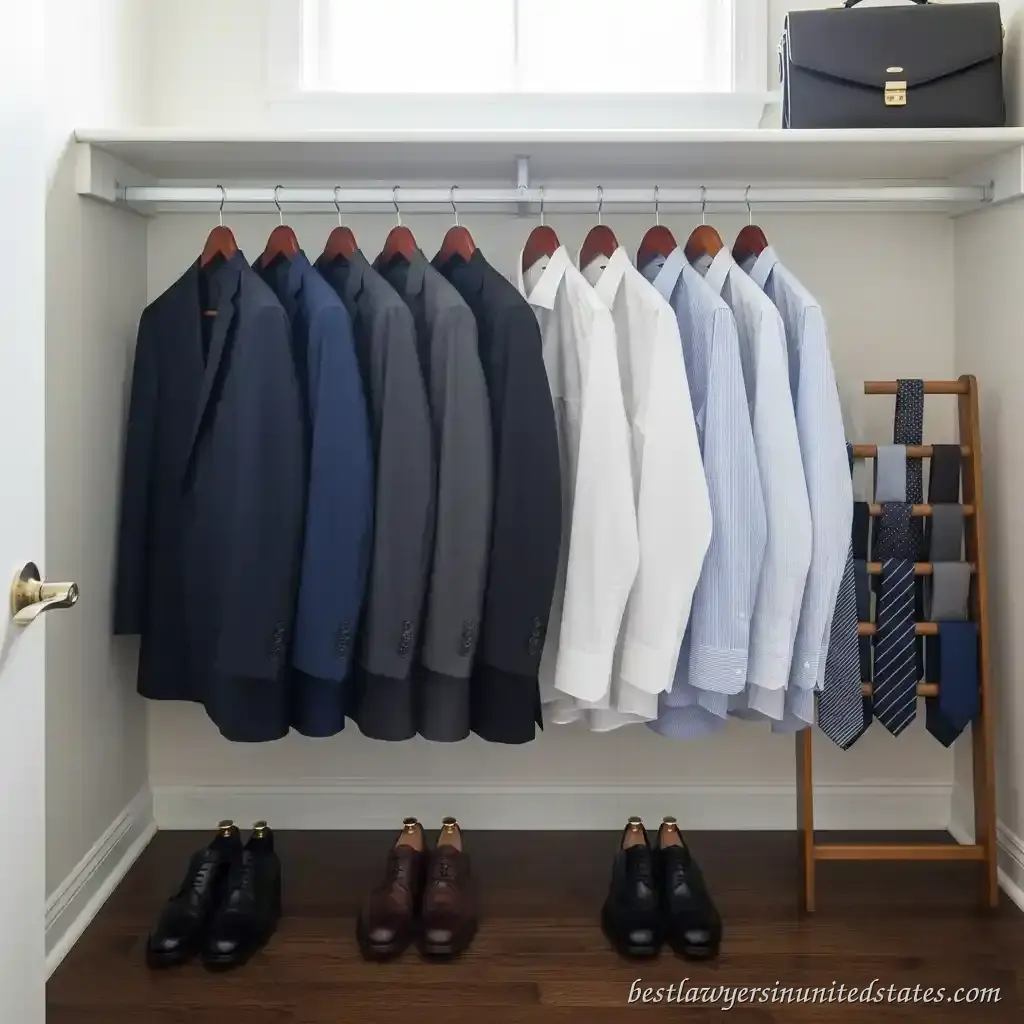
Minimum Starting Wardrobe
If you’re just beginning your legal career:
- 2 suits in different colors (navy + charcoal gray)
- 5 dress shirts
- 3 ties (if applicable)
- 2 pairs of professional shoes
This allows you to rotate outfits throughout the week without wearing the same suit on consecutive days.
Ideal Working Wardrobe
For lawyers who wear suits regularly:
- 4-6 suits in various colors and weights
- 8-10 dress shirts
- 5-7 ties
- 3 pairs of shoes
This provides variety and ensures you can go 1-2 weeks without repeating an outfit. It also means individual pieces experience less wear, lasting longer.
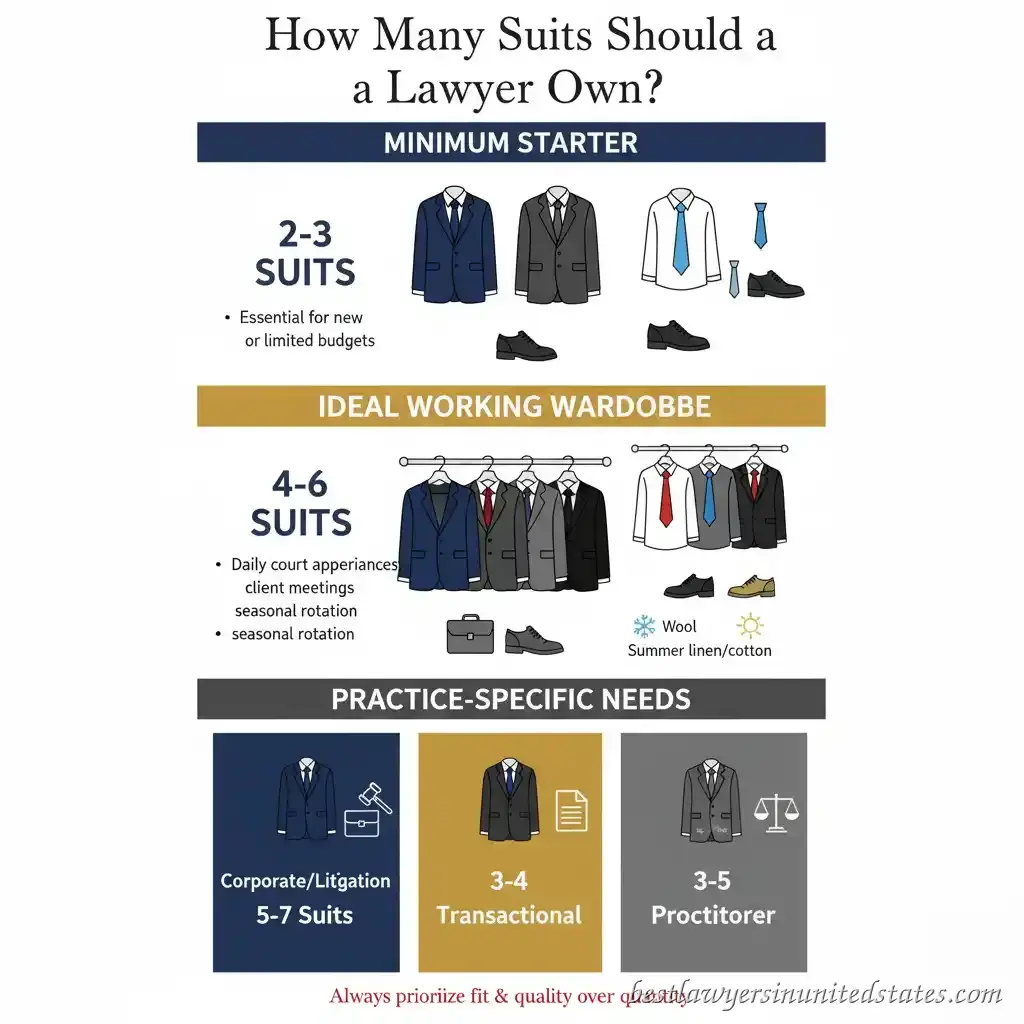
Considerations by Practice Area
Corporate lawyers, litigators, trial attorneys: Need more suits (5-7 minimum). You’re in court or with clients constantly.
Transactional lawyers, in-house counsel: Can manage with fewer (3-4 suits). Your daily work is often business casual.
Solo practitioners, small firm lawyers: Depends on your client base and court schedule. Start with 3-4 and expand as needed.
Seasonal Rotation
Consider owning suits in different fabric weights:
- 2-3 lightweight suits for summer
- 2-3 heavier suits for winter
- 1-2 year-round wool suits
This prevents wearing heavy wool in July or thin cotton in January.
Quality Over Quantity
Remember: 3 well-fitted, high-quality suits will serve you better than 7 cheap, poorly fitted ones. Invest in quality first, then expand your wardrobe over time.
Caring for and Maintaining Your Lawyer Suits
Proper care extends the life of your suits and keeps them looking sharp.
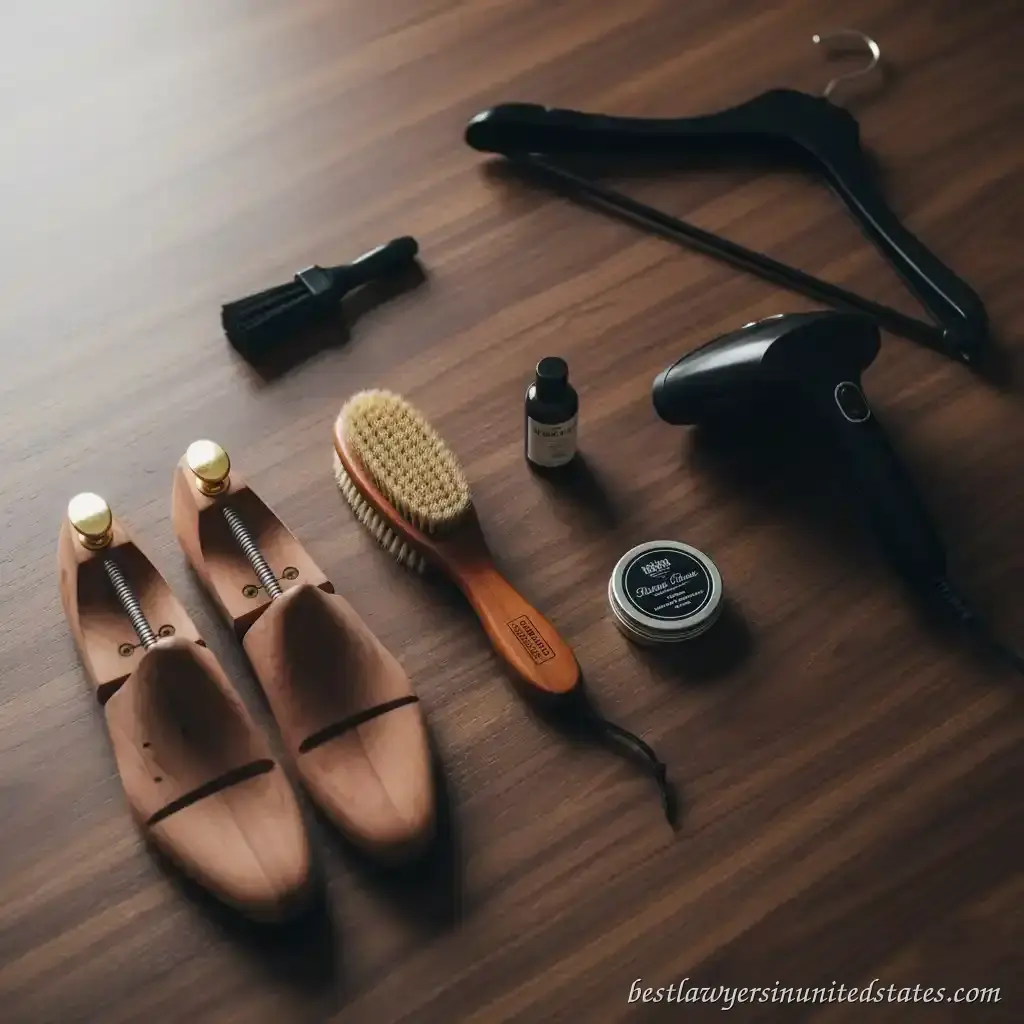
Daily Maintenance
After Each Wear:
- Brush your suit with a clothes brush to remove dust and lint
- Hang it on a wide, shaped wooden or padded hanger (never wire hangers)
- Empty all pockets
- Let it air out for 24 hours before wearing again
Never wear the same suit two days in a row. Fabrics need time to recover and release moisture.
Dry Cleaning – Less Is More
Over-dry cleaning damages suit fabrics. The chemicals break down fibers over time.
Dry clean only when:
- The suit has visible stains
- It smells (after 5-7 wears typically)
- You’ve worn it in particularly hot or sweaty conditions
For regular maintenance, spot-clean minor marks and air out your suits instead.
Proper Storage
Hanging:
- Use quality wooden or padded hangers
- Button the jacket to maintain shape
- Hang pants by the cuffs or fold over a hanger bar
Garment bags:
- Use breathable fabric bags (not plastic)
- Essential for long-term storage or travel
- Protects from dust and moths
Cedar blocks or lavender sachets in your closet naturally repel moths and keep suits fresh.
Handling Wrinkles
Steaming is better than ironing for suits. It refreshes fabric without direct heat damage.
If you must iron:
- Use low heat
- Always use a pressing cloth between iron and fabric
- Iron on the reverse side when possible
Hang suits in the bathroom while you shower—the steam naturally releases minor wrinkles.
Rotation and Rest
Give each suit at least 24-48 hours between wears. This allows:
- Fabric to recover its shape
- Moisture to evaporate
- Wrinkles to naturally release
This simple practice dramatically extends suit lifespan.
Professional Repairs
Address issues immediately:
- Loose buttons
- Small tears or pulls
- Worn pockets or linings
A good tailor can repair most problems before they become major. Minor fixes cost $10-30 and can add years to a suit’s life.
Common Mistakes to Avoid
Even experienced lawyers make wardrobe mistakes that undermine their professional image. Avoid these common pitfalls:

Fit-Related Errors
Ill-fitting jackets or trousers – This is the number one mistake. Shoulders that don’t align, sleeves that are too long, or pants that bunch at the ankles instantly cheapen your appearance.
Jacket buttoned incorrectly – For two-button suits, button only the top button. For three-button suits, button the middle or middle and top. Never button the bottom button.
Visible undershirt – If wearing an undershirt (recommended), it should never be visible at your neckline. Choose V-neck undershirts, not crew neck.
Style Mistakes
Over-accessorizing – Too many rings, flashy watches, bold tie clips, and matching tie-and-pocket-square sets look amateurish. Keep accessories minimal.
Mismatched metals – If your watch is silver, your belt buckle and cufflinks should be too. Don’t mix gold and silver accessories.
Wrong shoe-belt combination – Black shoes with brown belts (or vice versa) is a glaring error that signals inattention to detail.
Seasonal fashion mistakes – Linen suits in winter or heavy tweed in summer shows poor judgment.
Maintenance Failures
Wrinkled or stained suits – Nothing says “unprepared” like a wrinkled jacket or visible stains. Always check your suit before leaving the house.
Scuffed or worn shoes – Judges and clients notice shoes. Unpolished, scuffed, or worn-down heels suggest you don’t care about details.
Frayed cuffs or collars – Once shirt collars or suit cuffs show wear, replace them immediately. These details matter.
Visible lint, pet hair, or dandruff – Keep a lint roller at your office and use it before important meetings or court.
Attitude and Presentation Errors
Wearing casual shoes with suits – Sneakers, loafers (in court), or casual boots undermine the entire outfit.
Overly trendy choices – Skinny suits, loud patterns, or fashion-forward cuts look out of place in conservative legal settings.
Ignoring dress codes – Some courts have explicit requirements. Violating them shows disrespect and can actually harm your case.
Dressing too casually for the setting – Even if your office is business casual, keep a suit ready for unexpected court appearances or client meetings.
These mistakes are all easily avoidable with attention to detail and proper planning.
Conclusion
Your lawyer suit is more than fabric and thread—it’s a professional tool that shapes perceptions, builds credibility, and opens doors throughout your legal career.
The right suit, properly fitted and appropriately styled, communicates competence before you speak a word. It shows respect for the legal profession, your clients, and the courts you serve. Whether you’re a new associate building your first professional wardrobe or a seasoned attorney refining your style, the principles remain constant: choose quality over quantity, prioritize fit above all else, and maintain conservative, timeless standards.
Start with the essentials: 2-3 well-fitted suits in navy and charcoal gray, quality dress shirts, appropriate footwear, and subtle accessories. Invest in proper tailoring and regular maintenance. As your career progresses, expand your wardrobe strategically based on your practice area and professional needs.
Remember, dressing well isn’t about vanity—it’s about professionalism. Your appearance directly impacts how clients trust you, how judges perceive you, and how colleagues respect you. In a profession built on credibility and authority, your lawyer suit remains one of your most valuable investments.
Dress smart, stay sharp, and let your professional appearance reinforce the expertise you bring to every case, client, and courtroom.
What type of suits should lawyers wear?
Lawyers should wear conservative, well-fitted suits in navy blue, charcoal gray, or medium gray. Two-piece single-breasted suits in quality wool fabric are the standard. Avoid trendy cuts, bright colors, or bold patterns.
How much does a good lawyer suit cost?
Quality lawyer suits range from $500-$1,500. Entry-level options start at $200-$400, while premium bespoke suits can exceed $2,500. Most attorneys should invest in 2-3 mid-range suits rather than multiple cheap ones.
What color suit is best for a lawyer?
Navy blue is the most versatile choice, followed by charcoal gray. These colors work for all professional settings. Reserve black suits for formal evening events.
Can a lawyer wear a black suit to court?
Yes, but navy and charcoal gray are preferred for daytime court. Black suits appear very formal and work best for evening proceedings or formal events.
Should a lawyer’s suit be custom-tailored?
Professional tailoring is essential, even for off-the-rack suits. Proper fit matters more than price. Made-to-measure suits ($800-$2,500) offer excellent fit without full bespoke costs.
What should women lawyers wear in court?
Conservative pantsuits or skirt suits in navy or charcoal with modest blouses. Closed-toe pumps, minimal jewelry, and professional styling. Skirts should be at or just above the knee.
How many suits should a lawyer own?
Minimum 3-5 quality suits for proper rotation. Litigators need 5-7 suits; transactional lawyers can manage with 3-4. Quality over quantity always wins.
Can lawyers wear any color suit?
No. Stick to navy, charcoal, medium gray, and black. Avoid brown, tan, bright colors, or bold patterns. Courts expect conservative professional attire.
What is the difference between bespoke and made-to-measure suits?
Made-to-measure adjusts existing patterns to your measurements ($800-$2,500). Bespoke creates a unique pattern for your body ($2,500-$5,000+) with multiple fittings.
How should I care for my lawyer suits?
Brush after each wear, hang on wooden hangers, rest 24-48 hours between wears. Dry clean only when necessary (every 5-7 wears). Steam wrinkles instead of ironing. Rotate regularly to extend lifespan.

Comments