
Cruise Law News Latest Legal Updates for Safer Travel
Cruise law governs how cruise ships operate, ensuring passenger safety, environmental compliance, and fair treatment of crew members. As the industry grows, staying informed about legal changes is crucial for passengers, cruise companies, and crew members alike.

Cruise Law
Cruise law is a branch of maritime or admiralty law focusing on the legal aspects of cruise ship operations. It includes passenger rights, safety protocols, and environmental responsibilities that cruise lines must follow. Cruise Law News
What is Cruise Law
Cruise law involves regulations that apply to ships sailing both in territorial waters and on the high seas. It is shaped by national laws, international treaties, and industry standards, making it a complex but vital area for global travel.
Importance of Maritime Legal Regulations
Without these regulations, there would be no unified standard for safety, environmental protection, or passenger rights. Laws ensure that everyone on board is protected and that cruise companies operate fairly and responsibly.
Latest Developments in Cruise Law
Recent years have seen significant changes in cruise law to adapt to safety concerns, environmental needs, and health protocols.
Passenger Safety Regulations
Governments and international bodies have introduced mandatory safety drills, better life-saving equipment, and crew training enhancements to reduce risks at sea.
New Environmental Protection Laws
Cruise ships must now comply with stricter emission limits, waste disposal rules, and pollution control measures to protect marine ecosystems.
Cruise Ship Labor Rights Updates
Crew members now benefit from better working conditions, fair pay, and improved healthcare access, thanks to updated maritime labor conventions.
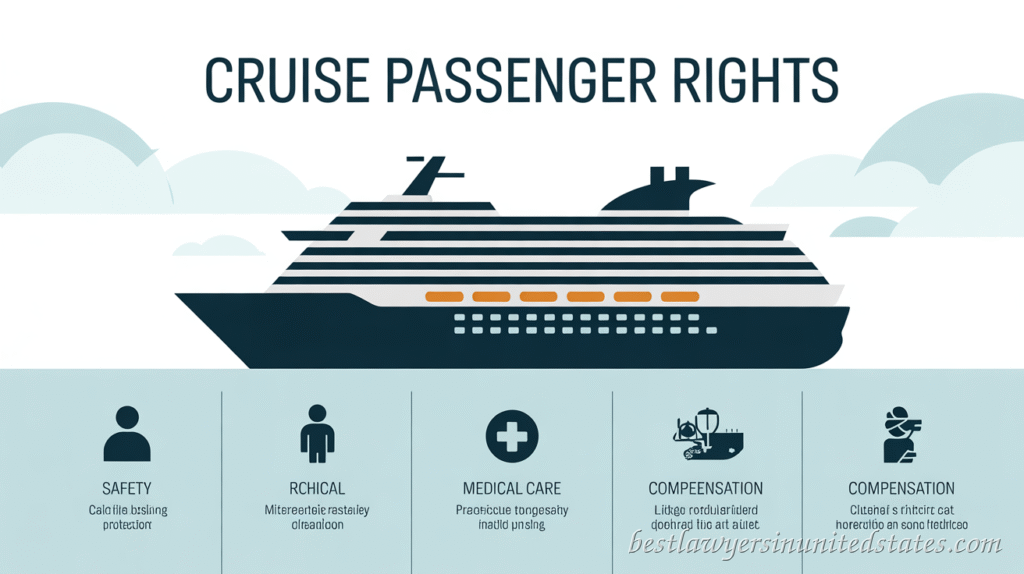
Cruise Passenger Rights
Passengers have legal protections to ensure a fair and safe journey, from booking to disembarkation.
Ticket Contract Terms
Every cruise ticket contains a contract detailing cancellation rules, liability limits, and dispute resolution methods. Understanding these terms is crucial before traveling.
Compensation for Delays and Cancellations
Depending on the cause, passengers may be entitled to refunds, alternative voyages, or onboard credits for significant delays or trip cancellations.
Medical Assistance and Liability
Cruise lines must provide medical care on board, but their liability for malpractice or negligence may depend on the laws governing the ship.Video Game Addiction Lawsuit
Criminal Cases at Sea
Crimes at sea can be challenging to investigate due to overlapping jurisdictions and international laws.
Jurisdiction in Cruise Ship Crimes
Jurisdiction is typically determined by the ship’s flag country, the passenger’s nationality, and where the incident occurred. This can create complex legal situations.
High-Profile Cruise Crime Cases
Over the years, cases of theft, assault, and unexplained disappearances have drawn public attention to security and legal procedures on ships.
Steps for Passengers if a Crime Occurs
Passengers should report the incident immediately to ship security, document everything, and contact legal authorities as soon as possible.
Cruise Line Responsibilities
Cruise lines have a legal duty to ensure passenger safety, ship maintenance, and emergency preparedness.
Duty of Care to Passengers
The cruise company must take reasonable steps to prevent harm to passengers, from preventing accidents to ensuring safe excursions.
Maintenance and Safety Standards
Ships undergo regular inspections to confirm that all safety equipment and facilities are in proper working order before sailing.
Emergency Response Protocols
Crew members are trained to handle medical emergencies, fires, and evacuations to minimize risk and protect lives.
Environmental and Sustainability Laws
Environmental protection is now a major focus in cruise regulations.
Emission Control Regulations
Certain maritime regions limit sulfur emissions from ships, requiring the use of cleaner fuels or advanced exhaust cleaning systems.
Waste Management Compliance
Ships must treat and properly dispose of waste according to strict environmental laws to prevent ocean pollution.
Green Initiatives in the Cruise Industry
Many cruise lines are investing in eco-friendly technologies, such as LNG-powered ships, solar energy, and water recycling systems.
Legal Challenges in International Waters
Cruise ships often sail through multiple legal jurisdictions, creating complex legal scenarios.
Conflicting Laws Between Countries
What is legal in one country may be illegal in another, making compliance challenging for cruise operators.
Role of International Maritime Organization (IMO)
The IMO develops global standards for safety, security, and environmental performance in the shipping industry.
Handling Disputes at Sea
Disputes are often resolved through arbitration or special maritime courts instead of traditional court systems.
How Passengers Can Protect Themselves
Being proactive about your legal protections can save you trouble later.
Reading the Fine Print
Passengers should carefully read ticket contracts and terms before making a booking.
Purchasing Travel Insurance
Travel insurance can cover medical emergencies, cancellations, and lost belongings, providing extra peace of mind.
Knowing Your Rights Before Sailing
Familiarity with your rights ensures you can take the correct steps if problems arise during your cruise.
Future Trends in Cruise Law
Cruise law will continue to evolve alongside technology, environmental policies, and health requirements.
Digitalization of Legal Documents
Contracts, waivers, and legal notices are moving online, making them easier for passengers to access and understand. When Is It Legal to Back Up
Stricter Health Protocols Post-Pandemic
Enhanced sanitation, health screenings, and outbreak management plans are now standard in the industry.
Evolving Passenger Protection Laws
Governments are introducing stronger regulations to protect passengers in cases of cancellations, accidents, or disputes.
Conclusion
Cruise law is a dynamic field that balances passenger safety, environmental care, and corporate accountability. Staying informed about these legal updates ensures a safer and more enjoyable journey for everyone at sea.
FAQs
What should I do if I’m injured on a cruise?
Report the injury immediately, seek medical treatment, and keep records of the incident.
Can I sue a cruise line for negligence?
Yes, if you can prove that the cruise line failed to meet its legal duty of care.
How are crimes investigated on cruise ships?
Investigations may involve ship security, local port authorities, and international agencies depending on the jurisdiction.
Do cruise laws differ in different countries?
Yes, each country has unique regulations, and cruise ships often follow the laws of their flag state.
Are there environmental laws for cruise ships?
Yes, ships must comply with strict emission controls, waste management rules, and environmental protection measures.

Comments
[…] Cruise Law News Your Complete Guide to Passenger Rights […]