
A class action lawsuit is one of the most powerful legal tools available to everyday people. It lets a large group of harmed individuals take on a corporation through a single coordinated case.
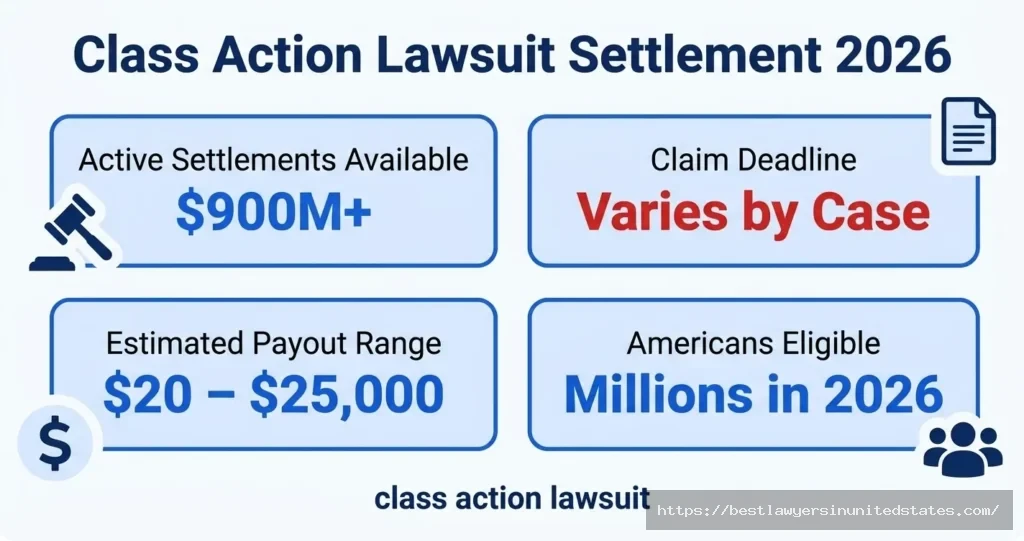
Right now, more than $900 million in open class action settlement money is available to claim in 2026. Most of that money goes uncollected. People simply don’t know they’re owed anything.
This guide covers both sides of the process. You’ll learn how to join an existing settlement and how to start a completely new case. You’ll get real payout figures, exact steps, and active 2026 deadlines.
One surprising stat: research shows most class members who qualify never file a single claim. That means corporations keep money they legally owe to real people.
What Is a Class Action Lawsuit?
A class action lawsuit is a case where one or more people sue a defendant on behalf of a much larger group. That group is legally called “the class.”
Think of it like a neighborhood dispute at scale. Instead of thousands of individual homeowners each suing the same developer separately, they pool their nearly identical complaints into a single case.
The result carries exponentially more legal force than any solo claim. Courts also prefer one organized case over thousands of near-identical individual filings.
Class actions cover a wide range of harm: defective products, data breaches, deceptive ads, illegal fees, and workplace violations. If one company caused the same problem for thousands of people, a class action is likely the right vehicle.
| Feature | Detail |
|---|---|
| Governing Law | Rule 23, Federal Rules of Civil Procedure |
| Lead Case Filed By | One or a few plaintiffs (lead plaintiffs) |
| Who Gets Covered | All similarly harmed class members |
| Settlement Approval Required | Yes, by a federal or state judge |
| Class Action Rules Formalized | 1966 (major revision to Rule 23) |
The class action device was specifically designed to handle situations where individual harm is real but too small to justify a solo lawsuit. It forces accountability that would otherwise never happen.
Class Action Lawsuit Requirements Under Rule 23
The four Rule 23 requirements are the gatekeepers of every class action. A federal judge checks all four before certifying any case.
If your case fails even one of these tests, the judge won’t certify the class. The case then either gets dismissed or proceeds as an individual lawsuit. Google Android Cellular Data Lawsuit
Here’s what courts demand:
- Numerosity: Enough people suffered the same harm that individual suits are impractical. Courts generally expect at least 40 class members, though some cases have qualified with fewer.
- Commonality: Class members share the same core legal question or fact. One shared injury from one shared cause is the standard.
- Typicality: The lead plaintiff’s claim mirrors the harm experienced by most of the class. If your situation is unusual, you may not qualify as lead plaintiff.
- Adequacy: The lead plaintiff and attorneys must fairly and competently represent all class members. No conflicts of interest allowed.
| Requirement | What Courts Look For | Real Example |
|---|---|---|
| Numerosity | 40+ people harmed | 10,000 customers hit with hidden fees |
| Commonality | Same legal issue or harm | All received same defective product |
| Typicality | Lead plaintiff = average class experience | Plaintiff bought the exact same batch |
| Adequacy | No conflicts, qualified attorneys | Lead plaintiff has no separate deal with defendant |
Some class actions also require “predominance”: common questions must outweigh individual ones. This standard applies to most consumer claims under Rule 23(b)(3).
How to File a Class Action Lawsuit
Filing a class action lawsuit means hiring an experienced attorney first. This isn’t optional.
Class action defendants are almost always large corporations with deep legal teams. You need someone who has done this many times before.
Most class action attorneys work on a contingency fee basis. They collect a percentage of the settlement only if you win. You pay nothing upfront, no matter how long the case takes.
Your attorney investigates the case, researches how many others were harmed, drafts the complaint, and files it in the correct court. The filing officially starts the legal process.
Quick fact: The lead plaintiff named on the complaint often receives an incentive award of $1,000 to $25,000 at the conclusion of a successful case, on top of their normal class member share.
One thing to get straight: filing a new class action is very different from claiming money in an existing settled case. Starting a new case takes years. Claiming an existing settlement takes minutes.
Key Takeaway: A class action requires at least 40 affected people, a lead plaintiff, qualified attorneys, and proof that all four Rule 23 criteria are satisfied before a court will certify the case and let it move forward.
How Do I File a Class Action Lawsuit: The Honest Answer
The honest answer is: you don’t file it yourself. An experienced class action attorney files it on your behalf.
Your job is to document what happened to you, find a lawyer who handles these cases, and cooperate throughout the process.
Here’s what that actually looks like in practice:
- Write down exactly what the company did and when it happened.
- Gather evidence: receipts, emails, account statements, medical records, or text messages.
- Search online for any existing lawsuits against the same company for the same issue.
- Contact a class action law firm for a free consultation. Most offer these at no charge.
- Let your attorney determine if enough other people experienced the same harm.
The free consultation is essential. Attorneys filter out weak cases early. If multiple firms turn you down, your case likely doesn’t meet the threshold.
The most common reason people fail to file a class action? They assume someone else will do it. No one else does. If you’re the first to act, you could become the lead plaintiff and receive a financial incentive for doing so.
File a Class Action Lawsuit Step by Step
Here is the complete process from initial harm to final payout, laid out in plain terms.
Step 1: Document Your Harm Save every piece of evidence. Receipts, screenshots, emails, billing records, and medical reports all count.
Step 2: Find a Class Action Attorney Search for lawyers who specialize in class actions. Many work exclusively on these types of cases.
Step 3: Free Legal Consultation Meet with the attorney. They assess whether your claim has merit and whether others likely suffered the same harm.
Step 4: Case Investigation Your attorney researches the defendant, interviews potential class members, and checks for existing litigation.
Step 5: Draft and File the Complaint The attorney drafts the formal complaint, names the lead plaintiff, defines the class, and files with the correct court.
Step 6: Motion for Class Certification Both sides argue before a judge whether the case qualifies as a class action under Rule 23.
Step 7: Discovery Both sides exchange documents, data, and depositions. This phase often takes 12 to 24 months.
Step 8: Settlement Negotiation or Trial Most class actions settle before trial. Any settlement requires judge approval before anyone gets paid.
Step 9: Claims Administration A settlement administrator processes individual claims. Class members file claim forms and wait for distribution.
| Step | Who Acts | Typical Duration |
|---|---|---|
| 1 to 3: Prep and consultation | You + attorney | 1 to 3 months |
| 4: Investigation | Attorney | 1 to 6 months |
| 5: File complaint | Attorney | 1 to 4 weeks |
| 6: Certification ruling | Court | 6 to 18 months |
| 7: Discovery | Both sides | 12 to 24 months |
| 8: Settlement approval | Court | 3 to 6 months |
| 9: Payout | Administrator | 6 to 18 months |
Class Action Lawsuit Eligibility: Do You Qualify?
You’re eligible for a class action if you suffered harm similar to other class members from the same defendant. You don’t need to have already filed a complaint or known the lawsuit existed.
In most consumer class actions, you’re automatically included as a class member unless you actively choose to leave. Courts apply an opt-out model for the majority of consumer cases. Pete and Gerry’s Eggs Lawsuit
Common reasons people qualify:
- Purchased a defective or falsely advertised product
- Paid fees that were unauthorized, hidden, or illegal
- Had personal data exposed in a company’s data breach
- Received robocalls, spam texts, or unsolicited automated calls
- Were underpaid, denied overtime, or misclassified as an independent contractor
- Were exposed to a toxic chemical or contaminated water supply
Critical point: Eligibility windows are specific. Some cases cover purchases made over a 10-year period. Others cover just a few months. The class definition in the settlement notice tells you exactly when and where you had to be affected.
Missing a claim deadline ends your eligibility permanently. Courts grant almost no individual extensions.
Choosing the Right Court to File a Class Action Lawsuit
State court or federal court: that choice shapes the entire trajectory of your case. Most large class actions end up in federal court.
The Class Action Fairness Act of 2005 (CAFA) automatically moves most multi-state consumer class actions to federal court. CAFA applies when:
- The class has more than 100 members
- Total damages across all members exceed $5 million
- Class members live in multiple states
State court remains the right choice for purely local cases. A wage theft case involving only employees in one city might stay in state court. Some plaintiff attorneys also prefer state courts in specific states for favorable procedural rules.
Filing in the wrong court triggers an immediate transfer motion from the defendant. That wastes months and can weaken your position.
Your attorney makes this call. It depends on your defendant’s location, the class size, and the damages you’re seeking. This decision alone can shift the odds of success.
Key Takeaway: Federal court handles most large consumer class actions under CAFA once damages exceed $5 million and class members cross state lines. Your attorney’s choice of court can determine whether your case survives its first legal challenge.
Class Action Lawsuit Claims: What Types of Cases Qualify?
Almost any widespread, similar harm from a single defendant can become a class action claim. Courts have certified class actions across dozens of industries and harm types.
The most active categories in 2025 and 2026 include:
- Consumer fraud: Deceptive pricing, fake “original” prices, misleading product labels, false health claims
- Data breaches: Exposed Social Security numbers, medical records, financial data, login credentials
- Product defects: Dangerous vehicles, recalled medications, faulty electronics, contaminated food
- Employment violations: Unpaid overtime, misclassified workers, denied meal breaks, race or gender discrimination
- Financial misconduct: Unauthorized bank fees, predatory lending, improper debt collection
- Privacy violations: Illegal biometric data collection, unauthorized call recording, pixel tracking of health data
- Telecommunications: Unsolicited robocalls and texts under TCPA (Telephone Consumer Protection Act)
A class action claim qualifies when many people suffered the same type of harm and their individual damages are too small to make solo litigation practical.
Landmark example: The 2017 Equifax data breach exposed the personal data of 147 million Americans. The resulting class action produced a $425 million settlement fund that included cash payments and years of free credit monitoring.
How to Claim Class Action Lawsuit Settlement Money
Claiming money from an existing class action settlement is far simpler than starting a new lawsuit. Most people complete the process in under 15 minutes.
Here is exactly what to do:
- Find the official settlement website. Check mail, email, and your spam folder for a court-approved notice. It will include the case name, a settlement website, and a deadline.
- Confirm your eligibility. Read the class definition carefully. Dates, product names, account numbers, and states all matter.
- Gather proof if required. Some settlements need receipts or order numbers. Others accept a sworn declaration instead.
- Complete the claim form. Fill in all fields accurately. Errors can disqualify your submission without warning.
- Submit before the deadline. The deadline is printed in your notice. It doesn’t move.
Warning: Never pay anyone to file a class action claim on your behalf. Every legitimate claim is free to file. Period.
After filing, set a calendar reminder. Payouts typically arrive 6 to 24 months after the claim deadline, once courts finalize the distribution process.
Class Action Lawsuit Claim Deadlines and Documentation
Every class action settlement has a firm claim deadline set by the court. These dates are non-negotiable.
Miss the deadline and you permanently lose your right to that settlement money. Courts almost never grant extensions to individual late claimants.
What documentation you’ll need depends on your case type:
| Case Type | Typical Proof Required |
|---|---|
| Product purchase | Receipt, order confirmation, or bank statement |
| Data breach | Breach notification letter or account number |
| Employment violation | Pay stubs, time records, or employer name |
| Service overcharge | Account statement, contract, or billing record |
| Robocall / TCPA | Phone number that received the calls |
| Food or product recall | Proof of purchase or lot number |
When documentation is unavailable, many settlements accept a sworn declaration: a signed statement confirming your eligibility under penalty of perjury. This option exists because most consumers don’t save receipts for years.
Active 2026 deadlines worth noting: Kaiser Permanente (deadline: March 12, 2026), SiriusXM TCPA case (deadline: March 21, 2026), multiple data breach cases extending through August 2026. Each requires its own separate claim.
Key Takeaway: Claiming money from an existing class action is free, fast, and requires only a claim form and basic proof in most cases. The only fatal mistake is missing the deadline, which forfeits your share of the settlement permanently.
Class Action Lawsuit Payout: What to Realistically Expect
Class action payouts vary more than most people realize. Some settlements pay each claimant $5. Others pay $25,000 or more per person.
The payout amount for each individual claimant depends on five things:
- The total size of the settlement fund
- How many valid claims get filed
- Whether you have documented out-of-pocket losses
- The type of harm alleged in the case
- Whether the settlement uses a pro-rata or fixed-payment structure
For standard consumer class actions, the realistic range is $20 to $500 per claimant. Employment and data breach cases involving real documented losses pay significantly more.
AT&T’s 2026 California employment settlement offers eligible workers up to $25,000. Kaiser Permanente’s $47.5 million privacy settlement distributes funds among members whose health data was shared without consent.
One thing corporations never do in these settlements: admit wrongdoing. They pay to end the litigation. The settlement terms say so explicitly.
Early filers often benefit more in pro-rata cases, where the fund gets divided among valid claimants. The more people file, the smaller each share becomes.
How Much Do You Get From a Class Action Lawsuit?
The average consumer class action pays between $32 and $150 per claimant. That number shifts significantly based on the type of case and whether you have proof of losses.
Here’s a realistic payout breakdown by case category:
| Case Type | Typical Payout Per Person |
|---|---|
| Deceptive advertising / false pricing | $5 to $50 |
| Food label or product misrepresentation | $10 to $100 |
| Product defect (minor) | $20 to $300 |
| Robocall / TCPA violation | $15 to $500 |
| Data breach (no documented loss) | $25 to $100 |
| Data breach (with documented identity theft costs) | $100 to $6,500+ |
| Employment / wage theft | $100 to $25,000 |
| Pharmaceutical / personal injury class action | $500 to $100,000+ |
The lead plaintiff always receives an extra incentive award. Courts have approved incentive awards ranging from $1,000 to $25,000 on top of the normal class share.
One more factor: whether proof is required shifts the payout range. Settlements with no-proof-needed claims pay lower fixed amounts. Claims that require documented losses pay more per person but reach fewer people.
Class Action Lawsuit Timeline: From Filing to Final Check
The average class action takes 2 to 4 years from initial filing to final payout. That timeline surprises most people.
Here’s where the time goes:
| Phase | Typical Duration |
|---|---|
| Pre-filing investigation and attorney hiring | 1 to 6 months |
| Filing complaint in court | 1 to 4 weeks |
| Class certification motion and ruling | 6 to 18 months |
| Discovery (document exchange, depositions) | 12 to 24 months |
| Settlement negotiation between parties | 3 to 12 months |
| Court approval of settlement | 3 to 6 months |
| Claims administration and payout | 6 to 18 months |
Some cases move faster. Simple consumer fraud cases with clear evidence and a cooperative defendant can settle in under two years.
Complex cases take much longer. The 2017 Equifax breach exposed 147 million people in September 2017. Final settlement payments didn’t reach claimants until 2022. That’s a five-year gap.
For people filing claims in existing settled cases: After you submit your claim form, budget at least 6 to 12 months before seeing any payment. Courts must process all claims, resolve disputes, and issue a distribution order before any checks go out.
Key Takeaway: Class action payouts vary from a few dollars to tens of thousands depending on case type and documented losses. The full process from filing to receiving a check typically spans 2 to 4 years, sometimes longer.
Class Action Lawsuit Opt Out: When Should You Leave the Class?
Opting out of a class action means giving up your share of the settlement. You keep the right to sue the defendant on your own instead.
For most people, staying in the class is the right call. The exception is when your individual damages significantly exceed what the average class member will recover. Medication Error Lawsuit
You should seriously consider opting out if:
- Your documented losses exceed $10,000 or more
- You suffered a unique, severe injury beyond what most class members experienced
- You have strong independent evidence that supports a larger individual claim
- You want full control over your legal strategy and timeline
You should stay in the class if:
- Your losses are small to moderate
- You don’t want to hire your own attorney
- Your records are incomplete or hard to produce
- The settlement payout is fair relative to your actual harm
The opt-out deadline is printed in your class action notice. It typically falls 30 to 60 days before the final settlement approval hearing. Miss it and you’re permanently locked in.
After opting out, you cannot later claim the class settlement money even if you don’t file your own lawsuit. The opt-out is final.
Class Action Lawsuit Attorney Fees Explained
Class action attorneys work on contingency. They take a percentage of the total settlement fund, paid out before class members receive their individual checks.
The standard attorney fee in a class action is 25% to 33% of the total settlement amount. Courts must review and approve every fee request before distribution begins.
Judges evaluate whether fees are reasonable based on:
- Total hours invested in the case
- Complexity of the litigation and discovery process
- The outcome achieved relative to what was sought
- Comparable fee awards in similar cases
In some major pharmaceutical and antitrust settlements, attorney fee awards have reached hundreds of millions of dollars. One pharmaceutical class action resulted in a fee award exceeding $650 million.
What this means for you as a claimant:
- You pay nothing out of pocket. Ever.
- Your payout check is already net of fees.
- The attorney’s fee comes from the overall fund, not your individual share.
| Fee Type | Who Pays | Typical Range |
|---|---|---|
| Attorney fees | Settlement fund | 25% to 33% of total |
| Case expenses | Settlement fund | Thousands to millions |
| Lead plaintiff incentive | Settlement fund | $1,000 to $25,000 |
| Individual claimant out-of-pocket cost | You pay | $0 |
Attorneys also seek expense reimbursements separately from their fee percentage. Courts scrutinize both requests at the settlement approval hearing.
Active Class Action Lawsuit Settlements to Claim in 2026
More than $900 million in class action settlement funds is open for claims across active 2026 cases. These are real dollars tied to specific companies for specific harm.
Some of the biggest open settlements with 2026 deadlines:
| Company | Settlement Amount | Typical Payout | Claim Deadline |
|---|---|---|---|
| Kaiser Permanente | $47.5 million | Varies by membership | March 12, 2026 |
| Wells Fargo (subscription fraud) | $33 million | Varies, based on documented losses | March 4, 2026 |
| Nelnet (data breach) | $10 million | Cash + 2 years credit monitoring | March 5, 2026 |
| AT&T (CA employee wages) | $1.8 million | Up to $25,000 | March 6, 2026 |
| Grubhub (unauthorized restaurant listings) | $7.15 million | At least $50 | March 4, 2026 |
| SiriusXM (TCPA robocalls) | Undisclosed | Varies | March 21, 2026 |
| Hyundai / Kia (airbag defect) | $62.1 million | Varies | March 29, 2027 |
Kaiser Permanente’s $47.5 million settlement resolves claims that web tracking tools on its platform collected sensitive health data and shared it with third parties without member consent.
The absolute rule across every one of these cases: filing a claim is free. If any website or individual asks for money to submit your claim, it’s a scam. Walk away immediately.
Key Takeaway: Attorney fees in class actions come from the settlement fund, not from your personal check. You pay nothing out of pocket, and your individual share is already calculated after fees are removed from the total.
How to Become a Lead Plaintiff in a Class Action Lawsuit
The lead plaintiff is the individual who formally files the class action and represents all other class members throughout the case. The role carries real responsibilities and a financial reward.
To qualify as lead plaintiff, you must:
- Have personally suffered the same harm as other class members
- Have a claim that reflects the “typical” experience of the broader group
- Be willing to participate in depositions, hearings, and case-related meetings
- Have no financial conflicts of interest with other class members
The reward: Courts approve an incentive award for lead plaintiffs at case conclusion. These awards typically range from $1,000 to $25,000, paid from the settlement fund on top of the standard class member payout.
The lead plaintiff does not negotiate the settlement solo. Attorneys drive the legal strategy throughout. But the lead plaintiff must actively participate and must formally approve any final settlement before it goes to the court.
Being a lead plaintiff means significantly more time investment than a regular class member. You’ll attend legal proceedings, respond to document requests, and potentially sit for a multi-hour deposition.
For most people, being a regular class member is the better choice. But for the person willing to step forward and take on that responsibility, the financial incentive and sense of accountability make the lead role genuinely worthwhile.
Class Action Lawsuit vs. Individual Lawsuit: Which Wins for You?
The right choice between a class action and an individual lawsuit comes down to one thing: how large and how unique is your personal harm?
Here’s the honest side-by-side:
| Factor | Class Action | Individual Lawsuit |
|---|---|---|
| Upfront cost to you | $0 (contingency) | Possible retainer or hourly fees |
| Your control over the case | Low (attorneys lead) | High (your decisions) |
| Speed to resolution | Slow (2 to 4+ years) | Faster for small claims court |
| Individual payout potential | Smaller, shared with thousands | Full award if you win |
| Probability of winning | Higher (strength in numbers) | Depends on your evidence strength |
| Best suited for | Small losses shared by many | Large, severe, or unique personal harm |
Class actions exist precisely because individual losses are often too small to justify a solo lawsuit. If a company added an illegal $3 fee to a million accounts, no single person would sue over $3. A class action forces the company to repay all $3 million at once.
Individual lawsuits make sense when your harm is distinctly larger or more severe than the average class experience. Pharmaceutical mass torts are the clearest example: serious personal injuries often produce individual recoveries far exceeding the class settlement average.
Some people opt out of class actions specifically to pursue solo claims. That decision requires careful calculation with an attorney who knows your specific facts.
Key Takeaway: Class actions work best for widespread small harms where individual suits aren’t practical. Individual lawsuits make sense when your personal damages significantly exceed what any class average would recover for you.
Frequently Asked Questions
What qualifies as a class action lawsuit?
A class action qualifies when a definable group of people suffered similar harm from the same defendant. The case must satisfy four Rule 23 criteria: numerosity (at least 40 affected people), commonality (same legal issue), typicality (the lead plaintiff mirrors the class), and adequacy (qualified representation with no conflicts). Common qualifying cases include data breaches, product defects, deceptive advertising, wage theft, and illegal robocalls.
How long does a class action lawsuit take to settle?
Most class actions take 2 to 4 years from the initial filing date to final payout. Complex pharmaceutical or antitrust cases can extend well beyond that, sometimes reaching 10 years or more from filing to distribution. After a settlement is court-approved, individual claimants typically wait an additional 6 to 18 months to receive their checks from the settlement administrator.
How much money do you get from a class action lawsuit?
Most consumer class action payouts fall between $20 and $500 per person. Employment cases and data breach cases with documented identity theft losses regularly pay between $100 and $25,000 per eligible claimant. The exact amount depends on the total settlement fund, the number of valid claims filed, and whether you can prove actual out-of-pocket losses.
Can one person file a class action lawsuit?
Yes, one person can initiate a class action as the sole lead plaintiff. That individual files the complaint and formally represents the entire class in court, but they need a qualified class action attorney to file and manage the case. The class itself can grow to include thousands or millions of members once the case is certified and publicized.
Do I have to do anything to receive class action settlement money?
In most cases, yes: you must file a claim form before the stated deadline to receive your individual share. Some settlements automatically distribute payments to known class members without requiring a separate claim, but these situations are far less common than standard claim-form settlements. Check your class action notice carefully, complete every required field accurately, and submit before the printed deadline to protect your share.
Your Move Matters Here
Class action lawsuits exist because one person alone can’t beat a billion-dollar corporation. Thousands of people acting together can, and regularly do.
Over $900 million in active 2026 settlement funds sits waiting for valid claimants right now. Most of it will go uncollected by people who never knew they were owed anything.
Search your email and mail for settlement notices. Look up any company that charged you unexpected fees, exposed your data, or sold you a defective product in the past five years. File every eligible claim you find. It’s free, it takes minutes, and that money already has your name on it.
