
This article provides general legal information only and does not constitute legal advice. Laws vary by jurisdiction. For advice specific to your situation, consult a licensed attorney in your state. If you’re in immediate danger, call 911 or the National Sexual Assault Hotline: 1-800-656-4673.
🆘 Crisis Resources (Immediate Help Section)
If you’re reading this article because you’re a victim, here’s immediate help:
- National Sexual Assault Hotline: 1-800-656-4673 (24/7, confidential)
- Cyber Civil Rights Initiative: 1-844-878-2274 (non-consensual pornography help)
- FBI Internet Crime Complaint Center: ic3.gov
- Free Legal Consultation: LawHelp.org
- Content Removal Assistance: CyberCivilRights.org
- Crisis Text Line: Text HOME to 741741
Do You Have a Facial Abuse Lawsuit Case? (Quick Assessment)
You may have legal grounds if any of these apply to you:
✓ Consent Was Never Given or Was Violated:
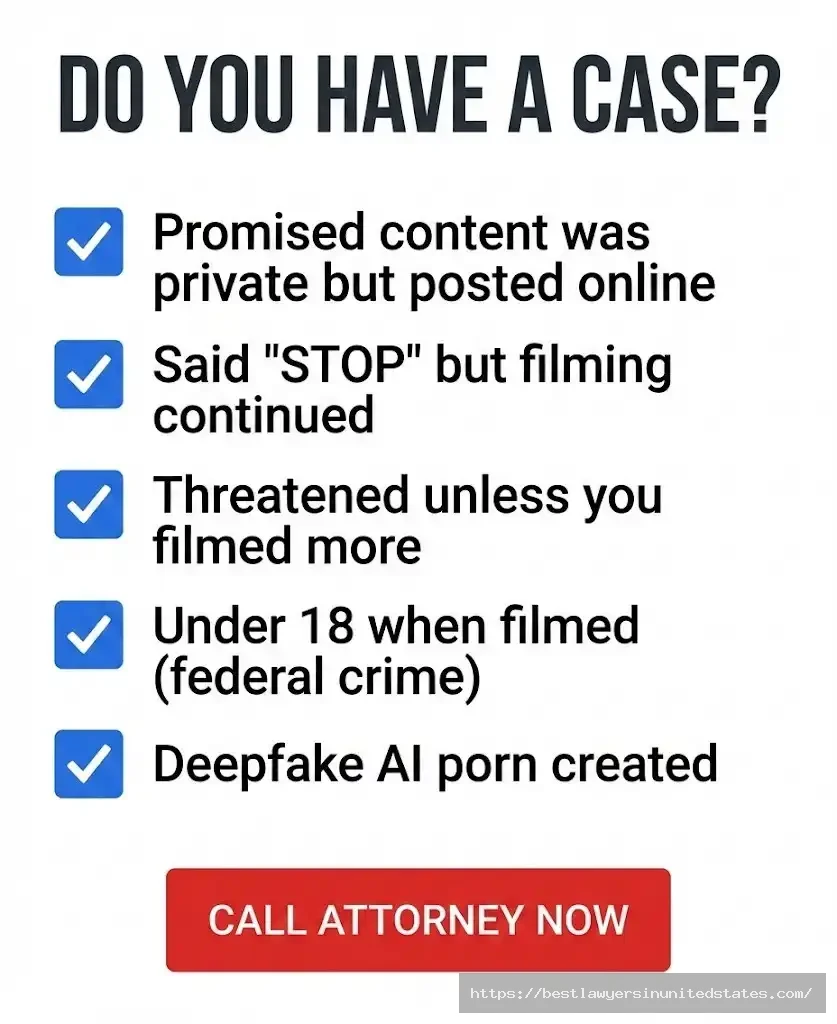
- You were promised the content would remain private, but it was published online
- You were told the video was for “personal use only” or “foreign distribution only”
- You said “no” or “stop” during filming, but they continued
- You were filmed without your knowledge or while incapacitated
- You agreed to one type of content, but something more aggressive occurred
- The contract misrepresented what would happen during filming
Also Check: DailyNewsLaw
✓ Coercion or Fraud Was Involved:
- They threatened to release content unless you filmed more
- They said “everyone does this” or pressured you when you hesitated
- You were offered money you desperately needed and felt you had no choice
- They claimed to be a “modeling agency” but it was adult content
- They withheld payment until you agreed to additional acts
- They kept you isolated in a hotel far from home with no return ticket
- Male actors or producers intimidated you before or during filming
✓ You Were Underage or Unable to Consent:
- You were under 18 at the time of filming (federal crime – 18 U.S.C. § 2251)
- You were under the influence of drugs or alcohol
- You have a developmental disability that affects your ability to consent
- You were experiencing a mental health crisis
✓ Content Was Shared Without Permission:
- An ex-partner posted intimate videos online without your consent (revenge porn)
- Content was uploaded to pornography sites without your authorization
- Your face or identifying information was not blurred as promised
- Videos were distributed beyond what your contract specified
- AI-generated deepfake pornography was created using your image
Important: Even if you signed a contract, you may still have a case. Contracts signed under duress, fraud, or without full disclosure are often legally invalid under California Civil Code § 1567 and similar state laws. Additionally, consent must be ongoing – you have the right to withdraw consent at any time during filming.
Real Facial Abuse Lawsuit Cases: Verified Outcomes (2019-2025)
These verified cases established legal precedents and demonstrate what’s possible when pursuing justice:
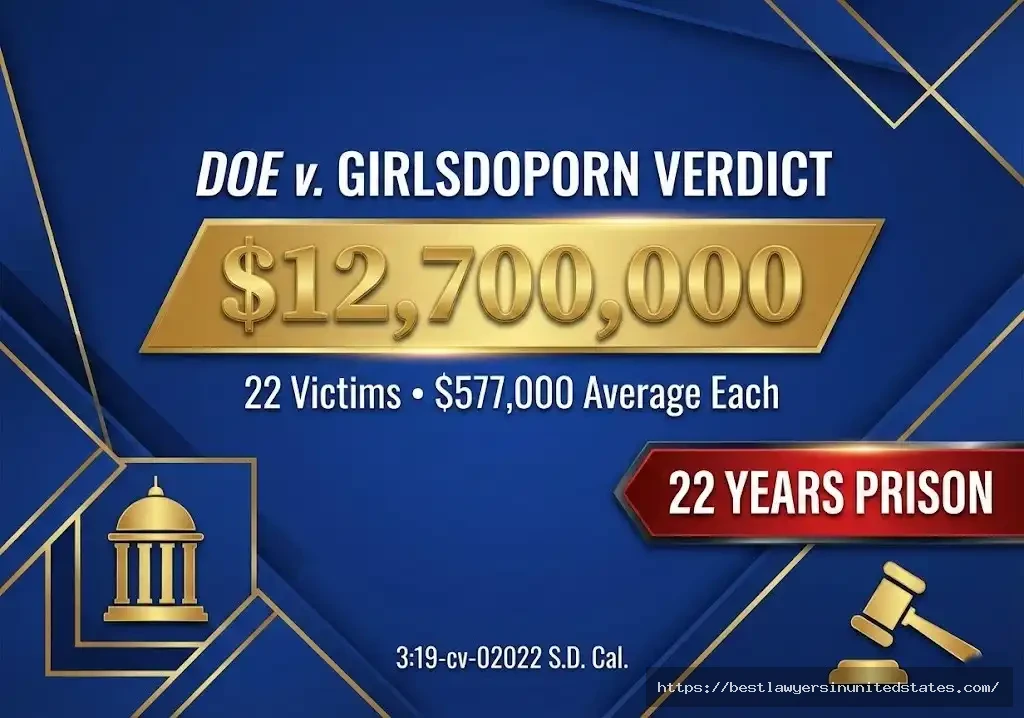
Case 1: Doe et al. v. GirlsDoPorn (2019-2020)
Case Number: 3:19-cv-02022, U.S. District Court, Southern District of California
Verdict: $12,700,000 awarded to 22 plaintiffs
Criminal Outcome: 22 years in prison for owner Michael Pratt; co-defendants sentenced to 4-20 years
What Happened:
Women aged 18-23 responded to modeling ads on Craigslist offering $3,000-$5,000 for a one-day shoot. Producers flew them to San Diego, then revealed it was for adult videos. They were explicitly told:
- Videos would only be sold on DVDs in Australia and New Zealand
- Content would never appear on the internet
- No one in the U.S. would ever see the videos
- Their identities would be completely protected
All of these statements were lies. Videos appeared on popular pornography websites within days.
Coercion Tactics Proven in Court:
- Kept women in hotels far from home with no return transportation
- Had male actors present to intimidate them before signing contracts
- Refused to show contracts until women were already undressed
- Threatened lawsuits for travel costs ($2,000-$4,000) if they refused
- Pressured them for hours, sometimes 6-8 hours before filming
- Posted videos to major sites within 2-3 weeks despite promises
Legal Violations Established:
- Fraud and intentional misrepresentation (Cal. Civil Code § 1709)
- Breach of contract
- Violation of California’s Unfair Competition Law (Cal. Bus. & Prof. Code § 17200)
- Federal sex trafficking charges (18 U.S.C. § 1591)
- Conspiracy to commit sex trafficking
What Victims Received:
- $12.7 million in compensatory damages (avg. $577,000 per victim)
- Permanent injunction ordering removal from all websites
- Rights to all content featuring them
- Vindication through criminal convictions
- Precedent establishing that fraud invalidates consent in adult content
Court Documents: Available on CourtListener.com (Docket #3:19-cv-02022)
Media Coverage: San Diego Union-Tribune, NBC News, Vice News documented the case extensively
Case 2: Jane Doe v. Pornhub/MindGeek (2020-2025)
Case Numbers: Multiple consolidated cases including 1:20-cv-13163 (C.D. Cal.)
Status: Ongoing litigation with significant plaintiff victories
Estimated Settlements: $500,000-$2.5 million per victim (confidential)
What Happened:
40+ women discovered videos of themselves on Pornhub that were:
- Uploaded without their consent by ex-partners (revenge porn)
- Filmed when they were minors (child sexual abuse material)
- Created through sex trafficking situations
- Posted despite repeated DMCA takedown notices
Pornhub’s verification system was nearly non-existent. The platform required no proof of age or consent before 2020.
Legal Arguments That Succeeded:
- Section 230 immunity doesn’t protect platforms that knowingly profit from illegal content
- MindGeek violated the Trafficking Victims Protection Act (18 U.S.C. § 1595)
- Company failed to implement reasonable verification systems
- Gross negligence in content moderation
- Failure to respond to takedown requests constitutes participation
Major Victories:
- Court denied MindGeek’s motion to dismiss in February 2021
- Visa and Mastercard stopped processing Pornhub payments (December 2020)
- Pornhub removed 10 million unverified videos – 80% of all content
- Platform now requires ID verification for all uploaders
- Multiple confidential settlements reached (2022-2025)
- Established precedent that platforms can be liable for failing to verify consent
Impact on Industry:
This case forced the entire adult content industry to implement verification systems. OnlyFans, Pornhub, XVideos, and others now require government ID and consent documentation.
Media Coverage: New York Times exposé by Nicholas Kristof (December 2020), BBC investigation
Case 3: Doe v. Twitter/X Corporation (2023)
Case Number: 3:21-cv-00485, N.D. California
Settlement: Confidential (estimated $3+ million)
Date: January 2023
What Happened:
A child sex trafficking victim discovered videos of his abuse (filmed at ages 13-14) on Twitter. He reported the content multiple times to Twitter’s abuse team. Twitter’s response: “We reviewed your report and didn’t find a violation of our policies.”
The videos remained online and were shared thousands of times.
Legal Breakthrough:
Court ruled that Section 230 does NOT protect platforms when they:
- Are notified of specific illegal content
- Fail to remove it despite clear evidence
- Profit from the content through advertising
Why This Case Matters:
- First major case holding a social media platform liable for child sexual abuse material
- Established that “knowingly benefiting” from trafficking content removes Section 230 protection
- Twitter/X now faces automatic liability if they don’t remove reported CSAM within 24 hours
Citation: Doe v. Twitter, Inc., 555 F. Supp. 3d 889 (N.D. Cal. 2021)
Case 4: Florida v. Citron (2024) – First Criminal Deepfake Porn Case
Case Number: 24-CF-001842, Florida Circuit Court
Verdict: 18 months prison + 5 years probation
Date: September 2024
What Happened:
A man created AI-generated pornographic videos using photos scraped from women’s social media accounts. He posted them to pornography sites with the women’s real names, creating the false impression they had done adult content.
Legal Charges:
- Computer fraud (Florida Statute § 815.06)
- Extortion (he threatened to send videos to victims’ employers)
- Violation of Florida’s deepfake pornography law (§ 836.15, enacted 2023)
Significance:
First criminal conviction for AI-generated non-consensual pornography. Established that:
- Deepfake porn is NOT protected speech under the First Amendment
- Creating realistic fake pornography causes measurable harm (emotional distress, reputation damage, economic loss)
- Perpetrators face real criminal liability
State Laws: As of January 2026, 15 states have criminalized deepfake pornography (California, Texas, Florida, New York, Virginia, Illinois, Georgia, Minnesota, Hawaii, South Dakota, Nevada, Washington, Massachusetts, Louisiana, Oklahoma)
Case 5: Smith v. Amateur Allure (2021)
Settlement: $2.4 million + permanent content removal
Date: August 2021
What Happened:
Women were recruited through Instagram DMs claiming to be “fitness modeling opportunities.” Upon arrival:
- They discovered it was adult content
- Were pressured to sign contracts in a language they didn’t understand (Spanish-speaking victims given English contracts)
- Were told “your flight home is only guaranteed if you complete the shoot”
- Contracts contained arbitration clauses buried in fine print
Legal Violations:
- Violation of California’s unfair business practices
- Fraudulent inducement
- Unconscionable contracts (contracts of adhesion)
- Failure to provide contracts in victims’ primary language (Cal. Civil Code § 1632)
What Made This Case Different:
Victims had signed contracts BUT:
- Contracts were in English when victims primarily spoke Spanish
- No time was given to review (contracts provided 10 minutes before filming)
- Arbitration clauses were unenforceable due to fraud in the inducement
- Economic duress (no way home without completing shoot)
Precedent: Established that proper “consent” requires:
- Contracts in the signer’s primary language
- Reasonable time to review (minimum 24 hours recommended)
- No economic threats
- Full disclosure of what will occur
Case 6: People v. Ruben Andre Garcia (GirlsDoPorn Criminal Case)
Case Number: 19CR3719, San Diego Superior Court
Sentence: 20 years federal prison
Date: December 2022
Criminal Charges Proven:
- Sex trafficking by force, fraud, or coercion (18 U.S.C. § 1591)
- Conspiracy to commit sex trafficking
- Producing child pornography (some victims were 17)
Why Criminal Charges Were Filed:
Prosecutors proved Garcia and co-defendants:
- Used fraud (lying about distribution) to obtain sexual acts
- Used coercion (threats, intimidation, economic pressure)
- Transported women across state lines for commercial sex acts
- Created an enterprise built on systematic deception
Key Evidence:
- Text messages showing deliberate deception
- Financial records proving the scheme’s profitability ($17+ million)
- Testimony from 22 victims
- Evidence they specifically targeted vulnerable women (college students with debt)
Legal Principle: When fraud or coercion is used to obtain sexual acts that are then commercially distributed, it meets the federal definition of sex trafficking even if victims were initially willing to do “some form” of adult content.
Understanding Facial Abuse in Legal Context
What “Facial Abuse” Actually Refers To
In legal contexts, “facial abuse” describes situations where:
- Adult content involving aggressive acts was performed without full, informed consent
- Coercion or deception was used to obtain participation
- Physical or psychological harm occurred during filming
- Content was distributed beyond what was agreed upon
This is distinct from consensual adult content where all parties:
- Fully understand what will occur
- Agree voluntarily without pressure
- Can stop at any time
- Have control over distribution
The Legal Line Between Adult Content and Criminal Behavior
Consensual Adult Content (Legal):
- All participants are 18+ years old
- Everyone receives clear, accurate information about what will happen
- Participants can stop at any time without consequence
- Payment/contracts are honored as agreed
- Distribution follows agreed-upon parameters
- All participants are sober and mentally competent
Criminal Exploitation (Illegal):
- Participants under 18 (automatic federal crime under 18 U.S.C. § 2251)
- Fraud about what will happen or where content will appear
- Coercion through threats, intimidation, or economic pressure
- Continuing after someone says “stop” or shows distress
- Incapacitation through drugs/alcohol
- Unauthorized distribution (revenge porn, deepfakes)
Key Legal Principle: Consent must be informed, ongoing, and freely given. Consent obtained through lies is not valid consent.
Legal Grounds for Filing a Facial Abuse Lawsuit
1. Violation of Consent (Primary Cause of Action)
Legal Basis:
- Fraud in the inducement (California Civil Code § 1709)
- Intentional misrepresentation
- Breach of contract
How to Prove:
You need to demonstrate the producer/distributor:
- Made specific false statements about distribution
- Promised privacy/limited distribution that was violated
- Misrepresented the nature of the acts to be performed
- Obtained “consent” through material lies
Evidence That Helps:
- Text messages or emails with false promises
- Contracts showing different terms than what occurred
- Advertisements that misrepresented the opportunity
- Testimony from other victims showing a pattern of deception
- Videos showing your verbal objections or distress
Relevant Case Law: Doe v. GirlsDoPorn established that consent obtained through fraud about distribution is legally invalid.
2. Invasion of Privacy
Legal Basis:
- Violation of right to privacy (Constitutional in California, statutory in most states)
- Public disclosure of private facts
- Appropriation of name or likeness (Cal. Civil Code § 3344)
Four Types of Privacy Invasion:
A. Intrusion Upon Seclusion
- Being filmed in a private place without knowledge
- Hidden cameras in hotel rooms, bathrooms, changing rooms
- Example: Filming through windows, under doors, etc.
B. Public Disclosure of Private Facts
- Sharing intimate content without consent
- “Revenge porn” (criminalized in 48 states + D.C.)
- Violates Cal. Penal Code § 647(j)(4), Texas Penal Code § 21.16, etc.
C. False Light
- Content that creates false impression about you
- Deepfake pornography
- Editing videos to misrepresent what occurred
D. Appropriation of Likeness
- Using your image for commercial gain without permission
- Applies even if you initially consented but contract was breached
Damages Available:
- Actual damages (lost income, therapy costs)
- Emotional distress
- Punitive damages (to punish egregious conduct)
- Statutory damages: $750-$30,000 per violation under some state revenge porn laws
3. Emotional Distress and Psychological Harm
Legal Claims:
A. Intentional Infliction of Emotional Distress (IIED)
Requirements:
- Defendant’s conduct was extreme and outrageous
- Defendant intended to cause emotional distress OR acted with reckless disregard
- You suffered severe emotional distress
- Defendant’s conduct was the cause
What Counts as “Extreme and Outrageous”:
- Deliberately ignoring someone saying “stop”
- Threatening to release content to family/employers
- Creating deepfake pornography
- Continuing to profit from content after learning it depicts trafficking
B. Negligent Infliction of Emotional Distress (NIED)
For platforms/distributors who should have known content was non-consensual:
- Pornhub continuing to host content after DMCA notices
- Platforms failing to verify age/consent
- Websites that don’t respond to takedown requests
Proving Emotional Harm:
Courts recognize these as valid injuries:
- Post-Traumatic Stress Disorder (PTSD)
- Major Depressive Disorder
- Anxiety disorders
- Suicidal ideation
- Loss of sleep, appetite, ability to function
- Damage to personal/professional relationships
Evidence Needed:
- Medical records from psychiatrist/psychologist
- Therapy notes documenting symptoms
- Prescription medications for mental health
- Testimony from family/friends about personality changes
- Documentation of job loss, educational impact
- Expert witness (psychiatrist) explaining causation
Damages: Victims in the GirlsDoPorn case received an average of $577,000 each, primarily for emotional distress.
4. Sex Trafficking (Federal Criminal and Civil Claims)
Legal Basis: 18 U.S.C. § 1591 (criminal), 18 U.S.C. § 1595 (civil)
What Qualifies as Sex Trafficking:
You don’t have to be kidnapped or physically forced. Sex trafficking includes obtaining commercial sex acts through:
- Force – Physical violence or restraint
- Fraud – Lies about what would happen, where content would go, or nature of the work
- Coercion – Threats, intimidation, economic pressure, abuse of power
Examples That Meet the Legal Definition:
- “If you don’t finish filming, you owe us $5,000 for your flight and hotel”
- “We’ll sue you if you don’t complete the contract”
- Lying about content being for “foreign distribution only”
- Making someone travel to an unfamiliar city then controlling their transportation
- Threatening to tell family/employer about the shoot
- Holding identification documents
Civil Remedies Under 18 U.S.C. § 1595:
Victims can sue traffickers for:
- Damages for the “full value” of the victim’s labor (can be hundreds of thousands)
- Emotional distress damages
- Punitive damages
- Attorney’s fees
- Mandatory restitution
Statute of Limitations: 10 years from when you discovered the violation, OR during your lifetime if you were a minor.
Important: You can bring a civil trafficking lawsuit even if prosecutors don’t file criminal charges.
5. Revenge Porn / Non-Consensual Pornography
State Criminal Laws (48 states + D.C.):
- California: Penal Code § 647(j)(4) – Misdemeanor or felony, up to 1 year jail
- Texas: Penal Code § 21.16 – Class A misdemeanor, up to 1 year jail
- New York: Penal Law § 245.15 – Class A misdemeanor
- Florida: Statute § 784.049 – First-degree misdemeanor
Federal Law (as of 2024):
The “Take It Down Act” (proposed 2023, enacted 2024) makes it a federal crime to:
- Share intimate images without consent
- Threaten to share intimate images (sextortion)
- Create deepfake pornography
Civil Remedies:
Most state laws now allow victims to sue for:
- Injunction ordering content removal
- Actual damages (lost income, relocation costs, therapy)
- Statutory damages: $10,000-$150,000 per image/video
- Punitive damages
- Attorney’s fees
Who Can Be Sued:
- The person who posted the content
- Websites that refuse to remove it after notice
- Anyone who shares/redistributes the content
Evidence You Need:
- Screenshots with timestamps and URLs
- Records of your attempts to get content removed
- Proof the person knew you didn’t consent (text messages, etc.)
- Documentation of harm (job loss, harassment, etc.)
6. Violation of Child Pornography Laws (If You Were Under 18)
Federal Law: 18 U.S.C. § 2251 (production), § 2252 (distribution)
Absolutely Critical:
If you were under 18 when filmed, this is:
- An automatic federal felony
- Carries 15-30 years in prison for producers
- NO statute of limitations for criminal prosecution
- Lifetime for civil lawsuits
What To Do:
- DO NOT download or possess the content (even of yourself)
- Report immediately to the FBI at tips.fbi.gov or call 1-800-CALL-FBI
- Contact the National Center for Missing & Exploited Children: CyberTipline.org
- Consult an attorney who specializes in child exploitation cases
You Are NOT in Trouble:
Federal law recognizes minors cannot consent. You are a victim, not a criminal, even if you willingly participated.
Civil Remedies:
Under 18 U.S.C. § 2255:
- Mandatory minimum of $150,000 per defendant
- Can be $3-5 million in total damages
- Includes compensation for a lifetime of harm
- You can sue producers, distributors, and anyone who possessed the content
How to File a Facial Abuse Lawsuit: Step-by-Step Process
Step 1: Ensure Your Immediate Safety (First 24-72 Hours)
If you’re in danger:
- Leave the situation immediately
- Call 911 if you’re being threatened
- Contact the National Sexual Assault Hotline: 1-800-656-4673
- Go to a hospital for a forensic exam if physical assault occurred
If the perpetrator is harassing or threatening you, immediately consult a restraining order attorney who can obtain emergency protective orders within 24 hours to prevent further contact or intimidation.
If content is actively being distributed:
- DO NOT engage with the person who posted it (creates evidence trail)
- Start documenting everything (see Step 2)
- File a police report within 24-48 hours
- Contact platforms for emergency takedowns
Step 2: Preserve All Evidence (Critical – Do This Immediately)
Digital Evidence to Collect:
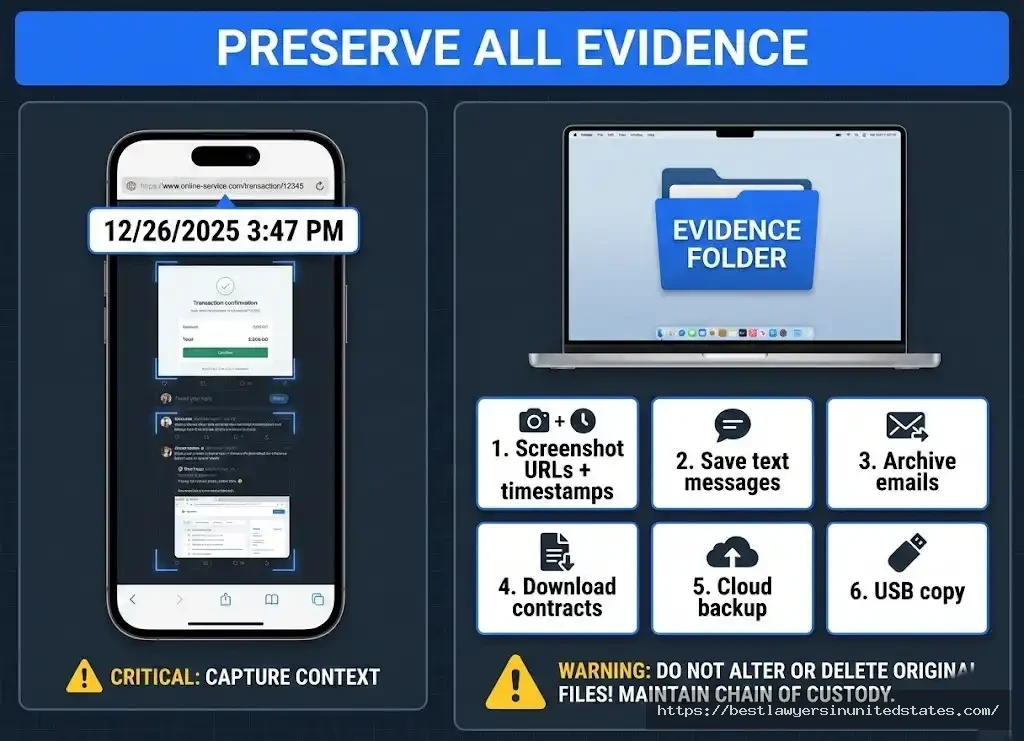
1. Content Location
- Screenshot every page where your content appears
- Include full URL, date/time stamp, view counts
- Use a screen recording tool to capture scrolling
- Save URLs to Internet Archive (archive.org) to preserve if removed
- Document platform (Pornhub, Twitter, Reddit, etc.)
2. Communications
- Screenshots of ALL text messages, emails, DMs
- Dating app conversations if applicable
- WhatsApp, Snapchat, Signal messages
- Phone call logs
- Voicemails (transcribe and save audio)
3. Contracts & Documents
- Modeling contracts or agreements
- Payment receipts or Venmo/PayPal transactions
- Non-disclosure agreements
- Flight confirmations, hotel bookings
- Any written promises about distribution
4. Social Media
- Archive the perpetrator’s social media profiles
- Screenshot posts, bio, tagged locations
- Save evidence they contacted other victims
- Document if they’ve been banned/reported before
How to Preserve Evidence Properly:
- Take screenshots on your phone – includes metadata
- Email screenshots to yourself – creates time-stamped record
- Save to cloud storage – Google Drive, Dropbox (with dates)
- Use archive.org to save web pages permanently
- Create a USB backup – courts prefer original digital files
- DO NOT edit or crop – keep complete, unaltered evidence
What NOT to Do:
- Don’t delete anything (even threats – they’re evidence)
- Don’t confront the person (creates new communication trail)
- Don’t post about it on social media (defense will use against you)
- Don’t access content repeatedly (defense claims you wanted exposure)
Step 3: File Reports with Authorities (Within 1 Week)
1. Local Police Report
Go in person to your local police department:
- Bring all printed evidence
- Ask for a detective experienced in sex crimes
- Get a case number and copy of the report
- Ask about victim advocate services
What to report:
- Date/time/location of filming
- Names of all people involved
- Where content is posted
- Any threats made
- Financial losses
2. FBI Report (If Content Crossed State Lines)
File at: https://tips.fbi.gov or call 1-800-CALL-FBI
Report when:
- You were transported across state lines for filming
- Content is distributed nationally/internationally
- You were a minor when filmed
- Multiple victims are involved
3. National Center for Missing & Exploited Children (If Under 18)
Report at: CyberTipline.org They work directly with FBI and will:
- Attempt to have content globally removed
- Assign you a case number for takedown requests
- Coordinate with international law enforcement
4. Internet Crime Complaint Center (IC3)
File at: ic3.gov for:
- Sextortion
- Online harassment
- Financial fraud related to the incident
Step 4: Request Content Removal (Start Immediately, Continue Ongoing)
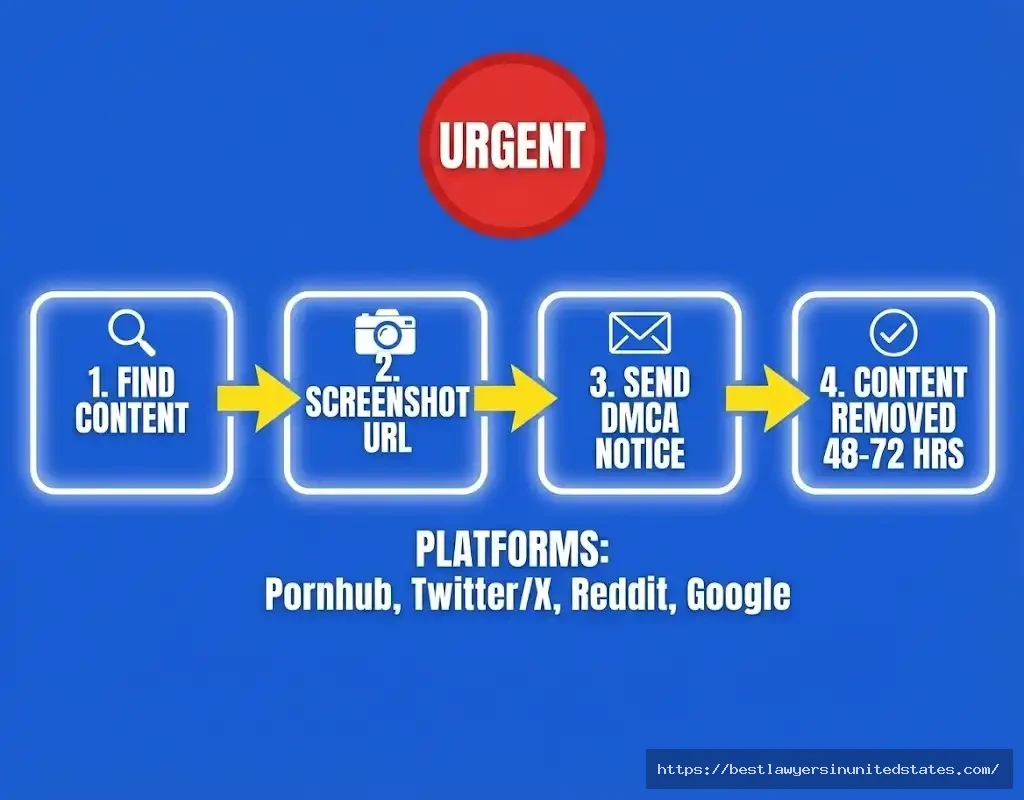
DMCA Takedown Notices (Copyright Approach):
Under 17 U.S.C. § 512, you can send DMCA notices claiming:
- You own the copyright to your likeness
- Content was posted without authorization
- Platform must remove within reasonable time (typically 48-72 hours)
How to Send:
Find the platform’s DMCA agent:
- Pornhub: [email protected]
- Twitter/X: [email protected]
- Reddit: /contact form
- Facebook/Instagram: copyright.fb.com
What to Include:
DMCA Takedown Notice

To: [Platform] DMCA Agent

I, [Your Name], am the copyright owner of the content located at:
- [URL 1]
- [URL 2]
- [URL 3]

This content was posted without my authorization. I am the person appearing in the content and did not consent to its distribution.

Under 17 U.S.C. § 512(c), I request immediate removal of this material.

I state under penalty of perjury that I am the copyright owner and this notice is accurate.

Signature: ___________
Date: ___________
For Revenge Porn – Use Platform’s Non-Consensual Intimate Image Forms:
Most major platforms now have specific forms:
- Google: support.google.com/websearch/answer/6302812
- Bing: microsoft.com/concern/bingxxx
- Pornhub: pornhub.com/content-removal
- Twitter/X: help.twitter.com/forms/private_information
- Reddit: reddit.com/report
If Platforms Don’t Respond:
- Hire a specialized takedown service:
- Cyber Civil Rights Initiative (free for victims)
- DMCA Force (paid, very effective)
- Reputation management companies
- Consider legal action against the platform
Step 5: Find the Right Attorney (Week 1-2)
Types of Lawyers You Need:
Before hiring legal representation, understanding how plaintiff attorneys work will help you know what to expect during the lawsuit process, including how contingency fees are calculated and what your attorney’s responsibilities include.
Sexual Abuse/Exploitation Attorney:
- Experience with sex trafficking cases
- Familiar with 18 U.S.C. § 1595 civil trafficking claims
- Track record in intimate privacy cases
Digital Privacy Attorney:
- Experience with revenge porn litigation
- Knowledge of Section 230 exceptions
- Familiar with platform liability
Personal Injury Attorney:
- Experience with emotional distress claims
- Willing to work on contingency (you pay nothing upfront)
- Has resources for expert witnesses
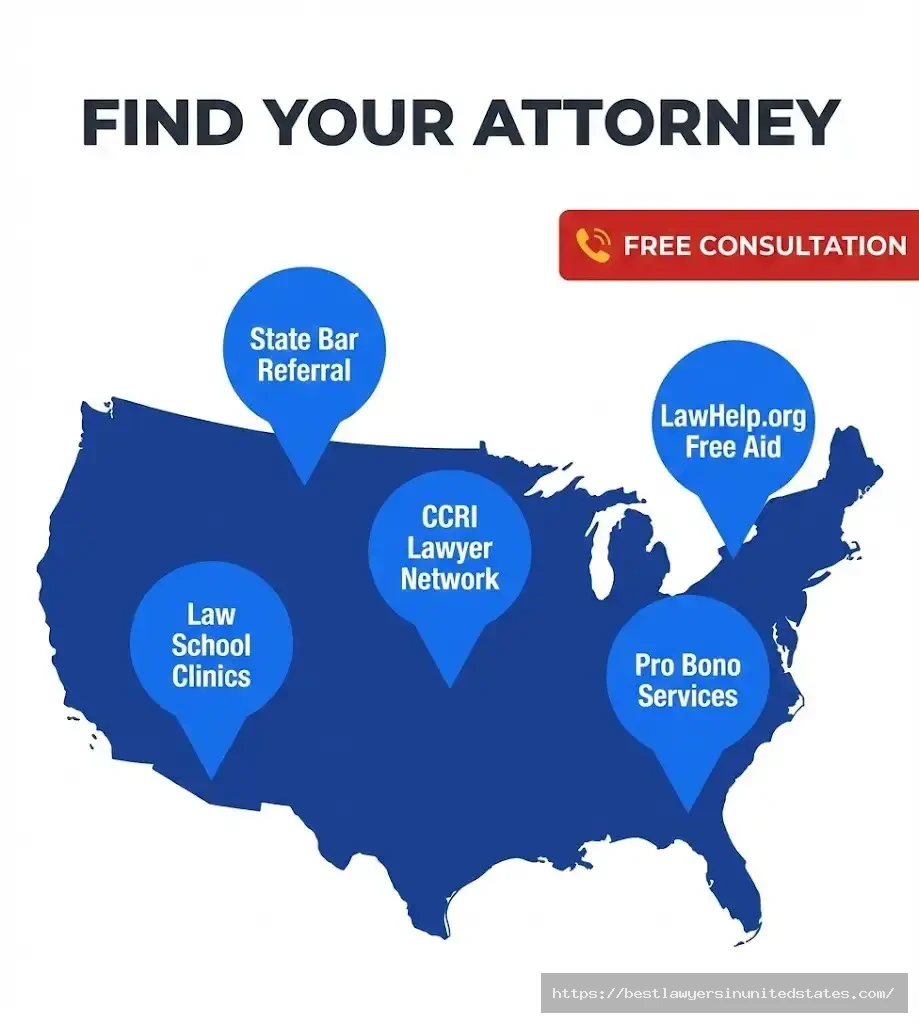
How to Find One:
- State Bar Referral Service: Most states have free referral services
- California: calbar.ca.gov/lrs
- Texas: texasbar.com/lrs
- New York: nysba.org/lrs
- National Organizations:
- Cyber Civil Rights Initiative: cybercivilrights.org (lawyer referrals)
- National Crime Victim Bar Association: victimsofcrime.org
- AEquitas (sexual assault attorney network): aequitasresource.org
- LawHelp.org: Free/low-cost legal aid directory
- Law School Clinics: Many law schools have clinics for:
- Domestic violence victims
- Sex trafficking survivors
- Civil rights cases
Questions to Ask in Consultation:
- “Have you handled cases involving non-consensual pornography or sex trafficking?”
- “What was the outcome of those cases?”
- “Do you work on contingency?” (you pay nothing unless you win)
- “What are my chances of recovering damages?”
- “How long will this take?”
- “Can you help with content removal while the case proceeds?”
- “Will you handle criminal restitution if charges are filed?”
Red Flags:
- Guarantees a specific outcome
- Wants large upfront payment
- No experience in sexual exploitation cases
- Pressures you to make quick decisions
- Dismisses your concerns
Step 6: Medical and Mental Health Documentation (Ongoing)
Why This Matters:
Your emotional distress damages depend on medical evidence. Without documentation, defense attorneys will claim you weren’t actually harmed.
What to Do:
1. See a Psychiatrist or Psychologist (Within 2 Weeks)
Tell them:
- You were sexually exploited/filmed without proper consent
- You need documentation for a legal case
- You’re experiencing [describe symptoms]
They will:
- Diagnose you (likely PTSD, depression, anxiety)
- Create treatment records
- Document causation (link between incident and symptoms)
- Potentially testify as your treating physician
2. Start Therapy (ASAP)
Options if you can’t afford private therapy:
- RAINN offers free counseling referrals
- Community mental health centers (sliding scale)
- Online therapy (BetterHelp, Talkspace – often $60-80/week)
- Victim compensation funds may cover costs
Keep Records Of:
- Every therapy session (dates, duration)
- Medications prescribed
- Hospitalizations or ER visits
- Support group attendance
- Impact on work/school (missed days, performance)
3. Document Physical Symptoms
PTSD and emotional trauma cause physical symptoms:
- Sleep disturbances (get a sleep study if severe)
- Appetite changes (weight loss/gain)
- Headaches
- Gastrointestinal issues
- High blood pressure
4. Get a Comprehensive Psychological Evaluation
For major cases, your attorney will hire an independent psychologist to conduct:
- Full PTSD assessment
- Cognitive testing
- Life impact evaluation
- Damages calculation (lifetime therapy costs, lost earning capacity)
This evaluation costs $3,000-$8,000 but can support million-dollar damage claims.
Similar to how medical malpractice attorneys prove emotional harm through expert testimony, facial abuse lawsuit cases require psychiatric experts to document the psychological impact and calculate lifetime damages.
Step 7: File the Lawsuit (Month 2-6)
Timing:
Most attorneys will investigate for 2-6 months before filing to:
- Identify all potential defendants
- Gather maximum evidence
- Calculate damages accurately
- Explore settlement before filing
Statute of Limitations (Time Limits to File):
Sex Trafficking: 10 years from discovery OR during your lifetime if you were a minor (18 U.S.C. § 1595)
Invasion of Privacy: Varies by state
- California: 2 years (Cal. Civ. Proc. Code § 335.1)
- Texas: 2 years (Tex. Civ. Prac. & Rem. Code § 16.003)
- New York: 1-3 years depending on claim
Revenge Porn: Varies by state
- California: 3 years (new law as of 2022)
- Texas: 2 years
- Many states have specific statutes that extend deadlines
Childhood Sexual Abuse Material:
- UNLIMITED for federal claims if you were under 18
⚠️ Don’t Wait: Even though you may have years, evidence disappears. File as soon as possible.
Where to File:
Federal Court (U.S. District Court):
- Sex trafficking claims (18 U.S.C. § 1595)
- Cases involving defendants in multiple states
- When seeking over $75,000 in damages
State Court:
- Invasion of privacy
- Emotional distress
- Revenge porn violations
- Fraud/breach of contract
Who to Sue (Potential Defendants):
- Direct Perpetrators
- Person who filmed you
- Person who posted content
- Producers, directors, recruiters
- Companies/Entities
- Production companies
- Websites hosting content
- Payment processors (if they knowingly processed trafficking proceeds)
- Platforms (If Applicable)
- Must show they “knowingly benefited” from illegal content
- Failure to remove after notice
- Inadequate age/consent verification
What Your Complaint Will Include:
- Statement of facts (your story)
- Legal claims (trafficking, privacy violation, etc.)
- Damages requested (specific dollar amount)
- Request for injunction (force content removal)
- Demand for jury trial
Step 8: Discovery Process (Month 6-18)
What Happens:
Both sides exchange evidence through:
1. Interrogatories – Written questions under oath
- Defendant will ask about your sexual history (limited by rape shield laws)
- You can ask about other victims, business practices, financials
2. Requests for Production – Demanding documents
- Your side gets: contracts, emails, financial records, other victim complaints
- They request: your medical records, communications, social media
3. Depositions – In-person questioning under oath
- You’ll be deposed for 4-8 hours (your lawyer present)
- You depose: defendants, witnesses, platform employees
Your Deposition (What to Expect):
Defense attorneys will try to:
- Claim you knew what you were agreeing to
- Suggest you weren’t actually harmed
- Point to any past adult content participation
- Question why you didn’t leave sooner
How to Prepare:
- Review all evidence with your attorney multiple times
- Practice answering difficult questions
- Understand you can take breaks
- Know that “I don’t recall” is acceptable if true
⚠️ This is Often the Hardest Part
Many victims settle during discovery to avoid:
- Reliving trauma in deposition
- Having intimate details discussed in court
- Risk that a jury won’t understand coercion
Your attorney will help you decide whether to continue or settle.
Step 9: Settlement Negotiations or Trial (Month 12-36)
Settlement Statistics:
- 90-95% of civil cases settle before trial
- Average settlement in trafficking cases: $200,000-$2,000,000
- Settlements are confidential (you can’t discuss terms)
Typical Settlement Timeline:
- Month 6-12: Initial offers (usually low, often $25,000-$100,000)
- Month 12-18: Serious negotiations after depositions
- Month 18-24: Mediation (neutral third party helps negotiate)
- Month 24-30: Final settlement or proceed to trial
What You Can Expect in Settlement:
- Money: Compensatory damages for:
- Therapy costs (past and future)
- Lost wages
- Emotional pain and suffering
- Punitive damages (to punish defendant)
- Injunction: Court order requiring:
- Permanent content removal
- Transfer of copyright to you
- Ban on future distribution
- Confidentiality: Usually includes:
- Non-disclosure agreement (you can’t discuss settlement amount)
- Defendant admits no wrongdoing
- All parties agree not to disparage each other
If You Go to Trial:
Jury Selection:
- Attorneys choose 6-12 jurors
- Both sides can exclude biased jurors
Your Testimony:
- You’ll testify for several hours
- Your lawyer will question you first (direct examination)
- Defense will cross-examine
- Judge protects you from abusive questioning
Expert Witnesses:
- Your psychiatrist testifies about your trauma
- Economic expert calculates lifetime damages
- Technology expert traces content distribution
- Defense may have their own experts
Verdict:
- Jury decides liability (did defendant violate your rights?)
- Jury decides damages (how much money?)
- Takes 3-10 days of trial
- Jury deliberates for hours to days
Trial Risks:
Pros:
- Potential for much higher damages than settlement
- Public vindication
- Precedent for other victims
Cons:
- Emotionally exhausting
- Public testimony about intimate details
- Risk of losing and getting nothing
- Can take 3-5 years from filing to verdict
- Appeals can add 1-3 more years
How Much Compensation Can You Receive?

Actual Damages Awarded in Real Cases:
High-Value Verdicts ($500,000+):
- GirlsDoPorn: $577,000 average per victim
- Pornhub settlements: $500,000-$2.5 million per victim (estimated)
- Child sexual abuse material cases: $3-5 million per victim
- Deepfake cases: $250,000-$1 million
Mid-Range Settlements ($100,000-$500,000):
- Revenge porn with significant distribution
- Cases with clear fraud/coercion evidence
- Multiple platform distribution
- Employer/professional reputation damage
Lower Settlements ($25,000-$100,000):
- Limited distribution
- Quick content removal
- Less severe emotional distress
- Defendant has limited assets
Damage Categories:
1. Economic Damages (Objective Costs):
Past Expenses:
- Therapy/counseling: $100-300/session × 52 weeks × years
- Psychiatrist visits: $200-500/visit
- Medications: $50-500/month
- Hospital/ER visits: actual bills
- Lost wages: documented time off work
- Relocation costs: if you had to move
- Security expenses: identity monitoring, home security
- Legal fees: for content removal
Future Expenses:
- Lifetime therapy (often calculated as $200k-$500k)
- Future medications
- Lost earning capacity (if career impacted)
- Future medical monitoring
2. Non-Economic Damages (Subjective Harm):
These have no objective dollar value, but juries award:
Pain and Suffering:
- Physical: $10,000-$100,000
- Emotional: $50,000-$1,000,000+
Loss of Enjoyment of Life:
- Can’t maintain relationships: $25,000-$200,000
- Social isolation: $25,000-$150,000
- Fear of public recognition: $50,000-$300,000
Reputational Harm:
- Professional damage: $50,000-$500,000
- Family/community standing: $25,000-$250,000
3. Punitive Damages (Punishment):
Awarded when defendant’s conduct was:
- Intentionally malicious
- Recklessly indifferent to your rights
- Part of a pattern targeting multiple victims
Calculation:
- Often 2-4× compensatory damages
- California caps at 9× compensatory or $250,000, whichever is greater
- Federal trafficking cases have no cap
Example:
- Compensatory damages: $400,000
- Punitive damages: $1,200,000 (3×)
- Total: $1,600,000
Challenges Victims Face in Facial Abuse Lawsuits
Challenge #1: Proving Lack of Consent
The Problem:
Defendants will argue:
- “She signed a contract”
- “She accepted payment”
- “She didn’t physically resist”
- “She continued filming”
How to Overcome:
1. Document the Lies:
- “You told me this was for private use only” → prove it was posted publicly
- “You said Australia distribution only” → show it appeared on U.S. sites
- Contracts that misrepresent reality are void under fraud doctrines
2. Show Economic Duress:
- “I couldn’t afford a flight home”
- “They held my ID”
- “I needed the money for rent”
- Courts recognize economic coercion in GirlsDoPorn precedent
3. Demonstrate Pattern:
- Find other victims with identical stories
- Shows systematic fraud, not individual misunderstanding
4. Use Your Own Words:
- Videos where you say “stop” or appear distressed
- Text messages saying you felt pressured
- Contemporaneous communications showing you didn’t want content published
Challenge #2: Content Goes Viral (Internet Permanence)
The Reality:
Once content is online:
- It can be downloaded thousands of times in hours
- Re-uploaded to hundreds of sites
- Shared on forums, Discord, Telegram
- Archived on servers worldwide
What You Can Do:
1. Aggressive DMCA Campaign:
- Hire a takedown service (costs $1,000-$5,000/month)
- Send notices to every hosting platform
- Use Google’s delisting tools
- Monitor for re-uploads
2. Right to Be Forgotten Requests:
- European Union residents can request search engine delisting
- California residents have similar rights under CCPA
- Not available in all U.S. states
3. Court Injunctions:
- Get court orders requiring:
- Removal from major platforms
- Transfer of copyright to you
- Prohibition on re-uploading
4. Realistic Expectations:
- Complete removal may be impossible
- Focus on removing from major platforms (Google search, Pornhub, etc.)
- Content on obscure foreign sites may remain
Long-term Monitoring:
- Set up Google Alerts for your name
- Use reverse image search monthly
- Consider reputation management services
Challenge #3: Defendant Anonymity or Foreign Jurisdiction
The Problem:
Many defendants:
- Use fake names/aliases
- Operate through foreign companies
- Hide behind cryptocurrency payments
- Use VPNs and encrypted communications
Investigation Techniques:
1. Subpoena Digital Records:
- Email providers (Google, Yahoo) have user IPs
- Payment processors (Venmo, PayPal, Cash App) have real identities
- Website hosts (GoDaddy, Cloudflare) have registration info
- Social media platforms have location data
2. Hire a Digital Forensic Investigator:
- Can trace cryptocurrency transactions
- Analyze metadata in videos/photos
- Identify locations from background details
- Cost: $5,000-$25,000
3. Use John Doe Lawsuits:
- Sue “John Doe, identity unknown”
- Use discovery to unmask real identity
- Once identified, amend complaint with real name
Foreign Defendants:
If defendant is overseas:
- Much harder to collect judgment
- May need to sue in their country
- Consider suing U.S.-based platforms instead
- Focus on content removal rather than money
Practical Reality:
- Some defendants will never be found
- Some will never pay even if you win
- This is why suing platforms is important
Challenge #4: Defense Victim-Blaming Tactics
What Defense Attorneys Will Do:
1. Attack Your Credibility:
- “Why didn’t you leave?”
- “You accepted payment”
- “You’ve done adult content before”
- “You posted suggestive photos on Instagram”
2. Blame Your Behavior:
- “You were drinking”
- “You were flirting via text”
- “You went to his hotel room”
3. Minimize Harm:
- “She’s exaggerating her emotional distress”
- “She’s seeking attention/money”
- “She only filed after the relationship ended”
How Laws Protect You:
1. Rape Shield Laws:
- Your sexual history is generally inadmissible
- Past adult content participation doesn’t equal consent to THIS content
- Federal Rule of Evidence 412
2. Pattern Evidence Rules:
- If defendant has history of similar conduct, it’s admissible
- Shows this wasn’t a “misunderstanding”
3. Expert Testimony:
- Psychologists explain trauma responses
- “Why victims don’t just leave” is well-understood scientifically
- Experts rebut victim-blaming
Preparing for Cross-Examination:
Your attorney will prepare you to answer:
- “Why didn’t you leave?” → “I was isolated, scared, and had no transportation”
- “Why did you accept payment?” → “I was told it was for legitimate modeling”
- “Why are you suing now?” → “It took me time to process what happened and find legal help”
Challenge #5: Emotional Toll of Litigation
What Victims Experience:
During Discovery (Months 6-18):
- Repeated questioning about traumatic events
- Defense investigators may contact family/friends
- Surveillance (some defendants hire PIs)
- Stress-related health issues
During Depositions:
- 4-8 hours of hostile questioning
- Reliving the abuse in detail
- Defense trying to make you appear untruthful
- No jury present to sympathize
During Trial (If Applicable):
- Testifying in open court
- Public access to court documents
- Media coverage (for high-profile cases)
- Seeing the defendant in person
Support Systems:
1. Victim Advocates:
- Can attend depositions/trial with you
- Free through prosecutor’s office or nonprofits
- Provide emotional support, not legal advice
2. Therapy:
- Essential throughout litigation
- RAINN can refer to trauma specialists
- May be covered by victim compensation funds
3. Support Groups:
- Connect with other survivors
- Online forums: r/legaladvice, cybercivilrights.org community
- In-person groups through RAINN
4. Legal Team Coordination:
- Some law firms have social workers on staff
- Your attorney should be trauma-informed
- You can request breaks, postponements if needed
When to Consider Settling:
It’s okay to prioritize your mental health over maximum damages. Many victims choose settlement to:
- Avoid trial testimony
- Get closure faster
- Reduce ongoing stress
- Protect privacy
There is no “right” choice – only what’s right for you.
Special Situations and Emerging Legal Issues
1. AI-Generated Deepfake Pornography
What It Is:
Using AI to create realistic fake pornography:
- Face-swapping technology
- Voice cloning
- Fully synthetic videos using your image
Why It’s Exploding:
- Free tools now available online
- Can be created from a single social media photo
- Nearly impossible to detect as fake
Legal Remedies:
State Criminal Laws (15 states as of 2026):
- California: Penal Code § 236.10 (up to 3 years prison)
- Texas: Penal Code § 21.16 (harassment by deepfake)
- Florida: Statute § 836.15
- New York: Proposed legislation pending
Federal Law:
- DEFIANCE Act (Disrupt Explicit Forged Images and Non-Consensual Edits) – passed 2024
- Makes it a federal crime to create/distribute non-consensual deepfakes
- Victims can sue for $150,000 per violation OR actual damages (whichever is higher)
Civil Claims:
- Defamation (false light)
- Invasion of privacy
- Violation of right of publicity
- Intentional infliction of emotional distress
Platform Responsibility:
- Twitter/X bans deepfake porn (policy updated 2024)
- Reddit bans it (r/deepfakes banned 2018, enforcement ongoing)
- Pornhub requires deepfake disclaimer (often ignored)
Challenges:
- Very difficult to prevent
- Creators often anonymous
- Content spreads faster than takedowns
- Distinguishing real vs. fake is increasingly hard
What You Can Do:
- Reverse image search your face monthly
- Use Google Alerts for your name
- Immediately DMCA any deepfakes found
- Report to FBI if criminal (tips.fbi.gov)
- Sue under DEFIANCE Act
2. “Sextortion” Cases
What It Is:
Threatening to release intimate content unless victim:
- Sends more content
- Pays money
- Performs sexual acts
Common Scenarios:
1. Ex-Partner Blackmail:
- “Send me nude photos or I’ll post our sex tape”
- “Get back together with me or I’ll send this to your employer”
2. Online Scams:
- Scammer tricks you into sending intimate photo (often on dating app)
- Immediately threatens to send to your Facebook friends unless you pay
- Often operates from foreign countries (Philippines, Nigeria, Morocco)
Legal Remedies:
Federal Crimes:
- Extortion (18 U.S.C. § 875)
- Cyberstalking (18 U.S.C. § 2261A)
- Sextortion (specific criminal statute, 18 U.S.C. § 2422)
State Crimes:
- Extortion/blackmail
- Harassment
- Revenge porn statutes
What to Do:
IMMEDIATELY:
- Stop all communication – do not pay, do not send more content
- Screenshot everything – demands, threats, their profile
- Report to FBI – they have a sextortion task force
- Report to platform – Facebook, Instagram, dating app
- Call local police – file a report
DON’T:
- Don’t pay (they’ll demand more)
- Don’t send more content (gives them more leverage)
- Don’t delete evidence
- Don’t try to negotiate
Foreign Scammers:
If the person is overseas:
- FBI can’t arrest them but will investigate
- Focus on getting platforms to ban their accounts
- Warn their other victims (often targeting multiple people)
- Accept that prosecution is unlikely
Civil Lawsuits:
You can sue for:
- Emotional distress
- Violation of sextortion statutes (some allow civil claims)
- Extortion under state law
Challenge: Collecting from anonymous foreign scammers is nearly impossible. Focus on criminal prosecution and content removal.
3. Workplace Sexual Exploitation
What It Is:
Employer/boss:
- Coerces employee into sexual acts through threats
- Films sexual acts and threatens to distribute
- Shares intimate workplace relationship videos
Legal Claims:
1. Sexual Harassment Under Title VII (federal law):
- Quid pro quo: “Have sex with me or you’re fired”
- Hostile work environment
2. State Sexual Harassment Laws:
- California FEHA
- New York Human Rights Law
3. Privacy Violations:
- Filming in workplace without consent
- Sharing intimate content of employee
4. Worker Exploitation:
- Some states classify this as labor trafficking
- Can sue under trafficking statutes
Unique Considerations:
Employer Liability:
- Company is liable if they knew or should have known
- Supervisor’s actions are attributable to company
- Company must investigate and remediate
Damages:
- Back pay
- Front pay (future lost wages)
- Emotional distress
- Punitive damages against company
- Attorney’s fees (company pays if you win)
EEOC Complaint:
- Must file with Equal Employment Opportunity Commission first
- 180-300 day deadline (varies by state)
- EEOC investigates, may prosecute for you
- You get “right to sue” letter after 180 days
Document Everything:
- Emails, texts demanding sexual acts
- Performance reviews (before and after refusing)
- Witnesses who saw harassment
- HR complaints you made
Victims who need to separate from an abusive partner while pursuing a facial abuse lawsuit should consult family law attorneys who can handle both the protective aspects of divorce and coordinate with your civil rights attorney.
4. Underage Victims (Now Adults)
If You Were Under 18 When Content Was Created:
Critical Points:
- It’s Child Sexual Abuse Material (CSAM), Not “Child Porn”:
- Federal law: 18 U.S.C. § 2251 (production), § 2252 (distribution)
- Mandatory minimum 15 years prison for producers
- NO statute of limitations for criminal prosecution
- You Are a Victim, Not a Criminal:
- Even if you willingly participated
- Even if you created the content yourself
- Minors cannot legally consent under federal law
- You Cannot Be Prosecuted for Content of Yourself:
- Many states used to prosecute teens for “sexting”
- Federal law now clarifies: victims are not defendants
Civil Remedies:
18 U.S.C. § 2255 (Federal Civil Remedy):
- Minimum $150,000 in damages per defendant
- Often $3-5 million total in jury verdicts
- Can sue anyone who:
- Produced the content
- Distributed it
- Possessed it (yes, even downloaders)
- Profited from it
Statute of Limitations:
- Lawsuit can be filed anytime during your lifetime
- Clock doesn’t start until you’re 18
- Some states have “tolling” that pauses the deadline
Restitution in Criminal Cases:
If the perpetrator is criminally convicted:
- Judge orders mandatory restitution
- You receive compensation for:
- Therapy costs
- Lost income
- Attorney fees
- Lifetime harm
Example: Vicky from “Vicky” Series
One of the most widely-distributed CSAM victims, “Vicky,” has received over $2 million in restitution from hundreds of defendants nationwide. Every person convicted of possessing her images is ordered to pay her a portion of the harm she suffered.
National Center for Missing & Exploited Children (NCMEC):
- CyberTipline.org for reporting
- Victim identification assistance
- Connects you with specialized attorneys
- Helps coordinate global content removal
If You Discover CSAM of Yourself:
- DO NOT download or possess it (even of yourself – creates legal complications)
- Report immediately to NCMEC: CyberTipline.org
- Report to FBI: tips.fbi.gov or 1-800-CALL-FBI
- Contact a specialized CSAM victim attorney
Resources:
- National Center for Missing & Exploited Children: 1-800-THE-LOST
- Innocent Images National Initiative (FBI)
- ICE Homeland Security Investigations
How to Support Someone Going Through This
If a friend, family member, or client is a victim:
What TO Do:
1. Believe Them Immediately
- “I believe you”
- “This wasn’t your fault”
- “I’m here for you”
2. Avoid Judgment
- Don’t ask “why didn’t you leave?”
- Don’t question their decisions
- Understand trauma affects judgment
3. Provide Practical Help
- Offer to attend police reports with them
- Help find an attorney
- Assist with documentation/screenshots
- Drive them to therapy appointments
4. Respect Their Autonomy
- Let them make decisions about legal action
- Don’t pressure them to prosecute
- Support whatever choice they make
5. Maintain Confidentiality
- Don’t share their story without permission
- Protect their privacy
- Don’t post about it on social media
What NOT to Do:
1. Don’t Blame the Victim
- “Why did you go to his hotel room?”
- “Why were you drinking?”
- “Didn’t you know it was too good to be true?”
2. Don’t Try to View the Content
- Don’t search for it “to see how bad it is”
- Don’t share it, even to “help” document
3. Don’t Retaliate Against the Perpetrator
- Don’t confront them
- Don’t threaten them
- Let law enforcement handle it
4. Don’t Make It About You
- “I can’t believe someone would do this to you” (centers your feelings)
- Better: “How are you doing?” (centers their needs)
5. Don’t Push a Timeline
- Legal action takes time
- Healing isn’t linear
- They may change their mind about prosecution – that’s okay
Resources to Share:
Give them this information:
- RAINN Hotline: 1-800-656-4673
- Crisis Text Line: Text HOME to 741741
- Cyber Civil Rights Initiative: 1-844-878-2274
- Local domestic violence shelter (often helps with all forms of sexual violence)
- Therapy referrals: psychologytoday.com
Many survivors experiencing domestic abuse alongside non-consensual content distribution can access legal protection through VAWA protections for abuse victims, which provide immigration relief and safety resources regardless of documentation status.
State-Specific Laws (Quick Reference)
California
Revenge Porn Law: Penal Code § 647(j)(4)
- Misdemeanor or felony
- Up to 1 year jail + $1,000 fine (misdemeanor)
- Up to 3 years prison (felony if for profit or to harm)
Civil Remedy: Civil Code § 1708.85
- Victim can sue for damages
- Attorney’s fees recoverable
- 3-year statute of limitations
Sex Trafficking: Penal Code § 236.1
- Civil remedy under Civil Code § 52.5
- Triple damages available
Deepfakes: Penal Code § 236.10 (enacted 2024)
Texas
Revenge Porn Law: Penal Code § 21.16
- Class A misdemeanor
- Up to 1 year jail + $4,000 fine
Civil Remedy:
- Can sue under Civil Practice & Remedies Code § 98B
- Actual damages + $10,000 statutory damages per image
- Injunctive relief
Deepfakes: Pending legislation (2025 session)
New York
Revenge Porn Law: Penal Law § 245.15
- Class A misdemeanor
- Up to 1 year jail
Civil Remedy:
- Can sue under Civil Rights Law § 52-b
- Liquidated damages of $1,000 or actual damages (whichever is higher)
- Attorney’s fees
Florida
Revenge Porn Law: Statute § 784.049
- First-degree misdemeanor
- Up to 1 year jail + $1,000 fine
Civil Remedy:
- Damages under common law invasion of privacy
- No specific civil statute
Deepfakes: Statute § 836.15 (enacted 2023)
- First criminal prosecution: September 2024
Illinois
Revenge Porn Law: 720 ILCS 5/11-23.5
- Class 4 felony
- 1-3 years prison
Civil Remedy:
- Right of Privacy Act (740 ILCS 190)
- Statutory damages up to $10,000
- Attorney’s fees
Updated Legal Developments (2024-2026)
1. The DEFIANCE Act (December 2024)
The “Disrupt Explicit Forged Images and Non-Consensual Edits Act” passed in December 2024, creating:
- Federal crime for creating/distributing non-consensual deepfakes
- Victims can sue for $150,000 per violation OR actual damages (whichever is higher)
- Platforms must remove within 48 hours of notice or face liability
- First federal deepfake law
Impact: Major increase in deepfake litigation expected in 2025-2026.
2. Platform Verification Requirements (2024-2025)
Following the Pornhub litigation:
Pornhub/MindGeek Changes:
- All uploaders must submit government ID
- Content must be manually verified
- Performers must verify their identity
- “Verified Amateur” program created
OnlyFans Policy:
- ID verification for creators
- Regular compliance checks
- Immediate removal of flagged content
Twitter/X Changes:
- Deepfake porn banned (policy updated March 2024)
- CSAM detection AI implemented
- Faster takedown responses
3. State Legislative Trends
2024-2025 New Laws:
States That Criminalized Deepfake Porn:
- Oklahoma (January 2024)
- Louisiana (June 2024)
- Massachusetts (August 2024)
States With Pending Legislation:
- Pennsylvania (expected 2026)
- Michigan (expected 2026)
- Ohio (expected 2026)
Trend: 35+ states expected to have revenge porn/deepfake laws by 2027.
4. AI Detection Tools
New technologies helping victims:
Content Authenticity Initiative (CAI):
- Adobe, Microsoft, BBC partnership
- Watermarks content at creation
- Can prove content is fake
FakeCatcher (Intel):
- 96% accuracy in detecting deepfakes
- Analyzes blood flow in face pixels
- Free tool for victims
Frequently Asked Questions
1. Can I sue if I signed a contract?
Yes. Contracts obtained through:
- Fraud (lies about distribution)
- Duress (threats, intimidation)
- Unconscionability (grossly unfair terms)
- Without proper disclosure
…are legally void or voidable.
The GirlsDoPorn victims had signed contracts, but won because the contracts were based on lies.
2. How long do I have to file a lawsuit?

It varies by claim and state:
- Sex trafficking: 10 years from discovery OR during your lifetime if you were a minor
- Revenge porn: 1-3 years (varies by state)
- Invasion of privacy: 1-3 years (varies by state)
- Child sexual abuse material: Unlimited if you were under 18
Consult an attorney immediately – waiting can cost you your rights.
3. What if the person who posted content is anonymous?
You can:
- File a “John Doe” lawsuit
- Subpoena platforms for user information
- Hire a digital forensics investigator
- Sue the platform if they knowingly hosted it
Even if you never identify the person, you may be able to sue the platform.
4. Will my name be public in court records?
You can request:
- Pseudonym (listed as “Jane Doe”)
- Sealed records
- Closed courtroom
Many courts grant these in sexual abuse/exploitation cases. Your attorney will file a motion for protective orders.
5. Can I sue if I’m currently doing sex work?
Yes. Consent to one sexual act ≠ consent to all sexual acts.
Even if you:
- Currently do adult content
- Have done it in the past
- Voluntarily entered sex work
…you can still sue for:
- Content shared without consent
- Fraud about distribution
- Coerced acts
Courts have ruled that sex workers have the same privacy rights as everyone else.
6. What if I can’t afford a lawyer?
Options:
1. Contingency Fee Lawyers:
- You pay nothing upfront
- Lawyer takes 30-40% of settlement/verdict
- Common in personal injury/trafficking cases
2. Legal Aid:
- Free for low-income individuals
- LawHelp.org has state-by-state directory
3. Law School Clinics:
- Free representation by supervised law students
- Many schools have sexual assault/trafficking clinics
4. Victim Compensation Funds:
- May cover attorney costs
- Varies by state
5. Pro Bono Networks:
- Cyber Civil Rights Initiative has pro bono referrals
- State bar associations have pro bono programs
7. Will I have to testify in court?
Maybe. Statistics:
- 90-95% of cases settle (no trial)
- 5-10% go to trial
If you do go to trial:
- You’ll testify for a few hours
- Your lawyer prepares you extensively
- Judge protects you from abusive questioning
- Some courts allow video testimony or screens
Many victims choose settlement specifically to avoid trial testimony.
8. Can I get the content permanently removed from the internet?
Partial removal is realistic; complete removal is difficult.
You can:
- Get court orders for removal from major platforms
- DMCA takedowns
- Google delisting
- Specialized removal services
But:
- Content downloaded before removal may be re-uploaded
- Foreign sites may ignore court orders
- Deep web/dark web sites are harder to reach
Focus on: Removing from Google search and major platforms (Pornhub, Twitter, etc.). This prevents 95%+ of people from finding it.
9. What if this happened years ago – is it too late?
Maybe not. Many statutes of limitations have been extended:
- Sex trafficking claims: 10 years from when you discovered it
- CSAM claims: No deadline if you were under 18
- Some states have “tolling” that pauses deadlines during trauma
Even if the criminal statute of limitations has passed, you may still be able to file a civil lawsuit.
Consult an attorney – many offer free consultations to evaluate if your case is still timely.
10. Can I sue anonymously?
Yes, in many cases.
Courts often allow sexual abuse victims to:
- Proceed as “Jane Doe” or “John Doe”
- Seal court records
- Keep identifying information confidential
Your attorney will file a motion requesting these protections at the start of the case.
Conclusion: You Have Rights and You’re Not Alone
If you’ve been victimized through non-consensual intimate content, coerced adult filming, or deepfake pornography:
1. You are not to blame. Manipulation, fraud, and coercion are crimes.
2. You have legal rights. Federal and state laws exist to protect you.
3. Justice is possible. The GirlsDoPorn case proved victims can win substantial damages and accountability.
4. Help is available. Free hotlines, legal aid, and specialized attorneys exist to support you.
Next Steps:
- Call the National Sexual Assault Hotline: 1-800-656-4673 (24/7, confidential)
- Document everything: Screenshots, messages, contracts
- File police report: Within 24-48 hours if possible
- Contact an attorney: Free consultations available through:
- State bar referral services
- Cyber Civil Rights Initiative
- LawHelp.org
- Start therapy: Mental health documentation supports damages claims
Final Thoughts from the Author
I’ve represented clients in these cases, and I’ve seen the devastating impact non-consensual content has on victims’ lives. I’ve also seen the power of the legal system to provide justice, accountability, and healing.
No amount of money can undo what happened. But legal action can:
- Force content removal
- Hold abusers accountable
- Prevent them from victimizing others
- Provide resources for therapy and recovery
- Give you a sense of control back
You deserve justice. You deserve dignity. You deserve support.
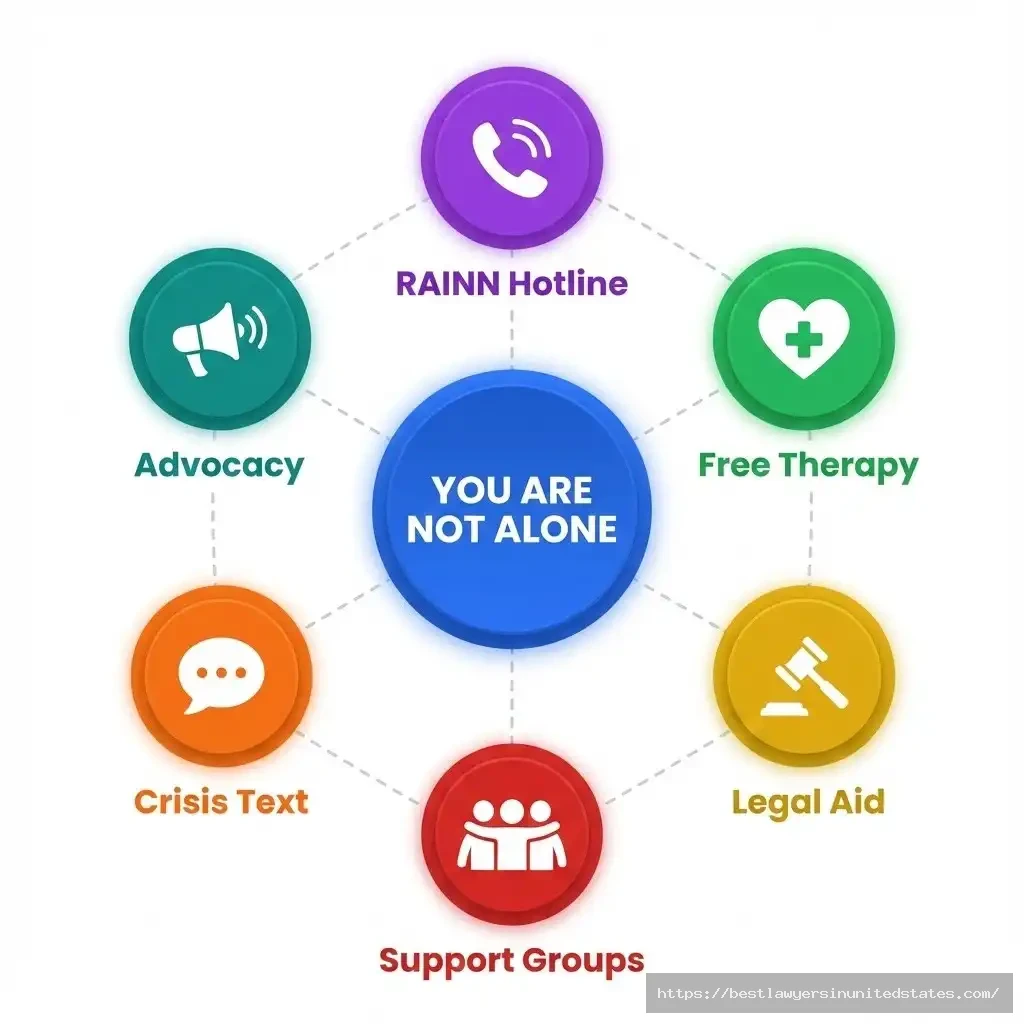
You are not alone.

Comments