
Updated October 9 2025 — This article now includes the latest insights on how formal legal promises apply in modern contracts, online agreements, and promissory estoppel cases. It also answers new questions like “Is a digital signature legally binding?”, “Who makes enforceable promises in a contract?”, and “How are written promises handled in U.S. law?” All examples and definitions have been refreshed to reflect current legal standards and everyday applications in business and digital transactions.
Understanding a Formal Legal Promise
A formal legal promise is a commitment made by one party to another that is enforceable by law. It typically arises in legal contracts, agreements, or obligations where one party agrees to do something (or refrain from doing something), and the law provides remedies if that promise is broken. In simple words, it’s a legally binding word.
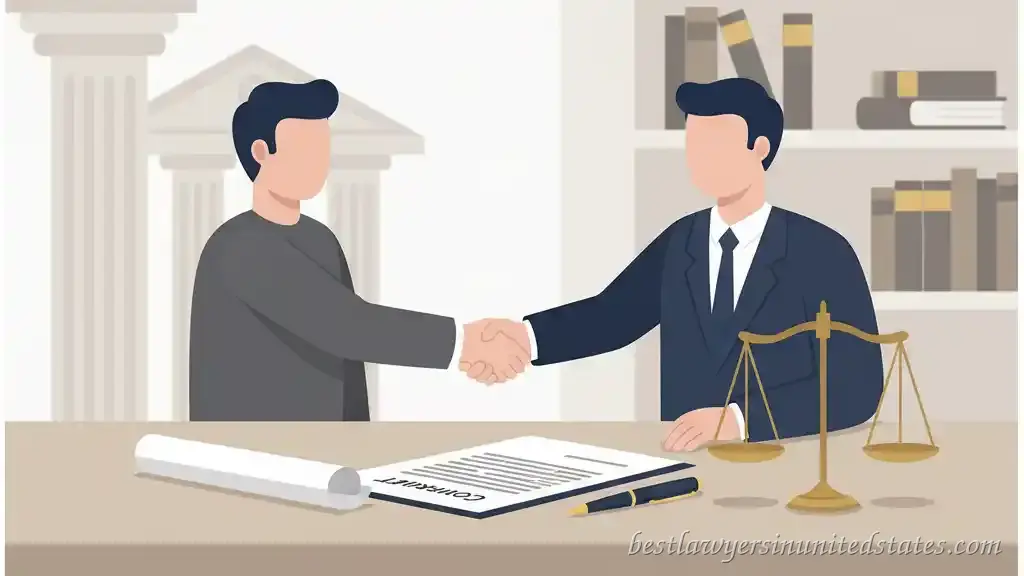
Legal promises often arise in areas like estate or healthcare planning — a Medicaid planning lawyer ensures these commitments are structured and enforceable.
Why Formal Legal Promises Matter
These promises create accountability. They protect individuals and businesses from fraud, breach of contract, or unmet expectations. Without them, enforcing agreements would be chaotic. A formal legal promise ensures that all parties involved know their rights and obligations.
These promises also define who makes the legally enforceable promises in a contract. Typically, it is the party offering consideration—the individual or organization taking on an obligation in exchange for value. This clarity protects both sides when disputes arise and allows courts to determine which promise carries legal force.
Basic Elements of a Legal Promise
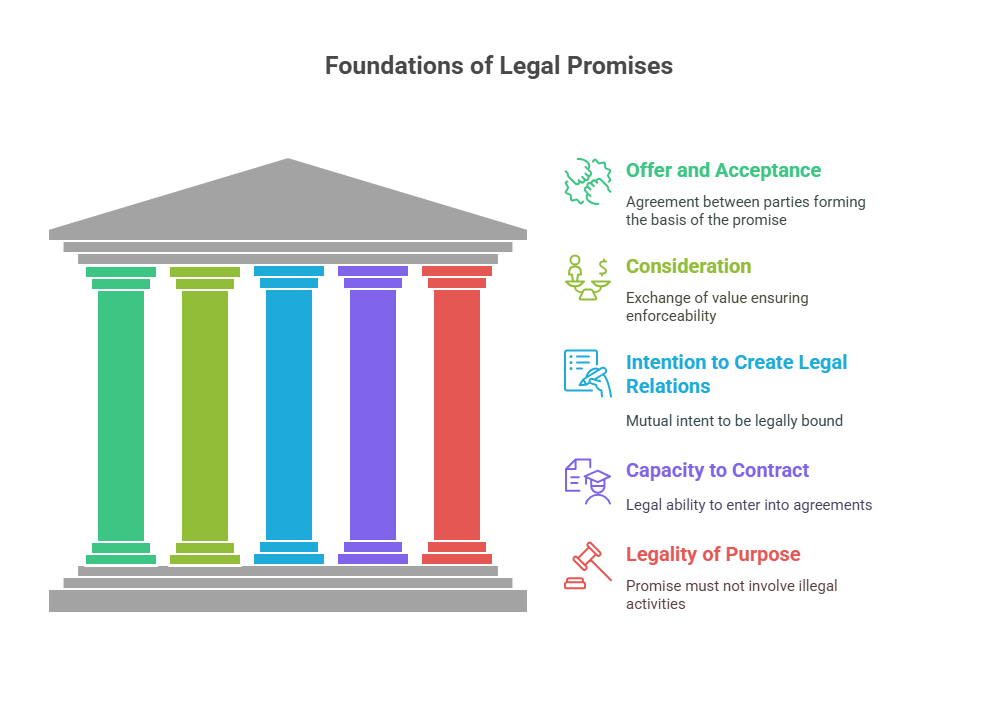
To qualify as a formal legal promise, certain elements must be present:
| Element | Description | Example |
|---|---|---|
| Offer and Acceptance | One party offers terms, and the other accepts them, forming the foundation of a legal promise. | A landlord offers a lease, and the tenant agrees to rent terms. |
| Consideration | Something of value must be exchanged — money, goods, or services. | Paying for a service or delivering goods after payment. |
| Intention to Create Legal Relations | Both sides must intend for their agreement to have legal consequences. | Businesses signing a partnership agreement. |
| Capacity to Contract | Each party must be of legal age, mentally sound, and not coerced. | An adult signs a mortgage agreement. |
| Legality of Purpose | The promise must not involve anything illegal or unethical. | A contract to sell stolen goods is void. |
Types of Formal Legal Promises
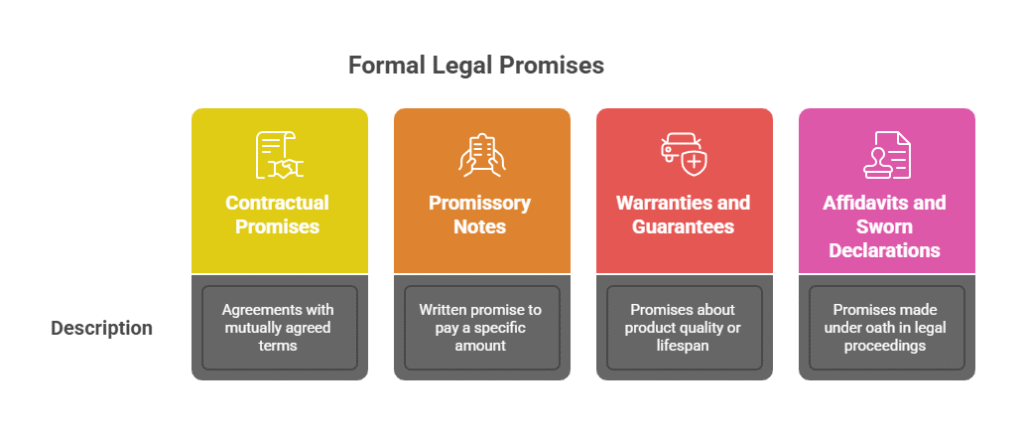
Let’s explore the most common types of enforceable promises recognized in law.
Contractual Promises
These are the most common and are found in agreements like employment contracts, rental agreements, service contracts, and more. Both parties agree to terms, and the promise becomes legally enforceable.
Promissory Notes
This is a written promise to pay a specific amount of money to another person, typically found in loans or financing agreements.
In contract law, these written promises often serve as evidence of a formal promise made between lender and borrower. If one party fails to perform, the note provides clear proof of the agreement’s existence and terms.
In real estate transactions, a conveyancing lawyer plays a vital role in ensuring every promise in a contract is legally enforceable and properly documented.
Warranties and Guarantees
Businesses often issue warranties — promises about the quality or lifespan of a product. These are legally binding and protect consumers.
Affidavits and Sworn Declarations
These are promises made under oath, often in legal proceedings. Breaking such promises can result in serious legal penalties like perjury charges.
Legal Enforceability of Promises
A promise must meet specific criteria to be enforceable by law.
Enforceable vs. Non-Enforceable Promises
Not all promises are legally binding. A casual promise, like “I’ll buy you coffee,” is generally not enforceable. But a signed agreement with clear terms and consideration is enforceable.
Role of Documentation
Having a promise in writing makes it easier to prove in court. Courts prefer clear documentation over oral promises, which can be harder to verify.
This documentation is what turns an ordinary commitment into a written promise with legal meaning. Courts view signed, dated documents as primary evidence of intent, making them more credible than verbal assurances.
Clear documentation acts as evidence of your intent — as shown in cases where a forensic lawyer proves how written promises establish accountability in court.
Consequences of Breaching a Legal Promise
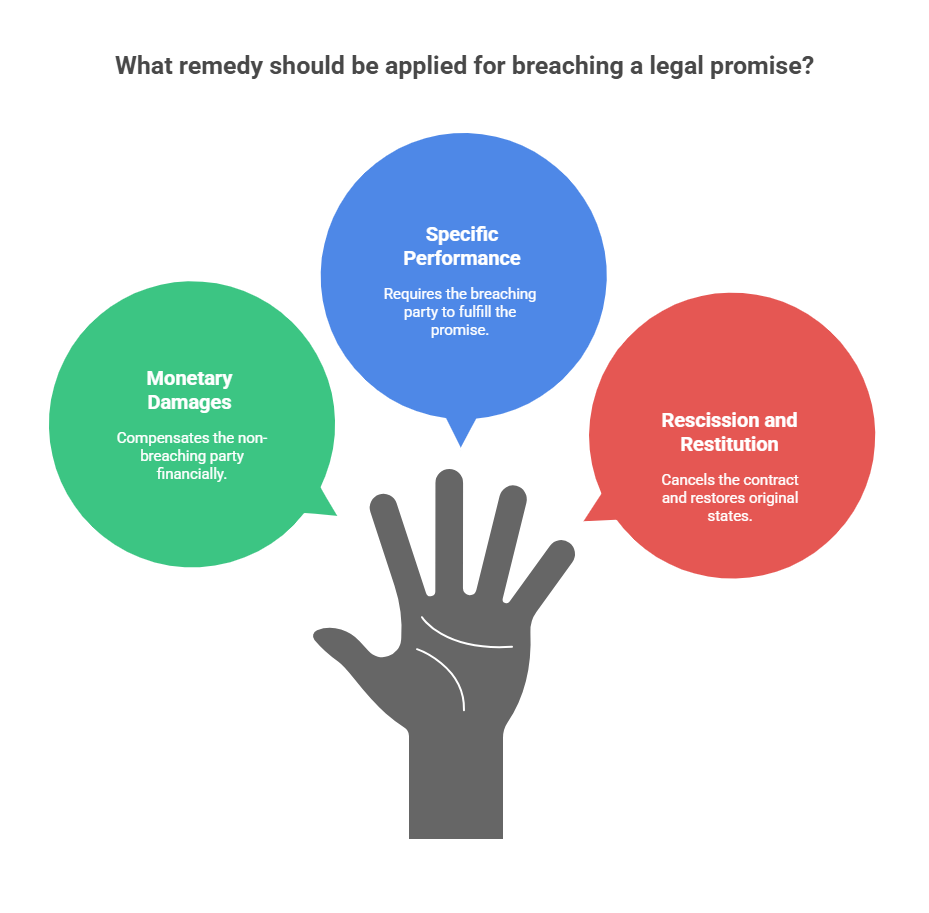
Breaking a legal promise can result in several consequences depending on the type of agreement and severity of the breach.
Monetary Damages
This is the most common remedy. The court may order the breaching party to pay compensation to the other party.
Specific Performance
In some cases, the court may order the breaching party to fulfill their promise instead of paying money — especially in unique contracts like real estate deals.
Rescission and Restitution
These remedies cancel the contract and attempt to restore both parties to their original state.
How to Make a Legally Binding Promise
Want your agreement to be respected in court? Here’s how to make sure it qualifies. When promises are relied upon without a formal contract, promissory estoppel can sometimes make them enforceable. This doctrine protects a party who reasonably acts on another’s promise, even when traditional contractual elements are missing.
Put It in Writing
While some verbal promises are enforceable, having a written agreement increases your legal protection significantly.
Be Clear and Specific
Ambiguous language leads to disputes. Always write your promise in plain, understandable terms.
Include All Key Terms
Make sure your document contains all relevant details: who is involved, what is being promised, the timeline, payment terms, and consequences for breach.
Get It Signed
Signatures from all parties involved confirm that everyone agrees to the terms.
When Legal Advice Is Necessary
Not sure if your promise is enforceable? Here’s when you should consult a legal expert.
For more insight into legally binding commitments, read about the power of attorney and how it compares to conservatorship, which also involves formal legal promises.
Complex Transactions
If your agreement involves high-value assets, multiple parties, or complicated terms, a lawyer can help avoid costly mistakes.
Disputes or Uncertainty
If you’re unsure whether a promise is enforceable or you’re facing a dispute, legal advice ensures you take the correct next steps.
Real Life Examples of Legal Promises
Here are a few everyday scenarios where legal promises come into play.
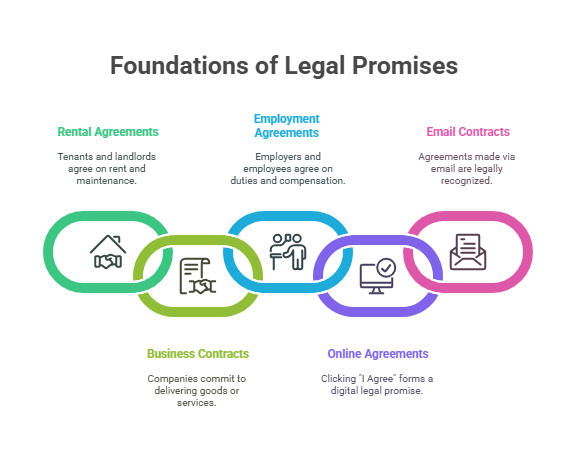
Rental Agreements
A tenant promises to pay rent on time, and the landlord promises to maintain the property. This is a mutual, enforceable promise.
Business Contracts
When a company signs a contract to deliver goods or services, both parties are legally bound by that promise.
Employment Agreements
Employers promise salary and benefits; employees promise to perform specific duties. All terms in this document are legally enforceable.
Digital Age and Legal Promises
In the digital world, promises are made with a few clicks — but are they still valid?
Today’s courts recognize that digital clicks, electronic signatures, and email commitments can all form a legal promise if mutual intent is proven. Whether the promise appears on paper or online, its enforceability depends on the same core legal principles.
Online Agreements
Clicking “I Agree” on a website’s terms and conditions can be a legal promise, depending on the jurisdiction and the content of the agreement.
Email Contracts
Many legal systems now accept agreements made over email as enforceable if they meet all legal criteria.
Conclusion
A formal legal promise is more than just words — it’s a commitment protected and enforced by the law. Whether you’re entering a business deal, signing a lease, or making a sworn declaration, understanding the structure and implications of legal promises helps protect your rights and avoid costly mistakes. Always document your agreements clearly, and when in doubt, consult legal counsel.
FAQs
Q1. What is an example of a formal legal promise?
A rental lease is a common example where both parties agree to legal terms and can be held accountable.
Q2. Can a verbal promise be legally binding?
Yes, but it’s harder to prove in court. Written promises are much easier to enforce.
Q3. What is the difference between a legal promise and a moral promise?
A legal promise can be enforced by law, while a moral promise depends on ethics or goodwill. Failing to keep a moral promise might affect trust, but it won’t result in legal penalties.
Q4. Can a promise made by email or text be legally binding?
Yes, in many cases. Digital communications such as emails or text messages can form binding contracts if they include clear offer, acceptance, and intent to create legal relations.
Q5. What happens if a legal promise is broken?
The person who breaks the promise (the breaching party) may face consequences such as paying damages, performing the promised action, or having the contract canceled and refunded.
Q6. Do verbal promises hold up in court?
Yes, some verbal promises can be legally binding, especially if there’s proof (like witnesses or recordings). However, written agreements are much stronger and easier to enforce.
Q7. What’s an example of a non-enforceable promise?
A casual statement like “I’ll help you move next weekend” isn’t enforceable because it lacks consideration and intent to create legal relations.
If you need professional help drafting or reviewing your agreement, explore our lawyer listing directory to find experienced attorneys near you who specialize in contract and business law.

Comments