
Getting divorced in Texas costs anywhere from $300 for a DIY filing to over $50,000 for a contested case with custody battles. Most people pay between $3,000 and $15,000 when everything’s said and done.
The real answer depends on whether you and your spouse agree on terms, have kids, own property together, and whether you hire attorneys. Let’s break down exactly what you’ll pay.
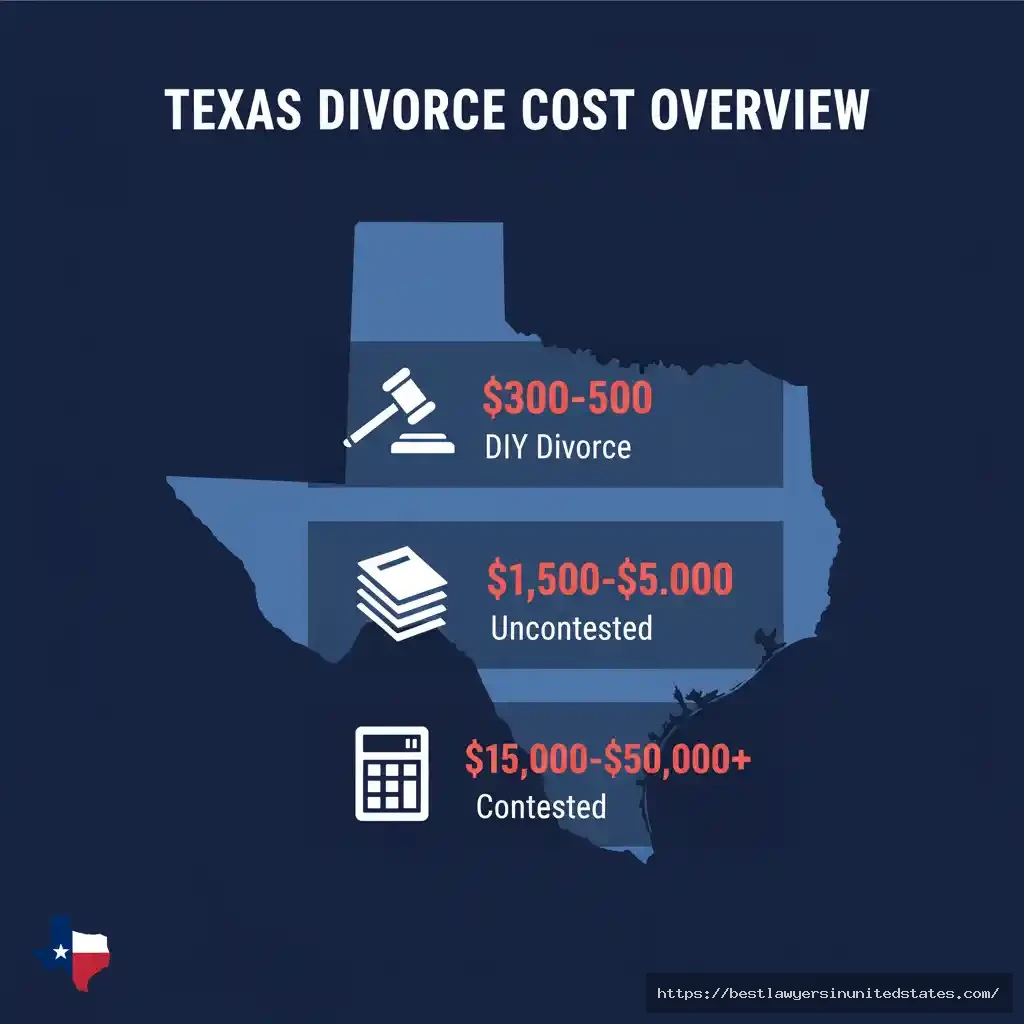
What’s the average cost of a divorce in Texas?
The typical Texas divorce costs $15,000 to $23,000 per person when attorneys are involved. That’s the middle ground—your actual cost could be dramatically lower or higher.
Here’s the reality check:
| Divorce Type | Cost Range | Timeline |
|---|---|---|
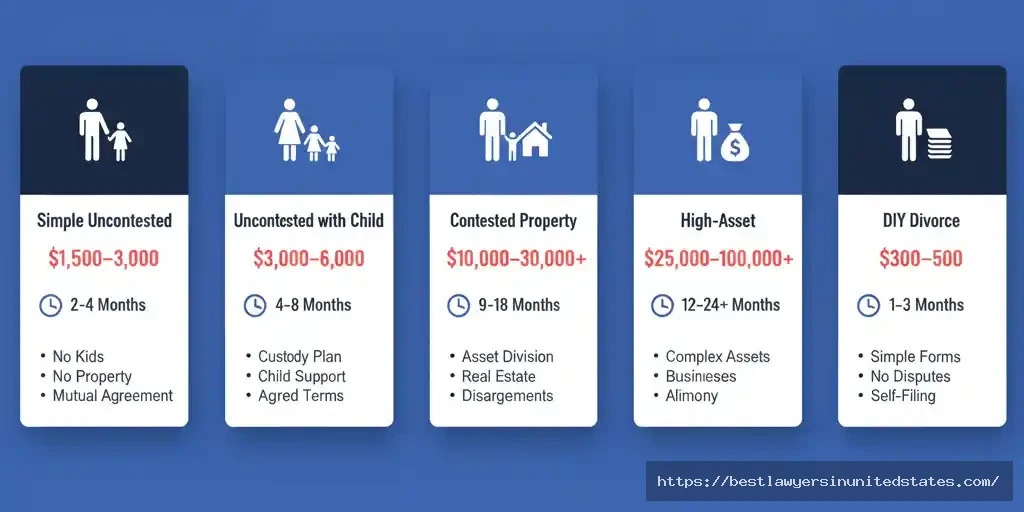
| DIY (Pro Se) | $300-$500 | 2-3 months |
| Uncontested with Attorney | $1,500-$5,000 | 2-4 months |
| Uncontested with Children | $3,000-$8,000 | 3-6 months |
| Contested (No Children) | $15,000-$30,000 | 6-12 months |
| Contested with Children | $25,000-$50,000+ | 9-24 months |
| High-Asset/Complex | $40,000-$100,000+ | 12-36 months |
These aren’t made-up numbers. They’re based on actual Texas family court cases, State Bar of Texas surveys, and what attorneys are currently charging across Houston, Dallas, San Antonio, and Austin.
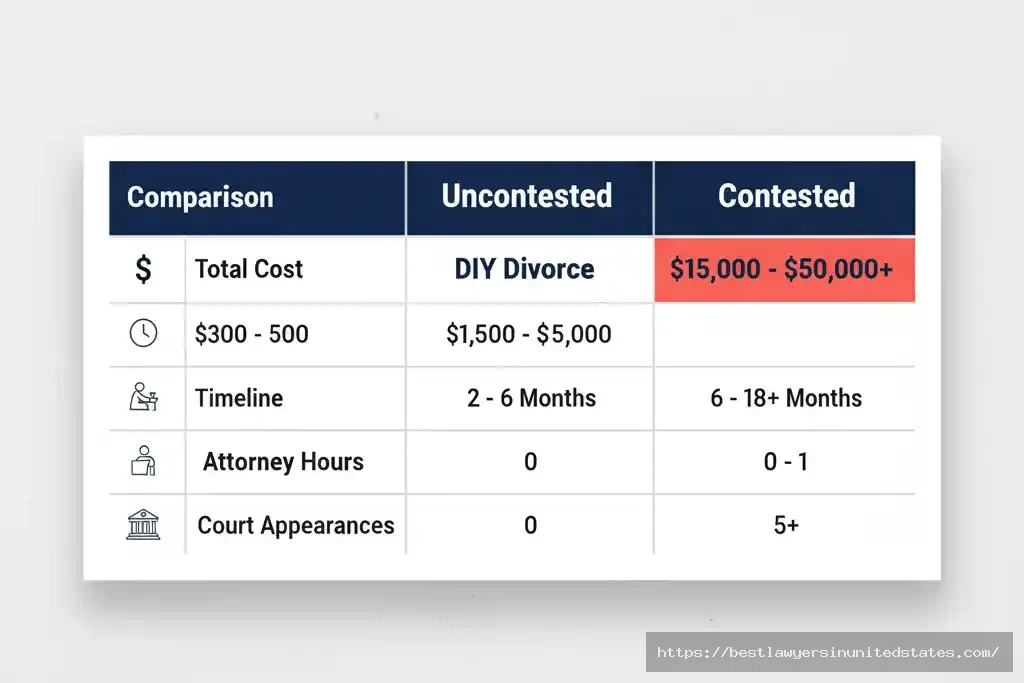
Quick cost factors that matter most:
- Filing fees start at $250-$350 depending on your county
- Attorney hourly rates range from $200-$500+ per hour
- Having children adds $3,000-$10,000 on average
- Property disputes can double your total costs
- Going to trial multiplies everything by 3-5x
How much are Texas divorce filing fees and court costs?
You’ll pay $250-$350 just to file the Original Petition for Divorce with your county clerk. That’s non-negotiable and due upfront before anything moves forward.
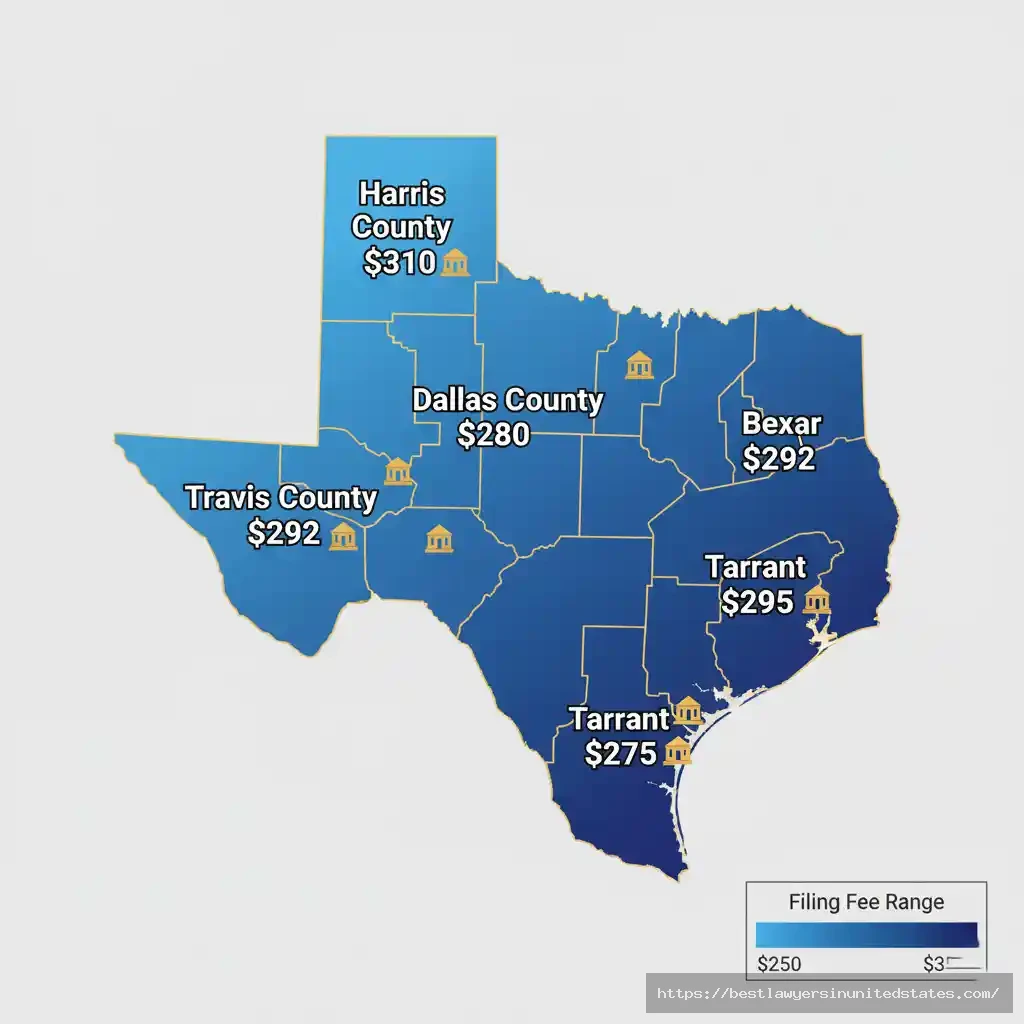
But filing fees are just the start. Here’s what the District Court actually charges:
Basic court costs breakdown:
- Filing fee: $250-$350
- Service of process: $50-$125 (to serve papers to your spouse)
- Final decree filing: Usually included
- Certified copies: $1-$2 per page
- Issuance of subpoenas: $10-$20 each
Filing fees by major Texas counties
| County | Filing Fee | Notes |
|---|---|---|
| Harris (Houston) | $315 | Busiest family courts in Texas |
| Dallas | $318 | Additional $10 for security fee |
| Bexar (San Antonio) | $273 | Lower than most major metros |
| Travis (Austin) | $334 | Higher due to local court costs |
| Tarrant (Fort Worth) | $294 | Mid-range for urban areas |
| Collin (Plano area) | $333 | Growing suburban county |
| El Paso | $270 | One of the lowest in Texas |
Rural counties typically charge $250-$280. The county clerk’s office sets these fees according to Texas law—they’re not negotiable.
Service of process costs
After filing, you must legally notify your spouse. Options include:
Private process server: $50-$125 (most common) County constable: $75-$100 (official but slower) Certified mail: $8-$15 (only if spouse agrees to waive service) Publication service: $150-$300 (if you can’t locate your spouse)
Most people use private process servers because they’re fast and provide proof of service the court accepts without question.
Additional court costs you might face
- Parenting classes (if children involved): $20-$50 per parent
- Mediation ordered by court: $100-$300 per hour
- Court reporter for hearings: $200-$500 per day
- Document filing fees: $1-$10 per document
- Appeal bond (if appealing decision): Varies widely
Can you get filing fees waived? Yes, if you qualify for indigent status. File a “Statement of Inability to Afford Payment of Court Costs” with supporting financial documents. The judge decides. You’ll need to show income below 125% of federal poverty guidelines.
What do Texas divorce attorneys actually charge?
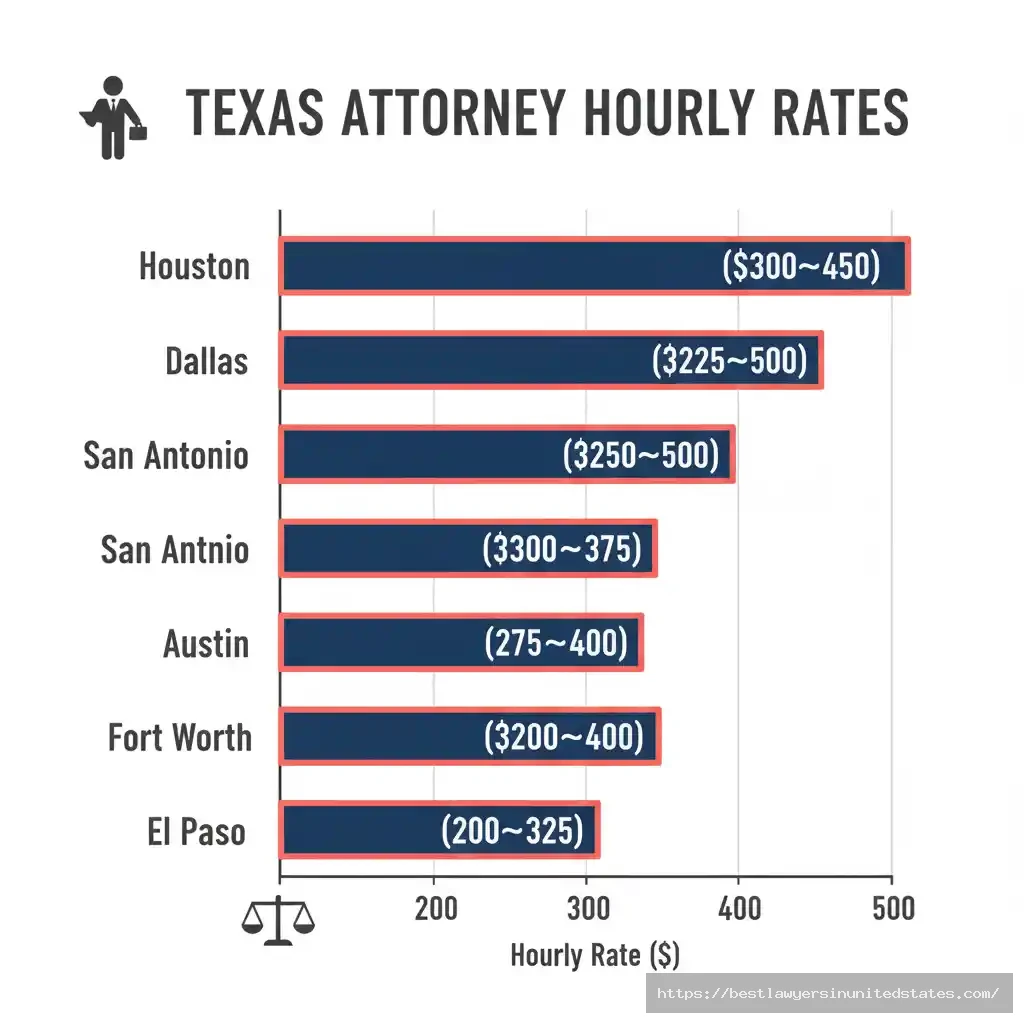
Most family law attorneys charge $250-$400 per hour in Texas metro areas. Experienced attorneys in major cities like Houston or Dallas charge $350-$500 per hour. Rural areas see rates of $200-$300 per hour.
But hourly rates only tell part of the story. Here’s how attorneys actually bill:
Retainer fees explained
Your attorney will require a retainer—typically $2,500 to $10,000 upfront. This is money held in a trust account. Your attorney bills against it as work happens.
Example retainer structure:
- Simple uncontested: $1,500-$3,000 retainer
- Moderate complexity: $3,500-$7,500 retainer
- Contested with trial: $10,000-$25,000 retainer
When the retainer runs low, you’ll need to replenish it. Leftover money gets refunded when your case ends.
What eats up your retainer:
- Document review and preparation
- Phone calls and emails (yes, these count)
- Court appearances
- Negotiations with opposing counsel
- Research on complex issues
- Travel time to court or depositions
Most attorneys bill in 6-minute or 15-minute increments. A 5-minute phone call? That’s 6 minutes billed. Three quick emails? Could be 18 minutes on your invoice.
Flat fee vs hourly billing
Some attorneys offer flat-fee uncontested divorces for $1,500-$3,500. This only works if:
- Both spouses agree on all terms
- No children are involved (or custody/support is agreed)
- Minimal property to divide
- No complex financial issues
The catch: Most flat fees convert to hourly if things get complicated. Always read the engagement letter carefully.
Attorney costs by major Texas cities
| Metro Area | Average Hourly Rate | Typical Retainer | Uncontested Flat Fee |
|---|---|---|---|
| Houston | $300-$450 | $5,000-$10,000 | $2,000-$4,000 |
| Dallas | $325-$500 | $5,000-$12,000 | $2,500-$4,500 |
| San Antonio | $250-$375 | $3,500-$7,500 | $1,800-$3,500 |
| Austin | $300-$450 | $5,000-$10,000 | $2,200-$4,000 |
| Fort Worth | $275-$400 | $4,000-$8,000 | $2,000-$3,800 |
| El Paso | $200-$325 | $2,500-$5,000 | $1,500-$2,800 |
Suburban and rural areas see 20-30% lower rates. Boutique firms specializing in high-asset divorces charge $500-$800+ per hour.
What about consultation fees?
Most Texas family law attorneys charge $250-$400 per hour in Texas metro areas. Experienced attorneys in major cities like Houston or Dallas charge $350-$500 per hour.
For a deeper dive into understanding divorce lawyer fees including retainer structures, billing practices, and what to expect nationwide, check our comprehensive guide.
Use this meeting to ask:
- Estimated total cost for your situation
- Payment plans available
- What’s included in the retainer
- When you’ll need to replenish funds
- Billing practices (increments, what’s billable)
Contested vs uncontested divorce: What’s the real cost difference?
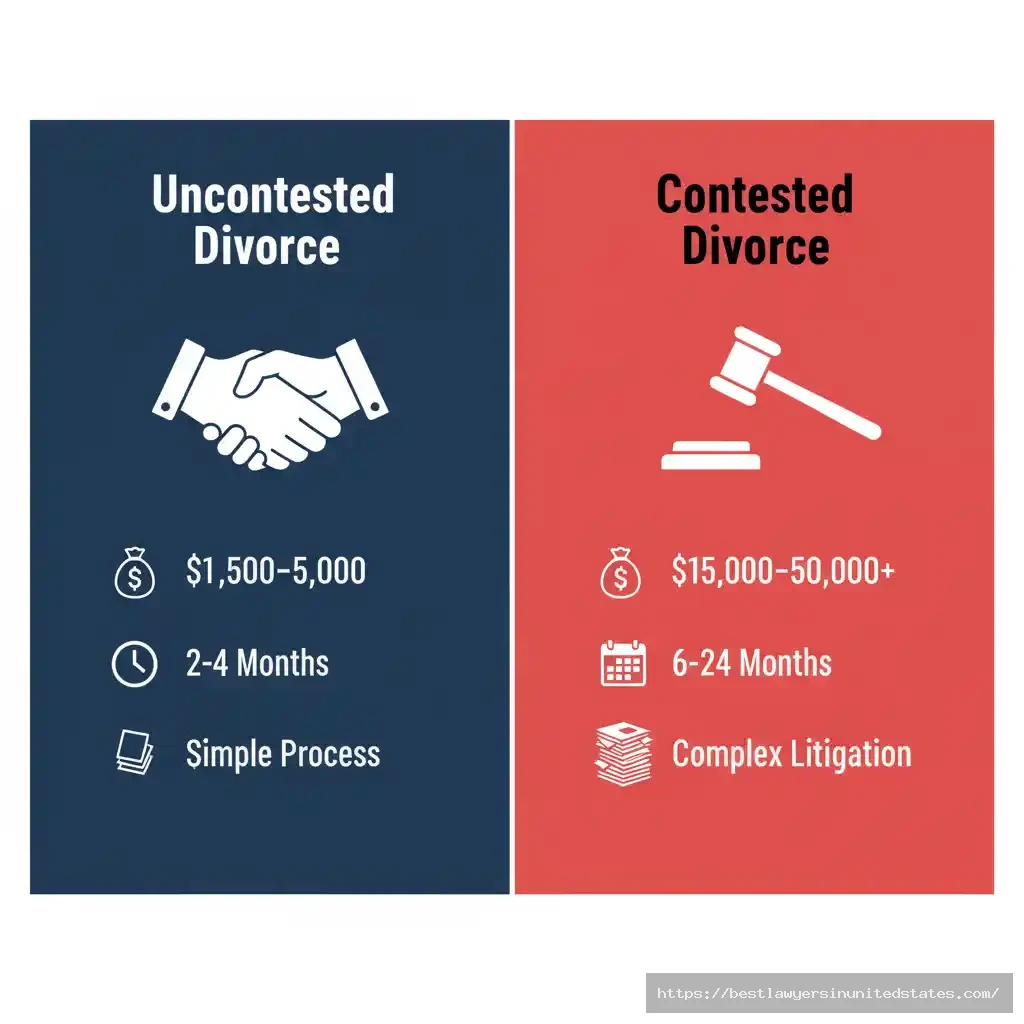
An uncontested divorce in Texas costs $1,500-$5,000. A contested divorce costs $15,000-$50,000 or more. That’s a 10x difference.
The question is: what makes a divorce “contested”?
What is an uncontested divorce?
Both spouses agree on:
- Property division
- Debt allocation
- Child custody and visitation
- Child support amounts
- Spousal maintenance (if applicable)
You still file with the District Court, wait the mandatory 60 days, and get a final decree. The difference is you skip depositions, discovery, temporary hearings, and trial.
Uncontested divorce costs:
- Filing fees: $250-$350
- Attorney fees: $1,500-$5,000 (or $300-$500 DIY)
- Service of process: $50-$125
- Total timeline: 2-4 months minimum
Many attorneys offer payment arrangements, especially if you have steady income. Understanding typical family lawyer costs beyond just divorce—including custody modifications, child support adjustments, and other family law matters—helps you budget for potential post-divorce legal needs.
What makes a divorce contested?
You’re headed to a contested divorce if you disagree about:
- Who gets the house or other real property
- How to divide retirement accounts or 401(k)s
- Business ownership and valuation
- Child custody arrangements
- Child support calculations
- Spousal maintenance eligibility
- Who pays marital debts
Once your divorce is contested, costs skyrocket because:
- Attorneys spend 50-200+ hours on your case
- Discovery process costs $3,000-$10,000 alone
- Depositions run $500-$2,000 each
- Expert witnesses charge $2,000-$10,000+
- Trial preparation takes 20-40 hours
- Court hearings multiply (temporary orders, mediation, trial)
Contested divorce cost breakdown:
| Cost Component | Low End | High End |
|---|---|---|
| Attorney fees | $10,000 | $40,000+ |
| Filing and court costs | $500 | $1,500 |
| Discovery/depositions | $2,000 | $8,000 |
| Expert witnesses | $0 | $15,000 |
| Mediation | $500 | $3,000 |
| Trial costs | $5,000 | $20,000 |
| TOTAL | $18,000 | $87,500+ |
Side-by-side comparison
| Factor | Uncontested | Contested |
|---|---|---|
| Typical cost | $1,500-$5,000 | $15,000-$50,000+ |
| Timeline | 2-4 months | 6-24 months |
| Attorney hours | 5-20 hours | 50-200+ hours |
| Court appearances | 1-2 | 5-15+ |
| Discovery required | Minimal | Extensive |
| Trial | No | Often yes |
| Stress level | Lower | Significantly higher |
| Control over outcome | You decide | Judge decides |
Here’s the reality: Even if you start contested, settling before trial saves $10,000-$30,000. Most Texas divorces settle during mediation or just before trial date.
How do children affect divorce costs in Texas?
Having kids adds $3,000-$10,000 to your divorce costs on average. In high-conflict custody battles, add $20,000-$50,000 or more per parent.
The Texas Family Code requires specific procedures when minor children are involved. Each one costs money.
Child custody evaluation fees
If you and your spouse can’t agree on custody, the court may order a custody evaluation by a licensed professional. This person interviews both parents, observes parent-child interactions, reviews home environments, and makes recommendations to the judge.
Cost: $1,500-$5,000+
The evaluator’s report carries significant weight in court. Some high-conflict cases see costs exceed $10,000 when multiple sessions and psychological testing are required.
Guardian ad Litem costs
In contentious custody disputes, the court may appoint a Guardian ad Litem (attorney for the child) or Amicus Attorney (attorney to assist the court).
Guardian ad Litem fees: $2,000-$10,000+
This person represents your child’s best interests independently from either parent. You and your spouse typically split this cost 50/50, though judges can allocate differently based on income disparity.
Child support calculation costs
Basic child support follows Texas Attorney General guidelines—your attorney can calculate this in minutes using the statutory formula.
But complex situations require additional work:
- High-income parents (over $9,200 monthly net income)
- Self-employed parents with variable income
- Parents who own businesses
- Multiple children from different relationships
- Special needs children requiring extra expenses
These cases might need a Certified Divorce Financial Analyst (CDFA) or forensic accountant to determine actual income and appropriate support levels.
Cost: $1,500-$5,000 for financial analysis
Parenting plan development
Texas requires a detailed parenting plan outlining:
- Conservatorship (legal decision-making)
- Possession and access schedule
- Holiday and vacation time
- Transportation responsibilities
- Communication methods
Agreeing on these terms: mostly included in attorney fees
Fighting over these terms: adds $5,000-$15,000+ in attorney time for hearings, mediation, and trial preparation
Cost comparison: divorce with vs without children
| Expense | Without Children | With Children |
|---|---|---|
| Basic filing/attorney | $3,000-$8,000 | $5,000-$12,000 |
| Custody evaluation | $0 | $1,500-$5,000 |
| Guardian ad Litem | $0 | $2,000-$10,000 |
| Additional attorney time | Baseline | +20-50 hours |
| Mediation sessions | 1-2 | 3-6+ |
| Expert witnesses | Rare | Common ($3,000+) |
| TOTAL (Contested) | $15,000-$30,000 | $25,000-$60,000+ |
The silver lining: Texas courts strongly prefer parents reaching agreements. Judges don’t want to decide your parenting schedule. Use mediation. It costs $1,500-$3,000 but saves you $15,000-$30,000 in trial costs.
What hidden costs do people miss in Texas divorces?
Most people budget for attorney fees and filing costs, then get blindsided by another $3,000-$8,000 in expenses they never saw coming. Here’s what attorneys don’t always mention upfront.
Expert witness fees
Complex divorces require expert testimony. Each expert bills separately from your attorney.
Common experts and their costs:
| Expert Type | When Needed | Typical Cost |
|---|---|---|
| Business valuator | Spouse owns business | $3,000-$10,000 |
| Real estate appraiser | Property disputes | $400-$800 per property |
| Forensic accountant | Hidden assets suspected | $5,000-$15,000+ |
| Vocational evaluator | Spousal maintenance disputes | $2,000-$5,000 |
| Pension valuator | Dividing retirement accounts | $1,500-$3,000 |
| Mental health professional | Custody evaluations | $2,000-$8,000 |
These experts prepare reports, might be deposed by opposing counsel (adding costs), and charge $300-$500+ per hour to testify at trial.
Deposition costs
Depositions are formal question-and-answer sessions under oath before trial. You might be deposed. Your spouse will be. Sometimes witnesses are deposed.
Per deposition costs:
- Court reporter: $150-$300
- Transcript: $200-$500 (required for trial use)
- Video recording: $400-$800 (sometimes necessary)
- Attorney time: 3-8 hours at their hourly rate
If you take 3 depositions in your case, budget $2,500-$5,000 just for this discovery tool.
Discovery expenses
The discovery process is how attorneys gather information before trial. It costs more than people expect.
Discovery cost breakdown:
- Interrogatories (written questions): Minimal if simple, $500-$1,500 if extensive research needed
- Requests for production (documents): $300-$2,000 for attorney time reviewing and organizing
- Subpoenas to third parties: $50-$200 per subpoena plus processing fees
- Medical records: $25-$100 per provider
- Financial document analysis: $500-$3,000 depending on complexity
Total discovery costs in contested cases: $3,000-$10,000
Mediation fees
Texas courts often order mediation before allowing trial. Even if not ordered, it’s smart financially.
Mediator costs: $100-$400 per hour
Most mediations run 4-8 hours. You and your spouse typically split the mediator’s fee 50/50, but each pays your own attorney to attend.
Total mediation day costs:
- Mediator: $800-$2,400 (split 50/50)
- Your attorney: 8 hours × $300-400 = $2,400-$3,200
- Your half: $1,600-$3,500
Still cheaper than trial, which costs $10,000-$20,000+.
Post-decree modification costs
Your divorce doesn’t always end with the final decree. Circumstances change. You might need to modify:
- Child custody arrangements
- Child support amounts
- Spousal maintenance terms
Filing a modification: $200-$350 plus attorney fees
If contested, these modifications cost $3,000-$15,000 depending on complexity. Budget for this possibility, especially if children are young.
Tax implications and penalties
Texas divorce settlements have tax consequences people ignore until April 15:
- Early 401(k) withdrawal penalties if not properly executed with QDRO
- Capital gains taxes on property sold shortly after divorce
- Tax filing status changes affecting refunds/payments
- Dependency exemption negotiations for children
- Alimony tax treatment (changes under current tax law)
Many people need a CPA consultation during divorce: $200-$500 for basic tax planning, more for complex situations.
Hidden costs checklist

Budget for these often-forgotten expenses:
- ✓ Copying/printing costs ($100-$300 for extensive document production)
- ✓ Process server fees for multiple attempts ($75-$200)
- ✓ Notary fees for affidavits ($10-$25 per document)
- ✓ Travel costs if court is distant (gas, parking, meals)
- ✓ Temporary housing if you move out ($1,000-$2,000/month)
- ✓ New utility deposits and setup fees ($200-$500)
- ✓ Credit report fees ($30-$60 for detailed reports)
- ✓ New bank account fees
- ✓ Moving costs ($500-$3,000)
- ✓ Therapy/counseling ($100-$200 per session)
Reality check: Add 20-30% to your estimated divorce costs for unexpected expenses. If you budget $10,000, have $12,000-$13,000 available.
Real Texas divorce costs: 5 actual case examples
Numbers in tables don’t show the full picture. Here’s what real divorces cost real people in Texas.
Case 1: Simple uncontested divorce (no children) – $1,200 total
Situation: Married 3 years, no kids, renting apartment, minimal assets, both agreed to split everything 50/50.
Cost breakdown:
- Harris County filing fee: $315
- Process server: $85
- Attorney flat fee (uncontested package): $2,200
- Notary/copies: $45
- Total: $2,645
Timeline: Filed in March, final decree granted in May (61 days after filing).
What worked: Both spouses communicated directly, gathered all financial documents before meeting attorney, didn’t fight over the $800 tax refund or the couch.
Actual quote from this case: “We knew we were done but didn’t hate each other. Keeping it simple saved us both money. My attorney said we were her easiest clients that year.”
Case 2: Uncontested with one child – $4,200 total
Situation: Married 7 years, one child (age 5), agreed on 50/50 custody, used state child support calculator, owned one car each, small savings account.
Cost breakdown:
- Bexar County filing fee: $273
- Service of process: $95
- Attorney fees: $3,500 (slightly more complex than Case 1)
- Parenting class (both parents): $60
- Notarized agreement: $20
- Total: $3,948
Timeline: 3 months start to finish.
What worked: Pre-agreed parenting plan drafted before attorney involvement. Used Texas Attorney General child support calculator online first. Both attended required parenting class early.
Challenge: Nearly derailed over holiday schedule. Two extra mediation sessions with attorney (included in flat fee) resolved it.
Case 3: Contested with property division – $27,500 total
Situation: Married 12 years, no children, owned home worth $340,000 with $180,000 mortgage, two retirement accounts, disagreed on who gets house, both wanted to keep their separate cars.
Cost breakdown:
- Dallas County filing fees: $318
- Attorney retainer (replenished once): $15,000 total fees
- Real estate appraiser: $650
- Forensic accountant for retirement analysis: $2,800
- Mediation (8 hours): $1,200 (split with spouse)
- Discovery/depositions: $3,200
- Trial preparation (settled 2 weeks before trial): $4,500
- Total: $27,668
Timeline: 11 months from filing to settlement.
What could have saved money: Both dug in emotionally over the house. Neither wanted to sell or buy out the other. Mediation at month 3 instead of month 9 would have saved $8,000-$12,000. They eventually sold the house and split proceeds—exactly what the mediator suggested 6 months earlier.
Case 4: High-asset divorce with business – $67,000 total (one spouse)
Situation: Married 18 years, two children (ages 14 and 11), husband owned construction business, multiple properties, retirement accounts, disputed spousal maintenance, custody fight over teenagers.
Cost breakdown:
- Collin County filing fees: $333
- Attorney fees (165 hours over 16 months): $52,000
- Business valuator: $8,500
- Guardian ad Litem: $6,200 (this spouse’s portion)
- Custody evaluation: $2,400 (split cost)
- Real estate appraisals (3 properties): $1,800
- Depositions (4 people): $3,200
- Mediation (failed first time, succeeded second): $2,500
- Court reporter/transcripts: $900
- Total: $77,833
Timeline: 18 months, settled during second mediation.
What drove costs: Business valuation was complex. Husband’s CPA and wife’s forensic accountant disagreed by $300,000 on business value. Teenagers wanted to testify (judge didn’t allow it, but preparation added attorney time). First mediation failed because emotions ran too high.
Actual outcome: Second mediator (specialized in business divorces) got settlement in 6 hours. Cost $1,500 but saved estimated $25,000-$40,000 in trial costs.
Case 5: DIY divorce – $487 total
Situation: Married 2 years, no children, no real property, both worked, minimal assets, filed pro se (without attorneys).
Cost breakdown:
- Travis County filing fee: $334
- Texas Law Help online forms: Free
- Service by certified mail (spouse agreed): $8
- Copies/notary: $25
- Parenting class (required even though no kids due to court error, later refunded): $40
- Total: $407
Timeline: 75 days (minimum 60-day waiting period plus court scheduling).
What worked: Both researched Texas Family Code. Used free resources from Texas Law Help and local legal aid. Watched YouTube videos on filing procedures. Filed all paperwork correctly on first attempt.
What almost went wrong: Forgot to include required financial disclosure forms. County clerk caught it before filing was complete. Had to redo paperwork but avoided rejection.
When DIY works: Short marriage, no kids, no real property, no retirement accounts to divide, both spouses cooperative and capable of understanding legal forms.
When DIY fails: Any complexity, disagreement, children, significant assets, or domestic violence history.
What are the cheapest ways to get divorced in Texas?
Your cheapest option is DIY (pro se) divorce for $300-$500, but it only works if your situation is simple and both spouses agree. Let’s break down every low-cost option.
DIY divorce (filing pro se): $300-$500
“Pro se” means representing yourself. Texas allows this, and county clerks must accept your properly completed paperwork.
Who should consider DIY:
- Married less than 5 years
- No children (or agreed custody/support)
- No real estate
- Minimal assets to divide (under $20,000 total)
- No retirement accounts
- Both spouses cooperative
- No domestic violence history
- No complex debts
What you’ll pay:
- Filing fee: $250-$350
- Divorce forms: $0-$50 (free from Texas Law Help or county law libraries)
- Service of process: $8-$125
- Notary fees: $10-$25
- Copies: $10-$30
Resources for DIY divorce:
- TexasLawHelp.org – Free forms and instructions
- County law libraries – Many have DIY divorce clinics
- Texas Access to Justice Foundation – Free resources
- Local legal aid societies – Free form assistance (income-qualified)
DIY divorce process:
- Complete Original Petition for Divorce
- File with county district clerk (pay filing fee)
- Serve papers to your spouse
- Wait 60 days minimum
- Prepare Final Decree of Divorce
- Attend final hearing (sometimes waived if paperwork perfect)
- Judge signs decree
Common DIY mistakes that cost money later:
- Missing required financial disclosures
- Incorrect property division language
- Not properly dividing retirement accounts (no QDRO)
- Forgetting debt allocation
- Unclear custody terms if children involved
Reality: DIY works for about 15% of divorces. Most people realize mid-process they need help, then pay an attorney to fix mistakes.
Online divorce services: $500-$1,500
Companies like CompleteCase, 3StepDivorce, and It’s Over Easy help you prepare paperwork for a flat fee. You still file yourself, but they handle document preparation.
What you get:
- Document preparation based on your information
- Review for completeness
- Instructions for filing
- Some offer phone support
What you don’t get:
- Legal advice
- Court representation
- Help if spouse contests
- Modification of terms
Cost range: $500-$1,500 depending on complexity
When online services work: Same situations as DIY, but you’re less confident handling forms yourself.
Legal aid and free services
Income-qualified individuals get free attorney representation through legal aid organizations. Eligibility typically requires income below 125% of federal poverty guidelines.
Texas legal aid organizations:
- Lone Star Legal Aid (Houston, South Texas)
- Texas RioGrande Legal Aid (border regions, Austin)
- Legal Aid of Northwest Texas (Dallas-Fort Worth)
- West Texas Legal Aid
What they cover: Full representation in divorce cases involving domestic violence, children’s safety issues, or severe financial hardship.
Application process: Apply online, provide income documentation, explain your situation. Approval takes 2-6 weeks. High demand means not everyone qualifies even if income-eligible.
Fee waiver eligibility
Can’t afford the $250-$350 filing fee? File a “Statement of Inability to Afford Payment of Court Costs” with your Original Petition for Divorce.
Eligibility requirements:
- Receive government assistance (SNAP, Medicaid, TANF), OR
- Income below 125% federal poverty level, OR
- Can demonstrate filing fee causes substantial financial hardship
What gets waived:
- Filing fees
- Service of process fees
- Court reporter fees
- Some other court costs
What doesn’t get waived: Attorney fees (if you hire one)
Judges grant 70-80% of properly completed fee waiver requests. Include documentation: pay stubs, benefit award letters, bank statements.
Mediation as a cost-saving strategy
Mediation isn’t free, but it’s dramatically cheaper than fighting in court. A mediator helps you and your spouse reach agreements. Cost: $800-$2,400 for a full-day session (split between both spouses).
What mediation saves:
- Attorney trial preparation: $5,000-$10,000 per person
- Expert witness fees: $3,000-$10,000+
- Discovery costs: $2,000-$5,000
- Trial time: $10,000-$20,000+ per person
Settlement at mediation: Your cost = $400-$1,200 (your half of mediator) + your attorney’s time that day
Going to trial: Your cost = Everything above + years of stress
Texas courts strongly encourage mediation. Many judges order it before trial. Some counties offer low-cost court-sponsored mediation for $50-$150 per person.
Cost comparison: all low-cost options
| Method | Total Cost | Best For | Success Rate |
|---|---|---|---|
| DIY Pro Se | $300-$500 | Simple cases, no kids | 60-70% (if truly simple) |
| Online Service | $500-$1,500 | Simple cases, want help with forms | 70-80% |
| Legal Aid | Free | Low-income, DV cases | 90%+ (but limited availability) |
| Limited Scope Attorney | $1,000-$2,500 | Unbundled services | 75-85% |
| Flat Fee Uncontested | $1,500-$3,500 | Agreed terms, want protection | 95%+ |
| Mediation + Attorney Review | $2,000-$4,000 | Amicable, some complexity | 85-90% |
Bottom line: Cheapest isn’t always best. A $300 DIY divorce that misses important terms costs $3,000+ to fix later. Spending $2,000 now with an attorney might save $10,000 in problems down the road.
Do you need a lawyer for your Texas divorce?
You’re not required to hire an attorney, but 85% of Texans going through divorce do. Here’s when you absolutely need one, when you can skip it, and what middle-ground options exist.
When you can safely skip the attorney
You probably don’t need an attorney if ALL these are true:
- ✓ Both spouses agree to divorce
- ✓ Married less than 5 years
- ✓ No children together
- ✓ Combined assets worth less than $25,000
- ✓ No real estate owned
- ✓ No retirement accounts to divide
- ✓ No significant debts
- ✓ No business ownership
- ✓ Both spouses capable of reading and understanding legal documents
- ✓ No history of domestic violence
- ✓ Both spouses have similar earning capacity
If you checked every box, DIY or online divorce services might work. But if even one box remains unchecked, reconsider.
When hiring a lawyer actually saves money
This sounds backwards, but attorneys prevent expensive mistakes:
Property division errors: Missing a $50,000 retirement account in the decree means you lose it forever. A $3,000 attorney fee saves you $50,000.
Debt allocation mistakes: If the decree doesn’t properly allocate debt, creditors can still come after you for your ex’s portion. Bankruptcy won’t fix decree errors.
Tax consequences: Improper handling of property transfers triggers taxes. Qualified Domestic Relations Orders (QDROs) cost $1,500-$3,000 to fix if not done right initially.
Child support miscalculations: Under-calculating support today = going back to court later. Over-calculating = you pay too much for years.
Custody loopholes: Vague possession schedules lead to constant conflict and modification hearings costing $5,000-$10,000 each.
Spouse has an attorney: If your spouse lawyered up and you didn’t, you’re negotiating against a professional. Bad idea.
Limited scope representation options
“Unbundled legal services” let you hire an attorney for specific tasks, not the full case. This cuts costs while still getting professional help where you need it most.
What you can hire an attorney to do individually:
- Review documents you prepared ($300-$800)
- Draft specific agreements or orders ($500-$1,500)
- Attend mediation with you ($1,500-$3,000)
- Consult on strategy ($200-$400 per session)
- Prepare final decree ($800-$1,500)
Handle one specific hearing ($1,000-$2,500)
Example limited scope arrangement:
- You handle: Filing paperwork, gathering documents, communicating with spouse
- Attorney handles: Reviewing final settlement agreement, appearing at final hearing
- Your cost: $1,500-$2,500 instead of $5,000-$8,000 for full representation
Not all attorneys offer limited scope services, and you’ll sign an agreement clarifying exactly what they will and won’t do. This protects both of you.
Decision framework: Do you need an attorney?
Answer these questions honestly:
Question 1: Can you afford to lose what you don’t know? If you’re unaware of community property rights, retirement division rules, or tax implications, an attorney prevents costly mistakes.
Question 2: Does your spouse want to fight? Cooperative spouse = maybe DIY works. Hostile spouse = you need representation.
Question 3: Do you have children together? Children mean custody, visitation, and support. These are too important to mess up. Get an attorney.
Question 4: Is there significant property? House, multiple vehicles, retirement accounts, business interests? Attorney fees are insurance against bad division.
Question 5: Do you feel intimidated or controlled? Domestic violence history or power imbalances mean you need an advocate. Period.
Question 6: Does your spouse have an attorney? Never go unrepresented against a represented spouse. You will lose.
Scoring:
- 0-1 “yes” answers: DIY might work
- 2-3 “yes” answers: Limited scope representation recommended
- 4+ “yes” answers: Full attorney representation necessary
What happens if you start DIY and realize you need help?
Most people can hire an attorney mid-process. Your costs include:
- Reviewing what’s already been filed
- Correcting any mistakes
- Taking over from that point forward
Mid-stream attorney costs: Usually $500-$1,500 more than if you’d hired them initially, because they fix problems plus handle the rest.
Red flags that scream “hire an attorney”
🚩 Your spouse is hiding assets 🚩 There’s a history of domestic violence 🚩 Your spouse threatens to take the children 🚩 Business valuation is needed 🚩 Spouse earns significantly more/less than you 🚩 You’re being pressured to sign something quickly 🚩 Spouse’s attorney is contacting you directly 🚩 You don’t understand the paperwork 🚩 You feel overwhelmed by the process 🚩 High-value assets are involved ($100,000+)
If even one red flag applies, schedule consultations with 2-3 family law attorneys immediately. Most offer free initial consultations.
How can you reduce divorce costs? 8 proven strategies
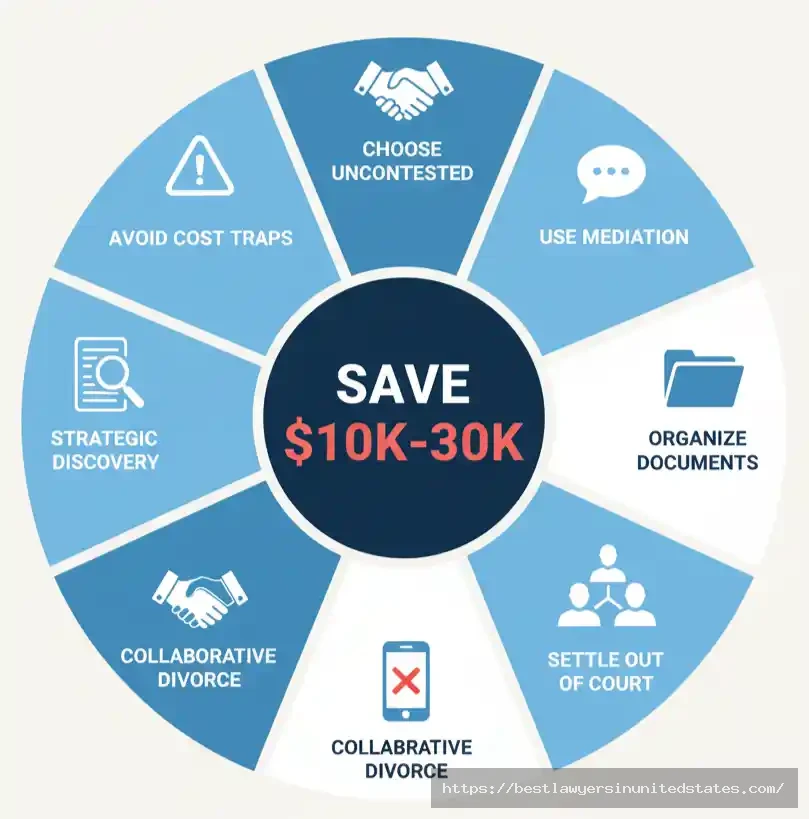
Even if your divorce will be contested, you can cut 30-50% of costs by being strategic. Here’s what actually works.
1. Choose uncontested when possible
Every issue you agree on saves $2,000-$5,000 in attorney fees and court time. Can’t agree on everything? Agree on what you can.
Partial agreements that still save money:
- Agree on property division, fight over custody = saves $8,000-$12,000
- Agree on custody, fight over spousal maintenance = saves $5,000-$10,000
- Agree on asset values (use neutral appraiser) = saves $3,000-$6,000
List what you agree on before meeting attorneys. Many couples find they agree on 60-70% of issues but focus energy on the 30% they don’t.
2. Use mediation instead of going to court
Settlement at mediation costs $2,000-$4,000. Trial costs $15,000-$30,000+. Those numbers tell the story.
Why mediation works financially:
- One day vs. weeks of trial preparation
- Neutral mediator vs. each side hiring experts
- You control the outcome vs. judge decides
- Finality vs. potential appeals
Best practices for mediation:
- Attend when both sides have adequate information (post-discovery)
- Choose an experienced family law mediator ($200-$400/hour is normal)
- Give yourself a full day (rushing reduces success rates)
- Come prepared to compromise
- Bring your attorney if the case is complex
Texas court statistics show 75-85% of cases that go to mediation settle that day. The other 15-25% often settle shortly after.
3. Organize financial documents early
Your attorney bills $250-$400 per hour. Don’t pay them to organize your paperwork.
Documents to gather before meeting your attorney:
- Last 3 years of tax returns
- Last 6-12 months of bank statements (all accounts)
- Credit card statements
- Mortgage statements and property deeds
- Vehicle titles and loan information
- Retirement account statements (401k, IRA, pension)
- Pay stubs or income verification
- Business financial statements (if applicable)
- List of all assets with approximate values
- List of all debts with current balances
Time this saves your attorney: 5-10 hours = $1,250-$4,000 in savings
Create a simple spreadsheet listing every asset and debt. Your attorney will love you for it.
4. Control communication costs
Your attorney’s clock starts running every time they read your email, listen to your voicemail, or talk to you on the phone. Use their time wisely.
Expensive communication habits:
- Multiple daily emails about small issues
- Long voicemails describing emotional reactions
- Calling to vent about your spouse
- Texting questions you could Google
- Rehashing the same issue repeatedly
Cost-effective communication:
- Send one consolidated email per week with all questions
- Keep voicemails under 2 minutes with specific questions
- Use therapy for emotional support (cheaper per hour than attorneys)
- Read your attorney’s previous emails before asking questions they already answered
- Save routine questions for scheduled calls
Real example: Client who emailed 3-4 times daily spent $2,800 in communication costs over 6 months. Client who sent weekly update emails spent $600 for the same period.
5. Consider collaborative divorce
Collaborative divorce is where both spouses hire specially-trained attorneys who commit to settling without court. If it goes to court, both attorneys must withdraw.
Cost range: $8,000-$20,000 per person (less than litigated contested divorces)
Why it costs less:
- No court filing battles
- Transparent information sharing
- Team approach with neutral experts
- Focused on solutions, not winning
When collaborative divorce works:
- Both spouses committed to staying out of court
- Complex financial issues needing creative solutions
- You want to preserve a co-parenting relationship
- Privacy is important (collaborative cases aren’t public)
When it doesn’t work:
- Domestic violence history
- One spouse hiding assets
- Power imbalance between spouses
- One spouse has no interest in settling
Not all attorneys practice collaborative law. Find one through the Collaborative Law Institute of Texas.
6. Settle out of court
90% of Texas divorces settle before trial. Be in that 90%. The last 5% of fighting costs 50% of your total legal fees.
What “settling” means:
- You and your spouse (through attorneys) negotiate final terms
- Both sides compromise on disputed issues
- Agreement becomes part of final decree
- Judge approves it (almost always happens if properly drafted)
Settlement timeline saves money:
- Settle after discovery: Costs $8,000-$15,000 per person
- Settle during trial prep: Costs $15,000-$25,000 per person
- Settle during trial: Costs $20,000-$35,000 per person
- Go to verdict: Costs $25,000-$50,000+ per person
Every month of fighting adds $2,000-$5,000 to each person’s costs.
7. Be strategic about discovery
Discovery is necessary, but you can control costs. Work with your attorney on proportional discovery.
Expensive discovery:
- Deposing everyone tangentially involved
- Requesting 10 years of financial records when 3 years is sufficient
- Hiring experts for every issue
- Fighting over irrelevant documents
Strategic discovery:
- Depose only essential witnesses
- Request reasonable timeframes for documents
- Agree on values where possible (sell house or agree on appraisal)
- Share experts when feasible (one appraiser both sides pay)
Your attorney should justify every discovery request’s cost vs. benefit. If they can’t explain why a $2,000 deposition is necessary, question it.
8. Avoid these common cost traps
Cost trap #1: Using your attorney as a therapist Therapy costs $100-$200 per hour. Your attorney costs $300-$500 per hour. Get emotional support from therapists, friends, or support groups.
Cost trap #2: Fighting over items with more emotional than financial value The $300 coffee table you’re spending $2,000 in attorney time fighting over? Just let it go. Buy a new one for $300.
Cost trap #3: Refusing reasonable settlement offers If your attorney says the offer is fair, listen. Going to trial to get $5,000 more will cost you $15,000 in legal fees.
Cost trap #4: Violating temporary orders Every contempt motion your spouse files costs you $2,000-$5,000 to defend. Follow court orders exactly, even if you disagree.
Cost trap #5: Poor communication with your spouse Every nasty text becomes evidence. Every argument requires attorney intervention. Stay civil. Use a co-parenting app if you have kids.
Cost trap #6: Canceling or rescheduling hearings Your attorney prepared. The court scheduled time. Canceling wastes money you already spent and delays resolution.
Cost trap #7: Not reading what your attorney sends If you don’t review documents and they’re filed incorrectly, you pay to fix them. Read everything carefully.
Cost trap #8: Hiding information from your attorney Surprises at trial are expensive. Your attorney needs complete information to represent you effectively.
Bottom line: The cheapest divorce is the fastest one where both people act reasonably. Every month of fighting adds thousands to costs.
What payment options exist for divorce costs?
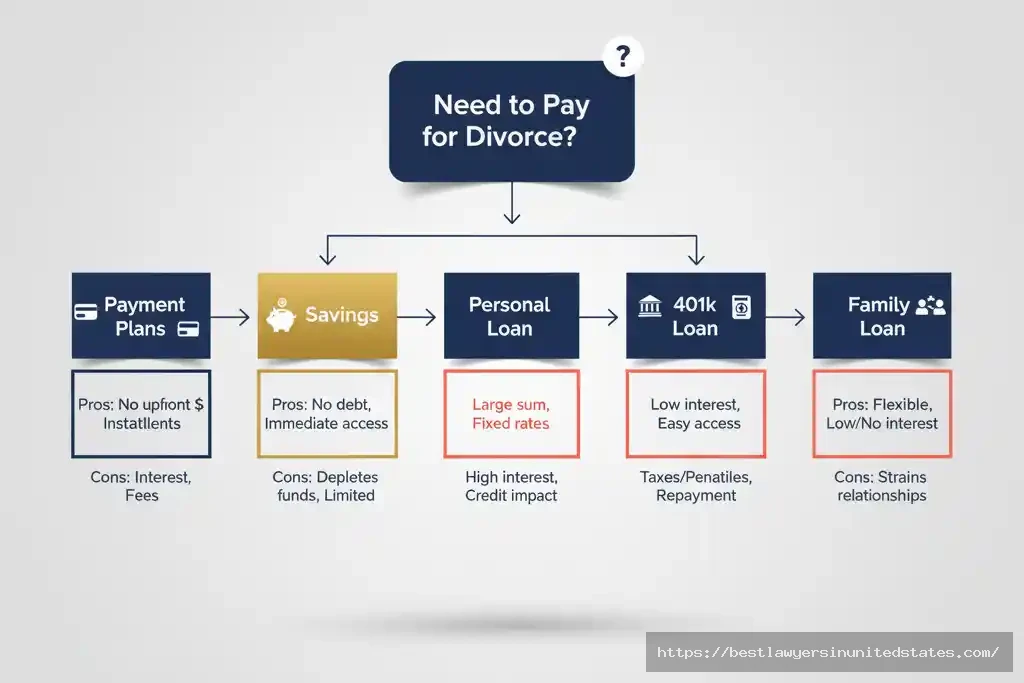
Most people don’t have $15,000-$25,000 sitting in savings when divorce hits. Here’s how people actually pay for divorce.
Attorney payment plans
Many Texas family law attorneys offer payment arrangements, especially if you have steady income. This isn’t automatic—you need to ask and negotiate terms.
Typical payment plan structures:
Option 1: Initial retainer plus monthly payments
- Pay $2,500-$5,000 upfront
- Monthly payments of $500-$1,500
- Case proceeds while you pay
- Common for employed clients
Option 2: Delayed retainer replenishment
- Pay initial retainer ($3,000-$5,000)
- When it runs low, payment plan kicks in
- Gives you time to save during case
Option 3: Credit card payments
- Most attorneys accept credit cards
- You pay the processing fee (2-4%)
- Lets you use 0% APR introductory offers
- Risky if you can’t pay off balance
What attorneys won’t do: Work completely on contingency (it’s prohibited in divorce cases) or let bills run indefinitely without payment.
Negotiating better terms:
- Offer larger down payment for lower monthly amounts
- Demonstrate stable employment and income
- Agree to automatic payments
- Keep communication minimal to control costs
How much should you save before filing?
Financial advisors recommend saving 3-6 months of living expenses before filing for divorce, but that’s not realistic for everyone.
Minimum savings targets by divorce type:
| Divorce Type | Minimum to Save | Ideal Amount |
|---|---|---|
| DIY/Uncontested | $1,000-$2,000 | $3,000-$5,000 |
| Uncontested with Attorney | $3,000-$5,000 | $6,000-$8,000 |
| Contested (No Trial) | $8,000-$12,000 | $15,000-$20,000 |
| Contested with Trial | $15,000-$20,000 | $25,000-$40,000 |
Why you need savings beyond attorney fees:
- Moving costs: $500-$3,000
- Temporary housing deposits: $1,000-$3,000
- New utility deposits: $200-$500
- Emergency fund while adjusting to one income: $2,000-$5,000
- Living expenses during process: 6-18 months worth
If you can’t save this much: You’ll need to get creative with payment options or pursue lower-cost alternatives.
Financing your divorce: Pros and cons
Some people borrow money to pay divorce costs. This carries risks.
Financing option 1: Personal loan
- Pros: Fixed monthly payment, potentially lower interest than credit cards
- Cons: Requires good credit, 7-25% interest rates, starts with debt post-divorce
- Typical amounts: $5,000-$35,000
- Lenders: Banks, credit unions, online lenders
Financing option 2: Home equity line of credit
- Pros: Lower interest rates (6-10%), larger amounts available
- Cons: You’re betting the house (literally), spouse may fight this if contested
- Risk: If you default, you lose the house
Financing option 3: 401(k) loan
- Pros: Borrowing from yourself, no credit check, lower interest
- Cons: Must repay within 5 years (often less if you change jobs), reduces retirement savings
- Limit: Usually 50% of vested balance up to $50,000
Financing option 4: Family loans
- Pros: Flexible terms, possibly interest-free
- Cons: Strains relationships, may need to be disclosed in divorce proceedings
- Best practice: Document it formally, treat it like a real loan
Financing option 5: Litigation funding companies
- Pros: Specialize in divorce financing, no repayment if you lose
- Cons: Very expensive (20-40% fees), only for cases with high-value assets
- Reality: Rare in Texas, mostly for ultra-high-net-worth divorces
The smartest approach: Use savings first, payment plans second, low-interest financing third. Avoid high-interest debt that leaves you financially damaged post-divorce.
Can you make your spouse pay your attorney fees?
Sometimes, yes. Texas Family Code allows judges to order one spouse to contribute to the other’s attorney fees if there’s significant income disparity.
When fee orders happen:
- One spouse earns substantially more
- One spouse has access to more liquid assets
- One spouse caused unnecessary litigation
- One spouse needs representation to achieve fair outcome
Reality check: Fee orders usually cover partial costs, not everything. You might get $5,000-$10,000 toward a $20,000 bill.
Fee orders are not guaranteed. Judges have discretion. You must request it formally, and your attorney must argue why it’s warranted.
Splitting legal fees in uncontested cases
In truly amicable divorces, some couples share one attorney’s costs. This has strict limitations.
When this works:
- Both spouses agree on all terms completely
- No conflict of interest exists
- Attorney can ethically represent both (rare)
- Usually one spouse is “represented,” the other is “assisted”
More common arrangement: One spouse hires an attorney, the other reviews documents with a consulting attorney (limited scope representation costing $500-$1,000).
What you save: $1,500-$3,000 in duplicate legal work
Risk: If things become contested later, the attorney must withdraw from representing either party.
Texas-specific factors affecting divorce costs
Texas has unique laws that impact what you’ll pay. Understanding these helps you budget accurately.
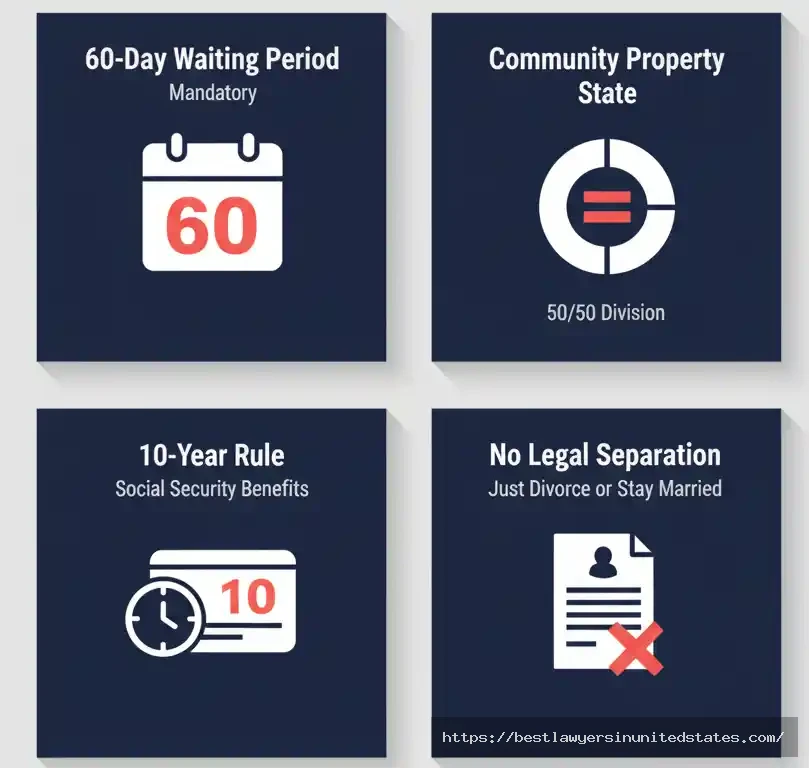
The mandatory 60-day waiting period
Texas requires a minimum 60-day waiting period from filing to finalization. You cannot get divorced faster, even in emergencies (except military deployment situations).
How this affects costs:
- Minimum 2-3 months of legal fees
- Can’t rush through an expensive contested case
- Gives time for temporary orders (which cost money)
- Period for discovery, negotiation, mediation
The waiting period can be waived only if:
- Family violence occurred
- Protective order is in place
Even then, waivers are rare. Plan for at least 60 days, realistically 3-6 months for uncontested, 6-24 months for contested.
How community property laws impact costs
Texas is one of nine community property states. Everything acquired during marriage is presumed community property, owned 50/50. This affects costs differently than in equitable distribution states.
Like Texas, divorce costs in California are also impacted by community property laws, though filing fees and attorney rates differ significantly.
This affects costs because:
- Tracing separate property requires forensic accounting ($3,000-$8,000)
- Reimbursement claims add complexity ($2,000-$5,000 in attorney time)
- Business valuation becomes necessary if one spouse owns a company ($5,000-$15,000)
- Commingled assets need expert untangling ($2,000-$10,000)
What’s community property:
- Income earned during marriage
- Property purchased during marriage
- Retirement contributions during marriage
- Business appreciation during marriage
What’s separate property:
- Property owned before marriage
- Gifts received individually
- Inheritance received individually
- Personal injury awards (except lost wages)
Proving separate property costs money. Bank records, property records, and expert testimony aren’t free.
What is the 10-year rule in divorce?
The “10-year rule” affects spousal maintenance eligibility, not property division. Many people misunderstand this.
Federal 10-year rule for Social Security: If married 10+ years, you can claim benefits on ex-spouse’s record after age 62. This doesn’t require court orders—it’s automatic federal law.
Texas maintenance 10-year factor: Courts can award spousal maintenance if marriage lasted 10+ years and the receiving spouse lacks sufficient property or earning ability.
How this affects costs:
- Vocational evaluations to determine earning capacity: $2,000-$5,000
- Financial analysis to determine need: $1,500-$3,000
- Extended litigation over maintenance terms: $5,000-$15,000
Marriages under 10 years: Maintenance is only available in limited circumstances (family violence, disabled spouse, caring for disabled child).
Fault vs no-fault divorce costs
Texas is a “no-fault” state, meaning you can divorce for “insupportability” (incompatibility). But you can also file for fault grounds.
Fault grounds in Texas:
- Cruelty
- Adultery
- Conviction of felony
- Abandonment
- Living apart
- Confinement to mental hospital
How fault affects costs:
No-fault divorce: Focus stays on property and custody. Lower costs.
Fault-based divorce: Requires proof of fault grounds. This adds:
- Investigation costs (private investigators): $1,000-$5,000
- Witness depositions: $500-$2,000 each
- Additional discovery: $2,000-$5,000
- Trial time to prove fault: $5,000-$15,000
Does proving fault get you more? Sometimes, but usually not enough to justify the added costs. Texas courts divide property “just and right,” which doesn’t always mean 50/50, but fault rarely results in 70/30 or 80/20 splits.
Exception: Adultery cases where the cheating spouse spent significant marital funds on an affair. Courts may award reimbursement or disproportionate division.
Most attorneys advise: File no-fault unless fault grounds give you significant financial advantage.
Military divorce considerations
If you or your spouse serves in the military, expect additional costs and complexities. Consider working with a military divorce lawyer who understands SCRA protections, military pension division orders, and jurisdiction issues when one spouse is stationed out of state.
Unique military divorce issues:
- Dividing military retirement (requires a Military Pension Division Order, not a standard QDRO): $1,500-$3,000
- Commissary and exchange access (20/20/20 rule)
- TRICARE health benefits (20/20/20 or 20/20/15 rule)
- Servicemembers Civil Relief Act protections
- Jurisdiction questions if stationed out of state
Military divorces cost 15-30% more due to these unique factors. Hire an attorney experienced in military divorces—not all family lawyers understand these rules.
Divorce costs by major Texas counties
Where you file affects how much you’ll pay. Filing fees vary, but more importantly, local court procedures and attorney rates differ significantly.
Harris County (Houston) divorce costs
Filing fee: $315
Average attorney hourly rates: $300-$450
What makes Houston unique:
- Extremely busy family courts (4th largest county in U.S.)
- Longer wait times for hearings (adds to attorney costs)
- More court-ordered mediation requirements
- Higher cost of living = higher attorney rates
Typical costs:
- Uncontested: $2,000-$4,500
- Contested: $18,000-$45,000+
Harris County resources:
- Houston Volunteer Lawyers (free legal aid for income-qualified)
- Lone Star Legal Aid
- Harris County Law Library (self-help resources)
Dallas County divorce costs
Filing fee: $318 (includes $10 security fee)
Average attorney hourly rates: $325-$500
What makes Dallas unique:
- Some of the highest attorney rates in Texas
- Sophisticated family law bar (high expertise, high cost)
- Strong emphasis on alternative dispute resolution
- More collaborative divorce practitioners
Typical costs:
- Uncontested: $2,500-$5,000
- Contested: $20,000-$55,000+
Dallas County resources:
- Legal Aid of NorthWest Texas
- Dallas Volunteer Attorney Program
- Dallas County Courts online resources
Bexar County (San Antonio) divorce costs
Filing fee: $273
Average attorney hourly rates: $250-$375
What makes San Antonio unique:
- Lower costs than Houston/Dallas
- Military-friendly courts (Joint Base San Antonio presence)
- Bilingual services widely available
- More affordable mediation options
Typical costs:
- Uncontested: $1,800-$3,800
- Contested: $15,000-$35,000
Bexar County resources:
- Texas RioGrande Legal Aid
- Military family law clinics on base
- Bexar County Dispute Resolution Center (low-cost mediation)
Travis County (Austin) divorce costs
Filing fee: $334
Average attorney hourly rates: $300-$450
What makes Austin unique:
- Progressive custody approaches
- Higher tech industry presence = more complex asset cases
- Collaborative divorce popular
- Growing market = increasing attorney rates
Typical costs:
- Uncontested: $2,200-$4,500
- Contested: $17,000-$50,000+
Travis County resources:
- Texas RioGrande Legal Aid
- Volunteer Legal Services of Central Texas
- Travis County Law Library
County filing fee directory
| County | Filing Fee | County | Filing Fee |
|---|---|---|---|
| Harris | $315 | Dallas | $318 |
| Tarrant | $294 | Bexar | $273 |
| Travis | $334 | Collin | $333 |
| Denton | $297 | El Paso | $270 |
| Fort Bend | $315 | Hidalgo | $275 |
| Montgomery | $301 | Williamson | $329 |
| Bell | $280 | Nueces | $268 |
| Brazoria | $295 | Galveston | $310 |
Note: Fees change periodically. Verify with your county district clerk before filing.
Why location matters beyond filing fees
Attorney availability: Rural counties have fewer family law attorneys. Less competition = potential for higher rates or traveling to larger cities (adding costs).
Court backlog: Harris and Dallas counties have 12-18 month backlogs for trial settings. Your attorney bills monthly while you wait.
Local practices: Some counties require mediation before trial. Others don’t. Some have standing orders about property during divorce. Knowing local rules saves money.
Judge philosophy: Family law judges have enormous discretion. In conservative counties, expect different custody and property rulings than in progressive urban areas.
What if you can’t afford a divorce?
Financial hardship doesn’t eliminate your right to divorce. Texas provides options for people with limited resources.
Fee waiver process step-by-step
Step 1: Complete the Statement of Inability to Afford Payment Download Form 145 from Texas Supreme Court website or get it from your county clerk. This affidavit details your financial situation.
What you’ll report:
- Monthly income (all sources)
- Government assistance received
- Assets owned
- Monthly expenses
- Dependents
- Why you can’t pay fees
Step 2: Gather supporting documentation
- Last 3 months of pay stubs
- Government benefit award letters
- Bank statements
- Bills showing monthly expenses
- Tax returns if available
Step 3: File with your divorce petition Submit the fee waiver request when you file your Original Petition for Divorce. You pay nothing upfront if requesting a waiver.
Step 4: Judge reviews and decides Most judges grant properly completed fee waivers if you qualify. Decision usually comes within 1-2 weeks.
What gets waived:
- Initial filing fee ($250-$350)
- Service of process fees
- Court reporter fees
- Certified copies of orders
What doesn’t get waived:
- Attorney fees (you still need to pay a lawyer if you hire one)
- Private service fees if you choose not to use free county service
- Expert witness fees
- Mediation fees
Income guidelines: Generally qualify if household income is below 125% of federal poverty level. For 2025:
- Individual: $17,955/year ($1,496/month)
- Household of 2: $24,255/year ($2,021/month)
- Household of 3: $30,555/year ($2,546/month)
- Add $6,300 for each additional person
Free legal aid organizations
Income-qualified Texans can get free full representation.
Lone Star Legal Aid
- Serves: Houston, South Texas, East Texas
- Phone: 1-800-733-8394
- Website: lonestarlegal.org
- Services: Full divorce representation, especially domestic violence cases
Texas RioGrande Legal Aid
- Serves: Austin, San Antonio, border regions, Central Texas
- Phone: 1-888-988-9996
- Website: trla.org
- Services: Family law, including divorces with DV or child safety issues
Legal Aid of NorthWest Texas
- Serves: Dallas-Fort Worth, North Texas
- Phone: 1-888-529-5277
- Website: lanwt.org
- Services: Divorce, custody, protective orders
West Texas Legal Aid
- Serves: West Texas, Panhandle
- Phone: 1-800-763-2927
- Services: Limited family law services
Eligibility: Income below 125% poverty level, case involves safety issues, children, or significant hardship.
Reality check: These organizations are overwhelmed. Application to acceptance can take 2-6 weeks. Not everyone who qualifies gets services due to capacity limitations.
Pro bono attorney programs
Texas has the third-highest number of attorneys in the U.S. Many provide free services through organized programs.
State Bar of Texas Lawyer Referral Service
- Matches low-income individuals with volunteer attorneys
- $20 initial consultation fee
- Attorney may take case pro bono if you qualify
Local bar association pro bono programs:
- Houston Volunteer Lawyers Program
- Dallas Volunteer Attorney Program
- Austin Lawyers Care
- San Antonio Bar Foundation
Law school clinics:
- University of Texas Law School Family Law Clinic
- South Texas College of Law Family Law Clinic
- Texas Tech Law School Family Law Clinic
- SMU Dedman School of Law Family Law Clinic
Law students handle cases under professor supervision. Services are free but limited to cases meeting clinic criteria.
Payment plan realities
Most attorneys require something upfront. But if you have stable income, many will work with you.
What attorneys need to see:
- Proof of employment
- Consistent payment history (check credit)
- Realistic budget showing you can make payments
- Good faith demonstration (pay what you can initially)
Typical arrangements:
- $1,000-$2,000 down
- $300-$500/month payments
- Agreement to maintain payments
- Case proceeds while payments continue
Be honest with your attorney. Explaining financial hardship upfront is better than missing payments mid-case.
Alternative options when money is tight
Option 1: Delay filing until you save more If no safety issues or urgent custody concerns exist, wait 3-6 months while you save. This prevents taking on debt.
Option 2: Legal separation (unavailable in Texas) Texas doesn’t recognize legal separation. You’re married or divorced, nothing between. But you can file for “temporary orders” without fully divorcing.
Option 3: Informal separation Live separately, create written agreements about finances and children. Not legally binding, but buys time. Risk: no legal protection if spouse violates agreements.
Option 4: Use online divorce services $500-$1,500 for document preparation. Much cheaper than full attorney representation for simple cases.
Option 5: Ask family for help Divorce is an investment in your future. Parents or siblings might help with costs. Document any loans formally.
The worst option: Staying in an unhealthy or unsafe marriage because of money. Safety always comes first. If domestic violence is involved, contact Texas Advocacy Project (1-800-374-4673) for free legal help.
Divorce Cost Calculator
Get an estimated cost for your divorce based on your specific situation
Your Estimated Divorce Cost
Cost Breakdown
📧 Get a Personalized Consultation
Have questions about your specific situation? Contact our legal experts for guidance tailored to your needs.
Contact Us via Email- Divorce type (contested/uncontested)
- Children (yes/no, how many)
- Property value
- Attorney or DIY
- County selection
- Special circumstances
Want a personalized estimate based on your specific situation? Use our free divorce cost calculator to get an instant breakdown. Simply answer a few questions about your divorce type, whether you have children, property value, and location to see estimated costs.
Frequently Asked Questions
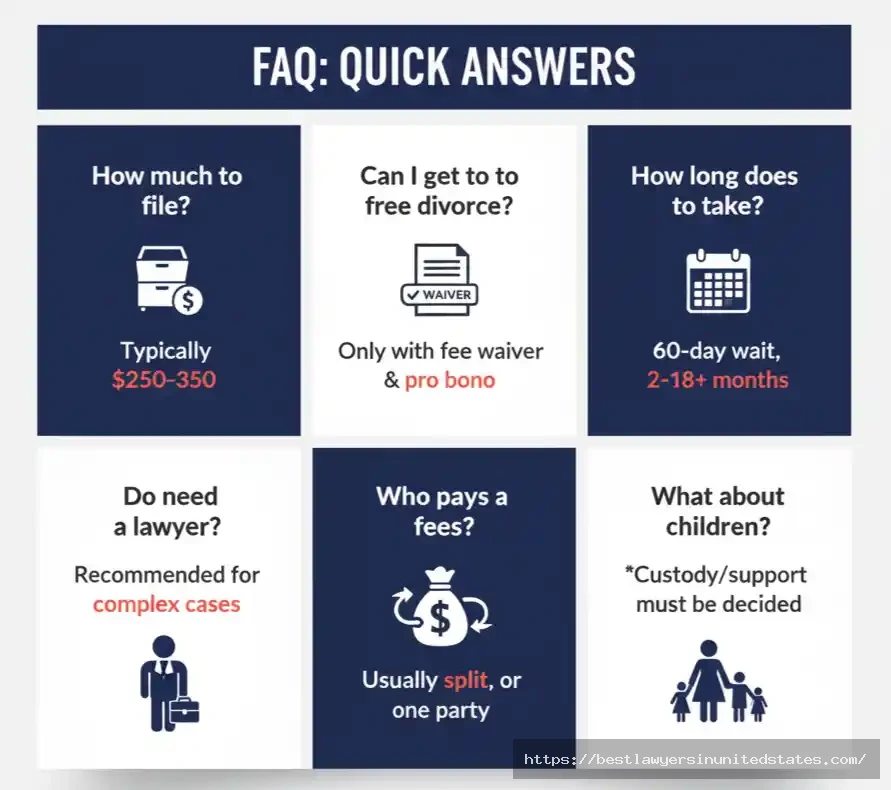
How much does it cost to file for divorce in Texas? Filing fees range from $250-$350 depending on your county. Harris County charges $315, Dallas charges $318, and Bexar County charges $273. This covers only the court filing—not attorney fees, service of process, or other costs.
Can I get a free divorce in Texas? Yes, if you qualify for a fee waiver based on low income or government assistance receipt. File Form 145 (Statement of Inability to Afford Payment) with your divorce petition. If approved, filing fees and some court costs are waived. Attorney fees still apply unless you qualify for legal aid.
How long does a divorce take in Texas? Minimum 60 days from filing date by law. Uncontested divorces typically finalize in 2-4 months. Contested divorces take 6-24 months depending on complexity, court backlog, and cooperation level. High-conflict cases with multiple hearings can exceed 2 years.
What are unexpected costs in a divorce? Expert witness fees ($2,000-$10,000+), deposition costs ($500-$2,000 each), Guardian ad Litem fees ($2,000-$10,000), business valuations ($5,000-$15,000), moving expenses ($500-$3,000), new housing deposits ($2,000-$5,000), and post-decree modification costs ($3,000-$15,000).
How much does a divorce cost if both parties agree in Texas? $1,500-$5,000 total with attorney representation. This includes filing fees ($250-$350), attorney flat fees ($1,500-$4,000), and service of process ($50-$125). DIY divorces where both agree cost $300-$500 total.
What is the cheapest way to get a divorce in Texas? DIY (pro se) divorce costs $300-$500 if you have no children, minimal assets, and both spouses agree completely. Online divorce services cost $500-$1,500. These only work for simple cases—mistakes cost thousands to fix later.
How much does a contested divorce cost in Texas? $15,000-$50,000+ per person. High-asset divorces or custody battles can exceed $75,000-$100,000 per person. Costs include attorney fees (50-200+ hours at $250-$500/hour), expert witnesses, depositions, mediation, and trial preparation.
How much does a divorce with children cost in Texas? Add $3,000-$10,000 to base divorce costs. Child custody evaluations cost $1,500-$5,000, Guardian ad Litem fees run $2,000-$10,000, and additional attorney time for custody/support issues adds $3,000-$8,000. High-conflict custody battles add $20,000-$50,000+.
Do I need a lawyer for divorce in Texas? Not legally required, but 85% of Texans hire attorneys. Consider DIY only if: married under 5 years, no children, minimal assets, both agree on all terms, no domestic violence, and both capable of understanding legal documents. Otherwise, mistakes cost more than attorney fees.
Who pays attorney fees in a Texas divorce? Each spouse typically pays their own attorney. However, judges can order the higher-earning spouse to contribute to the other’s fees if there’s significant income disparity or if one spouse caused unnecessary litigation. Fee orders are discretionary and usually partial.
How much should I save before filing for divorce? Minimum $3,000-$5000 for uncontested divorces, $8,000-$12,000 for contested cases, $15,000-$20,000 if trial is likely. Also budget 3-6 months of living expenses for moving costs, deposits, and adjusting to single income. Financial advisors recommend having total savings of $15,000-$25,000 before filing if possible.
Can I use my 401(k) to pay for divorce? Yes, but carefully. You can borrow from your 401(k) (typically 50% of balance up to $50,000) or take a hardship withdrawal. Loans must be repaid within 5 years. Hardship withdrawals incur taxes and 10% penalty if under age 59½. Consider this a last resort due to long-term retirement impact.
What is the 10-year rule in Texas divorce? Two separate rules exist: (1) Federal Social Security rule—if married 10+ years, you can claim benefits on ex-spouse’s record after age 62. (2) Texas spousal maintenance—courts can award maintenance if married 10+ years and receiving spouse lacks sufficient earning ability. Neither rule affects property division.
How much does mediation cost in Texas? $100-$400 per hour for the mediator. Most mediations last 4-8 hours, totaling $800-$2,400 split between spouses. You also pay your attorney to attend (8 hours × $300-$400 = $2,400-$3,200). Total cost per person: $1,600-$3,500. Still far cheaper than trial ($15,000-$30,000+).
Does fault matter in Texas divorce costs? Yes. Proving fault (adultery, cruelty, abandonment) adds $5,000-$15,000 in costs for investigation, additional discovery, witness depositions, and trial time. Fault rarely results in significantly disproportionate property division unless the fault directly wasted marital assets. Most attorneys recommend no-fault filing.
How much does a Guardian ad Litem cost in Texas? $2,000-$10,000+ depending on case complexity and how long the GAL is involved. This attorney represents your child’s best interests independently. Parents typically split costs 50/50, though judges can allocate differently based on income disparity or fault.
Can filing fees be waived in Texas? Yes. File Form 145 (Statement of Inability to Afford Payment) with supporting financial documentation. Qualify if you receive government assistance (SNAP, Medicaid, TANF) or earn below 125% of federal poverty level. Judges grant 70-80% of properly completed waiver requests.
What’s the difference between contested and uncontested divorce costs? Uncontested (both agree): $1,500-$5,000, takes 2-4 months. Contested (disagree on terms): $15,000-$50,000+, takes 6-24 months. The difference is 10x in cost due to discovery, depositions, expert witnesses, multiple hearings, and trial preparation.
How much does a divorce lawyer cost in Texas per hour? $200-$500+ depending on location and experience. Rural areas: $200-$300/hour. San Antonio: $250-$375/hour. Houston/Austin: $300-$450/hour. Dallas: $325-$500/hour. Experienced attorneys in major cities charge $400-$500+. Boutique high-asset divorce firms charge $500-$800+/hour.
What is a retainer fee for divorce? Upfront payment (typically $2,500-$10,000) held in trust account. Your attorney bills against it as work is completed. When it runs low, you replenish it. Simple cases: $1,500-$3,000 retainer. Moderate complexity: $3,500-$7,500. Contested with trial: $10,000-$25,000+. Unused funds are refunded.
How much does an uncontested divorce cost with a lawyer in Texas? $1,500-$5,000 total including all costs. Attorney flat fees range from $1,500-$4,000 depending on complexity and location. Add $250-$350 filing fees and $50-$125 service of process. Some attorneys charge less ($1,200-$2,500) for very simple cases with no children or property.
Are there hidden costs in Texas divorce? Yes. Common unexpected expenses: expert witnesses ($3,000-$10,000+), depositions ($500-$2,000 each), document copying ($100-$300), court reporter transcripts ($200-$500), moving costs ($500-$3,000), temporary housing deposits ($2,000-$5,000), new utility deposits ($200-$500), therapy ($100-$200/session).
How much does a simple divorce cost in Texas? $300-$500 for DIY filing (no attorney). $1,500-$3,500 with attorney assistance. “Simple” means: married under 5 years, no children, minimal assets (under $25,000), no real estate, no retirement accounts, both spouses agree on all terms, no complex debts.
Can I make my spouse pay my attorney fees? Sometimes. Texas judges can order one spouse to contribute to the other’s attorney fees if significant income disparity exists or one spouse caused unnecessary litigation. Orders typically cover partial costs ($5,000-$10,000 toward a $20,000-$30,000 bill). Not guaranteed—judges have discretion.
What’s the average cost of divorce in Texas? $15,000-$23,000 per person when attorneys are involved. This represents middle-ground contested cases. Actual costs range from $300 (DIY, no kids, no assets, fully agreed) to $100,000+ (high-asset, custody battles, extensive litigation). Most people pay $3,000-$30,000 depending on complexity.
How much does divorce cost in Houston Texas? Houston (Harris County) filing fee: $315. DIY divorce: $400-$600. Uncontested with attorney: $2,000-$4,500. Contested: $18,000-$45,000+. Houston attorney rates ($300-$450/hour) are among highest in Texas due to cost of living and competitive legal market.
Do you need a lawyer to get a divorce in Texas? No legal requirement, but highly recommended if: you have children, own property, have retirement accounts, disagree on terms, significant assets exist, domestic violence occurred, or your spouse has an attorney. DIY works for only 10-15% of cases—simple situations with full agreement.
What happens if you can’t afford a divorce in Texas? File for fee waiver (Form 145) to eliminate court costs. Apply for legal aid through Lone Star Legal Aid, Texas RioGrande Legal Aid, or Legal Aid of NorthWest Texas if income-qualified. Explore attorney payment plans. Consider delayed filing while saving. Never stay in unsafe situation due to costs—domestic violence victims get priority legal aid.
How long must you be separated before divorce in Texas? No separation requirement exists. You can file for divorce while living together. The “living apart” ground requires 3+ years of separation, but you can also file immediately for “insupportability” (no-fault) regardless of separation. Minimum 60-day waiting period applies after filing.
Does Texas have legal separation? No. Texas doesn’t recognize legal separation as a status. You’re either married or divorced. However, you can file for “temporary orders” to address custody, support, and property use during divorce proceedings without finalizing the divorce. Informal separation has no legal protection.
What’s included in divorce filing fees in Texas? Filing fees ($250-$350) cover: processing your Original Petition for Divorce, opening case file, court clerk administrative costs, and issuing Final Decree. NOT included: service of process ($50-$125), attorney fees, mediation, expert witnesses, depositions, copies, or any other legal costs.
Next steps: Finding affordable legal help in Texas
You now understand what divorce costs in Texas and why. Here’s how to move forward strategically.
Schedule free consultations
Most Texas family law attorneys offer free 30-60 minute initial consultations. Use these strategically:
Meet with 2-3 attorneys before deciding. Our directory of family and divorce lawyers in your area can help you find experienced attorneys offering free consultations. Compare:
- Cost estimates for your specific situation
- Payment plan options
- Communication style and personality fit
- Experience with cases like yours
- Strategy recommendations
Questions to ask every attorney:
- What’s your estimated total cost for my case?
- What payment plans do you offer?
- How do you bill (6-minute, 15-minute increments)?
- What’s included in your retainer?
- When will I need to replenish the retainer?
- How often will we communicate?
- Who else will work on my case?
- What’s your success rate with similar cases?
- What should I do to keep costs down?
Red flags in consultations:
- Guaranteeing specific outcomes (no one can guarantee)
- Pushing you to fight when settlement makes sense
- Unable to give cost estimates
- Won’t discuss payment options
- Dismisses your concerns
- No clear strategy
- No experience with your type of case
Gather documents before meeting attorneys
Save attorney time = save money. Collect:
Financial documents:
- Last 3 years tax returns
- Last 6-12 months bank statements (all accounts)
- Credit card statements
- Investment/retirement account statements
- Mortgage statements and property deeds
- Vehicle titles and loan information
- Pay stubs or income documentation
- Business financial statements if applicable
Personal documents:
- Marriage certificate
- Birth certificates (children)
- Prenuptial agreement (if exists)
- List of all assets with values
- List of all debts with balances
- Photos of valuable property
Organize in folders (physical or digital). Simple spreadsheets listing assets and debts make attorneys very happy.
County clerk offices and resources
Need to verify filing fees or get forms? Contact your county district clerk directly:
Harris County (Houston): 713-755-6411 | www.hcdistrictclerk.com Dallas County: 214-653-7131 | www.dallascounty.org/department/district-clerk Bexar County (San Antonio): 210-335-2011 | www.bexar.org/1235/District-Clerk Travis County (Austin): 512-854-9457 | www.traviscountytx.gov/district-clerk Tarrant County (Fort Worth): 817-884-1265 | www.tarrantcounty.com/en/district-clerk
Statewide resources:
Texas Law Help: www.texaslawhelp.org Free forms, instructions, legal information, and court directory.
State Bar of Texas: www.texasbar.com Lawyer referral service, attorney discipline records, legal resources.
Texas Access to Justice Foundation: www.teajf.org Directory of legal aid providers, pro bono programs, self-help resources.
Texas Attorney General: www.texasattorneygeneral.gov Child support information, forms, calculation tools.
Texas Courts Online: www.txcourts.gov Court rules, forms, family law resources, local court information.
Take action on what you can control
While you’re deciding:
✓ Start saving money. Even $50-$100/week adds up.
✓ Organize finances. Know what you own, owe, and earn.
✓ Document everything. Keep records of communications, expenses, and property.
✓ Research your options. Read about different divorce types and processes.
✓ Consider therapy. Divorce is emotionally draining. Professional support helps decision-making.
✓ Talk to trusted advisors. Financial planners, therapists, clergy can provide perspective.
✓ Protect yourself. If domestic violence exists, contact National DV Hotline (1-800-799-7233) or Texas Advocacy Project (1-800-374-4673).
✓ Don’t make rushed decisions. Unless safety is at risk, take time to plan financially.
✓ Keep communication civil. Every hostile interaction increases legal costs.
✓ Focus on the big picture. Fighting over $500 when it costs $2,000 in attorney fees makes no financial sense.
The most expensive divorce is one that drags on unnecessarily. The faster you reach fair resolution, the more money you keep.
Most Texans going through divorce spend $5,000-$25,000 total. If you’re curious about how much divorce costs across different states, we’ve compiled comprehensive guides to help you compare. With the information in this guide, you can make informed decisions about how much you’ll spend and where you can save.
Your divorce cost depends primarily on three factors: (1) Can you agree? (2) Do you have children? (3) How complex are your finances? Answer those honestly, and you’ll know your likely cost range.
Good luck. Divorce is tough, but thousands of Texans successfully navigate it every year. With proper planning and realistic expectations, you can too.