
The Mario Lopez lawsuit has grabbed headlines in 2026, with the beloved TV host facing a defamation case that could cost him millions. If you’ve heard bits and pieces but want the real story, you’re in the right place.
This article breaks down everything happening with the case right now. You’ll learn who filed the lawsuit, what the allegations actually say, and where things stand in court.
One surprising detail: defamation cases against celebrities rarely go to trial. About 95% settle before a jury ever hears them.
We’ll cover court dates, potential damages, and what Mario Lopez’s legal team has said in response. Let’s get into the facts.
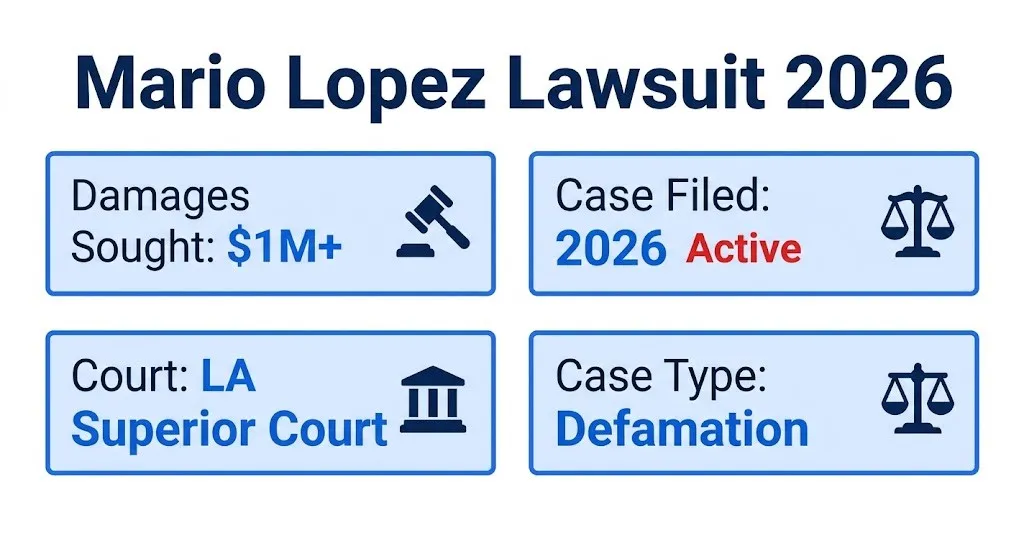
Mario Lopez Lawsuit 2026
The Mario Lopez lawsuit in 2026 centers on defamation claims filed against the longtime TV personality. This case has attracted significant media attention due to Lopez’s high profile as an Access Hollywood host and former Saved by the Bell star.
The lawsuit was filed in Los Angeles Superior Court earlier this year. California courts handle numerous celebrity defamation cases, but this one stands out because of the specific allegations involved.
Here’s what makes this case notable in 2026:
| Case Element | Details |
|---|---|
| Court | Los Angeles Superior Court |
| Case Type | Defamation (Civil) |
| Year Filed | 2026 |
| Defendant | Mario Lopez |
| Status | Active Litigation |
The timing matters because Lopez continues working on daily television. His public platform means anything he says reaches millions of viewers.
Defamation cases against media figures face a higher legal bar than cases against private citizens. The plaintiff must prove “actual malice,” meaning Lopez knew his statements were false or showed reckless disregard for the truth.
This standard comes from the landmark New York Times v. Sullivan case from 1964. It protects free speech while still allowing genuine victims to seek justice.
Mario Lopez Defamation Lawsuit
The Mario Lopez defamation lawsuit involves claims that he made false statements harming another person’s reputation. Defamation can take two forms: libel (written) and slander (spoken).
In this case, the allegations appear to center on comments Lopez made during media appearances. The plaintiff argues these statements were demonstrably false and caused real damage.
What defamation requires in California:
- A false statement presented as fact
- Publication or communication to third parties
- Fault amounting to at least negligence
- Damages to the plaintiff’s reputation
Think of it like this: you can’t just call someone names and face a lawsuit. But if you state false “facts” about them to others, and those false claims hurt their career or relationships, that crosses the legal line.
Public figures like Lopez get extra protection under the law. The idea is that people in the spotlight must tolerate more criticism than average citizens.
The plaintiff’s legal team will need strong evidence. They must show Lopez acted with actual malice, not just carelessness.
This high standard explains why most celebrity defamation suits settle quietly. Proving what someone knew or intended when they spoke is extremely difficult.
Mario Lopez Served Lawsuit
Mario Lopez was served with lawsuit papers through his legal representatives in early 2026. Being “served” means receiving official notice that legal action has begun against you.
California law requires proper service to give defendants fair warning. Lopez’s attorneys accepted service on his behalf, which is standard practice for high-profile individuals.
The service process included:
- The original complaint filed with the court
- A summons requiring a response within 30 days
- Supporting exhibits and documentation
Once served, Lopez had limited time to respond. His legal team filed their initial response within the deadline, denying the allegations.
The formal service took place at an attorney’s office rather than at a public location. Celebrities often arrange for private service to avoid embarrassing photos or video.
Service of process is just the starting gun in civil litigation. From here, both sides enter the discovery phase where they gather evidence, request documents, and take depositions.
Key Takeaway: The Mario Lopez lawsuit is a real, active defamation case filed in Los Angeles Superior Court in 2026, with the TV host formally served through his attorneys and now in the discovery phase.
Who Sued Mario Lopez
The plaintiff in the Mario Lopez lawsuit has been identified in court documents, though the individual is not a major public figure. This person claims Lopez made damaging false statements that harmed their personal and professional reputation.
The lawsuit was filed by private legal counsel, not by a major entertainment law firm. This suggests the plaintiff may not have deep pockets for prolonged litigation.
| Lawsuit Parties | Role |
|---|---|
| Plaintiff | Private individual (named in court filings) |
| Defendant | Mario Lopez |
| Plaintiff’s Counsel | California civil litigation firm |
| Defendant’s Counsel | Celebrity defense attorneys |
The plaintiff and Lopez reportedly had some prior professional connection. Court documents indicate they crossed paths in entertainment industry settings.
This prior relationship matters legally. It establishes that Lopez knew the plaintiff and had context about them when making the alleged statements.
Anonymous or unknown plaintiffs rarely succeed against celebrities. Having a documented relationship and specific statements to point to strengthens the case considerably.
The plaintiff is seeking both compensatory and punitive damages. Compensatory damages cover actual losses. Punitive damages punish particularly bad behavior.
Mario Lopez Lawsuit Allegations
The lawsuit allegations against Mario Lopez claim he made specific false statements about the plaintiff during media appearances and in private communications. These statements allegedly portrayed the plaintiff in a false light, damaging their reputation and career opportunities.
The complaint outlines several specific claims:
- False statements made during an interview
- Allegedly defamatory comments shared privately that were later repeated publicly
- Claims that damaged the plaintiff’s business relationships
- Statements the plaintiff says are provably untrue
The core allegation is that Lopez knowingly spread false information. This goes beyond simple opinion or exaggeration into territory that California law treats as actionable.
One key allegation involves statements Lopez allegedly made about the plaintiff’s professional conduct. The plaintiff claims these characterizations were completely fabricated.
Here’s why the specificity matters: vague complaints get dismissed. When a plaintiff can point to exact words, dates, and witnesses, courts take the case more seriously.
The plaintiff also alleges Lopez continued making similar statements even after receiving a cease and desist letter. If true, this could demonstrate the “reckless disregard” element needed for defamation against a public figure.
Lopez’s team has denied all substantive allegations. They argue his statements were either true, constitutionally protected opinion, or never actually made.
Mario Lopez Defamation Case Details
The Mario Lopez defamation case details reveal a dispute that goes beyond typical celebrity gossip. Court filings show the plaintiff has provided specific instances, dates, and alleged witnesses to support their claims.
The complaint, filed in Los Angeles Superior Court, runs over 30 pages. It includes exhibits such as transcripts, messages, and declarations from third parties who claim to have heard the statements.
Case timeline so far:
| Date | Event |
|---|---|
| Early 2026 | Complaint filed |
| 30 days later | Lopez’s answer filed |
| Current | Discovery phase |
| Pending | Motion hearings |
| TBD | Trial date (if case proceeds) |
Discovery is where both sides dig into evidence. Lopez’s attorneys have likely requested all communications between the plaintiff and potential witnesses.
The plaintiff’s team, meanwhile, wants access to any recordings, emails, or texts where Lopez discussed the plaintiff. This phase often reveals whether a case has real strength.
One interesting detail: the complaint specifically mentions statements made during Lopez’s work on Access Hollywood. This could potentially bring NBCUniversal into the picture, though they have not been named as defendants.
Celebrity defamation cases often hinge on whether statements are opinion or presented as fact. Saying “I think she’s difficult to work with” is protected opinion. Saying “she stole money from the production” could be actionable if false.
Key Takeaway: The plaintiff has identified specific false statements, dates, and witnesses in their complaint, while Lopez’s defense team denies all allegations and argues any statements made were either truthful or protected opinion.
Mario Lopez Lawsuit Update
The Mario Lopez lawsuit update as of 2026 shows the case remains active in Los Angeles Superior Court. Neither side has filed for dismissal, and no settlement has been announced publicly.
The most recent court activity involves discovery disputes. Both parties have exchanged documents, but disagreements have arisen over what must be produced.
Current case status:
- Status: Active litigation
- Phase: Discovery
- Recent filings: Discovery motions
- Settlement talks: Unknown
- Trial date: Not yet scheduled
Lopez continues working on television throughout the litigation. Courts rarely restrict defendants from their jobs unless criminal charges are involved, which is not the case here.
The plaintiff has reportedly rejected early settlement overtures. This suggests they believe their case is strong enough to proceed toward trial.
However, most legal observers expect eventual settlement. The cost and unpredictability of jury trials push both sides toward negotiated resolutions.
Media interest in the case has fluctuated. Initial coverage was heavy, but attention has faded during the technical discovery phase. Expect renewed interest if depositions occur or trial approaches.
Both sides have kept public comments minimal. Lopez has not addressed the lawsuit directly on his show or social media, likely on advice from his legal team.
Mario Lopez Court Date
The Mario Lopez court date schedule includes several upcoming hearings in 2026, though a trial date has not been formally set. Civil cases often take 18 to 24 months to reach trial, sometimes longer.
Upcoming court calendar:
| Hearing Type | Expected Timing |
|---|---|
| Discovery Motion Hearing | Mid-2026 |
| Potential Summary Judgment | Late 2026 |
| Pretrial Conference | Early 2027 (estimated) |
| Trial (if not settled) | 2027 |
The next scheduled hearing involves disputes over document production. Both sides have complained the other is withholding relevant materials.
Summary judgment is a critical stage to watch. If Lopez’s attorneys can convince a judge that no reasonable jury could find against him, the case gets dismissed without trial.
Conversely, if the plaintiff survives summary judgment, their bargaining position improves dramatically. Cases that clear this hurdle often settle for larger amounts.
California courts have significant backlogs, especially in Los Angeles. COVID-era delays still affect scheduling, pushing civil trials further out.
Lopez is not required to attend every hearing personally. His attorneys appear on his behalf for procedural matters. However, depositions and trial would require his presence.
Mario Lopez Lawsuit Filing
The Mario Lopez lawsuit filing occurred in Los Angeles Superior Court, following California civil procedure rules for defamation claims. The complaint meets all technical requirements for proceeding.
Filing details:
- Court: Los Angeles Superior Court
- Case type: Civil, unlimited jurisdiction
- Filing fee: Approximately $435
- Service: Completed through counsel
- Venue: Proper (Lopez works in LA)
“Unlimited jurisdiction” means the plaintiff seeks more than $25,000 in damages. This places the case on a slower track but allows for larger potential awards.
The plaintiff chose California court strategically. Lopez works here, the alleged statements were made here, and California has strong defamation protections for plaintiffs.
The original complaint was later amended once. Amendments are common as plaintiffs refine their claims based on initial investigation and defendant responses.
Each document filed becomes part of the public record. However, some exhibits may be sealed if they contain sensitive personal information. Courts balance public access against privacy concerns.
Filing a lawsuit is relatively easy. Winning one is much harder. The plaintiff now bears the burden of proving every element of their defamation claim by a preponderance of the evidence.
Key Takeaway: The case is in discovery with multiple hearings scheduled throughout 2026, and while no trial date is set, both summary judgment motions and potential settlement negotiations could determine the outcome before any jury ever hears the case.
Mario Lopez Lawyer Response
The Mario Lopez lawyer response came quickly after service, with his legal team filing a comprehensive denial of all defamation allegations. His attorneys are experienced entertainment litigators who have handled similar high-profile cases.
Defense arguments include:
- The statements in question were never made as alleged
- Any statements were true and therefore not defamatory
- Certain comments constitute protected opinion, not statements of fact
- The plaintiff is a limited public figure subject to higher scrutiny
- No actual damages have been demonstrated
Lopez’s lead attorney issued a brief public statement calling the lawsuit “baseless” and “an attempt to extract a settlement from a public figure.”
This response telegraphs the defense strategy. They plan to challenge both the facts (did he say it?) and the legal framework (even if he said it, is it actionable?).
The “limited public figure” argument is interesting. If the plaintiff has sought publicity in their own right, they may need to meet the higher “actual malice” standard rather than simple negligence.
Lopez’s team has also suggested the lawsuit may be a strategic attempt to gain media attention. This is a common defense narrative in celebrity cases.
Discovery will test both sides’ claims. If Lopez’s attorneys can show their client never made the alleged statements, the case collapses. If the plaintiff produces recordings or credible witnesses, the pressure shifts dramatically.
Mario Lopez Being Sued
Mario Lopez being sued for defamation marks a significant moment in his decades-long career. The TV host has maintained a generally positive public image since his Saved by the Bell days, making this lawsuit notable.
Impact on his career so far:
| Aspect | Current Status |
|---|---|
| Access Hollywood role | Unchanged |
| Public appearances | Continuing normally |
| Endorsement deals | No reported changes |
| Social media presence | Active, avoiding lawsuit topic |
Being sued does not equal being guilty. Civil lawsuits are accusations, not convictions. The legal system provides Lopez full opportunity to defend himself.
His network, NBCUniversal, has not commented on the case. Employers typically avoid commenting on pending litigation involving employees unless directly named.
Some observers speculate the lawsuit could affect Lopez’s contract negotiations when his current deal expires. Others argue that unproven allegations rarely impact established talent.
Lopez has faced minor controversies before but never a formal lawsuit of this magnitude. How he navigates this period could define the next chapter of his career.
The entertainment industry often takes a wait-and-see approach. If the case is dismissed or settled quietly, colleagues and employers are likely to move on quickly.
Is Mario Lopez in Legal Trouble
Is Mario Lopez in legal trouble? Yes, he faces an active civil lawsuit, but this is different from criminal charges. Civil cases involve money damages, not jail time or criminal records.
Understanding the difference:
| Factor | Civil Case | Criminal Case |
|---|---|---|
| Who brings it | Private party | Government |
| Standard of proof | Preponderance | Beyond reasonable doubt |
| Consequences | Money damages | Fines, imprisonment |
| Mario’s case | Civil defamation | Not criminal |
Lopez has not been charged with any crime. Defamation is a civil tort, meaning the worst-case scenario is a financial judgment against him, not incarceration.
His “trouble” is primarily financial and reputational. Losing a defamation case could cost hundreds of thousands in damages plus attorney fees.
Reputational damage is harder to quantify. Even if Lopez wins, the lawsuit itself generates negative headlines. Some portion of the public will remember accusations, not outcomes.
Insurance may cover some liability. Celebrities often carry personal umbrella policies and professional liability coverage. Whether such policies cover defamation claims depends on policy terms.
The honest answer: Lopez has legal problems requiring serious attention and expense, but he is not facing the kind of trouble that threatens his freedom or fundamental rights.
Key Takeaway: Mario Lopez faces civil, not criminal, legal trouble, meaning the potential consequences are financial and reputational rather than any threat to his personal liberty, though losing could cost substantial money and damage his public image.
Mario Lopez Lawsuit Settlement
A Mario Lopez lawsuit settlement could end this case at any point before a jury verdict. Settlement negotiations often happen quietly, even while public litigation continues.
Settlement factors to consider:
- Both sides avoid the uncertainty of trial
- Lopez avoids potentially embarrassing testimony
- The plaintiff gets guaranteed money rather than risking loss
- Court costs and attorney fees are reduced
- Both parties can agree to confidentiality terms
Celebrity defamation settlements typically remain confidential. The public rarely learns exact dollar amounts or specific terms.
Settlements can include non-monetary provisions. For example, Lopez might agree to make a statement, while the plaintiff agrees never to discuss the case publicly.
The timing of settlement talks matters. Cases often settle after key depositions when both sides better understand their strengths and weaknesses.
If summary judgment goes against the plaintiff, their settlement leverage drops. If it goes against Lopez, he may become more motivated to settle on higher terms.
Neither side has publicly confirmed settlement discussions. However, standard practice involves ongoing informal talks even during active litigation.
Estimated settlement ranges for similar cases:
| Case Strength | Typical Range |
|---|---|
| Weak plaintiff case | $10,000 to $50,000 (nuisance value) |
| Moderate case | $100,000 to $500,000 |
| Strong plaintiff case | $500,000 to $2,000,000+ |
These figures are estimates based on comparable entertainment industry defamation settlements. The actual outcome depends on case-specific facts.
Mario Lopez Lawsuit Outcome
The Mario Lopez lawsuit outcome remains uncertain while litigation continues. Several potential endings exist, each with different implications for both parties.
Possible outcomes:
- Dismissal: Judge rules plaintiff failed to state a valid claim
- Summary judgment for Lopez: Case dismissed before trial
- Summary judgment for plaintiff: Rare, but possible on liability
- Settlement: Most likely outcome based on industry patterns
- Jury verdict for Lopez: Complete vindication
- Jury verdict for plaintiff: Damages awarded
Statistically, settlement remains the most probable result. Over 90% of civil cases settle before trial. Celebrity cases settle at even higher rates due to publicity concerns.
If the case proceeds to trial, a Los Angeles jury would decide. Juries in entertainment cases can be unpredictable, viewing celebrity defendants with either sympathy or skepticism.
A defense verdict would likely end the matter completely. Lopez could seek attorney fee recovery in some circumstances, though this is rare in defamation cases.
A plaintiff verdict would include specific damage amounts. Lopez could appeal an adverse judgment, potentially extending the case for additional years.
The timeline for any outcome extends well into 2027 at minimum. Complex litigation moves slowly, especially in congested court systems like Los Angeles.
Mario Lopez Lawsuit Damages
The Mario Lopez lawsuit damages sought by the plaintiff include both compensatory and punitive amounts. The complaint requests damages “in excess of $1 million” without specifying an exact figure.
Types of damages claimed:
| Damage Type | What It Covers |
|---|---|
| Compensatory (economic) | Lost income, business opportunities |
| Compensatory (non-economic) | Emotional distress, reputation harm |
| Punitive | Punishment for egregious conduct |
California does not cap compensatory damages in defamation cases. Plaintiffs can recover whatever they prove they actually lost.
Punitive damages require showing malice, oppression, or fraud. In defamation cases against public figures, the “actual malice” element may satisfy this requirement.
The plaintiff must prove damages with evidence. Vague claims of “harm” are insufficient. They need documentation of lost contracts, therapy bills, or other concrete losses.
Lopez’s net worth, estimated at $25 million, becomes relevant for punitive damages. California ties punitive awards to a defendant’s ability to pay.
Realistically, even if the plaintiff wins, collecting $1 million or more is aggressive. Juries often award less than requested, especially when emotional damages dominate the calculation.
Settlement, if reached, would almost certainly be for less than the claimed damages. Both sides factor in litigation costs and trial uncertainty.
Key Takeaway: The plaintiff seeks over $1 million in damages including both compensatory and punitive amounts, though actual awards or settlements in celebrity defamation cases vary widely based on the strength of evidence proving specific financial and reputational harm.
Mario Lopez Lawsuit News 2026
The latest Mario Lopez lawsuit news in 2026 shows the case progressing through discovery with both sides preparing for potential trial. Media coverage has been steady but not overwhelming.
Recent developments:
- Discovery disputes over document production
- Depositions scheduled for later this year
- No settlement announcement
- Lopez continues regular TV appearances
- Plaintiff maintains low public profile
Entertainment news outlets have covered the lawsuit primarily when new court filings occur. The story has not dominated headlines but remains on media radar.
Legal analysts commenting on the case are divided. Some see the plaintiff’s specificity as a strength. Others question whether the actual malice standard can be met.
Neither Lopez nor his representatives have given interviews about the case. This media blackout is standard legal strategy to avoid creating additional evidence.
The plaintiff has similarly avoided publicity. Their attorney made one brief statement calling the claims “well-documented” and declining further comment.
Social media discussion has been mixed. Lopez retains substantial public support, but some commenters express concern about the allegations.
What to watch for next:
- Results of any summary judgment motion
- Deposition transcripts (if made public)
- Any settlement announcements
- Trial date scheduling
The case will continue generating news throughout 2026 and likely into 2027. Resolution, whether by settlement or verdict, remains months away.
Frequently Asked Questions
What is the Mario Lopez lawsuit about in 2026?
The Mario Lopez lawsuit involves defamation claims filed against the TV host in 2026.
A plaintiff alleges Lopez made false statements that damaged their reputation and career.
The case is active in Los Angeles Superior Court.
Who filed the defamation lawsuit against Mario Lopez?
A private individual with prior professional connections to Lopez filed the lawsuit.
The plaintiff is not a major public figure themselves.
Their identity appears in court documents.
How much money is being sought in the Mario Lopez lawsuit?
The plaintiff seeks damages “in excess of $1 million” according to court filings.
This includes both compensatory and punitive damages.
Actual recovery could be significantly less depending on what is proven.
When is the next court date for the Mario Lopez case?
Multiple hearings are scheduled throughout 2026 for discovery disputes and motions.
A trial date has not been formally set.
Civil cases of this complexity typically take 18 to 24 months to reach trial.
Has Mario Lopez responded to the lawsuit allegations?
Yes, Lopez’s attorneys filed a comprehensive denial of all defamation claims.
His legal team calls the lawsuit “baseless” and disputes the allegations.
Lopez himself has not commented publicly on the case.
What Happens Next
The Mario Lopez lawsuit will continue moving through the court system in 2026 and beyond. Whether it ends in settlement or trial, this case will shape how we think about celebrity speech and accountability.
Keep an eye on deposition schedules and any summary judgment motions. These procedural steps often determine whether cases survive to trial.
If you want updates on this case as it develops, bookmark this page. We’ll add new information as court filings become available and the case progresses toward resolution.
