The Mielle lawsuit is one of the biggest beauty product legal battles heading into 2026. Consumers across the country allege that Mielle Organics rosemary mint products caused serious hair loss, scalp burns, and lasting damage.
Thousands of complaints have surfaced since 2023. Many buyers say they trusted the brand’s “natural” marketing. What they got instead was thinning hair and irritated scalps.
This article covers every angle of the case. You’ll find the latest 2026 updates, estimated payouts, eligibility details, filing steps, and deadlines.
One striking detail stands out. Some plaintiffs report losing over 40% of their hair density after just weeks of using the rosemary mint oil. That kind of damage doesn’t go unnoticed by the courts.
What Is the Mielle Lawsuit About
The Mielle lawsuit is a legal action against Mielle Organics alleging its hair care products cause hair loss and scalp damage. Consumers claim the company sold products with misleading safety and ingredient claims.
At the center of the dispute is the Rosemary Mint Strengthening Oil. This product went viral on TikTok in 2022 and 2023. Sales exploded. But so did complaints.
Buyers across multiple states filed reports of:
- Severe hair shedding and thinning
- Scalp burns and irritation
- Allergic reactions to undisclosed ingredients
- Hair breakage starting within days of first use
The lawsuit argues Mielle knew or should have known about these risks. Plaintiffs say the company failed to warn consumers properly.
| Detail | Info |
|---|---|
| Defendant | Mielle Organics (owned by P&G) |
| Primary Product | Rosemary Mint Strengthening Oil |
| Main Allegations | Hair loss, scalp damage, misleading labels |
| Case Type | Product liability, class action |
The legal theory rests on product liability and consumer fraud. Plaintiffs argue the “strengthening” label was deceptive because the product allegedly weakened hair instead.
Mielle Lawsuit Update for 2026
The Mielle lawsuit update for 2026 shows the case is progressing through pre-trial phases with increasing plaintiff numbers. New filings continue to add to the docket as more consumers come forward.
As of early 2026, several developments have shaped the case:
- Plaintiff consolidation is underway. Courts are grouping similar claims for efficiency.
- Discovery phase has produced internal documents from Mielle Organics regarding product testing.
- Expert witnesses in dermatology and toxicology have been retained by plaintiff attorneys.
The case has not yet reached a formal settlement offer. However, legal observers expect settlement talks to begin by mid to late 2026 based on the current pace.
One important shift happened in late 2025. A federal judge allowed additional claims related to marketing practices to proceed. This broadened the scope of the lawsuit significantly.
Plaintiff attorneys have reported that consumer complaints continue to arrive. Some estimates suggest over 10,000 individual reports have been documented through attorney intake forms and consumer advocacy groups.
The momentum is building. Cases like this typically settle once discovery wraps up and both sides see the full picture of evidence.
Mielle Class Action Lawsuit Explained
The Mielle class action lawsuit is a single legal action filed on behalf of a large group of consumers who experienced similar harm from Mielle Organics products. Instead of thousands of individual lawsuits, one case represents everyone.
Class actions work like a team effort. One or two “named plaintiffs” lead the case. Every other affected consumer becomes a “class member” automatically if the court certifies the class.
Here’s why class action status matters:
- It gives individual consumers access to high-powered legal teams
- It forces companies to take the claims seriously
- It increases the potential settlement amount
- It reduces the cost for each individual claimant
Class certification is a critical step. The court must agree that all plaintiffs share common legal questions. For the Mielle case, the common questions include whether the product is defective and whether the marketing was misleading.
| Class Action Detail | Status |
|---|---|
| Named Plaintiffs | Multiple across several states |
| Class Certification | Pending as of early 2026 |
| Common Claims | Defective product, false advertising |
| Legal Representation | Multiple plaintiff law firms |
If the court certifies the class, every qualifying consumer benefits. You wouldn’t need your own lawyer. You’d just need to file a claim when the time comes.
Key Takeaway: The Mielle lawsuit involves serious hair loss and scalp damage claims tied to the rosemary mint oil, with class action status pending in 2026 as thousands of consumers join the case.
Mielle Organics Lawsuit Background
Mielle Organics is a hair care brand founded by Monique Rodriguez in 2014. The company built its reputation on natural, plant-based products for textured and curly hair.
The brand’s big moment came when TikTok users made the Rosemary Mint Strengthening Oil go viral. Sales skyrocketed almost overnight. The product became one of the top sellers at major retailers like Target and Walmart.
Then Procter and Gamble acquired Mielle Organics in 2023. The acquisition raised eyebrows in the natural hair community. Some consumers worried that P&G might change the formulas.
Shortly after the acquisition, complaints began flooding social media. Users posted videos showing clumps of lost hair. Others showed inflamed, peeling scalps.
The timeline tells a clear story:
- 2014: Mielle Organics founded
- 2022: Rosemary Mint Oil goes viral on TikTok
- January 2023: P&G completes acquisition of Mielle
- Mid 2023: Consumer complaints surge online
- Late 2023 to 2024: First lawsuits filed
- 2025: Case progresses through courts
- 2026: Pre-trial activity and potential settlement talks
Some plaintiffs specifically allege that the product formula changed after the P&G buyout. Others say the problems existed before but were drowned out by the marketing hype.
Either way, the lawsuit now sits in the hands of federal courts. The brand that promised to “strengthen” hair is fighting claims that it did the exact opposite.
Mielle Hair Loss Lawsuit Claims
The Mielle hair loss lawsuit centers on claims that Mielle products caused significant, unexpected hair loss in consumers who used them as directed. Plaintiffs report losing noticeable amounts of hair within days or weeks.
Hair loss isn’t just a cosmetic issue. For many plaintiffs, it caused emotional distress, anxiety, and loss of confidence. Some required medical treatment including dermatologist visits and prescription therapies.
The specific hair loss claims include:
- Diffuse thinning across the entire scalp
- Bald patches developing at the crown or edges
- Excessive shedding far beyond normal daily hair loss
- Permanent follicle damage in some severe cases
Normal hair shedding is about 50 to 100 strands per day. Plaintiffs in this case describe losing several times that amount. Some documented their hair loss with photos and videos that later became evidence.
Think of it like buying a vitamin that’s supposed to boost your energy but instead makes you exhausted. You relied on the label. You trusted the brand. And the opposite happened.
| Hair Loss Claim | Details |
|---|---|
| Onset After Use | 3 to 21 days for most plaintiffs |
| Severity Range | Moderate thinning to bald patches |
| Documented Cases | Thousands via social media and attorney filings |
| Medical Treatment Needed | Yes, for many plaintiffs |
Plaintiff attorneys have gathered dermatologist reports confirming that the hair loss patterns match contact-related damage rather than genetic or hormonal causes. That distinction matters in court.
Mielle Rosemary Mint Oil Lawsuit Details
The Mielle rosemary mint oil lawsuit specifically targets the Rosemary Mint Strengthening Oil, the brand’s bestselling product. This is the product most frequently named in consumer complaints and legal filings.
Rosemary oil itself has a long history in hair care. Studies suggest it can stimulate growth when properly formulated. But the issue isn’t rosemary oil alone. It’s the full formulation and concentration levels in Mielle’s product.
Plaintiffs allege that:
- The product contains irritating concentrations of certain essential oils
- Ingredient combinations may cause scalp sensitization
- The product was inadequately tested before mass distribution
- Warning labels were insufficient or absent for known risks
The specific ingredients under scrutiny include concentrated essential oils that can cause chemical irritation at high levels. When applied directly to the scalp, these compounds can damage hair follicles and trigger inflammatory responses.
| Product Detail | Info |
|---|---|
| Product Name | Rosemary Mint Strengthening Oil |
| Retail Price | Approximately $9 to $13 |
| Key Ingredients Under Scrutiny | Rosemary oil, peppermint oil, biotin |
| Where Sold | Target, Walmart, Amazon, Sally Beauty |
| Complaint Volume | Highest among all Mielle products |
What makes this lawsuit particularly interesting is the price point. A product costing under $15 has generated legal claims seeking millions in damages. The low cost made it accessible to a massive customer base, which means the potential plaintiff class is enormous.
Key Takeaway: The Rosemary Mint Strengthening Oil is the primary product driving the lawsuit, with plaintiffs alleging that its ingredient concentrations cause scalp damage and hair loss far beyond what any consumer would expect from a “strengthening” product.
Mielle Scalp Damage Lawsuit Allegations
The Mielle scalp damage lawsuit includes allegations of chemical burns, severe irritation, redness, and peeling caused by direct application of Mielle hair products. Scalp injuries go beyond hair loss and represent a separate category of harm.
Scalp damage is harder to hide and often more painful than hair thinning. Some plaintiffs describe a burning sensation within minutes of applying the oil. Others noticed redness and flaking that lasted for weeks.
The types of scalp damage alleged in the case include:
- Chemical contact dermatitis from concentrated oils
- Folliculitis (inflamed, infected hair follicles)
- Scalp peeling and flaking resembling a chemical burn
- Persistent tenderness and sensitivity lasting months
Dermatologists consulted by plaintiff attorneys have linked these symptoms to known irritant properties of highly concentrated essential oils. Peppermint oil in particular can cause burning sensations when applied to sensitive skin at high concentrations.
Several plaintiffs sought emergency dermatological care. Medical bills have become part of the damages claimed in the lawsuit.
| Scalp Damage Type | Frequency Among Plaintiffs |
|---|---|
| Contact Dermatitis | Very common |
| Chemical Burns | Moderate |
| Folliculitis | Less common but documented |
| Long-term Sensitivity | Reported in severe cases |
The scalp damage claims strengthen the overall case. Hair loss can have many causes. But chemical burns directly traceable to a product are powerful evidence of a defect.
Mielle Lawsuit Settlement Status
The Mielle lawsuit settlement has not been finalized as of early 2026. The case remains in active litigation, with settlement negotiations expected to begin once the discovery phase concludes.
No official settlement fund has been established yet. Both sides are still exchanging evidence, deposing witnesses, and building their arguments. This is standard for product liability cases of this size.
Here’s where things stand:
- No settlement offer has been made public
- Mediation has not been formally scheduled but is anticipated
- Discovery is ongoing with document production from Mielle and P&G
- Trial date has not been set
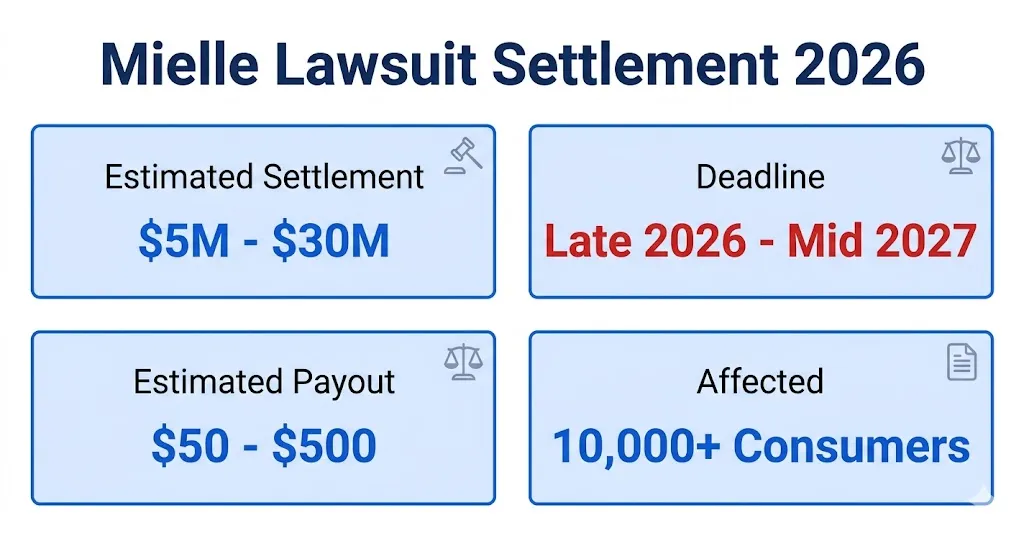
Legal analysts familiar with similar beauty product cases suggest a settlement could range from $5 million to $30 million depending on the number of verified claimants and the severity of documented injuries.
| Settlement Factor | Current Status |
|---|---|
| Settlement Offer | None yet |
| Mediation Scheduled | Not formally, expected mid-2026 |
| Estimated Range | $5M to $30M (analyst projection) |
| Distribution Method | TBD, likely claims-based |
Companies like P&G typically prefer to settle rather than go to trial. Trial creates bad publicity and unpredictable jury outcomes. A settlement lets them control the narrative and the financial exposure.
That said, nothing is guaranteed. Settlement timing depends on how discovery unfolds and whether any smoking-gun documents emerge from internal Mielle or P&G files.
Mielle Lawsuit Payout Estimates
The Mielle lawsuit payout for individual claimants is estimated between $50 and $500 for most class members, with higher payouts possible for those with documented medical treatment and severe injuries.
Payout amounts in class actions depend on several factors. Not everyone gets the same check. The system rewards people who can prove greater harm with better documentation.
Expected payout tiers look something like this:
| Claim Level | Estimated Payout | Requirements |
|---|---|---|
| Basic (purchased product) | $50 to $100 | Proof of purchase only |
| Moderate (experienced symptoms) | $100 to $300 | Proof of purchase plus self-reported symptoms |
| Severe (medical treatment needed) | $300 to $500+ | Medical records, receipts, dermatologist visits |
| Extreme (permanent damage) | $500 to $2,000+ | Ongoing treatment, documented permanent harm |
These estimates are based on comparable beauty product class action settlements. The actual amounts won’t be confirmed until a settlement is approved by the court.
Keep your receipts. That’s the simplest advice anyone can give you right now. Digital receipts from Target, Walmart, or Amazon work just as well as paper ones.
If you visited a doctor for scalp or hair issues after using Mielle products, those medical records become gold in terms of claim value.
Key Takeaway: Individual payouts could range from $50 for basic claims to over $2,000 for severe cases with medical documentation, but no official settlement amounts exist yet in 2026.
How Much Will the Mielle Lawsuit Pay
How much the Mielle lawsuit will pay depends on the total settlement fund, the number of approved claims, and the severity tier assigned to each claimant. Right now, exact payment figures are not available because the case hasn’t settled.
The math behind class action payouts is straightforward. Take the total settlement fund. Subtract attorney fees (usually 25% to 33%) and administrative costs. Divide the remainder among all approved claimants based on their tier.
Here’s a hypothetical breakdown:
| Scenario | Settlement Fund | After Attorney Fees | Number of Claimants | Average Payout |
|---|---|---|---|---|
| Conservative | $5 million | $3.35 million | 15,000 | ~$223 |
| Moderate | $15 million | $10 million | 30,000 | ~$333 |
| Aggressive | $30 million | $20 million | 50,000 | ~$400 |
These are projections, not promises. Actual numbers will vary based on court decisions and claim volume.
One factor working in plaintiffs’ favor is P&G’s deep pockets. This is a company with annual revenue over $80 billion. A $15 million to $30 million settlement would barely register on their balance sheet.
That financial reality makes a meaningful settlement more likely. P&G can afford to make this go away. The question is whether they’ll do it before or after more damaging evidence goes public.
Mielle Lawsuit Eligibility Requirements
Mielle lawsuit eligibility requires that you purchased a qualifying Mielle Organics product and experienced adverse effects such as hair loss, scalp damage, or allergic reactions. You don’t need to have filed a previous complaint to qualify.
The eligibility criteria are expected to include:
- Purchase verification: Receipt, bank statement, or online order confirmation showing you bought a Mielle product
- Product identification: The product must be one named in the lawsuit (primarily the Rosemary Mint Strengthening Oil)
- Adverse effect: You experienced hair loss, scalp irritation, burning, or other negative reactions
- Timeframe: Purchase and use occurred during the relevant period (approximately 2020 to 2025)
You do not need to have seen a doctor to be eligible for a basic claim. Medical documentation increases your payout but isn’t required to participate.
| Eligibility Factor | Required? |
|---|---|
| Proof of Purchase | Yes (receipt, bank record, or online order) |
| Medical Records | No, but increases payout amount |
| U.S. Residency | Yes |
| Used Product as Directed | Yes |
| Experienced Adverse Effects | Yes |
Eligibility extends to anyone in the United States who bought the qualifying products. Geographic restrictions within the U.S. are not expected.
Who Qualifies for the Mielle Lawsuit
Anyone who purchased Mielle Organics hair products and experienced hair loss or scalp damage likely qualifies for the Mielle lawsuit. The qualifying group is broad and includes consumers across all 50 states.
Specific groups most likely to qualify include:
- Regular users who applied the rosemary mint oil consistently
- First-time users who experienced immediate adverse reactions
- Parents who purchased the product for their children
- Salon professionals who used Mielle products on clients and received complaints
You qualify even if you only used the product once. A single application that caused a reaction is enough to establish harm. The key is connecting your experience to the product.
Some less obvious situations where you might still qualify:
- You received the product as a gift but have no receipt (the gifter’s receipt could work)
- You bought it from a smaller retailer without a loyalty program
- You experienced delayed reactions weeks after stopping use
If you’re unsure whether your symptoms are related, consider this. Did the hair loss or scalp problems start after you began using a Mielle product? Did the symptoms improve after you stopped using it? If yes to both, you likely qualify.
Key Takeaway: Eligibility for the Mielle lawsuit is broad, covering anyone in the U.S. who bought qualifying products and experienced adverse effects, with or without medical records, though documentation significantly increases potential payout amounts.
How to File a Mielle Lawsuit Claim
To file a Mielle lawsuit claim, you will need to submit a claim form through the official settlement website once it’s established, or contact a plaintiff attorney handling the case to join the class action now. No claim form is available yet because the case hasn’t settled.
Here’s what you can do right now to prepare:
Step 1: Gather your evidence.
Collect receipts, bank statements, or online order confirmations. Screenshot any digital purchase records.
Step 2: Document your injuries.
Take photos of any hair loss, scalp damage, or irritation. Keep a written log of when symptoms started and how they progressed.
Step 3: Get medical records.
If you visited a dermatologist or doctor for related symptoms, request copies of those records. Medical documentation significantly strengthens your claim.
Step 4: Contact a plaintiff attorney.
Multiple law firms are accepting new claimants. You can register your interest with a firm handling the case. There’s typically no upfront cost because these attorneys work on contingency.
Step 5: Wait for the claim form.
Once a settlement is reached, a formal claims process will open. You’ll fill out a form and submit your supporting documents.
| Filing Step | Action Required |
|---|---|
| Evidence Collection | Receipts, photos, symptom log |
| Medical Documentation | Doctor visit records if available |
| Attorney Contact | Register with a plaintiff firm |
| Claim Form Submission | Available after settlement approval |
| Estimated Timeline | Likely late 2026 or 2027 |
The most important thing right now is preserving your evidence. Don’t throw away product bottles. Don’t delete purchase emails. Everything matters.
Mielle Lawsuit Deadline You Need to Know
The Mielle lawsuit deadline for joining the class action has not been officially set as of early 2026. However, once a settlement is announced, a specific claims deadline will be established, typically giving consumers 60 to 120 days to file.
There are two types of deadlines to watch:
Statute of limitations varies by state but generally gives you 2 to 4 years from the date of injury to take legal action for product liability claims. If you first experienced harm in 2023, you may have until 2025 to 2027 depending on your state.
Claims filing deadline is different. This gets set by the court after a settlement is approved. It’s usually announced publicly through mail, email, and media notices.
| Deadline Type | Estimated Timeframe |
|---|---|
| Statute of Limitations | 2 to 4 years from injury (varies by state) |
| Class Action Opt-in | Before class certification is finalized |
| Settlement Claim Filing | 60 to 120 days after settlement approval |
| Expected Settlement Window | Late 2026 to mid 2027 |
Don’t wait until the last minute. Plaintiffs who register early with an attorney often receive better guidance and have more time to build strong claims.
State-specific deadlines matter too. States like California have a 2-year statute of limitations for personal injury. Texas gives you 2 years. New York allows 3 years. Check your state’s specific rules.
How P&G’s Ownership Affects the Mielle Lawsuit
P&G’s ownership of Mielle Organics significantly affects the lawsuit by adding a massive corporate defendant with deep financial resources and established legal infrastructure. Procter and Gamble completed its acquisition of Mielle in January 2023.
This matters for several reasons:
- Financial exposure: P&G is a Fortune 50 company with over $80 billion in annual revenue. They can afford a substantial settlement.
- Legal resources: P&G has one of the largest corporate legal teams in the world. They’ll fight hard but also know when to settle.
- Product oversight: As the parent company, P&G may bear responsibility for product safety decisions made after the acquisition.
- Reputation management: P&G protects brands like Pantene, Head and Shoulders, and Herbal Essences. Bad press from Mielle hurts the entire portfolio.
| P&G Factor | Impact on Lawsuit |
|---|---|
| Revenue | $80B+ makes large settlement affordable |
| Legal Team | Experienced but settlement-oriented history |
| Brand Portfolio Risk | Incentive to resolve quietly |
| Post-Acquisition Liability | Potential responsibility for formula decisions |
Here’s the analogy. Imagine buying a used car from a lot and finding out it had known engine problems. The original manufacturer has some blame. But the dealership that sold it to you knowing the risks has liability too.
P&G is that dealership. Whether they changed the formula or simply continued selling a problematic product, their ownership creates legal accountability.
Key Takeaway: P&G’s acquisition of Mielle adds financial weight to the lawsuit, making a meaningful settlement far more likely because the parent company has both the resources and the corporate incentive to resolve the case before it damages their broader brand reputation.
Mielle Product Liability and Legal Standards
Mielle product liability claims fall under strict liability and negligence theories, meaning plaintiffs must show the product was defective or that the company failed to exercise reasonable care in manufacturing, testing, or labeling.
Product liability law has three main categories:
- Design defect: The product formula itself is inherently dangerous
- Manufacturing defect: Something went wrong during production of specific batches
- Marketing defect (failure to warn): The label didn’t adequately disclose known risks
The Mielle lawsuit primarily targets design and marketing defects. Plaintiffs argue the formula was problematic and the labels failed to warn about potential hair loss and scalp damage.
In the United States, cosmetic products face less regulation than drugs. The FDA does not require pre-market approval for cosmetics. Companies self-certify safety. This regulatory gap is central to the lawsuit’s argument.
| Legal Standard | Application to Mielle Case |
|---|---|
| Strict Liability | Product was unreasonably dangerous |
| Negligence | Failed to test adequately before selling |
| Breach of Warranty | “Strengthening” claim was false |
| Consumer Fraud | Marketing misled buyers about safety |
| Failure to Warn | Labels lacked adequate risk disclosures |
Courts will examine whether a reasonable consumer would expect hair loss from a product marketed as “strengthening.” That gap between expectation and reality is where liability lives.
The relatively weak FDA oversight of cosmetics actually helps the plaintiffs. Companies can’t hide behind “FDA approved” because that approval never happened. They were responsible for their own safety testing, and plaintiffs say that testing was insufficient.
Frequently Asked Questions
Is there a class action lawsuit against Mielle Organics in 2026?
Yes, a class action lawsuit against Mielle Organics is active in 2026.
The case alleges that Mielle hair products, especially the Rosemary Mint Strengthening Oil, caused hair loss and scalp damage.
Class certification is pending as the case progresses through federal court.
How much money can I get from the Mielle lawsuit?
Most claimants can expect between $50 and $500 depending on their claim tier.
Basic claims with proof of purchase only may receive $50 to $100, while claims with medical documentation could receive $300 to $500 or more.
Payments will begin after a settlement is finalized and approved by the court.
What products are included in the Mielle lawsuit?
The primary product is the Mielle Rosemary Mint Strengthening Oil.
Other Mielle Organics hair care products may be included depending on individual claims and evidence of harm.
The full list of covered products will be confirmed when the settlement terms are published.
What is the deadline to file a Mielle lawsuit claim?
No official filing deadline has been set as of early 2026.
Once a settlement is reached, claimants will typically have 60 to 120 days to submit their forms.
The statute of limitations for product liability claims ranges from 2 to 4 years depending on your state.
Does Mielle’s sale to P&G affect the lawsuit?
Yes, P&G’s acquisition of Mielle in January 2023 significantly affects the case.
P&G’s financial resources make a substantial settlement more likely.
The parent company may face liability for product safety decisions made after acquiring the brand.
This case isn’t slowing down. If you used Mielle products and experienced hair loss or scalp damage, your window to act is still open.
Start collecting your evidence now. Receipts, photos, medical records. All of it matters when the claims process opens.
Stay informed. Check back for updates as the case moves toward what could be a significant settlement in late 2026 or 2027.