
Updated for 2025 to reflect the latest annulment laws and legal procedures across U.S. states.
Ending a marriage is never simple, but for some people, divorce isn’t the right path. If your marriage was never valid to begin with—because of fraud, coercion, or another legal reason—an annulment might be the right step. That’s where an experienced annulment lawyer comes in.
An annulment lawyer helps you navigate the process of declaring a marriage legally void. From preparing documents to representing you in court, they make sure your rights are protected and that every detail aligns with your state’s family law. If you’re considering this option, understanding what annulment really means and how it differs from divorce is the first step toward clarity and closure.

Role of an Annulment Lawyer
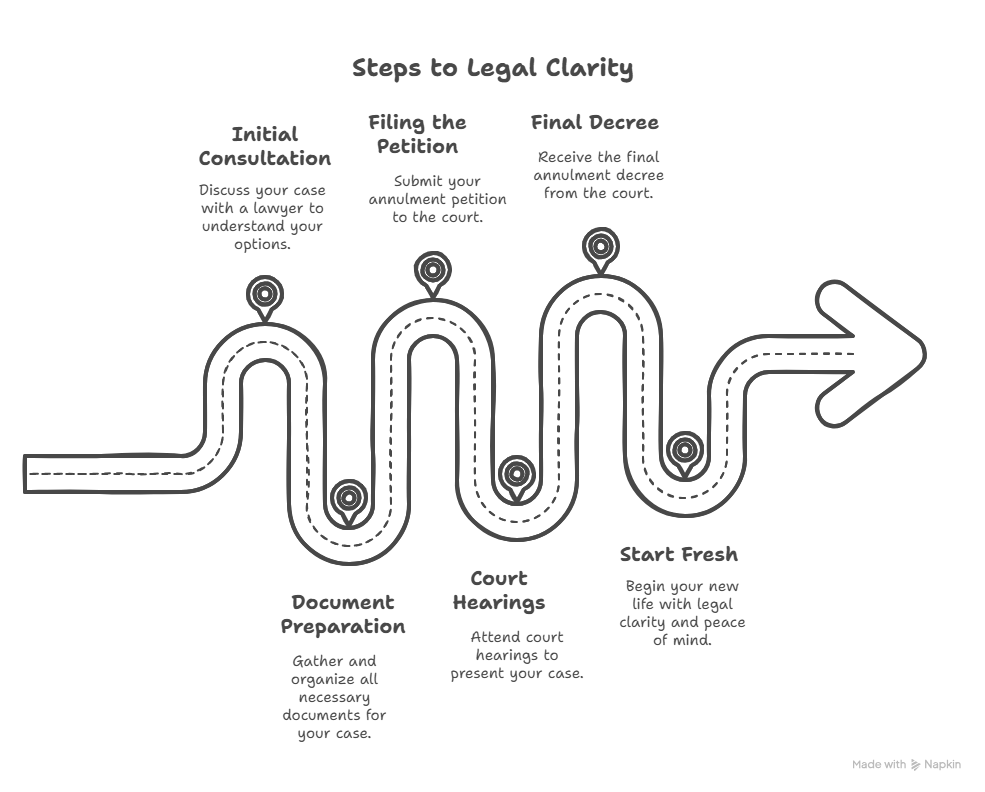
An annulment lawyer’s main role is to guide clients through one of the most sensitive areas of family law—proving that a marriage should never have been recognized in the first place. These attorneys handle everything from case evaluation and document preparation to courtroom representation.
A skilled lawyer doesn’t just interpret the law; they also help you manage the emotional and practical side of annulment. Whether you’re unsure about eligibility, need help filing a petition, or want to know what happens to property or custody rights after annulment, their legal advice ensures your next steps are sound and strategic.
What is an Annulment?
An annulment is a legal process that declares a marriage invalid from the very beginning—as if it never legally existed. Unlike a divorce, which ends a valid marriage, an annulment establishes that the marriage was never legally binding due to specific reasons recognized by law.
When a court grants an annulment, the marriage record may remain for documentation purposes, but in the eyes of the law, it’s erased. This distinction matters because annulment affects property rights, spousal support eligibility, and even how future relationships are recognized.
People often choose annulment when they believe the marriage was entered into under false pretenses, coercion, or other conditions that make it legally void. Understanding these grounds helps you decide whether annulment is the right legal path for you.
Difference Between Annulment and Divorce
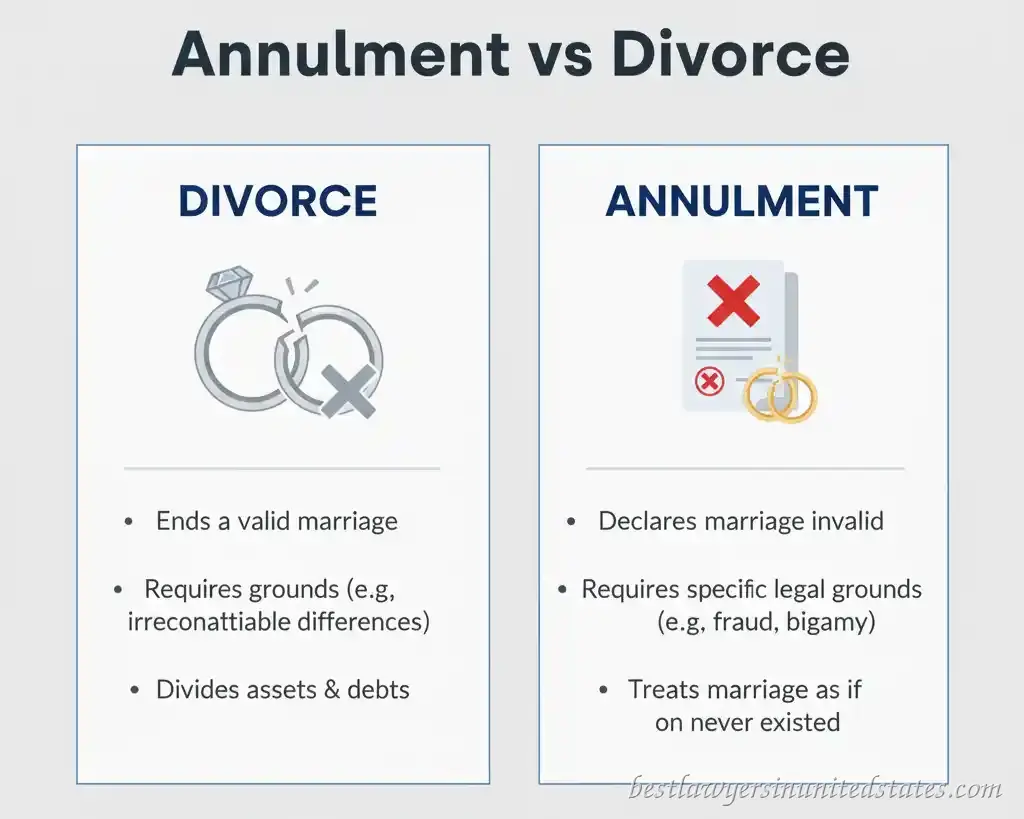
An annulment treats a marriage as invalid from the start. A divorce ends a valid marriage. Both happen in family court, but the legal outcomes and requirements are different. Use this quick comparison to see which path matches your situation.
| Aspect | Annulment | Divorce |
|---|---|---|
| Legal status after judgment | Marriage is void or voidable, treated as if it never existed | Marriage is dissolved, was valid until the divorce |
| Typical grounds | Fraud, coercion, bigamy, underage, incapacity, incest, sham marriage | Irreconcilable differences, fault or no-fault grounds depending on state |
| Time limits | Often short deadlines that start when you discover the issue | No strict discovery deadline in most states |
| Property division | Varies by state; putative spouse rules may apply | Standard equitable distribution or community property rules |
| Spousal support | Rare after final judgment, but temporary support may be possible | Possible during and after the case, varies by state |
| Children | Parental rights and child support still apply | Parental rights and child support apply |
| Records | Marriage record may remain, but the legal effect is void | Marriage remains part of legal history |
| Religious impact | Separate from any church process | Separate from any church process |
Note: Laws and deadlines vary by state. If you plan to file, speak with a family law attorney in your jurisdiction.
If you’re considering divorce instead, you can learn more about the cost of hiring a divorce lawyer and how fees vary by state.
When You Need an Annulment Lawyer
Consider hiring a lawyer if any of these apply:
- You believe the marriage was invalid because of fraud, coercion, incapacity, bigamy, or another legal ground.
- You need to file within a short deadline and want to avoid mistakes in the petition or service.
- There are issues involving property, debt, children, immigration status, or jurisdiction.
- The other party is likely to contest the case or dispute the facts.
A lawyer will review eligibility under your state’s law, gather and organize evidence, draft and file the petition, and represent you at hearings. If your case is uncontested, they can help you move efficiently. If it is contested, they will build the record the court needs to decide.
Common Grounds for Annulment
To qualify for an annulment, you must show that your marriage was never legally valid. The specific reasons vary by state, but most family courts recognize these as legitimate grounds:
1. Fraud or Misrepresentation
If one partner lied about a fundamental issue—such as already being married, concealing infertility, hiding intent to marry for immigration status, or misrepresenting financial or personal information—the marriage may be annulled. Courts look for deception that affected the other spouse’s decision to marry.
2. Underage Marriage
When either party was under the legal age to marry and did not have required consent from parents or the court, the marriage can be declared void. Some states allow annulment only if the underage party files before turning 18.
3. Mental Incapacity or Duress
A marriage entered under pressure, intoxication, or mental instability may not be legally valid. If a person lacked the mental capacity to understand the nature of marriage or was coerced, the court can annul it.
4. Bigamy or Incest
A marriage is automatically void if one spouse was already married or if the couple are close relatives as defined by law. These cases are usually straightforward and require documentation rather than a long trial.
5. Lack of Consent or Sham Marriage
If one party entered marriage for purposes other than a genuine marital relationship—such as gaining immigration benefits or financial advantage—it can be grounds for annulment once proven.
The cost of legal help can depend on your location and complexity of the case. Here’s a breakdown of family lawyer costs to help you plan.

Legal Process of Annulment
The annulment process can vary depending on your state, but it generally follows a few key legal steps. Having a clear picture of what to expect can save you time, stress, and unnecessary costs.
1. Filing the Petition
The process starts when your annulment lawyer files a petition with the local family court. This petition outlines the facts of your case, the legal grounds for annulment, and any supporting documents such as a marriage certificate or witness statements. Some states require you to file within a specific timeframe after discovering the reason for annulment.
2. Serving Your Spouse
After filing, your spouse must receive official notice of the petition. This step, known as “service of process,” ensures that both parties have a fair chance to respond. If your spouse agrees, the case can move quickly. If they contest it, the court may set hearings to review the evidence.
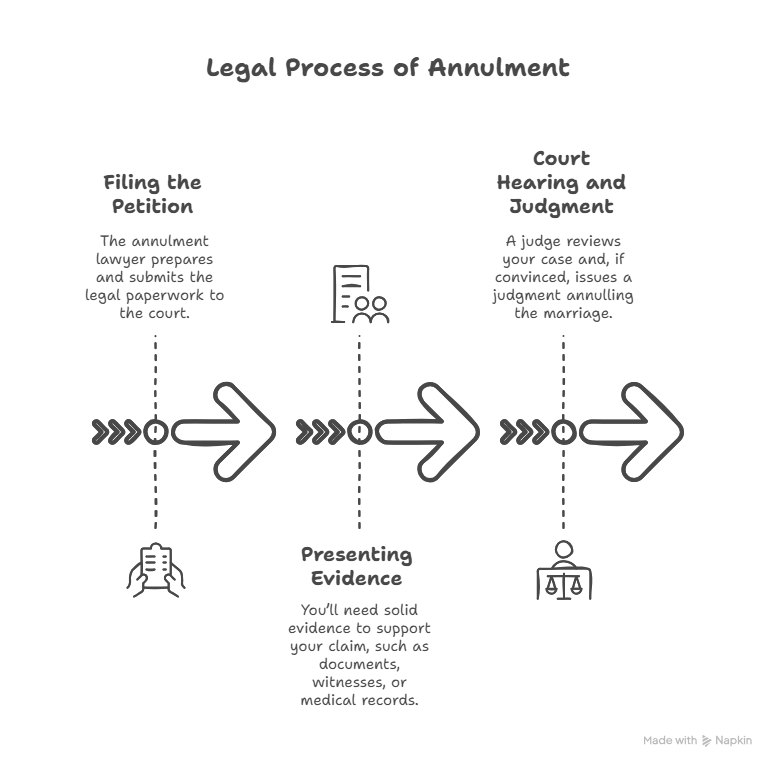
3. Presenting Evidence
The next step is to prove that the marriage was invalid from the start. Evidence can include text messages, medical or financial records, witness testimony, or other documentation supporting your claim. Your lawyer will organize and present this in a way that meets the court’s legal standards.
4. Court Hearing and Judgment
Once all evidence is reviewed, a judge decides whether to grant the annulment. If approved, you’ll receive a judgment of annulment, which officially voids the marriage. If denied, you may still have the option to pursue a divorce instead.
For more information, visit the official U.S. Courts guide on annulment and divorce to understand federal and state-level differences
How an Annulment Lawyer Can Help
Annulments can be complex, especially when there are disputes about property, children, or the validity of the marriage itself. An experienced annulment lawyer ensures that your case is presented correctly from the start and that your rights are fully protected.
1. Legal Guidance and Case Evaluation
A lawyer begins by reviewing your situation and advising whether you meet your state’s requirements for annulment. Some cases qualify easily (such as bigamy or fraud), while others require more evidence or may need to be handled as a divorce instead. Clear legal guidance early on prevents wasted time and court fees.
2. Protecting Your Rights and Interests
Even though annulment erases a marriage legally, there can still be questions about shared property, debts, or child custody. Your attorney makes sure these issues are handled fairly and that your interests are represented during hearings or negotiations.
3. Drafting and Submitting Documents
Legal paperwork is often the hardest part for most people. One incorrect statement or missing form can delay your case. A lawyer ensures that petitions, affidavits, and supporting evidence are accurate, complete, and filed on time.
You can also explore experienced family and divorce lawyers near you who handle annulments and related cases.
How Long Does the Annulment Process Take
The timeline for an annulment depends on where you live, how complex your case is, and whether your spouse agrees to the filing. In general, most annulments take a few weeks to several months to complete.
Uncontested cases—where both partners agree on the facts—can move quickly, sometimes in under two months. Contested cases that involve disagreements, missing documents, or evidence disputes can take much longer.
Courts also have their own schedules and backlogs. An annulment lawyer can help you estimate realistic timelines for filing, hearings, and final judgment based on your county or state’s court system.
Cost of Hiring an Annulment Lawyer
The cost of an annulment varies widely depending on the complexity of your case and local attorney rates. On average, annulment lawyers charge between $1,000 and $5,000, though simple, uncontested cases may cost less.
Some attorneys offer flat-fee packages for straightforward annulments, while others bill hourly, especially for cases that require court appearances or evidence collection. Before hiring a lawyer, ask for a clear estimate of all potential costs, including court filing fees and document expenses.
Investing in experienced legal help can save money in the long run by avoiding mistakes that might delay or derail your case.
What to Look for in an Annulment Lawyer
Choosing the right annulment lawyer can make the difference between a smooth case and months of frustration. The best attorney will have the right mix of legal skill, experience, and communication style. Here are a few key qualities to look for:
1. Experience in Family Law and Annulment Cases
Annulments require specific knowledge of family law and court procedures. Look for an attorney who has handled multiple annulment cases, not just general divorce or custody matters. Their familiarity with local courts and judges can make the process more efficient.
2. Positive Client Reviews and Proven Results
Check online reviews, testimonials, or bar association listings. A strong record of past annulment cases is a good indicator of reliability. Don’t hesitate to ask for examples of similar cases they’ve managed successfully.
3. Clear Communication and Transparency
Legal processes can be confusing, so you want a lawyer who explains each step in plain language. They should provide honest expectations about timelines, costs, and possible outcomes rather than making unrealistic promises.
4. Personalized Strategy
Every case is unique. A good lawyer will tailor their approach to your circumstances—especially if children, property, or cross-state issues are involved. Avoid one-size-fits-all legal services that treat annulment like a generic divorce.
Mistakes to Avoid During an Annulment Case
Even when you have valid grounds for annulment, small missteps can slow the process or cause your petition to be denied. Avoid these common mistakes to keep your case on track:
1. Providing Incomplete or Inaccurate Information
Every statement you submit to the court must be truthful and complete. Leaving out details—intentionally or by accident—can lead to delays or even dismissal. Your lawyer should review all paperwork before submission to make sure everything is accurate and consistent.
2. Missing Deadlines
Each state has strict time limits for filing an annulment after discovering the issue that makes the marriage invalid. Missing those deadlines can eliminate your right to file altogether. Always confirm the timeline with your attorney early in the process.
3. Handling the Case Without Legal Help
Self-representation might seem like a way to save money, but annulment law is technical and varies by jurisdiction. Missing one form or misunderstanding legal terms can cost you far more in time and stress. Hiring a qualified lawyer ensures your case meets all procedural rules.
4. Ignoring Emotional Well-being
Annulments can be emotionally draining, especially when they involve deception or family pressure. Seek support from friends, counselors, or support groups while your lawyer handles the legal side. Managing stress helps you stay clear-headed through the process.
If your situation involves safety concerns or emotional abuse, you may also need advice from a restraining order lawyer for extra protection.
Emotional and Psychological Impact
Annulments can feel just as heavy as divorces, even though the legal outcomes differ. The process often brings up feelings of confusion, guilt, or embarrassment—especially if the marriage ended quickly or under painful circumstances.
It’s important to remember that seeking an annulment doesn’t mean you failed; it means you’re taking steps to correct a situation that was never legally valid in the first place. Treat it as an opportunity for clarity and closure rather than a setback.

Many people find it helpful to speak with a therapist, counselor, or support group while going through an annulment. Emotional support can make the legal process easier to manage, and it helps you rebuild confidence as you move forward with your life.
Frequently Asked Questions About Annulment
1. Can I get an annulment after many years of marriage?
In most states, annulments must be requested shortly after discovering the reason for annulment. Long marriages are rarely annulled.
2. Do I need a lawyer for an uncontested annulment?
Even in uncontested cases, a lawyer can help you navigate the process and avoid legal mistakes.
3. Will I get spousal support after an annulment?
Usually no. Since annulment treats the marriage as void, there’s typically no alimony.
4. Can we remarry after an annulment?
Yes. Once annulled, it’s as though the marriage never happened legally, so you’re free to remarry.
5. Is religious annulment the same as legal annulment?
No. A religious annulment has no legal bearing unless accompanied by a court decree.
Is annulment easier than divorce?
Not always. Annulments can be faster if both parties agree and proof is clear, but they often require stronger evidence than divorce.
What is an annulment advocate?
An annulment advocate or lawyer represents clients who want to have their marriage declared legally invalid.
What is the meaning of annulment in law?
Annulment means a marriage is legally void — it’s treated as though it never existed.
Why would an annulment be denied?
Courts may deny annulment if there’s not enough proof of fraud, coercion, or legal invalidity.
Can I remarry after annulment?
Yes. Once the court grants annulment, you’re legally single and can remarry.
Does annulment erase the marriage completely?
Legally, yes. Annulment voids the marriage, though the record may remain for documentation.
How long does a legal annulment take?
It depends on the case and court schedule — usually from a few weeks to several months.
Why get an annulment after a divorce?
Some people seek annulment after divorce for religious, legal, or personal reasons to void the marriage entirely.
How to prove marriage annulment?
You must show legal grounds like fraud, coercion, bigamy, or incapacity through documents or witness evidence.
Conclusion
An annulment lawyer helps you do more than end a marriage — they help you set the record straight. Whether your marriage involved fraud, coercion, or another legal issue, an annulment restores your legal and personal clarity.
If you believe your marriage was never valid, speak with a qualified family law attorney in your state. They can review your situation, explain your rights, and guide you through the court process so you can move forward confidently and without confusion.
Remember, annulment isn’t just about closing a chapter — it’s about starting fresh with peace of mind and legal certainty.

Comments