
Getting hit by an 80,000-pound commercial truck changes everything in an instant. If you’re wondering how truck accident lawsuits work, you’re likely dealing with serious injuries, mounting medical bills, and insurance companies already calling you. Here’s what you need to know right now.
Truck accident lawsuits work by proving that a truck driver, trucking company, or other party caused your crash through negligence. You can settle with insurance (most cases do) or file a lawsuit if negotiations fail. Unlike car accidents, truck cases involve multiple potential defendants, federal regulations, and higher insurance coverage—which means larger potential settlements but more complex legal processes.
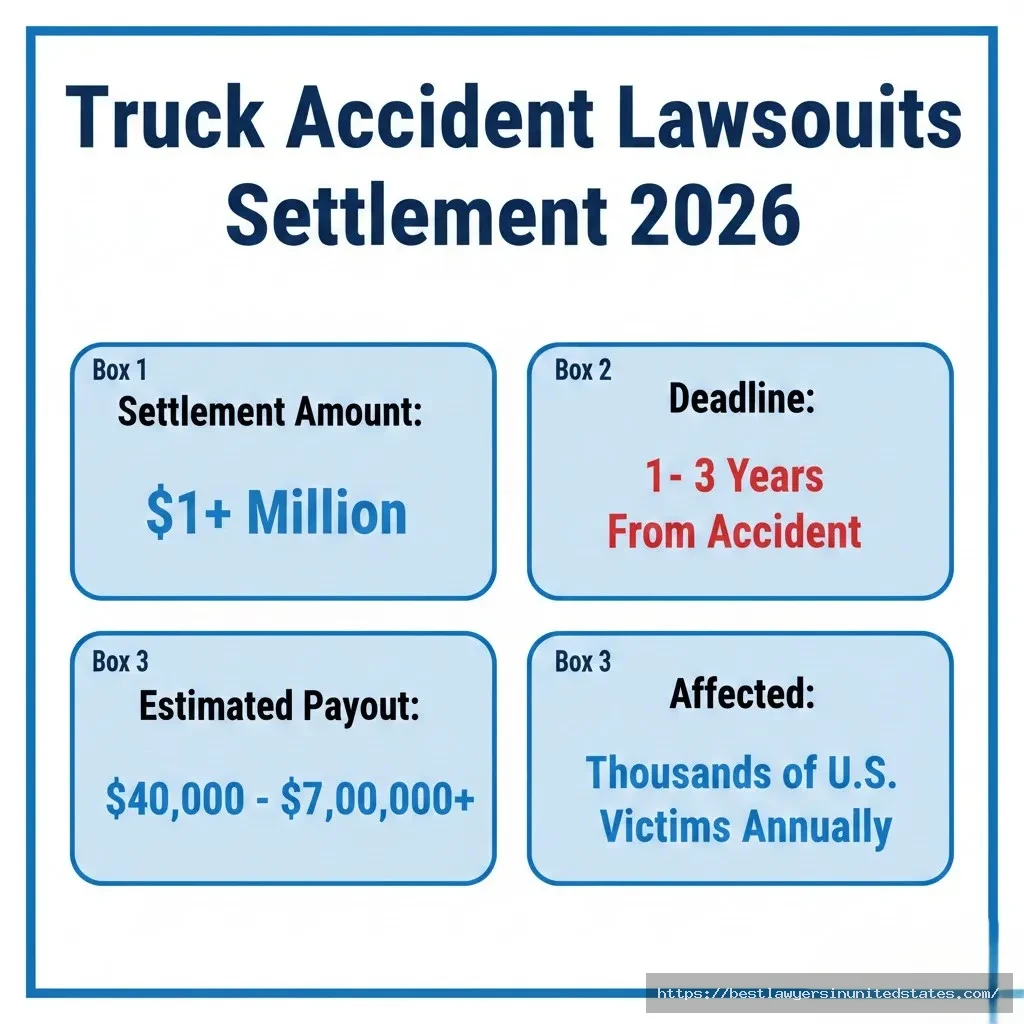
Quick Answer: Truck accident lawsuits typically involve gathering evidence from the crash, identifying all liable parties (driver, trucking company, maintenance provider, manufacturer), filing either an insurance claim or lawsuit, and negotiating for compensation. Most cases settle between $100,000-$500,000 for moderate injuries, while catastrophic injury cases can reach multi-million dollar settlements. You usually have 2-3 years from the accident date to file, depending on your state.
What Makes Truck Accident Lawsuits Different From Car Accidents?
Truck accident cases aren’t just bigger car accident cases—they’re completely different legal animals.
Why Truck Cases Are More Complex
Commercial trucks can weigh up to 80,000 pounds, which is 20-30 times heavier than a passenger car. When these massive vehicles collide with smaller cars, the results are usually catastrophic. But the size difference isn’t the only thing that makes these cases unique.
Truck accident lawsuits involve layers of complexity that regular car accidents don’t have. You’re dealing with federal regulations from the Federal Motor Carrier Safety Administration (FMCSA), multiple insurance policies, corporate defendants with deep pockets and aggressive legal teams, and specialized evidence like electronic logging devices and black box data. Prime Energy Drink Lawsuit
Multiple Parties Can Be Liable
In a typical car accident, you sue the driver who hit you. In a truck accident, you might be suing five or six different parties.
Potential defendants in truck accident lawsuits include:
The truck driver – for reckless driving, speeding, fatigue, or violating traffic laws
The trucking company – for negligent hiring, inadequate training, or pressuring drivers to violate safety rules
The truck owner – if different from the trucking company
Maintenance companies – for failing to properly maintain brakes, tires, or other critical systems
Cargo loaders – for improper loading that caused the truck to tip or lose control
Parts manufacturers – for defective brakes, tires, steering systems, or other equipment failures
Other drivers – if another vehicle contributed to the crash
This multi-party liability is actually good news for you. More defendants mean more insurance coverage available to compensate your injuries.
Federal Regulations Play a Huge Role
The FMCSA enforces strict rules on commercial trucking. These regulations cover everything from how long drivers can be behind the wheel to how trucks must be maintained. Violations of these federal rules can be powerful evidence in your case.
Table: Key Federal Trucking Regulations That Impact Lawsuits
| Regulation | Requirement | Why It Matters |
|---|---|---|
| Hours of Service (HOS) | Drivers can’t drive more than 11 hours in a 14-hour window, must rest 10 consecutive hours before next shift | Fatigue violations are in 13% of fatal truck crashes |
| Commercial Driver’s License (CDL) | Drivers must hold valid CDL with proper endorsements | Unlicensed or improperly licensed drivers show negligent hiring |
| Drug & Alcohol Testing | Mandatory testing after certain accidents and random testing | Failed tests prove impairment at crash time |
| Vehicle Maintenance | Regular inspections required, defects must be reported and fixed | Brake failures, tire blowouts often result from skipped maintenance |
| Electronic Logging Devices (ELD) | Required to track driving hours electronically | Harder to falsify driving logs, provides objective evidence |
| Minimum Insurance | Interstate carriers must carry $750,000-$1 million liability insurance | Higher policy limits mean more money available for serious injuries |
Higher Insurance Coverage Means Bigger Settlements
Federal law requires interstate trucking companies to carry minimum liability insurance of $750,000 to $1 million or more. Compare that to the typical car insurance minimum of $25,000-$50,000 in most states.
This doesn’t guarantee you’ll get more money, but it means there’s actually enough insurance coverage to fairly compensate catastrophic injuries like spinal cord damage, traumatic brain injuries, or permanent disability.
The Step-by-Step Truck Accident Lawsuit Process
Most people have never been in a lawsuit before. Here’s exactly how the process works from crash to compensation.

Step 1: Immediate Actions After the Crash (Day 1)
What you do in the hours after your truck accident can make or break your case later.
Call 911 immediately. You need police documentation and medical attention. Even if you feel okay, get checked out. Adrenaline masks injuries that show up days later.
Document everything you can. Take photos of vehicle damage, skid marks, road conditions, traffic signs, and the truck’s company name and DOT number. Get contact information from witnesses. If you’re too injured to do this, have someone else do it.
Don’t admit fault or apologize. Be polite to the truck driver, but don’t say “I’m sorry” or discuss whose fault it was. Anything you say can be used against you.
Don’t give recorded statements to insurance companies. The trucking company’s insurer will call you quickly. Politely decline to give a recorded statement until you’ve talked to a lawyer.
Step 2: Hire a Truck Accident Attorney (First 72 Hours)
Time is critical in truck accident cases. Evidence disappears fast.
Trucking companies have rapid-response teams that arrive at crash scenes within hours. Their job is to download the truck’s black box data, interview witnesses, and build a defense before you even get out of the hospital.
A truck accident attorney immediately sends a spoliation letter (also called a preservation letter) to the trucking company. This legal document demands they preserve all evidence including:
- Truck’s electronic control module (ECM) and event data recorder (EDR) – the “black box”
- Driver’s logs and electronic logging device (ELD) data
- Maintenance and inspection records
- Driver’s personnel file, including hiring records and past violations
- Dispatch communications and delivery schedules
- Video footage from dash cams or nearby surveillance cameras
This evidence can be legally overwritten or destroyed in as little as 30 days if you don’t act fast. Once it’s gone, you can’t get it back.
Step 3: Investigation and Evidence Gathering (Weeks 1-8)
Your attorney builds your case by collecting and analyzing evidence. This phase separates strong cases from weak ones.
Medical records and documentation. Every doctor visit, emergency room treatment, surgery, therapy session, prescription, and medical bill must be documented. These records prove both the severity of your injuries and the connection to the truck accident.
Crash reconstruction. Experienced truck accident attorneys work with accident reconstruction experts who analyze skid marks, vehicle damage, point of impact, and speed to recreate exactly what happened.
Black box data analysis. The truck’s EDR records critical data from the seconds before the crash: speed, brake application, throttle position, engine RPM, and more. Specialized technicians extract this data and experts interpret what it means.
Driver and company records. Your attorney obtains the driver’s complete history: past accidents, traffic violations, drug and alcohol test results, and employment records. The trucking company’s safety record, past violations, and insurance information are also investigated.
Federal database searches. Attorneys check the FMCSA’s Safety Measurement System database to find the trucking company’s safety rating, past violations, and inspection failures.
Witness statements. Witnesses are interviewed while memories are fresh. Statements taken months later are less reliable and less powerful in court.
Table: Critical Evidence in Truck Accident Lawsuits
| Evidence Type | What It Shows | How Long It’s Available | Why It Matters |
|---|---|---|---|
| Black Box (EDR/ECM) Data | Speed, braking, cruise control, engine data 5-10 seconds before crash | Can be overwritten in 30 days | Objective proof of what driver did before impact |
| Electronic Logging Device (ELD) | Driving hours, rest breaks, HOS compliance | Must be kept 6 months | Proves fatigue violations and falsified logs |
| Maintenance Records | Inspections, repairs, defects reported | Company policies vary | Shows skipped maintenance caused mechanical failure |
| Driver Qualification File | Licensing, training, drug tests, past violations | Varies by company | Proves negligent hiring of unqualified driver |
| Dispatch Records | Delivery schedules, deadlines, communications | Varies by company | Shows company pressured driver to speed or skip rest |
| Dash Cam Footage | Visual record of crash and driver behavior | Often deleted after 30-90 days | Most powerful evidence when available |
| Cell Phone Records | Calls, texts at time of crash | Must be subpoenaed quickly | Proves distracted driving |
| Drug/Alcohol Test Results | Post-crash testing required by FMCSA | Permanent record | Conclusive proof of impairment |
Step 4: Filing the Insurance Claim (Weeks 2-4)
Most truck accident cases start with an insurance claim, not a lawsuit.
Your attorney sends a demand letter to the trucking company’s insurance carrier. This formal document outlines:
- How the crash happened
- Who was at fault and why
- Your injuries and medical treatment
- Your financial losses (medical bills, lost wages, property damage)
- Your non-economic damages (pain, suffering, disability, lost quality of life)
- The amount of compensation you’re demanding
The insurance company has their own lawyers and adjusters who investigate the claim. They’ll review the evidence, talk to their insured (the trucking company and driver), and make a decision: accept liability and negotiate, deny the claim entirely, or offer a lowball settlement hoping you’ll take it.
Step 5: Settlement Negotiations (Months 2-6)
If the insurance company accepts liability, negotiations begin. This back-and-forth can take weeks or months.
The insurer’s first offer is almost always too low. They’re hoping you’ll panic about bills and accept less than your case is worth. Your attorney counters with evidence showing why you deserve more.
Smart settlement negotiations require patience and leverage. Your lawyer might:
- Provide additional medical documentation showing the full extent of injuries
- Hire economic experts to calculate lifetime lost earning capacity
- Obtain affidavits from medical experts on future treatment needs
- Threaten to file a lawsuit if the offer doesn’t improve
Many truck accident cases settle during this phase. If both sides can agree on a fair number, you sign a settlement agreement and release. The insurance company pays, you get your money (minus attorney fees), and the case is over.
If negotiations fail—or if the insurance company denies your claim—you proceed to filing a lawsuit.
Step 6: Filing the Lawsuit (Before Statute of Limitations Expires)
When insurance negotiations don’t work, you file a formal complaint in court.
⚠️ CRITICAL: Statute of Limitations Deadlines
You have a limited time to file your lawsuit. Miss this deadline and you lose your right to compensation forever—no exceptions, no matter how strong your case is.
Table: Statute of Limitations for Truck Accident Lawsuits by State
| State | Time Limit | Notes |
|---|---|---|
| Alabama | 2 years | |
| California | 2 years | Some exceptions for delayed injury discovery |
| Florida | 2 years | Changed from 4 years in 2023 |
| Georgia | 2 years | |
| Illinois | 2 years | |
| Louisiana | 1 year | Shortest deadline in the country |
| Michigan | 3 years | |
| New York | 3 years | |
| Ohio | 2 years | |
| Pennsylvania | 2 years | |
| Tennessee | 1 year | Also among the shortest deadlines |
| Texas | 2 years | |
| Virginia | 2 years | |
| Most States | 2-3 years | Check your specific state law |
Don’t wait until year two to hire a lawyer. Evidence disappears, witnesses forget details, and building a strong case takes time.
The complaint (the legal document starting your lawsuit) names all defendants, describes what happened, explains why they’re liable, and states what damages you’re seeking.
Step 7: Discovery Process (Months 6-18)
Once the lawsuit is filed, both sides enter “discovery”—the formal process of exchanging information and evidence.
Discovery includes:
Interrogatories – written questions each side must answer under oath
Document requests – demands for records, emails, policies, and other documents
Depositions – in-person questioning under oath, transcribed by a court reporter
Subpoenas – legal demands for documents or testimony from third parties
Expert witness reports – disclosures of what your experts will testify about
This is the most time-consuming part of litigation. Discovery can take 12-18 months in complex truck accident cases with multiple defendants.
Your attorney will likely depose the truck driver, the company’s safety director, maintenance personnel, and anyone else with relevant knowledge. The defense will depose you, your doctors, and your expert witnesses.
Step 8: Mediation or Settlement Conference (Month 12-20)
Before trial, most courts require or strongly encourage mediation—a formal settlement negotiation with a neutral third party.
A mediator (usually a retired judge or experienced attorney) meets with both sides, hears arguments, and tries to broker a settlement. Most truck accident lawsuits settle at mediation.
The mediator can’t force either side to settle, but they help identify weaknesses in each party’s case and push both sides toward a compromise.
Settlement offers at mediation are often significantly higher than pre-lawsuit offers. The trucking company knows going to trial is expensive and risky. Their lawyers have spent months in discovery and know the strength of your evidence.
Step 9: Trial (If No Settlement Reached)
If mediation fails, your case goes to trial. Only about 3-5% of truck accident lawsuits actually make it to trial—but being willing to go to trial is what gets you the best settlement.
At trial, a jury (or sometimes a judge) hears evidence from both sides and decides:
- Liability – Who caused the accident and how
- Damages – How much money you should receive
To win, you must prove four elements:
Duty of care – The defendant owed you a duty to drive safely
Breach – The defendant violated that duty through negligence
Causation – The defendant’s actions directly caused your injuries
Damages – You suffered actual harm (injuries, financial losses)
Trials can last anywhere from a few days to several weeks depending on complexity. Your attorney presents evidence, questions witnesses, and makes arguments. The defense does the same. Then the jury deliberates and returns a verdict.
If you win, the jury awards damages. If you lose, you get nothing (but this is rare in strong truck accident cases). Roblox Sexual Abuse Lawsuit
Step 10: Appeal or Payment (Months 24-30+)
After a trial verdict, the losing side has the right to appeal. Appeals can add another 12-24 months to the process, though most truck accident cases don’t go through appeals.
If there’s no appeal (or if an appeal fails), the defendant must pay the judgment. You finally receive your compensation, minus attorney fees and any outstanding medical liens.
Table: Truck Accident Lawsuit Timeline
| Phase | Timeframe | What Happens |
|---|---|---|
| Crash & Immediate Response | Day 1 | Accident occurs, police report filed, medical treatment begins |
| Hire Attorney | Days 1-7 | Attorney sends spoliation letter, begins investigation |
| Evidence Gathering | Weeks 1-8 | Black box downloaded, records obtained, experts consulted |
| Insurance Claim | Weeks 2-8 | Demand letter sent, initial negotiations |
| Pre-Lawsuit Settlement | Months 2-6 | Back-and-forth negotiations with insurer |
| File Lawsuit | Before deadline | Complaint filed in court if settlement fails |
| Discovery | Months 6-18 | Interrogatories, depositions, document exchange |
| Mediation | Months 12-20 | Formal settlement conference |
| Trial Preparation | Months 18-24 | Witness prep, exhibits, trial strategy |
| Trial | Days to weeks | Jury trial if no settlement |
| Appeal (if any) | Months 24-48 | Appellate review of verdict |
| Payment | Final stage | Compensation received |
| Total Time (Settlement) | 6-18 months | Most cases settle before lawsuit or during discovery |
| Total Time (Trial) | 18-30 months | Cases that go to verdict |
How Much Money Can You Get From a Truck Accident Lawsuit?
Let’s talk numbers. Settlement amounts vary wildly based on your specific injuries and circumstances, but here are realistic ranges based on recent data.
Average Truck Accident Settlement Amounts
National data from 2025-2026 shows truck accident settlements typically range from $100,000 to $500,000 for moderate injuries. But “average” doesn’t mean much in truck accident cases because every case is unique.
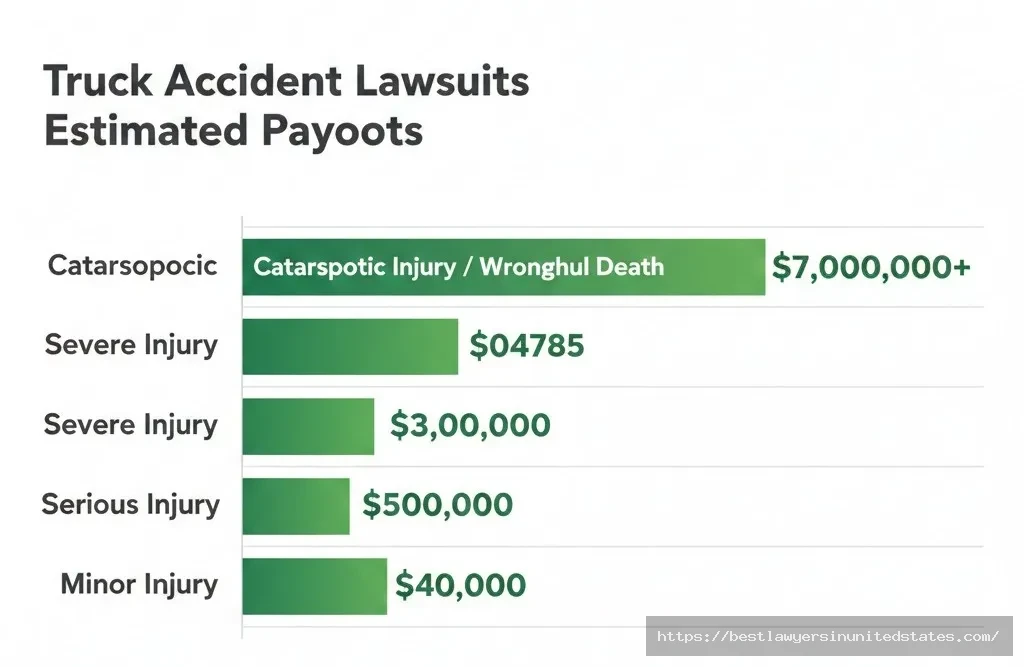
Quick Answer: Truck accident settlements range from $40,000 for minor injuries to multi-million dollar verdicts for catastrophic injuries or wrongful death. The national average is around $103,000-$150,000 for all cases combined, but serious injury cases typically settle for $200,000-$500,000, and catastrophic cases often exceed $1 million.
Table: Truck Accident Settlement Ranges by Injury Severity
| Injury Category | Typical Settlement Range | Examples of Injuries | Average Time to Settle |
|---|---|---|---|
| Minor Injuries | $40,000 – $75,000 | Whiplash, soft tissue injuries, minor fractures fully healed | 3-6 months |
| Moderate Injuries | $75,000 – $200,000 | Fractures requiring surgery, herniated discs, concussions | 6-12 months |
| Serious Injuries | $200,000 – $500,000 | Multiple fractures, surgeries, permanent scarring, partial disability | 12-18 months |
| Severe/Catastrophic | $500,000 – $3 million+ | Traumatic brain injury, spinal cord injury, amputations, permanent disability | 18-36 months |
| Wrongful Death | $1 million – $7 million+ | Fatal accidents | 18-36 months |
What Factors Determine Your Settlement Amount?
Severity and permanence of injuries. This is the single biggest factor. Catastrophic injuries that require lifetime medical care result in the highest settlements.
Brain injuries, spinal cord damage, amputations, severe burns, and injuries causing permanent disability typically result in settlements exceeding $1 million. These cases justify higher compensation because the victim will never fully recover.
Moderate injuries requiring surgery, extensive physical therapy, and several months off work settle in the $100,000-$500,000 range.
Minor injuries that heal completely within a few months might settle for $40,000-$100,000.
Medical expenses (past and future). Every medical bill counts—emergency room, ambulance, hospitalization, surgeries, prescriptions, physical therapy, medical equipment, home health care.
Future medical expenses matter even more. If your injury requires ongoing treatment, future surgeries, or lifetime care, medical experts calculate those costs and add them to your claim. A single spinal fusion surgery can cost $150,000. Lifetime care for a traumatic brain injury can exceed $3 million.
Lost wages and earning capacity. You’re entitled to compensation for every day of work you missed due to injuries.
But lost earning capacity is bigger. If your injuries prevent you from doing your job or force you into lower-paying work, you can recover the difference in earnings for the rest of your working life. Economic experts calculate this using your age, education, work history, and career trajectory.
A 35-year-old construction worker who becomes permanently disabled and can never work again might have $2-3 million in lost earning capacity over their lifetime.
Pain and suffering. Physical pain, emotional distress, loss of enjoyment of life, disability, and reduced quality of life are “non-economic damages.”
Many states allow juries to award 3-5 times your economic damages (medical bills + lost wages) for pain and suffering. Some states cap non-economic damages, while others have no limits.
Liability and fault. The clearer the truck driver’s or company’s fault, the higher your settlement. If the trucker was drunk, texting, or had multiple safety violations, that strengthens your case.
If you share some fault for the accident, your compensation is reduced in most states. For example, if the jury finds you 20% at fault, your $500,000 verdict becomes $400,000.
Available insurance coverage. You can’t get blood from a stone. If the trucking company only has $750,000 in insurance and your case is worth $2 million, you’ll likely settle for the policy limits unless you can sue other defendants or reach the company’s own assets.
Quality of your legal representation. Experienced truck accident attorneys get better results. They know how to find hidden insurance policies, identify all liable parties, present compelling evidence, and negotiate aggressively.
Examples of Real Truck Accident Settlements
$1.5 million settlement – Postal worker pinned between two trucks at loading dock, multiple surgeries, permanent injuries
$1 million settlement – High school runner struck by utility truck, multiple surgeries, can no longer run competitively
$390,000 settlement – Rear-end collision with tractor-trailer, leg fracture with surgery
$333,000 settlement – Rear-end collision, leg fracture, client had partial fault
$14 million wrongful death verdict – Fatal truck accident, family of victim
These are real cases, but remember: your case is unique. Past results don’t guarantee future outcomes.
What Evidence Do You Need to Win a Truck Accident Lawsuit?
Truck accident lawsuits are won or lost based on evidence. Here’s what matters most.
The Truck’s “Black Box” – Your Most Powerful Evidence
Nearly every modern commercial truck has an Electronic Control Module (ECM) and Event Data Recorder (EDR)—collectively called the “black box.”
This device records critical data in the seconds before a crash:
- Vehicle speed (often second-by-second)
- Brake application and pressure
- Throttle position
- Cruise control status
- Engine RPM
- Steering wheel angle
- Seatbelt usage
- Hard braking events
- Sudden decelerations
This data is objective and hard to dispute. If the black box shows the truck was going 75 mph in a 55 mph zone when the driver slammed on the brakes, that’s powerful evidence of speeding.
Critical timing issue: Black box data can be overwritten in as little as 30 days on a rolling loop. Once it’s gone, you can’t get it back. This is why your attorney must immediately send a spoliation letter demanding the trucking company preserve this evidence.
If a trucking company allows black box data to be destroyed after receiving a preservation letter, courts can impose “spoliation sanctions”—telling the jury to assume the destroyed evidence would have proven the truck driver was at fault. This is often case-ending for the defense.
Electronic Logging Devices (ELDs) and Hours of Service Violations
Federal law requires commercial trucks to use ELDs that electronically track driving hours. These devices make it much harder for drivers to falsify their logbooks.
ELD data shows whether the driver violated Hours of Service regulations. Remember, drivers can’t drive more than 11 hours in a 14-hour window and must rest for 10 consecutive hours before starting a new shift.
Driver fatigue is a factor in 13% of fatal truck crashes according to FMCSA data—and that’s probably underreported. Fatigue can be as impairing as driving with a .08% blood alcohol concentration.
If ELD data shows the driver was on hour 15 of a shift when they crashed, that’s strong evidence of both a regulatory violation and dangerous fatigue.
Maintenance and Inspection Records
Federal regulations require trucking companies to regularly inspect and maintain their vehicles. Brakes, tires, lights, steering, coupling devices—everything must be in working order.
Maintenance records can show:
- Skipped inspections
- Known defects that weren’t repaired
- Worn brakes or bald tires
- Patterns of deferred maintenance to save money
If your crash was caused by brake failure and maintenance records show the company knew about brake problems for months but never fixed them, you have clear evidence of negligence.
Driver Qualification Files
Trucking companies must maintain a qualification file for every driver containing:
- Commercial driver’s license (CDL)
- Driving record from all states
- Employment history
- Medical examinations
- Drug and alcohol test results
- Training records
These files can reveal a driver should never have been hired. Past DUIs, multiple accidents, failed drug tests, or lack of proper training all support a negligent hiring claim against the trucking company.
Post-Accident Drug and Alcohol Testing
Federal law requires immediate drug and alcohol testing of truck drivers after certain types of accidents, especially those involving serious injury or death.
A failed drug test is conclusive proof of impairment. Even a delayed test or a missing test can be evidence—courts ask why the company didn’t test as required.
Dash Cam and Surveillance Footage
Many trucks have forward-facing dash cameras. Some have cameras facing the driver. Nearby businesses, traffic cameras, and other vehicles may also have footage.
Video is the most powerful evidence when available. It shows exactly what happened with no dispute about facts.
The problem? This footage is often deleted after 30-90 days unless preserved. Your attorney must act fast to identify and preserve all video evidence.
Witness Statements
People who saw the crash can provide crucial testimony. Witnesses might have seen:
- The truck weaving or speeding before the crash
- The truck driver on their phone
- The driver appearing to fall asleep
- Traffic signals and right of way
- How the collision happened
Witness memories fade fast. Statements collected within days of the crash are far more detailed and credible than those collected months later.
Police Reports and Crash Reconstruction
The police report documents the scene, includes the officer’s assessment of fault, and often contains driver statements and witness information.
For complex crashes, accident reconstruction experts analyze:
- Skid marks and tire marks
- Vehicle damage and crush patterns
- Point of impact
- Speed calculations based on physics
- Road conditions and sight lines
Reconstruction experts create diagrams, animations, and reports showing exactly how the crash occurred—and who caused it.
Common Causes of Truck Accidents That Lead to Lawsuits
Understanding what causes truck accidents helps you identify who’s liable in your case.
Driver Fatigue and Hours of Service Violations
Driver fatigue causes more truck accidents than most people realize. The FMCSA reports fatigue is a factor in 13% of fatal truck crashes, but this is likely underreported because fatigue is hard to detect after a crash unless there’s clear evidence like HOS violations.
Research shows driving over 8 hours increases crash risk by 1.8 times compared to driving 2 hours or less. Logbook violations triple crash risk.
Fatigue causes:
- Slower reaction times
- Impaired judgment
- Microsleeps (brief moments of unconsciousness lasting seconds)
- Reduced focus and awareness
- Lane drifting and weaving
Trucking companies sometimes pressure drivers to violate HOS rules to meet unrealistic delivery deadlines. This is negligence that makes the company directly liable.
Distracted Driving
Truck drivers face the same distractions as other drivers—cell phones, eating, adjusting GPS, or dealing with dispatch communications—but the consequences are far more severe at 70 mph in an 80,000-pound vehicle.
Cell phone records can prove a driver was texting or calling at the moment of impact.
Speeding and Reckless Driving
Speed limits exist for a reason. A fully loaded semi-truck needs much more stopping distance than a car. At highway speeds, a truck can take two football fields to stop.
Speeding violations show up in black box data and police reports. Truckers who speed to make delivery deadlines put everyone at risk.
Impaired Driving (Drugs or Alcohol)
Commercial drivers are held to a higher standard—their blood alcohol limit is .04%, half the limit for regular drivers.
Some truck drivers use drugs to stay awake for long hours. Others drink during off hours but still have alcohol in their system. Federal drug and alcohol testing is supposed to catch this, but not all companies enforce testing properly.
Inadequate Training
The trucking industry faces a driver shortage. Some companies hire drivers who aren’t properly trained or experienced enough to safely operate commercial vehicles.
Inadequate training leads to crashes from improper braking, failure to check blind spots, unsafe lane changes, improper backing, or inability to handle adverse conditions.
Improper Maintenance and Equipment Failure
Brake failures, tire blowouts, steering malfunctions, and other mechanical failures often result from deferred maintenance.
Trucking companies cut corners to save money. They skip inspections, delay repairs, or ignore known defects. When these failures cause crashes, the company is liable.
Improper Loading and Cargo Issues
Overloaded trucks are harder to stop and control. Improperly secured cargo can shift, causing the truck to tip or jackknife.
Cargo loaders and shipping companies can be liable if improper loading caused your crash.
Blind Spots and Unsafe Lane Changes
Trucks have massive blind spots on both sides, directly behind, and directly in front. Drivers who don’t properly check mirrors before changing lanes can crush smaller vehicles.
Driving Under Dangerous Conditions
Professional truck drivers should know when conditions are too dangerous to drive. Driving through severe storms, heavy fog, icy roads, or other hazardous conditions when safer drivers would pull over is negligence.
Table: Common Truck Accident Causes and Liable Parties
| Cause | Primary Evidence | Who’s Liable | Regulatory Violation? |
|---|---|---|---|
| Driver Fatigue/HOS Violation | ELD data, driver logs, black box | Driver, Trucking Company | Yes – FMCSA HOS rules |
| Distracted Driving | Cell phone records, witness statements, dash cam | Driver, Trucking Company (if policy violations) | Varies by state |
| Speeding | Black box data, police report, witness statements | Driver, Trucking Company | Yes – Speed limits |
| Drunk/Drugged Driving | Drug/alcohol test results, police report | Driver, Trucking Company (if negligent hiring/supervision) | Yes – FMCSA testing rules |
| Brake Failure | Maintenance records, vehicle inspection, expert analysis | Trucking Company, Maintenance Provider, Parts Manufacturer | Yes – FMCSA maintenance requirements |
| Inadequate Training | Driver qualification file, company training records | Trucking Company | Yes – FMCSA training requirements |
| Improper Loading | Loading documents, cargo manifests, truck inspection | Cargo Loader, Shipping Company | Yes – FMCSA cargo securement rules |
| Equipment Failure | Maintenance records, inspection reports, expert analysis | Trucking Company, Parts Manufacturer | Yes – FMCSA vehicle standards |
Do You Need a Lawyer for a Truck Accident Lawsuit?
The short answer: yes, absolutely.
Why Truck Accident Cases Require Specialized Attorneys
Truck accident lawsuits are not like car accident cases. They’re more complex, involve federal regulations, require specialized experts, and pit you against corporate defendants with unlimited legal resources.
General personal injury attorneys may not have the specific experience needed to:
- Navigate FMCSA regulations
- Properly preserve and analyze black box data
- Identify all liable parties and insurance coverage
- Handle cases against large trucking companies
- Work with trucking industry experts and accident reconstructionists
Trucking companies have lawyers on retainer who specialize in defending these cases. You need an attorney who specializes in prosecuting them. Hawthorne Residential Partners Lawsuit
What a Truck Accident Lawyer Does for You
Immediately preserves critical evidence before it’s destroyed or lost
Investigates the crash thoroughly, often more thoroughly than police
Identifies all liable parties so you don’t miss potential defendants with insurance coverage
Calculates the full value of your claim including future medical care and lost earning capacity
Handles all communication with insurance companies so you don’t get tricked into harming your case
Negotiates aggressively for maximum settlement
Takes the case to trial if necessary and has the resources to win
Advances all costs so you don’t pay anything upfront
Works on contingency so you only pay if you win
How Much Does a Truck Accident Lawyer Cost?
Most truck accident attorneys work on a contingency fee basis. You pay nothing upfront. The attorney only gets paid if you win, taking an agreed-upon percentage of your settlement or verdict.
Typical contingency fees for truck accident cases range from 33% to 40% depending on:
- Complexity of the case
- Whether it settles or goes to trial
- The attorney’s experience and track record
- Local market standards
For example, on a $300,000 settlement with a 33% fee, your attorney gets $100,000 and you get $200,000 (minus any medical liens or costs).
Is it worth giving up that percentage? Absolutely. Studies show people with attorneys recover 3-4 times more compensation on average than people who represent themselves—even after attorney fees.
When Should You Hire a Truck Accident Attorney?
Immediately. Within the first 72 hours if possible.
Why so fast?
- Black box data can be overwritten in 30 days
- Trucking companies dispatch investigation teams within hours
- Evidence disappears quickly
- Statute of limitations clock is ticking
- The sooner your attorney starts investigating, the stronger your case
Most truck accident attorneys offer free consultations. You have nothing to lose by calling and everything to lose by waiting.
What Compensation Can You Recover in a Truck Accident Lawsuit?
Truck accident victims can seek both economic and non-economic damages.
Economic Damages (Financial Losses)
These are your measurable financial losses with receipts and documentation.
Medical expenses – Emergency room, ambulance, hospitalization, surgeries, doctor visits, prescriptions, physical therapy, medical equipment, home health care, future medical treatment
Lost wages – Every day of work you missed due to injuries, documented with pay stubs and employer verification
Lost earning capacity – Future income you’ll lose if you can’t return to your job or must take lower-paying work, calculated by economic experts
Property damage – Vehicle repair or replacement, damaged personal property
Out-of-pocket expenses – Transportation to medical appointments, household help, modifications to your home for disability
Non-Economic Damages (Quality of Life Losses)
These are real losses that don’t have dollar values on receipts.
Pain and suffering – Physical pain from injuries and medical treatment
Emotional distress – Anxiety, depression, PTSD, fear, mental anguish
Loss of enjoyment of life – Inability to participate in hobbies, sports, activities you enjoyed before
Disability and disfigurement – Permanent physical limitations, scarring, amputations
Loss of consortium – Impact on your relationship with your spouse
Reduced quality of life – Overall diminishment in your ability to live normally
Many states allow juries to award several times your economic damages for non-economic damages. Some states cap these awards, while others have no limits.
Punitive Damages (Punishment)
In cases involving particularly reckless or intentional conduct, some states allow punitive damages designed to punish the defendant and deter future misconduct.
Examples that might justify punitive damages:
- Company knowingly hired a driver with multiple DUIs
- Company routinely pressured drivers to falsify logs and violate HOS rules
- Company ignored repeated safety violations
- Driver was extremely intoxicated or on drugs
Punitive damages can be substantial—sometimes exceeding compensatory damages. However, they’re only awarded in a small percentage of cases.
Wrongful Death Damages
If a truck accident kills your loved one, surviving family members can file a wrongful death lawsuit recovering:
Medical expenses before death
Funeral and burial costs
Lost financial support the deceased would have provided
Loss of services the deceased provided to the family
Loss of companionship, guidance, and support
Pain and suffering the deceased experienced before death (in some states)
Wrongful death settlements typically range from $1 million to $7 million depending on the deceased’s age, earning capacity, and family circumstances.
Table: Types of Damages in Truck Accident Lawsuits
| Damage Category | Examples | How It’s Calculated | Typical Amount |
|---|---|---|---|
| Past Medical Expenses | ER, surgery, hospital, therapy | Actual bills and receipts | $50,000 – $500,000+ |
| Future Medical Expenses | Ongoing treatment, future surgeries, lifetime care | Medical expert life care plans | $100,000 – $3 million+ |
| Past Lost Wages | Time off work during recovery | Pay stubs, employer records | $10,000 – $100,000+ |
| Future Lost Earning Capacity | Inability to work or reduced earnings | Economic expert analysis | $500,000 – $3 million+ |
| Property Damage | Vehicle repair/replacement | Repair estimates, KBB value | $5,000 – $75,000 |
| Pain & Suffering | Physical pain, emotional distress | Multiplier of economic damages (varies by state) | $50,000 – $1 million+ |
| Loss of Enjoyment | Can’t participate in activities | Jury discretion based on evidence | $25,000 – $500,000+ |
| Wrongful Death | All of above plus loss of companionship | Varies by state law | $1 million – $7 million+ |
Frequently Asked Questions About Truck Accident Lawsuits
How long does a truck accident lawsuit take?
Quick Answer: Most truck accident lawsuits settle within 6-18 months. Cases that go to trial can take 18-30 months or longer.
The timeline depends on injury severity, case complexity, number of defendants, and whether you settle or go to trial. Simple cases with clear liability and moderate injuries often settle within 6-9 months. Complex cases with catastrophic injuries, multiple defendants, and disputed liability can take 2-3 years.
How much is my truck accident case worth?
Quick Answer: Your case value depends on your specific injuries, lost wages, medical expenses, and other factors unique to your situation. Settlement amounts range from $40,000 for minor injuries to multi-million dollar verdicts for catastrophic injuries.
An experienced truck accident attorney can give you a realistic estimate after reviewing your medical records, investigating the crash, and understanding the full extent of your injuries. Never trust an attorney who promises a specific settlement amount without thoroughly investigating your case.
Can I still sue if I was partially at fault for the truck accident?
Quick Answer: In most states, yes. Your compensation will be reduced by your percentage of fault, but you can still recover damages as long as you’re not mostly at fault.
For example, if a jury awards you $500,000 but finds you 20% at fault, you receive $400,000. Some states (Alabama, Maryland, North Carolina, Virginia) follow “contributory negligence” rules where any fault on your part bars recovery entirely. Most states use “comparative negligence.”
What if the truck driver doesn’t have insurance?
Quick Answer: Federal law requires interstate trucking companies to carry $750,000 to $1 million in liability insurance. If that’s not enough, you may be able to sue the trucking company directly for its own assets, pursue other liable parties, or use your own underinsured motorist coverage.
Large trucking companies often have umbrella policies or excess coverage beyond minimum requirements. An experienced attorney knows how to find all available insurance coverage.
How do I prove the truck driver was at fault?
Quick Answer: Evidence proves fault. This includes police reports, witness statements, black box data, photos of the scene, truck maintenance records, driver logs, and expert testimony from accident reconstruction specialists.
Your attorney investigates the crash, obtains evidence, and builds a case showing the truck driver’s or company’s negligence caused your injuries.
What if the trucking company destroyed evidence?
Quick Answer: If a trucking company destroys evidence after receiving a spoliation letter (legal notice to preserve evidence), courts can impose sanctions—including instructing the jury to assume the destroyed evidence proved the company was at fault.
This is why immediate attorney involvement is critical. Your attorney sends a preservation letter within days of the crash, creating a legal duty to preserve evidence.
Do most truck accident cases go to trial?
Quick Answer: No. About 95% of truck accident cases settle before trial. However, being willing and prepared to go to trial is what gets you the best settlement offer.
Trucking companies know trials are expensive and risky. If your attorney has a reputation for taking cases to trial and winning, insurers offer higher settlements to avoid that risk.
How long do I have to file a truck accident lawsuit?
Quick Answer: Most states give you 2-3 years from the accident date to file a lawsuit. Louisiana and Tennessee have 1-year deadlines. Check your specific state’s statute of limitations and don’t wait until the deadline approaches.
Evidence disappears, witnesses forget, and building a strong case takes time. Hire an attorney within days or weeks of your crash, not months or years later.
Can I sue if the truck accident happened in a different state?
Quick Answer: Yes. You can usually sue in either the state where the accident occurred or the state where the trucking company is based. Your attorney will determine the best jurisdiction for your case.
Interstate trucking accidents involve complex jurisdictional questions. Federal regulations apply nationwide, but state laws on damages, statutes of limitations, and liability vary.
What if I already settled with the insurance company?
Quick Answer: If you signed a settlement agreement and release, you probably can’t reopen your case. This is why you should never settle without consulting an attorney first.
Insurance companies push early settlements before victims know the full extent of their injuries. Once you sign a release, you give up your right to sue for more money—even if your injuries turn out to be worse than you thought.
What happens if the trucking company files for bankruptcy?
Quick Answer: Insurance policies usually remain available even if the trucking company declares bankruptcy. Your attorney can file claims directly against the insurance companies and may pursue other liable parties.
Bankruptcies complicate matters but don’t necessarily prevent recovery. Experienced attorneys know how to navigate bankruptcy proceedings and protect your interests.
Can I sue if a loved one died in a truck accident?
Quick Answer: Yes. Surviving family members (spouse, children, parents) can file a wrongful death lawsuit to recover compensation for their loss. Wrongful death settlements typically range from $1 million to $7 million depending on circumstances.
Wrongful death cases have their own statute of limitations (often 2 years) and specific rules about who can file and what damages are recoverable.
Do I pay taxes on my truck accident settlement?
Quick Answer: Compensation for physical injuries is generally not taxable under federal law. However, portions of your settlement for lost wages or punitive damages may be taxable. Consult a tax professional about your specific situation.
The IRS doesn’t tax money you receive to compensate for physical injuries or physical sickness. But different rules apply to different types of damages.
What if I don’t have health insurance to pay for treatment?
Quick Answer: Many truck accident attorneys work with doctors and medical providers who treat accident victims on a lien basis—meaning they don’t get paid until your case settles. Your attorney can help you find appropriate medical care without upfront costs.
Don’t let lack of insurance prevent you from getting treatment. Gaps in medical treatment hurt your case and your health.
Can the trucking company retaliate against me for filing a lawsuit?
Quick Answer: No. It’s illegal for a trucking company or its employees to harass, threaten, or retaliate against you for filing a legitimate lawsuit. If this happens, report it to your attorney and potentially law enforcement.
You have a legal right to pursue compensation for your injuries. No one can punish you for exercising that right.
Final Thoughts: Protecting Your Rights After a Truck Accident
Truck accident lawsuits are complex, time-sensitive, and high-stakes. The trucking industry has powerful corporate defendants with experienced lawyers whose job is to minimize what you receive.
You need an equally experienced attorney fighting for you.
Remember these key takeaways:
Act fast. Evidence disappears in 30 days. Hire an attorney immediately.
Don’t talk to insurance companies without a lawyer. Anything you say can hurt your case.
Get medical treatment and follow your doctor’s orders. Gaps in treatment hurt your claim.
Document everything. Photos, medical records, bills, lost work days—keep it all.
Know your deadline. You have 1-3 years depending on your state. Don’t wait.
Understand your case value. Serious injuries deserve serious compensation. Don’t settle cheap.
Get specialized help. Truck accident cases require attorneys with specific experience in this area.
If you’ve been injured in a truck accident, you deserve justice and fair compensation. Don’t let trucking companies and their insurers take advantage of you during your most vulnerable time.
For legal assistance with your truck accident case, contact experienced injury attorneys who can evaluate your situation and fight for your rights. Many firms offer free consultations with no obligation.
Remember: This article provides general information about truck accident lawsuits but is not legal advice. Every case is unique. Consult with a qualified attorney in your state about your specific situation.

Comments