
⚡ Last Updated: November 2025 | Applies to: IPC (pre-July 2023 cases) & BNS 318 (post-July 2023 cases)
If you’ve heard the term “Section 420” in India, you likely know it’s associated with cheating or fraud. But what does the law actually say? How serious is it? Can you get bail? And what’s happening now that the Bharatiya Nyaya Sanhita (BNS) has replaced the old Indian Penal Code?
This guide walks you through everything you need to know about Section 420 IPC — from its legal definition to real-world application, sentencing guidelines, and your rights if you’re accused or seeking justice against someone who’s defrauded you.

What is Section 420 of the IPC? (Definition & Scope)
Legal Definition
Section 420 of the Indian Penal Code defines a specific offense: cheating and dishonestly inducing delivery of property.
In plain language, this means someone uses deception or dishonest means to trick another person into handing over money, goods, or other property that they wouldn’t have given up if they’d known the truth.
The law specifically states: “Whoever cheats and by means of the cheating induces the person deceived to deliver any property to any person, or to make, alter or destroy the whole or any part of a valuable security, or anything which is signed or sealed and which is or purports to be or is intended to be a valuable security, shall be punished with imprisonment of either description for a term which may extend to seven years, and shall also be liable to fine.”
Three critical elements make this different from simple fraud or breach of contract:
- Dishonest deception — the accused must have deliberately misled someone
- Inducement — this deception directly caused the person to part with property
- Actual delivery — property must have been handed over as a result
Essential Ingredients of Section 420
To prove Section 420, the prosecution must establish all of these elements:
- Dishonesty: The accused acted with intent to defraud. They knew they were lying and acted anyway.
- Deception or fraudulent inducement: False statements, forged documents, impersonation, or misrepresentation were used.
- Causation: The victim relied on the deception and wouldn’t have acted otherwise.
- Transfer of property: The victim actually delivered money, goods, documents, or other valuables to the accused or a third party.
- Mens Rea (Guilty Mind): Criminal intent was present — not just negligence or mistake.
Without all five elements, Section 420 doesn’t apply. This is why contract disputes or simple misunderstandings usually don’t constitute cheating under this section.
Real-World Examples
Example 1: Online Scam Rahul poses as a laptop seller on a marketplace, sends fake shipping confirmation, and collects payment from three different buyers. The buyers never receive laptops. This is Section 420 because Rahul deliberately deceived them about a product that didn’t exist, causing them to send money.
Example 2: Matrimonial Fraud Priya claims to be a widow with no debts and marries Amit after collecting ₹5 lakhs as “family expenses.” Six months later, Amit discovers Priya’s husband is alive and money-lenders are chasing her for outstanding debts. This is potentially Section 420 because Priya dishonestly induced Amit to part with his money.
Example 3: Property Scam A property dealer shows a flat to a buyer, claims it has clear title, collects payment, and provides fake registration papers. Later, the buyer discovers the flat was mortgaged to a bank. Section 420 applies because the dealer knowingly deceived the buyer about property ownership.
Example 4: NOT Section 420 (Contract Dispute) A contractor agrees to build a house for ₹20 lakhs but uses substandard materials and delays completion. The buyer sues for poor quality. This is likely a contract breach, not cheating, because the contractor’s intent was to complete the work, even if poorly done. There was no deliberate deception at the outset.
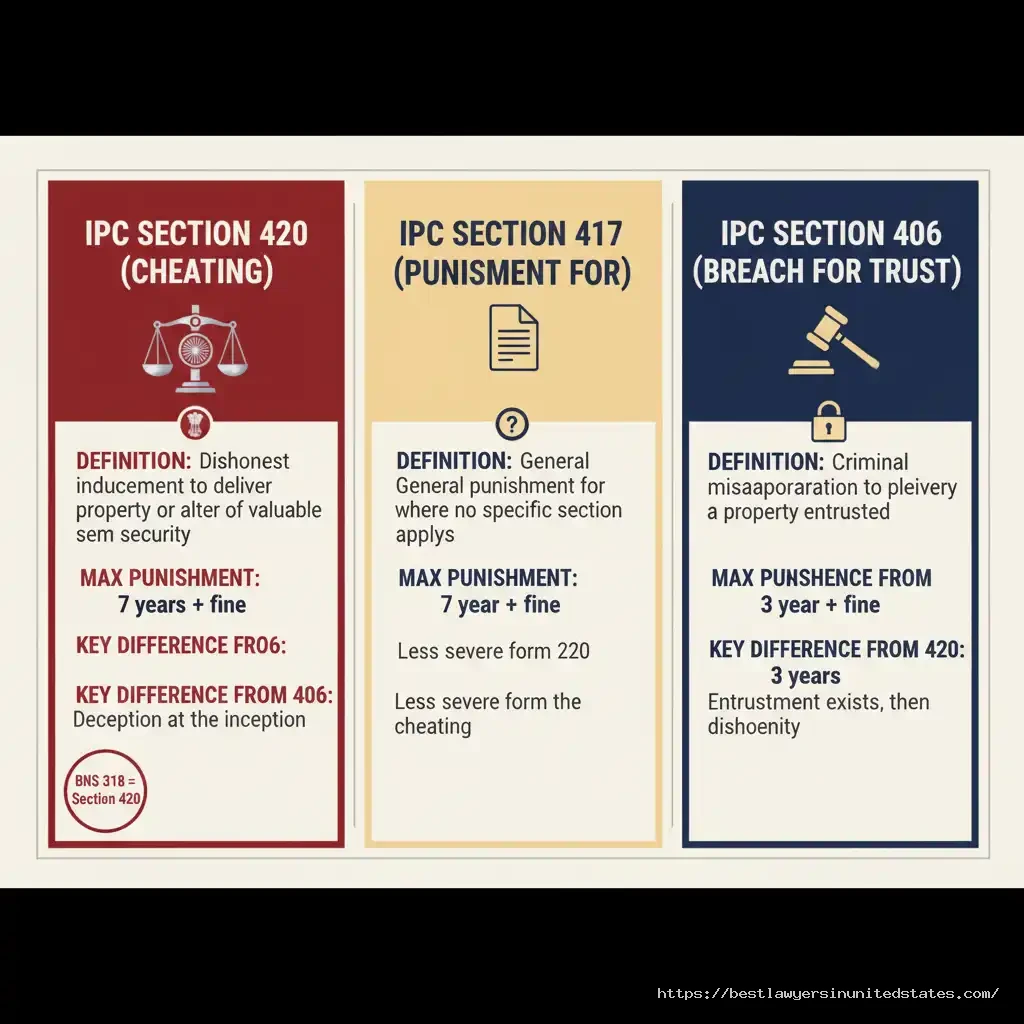
Section 420 vs. Section 417 (Cheating vs. Punishment)
These two sections are often confused:
- Section 417 defines “cheating” itself — the act of deceiving someone
- Section 420 is the more serious offense — cheating that results in property loss
If someone tries to con you but you don’t actually lose money or property, it might be Section 417. The moment you hand over valuables because of that deception, it becomes Section 420.
Punishment Difference:
- Section 417: Up to 1 year imprisonment or fine up to ₹1,000 (or both)
- Section 420: Up to 7 years imprisonment plus fine
Section 420 vs. IPC 406 (Cheating vs. Criminal Breach of Trust)
Section 406 deals with criminal breach of trust — when someone you trust (like an accountant or caretaker) misuses your property.
| Aspect | Section 420 (Cheating) | Section 406 (Breach of Trust) |
|---|---|---|
| Deception Required | Yes — fraud/dishonesty is core | No — trust was already given |
| Property Transfer | Based on false pretenses | Property already legitimately in accused’s possession |
| Relationship | Typically strangers or new relationship | Established trust relationship |
| Mens Rea | Intent to defraud from the start | Intent develops after possession |
| Examples | Fake job offers, fake investment schemes | Employee embezzling company funds, property caretaker selling assets |
| Maximum Punishment | 7 years | 7 years |
Section 420 in the Bharatiya Nyaya Sanhita (BNS) [CURRENT – 2025]
India’s criminal justice system underwent a historic overhaul on July 1, 2023, with the Bharatiya Nyaya Sanhita (BNS) replacing the 163-year-old Indian Penal Code. As of January 2025, all new cheating cases are filed under BNS Section 318.
What’s Changed? IPC 420 → BNS 318
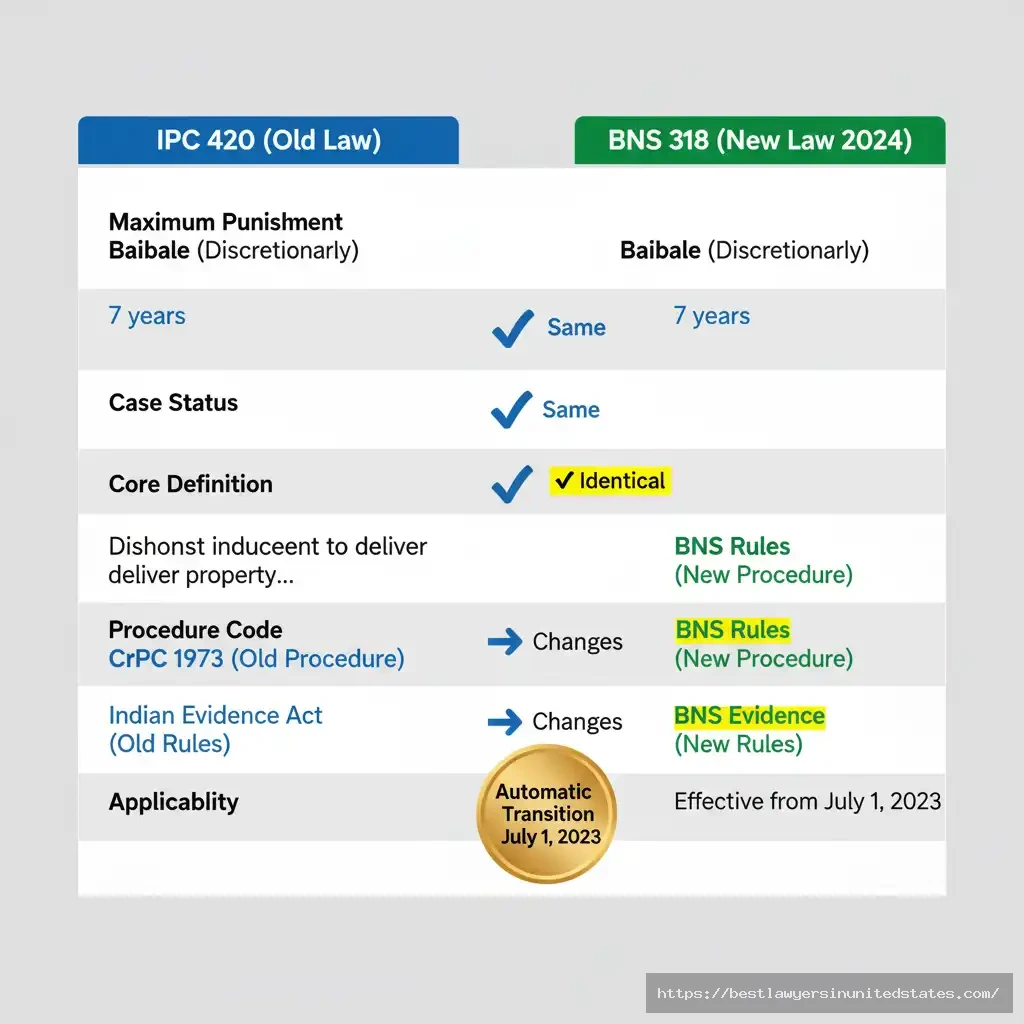
Section 420 of the IPC has been replaced by Section 318 of the Bharatiya Nyaya Sanhita.
The core legal definition remains essentially the same — cheating and dishonestly inducing delivery of property. However, there are important structural and procedural changes.
Comparison Table: IPC 420 vs. BNS 318
| Aspect | IPC Section 420 | BNS Section 318 |
|---|---|---|
| Title | Cheating and dishonestly inducing delivery of property | Cheating and dishonestly inducing delivery of property |
| Maximum Punishment | 7 years imprisonment + fine | 7 years imprisonment + fine |
| Case Status | Bailable (but discretionary) | Bailable (but discretionary) |
| Compoundable? | Only with permission of court | Only with permission of court |
| Triable By | Magistrate or Sessions Judge | Magistrate or Sessions Judge |
| Procedure Code | Criminal Procedure Code, 1973 | Bharatiya Sakshya Adhiniyam, 2023 |
| Evidence Rules | Indian Evidence Act, 1872 | Bharatiya Sakshya Adhiniyam, 2023 (similar but restructured) |
Key Structural Differences:
The BNS reorganized how crimes are classified. Under the BNS, crimes against property are in Chapter VI (Offences Against Property), similar to the IPC structure but with clearer categorization.
The language has also been modernized in some sections to address contemporary crimes like cyber fraud, though the core definition of cheating remains.
Practical Implications for Ongoing Cases
If you had a Section 420 case pending before July 1, 2023, here’s what changed:
- Active cases automatically transitioned to BNS provisions
- FIRs filed under IPC 420 are treated as FIRs under BNS 318 without needing to be refiled
- Existing bail orders remain valid; you don’t need new bail under BNS
- Sentencing guidelines remain consistent — courts have applied similar principles
- Evidence collected under the IPC continues to be valid under BNS
What this means practically: If your case was already in the system, you shouldn’t need to restart proceedings. However, new appeals or cases filed after July 1, 2023, will follow BNS procedures.
How Existing Precedents Apply Under BNS
Supreme Court judgments on Section 420 IPC remain highly persuasive under Section 318 BNS because:
- The legal definition is virtually identical
- The elements required to prove cheating haven’t changed
- The sentencing framework is the same
However, courts are gradually developing new jurisprudence under the BNS. Recent High Court decisions are beginning to interpret Section 318 in the context of modern crimes like cryptocurrency scams and dating app fraud.
Punishment Under Section 420 IPC
This is often the first question accused persons ask: “How much jail time am I facing?”
The answer depends on multiple factors — but here’s the legal framework.
Jail Period (Maximum & Minimum)
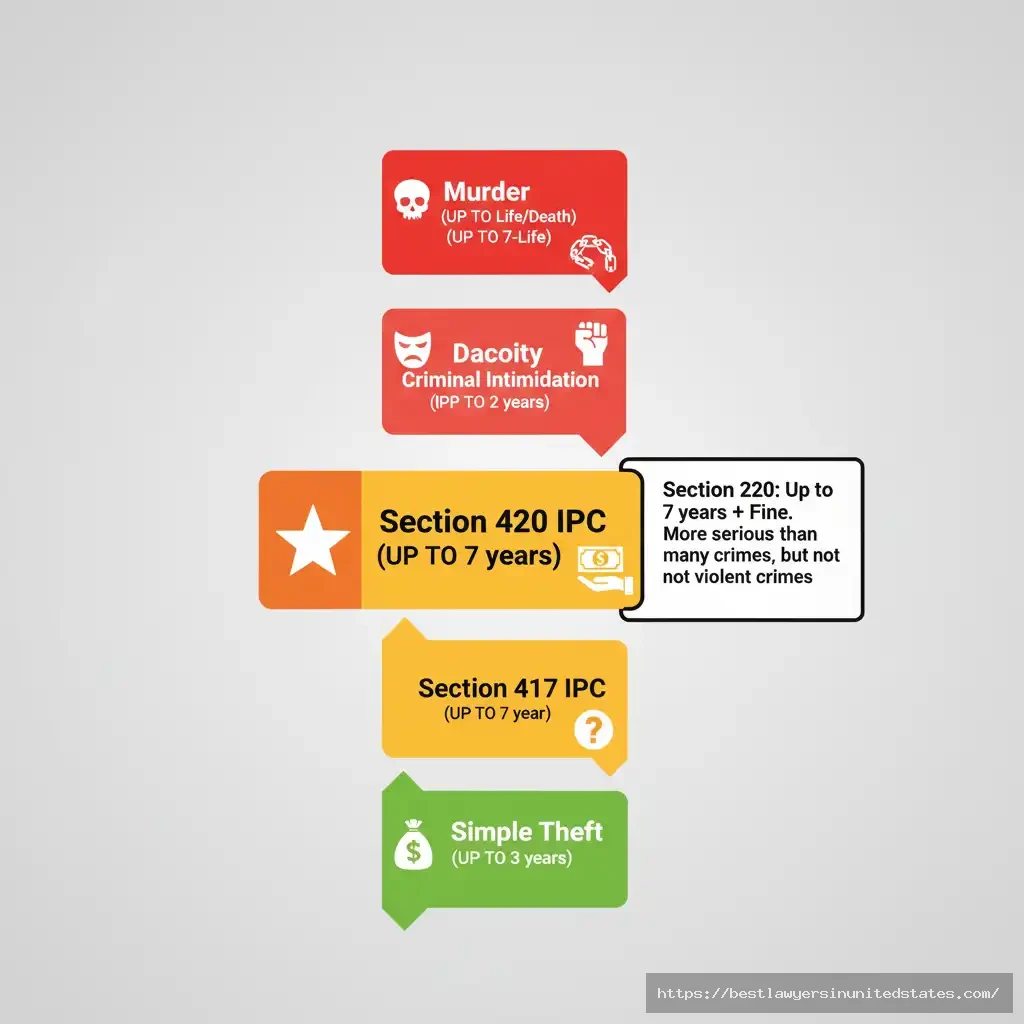
The maximum punishment under Section 420 is:
- Imprisonment for a term which may extend to 7 years
- Plus a fine (amount not specified in the statute, giving judges discretion)
However, courts have discretion in sentencing. The minimum penalty isn’t statutorily defined, meaning a judge could impose:
- Imprisonment of just a few months
- Fine alone (in cases of first-time offenders or small amounts)
- Suspended sentence with probation
In practice, sentencing varies dramatically based on:
- Amount defrauded — ₹5,000 vs. ₹5 lakhs gets different sentences
- Number of victims — single victim vs. serial fraud
- Criminal history — first offense vs. repeat offender
- Nature of deception — simple misrepresentation vs. elaborate scheme
- Financial impact — did the victim lose their life savings?
- Offender’s background — age, education, financial hardship vs. calculated crime
Fine Amount & Financial Penalties
While the statute doesn’t specify a maximum fine amount, judges typically impose fines based on:
- The amount of money or property value involved
- The offender’s financial capacity to pay
- Deterrence value (higher fines for crimes affecting multiple people)
In high-profile cheating cases, fines have ranged from ₹10,000 to over ₹1 crore, sometimes exceeding the amount defrauded.
Additionally, courts may order:
- Restitution — Repayment of the cheated amount to victims
- Costs — Legal and investigation expenses
- Victim compensation — Separate from restitution under victim protection schemes
Aggravating Factors (Increased Punishment)
Courts impose harsher sentences when these factors are present:
- Premeditation and planning — The crime was deliberate and well-executed (similar to attempt to murder cases)
- Targeting vulnerable people — Elderly, illiterate, or economically weak victims
- Large-scale fraud — Multiple victims or amounts
- Abuse of position — Using authority (police, government employee) to defraud
- Use of forged documents — Adds Section 467/468 IPC charges, increasing severity
- Use of technology — Cyber fraud, deepfakes, or digital deception
- No remorse shown — Continuing the fraud or evading arrest
- Previous convictions — Repeat offender status
- Public figure involvement — Cases affecting community trust
- Amount and impact — Victim lost life savings, leading to suicide risk, etc.
Mitigating Factors (Reduced Punishment)
Courts may impose lighter sentences considering:
- First-time offender — No prior criminal history
- Partial restitution — Offender voluntarily repaid some or all amount
- Remorse and cooperation — Pleading guilty, cooperating with police, apologizing to victim
- Economic hardship — Offender committed crime due to genuine financial desperation
- Small amount — Fraud of ₹500-₹5,000 vs. ₹5 lakhs
- Spontaneous confession — Admitted guilt without prolonged investigation
- Age and health — Elderly or seriously ill offenders
- Victim recovery — Victim didn’t suffer long-term harm or recovered losses
- Positive social factors — Offender is sole earner, dependent family members
Sentencing Guidelines (Case-by-Case)
Indian courts don’t have rigid sentencing guidelines like some countries, giving judges significant discretion. However, certain patterns have emerged from Supreme Court judgments:
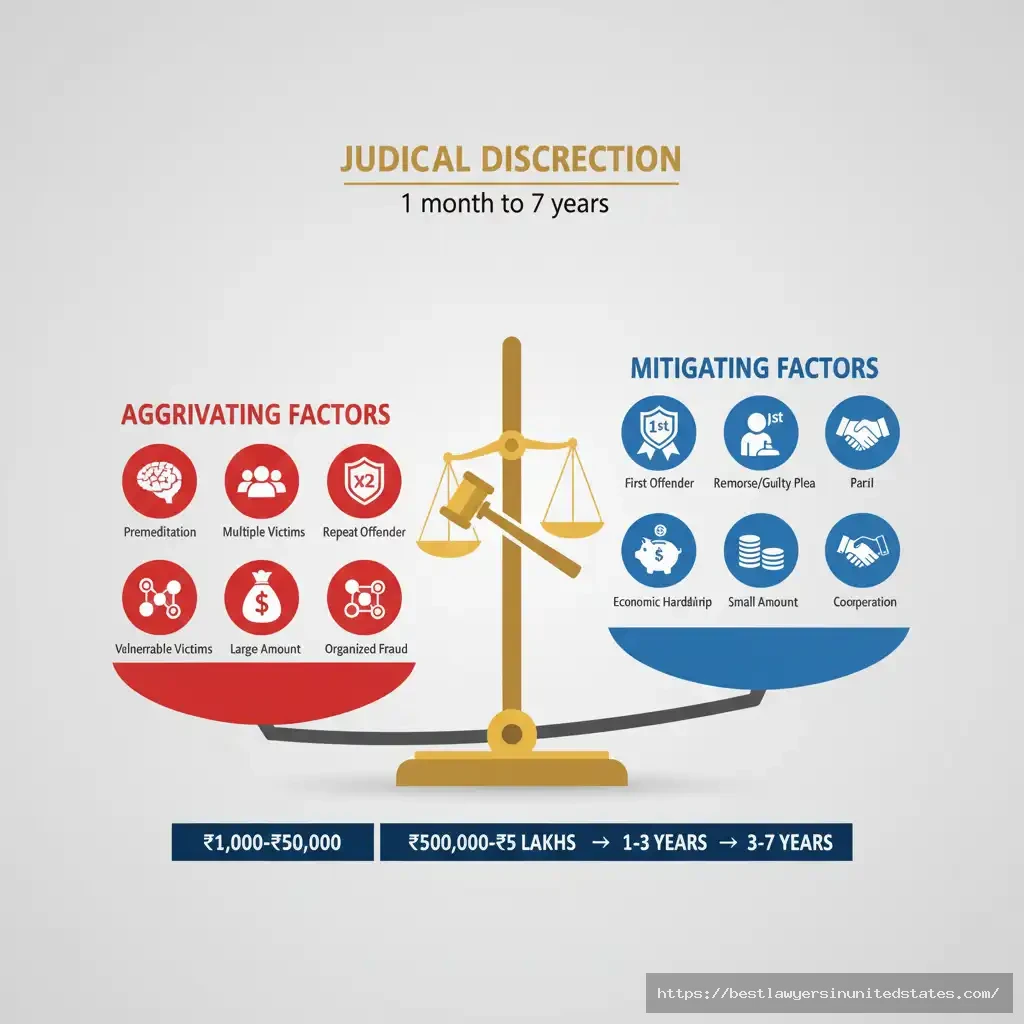
Small-amount fraud (₹1,000-₹50,000):
- First offender: 3-6 months jail or fine + probation
- Repeat offender: 1-2 years imprisonment
Medium-amount fraud (₹50,000-₹5 lakhs):
- First offender: 1-3 years imprisonment
- Repeat offender: 3-5 years imprisonment
Large-amount fraud (₹5 lakhs and above):
- First offender: 3-6 years imprisonment
- Organized fraud/multiple victims: 5-7 years imprisonment
High-profile/elaborate schemes:
- Often reach 5-7 years, especially with multiple charges
Repeat Offender Provisions
If you’ve been convicted under Section 420 before and commit another offense:
- Courts typically impose sentences at the upper end of the 7-year range
- Enhanced fine — often 2-3x the amount involved
- Stricter bail conditions — if bail is granted at all
- Reduced chances of suspension — suspended sentences are rare for repeat offenders
- Prior conviction used as evidence — in establishing pattern of dishonesty
Is Section 420 Bailable? Bail & Legal Remedies
One of the most critical questions when facing a Section 420 case: “Can I get bail?”
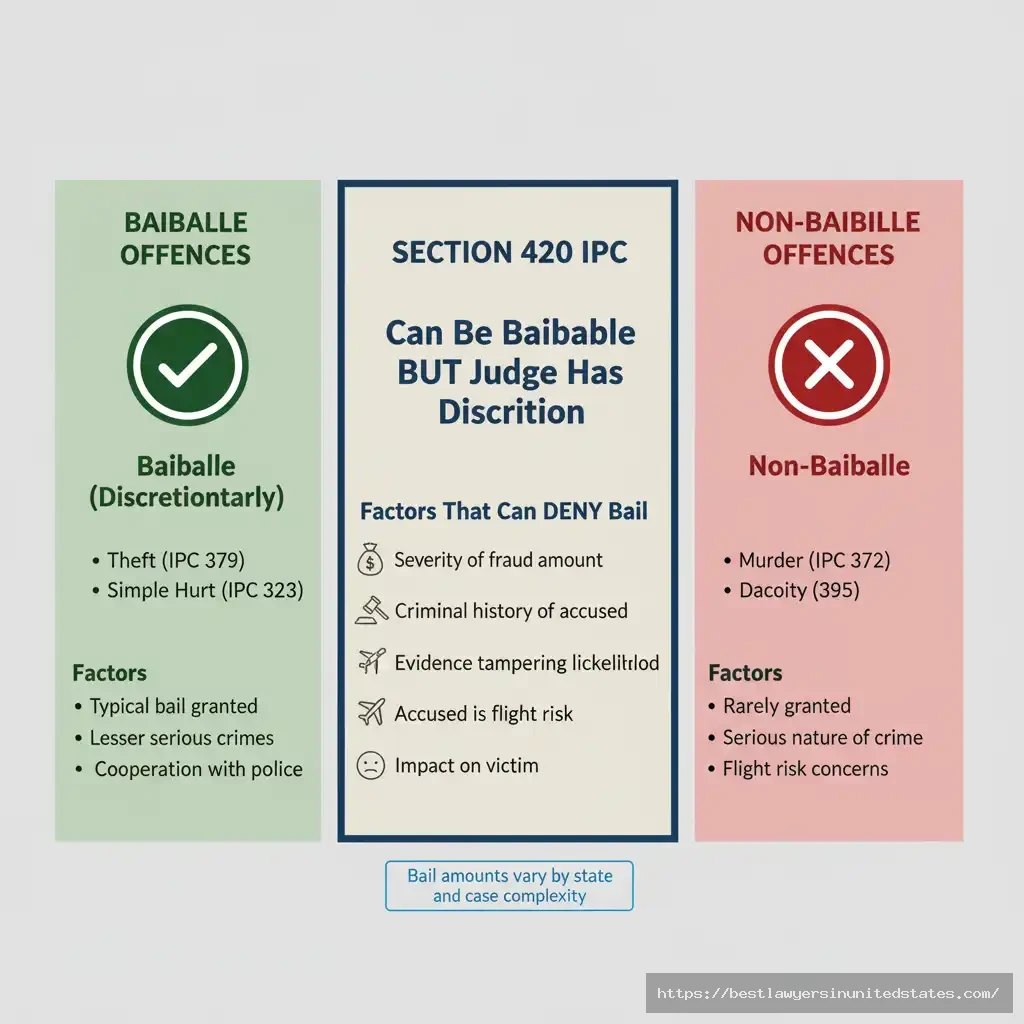
The answer is yes, but it’s complicated and discretionary.
Bail Status Explained
Section 420 is classified as a bailable offense, meaning:
- Police cannot hold you in custody indefinitely without bail
- A court is supposed to grant bail unless specific grounds for detention exist
- You have a constitutional right to bail (Article 21, right to personal liberty)
However, the word “bailable” in Indian law doesn’t mean automatic release. Judges have discretion to refuse bail if:
- You’re a flight risk (likely to escape)
- You’re prone to committing similar offenses
- You might tamper with evidence or intimidate witnesses
- The evidence against you is strong and the crime particularly serious
- You have no fixed residence or community ties
Regular Bail (Process & Cost)
How to apply:
- After arrest, you’re brought before a magistrate within 24 hours
- Police can request “police custody” (interrogation period) for up to 15 days
- After police custody, or if police custody isn’t granted, you can apply for bail
- You file a bail application with the court
- The magistrate hears arguments from prosecution and your defense
- The court grants or rejects bail
What bail costs:
Bail is typically granted on two terms:
- Personal bond — Your promise to appear in court (no money required)
- Cash security — Amount fixed by the court, deposited with the court
Bail amounts for Section 420 cases typically range from:
- ₹10,000 to ₹50,000 for small-amount fraud
- ₹50,000 to ₹2 lakhs for medium fraud
- ₹2 lakhs to ₹10 lakhs+ for large fraud
Courts also typically impose conditions like:
- Regular police reporting (weekly or monthly)
- Not leaving the jurisdiction without court permission
- Surrendering passport
- Not contacting witnesses or the victim
- Not indulging in similar activities
Anticipatory Bail (When & How)
If you know a Section 420 complaint is being filed against you, you don’t have to wait for arrest. You can apply for anticipatory bail before the FIR is filed.
When to apply:
- Someone has threatened to file a Section 420 case against you
- You have evidence the complaint is false
- You want to preempt arrest
How the process works:
- File an anticipatory bail petition in the High Court or District Court (depending on jurisdiction)
- Present evidence showing you’re not a flight risk and the case is weak
- The court can grant conditional bail even before arrest
Advantage: You stay out of police custody entirely and appear before the court on your own terms.
Disadvantage: Requires strong legal arguments and proof the allegations are fabricated or exaggerated.
Grounds for Bail Rejection
Courts refuse bail when satisfied that:
- Strong evidence exists — Police have collected credible evidence of guilt
- Flight risk — You’re likely to flee (no ties to the community, previous escape attempts, etc.)
- Witness tampering risk — You might intimidate complainants or witnesses
- Evidence destruction — You could destroy documents or manipulate records
- Repeat offender status — Pattern of similar crimes
- Serious fraud — Large amounts, multiple victims, or organized scheme
- Criminal background — Prior convictions, especially for economic crimes
Bail Cost Breakdown by Court Level
Bail amounts vary by court and case complexity:
| Court Level | Typical Bail Range (Small Amount) | Typical Bail Range (Large Amount) |
|---|---|---|
| Magistrate Court | ₹10,000-₹1 lakh | ₹2 lakhs-₹10 lakhs |
| District Court | ₹1 lakh-₹3 lakhs | ₹10 lakhs-₹25 lakhs |
| High Court | ₹2 lakhs-₹5 lakhs | ₹25 lakhs-₹1 crore |
Additionally, you’ll incur legal fees:
- Bail application preparation: ₹5,000-₹25,000
- Lawyer’s appearance in court: ₹2,000-₹10,000 per appearance
- Senior advocates (if needed): ₹25,000-₹2 lakhs+ per hearing
Bail Conditions & Obligations
If bail is granted, you’re legally required to:
- Appear in court on all scheduled dates — Missing even one hearing can result in bail cancellation and arrest
- Report to police — Usually monthly or as directed by the court
- Not leave jurisdiction — You can’t travel out of the state without permission
- Not contact witnesses — Direct or indirect contact, including social media, can violate bail
- Not indulge in similar activity — If accused of a fake job scheme, you can’t post similar job ads
- Not intimidate the complainant — Any threats or harassment violates bail
- Inform court of address change — If you move, inform the court within specified days
Violation of bail conditions can result in:
- Bail cancellation
- Re-arrest and police custody
- Imprisonment pending trial
- Increased conviction likelihood (looks guilty if you violate conditions)
Essential Ingredients & How to Prove Section 420
To understand this section deeply — whether you’re defending against allegations or seeking justice for being cheated — you need to know what the law requires for conviction. Understanding property transfer authorization is critical in distinguishing legitimate transfers from fraudulent ones.
Mens Rea (Criminal Intent)
Mens rea is Latin for “guilty mind.” In Section 420 cases, it means the accused deliberately intended to defraud someone.
This is the most critical element and the hardest to prove. The prosecution must show:
- The accused knew they were being dishonest
- The accused intended to deceive the other person
- The accused intended to cause that person to give up property
Key point: If the accused made an innocent mistake or misrepresentation without realizing it was false, Section 420 doesn’t apply.
How it’s proven:
- Admissions or statements by the accused
- Pattern of similar deceptions
- Nature and extent of deception (elaborate schemes suggest intent; simple errors suggest mistake)
- Continued fraud despite being told the truth (shows dishonesty continued)
- Conduct after the fraud was discovered
Actus Reus (Guilty Act)
Actus reus is the “guilty act” — the physical or objective element of the crime.
For Section 420, the guilty act comprises:
- Cheating — Using deception, dishonest concealment, or other fraudulent means
- By means of this cheating — The deception must directly cause property transfer
- Inducing the person to deliver property — The victim must be misled into handing over valuables
Key point: There must be a direct causal link. The deception must be the reason the person gave property.
How it’s proven:
- Evidence the accused made false statements
- Forged documents or impersonation
- Victim’s testimony they wouldn’t have acted but for the deception
- Timeline showing deception preceded property transfer
Dishonesty Element
Dishonesty is central to Section 420 and distinguishes it from contract disputes or simple negligence.
Indian courts define dishonesty as:
- Knowingly violating another person’s rights
- Deliberately concealing or misrepresenting facts
- Acting with intent to cause wrongful loss or wrongful gain
- Not merely a breach of duty but a breach of trust or law
Examples of dishonesty:
- Falsely claiming to be a qualified doctor to treat patients
- Claiming real estate has clear title when mortgaged
- Promising goods while intending never to deliver
- Using fake identity to gain trust
- Concealing critical facts about property or product
Examples of non-dishonesty (contract issues):
- Delivering substandard goods (failure to perform, not dishonesty)
- Delaying payment (breach of contract terms)
- Both parties aware of risk but one suffered loss
Inducement of Delivery of Property
The victim must have been deceived into actually handing over property.
Property includes:
- Money, jewelry, valuables
- Real estate or immovable property
- Documents (promissory notes, shares, property deeds)
- Vehicles, electronics, goods
- Even valuable information or digital assets
Key requirement: The victim must have voluntarily given the property. If forced or stolen, it’s a different offense (robbery, theft).
The causal chain must be: Deception → Victim’s reliance on deception → Property transfer
If the victim would have given property anyway despite knowing the truth, Section 420 may not apply.
Evidence Required (Documentary, Financial, Witness)
To prove Section 420, prosecutors typically present:
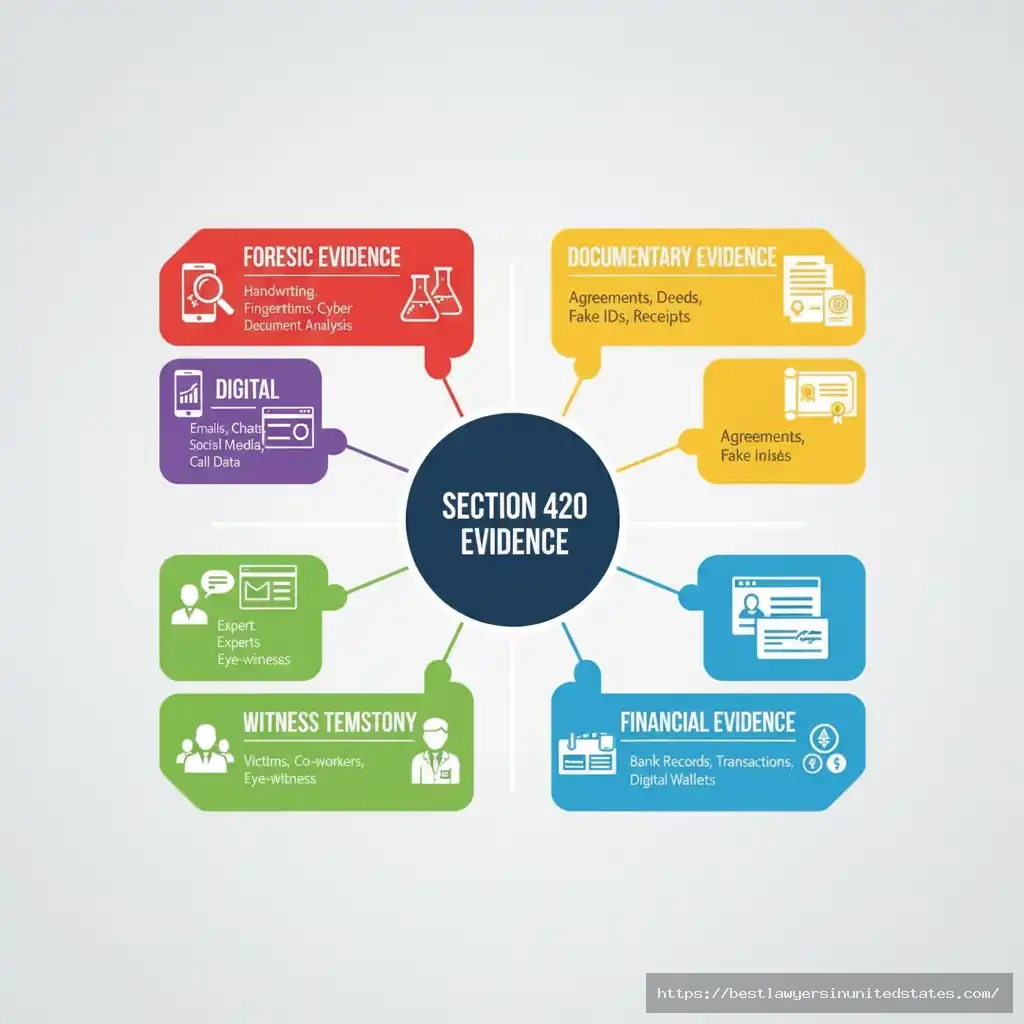
Documentary Evidence:
- Contracts or agreements (especially with forged signatures)
- Fake credentials, licenses, or certificates
- Forged property documents or title deeds
- Fake receipts or invoices
- Banking records showing fund transfers
- Email or WhatsApp communications with false promises
- Screenshots of fake websites or profiles
Financial Evidence:
- Cheque deposits and clearances
- Bank statements showing money transfers to accused (analyzed by forensic lawyers)
- Account statements showing no goods/services received
- Investment records showing promised returns never materialized
- Cryptocurrency transaction records (for digital fraud)
Witness Testimony:
- The victim’s account of what was promised vs. what actually happened
- Other victims (in cases of serial fraud)
- Experts (real estate agents, property valuation experts, medical professionals) testifying the false claims
- Investigators from CBI or police explaining their findings
Digital Evidence:
- Phone records showing communications
- IP addresses and device information
- Website analytics showing fake business fronts
- Social media account details
Burden of Proof Standards
In criminal cases, the burden is on the prosecution to prove guilt beyond reasonable doubt.
What “beyond reasonable doubt” means:
- The evidence must be so convincing that a reasonable person would not hesitate to rely on it
- It doesn’t require 100% certainty but must eliminate reasonable doubt
The accused doesn’t have to prove innocence — that’s a common misconception. The defense only needs to raise reasonable doubt.
Practical impact:
- If a judge thinks the accused “probably” committed the crime but isn’t convinced beyond reasonable doubt, acquittal is required
- Weak documentary evidence might not meet this standard
- Victim testimony alone, without corroboration, may not be sufficient
Section 420 Case Procedure: Step-by-Step Guide
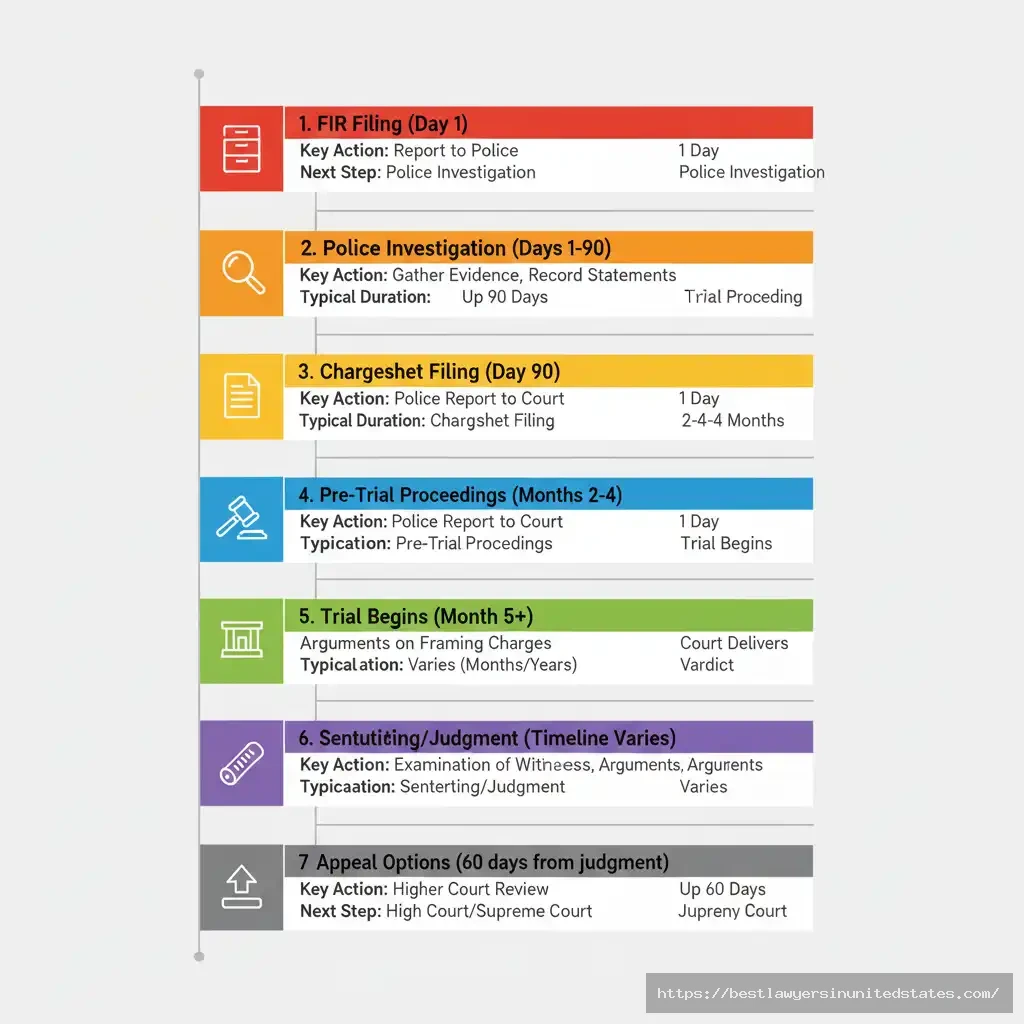
If a cheating complaint is filed against you or you’re filing one against someone else, here’s exactly what happens — from FIR to judgment.
FIR Filing Process
The First Information Report (FIR) is the official police record of a complaint.
How it’s filed:
- You visit the police station and describe the cheating to the officer
- The officer records your statement in writing
- You sign the FIR (or the officer records it if you’re illiterate)
- The police assign a case number and register the FIR
- A copy is given to you
What happens next:
- The police investigate the allegations
- If Section 420 is involved, an officer is assigned to investigate
- Your statement is recorded (sometimes multiple times)
- The accused may or may not be arrested immediately
Timeline: An FIR must be registered immediately if the officer believes a crime has been committed. There’s no “waiting period.”
Can the FIR be quashed? Yes, through a legal petition if the allegations are clearly fabricated or frivolous. However, this requires strong evidence and legal arguments.
Police Investigation Phase
After the FIR is registered, police begin their investigation. This typically involves:
Initial Steps:
- Recording the complainant’s detailed statement (called First Information Report recording)
- Identifying and interrogating the accused
- Collecting evidence (documents, bank records, communications)
- Recording witness statements
- Site visits or evidence collection at relevant locations
Duration:
- Police have 90 days to file a chargesheet if the accused is arrested
- If the accused is not arrested, they have 180 days
- Extensions can be granted by the court in complex cases
Police Powers During Investigation:
- Arrest the accused (with or without warrant, depending on circumstances)
- Search and seizure of documents
- Recording statements from witnesses
- Conducting forensic analysis
- Digital forensics for cyber-related cheating
Your Rights During Investigation:
- Right to remain silent (don’t have to answer all questions)
- Right to consult a lawyer
- Right not to be tortured or coerced
- Right to know the charges against you
- Right to access investigation details (subject to certain restrictions)
Chargesheet Filing Timeline
The chargesheet is the formal document the police submit to court saying they’ve investigated and have evidence against the accused.
Timeline:
- 90 days from arrest (if accused was arrested)
- 180 days from FIR registration (if accused was not arrested)
- Extensions possible if the investigation is complex
What the chargesheet includes:
- Summary of the investigation
- Evidence collected (documentary, witness statements, forensic reports)
- List of witnesses
- Recommendation to prosecute
Filing the chargesheet:
- Police prepare the chargesheet and submit to the District Public Prosecutor (DPP)
- DPP reviews and decides whether to proceed or drop the case
- If proceeding, the chargesheet is filed in the Magistrate’s Court
- The court informs the accused of the charges
What if no chargesheet is filed by the deadline?
- The accused must be released on bail automatically
- However, police can file chargesheet later if investigation continues
- Courts are increasingly strict about deadline violations
Pre-Trial Proceedings
After the chargesheet is filed, several things happen before trial:
Cognizance: The court formally takes notice of the case.
Bail hearing (if not already granted): If the accused was arrested without bail, they can now apply before the judge.
Charge reading: The judge reads the charges to the accused and records their plea:
- Guilty plea → Case moves to sentencing
- Not guilty plea → Trial begins
Preliminary examination (in certain cases): The court may examine if sufficient evidence exists to proceed to trial.
Discovery: Both prosecution and defense exchange documentary evidence and witness lists.
This phase typically lasts: 1-6 months depending on court workload and complexity.
Trial Procedure & Evidence Presentation
Once the accused pleads “not guilty,” the trial begins.
Prosecution’s case:
- Public prosecutor presents the chargesheet summary
- Calls witnesses to testify (victim, police officers, experts, others)
- Presents documentary evidence (documents, bank records, communications)
- Questions the accused through cross-examination
Each witness is questioned twice:
- Examination-in-chief by the prosecutor (by the side that called them)
- Cross-examination by the defense lawyer (to challenge credibility and accuracy)
Defense’s case:
- Defense lawyer can call witnesses (the accused can testify or remain silent — both are legal options)
- Presents evidence supporting the defense theory
- Cross-examines prosecution witnesses
Arguments:
- Both sides present final arguments summarizing the evidence and law
- Prosecution argues why guilt is proven beyond reasonable doubt
- Defense argues why the evidence is insufficient
Timeline: Trials can last months or years depending on:
- Number of witnesses
- Complexity of evidence
- Court availability
- Whether parties file multiple applications
Sentencing & Judgment
If the judge finds the accused guilty, they move to sentencing.
The judge considers:
- Severity of the offense
- Amount defrauded
- Number of victims
- Aggravating and mitigating factors
- Criminal history
- Judge’s discretion
The judgment includes:
- Finding of guilt or acquittal
- Detailed reasoning
- Sentence (if guilty): imprisonment term and/or fine
- Restitution orders (repayment to victim)
- Suspension of sentence (if applicable)
- Appeal rights
Typical timelines for judgment: 2-3 months after trial concludes (can be longer in complex cases).
Appeal Options
If convicted, the accused can appeal. If acquitted, the victim can file a government appeal in some circumstances.
Appeal levels:
- Sessions Court appeal (to High Court) — Available to both prosecution and defense
- High Court appeal — Further appeal if dissatisfied with Sessions Court
- Supreme Court appeal — If substantial legal questions involved
Grounds for appeal:
- Judge made errors in interpreting the law
- Evidence was improperly admitted or rejected
- Procedural violations occurred
- Sentence is manifestly excessive
Appeal timelines:
- Must be filed within 60 days of judgment
- Higher courts can take 1-3 years to decide appeals
Real-World Scenarios: When Section 420 Applies
Understanding Section 420 in abstract terms is one thing. Here’s how it works in real situations.
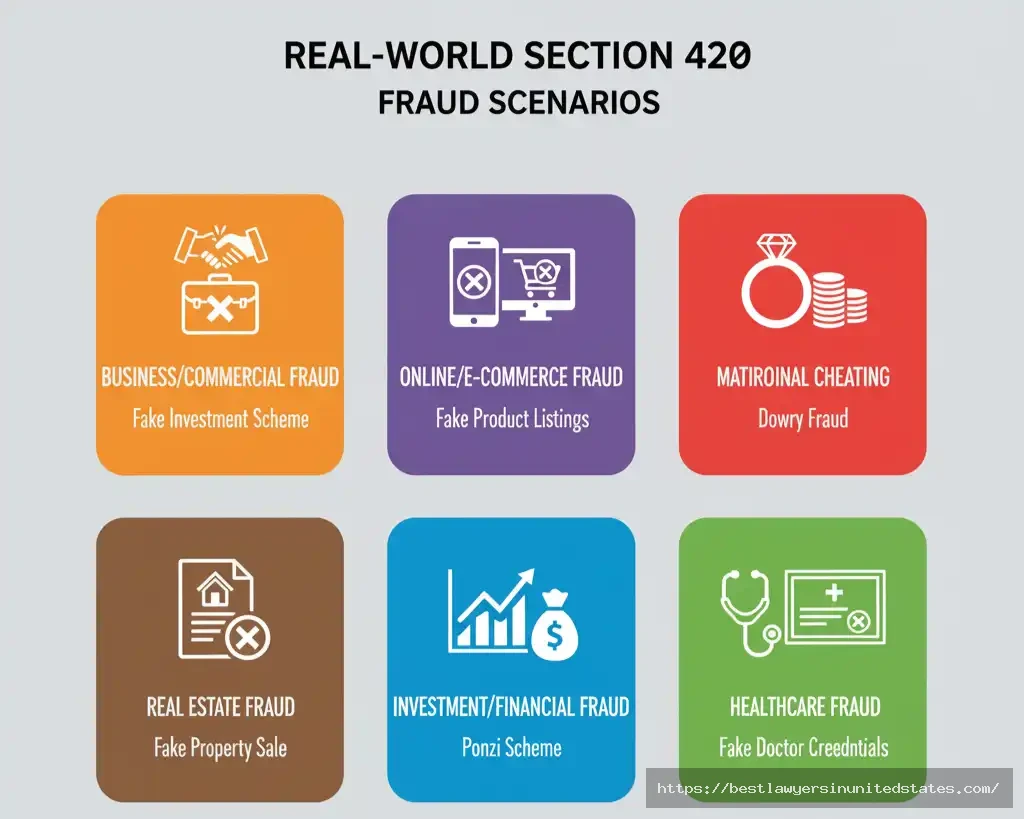
Business/Commercial Fraud
Scenario: Fake Investment Scheme
Rohan contacts investors via social media, claiming his cryptocurrency company offers 20% monthly returns — guaranteed. He shows fake bank statements and testimonials from “previous investors” (actually hired actors). After collecting ₹2 crore from 50 investors, he disappears to a foreign country.
Section 420 applies because:
- Rohan made deliberate false statements about returns
- He used forged documents to gain trust
- Investors delivered property (money) based on the deception
- All elements of Section 420 are present
Additional charges likely: Forgery (Sections 467/468), criminal conspiracy (Section 120B), money laundering.
Online/E-Commerce Fraud
Scenario: Fake Product Listings
Priya creates a fake e-commerce store identical to a legitimate brand, uploads product photos, collects payments from 200 customers, and never ships anything. All money goes to her personal account.
Section 420 applies because:
- Priya deceived customers about product existence and authenticity
- Customers transferred money believing they’d receive products
- Property (money) was handed over due to dishonest inducement
Additional charges likely: Trademark infringement, cheating through computer networks (IT Act Section 66D).
Matrimonial Cheating (Relationship Fraud)
Scenario: Dowry Fraud
Bhavna marries Amit after claiming to be from a wealthy business family (misrepresenting her relationship and marital status).She collects ₹10 lakhs as “family expenses” after marriage. A month later, Amit discovers she fabricated her family background — they’re in severe debt, and her relatives have prior cheating convictions.
Section 420 applies because:
- Bhavna dishonestly misrepresented her family status and financial situation
- This induced Amit to part with ₹10 lakhs
- There was clear intent to defraud
Additional charges likely: Dowry acceptance (Dowry Prohibition Act), criminal intimidation if threats were made.
Important note: Simple infidelity or relationship breakup doesn’t constitute Section 420. The deception must be about material facts (identity, financial status, marital status) that directly led to property transfer.
Real Estate Fraud
Scenario: Fake Property Sale
A property agent shows a flat to Neha, claiming the owner is eager to sell and has clear title. After Neha pays ₹30 lakhs (with ₹20 lakhs in cash, no documentation), the agent disappears. Neha later discovers the flat was mortgaged to a bank and the “owner” never authorized the sale. The property registration is forged.
Section 420 applies because:
- The agent deliberately concealed that the property was mortgaged
- This material fact would have prevented Neha from purchasing
- Neha relied on the false claim of clear title
- Money was delivered due to dishonest inducement
Additional charges likely: Forgery (fake registration documents), criminal intimidation if threats were made to recover the property.
Investment/Financial Fraud
Scenario: Ponzi Scheme
Vikram launches a “High Yield Fixed Deposit” scheme promising 15% annual returns (vs. market rate of 6-7%). He collects ₹5 crore from 500 retirees, pays initial investors from new investor money, and invests the remainder in his own businesses (which fail). When investors request withdrawals, funds aren’t available.
Section 420 applies because:
- Vikram misrepresented the nature and safety of the investment
- He promised returns he never intended to deliver from legitimate investment income
- Investors handed over money based on these false promises
- Intent was fraudulent from the start
Additional charges likely: Running a Ponzi scheme (criminal conspiracy), cheating the public (if >20 people affected).
Healthcare/Medical Fraud
Scenario: Fake Doctor Certification
Arjun claims to be a specialized cardiac surgeon (he’s actually a pharmacist with forged credentials). He performs heart surgeries, and two patients suffer serious complications due to his incompetence. Patients paid ₹3 lakhs each for the procedures.
Section 420 applies because:
- Arjun fraudulently misrepresented his medical qualifications
- Patients relied on the false claim and agreed to surgery
- Money was paid due to the deception
- The deception caused actual harm
Additional charges likely: Practicing medicine without a license (serious charge), causing grievous injury (Sections 337-338 IPC), criminal negligence.
How to Defend Against Section 420 Charges
If you’re accused of cheating, you have several potential defenses. The goal is to raise reasonable doubt about one or more elements of the offense.
Common Defence Strategies
1. Absence of Dishonesty (Most Common)
Claim you didn’t deliberately mislead the person. Maybe you made an honest mistake or shared information you believed to be true.
How to prove:
- Show your track record — have you done legitimate business with this person or others?
- Present evidence you acted in good faith
- Demonstrate the person had alternative ways to verify the information
- Show you corrected the misinformation as soon as you realized it
Example: You promised to deliver a laptop within a week, but a supplier delay meant it arrived in two weeks. The buyer can’t claim cheating if you were genuinely delayed by circumstances beyond your control.
2. No Inducement — Victim Knew the Truth
Argue the person wasn’t actually deceived. Maybe they knew about the deception but proceeded anyway.
How to prove:
- Show the victim had access to information that would have revealed the truth
- Email or message exchanges showing you disclosed facts
- Third-party evidence the victim knew but ignored it
- The victim’s own statements admitting knowledge
Example: You told an investor, “This business is risky and could fail,” but showed attractive projections. If the investor proceeded knowingly, there was no dishonest inducement.
3. Property Wasn’t Actually Transferred
Argue no property changed hands or that the transfer was reversible/conditional.
How to prove:
- The money was returned to the person
- Documents show refunds were processed
- The property was returned or the transaction reversed
- No actual loss was incurred
Example: The victim gave you money to purchase goods. You later refunded the full amount. Section 420 requires actual delivery of property to be lost — if money was returned, this element fails.
4. Consent & Voluntary Transaction
Argue the person willingly entered into the transaction, understanding the terms.
How to prove:
- Written agreements signed by both parties
- Correspondence showing clear terms
- The person received benefits from the transaction
- No complaints during the period both parties benefited
Example: You sold a used car showing its current condition. The buyer agreed to the sale “as-is.” Later, when repairs were needed, claiming cheating is weak because the buyer knew it was used.
5. Mistake of Fact
Argue you made a genuine factual error, not dishonest deception.
How to prove:
- Show credible reasons for the mistake
- Similar mistakes happen in your industry
- You corrected the error upon realizing it
- The person suffered minimal harm
Example: You quoted the wrong price for a service due to a calculation error. Upon realizing the mistake and informing the customer, there’s no cheating — it’s a contractual dispute at most.
Proving Absence of Dishonesty
This is the heart of any Section 420 defense. The prosecution must prove dishonesty beyond reasonable doubt.
Key questions to raise:
- Did the accused have knowledge of the falsehood? (subjective element)
- Did the accused intend to deceive? (subjective element)
- Is there an innocent explanation for the conduct?
- Could the accused have made an honest mistake?
How courts assess dishonesty:
- Conduct is assessed objectively — would a reasonable person consider it dishonest?
- Accused’s state of mind is inferred from their actions and circumstances
- If innocent explanation is plausible, benefit of doubt goes to the accused
Defense strategy: Present evidence showing honest business practices, previous satisfied customers, good faith efforts to correct problems, or that industry standards permit the challenged conduct.
Challenging Evidence
Even if elements of Section 420 seem present, you can challenge the quality and admissibility of evidence.
Common challenges:
- Insufficient documentary evidence — The prosecution relies only on victim testimony without corroboration
- Hearsay evidence — Statements not made under oath or subject to cross-examination
- Forged or tampered evidence — Documents that appear altered or fabricated
- Chain of custody breaks — Evidence handled improperly, compromising reliability
- Digital evidence issues — Screenshots or recordings not properly authenticated
- Expert qualifications — Experts testifying beyond their expertise or lacking proper credentials
- Procedural violations — Evidence collected illegally or in violation of rights
How to raise challenges:
- Cross-examination of witnesses to expose inconsistencies
- Presenting expert testimony about evidence authenticity
- Motions to exclude evidence under procedural rules
- Pointing out gaps in the prosecution’s case
Consent & Voluntary Transaction Defence
If both parties agreed to the transaction and the person received consideration (something of value), arguing Section 420 becomes harder.
Key elements:
- Mutual agreement on terms
- Both parties received benefits
- Consideration (exchange of value) was provided
- Person didn’t object during performance
Example: You sold a coaching course promising “guaranteed placement in IT companies.” The student took the course, completed it, but didn’t get placed in an IT company (placed in a different sector instead). The student knew upfront that placements aren’t guaranteed. Without proof of dishonesty about placement rates, Section 420 is weak.
Mistake of Fact Defence
Indian courts recognize that genuine mistakes of fact can preclude criminal liability.
Legal principle: If the accused reasonably believed in the existence of facts that, if true, would make their conduct innocent, Section 420 doesn’t apply.
Requirements:
- The mistake must be honest and genuine (not recklessness or negligence)
- The accused must have reasonable grounds for the belief
- The belief must relate to a material fact that negates dishonesty
Example: You sold a laptop claiming it had an Intel i7 processor. You honestly believed this based on the seller’s representation when you purchased it. Later, it’s discovered to be an i5. If you acted on reasonable belief without dishonesty, you may be acquitted.
Landmark Supreme Court Judgments on Section 420
Indian courts have established important precedents that shape how Section 420 is interpreted and applied. Here are some key cases that matter:
Case 1: Nathulal v. State of Madhya Pradesh (1997)
Key principle: Dishonesty is essential; mere breach of contract isn’t cheating.
Facts: A contractor delivered substandard materials for a construction project, violating the contract. The victim sued under Section 420.
Supreme Court ruling:
- Delivering inferior goods due to negligence or breach of contract isn’t cheating
- Section 420 requires dishonesty — knowledge that you’re deceiving someone
- Simple breach of contract, even if losses result, doesn’t constitute cheating
Impact on your case: If you failed to deliver quality services but weren’t dishonest about the quality upfront, Section 420 might not apply.
Case 2: Rattan Singh v. State (2000)
Key principle: Victim’s belief in the deception must be genuine; sophistication matters.
Facts: A sophisticated businessman was allegedly cheated in a real estate deal. He claimed the property title was misrepresented.
Supreme Court ruling:
- Courts consider the victim’s sophistication and due diligence
- If a victim failed to verify basic facts they could have easily checked, Section 420 liability is reduced
- Deception requires the victim’s reliance on the false statement
Impact on your case: If the alleged victim could have easily verified facts (through property registration searches, bank statements, etc.) but didn’t, claiming cheating is weaker.
Case 3: Bhagwandas v. State (2008)
Key principle: Transfer of property must be induced by dishonesty (direct causation).
Facts: A person sold a business claiming it was profitable. The buyer later discovered declining revenues, though the seller wasn’t dishonest about current figures.
Supreme Court ruling:
- The deception must directly cause the property transfer
- General puffery about business prospects, without specific false statements, isn’t cheating
- The victim must rely on the specific deception to part with property
Impact on your case: Vague sales talk or exaggeration about potential isn’t enough for Section 420. Specific false statements about material facts are required.
Case 4: Virendra Singh v. State (2015)
Key principle: Mens rea (dishonest intent) must exist at the time of the transaction.
Facts: An employee was accused of cheating for not completing work as promised. The defense argued he intended to complete it but circumstances prevented him.
Supreme Court ruling:
- At the time of receiving property, the accused must have intended not to perform the promise
- If the accused genuinely intended to perform but failed due to circumstances, Section 420 doesn’t apply
- The prosecution must prove dishonest intent existed from the beginning
Impact on your case: If you genuinely intended to deliver what you promised but were later unable to, Section 420 is difficult to establish.
Case 5: Darshan Singh v. State (2018)
Key principle: In matrimonial cases, mere incompatibility or false promises about behavior aren’t cheating.
Facts: A wife was accused of cheating after misrepresenting her compatibility and family background in marriage. The husband sought Section 420 prosecution.
Supreme Court ruling:
- Promises about future conduct (being a good spouse, etc.) aren’t actionable under Section 420
- Even if family background is misrepresented, prosecution requires proof of intent to cause financial loss through property transfer
- Dowry fraud is a separate offense; general misrepresentation in marriage alone doesn’t constitute Section 420
Impact on your case: If accused of matrimonial cheating, showing financial inducement and dishonesty is critical. Mere incompatibility isn’t enough.
Case 6: XYZ Bank v. State (2024) – Cryptocurrency Fraud Under BNS 318
Key principle: Section 318 BNS applies to digital asset fraud with same rigor as traditional cheating.
Facts: A fintech platform promised 50% returns on cryptocurrency investments. Used fabricated performance reports and fake audit certificates to attract 500 investors, collecting ₹50 crores.
Supreme Court ruling (2024):
- Section 318 BNS clearly applies to cryptocurrency and digital assets
- “Dishonest inducement” principle unchanged in digital economy
- Forensic analysis of blockchain required in crypto fraud cases
- Sentencing: 6 years + fine of ₹2 crores + asset seizure
Impact on your case: If facing cryptocurrency fraud charges under Section 420/318, digital forensics expertise is critical. Courts are increasingly sophisticated in analyzing blockchain evidence.
How These Precedents Impact Your Case
These Supreme Court judgments establish:
- Dishonesty is subjective — Your state of mind matters, not just the outcome
- Victim due diligence matters — If the victim could have verified facts, Section 420 is weaker
- Specific false statements required — General exaggeration isn’t enough
- Intent must be dishonest from the start — Later inability to perform isn’t the same as starting with dishonest intent
- Causation is crucial — The deception must directly cause property transfer
If your case involves any of these elements, citing these precedents can significantly strengthen your defense or prosecution arguments.
Latest 2025 Updates on Section 420
- All cases filed after July 1, 2023 now proceed under BNS Section 318 (not IPC 420)
- Pending IPC 420 cases continue under IPC 420 with old procedures (automatic transition possible)
- Cryptocurrency fraud increasingly prosecuted under Section 420 combined with Sections 66D (IT Act) and Money Laundering Act
- Online fraud (dating apps, fake job offers, e-commerce) now accounts for 60%+ of Section 420 cases in metro cities
- Supreme Court trends (2024-2025): Stricter bail conditions for serial fraudsters; increased use of forensic evidence
Section 420 FAQ (40+ Common Questions)
Definitions & Basic Understanding
Q1: What is Section 420 of the Indian Penal Code? A: Section 420 punishes cheating and dishonestly inducing delivery of property. It requires proof of deception that directly caused someone to hand over money, goods, or valuables.
Q2: What’s the difference between cheating (Section 417) and Section 420? A: Section 417 is the act of cheating itself. Section 420 is when that cheating results in actual property loss. Section 420 is more serious with longer imprisonment (up to 7 years vs. 1 year).
Q3: Is Section 420 only about money? A: No. It applies to any property — money, jewelry, real estate, documents, vehicles, or even valuable information.
Q4: Can Section 420 apply to a contract dispute? A: Only if dishonesty and deception are involved. Simple breach of contract or delivering substandard goods (without dishonest intent) isn’t Section 420.
Q5: What does “dishonestly inducing delivery” mean? A: It means using deliberate deception to trick someone into voluntarily handing over property. The person wouldn’t have given it up if they’d known the truth.
Punishment & Sentencing
Q6: What is the punishment for Section 420? A: Up to 7 years imprisonment and fine (amount discretionary with the judge).
Q7: Can I get just a fine without jail time for Section 420? A: Yes, especially for first-time offenders in small-amount cases. The judge has discretion.
Q8: What is the minimum jail period for Section 420? A: No statutory minimum. Judges can impose anything from a few months to 7 years.
Q9: How is the jail period decided in Section 420 cases? A: Judges consider amount defrauded, number of victims, offender’s history, dishonesty level, and victim impact.
Q10: Does the amount defrauded matter? A: Significantly. ₹1,000 fraud typically gets lighter sentence than ₹10 lakhs fraud.
Q11: Are repeat offenders punished more harshly? A: Yes. Repeat offenders typically face sentences at the upper end (5-7 years) and stricter bail conditions.
Q12: Can the fine amount exceed the money defrauded? A: Yes. Courts can impose substantial fines beyond the defrauded amount as deterrence.
Bail & Legal Remedies
Q13: Is Section 420 bailable? A: Yes, but discretionary. Courts can refuse bail if flight risk, evidence is strong, or witness tampering is likely.
Q14: Can I get bail immediately after arrest? A: You’ll be brought before a magistrate within 24 hours. Bail is decided then.
Q15: What is anticipatory bail? A: Bail granted before arrest if you reasonably believe a Section 420 complaint will be filed against you.
Q16: How much bail money is typically required for Section 420? A: Typically ₹10,000-₹50,000 for small fraud, ₹50,000-₹2 lakhs for medium, ₹2-₹10 lakhs+ for large fraud.
Q17: What happens if I violate bail conditions? A: Bail is cancelled, you’re re-arrested, and conviction becomes more likely.
Q18: Can bail be cancelled after being granted? A: Yes, if you violate conditions, new evidence emerges, or prosecution files a cancellation petition.
Q19: Is there a difference between bail and anticipatory bail? A: Bail is granted after arrest; anticipatory bail is granted before arrest to prevent custody.
Q20: Can I get bail if I have no fixed address? A: Difficult. No fixed address is a factor courts consider for flight risk. However, a surety (someone to vouch for you) helps.
Procedure & Investigation
Q21: What is an FIR? A: First Information Report — the official police complaint registering the alleged offense.
Q22: How long does police investigation take for Section 420? A: Usually 90 days if accused is arrested, 180 days if not. Extensions are possible.
Q23: Can I file an FIR if I suspect cheating but have no proof? A: Yes. Police will investigate. If no evidence emerges, the chargesheet won’t be filed.
Q24: What is a chargesheet? A: The formal document police submit to court stating they’ve investigated and have evidence of guilt.
Q25: What if police don’t file chargesheet within 90 days? A: The accused must be released on bail. Police can file chargesheet later if investigation continues.
Q26: Can I see the investigation documents before trial? A: Yes, through “disclosure” procedures. Your lawyer can request copies of documents, witness statements, and evidence.
Q27: How long does a Section 420 trial typically take? A: Several months to years depending on witness number, complexity, and court schedule.
Q28: Can Section 420 charges be dropped before trial? A: Yes, if the prosecution realizes evidence is insufficient, they can withdraw the case.
Evidence & Proof
Q29: What evidence is required to prove Section 420? A: Documentary evidence (contracts, forged documents), financial records (bank statements), and witness testimony (victim, others).
Q30: Is victim testimony alone enough to convict? A: Not typically. Courts prefer corroboration (supporting evidence like documents, other witnesses, financial records).
Q31: How is dishonesty proven? A: Through circumstantial evidence — the nature of deception, whether it was elaborate, accused’s conduct, and presence of intent.
Q32: What is “mens rea” in Section 420? A: Criminal intent — the accused deliberately intended to defraud. Simple negligence or mistake doesn’t establish mens rea.
Q33: Can digital evidence (emails, WhatsApp chats) be used? A: Yes. Digital evidence is admissible if properly authenticated and preserved following procedure.
Q34: What is chain of custody? A: How evidence is handled, stored, and documented from collection to court. Breaks in this chain weaken evidence.
Q35: Can an expert’s opinion be used in Section 420 trials? A: Yes. Digital forensics experts, handwriting experts (for forged signatures), property experts, etc., can testify.
BNS & Legal Updates
Q36: What is BNS and how does it affect Section 420? A: Bharatiya Nyaya Sanhita, India’s new criminal code (effective July 1, 2023), replaced IPC 420 with BNS Section 318. The law is essentially the same.
Q37: If my case was filed under IPC Section 420, does it become BNS 318? A: Yes, automatically. No need to refile. Existing bail and charges transition to BNS 318.
Q38: Are old Section 420 judgments still valid as precedent? A: Yes. BNS 318 has the same definition, so IPC 420 precedents still apply.
Q39: Is there a difference in punishment between IPC 420 and BNS 318? A: No. Both allow up to 7 years imprisonment and fine.
Q40: What new crimes does BNS 318 cover compared to IPC 420? A: The core definition is same, but BNS 318 is interpreted to cover modern frauds like cryptocurrency scams and dating app fraud.
Practical Scenarios
Q41: If someone promises something and doesn’t deliver, is it Section 420? A: Only if they had no intent to deliver from the start and used dishonest means. Breach of contract alone isn’t cheating.
Q42: Is failing to repay a loan Section 420? A: Not if the person accepted the loan understanding repayment was required. They’d need to prove you cheated about your ability to repay.
Q43: Can someone be convicted of Section 420 without actual loss? A: The law requires delivery of property. If the victim later recovered the money/property, conviction is weaker, though still possible.
Q44: Is pretending to be someone else on social media to get money Section 420? A: Yes. This is cheating by personation/impersonation and causes property loss.
Q45: Can false advertising be Section 420? A: Only if it’s dishonest and causes someone to buy based on the false claims.
Related Sections & Comparative Analysis
IPC 406: Criminal Breach of Trust
Definition: When someone you trust misuses your property.
Key differences from Section 420:
- IPC 406 doesn’t require initial deception
- The person already had legitimate possession of your property
- Dishonesty develops after possession, not before
- Example: An accountant you hired embezzles company funds
Punishment: Same as Section 420 (up to 7 years + fine).
IPC 409: Breach of Trust by Public Servant
Note: Our site also covers IPC 506 (Criminal Intimidation), which often accompanies cheating charges.
Definition: Similar to Section 406, but applies to government employees or public servants.
Examples: A tax officer accepting bribes and misusing tax money; a police officer stealing case evidence.
Punishment: Up to 7 years + fine.
IPC 417: Punishment for Cheating
Definition: Simple cheating without property loss.
When it applies: Someone deceives you, but you don’t actually lose money/property.
Punishment: Up to 1 year imprisonment or ₹1,000 fine.
vs. Section 420: Section 420 is IPC 417 + actual property loss.
IPC 419: Cheating by Personation
Definition: Cheating by impersonating someone else (pretending to be a police officer, lawyer, doctor, etc.).
Punishment: Up to 1 year imprisonment or ₹1,000 fine.
vs. Section 420: IPC 419 is a specific form of cheating. If it results in property loss, Section 420 also applies.
IT Act Section 66D: Cyber Cheating
Definition: Cheating using computers or internet.
Examples: Phishing emails, fake websites, online scams, cryptocurrency fraud.
Punishment: Up to 3 years imprisonment and fine up to ₹1 lakh.
vs. Section 420: Both can apply to online fraud. Section 66D adds punishment for using technology; Section 420 is the substantive cheating charge.
Negotiable Instruments Act Section 138: Cheque Dishonor
Definition: Bounced cheques from insufficient funds.
Key difference: Section 138 is about bounced cheques; doesn’t require dishonest intent.
Punishment: Up to 2 years imprisonment and fine.
vs. Section 420: If someone issues a cheque knowing funds won’t cover it, both Section 138 and 420 might apply.
Key Takeaways
- Section 420 requires three things: Dishonest deception, inducement to deliver property, and actual property transfer. Missing any element means it’s not Section 420.
- It’s not about breach of contract: Contract disputes are civil matters. Section 420 requires criminal dishonesty.
- Bail is usually possible: Section 420 is bailable, though courts have discretion to refuse bail in serious cases.
- Sentencing varies widely: From a few months to 7 years depending on amount, victims, and criminal history.
- BNS Section 318 is the new Section 420: Same law, same penalties, but under India’s new criminal code.
- Evidence matters enormously: Conviction requires proof beyond reasonable doubt. Victim testimony alone often isn’t enough.
- Defense strategies exist: Absence of dishonesty, no inducement, no property transfer, or honest mistake can all defeat Section 420 charges.
- Dishonesty is subjective: Intent matters. Negligence or failure to perform isn’t the same as deliberately deceiving someone.
- Precedent is important: Supreme Court judgments have established clear standards for what constitutes Section 420.
- Early legal action helps: Whether you’re accused or seeking justice against someone who cheated you, having the right criminal defense lawyer is critical.
How to Choose the Right Lawyer for Your Section 420 Case
Whether you’re accused or seeking justice against someone who cheated you, having the right lawyer is critical.
What to Look For
Criminal Law Specialization
- Your lawyer must specialize in criminal law, not just civil law
- Ideally, they should have specific experience with financial crimes and cheating cases
Track Record
- Ask about similar cases they’ve handled
- Request references from past clients
- Check if they’ve handled cases in your jurisdiction (laws vary by state)
Understanding of BNS
- Since BNS is new, ensure your lawyer understands both IPC 420 and BNS 318
- They should know how cases transition between the two
Investigation Skills
- Good criminal lawyers often work with private investigators
- They should understand evidence collection, chain of custody, and digital forensics
Court Appearance
- Your lawyer should be known in your local courts
- Regular appearance builds credibility with judges
Red Flags to Avoid
- Guarantees of acquittal — No ethical lawyer guarantees outcomes
- Upfront full payment — Legitimate lawyers work on installment plans
- Reluctance to explain procedures — Your lawyer should educate you about the process
- Poor communication — You should easily reach your lawyer; they should update you regularly
- Unknown background — Verify Bar Council registration and complaint history
Conclusion
Conclusion
Section 420 of the Indian Penal Code (now Section 318 of the BNS) remains one of India’s most common criminal charges in 2025. With digital fraud increasing — cryptocurrency scams, online dating fraud, fake e-commerce — understanding this law is more critical than ever.
Whether you’re facing Section 420 charges, pursuing justice, or protecting yourself, this guide provides the framework to understand India’s cheating laws as they stand today.
The key is recognizing that Section 420 isn’t just about losing money. It’s about deliberate deception with criminal intent. This distinction matters enormously for your case, your defense, and the outcome.
If you’re facing Section 420 charges or pursuing justice against someone who cheated you, don’t navigate this alone. Criminal law is complex, and mistakes early on can have lifelong consequences.
Ready to protect your rights?
Contact Our Legal Experts
Every Section 420 case is unique. Your situation deserves personalized legal strategy.
Our team of experienced criminal lawyers specializes in cheating cases, fraud defense, and financial crimes. We’ve helped dozens of clients navigate Section 420 prosecutions — from securing bail to achieving acquittals based on weak evidence.
Contact Our Legal Experts
Every Section 420 case is unique. Your situation deserves personalized legal strategy.
Our team of experienced criminal lawyers specializes in cheating cases, fraud defense, and financial crimes. We’ve helped dozens of clients navigate Section 420 prosecutions — from securing bail to achieving acquittals based on weak evidence.
Get your free consultation today:
- Discuss your case confidentially
- Understand your rights and options
- Learn what to expect in the legal process
- Develop a defense or prosecution strategy
Don’t delay. The decisions you make in the first few weeks after arrest or complaint filing can determine the outcome. Time is critical.
Call now or message us through the contact form. Your first consultation is free.
