Quick Answer Box
Section 307 of the Indian Penal Code (IPC) deals with attempted murder. It applies when someone attempts to commit murder but the victim survives. The punishment ranges from imprisonment up to 10 years or life imprisonment, with fines. Section 307 is non-bailable but cognizable. Under the new BNS (Bharatiya Nyaya Sanhita) 2023, Section 307 maps to BNS Section 109. If you're facing 307 charges or have questions about bail, chargesheet, or evidence, contact our legal team immediately for strategic defense guidance.
What is IPC Section 307? (Definition & Essential Elements)
Section 307 of the Indian Penal Code criminalizes the attempt to commit murder. This means that even if the person does not successfully kill another person, the act of trying to kill them is a serious crime punishable under 307.
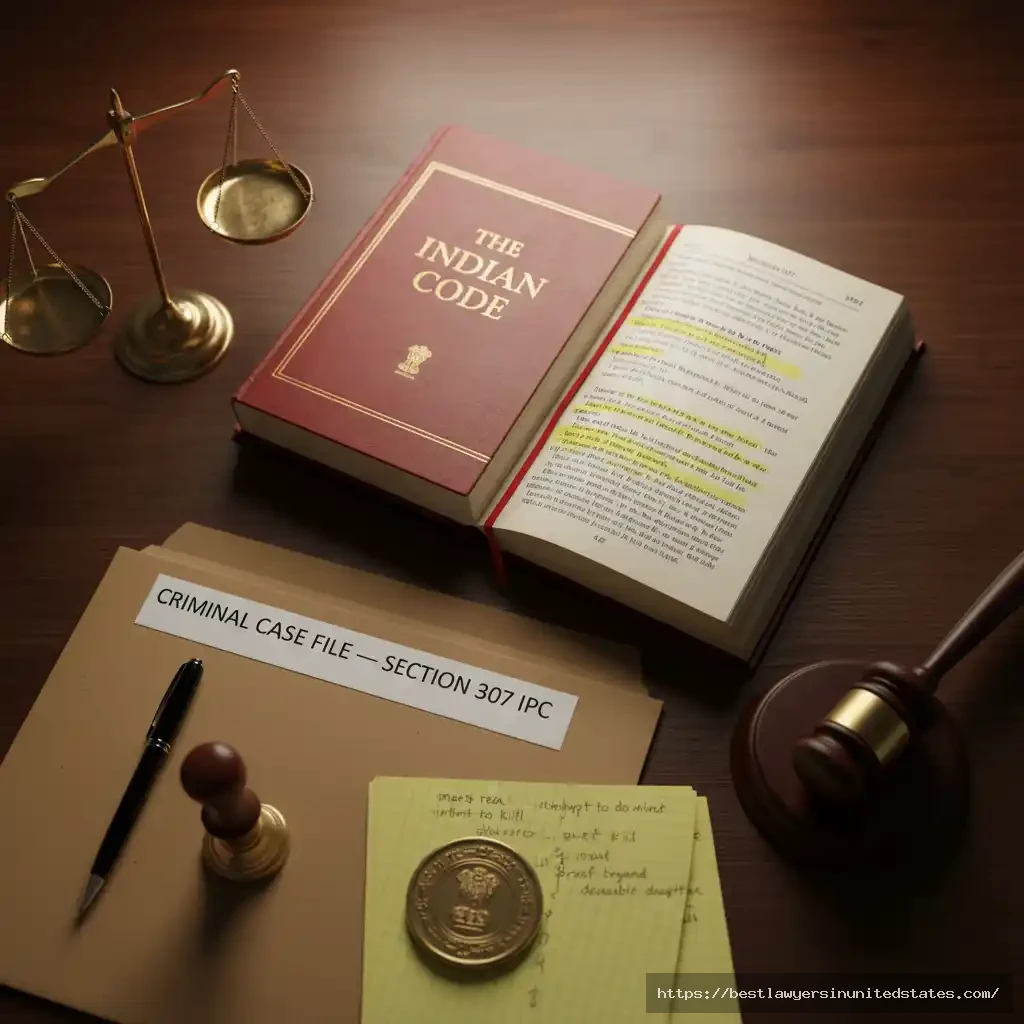
The legal text of Section 307 states: “Whoever does any act with intention to cause death, or knowing that such act is so imminently dangerous that in all probability it will cause death, shall be punished with imprisonment of either description for a term which may extend to ten years, or with fine, or with both; or if hurt be caused to the person against whom such act was directed by such act, shall be punished with life imprisonment or imprisonment… or with fine, or with both.”
This definition contains several critical legal components that prosecutors must prove beyond reasonable doubt:
- Act or Conduct: There must be a physical action taken (not merely planning or thinking about murder)
- Intention to Kill: The person must have acted with the specific intent to cause death
- Knowledge of Danger: OR they knew their action was so dangerous that death would likely result
- Proximity to Completion: The act must be more than mere preparation; it must be an immediate step toward executing the murder
- Direct Connection: There must be a direct nexus between the accused’s act and the attempt on the victim’s life
How Section 307 Differs from Other Sections
Understanding the distinction between Section 307 and related criminal provisions is essential, especially for the accused seeking to understand the gravity of charges.
Section 307 vs. Section 302 (Murder):
- Section 302 applies when death actually occurs
- Section 307 applies when death does not occur despite the attempt
- The punishment for 302 is more severe (death penalty or life imprisonment)
- The key difference is outcome, not intention
Section 307 vs. Section 308 (Attempt to Commit Culpable Homicide):
- Section 308 applies to attempted killing without the specific intention to kill
- Section 308 involves reckless or negligent acts that might cause death
- Section 307 requires a specific intent to cause death or knowledge of immediate danger
- Section 308 carries lighter punishment (up to 6 months imprisonment or fine of Rs. 250)
Section 307 vs. Section 326 (Grievous Hurt):
- Section 326 applies to causing serious physical injury
- Section 307 requires an attempt to kill, not just to harm
- The criminal intention is the key differentiator
Understanding Mens Rea (Criminal Intent) – THE CRITICAL FACTOR

This is where Section 307 cases are won or lost in court.
Mens rea is Latin for “guilty mind” or criminal intention. In Section 307 cases, courts must determine whether the accused had the specific intention to kill or merely caused injury recklessly.
Three Levels of Criminal Intention in 307 Cases
Level 1: Direct Intention to Kill
The accused clearly intended to end the victim’s life. This is the strongest prosecutorial case. Evidence includes:
- Verbal threats prior to the incident
- Use of a highly lethal weapon (firearms, sharp blades)
- Targeting vital body parts (head, chest, vital organs)
- Repeated attacks on the same victim
- Prior planning or premeditation
Example: A person shoots another person in the chest from close range with a firearm, stating “I will kill you” beforehand.
Level 2: Knowledge of Probable Consequences
The accused knew their action was so inherently dangerous that death would likely result. The court infers intention from the nature of the act itself, even without explicit statements.
Evidence includes:
- Type of weapon used and its lethality
- Force applied
- Targeting of vital areas
- Number and severity of injuries
Example: A person strikes another with a heavy iron rod repeatedly on the head, causing serious skull fractures.
Level 3: Recklessness (NOT Intention)
The accused acted recklessly without specifically intending to kill, but knew the act could cause death. This typically does NOT constitute 307 and may fall under Section 308 or Section 326 instead.
Example: During a fight, one person pushes another off a third-floor balcony as a fight escalates, without explicitly intending death.
How Courts Prove or Disprove Intent
Courts analyze the following factors to determine if Section 307 applies:
- Nature and Type of Weapon
- Firearms, sharp weapons, and explosives → strong evidence of intent to kill
- Blunt objects → depends on force and targeting
- Bare hands → rarely sufficient for 307 (usually Section 326 or 308)
- Body Part Targeted
- Head, chest, vital organs → evidence of intent to kill
- Limbs or non-vital areas → may indicate intent to injure, not kill
- Number and Severity of Injuries
- Multiple injuries on vital parts → intent to kill
- Single injury on non-vital part → intent to harm
- Medical Evidence
- Severity of injuries
- Whether injuries would likely cause death if untreated
- Proximity of injuries to vital organs
- Statements and Threats
- Prior verbal threats (“I will kill you”)
- Statements during the act (“I am killing you”)
- These are direct evidence of mens rea
- Circumstantial Evidence
- Prior conflicts or motive
- Premeditation or planning
- Attempts to conceal evidence
Punishment Under IPC Section 307 (Sentencing Guide)
The punishment structure under Section 307 is progressive based on whether the victim was injured.
Maximum and Minimum Punishment
If No Injury is Caused:
- Imprisonment up to 10 years, OR
- Fine up to Rs. 1,000, OR
- Both imprisonment and fine
If Injury is Caused to the Victim:
- Life imprisonment, OR
- Imprisonment up to 10 years, OR
- Fine up to Rs. 1,000, OR
- Any combination of the above
Aggravating Factors (INCREASE Punishment)
Courts consider these factors when determining sentence length within the allowable range:
- Premeditation: The attack was planned in advance
- Use of Deadly Weapons: Firearms, explosives, sharp weapons with high lethality
- Multiple Victims: Attacking more than one person
- Serious Injuries: Victim hospitalized with life-threatening injuries
- Previous Criminal Record: Prior convictions for violence
- Vulnerable Victim: Child, elderly person, or person unable to defend themselves
- Brutality of Act: Savage or cruel manner of attack
- Motive: Attack motivated by caste, religion, or revenge
Mitigating Factors (REDUCE Punishment)
Courts also consider factors that may reduce the sentence:
- Provocation: The victim provoked the accused immediately before the attack
- Intoxication: The accused was intoxicated (though this doesn’t excuse the act)
- First Offense: No prior criminal history
- Remorse: Genuine remorse expressed by the accused
- Minor Injuries: The victim sustained only superficial injuries despite the attempt
- Delay or Incomplete Act: The act was abandoned before completion
- Youth of Accused: Young age at time of offense
- Mental Health Issues: Documented mental illness (though not a complete defense)
Typical Sentencing Ranges by Scenario
| Scenario | Typical Sentence |
|---|---|
| Attempt with firearm, vital body part, injury caused | 7-12 years |
| Attempt with sharp weapon, vital part, serious injury | 5-10 years |
| Attempt with blunt weapon, minor injuries | 3-7 years |
| Attempt without injury, but clear intent | 2-5 years |
| First-time offender with provocation, minor injury | 1-3 years |
IPC 307 vs. IPC 302: Complete Comparison
This comparison is critical for anyone trying to understand their charges or compare cases.
| Aspect | Section 307 (Attempt to Murder) | Section 302 (Murder) |
|---|---|---|
| Legal Definition | Attempt to cause death | Actual death caused |
| Mens Rea Required | Intent to kill OR knowledge of imminent danger | Intent to kill OR knowledge causing death |
| Outcome | Victim survives | Victim dies |
| Maximum Punishment | Life imprisonment or 10 years | Death penalty or life imprisonment |
| Minimum Punishment | Varies based on injury | Usually 7 years minimum |
| Bail Status | Non-bailable | Non-bailable |
| Cognizable | Yes | Yes |
| Examples | Shooting at vital organs but missing, stabbing that wounds but doesn’t kill | Bullet hits vital organ causing death, injuries lead to death |
| Burden of Proof | Attempt to cause death; outcome irrelevant | Actual death occurred |
When Does Section 307 Become Section 302?
The critical factor is outcome. If an accused commits an act with intent to kill but the victim dies due to the injuries, the charge escalates to Section 302. The same act can be 307 if the victim survives and 302 if they die.
Bail in IPC Section 307 Cases – Complete Strategic Guide
One of the most frequently asked questions: “Is bail possible in 307?” Section 307 is non-bailable, but courts can grant bail at their discretion. Before filing your bail application, understand the different types of bail and legal procedures that courts follow when deciding bail eligibility.

Is Section 307 Bailable or Non-Bailable?
Section 307 is a NON-BAILABLE offense. This means:
- A police officer or duty officer cannot grant bail at the police station
- Only a court (Magistrate or Sessions Judge) can grant bail
- The accused cannot be released on bail as a matter of right
- Bail is discretionary, based on specific legal criteria
However, bail can still be granted by courts even though it’s non-bailable.
Regular Bail in Section 307 Cases
Eligibility Criteria for Regular Bail:
Courts consider these factors when deciding whether to grant bail:
- Nature of Charges: How serious are the charges? Is the evidence strong?
- Strength of Case: How much evidence does the prosecution have?
- Criminal Record: Has the accused committed crimes before?
- Ties to Community: Does the accused have family, employment, property in the area?
- Flight Risk: Is there a risk the accused will flee to avoid trial?
- Likelihood to Surrender: Will the accused appear for trial dates?
- Interference with Witnesses: Will the accused tamper with witnesses or evidence?
- Severity of Injury: How serious was the victim’s injury?
- Victim’s Condition: Is the victim still at risk from the accused?
Anticipatory Bail in Section 307 Cases
What is Anticipatory Bail?
Anticipatory bail is bail granted before arrest. The accused approaches the court when they believe an FIR might be filed against them, and the court grants bail in advance.
When to File for Anticipatory Bail:
- When you learn an FIR is about to be filed
- When you want to avoid police custody
- When you’re concerned about coercive police interrogation
- As a preventive measure
Conditions Typically Imposed:
- Furnish a bail bond (personal surety)
- Provide one or more sureties
- Regular reporting to the police station
- Surrender of passport (for serious cases)
- Not to contact witnesses
- Not to leave the jurisdiction without court permission
Bail Amount and Sureties
Bail Bond Amount: Courts typically set bail bonds ranging from Rs. 10,000 to Rs. 2,00,000 depending on:
- Severity of injury
- Criminal history
- Financial capacity of the accused
- Flight risk assessment
Sureties Required: Usually 1-2 sureties (people who vouch for your attendance and good behavior).
Chargesheet Filing & Timeline – Strategic Procedures
The chargesheet is a critical document. Understanding the timeline protects your rights.
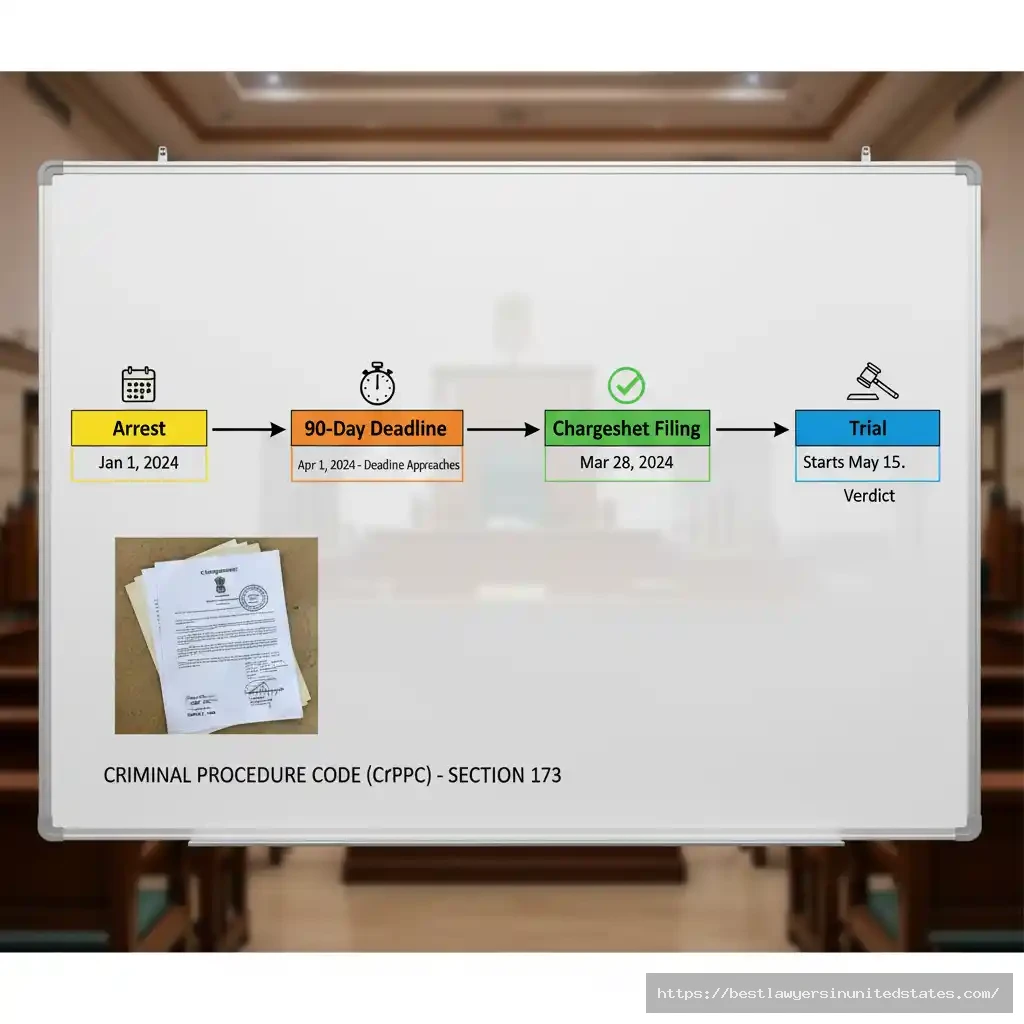
The 90-Day Rule: Chargesheet Deadline
Police must file a chargesheet within 90 days from the date of arrest in Section 307 cases. This is mandated under Section 167 of the Criminal Procedure Code (CrPC).
What Happens If No Chargesheet Is Filed:
- After 90 days, if no chargesheet is filed, the accused can be released on bail (if not already granted)
- After 90 days, the magistrate has the power to order release on bail
- This is a significant legal protection for the accused
Extension Beyond 90 Days
Police can request an extension beyond 90 days only in special circumstances, such as:
- Investigation is complex and requires more time
- Court permission is obtained
- Extensions are typically 30-60 days at a time
Bail Implications During Chargesheet Period
If you don’t have bail before the chargesheet is filed:
- You remain in police custody or jail
- The chargesheet strengthens the prosecution’s case
- Getting bail becomes harder after chargesheet (though still possible)
Strategic Insight: Filing a bail application immediately after arrest, or applying for anticipatory bail before arrest, is critical.
What Happens After Chargesheet Is Filed
Once the chargesheet is filed:
- The case is formally charged
- A trial date is set
- If you don’t have bail, you can apply for regular bail after chargesheet
- The prosecution presents its evidence
- You have the right to cross-examine witnesses
After chargesheet, the prosecution presents its case and you have the right to cross-examine prosecution witnesses credibly to challenge their testimony and raise reasonable doubt.
Evidence Required to Prove IPC Section 307
Understanding what evidence prosecutors need is crucial for building your defense. Medical evidence must corroborate the narrative of the accused’s act. A forensic lawyer reveals how evidence can win cases by analyzing injury patterns and forensic data. If injuries don’t align with the alleged act, inconsistencies can result in acquittal.
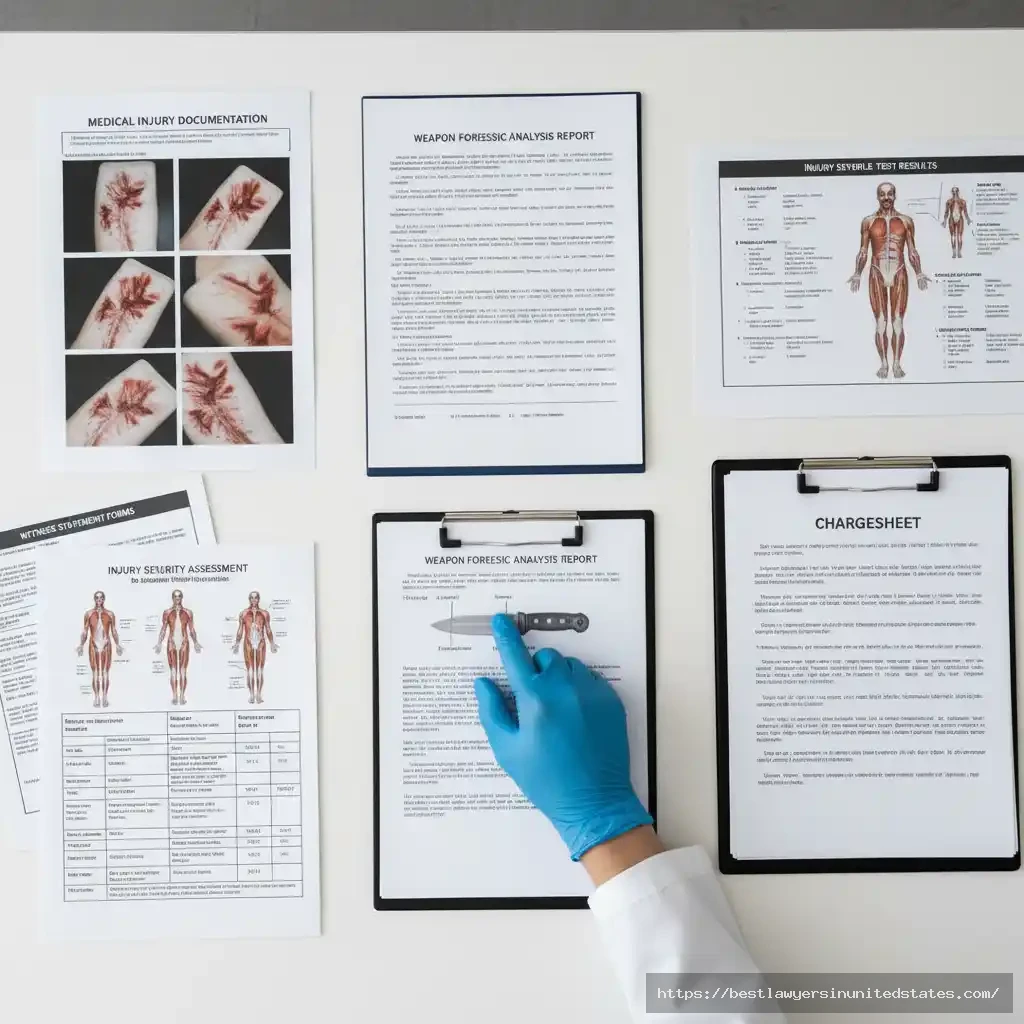
Types of Evidence Prosecutors Use
1. Medical Evidence
- Doctor’s report on injury severity
- Whether injuries could cause death
- Whether injuries are consistent with the accused’s stated act
- Medical opinion on proximity to vital organs
2. Weapon Analysis
- Type of weapon used
- Forensic examination of weapon
- Whether weapon was lethal or highly dangerous
- Match between weapon and injuries
3. Eyewitness Testimony
- Direct witnesses to the incident
- Their account of the accused’s actions
- Whether they heard threats or statements by the accused
- Credibility and reliability of witnesses
4. Circumstantial Evidence
- Prior threats or messages
- Motive (prior conflict, rivalry, disputes)
- Planning or premeditation
- Attempts to conceal evidence
5. Forensic Evidence
- Fingerprints on weapon
- Blood analysis and DNA
- Crime scene reconstruction
- Ballistics (if firearm was used)
6. Statements and Confessions
- Confession to police (if admissible)
- Statement to witnesses
- Social media posts or messages threatening harm
What Prosecutors Must Prove Beyond Reasonable Doubt
To secure a 307 conviction, prosecutors must prove:
- The accused committed a specific act (e.g., fired a gun, wielded a knife)
- The accused had intent to kill OR knew the act was imminently dangerous
- The act was directed at a specific person (the alleged victim)
- The act was the proximate cause of the victim’s injuries
- The victim survived (otherwise it would be 302)
Common Evidentiary Gaps in Prosecution Cases
Courts have acquitted accused persons when prosecutors failed to prove:
- Intent to Kill: No evidence of specific intention; only evidence of intention to cause harm
- Weapon Connection: No proof the accused owned or had access to the weapon
- Proximity: Evidence shows preparation, not an attempt (preparation alone is not sufficient)
- Medical Causation: Injuries don’t align with the described act
- Witness Credibility: Only prosecution witnesses; no independent corroboration
Legal Defenses Against IPC Section 307 Charges
If you’re facing 307 charges, multiple defense strategies may be available. A defense lawyer can apply for bail, cross-examine prosecution witnesses, file quashing petitions, and gather defense evidence. Understanding criminal defense strategies is essential to protecting your reputation and freedom during a 307 case.

Defense 1: Absence of Intent to Kill
Argument: You never intended to kill; you intended only to cause injury or harm.
This is the most common defense. If prosecutors cannot prove you specifically intended to kill, the charge may be reduced to:
- Section 326 (Grievous Hurt)
- Section 308 (Attempt Culpable Homicide)
Evidence Supporting This Defense:
- Medical evidence showing injuries are minor
- No prior threats of death
- No targeting of vital body parts
- First-time offender with no history of violence
Defense 2: Self-Defense (Sections 96-106 IPC)
Argument: Your act was in self-defense against an immediate threat.
Self-defense is a legal justification for using force to protect yourself from harm. The right to self-defense includes:
- Right to use force proportionate to the threat
- Right to target vital organs if the attacker posed an extreme threat
- Right to use any weapon available
Conditions for Valid Self-Defense:
- There must be an immediate threat to life or serious injury
- The force used must be proportionate to the threat
- You must not have been the aggressor (you didn’t start the fight)
- Your response must be contemporaneous with the threat
Example: If someone attacked you with a knife and you defended yourself with a weapon, causing injury, self-defense may apply.
Defense 3: Mistaken Identity
Argument: You were not the person who committed the act.
This defense requires:
- Credible alibi evidence (you were elsewhere)
- Eyewitness inconsistencies
- Poor identification procedures
- Circumstantial evidence pointing to another person
Defense 4: Lack of Weapon/Capability
Argument: You lacked the means or capability to cause the injuries.
For example, if you’re accused of stabbing someone but:
- No weapon was recovered from you
- You’re physically frail or elderly
- Medical evidence shows strength inconsistent with causing injuries
Defense 5: Provocation
Argument: The victim provoked you immediately before the incident.
Under IPC Section 337, provocation is a defense that can reduce culpability. However, it doesn’t completely acquit you; it may reduce the charge or sentence.
Valid Provocation Requires:
- The victim gave the provocation (not a third party)
- Provocation was immediate
- You acted while still under provocation’s influence
- The act was proportionate to the provocation
IPC 307 Under BNS (Bharatiya Nyaya Sanhita) – What Changed in 2025?
The Bharatiya Nyaya Sanhita (BNS), India’s new criminal law, came into effect on July 1, 2023, replacing the 160-year-old Indian Penal Code.
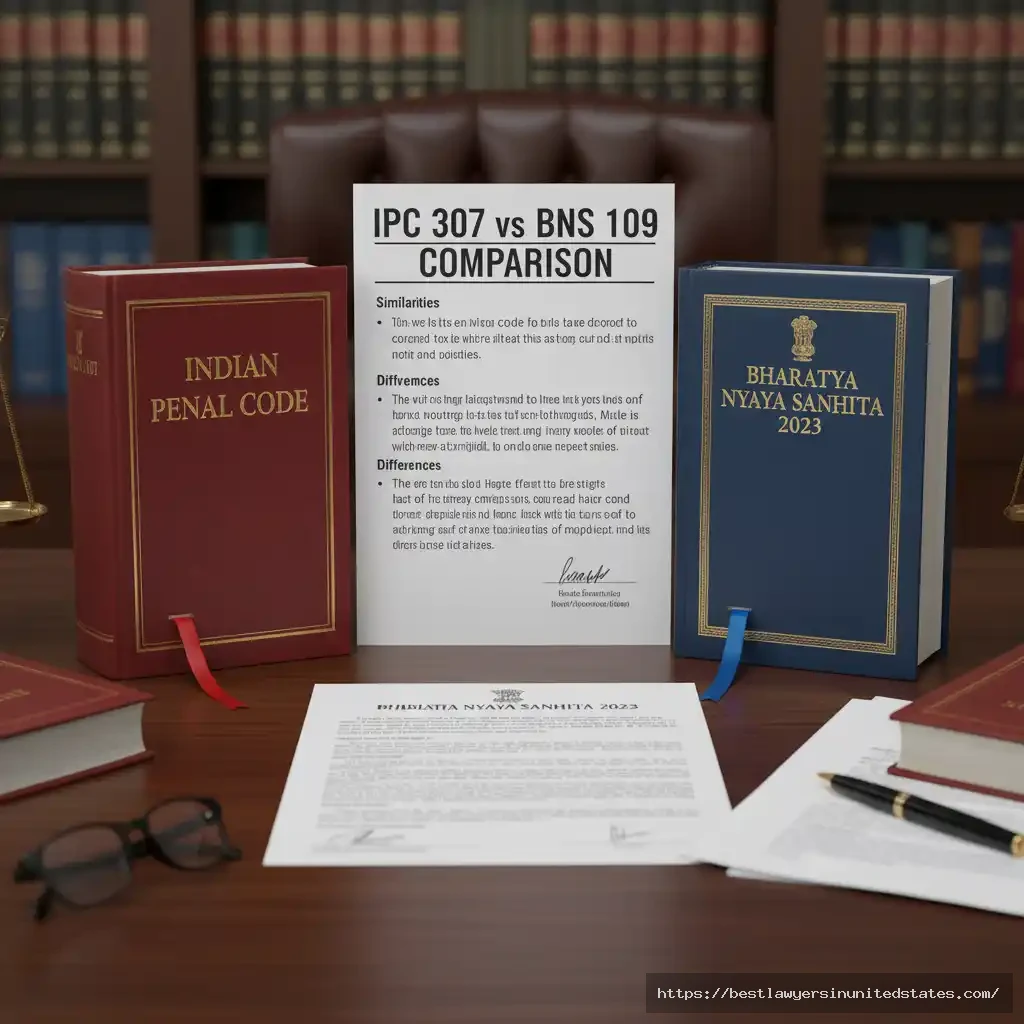
BNS Section Equivalent to IPC 307
IPC Section 307 is replaced by BNS Section 109: “Attempt to commit murder.”
The legal definition and punishment remain largely the same, ensuring continuity in criminal law application.
Key Changes Under BNS
1. Procedural Changes:
- Chargesheet filing timeline: 90 days (unchanged)
- Bail provisions: Similar non-bailable status (unchanged)
- Trial procedures: Slightly streamlined in some aspects
2. Terminology Changes:
- Some sections renamed for clarity
- Language modernized for contemporary understanding
- More emphasis on victim protection provisions
3. Enhanced Victim Rights:
- Victims have greater say in bail proceedings
- Victim impact statements carry more weight
- Victim’s safety considered in bail conditions
How BNS Affects Ongoing 307 Cases
Cases Filed Before July 1, 2023 (Under IPC):
- Continue to be tried under IPC Section 307
- Can reference BNS provisions for procedural matters
- No automatic re-charging under BNS
Cases Filed After July 1, 2023 (Under BNS):
- Charged under BNS Section 109 instead
- Procedural rules follow BNS framework
- Substantive law largely similar
Important: Do NOT Worry About Double Prosecution
You cannot be prosecuted twice for the same act—once under IPC 307 and again under BNS Section 109. The new law applies prospectively; old cases conclude under the law that applied when they were filed.
Can IPC 307 FIR Be Quashed? Withdrawal & Closure
Many people facing false or weak 307 charges ask: “Can the FIR be quashed?”
What is FIR Quashing?
Quashing means the court invalidates the FIR and stops further proceedings. It’s a powerful remedy for those falsely accused.
Difference: Quashing vs. Acquittal
- Quashing: Court stops the case before/during trial, finding no prima facie case
- Acquittal: Trial completes, and accused is found not guilty
Legal Grounds for Quashing (Section 482 CrPC)
Courts can quash an FIR if:
- No Cognizable Offense Made Out:
- The facts in the FIR don’t constitute a crime
- Example: An injury caused accidentally doesn’t constitute 307
- Grossly Defective or Mala Fide (Bad Faith) FIR:
- FIR filed with malicious intent
- No reasonable possibility of conviction
- FIR is an abuse of process
- Insufficient Evidence:
- Preliminary investigation shows weak evidence
- No credible witness testimony
- Medical evidence contradicts 307 charges
- Compoundable Offense:
- While 307 is generally non-compoundable, exceptions exist
- Both parties can reach settlement
- Court may accept settlement
Steps to File a Quashing Application
- Approach the High Court (or Supreme Court)
- File a Petition under Section 482 CrPC
- Provide:
- Copy of FIR
- Copy of preliminary investigation report
- Affidavit stating facts
- Evidence supporting your case for quashing
- Argue:
- Why the FIR is defective
- Why no 307 charge is made out
- Why evidence is insufficient
Timeline for Quashing
- Filing: Can be done immediately after FIR is registered
- Hearing: Usually within 2-4 weeks
- Decision: Varies; typically within 1-3 months
Successful Quashing Examples
Courts have quashed 307 FIRs where:
- Medical evidence showed injuries were minor/accidental
- Witness testimony was inconsistent
- Accused had clear alibi
- FIR was filed due to personal vendetta
Supreme Court Judgments & Landmark Cases on Section 307
Judicial precedents shape how courts interpret Section 307. Here are landmark cases:
Case 1: State of Maharashtra vs. Balram Bama Patil & Others (1983)
Key Ruling: The Supreme Court established that Section 307 requires specific intention to cause death. Mere recklessness or negligence is insufficient.
Holding: If the prosecution cannot prove beyond reasonable doubt that the accused specifically intended to kill, conviction under 307 cannot stand. The charge must be reduced to Section 308 or 326.
Application Today: Prosecutors must present strong evidence of intent—weapon type, targeting of vital organs, prior threats, etc.
Case 2: Sarju Prasad vs. State of Bihar
Key Ruling: The nature of the weapon used is critical evidence of intention.
Holding: Use of a firearm, sharp weapon, or highly lethal instrument suggests intent to kill. Bare hands or minor weapons suggest intent to cause injury, not death.
Application Today: Defense attorneys argue weapon type to challenge 307 charges.
Case 3: State of Andhra Pradesh vs. Rayavarapu Punnayya
Key Ruling: Medical evidence must corroborate the narrative of the accused’s act.
Holding: If injuries don’t align with the alleged act, the court may find inconsistencies raising doubt about the accused’s culpability.
Application Today: Medical evidence is critical; misalignment between injuries and the alleged act can result in acquittal.
Recent Supreme Court Guidance on Bail in 307 Cases
Recent judicial pronouncements emphasize:
- Bail should not be automatically refused in 307 cases
- Factors like severity of injury, criminal history, and community ties must be considered
- Custodial interrogation should not exceed 3 days
- Bail applications must be heard on merit
Comprehensive FAQs on IPC Section 307
Q1: What is IPC Section 307?
A: Section 307 punishes the attempt to commit murder. It applies when someone attempts to kill another person but the victim survives. Punishment ranges from 10 years imprisonment to life imprisonment, depending on whether injury was caused.
Q2: What constitutes an attempt to murder under IPC 307?
A: An attempt requires: (1) an intentional act, (2) specific intention to cause death OR knowledge that the act is imminently dangerous, (3) the act must be more than mere preparation—it must be a direct step toward executing the murder, (4) the victim survives.
Q3: What is the punishment for attempted murder in India?
A: If no injury: Up to 10 years imprisonment or fine. If injury caused: Life imprisonment or up to 10 years imprisonment, plus fine. Actual sentence depends on aggravating/mitigating factors and judicial discretion.
Q4: How is Section 307 different from Section 302 IPC?
A: Section 302 applies when death occurs; Section 307 applies when the victim survives. Both require intent to kill, but the outcome determines the charge and severity of punishment.
Q5: Can self-defense be used as a defense in Section 307 cases?
A: Yes, if you acted in immediate self-defense against an imminent threat to life. Self-defense is a valid legal justification that can result in acquittal or charge reduction.
Q6: What evidence is required to prove IPC Section 307?
A: Prosecutors must prove: (1) the accused committed a specific act, (2) specific intention to kill OR knowledge of imminent danger, (3) the act was directed at the victim, (4) the act caused the injuries, (5) the victim survived.
Q7: Can a 307 case be withdrawn?
A: Yes, if the accused and victim reach a settlement, the victim can request withdrawal. However, if the case is serious or involves use of weapons, courts may not permit withdrawal. The prosecution can also withdraw if evidence is weak.
Q8: Is Section 307 bailable?
A: Section 307 is non-bailable, meaning bail is not automatic. However, courts can grant bail at their discretion based on case circumstances. Many 307 accused persons do get bail.
Q9: Can anticipatory bail be granted in 307 IPC?
A: Yes, courts can grant anticipatory bail in 307 cases. You must file before arrest and convince the court that bail conditions are met (ties to community, no flight risk, etc.).
Q10: What is the chargesheet filing period for 307 IPC?
A: Police must file chargesheet within 90 days from arrest. If not filed, you can be released on bail. Extensions beyond 90 days require court approval and valid reasons.
Q11: Can a 307 FIR be quashed?
A: Yes, under Section 482 CrPC, a High Court can quash a 307 FIR if: (1) no cognizable offense is made out, (2) evidence is grossly defective, (3) FIR is filed in bad faith, or (4) no reasonable prospect of conviction exists.
Q12: What are the types of bail in criminal cases?
A: (1) Police Bail: Granted at police station (not for 307). (2) Regular Bail: Granted by court after arrest. (3) Anticipatory Bail: Granted before arrest. (4) Bail on Recognizance: Personal bond without sureties.
Q13: Is Section 307 a cognizable offense?
A: Yes, Section 307 is cognizable, meaning police can arrest without a warrant and conduct investigation without court permission.
Q14: What factors reduce punishment under IPC 307?
A: Mitigating factors include: provocation, intoxication, first offense, remorse, minor injuries, incomplete act, young age, mental health issues. Courts reduce sentences based on these factors.
Q15: What is the new equivalent of Section 307 in BNS?
A: BNS Section 109 replaces IPC Section 307. The legal definition and punishment remain largely the same. New cases use BNS Section 109; old cases continue under IPC.
Q16: Can the magistrate grant bail in 307 IPC?
A: Yes, a Magistrate can grant bail in 307 cases. However, the trial of serious 307 cases (with life imprisonment or major injury) is conducted by Sessions Courts, which can also modify bail conditions.
Q17: How long is the trial process in 307 cases?
A: Trials typically take 2-5 years, depending on case complexity, number of witnesses, and court schedule. Simple cases may conclude in 1-2 years; complex cases take longer.
Q18: Can police file a chargesheet without evidence?
A: Legally, no. Chargesheet must be based on sufficient evidence. However, even weak chargesheet can be filed. The accused can challenge it in court and seek acquittal if evidence is insufficient.
Q19: What is the role of a 307 defense lawyer?
A: A defense lawyer can (1) apply for bail/anticipatory bail, (2) cross-examine prosecution witnesses, (3) file quashing petitions, (4) gather defense evidence, (5) negotiate settlements, (6) challenge chargesheet in court.
Q20: What happens after the chargesheet is filed?
A: After chargesheet, the case enters the trial stage. The prosecution presents its case, you have the right to cross-examine witnesses, your defense is presented, and the court passes judgment (conviction or acquittal) based on evidence.
Key Takeaways: What You Must Know About IPC 307
- Section 307 is for attempted murder—a serious non-bailable offense requiring specific intent to kill.
- Punishment ranges from 10 years to life imprisonment, depending on injury severity and aggravating/mitigating factors.
- Bail is possible even though it’s non-bailable, if you meet eligibility criteria (community ties, no flight risk, weak evidence).
- Mens rea (criminal intent) is the critical factor—if intent to kill cannot be proven, charges may reduce to Section 326 or 308.
- Medical evidence and weapon type are crucial—they indicate whether intent to kill existed.
- Chargesheet must be filed within 90 days of arrest; if not, you can be released on bail.
- Multiple defense strategies exist: self-defense, mistaken identity, absence of intent, provocation.
- BNS Section 109 replaces IPC 307 but substantive law remains largely the same; ongoing cases continue under IPC.
- FIR quashing is possible under Section 482 CrPC if evidence is weak or FIR is filed in bad faith.
- Landmark Supreme Court judgments emphasize that specific intention to cause death must be proven; mere recklessness is insufficient.
Steps to Take If You’re Accused Under IPC Section 307
Immediate Actions (First 24-48 Hours):
- Do Not Confess: Exercise your right to remain silent; do not admit anything to police.
- Request a Lawyer: Tell police you want legal representation before any questioning.
- Contact Family: Inform family immediately so they can arrange legal help.
- Document Medical Records: If you were injured, get medical documentation.
- Preserve Evidence: Keep any communication (messages, emails) that support your innocence.
Within First Week:
- File for Anticipatory Bail: If not arrested, approach court immediately.
- File for Regular Bail: If arrested, apply for bail within 24-48 hours.
- Gather Character References: Collect documents showing your good character.
- Interview Witnesses: Identify witnesses who support your version.
Ongoing Strategy:
- Attend All Court Dates: Never miss a hearing; this affects bail and trial proceedings.
- Stay Out of Trouble: Any new offense can affect your bail.
- Avoid Contact with Victim: This can be a bail condition violation.
- Cooperate with Your Lawyer: Provide all relevant information.
- Challenge Weak Evidence: Help your lawyer identify gaps in the prosecution’s case.
Call to Action
If you’re facing IPC Section 307 charges or have concerns about bail, chargesheet, or evidence, time is critical. Every day that passes without proper legal strategy can affect your case outcome.
Why Choose Our Legal Team?
- Specialized Expertise: Our attorneys have successfully defended hundreds of 307 cases, from bail applications to acquittals.
- Strategic Approach: We analyze prosecution evidence for weaknesses, challenge witness credibility, and build robust defense strategies.
- Immediate Response: Contact us 24/7 for urgent bail applications or anticipatory bail.
- Transparent Communication: We explain complex legal procedures in plain language.
- Proven Results: High success rate in bail approvals and case dismissals.
Free Initial Consultation
Schedule a confidential consultation with our IPC 307 specialists. We’ll:
- Review your specific case details
- Explain your legal rights and options
- Discuss bail strategy
- Answer all your questions
- Provide a preliminary assessment
Contact us today:
If you’re facing IPC Section 307 charges, contact experienced criminal defense attorneys 24/7 for urgent bail applications and strategic defense planning.
Disclaimer
This article provides general legal information about IPC Section 307 and is not a substitute for professional legal advice. Criminal law is complex and fact-specific. Every case is unique. The information here should not be relied upon as legal counsel. If you’re facing 307 charges or any criminal matter, immediately consult with a qualified criminal defense attorney licensed in your jurisdiction. Laws vary by state and region. This article reflects law as of 2025 and may change. Always verify current law with your attorney.