Colorado DUI laws carry serious penalties that start the moment police pull you over. A first offense costs $600 to $1,000 in fines plus up to one year in jail. Your license gets suspended immediately. You have just seven days to request a DMV hearing or lose your driving privileges automatically.
Getting arrested for DUI in Colorado triggers two separate legal processes. The criminal court handles your DUI charge under Colorado Revised Statutes § 42-4-1301. The Colorado Department of Revenue Division of Motor Vehicles (DMV) runs an administrative hearing that can suspend your license regardless of the criminal case outcome.
Understanding Colorado DUI Classifications
Colorado law defines three main drunk driving offenses. Each carries different penalties based on your blood alcohol content and level of impairment.
DUI vs DWAI vs DUI Per Se: What’s the Difference?
DUI (Driving Under the Influence) means you’re substantially impaired and incapable of safely operating a vehicle. Police must prove your ability to drive was affected by alcohol or drugs.
DWAI (Driving While Ability Impaired) is a lesser offense. You’re impaired to the slightest degree but not substantially incapable of safe driving. DWAI penalties are lighter than DUI penalties.
DUI Per Se means your BAC tested at or above the legal limit. The prosecution doesn’t need to prove impairment. The test result alone is enough for conviction.
You can be charged with both DUI and DUI Per Se for the same incident. Prosecutors often file both charges and let the court decide which fits your case.
Colorado BAC Limits
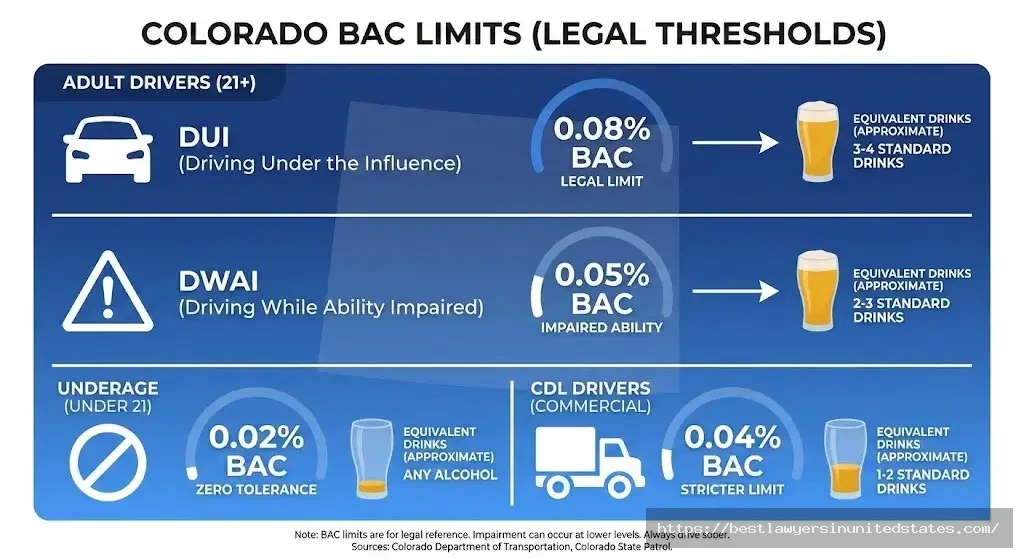
Different BAC limits apply depending on your age and driver’s license type.
| Driver Type | BAC Limit | Violation |
|---|---|---|
| Adult drivers (21+) | 0.08% or higher | DUI Per Se |
| Adult drivers (21+) | 0.05% to 0.079% | DWAI |
| Underage drivers (under 21) | 0.02% to 0.049% | UDD (Underage Drinking & Driving) |
| Underage drivers (under 21) | 0.05% or higher | DUI or DWAI |
| Commercial drivers (CDL) | 0.04% or higher | DUI (loses CDL) |
The 0.08% limit applies statewide under C.R.S. § 42-4-1301(1)(a). Colorado uses breath, blood, or urine tests to measure BAC.
Not sure what your BAC level is after drinking? Our calculator helps you estimate based on your weight, gender, and number of drinks.
Check Your BAC Level
Understanding your blood alcohol content helps you make safer decisions. Use our interactive BAC calculator to estimate whether you’re over Colorado’s legal limit.
BAC Calculator
Estimate your Blood Alcohol Content
• Commercial Driver (CDL): 0.04% BAC
• Drivers Under 21: 0.00-0.02% BAC (Zero Tolerance)
• Enhanced Penalties: 0.15% BAC or higher in most states
Learn more about how BAC is calculated and what factors affect your results on our BAC Calculator page.
Marijuana & Drug DUI in Colorado
Colorado law prohibits driving with 5 nanograms or more of delta-9-tetrahydrocannabinol (THC) per milliliter of blood. This applies under C.R.S. § 42-4-1301(6)(a)(IV).
The 5 ng/ml limit only measures active THC, not inactive metabolites. However, THC DUI charges remain controversial. THC stays in your system much longer than alcohol. You can test positive days after using marijuana even when you’re not impaired.
Medical marijuana cardholders get no special exemption. The same 5 ng/ml limit applies. Your medical card doesn’t protect you from DUI charges.
Police can also charge you with DUI if they prove marijuana impaired your driving, even below 5 ng/ml. The officer’s observations and field sobriety tests create evidence of impairment.
Prescription drugs and over-the-counter medications can also lead to DUI charges. Any substance that impairs your driving ability counts under Colorado law.
When Does a DUI Become a Felony in Colorado?
Most DUI offenses in Colorado are misdemeanors. A fourth DUI conviction within your lifetime becomes a Class 4 felony under C.R.S. § 42-4-1301(1)(b).
Felony DUI penalties include:
- 2 to 6 years in prison
- $2,000 to $500,000 in fines
- 4-year license revocation
- Mandatory 2-year ignition interlock after reinstatement
- Permanent felony record
DUI also becomes a felony if you cause serious bodily injury while driving drunk. This charge falls under vehicular assault (C.R.S. § 18-3-205). Penalties include 2 to 6 years in prison.
Causing death while driving drunk brings vehicular homicide charges (C.R.S. § 18-3-106). This Class 3 felony carries 4 to 12 years in prison.
Colorado counts all prior DUI convictions from any state when determining if your current charge is a felony. An old DUI from California or Texas still counts toward your fourth offense.
Colorado DUI Penalties by Offense
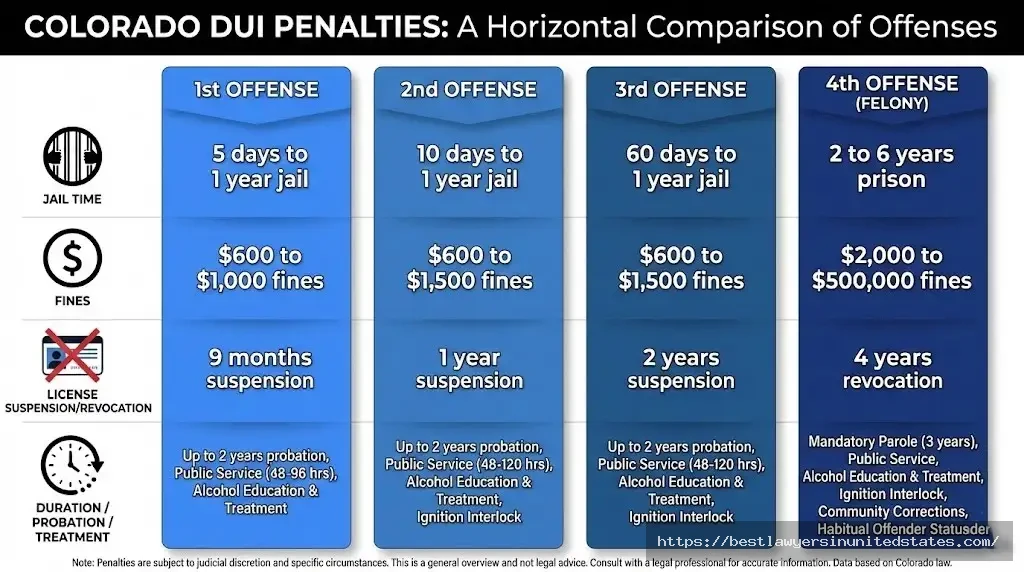
Penalties increase sharply with each DUI conviction. Colorado courts consider your entire lifetime DUI history when sentencing.
First DUI Offense Colorado
A first DUI in Colorado is a misdemeanor. Courts have discretion within these penalty ranges.
Fines & Court Costs
You’ll pay $600 to $1,000 in fines for a first DUI. Court costs add another $100 to $200. The judge can reduce the fine to $300 if you complete a Level II alcohol education program.
Expect total costs between $7,000 and $15,000 when you include all fees. These costs stack up from attorney fees, alcohol classes, ignition interlock devices, and insurance increases.
Jail Time & Community Service
First offense DUI carries 5 days to 1 year in jail. Judges typically sentence first-time offenders to 2 to 5 days in jail or 48 to 96 hours of community service.
You might qualify for a work release program. This lets you serve jail time on weekends while keeping your job during the week.
Courts often suspend jail time if you complete probation successfully. Probation lasts 1 to 2 years for first offenses.
License Suspension Period
Your license gets suspended for 9 months on a first DUI conviction. This is the criminal court suspension.
The DMV also suspends your license administratively. First-time offenders face a 9-month administrative suspension. You can request early reinstatement after 1 month if you install an ignition interlock device.
Refusing the chemical test triggers a 1-year license suspension on your first refusal. This suspension runs separately from your DUI conviction suspension.
Mandatory Classes & Treatment
All first-time DUI offenders must complete Level II alcohol education. This program costs $150 to $200 and requires 12 hours of classes.
If your BAC was 0.15% or higher, you need Level II alcohol therapy instead. Therapy costs $800 to $1,200 and involves group counseling sessions.
You’ll also complete 48 to 96 hours of community service. The court assigns you to work with local nonprofits or government agencies.
Second DUI Offense Colorado
Second DUI offenses bring mandatory minimum sentences. Judges have less discretion to reduce penalties.
You’ll pay $600 to $1,500 in fines. Jail time increases to a mandatory minimum of 10 days up to 1 year. Most second-time offenders serve 10 to 90 days.
Your license gets suspended for 1 year. You can apply for early reinstatement after 2 months by installing an ignition interlock device.
The court requires Level II alcohol therapy (not just education). You’ll attend 24 to 68 hours of group therapy sessions.
Community service increases to 48 to 120 hours. Probation typically lasts 2 years with stricter conditions.
Second offenses cost $10,000 to $20,000 total when you add up all penalties and fees.
Third DUI Offense Colorado
A third DUI remains a misdemeanor but carries harsher penalties than a second offense.
Fines range from $600 to $1,500. Mandatory minimum jail time is 60 days up to 1 year. Judges rarely suspend this jail sentence.
Your license gets suspended for 2 years. Early reinstatement isn’t available until after 1 year. You must install an ignition interlock device for 2 years after reinstatement.
Level II alcohol therapy becomes more intensive. You’ll complete 68 to 86 hours of treatment.
Community service increases to 48 to 120 hours. Probation lasts 2 to 4 years.
Third DUI offenses cost $15,000 to $25,000 or more in total expenses.
Fourth DUI Offense (Felony) Colorado
A fourth DUI becomes a Class 4 felony under Colorado law. This charge changes your life permanently.
You face 2 to 6 years in Colorado state prison. The Department of Corrections supervises your parole for 3 years after release.
Fines range from $2,000 to $500,000. Judges can order restitution if you caused property damage or injury.
Your license gets revoked for 4 years minimum. After revocation ends, you must use an ignition interlock device for 2 years.
Felony convictions create permanent consequences:
- Difficulty finding employment
- Loss of voting rights while incarcerated
- Prohibition on owning firearms
- Barriers to housing and professional licenses
- Potential deportation for non-citizens
Total costs for a felony DUI exceed $30,000 when including attorney fees, lost wages, and long-term impacts.
Aggravating Factors That Increase Penalties
Certain circumstances make DUI penalties more severe. Colorado courts enhance sentences for these aggravating factors:
High BAC (0.15% or higher): You need Level II therapy instead of education. Jail time often increases.
Minor passenger in vehicle: Having someone under 18 in the car adds 1 to 6 months of jail time. This charge is filed separately as child abuse (C.R.S. § 18-6-401).
Excessive speed: Driving 25+ mph over the limit while drunk adds to your sentence.
Accident causing injury: You face vehicular assault charges plus the underlying DUI.
Driving on suspended license: Combining DUI with driving under suspension brings additional charges.
BAC of 0.20% or higher: Prosecutors argue for maximum penalties at this level.
Judges have discretion to impose sentences at the higher end of the range when aggravating factors exist.
The True Cost of a Colorado DUI
DUI costs extend far beyond court fines. The total financial impact spans years and affects multiple areas of your life.
Calculate Your Total DUI Costs
Understanding the full cost helps you make informed decisions about your case. Use our interactive calculator to estimate what a Colorado DUI will cost you.
DUI Cost Calculator
Estimate total DUI expenses by state and offense
Detailed Cost Breakdown
Payment Timeline
Bail bond, towing fees, car impound, attorney retainer
Initial court fines, DMV fees, DUI school enrollment, ignition interlock installation
Monthly probation fees, ignition interlock fees, DUI school payments, attorney balance
Insurance premium increases, license reinstatement, SR-22 filing fees
- Lost wages from missed work (court dates, jail time, DUI school) – $2,000-$10,000
- Job loss or difficulty finding employment – Varies
- Professional license suspension (doctors, lawyers, nurses, pilots) – Career ending
- Rideshare and transportation costs during suspension – $1,500-$5,000
- Travel restrictions and visa denials – Varies
- Security clearance loss – Career impact
- Child custody implications – Legal costs
- Rental car restrictions – Varies
- Personal relationships and mental health costs – Priceless
Get a detailed breakdown of all DUI expenses on our DUI Cost Calculator page.
Direct Costs Breakdown
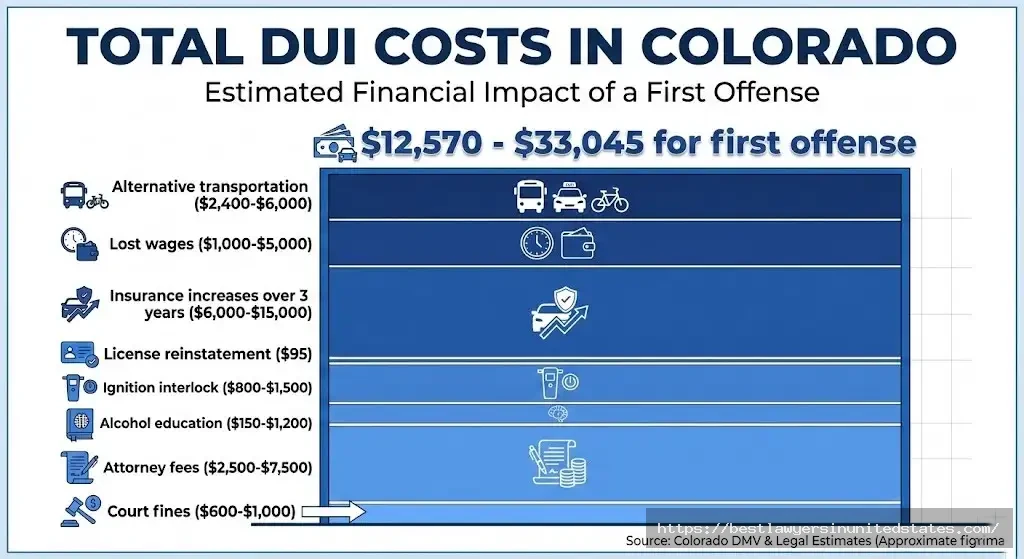
Here’s what you’ll pay immediately for a first-time DUI in Colorado:
| Expense Category | Cost Range |
|---|---|
| Court fines | $600 – $1,000 |
| Court costs | $100 – $200 |
| DUI attorney fees | $2,500 – $7,500 |
| Public defender fees | $200 – $500 |
| Alcohol education (Level II) | $150 – $200 |
| Alcohol therapy (if required) | $800 – $1,200 |
| Ignition interlock device (1 year) | $800 – $1,500 |
| License reinstatement fee | $95 |
| SR-22 insurance filing | $25 – $50 |
| Bail bond (10% of bail) | $100 – $500 |
| Towing and impound fees | $200 – $400 |
| Total Direct Costs | $5,570 – $13,045 |
Second and third offenses cost significantly more due to longer therapy requirements and ignition interlock periods.
Indirect Costs
The hidden costs of DUI often exceed the direct penalties:
Lost wages: Jail time, court appearances, and alcohol classes mean missed work. First offenders lose $1,000 to $5,000 in wages.
Increased insurance rates: Your car insurance premiums will jump 50% to 200%. This increase lasts 3 to 5 years. Average drivers pay an extra $6,000 to $15,000 over this period.
SR-22 insurance: Colorado requires SR-22 proof of insurance for DUI offenders. This certificate costs $25 to $50 per year. Your underlying insurance rates increase substantially.
Alternative transportation: Without a license, you’ll spend money on Uber, Lyft, buses, or asking friends for rides. Budget $200 to $500 per month for 9 to 12 months.
Job loss: Some employers fire workers with DUI convictions. Lost income can reach $20,000 to $50,000 if you lose your job.
Professional license impacts: Nurses, teachers, lawyers, and other licensed professionals may face disciplinary action. Defending your professional license costs $3,000 to $10,000 in additional legal fees.
Long-Term Financial Impact
A DUI conviction creates costs that extend years into the future:
Career limitations: Many employers refuse to hire applicants with DUI records. This limits job opportunities and earning potential.
Education barriers: Some colleges deny admission to students with DUI convictions. Scholarship opportunities may disappear.
Housing challenges: Landlords often reject rental applications from people with criminal records.
Travel restrictions: Canada bars entry to people with DUI convictions. European countries may deny visa applications.
Cost Comparison by Offense
Total costs increase dramatically with each subsequent DUI:
| Offense | Direct Costs | Insurance Increases | Lost Wages | Total Estimated Cost |
|---|---|---|---|---|
| 1st DUI | $5,570 – $13,045 | $6,000 – $15,000 | $1,000 – $5,000 | $12,570 – $33,045 |
| 2nd DUI | $8,000 – $18,000 | $10,000 – $20,000 | $3,000 – $10,000 | $21,000 – $48,000 |
| 3rd DUI | $10,000 – $25,000 | $15,000 – $25,000 | $5,000 – $15,000 | $30,000 – $65,000 |
| 4th DUI (Felony) | $15,000 – $40,000 | $20,000+ | $20,000 – $100,000 | $55,000 – $160,000+ |
These estimates assume you hire a private attorney and complete all requirements. Costs vary based on your county, BAC level, and whether you go to trial.
Colorado DUI Arrest Process & Timeline
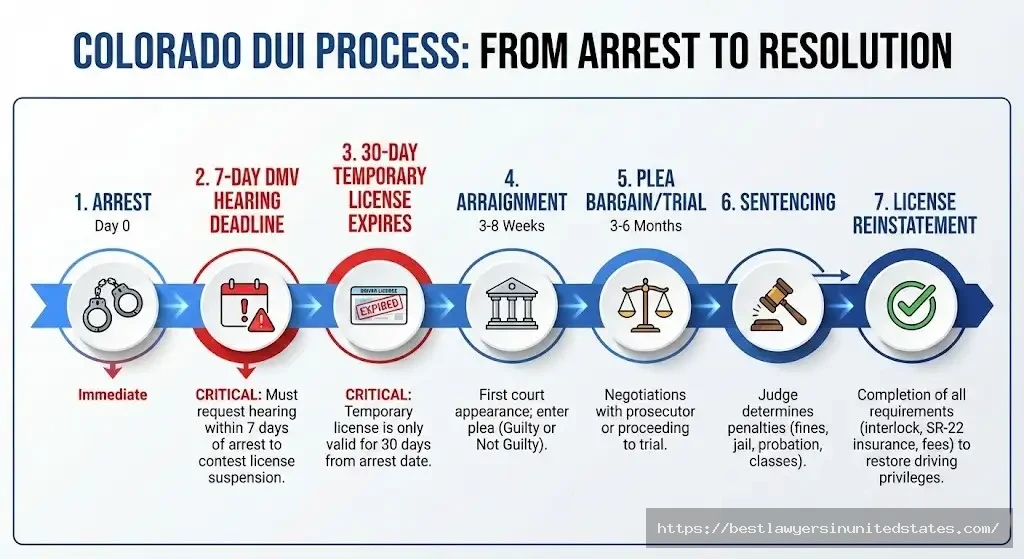
Understanding the DUI process helps you protect your rights and meet critical deadlines.
What Happens During a DUI Stop
Police need reasonable suspicion to pull you over. Common reasons include:
- Weaving between lanes
- Driving too slowly
- Running a red light or stop sign
- Speeding or erratic driving
- Equipment violations (broken taillight, expired tags)
After pulling you over, the officer looks for signs of intoxication:
- Smell of alcohol
- Slurred speech
- Red or watery eyes
- Open containers in the vehicle
- Admission that you’ve been drinking
If the officer suspects DUI, they’ll ask you to perform field sobriety tests. Common tests include:
Horizontal Gaze Nystagmus (HGN): The officer moves a pen or light side to side. They watch for involuntary eye movements that indicate intoxication.
Walk-and-Turn: You walk nine steps heel-to-toe along a line, turn, and walk back. The officer watches for balance problems.
One-Leg Stand: You stand on one leg for 30 seconds. Swaying or using your arms for balance suggests impairment.
You can refuse field sobriety tests without penalty. These tests are voluntary in Colorado. However, refusing might lead to arrest anyway based on other evidence.
The officer may also request a preliminary breath test (PBT) using a handheld device. This test is also voluntary. Results can’t be used in court but give the officer probable cause to arrest you.
First 48 Hours After Arrest
Police take you to jail after arresting you for DUI. You’ll be photographed, fingerprinted, and placed in a holding cell.
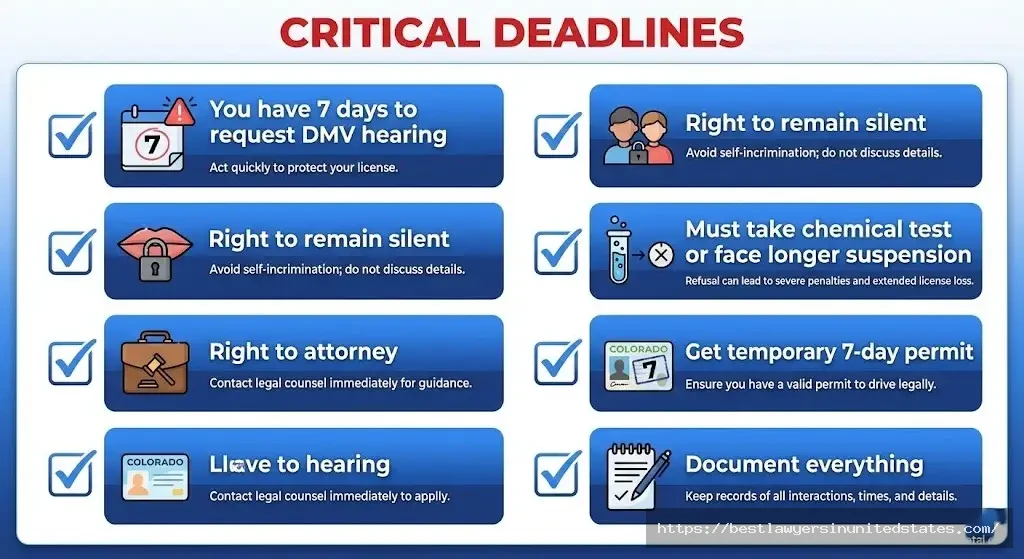
Within 2 hours of arrest, police offer you a chemical test of your breath or blood. This test is mandatory under Colorado’s Express Consent Law.
If you refuse, your license gets suspended for 1 year (first refusal) or 2 years (second refusal). Test refusal also becomes evidence against you in court.
After chemical testing, you’re released on bond or your own recognizance. Bond for first-time DUI typically ranges from $500 to $2,000.
Before release, the officer gives you:
- A summons with your court date
- Information about your administrative license suspension
- A temporary permit to drive (valid 7 days)
Critical deadline: You have 7 days from arrest to request a DMV hearing. Miss this deadline and your license suspends automatically.
7-Day DMV Hearing Deadline
Colorado’s Express Consent Law requires the DMV to suspend your license if you:
- Tested at 0.08% BAC or higher, or
- Refused the chemical test
You have 7 calendar days to request an administrative hearing. This deadline is strict. The DMV counts weekends and holidays.
To request your hearing:
- Visit any Colorado DMV office
- Pay the $95 reinstatement fee
- Complete the hearing request form
The DMV schedules your hearing within 60 days. At the hearing, you can challenge:
- Whether police had probable cause to arrest you
- Whether you were properly informed of your rights
- Whether the test was administered correctly
- Whether test results were accurate
Winning your DMV hearing prevents the administrative license suspension. However, you can still face criminal DUI charges in court.
An attorney can request the hearing for you. Many DUI lawyers include this service in their fee.
30-Day Temporary License Period
After your 7-day permit expires, you enter a waiting period. Your driving privileges depend on whether you requested a DMV hearing.
If you requested a hearing: You can drive normally until the hearing decision. This might be 30 to 90 days.
If you missed the 7-day deadline: Your license suspends immediately. You cannot drive legally.
During this period, focus on:
- Hiring a DUI attorney
- Gathering evidence (receipts, witness contacts)
- Preparing for your criminal court case
- Arranging alternative transportation if your license suspends
Arraignment Process
Your first court appearance is the arraignment. This happens 3 to 8 weeks after arrest. The arraignment takes place at:
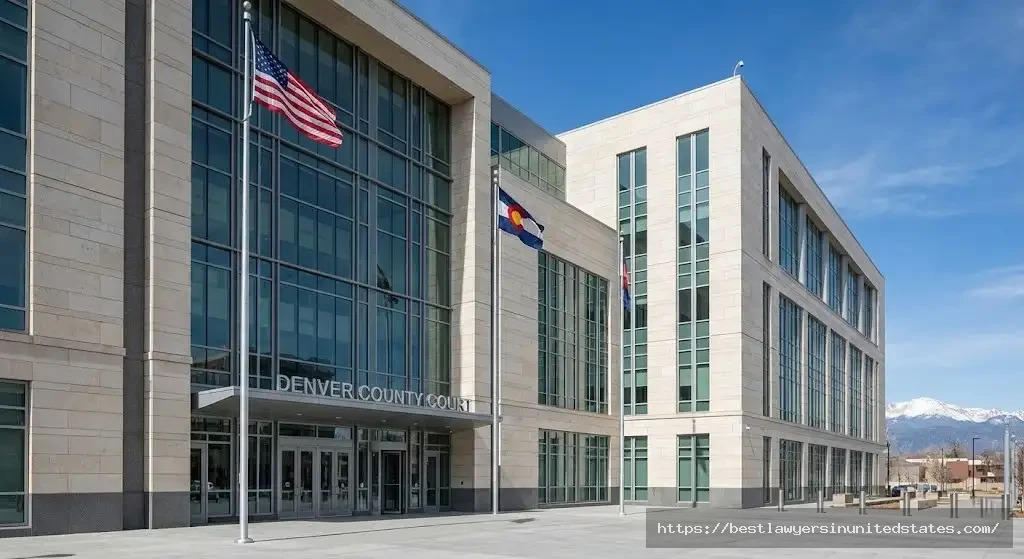
- Denver County Court (1437 Bannock St, Denver)
- El Paso County Court (270 S Tejon St, Colorado Springs)
- Boulder County Court (1777 6th St, Boulder)
- Your local county courthouse
At arraignment, the judge:
- Reads the charges against you
- Asks if you have an attorney
- Explains your rights
- Sets your bond (if not already set)
- Schedules future court dates
You must enter a plea: guilty, not guilty, or no contest. Most DUI attorneys advise pleading not guilty at arraignment. This preserves your options.
After arraignment, the prosecution must provide discovery (evidence against you). Your attorney reviews:
- Police reports
- Dash camera or body camera footage
- Breathalyzer or blood test results
- Witness statements
- Calibration records for testing equipment
Trial vs Plea Bargain Timeline
Most DUI cases resolve within 3 to 6 months through plea bargains. Only 5% to 10% go to trial.
Plea bargain process:
- Your attorney negotiates with the prosecutor
- You might plead guilty to a reduced charge (DWAI instead of DUI)
- Sentencing happens immediately or at a later date
- You begin serving your sentence
Trial process:
- Pre-trial motions (suppressing evidence, dismissing charges)
- Jury selection
- Trial (1 to 3 days for misdemeanor DUI)
- Verdict
- Sentencing hearing
Going to trial delays resolution by 6 to 12 months. You risk harsher penalties if convicted. However, you might win if the prosecution’s evidence is weak.
Your attorney helps you decide whether to accept a plea offer or go to trial.
Colorado DUI Testing & Your Rights
Chemical tests provide the main evidence in DUI cases. Understanding testing procedures helps you evaluate your options.
Blood Alcohol Content (BAC) Testing Methods
Colorado police use three methods to measure BAC:
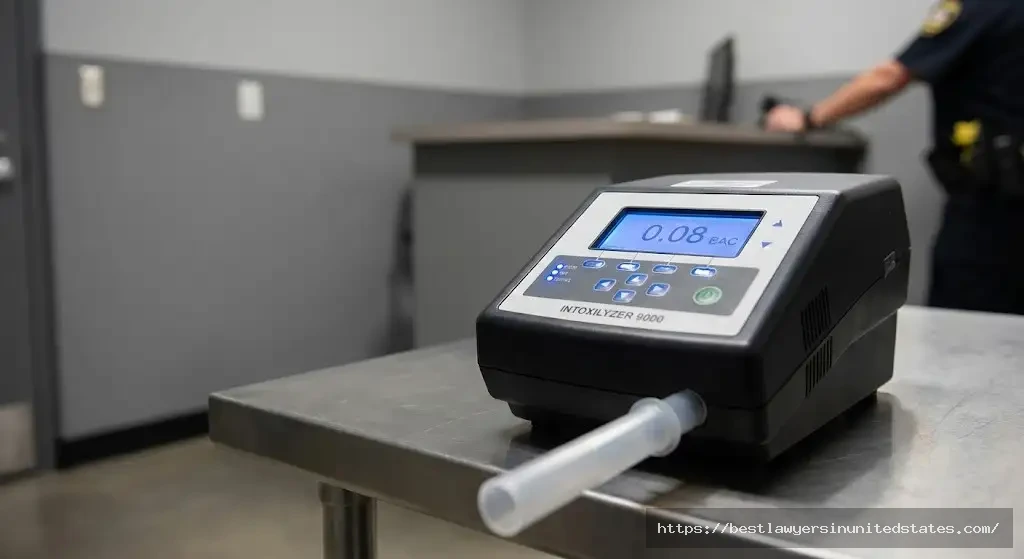
Breath tests measure alcohol in your breath using an Intoxilyzer 9000 or similar device. You blow into the machine at the police station or jail. Results appear within minutes.
Breath tests estimate BAC based on the ratio of alcohol in your breath to alcohol in your blood. The machines must be calibrated regularly. Poor calibration leads to inaccurate results.
Blood tests measure alcohol directly in your blood. A nurse or technician draws blood at a hospital or police station. The sample goes to the Colorado Bureau of Investigation lab for analysis.
Blood tests are more accurate than breath tests. Results take 2 to 8 weeks. You have the right to request a blood test instead of a breath test.
Urine tests are rarely used. They’re the least accurate method. Colorado police only use urine tests when breath and blood tests aren’t available.
Colorado’s per se limit of 0.08% BAC applies regardless of which test method police use. For more information on how alcohol affects BAC levels, check our detailed BAC calculator guide.
Field Sobriety Tests in Colorado
Field sobriety tests (FSTs) help officers establish probable cause for arrest. These tests are voluntary. You can refuse them.
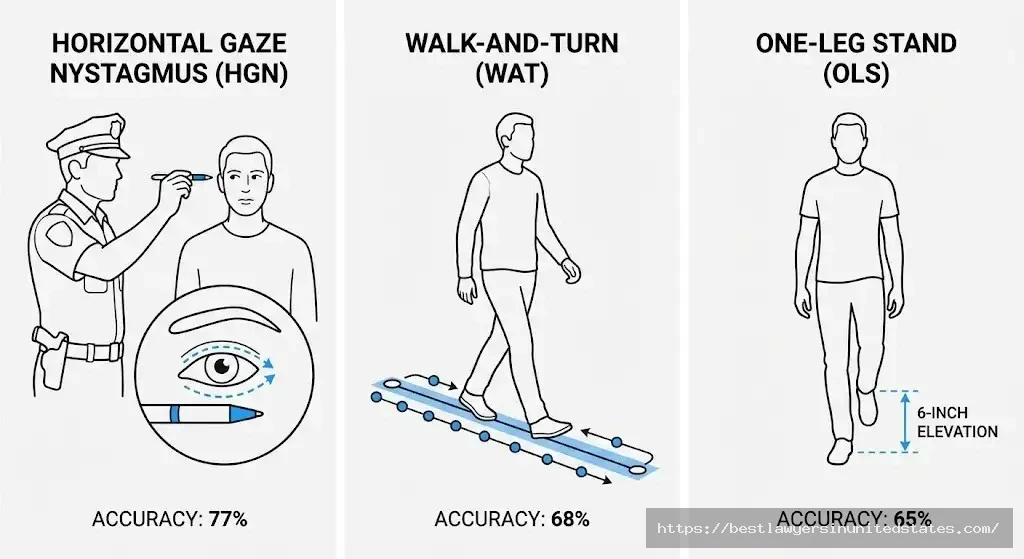
The National Highway Traffic Safety Administration (NHTSA) recognizes three standardized tests:
Horizontal Gaze Nystagmus (HGN): The officer holds a pen 12 to 15 inches from your face. You follow it with your eyes as they move it horizontally. Alcohol causes involuntary jerking eye movements.
HGN is 77% accurate in detecting BAC over 0.10%. However, many factors affect eye movements: fatigue, medications, neurological conditions, and anxiety.
Walk-and-Turn: You walk nine steps heel-to-toe along a straight line. You turn on one foot and return. The officer watches for eight clues of impairment:
- Can’t keep balance during instructions
- Starts before instructions finish
- Stops while walking
- Doesn’t touch heel to toe
- Steps off the line
- Uses arms for balance
- Improper turn
- Wrong number of steps
This test is 68% accurate for detecting BAC over 0.10%. Age, weight, footwear, and balance problems affect performance.
One-Leg Stand: You stand on one leg with the other foot 6 inches off the ground. You count out loud for 30 seconds. Officers look for four clues:
- Swaying
- Using arms for balance
- Hopping
- Putting foot down
This test is 65% accurate. Injuries, age over 65, and weight over 250 pounds make it unreliable.
Police often use non-standardized tests too:
- Reciting the alphabet
- Counting backwards
- Finger-to-nose test
- Rhomberg test (tilting head back with eyes closed)
Non-standardized tests aren’t scientifically validated. They’re less reliable evidence.
Colorado’s Express Consent Law Explained
Colorado’s Express Consent Law (C.R.S. § 42-4-1301.1) says you automatically consent to chemical testing if police arrest you for DUI.
By driving on Colorado roads, you’ve already agreed to take a breath or blood test if arrested. Refusal triggers automatic license suspension.
The officer must read you the Express Consent advisement before testing. This advisement explains:
- You’re required to take the test
- Refusal suspends your license
- You can choose breath or blood test
- You have the right to an additional test at your expense
If you refuse after hearing this advisement, the DMV suspends your license for 1 year (first refusal) or 2 years (second refusal).
The Express Consent Law only applies after arrest. Pre-arrest tests are voluntary:
- Preliminary breath tests (PBT)
- Field sobriety tests
- Portable breathalyzers
You can refuse these without losing your license.
Consequences of Refusing a Chemical Test
Test refusal creates two problems:
License suspension: The DMV administratively suspends your license. First refusal brings a 1-year suspension. Second refusal means 2 years. Third refusal leads to 3 years.
These suspensions run longer than suspensions for failed tests. A failed test brings only 9 months suspension on a first offense.
Evidence at trial: Prosecutors tell the jury you refused testing. This suggests you knew you were too drunk to pass. Juries view refusal negatively.
Some situations justify refusing:
- You recently used mouthwash with alcohol
- You have medical conditions affecting breath tests
- You want to delay testing to sober up slightly
- The officer didn’t properly advise you of your rights
Discuss refusal with your attorney before deciding whether you made the right choice.
Challenging Test Results
DUI attorneys challenge chemical test results using several strategies:
Calibration issues: Breath test machines require monthly calibration. Missed calibrations make results unreliable.
Rising BAC defense: Your BAC might have been legal while driving but rose above 0.08% by the time police tested you 30 to 60 minutes later.
Mouth alcohol contamination: Burping, vomiting, or using mouthwash puts alcohol in your mouth. Breath tests can’t distinguish mouth alcohol from lung alcohol.
Improper blood draw: The person drawing blood must follow strict procedures. Mistakes include:
- Not cleaning the site with non-alcohol swabs
- Using expired collection tubes
- Failing to refrigerate samples
- Breaking chain of custody
Medical conditions: Acid reflux (GERD) and diabetes affect breath test results. These conditions can produce false positive readings.
Software problems: The Intoxilyzer 9000 has known software bugs. Expert witnesses testify about these issues.
Your attorney subpoenas calibration records, training certifications, and maintenance logs. Missing records weaken the prosecution’s case.
Colorado License Suspension & Reinstatement
DUI triggers two separate license suspensions. Understanding both helps you restore your driving privileges.
Administrative vs Court Suspension
Colorado DUI cases involve two parallel processes:
Administrative suspension (DMV): The Division of Motor Vehicles suspends your license based on your BAC test or refusal. This happens regardless of your criminal case outcome.
The administrative suspension begins 30 days after arrest if you don’t request a hearing. If you do request a hearing, it starts after you lose the hearing.
Court suspension (Criminal): The judge suspends your license as part of your criminal sentence after conviction.
These suspensions usually run concurrently (at the same time). You don’t serve them back-to-back.
Example: You get arrested with 0.15% BAC. The DMV suspends your license for 9 months. You plead guilty in court and the judge orders 9 months suspension. You serve just 9 months total, not 18 months.
How Long Will Your License Be Suspended?
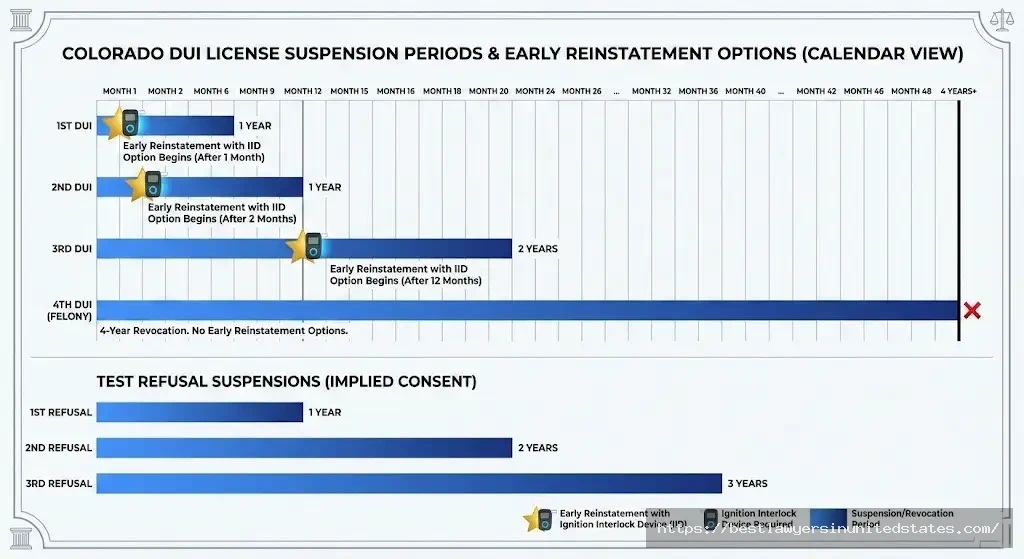
Suspension length depends on your offense number and whether you refused testing.
| Offense/Refusal | Administrative Suspension | Criminal Court Suspension |
|---|---|---|
| 1st DUI (0.08% or higher) | 9 months | 9 months |
| 1st DWAI (0.05-0.079%) | No suspension | 8 points on license |
| 1st Refusal | 1 year | N/A |
| 2nd DUI | 1 year | 1 year |
| 2nd Refusal | 2 years | N/A |
| 3rd DUI | 2 years | 2 years |
| 3rd Refusal | 3 years | N/A |
| 4th DUI (Felony) | 4 years (revocation) | 4 years (revocation) |
After a revocation, you must reapply for your license and pass all tests again. A suspension just requires paying reinstatement fees.
Do You Lose Your License Immediately After DUI?
No. You get a temporary permit valid for 7 days after arrest. This permit lets you drive until the DMV processes your suspension.
If you request a DMV hearing within 7 days, you can keep driving until the hearing decision. Hearings typically happen 30 to 60 days after arrest.
Your license suspends immediately if you:
- Don’t request a hearing within 7 days
- Lose your DMV hearing
- Get convicted in criminal court
During suspension, driving is illegal. Police will arrest you for driving under suspension (C.R.S. § 42-2-138). This adds:
- $50 to $100 fine
- Up to 6 months jail
- Additional license suspension time
Step-by-Step License Reinstatement Guide
Reinstating your Colorado license requires completing all requirements and paying fees.
Completing Requirements Checklist
Before applying for reinstatement, you must finish:
- Serve your entire suspension period (or meet early reinstatement requirements)
- Complete Level II alcohol education or therapy
- Pay all court fines and restitution
- Complete community service hours
- Install ignition interlock device (if required)
- Obtain SR-22 insurance certificate
- Pay DMV reinstatement fee ($95)
You can start some requirements before your suspension ends. Alcohol classes and SR-22 insurance can be obtained while suspended.
DMV Reinstatement Fees
Colorado charges $95 to reinstate your license after DUI suspension. This fee is non-refundable even if your reinstatement gets denied.
Additional fees include:
- Ignition interlock device installation: $100 to $200
- IID monthly monitoring: $60 to $90 per month
- SR-22 insurance filing: $25 to $50
Pay reinstatement fees at any Colorado DMV office:
- Denver DMV (1881 Buchtel Blvd)
- Colorado Springs DMV (1925 N Academy Blvd)
- Boulder DMV (3030 Pearl St)
- Fort Collins DMV (2716 E Harmony Rd)
Or pay online at colorado.gov/revenue/dmv.
SR-22 Insurance Explained
SR-22 is a certificate proving you carry liability insurance. Colorado requires SR-22 after DUI convictions.
Your insurance company files the SR-22 form with the DMV. The certificate costs $25 to $50. Your actual insurance premiums increase separately.
SR-22 requirements last:
- 3 years after first DUI
- 5 years after second DUI
- 5+ years after felony DUI
If your insurance lapses during the SR-22 period, the company notifies the DMV. Your license suspends again immediately.
High-risk insurance costs 50% to 200% more than standard policies. Shop around for the best rates. Companies that specialize in SR-22 insurance include:
- Progressive
- The General
- National General
- Bristol West
Reinstatement Hearing Process
Some offenders need a reinstatement hearing before getting their license back. Hearings are required if:
- You have 3+ DUI convictions
- Your BAC was 0.15% or higher
- You refused chemical testing
- You drove under restraint during suspension
At the hearing, a DMV hearing officer reviews:
- Your alcohol treatment completion
- Your driving record since suspension
- Whether you’ve complied with all requirements
- Your need for driving privileges
The officer decides whether to grant full reinstatement, restricted reinstatement, or deny your request.
Bring to your hearing:
- Completion certificates from all programs
- Proof of SR-22 insurance
- Character references
- Evidence of employment need for driving
An attorney can represent you at reinstatement hearings. Legal representation costs $500 to $1,500.
Colorado Ignition Interlock Device (IID) Requirements
Ignition interlock devices prevent drunk driving by testing your breath before the car starts.
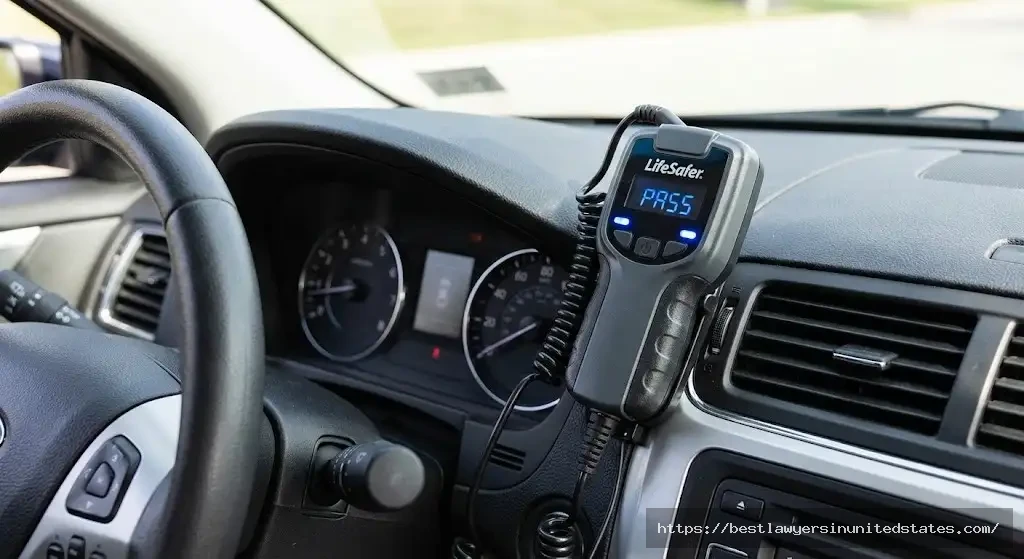
Who Must Install an IID in Colorado?
Colorado law requires IID installation for:
All second DUI convictions: You must use an IID for 2 years after license reinstatement.
All third DUI convictions: IID required for 2 years after reinstatement.
First DUI with BAC 0.15% or higher: IID required for 8 months.
First DUI with early reinstatement: If you apply for early license reinstatement, you must install an IID.
Felony DUI: IID required for 2 years after the 4-year revocation ends.
The court orders IID as part of your sentence. You can’t avoid it by pleading guilty.
How Long Must You Use an IID?
Required IID periods in Colorado:
| Conviction | IID Duration |
|---|---|
| 1st DUI (BAC under 0.15%) with early reinstatement | 8 months |
| 1st DUI (BAC 0.15% or higher) | 8 months minimum |
| 2nd DUI | 2 years |
| 3rd DUI | 2 years |
| 4th DUI (Felony) | 2 years after revocation |
The IID period doesn’t start until you reinstate your license. If you wait 2 years to reinstate, your 2-year IID requirement starts then.
Approved IID Providers in Colorado
The Colorado Department of Revenue certifies ignition interlock providers. Choose only approved vendors:
- LifeSafer
- Smart Start
- Intoxalock
- Guardian Interlock
- Low Cost Interlock
Each provider charges similar fees. Compare customer service and installation locations when choosing.
Installation appointments typically take 1 to 2 hours. The technician:
- Installs the device in your vehicle
- Teaches you how to use it
- Calibrates it to Colorado specifications
- Issues your restricted license paperwork
You must bring your vehicle to the provider monthly for calibration and data download.
IID Costs & Monthly Fees
Ignition interlock devices cost:
| Fee Type | Cost |
|---|---|
| Installation | $100 – $200 |
| Monthly monitoring | $60 – $90 |
| Removal | $50 – $100 |
| Calibration (included in monthly fee) | $0 |
A 2-year IID requirement costs $1,540 to $2,360 total.
Low-income offenders may qualify for payment plans or subsidies. Ask your IID provider about indigent programs.
IID Violations & Consequences
The device records every test you take. Failed tests and violations get reported to the DMV and court.
Common violations include:
- Failed startup test: You blow over 0.02% BAC when starting the car
- Failed rolling retest: The device asks you to blow while driving and you fail
- Missed rolling retest: You don’t blow when prompted while driving
- Tampering: Attempting to bypass or disable the device
- Late calibration: Missing your monthly appointment
Violations can result in:
- Extension of your IID requirement
- License re-suspension
- Probation violation charges
- Additional fines
The device requires random retests every 10 to 30 minutes while driving. Pull over safely if you can’t blow immediately. You have 5 minutes to provide a retest.
Don’t let other people blow into your device. This is tampering and violates your probation.
Restricted & Temporary Driving Privileges
Colorado offers limited driving privileges during suspension periods.
Can You Drive to Work During Suspension?
Maybe. Colorado doesn’t offer traditional “hardship licenses” or “work permits” like some states.
However, you can apply for early reinstatement with an ignition interlock device. This lets you drive anywhere, not just to work.
First DUI offenders can apply for early reinstatement after serving just 1 month of their 9-month suspension. You must:
- Install an IID in your vehicle
- Obtain SR-22 insurance
- Pay the $95 reinstatement fee
- Complete Level II education (or be enrolled)
Second DUI offenders can apply after 2 months of their 1-year suspension.
Third DUI offenders must serve 1 year before applying for IID-restricted reinstatement.
Some offenders don’t qualify for early reinstatement:
- Anyone who refused chemical testing
- Anyone with BAC over 0.15% on first offense (without completing therapy)
- Anyone with prior interlock violations
Early Reinstatement Eligibility
Early reinstatement lets you drive with an IID before your suspension ends. This program costs more but preserves your job and family obligations.
Requirements for early reinstatement:
- Serve the minimum suspension period
- Enroll in or complete alcohol education
- Install IID from approved provider
- Carry SR-22 insurance
- Pay reinstatement fee
- Have no other open suspensions
Apply for early reinstatement at any Colorado DMV office. Bring:
- IID installation certificate
- SR-22 insurance certificate
- Proof of education enrollment
- Payment for reinstatement fee
The DMV issues a restricted license valid only with the IID. Driving without the IID violates your restrictions.
Probationary Driver’s License
After DUI conviction, Colorado issues a probationary license. This isn’t a restricted license. It’s a regular license with special conditions.
Your probationary license requires:
- Zero tolerance for alcohol (0.02% BAC limit)
- Mandatory IID use if ordered
- SR-22 insurance
- No driving violations
The probationary period lasts 2 years from reinstatement. Any violation during this period can re-suspend your license.
Temporary Driving Permit
Police give you a temporary driving permit after DUI arrest. This permit is valid for only 7 days.
The temporary permit lets you drive until:
- You request a DMV hearing (extends driving privileges)
- The 7 days expire (then you can’t drive until hearing)
- You lose your DMV hearing (license suspends)
Don’t drive after your temporary permit expires. Driving under suspension brings criminal charges.
For out-of-state drivers, Colorado notifies your home state of the DUI. Your home state may suspend your license under interstate compact agreements.
Special DUI Situations in Colorado
Some DUI cases involve unique circumstances and different legal rules.
Underage DUI (Under 21)
Colorado has zero tolerance for underage drinking and driving. The law creates a separate offense called UDD (Underage Drinking and Driving) under C.R.S. § 42-4-1301(1)(f).
UDD applies if you’re under 21 with BAC between 0.02% and 0.049%. Penalties include:
- 3-month license suspension (first offense)
- 6-month suspension (second offense)
- 1-year suspension (third offense)
- Up to $100 fine
- 24 hours community service
- Alcohol education class
UDD is not a criminal charge. It’s a civil traffic infraction. It won’t create a criminal record.
If your BAC is 0.05% or higher while under 21, you face regular DUI or DWAI charges. The same penalties as adults apply.
Underage offenders also face:
- MIP (Minor in Possession) charges
- Parent notification
- Delayed license eligibility until age 21
- Loss of scholarship opportunities
Marijuana DUI: The 5 ng/ml Controversy
Colorado law sets 5 nanograms of THC per milliliter of blood as the legal limit. This limit creates problems.
Active vs inactive THC: The 5 ng/ml limit only counts delta-9-THC (active). It excludes THC-COOH (inactive metabolite). However, labs sometimes report total THC, which includes both.
Detection windows differ: Alcohol leaves your system in hours. THC stays detectable for days or weeks. You can test over 5 ng/ml days after using marijuana when you’re completely sober.
Tolerance matters: Regular marijuana users build tolerance. They function normally at THC levels that would impair occasional users.
Medical marijuana patients: Your registry card provides no legal protection. The same 5 ng/ml limit applies to patients and recreational users.
Prosecutors can also charge you with DUI below 5 ng/ml if they prove impairment through:
- Officer observations
- Field sobriety test performance
- Admission that you recently used marijuana
- Marijuana smell in the vehicle
Defense strategies for marijuana DUI:
- Challenge the blood test chain of custody
- Question whether the lab measured active vs total THC
- Show you’re a medical patient with high tolerance
- Demonstrate time since last use (days ago, not hours)
Marijuana DUI cases are more defensible than alcohol DUI cases. The science is less settled. Juries are skeptical of the 5 ng/ml limit.
CDL Holders & Commercial Drivers
Commercial driver’s license (CDL) holders face stricter rules under federal and Colorado law.
Lower BAC threshold: CDL drivers violate the law at 0.04% BAC while operating commercial vehicles. This limit applies under 49 CFR § 383.51.
Any DUI means CDL loss: A DUI conviction in your personal vehicle triggers CDL disqualification. You lose your commercial license even if you weren’t driving a commercial vehicle.
Disqualification periods:
- First DUI: 1-year CDL disqualification
- Second DUI: Lifetime CDL disqualification
- DUI while carrying hazardous materials: Lifetime disqualification
No restricted CDL: Colorado doesn’t offer restricted commercial licenses. You can’t get an IID-restricted CDL to drive to work.
Employer notification: The DMV notifies your employer within 30 days of your DUI arrest. You’ll likely lose your job immediately.
Losing your CDL destroys careers in:
- Trucking
- Bus driving
- Delivery services
- Heavy equipment operation
Some CDL holders can apply for reinstatement after 10 years following lifetime disqualification. This requires completing all DUI requirements plus a waiver application.
Out-of-State Drivers Arrested in Colorado
If you live in another state and get arrested for DUI in Colorado, you face problems in both states.
Colorado proceedings: You must appear in Colorado court for all hearings. Missing court creates a warrant. Colorado has no jurisdiction to suspend your out-of-state license.
Home state notification: Colorado reports your DUI to your home state DMV through the Interstate Driver’s License Compact. 45 states participate in this compact.
Your home state will:
- Suspend or revoke your license
- Treat the Colorado DUI as if it happened in your home state
- Count it toward habitual offender status
Travel burden: You’ll fly or drive to Colorado multiple times:
- DMV hearing
- Arraignment
- Pre-trial conferences
- Trial or plea hearing
- Sentencing
This adds thousands in travel costs to your DUI expenses.
Hire a Colorado attorney: An out-of-state attorney can’t help you with Colorado DUI law. You need a Colorado-licensed attorney who knows local courts and prosecutors.
Some states don’t participate in the Interstate Compact:
- Wisconsin
- Georgia
- Massachusetts
- Michigan
- Tennessee
Drivers from non-compact states might avoid home state penalties. However, the Colorado conviction still appears on national background checks. For information on how DUI laws differ across states, you can compare Colorado to neighboring states like California, Arizona, or Alaska.
DUI on Private Property
Yes, you can get DUI charges for driving drunk on private property in Colorado.
C.R.S. § 42-4-1301(1)(a) prohibits driving under the influence “within this state.” The statute doesn’t limit DUI to public roads.
You can be arrested for DUI in:
- Parking lots
- Driveways
- Private roads
- Apartment complex streets
- Mall parking areas
- Gas station lots
The property doesn’t need public access. Colorado courts have upheld DUI convictions for driving drunk on completely private land.
The key element is “driving” or being in “actual physical control” of a vehicle. Sitting in a parked car with the keys in the ignition counts as actual physical control.
DUI While Not Driving (Actual Physical Control)
You don’t need to be actively driving to face DUI charges. “Actual physical control” is enough under Colorado law.
You have actual physical control if you:
- Sit in the driver’s seat with keys accessible
- Have the ability to start and move the vehicle
- Show intent to drive
Example: You’re drunk and sleeping in your car. The keys are in your pocket. The car is parked legally. You can still be arrested for DUI based on actual physical control.
Factors courts consider:
- Where were the keys? (ignition, pocket, or far away)
- Where were you sitting? (driver’s seat vs back seat)
- Was the engine running?
- Was the car operable?
- Did you intend to drive or just sleep?
Defense strategy: Show you had no intent to drive. Evidence includes:
- You were in the back seat
- Keys were in the trunk
- You called someone for a ride
- You were waiting for a sober driver
Actual physical control cases are defensible. Prosecutors must prove you intended to drive, not just sleep in your car.
Can You Get DUI on a Bicycle, Horse, or Scooter in Colorado?
Bicycles: No. Colorado DUI law only applies to “motor vehicles.” Bicycles aren’t motor vehicles. You can’t get DUI for riding a bike drunk.
However, you can be cited for cycling under the influence (C.R.S. § 42-4-1412). This traffic violation brings:
- $15 to $100 fine
- No license suspension
- No criminal record
- No jail time
Electric scooters and e-bikes: Maybe. If the scooter has a motor and reaches speeds over 20 mph, it might qualify as a motor vehicle. Courts haven’t definitively ruled on this yet.
Horses: No. Animals aren’t vehicles under Colorado law. You can’t get DUI for riding a horse drunk.
Motorized scooters and mopeds: Yes. These count as motor vehicles. Regular DUI laws apply.
ATVs and dirt bikes: Yes. Off-road vehicles are motor vehicles. You can get DUI for operating them drunk on private property or public land.
County-Specific DUI Enforcement Variations
DUI enforcement and prosecution vary significantly across Colorado’s 64 counties.
Denver County DUI Trends
Denver County files more DUI cases than any other Colorado county. The Denver County Court at 1437 Bannock Street handles thousands of DUI cases yearly.
Strict enforcement: Denver Police Department runs regular DUI checkpoints on:
- I-25 (Mile High Stadium area)
- Colfax Avenue
- Federal Boulevard
- Speer Boulevard
Denver participates aggressively in “The Heat Is On” campaigns. These multi-agency DUI saturation patrols run during:
- New Year’s Eve
- St. Patrick’s Day
- Fourth of July
- Labor Day weekend
- Super Bowl Sunday
Prosecution approach: Denver prosecutors rarely offer favorable plea bargains on first DUI offenses. Expect DWAI reductions only if your BAC was near 0.08% and you have no aggravating factors.
Average case timeline: 4 to 6 months from arrest to resolution.
Legal representation: Denver has the most DUI attorneys per capita. Competition keeps rates reasonable ($2,500 to $5,000 for first offense).
Colorado Springs / El Paso County
El Paso County takes a tougher stance on DUI than most Colorado counties.
DUI checkpoints: Colorado State Patrol and Colorado Springs Police set up frequent checkpoints on:
- I-25 (especially near Powers Boulevard exit)
- Academy Boulevard
- Austin Bluffs Parkway
- Highway 24
Military influence: With Fort Carson, Peterson Space Force Base, and the Air Force Academy in the area, many DUI defendants are military members. Military defendants face:
- Court-martial proceedings (separate from civilian charges)
- Loss of security clearances
- Possible discharge from service
Prosecution approach: El Paso County prosecutors are less willing to negotiate than Denver. They push for maximum penalties, especially on repeat offenses.
Cases are heard at the El Paso County Combined Courts at 270 S Tejon Street, Colorado Springs.
Average case timeline: 5 to 8 months. El Paso County courts move slower than Denver.
Boulder County Approaches
Boulder County has unique DUI enforcement patterns due to the University of Colorado and cannabis culture.
Marijuana DUI focus: Boulder County files more marijuana DUI charges than most counties. Police target:
- Folsom Street near CU campus
- Highway 36 (Boulder-Denver corridor)
- Broadway and Baseline intersection
Underage enforcement: Boulder police aggressively enforce underage drinking laws. College students face:
- UDD charges for BAC 0.02% to 0.049%
- Regular DUI charges for 0.05% and higher
- University disciplinary proceedings
Prosecution approach: Boulder County offers reasonable plea bargains for first offenders with low BAC. Prosecutors focus resources on repeat offenders and high BAC cases.
Cases are heard at Boulder County Justice Center, 1777 6th Street, Boulder.
Treatment-focused: Boulder emphasizes rehabilitation over punishment. Courts encourage treatment programs and deferred sentencing for first-time offenders.
Rural vs Urban County Differences
Rural Colorado counties handle DUI cases differently than urban areas.
Rural counties (Kiowa, Cheyenne, Costilla, etc.):
- Fewer DUI arrests overall
- Limited public defender availability
- Cases heard by visiting judges
- Less frequent court dates
- More lenient plea offers
- Lower attorney fees ($1,500 to $3,000)
Mountain resort counties (Summit, Eagle, Pitkin):
- High DUI arrest rates during ski season
- Tourist-heavy enforcement
- Strict penalties (tourism revenue protection)
- More expensive attorneys ($4,000 to $8,000)
- Limited treatment program availability
Urban counties (Denver, El Paso, Arapahoe, Jefferson):
- High case volume
- Specialized DUI courts
- Experienced prosecutors
- More treatment options
- Standard plea bargain policies
“The Heat Is On” DUI Checkpoints
“The Heat Is On” is Colorado’s annual DUI enforcement campaign. The Colorado Department of Transportation funds extra patrols during high-risk periods.
When it runs:
- Christmas/New Year (late December through early January)
- St. Patrick’s Day (March 17)
- Summer mobilization (Memorial Day through Labor Day)
- Halloween weekend
What to expect:
- Increased DUI checkpoints
- More patrol officers on highways
- Lower arrest thresholds
- Media publicity to deter drunk driving
Checkpoint locations: Police must announce checkpoints in advance. Check local news before driving during Heat Is On periods. Common locations include:
- I-70 (mountain corridors)
- I-25 (metro Denver and Colorado Springs)
- Highway 36 (Boulder-Denver)
- Colfax Avenue (Denver)
Your rights at checkpoints:
- You must stop when directed
- You must provide license and registration
- You don’t have to answer questions about drinking
- You can refuse field sobriety tests
- You cannot refuse the checkpoint itself (that’s obstruction)
If arrested during Heat Is On campaigns, prosecutors push for maximum penalties to “send a message.” Your attorney should emphasize that you’re not a habitual offender despite the arrest timing.
DUI Defense Strategies & Legal Options
Fighting DUI charges requires understanding your legal options and the strength of the prosecution’s case.
When to Hire a DUI Attorney
Hire an attorney immediately after arrest. The 7-day DMV hearing deadline doesn’t leave time for delay.
You need an attorney if:
- This is your second or third DUI
- Your BAC was very high (0.15% or higher)
- You were involved in an accident
- Someone was injured
- You refused chemical testing
- You have a CDL or professional license
- You’re not a U.S. citizen (deportation risk)
First-time offenders with low BAC might consider handling the case themselves, but this rarely saves money. Public defenders are available if you can’t afford a private attorney.
Initial consultation: Most DUI attorneys offer free consultations. They’ll review:
- Police reports
- Arrest circumstances
- Test results
- Your prior record
- Possible defenses
Expect to pay $500 to $1,000 upfront as a retainer. Total fees range from $2,500 to $7,500 for first offense misdemeanor DUI.
Public Defender vs Private Attorney
Colorado provides public defenders if you qualify financially. You must complete an affidavit of indigency showing you can’t afford a private attorney.
Public defender advantages:
- Free or low-cost ($200 to $500 application fee)
- Experienced with local courts
- Familiar with local prosecutors
- Heavy caseload means they know which cases to fight
Public defender disadvantages:
- High caseload (100+ active cases)
- Limited time for your case
- Less personalized attention
- May push for quick plea bargain
Private attorney advantages:
- More time devoted to your case
- Better communication
- Stronger investigation
- More aggressive defense
- Flexible meeting times
Private attorney disadvantages:
- Expensive ($2,500 to $10,000+)
- No guarantee of better outcomes
- Some are less experienced than public defenders
For first-time DUI with no aggravating factors, public defenders often achieve the same results as private attorneys. For complex cases or repeat offenses, private representation is worth the cost.
Common DUI Defenses in Colorado
Experienced DUI attorneys challenge cases using these strategies:
Illegal traffic stop: Police need reasonable suspicion to pull you over. If the officer lacked valid reason, the judge suppresses all evidence from the stop. Your case gets dismissed.
Examples of illegal stops:
- “Driving too carefully” isn’t reasonable suspicion
- Following you from a bar without seeing traffic violations
- Stopping you based solely on your car leaving a bar
- Extending the stop beyond its original purpose
Improper field sobriety tests: Officers must follow NHTSA standardized procedures. Common mistakes:
- Not asking about medical conditions or injuries
- Conducting tests on uneven surfaces
- Poor lighting conditions
- Giving confusing instructions
- Not demonstrating tests properly
Breathalyzer problems: Breath test results can be challenged based on:
- Machine calibration issues
- Officer training deficiencies
- Mouth alcohol contamination
- Medical conditions (GERD, diabetes)
- Radio frequency interference
- Improper observation period (must be 20 minutes)
Blood test issues:
- Chain of custody breaks
- Improper refrigeration
- Fermentation in blood sample
- Lab technician errors
- Expired collection tubes
- Non-sterile blood draw
Rising BAC defense: Your BAC continues rising for 30 to 90 minutes after your last drink. You might have been under 0.08% while driving but over the limit by testing time.
This defense works if:
- Short time between drinking and driving
- Police delayed testing
- You can prove your drinking timeline
Medical conditions: Certain health issues affect test results:
- GERD/acid reflux (breath tests)
- Diabetes (acetone mimics alcohol)
- Auto-brewery syndrome (gut produces alcohol)
- Dentures (trap mouth alcohol)
Plea Bargains in Colorado DUI Cases
About 90% of Colorado DUI cases resolve through plea bargains. Prosecutors offer reduced charges in exchange for guilty pleas.
Common plea offers:
DUI reduced to DWAI: Most common first-offense plea bargain. DWAI carries:
- Lower fines ($200 to $500)
- No mandatory jail time (up to 180 days possible)
- 8 points on license instead of 12
- No administrative license suspension
- Less severe insurance impact
Prosecutors offer DWAI reductions when:
- Your BAC was near 0.08% (0.08% to 0.10%)
- No accidents or injuries
- Clean driving record
- No aggravating factors
DUI reduced to reckless driving: Rare in Colorado. “Wet reckless” pleas aren’t common. Prosecutors only offer this when their case is weak.
Deferred sentencing: You plead guilty but the judge delays sentencing for 2 years. If you complete probation successfully, the DUI conviction is set aside. Your record shows dismissed charges instead of conviction.
Deferred sentencing requirements:
- Complete all DUI classes and treatment
- No new arrests
- Monthly probation check-ins
- Random alcohol testing
- Community service
Not everyone qualifies. Second and third offenders rarely get deferred sentencing.
When to accept a plea bargain:
- The evidence against you is strong (BAC 0.12% or higher)
- Going to trial risks harsher penalties
- You want certainty and quick resolution
- The offer significantly reduces penalties
When to reject a plea bargain:
- You have strong defenses
- The prosecution’s evidence has problems
- The offered deal isn’t much better than trial outcome
- You’re innocent and want to fight
Your attorney helps you evaluate whether the plea offer is fair. Get a detailed breakdown showing the costs to determine if fighting is worthwhile. Use our DUI cost calculator to compare plea bargain penalties versus trial conviction penalties.
What Percentage of Colorado DUI Cases Get Dismissed?
Approximately 5% to 10% of Colorado DUI cases get dismissed. Dismissals happen when:
Prosecutor lacks evidence:
- Test results were suppressed
- Officer lacked probable cause
- Chain of custody problems with blood test
- Key witness unavailable
Constitutional violations:
- Illegal search and seizure
- Miranda rights violations
- Improper arrest procedures
Witness problems:
- Arresting officer retired or left department
- Officer testimony contradicts video evidence
- Expert witnesses unavailable
Technical issues:
- Breathalyzer maintenance records missing
- Blood sample contaminated or lost
- Lab analysis errors
Getting your case dismissed requires:
- Aggressive legal representation
- Thorough investigation
- Filing pretrial motions
- Challenging every weakness in prosecution’s case
Don’t expect dismissal as the likely outcome. Plan for trial or plea bargain instead.
Going to Trial: Pros & Cons
Only 5% to 10% of Colorado DUI cases go to trial. Trials are risky but sometimes necessary.
Advantages of trial:
- Possibility of acquittal (not guilty verdict)
- Forces prosecution to prove every element
- Exposes weaknesses in their case
- You maintain your innocence publicly
- No conviction if you win
Disadvantages of trial:
- Higher attorney fees ($5,000 to $15,000)
- Risk of harsher penalties if convicted
- Months of delay and stress
- Uncertain outcome
- Prosecution might add charges
When to go to trial:
- You’re actually innocent
- The evidence against you is weak
- Constitutional violations occurred
- Test results are questionable
- The plea offer is unacceptable
When to accept a plea:
- Your BAC was significantly over 0.08%
- Video evidence is damning
- You admitted drinking to the officer
- No viable defenses exist
- The plea offer is reasonable
Discuss trial strategy with your attorney. They’ll give you realistic odds of acquittal based on the evidence.
Long-Term Consequences of Colorado DUI
DUI convictions create problems that last years beyond your sentence completion.
How Long Does a DUI Stay on Your Record?
DUI convictions stay on your Colorado criminal record permanently. Colorado doesn’t allow expungement of DUI convictions.
Criminal record: Never goes away. Background checks will show your DUI conviction 5, 10, 20 years later.
Driving record: DUI convictions remain on your Colorado MVR (motor vehicle record) permanently. However, the 12 points from DUI come off your license after 2 years.
Points restoration: You can take a defensive driving course to reduce points. This doesn’t remove the DUI conviction, just the point penalty.
Out-of-state moves: Your DUI follows you to other states through interstate information sharing. Your new state will see the Colorado conviction.
Employment & Background Check Impact
DUI convictions affect employment in multiple ways. How much impact depends on your job and industry.
Jobs that will be affected:
CDL holders: You lose your commercial license for 1 year minimum. This ends careers in trucking, bus driving, and delivery.
Healthcare workers: Nurses, doctors, EMTs, and pharmacists face professional license discipline. State licensing boards require:
- Reporting the conviction within 30 days
- Substance abuse evaluation
- Monitoring programs
- Possible license suspension
Teachers: The Colorado Department of Education investigates DUI convictions. You might face:
- License suspension
- Mandatory reporting to school district
- Loss of job
- Difficulty finding new teaching positions
Government employees: Federal, state, and local agencies conduct background checks. Security clearances get denied or revoked for DUI.
Pilots: FAA regulations require reporting DUI convictions. You face:
- License suspension
- Mandatory alcohol treatment
- Loss of flying privileges
- Career termination
Financial services: Banks and investment firms reject applicants with recent DUI convictions. Trust and responsibility are key job requirements.
Professional licenses affected:
- Lawyers (state bar discipline)
- Real estate agents (license suspension)
- Insurance agents (license revocation risk)
- Accountants (CPA board review)
How to explain DUI to employers:
Be honest. Background checks will reveal convictions. Lying on applications is worse than the DUI itself.
Effective explanation strategies:
- Take responsibility (no excuses)
- Explain what you learned
- Describe steps you took (treatment, classes)
- Emphasize it was a one-time mistake
- Focus on your qualifications for the job
When to disclose: Some applications ask “Have you been convicted of a crime?” Answer truthfully. Some employers don’t run background checks. Don’t volunteer information unless asked.
Can You Expunge a DUI in Colorado?
No. Colorado law prohibits expungement (sealing) of DUI convictions.
C.R.S. § 24-72-706 allows sealing of some criminal records. However, DUI convictions are specifically excluded under C.R.S. § 24-72-708.
What can’t be sealed:
- DUI convictions
- DWAI convictions
- Any alcohol-related traffic offenses
- Convictions involving actual physical control
What can be sealed:
- DUI charges that were dismissed
- DUI arrests without conviction
- Deferred sentences after successful completion
If you completed a deferred sentence, your DUI conviction can be set aside. The case shows as “dismissed” on background checks. This isn’t true expungement but provides similar benefits.
Pardons: Colorado’s governor can pardon DUI convictions. Pardons are extremely rare. You must show extraordinary circumstances and rehabilitation.
The application process requires:
- 5+ years since conviction
- No subsequent criminal activity
- Compelling reason for pardon
- Community service and rehabilitation evidence
Even with a pardon, the conviction remains visible on your record. The pardon just restores certain rights.
Travel Restrictions
DUI convictions can prevent international travel to certain countries.
Canada: Denies entry to anyone with DUI convictions. Canada considers DUI a serious crime equivalent to a felony.
You can be turned away at the border even 10 years after conviction. Options include:
- Apply for Temporary Resident Permit ($200 CAD, valid 1-3 years)
- Apply for Criminal Rehabilitation ($1,000 CAD, permanent solution after 5 years)
Mexico: Officially bars entry to people with DUI convictions. However, Mexico doesn’t have access to U.S. criminal databases. Most travelers with DUI enter without problems.
Europe: Most European countries don’t ask about DUI on visa applications. Schengen countries generally allow entry. Individual countries have discretion to deny entry.
Australia: Requires character declarations on visa applications. You must disclose DUI convictions. Each application is reviewed individually.
Japan: Denies entry to people with drug-related DUI convictions. Alcohol DUI might not prevent entry.
Professional travel: Some jobs require international travel. Disclosing DUI before employer books travel prevents embarrassing border rejections.
Insurance Rate Increases
DUI convictions cause your car insurance rates to skyrocket. The financial impact lasts 3 to 5 years.
Average rate increases:
- 50% to 100% increase is typical
- Some drivers see 200% increases
- High-risk drivers pay $3,000 to $6,000 annually
- Total extra cost over 5 years: $6,000 to $15,000
SR-22 insurance: Colorado requires SR-22 certificates after DUI. Your insurance company files this form with the DMV proving you carry coverage.
Finding affordable insurance after DUI:
- Shop multiple companies (rates vary widely)
- Consider high-risk insurers (The General, Bristol West)
- Increase deductibles to lower premiums
- Remove comprehensive coverage on older vehicles
- Take defensive driving courses for discounts
When rates drop: Most insurance companies review your record annually. After 3 years without incidents, rates begin decreasing. After 5 years, the DUI has less impact.
Your rates won’t return to pre-DUI levels for 5 to 7 years. Budget for higher insurance costs when calculating DUI expenses.
Impact on Future DUI Charges
Colorado counts all prior DUI convictions when determining penalties for subsequent offenses. There’s no “lookback period” that erases old convictions.
Lifetime enhancement: A DUI from 15 years ago still counts toward your second offense. A DUI from 30 years ago makes your current charge a third offense.
This differs from some states that only count DUIs within 7 or 10 years.
Felony threshold: Your fourth DUI conviction in your lifetime becomes a felony. Time between convictions doesn’t matter.
Out-of-state convictions: Colorado counts DUI convictions from other states. A California DUI from 2010 counts toward your Colorado offense number.
Juvenile DUI: Convictions while under 18 usually don’t count toward adult DUI enhancements in Colorado. However, prosecutors might argue for harsher penalties based on the pattern of behavior.
Mandatory DUI Programs & Requirements
Colorado DUI sentences include required programs beyond fines and jail time.
Substance Abuse Evaluation
All DUI offenders must complete a substance abuse evaluation. A certified evaluator interviews you and assesses your alcohol use.
Level I Evaluation: Basic screening for first-time offenders. The evaluator determines if you have alcohol dependency issues.
Level II Evaluation: Required for repeat offenders or high BAC cases. More in-depth assessment of drinking patterns and treatment needs.
The evaluation costs $50 to $100. The evaluator recommends:
- Level II education
- Level II therapy
- Intensive outpatient treatment
- Inpatient treatment (rare)
You must follow the evaluator’s recommendations. Refusing treatment violates your probation.
Alcohol Education Classes
Level II alcohol education is required for all first-time DUI offenders. The program includes:
- 12 hours of classroom instruction
- Information about alcohol’s effects
- Decision-making skills
- DUI consequences
- Colorado DUI laws
Classes cost $150 to $200. You attend weekly sessions over 4 weeks.
Approved providers include:
- ASAP (Alcohol and Substance Abuse Program)
- Local community service agencies
- Private treatment centers
You must complete education before license reinstatement.
Alcohol Therapy Requirements
Level II alcohol therapy is more intensive than education. Courts order therapy for:
- Second or third DUI offenses
- First DUI with BAC 0.15% or higher
- Anyone showing signs of alcohol dependency
Therapy requirements:
- 24 to 86 hours of group sessions
- Weekly attendance for 6 to 12 months
- Random alcohol testing
- Progress reports to probation officer
Therapy costs $800 to $1,500. Your insurance might cover part of this cost.
Group therapy topics include:
- Triggers for drinking
- Coping mechanisms
- Relapse prevention
- Family impacts of alcoholism
You can’t complete therapy early. Missing sessions extends your requirement.
Community Service
Colorado judges order community service for all DUI convictions. Required hours:
| Offense | Community Service Hours |
|---|---|
| 1st DUI | 48 to 96 hours |
| 2nd DUI | 48 to 120 hours |
| 3rd DUI | 48 to 120 hours |
You arrange community service through:
- Local nonprofits
- Government agencies
- Churches
- Food banks
- Habitat for Humanity
The probation department approves your service location. You submit timesheets signed by your supervisor.
Complete community service during your probation period. Failure to finish brings probation violations.
Probation Conditions
DUI probation typically lasts 1 to 4 years. Standard conditions include:
Mandatory conditions:
- No alcohol consumption
- Random alcohol testing (breathalyzer or urinalysis)
- Monthly probation meetings
- No new criminal violations
- Complete all treatment programs
- Pay fines and restitution
Additional possible conditions:
- SCRAM bracelet (continuous alcohol monitoring)
- House arrest or curfew
- GPS monitoring
- No contact with certain people
- Mental health counseling
Violating probation brings:
- Jail time for remaining probation period
- Additional fines
- Extended probation
- Warrant for arrest
Take probation seriously. Judges have zero tolerance for violations on DUI cases.
MADD Victim Impact Panel
Most Colorado courts require DUI offenders to attend a Mothers Against Drunk Driving (MADD) Victim Impact Panel.
These panels feature:
- Victims of drunk driving crashes
- Family members who lost loved ones
- Crash survivors with permanent injuries
The panel lasts 2 to 4 hours. Victims share their stories to help offenders understand DUI consequences.
Cost is $25 to $50. You attend once and receive a completion certificate for the court.
MADD panels are held monthly in most Colorado counties. Find schedules at madd.org or through your probation officer.
Colorado DUI Laws: Recent Changes & Updates
Colorado DUI laws evolve through legislation and court decisions. Recent changes affect penalties and procedures.
New DUI Laws Colorado 2023-2025
Felony DUI statute: In 2015, Colorado enacted C.R.S. § 42-4-1301(1)(b) making fourth DUI a felony. This law continues to create felony convictions for repeat offenders.
Ignition interlock expansion: Courts can now order ignition interlock for first offenses with high BAC. Previously, IID was only required for repeat offenses.
Marijuana DUI enforcement: Police expanded training in Advanced Roadside Impaired Driving Enforcement (ARIDE) and Drug Recognition Expert (DRE) programs. More officers can detect marijuana impairment.
Oral fluid testing: Some Colorado agencies are testing roadside oral fluid devices to detect THC and other drugs. These devices aren’t yet admissible in court but help establish probable cause.
Victim restitution: Courts can now order restitution for intangible losses (pain and suffering) in DUI cases involving injury. Previously, restitution only covered medical bills and property damage.
Legislative Trends
Colorado legislature considers DUI-related bills annually. Trends include:
Lower BAC limits: Some advocacy groups push for 0.05% BAC limit (currently 0.08%). Utah adopted this limit in 2018. Colorado hasn’t followed yet.
Longer lookback periods: Current law counts all lifetime DUI convictions. Some legislators want mandatory minimum sentences for DUIs within 10 years.
Mandatory minimums: Proposals to eliminate judicial discretion and impose strict mandatory sentences for repeat offenders.
DUI courts: Expansion of specialty courts focused on treatment rather than punishment. These therapeutic courts show lower recidivism.
Technology solutions: Legislation funding research into passive alcohol detection systems in vehicles.
Enforcement Initiatives
Colorado Department of Transportation and law enforcement agencies run campaigns to reduce drunk driving.
The Heat Is On: Year-round enforcement periods focusing on high-risk holidays. Increased patrols and checkpoints during these periods.
No Refusal Weekends: Some counties obtain search warrants for forced blood draws when drivers refuse testing. These weekends typically occur on New Year’s Eve and Fourth of July.
SCRAM monitoring: More counties are using Secure Continuous Remote Alcohol Monitoring bracelets as probation conditions. These ankle bracelets detect alcohol consumption 24/7.
High Visibility Enforcement (HVE): Grant-funded patrols in high-DUI areas. Officers work overtime specifically targeting impaired drivers.
DUI Task Forces: Multi-agency teams in metro areas coordinate DUI enforcement. Denver Metro DUI Task Force includes Denver Police, Arapahoe County Sheriff, and Colorado State Patrol.
Colorado vs Other States: DUI Law Comparisons
Colorado’s DUI laws fall in the middle range nationally. Some states are much tougher, others more lenient.
Is Colorado Tough on DUI?
Colorado ranks as moderately strict on DUI compared to other states.
Tougher than Colorado:
- Arizona (10 days mandatory jail for first DUI)
- Georgia (24 hours mandatory jail, 1-year license loss)
- Alaska (72 hours mandatory jail, 90-day license loss)
More lenient than Colorado:
- South Dakota (no mandatory jail for first offense)
- North Dakota (no mandatory jail, shorter suspensions)
- Wisconsin (DUI is civil offense for first conviction)
What makes Colorado moderate:
- Short mandatory jail minimums (2-5 days typical for first offense)
- Early reinstatement available with IID
- DWAI option for lower BAC cases
- Treatment-focused approach for first offenders
What makes Colorado strict:
- Lifetime felony enhancement (fourth DUI)
- No time limit on counting prior DUIs
- Can’t expunge DUI convictions
- High insurance costs due to SR-22 requirements
Toughest States vs Most Lenient
Toughest DUI states:
- Arizona: 10-day mandatory minimum jail, ignition interlock required, $2,500+ fines
- Georgia: 24-hour mandatory jail, 12-month license suspension, $1,000+ fines
- Alaska: 72-hour mandatory jail, 90-day license suspension, $1,500+ fines
- Connecticut: 48-hour mandatory jail, 1-year license suspension
- Kansas: 48-hour mandatory jail, 1-year license suspension
Most lenient DUI states:
- South Dakota: No mandatory jail, license suspension available
- North Dakota: No mandatory jail for first offense
- Wisconsin: First DUI is traffic ticket, not criminal
- Pennsylvania: No mandatory jail, ARD program available
- Ohio: No mandatory jail, occupational license available
How Colorado’s Penalties Compare
First offense DUI comparison:
| State | Mandatory Jail | License Suspension | Fines |
|---|---|---|---|
| Colorado | 5 days – 1 year | 9 months | $600-$1,000 |
| California | 48 hours | 6 months | $390-$1,000 |
| Texas | 72 hours | 90-365 days | Up to $2,000 |
| Arizona | 10 days | 90 days | $1,250+ |
| Wyoming | None | 90 days | $750+ |
BAC limit comparison:
Most states use 0.08% BAC. Utah lowered its limit to 0.05% in 2018. Colorado maintains 0.08% for adults and 0.02% for under 21.
Felony threshold:
Colorado’s fourth-offense felony DUI is common. Many states have similar thresholds:
- Third offense in Alabama, Arkansas, Kansas
- Fourth offense in Colorado, Florida, California
- Fifth offense in Texas
Some states treat DUI with injury as immediate felony regardless of prior convictions.
Frequently Asked Questions
Can I get a DUI on a bicycle or scooter in Colorado?
No, you cannot get DUI for riding a bicycle in Colorado. Bicycles aren’t motor vehicles under the law. However, you can be cited for cycling under the influence (C.R.S. § 42-4-1412), which brings a $15 to $100 fine.
Electric scooters with motors might qualify as motor vehicles. Courts haven’t definitively ruled on this yet. Regular DUI laws don’t apply to horses or non-motorized vehicles.
What happens if I get a DUI while visiting Colorado from another state?
You must appear in Colorado court for all hearings. Colorado will report your DUI to your home state through the Interstate Driver’s License Compact. Your home state will likely suspend your license and count the Colorado DUI as if it happened in your state.
You’ll need to hire a Colorado attorney and travel back for court appearances. Miss court and a warrant issues for your arrest.
How does a medical marijuana card affect DUI charges?
Your medical marijuana card provides no legal protection. Colorado’s 5 nanogram THC limit applies equally to medical patients and recreational users. Police can arrest you for marijuana DUI even if you’re a registered patient.
However, your attorney might argue you have higher THC tolerance as a medical user. This defense works better than for recreational users but doesn’t guarantee dismissal.
Can I refuse field sobriety tests without penalty?
Yes. Field sobriety tests are voluntary in Colorado. You can refuse without losing your license or facing additional charges. However, refusing might give the officer more suspicion and lead to arrest anyway.
Refusing chemical tests (breath or blood) after arrest does trigger license suspension. The Express Consent Law only applies to post-arrest testing, not roadside field tests.
What’s the difference between DMV suspension and court suspension?
DMV suspension is administrative. The Department of Revenue suspends your license based on test results or refusal. This happens separately from your criminal case.
Court suspension is criminal. The judge orders suspension as part of your DUI sentence. These suspensions usually run concurrently (at the same time), not consecutively. You don’t serve double suspension time.
Will my employer find out about my DUI?
Maybe. Your employer might discover your DUI through:
- Background checks (if they run one)
- Media coverage of your arrest
- Court appearances during work hours
- Professional license board notifications
You’re not legally required to tell your employer unless your job involves driving or you hold a professional license. Many employers never find out about misdemeanor DUI convictions.
Can I travel to Canada with a DUI conviction?
No. Canada considers DUI a serious crime and denies entry to people with DUI convictions. This ban applies even 10 years after conviction.
You can apply for a Temporary Resident Permit ($200 CAD) for short visits. After 5 years, you can apply for Criminal Rehabilitation ($1,000 CAD), which permanently allows entry.
What if I was arrested but wasn’t actually driving?
You can still face DUI charges based on “actual physical control.” If you were in the driver’s seat with keys accessible, prosecutors argue you had the ability to drive.
Defenses include showing you had no intent to drive (keys in trunk, sleeping in back seat, called for a ride). Your attorney can challenge actual physical control charges more easily than regular DUI.
How do DUI checkpoints work legally in Colorado?
DUI checkpoints are legal in Colorado if properly conducted. Police must:
- Announce the checkpoint location in advance
- Use a neutral selection process (every car or every third car)
- Minimize intrusion and delay
- Have supervisory oversight
You must stop at checkpoints. Turning around to avoid one creates reasonable suspicion for a traffic stop. At the checkpoint, you must provide license and registration but don’t have to answer questions about drinking.
What percentage of Colorado DUI cases actually get dismissed?
About 5% to 10% of Colorado DUI cases get dismissed. Dismissals happen when:
- Police lacked probable cause
- Constitutional rights were violated
- Test results were improperly obtained
- Key evidence is suppressed
- Witnesses are unavailable
Most cases resolve through plea bargains (90%) or convictions after trial. Don’t expect dismissal as the likely outcome.
Can I get my first DUI reduced to reckless driving?
Rarely. Colorado prosecutors don’t commonly offer “wet reckless” plea bargains. They’re more likely to reduce DUI to DWAI (Driving While Ability Impaired).
Reckless driving pleas happen only when:
- The prosecution’s case is very weak
- Your BAC was borderline (0.08% to 0.09%)
- The officer made significant mistakes
- You have a strong attorney and good facts
DWAI reductions are much more common for first offenses with low BAC.
How long until I can drive for Uber or Lyft after a DUI?
Uber and Lyft both run background checks on drivers. Their policies prohibit drivers with DUI convictions within the past 7 years.
You must wait:
- 7 years from conviction date for Uber
- 7 years from conviction date for Lyft
Some local markets have stricter rules (10 years in certain cities). The waiting period starts from conviction date, not arrest date.
What happens if I miss my DMV hearing deadline?
Your license suspends automatically. The 7-day deadline is strict. The DMV doesn’t grant extensions.
If you miss the deadline, you lose the right to challenge the administrative suspension. Your only option is waiting out the suspension period or applying for early reinstatement with an ignition interlock device.
Mark your calendar immediately after arrest. The 7 days include weekends and holidays.
Can I get a hardship license for work in Colorado?
Colorado doesn’t offer traditional hardship or work permits. However, you can apply for early reinstatement with an ignition interlock device after serving 1 month (first offense) or 2 months (second offense).
The IID-restricted license lets you drive anywhere, not just to work. You must keep the device in your car and pass all breath tests.
How does a Colorado DUI affect my out-of-state license?
Colorado reports your DUI to your home state through the Interstate Driver’s License Compact. Your state will:
- Suspend your license as if the DUI happened in your state
- Count it toward habitual offender status
- Require SR-22 insurance
- Apply their penalties (which might differ from Colorado’s)
The Colorado conviction appears on background checks nationwide. You can’t escape consequences by living in another state. To compare how different states handle DUI penalties, see our guides for Alabama DUI laws and Arkansas DUI laws.
Take Action: Protect Your Rights After a DUI
Colorado DUI laws create serious consequences that affect your life for years. Acting quickly protects your legal rights and driving privileges.
Critical deadlines:
- 7 days to request DMV hearing
- 24 hours to hire an attorney (recommended)
- 30 days until temporary permit expires
Next steps:
- Request DMV hearing within 7 days
- Consult with a DUI attorney (free consultations available)
- Gather evidence (receipts, witness contacts, timeline)
- Stop drinking alcohol completely (future tests possible)
- Don’t discuss your case on social media
Need legal help? Contact a Colorado DUI attorney for a free case evaluation. Email [email protected] or find DUI lawyers in Colorado.
Remember: This article provides legal information, not legal advice. Every DUI case is unique. Consult a licensed Colorado attorney for guidance specific to your situation.