
Alaska DUI laws carry serious penalties that start immediately after arrest. A first offense means at least 3 days in jail, a minimum $1,500 fine, and 90 days without your license. Your vehicle gets an ignition interlock device installed for at least 12 months.
The legal limit is 0.08% blood alcohol content for standard drivers. Commercial drivers face arrest at 0.04%. Anyone under 21 gets charged at 0.00%.
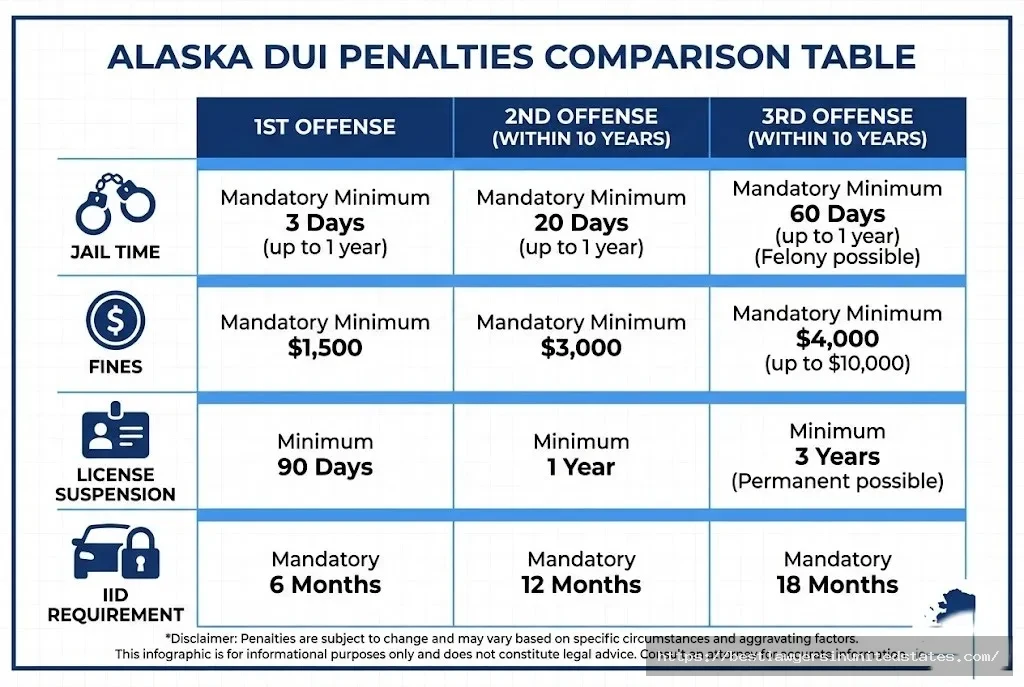
Quick Facts: Alaska DUI Penalties at a Glance
First Offense:
- 3 days minimum jail time
- $1,500 minimum fine
- 90-day license suspension
- 12-month ignition interlock device required
- DUI education program mandatory
Second Offense:
- 20 days minimum jail time
- $3,000 minimum fine
- 1-year license revocation
- 18-month IID requirement
- Substance abuse treatment required
Third Offense (Felony):
- 60 days minimum jail time
- $4,000 minimum fine
- 3-year license revocation
- Class C felony on your record
- 24-month IID requirement
Fourth Offense (Felony):
- 120 days minimum jail time (up to 5 years)
- $5,000 minimum fine
- 5-year license revocation
- Class B felony conviction
What Are Alaska’s DUI Laws?
Alaska defines DUI under Alaska Statute 28.35.030. You commit this crime when you operate a vehicle while impaired by alcohol, drugs, or inhalants. The state doesn’t require proof you drove poorly. Your blood alcohol content alone can convict you.
Alaska uses three terms interchangeably: DUI (Driving Under the Influence), OUI (Operating Under the Influence), and DWI (Driving While Intoxicated). All three mean the same thing under Alaska law. Courts and police reports use these terms based on personal preference.
Alaska Statute 28.35.030 Explained
This statute makes it illegal to operate any vehicle with a BAC of 0.08% or higher. The law covers cars, trucks, motorcycles, boats, and aircraft. You can face charges even on private property.
Alaska State Troopers enforce DUI laws on highways and rural areas. Local police handle enforcement in cities like Anchorage, Fairbanks, and Juneau. Village Public Safety Officers (VPSOs) make arrests in remote communities, though they must call State Troopers for transport and booking.
The statute applies whether you’re drunk, high on marijuana, or impaired by prescription medication. Alaska treats all impairment equally under criminal law.
Alaska’s BAC Limits by Driver Type
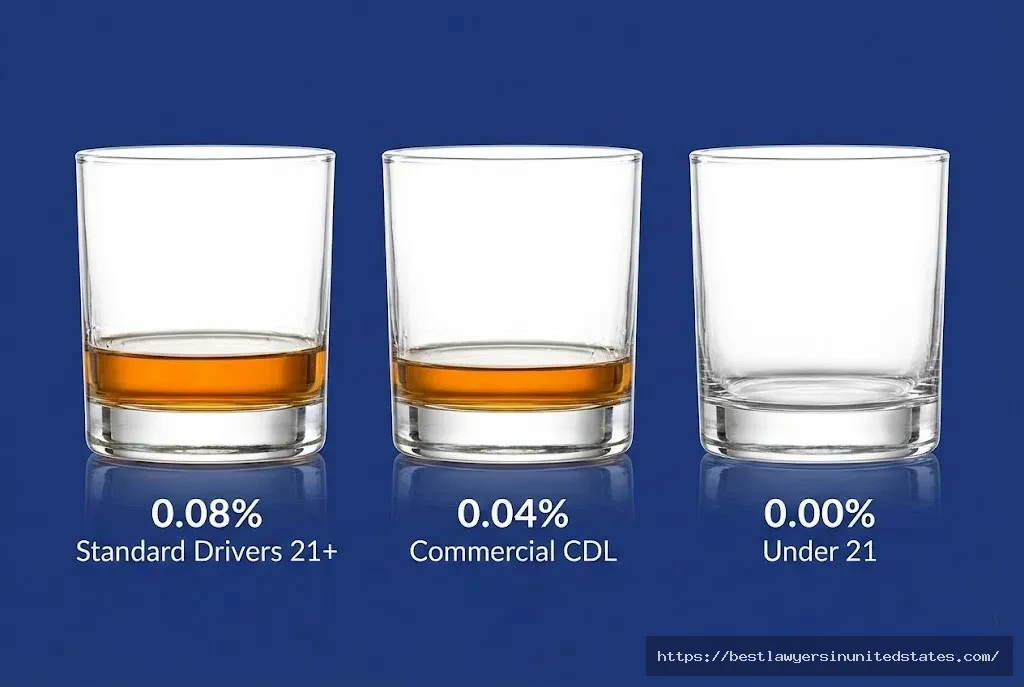
Alaska sets different blood alcohol limits based on your license type and age. Understanding your BAC level helps you avoid arrest. Use our BAC calculator to estimate your blood alcohol content based on drinks consumed, body weight, and time elapsed.
| Driver Type | Legal BAC Limit | Penalty Level |
|---|---|---|
| Standard drivers (21+) | 0.08% | Misdemeanor (1st-2nd), Felony (3rd+) |
| Commercial drivers (CDL) | 0.04% | License disqualification + criminal charges |
| Drivers under 21 | 0.00% | Zero tolerance violation |
| Repeat offenders | 0.08% | Enhanced penalties apply |
Commercial drivers lose their CDL for one year on a first offense. A second offense means permanent disqualification. You face these penalties even if driving your personal vehicle.
Check Your BAC Level
Not sure if you’re over the legal limit? Our BAC calculator estimates your blood alcohol content based on your weight, drinks consumed, and time passed. This tool helps you understand how alcohol affects your body.
BAC Calculator
Estimate your Blood Alcohol Content
• Commercial Driver (CDL): 0.04% BAC
• Drivers Under 21: 0.00-0.02% BAC (Zero Tolerance)
• Enhanced Penalties: 0.15% BAC or higher in most states
Learn more about how BAC is calculated and what factors influence your results on our BAC Calculator page.
Penalties for a First DUI in Alaska
First-time offenders face mandatory minimums that judges cannot reduce. Alaska eliminated plea bargains that let you avoid jail time in 1983. Every conviction means actual jail time.
Minimum Jail Time for First Offense
You serve at least 72 hours (3 days) in jail. Courts typically sentence you to 90 days with 87 days suspended. This means you serve 3 days immediately and face the remaining 87 days if you violate probation.
Some judges allow work release or electronic monitoring for the suspended time. You must apply for these programs through the Alaska District Court handling your case.
Weekend jail programs exist in Anchorage and Fairbanks. You report Friday evening and leave Monday morning. This option helps you keep your job during sentencing.
Fines and Court Costs
The minimum fine is $1,500. Most courts add surcharges bringing your total to $1,800-$2,200. You pay separately for:
- Court filing fees ($50-$100)
- Probation supervision ($50/month)
- Victim impact panel ($25)
- DUI education program ($350-$500)
Payment plans are available through Alaska courts. You typically get 6-12 months to pay in full. Missing payments triggers probation violations.
License Suspension Period
Your license suspends administratively within 7 days of arrest. This happens before any criminal conviction. The Alaska Division of Motor Vehicles handles this separately from criminal court.
First offense administrative suspension: 90 days. You can request a hearing within 7 days of arrest to challenge the suspension. Most hearings occur by phone with a DMV hearing officer.
After the administrative suspension, criminal court adds more time if you’re convicted. These run consecutively, not concurrently.
Mandatory Ignition Interlock Device (IID)
Alaska requires an ignition interlock device for every DUI conviction. No exceptions exist for first offenders. You install the device at your expense and keep it for at least 12 months.
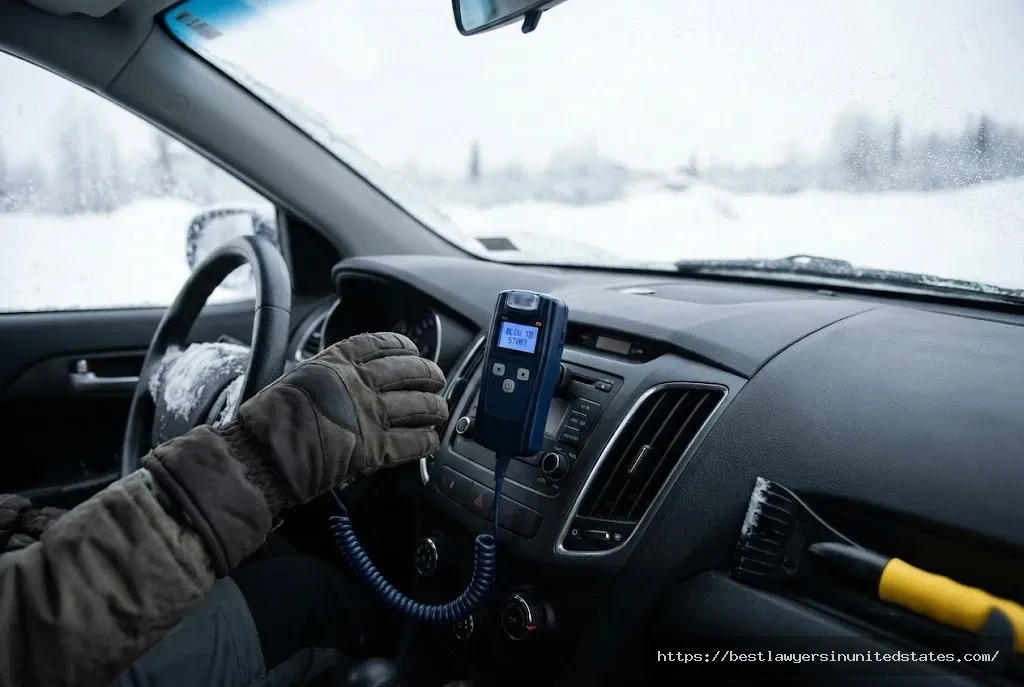
The device costs $150-$200 to install. Monthly monitoring fees run $75-$100. You pay roughly $1,000-$1,400 total for the first year.
You must blow into the device before starting your vehicle. It randomly requests samples while driving. Failed tests get reported to your probation officer.
Approved IID providers in Alaska include:
- LifeSafer
- Intoxalock
- Smart Start
DUI Education and Treatment Requirements
First offenders complete a state-approved DUI education program. The course covers alcohol’s effects, legal consequences, and decision-making skills. Programs run 16-20 hours over 4-6 weeks.
Cost: $350-$500 depending on location. Anchorage and Fairbanks offer multiple providers. Rural areas may require online programs with in-person check-ins.
Some judges order substance abuse evaluations. If the evaluator recommends treatment, you must complete it or face probation violations. Treatment can add $500-$5,000 to your total costs.
Penalties for a Second DUI in Alaska
Second offenses bring harsher mandatory minimums. Alaska courts look back at your entire lifetime. A conviction from 20 years ago still counts as your first offense.
Enhanced Jail Time and Fines
Minimum jail: 20 days. Most sentences run 60-90 days with partial suspension. You serve 20 days immediately. Electronic monitoring may substitute for some jail time.
Minimum fine: $3,000. Courts add surcharges bringing totals to $3,500-$4,500. You also pay higher probation fees and treatment costs.
Second offenders must complete substance abuse treatment. The court orders evaluations that determine treatment length. Outpatient programs run 3-6 months. Inpatient treatment lasts 30-90 days.
Extended License Revocation
Second offense means 1-year license revocation. This revocation period is longer than first offense and includes administrative penalties.
You cannot apply for a limited license during the first 30 days. After 30 days, you may request an ignition interlock limited license. This lets you drive only vehicles equipped with IID.
Longer IID Requirement
Second offenders install IID for at least 18 months. The device stays in your vehicle during and after license reinstatement. Violations extend the requirement period.
Third DUI and Felony DUI Laws in Alaska
A third DUI conviction becomes a Class C felony under Alaska law. This changes your case from misdemeanor to felony status with serious long-term consequences.
When Does a DUI Become a Felony?
Alaska charges felony DUI in these situations:
Third offense within lifetime: Automatic Class C felony. Alaska’s lookback period never expires for determining offense level.
Fourth or subsequent offense: Class B felony with enhanced penalties.
DUI causing injury: Felony regardless of prior offenses.
DUI with minor under 16 in vehicle: Enhanced charges possible.
Refusal to submit to chemical test (third refusal): Independent felony charge.
The Alaska District Attorney prosecutes felony DUI cases more aggressively than misdemeanors. Plea bargains rarely reduce felony charges to misdemeanors.
Class C Felony Penalties (Third Offense)
Minimum jail: 60 days. Maximum: 5 years in Alaska Department of Corrections facilities. Most sentences run 120 days to 2 years with portions suspended.
Minimum fine: $4,000. Courts routinely impose $5,000-$10,000 for third offenses. Add court costs and fees for totals reaching $6,000-$12,000.
Felony convictions appear on background checks permanently. This affects employment, housing, and voting rights. Some rights restore after completing your sentence, but the conviction never disappears.
Class B Felony Penalties (Fourth Offense or Greater)
Fourth DUI conviction or higher becomes Class B felony. This carries:
- Minimum 120 days jail
- Maximum 10 years prison
- $5,000 minimum fine (up to $100,000)
- 5-year license revocation
- Permanent criminal record
Judges send most fourth-time offenders to prison, not jail. You serve time at Alaska Department of Corrections facilities in Anchorage, Fairbanks, or Palmer.
Prison Time vs. Jail Time
Jail: Local facilities for sentences under 1 year. Run by city or borough police.
Prison: State facilities for sentences over 1 year. Managed by Alaska Department of Corrections.
Felony DUI sentences often split between jail and prison. You might serve 6 months in Anchorage jail, then transfer to state prison for longer sentences.
Alaska’s Lookback Period for Prior Convictions
Alaska uses a lifetime lookback for determining your offense level. A 1990 conviction counts when calculating whether your 2026 arrest is a second, third, or fourth offense.
The 10-year lookback applies only to enhanced sentencing factors. Courts can impose harsher penalties if your prior offense occurred within 10 years.
Example: Your first DUI was in 2010. Your second arrest in 2026 counts as a second offense (lifetime lookback). But the judge can’t apply enhanced penalties because more than 10 years passed (sentencing lookback).
Calculate Your Total DUI Costs in Alaska
Alaska DUI convictions cost far more than the court fine. Hidden expenses add up quickly. Our calculator helps you estimate the true financial impact.
DUI Cost Calculator
Estimate total DUI expenses by state and offense
Detailed Cost Breakdown
Payment Timeline
Bail bond, towing fees, car impound, attorney retainer
Initial court fines, DMV fees, DUI school enrollment, ignition interlock installation
Monthly probation fees, ignition interlock fees, DUI school payments, attorney balance
Insurance premium increases, license reinstatement, SR-22 filing fees
- Lost wages from missed work (court dates, jail time, DUI school) – $2,000-$10,000
- Job loss or difficulty finding employment – Varies
- Professional license suspension (doctors, lawyers, nurses, pilots) – Career ending
- Rideshare and transportation costs during suspension – $1,500-$5,000
- Travel restrictions and visa denials – Varies
- Security clearance loss – Career impact
- Child custody implications – Legal costs
- Rental car restrictions – Varies
- Personal relationships and mental health costs – Priceless
Get a detailed cost breakdown specific to your offense level on our DUI Cost Calculator page.
True Cost of an Alaska DUI: Complete Breakdown
Court fines represent just 10-20% of total DUI costs. Here’s what you actually pay for a first, second, or felony offense in Alaska.
First Offense Total Costs ($8,500-$22,000)
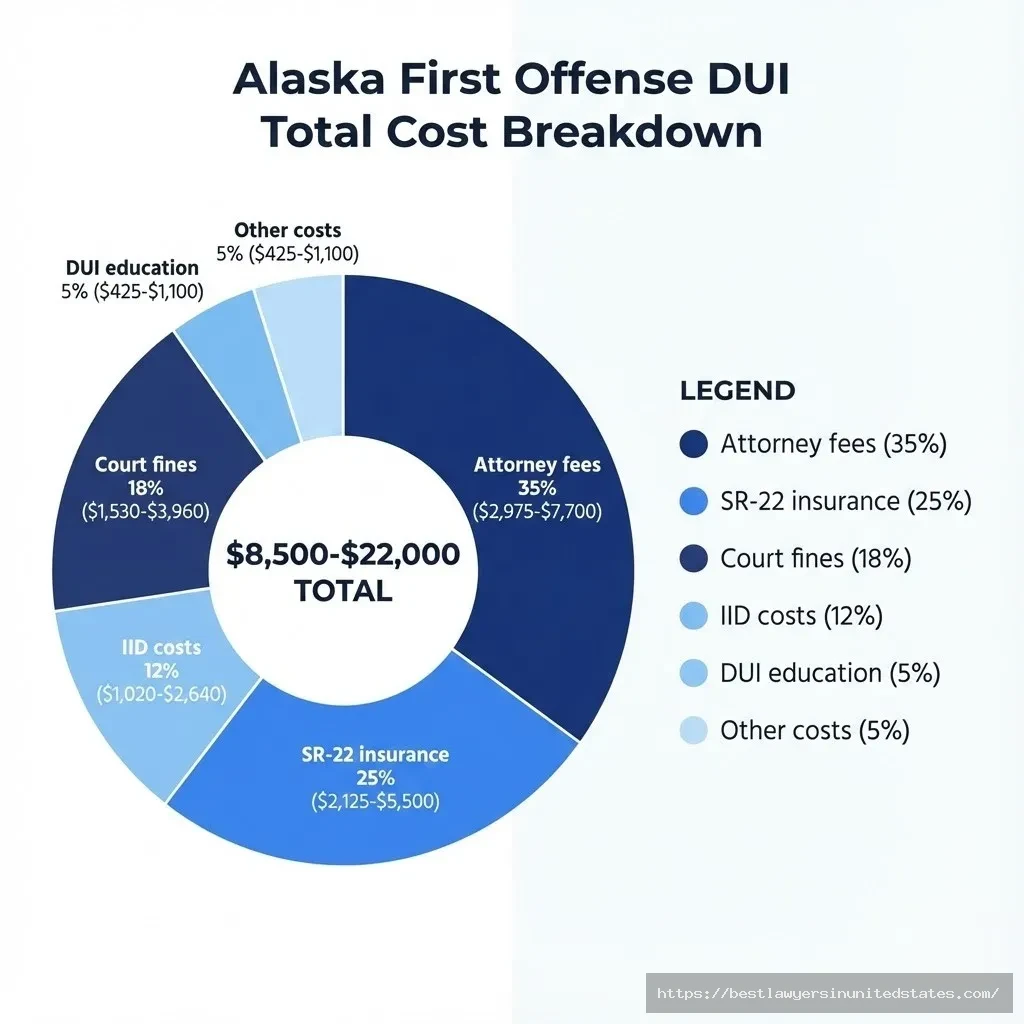
| Expense Category | Low End | High End |
|---|---|---|
| Court fines & fees | $1,500 | $2,200 |
| Attorney fees | $2,500 | $7,500 |
| License reinstatement | $100 | $100 |
| IID installation & monitoring (12 months) | $1,050 | $1,400 |
| DUI education program | $350 | $500 |
| Substance abuse evaluation | $150 | $300 |
| SR-22 insurance increase (3 years) | $2,000 | $6,000 |
| Towing & impound | $200 | $500 |
| Lost wages (jail time) | $600 | $2,000 |
| Bail bond | $0 | $1,500 |
| Total First Offense | $8,450 | $22,000 |
Second Offense Total Costs ($16,000-$38,000)
| Expense Category | Low End | High End |
|---|---|---|
| Court fines & fees | $3,000 | $4,500 |
| Attorney fees | $3,500 | $10,000 |
| License reinstatement | $100 | $100 |
| IID installation & monitoring (18 months) | $1,500 | $2,000 |
| DUI education program | $350 | $500 |
| Substance abuse treatment | $1,000 | $5,000 |
| SR-22 insurance increase (5 years) | $4,000 | $10,000 |
| Towing & impound | $200 | $500 |
| Lost wages (jail time) | $2,000 | $4,000 |
| Bail bond | $500 | $2,000 |
| Total Second Offense | $16,150 | $38,600 |
Felony DUI Total Costs ($28,000-$85,000+)
| Expense Category | Low End | High End |
|---|---|---|
| Court fines & fees | $4,000 | $12,000 |
| Attorney fees (felony) | $7,500 | $25,000 |
| License reinstatement | $100 | $100 |
| IID installation & monitoring (24+ months) | $2,000 | $2,800 |
| DUI education program | $350 | $500 |
| Substance abuse treatment (mandatory) | $2,000 | $10,000 |
| SR-22 insurance increase (7 years) | $7,000 | $20,000 |
| Towing & impound | $200 | $500 |
| Lost wages (jail/prison time) | $4,000 | $12,000 |
| Bail bond (felony) | $1,000 | $5,000 |
| Total Felony Offense | $28,150 | $87,900 |
Hidden Costs: Insurance, Lost Wages, and More
SR-22 Insurance: Alaska requires high-risk insurance certificates for 3-5 years. Your premiums increase 50-100%. A driver paying $1,200 annually now pays $1,800-$2,400. Over five years, that’s $3,000-$6,000 extra.
Employment Impact: Background checks reveal felony DUI convictions. Many employers in Alaska’s oil, gas, and aviation industries disqualify applicants with DUI records. Commercial driver license holders lose their CDL permanently after two offenses.
Professional Licenses: Nurses, pilots, and maritime workers face license suspensions. The Alaska Board of Nursing reviews every DUI conviction. Pilots lose FAA medical certificates. Maritime workers cannot work on vessels.
Child Custody: Alaska family courts consider DUI convictions in custody disputes. Multiple offenses can cost you custody or visitation rights. Learn more about Alaska family law issues on our divorce cost in Alaska page.
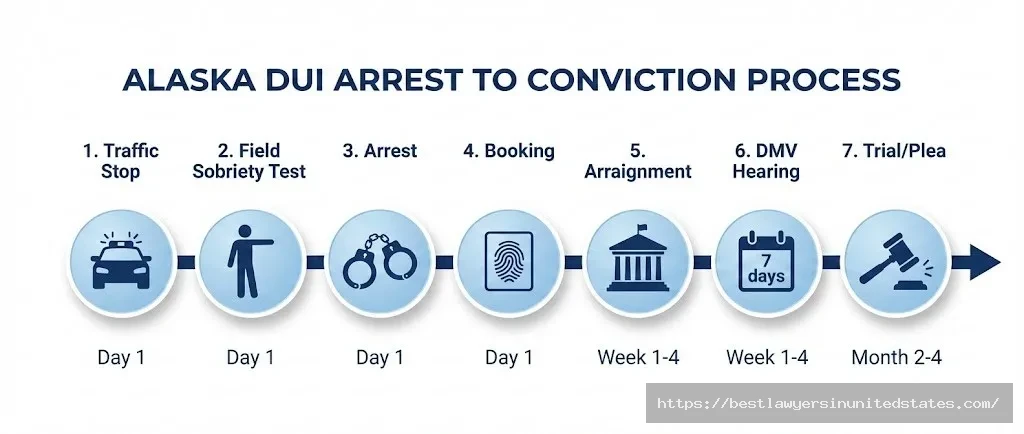
Alaska’s DUI Arrest and Legal Process
Understanding what happens after arrest helps you protect your rights. Alaska’s process differs from other states in several ways.
What Happens During a DUI Stop in Alaska
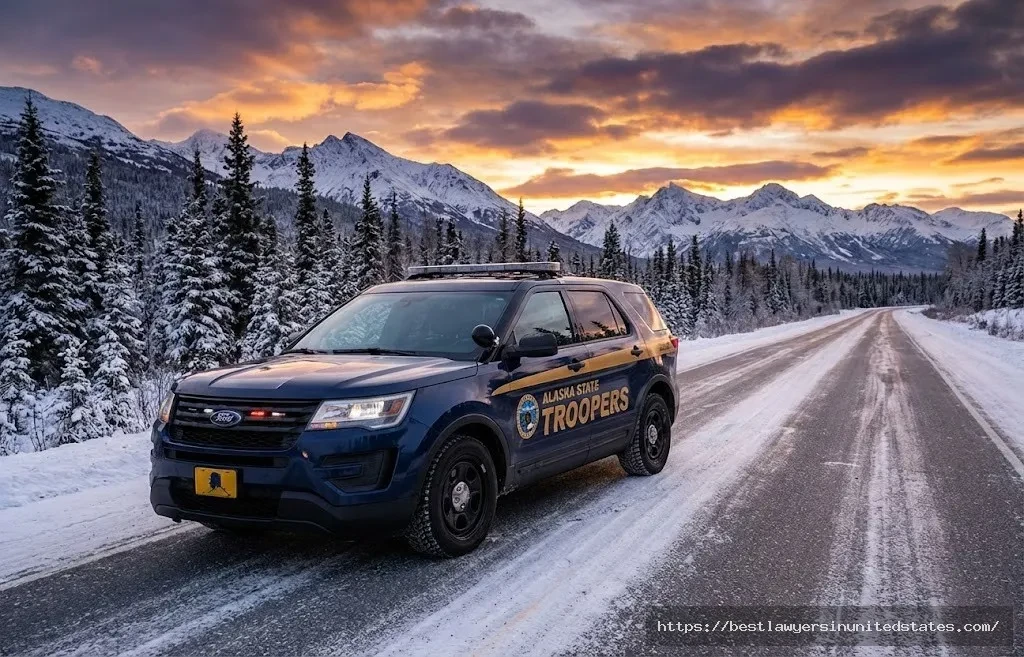
Alaska State Troopers and local police stop vehicles for traffic violations or erratic driving. Officers must have reasonable suspicion you broke a traffic law. Stops based solely on “gut feeling” are illegal.
The officer asks for your license and registration. They observe your speech, eyes, and coordination. Slurred speech, bloodshot eyes, or alcohol smell give officers probable cause to investigate further.
You must provide your license, but you don’t have to answer questions. Politely say: “I’m exercising my right to remain silent. I want to speak with an attorney.”
Field Sobriety Tests and Breathalyzer Procedures
Officers request three standardized tests approved by the National Highway Traffic Safety Administration (NHTSA):
Horizontal Gaze Nystagmus (HGN): You follow a pen with your eyes. Officers look for involuntary eye jerking.
Walk-and-Turn: You walk heel-to-toe for nine steps, turn, and return. Officers check balance and ability to follow instructions.
One-Leg Stand: You stand on one foot for 30 seconds while counting. Officers observe swaying and balance.
Alaska weather makes these tests unreliable. Ice, snow, and uneven gravel roads affect balance. Officers should note weather conditions in reports. Your attorney can challenge results based on environmental factors.
Portable Breath Tests (PBT) happen roadside. These handheld devices give preliminary BAC readings. PBT results cannot be used as evidence at trial. They only establish probable cause for arrest.
Alaska’s Implied Consent Law
Alaska Statute 28.35.032 establishes implied consent. By holding an Alaska driver’s license, you consent to chemical testing when arrested for DUI. Refusal triggers automatic penalties separate from criminal charges.
After arrest, officers take you to a police station or Alaska State Trooper post. They offer you a breath test on an Intoxilyzer machine or blood test at a medical facility. You choose which test to take.
The officer reads you Alaska’s implied consent advisory. This explains refusal consequences. The advisory is legally required. If officers skip it, your attorney can suppress evidence.
Refusing a Breathalyzer: Consequences in Alaska
Refusal carries immediate penalties:
First refusal: 90-day license revocation with no limited license option. Revocation starts immediately.
Second refusal: 1-year license revocation. You cannot get a limited license at any point during this year.
Third or subsequent refusal: 3-year revocation. Also charged as independent Class A misdemeanor with up to 1 year jail.
Refusal can be used against you in criminal court. Prosecutors tell juries: “He refused the test because he knew he was drunk.” This hurts your defense.
Should you refuse? It depends on your BAC. If you’re significantly over 0.08%, refusal might help by denying the state concrete evidence. If you’re borderline or under the limit, take the test.
Consult with an attorney before making this decision. If arrested, say: “I want to speak with my lawyer before deciding about testing.”
Administrative vs. Criminal DUI Charges
Alaska pursues two separate cases after DUI arrest:
Administrative (DMV): The Alaska Division of Motor Vehicles suspends your license within 7 days. This happens regardless of criminal charges. You request a hearing within 7 days to challenge suspension.
Criminal (Court): The District Attorney files criminal charges in Alaska District Court. This process takes weeks or months. Conviction brings fines, jail, and additional license penalties.
Both proceedings run simultaneously. Winning your DMV hearing doesn’t dismiss criminal charges. Winning criminal court doesn’t automatically restore your license.
DMV Hearing Timeline
You have 7 days from arrest to request an administrative hearing. Miss this deadline and your license suspends automatically. Request hearings online at the Alaska DMV website or by phone at (907) 269-5551.
Hearings occur 30-60 days after your request. Most happen by phone with a DMV hearing officer. You can have an attorney represent you. The officer only considers whether officers had probable cause and whether you refused testing.
If you lose, suspension starts immediately. If you win, your license remains valid pending criminal court outcome.
Arraignment, Plea Bargain, and Trial Process
Arraignment (Week 1-4): You appear in Alaska District Court. The judge reads charges and asks how you plead. Most defendants plead “not guilty” and request a public defender or hire private counsel.
Discovery (Month 2-4): Your attorney receives police reports, video footage, and chemical test results. This takes 60-90 days in Alaska courts.
Pretrial Hearings (Month 3-6): Your attorney files motions to suppress evidence. Common arguments include illegal traffic stops, missing implied consent advisory, or improper breath test procedures.
Plea Negotiations (Month 4-8): Alaska allows limited plea bargaining. Prosecutors rarely dismiss DUI charges completely. They may reduce third offenses to second offenses or agree to minimum sentences.
Trial (Month 6-12): If you reject plea offers, your case goes to trial. In Alaska District Court, you choose between bench trial (judge decides) or jury trial (6 or 12 jurors decide). Trials last 1-3 days.
Most DUI cases resolve without trial. About 85% of defendants accept plea agreements. Trials happen in about 10% of cases. The remaining 5% get dismissed due to evidence problems.
Getting Your License Back After an Alaska DUI
License reinstatement involves multiple steps and strict timelines. Missing deadlines extends your suspension period.
Administrative License Suspension Timeline
Alaska imposes two types of suspensions:
Administrative Suspension (DMV): Starts 7 days after arrest. Lasts 90 days (first offense), 1 year (second offense), or 3 years (third offense). This runs first.
Criminal Suspension (Court): Starts after conviction. Runs after administrative suspension ends. These don’t overlap. If you serve 90 days administrative suspension and get convicted later, criminal suspension starts fresh.
Total time without license for first offense: 90 days (administrative) + 90 days (criminal) = 180 days minimum.
How to Apply for a Restricted IID License
After serving 30 days of suspension, you can apply for an ignition interlock limited license. This lets you drive vehicles equipped with IID to and from:
- Work or school
- Medical appointments
- DUI education programs
- Grocery shopping and essential errands
- Religious services
You cannot drive for recreation or social activities. Violations revoke your limited license and restart suspension periods.
Application process:
- Install IID in your vehicle (cost: $150-$200)
- Get SR-22 insurance certificate from your insurance company
- Complete Application for Ignition Interlock Limited License (form 478)
- Pay $100 reinstatement fee
- Submit everything to Alaska Division of Motor Vehicles
Processing takes 7-14 business days. You receive a new license by mail showing IID restriction.
License Reinstatement Requirements and Fees
After completing your full suspension period, you apply for license reinstatement:
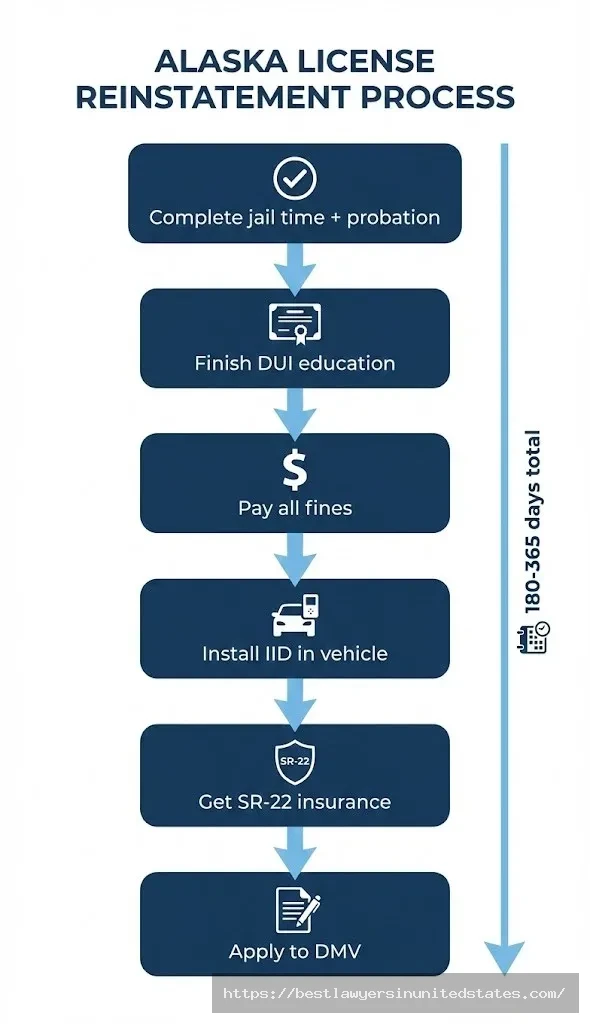
Requirements:
- Complete all jail time and probation
- Finish DUI education program (certificate required)
- Complete substance abuse treatment if ordered
- Pay all fines and court costs
- Maintain SR-22 insurance for required period
- Keep IID in vehicle for minimum period
- Submit proof of completion for all requirements
Fees:
- Reinstatement fee: $100
- New license fee: $20
- SR-22 filing fee: $25 (paid to insurance company)
Mail documents to: Alaska Division of Motor Vehicles, 2760 Sherwood Lane, Juneau, AK 99801. Allow 2-3 weeks for processing.
How Long Does a DUI Stay on Your Record in Alaska?
DUI convictions remain on your Alaska driving record permanently. The Alaska DMV never removes them. They appear on background checks for life.
Driving Record: Lifetime. Every future DUI counts prior convictions for offense level calculation. A 1995 conviction counts when determining if your 2026 arrest is a second offense.
Criminal Record: Lifetime for felonies. Misdemeanors stay on Alaska court records permanently but may become non-public after 10 years if you have no new convictions.
Background Checks: Lifetime. Employers, landlords, and licensing boards see DUI convictions indefinitely.
Sentencing Enhancement: 10 years. Courts apply enhanced penalties only if your prior conviction occurred within 10 years. After 10 years, prior convictions still count for offense level but not for maximum sentence increases.
Alaska doesn’t allow DUI expungement. No legal process removes DUI from your record. Some defendants pursue “set aside” motions that keep convictions on record but mark them as “set aside.” This rarely succeeds for DUI cases.
Traveling to Alaska with a DUI: What You Need to Know
DUI convictions create unexpected travel complications. Alaska’s location requires understanding both U.S. and Canadian laws.
Can You Visit Alaska if You Have an Out-of-State DUI?
Yes. Having a DUI from another state doesn’t prevent you from entering Alaska. Alaska is a U.S. state. No border checkpoints restrict domestic travel.
Your out-of-state DUI conviction will transfer to Alaska if you move here and apply for an Alaska driver’s license. The DMV checks the National Driver Register and adds prior DUI convictions to your Alaska record.
Renting vehicles in Alaska may be harder. Rental companies check driving records. Multiple DUI convictions or recent DUI (within 3 years) often result in rental denials. Enterprise and Hertz typically deny rentals for:
- Any DUI within 2 years
- Two or more DUI convictions ever
- Suspended license
Driving Through Canada to Alaska with a DUI
Many travelers drive the Alaska Highway from the Lower 48 through Canada. A DUI conviction makes this complicated.
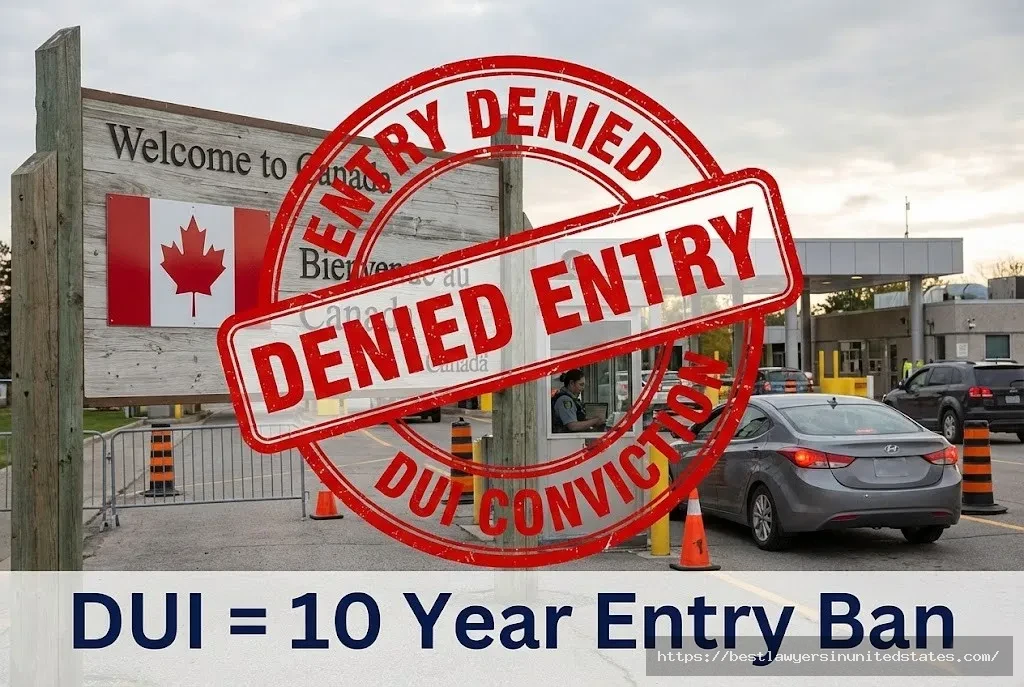
Canada considers DUI a serious criminal offense equivalent to felony. Canadian border officers deny entry to anyone with DUI convictions. This applies even if:
- Your conviction was 20 years ago
- You completed probation
- Your record is expunged (Canada still sees it)
Canada Entry Requirements After DUI:
Under 5 years since conviction: You’re inadmissible. You need a Temporary Resident Permit (TRP).
5-10 years since conviction: You’re still inadmissible but can apply for Criminal Rehabilitation.
10+ years since conviction: You may qualify for deemed rehabilitation (automatic after 10 years for single DUI).
Temporary Resident Permit (TRP) for Canada
A TRP allows entry despite criminal inadmissibility. Apply at least 6 months before travel. Processing takes 4-6 months.
Requirements:
- Completed TRP application form
- FBI criminal record
- Court documents showing conviction and sentence completion
- Letter explaining why you need to enter Canada
- Proof of Alaska travel plans (hotel reservations, Alaska cruise tickets)
- Application fee: $200 CAD
TRPs last up to 3 years for multiple entries. You must carry the permit document when crossing the border.
Apply through the Canadian consulate in San Francisco (serves Alaska residents) or online through Immigration, Refugees and Citizenship Canada (IRCC) website.
Criminal Rehabilitation Application
After 5 years since completing your sentence, apply for Criminal Rehabilitation. This permanently resolves inadmissibility.
Processing time: 12-18 months. Application fee: $1,000 CAD. Approval is permanent. Once granted, you enter Canada freely without restrictions.
You cannot apply for Criminal Rehabilitation until 5 years pass from sentence completion. This includes probation. If your DUI probation ended in 2020, you can apply starting in 2025.
Can You Take an Alaska Cruise with a DUI?
Mostly yes, but it depends on your itinerary. Alaska cruises present unique challenges because ships dock in Canadian ports.
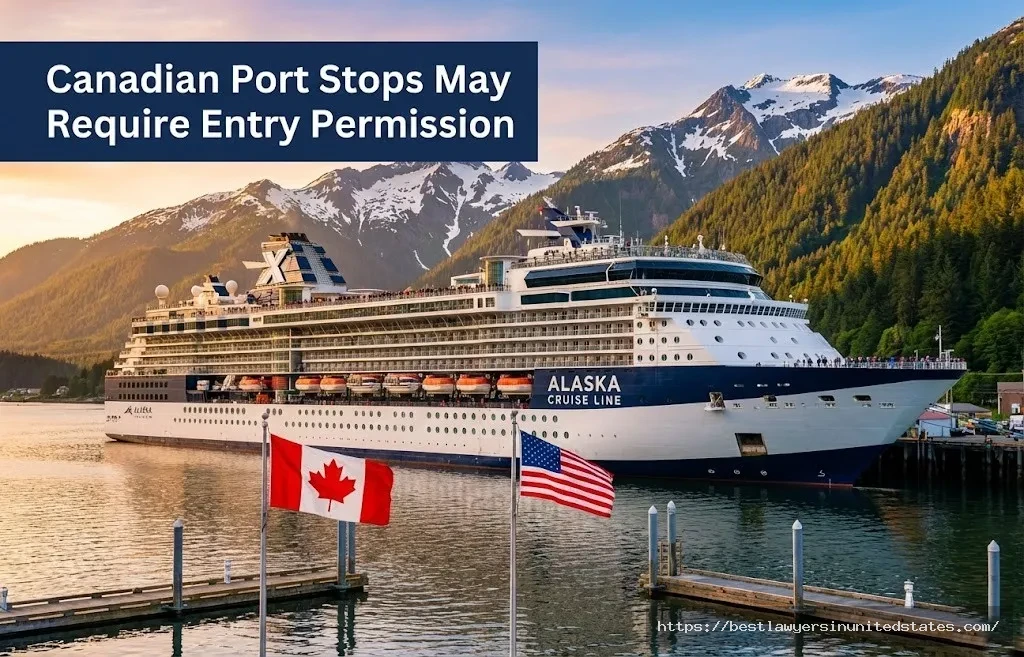
Seattle to Alaska cruises: These typically stop in Victoria, British Columbia or Vancouver. The ship docks in Canada. Canadian authorities can deny you entry when you disembark.
Cruises staying on the ship in Canada: If you remain on board when docked in Canadian ports, you typically don’t go through Canadian immigration. Most cruise lines allow this. Contact your cruise line before booking.
Roundtrip Alaska cruises from Anchorage or Juneau: These stay in U.S. waters. No Canadian immigration required. You can cruise without restriction.
Major cruise lines (Princess, Holland America, Royal Caribbean) don’t check DUI records when booking. They don’t deny boarding based on DUI alone. The issue arises only when you attempt to enter Canada.
Best Practice: Book roundtrip cruises from Whittier, Seward, or Juneau. Avoid Seattle departures that stop in Canadian ports. If your cruise includes Canadian stops, stay on the ship or obtain a TRP before travel.
Solutions: Get a TRP or Criminal Rehabilitation Before Traveling
Don’t risk being turned away at the border. Start your TRP or Criminal Rehabilitation application 6-12 months before planned travel.
Many Alaska residents need to drive through Canada for medical care in Seattle or family visits in the Lower 48. Getting proper documentation prevents travel emergencies.
Contact a Canadian immigration attorney for application help. Expect to pay $1,500-$3,000 in legal fees plus government application fees. The process is complex but manageable with proper planning.
DUI Laws in Alaska’s Dry and Damp Communities
Alaska allows local communities to restrict alcohol under the Local Option Law. This creates unique DUI scenarios not found elsewhere in America.
Alaska’s Local Option Law Explained
Alaska Statute 04.11.491 lets villages vote to become:
Wet: Alcohol sales, possession, and consumption are legal. This is standard throughout most of America.
Damp: Possession and consumption allowed in private homes. Sales prohibited. You can bring alcohol in for personal use but cannot sell it.
Dry: Alcohol possession, consumption, and sales all prohibited. Violators face criminal charges.
About 75 Alaska communities have local option restrictions. Most are rural Alaska Native villages. The North Slope Borough (including Utqiaġvik/Barrow, Nuiqsut, and Kaktovik) maintains some of Alaska’s strictest alcohol restrictions.
Villages adopt these laws to combat alcohol abuse, domestic violence, and social problems. Alcohol-related crimes decrease significantly in dry communities, though bootlegging increases.
Can You Get a DUI in a Dry Village?
Yes. You can be charged with DUI even in communities where alcohol is illegal. You face two separate charges:
1. Illegal alcohol possession (violation of local option law) 2. DUI (violation of Alaska Statute 28.35.030)
Courts prosecute both charges. The DUI penalty is the same as anywhere in Alaska. The alcohol possession charge adds additional fines and jail time.
Example: You bring a bottle of whiskey to Utqiaġvik and drive after drinking. You’re charged with:
- DUI (minimum 3 days jail, $1,500 fine)
- Alcohol importation to dry community (up to 1 year jail, $5,000 fine)
Total exposure: 1 year jail and $6,500 in fines for first-time offenders.
Enhanced Penalties for Bootlegging Plus DUI
Bootlegging means selling alcohol in dry communities. Penalties are severe because alcohol abuse causes serious social problems in rural Alaska.
Bootlegging charges: Class A misdemeanor, up to 1 year jail and $10,000 fine.
If you bootleg AND drive drunk, prosecutors stack charges. You face:
- Bootlegging charges (up to 1 year)
- DUI charges (minimum 3 days first offense, up to 5 years for felony)
Judges rarely show leniency on bootlegging cases. Alaska views alcohol trafficking in dry villages as predatory behavior. Expect full prosecution and jail time.
North Slope Borough Alcohol Restrictions
The North Slope Borough covers Alaska’s Arctic coast. Oil workers at Prudhoe Bay and residents of Utqiaġvik (formerly Barrow) live under strict alcohol rules.
Prudhoe Bay oil fields: Zero tolerance. Alcohol possession results in immediate termination and permanent industry ban. You cannot work for any oil company on Alaska’s North Slope again.
Utqiaġvik/Barrow: Alcohol sales banned since 1994. Possession for personal use allowed in limited quantities. Importation restricted to small amounts.
Nuiqsut, Kaktovik, Atqasuk: Various restrictions by local vote. Check each community’s ordinances before traveling.
Alaska State Troopers and Village Public Safety Officers (VPSOs) enforce these laws. VPSOs are unarmed community members with limited police powers. They detain suspects until State Troopers arrive for arrest and transport.
Map of Dry and Damp Communities
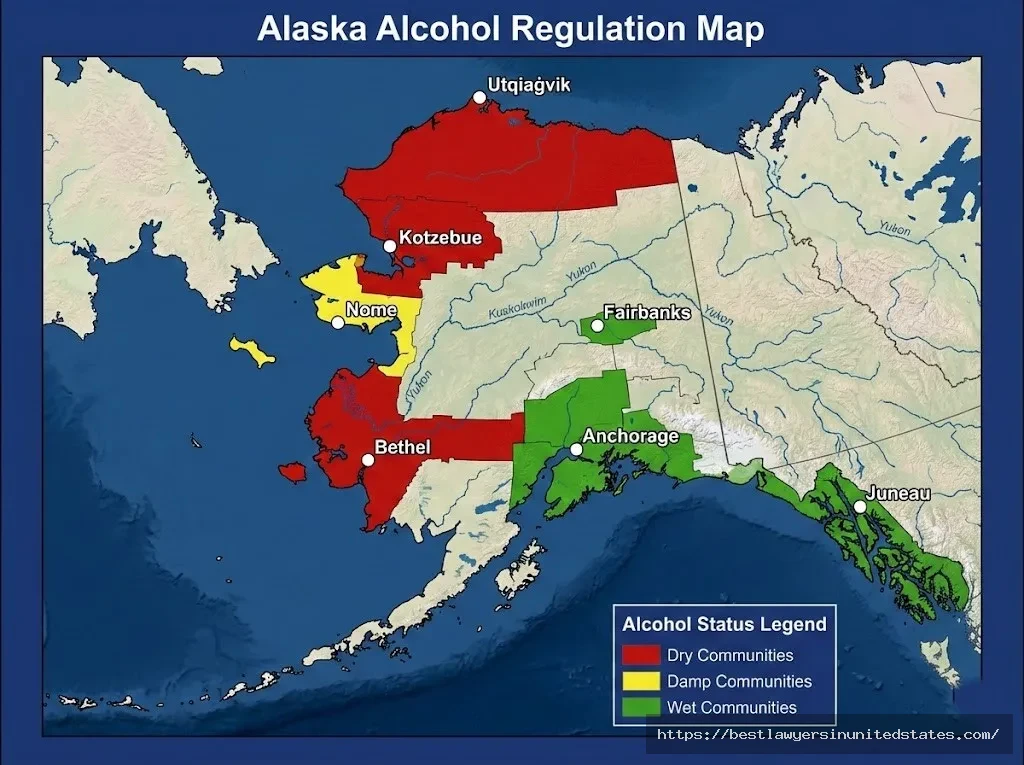
Dry communities include:
- Utqiaġvik (Barrow)
- Nuiqsut
- Kaktovik
- Bethel
- Several dozen Alaska Native villages
Damp communities include:
- Kotzebue
- Nome (partially)
- Dillingham
- Numerous smaller villages
Wet communities (no restrictions):
- Anchorage
- Fairbanks
- Juneau
- Sitka
- Ketchikan
- Most road-connected towns
Check the Alaska Alcoholic Beverage Control Board website for current local option status before traveling to rural Alaska. Status changes based on local elections.
Flying into dry villages with alcohol violates local law even if you don’t drink. Enforcement happens at airports where VPSOs or State Troopers search bags.
Common DUI Defenses Used Successfully in Alaska
Alaska’s unique geography and climate create defense opportunities not available elsewhere. Experienced attorneys know how to challenge evidence specific to Alaska conditions.
Challenging Traffic Stops and Probable Cause
Officers need reasonable suspicion to stop your vehicle. Alaska courts require specific, articulable facts justifying the stop. “Driving late at night in a bar area” isn’t enough.
Valid stop reasons:
- Speeding or traffic violations
- Weaving between lanes
- Failing to signal
- Equipment violations (broken taillight)
Invalid stop reasons:
- Leaving a bar parking lot
- Driving slowly
- “Looking suspicious”
- Anonymous tips without corroboration
If officers lacked probable cause, your attorney files a motion to suppress. The judge excludes all evidence from the illegal stop. This often forces prosecutors to dismiss charges.
Alaska State Troopers patrol remote highways with few vehicles. They sometimes follow suspects for miles waiting for minor traffic violations. This “following in hopes of violation” is legal as long as the eventual stop has valid justification.
Equipment Calibration Issues in Extreme Cold
Breathalyzer machines malfunction in Alaska’s extreme temperatures. Intoxilyzer devices require calibration at specific temperatures. Cold weather affects accuracy.
Defense attorneys request calibration records showing:
- When the machine was last calibrated
- Temperature in the testing room
- Maintenance logs
- Training records for the officer operating the machine
Alaska regulations require breath test rooms maintain 68-75°F. Many Alaska State Trooper posts struggle to maintain these temperatures in winter. Your attorney can argue test results are unreliable if room temperature was outside acceptable range.
Field Sobriety Test Challenges (Ice, Snow, Uneven Terrain)
The National Highway Traffic Safety Administration designed field sobriety tests for dry, level, well-lit surfaces. Alaska’s winter conditions make these tests impossible to perform accurately.
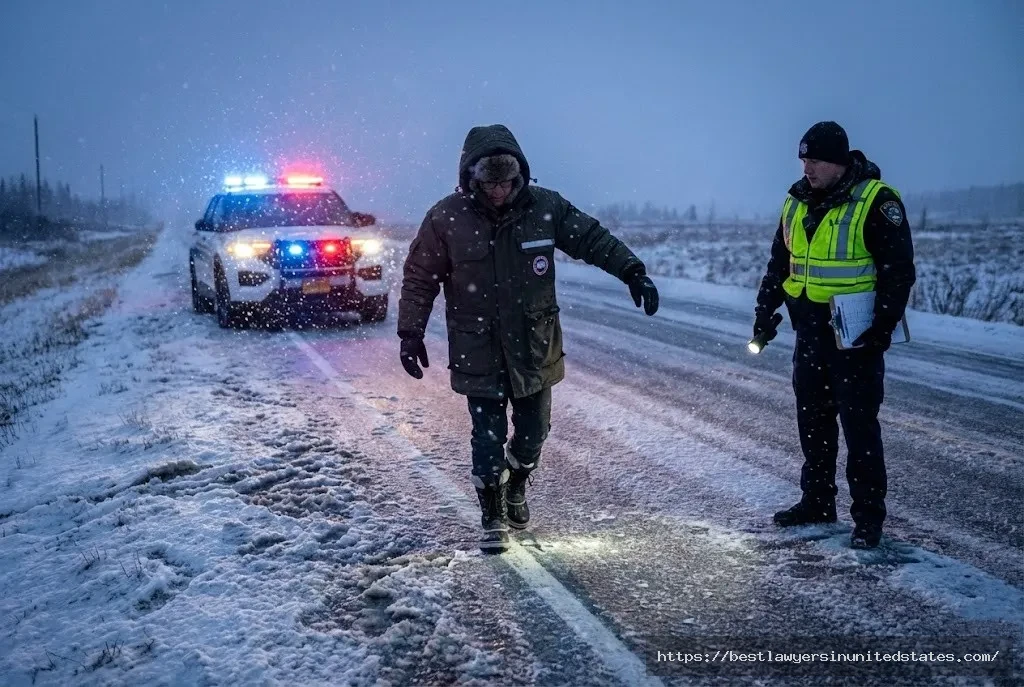
Common challenges:
- Ice on road surface
- Snow covering ground
- Uneven gravel roads
- Darkness (Alaska has 20+ hours of darkness in winter)
- Wind and cold affecting balance
- Heavy winter clothing restricting movement
Your attorney questions officers about testing conditions: “Was there ice on the ground?” “How deep was the snow?” “What was the temperature?” “Was the area well-lit?”
Poor conditions invalidate field sobriety test results. Judges regularly suppress these tests when weather made them unreliable. Alaska weather benefits DUI defendants more than almost any other state.
Rising BAC Defense
Alcohol takes 30-90 minutes to fully absorb into your bloodstream. Your BAC rises during this time. You might be under 0.08% while driving but over 0.08% when tested an hour later.
Alaska’s geography makes rising BAC defense particularly effective. Long distances between towns mean officers often drive 30-60 minutes transporting you to testing facilities. Your BAC rises during this transport.
Example: You’re stopped at 11:00 PM on the Parks Highway between Fairbanks and Anchorage. The nearest Intoxilyzer is at a trooper post 45 minutes away. You arrive at 11:45 PM and test at midnight. Your BAC is 0.10%.
Your attorney argues you were under 0.08% at 11:00 PM when actually driving. Absorption continued during the 45-minute drive to the testing facility.
This defense requires expert testimony from toxicologists. They testify about alcohol absorption rates based on your weight, drinks consumed, food intake, and time of last drink. This costs $2,000-$5,000 but can win cases.
Medical Conditions That Mimic Intoxication
Several medical conditions cause symptoms officers interpret as intoxication:
Diabetes: Low blood sugar causes confusion, slurred speech, and coordination problems. Breath tests can show false positives because diabetics produce acetone, which registers on some breath machines.
Hypothermia: Common in Alaska winters. Symptoms include confusion, slurred speech, poor coordination, and drowsiness. All these mimic intoxication.
Concussion: Recent head injuries cause balance problems and confusion.
Inner ear problems: Affect balance during field sobriety tests.
Fatigue: Alaska’s extreme day/night cycles disrupt sleep patterns. Exhaustion mimics many intoxication symptoms.
Your attorney obtains medical records proving pre-existing conditions. Doctors testify these conditions explain your behavior. This creates reasonable doubt about intoxication.
Underage DUI Laws in Alaska (Drivers Under 21)
Alaska enforces zero tolerance for drivers under 21. Any detectable alcohol results in criminal charges.
Alaska’s Zero Tolerance Law (0.00% BAC)
Alaska Statute 28.35.030 makes it illegal for anyone under 21 to drive with any measurable alcohol in their system. The limit is effectively 0.00%. Even 0.01% BAC results in charges.
This applies to:
- Drivers under 21
- Passengers under 21 operating a vehicle
- Underage persons operating boats or aircraft
Officers can arrest you for minor consumption of alcohol (separate charge) plus DUI even if you’re not impaired. Taking one sip of beer and driving violates this law.
Penalties for Underage First Offense
Criminal Penalties:
- 20 days minimum jail OR 80 hours community service
- $500 minimum fine
- 90-day license suspension
- DUI education program mandatory
- $250 minimum license revocation fee
Administrative Penalties:
- 30-day administrative license suspension
- Minor Consuming Alcohol charge (separate offense)
- Possible court-ordered alcohol evaluation
Underage offenders avoid the ignition interlock device requirement on first offense. Second offense adds IID for 12 months.
Impact on Future Driver’s License
An underage DUI conviction delays full driver’s license eligibility. Alaska’s graduated licensing system adds restrictions:
If you’re 16-17: License suspended until age 18. You start over with learner’s permit after suspension.
If you’re 18-20: Standard DUI suspension applies (90 days first offense). But the conviction remains on your record permanently affecting:
- College applications (many schools ask about criminal records)
- Scholarships (automatic disqualification from many programs)
- Employment (employers see conviction on background checks)
- Military enlistment (some branches reject applicants with DUI)
Commercial Driver DUI Laws in Alaska (CDL Holders)
Commercial driver’s license holders face career-ending consequences from DUI arrests. Alaska applies federal regulations that are stricter than standard DUI laws.
Lower BAC Limit for CDL Drivers (0.04%)
Federal Motor Carrier Safety Administration regulations set 0.04% as the limit for commercial drivers. This applies:
Always: Whether driving a commercial vehicle or personal car. Your CDL status follows you everywhere.
Zero tolerance for drugs: Any detectable controlled substance results in automatic CDL disqualification.
Out of service violations: If caught with 0.02%-0.039% BAC, you’re placed out of service for 24 hours (not arrested, but cannot drive commercially).
CDL Disqualification Periods
First offense: 1-year CDL disqualification. You keep your regular driver’s license but cannot operate commercial vehicles.
First offense while hauling hazardous materials: 3-year disqualification.
Second offense: Lifetime disqualification. Federal law allows reinstatement after 10 years, but most states and employers enforce permanent bans.
Refusal to test: Treated as positive test. Same disqualification periods apply.
These penalties apply even if you’re arrested in your personal vehicle on your day off. CDL holders are held to 0.04% standard 24/7.
Impact on Commercial Driving Career
Alaska’s economy relies heavily on commercial drivers. Oil fields, mining operations, fisheries, and remote villages depend on truck drivers for supplies. Losing your CDL means losing your livelihood.
Most Alaska employers have “zero tolerance” policies stricter than federal minimums:
- Oil companies: Permanent ban after any DUI
- Mining companies: Automatic termination
- Tour bus operators: No hiring with any DUI history
- Freight companies: 5-10 year waiting period
Getting hired after CDL disqualification is nearly impossible in Alaska. Few companies hire drivers with DUI history due to insurance costs and liability concerns.
If you hold a CDL, fight your case aggressively. The financial impact of conviction far exceeds standard drivers. Budget $10,000-$25,000 for a strong criminal defense attorney. Your career depends on it.
Find an Experienced Alaska DUI Attorney
Don’t face DUI charges alone. Alaska’s mandatory minimums mean you need experienced legal help immediately.

Why hire a DUI attorney:
- Negotiate plea agreements
- Challenge evidence and test procedures
- File motions to suppress
- Represent you at DMV hearings
- Present defenses at trial
- Minimize jail time and fines
Cost of DUI attorneys in Alaska:
- Misdemeanor DUI: $2,500-$7,500
- Felony DUI: $7,500-$25,000
- Trial representation: $10,000-$35,000
Payment plans are common. Most attorneys accept retainers starting at $1,500-$3,000.
Find DUI Lawyers in Alaska – Free Consultation
Contact attorneys immediately after arrest. You have only 7 days to request a DMV hearing. Missing this deadline costs you valuable defense options.
Frequently Asked Questions About Alaska DUI Laws
What is the penalty for a first DUI in Alaska?
First offense DUI carries 3 days minimum jail, $1,500 minimum fine, 90-day license suspension, and mandatory ignition interlock device for 12 months. Total costs reach $8,500-$22,000 including attorney fees, insurance increases, and hidden expenses.
Is a DUI a felony in Alaska?
Third DUI offense becomes a Class C felony with 60 days minimum jail and up to 5 years. Fourth offense is Class B felony with 120 days to 10 years prison. First and second offenses are misdemeanors unless aggravating factors exist (injury, child in vehicle).
Can you refuse a breathalyzer in Alaska?
Yes, but refusal triggers automatic license revocation: 90 days for first refusal, 1 year for second refusal, 3 years for third refusal. Third refusal also brings criminal charges. Refusal can be used against you at trial. Prosecutors tell juries refusal indicates guilt.
How much does a DUI cost in Alaska?
First offense: $8,500-$22,000 total including fines, attorney fees, increased insurance, and IID costs. Second offense: $16,000-$38,000. Felony DUI: $28,000-$85,000+. Court fines are just 10-20% of actual costs. Use our DUI cost calculator for personalized estimates.
Will two drinks get you a DUI in Alaska?
Possibly. Two drinks can put a 150-pound person at 0.05-0.08% BAC depending on drink strength, drinking speed, and food intake. Women and smaller individuals reach higher BAC levels faster. Use our BAC calculator to estimate your level. Remember BAC continues rising for 30-90 minutes after your last drink.
What is Alaska’s silly law about moose and alcohol?
Alaska Statute 11.61.120 makes it illegal to give alcohol to a moose. This law exists because intoxicated moose become aggressive and dangerous. Violators face fines up to $1,000. The law also prohibits viewing moose from an aircraft on the same day as hunting moose, preventing unfair hunting advantages.
Which state has the harshest DUI laws?
Arizona, Alaska, and Georgia tie for harshest DUI penalties. Alaska requires jail time for every conviction with no exceptions. Arizona mandates ignition interlock for all offenses plus 10 days minimum jail. Georgia’s lookback period is lifetime. Alaska’s mandatory minimums cannot be reduced by judges.
Can I travel to Canada with an Alaska DUI?
Not easily. Canada considers DUI a serious criminal offense and denies entry. You need a Temporary Resident Permit (TRP) if your conviction is under 10 years old. TRPs cost $200 CAD and require 6-month advance application. After 5 years, apply for Criminal Rehabilitation ($1,000 CAD) for permanent resolution.
How long does a DUI stay on your record in Alaska?
Lifetime. Alaska never removes DUI convictions from driving records. Criminal records show convictions permanently. Background checks reveal DUI convictions forever. Alaska uses lifetime lookback when calculating offense level for new arrests. A 1990 conviction counts when determining if your 2026 arrest is a second offense.
Can you go to Alaska with a DUI from another state?
Yes. Alaska is a U.S. state with no border restrictions. Domestic travel remains unrestricted. However, your out-of-state DUI transfers to Alaska records if you move here and get an Alaska license. Rental car companies may deny rentals based on out-of-state DUI convictions.
Do you go to jail for first DUI in Alaska?
Yes. Alaska law requires minimum 3 days jail for first offense. Judges cannot suspend this requirement. Most defendants serve 72 hours (3 days) in county jail immediately after sentencing. Some courts allow weekend jail or work release for suspended portions of sentence.
How long is license suspended for DUI in Alaska?
First offense: 90 days administrative plus 90 days criminal (180 days total). Second offense: 1 year administrative plus additional criminal suspension. Third offense (felony): 3 years minimum. You can apply for ignition interlock limited license after 30 days.
What happens if you get 3 DUIs in Alaska?
Third DUI is automatic Class C felony with 60 days minimum jail (up to 5 years), $4,000 minimum fine, 3-year license revocation, and permanent criminal record. Most defendants serve 4-12 months in jail or prison. Felony conviction affects employment, housing, and civil rights permanently.
Can you get a DUI on a boat in Alaska?
Yes. Alaska Statute 28.35.030 covers all vehicles including boats, aircraft, snowmobiles, and ATVs. Boating under the influence carries identical penalties as car DUI. Alaska State Troopers and U.S. Coast Guard patrol Alaska waters. Many DUI arrests happen on fishing boats and recreational vessels.
Additional Alaska DUI Resources
Alaska Department of Motor Vehicles Website: doa.alaska.gov/dmv Phone: (907) 269-5551 Address: 2760 Sherwood Lane, Juneau, AK 99801
Alaska Court System Website: courts.alaska.gov Case information and court locations statewide
Alaska State Troopers DUI Information Website: dps.alaska.gov DUI enforcement policies and arrest data
Alaska Department of Law Website: law.alaska.gov Criminal prosecution information
Approved Ignition Interlock Providers:
- LifeSafer: (800) 634-3077
- Intoxalock: (833) 623-0200
- Smart Start: (800) 880-3394
Alaska DUI Education Programs: Contact Alaska courts for approved programs in your area. Anchorage and Fairbanks offer multiple options. Rural areas may require online programs.
Substance Abuse Treatment Facilities: Alaska Behavioral Health: (907) 563-1000 North Star Behavioral Health: (907) 258-7575 Southcentral Foundation: (907) 729-4955
Alaska Bar Association Attorney Referral: Website: alaskabar.org Phone: (907) 272-7469
Understanding your rights and obligations after DUI arrest protects your future. Alaska’s laws are strict but navigable with proper legal help and compliance with all requirements.
