
Idaho DUI laws carry serious penalties that can cost you thousands of dollars and months of license suspension. Under Idaho Code § 18-8004, a first DUI conviction brings minimum fines of $1,000, up to six months in jail, and a 90 to 210-day license suspension. Idaho also enforces a unique “excessive DUI” law at 0.20% BAC that triggers harsher penalties, and a 10-year lookback period that means your third DUI becomes a felony.
Getting arrested for DUI in Idaho sets off two separate legal processes. The Idaho Transportation Department (ITD) suspends your license administratively, while the criminal court handles your DUI charge. You only have seven days to request an Administrative License Suspension (ALS) hearing with ITD. Miss that deadline and you lose your driving privileges automatically.

This guide covers everything about Idaho DUI laws including penalties by offense, the arrest process, license suspension timelines, ignition interlock requirements, total costs, and your legal options. We explain Idaho’s excessive DUI statute, what happens with second and third offenses, how to handle CDL DUI charges, and whether you can expunge a DUI from your record under Idaho’s Clean Slate Act.
Understanding Idaho DUI Laws
Idaho defines driving under the influence in Idaho Code § 18-8004. You commit DUI if you operate a vehicle with a blood alcohol concentration (BAC) of 0.08% or higher. The law also covers driving under the influence of drugs, including marijuana, prescription medications, and illegal substances.
Police can arrest you for DUI even below 0.08% if they prove impairment. Idaho uses field sobriety tests and officer observations to establish impairment. If you’re wondering about your BAC level, use our BAC calculator to estimate how alcohol affects your blood alcohol concentration based on your weight, gender, and drinks consumed.
BAC Calculator
Estimate your Blood Alcohol Content
• Commercial Driver (CDL): 0.04% BAC
• Drivers Under 21: 0.00-0.02% BAC (Zero Tolerance)
• Enhanced Penalties: 0.15% BAC or higher in most states
Idaho’s DUI law covers more than just cars. You can get a DUI while operating motorcycles, ATVs, boats, and even bicycles. The statute defines a vehicle broadly to include any device that transports people on Idaho’s highways.
Idaho’s BAC Limits for Different Drivers
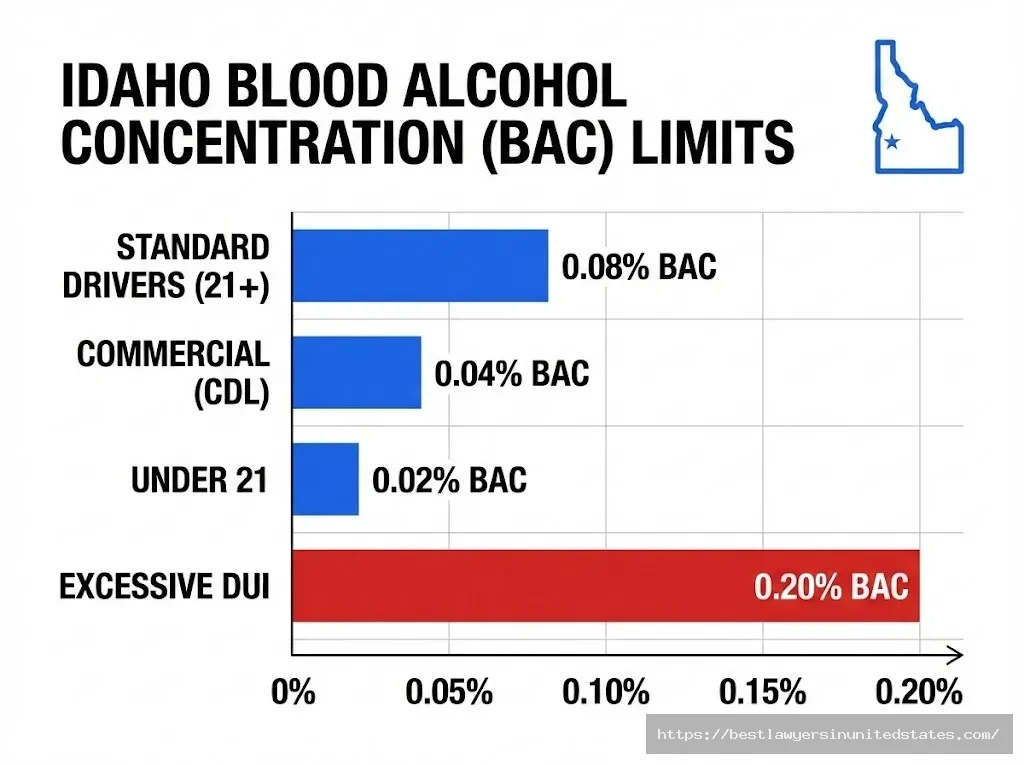
Idaho sets different BAC limits based on driver type:
| Driver Type | Legal BAC Limit |
|---|---|
| Standard drivers (21+) | 0.08% |
| Commercial drivers (CDL) | 0.04% |
| Drivers under 21 | 0.02% |
| School bus drivers | 0.04% |
The 0.02% limit for drivers under 21 reflects Idaho’s zero tolerance policy. Even one drink can put a minor over this limit. Commercial drivers face career-ending consequences at just 0.04% BAC, half the standard limit.
What is Excessive DUI in Idaho?
Idaho Code § 18-8004C creates a separate “excessive DUI” charge for BAC of 0.20% or higher. This is 2.5 times Idaho’s legal limit. Excessive DUI carries enhanced penalties including longer jail time, higher fines, and extended license suspensions.
The excessive DUI law makes your second offense a felony if both incidents involve BAC of 0.20% or higher within five years. This automatic felony upgrade doesn’t apply to standard DUI charges, making excessive DUI particularly serious under Idaho law.
Physical Control vs. Actual Driving
You don’t need to be driving to get charged with DUI in Idaho. The law prohibits being in “actual physical control” of a vehicle while impaired. Idaho courts consider several factors:
- Were you in the driver’s seat?
- Was the key in the ignition?
- Where was the vehicle located?
- Was the engine running?
- Could you make the vehicle move?
Idaho State Police have arrested people sleeping in parked cars with the keys in their pocket. The Idaho Court of Appeals ruled in State v. Klinkefus that a defendant asleep in a running vehicle with the transmission in park was in actual physical control.
Idaho DUI Penalties: First, Second, and Third Offense
Idaho’s DUI penalties increase dramatically with each conviction. The state uses a 10-year lookback period, meaning any DUI within the past decade counts toward your offense level.
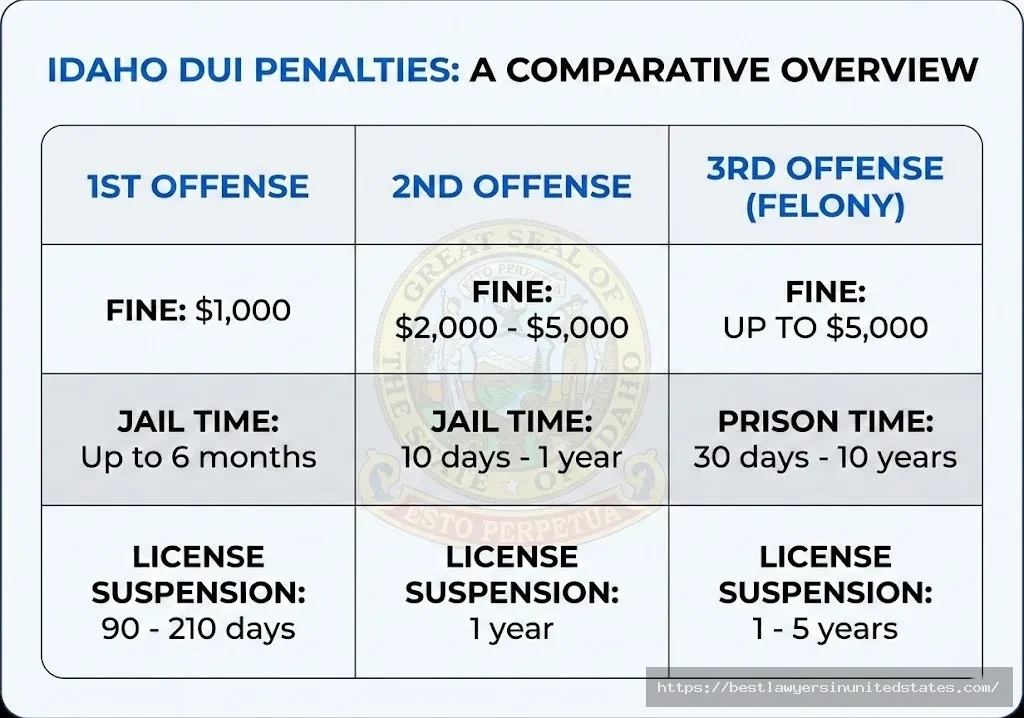
First Offense DUI Penalties in Idaho
A first DUI in Idaho under Idaho Code § 18-8005 carries these penalties:
| Penalty Type | Standard DUI (0.08-0.19%) | Excessive DUI (0.20%+) |
|---|---|---|
| Jail Time | Up to 6 months (minimum 48 hours or 10 days if BAC 0.15+) | Up to 6 months (minimum 10 days) |
| Fines | $1,000 minimum | $2,000 minimum |
| License Suspension | 90-210 days | 90-210 days |
| Probation | Up to 2 years | Up to 2 years |
| Ignition Interlock | Required | Required (longer period) |
| DUI School | Required | Required |
| Victims Panel | Required | Required |
First-time offenders often serve the minimum 48-hour jail sentence on weekends. Idaho magistrate courts in Ada County and Canyon County sometimes allow alternatives like house arrest or community service. But judges must impose at least the mandatory minimums under Idaho law.
The court also requires substance abuse evaluation, completion of a state-approved DUI school, and attendance at a victims panel. These programs cost $150-$300 total and take several weeks to complete. Your probation officer monitors compliance.
How Much Does a First DUI Cost in Idaho?
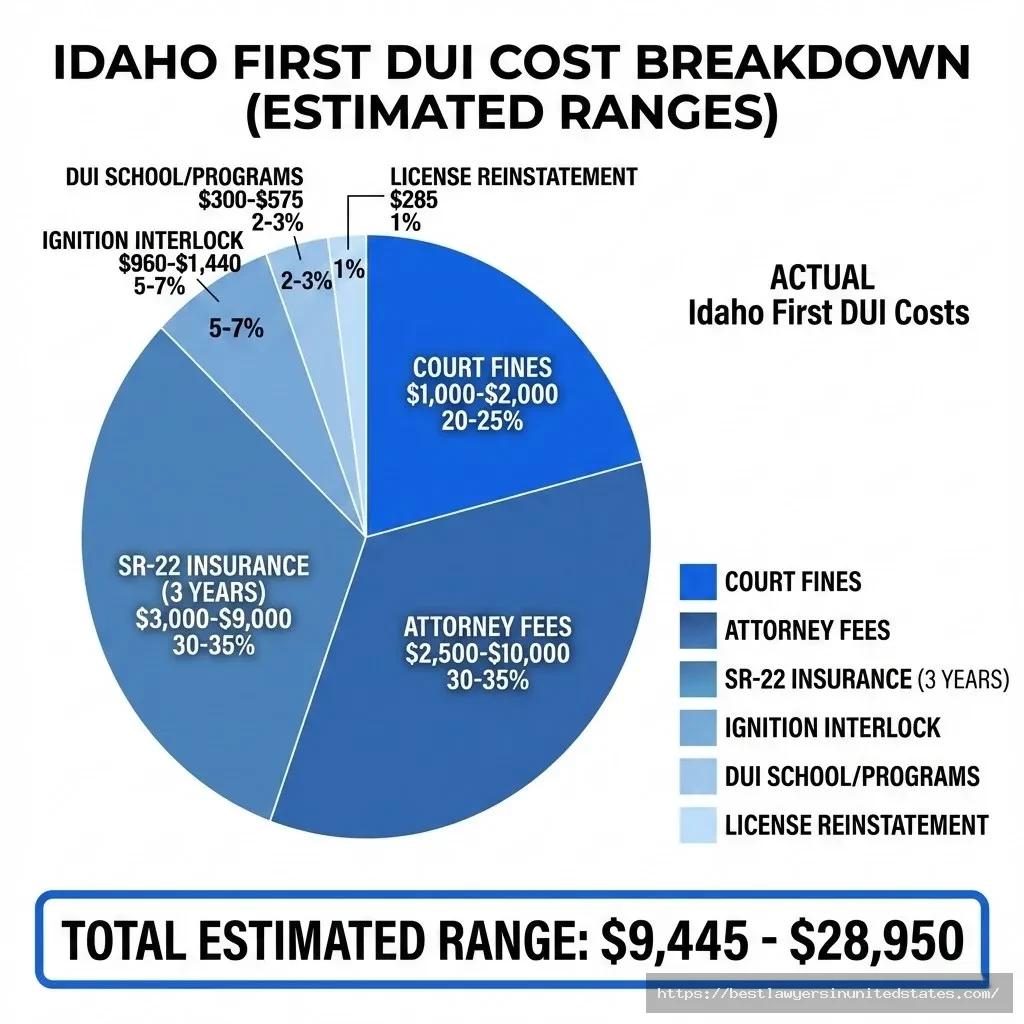
First DUI costs in Idaho range from $8,000 to $20,000 when you add up all expenses:
| Cost Category | Amount |
|---|---|
| Court Fines | $1,000-$2,000 |
| Court Costs | $300-$500 |
| Attorney Fees | $2,500-$10,000 |
| License Reinstatement Fee | $285 |
| Ignition Interlock Installation | $100-$150 |
| Ignition Interlock Monthly Fees | $960-$1,440 (12 months at $80-$120/month) |
| DUI School | $150-$300 |
| Substance Abuse Evaluation | $100-$200 |
| Victims Panel | $50-$75 |
| SR-22 Insurance Increase | $3,000-$9,000 (over 3 years) |
| Lost Wages | $1,000-$5,000 |
| Total First DUI Cost | $9,445-$28,950 |
Calculate your specific DUI costs using our DUI cost calculator. Enter your offense details, BAC level, and whether you’re hiring an attorney to get an accurate estimate of total expenses.
DUI Cost Calculator
Estimate total DUI expenses by state and offense
Detailed Cost Breakdown
Payment Timeline
Bail bond, towing fees, car impound, attorney retainer
Initial court fines, DMV fees, DUI school enrollment, ignition interlock installation
Monthly probation fees, ignition interlock fees, DUI school payments, attorney balance
Insurance premium increases, license reinstatement, SR-22 filing fees
- Lost wages from missed work (court dates, jail time, DUI school) – $2,000-$10,000
- Job loss or difficulty finding employment – Varies
- Professional license suspension (doctors, lawyers, nurses, pilots) – Career ending
- Rideshare and transportation costs during suspension – $1,500-$5,000
- Travel restrictions and visa denials – Varies
- Security clearance loss – Career impact
- Child custody implications – Legal costs
- Rental car restrictions – Varies
- Personal relationships and mental health costs – Priceless
The largest hidden cost is SR-22 insurance. Idaho requires SR-22 certificates for three years after DUI. Your insurance rates can double or triple during this period. A driver paying $1,200 yearly might see premiums jump to $3,000-$4,000 annually.
Second Offense DUI in Idaho
Second DUI within 10 years under Idaho Code § 18-8005 increases penalties substantially:
| Penalty Type | Amount |
|---|---|
| Jail Time | 10 days to 1 year (mandatory minimum) |
| Fines | $2,000-$5,000 |
| License Suspension | 1 year minimum, up to 5 years |
| Probation | Up to 5 years |
| Ignition Interlock | 1-2 years minimum |
Second offenses remain misdemeanors unless both your first and second DUI involved BAC of 0.20% or higher. Two excessive DUIs within five years automatically become a felony under Idaho Code § 18-8004C. Similar DUI laws in neighboring states like Alaska and Colorado also use enhanced penalties for repeat offenders.
Second DUI costs typically exceed $15,000-$30,000. The mandatory 10-day jail sentence means lost wages. Attorney fees increase because second offense cases require more court appearances and negotiations.
Third DUI in Idaho: Felony Charge
Third DUI within 10 years becomes a felony under Idaho Code § 18-8004(1)(d). Felony DUI penalties include:
| Penalty Type | Amount |
|---|---|
| Prison Time | 30 days minimum to 10 years maximum |
| Fines | Up to $5,000 |
| License Suspension | 1-5 years |
| Probation | Up to 10 years (after prison) |
| Ignition Interlock | Required after reinstatement |
Felony DUI creates a permanent criminal record. You lose voting rights while incarcerated. Many employers refuse to hire felons. Professional licenses for nurses, teachers, and lawyers face review boards.
Idaho District Courts handle felony DUI cases. These courts sit in each Idaho county seat. Boise’s Ada County Courthouse processes most felony DUIs in the Treasure Valley. Canyon County Courthouse in Caldwell handles Nampa and surrounding areas.
Third DUI convictions often result in actual prison time at Idaho Department of Correction facilities. Judges rarely grant probation without serving the 30-day mandatory minimum. Some defendants serve 1-3 years in prison depending on circumstances.
Fourth DUI and Beyond
Fourth DUI charges in Idaho remain felonies with increasing prison sentences. Judges can impose:
- 1-5 years prison for fourth offense
- 1-10 years for fifth offense
- Enhanced persistent violator status
Fourth DUI defendants rarely avoid prison. Idaho prosecutors file persistent violator enhancements that add years to sentences. The enhancement treats each prior felony as an aggravating factor.
Getting your license back after multiple DUIs requires completing all programs, paying fees, and potentially waiting years. Some drivers never qualify for reinstatement.
Aggravated DUI: Causing Injury or Death
Aggravated DUI under Idaho Code § 18-8006 applies when impaired driving causes great bodily harm or death. This felony carries:
- 30 days to 15 years prison
- $5,000 fines
- Permanent license revocation possible
- Restitution to victims
If someone dies, prosecutors may file vehicular manslaughter charges. Idaho Code § 18-4006(3)(d) makes vehicular manslaughter a felony with up to 15 years prison. These cases involve victim families, civil lawsuits, and intense media coverage.
The Idaho DUI Arrest Process
Idaho DUI arrests follow a standard procedure. Understanding each step helps you protect your rights.
Traffic Stops and Field Sobriety Tests
Most Idaho DUIs start with traffic stops. Idaho State Police, Boise Police, and county sheriffs patrol highways looking for impaired drivers. Common reasons for stops include:
- Weaving between lanes
- Speeding or driving too slowly
- Running red lights or stop signs
- Driving without headlights
- Making illegal turns
Once stopped, officers look for signs of intoxication. They note bloodshot eyes, slurred speech, alcohol odor, and fumbling for documents. If they suspect DUI, they request field sobriety tests.
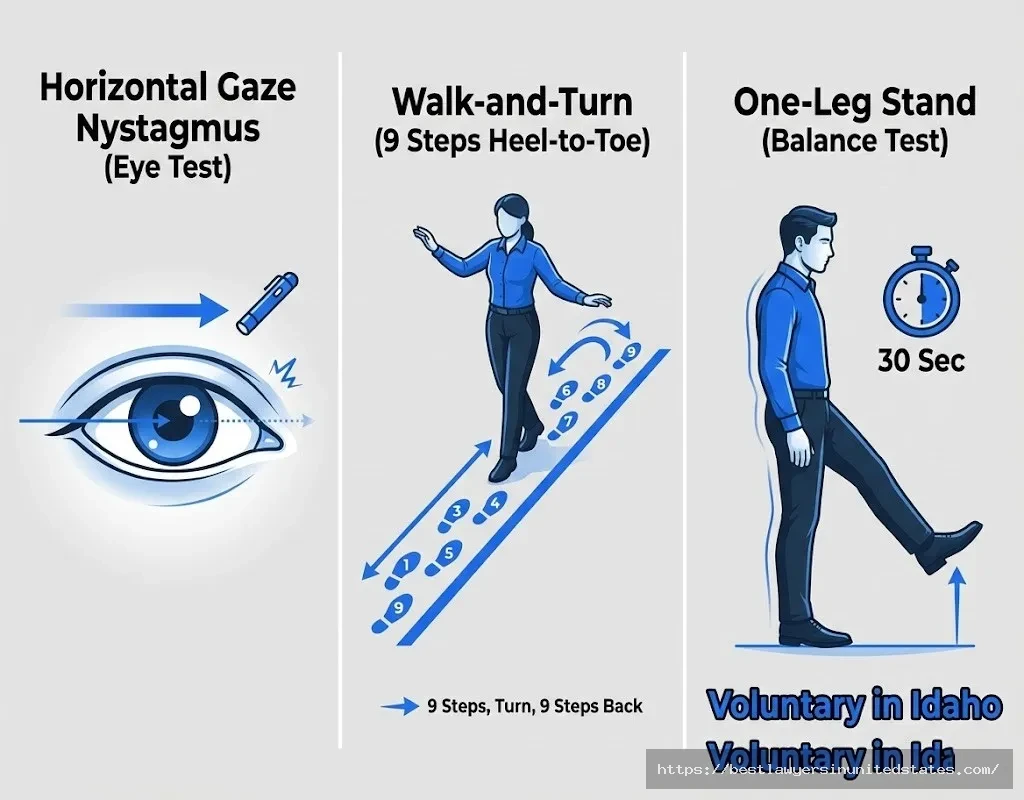
Standard field sobriety tests in Idaho include:
- Horizontal Gaze Nystagmus (HGN): Officer moves pen across your vision watching for eye jerking
- Walk-and-Turn: Walking heel-to-toe in a straight line for nine steps
- One-Leg Stand: Balancing on one foot while counting
These tests are voluntary in Idaho. Officers don’t tell you that you can refuse. Declining field sobriety tests isn’t a crime and can’t be used as evidence of guilt. However, refusal may give officers more reason to arrest you.
Preliminary Breath Test vs. Evidentiary Test
Officers carry portable preliminary breath test (PBT) devices at roadside. These small units give BAC estimates. PBT results aren’t admissible in Idaho courts but help officers establish probable cause for arrest.
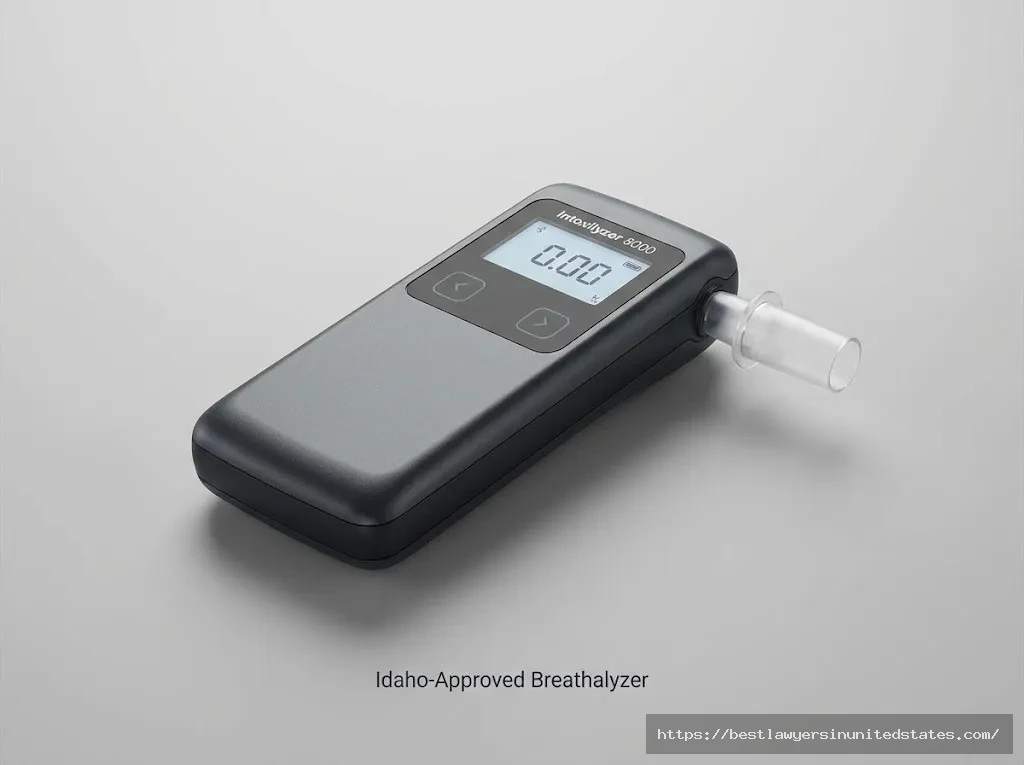
After arrest, police take you to jail for an evidentiary breath test on an Intoxilyzer machine. This test’s results are admissible as evidence. Idaho law requires Intoxilyzer 8000 or similar approved devices. These machines print tickets showing your BAC.
Idaho’s Implied Consent Law
By driving on Idaho roads, you consent to chemical testing under Idaho Code § 18-8002. This is Idaho’s implied consent law. It means officers can require breath, blood, or urine tests if they have probable cause for DUI arrest.
Refusing chemical testing triggers automatic penalties:
- First refusal: 1-year license suspension
- Second refusal: 2-year suspension
- Refusal admission in court as evidence
The refusal suspension runs separately from any DUI conviction suspension. You could face two years without a license if convicted after refusing testing.
Should You Refuse a Breathalyzer in Idaho?
Refusing the breathalyzer has trade-offs:
| Refusing Test | Taking Test |
|---|---|
| No BAC evidence for prosecution | BAC evidence can convict you |
| Automatic 1-year license suspension | Shorter suspension if acquitted |
| Refusal used against you in court | Could blow under 0.08% |
| May avoid excessive DUI charge | Could register false high reading |
Most Idaho DUI attorneys advise taking the test. The automatic one-year refusal suspension often exceeds suspension for first offense conviction. Plus prosecutors can still prove DUI through officer testimony and field sobriety tests.
Exceptions exist if you’ve had prior DUIs. A third offense already means felony charges whether you blow 0.08% or 0.30%. Refusing might prevent excessive DUI enhancement in that scenario.
What Happens in the First 7 Days After Arrest
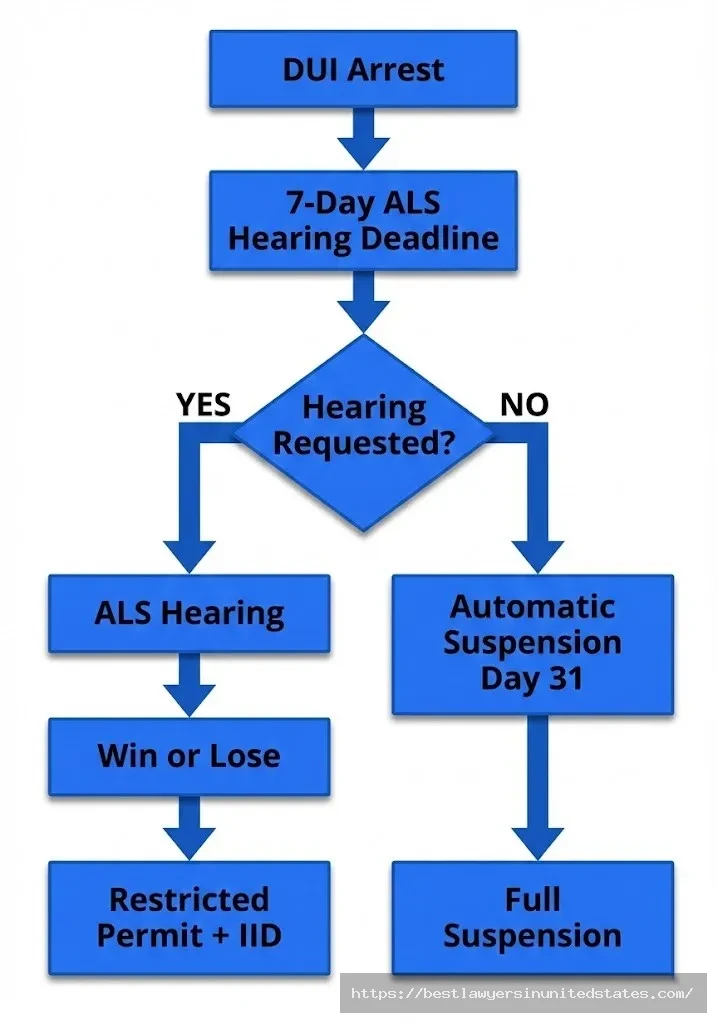
Your first week after DUI arrest is critical. Idaho gives you just seven days to request an ALS hearing with ITD. Here’s the timeline:
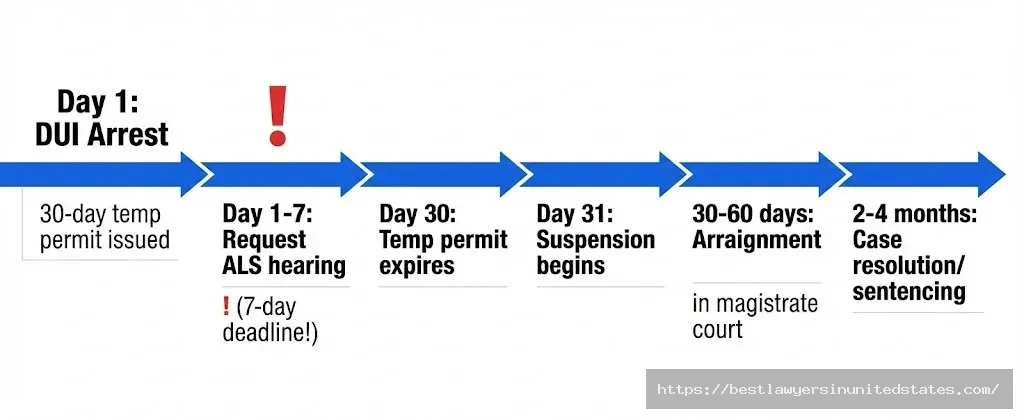
Day 1 (Arrest Day):
- Police confiscate your driver’s license
- They issue a Notice of Suspension/Temporary Permit
- This permit lets you drive for 30 days
Days 1-7:
- Contact an Idaho DUI attorney immediately
- Request ALS hearing with ITD in writing
- File for temporary driving privileges if eligible
- Gather evidence (receipts, witness contacts)
Missing the 7-Day Deadline:
- Automatic license suspension begins on day 31
- You lose right to challenge administrative suspension
- No ALS hearing means no restricted license opportunity
The Idaho Transportation Department handles ALS hearings separately from criminal court. You can lose your administrative hearing but win your criminal case, or vice versa. Both proceedings need attention.
Idaho DUI Court Process
After arrest, your case proceeds through Idaho’s court system:
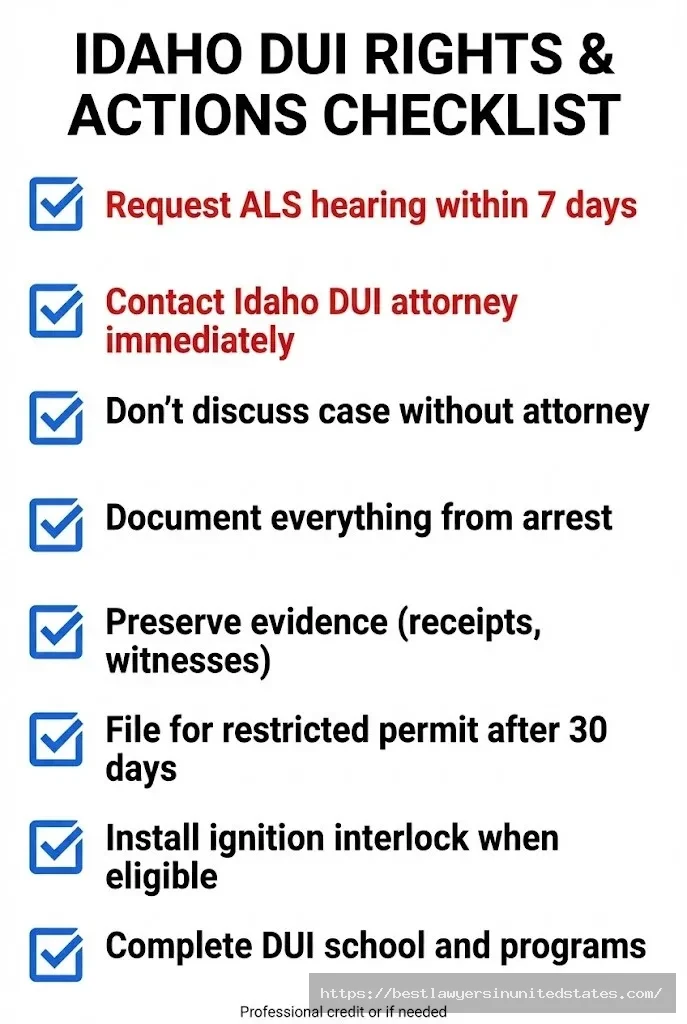
Arraignment (within 30 days): You appear in magistrate court to hear charges. The judge explains your rights and sets bail. You enter a not guilty plea at this stage. Ada County Magistrate Court handles Boise cases. Canyon County Magistrate Court processes Nampa and Caldwell DUIs.
Pretrial Conferences (1-3 months later): Your attorney negotiates with prosecutors. They review evidence including police reports, breath test results, and dashcam video. Many cases resolve through plea agreements at this stage.
Plea Negotiations: Idaho prosecutors sometimes reduce DUI charges to reckless driving for first-time offenders with BAC just over 0.08%. Factors include your BAC level, prior record, and whether you cooperated during arrest. Standard plea deals in states like Arizona and California follow similar patterns.
Trial or Sentencing: Cases not resolved through plea agreements go to trial. Jury trials happen in magistrate court for misdemeanors. Idaho District Court handles felony DUI jury trials. Sentencing occurs after conviction or guilty plea.
License Suspension and Restricted Driving in Idaho
Idaho DUI triggers two separate license suspensions: administrative through ITD and criminal through the court.
Administrative License Suspension (ALS)
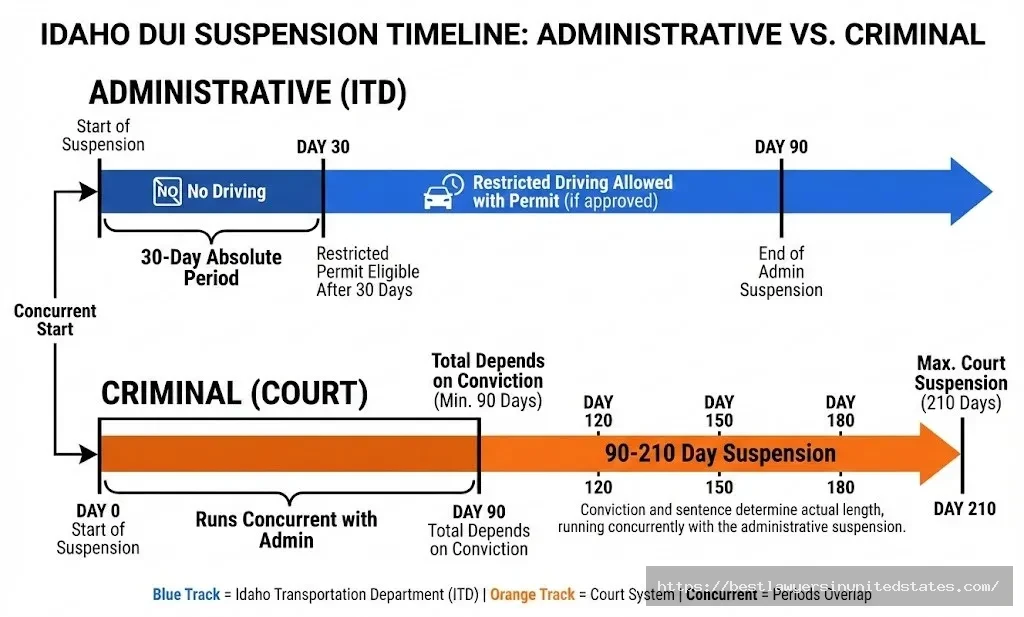
ITD suspends your license administratively regardless of criminal case outcome. Suspension lengths:
| Offense | ALS Suspension Length |
|---|---|
| First DUI | 90 days (absolute 30 days) |
| First Refusal | 1 year |
| Second DUI | 1 year (absolute 90 days) |
| Second Refusal | 2 years |
“Absolute” suspension means no driving privileges during that initial period. After the absolute period ends, you may apply for restricted privileges if you install an ignition interlock device.
Do You Lose Your License Immediately After DUI?
No. Idaho issues a temporary permit valid for 30 days after arrest. This gives you time to request an ALS hearing and arrange transportation. Your actual suspension starts on day 31 unless you request and win an ALS hearing.
The temporary permit expires at midnight 30 days after your arrest date. Driving after expiration constitutes driving without privileges, a separate misdemeanor.
ALS Hearing: Can You Win?
ALS hearings occur at ITD offices in Boise, Twin Falls, Coeur d’Alene, and other cities. You can challenge suspension by proving:
- Officer lacked probable cause for arrest
- Testing procedure violated Idaho regulations
- Breath test machine malfunctioned
- You weren’t actually driving
Winning rates hover around 20-30%. Most drivers lose ALS hearings. ITD hearing officers side with police unless you present clear evidence of procedural errors.
Even losing your ALS hearing helps your criminal case. Your attorney gets to question the arresting officer under oath before trial. This locks in their testimony and reveals weaknesses in the prosecution’s case.
Idaho Restricted Driving Permits
After serving your absolute suspension period, you can apply for a restricted permit. Idaho calls these “hardship permits.” Eligibility requires:
- Installing ignition interlock device
- Filing SR-22 insurance certificate
- Paying $65 permit fee
- Providing proof of employment/need
Restricted permits allow driving to:
- Work or school
- Medical appointments
- Court-ordered programs
- Essential household errands
ITD issues restrictions stating specific days and hours you can drive. Violating restrictions revokes your permit and restarts your suspension period.
License Reinstatement After Idaho DUI
Getting your full license back requires completing all requirements:
| Requirement | Cost |
|---|---|
| Complete absolute suspension | N/A |
| Complete IID requirement | $960-$1,920 total |
| Complete DUI school | $150-$300 |
| File SR-22 insurance | Varies |
| Pay reinstatement fee | $285 |
| Retake driving test (if required) | $30 |
Total reinstatement costs: $1,425-$2,535
The reinstatement process takes 2-4 weeks after submitting documents. You must wait until ITD processes your application and issues a new license before driving legally.
Ignition Interlock Devices in Idaho
Idaho requires ignition interlock devices (IID) for all DUI convictions. The device prevents your car from starting if it detects alcohol on your breath.
How Ignition Interlock Works
IID units connect to your vehicle’s ignition system. Before starting your car, you blow into a handheld breathalyzer. The device measures your BAC. If you register any alcohol (typically over 0.025%), your car won’t start.
While driving, the IID requires “rolling retests” every 5-15 minutes. You must pull over safely and provide another breath sample. Failing a rolling retest doesn’t shut off your engine but records a violation.
Idaho-approved IID providers include:
- LifeSafer
- Smart Start
- Intoxalock
- Guardian Interlock
You pay for installation, monthly monitoring, and removal. Never try to tamper with or circumvent an IID. Violations extend your requirement period and could result in new criminal charges.
IID Requirements by Offense
| Offense | IID Duration |
|---|---|
| First DUI | 1 year minimum |
| First Excessive DUI | 1 year minimum (often longer) |
| Second DUI | 1-2 years |
| Third DUI (felony) | 2-5 years |
| Fourth DUI | 5 years minimum |
Idaho extends IID requirements for violations. If you fail a retest or try to start your car with alcohol detected, ITD adds months to your requirement period.
Idaho IID Costs
IID expenses add up over your requirement period:
| Cost Category | Amount |
|---|---|
| Installation | $100-$150 |
| Monthly monitoring | $80-$120 |
| Monthly calibration | Included in monitoring |
| Removal | $50-$100 |
| Lockout fee (if violated) | $50-$100 per incident |
Total IID costs for 1 year: $1,060-$1,590
Some Idaho courts offer IID cost waivers for low-income defendants. You must petition the court and provide financial documentation. Qualifying defendants pay reduced installation fees and monthly rates.
IID Violations and Penalties
Idaho tracks all IID activity. Violations include:
- Failing initial breath test (alcohol detected)
- Missing rolling retests
- Attempting to start with alcohol
- Disconnecting or tampering with device
- Having someone else blow into device
Each violation generates a report to ITD. Three violations in a month triggers license suspension. Serious violations like tampering result in new criminal charges.
Can You Get a DUI on a Bicycle in Idaho?
Yes. Idaho Code § 18-8002 defines “motor vehicle” to include “every vehicle which is self-propelled.” While bicycles aren’t motor vehicles, Idaho Code § 49-114 extends DUI prohibitions to any device propelled by human power on a highway.
Idaho courts have upheld bicycle DUI convictions. A Boise cyclist received DUI charges after police found him weaving on the Boise Greenbelt. The magistrate court convicted him under the standard DUI statute.
Bicycle DUI penalties match regular DUI penalties:
- $1,000+ fines
- Up to 6 months jail
- DUI school and victims panel
- Probation
You can’t lose your driver’s license for bicycle DUI since you weren’t driving a motor vehicle. However, conviction still creates a criminal record. Future DUI arrests count this conviction when determining offense level.
Idaho DUI for CDL Holders
Commercial drivers face stricter rules under federal and Idaho law. Idaho Code § 49-335 sets a 0.04% BAC limit for operating commercial vehicles.
CDL DUI Consequences
Getting a DUI in your personal car triggers CDL consequences:
- First offense: 1-year CDL disqualification
- Second offense: Lifetime CDL disqualification
- Refusal to test: Same as DUI conviction
“Disqualification” means losing your CDL privileges. You can’t drive commercially even if you keep your regular driver’s license. Most trucking companies fire drivers after DUI, making the employment consequences severe.
Hauling hazardous materials or passengers increases penalties. First DUI with hazmat endorsement results in 3-year disqualification.
Can You Get Your CDL Back After DUI?
First offense CDL disqualification lasts one year. After that, you can apply for reinstatement by:
- Completing all DUI programs
- Paying reinstatement fees
- Passing CDL knowledge and skills tests again
- Finding an employer willing to hire you
Second CDL DUI results in lifetime disqualification. Idaho offers no reinstatement after 10 years like some states. Federal regulations prohibit states from reinstating CDLs after two DUI convictions.
Some CDL holders petition for restricted commercial privileges. Idaho rarely grants these requests. The risk to public safety from commercial vehicles makes exceptions unlikely.
DUI Laws for Drivers Under 21 in Idaho
Idaho enforces zero tolerance for underage drinking and driving. Idaho Code § 23-949 prohibits anyone under 21 from driving with any measurable alcohol.
Under 21 BAC Limit: 0.02%
Idaho’s 0.02% limit recognizes that breathalyzers have a margin of error. Even mouthwash or medication can register 0.01-0.02%. The law targets actual drinking rather than testing anomalies.
Penalties for underage DUI include:
| Penalty | First Offense | Second Offense |
|---|---|---|
| License Suspension | 90 days | 1 year |
| Fines | Up to $1,000 | Up to $2,000 |
| Community Service | 10-100 hours | 20-150 hours |
| Alcohol Education | Required | Required |
Underage DUI remains on your record. It counts as a prior offense if you get another DUI after turning 21. The lookback period begins at your first conviction regardless of age.
Minor in Possession vs. Minor DUI
Idaho distinguishes between possessing alcohol and driving under the influence. Minor in possession (MIP) is typically an infraction with fines and license suspension. Minor DUI is a misdemeanor crime.
Police charge minor DUI when they find someone under 21 driving with BAC above 0.02%. MIP applies to possession without driving. Both charges can apply simultaneously.
Parents’ Liability for Underage DUI
Idaho’s social host liability law holds adults accountable for providing alcohol to minors. If an adult gives alcohol to someone under 21 who then drives, that adult can face:
- Criminal charges for furnishing alcohol to minors
- Civil liability for injuries or deaths caused
- Fines up to $1,000
- Up to 6 months jail
This applies even to parents hosting parties. Serving alcohol to your own underage child doesn’t exempt you from criminal liability if they drive afterward.
Out-of-State Drivers and Idaho DUI
Non-residents arrested for DUI in Idaho face the same penalties as residents. Your home state also imposes consequences through interstate agreements.
Interstate Driver’s License Compact
Idaho participates in the Interstate Driver’s License Compact. This agreement requires states to report DUI convictions to the driver’s home state. Your home state then suspends your license as if the DUI happened there.
For example, a California driver convicted of DUI in Idaho faces:
- Idaho suspension and penalties
- California suspension upon notification
- Points on California driving record
- California insurance increases
You can’t avoid consequences by getting an Idaho DUI. Similar interstate reporting occurs for DUI convictions in neighboring states as well.
Can You Ignore an Idaho DUI?
No. Ignoring an Idaho DUI charge leads to:
- Bench warrant for your arrest
- License suspension in your home state
- Additional failure to appear charges
- Difficulty renewing licenses
- Problems at border crossings
Idaho issues nationwide warrants for defendants who skip court dates. Many people get arrested years later during routine traffic stops in other states. Extradition proceedings force you back to Idaho to face charges.
Paying Idaho DUI Fines from Out of State
You must pay Idaho fines even if you live elsewhere. Idaho courts require payment plans for defendants returning home. Options include:
- Paying full amount before leaving Idaho
- Setting up automatic payments
- Using credit card for large payments
- Requesting additional time from judge
Unpaid fines result in collection actions, suspended licenses, and additional penalties. Idaho reports unpaid court debt to credit bureaus after 90 days.
County-Specific DUI Information in Idaho
Idaho’s 44 counties handle DUI cases differently. Urban counties prosecute more aggressively while rural areas may offer more lenient plea deals.
Ada County (Boise) DUI Courts
Ada County processes the most Idaho DUIs. The Ada County Courthouse at 200 W Front Street in Boise handles all misdemeanor and felony DUI cases.
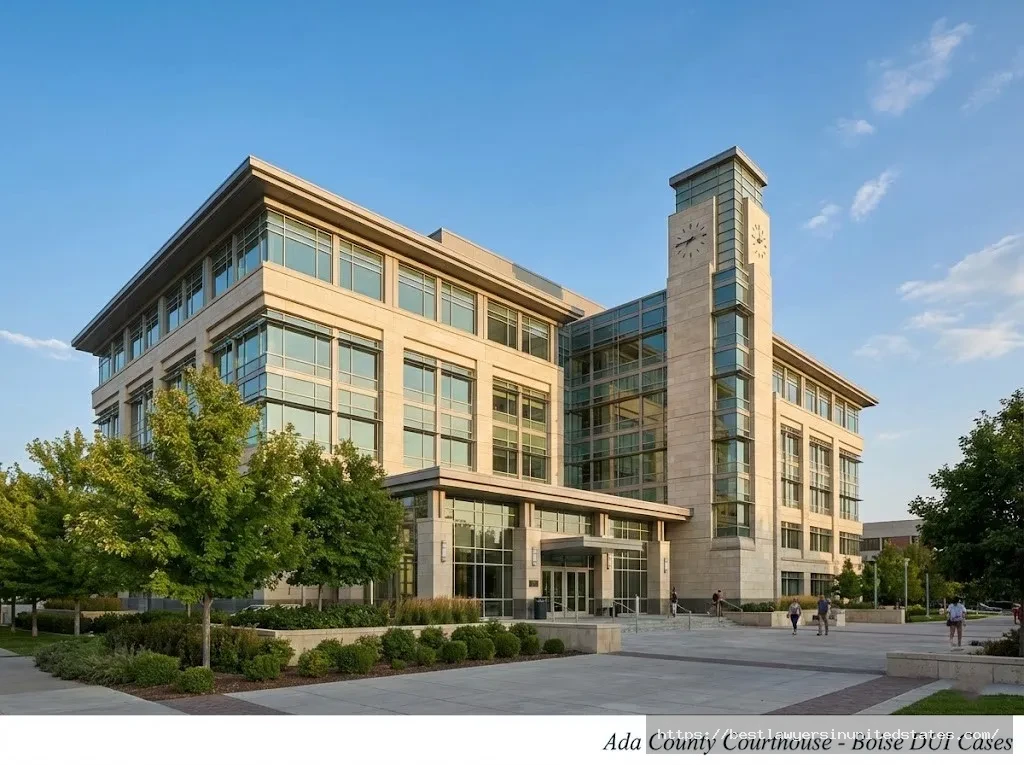
Ada County prosecutors rarely reduce first-offense DUI charges. They offer standard plea agreements:
- Plead guilty to DUI
- Minimum jail time (weekends)
- Fines and fees
- All standard requirements
Ada County has a dedicated DUI court for repeat offenders. This intensive program requires weekly check-ins, random testing, and treatment. Successful completion can reduce sentences.
Bail amounts in Ada County average $1,000-$5,000 for first DUI. Judges release most defendants on their own recognizance with conditions.
Canyon County (Nampa/Caldwell) DUI Courts
Canyon County Courthouse sits at 1115 Albany Street in Caldwell. The county handles DUIs from Nampa, Caldwell, and surrounding communities.
Canyon County prosecutors show more flexibility than Ada County. First-time offenders with BAC under 0.12% sometimes get reckless driving reductions. Factors include:
- Clean driving record
- No accidents or injuries
- Cooperation with police
- Hiring experienced attorney
Canyon County Prosecutor Bryan Taylor runs a strict office. Second and third DUIs rarely get reduced. The county seeks maximum penalties for repeat offenders.
Kootenai County (Coeur d’Alene) DUI Courts
Kootenai County serves North Idaho including Coeur d’Alene and Post Falls. The courthouse at 501 N Government Way in Coeur d’Alene processes DUI cases.
Kootenai County sees many tourist DUIs from visitors to Lake Coeur d’Alene and ski resorts. Non-resident defendants can request consolidated court dates to avoid multiple trips.
The Coeur d’Alene Police Department runs frequent DUI checkpoints on Highway 95 and Interstate 90. Idaho State Police patrol these routes heavily during summer and holiday weekends.
Rural County Considerations
Idaho’s rural counties like Lemhi, Custer, and Owyhee have different DUI patterns. Limited law enforcement means fewer arrests but prosecutors take cases seriously.
Rural counties may allow informal plea negotiations. Small-town prosecutors and defense attorneys often know each other and work out reasonable agreements. However, rural judges impose tough sentences to deter drinking and driving on remote highways.
Court dates in rural counties can be months apart due to limited court schedules. Defendants from Boise or other urban areas should prepare for multiple trips or hire local attorneys.
Defending Your Idaho DUI Charge
Idaho DUI charges aren’t automatic convictions. Several defenses can lead to reduced charges or dismissals.
Challenging the Traffic Stop
Police need reasonable suspicion to stop your vehicle. They can’t pull you over randomly. Common justifications include:
- Traffic violations (speeding, lane violations)
- Equipment problems (broken taillight)
- Erratic driving patterns
Your attorney can challenge stops lacking reasonable suspicion. Idaho courts dismiss DUI cases when stops violate the Fourth Amendment. In State v. Atkinson, the Idaho Court of Appeals ruled that following too closely alone doesn’t justify a stop without additional factors.
Attacking Field Sobriety Test Results
Field sobriety tests produce unreliable results. Factors affecting performance include:
- Medical conditions (inner ear problems, knee injuries)
- Nervousness or anxiety
- Poor test conditions (uneven pavement, weather)
- Officer instructions unclear or rushed
- Age (people over 65 perform worse)
- Footwear (high heels, boots)
Your attorney can cross-examine officers about test administration. Idaho requires officers to follow NHTSA standardized procedures. Deviations from the protocol make results inadmissible.
Breathalyzer Accuracy Issues
Intoxilyzer machines require regular calibration and maintenance. Idaho Administrative Code requires monthly inspections. Your attorney can request:
- Machine calibration records
- Maintenance logs
- Operator certifications
- Quality control test results
Idaho courts exclude breath test results from improperly maintained machines. Mouth alcohol from dental work, GERD, or recent drinking can artificially inflate readings.
Rising BAC Defense
Your BAC continues rising for 30-90 minutes after your last drink. You might drive with BAC under 0.08% but test over the limit 60 minutes later at the police station.
The rising BAC defense argues you were legal while driving but illegal during testing. This defense works best when:
- Short time between last drink and driving
- Quick police stop after driving
- Delayed breath test administration
Idaho courts allow expert testimony about alcohol absorption rates. A toxicologist can testify that your BAC was under 0.08% while driving based on test results and timing.
Illegal Checkpoint Stops
Idaho State Police conduct sobriety checkpoints on holidays. These checkpoints must follow strict rules:
- Published advance notice
- Neutral selection criteria
- Supervisory control
- Safety measures
Checkpoints violating these requirements produce invalid stops. Your attorney can challenge checkpoint protocols through testimony and documentation.
Plea Bargaining in Idaho DUI Cases
Most Idaho DUI cases resolve through plea agreements. Understanding common deals helps you make informed decisions.
Reducing DUI to Reckless Driving
Reckless driving under Idaho Code § 49-1401 is a misdemeanor carrying:
- $300 maximum fine
- 10 days maximum jail
- No mandatory license suspension
- No mandatory IID requirement
Prosecutors reduce to reckless driving when:
- BAC barely over 0.08% (0.08-0.10%)
- No prior DUIs
- No accidents or injuries
- Strong defense issues with case
- Clean criminal record
This reduction avoids many DUI consequences. Reckless driving doesn’t count as a prior DUI for future offenses. You avoid mandatory IID and longer suspensions.
Withheld Judgment (Suspended Sentence)
Idaho courts can withhold judgment under Idaho Code § 19-2601. You plead guilty, complete probation, and the court dismisses your case. Your record shows “dismissed upon successful completion of probation.”
Withheld judgment requirements include:
- First-time offender
- No prior withheld judgments
- Judge discretion to grant
- Successful probation completion
During probation (typically 1-2 years), you complete DUI school, pay fines, and stay out of trouble. Upon completion, the court dismisses your DUI charge. However, this dismissal doesn’t erase the arrest or keep it from counting as a prior offense for future DUIs within 10 years.
Diversion Programs
Some Idaho counties offer pretrial diversion for first-time DUI defendants. You complete requirements without entering a guilty plea. Successful completion results in dismissal.
Diversion typically requires:
- 1 year supervision
- DUI school and treatment
- Community service
- Random testing
- Program fees
Not all Idaho counties offer diversion. Ada County rarely allows it for DUI. Canyon County and smaller counties use diversion more often.
How Long Does a DUI Stay on Your Record in Idaho?
Idaho DUI convictions create permanent criminal records. They never automatically disappear.
Criminal Record vs. Driving Record
Two separate records exist:
Criminal Record: Permanent unless expunged. Shows on background checks indefinitely. Employers, landlords, and licensing boards see DUI convictions from decades ago.
Driving Record: Idaho counts DUIs for 10 years. After 10 years, old DUIs don’t affect your offense level for new charges. However, they remain visible on your driving record permanently.
Insurance companies typically look back 3-5 years. A 10-year-old DUI may not increase your rates, but recent DUIs will.
Can You Expunge a DUI in Idaho?
Yes, under Idaho’s Clean Slate Act. Idaho Code § 67-3004 allows expungement of some criminal records including DUI.
Eligibility requirements:
- 5+ years since completion of sentence
- No new convictions
- All fines and restitution paid
- No pending criminal charges
- Court discretion to grant
The expungement process involves:
- Filing petition with sentencing court
- Serving notice to prosecutor
- Paying filing fees ($145-$205)
- Attending hearing
- Judge approving petition
Successful expungement seals your record. It won’t show on standard background checks. However, law enforcement can still see expunged records. Professional licensing boards may discover expunged DUIs through fingerprint databases.
Idaho Rule 35: Sentence Reduction
Idaho Criminal Rule 35 lets you ask the judge to reduce your sentence within 120 days. You can request:
- Reduced jail time
- Lower fines
- Modified probation terms
- Early probation termination
Rule 35 motions work best when:
- You’ve completed programs early
- Maintained perfect probation compliance
- Experienced changed circumstances
- Judge was unaware of mitigating factors
Success rates vary by judge and county. Some Idaho judges routinely grant reasonable Rule 35 requests. Others rarely reduce sentences.
SR-22 Insurance After Idaho DUI
Idaho requires SR-22 certificates for three years after DUI conviction. Understanding SR-22 requirements helps you maintain legal driving status.
What is SR-22 Insurance?
SR-22 isn’t a type of insurance. It’s a certificate your insurance company files with ITD proving you carry minimum liability coverage. Idaho Code § 49-117 requires SR-22 for DUI offenders.
Minimum Idaho SR-22 coverage amounts:
- $25,000 bodily injury per person
- $50,000 bodily injury per accident
- $15,000 property damage
These minimums are low. Consider higher limits since DUI convictions already show poor judgment to insurers.
How Long Do You Need SR-22 in Idaho?
Idaho requires SR-22 for three years from your license reinstatement date. The requirement doesn’t start until ITD reinstates your license after suspension.
Timeline example:
- DUI conviction: January 1, 2025
- 90-day suspension: January 1 – April 1, 2025
- License reinstated: April 1, 2025
- SR-22 required until: April 1, 2028
If you let SR-22 lapse, ITD suspends your license immediately. You must refile SR-22 and start the 3-year period over.
Finding Affordable SR-22 Insurance
SR-22 filing fees run $25-$50. The real cost comes from increased premiums due to your DUI conviction.
Idaho drivers pay 70-100% more for insurance after DUI. A driver paying $1,200 annually might see rates jump to $2,000-$2,400. Shopping multiple companies helps find lower rates.
Companies writing SR-22 policies in Idaho:
- Progressive
- State Farm
- GEICO
- The General
- National General
Budget companies like The General specialize in high-risk drivers. Their SR-22 rates sometimes beat traditional insurers by 30-40%.
What Happens If SR-22 Lapses?
Insurance companies notify ITD when SR-22 policies cancel. ITD suspends your license within 10 days. Driving during suspension results in:
- Immediate arrest
- Vehicle impoundment
- Misdemeanor charges
- Extended suspension
- Starting SR-22 requirement over
Never cancel insurance until ITD confirms your SR-22 period ended. Always obtain new SR-22 coverage before switching companies.
Alcohol Education Programs in Idaho
Idaho requires DUI offenders to complete several education and treatment programs.
Idaho DUI School
State-approved DUI schools teach 8-20 hours of alcohol education. Topics include:
- Effects of alcohol on driving
- Idaho DUI laws
- Consequences of impaired driving
- Making responsible choices
DUI school costs $150-$300 and takes 2-3 weeks to complete. Classes meet in the evening to accommodate work schedules. Most Idaho counties have multiple approved providers.
Substance Abuse Evaluation
Licensed evaluators assess your relationship with alcohol. The evaluation includes:
- Drinking history questionnaire
- Mental health screening
- Risk assessment
- Treatment recommendations
Evaluations cost $100-$200 and take about 90 minutes. The evaluator sends a report to your probation officer and the court. Recommendations might include:
- No treatment needed
- Outpatient counseling (weekly meetings)
- Intensive outpatient program (multiple meetings per week)
- Inpatient treatment (residential program)
Courts typically follow evaluator recommendations. Refusing recommended treatment violates probation.
Victims Impact Panel
Victims panels bring together DUI offenders and victims. Victims share stories of how drunk driving affected their lives. These powerful presentations show real consequences.
Panels last 2-3 hours and cost $50-$75. Boise, Nampa, Coeur d’Alene, and other cities host monthly panels. You must attend one panel to satisfy your court requirement.
Many attendees describe panels as life-changing. Hearing directly from victims creates more impact than court lectures or educational materials.
What Changed in Idaho DUI Laws in 2025?
Idaho’s legislature continues updating DUI laws. Recent changes affect penalties, procedures, and treatment programs.
New Idaho DUI Penalties for 2025
Senate Bill 1099 modified certain DUI provisions effective July 2025. Key changes include:
Enhanced IID Requirements: All DUI offenders now must install ignition interlock devices immediately upon conviction, even during appeals. Previous law allowed driving without IID during the appeal period.
Expanded Treatment Court Programs: Idaho added funding for DUI treatment courts in smaller counties. These specialized courts provide intensive supervision and treatment as alternatives to incarceration.
Modified Administrative Hearing Procedures: ITD now conducts some ALS hearings via video conference, expanding access for rural defendants.
Idaho Supreme Court DUI Decisions
Recent Idaho Supreme Court cases clarified several DUI issues:
State v. Bower (2024): Police must have reasonable suspicion before requesting field sobriety tests during consensual encounters. Simply smelling alcohol doesn’t justify demanding FSTs when the driver isn’t under investigation for a crime.
State v. Martinez (2024): Blood test results are inadmissible if police didn’t obtain a warrant when the defendant was unconscious. This overturned prior decisions allowing warrantless blood draws on unconscious suspects.
These decisions strengthen protections for Idaho drivers. Your attorney should know current case law when defending your rights.
Idaho DUI Resources and Getting Help
Facing DUI charges feels overwhelming. These resources help you understand your options and get support.
Official Idaho Government Resources
Idaho Transportation Department (ITD)
- Website: itd.idaho.gov
- DUI information: itd.idaho.gov/dmv/driver-services/suspensions
- Phone: (208) 334-8000
- Locations: Boise, Coeur d’Alene, Idaho Falls, Twin Falls, Pocatello
Idaho Courts
- Website: isc.idaho.gov
- Court locations by county
- Court rules and procedures
- Case lookup services
Idaho State Police
- Website: isp.idaho.gov
- DUI enforcement information
- Educational materials
Finding a DUI Attorney in Idaho
Hiring an experienced Idaho DUI attorney dramatically improves your chances of favorable outcomes. Look for attorneys who:

- Practice primarily DUI defense
- Know your local courts and prosecutors
- Have trial experience
- Stay current on Idaho DUI law changes
- Offer free consultations
Idaho State Bar offers attorney referrals at isb.idaho.gov. Find qualified DUI lawyers for a free case evaluation.
Attorney fees range from $2,500-$10,000 depending on case complexity. First offenses cost less than felony charges. Many attorneys offer payment plans.
Questions to ask during consultations:
- How many DUI cases have you handled?
- What percentage go to trial?
- Do you have relationships with local prosecutors?
- Can you get my charges reduced?
- What are realistic outcomes for my case?
DUI Support Groups
Alcoholics Anonymous (AA) Idaho hosts hundreds of AA meetings weekly. Find meetings at aa-idaho.org. Many DUI offenders benefit from AA’s support structure even if alcohol dependence isn’t an issue.
MADD Victim Services Mothers Against Drunk Driving provides support for DUI victims and their families. Idaho MADD chapters offer counseling referrals and court advocacy. Contact: madd.org
Contact Information
For legal consultation about your Idaho DUI case, contact experienced attorneys who understand Idaho’s unique DUI laws and can protect your rights.
Email: [email protected]
Frequently Asked Questions About Idaho DUI Laws
Will a first DUI ruin my life in Idaho?
A first DUI creates serious consequences but isn’t life-ending. You’ll face $8,000-$20,000 in costs, possible jail time, and license suspension. However, most first-time offenders maintain employment, complete probation successfully, and move forward. The key is handling it properly with an attorney and completing all requirements.
Can I still drive after a DUI arrest in Idaho?
Yes, for 30 days. Idaho issues a temporary permit when officers confiscate your license. This permit expires 30 days after arrest. You must request an ALS hearing within 7 days to challenge your suspension. After 30 days without a hearing, your driving privileges suspend automatically.
How to beat a DUI in Idaho?
Common successful defenses include challenging the traffic stop legality, attacking breathalyzer accuracy, questioning field sobriety test administration, and presenting rising BAC evidence. Procedural errors by police often lead to reduced charges or dismissals. An experienced Idaho DUI attorney identifies weaknesses in the prosecution’s case.
Is refusing a breathalyzer better than failing it?
Usually not. Idaho imposes automatic 1-year suspension for test refusal, often longer than suspension for failing the test. Prosecutors can still prove DUI through officer testimony and field sobriety tests. Refusal also provides evidence of consciousness of guilt. Most Idaho DUI attorneys advise taking the test.
Can passengers drink alcohol in a car in Idaho?
No. Idaho Code § 23-505 prohibits open containers of alcohol in vehicles. Passengers cannot drink while the vehicle is on public roads. Open container violations carry fines up to $300. The law exempts passengers in commercial vehicles like buses and limousines.
What is the second chance law in Idaho?
Idaho’s “second chance” law refers to several provisions allowing record sealing. Under Idaho Code § 67-3004, you can petition to expunge eligible convictions after 5 years. This includes some DUI convictions. Expungement seals records from most background checks but not from law enforcement.
How many beers equal 0.08% BAC?
It depends on your weight, gender, and time frame. Generally, a 180-pound man reaches 0.08% after 4 drinks in 2 hours. A 140-pound woman reaches 0.08% after 3 drinks in 2 hours. Use our BAC calculator for personalized estimates based on your specific factors.
Does a DUI go away after 3 years in Idaho?
No. DUI convictions stay on your criminal record permanently unless expunged. Insurance companies typically look back 3-5 years, so rate increases may decrease after 3 years. But the conviction remains visible on background checks indefinitely. Idaho counts prior DUIs for 10 years when determining your offense level.
What happens on your second DUI in Idaho?
Second DUI within 10 years carries 10 days to 1 year mandatory jail time, $2,000-$5,000 fines, and 1-5 year license suspension. You need ignition interlock for 1-2 years. Second excessive DUI (0.20%+ BAC) within 5 years automatically becomes a felony with up to 5 years prison.
What makes a DUI a felony in Idaho?
Third DUI within 10 years is a felony with 30 days to 10 years prison. Second excessive DUI (0.20%+ BAC) within 5 years also becomes felony. Aggravated DUI causing serious injury or death is a felony. Fourth and subsequent DUIs remain felonies with increasing sentences.
How long does DUI stay on insurance in Idaho?
Insurance companies typically surcharge for 3-5 years after DUI conviction. Rates increase 70-100% during this period. After 5 years, many insurers stop considering the DUI when calculating premiums. However, some companies review 10-year driving records. Shopping companies after 3-5 years often yields lower rates.
Can you get a DUI on private property in Idaho?
Yes, if the property is accessible to the public. Idaho courts define “highway” broadly to include parking lots, driveways, and other areas the public can access. You can get DUI in mall parking lots, apartment complexes, and gas stations. Completely private property like your backyard doesn’t count.
What is Idaho’s implied consent law?
By driving in Idaho, you automatically consent to chemical testing if arrested for DUI. Idaho Code § 18-8002 allows police to require breath, blood, or urine tests. Refusing triggers automatic 1-year license suspension for first refusal or 2 years for second refusal. The refusal suspension runs separately from any DUI conviction suspension.
How much does an Idaho DUI lawyer cost?
Idaho DUI attorneys charge $2,500-$10,000 depending on case complexity. First offense misdemeanors with no trial typically cost $2,500-$5,000. Felony DUIs or cases going to trial run $7,500-$15,000. Many attorneys offer payment plans. Free consultations let you compare attorneys before hiring.
Can you get a CDL after a DUI in Idaho?
Yes, but not easily. First DUI disqualifies your CDL for 1 year. After disqualification ends, you can retest and obtain a new CDL. Second DUI results in lifetime CDL disqualification with no possibility of reinstatement. Most trucking companies won’t hire drivers with DUI convictions.
Do I need SR-22 insurance after Idaho DUI?
Yes. Idaho requires SR-22 certificates for 3 years after license reinstatement. Your insurance company files SR-22 with ITD proving you carry minimum liability coverage. Letting SR-22 lapse results in immediate license suspension. The 3-year period restarts if coverage lapses.
What happens if you get a DUI while on probation in Idaho?
New DUI while on probation for prior DUI violates your probation. The judge can revoke probation and impose the original suspended sentence plus penalties for the new DUI. You face charges and penalties for both cases simultaneously. Probation violation hearings have lower proof standards than criminal trials.
Can you get a hardship license after DUI in Idaho?
Yes, after completing your absolute suspension period. First offense requires 30 days absolute suspension. Then you can apply for restricted driving privileges requiring ignition interlock device. You must show work, school, or medical need. ITD issues permits with specific day and time restrictions.
What is excessive DUI in Idaho?
Excessive DUI under Idaho Code § 18-8004C means driving with BAC of 0.20% or higher. This is 2.5 times Idaho’s legal limit. Excessive DUI carries enhanced penalties including higher fines, longer jail time, and extended license suspensions. Second excessive DUI within 5 years automatically becomes a felony.
How long is jail time for first DUI in Idaho?
First DUI carries up to 6 months jail time. Minimum mandatory jail is 48 hours for standard DUI or 10 days for excessive DUI (0.20%+). Most first-time offenders serve minimum sentences on weekends. Judges can substitute community service or house arrest in some cases. Aggravating factors increase jail time.
Can police pull you over for DUI randomly in Idaho?
No. Police need reasonable suspicion of illegal activity to stop your vehicle. They can’t pull you over randomly hoping to find DUI. However, police can use DUI checkpoints if properly conducted with advance notice and neutral selection criteria. Any traffic violation justifies a stop that can lead to DUI investigation.
What happens at an Idaho DUI arraignment?
Arraignment is your first court appearance. The judge explains charges against you and your rights. You receive copies of charging documents. The judge sets bail conditions. You typically enter a “not guilty” plea at arraignment. Don’t discuss your case facts with the judge. Arraignment usually takes 5-10 minutes.
Can you refuse field sobriety tests in Idaho?
Yes. Field sobriety tests are voluntary in Idaho. You can politely decline without legal penalty. Officers don’t inform you of this right. Refusing FSTs doesn’t trigger license suspension like refusing chemical tests does. However, refusal may give officers additional reason to arrest you based on totality of circumstances.
How to get DUI reduced to reckless driving in Idaho?
Idaho prosecutors reduce DUI to reckless driving when BAC barely exceeds 0.08%, you have no prior record, and strong defense issues exist. Your attorney negotiates this reduction. Reckless driving carries lower penalties and doesn’t count as prior DUI. Not all cases qualify. Second and third offenses rarely get reduced.
What counties in Idaho are toughest on DUI?
Ada County (Boise) prosecutes DUI most aggressively. Canyon County offers slightly more flexibility for first offenses. Kootenai County (Coeur d’Alene) takes tourist DUIs seriously. Rural counties vary widely. Small counties may allow informal negotiations but rural judges often impose harsh sentences to deter drinking and driving.
Can you get a DUI for marijuana in Idaho?
Yes. Idaho Code § 18-8004 prohibits driving under the influence of any intoxicating substance including marijuana. Idaho police use Drug Recognition Experts to evaluate marijuana impairment. Blood tests detect THC. Marijuana DUI penalties match alcohol DUI penalties. Medical marijuana isn’t legal in Idaho, so any amount constitutes possession.
How long does Idaho DUI court process take?
First offense DUI cases typically resolve in 2-4 months. This includes arraignment, pretrial conferences, and sentencing. Cases going to trial take 6-12 months. Felony DUIs take longer due to district court procedures. Multiple continuances can extend cases beyond a year. Resolving cases quickly through plea agreements shortens the process.
What is Idaho DUI victims panel?
Victims panels bring DUI offenders face-to-face with victims of drunk driving crashes. Victims share personal stories of loss and injury. Panels last 2-3 hours and cost $50-$75. All Idaho DUI offenders must attend one panel. These emotional presentations show real consequences of impaired driving beyond legal penalties.
Can you get a DUI for prescription drugs in Idaho?
Yes. Driving while impaired by prescription medications violates Idaho’s DUI law. This includes painkillers, anxiety medications, sleep aids, and other prescription drugs that affect driving ability. Police use Drug Recognition Experts to identify drug impairment. “Valid prescription” isn’t a defense if the medication impairs your driving.
Take Action on Your Idaho DUI Case
Idaho DUI laws impose serious penalties including jail time, thousands in fines, license suspension, and long-term consequences. A first DUI conviction costs $8,000-$20,000 when adding up court fines, attorney fees, ignition interlock devices, SR-22 insurance increases, and DUI school expenses.
Understanding Idaho’s unique DUI provisions helps you make informed decisions. Idaho’s excessive DUI law at 0.20% BAC, 10-year lookback period for prior offenses, and strict felony provisions for third DUI within a decade make early intervention critical. The 7-day deadline to request an ALS hearing with ITD means you must act immediately after arrest.
Every Idaho DUI case has defenses. Challenging traffic stops, attacking breathalyzer accuracy, questioning field sobriety test administration, and negotiating plea reductions can significantly improve outcomes. Idaho prosecutors sometimes reduce first-offense charges to reckless driving for defendants with strong cases and clean records.
The consequences of Idaho DUI extend beyond criminal penalties. License suspensions affect employment. SR-22 insurance requirements increase costs for three years. DUI convictions create permanent criminal records visible to employers, landlords, and licensing boards. However, Idaho’s Clean Slate Act allows expungement after five years for eligible offenders who complete all requirements.
Time is critical after an Idaho DUI arrest. You have just seven days to request an administrative hearing. The temporary driving permit expires after 30 days. Evidence preservation and witness memories fade quickly. Contacting an experienced Idaho DUI attorney immediately gives you the best chance of favorable outcomes.
Don’t face Idaho’s complex DUI system alone. Legal representation dramatically improves your chances of reduced charges, minimized penalties, and protecting your future. Compare the cost of hiring an attorney against potential consequences of conviction including lost income, permanent records, and restricted opportunities.
Calculate your potential DUI costs using our comprehensive cost calculator to understand the full financial impact. Review DUI laws in neighboring states to understand how Idaho’s penalties compare regionally.
Ready to discuss your Idaho DUI case? Contact experienced Idaho DUI attorneys for a free consultation. Early intervention protects your rights and maximizes your defense options.
