
IMPORTANT NOTICE: The claim deadlines for the U.S. Volkswagen emissions lawsuit have passed. Claims for 2.0-liter diesel vehicles closed on September 1, 2018, and claims for 3.0-liter Generation 1 vehicles closed on June 1, 2019. This guide provides comprehensive information about the historic settlement for educational and reference purposes.
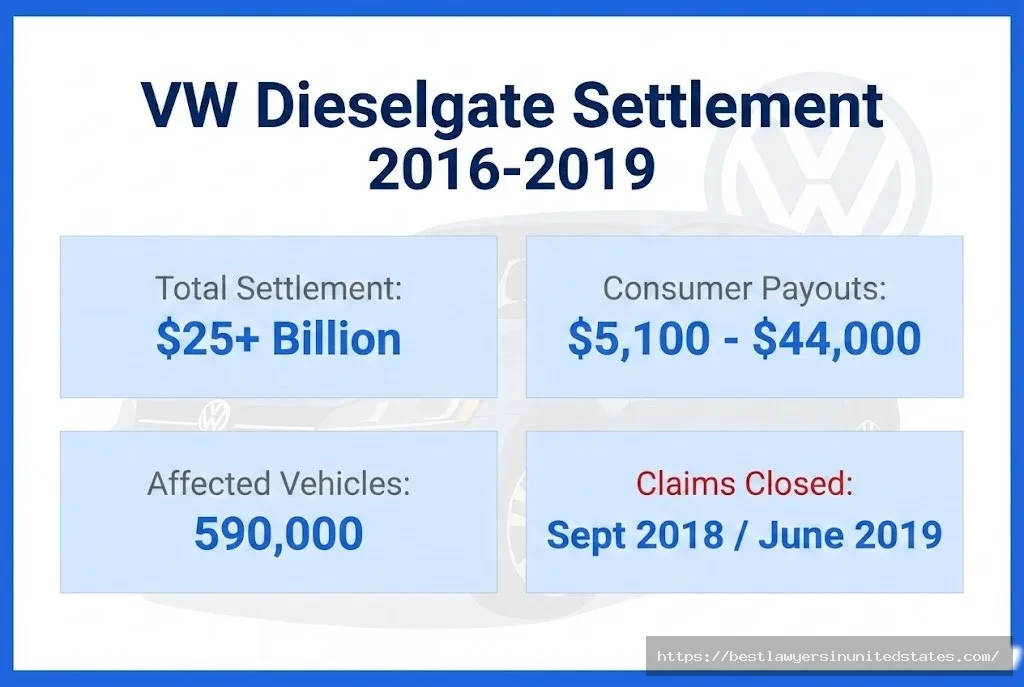
The Volkswagen emissions lawsuit, known as “Dieselgate,” resulted in one of the largest consumer class action settlements in automotive history. Volkswagen admitted to installing illegal “defeat devices” in approximately 590,000 diesel vehicles sold in the United States, leading to a $14.7 billion settlement. While U.S. claims are now closed, litigation continues in other countries. hawthorne residential partners lawsuit
Quick Answer: Volkswagen settled allegations that it cheated emissions tests by installing software defeat devices in model year 2009-2016 diesel vehicles. The settlement provided buybacks, repairs, and cash compensation ranging from $5,100 to $44,000 per vehicle to eligible U.S. owners and lessees. Total U.S. settlement value exceeded $25 billion when including environmental mitigation funds and criminal penalties. GM Ignition Switch Lawsuit
What Is the Volkswagen Emissions Lawsuit About?
Background of the Lawsuit
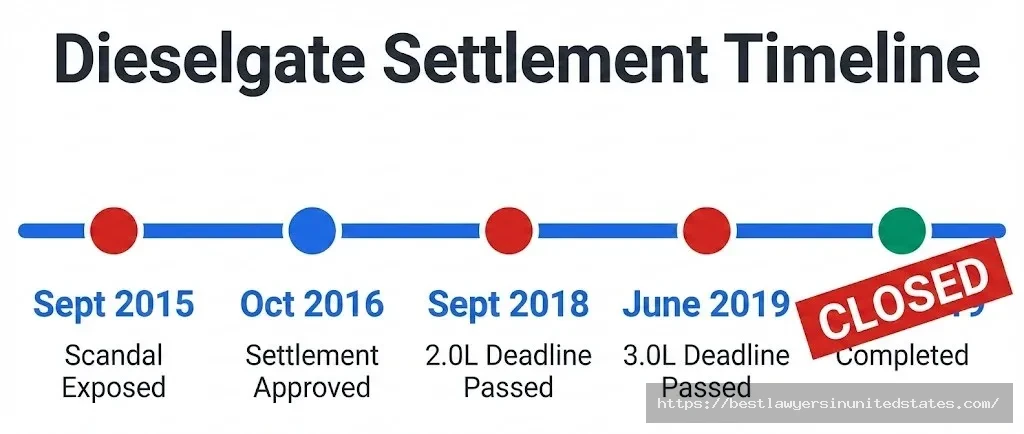
In September 2015, the Environmental Protection Agency exposed one of the biggest corporate frauds in automotive history. Volkswagen had secretly installed sophisticated software in its diesel vehicles that could detect when the car was undergoing emissions testing and automatically activate full emission controls only during those tests.
During normal driving conditions, the same vehicles emitted nitrogen oxides (NOx) at levels up to 40 times higher than federal limits allowed. NOx pollution contributes to smog, acid rain, and serious health problems including asthma, respiratory illness, and cardiovascular disease.
Volkswagen marketed these vehicles as “Clean Diesel” technology, charging premium prices while claiming they offered excellent fuel economy, strong performance, and low emissions. The deception affected approximately 11 million vehicles worldwide, including about 590,000 in the United States.
Timeline of Key Events
| Date | Event | Details |
|---|---|---|
| Sept 18, 2015 | EPA issues Notice of Violation | EPA accuses VW of installing defeat devices in 2.0L diesel vehicles |
| Nov 2, 2015 | Second Notice of Violation | EPA expands allegations to include 3.0L diesel vehicles |
| Nov 19, 2015 | VW admits broader fraud | Company confirms defeat devices in all U.S. 3.0L diesel models since 2009 |
| Jan 4, 2016 | DOJ files civil lawsuit | Federal government sues VW for Clean Air Act violations |
| Mar 29, 2016 | FTC files consumer fraud suit | Charges VW with false advertising and deceptive practices |
| June 28, 2016 | 2.0L settlement announced | $14.7 billion settlement for 2.0L vehicles preliminarily approved |
| Oct 18, 2016 | Final approval hearing | Judge Breyer approves 2.0L settlement |
| Oct 25, 2016 | 2.0L settlement takes effect | Buyback program begins |
| Dec 20, 2016 | 3.0L settlement announced | Additional $1.2 billion settlement for 3.0L vehicles |
| Jan 11, 2017 | Criminal plea agreement | VW pleads guilty to three felony counts, pays $2.8 billion criminal fine |
| May 11, 2017 | 3.0L settlement final approval | Court approves 3.0L diesel settlement |
| Sept 1, 2018 | 2.0L claim deadline | Last day to file claims for 2.0L diesel vehicles |
| June 1, 2019 | 3.0L claim deadline | Last day to file claims for 3.0L Generation 1 vehicles |
| May 2025 | German executives convicted | Four former VW managers sentenced to prison in Germany |
| Oct 2025 | UK trial begins | 1.6 million UK drivers sue VW and other carmakers |
| Mid-2026 | UK ruling expected | High Court judgment anticipated |
Who Filed the Lawsuit?
The litigation involved multiple plaintiffs and government agencies:
Lead Government Agencies:
- U.S. Environmental Protection Agency (EPA)
- U.S. Department of Justice
- California Air Resources Board (CARB)
- California Attorney General’s Office
- Federal Trade Commission (FTC)
Consumer Class Actions: Hundreds of thousands of individual VW, Audi, and Porsche diesel vehicle owners and lessees filed or joined class action lawsuits. The cases were consolidated into multidistrict litigation (MDL No. 2672) in the U.S. District Court for the Northern District of California under Judge Charles R. Breyer.
Plaintiffs’ Steering Committee: Leading consumer rights law firms including Hagens Berman, Seeger Weiss, Lieff Cabraser, and Motley Rice represented the consumer class.
What Are the Allegations?
The lawsuits alleged Volkswagen violated federal and state laws through deliberate, systematic fraud:
Key allegations against Volkswagen:
- Clean Air Act Violations: Installing prohibited “defeat devices” that bypassed emission control systems during normal driving
- Consumer Fraud: Marketing vehicles as “Clean Diesel” while knowing they produced illegal pollution levels
- False Advertising: Charging premium prices based on false environmental and performance claims
- Deceptive Trade Practices: Concealing the defeat device software from regulators and consumers for years
- Environmental Damage: Causing excess NOx emissions equivalent to putting hundreds of thousands of additional vehicles on the road
- Criminal Conspiracy: Company leadership knowingly directing engineers to develop and deploy the fraud
The software, developed over multiple generations, specifically recognized when vehicles were on testing equipment and activated different engine control settings than during normal road use. This allowed VW to pass regulatory tests while selling vehicles that polluted far beyond legal limits.
Who Qualified for the Volkswagen Emissions Settlement?
Quick Answer: U.S. owners and lessees of affected VW, Audi, and Porsche diesel vehicles manufactured between 2009-2016 qualified for settlement benefits. Even those who sold their vehicles after September 18, 2015 (when the scandal became public) were eligible. Note: Claim deadlines have now passed.
Eligibility Requirements
| Requirement | Details | Documentation Needed |
|---|---|---|
| Vehicle Ownership/Lease | Current or former owner/lessee of eligible model as of Sept 18, 2015 or later | Title, registration, or lease agreement |
| Eligible Vehicle | VW, Audi, or Porsche diesel vehicle with 2.0L or 3.0L TDI engine | VIN number to verify model eligibility |
| Model Years | 2009-2016 for 2.0L engines; 2009-2016 for 3.0L engines | Vehicle registration showing year |
| U.S. Registration | Vehicle must have been registered in the United States | U.S. state registration documents |
Eligibility extended to three categories of claimants:
- Current Owners/Lessees: Those who owned or leased an affected vehicle at the time they filed their claim
- Former Owners/Lessees: Those who owned or leased an affected vehicle on Sept 18, 2015 but sold it or ended the lease before filing
- Sold After Scandal: Even those who purchased and later sold after Sept 18, 2015 could receive compensation
Eligible Products/Models
2.0-Liter TDI Diesel Vehicles (Approximately 475,000 vehicles):
| Brand | Model Numbers | Years | Notes |
|---|---|---|---|
| Volkswagen | Jetta TDI | 2009-2015 | Sedan and SportWagen versions |
| Volkswagen | Jetta Hybrid | 2013-2015 | Included in settlement |
| Volkswagen | Beetle TDI | 2009-2015 | Coupe and Convertible |
| Volkswagen | Golf TDI | 2009-2015 | Hatchback and SportWagen |
| Volkswagen | Passat TDI | 2012-2015 | Sedan version |
| Audi | A3 TDI | 2010-2013, 2015 | No 2014 model year produced |
3.0-Liter TDI Diesel Vehicles (Approximately 85,000 vehicles):
| Brand | Model Numbers | Years | Notes |
|---|---|---|---|
| Volkswagen | Touareg TDI | 2009-2016 | Generation 1 (2009-2012) and Generation 2 (2013-2016) |
| Audi | Q7 TDI | 2009-2016 | Generation 1 (2009-2012) and Generation 2 (2013-2016) |
| Audi | Q5 TDI | 2014-2016 | Generation 2 only |
| Audi | A6 TDI | 2014-2016 | Generation 2 only |
| Audi | A7 TDI | 2014-2016 | Generation 2 only |
| Audi | A8 TDI | 2014-2016 | Generation 2 only |
| Porsche | Cayenne TDI | 2013-2016 | All 3.0L diesel versions |
Who Did NOT Qualify?
You were NOT eligible if:
- You owned or leased a gasoline (non-diesel) VW, Audi, or Porsche vehicle
- You sold or traded your affected vehicle before September 18, 2015 (the day the scandal became public)
- Your vehicle was not registered in the United States
- You purchased your vehicle outside the eligible model years
- Your vehicle had a different engine size (not 2.0L or 3.0L TDI)
- You filed your claim after the applicable deadline (Sept 1, 2018 for 2.0L or June 1, 2019 for 3.0L Gen 1)
How to Prove Your Claim
| Document Type | Why It’s Needed | Where to Find It | Alternatives |
|---|---|---|---|
| Vehicle Identification Number (VIN) | Confirm your vehicle was affected | Dashboard, title, registration, insurance card | Contact VW dealer with purchase info |
| Proof of Ownership/Lease | Verify you owned/leased the vehicle | Title, registration, lease agreement | DMV records, dealer purchase records |
| Purchase/Lease Date | Establish eligibility timeline | Sales contract, lease agreement | Bank loan documents, dealer records |
| Proof of Sale (if applicable) | For former owners who sold vehicle | Bill of sale, trade-in paperwork | DMV transfer records |
| Current Mileage | Affects payment calculation | Odometer reading, recent service records | Schedule dealer inspection |
Most claimants only needed their VIN to verify eligibility, as the settlement administrator could confirm vehicle details electronically. Additional documentation was only requested if there were questions about eligibility.
How Much Money Did People Get from the Settlement?
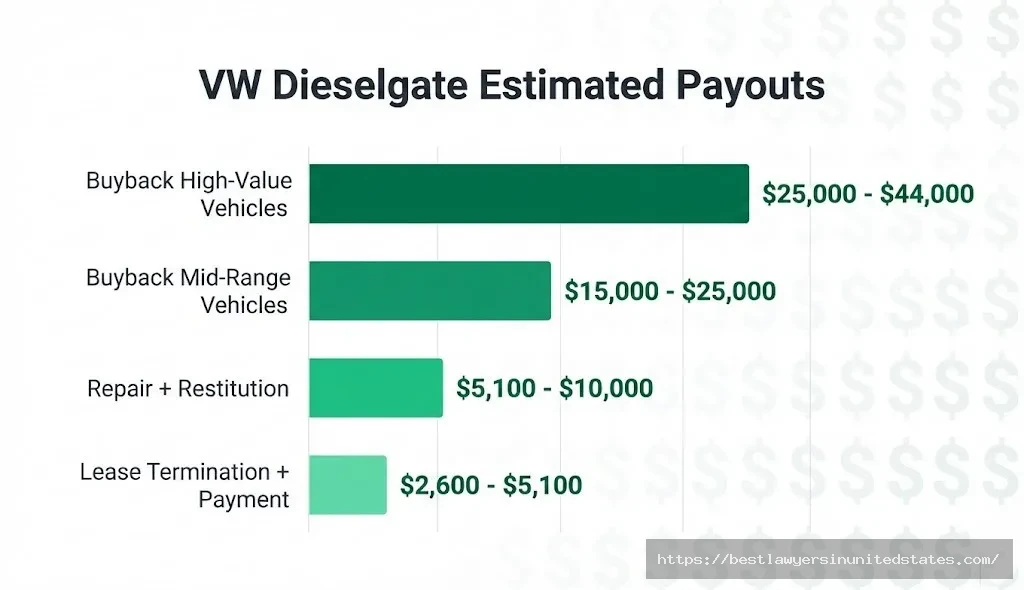
Quick Answer: Payouts ranged from $5,100 to $44,000 for 2.0-liter vehicle owners, depending on the vehicle model, year, and whether they chose a buyback or repair. Lessees received $2,500 to $10,000. The total settlement fund exceeded $10 billion for consumer compensation, with an additional $4.7 billion for environmental mitigation. Roundup Cancer Lawsuit
Settlement Fund Breakdown
2.0-Liter Settlement (Total: $14.7 Billion):
| Category | Amount | Purpose |
|---|---|---|
| Consumer Compensation | $10.033 billion | Buybacks, repairs, and cash payments |
| Environmental Mitigation Trust | $2.7 billion | Reduce NOx emissions through clean vehicle programs |
| Zero Emission Vehicle Investment | $2.0 billion | EV charging infrastructure and awareness |
| State Attorney General Settlements | $603 million | Consumer protection claims |
| FTC Settlement Costs | Included above | Consumer restitution |
3.0-Liter Settlement (Total: $1.22 – $4.04 Billion):
| Category | Amount | Purpose |
|---|---|---|
| Consumer Compensation | $1.22 – $4.04 billion | Varies based on participation rate |
| Environmental Mitigation (Additional) | $225 million | Added to mitigation trust |
Additional Penalties and Settlements (Total: $8+ Billion):
| Category | Amount | Purpose |
|---|---|---|
| Criminal Penalties | $2.8 billion | Criminal plea agreement |
| Civil Penalties (EPA, CARB) | $1.5 billion | Environmental violations |
| State-Specific Settlements | $157.5 million | 10 states (CT, MA, NY, PA, WA, others) |
| New Jersey Settlement | $69 million | State environmental claims |
| Bosch Settlement | $327.5 million | Emissions software supplier |
| Dealer Settlements | $1.67 billion | Franchise dealership compensation |
Payout Tiers and Amounts
2.0-Liter Vehicle Owners:
| Claim Category | Estimated Payout | Requirements | Payment Form |
|---|---|---|---|
| Buyback (Higher Value Vehicles) | $25,000 – $44,000 | Sept 2015 vehicle value + restitution payment | Cash/Check |
| Buyback (Mid-Range Vehicles) | $15,000 – $25,000 | Sept 2015 vehicle value + restitution payment | Cash/Check |
| Buyback (Lower Value Vehicles) | $12,500 – $15,000 | Sept 2015 vehicle value + restitution payment | Cash/Check |
| Repair + Restitution Payment | $5,100 – $10,000 | Free emissions modification + cash payment | Cash/Check (after repair) |
2.0-Liter Vehicle Lessees:
| Claim Category | Estimated Payout | Requirements | Payment Form |
|---|---|---|---|
| Lease Termination | $2,600 – $5,100 | No early termination fees + restitution | Cash/Check |
| Lease with Repair | $2,600 – $5,100 | Free repair + cash payment | Cash/Check (after repair) |
| Former Lessees | $2,600 – $5,100 | Leased vehicle on Sept 18, 2015 | Cash/Check |
3.0-Liter Vehicles (Generation 1 – Buyback Only):
| Claim Category | Estimated Payout | Requirements | Payment Form |
|---|---|---|---|
| 2009-2012 Audi Q7 | $24,755 – $57,157 | Gen 1 not repairable to compliance | Cash/Check |
| 2009-2012 VW Touareg | $24,755 – $57,157 | Gen 1 not repairable to compliance | Cash/Check |
3.0-Liter Vehicles (Generation 2 – Repair Option):
| Claim Category | Estimated Payout | Requirements | Payment Form |
|---|---|---|---|
| Repair + Restitution | Varies by model | Free emissions modification + cash | Cash/Check |
| Buyback Option | Varies by model | If repair not acceptable to owner | Cash/Check |
Factors That Affected Your Payout
Your compensation amount depended on several factors:
Vehicle Value Factors:
- Model Year: Newer vehicles had higher September 2015 values
- Model and Trim: Luxury models and higher trim levels worth more
- Mileage: Standard mileage was assumed; adjustments made for higher/lower mileage
- Options and Features: Factory installed options increased value
- Geographic Region: Vehicle values varied by location
Restitution Payment Factors:
- Base Calculation: 20% of September 2015 trade-in value plus $3,000
- Minimum Payment: No payment less than $5,100
- Maximum Payment: Approximately $10,000 for 2.0L vehicles
- Lessee Calculation: Different formula for lessees (approximately 50% of owner payment)
Choice of Option:
- Buyback: Full vehicle value PLUS restitution payment
- Repair: Free modification PLUS same restitution payment
- Lease Termination: No penalties PLUS restitution payment
When Did People Receive Payment?
2.0-Liter Settlement Payment Timeline:
| Stage | Timeframe | What Happened |
|---|---|---|
| Settlement Approved | October 25, 2016 | Court gave final approval |
| Claim Period Opens | November 2016 | Owners/lessees could begin filing |
| First Payments Begin | December 2016 – January 2017 | Initial buybacks and payments processed |
| Peak Payment Period | January 2017 – September 2018 | Majority of claims processed |
| Claim Deadline | September 1, 2018 | Last day to file claims |
| Final Payments | Late 2018 – Early 2019 | Last claims processed |
3.0-Liter Settlement Payment Timeline:
| Stage | Timeframe | What Happened |
|---|---|---|
| Settlement Approved | May 11, 2017 | Court gave final approval |
| Claim Period Opens | Mid-2017 | Gen 1 owners could file |
| Payments Begin | Late 2017 – Early 2018 | Buybacks and payments processed |
| Gen 1 Claim Deadline | June 1, 2019 | Last day to file Gen 1 claims |
| Gen 2 Repairs Approved | Ongoing 2017-2019 | EPA/CARB approved modifications |
| Final Payments | 2019 | Last Gen 1 claims processed |
Average Processing Time: Most claimants received payment within 30-90 days after submitting complete documentation and, for buybacks, turning in their vehicle to a VW dealer. Repair option payments were processed after the emissions modification was completed.
How to File Your Claim – Step by Step
⚠️ DEADLINE HAS PASSED: The claim deadlines for U.S. settlements have closed. This information is provided for reference and educational purposes.
CLAIM DEADLINES (CLOSED):
- 2.0-Liter Vehicles: Deadline was September 1, 2018
- 3.0-Liter Generation 1 Vehicles: Deadline was June 1, 2019
- No extensions are being granted
Complete Filing Process (Historical Reference)
Step 1: Gathered Documentation
Claimants needed to collect:
- Vehicle Identification Number (VIN)
- Proof of ownership or lease (title, registration, or lease agreement)
- Current mileage reading
- For former owners: proof of sale after September 18, 2015
Step 2: Accessed the Claim Form
Official website was: VWCourtSettlement.com (now closed to new claims)
Alternative methods included:
- Calling settlement administrator: 1-844-98-CLAIM (1-844-982-5246)
- Requesting paper forms by mail
- Visiting authorized VW dealerships for assistance
Step 3: Completed the Claim Form
Key sections claimants had to fill out:
Personal Information Section:
- Full legal name
- Mailing address
- Phone number and email
- Social Security Number or Tax ID (for payment processing)
Vehicle Information Section:
- VIN (17-character vehicle identification number)
- Current odometer reading
- Purchase or lease date
- Current ownership status
Option Selection:
- Choice between buyback/lease termination OR emissions modification
- Former owners: split payment election
- Banking information for direct deposit (optional)
Documentation Upload:
- Scanned copies of title, registration, or lease
- Photo of current odometer
- Proof of sale (if former owner)
- Additional documents if requested
Step 4: Submitted Your Claim
Online Submission:
- Completed form on VWCourtSettlement.com
- Uploaded required documents
- Received immediate confirmation number
- Email confirmation sent within 24 hours
Mail Submission:
- Sent completed paper form to: Volkswagen Settlement P.O. Box 30000 Portland, OR 97294-3000
- Included copies of all required documents
- Sent via certified mail for proof of delivery
- Allowed 2-3 weeks for processing confirmation
Step 5: Saved Confirmation
Claimants were advised to:
- Save confirmation number (required for all future communications)
- Print or save email confirmation
- Keep copies of all submitted documents
- Note submission date for records
Step 6: Tracked Claim Status
Status checking methods:
- Online portal at VWCourtSettlement.com using confirmation number
- Phone hotline: 1-844-98-CLAIM
- Email updates sent at key processing stages
- Typical processing: 4-8 weeks for initial review
Status Notifications Included:
- Claim received and under review
- Additional documentation needed (if applicable)
- Claim approved and payment amount confirmed
- Appointment scheduled (for buyback option)
- Payment processed and mailed
Step 7: Responded to Any Requests
Settlement administrator sometimes requested:
- Additional proof of ownership
- Current mileage verification
- Clarification on former owner status
- Updated contact information
Response requirements:
- 30-day deadline to provide additional information
- Could submit via online portal or mail
- Failure to respond could delay or deny claim
Step 8: Received Your Payment
For Buyback Option:
- Scheduled appointment at authorized VW dealership
- Brought vehicle, keys, title, and registration
- Signed buyback paperwork
- Turned over vehicle
- Received payment check within 10 business days
For Emissions Modification:
- Scheduled repair appointment at VW dealer
- Free modification performed (2-4 hours typical)
- Received extended warranty coverage
- Restitution payment mailed within 10 business days after repair
For Lease Termination:
- Contacted VW Credit or leasing company
- Scheduled vehicle return
- No early termination fees charged
- Restitution payment processed within 10 business days
Payment Delivery:
- Checks mailed to address on file
- Direct deposit option (if selected during claim)
- Payment stub showed breakdown of amounts
Filing Deadlines – Critical Dates
All Deadlines Have Now Passed:
| Deadline Type | Date | What It Meant |
|---|---|---|
| 2.0L Claim Submission Deadline | September 1, 2018 | Last day to file claims for 2.0-liter vehicles |
| Opt-Out Deadline (2.0L) | May 12, 2017 | Last day to exclude yourself from settlement |
| Objection Deadline (2.0L) | September 12, 2016 | Last day to object to settlement terms |
| Final Approval Hearing (2.0L) | October 18, 2016 | Court decided on settlement approval |
| 3.0L Gen 1 Claim Deadline | June 1, 2019 | Last day to file claims for 3.0L Generation 1 |
| 3.0L Final Approval | May 11, 2017 | Court approved 3.0L settlement |
| Emissions Modification Deadlines | Ongoing 2017-2020 | Varied by model as EPA/CARB approved fixes |
Common Filing Mistakes That Occurred
Many claimants made these errors:
Waiting Until the Last Minute
- Website overload caused delays in final weeks
- Technical issues prevented some late filers from submitting
- Insufficient time to gather required documents
- Recommendation: File early to avoid technical problems
Incomplete Documentation
- Missing proof of ownership delayed processing
- No current mileage photo required re-submission
- Former owners didn’t provide proof of sale
- Result: Claims held up for 60+ days
Using Wrong Claim Form
- 2.0L and 3.0L had different forms and processes
- Using old/outdated forms caused rejections
- Recommendation: Always used official VWCourtSettlement.com forms
Missing the Deadline
- No exceptions granted for late filings
- “I didn’t know about it” was not accepted
- Court maintained strict deadline enforcement
- Thousands missed out due to procrastination
Not Saving Confirmation
- Couldn’t check status without confirmation number
- Difficult to prove submission without email/number
- Some claimants had to resubmit entire claim
- Recommendation: Always keep confirmation records
Incorrect VIN Entry
- Typos caused claim rejections
- Wrong model identified as ineligible
- Required complete re-submission
- Recommendation: Triple-check VIN against title/registration
Current Lawsuit Status & Latest Updates
Settlement Status (as of February 2026)
U.S. Settlement Status: CLOSED AND COMPLETED
The United States settlement programs are fully closed and substantially complete:
2.0-Liter Settlement:
- Final court approval: October 25, 2016
- Claim period: November 2016 – September 1, 2018
- Total participation: Approximately 340,000 owners opted for buyback (over 70% of eligible vehicles)
- Buyback program: Substantially completed by mid-2019
- Modification program: EPA/CARB approved fixes for most model years; repairs completed through 2020
- All claims processed: Settlement administration closed to new claims
- Status: Fully resolved
3.0-Liter Settlement:
- Final court approval: May 11, 2017
- Claim period: Mid-2017 – June 1, 2019 (Generation 1)
- Generation 1 buybacks: Completed (vehicles could not be repaired to compliance)
- Generation 2 modifications: EPA/CARB approved fixes; most repairs completed by 2020
- All claims processed: Settlement administration closed
- Status: Fully resolved
Recent Developments
May 2025 – German Criminal Convictions Four former Volkswagen executives were convicted of fraud in Germany after a four-year trial. The managers received sentences ranging from over 1 year probation to over 4 years in prison. Former CEO Martin Winterkorn’s trial was suspended due to health reasons, though he faces potential trial resumption pending medical evaluations. Prime Energy Drink Lawsuit
October 2025 – Massive UK Trial Begins One of the largest consumer lawsuits in English legal history began in October 2025, with 1.6 million UK drivers suing 14 automakers including VW, Mercedes-Benz, Ford, Nissan, Renault, and Stellantis brands. The £6 billion ($7.4 billion USD) case alleges industry-wide use of defeat devices from 2009-2020.
December 2025 – Ongoing UK Proceedings The UK High Court trial concluded testimony in December 2025, with legal arguments scheduled for March 2026. A ruling is expected in mid-summer 2026. The court will determine whether sample vehicles contained illegal defeat devices, with findings binding on approximately 800,000 additional claims against other manufacturers.
February 2026 – Environmental Impact Studies A 2025 study by the Centre for Research on Energy and Clean Air found that excess NOx emissions from diesel vehicles (not limited to VW) caused an estimated 124,000 premature deaths in the EU and UK between 2009-2024. The study projects an additional 81,000 premature deaths by 2040 if no further action is taken.
Ongoing International Litigation
- Germany: Civil lawsuits continue, with over 450,000 German VW owners seeking compensation similar to U.S. settlements
- Australia: Class actions ongoing against VW
- Canada: Separate settlement reached providing C$2.1 billion for Canadian owners
- Other European countries: Various consumer protection cases and regulatory actions remain active
What Happens Next?
U.S. Developments:
- Environmental Mitigation Trust: States continue implementing projects funded by the $2.925 billion mitigation trust through 2026 and beyond
- Zero-Emission Vehicle Programs: VW’s $2 billion commitment to EV infrastructure continues through 2027
- Regulatory Changes: Stricter emissions testing protocols remain in effect, including real-world driving tests
- Former Owners Still Pending: Small number of claims against Volkswagen by owners who sold vehicles before September 18, 2015 may continue in appeals
International Timeline:
- March 2026: UK legal arguments scheduled
- Mid-2026: UK High Court ruling expected on whether defeat devices were illegal
- Late 2026: If UK ruling favors plaintiffs, compensation hearings likely to begin
- 2027+: Additional European and international cases expected to continue
Regulatory and Industry Impact:
- Tighter Oversight: EPA and international regulators maintain enhanced emissions testing including portable emissions measurement systems (PEMS)
- Criminal Accountability: Continued prosecution of executives involved in emissions fraud
- Industry Shift: Accelerated transition from diesel to electric and hybrid vehicles
- Consumer Trust Initiatives: Automakers face ongoing scrutiny and transparency requirements
Volkswagen Emissions Lawsuit vs Similar Cases
How This Settlement Compares
| Lawsuit | Settlement Amount | Affected Parties | Payout Range Per Vehicle | Status |
|---|---|---|---|---|
| VW Dieselgate (U.S.) | $25+ billion total | ~590,000 vehicles | $5,100 – $44,000 | Completed |
| Mercedes-Benz BlueTEC (U.S.) | $700 million | ~250,000 vehicles | $250 – $3,290 | Completed 2020 |
| Fiat Chrysler EcoDiesel | $800 million (estimated) | ~100,000 vehicles | $2,800 – $4,200 | Ongoing |
| BMW Diesel Emissions | Pending | TBD | TBD | Investigation stage |
| General Motors Duramax | Pending | TBD | TBD | Litigation ongoing |
| VW Dieselgate (Germany) | €830 million settlement + ongoing | ~260,000 in settlement; 450,000 total claims | €1,350 – €6,257 | Partially settled; litigation continues |
| VW Dieselgate (UK) | £6 billion claimed | 1.6 million vehicles | TBD (pending trial) | Trial ongoing; ruling expected mid-2026 |
| VW Dieselgate (Canada) | C$2.1 billion | ~105,000 vehicles | C$5,100 – C$8,000 | Completed |
What Makes This Lawsuit Unique?
The Volkswagen emissions scandal stands apart from other automotive class actions:
Unprecedented Scale:
- Largest auto-related consumer class action in U.S. history
- Affected 11 million vehicles globally
- Total worldwide cost to VW exceeded €33 billion ($37 billion USD) including fines, buybacks, repairs, and environmental programs
Deliberate, Systematic Fraud:
- Unlike other emissions issues that might result from engineering mistakes, VW deliberately programmed defeat devices
- Fraud continued for 7+ years (2009-2015)
- Defeat device software was in its sixth generation when discovered, showing ongoing development
- Company leadership knowingly directed the deception
Criminal Prosecution:
- VW pleaded guilty to three criminal felony counts
- $2.8 billion criminal penalty – rare for corporate environmental crime
- Former CEO Martin Winterkorn indicted in U.S. (remains in Germany)
- Multiple executives imprisoned in Germany
- Company admitted to conspiracy, obstruction of justice, and making false statements
Environmental Impact:
- Caused environmental damage equivalent to adding hundreds of thousands of vehicles to roads
- Required $2.7 billion environmental mitigation fund
- Led to industry-wide regulatory changes globally
- Accelerated shift away from diesel technology
Comprehensive Settlement Structure:
- Combined criminal, civil, consumer, and environmental resolutions
- Buyback option unprecedented in auto defect cases
- Environmental mitigation trust created lasting programs
- Multi-billion dollar investment in zero-emission vehicle infrastructure
Regulatory Changes:
- Prompted worldwide shift to real-world emissions testing
- Enhanced EPA and international agency oversight
- Portable emissions measurement systems (PEMS) now standard
- Created precedent for holding automakers accountable for defeat devices
Do You Need a Lawyer to File a Claim?
Quick Answer: No, you did NOT need a lawyer to file a claim in the Volkswagen emissions settlement. The process was designed for individuals to file claims directly through the settlement administrator. However, the claim deadlines have now passed. Attorney fees for the class action were paid from the settlement fund and did not reduce individual payments.
Filing Without a Lawyer
The settlement structure allowed individual claimants to participate without legal representation:
Self-Filing Was Straightforward:
- Online claim form designed for consumer use
- Step-by-step instructions provided
- Settlement administrator offered free assistance via phone hotline (1-844-98-CLAIM)
- Authorized VW dealerships could help with questions
- No legal knowledge required
No Cost to Individual Claimants:
- Attorney fees came from separate allocation of settlement fund
- Lawyers received approximately 20-30% of settlement value for their work
- Individual payments were not reduced by legal fees
- No requirement to hire separate attorney
When Filing Was Appropriate Without Counsel:
- Standard claim with clear documentation
- Eligible vehicle confirmed by VIN lookup
- Current owner/lessee with straightforward situation
- No disputes about eligibility
- Comfortable with online forms or phone assistance
When Legal Help Might Have Been Useful
Some claimants consulted attorneys for complex situations:
Complex Ownership Issues:
- Multiple owners claiming same vehicle
- Disputes between co-owners
- Inherited vehicles with unclear title
- Business-owned vehicles with special circumstances
- Bankruptcy or legal judgment involving vehicle
Documentation Problems:
- Lost title with difficulty obtaining replacement
- Out-of-state registration complications
- Lease paperwork disputes
- Proof of sale challenges for former owners
High-Value Claims:
- Luxury 3.0L vehicles worth $40,000+
- Questions about proper valuation
- Mileage adjustment disputes
- Concerns about maximizing compensation
Former Owners with Unique Situations:
- Sold vehicle in contentious divorce
- Questions about payment splitting
- Complicated proof of ownership timeline
- Disputes with current owner over payment division
Special Circumstances:
- Deceased owner estates
- Vehicles owned by trusts or LLCs
- Military members deployed during claim period
- Legal guardianship situations
Free Legal Consultation
During the active claim period, free resources were available:
Class Counsel Consultation: The law firms that negotiated the settlement offered free consultations:
- Hagens Berman: 206-623-7292
- Seeger Weiss: 973-639-9100
- Motley Rice: 800-768-4026
- Lieff Cabraser: 415-956-1000
Settlement Administrator Help:
- Phone: 1-844-98-CLAIM (1-844-982-5246)
- Email: [email protected]
- Website: VWCourtSettlement.com
- Available Monday-Friday, extended hours
Consumer Protection Agencies:
- State Attorney General consumer protection divisions
- Better Business Bureau
- Consumer advocacy organizations
Current Resources (Post-Settlement): If you have questions about the settlement or ongoing litigation:
- Contact: [email protected] for information about emissions litigation
- State bar associations can provide attorney referrals
- Consumer protection attorneys may handle residual claims
Note on Current Situation: Since claim deadlines have passed, new claims cannot be filed. However, if you participated in the settlement and have issues with your payment or claim processing, you may still benefit from legal consultation. Some attorneys handle disputes over settlement payments or exclusions.
Frequently Asked Questions
What is the Volkswagen emissions lawsuit?
Quick Answer: The Volkswagen emissions lawsuit (Dieselgate) was a massive consumer class action after VW admitted to installing illegal “defeat device” software in approximately 590,000 U.S. diesel vehicles, causing them to emit pollutants up to 40 times legal limits while passing emissions tests.
The scandal began in September 2015 when the EPA discovered VW had deliberately programmed its diesel engines to detect when they were being tested for emissions compliance. During testing, the engines would activate full emissions controls, but during normal driving, the controls were deactivated, resulting in illegal pollution levels. This affected VW, Audi, and Porsche diesel vehicles from model years 2009-2016. The resulting settlement became the largest auto-related consumer class action in U.S. history, totaling over $25 billion when including criminal penalties, civil fines, and environmental programs.
Who was eligible for the settlement?
Quick Answer: U.S. owners and lessees of affected VW, Audi, and Porsche diesel vehicles manufactured between 2009-2016 were eligible. This included current owners, former owners who sold after September 18, 2015, and current or former lessees.
Eligibility extended to three main groups: (1) Current owners/lessees who still had the vehicle when filing their claim; (2) Former owners/lessees who owned the vehicle on September 18, 2015 (when the scandal became public) but later sold it or ended the lease; (3) People who bought and sold the vehicle after the scandal broke. Approximately 475,000 owners of 2.0-liter TDI vehicles and 85,000 owners of 3.0-liter TDI vehicles were eligible. The settlement covered VW Jetta, Passat, Golf, Beetle, Audi A3, A6, A7, A8, Q5, Q7, VW Touareg, and Porsche Cayenne diesel models from the affected years.
How much money did people receive?
Quick Answer: Payouts ranged from $5,100 to $44,000 for vehicle owners, depending on whether they chose a buyback or repair option and their vehicle’s model, year, and value. Lessees received $2,600 to $10,000.
The compensation structure had two main options. For the buyback option, owners received their vehicle’s September 2015 retail value (calculated using NADA trade-in numbers) plus a cash restitution payment of $5,100 to $10,000, with total compensation ranging from approximately $12,500 to $44,000 depending on the vehicle. For the repair option, owners received a free emissions modification plus the same $5,100 to $10,000 cash restitution payment. Lessees could terminate leases with no early termination penalty plus receive cash payments of $2,600 to $5,100. The specific amount depended on model year, trim level, and for buybacks, the vehicle’s condition and mileage.
When was the deadline to file a claim?
Quick Answer: The deadline for 2.0-liter diesel vehicles was September 1, 2018. The deadline for 3.0-liter Generation 1 vehicles was June 1, 2019. These deadlines have passed and no new claims can be filed.
The court set strict deadlines that were not extended. For owners of 2009-2015 VW and Audi 2.0-liter TDI vehicles, claims had to be submitted by September 1, 2018, nearly two years after the settlement was approved. For owners of 2009-2012 Audi Q7 and VW Touareg 3.0-liter Generation 1 vehicles (which could only be bought back, not repaired), the deadline was June 1, 2019. Generation 2 3.0-liter vehicles had different timelines based on when EPA and CARB approved emissions modifications for each model. The settlement administrator sent multiple notices to registered owners, but thousands of eligible owners missed the deadlines and forfeited their right to compensation.
How did people file a claim?
Quick Answer: Claimants filed through the official settlement website VWCourtSettlement.com or by calling 1-844-98-CLAIM. They needed their VIN, proof of ownership, and current mileage. The claim period is now closed.
The filing process required claimants to visit the settlement website, enter their 17-character VIN to verify eligibility, and complete an online claim form with personal information, vehicle details, and choice between buyback/repair options. They uploaded documentation including title or registration, current odometer reading, and proof of sale if they had sold the vehicle. Paper forms were available by mail for those who couldn’t file online. After submission, claimants received a confirmation number to track their claim status. The settlement administrator reviewed claims within 4-8 weeks and either approved them or requested additional documentation. For buybacks, approved claimants scheduled appointments at VW dealerships to turn in their vehicles and receive payment.
Do people need a lawyer to file?
Quick Answer: No, lawyers were not required to file a claim. The settlement was designed for individuals to file directly through the settlement administrator at no cost. Attorney fees were paid separately from the settlement fund and didn’t reduce individual payments.
The settlement created a consumer-friendly process that didn’t require legal representation. The settlement administrator provided a toll-free hotline (1-844-98-CLAIM) with staff to answer questions and help with the filing process. The website included FAQs, eligibility checkers, and step-by-step instructions. VW dealerships could also provide basic assistance. The class action attorneys who negotiated the settlement on behalf of all affected owners received their fees from a separate portion of the settlement fund – approximately 20-30% of the total – which was paid by Volkswagen and didn’t come out of individual owner payments. While some people with complex situations (multiple owners, documentation issues, high-value vehicles) chose to consult private attorneys, the vast majority of the 340,000+ participants filed without hiring a lawyer.
What documents did people need?
Quick Answer: Claimants needed their Vehicle Identification Number (VIN), proof of ownership or lease (title, registration, or lease agreement), and current mileage. Former owners also needed proof they sold the vehicle after September 18, 2015.
The primary requirement was the 17-character VIN, which could be found on the vehicle’s dashboard, title, registration, or insurance card. This allowed the settlement administrator to verify the vehicle was an eligible model. For current owners, proof of ownership included the vehicle title, current registration, or bill of sale. Lessees needed their lease agreement or statement from VW Credit. Current mileage could be verified with a photo of the odometer or recent service records. Former owners needed documentation showing they sold or traded the vehicle after September 18, 2015, such as a bill of sale, trade-in paperwork, or DMV transfer records. Most claimants found the VIN lookup on the settlement website automatically confirmed eligibility, requiring minimal additional documentation unless questions arose.
What if people didn’t have receipts?
Quick Answer: Original purchase receipts weren’t required. The settlement administrator could verify ownership through VIN lookup, DMV records, and vehicle registration. As long as you could prove you owned or leased the vehicle during the eligible period, you could file a claim.
Unlike typical product defect claims, this settlement didn’t require proof of purchase receipts or original sales documents. The sophisticated settlement administration system could electronically verify vehicle information, ownership history, and registration through government databases and VW’s own records. Claimants who had lost their purchase paperwork could provide alternative documentation like current registration (which showed ownership), insurance cards, loan or finance company records, or even contact their VW dealer for purchase history. For lessees, the leasing company (often VW Credit) had records of the lease. The settlement was designed to be accessible to all eligible owners, not just those who kept meticulous records. DMV records showing the vehicle was registered to the claimant on or after September 18, 2015 was typically sufficient.
When did people receive their payment?
Quick Answer: Most people received payment within 30-90 days after filing their claim and completing the required steps. For buybacks, payment came within 10 business days after turning in the vehicle. For repairs, payment came within 10 days after the modification was completed.
The timeline varied based on the option chosen. For the buyback option, after the claim was approved, claimants scheduled an appointment at an authorized VW dealership, brought the vehicle with keys and title, signed paperwork, and turned over the vehicle. Payment was issued within 10 business days, either by check or direct deposit. For the emissions modification option, claimants scheduled a repair appointment at a VW dealer, had the free modification performed (typically 2-4 hours), and received the cash restitution payment within 10 business days. Lease terminations followed a similar timeline after the vehicle was returned to the leasing company. The settlement processed hundreds of thousands of claims over two years, with most participants reporting smooth, timely payment once they completed their chosen option. Peak payment periods were in 2017-2018 for 2.0L vehicles and 2018-2019 for 3.0L vehicles.
How were people paid?
Quick Answer: Most people received payment by check mailed to their address. Some were able to choose direct deposit to their bank account for faster payment. All payments came directly from the settlement fund administrator, not from Volkswagen dealerships.
The settlement administrator, a court-appointed independent third party, processed all payments. After completing their buyback or repair, claimants received either a physical check by U.S. mail or, if they had selected direct deposit during claim filing, an electronic transfer to their bank account. The check included a payment stub showing the breakdown: vehicle value (for buybacks), restitution payment amount, and any mileage adjustments. For split payments (where former owners shared compensation with current owners), each party received separate checks for their portion. No payments were made in dealership credits, vouchers, or VW gift cards – all compensation was in cash. Claimants who chose direct deposit typically received funds 3-5 days faster than those who received checks. The settlement paid out approximately $10 billion in consumer compensation over three years.
Has the settlement been approved?
Quick Answer: Yes, the settlement was fully approved by the court. The 2.0-liter settlement received final approval on October 25, 2016. The 3.0-liter settlement received final approval on May 11, 2017. Both settlements have been completed and claim periods are closed.
Judge Charles R. Breyer of the U.S. District Court for the Northern District of California granted preliminary approval to the 2.0-liter settlement in July 2016 and final approval after a fairness hearing on October 18, 2016. The settlement took effect October 25, 2016, when the time for appeals expired. For the 3.0-liter diesel settlement, preliminary approval came in late 2016, with final approval granted May 11, 2017. Both settlements went through extensive review periods, public comment periods, and fairness hearings where objectors could voice concerns. Judge Breyer found the settlements to be “fair, reasonable, and adequate” compensation for affected consumers. The settlements also received approval from federal and California environmental regulators. All settlement terms have been fulfilled, buyback and modification programs substantially completed, and settlement administration closed to new claims.
Can people opt out of the settlement?
Quick Answer: The deadline to opt out has passed. It was May 12, 2017 for 2.0-liter vehicles. People who opted out retained their right to sue VW individually but gave up the right to participate in the class settlement.
During the settlement approval process, class members had the option to exclude themselves (opt out) by submitting a written request by the court-ordered deadline. Approximately 3,500 people opted out of the 2.0-liter settlement, choosing to pursue individual lawsuits against Volkswagen. Those who opted out could not participate in the settlement program – no buyback, no repair, no restitution payment. In exchange, they retained the right to sue VW separately, potentially seeking higher damages. However, individual lawsuits faced significant challenges including cost, time, burden of proof, and uncertainty of outcome. Most opt-out claimants later settled their individual cases for similar or sometimes less than the class settlement offered. The vast majority of eligible owners (over 99%) remained in the class settlement. The opt-out deadline was May 12, 2017 for 2.0L vehicles and passed years ago.
What if people already threw away the product?
Quick Answer: Selling or trading the vehicle didn’t disqualify you, as long as it happened after September 18, 2015 (when the scandal became public). People who sold their vehicles split the compensation with the current owner according to a court-approved formula.
The settlement recognized that many people sold or traded their VW diesels after learning about the scandal. These “former owners” remained eligible for compensation as long as they owned the vehicle on September 18, 2015 and could prove they sold it later. Former owners who sold after September 18, 2015 but before June 28, 2016 (preliminary settlement date) typically received 40% of the restitution payment, with current owners receiving 60%. For vehicles sold after June 28, 2016, the split varied based on exact sale date. Former owners had to provide proof of sale (bill of sale, trade-in paperwork, or DMV transfer records) and the settlement administrator contacted the current owner to verify. Both parties received separate payments. People who sold before September 18, 2015 were not eligible because the fraud hadn’t been publicly disclosed yet and their sale price wasn’t affected by the scandal.
Do people give up their right to sue separately?
Quick Answer: Yes, by participating in the settlement, people released Volkswagen from all claims related to the emissions scandal. However, the settlement provided compensation far exceeding what most individual lawsuits would likely achieve, and avoided years of litigation costs and uncertainty.
The settlement included a standard release of claims, meaning participants agreed not to sue Volkswagen separately for issues covered by the settlement. This release covered claims related to the defeat device, emissions fraud, vehicle value diminution, false advertising, and related issues. It did not prevent lawsuits for unrelated matters (like other vehicle defects not part of the emissions scandal) or personal injury claims. Class action settlements always involve this trade-off: give up your right to individual litigation in exchange for guaranteed compensation without having to prove your case in court. For the vast majority of participants, this was favorable – they received $5,000 to $44,000 without hiring lawyers, paying legal fees, spending years in litigation, or risking getting nothing if they lost at trial. The approximately 3,500 people who opted out to sue individually faced expensive, uncertain litigation, with most eventually settling for similar amounts.
What if people missed the deadline?
Quick Answer: Unfortunately, claims filed after the deadlines (September 1, 2018 for 2.0L vehicles; June 1, 2019 for 3.0L Generation 1 vehicles) were not accepted. Courts did not grant extensions, even for people who claimed they didn’t know about the settlement.
The court established firm deadlines that were strictly enforced. Thousands of eligible owners missed the deadlines and forfeited their right to compensation, even though their vehicles were part of the scandal. The settlement administrator sent direct mail notices to all registered owners at their addresses on file with DMV records. Additional notice was provided through media advertising, the settlement website, VW dealership postings, and public announcements. Courts have consistently held that ignorance of the deadline isn’t sufficient grounds for late claims. People who missed the deadline had limited options: some tried to prove they never received proper notice due to address changes or mail issues, but courts rarely granted relief. A small number of people successfully argued they had disabilities or circumstances that prevented timely filing, but these were exceptional cases. The vast majority of late claims were permanently denied. This is why it was critical to file as early as possible rather than waiting until the last minute.
How do people check their claim status?
Quick Answer: During the active claim period, people could check status online at VWCourtSettlement.com using their confirmation number, or by calling the settlement administrator at 1-844-98-CLAIM. The settlement administration is now closed.
After filing a claim, participants received a unique confirmation number. Using this number, they could log into the settlement portal to see their claim’s status: received and under review, additional documentation needed, approved and pending next steps, appointment scheduled (for buyback), or payment processed. The online portal showed estimated processing timelines and next steps. The toll-free hotline (1-844-98-CLAIM) was staffed Monday-Friday with extended hours where representatives could look up claims and answer questions. Claimants also received email notifications at key stages: claim received, approval, appointment scheduling, and payment processing. For those who chose buyback, the status showed when they needed to schedule their dealership appointment. For repair option participants, it showed when they could schedule their modification. The typical processing time from submission to approval was 4-8 weeks, though complex cases took longer.
What if people’s claim was denied?
Quick Answer: If claims were denied, the settlement administrator sent a denial letter explaining the reason. People could appeal by providing additional documentation or correcting errors within a specified timeframe, typically 30 days.
Common reasons for denial included: vehicle VIN not on eligible list, claim filed after deadline, insufficient proof of ownership, inability to verify ownership timeline, or duplicate claim (multiple people claiming the same vehicle). The denial letter specified the exact reason and what documentation could cure the deficiency. For example, if denied for “insufficient proof of ownership,” claimants could submit title, registration, or DMV records. If two people claimed the same vehicle (like former and current owners), the administrator worked with both to allocate payment correctly. Claimants had 30 days to respond to denial letters with additional information. If the issue couldn’t be resolved, claimants could request review by the settlement administrator’s dispute resolution process. Very few properly documented claims were ultimately denied – most denials were either due to ineligible vehicles (like gasoline models or wrong years) or late filing. The settlement administrator worked to approve as many legitimate claims as possible.
Did this affect taxes?
Quick Answer: Yes, settlement payments were generally taxable as income. The IRS required settlement administrators to report payments over $600 by issuing Form 1099-MISC to recipients and the IRS.
Settlement participants received Form 1099-MISC showing the total amount paid, which had to be reported as “Other Income” on their federal tax return. This included the cash restitution payment and, for buybacks, any amount received above the vehicle’s adjusted basis (original purchase price minus depreciation). Tax treatment could be complex: the buyback of the actual vehicle might not be fully taxable if it didn’t exceed what you paid for it, but the restitution payment generally was taxable. Lessees’ restitution payments were typically fully taxable as they represented compensation for damages rather than sale of property. State tax treatment varied by state. The settlement did not withhold taxes, so recipients needed to ensure they set aside money for tax obligations or made estimated tax payments to avoid underpayment penalties. This was one reason why the actual “take-home” benefit was less than the gross payment amount. Tax professionals recommended consulting a CPA or tax advisor, as individual situations varied based on factors like original purchase price, depreciation, and state tax laws.
Where can people find the official claim form?
Quick Answer: The official claim form was available at VWCourtSettlement.com. However, the claim period has closed and the website no longer accepts new claims. The settlement administration is complete.
During the active claim period, the only official settlement website was VWCourtSettlement.com (now closed to new claims). This court-authorized website was managed by the independent settlement administrator, not by Volkswagen. The site included the online claim form, VIN eligibility checker, estimated payment calculator, FAQs, settlement documents, court filings, and contact information. Paper claim forms were available by calling 1-844-98-CLAIM or writing to the settlement administrator. It was important to use only the official website, as scam websites occasionally appeared trying to collect personal information from VW owners. The legitimate website always ended in .com (not .net, .org, or any other suffix) and never asked for credit card information or upfront fees. All claim filing was free. The settlement administrator never called consumers asking for information – they only responded to inbound calls. Now that settlement administration is complete, the website serves as an archive of settlement documents and information.
Can people still get compensation if they live outside the U.S.?
Quick Answer: The U.S. settlement only compensated owners who had vehicles registered in the United States. However, separate settlements were reached in other countries including Canada, Germany, and ongoing litigation in the UK and elsewhere.
The U.S. settlement specifically covered the approximately 590,000 vehicles sold and registered in the United States. If you owned an affected VW diesel outside the U.S., you were not eligible for the U.S. settlement but may have been covered by settlement programs in your country. Canada reached a separate C$2.1 billion settlement (approximately US$1.6 billion) providing compensation to Canadian owners. Germany had a partial settlement of €830 million for about 260,000 owners through the Federation of German Consumer Organizations, with additional lawsuits ongoing. As of 2026, a massive trial is underway in the UK representing 1.6 million drivers seeking £6 billion in compensation, with a ruling expected in mid-2026. Australia, South Korea, and other countries have had their own legal actions. Each country’s settlement had different terms, compensation amounts, and deadlines based on local laws and court proceedings. International owners should research settlement programs specific to their country.
What were the affected model years?
Quick Answer: For 2.0-liter TDI diesel vehicles: model years 2009-2015. For 3.0-liter TDI diesel vehicles: model years 2009-2016. Only diesel engines were affected; gasoline vehicles were not part of the settlement.
The specific affected models were:
- 2.0-Liter TDI: 2009-2015 VW Jetta TDI, 2009-2015 VW Beetle TDI, 2009-2015 VW Golf TDI, 2012-2015 VW Passat TDI, 2013-2015 Jetta Hybrid, and 2010-2013 and 2015 Audi A3 TDI (no 2014 model)
- 3.0-Liter TDI: 2009-2016 VW Touareg TDI, 2009-2016 Audi Q7 TDI, 2014-2016 Audi Q5 TDI, 2014-2016 Audi A6 TDI, 2014-2016 Audi A7 TDI, 2014-2016 Audi A8 TDI, and 2013-2016 Porsche Cayenne TDI
These were the only model years equipped with the defeat device software. Model year 2016 and earlier gasoline VW, Audi, and Porsche vehicles were not affected. Model year 2017 and later diesels were not part of the scandal as VW stopped selling diesel passenger vehicles in the U.S. after the scandal broke. The defeat device specifically affected turbocharged direct injection (TDI) diesel engines.
Is this lawsuit related to other VW legal issues?
Quick Answer: This lawsuit was specific to the diesel emissions defeat device scandal. It’s separate from other VW legal issues like the Takata airbag recalls, timing chain problems, or other vehicle defects. However, VW has faced related emissions lawsuits in other countries.
The Dieselgate scandal was a standalone case focused exclusively on diesel emissions fraud. It should not be confused with:
- Takata Airbag Recalls: Separate safety issue affecting many automakers including VW
- Timing Chain Issues: Some VW gasoline engines had timing chain problems – separate defect not related to emissions
- Other Diesel Manufacturers: After VW’s scandal, other automakers faced emissions investigations including Mercedes-Benz (settled for $700 million in U.S.), Fiat Chrysler, BMW, and others
- CO2 Emissions Issues: VW also admitted to irregularities in CO2 and fuel economy figures for some vehicles, separate from the NOx emissions fraud
However, the emissions scandal did lead to related litigation: VW dealer lawsuits (settled for $1.67 billion), shareholder lawsuits claiming stock price fraud, supplier Bosch settlement ($327.5 million), and ongoing international cases. The core Dieselgate case specifically concerned nitrogen oxide (NOx) emissions from diesel engines, not general vehicle defects or other legal matters.
Disclaimer: This article is for informational purposes only and does not constitute legal advice. The claim deadlines for U.S. Volkswagen emissions settlements have passed. If you have specific questions about your situation or ongoing international litigation, please consult with a qualified attorney. Tax information provided is general in nature; consult a tax professional for advice specific to your circumstances.
Contact Information: For questions about legal representation in automotive emissions matters: Email: [email protected]

Comments