
The Critical Legal Requirement That Could Save a Life—and Protect You
When someone collapses in front of you or appears injured, every second counts. Your instinct is to rush in and help. But there’s one legal requirement you must understand before making physical contact: you are legally required to obtain consent before touching a person when responding to an emergency.
However, this requirement comes with a crucial exception that every potential responder needs to know: if the person is unconscious or unresponsive, the law recognizes implied consent, allowing you to provide emergency care immediately. This doctrine exists because a reasonable person would want life-saving assistance when unable to communicate.
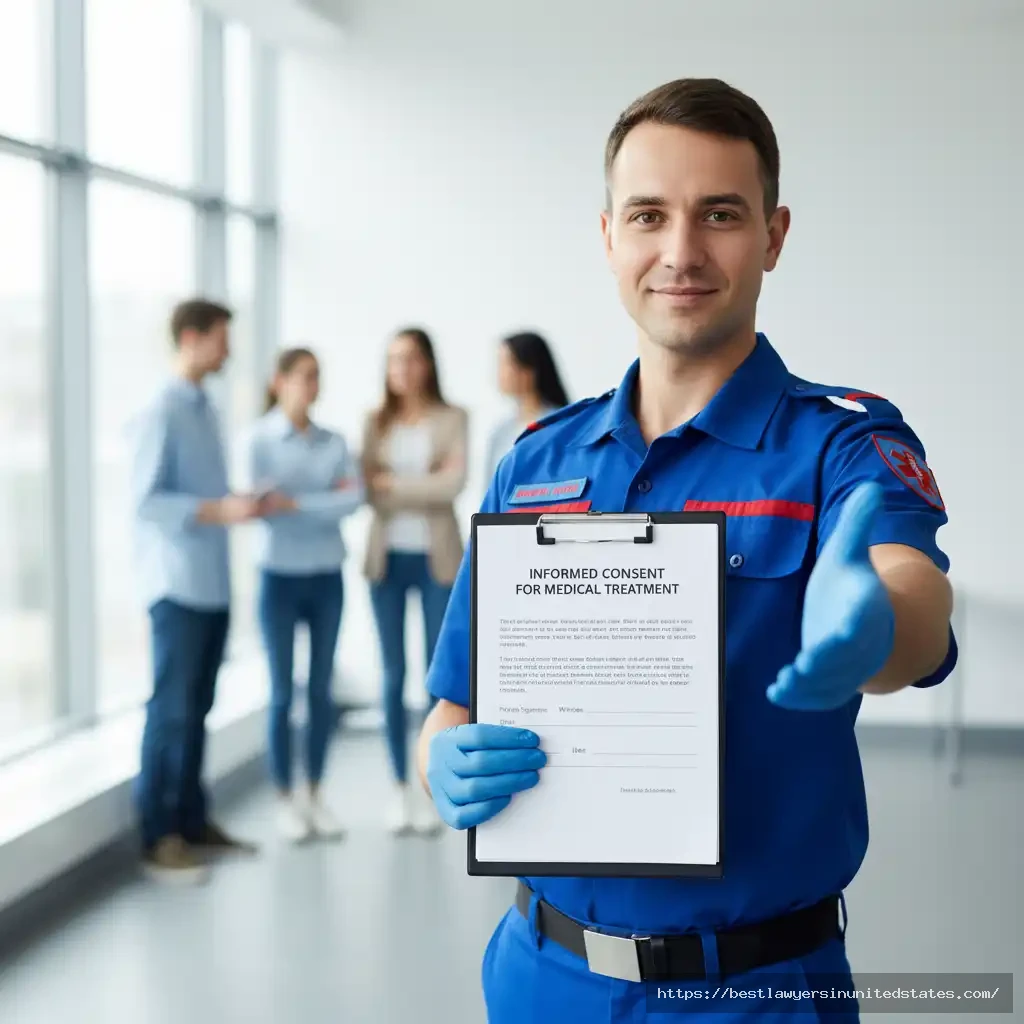
Understanding this balance between legal obligation and life-saving action is essential for anyone who might find themselves as a bystander during a medical emergency. This comprehensive guide explains your legal requirements, protections under Good Samaritan laws, and the proper emergency action steps that keep both you and the victim safe.
Understanding the Consent Requirement in Emergency Response
What Does “Obtaining Consent” Actually Mean?
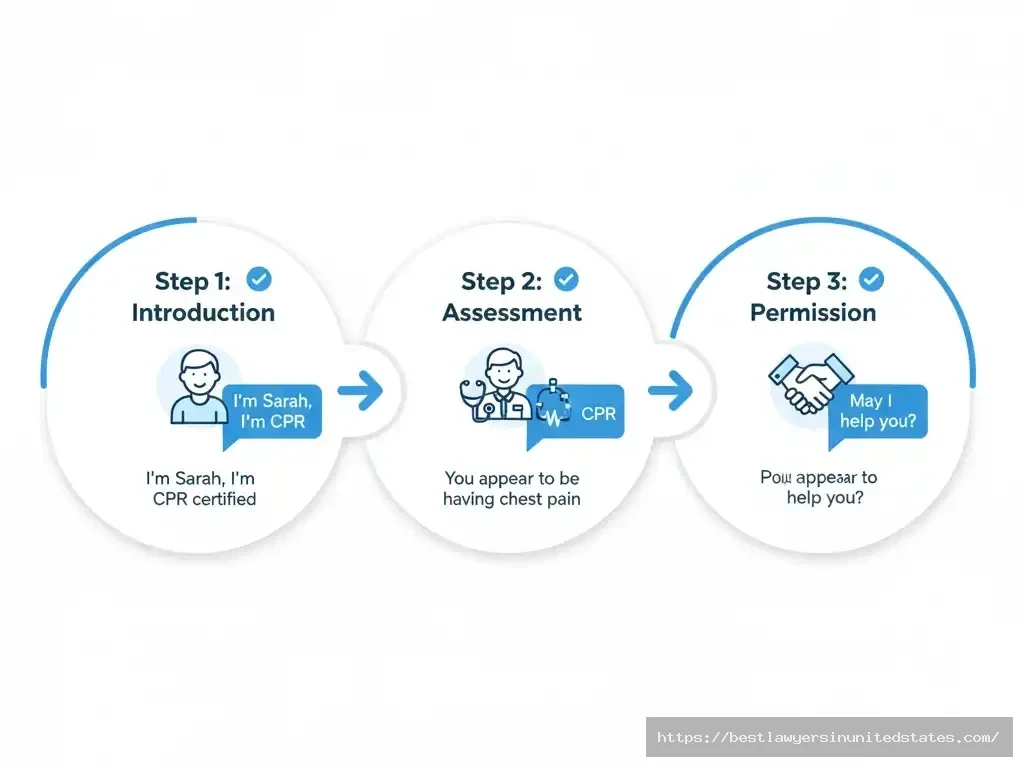
Obtaining consent means identifying yourself, explaining what you observe about the person’s condition, describing what you intend to do, and receiving clear permission before providing care. This process respects personal autonomy and protects individuals from unwanted physical contact, which could otherwise constitute battery under civil law.
The American Heart Association and American Red Cross teach this as a fundamental principle in all CPR and first aid certification courses. Proper consent involves three elements:
- Identification: State your name and relevant training (“I’m Sarah, and I’m CPR certified”)
- Assessment communication: Explain what you observe (“You appear to be having chest pain”)
- Action proposal: Describe what you want to do (“May I help you? I’d like to call 911 and stay with you until help arrives”)
Expressed Consent vs. Implied Consent: Know the Difference
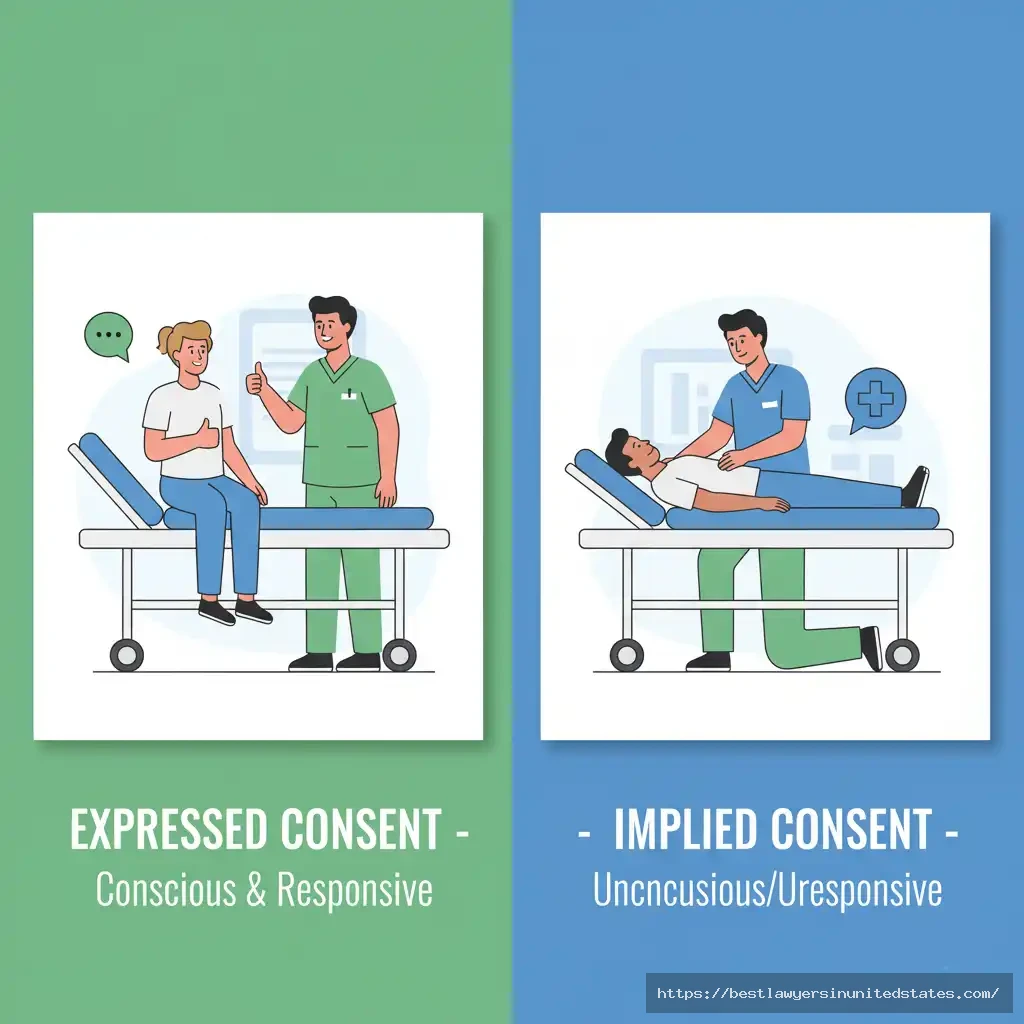
Expressed consent occurs when a conscious person gives you clear verbal or physical permission to help. This might be a direct “yes,” a nod, or extending their arm for you to check a pulse. The person must be alert enough to understand your offer and make a rational decision.
Implied consent is a legal doctrine that applies when a person cannot give expressed consent due to being unconscious, severely disoriented, or otherwise incapable of making decisions. The law presumes that a reasonable person would consent to life-saving care in such circumstances. This doctrine allows immediate intervention for:
- Unconscious or unresponsive individuals
- People experiencing altered mental status due to medical emergency
- Individuals in cardiac arrest or respiratory distress
- Victims who are incapacitated by severe trauma
The implied consent doctrine exists precisely to prevent tragic outcomes where responders hesitate during truly life-threatening situations out of fear of legal consequences.
The Check-Call-Care Protocol: Your Legal and Practical Framework
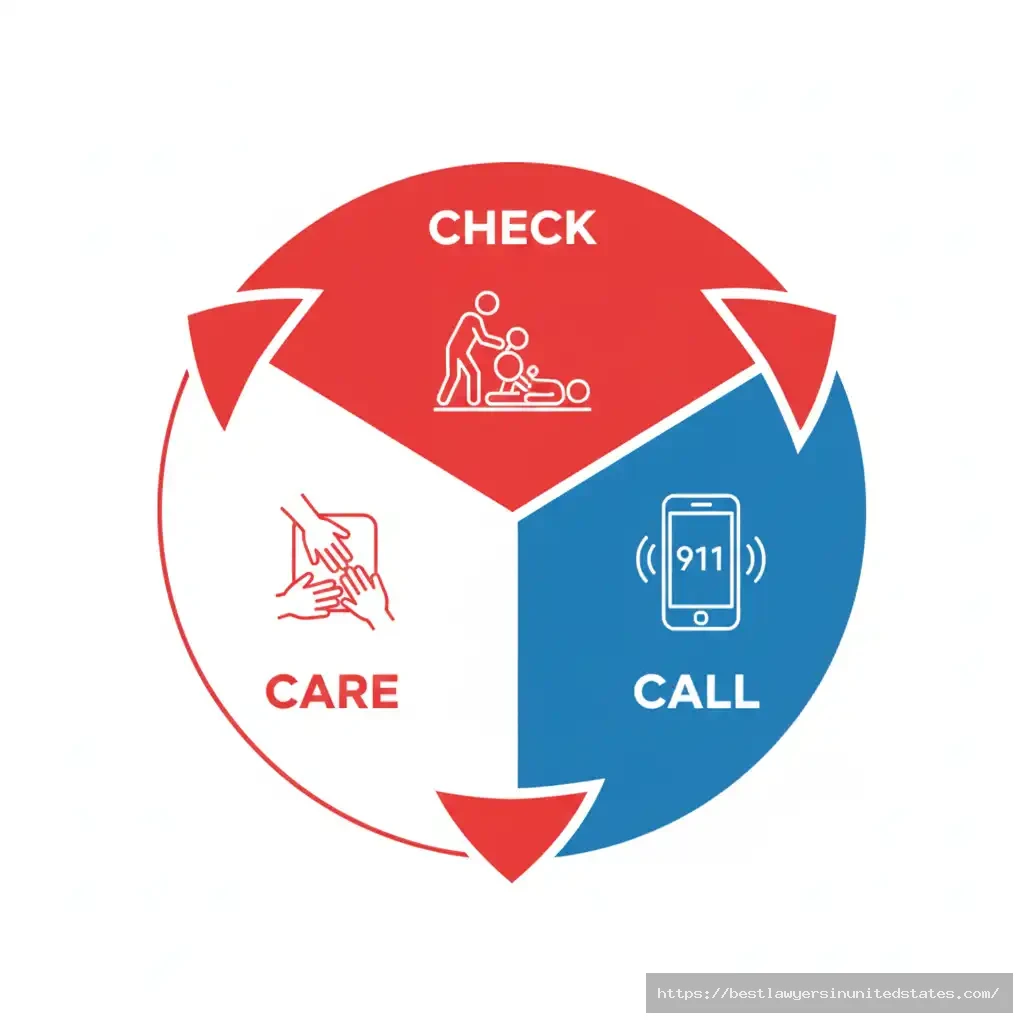
Emergency response follows a standardized protocol that naturally incorporates consent requirements while ensuring scene safety and proper care. This approach, known as the Check-Call-Care protocol or the “3 C’s of emergency response,” provides both a legal framework and practical guidance.
Step 1: Check the Scene and the Person
Before you even consider touching someone, you must assess two critical factors:
Scene Safety: Survey the environment for hazards that could harm you, the victim, or bystanders. Look for:
- Traffic dangers
- Unstable structures or debris
- Electrical hazards
- Fire, smoke, or toxic fumes
- Aggressive individuals or animals
- Bloodborne pathogen risks
Never approach a scene that is unsafe. Your first duty is to avoid creating additional victims. If hazards exist, call 911 immediately and wait for trained emergency services who have proper equipment and training.
Victim Assessment: Once you’ve confirmed the scene is safe, check the person’s responsiveness. Approach cautiously, identify yourself, and ask loudly, “Are you okay? Can you hear me?” If there’s no response, tap the person’s shoulder firmly while repeating your question.
This responsiveness check serves two purposes: it determines whether you need to rely on implied consent, and it begins your assessment of life-threatening conditions.
Step 2: Call for Emergency Medical Services
Whether the person is responsive or not, your next step is to activate the emergency medical services system by calling 911. This is legally required in most jurisdictions when you encounter a serious medical emergency, and it ensures professional help is en route while you provide initial care.
When calling 911, provide:
- Your exact location with landmarks
- The nature of the emergency
- The person’s condition (responsive or unresponsive, breathing status)
- Any visible injuries or symptoms
- Number of victims
If bystanders are present, direct a specific person to make the call: “You in the blue jacket—call 911 now and come back to tell me help is on the way.” This ensures the task gets completed rather than everyone assuming someone else will do it.
Step 3: Care Within Your Training and With Proper Consent
Only after confirming scene safety and activating EMS should you provide hands-on care. The care you provide must align with your training level and must be delivered with proper consent—either expressed or implied.
For a responsive person, obtain expressed consent by:
- Identifying yourself and your training level
- Explaining what you observe and what you want to do
- Waiting for clear permission before touching them
- Respecting their decision if they refuse care
For an unresponsive person, proceed with care under implied consent while:
- Continuing to monitor for signs of regained consciousness
- Explaining what you’re doing even if they can’t respond
- Stopping immediately if they regain consciousness and withdraw consent
- Staying within your scope of training
Good Samaritan Laws: Your Legal Protection When Acting in Good Faith
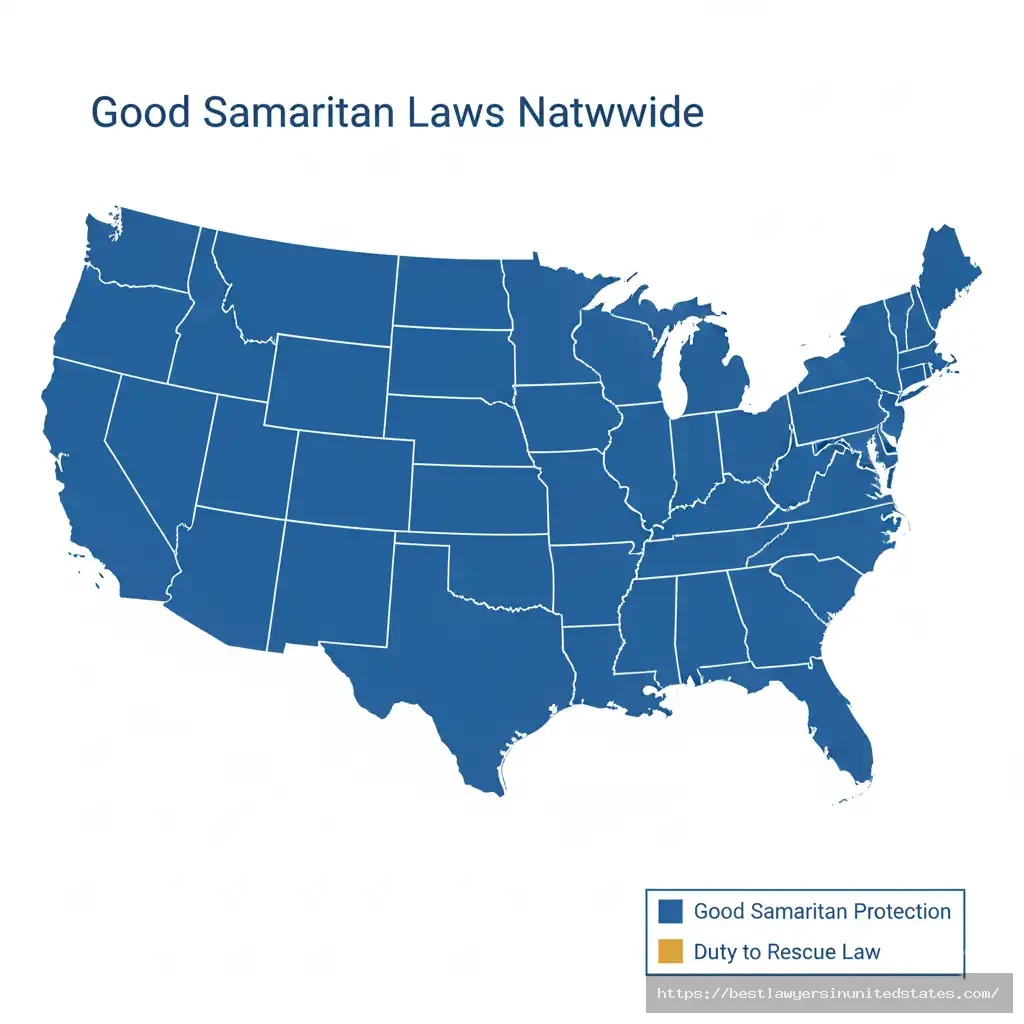
Good Samaritan laws exist in all 50 states to encourage bystander intervention during emergencies by providing legal immunity to individuals who assist others in distress. These laws protect you from civil liability when you act reasonably and in good faith to help someone during an emergency.
What Good Samaritan Laws Cover
These laws typically protect you from lawsuits alleging negligence when you:
- Act voluntarily without expectation of compensation
- Provide care at the scene of an emergency
- Act in good faith with the victim’s best interest in mind
- Stay within the reasonable standard of care for someone with your training level
- Do not commit gross negligence or willful misconduct
The reasonable person standard means your actions are judged against what a typical person with your level of training would do in the same circumstances. If you’re untrained, you’re held to a layperson standard. If you’re a certified first aider, you’re expected to follow your training protocols.
State-by-State Variations in Good Samaritan Protection
While all states have Good Samaritan laws, significant variations exist in their scope and application. Understanding your state’s specific provisions can influence your confidence in responding to emergencies.
| State Category | Key Provisions | Examples |
|---|---|---|
| Standard Protection States | Protect lay responders acting in good faith without compensation | Most states including California, Texas, Illinois |
| Duty to Rescue States | Legally require bystanders to provide reasonable assistance or call for help | Vermont, Minnesota, Rhode Island |
| Enhanced Healthcare Provider Protection | Extend protection to off-duty medical professionals | Florida, Georgia, New York |
| Limited Immunity States | Provide protection only in specific circumstances or exclude certain provider types | Varies; check state statutes |
California, for example, provides broad protection under Health and Safety Code Section 1799.102, which shields responders from liability for acts or omissions when rendering emergency care in good faith. However, California law specifies that moving a victim at the scene (except to prevent further harm) is not covered by this immunity.
Texas offers protection under the Civil Practice and Remedies Code Chapter 74, which extends to volunteer emergency responders and healthcare providers who provide care in good faith during emergencies.
New York Good Samaritan Law (Public Health Law Section 3000-a) protects both laypersons and certified medical professionals, including those providing emergency assistance as part of a volunteer ambulance service.
When Good Samaritan Protection Does NOT Apply
Understanding the limitations is equally important. You are generally NOT protected if you:
- Act with gross negligence or reckless disregard for safety
- Provide care while intoxicated
- Abandon the person after beginning care (unless relieved by someone with equal or higher training)
- Exceed your scope of practice or training
- Accept payment for your emergency assistance
- Cause harm through intentional misconduct
Additionally, in most states, healthcare professionals who have an existing duty to the patient (such as an on-duty physician at a hospital) are held to professional standards rather than Good Samaritan protections.
Professional vs. Lay Responder: How Your Training Affects Your Legal Obligations
Not all potential responders face the same legal requirements or protections. Your training level, certification status, and professional role significantly impact both your legal obligations and the standard of care to which you’ll be held.
Untrained Civilians: Basic Good Samaritan Protection
If you have no formal training in first aid or CPR, you’re held to the lowest legal standard—that of a reasonable layperson. You’re expected to:
- Ensure scene safety before approaching
- Obtain consent from responsive individuals
- Call 911 immediately
- Provide basic comfort and support
- Not attempt medical procedures beyond your knowledge
Under Good Samaritan laws, your protection is strongest because courts recognize you’re doing your best without professional training. However, you should never attempt procedures you’ve seen on television or read about if you haven’t been formally trained.
Certified First Aiders and CPR Holders: Intermediate Obligations
If you hold current certification in CPR, AED use, or first aid from organizations like the American Heart Association or American Red Cross, you’re expected to follow your training protocols. This includes:
- Conducting proper responsiveness checks
- Following the Check-Call-Care protocol
- Using personal protective equipment when available
- Performing CPR according to current guidelines
- Operating an AED if available and indicated
- Recognizing when to activate EMS
Your certification demonstrates specialized knowledge, so courts may hold you to a higher standard than an untrained bystander. You must stay within your scope of practice—the specific skills covered in your certification course. Attempting advanced procedures you learned about but weren’t formally trained in could jeopardize your legal protection.
Off-Duty Healthcare Professionals: Enhanced Duty of Care
Healthcare professionals face more complex legal obligations, even when off-duty:
Physicians, nurses, EMTs, and paramedics may have a professional duty to respond in certain states. While most states don’t legally compel off-duty healthcare workers to intervene, some impose ethical obligations through professional licensure requirements.
Scope of practice limitations still apply: An off-duty emergency physician cannot perform surgical procedures at an accident scene without proper facilities and equipment. You’re limited to interventions that are reasonable given the circumstances and available resources.
Documentation expectations: Healthcare professionals should document their involvement, actions taken, and the victim’s response as thoroughly as circumstances permit. This documentation protects both you and the patient.
Professional liability considerations: Some healthcare professionals maintain separate Good Samaritan insurance policies because their standard malpractice coverage may not extend to off-duty emergency interventions.
Designated Workplace Responders: Occupational Requirements
Individuals designated as workplace first responders, school nurses, lifeguards, or event medical staff operate under different legal frameworks:
- You have a duty to act within your defined role and work environment
- Your employer must provide proper training, equipment, and protocols
- OSHA regulations may mandate specific response procedures
- Workers’ compensation typically covers injuries sustained while providing emergency care
- Your scope of practice is defined by your employer’s policies and your training credentials
Navigating Complex Consent Scenarios: Real-World Decision Making
Emergency situations rarely present themselves with perfect clarity. Understanding how to navigate ambiguous consent situations is critical for making confident, legally sound decisions.
Scenario 1: Semi-Conscious or Confused Individuals
The Situation: The person is awake but disoriented, giving inconsistent responses, or appears confused about their surroundings.
The Legal Approach: A person experiencing altered mental status due to medical emergency (low blood sugar, stroke, head injury, shock) cannot provide informed consent. This generally falls under implied consent because they lack the capacity to make rational decisions about their care.
What to Do:
- Identify yourself and state your intent to help
- Explain what you’re observing clearly: “You seem confused and unsteady. I’m concerned you may need medical help.”
- Call 911 immediately—altered mental status is a medical emergency
- Provide supportive care while monitoring their condition
- If they become combative, maintain your safety and wait for EMS
Scenario 2: Language Barriers
The Situation: You don’t share a common language with the victim, making verbal consent impossible.
The Legal Approach: Communication through gestures, translators (including bystanders or phone-based services), or universal signs can establish consent. Lack of shared language doesn’t eliminate the consent requirement for responsive individuals.
What to Do:
- Use clear gestures: point to yourself, then to them, using concerned facial expressions
- Ask simple yes/no questions that can be answered with head movements
- Look for bystanders who speak the person’s language
- Utilize translation apps if time permits and the situation isn’t immediately life-threatening
- For unresponsive individuals, language barriers don’t affect implied consent
Scenario 3: Withdrawal of Consent
The Situation: The person initially agreed to help but now pushes you away, says “stop,” or otherwise indicates they want you to cease.
The Legal Approach: Consent can be withdrawn at any time, and you must respect this decision unless the person becomes unconscious or demonstrates altered mental status that prevents informed decision-making.
What to Do:
- Stop providing hands-on care immediately
- Do not leave the scene—this could constitute abandonment
- Continue to encourage them to accept EMS care: “I understand you don’t want my help, but I’m worried about you. Will you at least speak with the paramedics when they arrive?”
- Wait for EMS to arrive, as you’ve already activated emergency services
- Document the refusal and continue to monitor from a respectful distance
Scenario 4: Family Members Refusing Consent on Behalf of a Victim
The Situation: A bystander claiming to be family insists you not touch the victim, even though the victim appears to need immediate help.
The Legal Approach: If the victim is conscious and competent, only they can consent or refuse. If unconscious, family presence doesn’t override implied consent unless they present valid documentation like a DNR order or healthcare directive.
What to Do:
- Ask the conscious victim directly: “Do you want help?” Address them, not the family member
- For unconscious victims, politely explain: “I understand your concern, but this person needs immediate care. Do you have documentation of their wishes, such as a DNR order?”
- Provide care based on the victim’s status and legal consent principles, not family demands
- Have someone else manage the distraught family member while you focus on the victim
- Document the interaction carefully
When You Can and Cannot Touch Without Explicit Consent
Understanding the boundaries of implied consent helps you act decisively when lives are at stake while respecting autonomy in less critical situations.
| Situation | Can Proceed Without Expressed Consent? | Legal Basis |
|---|---|---|
| Person is completely unresponsive and not breathing | YES | Implied consent — life-threatening emergency |
| Person is unconscious but breathing normally | YES | Implied consent — medical assessment needed |
| Person is having a seizure | YES | Implied consent — protect from injury during seizure |
| Person appears confused/delirious with altered mental status | YES | Implied consent — cannot provide informed consent |
| Person is conscious but experiencing chest pain and agreeing to help | NO | Need expressed consent — responsive and capable of consent |
| Person is conscious and refusing help | NO | Expressed refusal overrides your assessment |
| Minor child with parent/guardian present | NO | Parent or guardian must provide consent for the minor |
| Minor child alone in life-threatening emergency | YES | Implied consent for minors in danger without guardian present |
| Person with DNR order who is in cardiac arrest | NO | Legal directive (DNR) supersedes implied consent |
Special Considerations: Minors, DNR Orders, and Vulnerable Populations
Certain situations require additional legal awareness beyond standard consent procedures.
Responding to Emergencies Involving Minors
Children under 18 typically cannot provide legal consent for medical treatment. However, emergency exceptions exist:
When a parent or legal guardian is present: You must obtain consent from the parent or guardian, not the child. Explain the situation to both, but direct your consent request to the adult.
When no parent or guardian is available: If a child faces a life-threatening emergency and no parent is present, implied consent allows you to provide care. The law recognizes that waiting for parental permission could result in death or serious harm.
Emancipated minors: Some states allow emancipated minors (typically those who are married, in the military, or living independently with court approval) to consent to their own medical care.
School settings: Teachers and school nurses often operate under in loco parentis (in place of parent) authority, with parental consent forms typically collected at the beginning of the school year.
Recognizing and Respecting DNR Orders
A Do Not Resuscitate order is a legal document indicating a person’s wish not to receive CPR or advanced life support if their heart stops or they stop breathing. These orders must be respected, even in emergencies.
What DNR orders look like: Official DNR documentation varies by state but typically includes:
- State-issued DNR identification bracelet or necklace
- Official DNR form signed by a physician
- POLST (Physician Orders for Life-Sustaining Treatment) form
What you should do: If you encounter a person in cardiac arrest who has visible DNR documentation, you should not perform CPR or use an AED. Instead:
- Call 911 and inform them about the DNR order
- Provide comfort care only
- Stay with the person
- Allow natural death to occur as per their wishes
When DNR status is unclear: If no DNR documentation is visible or available, proceed with life-saving care under implied consent. Courts consistently rule that responders should err on the side of saving life when documentation is ambiguous.
Assisting Individuals with Disabilities
People with disabilities deserve the same emergency response as anyone else, with some additional considerations:
- Speak directly to the person with the disability, not to companions or interpreters
- Don’t assume cognitive disability based on physical disability or communication differences
- If the person uses assistive devices (wheelchair, cane, hearing aids, communication boards), ask before moving them
- For individuals with intellectual disabilities, use clear, simple language to obtain consent
- Service animals should not be separated from their handlers unless absolutely necessary for medical care
Documentation and Handoff: Protecting Yourself Legally After Providing Care
Your legal responsibilities don’t end when emergency medical services arrive. Proper documentation and handoff procedures protect both you and the patient.
What to Document at the Scene
When circumstances permit, make mental notes or brief written records of:
- Time you discovered the emergency
- Initial condition of the person (responsive, breathing status, visible injuries)
- Whether you obtained expressed consent or proceeded under implied consent
- Specific care you provided
- Changes in the person’s condition
- Time EMS arrived
- Information you provided to EMS
This documentation becomes critical if questions arise later about your actions. Many smartphone cameras include timestamp features, which can be useful for documenting scene conditions (though always prioritize care over documentation).
Proper Handoff to Emergency Medical Services
When EMS arrives, you must provide a clear, concise report:
- Identify yourself and your training level: “I’m Jennifer, I’m CPR certified through the American Heart Association”
- Describe what you found: “I found him lying on the ground, unresponsive and not breathing”
- Explain your actions: “I started CPR at approximately 2:15 PM and continued until you arrived”
- Report any changes: “He started breathing on his own about three minutes ago but hasn’t regained consciousness”
- Mention any special information: “Bystanders say he complained of chest pain just before he collapsed”
Do not leave the scene until EMS personnel tell you it’s okay to go. Leaving before being properly relieved constitutes abandonment, which could jeopardize your Good Samaritan protection.
Legal Consequences: What Happens If You Don’t Follow Proper Procedures
Understanding potential consequences reinforces the importance of following legal requirements during emergency response.
Civil Liability Risks
If you fail to obtain consent from a responsive person before touching them, you could face civil lawsuits for:
Battery: Unwanted physical contact, even if intended to help, can constitute battery. If you perform CPR on a conscious person who didn’t consent, they could sue for battery even if they weren’t seriously harmed.
Negligence: If your care falls below the reasonable standard for someone with your training level, you could be found negligent. This typically requires proving you had a duty to act properly, you breached that duty, and your breach caused harm.
Emotional distress: Some jurisdictions allow claims for emotional harm resulting from unwanted physical contact during emergencies.
Good Samaritan laws provide strong protection against these claims when you follow proper procedures, but they won’t shield you from liability if you ignore consent requirements or act recklessly.
Criminal Liability Possibilities
While extremely rare for good-faith emergency responders, criminal charges could theoretically arise from:
- Assault or battery: If your actions were aggressive or exceeded reasonable emergency response
- Practicing medicine without a license: If you performed procedures far beyond your training level
- Negligent homicide or manslaughter: Only in cases of gross negligence that directly causes death
These criminal consequences are extraordinarily unlikely for responders acting in good faith within their training. However, they underscore the importance of staying within your scope of practice.
Consequences of Not Acting: Duty to Rescue States
In Vermont, Minnesota, and Rhode Island, failing to assist someone in an emergency (at minimum by calling 911) can result in legal penalties:
- Vermont: Duty to provide reasonable assistance, with penalties up to $100 fine
- Minnesota: Obligation to give reasonable assistance, violation is a petty misdemeanor
- Rhode Island: Must give reasonable assistance to exposed or injured persons, unless doing so would endanger yourself
These laws recognize that sometimes the most critical help is simply activating the emergency response system.
Practical Checklist: Your Legal Compliance Guide for Emergency Response
Use this reference guide when responding to emergencies to ensure you meet legal requirements:
Before Approaching:
- Assess scene safety—is it safe for me to approach?
- Look for obvious hazards (traffic, fire, electrical, violence)
- Put on PPE if available (gloves, mask, face shield)
Initial Contact:
- Check for responsiveness—tap and shout “Are you okay?”
- Identify yourself: “My name is ___, I’m trained in CPR/first aid”
- For responsive people: “You appear to need help. May I assist you?”
- Wait for verbal or clear non-verbal consent
If Person is Unresponsive:
- Proceed under implied consent
- Have someone call 911 immediately (or call yourself)
- Begin appropriate care based on your training
If Person is Responsive:
- Obtain expressed consent before touching
- Explain what you want to do
- Respect refusal of care
- Still call 911 for serious conditions even if they refuse your help
During Care:
- Stay within your training and scope of practice
- Continue monitoring for changes in consciousness or consent status
- Stop immediately if person withdraws consent
- Do not abandon once you’ve begun care
When EMS Arrives:
- Provide clear handoff report
- Explain consent status (expressed vs. implied)
- Describe care provided
- Wait to be relieved before leaving
Frequently Asked Questions About Legal Requirements in Emergency Response
What are you legally required to do before you touch a person when responding to an emergency?
You are legally required to obtain consent before touching a person in an emergency. For conscious, responsive individuals, you must identify yourself, explain what you observe, describe what you intend to do, and receive clear verbal or physical permission. However, if the person is unconscious or unresponsive, the law recognizes implied consent, allowing you to provide immediate life-saving care without explicit permission.
What is implied consent in an emergency?
Implied consent is a legal doctrine that assumes an unconscious or incapacitated person would consent to emergency medical care if they were able to communicate. This applies when someone is unresponsive, unconscious, experiencing altered mental status, or otherwise unable to make informed decisions. The law presumes a reasonable person would want life-saving assistance in these circumstances.
Can I be sued for helping someone in an emergency?
While technically anyone can file a lawsuit, Good Samaritan laws in all 50 states provide strong legal protection when you act in good faith and follow reasonable emergency procedures. Successful lawsuits against Good Samaritan responders who obtained proper consent and stayed within their training are extremely rare. You’re protected when you act reasonably, without gross negligence, and within your scope of training.
What are Good Samaritan laws?
Good Samaritan laws are state statutes that protect individuals from civil liability when they voluntarily provide emergency assistance to someone in distress. These laws shield you from negligence lawsuits if you act in good faith, provide care at an emergency scene, don’t expect payment, and stay within reasonable standards for your training level. All 50 states have Good Samaritan laws, though specific provisions vary.
Do I need consent to perform CPR?
For an unconscious person in cardiac arrest, no explicit consent is required—you proceed under implied consent because they cannot communicate and face a life-threatening emergency. For a conscious person experiencing chest pain or other symptoms, you must obtain expressed consent by explaining the situation and asking permission before beginning any physical contact or care.
What should I check first during an emergency?
Always check scene safety first before approaching any emergency. Survey the environment for hazards including traffic, fire, electrical dangers, unstable structures, toxic fumes, or aggressive individuals. Never enter an unsafe scene—call 911 and wait for trained emergency services. Only after confirming safety should you check the person’s responsiveness and condition.
What are the 3 C’s of emergency response?
The 3 C’s are Check, Call, and Care:
- Check: Assess scene safety and the person’s responsiveness
- Call: Activate emergency medical services by calling 911
- Care: Provide appropriate assistance based on your training and the person’s consent status
This protocol naturally incorporates legal consent requirements while ensuring proper emergency response procedures.
What happens if someone refuses help during an emergency?
You must respect their decision and stop providing hands-on care immediately. Continuing against their expressed wishes constitutes battery, even if you believe they need help. However, don’t leave the scene entirely—remain nearby, continue encouraging them to accept EMS assistance, and wait for paramedics to arrive since you’ve activated emergency services. If they lose consciousness after refusing, implied consent allows you to resume care.
Can I help a child in an emergency without parent permission?
If a parent or guardian is present, you must obtain consent from them, not the child. However, if a child faces a life-threatening emergency and no parent is available, implied consent allows immediate care. The law recognizes that waiting for parental permission during critical emergencies could result in death or serious harm to the child.
What are the emergency action steps?
The standard emergency action steps are:
- Ensure scene safety – Check for hazards before approaching
- Check responsiveness – Tap and shout to assess consciousness
- Obtain consent – Get permission from conscious individuals or proceed under implied consent for unresponsive victims
- Call 911 – Activate emergency medical services
- Provide care – Deliver appropriate assistance within your training level
During an emergency what should you check first CPR?
Before starting CPR, first check scene safety to ensure you won’t become a victim yourself. Then check the person’s responsiveness by tapping their shoulder and shouting “Are you okay?” If unresponsive, check for normal breathing by looking at their chest for no more than 10 seconds. If they’re not breathing or only gasping, begin CPR immediately under implied consent while someone calls 911.
What is the final emergency action step?
The final emergency action step is providing appropriate care based on the person’s condition and your training level. This includes performing CPR for cardiac arrest, controlling severe bleeding, treating for shock, or providing comfort and reassurance for non-life-threatening conditions. Care continues until emergency medical services arrive and you properly hand off the patient to trained professionals.
What must be done first when providing care for a person in an emergency?
Before providing any care, you must first ensure scene safety and obtain appropriate consent. For responsive individuals, identify yourself, explain what you observe, and ask permission before touching them. For unresponsive individuals, proceed under implied consent. Always call 911 before beginning care unless you’re in a remote location where going for help is the only option.
When you check a responsive person who does not have a life-threatening emergency, what should you do?
Obtain expressed consent before touching them. Identify yourself and your training, explain what you observe about their condition, describe what you’d like to do to help, and wait for clear permission. Ask questions about their symptoms, keep them calm, and call 911 if their condition warrants professional medical evaluation. Respect their wishes if they refuse assistance.
What are 5 things you should look for at an emergency scene?
Before approaching any emergency, look for:
- Traffic hazards – Moving vehicles that could strike you or the victim
- Fire or smoke – Active flames, smoldering materials, or toxic fumes
- Electrical dangers – Downed power lines, exposed wiring, or electrical equipment
- Structural hazards – Unstable buildings, falling debris, or collapse risks
- Violence or weapons – Aggressive individuals, crime scenes, or dangerous animals
Only approach if the scene is safe or can be made safe without endangering yourself.
Do Good Samaritan laws protect healthcare professionals?
Most state Good Samaritan laws protect off-duty healthcare professionals who provide emergency care in good faith. However, some states hold medical professionals to higher standards even when off-duty, and protection may not apply if you’re acting within your professional capacity or workplace. Healthcare workers should verify their specific state’s provisions and consider separate Good Samaritan liability insurance.
What is the difference between expressed and implied consent?
Expressed consent occurs when a conscious person gives you clear verbal or physical permission to help (saying “yes,” nodding, or extending their arm). Implied consent is a legal doctrine that applies when someone cannot give expressed consent because they’re unconscious, severely disoriented, or incapacitated—the law assumes they would consent to life-saving care if they could communicate.
Can you move a person during an emergency?
Only move a person if their current location presents immediate danger, such as fire, traffic, collapsing structure, or exposure to toxic fumes. Unnecessary movement can worsen spinal injuries or other trauma. If you must move them, use appropriate techniques based on your training and move them the minimum distance needed to reach safety. Document why movement was necessary.
What should you do if a bystander says they don’t want you to help someone?
If the victim is conscious and competent, ask them directly—only they can consent or refuse. If the victim is unconscious, bystanders cannot override implied consent unless they present valid legal documentation like a DNR order or advance directive. Politely explain that the person needs immediate care and proceed with appropriate emergency response while having someone manage the concerned bystander.
What is a DNR order and how does it affect emergency response?
A Do Not Resuscitate (DNR) order is a legal document signed by a physician indicating a person’s wish not to receive CPR or advanced life support if their heart stops. If you encounter someone in cardiac arrest with visible DNR documentation (bracelet, necklace, or official form), you should not perform CPR. Instead, call 911, inform them about the DNR, provide comfort care only, and respect the person’s end-of-life wishes.
Are you required to help in an emergency?
In most states, civilians have no legal duty to help strangers in emergencies. However, Vermont, Minnesota, and Rhode Island have “duty to rescue” laws requiring bystanders to provide reasonable assistance or at least call 911. Healthcare professionals may face ethical obligations through licensing boards, and designated workplace responders (lifeguards, school nurses) have duty to act within their employment role.
What happens if you don’t follow legal procedures in an emergency?
Failing to obtain consent from a responsive person could result in civil lawsuits for battery (unwanted physical contact) even if you intended to help. Providing care beyond your training level or acting with gross negligence could eliminate Good Samaritan protection, exposing you to negligence claims. However, honest mistakes while acting in good faith are typically protected under Good Samaritan laws.
How do you obtain consent if there’s a language barrier?
Use clear gestures by pointing to yourself and then to them with concerned facial expressions. Ask simple yes/no questions that can be answered with head movements. Look for bystanders who speak the person’s language or use smartphone translation apps if time permits and the situation isn’t immediately life-threatening. For unresponsive individuals, language barriers don’t affect implied consent—proceed with care.
What should you document after providing emergency care?
When circumstances permit, document the time you discovered the emergency, initial condition of the person, whether you obtained expressed or implied consent, specific care you provided, changes in condition, time EMS arrived, and information you gave to paramedics. This documentation protects you legally if questions arise later. Many smartphones have timestamp features useful for documenting scene conditions.
Can you perform CPR on someone who doesn’t want it?
No. If a conscious person explicitly refuses CPR or other care, you must respect their decision. Performing CPR against someone’s expressed wishes constitutes battery. However, if that person subsequently loses consciousness, implied consent would then allow you to begin CPR since they can no longer communicate their wishes and face a life-threatening emergency.
What is abandonment in emergency care?
Abandonment occurs when you begin providing emergency care and then leave before being properly relieved by someone with equal or higher training, such as EMS personnel. Once you start care, you have a legal duty to continue until professional help arrives or the person recovers. Abandoning someone after beginning care can eliminate your Good Samaritan protection and create liability.
Do I need personal protective equipment to help in an emergency?
While not legally required for bystander response, using PPE (gloves, face masks, barrier devices) when available protects you from bloodborne pathogens and infectious diseases. The CDC recommends universal precautions for all emergency care. If PPE isn’t available during life-threatening emergencies like cardiac arrest, you can still perform hands-only CPR (chest compressions without rescue breaths) to minimize disease transmission risk.
What are the components of high-quality CPR?
High-quality CPR includes:
- Compression depth: At least 2 inches for adults, about 2 inches for children
- Compression rate: 100-120 compressions per minute
- Full chest recoil: Allow chest to return to normal position between compressions
- Minimal interruptions: Limit pauses to less than 10 seconds
- Proper hand placement: Center of chest on the lower half of the breastbone
- Appropriate ventilations: 30 compressions to 2 breaths for trained responders
How long should you provide emergency care before help arrives?
Continue providing appropriate care until one of the following occurs: EMS or another trained responder arrives and takes over, the scene becomes unsafe for you to continue, you’re physically unable to continue, or the person shows obvious signs of life. Never stop CPR prematurely—if you become exhausted, switch with another trained responder if available.
What if the person has a medical alert bracelet?
Medical alert bracelets provide critical information about conditions like diabetes, seizure disorders, severe allergies, or DNR orders. Check for these immediately when assessing an unresponsive person. This information helps you provide appropriate care and gives vital information to EMS. Common alert tags indicate allergies to medications, bleeding disorders, pacemakers, or specific medical conditions requiring special consideration.
Can you be criminally charged for helping someone in an emergency?
Criminal charges against Good Samaritan responders acting in good faith are extraordinarily rare. Potential criminal liability could theoretically arise from gross negligence causing death, assault or battery beyond reasonable emergency response, or practicing medicine without a license by performing procedures far beyond your training. However, these scenarios are extremely unlikely for responders following proper protocols and acting within their scope of training.
