
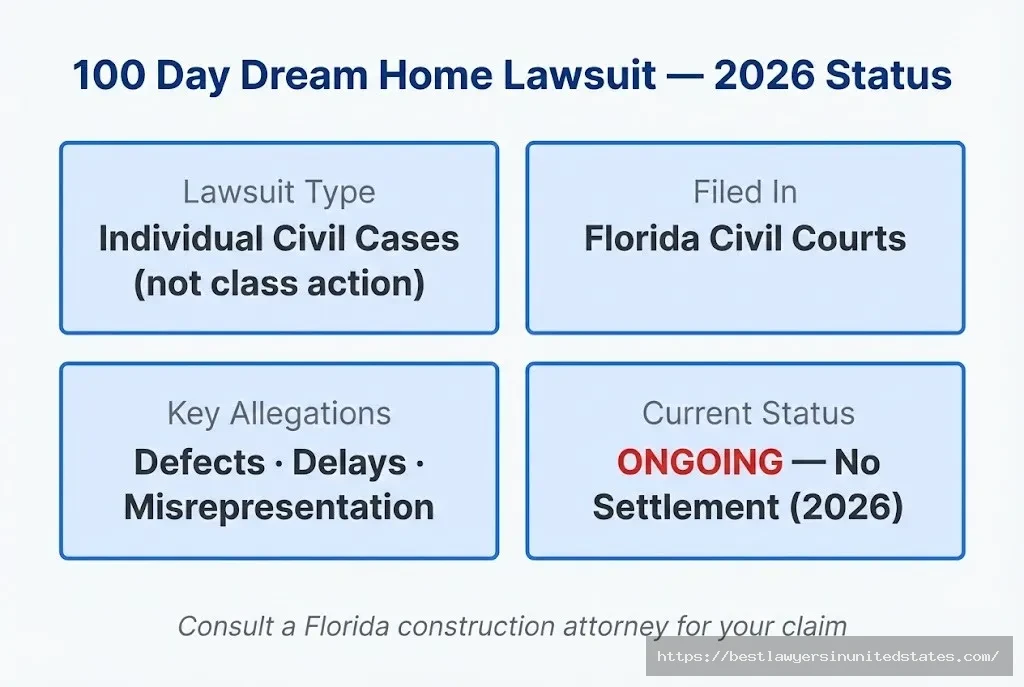
The 100 Day Dream Home lawsuit refers to multiple civil complaints filed by homeowners against the show’s hosts, production team, and contracted builders — alleging defective construction, missed timelines, safety hazards, and broken promises. Unlike a consumer product recall, there is no class action settlement fund or claim form to submit — these are individual construction and contract disputes working through Florida courts. This guide explains exactly what happened, who may have legal options, what the current status is, and what to do if you had a similar experience building with the show’s team. Motorcycle Crash Lawsuit
Quick Answer: The 100 Day Dream Home lawsuits are individual civil cases filed by former participants in the HGTV show. Homeowners allege construction defects, breach of contract, and misrepresentation by hosts Brian and Mika Kleinschmidt and their contractors. As of early 2026, cases remain unresolved and are progressing through Florida courts. If you were a participant, you may have your own legal claim — consult a construction or consumer protection attorney. crepe erase lawsuit
What Is the 100 Day Dream Home Lawsuit?
Background of the Show and How the Legal Trouble Started
100 Day Dream Home premiered on HGTV in 2020. The concept was simple but bold: married couple Brian and Mika Kleinschmidt — a developer and real estate agent based in Tampa, Florida — would design and build a fully custom home for a family in exactly 100 days or fewer. Homeowners were kept away from the property during construction for a dramatic “reveal” at the end.
The show drew millions of viewers who were captivated by its pace, the couple’s chemistry, and the idea that a dream home could go from empty land to move-in ready in just over three months. Multiple seasons followed, with fans growing more invested with each episode.
But behind the polished television reveal, some participants were walking into a nightmare. Weeks and months after moving in, cracks appeared — both in their walls and in their trust. Electrical problems, plumbing failures, structural concerns, and ballooning costs followed. Some homeowners say their calls went unanswered and their concerns were dismissed. Eventually, they turned to lawyers.
Who Filed the Lawsuits?
The plaintiffs are former homeowners who appeared on the show. They are suing the Kleinschmidts, their production company, and the subcontractors hired to perform construction work. HGTV itself has been named in some filings, though the network’s precise legal exposure differs from that of the builders.
HGTV released a statement — reported by The New York Times — saying the network wants homeowners “featured in our series to be happy” and that homeowners are involved in the design process. The Kleinschmidts have denied the allegations.
Cases are being handled in Florida civil courts, where construction and contract disputes of this kind are typically litigated.
Key Allegations
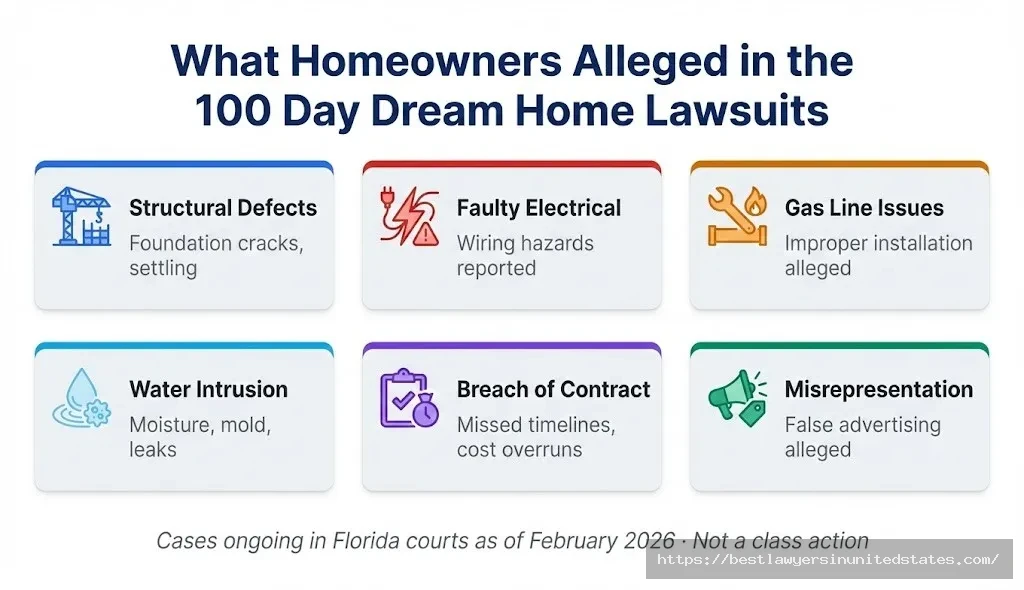
The complaints across the various lawsuits share common themes. The core claims fall into four categories:
- Breach of contract: Homeowners signed agreements stating their homes would be completed within a defined period. Some allege completion was delayed by months, triggering penalty costs they weren’t expecting to bear.
- Construction defects: Plaintiffs describe foundation cracks, water intrusion, warped flooring, poorly installed electrical systems, defective gas lines, and structural flaws that appeared within months of move-in.
- Misrepresentation and false advertising: Homeowners allege that the show’s marketing — and the representations made directly to them — created false expectations about quality, timeline, and total cost.
- Negligence: Some filings allege that the rushed 100-day timeline created conditions where required construction steps were skipped or performed inadequately.
Timeline of Key Events
| Date | Event | Details |
|---|---|---|
| 2020 | Show premieres on HGTV | Brian and Mika Kleinschmidt debut on HGTV with Season 1 |
| 2020–2022 | Seasons 1–3 air | Show gains strong viewership; multiple builds completed in Florida |
| 2022 | Season 3 concludes | April 2022 finale; no Season 4 announcement for over a year |
| 2022–2023 | Homeowner complaints emerge | Former participants begin reporting defects after move-in |
| 2023 | First lawsuits filed | Homeowners formalize allegations in Florida civil court |
| 2023–2024 | Discovery phase begins | Both sides exchange evidence, documents, expert reports |
| 2024 | HGTV issues statement | Network says it wants featured homeowners to “be happy” |
| 2024 | Mediation proposed | HGTV and production team suggest out-of-court resolution |
| Early 2025 | Litigation continues | Testimonies, repair bills, and expert assessments presented |
| 2025 | Show continues airing | Season 6 airs despite ongoing legal proceedings |
| Early 2026 | Cases still unresolved | No final ruling or global settlement announced as of February 2026 |
Understanding the Allegations in Detail
Construction Defects: What Homeowners Say Went Wrong
The most serious allegations involve physical defects in the homes themselves. These are not cosmetic complaints — plaintiffs describe issues that affect the safety and long-term livability of their properties.
Structural problems top the list. Some homeowners noticed foundation cracks appearing within months of move-in. Water intrusion followed, weakening structural integrity. Walls developed moisture issues that led to mold growth. Flooring warped, suggesting inadequate subfloor preparation or the use of materials not suited to Florida’s climate.
Electrical and plumbing failures are cited across multiple complaints. Homeowners describe faulty wiring and improperly installed gas lines — hazards that weren’t visible during the TV reveal but became apparent once the family was living in the home full-time. In several cases, these issues required immediate, costly intervention to make the homes safe.
Incomplete work is another common thread. Some participants allege that features promised in their contracts were either missing entirely at move-in or finished with visible shortcuts. Trim, fixtures, finishes, and mechanical systems reportedly fell short of what was agreed upon.
The 100-Day Timeline: Entertainment vs. Reality
A central argument in these lawsuits is that the 100-day premise is fundamentally incompatible with safe, durable home construction — and that both HGTV and the Kleinschmidts knew this.
Custom home construction in the United States typically takes 7 to 16 months from groundbreaking to move-in. That timeline accounts for permit processing, inspections at each phase, proper curing time for concrete, sequential scheduling of trades, and quality control reviews. Compressing all of that into 100 days, critics argue, creates pressure to skip steps, use faster-drying but weaker materials, and push crews past safe working conditions.
What viewers saw on screen was a curated version of each build. Permits, failed inspections, weather delays, and subcontractor problems were edited out of the story. The drama shown was the entertaining kind — design disagreements, tile choices, last-minute surprises. The legally relevant kind — timeline overruns, code violations, concealed defects — didn’t make the cut.
The Cost Overrun Problem
Several plaintiffs also allege that their final costs exceeded initial estimates by significant amounts — and that new charges appeared without warning or explanation. When homeowners tried to get answers, they say they received no response.
This is a separate legal issue from construction quality. Contract law generally requires that cost changes above a certain threshold be disclosed and agreed upon in writing before the work is performed. If the show’s contracts didn’t include those protections, homeowners may have signed documents that left them exposed.
Who May Have Legal Options?
This is not a class action lawsuit with a single eligibility checklist. Each former participant’s situation is different, and whether you have a viable legal claim depends on your individual contract, the defects in your home, and the laws of the state where your home was built (most builds were in Florida). Negligent Security Lawsuit
You May Have Grounds to Pursue Legal Action If:
| Situation | Potential Legal Claim |
|---|---|
| Your home was not completed within the contracted timeline | Breach of contract |
| Defects appeared within the first 1–3 years | Construction defect / negligence |
| You were charged more than the agreed price without written approval | Breach of contract / deceptive trade practices |
| Electrical, plumbing, or gas systems were improperly installed | Negligence / code violations |
| Structural defects (cracks, water damage, settling) emerged post-move-in | Construction defect / negligence |
| You were misled about materials, timelines, or costs in writing or on film | Misrepresentation / fraud |
| The show’s participants received homes differing from what was promised on-camera | False advertising / consumer protection |
You May Have Weaker Standing If:
- You signed a broad arbitration clause or liability waiver in your participation agreement
- The defects are cosmetic rather than structural or safety-related
- You accepted repairs offered by the builders and signed a release
- The statute of limitations in Florida for your claim type has expired (typically 4 years for breach of contract, but this varies)
Required Documentation to Pursue a Claim
| Document Type | Why It Matters | Where to Find It |
|---|---|---|
| Signed construction contract | Establishes what was promised | Personal records / attorney can subpoena |
| TV participation agreement | May include arbitration clauses | Personal records |
| Inspection reports | Documents defects independently | Your inspector or Florida DBPR records |
| Photos and videos of defects | Evidence of issues | Personal records; date-stamp everything |
| Repair invoices and estimates | Quantifies your financial damages | Contractors you hired post-build |
| Communications with builders | Shows responsiveness (or lack thereof) | Email, text, voicemail records |
| Building permits and inspection records | Shows what passed or failed inspection | Florida county building departments |
| Expert engineering assessment | Independent verification of defects | Licensed structural engineer |
What Are Homeowners Seeking?
The plaintiffs in these cases are asking for financial remedies, not just apologies. The specific demands vary by plaintiff, but the general categories of compensation sought include:
Repair costs — money to fix the defects the show’s builders created. In some cases, homeowners have already paid for emergency repairs out of pocket and are seeking reimbursement.
Cost overrun reimbursement — money paid above the contracted amount without authorization.
Emotional distress damages — compensation for the psychological toll of moving into a supposedly completed dream home and discovering serious problems.
Punitive damages — in cases where intentional misrepresentation is alleged, plaintiffs may seek damages beyond actual losses as a punishment for bad-faith conduct.
Attorney fees — Florida law in some contract and consumer protection cases allows the prevailing party to recover attorney fees, which changes the calculus for both sides.
Current Lawsuit Status: 2025–2026 Update
| Stage | Status (as of February 2026) |
|---|---|
| Lawsuits filed | Yes — multiple individual cases |
| Discovery | Ongoing — both sides exchanging evidence |
| Mediation | Proposed by HGTV/production; not yet concluded |
| Settlement | No global settlement reached |
| Trial date | Not publicly confirmed |
| Final ruling | Not issued |
| Show status | Continues airing on HGTV |
As of early 2026, no final ruling has been handed down in any of the major cases. The litigation is moving through Florida’s civil court system at the pace typical of complex construction disputes — which often take 2–5 years from filing to resolution.
HGTV has recommended mediation as a path to resolve claims without a full trial. Some homeowners have reportedly expressed willingness to negotiate; others want their day in court, particularly those who believe the show’s producers acted in bad faith.
The Kleinschmidts have continued to appear in new episodes and have publicly denied wrongdoing. Their legal team has pointed to external factors — supply chain disruptions, weather, and homeowner-requested changes — as the cause of any delays or cost increases.
Defense Arguments: What the Show’s Team Says
Understanding the other side matters, especially if you’re evaluating your own potential claim.
Unforeseen circumstances: The defense has cited COVID-era supply chain disruptions, material shortages, and labor availability as factors outside the builders’ control. Florida’s weather, particularly during hurricane season, also caused delays on some projects.
Homeowner changes: Contracts for custom homes typically allow builders to charge for scope changes requested by the homeowners during construction. The defense argues that some cost overruns stem from additions and alterations the clients themselves requested after signing.
Awareness of risks: The production team has argued that participants were aware they were entering a television production environment and that the 100-day format was an entertainment premise, not an ironclad guarantee.
Contract compliance: The Kleinschmidts and their legal team maintain they fulfilled their contractual obligations and that the homeowners’ expectations — shaped partly by television editing — were not a legal promise.
These arguments don’t necessarily defeat the claims, but they illustrate why these cases are complex and why having an attorney evaluate your specific contract is essential.
How This Case Compares to Similar Reality TV Lawsuits
100 Day Dream Home is not the first HGTV-adjacent show to face legal trouble. These disputes reflect a pattern in reality home construction television.
| Show / Case | Nature of Dispute | Outcome |
|---|---|---|
| 100 Day Dream Home | Construction defects, breach of contract, misrepresentation | Ongoing as of 2026 |
| Property Brothers (various) | Homeowners alleged rushed renovations and unmet promises | Settled privately in several instances |
| Flip or Flop (contractor disputes) | Subcontractors and vendors sued over non-payment | Various outcomes |
| No Demo Reno | Homeowners reported defective work and delays | Litigation ongoing |
| General contractor lawsuits (FL) | Construction defect cases statewide | Avg. resolution: 2–4 years |
The pattern is consistent: tight TV timelines create pressure that sometimes results in construction that doesn’t hold up after the cameras leave. The 100 Day Dream Home cases may ultimately push HGTV and similar networks to impose stricter oversight, independent inspections, and more consumer-protective contracts on participating homeowners.
Do You Need a Lawyer?
Quick Answer: If you were a participant in the show and have experienced construction defects, delays, or cost overruns, yes — you should consult a construction law attorney. These cases are too complex to navigate alone, and your participation agreement likely includes legal language designed to protect the production company.
Why an Attorney Matters Here
These are not simple small-claims disputes. They involve:
- Contract interpretation (including any arbitration or limitation-of-liability clauses you may have signed)
- Florida construction law, including the Florida Construction Defect Statute (Chapter 558)
- Evidence gathering (building permits, inspection records, expert testimony)
- Statute of limitations deadlines that vary by claim type
A construction defect attorney can evaluate your contract, inspect your home with qualified experts, and tell you whether your claim has merit before you spend money on litigation.
Florida’s Chapter 558 Notice Requirement
Florida law requires that before filing a construction defect lawsuit, homeowners must send a written notice of claim to the contractor, giving them an opportunity to inspect the defect and make an offer to repair. This process can take 60–120 days. Missing this step can hurt your case. An attorney will handle this correctly.
Free Consultations
Most construction defect and consumer protection attorneys offer free initial consultations. You don’t pay unless they take your case and win (contingency fee arrangements are common in these cases).
To find a qualified construction attorney in Florida:
- Florida Bar Lawyer Referral Service: floridabar.org/public/lrs
- Florida Bar Construction Law Certification: Search for board-certified construction attorneys at floridabar.org
- General attorney referral: [email protected]
Broader Implications: What This Lawsuit Means for Reality TV
The 100 Day Dream Home lawsuit is being watched closely by legal scholars, network executives, and the home construction industry — because its outcome could reshape how reality renovation shows operate.
For HGTV and similar networks, a finding against the production team could mean stricter contractual requirements, mandatory independent inspections before participants take ownership, and more transparent disclosures about the role of TV editing in shaping what viewers see.
For the home construction industry, the cases reinforce what contractors and building inspectors have long known: there are steps in home construction that cannot be safely compressed. The 100-day timeline is compelling television — but it’s an outlier, not a model.
For homeowners considering reality TV participation, these cases are a warning. Before signing any agreement with a production company that involves your home — whether a renovation, a rebuild, or a purchase — you need an attorney to review the contract. Television contracts are written by entertainment lawyers, not construction lawyers, and the protections you assume are there may not exist. Crepe Erase Lawsuit
Frequently Asked Questions
What is the 100 Day Dream Home lawsuit?
Quick Answer: It’s a series of individual civil lawsuits filed by former show participants in Florida courts, alleging construction defects, contract breaches, and misrepresentation by the show’s hosts and builders.
These are not a single class action case with a settlement fund. Each case is separate, and the outcome of one doesn’t automatically resolve the others. The cases are currently in the discovery and pre-trial phase.
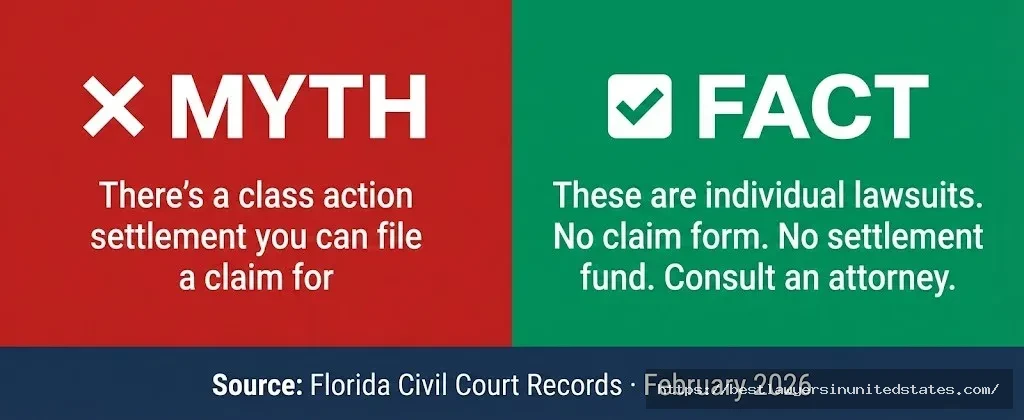
Is there a class action settlement I can file a claim for?
Quick Answer: No. As of February 2026, there is no class action settlement, no claim form, and no payout fund. Anyone suggesting otherwise is providing inaccurate information.
If a global settlement is eventually reached, it would be announced publicly through court records and reputable news outlets. Do not submit personal information to any website claiming to have a 100 Day Dream Home settlement claim form.
Who are the defendants in these lawsuits?
Quick Answer: The defendants include Brian and Mika Kleinschmidt, their production company, and the subcontractors who performed construction work. HGTV is named in some filings.
The precise defendants vary by case. HGTV’s legal exposure is likely more limited than that of the direct builders, but the network’s involvement in selecting, promoting, and broadcasting the work creates a potential avenue for claims.
What are the main construction problems alleged?
Quick Answer: Foundation cracks, faulty electrical wiring, improperly installed gas lines, water intrusion, structural settling, warped flooring, mold, and incomplete work.
These issues weren’t visible during the show’s dramatic reveals — they emerged after homeowners moved in and began living in the homes full-time. Expert testimony and independent engineering assessments are expected to play a key role in proving or disproving these claims.
Have the Kleinschmidts responded to the allegations?
Quick Answer: Yes — they have denied all allegations and attributed issues to external factors such as supply chain problems and weather delays.
Their legal team has also argued that homeowners were aware they were participating in a television production with a condensed timeline, and that costs associated with participant-requested changes were contractually permissible.
Is the show still on the air?
Quick Answer: Yes. 100 Day Dream Home was airing its sixth season as of 2025, and HGTV has not cancelled the show in response to the lawsuits.
The show continues to attract viewers, and the Kleinschmidts maintain a strong fan following. However, the lawsuits have generated enough negative publicity that viewer sentiment has become more divided, and some industry watchers expect the network to revise its production and oversight practices regardless of court outcomes.
What is HGTV’s position on the lawsuits?
Quick Answer: HGTV has largely remained quiet publicly while supporting the show’s team, and has suggested mediation as a preferred resolution path.
The network told The New York Times it wants participants to be happy and emphasized that homeowners are involved in the design process. The network has not admitted any wrongdoing.
Can I file my own lawsuit if I was a participant?
Quick Answer: Potentially yes — but your individual contract, the specific defects in your home, and Florida’s statute of limitations will determine whether you have a viable claim.
Start by consulting a Florida-licensed construction law attorney. Bring your original contract, any communications with the builders, and documentation of the defects. Most construction defect attorneys offer free initial consultations.
What is Florida’s Chapter 558 and why does it matter?
Quick Answer: Chapter 558 is Florida’s Construction Defect Statute, which requires homeowners to send a formal pre-suit notice of defects to the contractor before filing a lawsuit, giving them a chance to inspect and potentially repair.
Skipping this step can result in your lawsuit being dismissed. The process takes 60–120 days and must be followed precisely. An attorney will manage this on your behalf.
What does “discovery phase” mean in these cases?
Quick Answer: Discovery is the pre-trial stage where both sides share evidence — documents, emails, photos, contracts, expert reports — that they plan to use at trial.
During discovery, the homeowners’ attorneys can subpoena building permits, inspection records, and internal communications from the production company. The defense can depose the homeowners and request documentation of the alleged damages. This phase often takes a year or more in complex construction cases.
What is mediation and will these cases settle?
Quick Answer: Mediation is a private negotiation process where both sides work with a neutral mediator to try to reach an agreement without going to trial. HGTV has proposed it; some homeowners are open to it; others want to litigate.
Mediated settlements are common in construction disputes because they avoid years of litigation costs. However, if homeowners believe the misconduct was serious and want accountability beyond money, they may push for trial. Whether a global resolution gets reached depends on how far apart the parties are on compensation and whether any homeowners pursue appeals.
What happens if the homeowners win?
Quick Answer: A court could award financial compensation for repair costs, emotional distress, and potentially punitive damages. It would also set a legal precedent that could affect how reality TV construction shows operate nationwide.
A win for the plaintiffs could open the door for additional claims from other former participants. It would also create significant pressure on HGTV to reform how the show operates — including requiring independent inspections, stronger contracts, and more transparent timelines.
What happens if the show’s team wins?
Quick Answer: Cases would be dismissed, and the Kleinschmidts could continue operating without court-ordered changes. But the reputational damage from the litigation would remain.
Even a defense win wouldn’t necessarily mean the homeowners’ experiences were fabricated — it would mean the claims didn’t meet the legal standard required for a court award. The show would likely continue, but public skepticism about the 100-day premise would persist.
Are there other reality TV shows that have faced similar lawsuits?
Quick Answer: Yes. Property Brothers, No Demo Reno, and various other renovation shows have faced complaints about construction quality, missed timelines, and unmet promises.
The pattern is industry-wide. Reality TV timelines are driven by production schedules and broadcast slots — not by sound construction practice. Consumer advocates have called for stronger regulatory oversight of shows that involve real homeowners in real construction projects.
Should I trust websites claiming to have a settlement claim form for this lawsuit?
Quick Answer: No — as of February 2026, no class action settlement exists. Websites claiming to have a claim form may be collecting your personal information under false pretenses.
Verify any settlement information through official Florida court records (available at myflcourtaccess.com) or through a licensed attorney. Reputable law firms and legal news outlets will report any settlement if and when one is reached.
What if I had a bad experience with a different builder who used a similar quick-build model?
Quick Answer: You may have legal options regardless of TV involvement. Construction defect and breach of contract claims don’t require a TV show — they just require a defective build and a contract.
A construction law attorney in your state can evaluate your situation. Florida, Texas, California, and most other states have specific statutes protecting homeowners in construction defect cases. The principles at play in the 100 Day Dream Home cases apply broadly to any rushed construction project.
What to Do If You Were a 100 Day Dream Home Participant
If you appeared on the show and have concerns about your home, here’s a practical path forward:
Step 1: Document everything. Photograph every defect, structural crack, moisture issue, and unfinished element. Date-stamp all photos. Save every text, email, and voicemail from the builders.
Step 2: Get an independent inspection. Hire a licensed home inspector and, if structural issues are present, a licensed structural engineer. Their written reports are essential evidence.
Step 3: Review your contracts. Pull out every document you signed — the construction contract, the TV participation agreement, any change orders. Look for arbitration clauses, limitation-of-liability language, and any releases you may have signed.
Step 4: Calculate your damages. Gather all repair invoices, estimates, and receipts for expenses caused by the defects. Include amounts you’ve already paid out of pocket.
Step 5: Consult a construction law attorney. Before filing anything or making any demands, get a legal assessment. An attorney can tell you whether the Chapter 558 notice process applies, whether you’re within the statute of limitations, and what your claim is worth.
Step 6: Do not sign anything without legal review. If the builders or their insurance company offer you a settlement, do not sign a release without an attorney reviewing it. Releases often waive all future claims, including ones you haven’t discovered yet.
This article is for informational purposes only and does not constitute legal advice. If you have questions about your specific situation, consult a licensed attorney in your state. Case status information reflects publicly available reporting as of February 2026.
