
The Mirena IUD lawsuit saga is one of the most complicated chapters in recent pharmaceutical litigation history. Thousands of women sued Bayer Healthcare Pharmaceuticals over injuries caused by the Mirena intrauterine device — claiming the company knew about serious risks and hid them.
Some women received settlements. Most did not. And as of early 2026, the major litigation waves have ended — though new legal theories are still being tested in court. ogx lawsuit
This guide tells you the full, honest story: what the lawsuits were about, what happened to the major cases, how much was paid out, what’s still active in 2026, and whether you might still have a case. Trulicity Lawsuit 2026
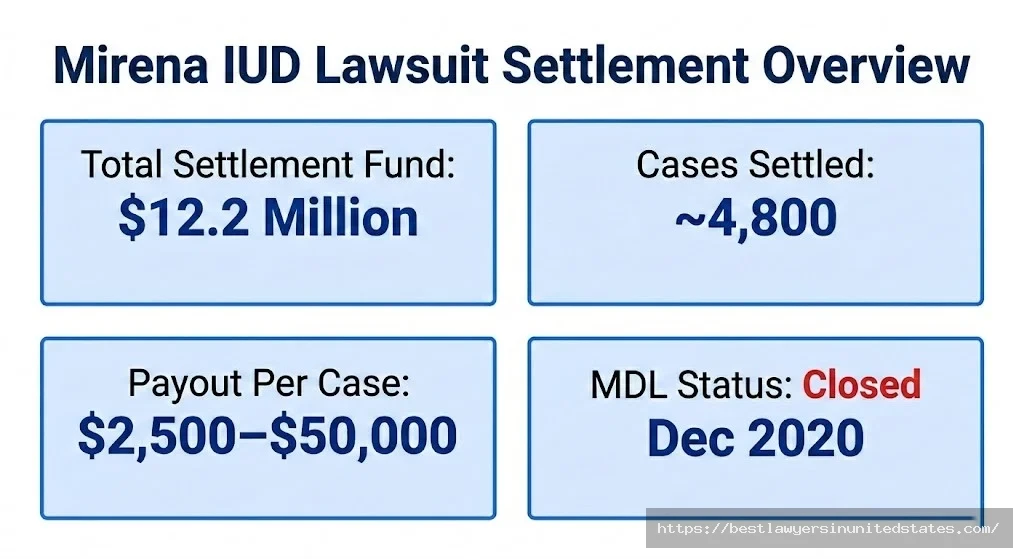
Quick Answer: The main Mirena MDLs (multidistrict litigations) were closed by December 2020. Bayer settled approximately 4,800 perforation and migration cases for a total of $12.2 million — averaging $2,500 to $50,000 per case depending on injury severity. The pseudotumor cerebri (IIH) cases were dismissed. A breast cancer class action was voluntarily dismissed in May 2024. As of December 2025, most law firms have stopped accepting new Mirena cases, though individual lawsuits for serious injuries may still be possible.
Mirena IUD Lawsuit Overview
| Key Facts | Details |
|---|---|
| Device | Mirena IUD (intrauterine device) |
| Manufacturer | Bayer Healthcare Pharmaceuticals |
| FDA Approval | 2000 |
| FDA Adverse Event Reports | ~70,000 since 2000 |
| Main Injuries Alleged | Uterine perforation, organ migration, pseudotumor cerebri (IIH), breast cancer |
| Primary MDL Court | Southern District of New York |
| MDL Status | Closed (December 8, 2020) |
| Total Perforation Settlement | ~$12.2 million for ~4,800 cases |
| Avg. Payout Per Case | $2,500–$50,000 depending on injury |
| PTC/IIH Cases | Dismissed (2019–2020) |
| Breast Cancer Class Action | Voluntarily dismissed (May 2024) |
| New Breast Cancer Lawsuit | Filed May 2024 (pending) |
| Currently Accepting Cases? | Very few firms; consult an attorney individually |
What Is the Mirena IUD?
Mirena is a small, T-shaped hormonal intrauterine device (IUD) manufactured by Bayer Healthcare Pharmaceuticals. It’s inserted into the uterus by a doctor during an office visit and releases levonorgestrel — a synthetic progestin hormone — at a low, continuous dose. The device prevents pregnancy in multiple ways: it thickens cervical mucus, thins the uterine lining, and may suppress ovulation in some cycles.
When the FDA approved Mirena in 2000, it was cleared for use for up to five years. In August 2022, the FDA extended that approval to eight years. Mirena became one of Bayer’s top-selling products. By the early 2010s, approximately two million women in the United States were using it.
With that widespread use came reports of serious complications — many of which women and their doctors were allegedly never adequately warned about.
What Were the Mirena Lawsuits About?
The lawsuits against Bayer clustered around three distinct types of alleged harm, each generating its own wave of litigation.
1. Uterine Perforation and Device Migration
The earliest and most numerous lawsuits claimed that the Mirena IUD could perforate the uterus — not just during insertion (which Bayer acknowledged), but spontaneously at any point during use. When the device migrated outside the uterus, it could puncture organs, cause severe infections, create adhesions, and in many cases require emergency surgery to remove.
Bayer’s original warning label, used from 2008 to 2014, acknowledged that perforation “may occur during insertion.” What it did not clearly state was that the IUD could migrate and perforate organs long after insertion — sometimes years later. That omission became the heart of thousands of lawsuits.
Women who sued described traumatic experiences: waking up with abdominal pain months after insertion, undergoing laparoscopic surgery to locate the device, and suffering damage to surrounding organs. Some required multiple surgeries. Some experienced permanent fertility impairment.
2. Pseudotumor Cerebri (Idiopathic Intracranial Hypertension / IIH)
The second wave of lawsuits focused on pseudotumor cerebri — sometimes called idiopathic intracranial hypertension (IIH). This is a condition where pressure builds up around the brain without an identifiable tumor. Symptoms include severe chronic headaches, vision problems, tinnitus, and in serious cases, permanent vision loss.
Women in this group claimed that levonorgestrel, the hormone released by Mirena, was linked to this dangerous neurological condition. In April 2017, the U.S. Judicial Panel on Multidistrict Litigation consolidated these cases into MDL 2767 in the Southern District of New York.
This litigation ultimately failed for plaintiffs. Judge Paul Engelmayer in the Southern District of New York refused to accept the experts plaintiffs offered to establish causation between levonorgestrel and IIH. Without qualified expert testimony to establish that link, the cases could not go to trial. MDL 2767 was dismissed and closed in December 2020.
3. Breast Cancer Risk
The third and most recent wave of litigation centers on breast cancer. Research — including a 2014 Finnish study in Obstetrics & Gynecology and a 2023 Danish study covering nearly 80,000 women — has found that women using levonorgestrel IUDs like Mirena may face a 20–40% elevated risk of breast cancer compared to women not using hormonal contraceptives.
A class action lawsuit was filed by Priya Sidhu in March 2022 in the Northern District of California (Case No. 5:22-cv-01603). In October 2023, Judge Beth Freeman rejected Bayer’s motion to dismiss, ruling the claims were not preempted by federal labeling law. This was a major early win for plaintiffs. However, in May 2024, the parties filed a stipulation of dismissal — meaning the case was voluntarily dropped.
A separate class action (Copeland/Chu v. Bayer Healthcare Pharmaceuticals Inc., Case No. 5:24-cv-03042) was filed in May 2024 in the Northern District of California. This case remains pending as of February 2026. Average Settlement for Retaliation Lawsuit
Key Allegations Against Bayer
The lawsuits against Bayer shared several core legal theories:
- Failure to warn: Bayer knew about the risks of post-insertion perforation, IIH, and potential breast cancer links but did not adequately warn patients or healthcare providers
- Defective design: The device was unreasonably dangerous as designed
- Misleading marketing: In 2009, the FDA sent Bayer a warning letter for an ad campaign that overstated Mirena’s benefits and downplayed its risks
- Fraud and concealment: Plaintiffs alleged Bayer actively suppressed or failed to act on evidence of harm
- Breach of warranty: The device did not perform as represented to consumers and physicians
Timeline of the Mirena IUD Litigation
| Date | Event | Details |
|---|---|---|
| 2000 | FDA approval | Mirena cleared for contraceptive use in the U.S. |
| 2009 | FDA warning letter | FDA warned Bayer about misleading Mirena marketing |
| Early 2010s | Lawsuits begin | Women sue over perforation, migration, organ damage |
| June 2013 | MDL 2240 formed | Federal perforation/migration cases consolidated in S.D.N.Y. before Judge Cathy Seibel |
| 2013 | NJ MCL 297 formed | New Jersey state court consolidated perforation/migration cases |
| August 2016 | Federal MDL dismissed | Judge Seibel dismissed all federal migration lawsuits |
| October 2017 | Appeal affirmed | 2nd Circuit Court of Appeals upheld the dismissal |
| April 2017 | MDL 2767 formed | Pseudotumor cerebri (IIH) cases consolidated in S.D.N.Y. before Judge Engelmayer |
| April 2018 | Perforation settlement | Bayer settles ~4,800 perforation/migration cases for ~$12.2 million |
| Mid-2018 | NJ MCL settling | Remaining NJ cases entered confidential master settlement |
| September 2018 | NJ MCL cases resolved | Final perforation/migration cases closed |
| 2019 | IIH MDL gutted | Judge Engelmayer rejects plaintiff expert testimony in IIH cases |
| December 8, 2020 | MDL 2767 closed | Final IIH/PTC MDL officially closed |
| April 2021 | NJ MCL closed | New Jersey multicounty litigation closed |
| March 2022 | Breast cancer class action filed | Sidhu v. Bayer, N.D. California (Case 5:22-cv-01603) |
| August 2022 | FDA extends approval | FDA approves Mirena for up to 8 years of use |
| October 2023 | Motion to dismiss denied | Judge Freeman allows Sidhu breast cancer case to proceed |
| May 2024 | Sidhu case dismissed | Parties voluntarily dismissed the Sidhu class action |
| May 2024 | New breast cancer suit filed | Copeland/Chu v. Bayer (Case 5:24-cv-03042), N.D. California |
| 2024 | New studies published | Danish study finds 40% elevated breast cancer risk with levonorgestrel IUDs |
| December 2025 | No new major developments | Most law firms have stopped accepting new Mirena cases |
| Early 2026 | Copeland/Chu pending | New breast cancer class action still working through courts |
Who Filed the Lawsuits?
The lead plaintiffs in the various waves of litigation were ordinary women who experienced serious complications after having Mirena inserted. The perforation and migration cases were primarily filed by women in their 20s through 40s who experienced the device moving outside the uterus and required surgical intervention.
The IIH lawsuits were brought by women diagnosed with idiopathic intracranial hypertension, many of whom experienced severe, chronic headaches and vision loss they attributed to Mirena.
The breast cancer litigation has been brought by women — like plaintiff Priya Sidhu and the Copeland/Chu plaintiffs — who allege they were never told about the potential breast cancer risk and would not have chosen Mirena had they known.
Law firms involved in the litigation over the years include Bursor & Fisher (breast cancer class action), as well as numerous mass tort and product liability firms across the country.
What Happened to the Perforation Settlements — and What Did Women Actually Receive?
The Settlement That Did Happen
In April 2018, Bayer offered approximately $12.2 million to resolve the remaining perforation and migration lawsuits that had survived through the state and federal courts. This covered roughly 4,800 cases.
| Settlement Category | Details |
|---|---|
| Total settlement fund | ~$12.2 million |
| Number of cases settled | ~4,800 |
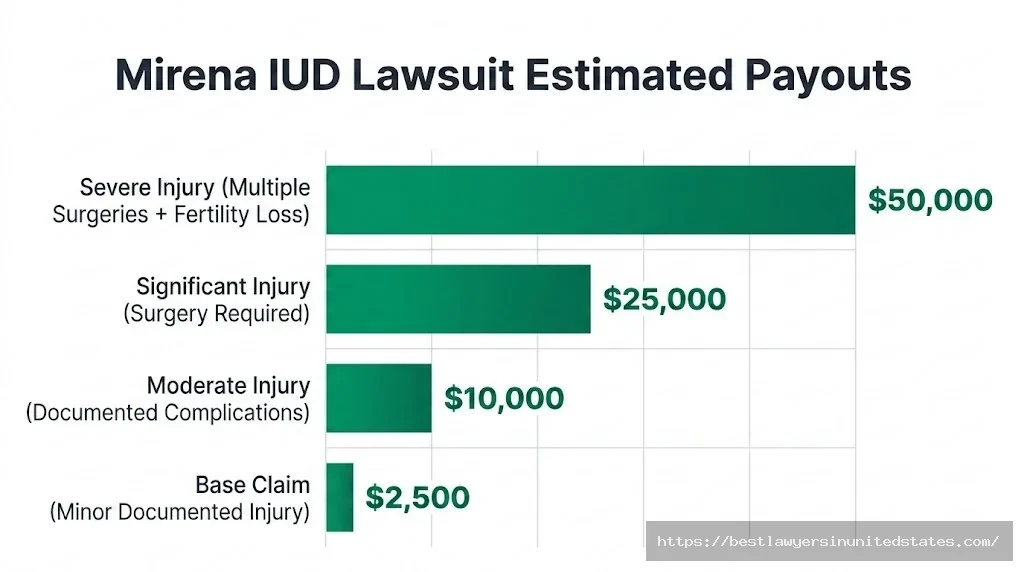
| Average payout | ~$2,500 to $50,000 |
| Injury-based factors affecting payout | Severity of perforation, surgeries required, resulting complications, fertility impact |
| Cases NOT included | IIH/PTC cases, breast cancer cases |
| Terms | Largely confidential master settlement |
These payouts were — by most accounts — disappointingly low given the severity of injuries many women suffered. Women who underwent multiple surgeries, experienced fertility impairment, or dealt with long-term organ damage received the higher end of the range. Women with less severe documented injuries received amounts at the lower end.
Why the Settlements Were So Low
Several factors drove down settlement values. The perforation cases in federal court had already been dismissed once, survived appeal only partially, and faced significant evidentiary hurdles. With few courtroom wins to point to and a legal landscape that had already produced unfavorable rulings, plaintiffs’ leverage was limited. Bayer was effectively settling remaining exposure rather than acknowledging liability.
The IIH Cases: Nothing
Women who sued over pseudotumor cerebri received nothing. Their cases were dismissed after the court rejected the causation experts plaintiffs offered. Without qualified expert testimony establishing that levonorgestrel causes IIH, the cases had no path to trial. The MDL was closed in December 2020. There were no settlements in this wave of litigation.
The Breast Cancer Cases: Still Unresolved
No breast cancer cases have settled or gone to trial as of early 2026. The Sidhu case was voluntarily dismissed in May 2024 before any resolution. The Copeland/Chu case is still in early stages. Whether this litigation produces any compensation for women who developed breast cancer while using Mirena remains to be seen.
Why Did So Many Cases Fail?
Understanding why Mirena litigation largely ended without major plaintiff victories requires a brief detour into how mass tort litigation actually works.
In cases like this, plaintiffs cannot rely solely on their personal experiences — they must produce qualified expert witnesses who can testify that the product caused their specific type of injury. These expert opinions must withstand legal scrutiny under the Daubert standard, which requires scientific reliability.
In the IIH cases, judges concluded that the plaintiffs’ experts had not reliably established a causal link between levonorgestrel and pseudotumor cerebri. The studies available at the time, and the methodology used to analyze them, didn’t pass muster. Without accepted expert testimony, the cases collapsed.
In the perforation cases, Bayer successfully argued that the labeling warned about perforation risk (even if the precise language was disputed), and that after the 2016 dismissal and 2017 appellate ruling, the remaining leverage was minimal.
This does not mean these women were not injured. It means the legal system’s mechanism for proving causation could not be satisfied with the evidence available at the time.
What’s Active in 2026?
Breast Cancer Litigation (Copeland/Chu)
The most significant active Mirena-related litigation is the breast cancer class action filed in May 2024 by Travette Copeland and Lila Chu (Case No. 5:24-cv-03042, N.D. California). This case alleges Bayer knew for years about a statistically significant elevated breast cancer risk — 20–30% higher than women not using hormonal contraceptives — and failed to update its warnings.
New scientific evidence could strengthen this litigation. A 2023 Danish Cancer Institute study, led by Dr. Lina Steinrud Mørch and covering nearly 80,000 women, found a 40% elevated breast cancer risk for levonorgestrel IUD users — a higher estimate than earlier research. This type of accumulating evidence may provide stronger footing for expert causation testimony than what was available in the IIH litigation.
Individual Lawsuits
While class actions and MDLs dominate the headlines, some individual women may still have viable claims for Mirena-related injuries — particularly for perforation, migration, and surgical complications. Whether a case is viable depends on:
- When the injury occurred
- Whether the statute of limitations has expired in your state
- The nature and severity of the injury
- Whether you can document the injury and its connection to Mirena
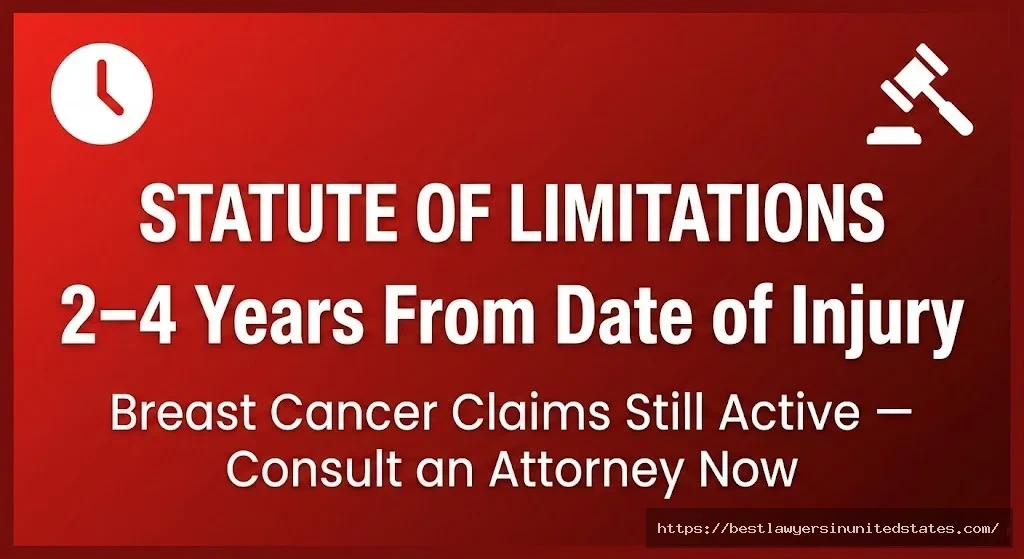
Statutes of limitations for product liability cases typically run 2–3 years from the date of injury or the date you discovered (or reasonably should have discovered) the injury. In some states, the clock starts when Mirena was removed and the device’s role became apparent.
How to Know If You Might Still Have a Case
Most major law firms stopped accepting new Mirena cases related to perforation and IIH after 2020. However, the situation is different for:
Breast cancer: If you used Mirena and were subsequently diagnosed with breast cancer — especially hormone receptor-positive breast cancer — the Copeland/Chu litigation and individual lawsuits may be relevant. This is the most actively developing area of Mirena litigation.
Recent perforation/migration cases: If your injury occurred recently and you’re still within the statute of limitations window for your state, individual lawsuits may still be worth exploring with an attorney.
Documented serious injury: If you suffered surgical complications, permanent organ damage, fertility impairment, or other serious harm, an attorney can assess whether your specific circumstances give rise to a viable claim.
What Documentation You Should Gather
Even before speaking to an attorney, it helps to gather:
| Document | Why It Matters | Where to Find It |
|---|---|---|
| Medical records of Mirena insertion | Establishes when and where device was placed | Your OB-GYN or clinic |
| Imaging records (X-rays, ultrasounds, MRI) | Shows device location/migration | Radiology department of treating facility |
| Surgical records | Documents what was found and repaired | Hospital where surgery was performed |
| Pathology or biopsy records | Critical for breast cancer claims | Oncologist or treating hospital |
| Pharmacy/device records | Confirms Mirena brand and lot number | Healthcare provider or insurer |
| Insurance/billing records | Establishes medical costs | Your insurance company or provider |
| Photographs of device if removed | Can document condition | Ask your surgeon at time of removal |
Comparison: Mirena and Other IUD Lawsuits
To understand where Mirena litigation fits in the broader landscape of IUD and birth control litigation:
| Lawsuit | Type | Status (Early 2026) | Settlement/Payout |
|---|---|---|---|
| Mirena — Perforation/Migration | MDL, settled | Closed (2018–2021) | ~$12.2M total; $2,500–$50,000/case |
| Mirena — IIH/PTC | MDL | Dismissed (2020) | None |
| Mirena — Breast Cancer | Class action | Pending (Copeland/Chu) | None yet |
| Paragard IUD — Breakage | MDL 2974 | Active; ~3,800 cases pending; bellwether trials 2026 | Not yet settled |
| Essure (Bayer) | MDL | Resolved | ~$1.6 billion (2020) |
| NuvaRing (Merck) | MDL | Settled | $100 million |
| Depo-Provera — Meningioma | MDL | Active; growing rapidly in 2025–2026 | Not yet settled |
The Essure litigation — also a Bayer product, involving a permanent birth control implant — resulted in a $1.6 billion settlement in 2020, one of the largest product liability settlements in medical device history. That outcome was possible in part because Bayer eventually agreed to stop selling Essure in the U.S. amid overwhelming evidence of harm. The Mirena litigation did not reach a similar critical mass of accepted expert testimony, which ultimately limited plaintiffs’ outcomes.
The Paragard IUD litigation is the closest current analog to early Mirena litigation, with bellwether trials beginning in late 2025 and early 2026. How those trials go will significantly shape whether a broader settlement follows.
Do You Need a Lawyer?
Quick Answer: For any Mirena-related legal claim in 2026, yes — you need an attorney. These are not class action settlements with simple online claim forms. The main MDLs are closed, and any viable path forward requires individual legal representation.
Unlike some class action settlements — where you fill out a form on a website and wait for a check — Mirena litigation in its current state does not offer an administrative claim process. There is no settlement website, no claim form, no deadline to meet. The only path to compensation is through an individual lawsuit or joining ongoing litigation with attorney representation.
This is particularly true for the breast cancer claims, which require expert medical testimony establishing the connection between Mirena use and your specific cancer diagnosis.
What to Look for in an Attorney
- Experience in pharmaceutical product liability or mass tort litigation
- Familiarity with current Mirena and hormonal IUD litigation landscape
- Willingness to be transparent about the current state of the litigation and realistic odds
- Contingency fee arrangement (you pay nothing unless you win)
Be cautious of law firm websites that still advertise “file your Mirena claim now” with urgent deadline language — this content is often outdated, and some firms advertising active Mirena settlements may not have updated their websites to reflect that the major MDLs closed years ago.
Frequently Asked Questions
Is there an active Mirena IUD settlement I can apply for in 2026?
No. The major Mirena MDL settlements were completed between 2018 and 2021. There is no current open-enrollment settlement with a claim form or filing deadline. If you see websites with urgent “file your claim by [date]” language related to Mirena, that information is likely outdated or inaccurate.
How much did women receive in Mirena settlements?
Women who settled their perforation and migration claims received roughly $2,500 to $50,000 each, depending on the severity of injury, number of surgeries, and documented complications. The total settlement for approximately 4,800 cases was about $12.2 million. No settlements were paid in the IIH/PTC cases, and no breast cancer settlements have occurred yet.
I had Mirena and was diagnosed with breast cancer. Do I have a case?
Possibly. The most active area of current Mirena litigation involves breast cancer risk. A class action filed in May 2024 (Copeland/Chu v. Bayer, Case No. 5:24-cv-03042) is currently pending. You should consult a product liability attorney who can assess your specific situation, the timing of your diagnosis, and your documentation. Act promptly, as statutes of limitations vary by state.
What injuries did the Mirena lawsuits cover?
The lawsuits covered three main categories: (1) uterine perforation and device migration causing organ damage and requiring surgery; (2) pseudotumor cerebri / idiopathic intracranial hypertension (IIH), a condition causing dangerous brain pressure; and (3) an alleged increased risk of breast cancer linked to the levonorgestrel hormone Mirena releases.
Why were so many Mirena cases dismissed?
The IIH cases were dismissed because courts ruled that plaintiffs’ expert witnesses could not reliably establish scientific causation between the Mirena hormone and IIH. In medical device litigation, this type of expert testimony is legally required. The perforation cases survived longer but faced an uphill battle after the 2016 federal MDL dismissal and the 2017 appellate affirmance. Without courtroom wins to build leverage, settlement amounts were modest.
Is Mirena still on the market?
Yes. Mirena remains FDA-approved and commercially available as of 2026. In August 2022, the FDA actually extended Mirena’s approval to eight years of use (from the previous five years). The existence of ongoing litigation does not constitute a recall or market withdrawal.
Can I still sue Bayer over Mirena in 2026?
It depends on your injury type, when it occurred, and your state’s statute of limitations. For breast cancer claims, this is still being actively litigated. For perforation and migration claims, viability depends on timing. An attorney consultation is the only way to know if your specific situation is actionable.
What is the statute of limitations for a Mirena lawsuit?
Statutes of limitations for product liability claims vary by state — typically 2 to 4 years. Importantly, the clock usually starts from the date of injury or from when you discovered (or should have discovered) that your injury was linked to Mirena, not from when the device was inserted. Some states have discovery rules that can extend this window.
The IIH cases were dismissed. Could that change with new science?
Potentially. If new, higher-quality studies emerge establishing a causal link between levonorgestrel and IIH that meets the Daubert standard for expert testimony, new litigation could theoretically be viable. However, as of 2026 this has not occurred and no attorneys are actively pursuing IIH claims.
What is pseudotumor cerebri and how was it linked to Mirena?
Pseudotumor cerebri (also called idiopathic intracranial hypertension or IIH) is a condition where pressure builds around the brain without an identifiable cause. Symptoms include severe headaches, vision problems, tinnitus, and in serious cases, permanent vision loss. Levonorgestrel, the hormone in Mirena, has hormonal properties that some researchers theorized could trigger this condition. Thousands of women with IIH after Mirena use sued Bayer, but these cases were ultimately dismissed when courts rejected the causation experts plaintiffs offered.
What happened to the Priya Sidhu breast cancer class action?
Sidhu v. Bayer (Case 5:22-cv-01603) survived a motion to dismiss in October 2023, which was a significant early victory — the court ruled the claims weren’t preempted by federal labeling law. However, in May 2024, the parties filed a stipulation of voluntary dismissal, ending that specific case. A separate breast cancer class action (Copeland/Chu) was filed the same month and remains active.
Are other levonorgestrel IUDs (Skyla, Liletta, Kyleena) involved in litigation?
The current breast cancer litigation specifically targets Mirena and Bayer. However, because Skyla, Liletta, and Kyleena also release levonorgestrel, it’s possible that future litigation could implicate these devices as well if the science continues to develop. Each manufacturer would face separate litigation.
What should I do right now if I think I was harmed by Mirena?
First, seek medical evaluation if you haven’t — document your current health status and any ongoing symptoms or diagnoses. Second, gather your medical records, including insertion records, any imaging, surgical notes, and recent diagnoses. Third, consult with a product liability attorney promptly — many offer free consultations and work on contingency. Don’t rely on outdated websites advertising open claim deadlines; verify the actual current litigation status before taking action.
Is the FDA considering any action on Mirena?
The FDA has not recalled Mirena and has not announced regulatory action against it as of early 2026. The agency did warn Bayer about misleading marketing in 2009 and approved an extended eight-year use period in 2022. FDA label updates regarding breast cancer risk would be a significant development to watch.
Where can I find official court documents about the Mirena litigation?
Federal court documents from the closed MDLs can be accessed through PACER (Public Access to Court Electronic Records) at pacer.gov. The main case references are MDL 2240 and MDL 2767 in the Southern District of New York. The active breast cancer case (Copeland/Chu, Case 5:24-cv-03042) is in the Northern District of California.
The Bottom Line
The Mirena IUD lawsuit history is a cautionary tale about the gap between what we know intuitively — that many women were genuinely harmed — and what the legal system requires to award compensation. Most women who sued received nothing, or amounts that didn’t come close to covering the medical costs, lost wages, and suffering they experienced.
That said, the story isn’t over. The breast cancer litigation is the most significant remaining legal development. If the Copeland/Chu case — or the accumulation of new scientific evidence — can clear the causation hurdle that sank the IIH cases, it could open the door to real compensation for women who developed breast cancer while using Mirena.
If you’ve been harmed by Mirena, your best next step is a confidential consultation with a product liability attorney. The landscape is complex and shifts as science and court rulings evolve. An attorney who actively tracks this litigation can give you the most accurate picture of whether your specific situation has legal merit in 2026. Dude Wipes Lawsuit
