
Hawaii calls drunk driving “OVUII” (Operating a Vehicle Under the Influence of an Intoxicant), not DUI. A first offense OVUII in Hawaii costs $150 to $1,000 in fines plus up to 5 days in jail. Your license gets suspended for one year through Hawaii’s Administrative Driver’s License Revocation Office (ADLRO).
Hawaii’s drunk driving laws apply to everyone driving on the islands, including tourists. If you get arrested for OVUII while on vacation, you face the same penalties as residents. You’ll need to return to Hawaii for court dates or hire a local attorney to appear on your behalf.
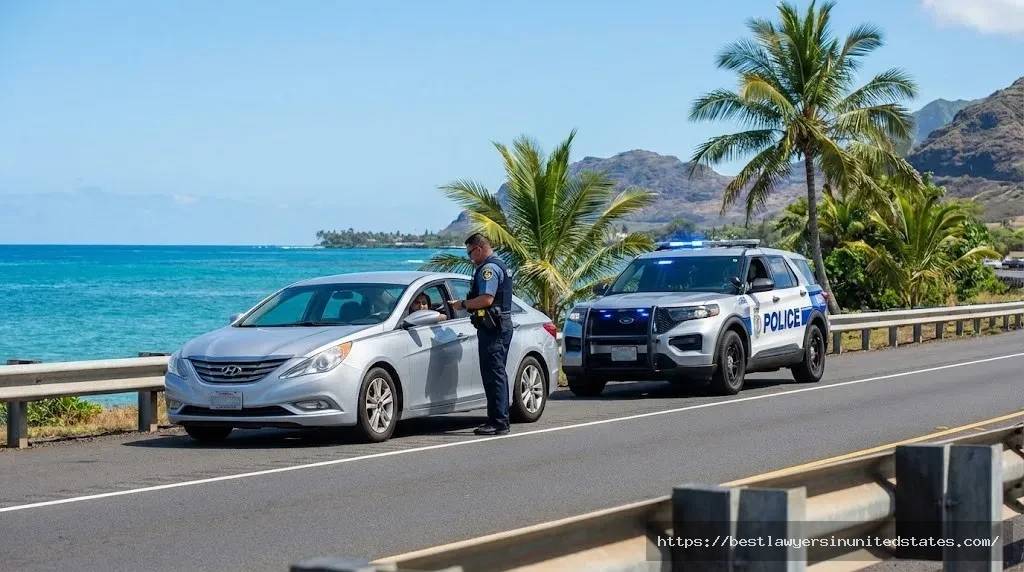
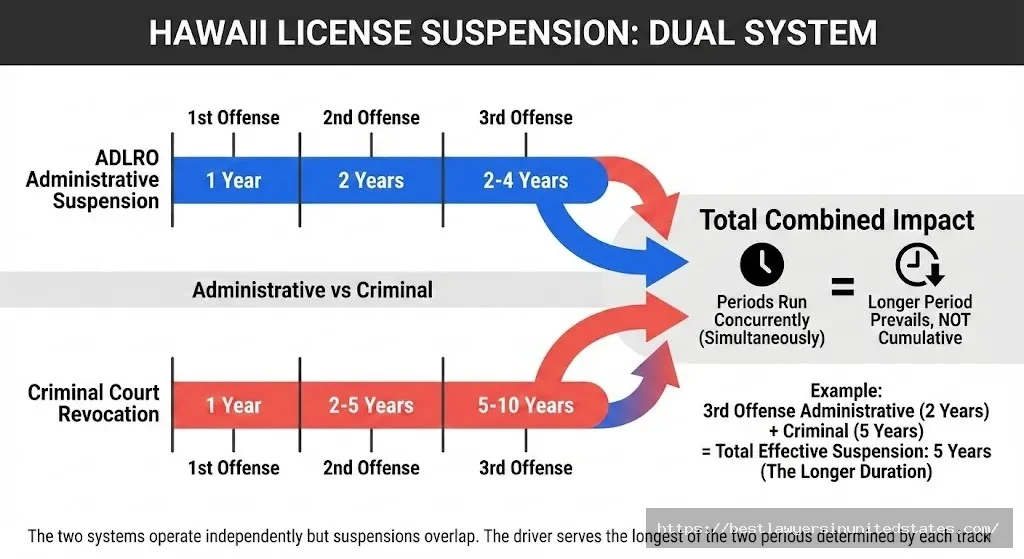
The state uses a two-track system for OVUII cases. The ADLRO handles license suspension separately from criminal court. You have only 3 business days to request an ADLRO hearing after arrest. Missing this deadline means automatic license suspension.
What is OVUII? Understanding Hawaii’s Unique DUI Terminology
Hawaii uses the term OVUII instead of DUI or DWI. OVUII stands for Operating a Vehicle Under the Influence of an Intoxicant. This includes alcohol, drugs, or any substance that impairs your ability to drive.
The law is written in Hawaii Revised Statutes (HRS) §291E-61. This statute covers all forms of impaired driving in the state. Hawaii changed to this terminology to be more specific about what the law prohibits.
OVUII means the same thing as DUI in other states. The penalties and legal process are similar to DUI laws in California or Florida DUI laws. Hawaii just uses different words.
You might also see “OVUII PM” on police reports or court documents. PM stands for “per se” or refers to morning-after cases. This applies when someone drives the morning after drinking with alcohol still in their system.
The Honolulu Police Department, Maui Police Department, Hawaii County Police Department, and Kauai Police Department all enforce OVUII laws. They follow the same statewide standards for arrests and testing.
Hawaii OVUII Laws: Legal Framework & BAC Limits
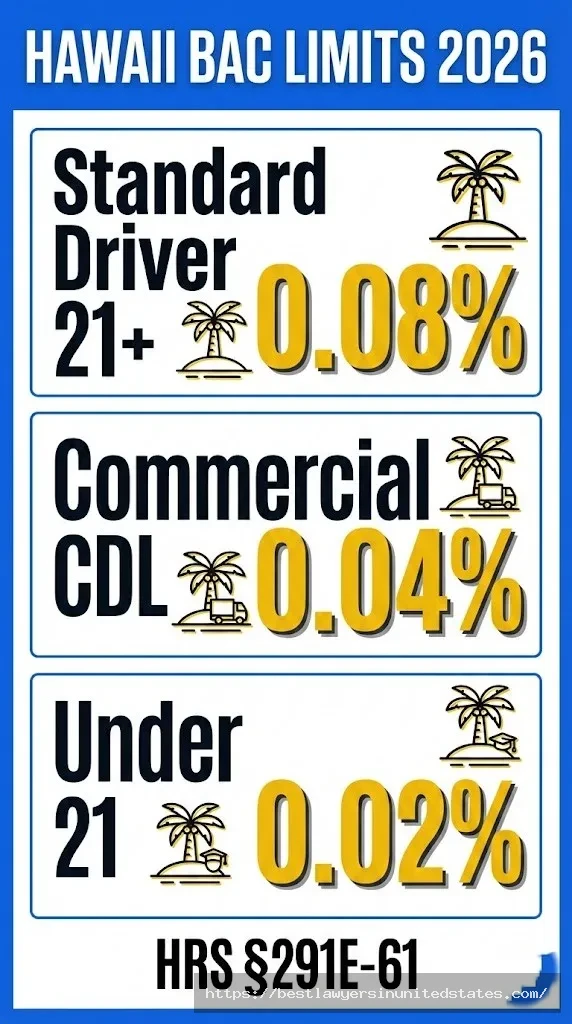
Hawaii law prohibits driving with a blood alcohol content (BAC) of 0.08% or higher. This is called a “per se” violation under HRS §291E-61. You can be convicted even if you don’t appear impaired.
Police can also arrest you for OVUII based on actual impairment. This means you showed signs of being unable to drive safely, regardless of your BAC. Slurred speech, failed field sobriety tests, or erratic driving can support an impairment charge.
Want to know if you’re over the legal limit? Use our BAC calculator to estimate your blood alcohol content based on your weight, drinks consumed, and time passed.
BAC Calculator
Estimate your Blood Alcohol Content
• Commercial Driver (CDL): 0.04% BAC
• Drivers Under 21: 0.00-0.02% BAC (Zero Tolerance)
• Enhanced Penalties: 0.15% BAC or higher in most states
BAC Limits in Hawaii
Different drivers face different BAC limits under Hawaii law:
| Driver Type | BAC Limit | Statute |
|---|---|---|
| Standard Driver (21+) | 0.08% | HRS §291E-61 |
| Commercial Driver (CDL) | 0.04% | HRS §291E-61 |
| Under 21 | 0.02% | HRS §291E-61 |
The 0.02% limit for drivers under 21 is Hawaii’s zero tolerance law. Even one drink can put you over this limit. Young drivers face license suspension and other penalties for any detectable alcohol.
Commercial drivers face stricter limits even when driving personal vehicles. A CDL holder arrested with a BAC of 0.04% or higher loses commercial driving privileges. This applies whether you’re in a commercial vehicle or your own car.
Hawaii’s Implied Consent Law
HRS §291E-11 creates Hawaii’s implied consent law. By driving in Hawaii, you automatically consent to chemical testing if arrested for OVUII. This applies to all drivers, including tourists and military personnel.
Police can request breath, blood, or urine tests. Refusing these tests triggers automatic penalties through the ADLRO. Your refusal can also be used as evidence against you in criminal court.
The implied consent law applies the moment police have probable cause for arrest. You don’t have the right to call an attorney before deciding whether to submit to testing. This differs from some other states where you can consult a lawyer first.
Hawaii OVUII Penalties by Offense Level
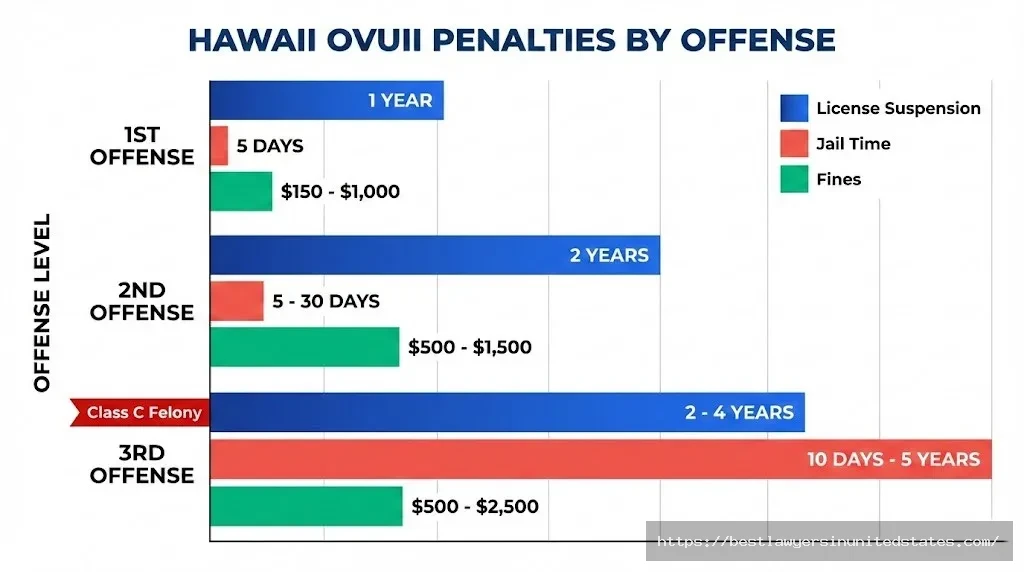
Hawaii punishes OVUII based on how many prior convictions you have within 10 years. First and second offenses are misdemeanors. Third and subsequent offenses become felonies with harsher penalties.
Courts look at your entire criminal history when sentencing. Aggravating factors like high BAC, accidents, or injuries increase penalties. Having a minor in the vehicle adds mandatory jail time.
Here’s what you face for each offense level:
Hawaii OVUII Penalties Table
| Offense | Fines | Jail Time | License Revocation | Other Penalties |
|---|---|---|---|---|
| 1st Offense | $150-$1,000 | Up to 5 days (48 hours minimum if BAC 0.15+) | 1 year | 14 hours substance abuse program, community service |
| 2nd Offense (within 10 years) | $500-$1,500 | 5-30 days minimum | 2 years | 20 hours substance abuse program, ignition interlock |
| 3rd Offense (Class C Felony) | $500-$2,500 | 10 days-5 years | 2-4 years | Substance abuse treatment, ignition interlock |
| Habitual Violator (4+) | $500-$5,000 | 1-5 years | 5-10 years | Permanent loss possible, vehicle forfeiture |
Calculate the total financial impact using our DUI cost calculator which includes fines, fees, insurance increases, and other expenses specific to Hawaii.
DUI Cost Calculator
Estimate total DUI expenses by state and offense
Detailed Cost Breakdown
Payment Timeline
Bail bond, towing fees, car impound, attorney retainer
Initial court fines, DMV fees, DUI school enrollment, ignition interlock installation
Monthly probation fees, ignition interlock fees, DUI school payments, attorney balance
Insurance premium increases, license reinstatement, SR-22 filing fees
- Lost wages from missed work (court dates, jail time, DUI school) – $2,000-$10,000
- Job loss or difficulty finding employment – Varies
- Professional license suspension (doctors, lawyers, nurses, pilots) – Career ending
- Rideshare and transportation costs during suspension – $1,500-$5,000
- Travel restrictions and visa denials – Varies
- Security clearance loss – Career impact
- Child custody implications – Legal costs
- Rental car restrictions – Varies
- Personal relationships and mental health costs – Priceless
First Offense OVUII in Hawaii
A first OVUII is a misdemeanor in Hawaii. Most people don’t serve actual jail time unless their BAC was 0.15% or higher. Courts often suspend jail sentences in favor of probation.
You must complete a 14-hour substance abuse rehabilitation program. The court may also order community service hours. Judges have discretion to impose additional conditions like alcohol monitoring.
First-time offenders may qualify for Hawaii’s deferred acceptance of guilty plea program. This allows you to avoid conviction if you complete all terms. Your case gets dismissed after the deferral period ends.
The Honolulu District Court, Maui District Court, Hawaii District Court, and Kauai District Court handle most first offense cases. More serious cases may go to Circuit Court.
Second Offense OVUII in Hawaii
A second OVUII within 10 years brings mandatory minimum jail time. You must serve at least 5 days, with no possibility of suspension. Courts often impose the full 30-day maximum.
License revocation extends to 2 years. You must install an ignition interlock device (IID) to regain driving privileges. The IID requirement typically lasts 1-2 years after license reinstatement.
Second offenders complete a 20-hour substance abuse program. This is longer and more intensive than the first-offense program. You may also need ongoing treatment or counseling.
Insurance companies will likely drop your coverage or charge extremely high rates. You’ll need an SR-22 certificate to prove financial responsibility. This requirement lasts at least 3 years in Hawaii.
Third Offense OVUII (Felony) in Hawaii
A third OVUII becomes a Class C felony under HRS §291E-61.5. Felony convictions appear on background checks and limit employment opportunities. You lose certain civil rights, including gun ownership.
The court can sentence you to up to 5 years in prison. Most defendants serve at least the 10-day minimum. Probation often includes strict monitoring and regular court appearances.
Your license gets revoked for 2 to 4 years minimum. After revocation, you need an ignition interlock device for an extended period. Some third-time offenders never regain full driving privileges.
The state may seize and forfeit your vehicle. This civil forfeiture happens separately from criminal penalties. You could lose your car even if you beat the criminal charges.
Habitual OVUII Offenders
Four or more OVUII convictions make you a habitual offender. Hawaii law allows license revocation for 5 to 10 years. Some habitual offenders receive permanent license revocation.
Prison sentences range from 1 to 5 years. The court has less discretion to show leniency. Judges view habitual offenders as serious public safety threats.
All habitual offenders must undergo substance abuse treatment. This goes beyond basic education programs. Treatment may include inpatient care, ongoing therapy, and long-term monitoring.
Vehicle forfeiture is almost certain. The state takes ownership of any vehicle you drove while committing the offense. This applies even if someone else owns the vehicle.
The ADLRO Process: Administrative License Suspension in Hawaii
The Administrative Driver’s License Revocation Office (ADLRO) handles license suspensions separately from criminal court. This administrative process starts immediately after arrest. You face suspension even if criminal charges get dropped later.
ADLRO operates under different rules than criminal court. The burden of proof is lower. Police testimony alone can support suspension. You don’t have the same constitutional protections as in criminal cases.
ADLRO Suspension Timeline and Deadlines
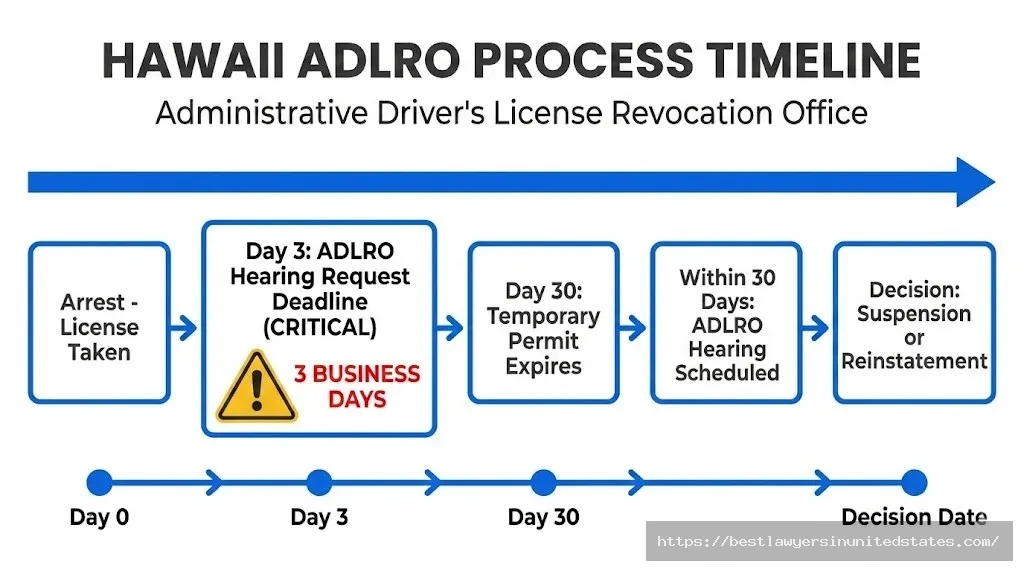
Police take your license at arrest and issue a temporary permit. This permit expires after 30 days. You must act quickly to protect your driving privileges.
You have only 3 business days to request an ADLRO hearing. Count business days from the day after arrest. Weekends and holidays don’t count. Missing this deadline means automatic suspension with no hearing.
Mail or deliver your hearing request to:
Administrative Driver’s License Revocation Office
State of Hawaii Department of Transportation
869 Punchbowl Street
Honolulu, HI 96813
The ADLRO schedules hearings within 30 days of your request. Hearings happen at the ADLRO office in Honolulu. Outer island residents can request video or phone hearings.
What Happens at an ADLRO Hearing
ADLRO hearings are less formal than court trials. A hearing officer reviews police reports and evidence. You can testify, present witnesses, and cross-examine the arresting officer.
The hearing officer decides if police had probable cause for arrest. They also determine if you refused testing or failed chemical tests. The burden of proof is “preponderance of evidence,” not “beyond reasonable doubt.”
Common defenses at ADLRO hearings include:
- Police lacked probable cause to stop you
- Field sobriety tests were improperly administered
- Breathalyzer machine wasn’t properly calibrated
- Police didn’t properly advise you of implied consent
- Medical conditions affected test results
You can hire an attorney for ADLRO hearings. Many criminal defense lawyers handle both ADLRO and criminal court cases. Having a lawyer increases your chances of avoiding suspension.
ADLRO Suspension Periods
ADLRO suspends licenses independently from criminal court penalties. These suspensions often run concurrently with criminal suspensions. However, they can also extend your total suspension period.
| Reason for Suspension | First Time | Subsequent (within 5 years) |
|---|---|---|
| Failed BAC Test (0.08%+) | 1 year | 2 years |
| Refused Chemical Test | 2 years | 4 years |
| Under 21 (any BAC) | 1 year | 2 years |
Refusing testing brings harsher penalties than failing a test. Police tell you this before requesting tests. The 2-year refusal suspension is automatic and immediate.
Getting Your License Back After ADLRO Suspension
You can apply for restricted driving permits through ADLRO. Work permits allow driving to and from employment. Ignition interlock permits let you drive with an IID installed.
Submit Form ADLRO-13 to request an ignition interlock permit. You must show proof of IID installation from an approved provider. Permits typically cost $50-$100 plus installation fees.
Employment permits require documentation from your employer. You must prove driving is necessary for work. The permit only allows driving for work-related purposes.
Full license reinstatement requires:
- Completing all suspension periods
- Paying a $50 reinstatement fee
- Providing proof of insurance (SR-22)
- Completing substance abuse programs
- Installing ignition interlock if required
Visit the Hawaii Department of Transportation website or any driver licensing center to begin reinstatement. Locations include centers in Honolulu, Hilo, Kona, Kahului, and Lihue.
DUI in Hawaii While on Vacation: What Tourists Need to Know
Getting arrested for OVUII while vacationing in Hawaii creates unique challenges. You face the same penalties as residents. The criminal case doesn’t disappear when you leave the islands.
Tourism-related OVUII arrests are common in Hawaii. Popular areas like Waikiki, Lahaina, and Kailua-Kona see frequent DUI checkpoints. Police actively patrol resort areas and beach access roads.
Immediate Consequences for Out-of-State Drivers
Police book you at the local station after arrest. You may spend several hours in custody. First-time offenders usually get released on bail or their own recognizance.
Your rental car gets impounded if you were driving alone. Companies like Hertz, Budget, and Enterprise charge daily storage fees. You’ll need someone else to pick up the vehicle with proper license and insurance.
Hawaii police notify your home state DMV through the Driver License Compact. Most states will suspend or restrict your license based on Hawaii’s actions. This happens even if you beat the Hawaii charges.

Court Appearances and Legal Requirements
Criminal court requires your presence at arraignment. This first appearance usually happens within 10 business days. You must return to Hawaii or hire local counsel to appear for you.
Many Hawaii criminal defense attorneys offer representation for non-residents. They can appear on your behalf at most hearings. You may still need to return for trial if you fight the charges.
Pleading guilty by mail is possible for some first offenses. The prosecutor and judge must agree to this arrangement. Most courts prefer in-person appearances for misdemeanor cases.
Failing to appear for court creates additional charges. A bench warrant issues for your arrest. This warrant is valid nationwide and shows up in background checks.
Interstate License Complications
The ADLRO suspension applies to driving in Hawaii. Your home state decides whether to honor this suspension. Most states will suspend your license under interstate compacts.
Some states have stricter DUI laws than Hawaii. Your home state may impose additional penalties beyond Hawaii’s requirements. For example, Arizona DUI laws require longer suspensions than Hawaii.
You cannot get a license in another state to avoid Hawaii’s suspension. The National Driver Register tracks all DUI convictions and suspensions. Any state you apply to will see the Hawaii case.
Practical Steps for Tourists
Contact a Hawaii DUI attorney within 24 hours of arrest. Many offer free consultations by phone. They can advise you about ADLRO hearings and court appearances before you leave the islands.
Request the ADLRO hearing before leaving Hawaii. Do this within 3 business days of arrest. An attorney can represent you at the hearing even after you return home.
Get copies of all paperwork before leaving. This includes the police report, bail documents, and court dates. You’ll need these documents to deal with your home state DMV.
Check your home state’s license suspension rules. Some states allow restricted licenses for out-of-state DUIs. Others impose full suspensions matching Hawaii’s penalties.
Keep all Hawaii court dates or arrange legal representation. Missing court while out of state doesn’t excuse your absence. Warrants follow you home and complicate your life.
Chemical Testing and Test Refusal in Hawaii
Police conduct chemical tests to measure your blood alcohol content. Hawaii law allows breath, blood, or urine testing. Breath tests using an Intoxilyzer machine are most common.
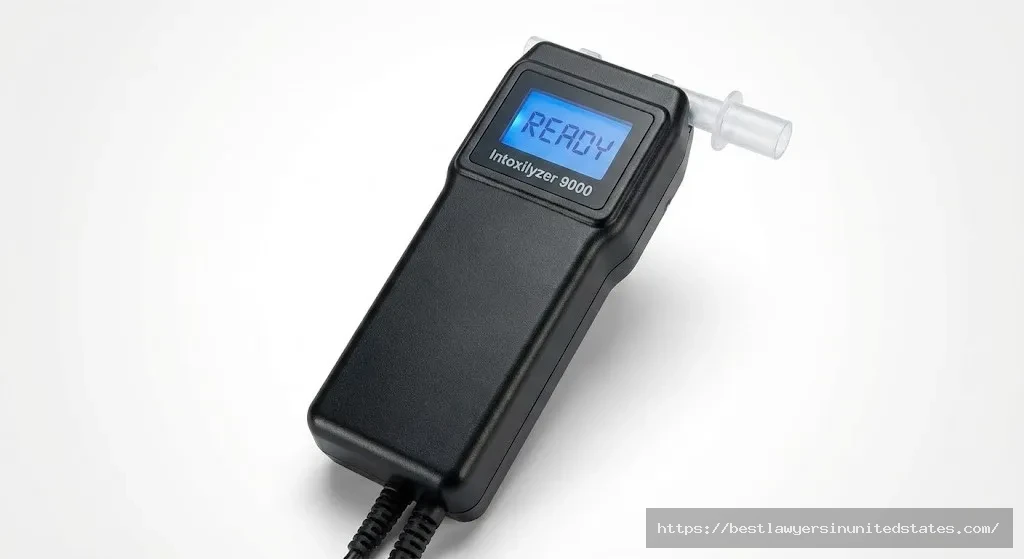
Officers must follow specific procedures when requesting tests. They should read implied consent warnings from a card. The warning explains penalties for refusal and your limited right to additional testing.
Field Sobriety Tests vs. Chemical Tests
Police often perform field sobriety tests before arrest. These roadside tests include walking a straight line, standing on one leg, and following a pen with your eyes. These are the standardized field sobriety tests.
You can refuse field sobriety tests without automatic penalties. Unlike chemical tests, the implied consent law doesn’t cover roadside tests. However, refusing may give police more reason to arrest you.
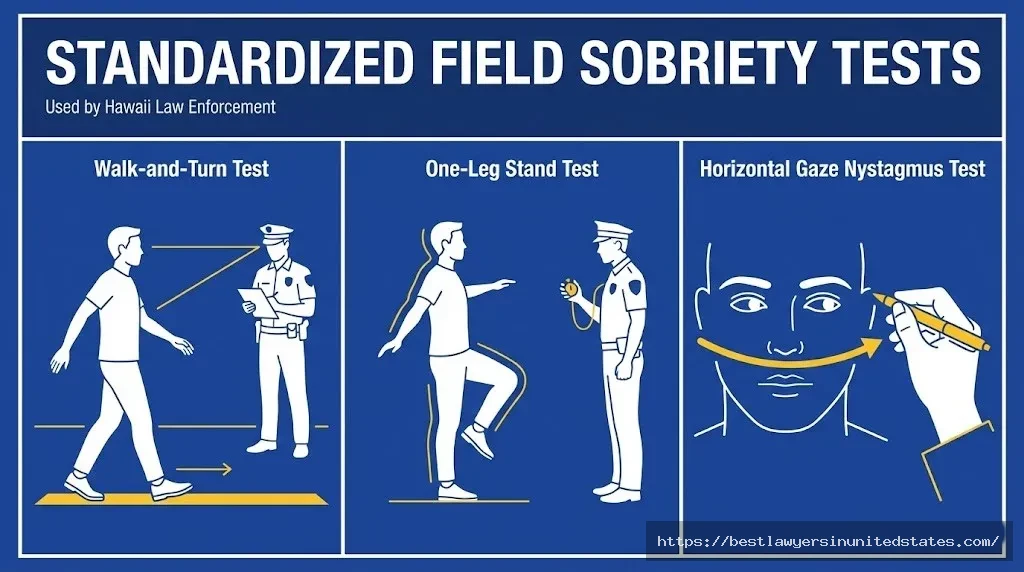
Portable breath tests at the roadside are also voluntary. These preliminary alcohol screening devices don’t count as official chemical tests. Results can help establish probable cause but aren’t admissible in court.
After arrest, police must offer an official chemical test. This test is covered by implied consent. Refusing this test brings automatic license suspension through ADLRO.
What Happens If You Refuse Testing in Hawaii
Refusing chemical tests triggers a 2-year ADLRO suspension for first refusal. A second refusal within 5 years brings 4 years suspension. These penalties are longer than for failing a test.
The prosecutor can tell the jury you refused testing. This “consciousness of guilt” evidence suggests you knew you were impaired. Juries often view refusal negatively.
Police may seek a warrant to draw your blood by force. Courts routinely grant these warrants in DUI cases. Forced blood draws are legal when done at medical facilities by trained personnel.
Some medical conditions justify test refusal. Breathing problems, recent mouth injuries, or certain medications can affect test accuracy. Document any medical issues immediately if you refuse testing.
Challenging Test Results
Breath test machines require regular calibration and maintenance. Hawaii law mandates monthly checks of Intoxilyzer devices. Records of calibration and maintenance can support defense challenges.
The 20-minute observation period before testing matters. Officers must watch you continuously to ensure you don’t eat, drink, smoke, or regurgitate. Violations of this rule can invalidate test results.
Blood tests face different challenges. Chain of custody issues arise if samples weren’t properly stored or labeled. Fermentation in blood samples can falsely elevate BAC readings.
Rising BAC defense applies when alcohol is still absorbing. Your BAC may have been below 0.08% while driving but above the limit during testing. This timing issue can defeat per se charges.
Hire a lawyer experienced in challenging DUI tests. They know how to get maintenance records and question testing procedures. Technical defenses require specific knowledge of Hawaii’s testing protocols.
License Restoration and Ignition Interlock Requirements
Getting your license back after OVUII requires completing multiple steps. You must satisfy both ADLRO and criminal court requirements. The process takes months even for first offenses.
Hawaii requires ignition interlock devices for most second and subsequent offenses. Some first offenders with high BAC also need IIDs. The devices test your breath before allowing the vehicle to start.
Ignition Interlock Devices in Hawaii
An IID connects to your vehicle’s starter system. You blow into the device before starting the car. Random rolling retests happen while driving to prevent someone else from starting the car for you.
Approved IID providers in Hawaii include:
- LifeSafer Ignition Interlock
- Smart Start
- Intoxalock
- Guardian Interlock
Installation costs $100-$200. Monthly monitoring fees run $70-$100. You pay for removal when the requirement ends. Total costs reach $1,500-$2,000 per year.
The device records all tests and violations. Attempts to start with alcohol present, missed rolling retests, and tampering all get reported. Violations can extend your IID requirement or trigger probation violations.
You need an IID permit from ADLRO before installing the device. Apply using Form ADLRO-13. The permit allows you to drive only vehicles equipped with IID.
Work Permits and Restricted Licenses
Employment permits allow limited driving during suspension. You can only drive to and from work, plus for employment duties. You must carry the permit and proof of employment at all times.
Apply for employment permits through ADLRO. Provide a letter from your employer on company letterhead. The letter must state driving is necessary for your job.
Some courts grant work permits immediately after sentencing. Others require you to complete part of the suspension first. Requirements vary by judge and offense level.
Medical appointments and substance abuse treatment don’t qualify for work permits. These are personal needs, not employment-related. You need rides or public transportation for these trips.
Full License Reinstatement Steps
Complete all suspension and revocation periods before applying. Check your status online through the Hawaii DMV website. Driving on a suspended license adds new criminal charges.
Pay the $50 administrative reinstatement fee to the Hawaii Department of Transportation. Bring payment to any driver licensing center. They accept cash, checks, and cards.
Submit proof of insurance with SR-22 filing. Your insurance company files the SR-22 electronically with the state. You must maintain this coverage for 3 years after reinstatement.
Provide certificates showing completion of substance abuse programs. First offenders need the 14-hour program certificate. Second and subsequent offenders need the 20-hour program plus any additional treatment ordered.
Show proof of IID installation if required. Bring installation paperwork and the current monitoring report. Some cases require maintaining the IID for 1-2 years after license reinstatement.
Visit these licensing centers for reinstatement:
- Honolulu: 1199 Dillingham Boulevard
- Hilo: 349 Kapiolani Street
- Kona: 74-5044 Ane Keohokalole Highway
- Kahului: 95 Mahalani Street
- Lihue: 4444 Rice Street
The entire process takes 2-4 hours. Bring all required documents in one visit. Missing any item means returning another day.
The True Cost of an OVUII in Hawaii
OVUII convictions carry costs far beyond court fines. Attorney fees, increased insurance, lost wages, and other expenses add up quickly. Most people pay $8,000-$15,000 for a first offense.
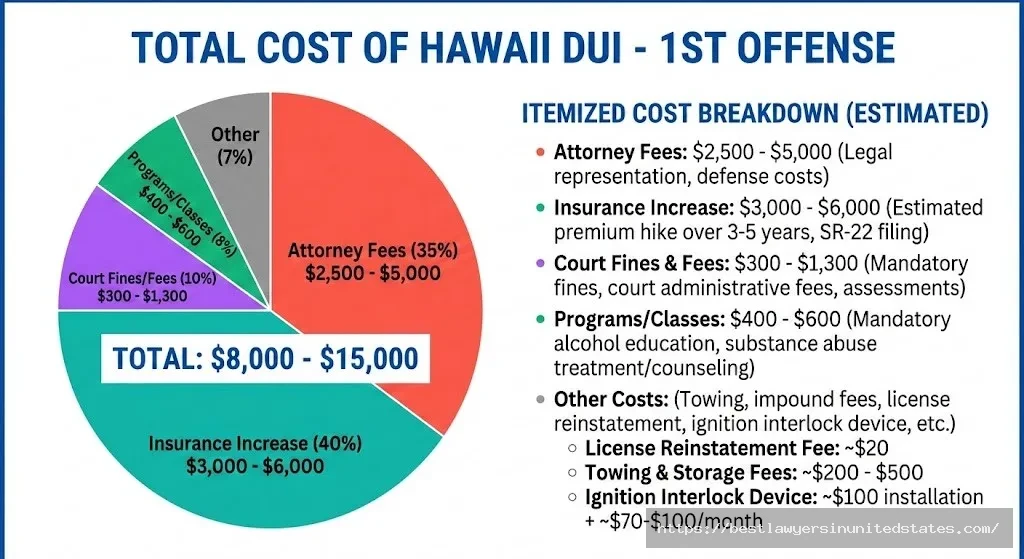
Understanding these costs helps you make informed decisions. Fighting charges may cost more upfront but save money long-term. Pleading guilty means accepting all consequences without contest.
Use our DUI cost calculator to estimate your total expenses based on your specific situation in Hawaii.
Hawaii OVUII Cost Breakdown
| Cost Category | First Offense | Second Offense | Third Offense (Felony) |
|---|---|---|---|
| Court Fines | $150-$1,000 | $500-$1,500 | $500-$2,500 |
| Court Costs/Fees | $150-$300 | $200-$400 | $300-$600 |
| ADLRO Fees | $50-$100 | $50-$100 | $50-$100 |
| Attorney Fees | $2,500-$5,000 | $4,000-$8,000 | $7,500-$15,000+ |
| Bail (if applicable) | $500-$1,000 | $1,000-$3,000 | $5,000-$10,000 |
| Substance Abuse Program | $300-$500 | $400-$700 | $800-$2,000 |
| License Reinstatement | $50 | $50 | $50 |
| Ignition Interlock (per year) | N/A | $1,500-$2,000 | $1,500-$2,000 |
| SR-22 Insurance Filing | $25-$50 | $25-$50 | $25-$50 |
| Insurance Increase (3 years) | $3,000-$6,000 | $5,000-$10,000 | $8,000-$15,000 |
| Total Estimated Cost | $8,000-$15,000 | $15,000-$30,000 | $25,000-$50,000+ |
These estimates assume you hire an attorney and fight the charges. Pleading guilty immediately may reduce attorney fees but guarantees conviction. Public defenders are available for criminal court but don’t handle ADLRO hearings.
Hidden and Long-Term Costs
Car rental companies place you on “do not rent” lists after OVUII convictions. This restriction typically lasts 3-5 years. You’ll struggle to rent vehicles for business or personal travel.
Rideshare services like Uber and Lyft cost $30-$50 daily for most commutes. Annual transportation costs reach $10,000-$15,000 without a license. Public transportation in Hawaii is limited outside Honolulu.
Employment consequences vary by industry. Jobs requiring driving become unavailable. Professional licenses for healthcare, law, and teaching face disciplinary action. Military members face administrative separation and loss of security clearances.
Background checks reveal OVUII convictions for 10+ years. Felony OVUIIs appear permanently unless expunged. Housing applications, loans, and college admissions ask about criminal convictions.
Travel restrictions affect some countries. Canada, for example, considers DUI a serious crime. You may be denied entry for 10 years after conviction. Other countries have similar restrictions.
Ways to Reduce OVUII Costs
Shop for attorneys who offer payment plans. Many Hawaii criminal defense lawyers accept monthly payments. Don’t choose based solely on price; experience matters more.
Complete substance abuse programs early. Courts view this favorably during sentencing. Early completion shows you’re taking responsibility.
Maintain your current insurance if possible. Getting dropped forces you into high-risk insurance at triple the cost. Some insurers won’t drop you for first offenses.
Request work permits immediately. Every day without work costs wages. Getting work permits quickly limits lost income.
Consider the long-term costs of conviction versus fighting charges. Paying more for a strong defense may save thousands in future costs. Avoiding conviction protects your record permanently.
Hawaii OVUII Records and Background Checks
OVUII convictions appear on criminal background checks. Employers, landlords, and licensing boards can see your record. Understanding how records work helps you manage long-term consequences.
Hawaii maintains criminal records through the Hawaii Criminal Justice Data Center. Courts upload convictions to this statewide database. Records also appear in the FBI’s National Crime Information Center.
Accessing Your OVUII Record
Check your Hawaii court record through eCourt Kōkua. This online system provides free public access to court documents. You can see your case status, filed documents, and dispositions.
Visit eCourt Kōkua to search records. You’ll need your name and date of birth. Case numbers help narrow results if you have them.
Get certified copies of court documents at the courthouse. First Circuit Court (Honolulu) maintains the largest records department. Other circuits operate smaller record sections.
Request your criminal history report from Hawaii Criminal Justice Data Center. This official report shows all arrests and convictions. The process takes 2-4 weeks and costs around $15.
How Long OVUII Stays on Your Record
Misdemeanor OVUII convictions remain on your record indefinitely. Hawaii doesn’t automatically expunge or seal criminal records. The conviction stays visible unless you take action to remove it.
Felony OVUII convictions also remain permanent without expungement. Felonies carry more serious long-term consequences. They affect civil rights like voting and gun ownership.
Arrests without conviction may appear on background checks. The record should show “dismissed” or “acquitted” as the outcome. Some background check companies report arrests regardless of disposition.
ADLRO suspensions are separate from criminal records. They appear on your driving record, not criminal history. However, many employment applications ask about license suspensions.
Hawaii’s Expungement Laws
Hawaii allows expungement of some criminal records under HRS Chapter 831. This process seals records from public view. Expunged cases don’t appear on most background checks.
OVUII convictions may qualify for expungement after completing sentence requirements. You must wait until probation ends and all fines are paid. Additional waiting periods apply based on the offense level.
Requirements for expunging OVUII records:
- Complete all sentence terms including probation
- Pay all fines, fees, and restitution
- Wait the statutory period (varies by offense)
- Have no pending criminal charges
- Show rehabilitation and good conduct
File expungement petitions in the court that handled your case. The prosecutor can oppose your petition. Judges have discretion to grant or deny expungement.
Felony OVUIIs are harder to expunge. Courts scrutinize these petitions more carefully. You may need to show exceptional circumstances or rehabilitation.
Expungement doesn’t erase records completely. Law enforcement, courts, and some government agencies can still see them. Professional licensing boards may also access expunged records.
Professional License Impacts
Professional boards in Hawaii review all criminal convictions. Medical licenses, law licenses, and teaching certificates face potential discipline. Each board has different standards and procedures.
The Hawaii Professional and Vocational Licensing Division oversees most professional licenses. They receive automatic notification of criminal convictions. You must also self-report convictions within specified timeframes.
Nurses with OVUII convictions report to the Hawaii Board of Nursing. The board may impose monitoring, probation, or suspension. Multiple OVUIIs can result in license revocation.
Teachers report OVUII convictions to the Hawaii Teacher Standards Board. Consequences range from reprimand to license suspension. Working with children while on probation creates additional issues.
Attorneys face discipline from the Hawaii Office of Disciplinary Counsel. Even first-offense OVUIIs trigger ethical complaints. Lawyers must report criminal convictions within 30 days.
Employment and Professional Consequences of OVUII
OVUII convictions affect employment in many ways. The tourism industry dominates Hawaii’s economy. Many tourism jobs require driving or involve positions of trust.
Commercial driver’s license holders face the strictest consequences. Federal regulations prohibit CDL holders from driving commercially with certain convictions. Hawaii enforces these rules strictly.
Commercial Driver’s License (CDL) Implications
Any OVUII conviction disqualifies CDL holders from commercial driving for one year minimum. This applies even if you were driving a personal vehicle at the time. Second convictions bring lifetime commercial driving disqualification.
You cannot get a hardship CDL during disqualification. Federal law doesn’t allow restricted commercial licenses for DUI convictions. This means complete loss of commercial driving work.
Many CDL jobs in Hawaii include:
- Tour bus drivers
- Delivery truck drivers
- Construction equipment operators
- Inter-island freight haulers
- Hotel shuttle drivers
Your employer will likely terminate you immediately after OVUII arrest. Companies can’t allow disqualified drivers to operate commercial vehicles. They face liability and insurance issues.
Getting a new CDL job after disqualification is difficult. Most companies won’t hire drivers with OVUII history. Insurance costs make these drivers too expensive for most employers.
Tourism Industry Employment
Hotels, restaurants, and tour companies conduct criminal background checks. OVUII convictions raise concerns about reliability and judgment. Positions involving alcohol service face extra scrutiny.
Rental car companies automatically reject applicants with recent OVUIIs. This includes behind-the-scenes positions requiring vehicle movement. The restriction usually lasts 3-5 years.
Tour operators worry about guest safety and company reputation. Boat captain licenses, tour guide credentials, and activity permits may be denied. State and county agencies review criminal records for these licenses.
Beach activity concession permits require clean backgrounds. The Department of Land and Natural Resources issues these permits. OVUII convictions can block permit approval or renewal.
Military Service Members
Active duty military face non-judicial punishment or court-martial for OVUII. Article 111 of the Uniform Code of Military Justice prohibits drunk driving. Base commanders also have administrative options.
Hawaii hosts multiple military installations:
- Joint Base Pearl Harbor-Hickam
- Schofield Barracks
- Marine Corps Base Hawaii
- Kaneohe Bay
- Tripler Army Medical Center
Security clearances face review after OVUII arrests. The adjudication looks at personal conduct and judgment. Multiple OVUIIs or high BAC levels create serious concerns.
Military members may face administrative separation. This happens more often with multiple OVUIIs or aggravating circumstances. Separation affects benefits, rank, and characterization of service.
State and County Government Jobs
Hawaii state and county applications ask about criminal convictions. You must disclose OVUII convictions when applying. Failing to disclose can result in termination if discovered later.
Positions requiring driving face automatic disqualification. This includes police officers, firefighters, and various inspection jobs. The restriction typically lasts several years after conviction.
Teaching positions require disclosure to the Hawaii Teacher Standards Board. School districts conduct thorough background checks. Working with minors while on probation creates additional problems.
Fighting OVUII Charges in Hawaii
You have the right to fight OVUII charges in court. Many defenses exist depending on your case facts. Prosecutors must prove guilt beyond reasonable doubt in criminal court.
Hiring an experienced Hawaii DUI attorney improves your chances. Local attorneys know the prosecutors, judges, and procedures. They understand Hawaii-specific defenses and strategies.
Common OVUII Defenses
Lack of probable cause challenges the initial stop. Police need reasonable suspicion to pull you over. Traffic violations, erratic driving, or equipment problems justify stops. Stops without valid reason can get evidence suppressed.
Improper field sobriety test administration questions the arrest basis. Police must follow standardized NHTSA protocols. Weather conditions, uneven surfaces, and medical issues affect test performance.
Breathalyzer calibration and maintenance issues challenge test accuracy. Machines require monthly calibration under Hawaii law. Missing maintenance records or calibration problems can invalidate results.
Rising BAC defense applies when you were below the limit while driving. Alcohol takes 30-90 minutes to fully absorb. You may have been legal while driving but over the limit during testing later.
Medical conditions can explain test results or behavior. Diabetes, GERD, and certain medications affect breath tests. Neurological conditions affect field sobriety test performance. Document all medical issues immediately.
Illegal checkpoint stops occur when police don’t follow proper procedures. Checkpoints need advance publicity and neutral selection criteria. Arbitrary stops at checkpoints violate constitutional rights.
Violation of implied consent warnings can suppress test refusal evidence. Police must properly advise you before requesting tests. Using incorrect or outdated forms creates technical defenses.
When to Hire a Lawyer
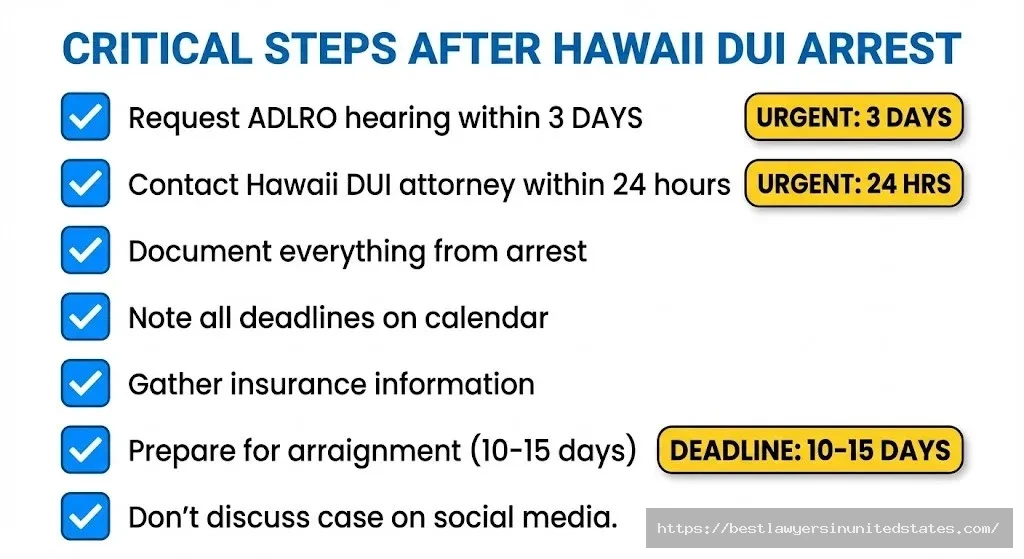
Contact an attorney immediately after arrest. The 3-day ADLRO deadline requires quick action. Missing this window costs you the administrative hearing.
First offense cases benefit from legal representation. Avoiding conviction protects your record permanently. The upfront cost of a lawyer saves money and consequences long-term.
Second and subsequent offenses absolutely require attorneys. Felony charges carry prison time. You need experienced counsel to negotiate and defend against serious charges.
Out-of-state defendants especially need local lawyers. Hawaii attorneys can appear on your behalf. This saves you multiple trips back to the islands.
Look for attorneys who:
- Practice primarily criminal defense
- Have DUI trial experience
- Know local prosecutors and judges
- Offer free consultations
- Provide clear fee structures
- Have Hawaii bar admission
Many Hawaii DUI attorneys offer payment plans. The typical range is $2,500-$5,000 for first offenses. Felony cases cost $7,500-$15,000 or more.
Compare similar state laws like Alaska DUI laws or Delaware DUI laws to understand how Hawaii’s penalties stack up nationally.
The Criminal Court Process
Arraignment is your first court appearance. The judge reads charges and you enter a plea. Most defendants plead not guilty initially to preserve options.
Pre-trial conferences allow your attorney to negotiate with prosecutors. Many cases settle through plea bargaining. Prosecutors may reduce charges or recommend lighter sentences.
Motion hearings address legal issues before trial. Your lawyer files motions to suppress evidence or dismiss charges. Judges rule on these motions based on law and case facts.
Trial happens if you can’t reach a plea deal. The prosecutor presents evidence and witnesses. Your attorney cross-examines and presents your defense. Juries decide guilt in misdemeanor and felony cases.
Sentencing occurs after conviction or guilty plea. Judges consider your criminal history and case circumstances. Aggravating factors increase penalties while mitigating factors may reduce them.
Key Deadlines After OVUII Arrest in Hawaii
Missing deadlines creates serious problems in OVUII cases. Some deadlines are absolute and cannot be extended. Mark these dates immediately after arrest.
| Action Required | Deadline | Consequence of Missing |
|---|---|---|
| Request ADLRO Hearing | 3 business days from arrest | Automatic license suspension, no hearing |
| Temporary Permit Expires | 30 days from arrest | Cannot legally drive |
| Arraignment | 10-15 business days | Bench warrant issued |
| ADLRO Hearing Scheduled | Within 30 days of request | Delay extends license suspension |
| Trial Setting | 90-120 days typical | Case proceeds with or without you |
The 3-day ADLRO deadline is most critical. Count only business days starting the day after arrest. Saturdays, Sundays, and state holidays don’t count.
Submit hearing requests by mail or in person to ADLRO in Honolulu. Email requests aren’t accepted. Fax is allowed if you confirm receipt.
Your lawyer can request extensions for some criminal court deadlines. Prosecutors often agree to continuances for good reasons. However, ADLRO deadlines are generally inflexible.
Recent Changes to Hawaii OVUII Laws
Hawaii regularly updates DUI laws through legislation and case law. Recent years brought several significant changes. Staying current helps you understand your rights and obligations.
2024-2025 Legislative Updates
The Hawaii Legislature considered bills to lower the legal BAC limit to 0.05%. This change didn’t pass but may return in future sessions. Several states have already lowered their limits.
Mandatory ignition interlock expansion passed for more first offenders. High BAC first offenses (0.15%+) now require IID. Previously only repeat offenders needed these devices.
OVUII penalties for causing injury increased. Substantial bodily injury now triggers felony charges even for first offenses. This aligns Hawaii with other states’ enhanced penalties.
Recent Case Law Developments
Hawaii courts ruled on implied consent warning requirements. Police must use current forms and read them completely. Partial or outdated warnings may invalidate test refusal evidence.
Blood draw procedures faced scrutiny in several cases. Courts require warrants except in specific circumstances. Forced blood draws without warrants violate constitutional rights.
License suspension challenges produced mixed results. Courts generally uphold ADLRO authority. However, procedural violations can result in reversals.
Enforcement Trends
DUI checkpoints increased around holidays and special events. Honolulu Police Department conducts regular checkpoints in Waikiki. Other counties run checkpoints during tourist season.
No-refusal weekends allow judges to issue rapid blood draw warrants. Police set up phone connections to on-call judges. This reduces the time to get warrants from hours to minutes.
Drug recognition experts now assist with drug-impaired driving cases. Officers receive special training to detect marijuana and other drug impairment. Hawaii legalized medical marijuana, increasing drugged driving concerns.
Frequently Asked Questions About Hawaii OVUII Laws
Is a DUI a felony in Hawaii?
First and second OVUII offenses are misdemeanors. Third and subsequent offenses within 10 years are Class C felonies. Causing serious injury can make even a first offense a felony.
What happens when you get a DUI in Hawaii for the first time?
You face $150-$1,000 in fines plus up to 5 days in jail. Your license gets suspended for one year through ADLRO. You must complete a 14-hour substance abuse program and possibly community service.
How long does a DUI stay on your record in Hawaii?
OVUII convictions remain on your criminal record permanently unless expunged. You may qualify for expungement after completing all sentence requirements. The process requires court approval and can take several months.
Can you refuse a breathalyzer test in Hawaii?
Yes, but refusal triggers automatic 2-year license suspension through ADLRO. The prosecutor can also use your refusal as evidence of guilt. Police may get a warrant to draw your blood by force.
How much does a DUI cost in Hawaii?
First offense total costs range from $8,000 to $15,000. This includes fines, attorney fees, increased insurance, and other expenses. Second offenses cost $15,000-$30,000. Third felony offenses exceed $25,000.
What is Hawaii’s BAC limit?
Standard drivers must stay below 0.08% BAC. Commercial drivers face a 0.04% limit. Drivers under 21 cannot exceed 0.02% BAC under zero tolerance laws.
Can tourists get DUI in Hawaii?
Yes, tourists face the same OVUII laws and penalties as residents. Police arrest visitors regularly in resort areas. You must return to Hawaii for court or hire a local attorney to represent you.
How do I get my license back after DUI in Hawaii?
Complete all suspension periods, pay the $50 reinstatement fee, and submit SR-22 insurance proof. Finish required substance abuse programs and install ignition interlock if ordered. Visit a driver licensing center with all documentation.
Does Hawaii have DUI checkpoints?
Yes, Hawaii police conduct sobriety checkpoints regularly. They’re most common during holidays and in tourist areas. Checkpoints must follow specific legal requirements for neutral vehicle selection.
What is OVUII vs DUI?
OVUII means Operating a Vehicle Under the Influence of an Intoxicant. It’s Hawaii’s legal term for what other states call DUI or DWI. The charges and penalties are essentially the same.
Can I get a work permit after DUI in Hawaii?
Yes, ADLRO issues employment permits during suspension. You must prove driving is necessary for work. The permit only allows driving for employment purposes, not personal use.
What happens if I miss my ADLRO hearing?
Your license gets automatically suspended if you miss the hearing. The suspension lasts the full period with no opportunity to contest it. Request a hearing within 3 business days to avoid automatic suspension.
Do I need a lawyer for DUI in Hawaii?
You’re not required to have a lawyer, but it’s strongly recommended. Attorneys know defenses and procedures that can help your case. The cost of a lawyer is less than the long-term cost of conviction.
Can I get my Hawaii DUI expunged?
OVUII convictions may qualify for expungement under Hawaii law. You must complete all sentence requirements and wait the statutory period. File an expungement petition in the court that handled your case.
What is the implied consent law in Hawaii?
HRS §291E-11 states that driving in Hawaii means you consent to chemical testing if arrested for OVUII. Refusing tests brings automatic license suspension. The law applies to all drivers including tourists.
Take Action After an OVUII Arrest in Hawaii
Hawaii’s OVUII laws carry serious consequences that affect your life for years. Acting quickly protects your rights and options. The 3-day ADLRO deadline requires immediate attention.
Contact a Hawaii criminal defense attorney within 24 hours of arrest. Most offer free consultations to review your case. They can request the ADLRO hearing and start building your defense immediately.
Don’t wait to address these charges. Each day matters when deadlines are approaching. Your future depends on the decisions you make right now.
For legal representation in Hawaii OVUII cases, contact experienced local attorneys through our directory or email [email protected] for a referral to qualified counsel.
Understanding your BAC level helps prevent future charges. Use our BAC calculator before deciding to drive. Plan ahead with designated drivers or rideshare services.
Hawaii’s unique OVUII system creates challenges even for simple first offenses. The dual ADLRO and criminal court processes require careful attention. Protect yourself by getting help from someone who knows the system.
If you’re comparing costs with other family law matters in Hawaii, check our guide on divorce costs in Hawaii for comprehensive legal expense planning.
