
A DUI conviction in Florida means mandatory fines, jail time, and license suspension. First-time offenders face $500 to $1,000 in fines plus up to six months in jail. Your license gets suspended immediately after arrest under Florida Statute 316.193.
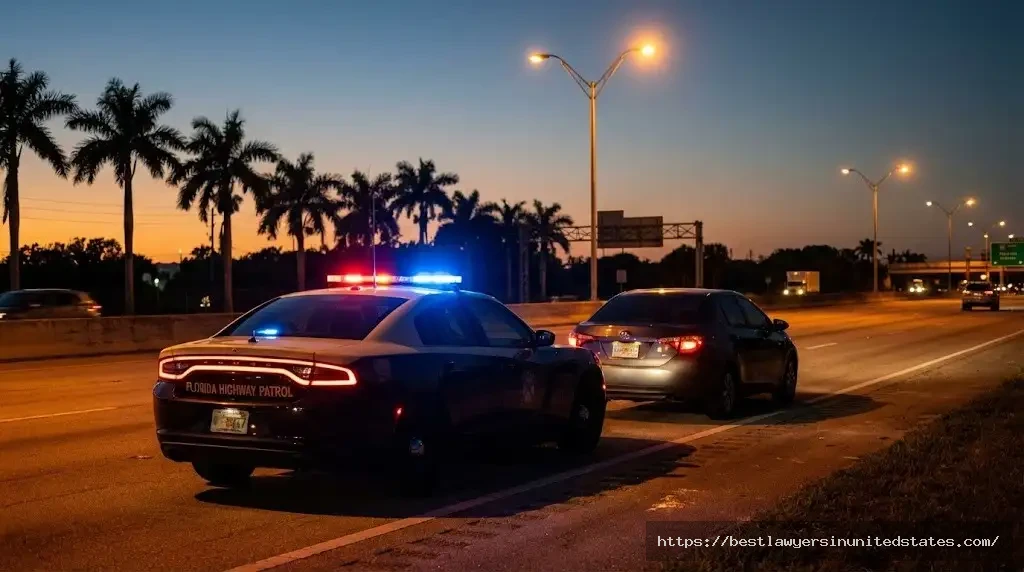
New changes under Trenton’s Law make refusing a breathalyzer test a criminal offense starting October 2025. This guide explains Florida’s DUI penalties, legal process, and your rights after arrest.
What Qualifies as DUI in Florida?
Florida law prohibits driving with a blood alcohol concentration of 0.08% or higher. You can also get charged if alcohol or drugs impair your normal faculties. This applies even if your BAC tests below 0.08%.
The Florida Highway Patrol and local law enforcement arrest over 33,000 drivers annually for DUI. Most arrests happen on I-95, I-75, and the Florida Turnpike during holiday enforcement periods.
Police must have probable cause to stop your vehicle. Common reasons include swerving between lanes, speeding, or running a red light. After the stop, officers look for signs of impairment like bloodshot eyes, slurred speech, or alcohol smell.
Check Your BAC Level
Understanding blood alcohol content helps you make safer choices. BAC levels depend on weight, gender, drinks consumed, and time elapsed.
Use our interactive tool to estimate your blood alcohol concentration based on your specific factors. The calculator shows whether you exceed Florida’s legal limits.
BAC Calculator
Estimate your Blood Alcohol Content
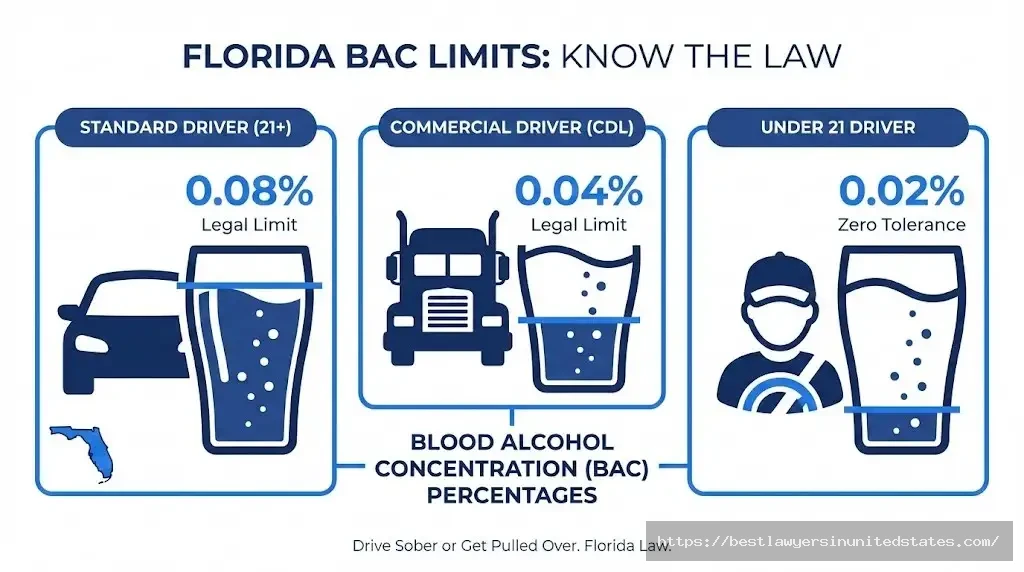
• Commercial Driver (CDL): 0.04% BAC
• Drivers Under 21: 0.00-0.02% BAC (Zero Tolerance)
• Enhanced Penalties: 0.15% BAC or higher in most states
Standard drivers cannot exceed 0.08% BAC. Commercial drivers face a 0.04% limit. Drivers under 21 must stay below 0.02% under Florida’s zero tolerance law.
Florida BAC Limits by Driver Type
| Driver Category | Legal BAC Limit | Violation Consequences |
|---|---|---|
| Standard Driver (21+) | 0.08% | DUI charge, criminal record |
| Commercial Driver (CDL) | 0.04% | DUI charge, CDL suspension |
| Under 21 Years Old | 0.02% | 6-month license suspension (first), criminal charge if 0.08%+ |
| Enhanced Penalty Threshold | 0.15% | Higher fines, mandatory ignition interlock |
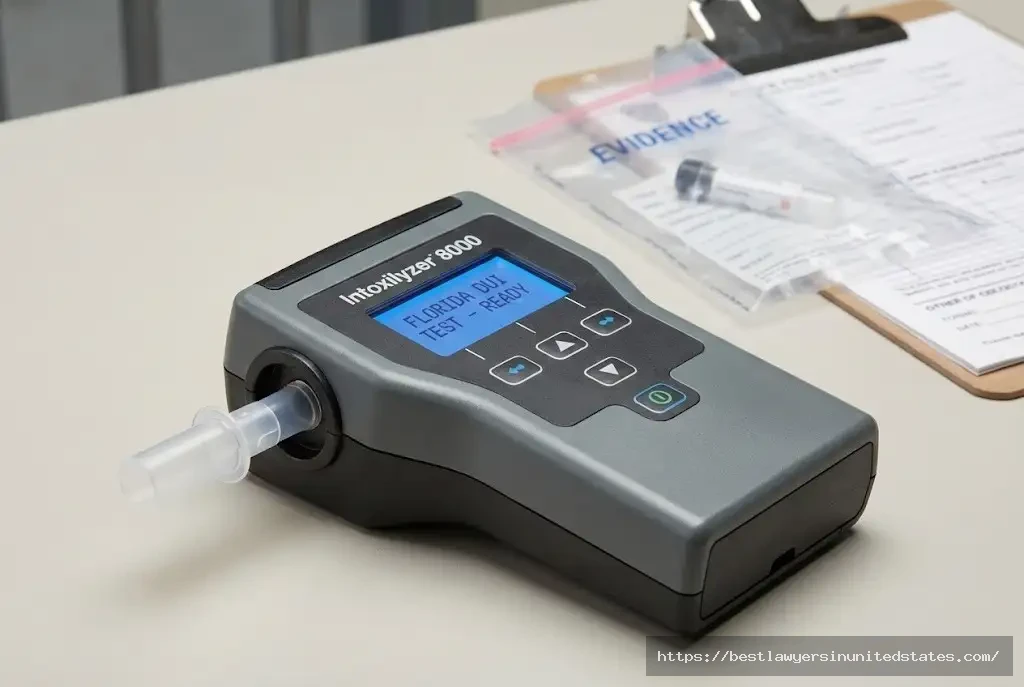
Florida courts use Intoxilyzer 8000 breathalyzer machines for evidential testing. These tests happen at the jail or police station after arrest. Portable breath tests at roadside are preliminary only.
First Offense DUI Penalties in Florida
A first DUI conviction counts as a misdemeanor under Florida Statute 316.193. Courts impose these minimum penalties:
Fines: $500 to $1,000 for standard first offense. Fines increase to $1,000 to $2,000 if your BAC measured 0.15% or higher, or if a minor under 18 was in the vehicle.
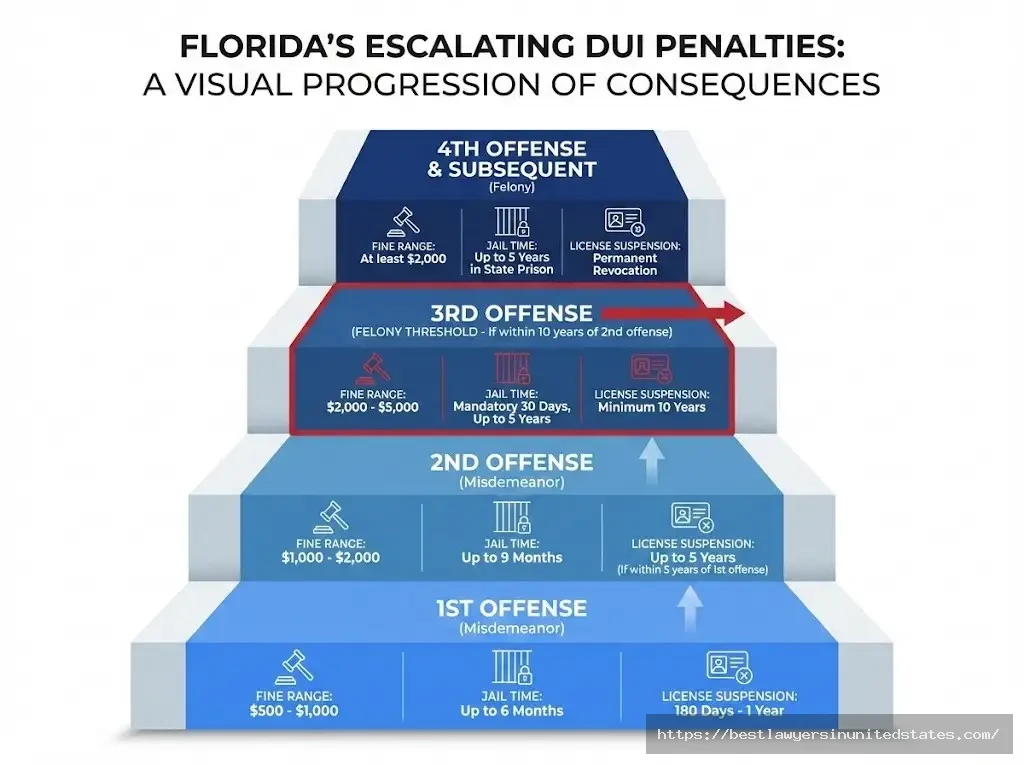
Jail Time: Up to six months possible. Most first offenders avoid jail through probation. Judges sentence up to nine months if BAC was 0.15%+ or a minor was present.
License Suspension: Florida Department of Highway Safety and Motor Vehicles suspends your license for six months minimum. High BAC or minor passenger cases get one-year suspensions.
Probation: Up to one year. You must complete 50 community service hours and attend DUI school. Monthly reporting to probation officer required.
Vehicle Impoundment: Your car gets impounded for 10 days. You pay all towing and storage fees.
Ignition Interlock: Required for six months if BAC exceeded 0.15% or minor was present. You pay installation and monthly monitoring costs. For more details on how other states handle similar cases, see Alabama DUI laws.
First-time offenders in Miami-Dade County typically appear at the Richard E. Gerstein Justice Building. Hillsborough County cases go through the Edgecomb Courthouse in Tampa. Palm Beach County handles DUI arraignments at the Main Courthouse in West Palm Beach.
Second Offense DUI Penalties
Second DUI convictions within five years bring mandatory jail time. Florida’s progressive DUI laws enhance penalties significantly for repeat offenders.
Fines: $1,000 to $2,000 standard. Increases to $2,000 to $4,000 for high BAC or minor passenger cases.
Jail Time: 10 days mandatory minimum. Maximum sentence reaches nine months. Courts rarely waive the 10-day requirement.
License Revocation: Five years minimum. No hardship license available for first 12 months. You must install ignition interlock before reinstatement.
Vehicle Impoundment: 30 days mandatory. Judge can order vehicle forfeiture in some cases.
Ignition Interlock: Mandatory for at least one year after license reinstatement. Some courts require two years for high BAC cases.
Second DUI After 10 Years
Many people ask whether time between offenses matters. Florida counts all prior DUI convictions regardless of how long ago they occurred. A second DUI after 10 years still qualifies as a second offense.
The main difference appears in enhanced penalties. Mandatory jail time and minimum license revocation apply only when the second offense happens within five years of the first. After five years, judges have more sentencing discretion.
However, you still face second-offense base penalties. Your prior conviction remains on your criminal record permanently.
| Penalty Type | 2nd DUI Within 5 Years | 2nd DUI After 5 Years |
|---|---|---|
| Mandatory Jail | 10 days minimum | Possible (not mandatory) |
| License Revocation | 5 years minimum | 180 days to 5 years |
| Fines | $1,000-$2,000 | $1,000-$2,000 |
| Ignition Interlock | 1 year minimum | 1 year minimum |
| Vehicle Impoundment | 30 days mandatory | 30 days mandatory |
Compare these penalties with Arizona DUI laws where lookback periods differ significantly.
Third and Fourth Offense DUI
Third DUI convictions within 10 years become third-degree felonies. Fourth offenses are always felonies regardless of timing.
Third Offense (within 10 years):
- Felony charges with state prison possible
- $2,000 to $5,000 fines (higher for aggravating factors)
- 30 days mandatory jail minimum
- 10-year license revocation
- Vehicle forfeiture possible
- Permanent criminal felony record
Third Offense (after 10 years):
- Misdemeanor charges
- $2,000 to $5,000 fines
- Up to 12 months jail
- License revocation varies
Fourth Offense (any time frame):
- Third-degree felony
- Up to five years state prison
- Permanent license revocation possible
- Vehicle forfeiture likely
Felony DUI cases in Orange County go through Division 17 at the Orange County Courthouse in Orlando. Pinellas County felony DUIs proceed through the Criminal Justice Center in Clearwater. Broward County handles cases at the Broward County Courthouse in Fort Lauderdale.
Trenton’s Law: What Changed in October 2025
Trenton’s Law (HB 1359) made sweeping changes to Florida DUI penalties effective October 1, 2025. The law passed after Trenton Crooks died in a crash involving an impaired driver with prior offenses.
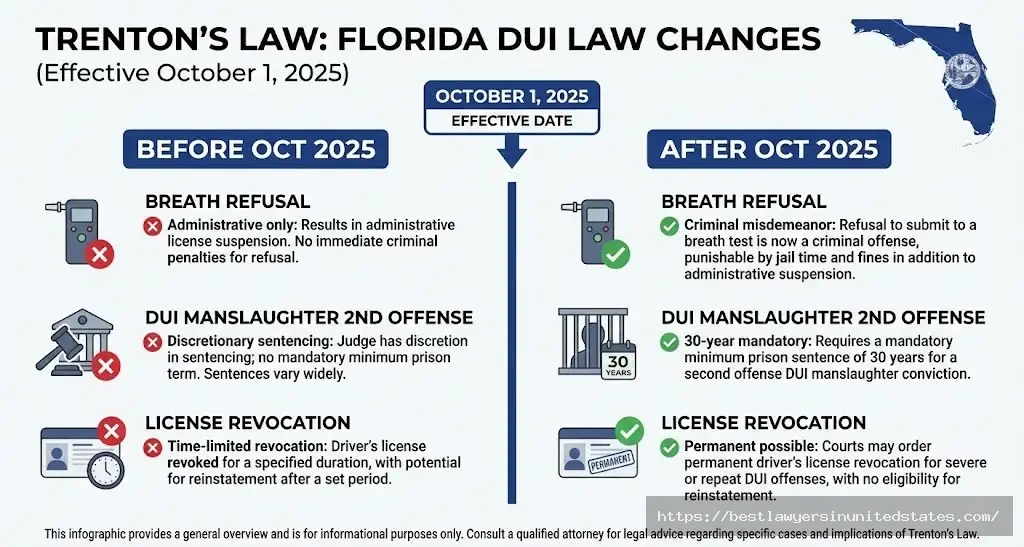
Three Major Changes:
1. Breath Test Refusal Now Criminal
Refusing a breathalyzer test was previously just an administrative penalty. Now it qualifies as a first-degree misdemeanor. First refusal brings up to one year in jail and $1,000 fine. Second refusal becomes a felony.
2. Enhanced DUI Manslaughter Penalties
Second DUI manslaughter convictions now carry 30-year mandatory minimum sentences. Previous law allowed judicial discretion. Judges must impose the full 30 years for repeat offenders.
3. Permanent License Revocation Authority
Courts can now permanently revoke driving privileges for certain repeat offenders. Previous law limited revocations to specific time periods. Judges consider prior conviction history and case circumstances.
These changes apply to arrests after October 1, 2025. Earlier arrests follow previous law even if trial occurs after the effective date. Similar legislative changes happened in Alaska DUI laws regarding refusal penalties.
DUI Testing and Implied Consent Law
Florida Statute 322.2615 establishes implied consent. By holding a Florida driver license, you automatically consent to BAC testing. Refusal triggers administrative and now criminal penalties under Trenton’s Law.
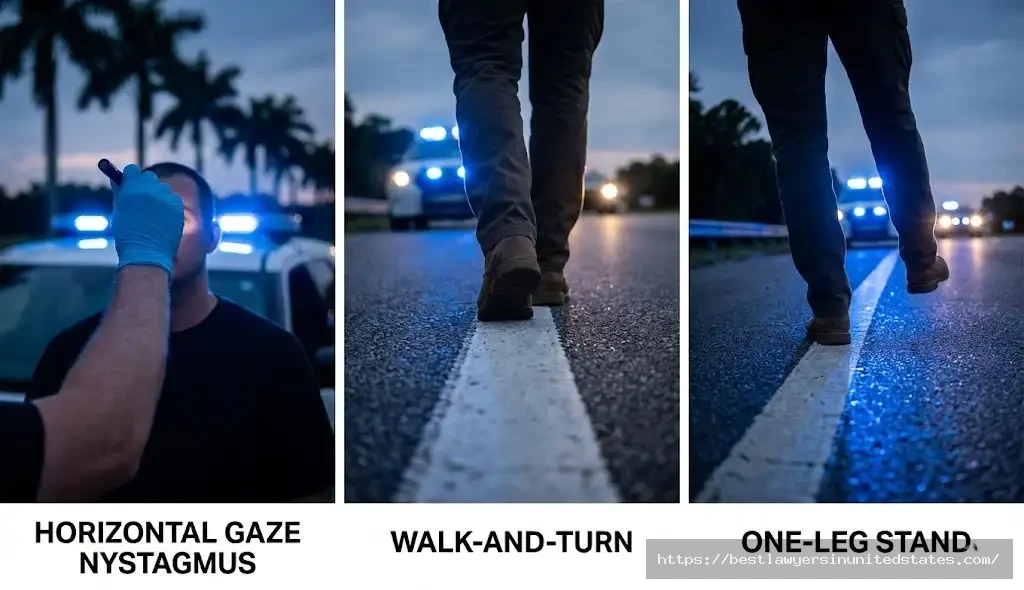
Field Sobriety Tests:
Officers typically administer three standardized tests:
- Horizontal Gaze Nystagmus (eye movement test)
- Walk and Turn (nine steps, turn, nine steps back)
- One Leg Stand (balance on one foot for 30 seconds)
You can refuse field sobriety tests without automatic penalties. These tests are voluntary. However, refusal gives officers additional evidence of consciousness of guilt.
Breathalyzer Testing:
After arrest, officers request a breath test on the Intoxilyzer 8000. This happens at the police station or jail. You have the right to refuse but face serious consequences:
- First refusal: One-year license suspension plus misdemeanor criminal charge
- Second refusal: 18-month suspension plus felony charge
- Refusal evidence admissible in court
Blood Testing:
Officers can request blood draws in specific situations:
- Crashes causing death or serious injury
- Unconscious drivers
- When breath testing is impossible
Police need a warrant for forced blood draws except in exigent circumstances. Blood tests are more accurate than breath tests but take weeks for lab results.
The 10-Day Rule After DUI Arrest
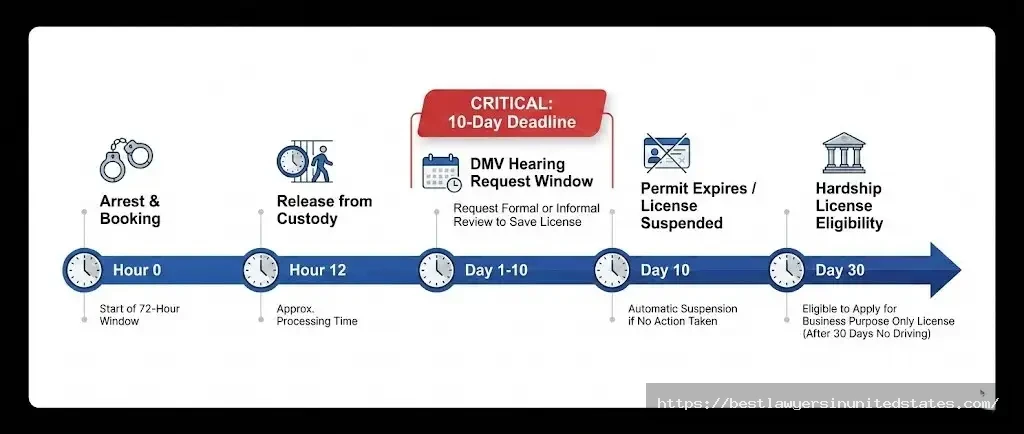
Your license gets suspended immediately when arrested for DUI. The arresting officer takes your physical license and issues a 10-day temporary permit.
This permit expires at midnight on the 10th day after arrest. You must request a formal review hearing with the Florida Department of Highway Safety and Motor Vehicles within these 10 days to contest the suspension.
What Happens If You Miss the 10-Day Deadline:
- Automatic suspension takes effect
- No hearing to challenge the suspension
- No hardship license for 30 days minimum
- Suspension runs concurrent with any criminal penalties
How to Request a Hearing:
Contact the Bureau of Administrative Reviews:
- Online: FLHSMV.gov
- Phone: (850) 617-2000
- Mail: Neil Kirkman Building, Tallahassee, FL 32399
Miami-Dade drivers can visit the Miami Gardens Driver License office for assistance. Tampa area drivers use the Tampa Hillsborough Driver License Center. The West Palm Beach office serves Palm Beach County residents.
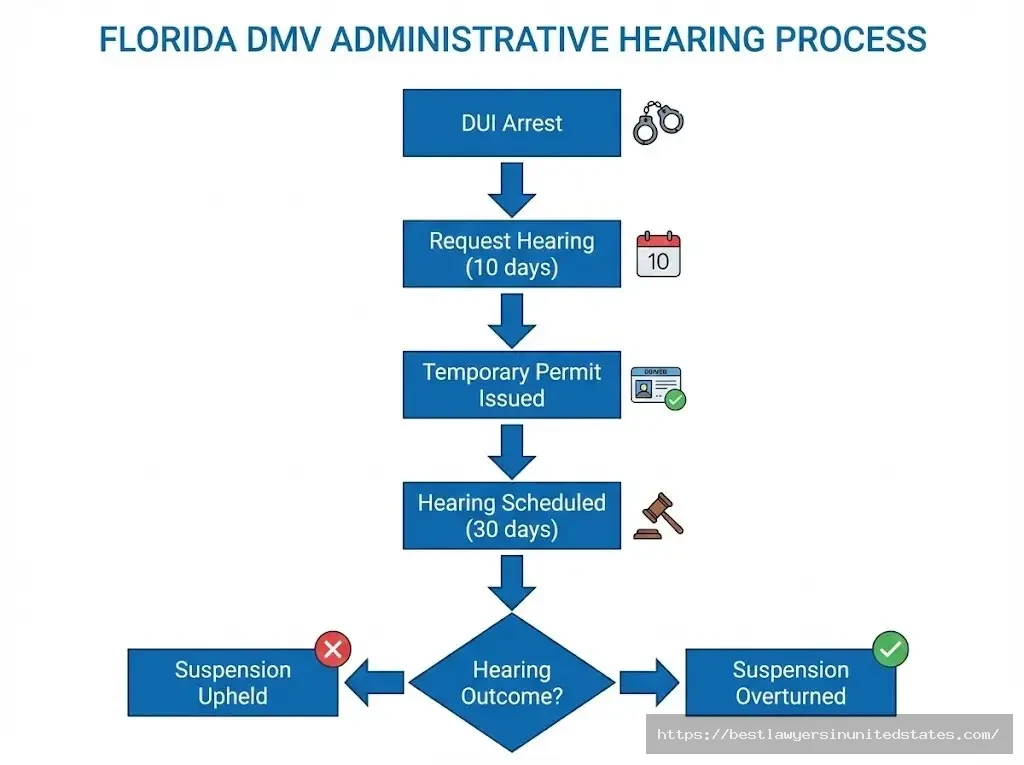
Your hearing typically occurs within 30 days of your request. The department issues a temporary permit valid until the hearing date. You can appear by phone or in person. The hearing examines only limited issues:
- Did the officer have probable cause to stop you?
- Did you have an unlawful BAC or refuse testing?
- Were proper procedures followed?
The hearing officer’s decision is final unless you appeal to circuit court.
Calculate Your Total DUI Costs
DUI penalties extend far beyond court fines. The total financial impact typically ranges from $8,000 to $20,000 for first offenses.
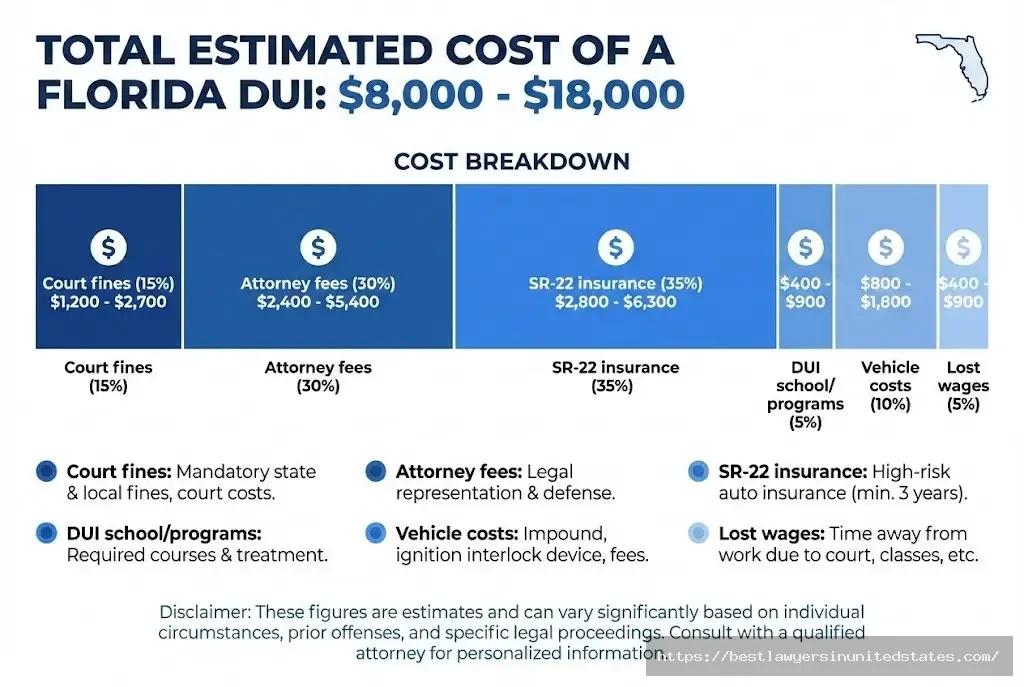
Use our DUI cost calculator to estimate expenses based on your specific situation. The calculator includes all direct and indirect costs.
DUI Cost Calculator
Estimate total DUI expenses by state and offense
Detailed Cost Breakdown
Payment Timeline
Bail bond, towing fees, car impound, attorney retainer
Initial court fines, DMV fees, DUI school enrollment, ignition interlock installation
Monthly probation fees, ignition interlock fees, DUI school payments, attorney balance
Insurance premium increases, license reinstatement, SR-22 filing fees
- Lost wages from missed work (court dates, jail time, DUI school) – $2,000-$10,000
- Job loss or difficulty finding employment – Varies
- Professional license suspension (doctors, lawyers, nurses, pilots) – Career ending
- Rideshare and transportation costs during suspension – $1,500-$5,000
- Travel restrictions and visa denials – Varies
- Security clearance loss – Career impact
- Child custody implications – Legal costs
- Rental car restrictions – Varies
- Personal relationships and mental health costs – Priceless
Complete DUI Cost Breakdown
| Expense Category | First Offense | Second Offense | Third Offense (Felony) |
|---|---|---|---|
| Court Fines | $500-$1,000 | $1,000-$2,000 | $2,000-$5,000 |
| Court Costs | $500-$800 | $500-$800 | $800-$1,500 |
| DUI School | $250-$350 | $250-$350 | $250-$350 |
| Substance Abuse Evaluation | $100-$200 | $100-$200 | $100-$200 |
| Victim Impact Panel | $50-$100 | $50-$100 | $50-$100 |
| Probation Supervision | $40/month (12 months) | $40/month (12-24 months) | $40/month (24-36 months) |
| License Reinstatement | $75-$275 | $75-$275 | $75-$275 |
| SR-22 Insurance (3 years) | $3,000-$6,000 | $4,500-$9,000 | $6,000-$12,000 |
| Ignition Interlock | $500-$1,500 | $1,000-$3,000 | $2,000-$5,000 |
| Vehicle Impound/Tow | $300-$800 | $600-$1,500 | $1,200-$3,000 |
| Attorney Fees | $2,500-$5,000 | $3,500-$7,500 | $5,000-$15,000 |
| Lost Wages (jail/court) | $500-$2,000 | $1,000-$5,000 | $2,000-$10,000 |
| Total Estimated Cost | $8,000-$18,000 | $13,000-$29,000 | $20,000-$53,000 |
These costs assume standard cases without aggravating factors. High BAC readings, accidents, injuries, or minors in the vehicle increase expenses significantly. Comparing costs with California DUI laws shows Florida penalties rank among the strictest nationally.
Hardship License (Business Purposes Only)
Florida allows hardship licenses after specific waiting periods. These permits let you drive for limited purposes only:
- Work or business
- Medical appointments
- DUI school attendance
- Church services
- Children’s school activities
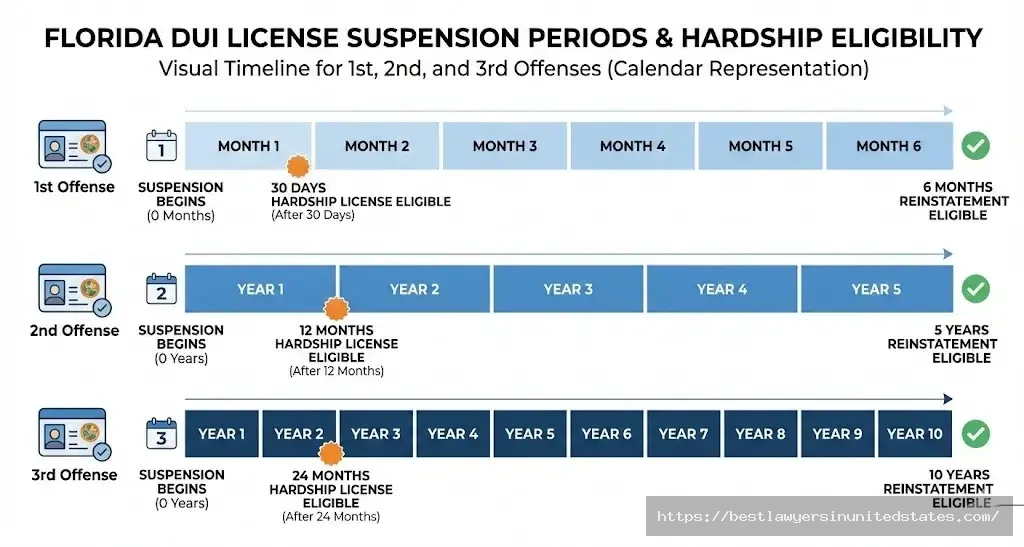
Eligibility Timeline:
- First offense: 30 days after suspension begins
- Second offense: 12 months after revocation begins
- Third offense: 24 months after revocation begins
Application Process:
File a petition with the clerk of court in your county. Provide:
- Proof of enrollment in DUI school
- Verification of SR-22 insurance
- Employer letter confirming work schedule
- $130 reinstatement fee
The judge reviews your petition and decides whether to grant the hardship license. Approval is not automatic. Judges consider your driving record, DUI circumstances, and compliance with court orders.
Hardship License Restrictions:
You can only drive during approved hours for approved purposes. Typical restrictions limit driving to:
- 6:00 AM to 6:00 PM for work
- Specific routes between home and work
- Designated medical appointment times
Violating hardship license terms results in immediate revocation. You lose all driving privileges and may face additional criminal charges.
Orange County residents apply at the Orange County Clerk’s office at 425 N Orange Avenue, Orlando. Hillsborough County applications go to 419 Pierce Street, Tampa. Miami-Dade County uses the clerk’s office at 73 W Flagler Street, Miami.
DUI Manslaughter and Aggravated Charges
DUI causing death becomes DUI manslaughter under Florida Statute 316.193(3)(c)(3). This second-degree felony carries:
- Up to 15 years state prison
- Four-year mandatory minimum sentence
- Up to $10,000 fine
- Permanent license revocation
DUI Manslaughter with Failure to Render Aid:
Leaving the scene after causing a fatal DUI crash elevates charges to a first-degree felony:
- Up to 30 years state prison
- Mandatory minimum sentencing applies
- No possibility of probation
DUI with Serious Bodily Injury:
DUI causing serious injury is a third-degree felony:
- Up to five years state prison
- Up to $5,000 fine
- Minimum three-year license revocation
“Serious bodily injury” means substantial risk of death, permanent disfigurement, or loss of bodily function. Broken bones, internal injuries, and severe lacerations typically qualify.
DUI with Property Damage:
DUI causing property damage or minor injury is a first-degree misdemeanor:
- Up to one year jail
- Up to $1,000 fine
- License revocation minimum three years
These cases often involve crashed vehicles, damaged guardrails, or hit mailboxes and fences.
Manslaughter cases proceed through the State Attorney’s Office Homicide Division. In Miami-Dade County, Katherine Fernandez Rundle’s office prosecutes these cases. The Thirteenth Judicial Circuit in Tampa handles Hillsborough County manslaughter charges. Palm Beach County cases go through Dave Aronberg’s State Attorney’s Office.
DUI Laws for Drivers Under 21
Florida Statute 322.2616 creates a zero tolerance policy for underage drinking and driving. The legal limit drops to 0.02% BAC for anyone under 21.
First Violation (0.02% to 0.05% BAC):
- Six-month license suspension
- Mandatory substance abuse course
- Parents notified if driver under 19
- Administrative penalty only (not criminal)
Second Violation (0.02% to 0.05% BAC):
- One-year license suspension
- Substance abuse evaluation required
- Community service possible
Criminal DUI Charge (0.08% or higher):
- All standard DUI penalties apply
- Criminal conviction on permanent record
- Affects college admissions and financial aid
- Impacts future employment opportunities
Underage Refusal Penalties:
- First refusal: One-year suspension
- Second refusal: 18-month suspension plus misdemeanor charge under Trenton’s Law
Law enforcement can take underage drivers directly to an addictions receiving facility if the county provides one. Parents or guardians must pick up the minor from the facility.
College students should know that federal student aid eligibility can be affected by DUI convictions. Most universities also have conduct codes that result in academic probation or suspension for DUI arrests.
What to Do Immediately After a DUI Arrest
The hours and days following a DUI arrest are critical. Your actions directly impact both criminal and administrative cases.
First 24 Hours:
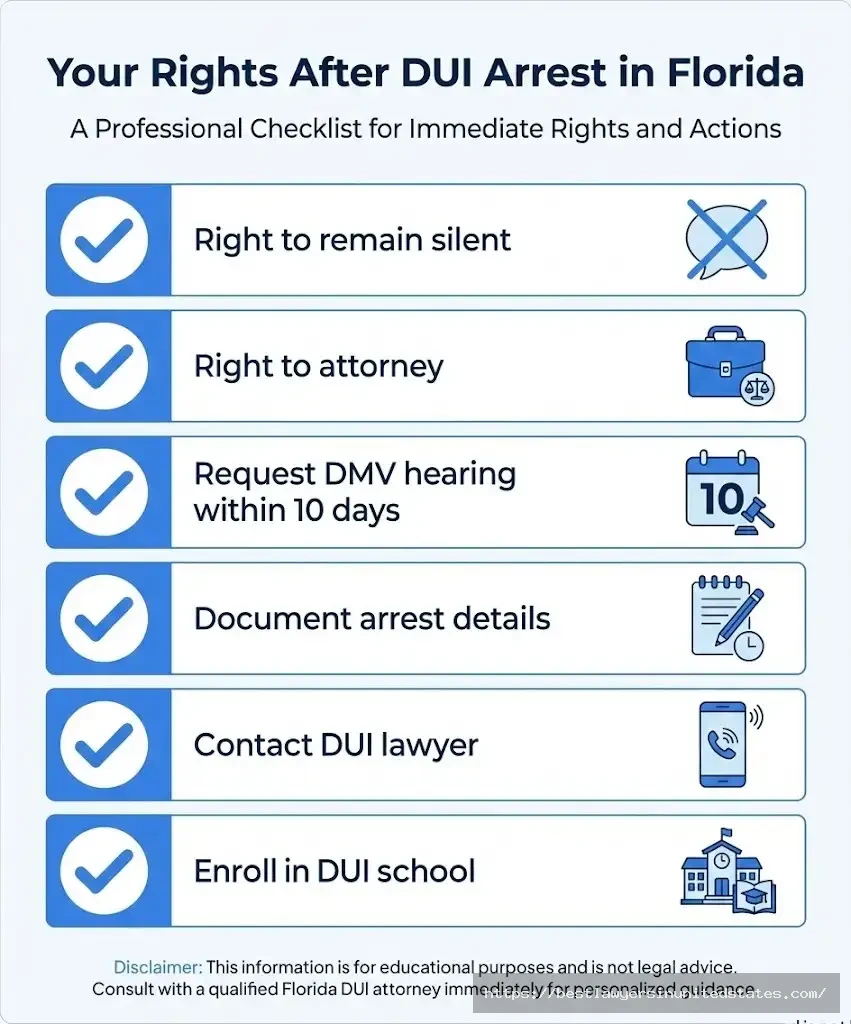
Contact a DUI attorney immediately. Most attorneys offer free consultations and can act quickly to preserve evidence. Your attorney can request:
- Police body camera footage
- Dashboard camera video
- Breathalyzer maintenance records
- Officer training records
- Witness statements
Write down everything you remember about the stop and arrest:
- Time and location
- Weather and road conditions
- What you ate and drank
- Officer’s statements and questions
- Field sobriety test details
- Any medical conditions or injuries
Do not post about your arrest on social media. Prosecutors search Facebook, Instagram, and Twitter for evidence. Photos showing you drinking or statements about the arrest can be used against you.
Within 10 Days:
Request your formal review hearing with the Florida Department of Highway Safety and Motor Vehicles. This preserves your temporary driving permit and gives you a chance to challenge the suspension.
Enroll in DUI school even before court requires it. Early enrollment shows judges you take the charge seriously. Florida-licensed DUI schools include:
- AAA Traffic Safety Programs
- First Step of Sarasota
- ADSAP (Alcohol Drug Safety Action Program)
Contact your insurance company. Florida requires SR-22 insurance after DUI. Your rates will increase significantly. Compare quotes from multiple insurers specializing in high-risk drivers.
Before Arraignment:
Gather character reference letters from employers, clergy, teachers, or community leaders. These help during plea negotiations and sentencing.
Document any medical conditions that could affect field sobriety tests. Knee injuries, back problems, inner ear issues, and neurological conditions can cause balance problems unrelated to alcohol.
Get a substance abuse evaluation if you have any history of alcohol problems. Proactive treatment helps in plea negotiations and shows judges you are addressing underlying issues.
For immediate legal assistance, contact [email protected] or find a qualified DUI defense attorney in your area. Many attorneys handle cases statewide and can appear in any Florida court.
Frequently Asked Questions
What is the penalty for a first DUI conviction in Florida?
First DUI penalties include $500 to $1,000 fines, up to six months jail, six-month license suspension, 50 hours community service, and DUI school. Most first offenders receive probation instead of jail time.
How long do you stay in jail for a DUI in Florida?
First offense typically involves no jail time with probation. Second offense requires 10 days minimum if within five years of the first. Third offense within 10 years mandates 30 days minimum.
Do you lose your license immediately after a DUI in Florida?
Yes. The arresting officer takes your physical license and issues a 10-day temporary permit. You must request a hearing within 10 days to contest the suspension or it becomes automatic.
Is jail time mandatory for first DUI in Florida?
No. Jail time is possible but not mandatory for standard first offenses. Judges often impose probation instead. However, high BAC or minor passenger cases may result in jail sentences.
Can a first-time DUI be dismissed in Florida?
Dismissals are possible but rare. Your attorney must prove procedural errors, illegal stop, faulty test equipment, or improper administration. Most cases result in plea agreements rather than dismissals.
What is the 10-day rule in Florida DUI cases?
You have 10 days from arrest to request a formal review hearing with the Florida DMV. Missing this deadline means automatic license suspension with no opportunity to challenge it.
Should you refuse a breathalyzer in Florida?
Refusal now carries criminal penalties under Trenton’s Law effective October 2025. First refusal is a misdemeanor with one-year license suspension. Second refusal becomes a felony. Consult an attorney immediately if facing this decision.
How much does a first DUI cost in Florida?
Total costs range from $8,000 to $18,000 including fines, court costs, attorney fees, DUI school, increased insurance, and lost wages. High BAC cases cost more due to enhanced penalties.
What is Florida Statute 316.193?
Florida Statute 316.193 is the primary DUI law. It defines DUI, establishes penalties for each offense level, and creates enhanced penalties for high BAC and aggravating factors.
Is a second DUI in Florida a felony?
No. Second DUI remains a misdemeanor. Third DUI within 10 years becomes a felony. Fourth DUI is always a felony regardless of timing.
How long does a DUI stay on your record in Florida?
DUI convictions remain on your criminal record permanently. They cannot be sealed or expunged. However, insurance companies typically only look back three to five years.
What percentage of DUI cases are dismissed in Florida?
Approximately 10 to 15 percent of DUI cases get dismissed due to procedural errors, illegal stops, or technical defects. Most cases resolve through plea agreements rather than trial or dismissal.
Can you get a DUI without being tested in Florida?
Yes. Officers can charge you based on observed impairment even without chemical tests. Physical signs, driving pattern, field sobriety test performance, and statements provide sufficient evidence.
Do first-time offenders go to jail in Florida?
Most first-time DUI offenders receive probation instead of jail. However, high BAC readings over 0.15%, accidents, injuries, or minors in the vehicle increase the likelihood of jail time.
How likely is jail time for first DUI in Florida?
Approximately 20 to 30 percent of first offenders serve some jail time. Factors include BAC level, accident involvement, prior criminal record, and county practices. Most sentences range from one to five days.
What makes a DUI case weak in Florida?
Weak cases involve illegal stops, improperly calibrated equipment, missing officer training records, broken chain of custody for blood tests, or medical conditions explaining impairment symptoms.
Is Florida Statute 316.193 a misdemeanor or felony?
It depends on offense number and circumstances. First and second offenses are misdemeanors. Third within 10 years and fourth ever are felonies. DUI manslaughter is always a felony.
What happens when you get a DUI in Florida?
You get arrested, taken to jail, and issued a 10-day temporary permit. You must request a hearing within 10 days, attend arraignment within 30 to 90 days, and complete DUI school. You face fines, probation, license suspension, and possible jail time.
What is the new DUI law in Florida?
Trenton’s Law took effect October 1, 2025. It makes breath test refusal a criminal offense, increases DUI manslaughter penalties to 30-year minimums for second offenses, and allows permanent license revocation for repeat offenders.
How do Florida DUI laws compare to other states?
Florida ranks among the strictest states. Mandatory ignition interlock for high BAC, immediate license suspension, and harsh repeat offender penalties exceed most states. Similar strict approaches exist in Arizona and Alaska.
Find DUI Lawyers in Florida – Free Consultation
Facing DUI charges requires experienced legal representation. Connect with qualified Florida DUI defense attorneys who offer free initial consultations. Contact [email protected] for attorney referrals in your area.
