
The Janice Griffith lawsuit involved a dangerous rooftop stunt gone wrong during a 2014 Hustler Magazine photo shoot. Adult film actress Janice Griffith sued social media personality Dan Bilzerian and Hustler after Bilzerian threw her off a roof, causing her to miss the pool and break her foot. The case settled confidentially in 2016 and became a landmark example of influencer liability and entertainment industry negligence. hawthorne residential partners lawsuit
Quick Summary: In April 2014, Janice Griffith was thrown off Dan Bilzerian’s rooftop during a photo shoot for Hustler Magazine. She struck the pool edge instead of landing in the water, breaking her foot. She filed a lawsuit in December 2014 seeking $85,000 in damages. The case settled privately in 2016, but the legal battle exposed major gaps in safety standards for influencer content and raised questions about consent, assumption of risk, and corporate liability. CarGuard Lawsuit
What Is the Janice Griffith Lawsuit About?
The Janice Griffith lawsuit is one of the most talked-about personal injury cases in influencer culture. It highlights what happens when viral stunts meet real-world consequences.
Background of the Incident
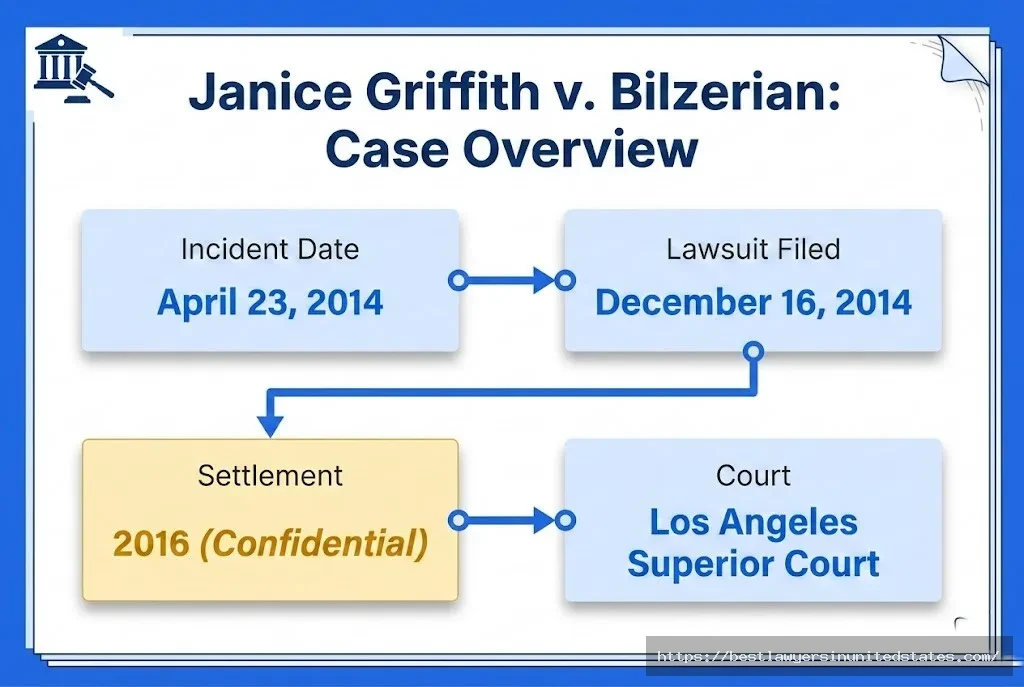
On April 23, 2014, Hustler Magazine organized a photo shoot at Dan Bilzerian’s Hollywood Hills mansion. The goal was to capture Bilzerian’s lavish lifestyle for promotional content. Griffith, who was 18 years old at the time, was hired as a model for the shoot.
The stunt seemed simple: Bilzerian would throw Griffith from the roof into the pool below. But when he tossed her, she grabbed his shirt mid-throw. This changed her trajectory. Instead of landing safely in the pool, she hit the edge and broke her foot.
The entire incident was caught on video. It went viral immediately. Within hours, the footage was shared across social media platforms, generating millions of views and sparking intense debate about who was at fault.
Timeline of Key Events
| Date | Event | Details |
|---|---|---|
| April 23, 2014 | Rooftop stunt occurs | Griffith thrown off roof, breaks foot on pool edge |
| April 24, 2014 | Video goes viral | Footage spreads across social media, generating widespread attention |
| May 2014 | Pre-litigation demand | Griffith’s attorney requests $85,000 settlement |
| May 15, 2014 | Bilzerian’s response letter | Attorney Tom Goldstein sends sarcastic refusal letter |
| December 16, 2014 | Lawsuit filed | Griffith files negligence complaint in Los Angeles County Superior Court |
| January 16, 2015 | Hustler responds | LFP Publishing Group files partial answer to complaint |
| February 3, 2015 | Cross-complaint filed | Bilzerian sues Hustler for indemnity |
| March 9, 2015 | Hustler’s response | LFP Publishing responds to Bilzerian’s cross-complaint |
| 2016 | Confidential settlement | Case settles privately, avoiding trial |
| April 4, 2016 | Case dismissed | Court dismisses case following settlement agreement |
Who Filed the Lawsuit?
Plaintiff: Janice Griffith (stage name – real name not disclosed in court filings), an 18-year-old adult film actress and model at the time of the incident.
Defendants:
- Dan Bilzerian – Social media personality, poker player, and owner of the property
- LFP Internet Group dba Hustler Magazine – The publication that organized and sponsored the photo shoot
Plaintiff’s Attorney: Shoham J. Solouki, Esq. of Solouki Savoy LLP
Defense Attorneys: Tom Goldstein of Goldstein & Russell (representing Bilzerian) – notably famous for his work with SCOTUSblog
Court: Los Angeles County Superior Court, California
What Were the Allegations?
Griffith’s lawsuit made several serious claims against both Bilzerian and Hustler Magazine:
Key allegations included:
✅ Negligence – Bilzerian and Hustler failed to provide a safe environment for the stunt and breached their duty of care to protect Griffith from foreseeable harm
✅ Unsafe Working Conditions – Defendants did not implement adequate safety precautions despite the inherently dangerous nature of throwing someone from a roof
✅ Breach of Duty of Care – The producers and participants owed Griffith a professional responsibility to make sure reasonable safety measures were in place
✅ Failure to Provide Proper Supervision – No stunt coordinators, safety professionals, or medical personnel were present during the dangerous stunt
✅ Reckless Endangerment – The defendants exposed Griffith to significant and unnecessary risk without proper planning or safety protocols
The lawsuit claimed that while Griffith agreed to participate in the photo shoot, she was assured the stunt would be safe. She argued that despite her lack of stunt training or experience, she was encouraged to proceed without proper safety equipment or professional oversight.
Who Was Dan Bilzerian?
Understanding Dan Bilzerian’s public persona is important context for this case. At the time of the incident, Bilzerian was known as the “King of Instagram” with millions of followers.
Bilzerian’s Background
Dan Bilzerian built his reputation on social media by posting photos and videos of an extremely lavish lifestyle. His content typically featured:
- Private jets and luxury cars
- Exotic locations and mansions
- Weapons and firearms
- Beautiful women in provocative situations
- High-stakes poker games
- Dangerous stunts and risky behavior
His Instagram account had become hugely popular by 2014, making him one of the early influencer success stories. Brands and publications wanted to work with him because of his massive reach and engagement.
Bilzerian claimed to make money from professional poker, though the exact sources of his wealth have been questioned. He also acted in small roles in films like “Lone Survivor” and “The Equalizer.” Volkswagen Emissions Lawsuit
Bilzerian’s Legal Troubles
The Janice Griffith lawsuit wasn’t Bilzerian’s only legal problem. Just one week before Griffith filed her lawsuit, another woman sued him for allegedly kicking her in the face at LIV Nightclub in Miami in December 2014.
He also sued the producers of “Lone Survivor” for cutting his cameo down after he loaned them money for the film.
His pattern of risky behavior and legal controversies made the Griffith case particularly newsworthy.
The Legal Battle: Claims and Defenses
Once the lawsuit was filed, both sides presented strong arguments. The legal strategies reveal important principles about personal injury law and assumption of risk.
Griffith’s Legal Claims
Griffith’s attorneys built their case on several legal theories:
1. Negligence
The core of Griffith’s lawsuit was negligence. In California, to prove negligence, you need to show:
- The defendant had a duty of care
- They breached that duty
- The breach caused injury
- Damages resulted from the injury
Griffith argued that Bilzerian and Hustler had a duty to provide a safe working environment. They breached that duty by failing to implement basic safety measures like:
- Hiring a stunt coordinator
- Using safety harnesses or padding
- Measuring distances and angles
- Having medical personnel on standby
- Testing the stunt with a dummy first
2. Premises Liability
Since the incident happened at Bilzerian’s home, premises liability came into play. Property owners have a duty to keep their property reasonably safe for guests and workers.
Throwing someone off a roof creates an obvious hazard. Griffith’s team argued that Bilzerian should have taken extra precautions or refused to allow the dangerous stunt on his property.
3. Unsafe Working Conditions
Even though this was a photo shoot and not traditional employment, workplace safety principles still applied. California has strict rules about protecting workers from harm, even in creative industries.
The lawsuit pointed out that no safety protocols were documented, no risk assessment was done, and no safety equipment was provided.
The Defense Strategy
Bilzerian and Hustler fought back with multiple legal defenses:
1. Assumption of Risk
This was their strongest defense. They argued that Griffith voluntarily agreed to the stunt with full knowledge of the dangers. Video footage showed:
- Griffith and Bilzerian practicing the throw
- Griffith agreeing to proceed
- No visible coercion or pressure
In legal terms, when someone knowingly accepts a risky activity, they may lose the right to sue if they get hurt. This is called “assumption of risk.”
However, this defense has limits. Courts can still find liability if:
- The risk was greater than reasonably expected
- Consent was not truly informed
- Gross negligence occurred
2. Contributory Negligence
The defense claimed Griffith caused her own injury by grabbing Bilzerian’s shirt during the throw. The video clearly showed this moment.
They argued that by grabbing his shirt, she altered her trajectory and made herself miss the pool. If the plaintiff’s own actions contribute to their injury, damages can be reduced or eliminated.
3. Consent Defense
Bilzerian’s attorney Tom Goldstein wrote a famous pre-litigation letter arguing that Griffith gave clear consent. He pointed out that:
- She was 18 years old – legally an adult
- She was under contract with Hustler
- Video showed her agreeing to the stunt
- They practiced it beforehand
The consent defense argued that adults can make their own choices, even risky ones.
4. Corporate Separation
Hustler’s attorneys tried to distance the magazine from direct liability. They claimed:
- They hired Griffith for a photo shoot, not for stunts
- The rooftop throw was Bilzerian’s idea, not theirs
- They did not directly supervise the stunt
- Corporate liability should be limited
Bilzerian’s Cross-Complaint Against Hustler
In an interesting legal twist, Bilzerian filed a cross-complaint against Hustler on February 3, 2015. He sought complete indemnity – meaning if Griffith won her case, Hustler should pay, not him.
His argument was simple: Hustler organized the shoot, hired both participants, and stood to profit from the content. Therefore, they should bear financial responsibility.
This created a three-way legal fight that made settlement more attractive for all parties.
The Famous Tom Goldstein Response Letter
Before the lawsuit was filed, Griffith’s attorney sent a demand letter seeking $85,000. The response from Bilzerian’s attorney, Tom Goldstein, became internet famous.
What Made the Letter Controversial?
Goldstein’s letter was dripping with sarcasm and condescension. Some excerpts included:
He questioned whether Griffith had a valid claim, writing that her legal theory would require proving “that Mr. Bilzerian negligently violated the established standard of reasonable care for one who throws a porn actor off a roof into a pool during a photo shoot for an adult magazine.”
He argued that the video showed Griffith grabbing Bilzerian’s shirt – “the one thing that she had been explicitly told in advance would stop her from making it to the pool.”
Most controversially, he wrote: “Your client should just box up almost every last bit of her property (please exclude all videos and photographs, as well as the seemingly inevitable small yappy dog) and drop it off with you in safekeeping for Mr. Bilzerian.”
The letter predicted that Griffith would “obviously lose” and suggested her lawsuit would be “sanctionably frivolous.”
Legal Community Reaction
The legal community was split on Goldstein’s letter:
Supporters argued it was brilliantly written and effectively demolished a weak claim. They praised Goldstein’s legal reasoning about assumption of risk.
Critics said it was unnecessarily cruel, sexist, and unprofessional. They argued it mocked Griffith’s profession and used her age and gender against her.
The letter went viral, which may have been part of the strategy. It put public pressure on Griffith to drop the case. But it also created sympathy for her, making her look like a victim of bullying.
Why Goldstein’s Confidence Didn’t Matter
Despite the aggressive letter, Griffith proceeded with her lawsuit. And despite Goldstein’s prediction that she would “obviously lose,” the case settled.
This is a reminder that pre-litigation posturing doesn’t always predict outcomes. Many cases that seem weak on paper settle because:
- Defendants want to avoid trial costs
- Insurance companies prefer certain settlements over uncertain verdicts
- Negative publicity has value
- Discovery could reveal embarrassing evidence
Settlement and Resolution
The case never went to trial. In 2016, the parties reached a confidential settlement agreement.
What We Know About the Settlement
Settlement Terms: Confidential – the exact amount was never publicly disclosed
Date of Dismissal: April 4, 2016
Court Status: Case dismissed with prejudice (meaning Griffith cannot re-file the same claims)
Public Statements: Neither party has made public statements about the settlement since the case closed
Estimated Amount: While unconfirmed, legal observers believe the settlement was likely in the five-figure range – less than the $85,000 originally demanded but still substantial enough to justify the litigation
Why Cases Like This Settle
There are several reasons why this case settled rather than going to trial:
1. Litigation Costs
Going to trial is expensive. Attorney fees, expert witnesses, depositions, and court costs can easily exceed $100,000. For a case seeking $85,000, settlement makes financial sense.
2. Unpredictable Juries
Both sides faced risks at trial:
- Bilzerian risked a sympathetic jury seeing an 18-year-old injured by a wealthy playboy
- Griffith risked a jury buying the assumption of risk defense
Settlement eliminates uncertainty.
3. Negative Publicity
A trial would have kept the story in the news for months. Bilzerian wanted to move on from the negative press. Hustler wanted to avoid extended scrutiny of their safety practices.
4. Discovery Risks
During discovery, both sides would have to turn over documents and answer questions under oath. This could have revealed:
- Communications showing defendants knew the stunt was dangerous
- Evidence of pressure on Griffith to participate
- Similar prior incidents
- Insurance coverage details
Settlement avoids these revelations.
5. Insurance Pressure
Bilzerian and Hustler likely had liability insurance. Insurance companies typically prefer to settle cases rather than risk larger jury verdicts.
Outcome for the Parties
Janice Griffith: Continued her career in adult entertainment and remains active on social media. She rarely discusses the lawsuit publicly.
Dan Bilzerian: Maintained his social media presence and continued posting similar content, though perhaps with slightly more caution. He has faced other legal issues since then.
Hustler Magazine: Continued operations without apparent changes to safety protocols, though the case likely influenced their approach to dangerous stunts.
Legal Issues and Principles
The Janice Griffith lawsuit raised important legal questions that extend far beyond one rooftop stunt.
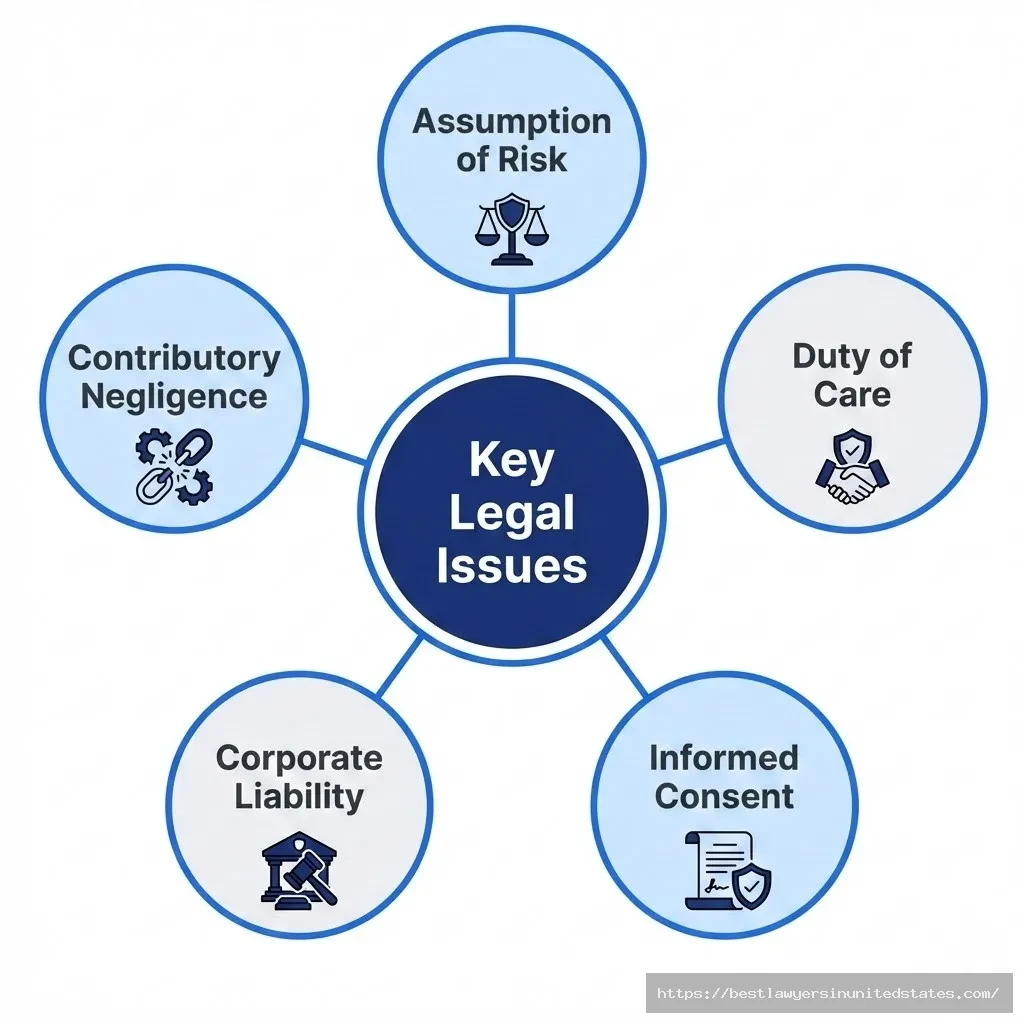
Assumption of Risk in the Digital Age
The Legal Doctrine
Assumption of risk is a classic defense in personal injury law. It says that if you voluntarily participate in a dangerous activity while knowing the risks, you can’t sue when you get hurt.
This doctrine traditionally applied to activities like:
- Playing sports
- Riding roller coasters
- Skiing or extreme sports
- Attending dangerous events
New Applications
The Griffith case asked whether this old doctrine applies to new situations:
- Influencer content creation
- Viral stunts for social media
- Informal photo shoots without professional production companies
The key question: Can an 18-year-old truly give informed consent to be thrown off a roof for a photo?
The Informed Consent Problem
Courts recognize that assumption of risk requires truly informed consent. You need to understand:
- The specific risks involved
- The safety measures (or lack thereof)
- Your right to refuse
- Alternatives that might be safer
In Griffith’s case, she may have thought professional safety measures would be in place. The lack of stunt coordinators, safety equipment, or medical personnel suggests she may not have been fully informed about the actual risk level.
Power Dynamics
An 18-year-old model working with a famous millionaire and a major publication faces pressure to comply. Courts increasingly recognize that consent given under pressure or in unequal power relationships may not be truly voluntary.
Duty of Care in Influencer Content
Traditional Production Standards
When Hollywood makes a movie with stunts, strict safety rules apply:
- Stunt coordinators must be certified
- Safety equipment must meet industry standards
- Rehearsals are required
- Medical personnel must be on set
- Insurance coverage is mandatory
Influencer Content Gap
But influencer content exists in a gray area. There’s no regulatory body. No required insurance. No mandatory safety standards.
The Griffith case asked: Should influencers be held to the same standards as professional productions?
Emerging Standards
Since this case, the industry has started to develop informal standards:
- Larger influencers carry liability insurance
- Brand partnerships often require safety protocols
- Platforms like YouTube and Instagram have content policies
- Some influencers hire professionals for dangerous content
But these remain voluntary, not legally required.
Corporate Liability for Sponsored Content
Hustler’s Responsibility
One of the biggest questions in the case: How responsible was Hustler?
They argued:
- They hired Griffith for modeling, not stunts
- The rooftop throw was Bilzerian’s idea
- They didn’t directly supervise the stunt
But courts are increasingly willing to hold brands liable for sponsored content, especially when:
- They hired the participants
- They stood to profit from the content
- They had some control over the production
- They should have foreseen the risks
Implications for Brands
This case sent a warning to brands working with influencers: You can’t just hire someone and wash your hands of responsibility.
If you sponsor content creation, you may be liable for injuries that occur during production, even if you’re not directly present. GM Ignition Switch Lawsuit
Best Practices
Smart brands now:
- Require detailed safety plans before approving risky content
- Maintain insurance coverage
- Reserve approval rights over final content
- Include safety requirements in contracts
- Document all safety discussions
Age and Vulnerability Factors
Griffith was 18 – barely legally an adult. This raised important questions:
Can Young Adults Truly Consent?
While 18 is the legal age of majority, courts recognize that young people:
- May have less negotiating power
- May feel pressure to prove themselves
- May underestimate risks
- May be more susceptible to manipulation
Industry Standards
Some argue the adult entertainment industry should have special protections for young performers, including:
- Mandatory safety training
- Required presence of agents or representatives
- Cooling-off periods before agreeing to risky activities
- Age-appropriate risk assessment
Broader Implications
This isn’t just about adult entertainment. Young influencers in all industries face pressure to do increasingly dangerous stunts for views and engagement.
Comparison With Similar Cases
The Janice Griffith lawsuit wasn’t the first or last time influencer content creation led to legal trouble.
Similar Influencer Liability Cases
| Case/Incident | Year | Issue | Outcome |
|---|---|---|---|
| Janice Griffith v. Bilzerian | 2014-2016 | Rooftop stunt injury | Confidential settlement |
| YouTube “Bird Box Challenge” Injuries | 2019 | Viral challenge injuries | Multiple lawsuits filed |
| TikTok “Skull Breaker Challenge” | 2020 | Children injured from viral challenge | Criminal charges in some cases |
| YouTube Prank Injuries | 2018-2024 | Physical pranks causing harm | Multiple settlements |
| FaZe Clan Crypto Pump Lawsuit | 2021 | Financial harm from promotions | Ongoing litigation |
| Fyre Festival Litigation | 2017-2019 | Influencer promotion of fraud | Multiple settlements |
Key Differences
Traditional Production vs. Influencer Content
Traditional TV and film productions have:
- Regulatory oversight
- Industry unions with safety rules
- Required insurance
- Professional safety personnel
- Clear liability chains
Influencer content has:
- No regulatory oversight
- No mandatory safety standards
- Optional insurance
- Often no safety professionals
- Unclear liability (who’s responsible – the influencer, the platform, sponsors?)
The Griffith Case Unique Elements
What made this case different:
- Involved an adult magazine (Hustler) as a corporate defendant
- Featured a wealthy defendant (Bilzerian) who could afford to fight
- Generated viral video evidence that was impossible to dispute
- Included a sarcastic pre-litigation letter that became famous
- Settled quickly despite aggressive defense posturing
Lessons From Similar Cases
YouTube Creator Liability
Content creators have faced lawsuits after pranks and stunts injured participants. Courts generally find that viral video production doesn’t exempt creators from negligence standards.
Key takeaway: “It’s just a prank, bro” is not a legal defense.
Reality TV Participant Injuries
Production companies have been held liable for injuries sustained during physically demanding challenges when adequate safety measures weren’t implemented.
The difference: Reality TV has insurance, contracts, and more resources to defend lawsuits.
Viral Challenge Injuries
When viral challenges like “Bird Box Challenge” or “Tide Pod Challenge” led to injuries, courts struggled with liability:
- Can you sue the person who started the challenge?
- Can you sue the platform that hosted it?
- Is it just individual responsibility?
There’s no clear answer yet, but the law is evolving.
Lessons for Influencers, Brands, and Content Creators
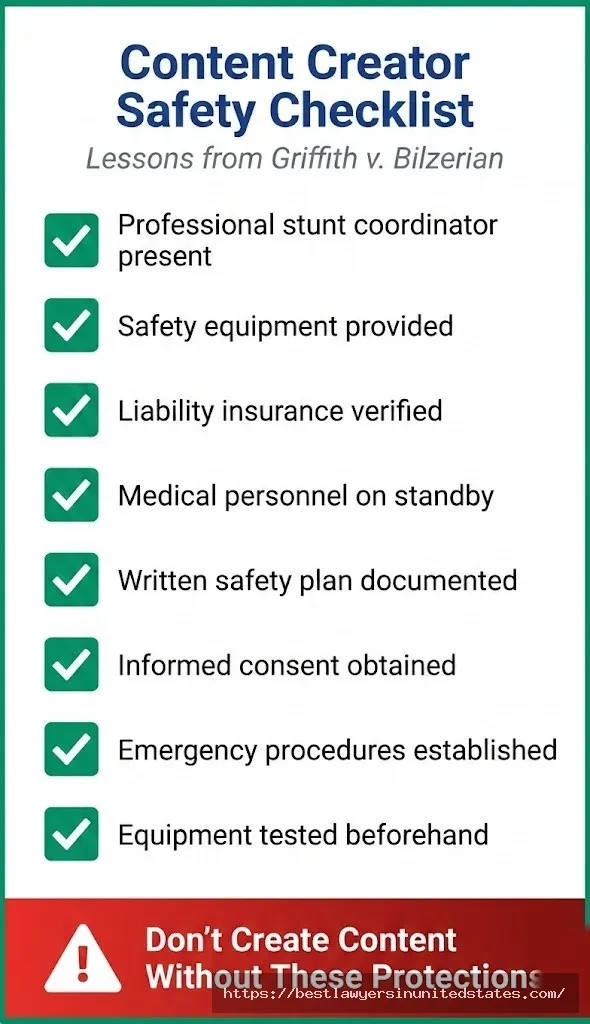
The Janice Griffith lawsuit provides important lessons for anyone creating content, especially risky content.
For Influencers and Content Creators
1. Safety Is Not Optional
No matter how many followers you have or how viral you want to go, you have a legal duty not to cause unreasonable harm to others.
This means:
- Assess risks before attempting stunts
- Use proper safety equipment
- Hire professionals for dangerous content
- Have medical personnel available
- Create backup plans
2. Waivers Aren’t Foolproof
Even if someone signs a waiver, you can still be liable if you’re grossly negligent. A waiver doesn’t give you the right to be reckless.
Courts often refuse to enforce waivers when:
- The risk was greater than reasonably expected
- The injured party didn’t truly understand what they were agreeing to
- There was fraud or misrepresentation
- Gross negligence occurred
3. Document Everything
Keep records of:
- Safety discussions and planning
- Equipment used
- Professional consultations
- Participant agreements
- Insurance coverage
Good documentation can protect you in a lawsuit.
4. Insurance Is Essential
Once your content creation generates income, you need liability insurance. It’s a business expense, not optional.
Types of insurance to consider:
- General liability insurance
- Professional liability insurance (E&O)
- Stunt/hazard-specific coverage
- Equipment insurance
5. Think Before You Post
Just because you can do something doesn’t mean you should. Consider:
- Could this hurt someone?
- What message does this send to young followers?
- Could someone try to copy this and get hurt?
- Is the content worth the legal risk?
For Brands and Sponsors
1. Due Diligence Is Required
Before sponsoring influencer content, investigate:
- The influencer’s track record
- Their safety practices
- The specific content they plan to create
- Potential risks
2. Contract Carefully
Your contracts with influencers should include:
- Safety requirements
- Approval rights over risky content
- Insurance requirements
- Indemnification clauses
- Termination rights if safety is compromised
3. Monitor the Content Creation
Don’t just pay an influencer and walk away. If you’re involved in production:
- Have someone on-site for risky shoots
- Require safety reports
- Review content before it goes live
- Document your safety oversight
4. Know When to Walk Away
If an influencer proposes content that’s too risky, say no. Your brand’s reputation isn’t worth a potential lawsuit or injury.
5. Maintain Adequate Insurance
Make sure your liability insurance covers influencer partnerships and sponsored content creation.
For Participants and Models
1. Know Your Rights
Before agreeing to participate in risky content:
- Ask about safety measures
- Request information about insurance coverage
- Understand what you’re agreeing to
- Don’t feel pressured to say yes
2. Get It In Writing
Verbal promises don’t hold up in court. Get written documentation of:
- What stunts will be performed
- What safety equipment will be used
- Who’s responsible for insurance
- Your right to refuse
3. You Can Say No
Even if you initially agreed, you can change your mind. If something feels unsafe, stop.
No amount of money is worth a serious injury.
4. Trust Your Instincts
If a stunt seems dangerous and no professionals are present, that’s a red flag. Professional productions have:
- Stunt coordinators
- Safety equipment
- Medical personnel
- Detailed plans
If these are missing, reconsider participating.
5. Seek Legal Advice
If you’re asked to sign complex contracts or waivers for risky activities, talk to a lawyer first. A quick consultation can prevent major problems.
For Platforms (YouTube, Instagram, TikTok, etc.)
1. Develop Clear Safety Policies
Platforms need specific rules about:
- What types of dangerous content are prohibited
- Required warnings for risky content
- Age restrictions for certain challenges
- Removal procedures for dangerous content
2. Enforce Policies Consistently
Don’t wait until someone gets hurt. Remove dangerous content proactively.
3. Educate Creators
Provide resources about:
- Safe content creation
- Legal responsibilities
- Insurance options
- Risk assessment
4. Consider Liability
Platforms generally have Section 230 protection from user-generated content, but that protection isn’t absolute. Platforms that actively promote or recommend dangerous content may face greater liability.
The Broader Impact on Entertainment Law
The Janice Griffith case has become a teaching example in law schools and legal seminars.
What Changed After This Case
1. Increased Awareness
The case made influencers and brands more aware that:
- Viral stunts can have legal consequences
- Insurance is necessary
- Safety can’t be ignored
- Contracts matter
2. Industry Self-Regulation
While there’s still no formal regulation, the industry has developed informal best practices:
- Talent agencies now advise clients on safety
- Management companies require safety protocols
- Larger creators hire risk managers
- Brands include safety clauses in sponsorship deals
3. Legal Precedent
While the case settled (creating no binding precedent), it’s frequently cited in discussions of:
- Influencer liability
- Assumption of risk in entertainment
- Corporate responsibility for sponsored content
- Age and consent in entertainment contracts
4. Insurance Products
The insurance industry has responded by creating:
- Influencer-specific liability policies
- Content creation coverage
- Stunt insurance for digital creators
- Short-term event coverage
What Still Needs to Change
1. Clear Regulatory Framework
There’s still no clear regulatory body for influencer content. Questions remain:
- Who should regulate?
- What standards should apply?
- How do you balance creativity with safety?
- How do you protect young creators?
2. Platform Accountability
Social media platforms profit from risky content (it gets engagement). But they face little liability when someone gets hurt. This creates bad incentives.
3. Education
Most influencers have no training in:
- Legal liability
- Risk management
- Contract law
- Insurance requirements
Better education could prevent many problems.
4. Young Creator Protections
Influencers under 18 face unique vulnerabilities. Better protections might include:
- Required parental involvement
- Limitations on dangerous content
- Mandatory management representation
- Special contract requirements
Understanding Your Legal Rights
Whether you’re a content creator, participant, or brand, understanding basic legal principles can help you avoid problems.
When You Might Have a Valid Injury Claim
You may have grounds to sue for injuries sustained during content creation if:
Negligence Occurred
- The responsible party failed to take reasonable safety precautions
- They knew or should have known about the risks
- They didn’t warn you adequately
- They didn’t provide proper safety equipment
Gross Negligence
- They showed reckless disregard for your safety
- They ignored obvious dangers
- They lied about safety measures
- They pressured you to do something unreasonably dangerous
Breach of Contract
- They promised certain safety measures in a contract
- They failed to provide those measures
- You were injured as a result
Fraud or Misrepresentation
- They lied about the risks
- They concealed important safety information
- They promised professional oversight that didn’t exist
When You Probably Don’t Have a Claim
You may not be able to sue if:
True Assumption of Risk
- You fully understood the specific risks
- You voluntarily agreed with complete information
- The risk that occurred was the exact risk you accepted
- No additional dangers were hidden from you
Your Own Negligence
- You caused your own injury through carelessness
- You ignored safety instructions
- You were intoxicated or impaired
- You engaged in horseplay
Professional Stunt Performer
- You’re a trained professional who accepted standard industry risks
- You were properly compensated for the risk
- Industry-standard safety measures were in place
Steps to Take If You’re Injured
If you’re injured during content creation:
1. Get Medical Treatment Document everything:
- Save medical records
- Photograph injuries
- Keep all bills and receipts
- Follow treatment recommendations
2. Preserve Evidence Immediately:
- Download any video or photos of the incident
- Screenshot social media posts
- Save contracts and communications
- Get witness contact information
3. Document the Scene If possible:
- Photograph the location
- Note the lack of safety equipment
- Document any hazardous conditions
- Identify who was present
4. Don’t Sign Anything After an injury, you may be pressured to sign:
- Releases
- Settlement agreements
- Confidentiality agreements
Don’t sign anything without consulting a lawyer first.
5. Consult an Attorney Personal injury attorneys typically work on contingency (you don’t pay unless you win). Get a free consultation to understand your options.
6. Be Cautious About Public Statements What you say publicly can be used against you. Be careful about:
- Social media posts about the injury
- Public interviews
- Statements blaming yourself
How Much Can You Recover in Similar Cases?
If you’re injured during content creation, potential damages include:
Economic Damages
Medical Expenses
- Emergency room visits
- Hospital stays
- Surgery costs
- Prescription medications
- Physical therapy
- Future medical care
Lost Wages
- Time off work recovering
- Reduced earning capacity
- Lost opportunities
- Career setbacks
Other Economic Losses
- Travel costs for medical treatment
- Home modifications if disabled
- Medical equipment
- Rehabilitation costs
Non-Economic Damages
Pain and Suffering
- Physical pain
- Mental anguish
- Loss of enjoyment of life
- Emotional distress
Disfigurement
- Scarring
- Permanent disability
- Changed appearance
Loss of Consortium
- Impact on relationships
- Loss of companionship (for family members)
Typical Settlement Ranges
Based on similar cases, injury settlements in content creation accidents typically range:
| Injury Severity | Typical Range | Factors |
|---|---|---|
| Minor injuries (sprains, bruises) | $5,000 – $25,000 | Short recovery, minimal medical treatment |
| Moderate injuries (fractures, concussions) | $25,000 – $100,000 | Surgery required, weeks of recovery |
| Serious injuries (multiple fractures, head trauma) | $100,000 – $500,000 | Long-term treatment, potential permanent effects |
| Severe/Catastrophic injuries | $500,000+ | Permanent disability, life-changing impacts |
Griffith’s broken foot likely fell into the “moderate” category, which aligns with her initial $85,000 demand.
Factors That Affect Settlement Value
1. Defendant’s Resources Cases against wealthy defendants or insured entities typically settle for more because they have ability to pay.
2. Video Evidence Clear video showing negligence increases settlement value. It’s hard to deny what’s on tape.
3. Sympathetic Plaintiff Juries tend to sympathize with young, injured victims. This increases settlement pressure.
4. Media Attention High-profile cases often settle quickly to avoid prolonged negative publicity.
5. Jurisdiction Some states and counties are more plaintiff-friendly than others. Los Angeles County (where Griffith filed) is generally favorable to plaintiffs.
6. Insurance Coverage Settlement amounts are often limited by available insurance coverage.
Frequently Asked Questions
What exactly happened in the Janice Griffith lawsuit?
Quick Answer: In April 2014, Dan Bilzerian threw 18-year-old actress Janice Griffith off his rooftop during a Hustler Magazine photo shoot. She missed the pool and broke her foot on the pool edge.
Griffith filed a lawsuit in December 2014 claiming negligence and unsafe working conditions. She sought $85,000 in damages for medical expenses, lost income, and pain and suffering. The case settled confidentially in 2016 without going to trial.
Who was responsible for the injury – Bilzerian or Hustler Magazine?
Quick Answer: Both were named as defendants because Hustler organized the shoot and Bilzerian performed the dangerous stunt.
The lawsuit claimed both parties shared responsibility. Hustler hired Griffith and arranged the photo shoot without proper safety protocols. Bilzerian owned the property and threw Griffith without ensuring she would land safely. Later, Bilzerian even filed a cross-complaint against Hustler trying to shift blame to them.
How much money did Janice Griffith receive in the settlement?
Quick Answer: The settlement amount is confidential and was never publicly disclosed.
Griffith originally demanded approximately $85,000. While the final amount remains unknown, legal observers believe it was likely in the five-figure range – enough to cover medical expenses, legal fees, and some compensation, but probably less than the initial demand.
Did Dan Bilzerian admit he was wrong?
Quick Answer: No. The case settled without any admission of fault or liability by Bilzerian or Hustler.
Settlement agreements typically include confidentiality clauses and specifically state that settling is not an admission of wrongdoing. Both parties simply agreed to resolve the dispute and move forward. Neither has made public statements about the case since 2016.
What happened to the famous lawyer response letter?
Quick Answer: Attorney Tom Goldstein’s sarcastic pre-litigation letter went viral and remains publicly available online.
The letter became famous for its condescending tone and predictions that Griffith would “obviously lose.” Despite the letter’s bravado, the case still settled – showing that aggressive pre-litigation posturing doesn’t always predict case outcomes. The letter is now studied in law schools as an example of litigation tactics (and, for some, unprofessional advocacy).
Was Janice Griffith at fault for grabbing Bilzerian’s shirt?
Quick Answer: The defendants claimed her grabbing the shirt contributed to the injury, but this wasn’t decided by a court since the case settled.
Video showed Griffith grabbing Bilzerian’s shirt mid-throw, which may have shortened her trajectory. The defense argued this was contributory negligence. However, Griffith’s team could argue she grabbed the shirt instinctively out of fear, which is a foreseeable reaction when someone throws you off a roof. We’ll never know how a jury would have viewed this because the case settled.
Did Janice Griffith consent to being thrown off the roof?
Quick Answer: She agreed to participate in the photo shoot, but disputed whether she truly understood and consented to the specific risks involved.
The defendants argued she gave informed consent – the video showed practice attempts and agreement to proceed. Griffith’s position was that she was assured the stunt would be safe and that, as an 18-year-old, she may have felt pressure to comply. The key legal question: Did she consent to being thrown in an unsafe manner without proper safety equipment?
Could something like this happen again?
Quick Answer: Yes. Influencers continue to do dangerous stunts for content, and injuries still occur regularly.
The influencer industry remains largely unregulated. While awareness has increased, many creators still:
- Attempt dangerous stunts without professional supervision
- Lack proper insurance
- Don’t implement safety protocols
- Feel pressure to do increasingly risky content for views
Until there’s better regulation or industry standards, similar incidents will continue.
What legal lessons came from this case?
Quick Answer: The case taught that viral content creators have legal duties of care, waivers don’t eliminate all liability, and brands can be held responsible for sponsored content injuries.
Key takeaways:
- Influencers aren’t above personal injury law
- Consent must be truly informed to be valid
- Safety protocols matter even for informal content creation
- Corporate sponsors can share liability
- Age and power dynamics affect consent validity
- Documentation and insurance are essential
Do you need a lawyer to file a similar lawsuit?
Quick Answer: While not legally required, you should absolutely consult a personal injury attorney if you’re injured during content creation.
Most personal injury lawyers work on contingency (you pay nothing unless you win). They can:
- Evaluate if you have a valid claim
- Navigate complex legal defenses like assumption of risk
- Negotiate with insurance companies
- Maximize your settlement value
- Handle all paperwork and deadlines
For cases involving entertainment law, find an attorney with specific experience in that area.
What happened to Janice Griffith after the lawsuit?
Quick Answer: She continued her career in adult entertainment and maintains an active social media presence, rarely discussing the lawsuit.
Griffith moved forward professionally after the settlement. She built a successful career and has hundreds of thousands of social media followers. She occasionally references the incident humorously but generally doesn’t discuss the legal details publicly, likely due to confidentiality clauses in the settlement agreement.
What happened to Dan Bilzerian after the lawsuit?
Quick Answer: Bilzerian continued his social media career and lifestyle, though he’s faced other legal issues since then.
Bilzerian’s Instagram following continued to grow after the settlement. He maintained his persona as a wealthy playboy. However, he’s faced other controversies and legal issues. The Griffith case doesn’t seem to have significantly impacted his public image among his followers.
Can social media platforms be held liable for dangerous content?
Quick Answer: Generally no, due to Section 230 of the Communications Decency Act, which protects platforms from liability for user content.
However, there are exceptions. Platforms could potentially face liability if they:
- Actively create or edit dangerous content (not just host it)
- Knowingly promote dangerous challenges
- Ignore their own safety policies
- Fail to remove content after being notified of dangers
This area of law is evolving as dangerous viral challenges become more common.
Are there age restrictions for risky content creation?
Quick Answer: There are no specific federal laws, but state child labor laws may apply to minors, and platforms have their own age policies.
For content creators under 18:
- Child labor laws may require work permits and parental consent
- Platforms like YouTube, Instagram, and TikTok have minimum age requirements (usually 13)
- Some states have specific protections for child performers
- Contracts with minors may be voidable
For participants like Griffith who are 18+, they’re legally adults but courts may still consider age and experience when evaluating consent.
What insurance do content creators need?
Quick Answer: Influencers creating content professionally should carry general liability insurance at minimum, plus additional coverage for risky activities.
Recommended insurance types:
- General Liability Insurance: Covers basic injury and property damage claims
- Professional Liability (E&O): Covers claims related to your content or advice
- Equipment Insurance: Protects your cameras, computers, etc.
- Stunt/Hazard Insurance: Specific coverage for dangerous activities
- Umbrella Policy: Additional coverage beyond your other policies
Costs vary widely but start around $500-1,000 per year for basic coverage.
How can I protect myself if asked to participate in risky content?
Quick Answer: Ask about safety measures, get everything in writing, understand your rights, and don’t be afraid to say no if something feels unsafe.
Before participating:
- Ask what safety equipment will be used
- Request information about insurance coverage
- Verify whether professionals will be present
- Get written agreements detailing safety protocols
- Research the creator’s track record
- Bring a friend or representative
- Trust your instincts – if it feels unsafe, don’t do it
You always have the right to refuse or walk away, even if you initially agreed.
What if I’m injured during content creation but signed a waiver?
Quick Answer: Waivers don’t automatically prevent you from suing – consult an attorney to evaluate your specific situation.
Even with a signed waiver, you may still have a claim if:
- Gross negligence occurred
- You were misled about the risks
- The injury resulted from risks beyond what you agreed to
- The waiver language was overly broad or unclear
- You’re a minor (waivers signed by minors are often not enforceable)
An attorney can review your waiver and circumstances to determine if you have a valid claim.
How long do you have to file a lawsuit for injuries during content creation?
Quick Answer: In California (where the Griffith case was filed), you generally have 2 years from the date of injury to file a personal injury lawsuit.
Statutes of limitations vary by state:
- Personal injury: Usually 1-3 years
- Property damage: Often 2-4 years
- Contract breach: Typically 2-6 years
The clock usually starts on the date of injury. If you miss the deadline, you lose the right to sue. Document your injury immediately and consult an attorney promptly.
Are influencers held to the same safety standards as film productions?
Quick Answer: Legally, there are no specific safety standards for influencers – this is part of the problem.
Traditional film/TV productions must follow:
- OSHA workplace safety regulations
- Union safety rules (SAG-AFTRA, etc.)
- Insurance requirements
- Industry best practices
Influencers currently have:
- No specific regulatory oversight
- No mandatory safety standards
- Optional insurance
- No required professional supervision
This gap in regulation is why cases like Griffith’s happen and why many advocate for better industry standards.
Can brands be sued for injuries during influencer partnerships?
Quick Answer: Yes. Brands that sponsor or arrange content creation can share liability for injuries, even if they weren’t directly supervising.
Brands may be liable if:
- They organized or directed the dangerous activity
- They had some control over the production
- They should have foreseen the risk
- They failed to require basic safety measures
- They profited from the dangerous content
This is why smart brands include detailed safety requirements in influencer contracts and maintain proper insurance coverage.
Where to Get Legal Help
If you’ve been injured during content creation or have questions about your legal rights, here are resources:
Finding a Personal Injury Attorney
Look for attorneys with experience in:
- Entertainment law
- Personal injury
- Premises liability
- Workplace safety
- Negligence cases
How to find qualified attorneys:
- State bar association referral services
- Martindale-Hubbell lawyer directory
- Avvo.com attorney ratings
- Personal referrals from trusted sources
For attorney referrals in entertainment law cases, you can contact: [email protected]
Free Legal Resources
California State Bar Website: calbar.ca.gov Phone: 1-800-843-9053 Offers attorney referrals and complaint processes
Legal Aid Organizations Many cities have free legal aid for low-income individuals:
- Legal Aid Foundation of Los Angeles (LAFLA)
- Public Counsel
- Legal Services Corporation (LSC)
Law School Clinics Many law schools offer free legal clinics where students supervised by professors provide legal assistance.
OSHA (Occupational Safety and Health Administration) Website: osha.gov Report unsafe working conditions, even in entertainment/content creation
Initial Consultation
Most personal injury attorneys offer free initial consultations. In that meeting:
Bring:
- All medical records and bills
- Photos of injuries
- Video or photos of the incident
- Contracts or agreements
- Communications with the other parties
- Insurance information
- Timeline of events
Ask:
- Do I have a valid claim?
- What’s the potential value?
- What’s your experience with similar cases?
- How do you charge (contingency fee)?
- What’s the likely timeline?
- What are the risks or challenges?
Red Flags:
- Attorneys who guarantee outcomes
- Pressure to sign immediately
- Requests for upfront payment (personal injury should be contingency)
- Unwillingness to explain the process
- No relevant experience
Conclusion: The Legacy of the Janice Griffith Lawsuit
The Janice Griffith lawsuit began as a viral rooftop stunt gone wrong. It ended as a landmark case that exposed the legal gray areas in influencer culture and content creation.
What We Learned
The case taught us that:
1. Viral fame doesn’t exempt you from legal responsibility. No matter how many followers you have, you still owe people a duty of care.
2. Consent isn’t absolute. Just because someone agrees to participate doesn’t mean you can be reckless with their safety.
3. Brands share liability. Companies that sponsor content creation can’t just write checks and walk away – they have legal responsibilities too.
4. Age and power matter. An 18-year-old working with wealthy, famous people may not have truly equal bargaining power.
5. Documentation is everything. Video evidence, contracts, and records of safety discussions can make or break a case.
6. Insurance is essential. Once content creation becomes professional, liability insurance isn’t optional.
What Still Needs to Change
Despite this case’s impact, the influencer industry still lacks:
- Clear regulatory oversight
- Mandatory safety standards
- Required insurance
- Professional training requirements
- Protections for young creators
- Platform accountability
The Bottom Line
Creating content – especially viral, attention-grabbing content – comes with real legal risks. Whether you’re an influencer, a brand, or a participant, understanding your rights and responsibilities can prevent the next Janice Griffith lawsuit.
The rooftop stunt lasted seconds. The viral video lasted days. The lawsuit lasted years. The lessons should last forever.
Remember: No video, no viral moment, and no amount of engagement is worth someone’s safety. If you’re planning risky content, stop and ask yourself: “Am I willing to defend this decision in court?”
Because you might have to.
Disclaimer: This article is for informational and educational purposes only and should not be considered legal advice. Laws vary by state and circumstances differ in each case. If you’ve been injured during content creation or have specific legal questions, consult a qualified attorney in your jurisdiction. The information presented reflects publicly available details about the Janice Griffith v. Dan Bilzerian case and may not include all facts or developments.
Last Updated: February 2026
Related Legal Topics
If you found this article helpful, you may also be interested in:
- Understanding personal injury claims and negligence law
- Assumption of risk defenses in accident cases
- Entertainment industry liability and safety standards
- Contract law for content creators and influencers
- Insurance requirements for professional content creation
- Youth protection in entertainment and social media
- Platform liability for user-generated content
For legal help with injury claims, contact qualified personal injury attorneys in your area or reach out to [email protected] for attorney referrals.

Comments