
Quick Summary: Section 324 IPC criminalizes voluntarily causing hurt using dangerous weapons like knives, acid, fire, or corrosive substances. It's a non-bailable, cognizable, non-compoundable offense punishable with up to 3 years imprisonment and/or fine. Under the new Bharatiya Nyaya Sanhita (BNS) 2023, this is now Section 118 BNS. Cases are tried by any Magistrate.
What is Section 324 IPC? [Definition + Bare Act Text]
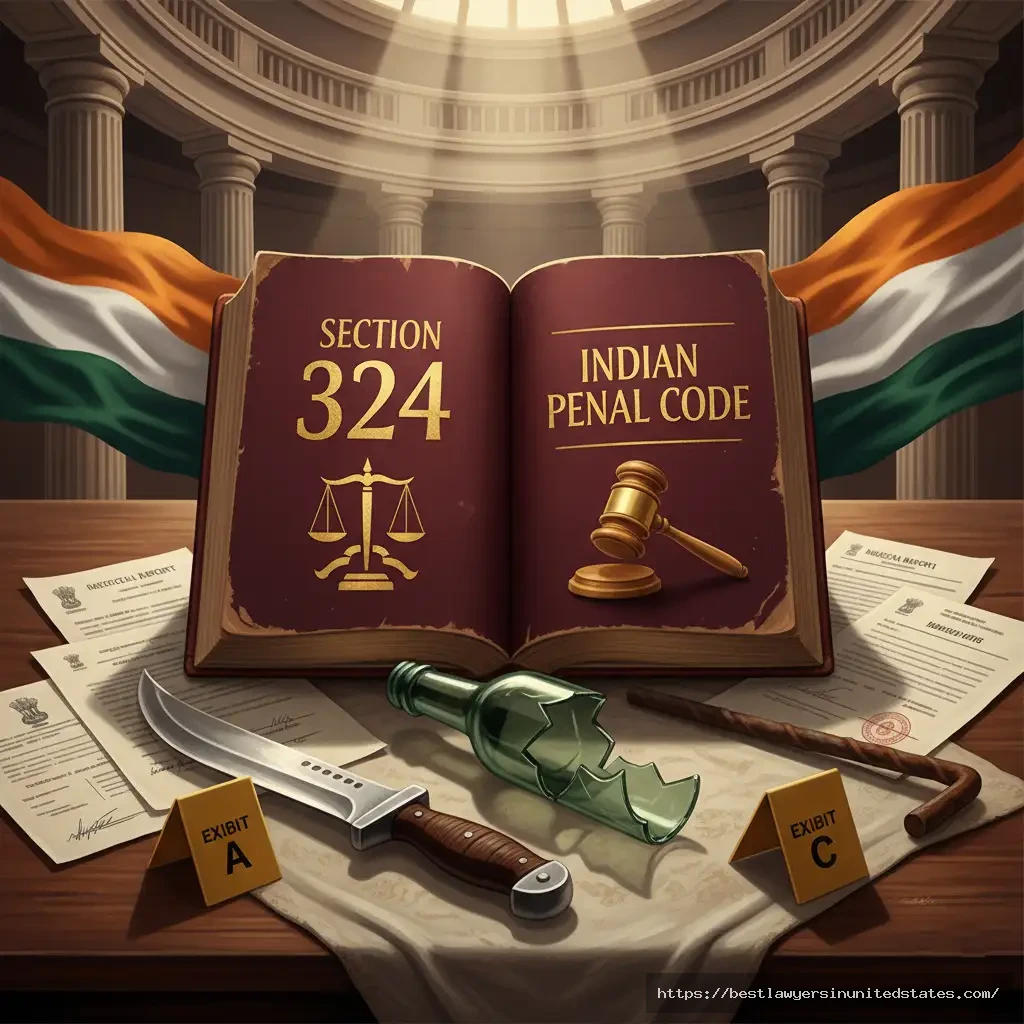
Section 324 of the Indian Penal Code deals with voluntarily causing hurt through dangerous weapons or means. This provision was specifically created to address situations where someone intentionally injures another person using objects or substances that pose serious danger.
Bare Act Text (Section 324 IPC):
“Whoever, except in the case provided for by section 334, voluntarily causes hurt by means of any instrument for shooting, stabbing or cutting, or any instrument which, used as a weapon of offence, is likely to cause death, or by means of fire or any heated substance, or by means of any poison or any corrosive substance, or by means of any explosive substance or by means of any substance which it is deleterious to the human body to inhale, to swallow, or to receive into the blood, or by means of any animal, shall be punished with imprisonment of either description for a term which may extend to three years, or with fine, or with both.”
The law recognizes that using dangerous instruments elevates the severity of an assault. While Section 323 IPC covers simple hurt, Section 324 specifically addresses situations where the method of causing injury poses greater risk.
Key difference: The weapon or means used matters more than the actual injury caused. Even if someone suffers only minor injuries from an acid attack, Section 324 applies because acid is inherently dangerous.
Section 324 IPC in BNS 2023: Official Conversion Guide
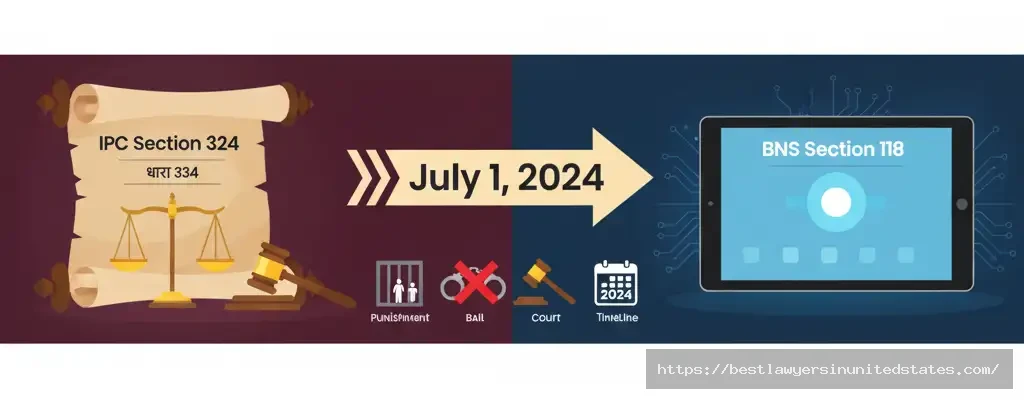
The Indian Penal Code has been replaced by the Bharatiya Nyaya Sanhita, effective from July 1, 2024. Section 324 IPC is now covered under Section 118 BNS.
IPC to BNS Conversion Table
| Aspect | Section 324 IPC (Old Law) | Section 118 BNS (New Law) |
|---|---|---|
| Section Number | 324 | 118 |
| Title | Voluntarily causing hurt by dangerous weapons or means | Voluntarily causing hurt by dangerous weapons or means |
| Punishment | Up to 3 years + fine | Up to 3 years + fine |
| Classification | Non-bailable, Cognizable, Non-compoundable | Non-bailable, Cognizable, Non-compoundable |
| Court Jurisdiction | Any Magistrate | Any Magistrate |
| Legal Wording | Substantially same | Minor language modernization |
What Changed: The substantive law remains identical. The BNS merely renumbered provisions and made minor language updates for clarity. All case law precedents under Section 324 IPC continue to apply to Section 118 BNS.
For Ongoing Cases: Cases filed before July 1, 2024 under Section 324 IPC will continue under the old provision. New cases registered after this date are charged under Section 118 BNS. The legal principles, punishment, and procedures remain unchanged.
Is Section 324 IPC Bailable or Non-Bailable?
Section 324 IPC is a non-bailable offense. This means the accused does not have an automatic right to bail, and the court exercises discretion in granting it.
Being non-bailable doesn’t mean bail is impossible—it means you must apply to a court and demonstrate why you deserve release. The Magistrate or Sessions Judge examines factors like the nature of injuries, whether the weapon was deadly, your criminal history, and likelihood of tampering with evidence.
How to Get Bail in 324 IPC Cases: Step-by-Step Process
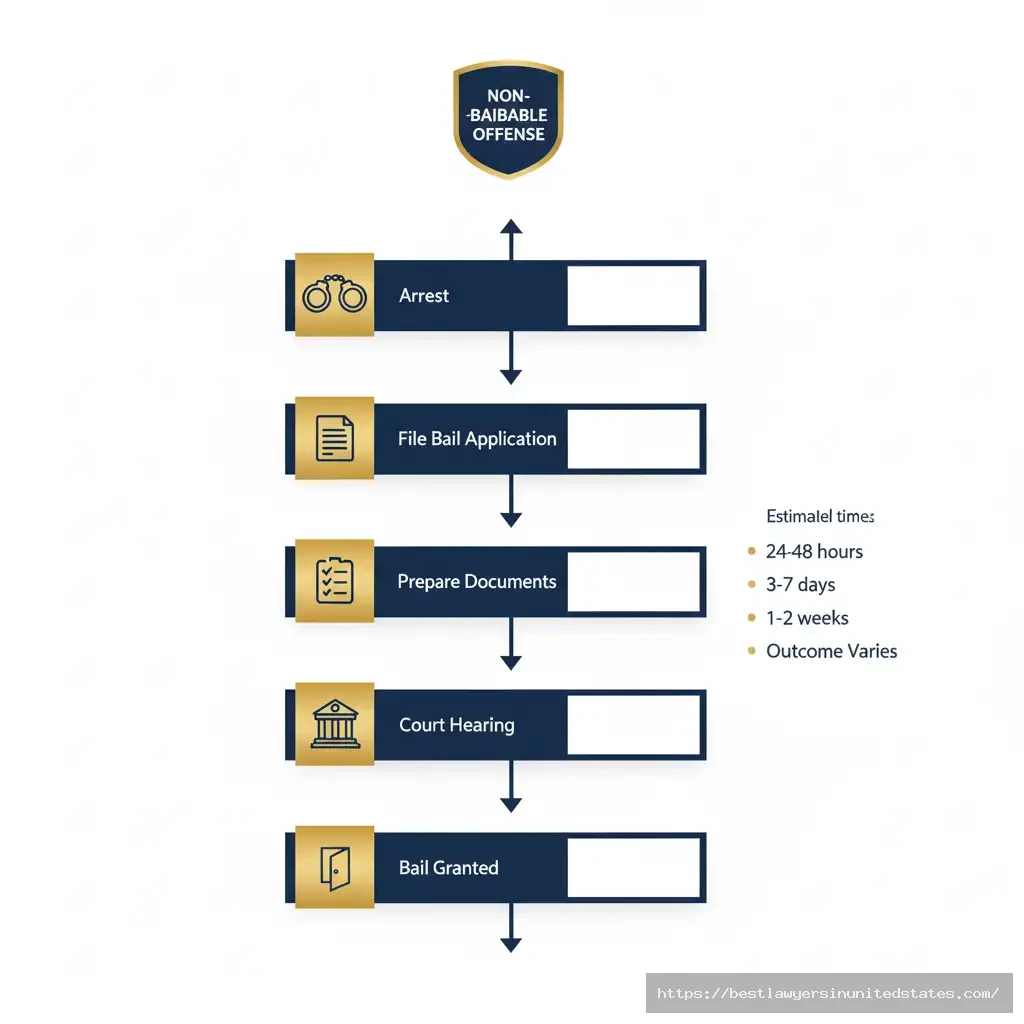
Step 1: File Bail Application Immediately Your lawyer should file a bail application within 24-48 hours of arrest. Delays weaken your case and suggest you’re not serious about defending yourself.
Step 2: Prepare Required Documents
- Copy of FIR
- Medical reports of the victim (to assess injury severity)
- Your Aadhaar card, residence proof
- Character certificates (from employer, community leaders)
- Property documents (to show you won’t flee)
- Surety documents (someone who guarantees your appearance)
Step 3: Build Your Bail Argument Strong grounds for bail in 324 IPC cases include:
- Injuries were minor, not life-threatening
- The weapon used was not inherently deadly
- You have no criminal history
- You’re the sole breadwinner for your family
- You’ll cooperate with investigation
- Risk of evidence tampering is minimal
- You’ve been in custody for a reasonable period
Step 4: Court Hearing Your lawyer presents arguments before the Magistrate or Sessions Judge. The prosecution opposes bail by highlighting injury severity and danger to society. The court typically decides within 1-3 hearings.
Step 5: If Bail is Granted You’ll need to:
- Furnish bail bond (typically ₹10,000-₹50,000 depending on case severity)
- Provide surety (a person who takes responsibility for your court appearances)
- Surrender passport if directed
- Report to police station as per court orders
- Not leave the jurisdiction without permission
Bail Amount and Timeline
| Case Severity | Typical Bail Amount | Timeline |
|---|---|---|
| Minor injuries, first offense | ₹10,000-₹25,000 | 3-7 days |
| Moderate injuries | ₹25,000-₹50,000 | 7-15 days |
| Serious injuries or repeat offender | ₹50,000-₹1,00,000+ | 15-30 days |
Reality check: Bail in 324 IPC cases is routinely granted unless the victim’s injuries are severe or there’s evidence of premeditation. Courts recognize that prolonged incarceration before trial violates the principle that “bail is the rule, jail is the exception.”
If bail is denied: You can file a revision petition in the Sessions Court or High Court. Many accused persons get bail at the appellate level even when the trial court refuses.
Is Section 324 IPC Cognizable or Non-Cognizable?
Section 324 IPC is a cognizable offense. This gives police significant powers.
What cognizable means:
- Police can arrest without a warrant
- Police can start investigation without Magistrate’s permission
- Police must investigate once a complaint is filed
- The offense is considered serious enough to warrant immediate action
From a practical standpoint, if someone files a complaint under Section 324, police will likely arrest the accused immediately. Unlike non-cognizable offenses (like Section 323 simple hurt), you cannot prevent arrest by arguing the matter is minor.
Your rights even in cognizable offenses:
- Police must inform you of grounds for arrest
- You must be presented before a Magistrate within 24 hours
- You can request legal representation immediately
- Police cannot detain you indefinitely without charging you
Is Section 324 Compoundable? (Can You Settle Out of Court?)
Section 324 IPC is a non-compoundable offense. This means you cannot settle the case out of court by reaching a compromise with the victim, even if both parties agree.
Why non-compoundable? The law considers use of dangerous weapons a threat to public order, not just a private dispute. Even if the victim forgives you, the State pursues prosecution because such violence threatens societal safety.
Can Compromise Help at All?
While you cannot legally compound the case, a compromise can still help significantly:
During Trial: If the victim turns hostile (refuses to testify or gives weak evidence), the prosecution’s case weakens. Many 324 IPC cases end in acquittal when victims lose interest.
For Sentencing: If convicted, a compromise shows remorse. Courts often impose lighter sentences (lower end of imprisonment range or just fine) when parties have reconciled.
Quashing by High Court: In exceptional cases, High Courts use their inherent powers under Section 482 CrPC (now Section 529 BNSS) to quash proceedings if:
- Injuries were minor
- The incident arose from a sudden quarrel
- Parties have settled amicably
- Continuing prosecution serves no public purpose
Example: In matrimonial disputes where husband-wife file cross-cases including 324 IPC, High Courts sometimes quash proceedings if they reconcile, reasoning that family harmony outweighs prosecution.
Bottom line: While you cannot formally compound the offense, practical reality allows for settlements that effectively end prosecution.
Essential Elements of Section 324 IPC Offense
For prosecution to prove Section 324 IPC, they must establish three essential elements beyond reasonable doubt:
Element 1: The Accused Caused Hurt
“Hurt” is defined in Section 321 IPC as causing bodily pain, disease, or infirmity. The victim doesn’t need life-threatening injuries—even minor pain qualifies.
Examples of hurt:
- Cuts and bruises
- Burns
- Puncture wounds
- Poisoning effects
- Pain from blunt force
The prosecution must prove through medical evidence that actual hurt occurred. A victim’s testimony alone isn’t sufficient—medical examination reports are crucial.
Element 2: The Hurt Was Caused Voluntarily
“Voluntarily” means intentionally—you knew your actions would cause hurt and you intended to do so. Accidental injuries don’t qualify.
Not voluntary: You’re cleaning a knife and it slips, cutting someone nearby.
Voluntary: You deliberately slash someone with a knife during an argument.
The prosecution must prove intention through circumstances—eyewitness accounts, the nature of attack, whether you aimed at the victim, and your conduct before/after the incident.
Element 3: Dangerous Weapon or Means Was Used
This is the defining element of Section 324. The hurt must be caused using one of these dangerous means:
What Qualifies as “Dangerous Weapon or Means”
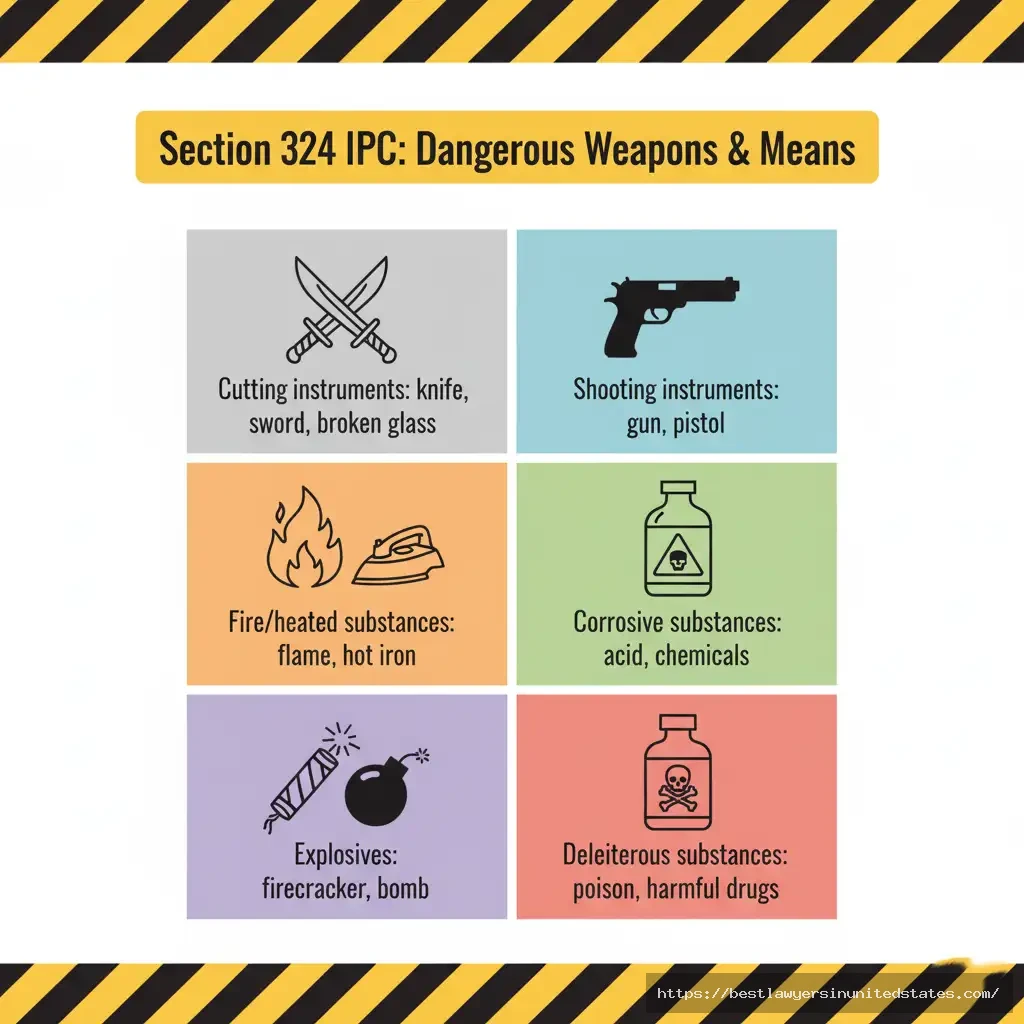
Shooting, Stabbing, or Cutting Instruments:
- Guns, pistols, rifles
- Knives, swords, daggers
- Axes, sickles, machetes
- Broken bottles or glass
- Any sharp object used as a weapon
Instruments Likely to Cause Death:
- Iron rods, baseball bats, hockey sticks
- Heavy stones or bricks
- Chains or belts with heavy buckles
- Any object that could cause fatal injury if used forcefully
Fire or Heated Substance:
- Setting someone on fire
- Throwing burning coal
- Pressing a hot iron on someone
- Pouring boiling water or oil
Poison or Corrosive Substance:
- Acid attacks (sulfuric, nitric, hydrochloric acid)
- Bleach or drain cleaners
- Poisonous chemicals
- Any substance that destroys tissue
Explosive Substance:
- Bombs, grenades
- Firecrackers used to injure
- Any explosive device
Deleterious Substance:
- Toxic gases to inhale
- Poisonous substances to swallow
- Contaminated injections
Animals:
- Setting dogs on someone
- Using snakes or scorpions
- Any animal used as a weapon
Real-World Examples: When Section 324 Applies
Scenario 1: Knife Attack During Fight Two neighbors argue over parking. One pulls out a pocket knife and slashes the other’s arm, causing a 2-inch cut. Even though the injury isn’t serious, Section 324 applies because a knife is a stabbing/cutting instrument.
Scenario 2: Acid Attack A woman rejects a man’s advances. He throws acid on her face, causing burns and scarring. Section 324 applies (along with specific acid attack laws). The use of corrosive substance makes this a 324 case regardless of injury extent.
Scenario 3: Heated Iron Rod During a property dispute, someone heats an iron rod and presses it on another person’s leg, causing burn marks. Section 324 applies due to use of heated substance.
Scenario 4: Stick Attack A person hits another with a thick wooden stick, causing bruises and pain. If the stick is heavy enough to potentially cause death, Section 324 applies. If it’s a light stick incapable of serious harm, only Section 323 (simple hurt) applies.
Scenario 5: Glass Bottle in Bar Fight During a bar brawl, someone breaks a beer bottle and cuts another person with the sharp edge. Section 324 applies—the broken bottle becomes a cutting instrument.
Punishment Under Section 324 IPC
Imprisonment Duration and Fines
Section 324 IPC prescribes:
- Imprisonment: Up to 3 years of either description (rigorous or simple imprisonment)
- Fine: Amount determined by the court
- Both: Imprisonment and fine together
“Either description” means courts can impose:
- Simple imprisonment: Confinement without hard labor
- Rigorous imprisonment: Confinement with hard labor
Sentencing Guidelines and Court Discretion
Courts have wide discretion in sentencing based on:
Aggravating factors (higher punishment):
- Severity of injuries
- Vulnerability of victim (child, elderly, woman)
- Premeditation or planning
- Prior criminal record
- Use of highly dangerous weapon
- Attack on vital body parts
- Public place attack causing fear
Mitigating factors (lower punishment):
- Minor injuries
- First-time offender
- Sudden provocation
- Immediate remorse
- Compromise with victim
- Long time already spent in custody
- Family responsibilities
Typical sentencing patterns:
| Case Type | Usual Sentence |
|---|---|
| Minor cuts, first offense, settlement | 6 months-1 year or fine only |
| Moderate injuries, no prior record | 1-2 years + fine |
| Serious injuries, dangerous weapon | 2-3 years + substantial fine |
| Repeat offender, no remorse | Maximum 3 years + fine |
Important: The court cannot impose more than 3 years imprisonment. If injuries are grievous (causing permanent disfigurement, fractures, or endangering life), the charge would be Section 326 IPC (now Section 124 BNS), which carries up to 10 years imprisonment.
Which Court Tries Section 324 IPC Cases?
Section 324 IPC cases are tried by any Magistrate. This includes:
- Judicial Magistrate First Class (JMFC)
- Metropolitan Magistrate (in metropolitan areas)
- Chief Judicial Magistrate (CJM)
The case does not require a Sessions Court trial. This classification as a Magistrate-triable offense means:
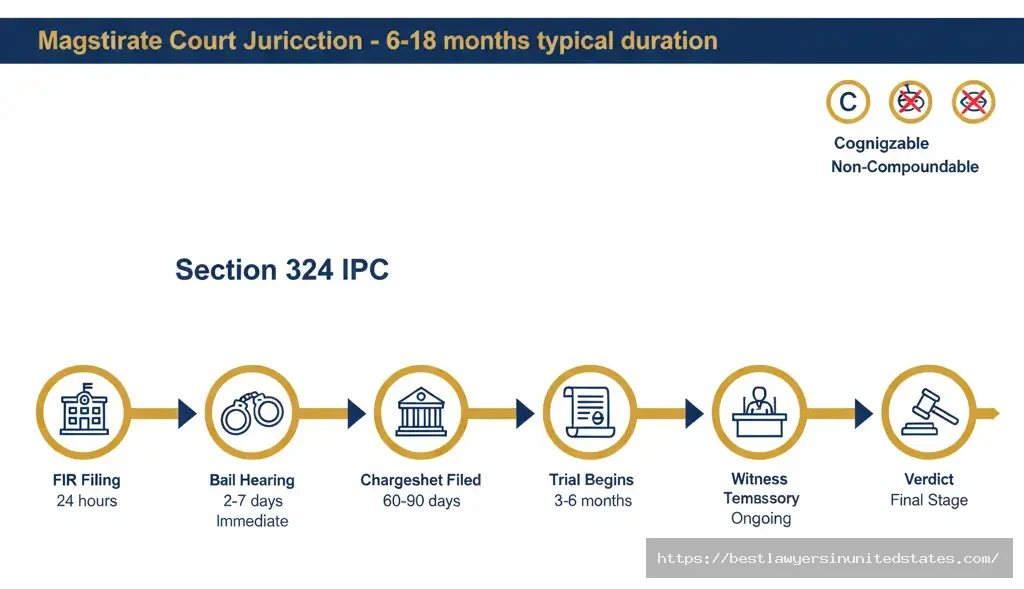
- Faster trial process (typically 6-18 months)
- Less complex procedures
- Lower court fees
- More accessible justice
The police file the chargesheet directly in the Magistrate’s court, which then proceeds with trial following summary or regular trial procedures depending on case complexity.
Difference Between Section 323, 324, and 326 IPC [Comparison Table]
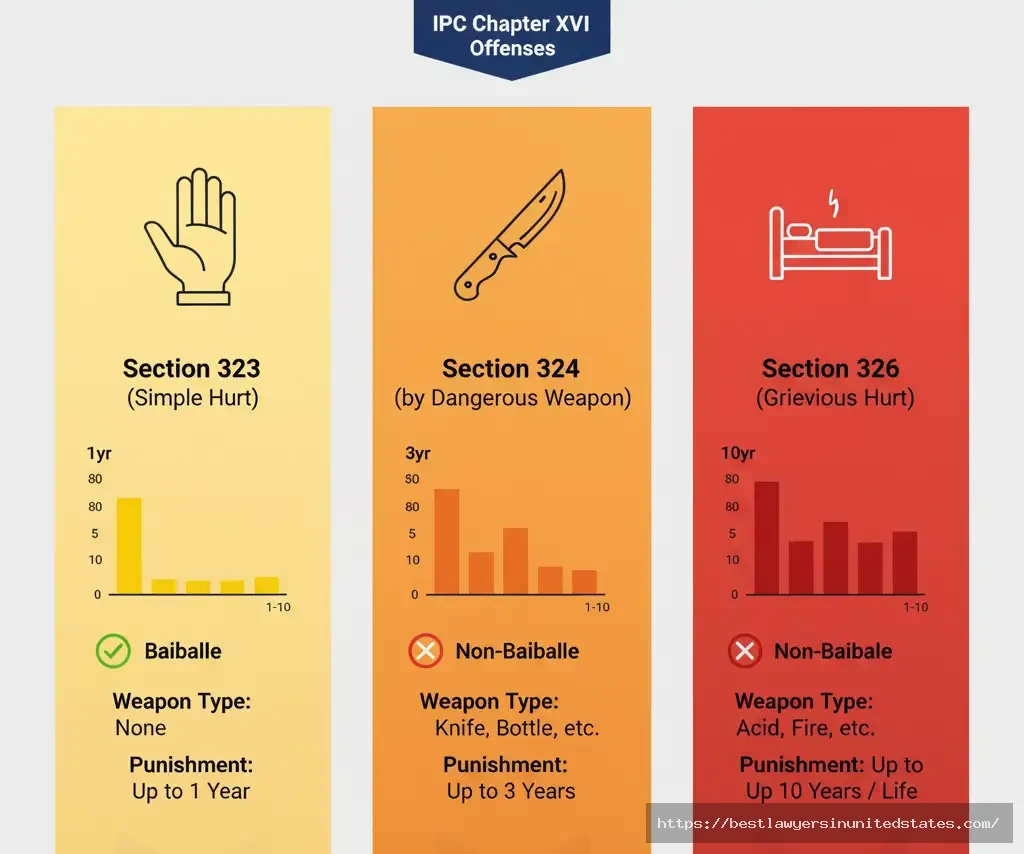
Understanding the distinction between these three “hurt” provisions is crucial:
| Aspect | Section 323 IPC (Simple Hurt) | Section 324 IPC (Hurt by Dangerous Weapon) | Section 326 IPC (Grievous Hurt by Dangerous Weapon) |
|---|---|---|---|
| Nature of Hurt | Simple hurt (pain, bruises) | Simple hurt | Grievous hurt (fractures, permanent damage) |
| Weapon Used | Hand, fist, or minor objects | Dangerous weapons/means | Dangerous weapons/means |
| Punishment | Up to 1 year + fine | Up to 3 years + fine | Up to 10 years + fine |
| Bailable | Yes | No | No |
| Cognizable | Yes | Yes | Yes |
| Compoundable | Yes (with permission) | No | No |
| BNS Equivalent | Section 115 | Section 118 | Section 124 |
When 323 and 324 Are Charged Together
Police often charge both sections together when:
- Multiple acts occurred (some with weapons, some without)
- Different victims injured differently
- Uncertainty about weapon classification
Example: In a street fight, Person A punches Person B (323) and then picks up a stick and hits him (324). Police charge both sections. The court determines which applies based on evidence.
If both sections are proven, the court typically convicts under Section 324 (more serious offense) and treats 323 as subsumed within it.
How Courts Differentiate Between 324 and 326
The key difference is injury severity:
Section 324 applies when:
- Injury is painful but not grievous
- No fractures or permanent damage
- Victim recovers fully within weeks
- No disfigurement or organ damage
Section 326 applies when injury is “grievous”:
- Fractures or dislocation of bones
- Permanent disfigurement of face/head
- Loss of sight, hearing, or any limb
- Destruction of any organ
- Severe burns causing permanent damage
Critical point: Both involve dangerous weapons. The difference is the result, not the weapon itself. Using a knife can result in either charge depending on injury caused.
Medical evidence determines classification. If initial charge is 324 but injuries later prove grievous, prosecution can amend charges to 326.
Evidence Requirements in 324 IPC Cases
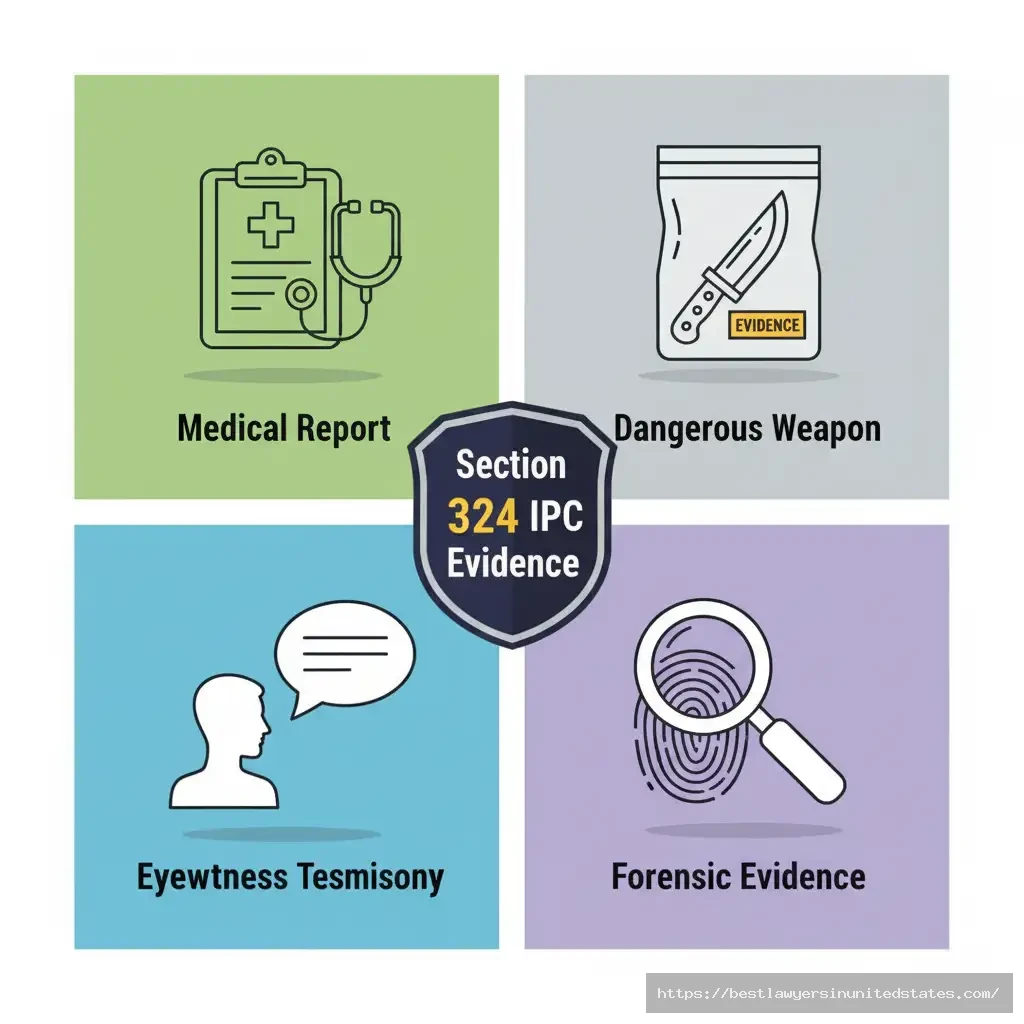
What Prosecution Must Prove
1. Medical Evidence
- Injury report from government hospital
- Description of injury type, size, location
- Nature of weapon likely used
- Whether injury could be caused by alleged weapon
- Healing timeline and prognosis
2. Weapon Evidence
- Recovery of the weapon used
- Forensic examination linking weapon to injuries
- Blood stains or tissue on weapon
- Fingerprints if available
If weapon isn’t recovered, medical evidence must establish that injuries could only be caused by a dangerous weapon/means (not bare hands).
3. Eyewitness Testimony
- Direct witnesses who saw the attack
- Testimony about weapon used
- Sequence of events
- Accused’s intention (verbal threats, aggressive behavior)
4. Victim’s Testimony
- FIR or complaint
- Detailed account of incident
- Identification of accused
- Motive or background
5. Circumstantial Evidence
- Motive (property dispute, personal enmity)
- Prior threats
- Accused’s presence at scene
- Conduct after incident (fleeing, hiding weapon)
Medical Report Standards
A proper medical examination report must include:
- Date, time, and place of examination
- Nature of injuries (incised wound, lacerated wound, burn, etc.)
- Size and depth of injuries
- Body part affected
- Weapon likely used based on injury pattern
- Age of injuries (fresh or old)
- Whether injury is simple or grievous
- Treatment given
- Opinion on whether injuries were caused by alleged weapon
Doctor’s testimony in court is crucial. The medical officer must explain:
- Technical terms in layman’s language
- How they determined weapon type
- Whether injuries match victim’s version
- Alternative explanations for injuries
Weapon Examination Process
If weapon is recovered:
- Sent to Forensic Science Laboratory
- Examined for blood stains, tissue, hair
- Fingerprint analysis
- Chemical analysis (for corrosive substances)
- Ballistics examination (for firearms)
Expert testimony links weapon to injuries, strengthening prosecution’s case.
Eyewitness Testimony Requirements
Courts scrutinize eyewitness testimony carefully:
- Consistency: Witness statements must match FIR and court testimony
- Opportunity to see: Witness must have clear view of incident
- No motive to falsely implicate: Any enmity with accused weakens credibility
- Corroboration: Independent witnesses strengthen case
- Immediate reporting: Delayed disclosure raises suspicion
A single credible eyewitness combined with medical evidence can sustain conviction.
Defense Strategies: How to Challenge 324 IPC Charges
Common Grounds for Acquittal
1. No Dangerous Weapon Used Argue that the object used doesn’t qualify as dangerous. If injuries were caused by slapping, pushing, or using a minor object incapable of causing death, Section 324 doesn’t apply—only Section 323 (simple hurt).
2. Accidental Injury Establish that hurt wasn’t intentional. If the weapon accidentally caused injury during a scuffle without intent, the voluntary element is missing.
3. Self-Defense (Section 96-106 IPC) Prove you acted to protect yourself from imminent danger. If the victim attacked you first and you used reasonable force to defend yourself, you’re entitled to acquittal.
Requirements for self-defense:
- Imminent threat to your body or property
- No time to seek legal protection
- Force used was proportionate
- No safe means of escape available
4. Weak Medical Evidence Challenge medical reports showing:
- Injuries are minor and inconsistent with dangerous weapon use
- Medical officer’s opinion contradicts injury pattern
- Injuries could have been self-inflicted
- Time of injury doesn’t match alleged incident time
5. Unreliable Witnesses Discredit prosecution witnesses by showing:
- Contradictions between FIR, police statements, and court testimony
- Witnesses have enmity with accused
- Witnesses weren’t present at scene
- Delayed reporting without reasonable explanation
6. Weapon Not Recovered If prosecution cannot produce the weapon and medical evidence is ambiguous about weapon type, argue that prosecution failed to prove use of dangerous means.
7. False Implication Establish that you were falsely implicated due to:
- Property disputes
- Personal vendetta
- Family conflicts
- Business rivalry
Supporting evidence includes alibi witnesses, CCTV footage showing you elsewhere, or phone records proving you weren’t at the scene.
Exceptions Under Section 334 IPC
Section 324 itself references Section 334, which provides an exception:
Section 334 IPC: If hurt was caused on grave and sudden provocation and:
- You didn’t intend more harm than necessary
- You didn’t intend to cause death or grievous hurt
- Provocation was not sought or voluntarily provoked by you
Then punishment is reduced to up to 2 years imprisonment and/or fine.
Example: Someone abuses your family member in the vilest terms. In sudden rage, you hit them with a stick causing injury. Section 334 may apply, reducing your punishment.
Landmark Supreme Court Judgments on 324 IPC
Anwarul Haq v. State of Uttar Pradesh (2005)
Facts: Accused attacked victim with lathi (stick), causing simple hurt.
Court Held: To attract Section 324, prosecution must prove:
- Hurt was caused voluntarily
- Weapon used was dangerous or likely to cause death
Merely using any object doesn’t automatically make it a “dangerous weapon.” Context matters—a light stick used without force may not qualify.
Takeaway: Courts examine whether the specific object, considering how it was used, could potentially cause death. This protects against overcharging minor assaults as 324.
Pravat Chandra Mohanty v. State of Odisha (2021)
Facts: Accused attacked with iron rod causing injuries.
Court Held: Iron rod is clearly an instrument capable of causing death if used with force. Medical evidence showing multiple injuries on vital body parts supported Section 324 conviction.
Takeaway: Common objects like rods, pipes, and heavy sticks qualify as dangerous weapons if they could potentially cause fatal injuries.
Ramesh alias Dapinder Singh v. State of Himachal Pradesh (2021)
Facts: Victim suffered injuries allegedly from knife attack. Defence argued knife wasn’t recovered and injuries could be from other causes.
Court Held: While weapon recovery strengthens prosecution’s case, medical evidence clearly establishing injury pattern consistent with knife wounds is sufficient for conviction. Doctor’s expert opinion holds weight.
Takeaway: Non-recovery of weapon doesn’t automatically lead to acquittal if medical evidence conclusively establishes dangerous weapon was used.
Rekha Faldessai v. State of Goa (2023)
Facts: Domestic violence case where wife attacked husband with knife during argument.
Court Held: Section 324 applies equally regardless of gender. Sudden provocation under Section 334 wasn’t established because attack wasn’t immediate response to provocation. Court upheld conviction but showed leniency in sentencing considering family circumstances.
Takeaway: Courts increasingly recognize that Section 324 is gender-neutral and apply it to domestic violence by either spouse. However, sentencing considers family reconciliation possibilities.
Victim’s Guide: Filing an FIR Under Section 324 IPC
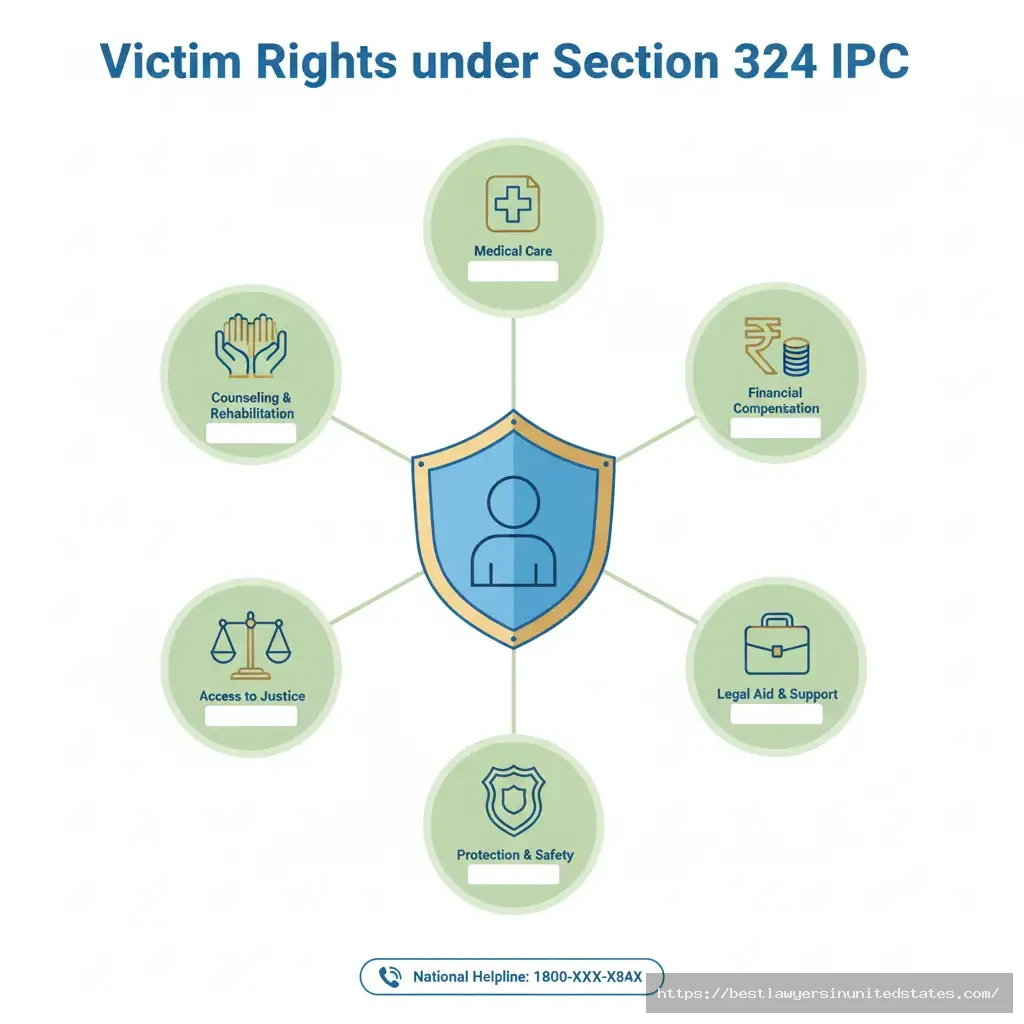
Required Documentation
Immediate Steps After Attack:
- Seek medical treatment immediately at a government hospital
- Preserve evidence (bloodied clothes, weapon if accessible, photos of injuries)
- Note details (time, location, witnesses present)
Documents to Collect:
- Medical examination report (Medico-Legal Certificate – MLC)
- Prescription and treatment records
- Hospital bills and receipts
- Photos of injuries (multiple angles, with date stamp)
- CCTV footage if incident occurred in public place
- Witness contact information
Filing the FIR
Where to File:
- Police station having jurisdiction over area where incident occurred
- If police refuse FIR, file written complaint with Superintendent of Police
- Use online FIR facility if available in your state
What to Include in FIR:
- Exact date, time, and location of incident
- Detailed description of attack (weapon used, body parts injured)
- Accused person’s name and identifying details
- Names and contact details of witnesses
- Motive or background (if any prior disputes)
- Specific mention that dangerous weapon was used (for 324 classification)
Your Rights:
- Police must register FIR for cognizable offenses like 324
- You’re entitled to free copy of FIR
- Police must provide FIR number and investigating officer’s contact
- You can request police protection if threatened
Victim Compensation Rights
Many states have victim compensation schemes:
Under Victim Compensation Scheme:
- Monetary compensation for medical expenses
- Compensation for loss of earnings during recovery
- Rehabilitation support for serious injuries
- Psychological counseling services
How to Apply:
- File application with District Legal Services Authority (DLSA)
- Submit medical reports, FIR copy, income proof
- DLSA assesses case and awards compensation (typically ₹10,000-₹5,00,000 depending on injury severity)
Legal Aid and Support Services
Free legal assistance available through:
- National Legal Services Authority (NALSA): Free lawyers for victims who cannot afford legal representation
- State Legal Services Authority: State-level support
- District Legal Services Authority: Local-level assistance
Women and child victims get priority assistance with dedicated cells in police stations and fast-track courts.
Helplines:
- National Commission for Women (NCW): 7827-170-170
- State Women’s Commission
- Local victim support organizations
Section 324 IPC in Regional Languages
Understanding legal provisions in your native language ensures you fully comprehend your rights and obligations.
Legal Terminology Glossary
| English Term | Hindi (हिंदी) | Marathi (मराठी) | Telugu (తెలుగు) | Malayalam (മലയാളം) |
|---|---|---|---|---|
| Voluntarily causing hurt | स्वेच्छा से चोट पहुंचाना | स्वेच्छेने इजा करणे | స్వచ్ఛందంగా గాయపరచడం | മനഃപൂർവം മുറിവേൽപ്പിക്കൽ |
| Dangerous weapon | खतरनाक हथियार | धोकादायक शस्त्र | ప్రమాదకరమైన ఆయుధం | അപകടകരമായ ആയുധം |
| Non-bailable | गैर-जमानती | जामीन न मिळणारा | బెయిలు లేని | ജാമ്യം കിട്ടാത്ത |
| Cognizable | संज्ञेय | दखल घेण्यायोग्य | గుర్తింపదగిన | അറിയാവുന്ന |
| Imprisonment | कारावास | कारावास | జైలు శిక్ష | തടവ് |
| Fine | जुर्माना | दंड | జరిమానా | പിഴ |
| Medical report | चिकित्सा रिपोर्ट | वैद्यकीय अहवाल | వైద్య నివేదిక | മെഡിക്കൽ റിപ്പോർട്ട് |
Download Bare Act Resources
Section 324 IPC Full Text Available In:
- Hindi (धारा 324 भारतीय दंड संहिता)
- Marathi (कलम 324 भारतीय दंड संहिता)
- Telugu (సెక్షన్ 324 భారత దండ సంహిత)
- Malayalam (വകുപ്പ് 324 ഇന്ത്യൻ ശിക്ഷാ നിയമം)
Access official translations through:
- Ministry of Law and Justice website
- State government legal portals
- District court websites
- National Legal Services Authority (NALSA)
Frequently Asked Questions (FAQs)
Is 324 IPC bailable or non-bailable?
Section 324 IPC is a non-bailable offense. The accused must apply to court for bail and cannot claim it as a right. Courts grant bail considering injury severity, weapon used, accused’s background, and likelihood of absconding. Bail is commonly granted except in cases with serious injuries or criminal history.
What is the punishment for Section 324?
Punishment under Section 324 IPC is imprisonment up to 3 years and/or fine. Courts decide actual sentence based on factors like injury severity, weapon dangerousness, prior criminal record, and whether compromise occurred. First-time offenders with minor injuries often receive 6 months to 1 year, while repeat offenders get harsher sentences.
What evidence is needed for 324 IPC?
Prosecution must prove: (1) Medical evidence showing hurt was caused, (2) Dangerous weapon or means was used, (3) Eyewitness testimony of the attack, (4) Weapon recovery if possible, (5) Victim’s testimony, and (6) Motive or circumstances. Medical reports and weapon examination are most critical.
Can a compromise be reached in 324 IPC cases?
Section 324 is non-compoundable—parties cannot formally settle and withdraw the case. However, compromise helps practically. If the victim refuses to testify or becomes hostile, prosecution weakens significantly. Courts also consider settlement as a mitigating factor during sentencing, often imposing lighter punishment or just fines.
How to get bail in Section 324?
File bail application through lawyer immediately after arrest. Include: (1) Copy of FIR, (2) Medical reports showing injuries aren’t serious, (3) Character certificates, (4) Residential proof, (5) Surety documents. Argue: minor injuries, no criminal history, sole breadwinner, will cooperate with investigation. Bail typically takes 3-15 days depending on court workload.
What is Section 324 IPC in BNS?
Section 324 IPC is now Section 118 BNS (Bharatiya Nyaya Sanhita 2023). The law remains identical—punishment, classification, and procedures unchanged. Cases filed before July 1, 2024 continue under IPC; new cases use BNS. All legal precedents and case law under 324 IPC apply to Section 118 BNS.
Which court tries 324 IPC cases?
Any Magistrate has jurisdiction—Judicial Magistrate First Class (JMFC), Metropolitan Magistrate, or Chief Judicial Magistrate. Section 324 doesn’t require Sessions Court trial. This means faster proceedings (6-18 months typically) and more accessible justice compared to Sessions Court cases.
What is the difference between 323 and 324 IPC?
Section 323 covers simple hurt using hands, fists, or minor objects. It’s bailable, compoundable, and carries up to 1 year imprisonment. Section 324 applies when dangerous weapons (knives, acid, fire, sticks capable of causing death) are used. It’s non-bailable, non-compoundable, and carries up to 3 years imprisonment. The weapon determines which section applies.
What is the difference between 324 and 326 IPC?
Both involve dangerous weapons, but Section 324 applies to simple hurt (cuts, bruises, burns that heal fully). Section 326 applies to grievous hurt (fractures, permanent disfigurement, loss of organs, life-threatening injuries). Section 326 carries up to 10 years imprisonment vs. 3 years for 324. Medical evidence determines classification.
Is Section 324 cognizable?
Yes, Section 324 is a cognizable offense. Police can arrest without warrant and investigate without Magistrate’s permission. Once a complaint is filed, police must register FIR and begin investigation immediately. This classification reflects the seriousness of attacks using dangerous weapons, allowing law enforcement to act swiftly to prevent further violence.
Section 323 and 324 IPC Charged Together: What It Means
When Both Sections Apply Simultaneously
Police frequently charge both Section 323 (simple hurt) and Section 324 (hurt by dangerous weapon) in the same FIR. This happens in several scenarios:
Scenario 1: Multiple Acts in Same Incident During a fight, the accused first punches the victim (323) and then picks up a bottle and hits him (324). Both actions constitute separate offenses.
Scenario 2: Multiple Victims Accused punches one person (323) and stabs another with a knife (324) in the same altercation.
Scenario 3: Uncertainty About Weapon Classification When police aren’t sure whether the object used qualifies as “dangerous,” they charge both sections to let the court decide based on evidence.
Scenario 4: Progressive Violence Attack starts with slapping/pushing (323) and escalates to using a stick or rod (324).
How Courts Decide
During trial, the court examines evidence and determines which section applies:
If only simple hurt proven: Conviction under Section 323 only. Section 324 charge is dropped.
If dangerous weapon proven: Conviction under Section 324. Section 323 gets absorbed—you’re not punished separately for both since 324 already covers the hurt element.
If both proven distinctly: Rare, but if there are clearly separate acts (punching one victim and stabbing another), separate convictions possible under both sections.
Combined Punishment Scenarios
| Finding | Conviction | Typical Punishment |
|---|---|---|
| Only fists/minor force used | Section 323 only | Up to 1 year + fine |
| Dangerous weapon used | Section 324 only (323 merged) | Up to 3 years + fine |
| Multiple victims, different methods | Both 323 and 324 | Concurrent sentences (served together) |
| Weapon status unclear | Benefit of doubt = Section 323 | Lower punishment |
Practical impact: Being charged with both doesn’t mean double punishment. Courts apply the principle of “more specific offense governs”—if 324 is proven, it supersedes 323.
Common Mistakes in 324 IPC Cases & How to Avoid Them
Mistakes by Accused/Defendants
1. Not Hiring Lawyer Immediately Many accused persons believe they can handle initial police questioning themselves. This is dangerous—statements made to police can be used against you, and without legal guidance, you might inadvertently admit critical facts.
Solution: Contact a criminal defense lawyer specializing in assault cases immediately. Early legal intervention significantly improves bail chances and trial outcomes.
2. Discussing Case Details Publicly Talking about the incident on social media, with neighbors, or with anyone other than your lawyer can create evidence against you. Witnesses may be found, and your statements can contradict your defense.
Solution: Maintain complete silence about case details except with your lawyer.
3. Not Collecting Defense Evidence Early CCTV footage gets deleted after 30-90 days. Witnesses forget details. Waiting months to build your defense means losing crucial evidence.
Solution: Immediately after arrest, have your lawyer:
- Collect CCTV footage from nearby cameras
- Record statements from defense witnesses
- Document your injuries if you were also hurt
- Preserve phone records, GPS data, or other alibi evidence
4. Fleeing or Avoiding Court Absconding strengthens prosecution’s case—courts infer consciousness of guilt. It also leads to arrest warrants and forfeiture of bail.
Solution: Attend every court date. If bail is denied initially, apply again rather than fleeing.
5. Tampering with Evidence or Witnesses Threatening prosecution witnesses or trying to destroy evidence can result in additional charges (intimidation, destruction of evidence) and ensures bail will be denied.
Solution: Let your lawyer handle all witness-related matters legally.
Mistakes by Victims/Complainants
1. Delaying Medical Examination Getting examined days after the incident weakens your case. Defense lawyers argue injuries could have occurred differently or are exaggerated.
Solution: Visit a government hospital within 24 hours of the attack for Medico-Legal Certificate (MLC). Private hospital reports carry less weight in court.
2. Exaggerating Injuries in FIR Claiming serious injuries that medical reports don’t support damages your credibility. Defense exploits these contradictions to argue you’re fabricating the entire incident.
Solution: Describe injuries accurately and objectively in your FIR. Let medical evidence speak for itself.
3. Not Preserving Evidence Washing bloodied clothes, discarding the weapon (if you have access), or cleaning the scene destroys evidence that could strengthen your case.
Solution: Preserve everything—clothes, weapon if accessible, take photographs, note witness details immediately.
4. Accepting Inadequate Compensation Victims often settle for minimal amounts under pressure, not realizing they’re entitled to state compensation schemes and full medical reimbursement.
Solution: Consult with legal aid services about victim compensation schemes before accepting any settlement. You can receive both private settlement and state compensation.
5. Not Following Up on Investigation Many victims file FIR but never follow up. Police may shelve the case citing lack of evidence or victim interest.
Solution: Regularly contact the investigating officer. If investigation stalls, file complaint with Superintendent of Police or approach court for directions.
Mistakes by Lawyers
1. Not Applying Medical Evidence Correctly Lawyers sometimes focus only on witness testimony while ignoring critical medical evidence that establishes or refutes use of dangerous weapon.
Solution: Always cross-examine medical officers thoroughly. Question injury patterns, weapon compatibility, and alternative explanations.
2. Missing Limitation Periods for Appeals If convicted, you have limited time to file appeals. Missing deadlines means accepting the conviction and punishment.
Solution: File appeal immediately after conviction. Don’t wait for “the right time.”
3. Not Exploring Compromise Despite Non-Compoundability Some lawyers wrongly tell clients compromise is impossible since 324 is non-compoundable. While true legally, practical settlements through High Court quashing petitions are possible.
Solution: In appropriate cases (minor injuries, family disputes, sudden quarrels), approach High Court under Section 482 CrPC for quashing after compromise.
Special Considerations: Acid Attacks and Section 324 IPC
While Section 324 IPC applies to acid attacks, additional stringent provisions exist under Section 326A IPC (now Section 124 BNS) specifically for acid attacks causing grievous hurt.
When Section 324 Applies to Acid Attacks
If acid is thrown but causes only simple hurt (minor burns that heal without permanent scarring), Section 324 applies rather than 326A.
Enhanced Punishment for Acid Attacks
Section 326A IPC/Section 124 BNS prescribes:
- Minimum 10 years imprisonment (can extend to life imprisonment)
- Substantial fine (part goes to victim for medical expenses)
Additionally, Section 326B IPC makes attempt to throw acid a separate offense punishable with 5-7 years imprisonment.
Victim Rights in Acid Attack Cases
Beyond standard victim compensation:
- Free medical treatment at government hospitals
- Compensation of at least ₹3 lakhs (varies by state)
- Rehabilitation support including psychological counseling
- Priority in government employment schemes
- Free legal aid
Seller Liability
Selling acid without maintaining proper records is punishable with imprisonment and fine. Shopkeepers must:
- Verify and record buyer’s identity
- Maintain sales register
- Report suspicious purchases
Role of Medical Evidence: What Doctors Must Document
Medical officers play a crucial role in Section 324 IPC cases. Their medical examination and testimony often determine conviction or acquittal. Getting examined days after the incident weakens your case.
Essential Elements of Medico-Legal Certificate (MLC)
1. Patient and Incident Details
- Name, age, gender of injured person
- Date and time of examination
- Date and time of alleged incident
- How patient arrived (police escort, self, ambulance)
- Patient’s statement about incident (not as evidence but for record)
2. Injury Documentation For each injury:
- Type: Incised (clean cut), lacerated (torn), punctured, contused (bruised), abrasion (scrape), burn
- Location: Precise anatomical location (e.g., “left forearm, middle third, anterior surface”)
- Dimensions: Length, width, depth in centimeters
- Edges and surrounding area: Clean-cut, irregular, reddened, swollen
- Bleeding status: Fresh bleeding, clotted, stopped
3. Weapon Analysis
- Opinion on what type of weapon could have caused injuries
- Whether injuries match alleged weapon
- Whether injuries could be caused by alternative means
- Whether force used was significant
4. Age of Injuries Critical for matching timeline:
- Fresh (within hours): Active bleeding, no clotting, bright red
- Recent (1-3 days): Clotting, inflammation, redness
- Old (weeks): Healing, scarring, color changes
5. Simple vs. Grievous Classification Doctor must opine whether injury is:
- Simple: Heals without permanent damage
- Grievous: Causes permanent disfigurement, fracture, endangers life, or damages organs
This determination affects whether charge is 324 or 326 IPC.
Doctor’s Court Testimony
During trial, medical officers are examined as expert witnesses:
Prosecution Questions:
- Confirm MLC details
- Explain injury patterns
- Establish weapon used
- Rule out self-inflicted injuries
- Confirm injuries match victim’s version
Defense Cross-Examination:
- Challenge weapon identification
- Suggest alternative explanations
- Question delay between incident and examination
- Highlight inconsistencies in injury description
- Suggest injuries could be accidental
Example Exchange:
Defense: “Doctor, could these injuries on the forearm be caused by the victim raising his hand to protect himself and accidentally hitting it against a wall?”
Doctor: “The injury pattern shows clean incised wounds with defined edges consistent with a sharp instrument. Blunt trauma against a wall would cause contusions or abrasions, not incised wounds.”
Such testimony proves critical in establishing Section 324 applicability.
Section 324 IPC in Domestic Violence Cases
Section 324 frequently appears in domestic violence scenarios, adding criminal consequences to civil Protection of Women from Domestic Violence Act (PWDVA) proceedings.
When Domestic Disputes Escalate to 324 IPC
Common Scenarios:
- Husband attacks wife with kitchen knife during argument
- Wife throws hot oil/water on husband
- In-laws assault daughter-in-law with belts, sticks, or heated objects
- Acid attacks in domestic settings
Intersection with PWDVA
A victim can pursue both:
- Criminal case under Section 324 IPC (in criminal court)
- Civil protection order under PWDVA (in family court)
Both proceedings are independent. Criminal conviction isn’t required for civil protection orders.
Special Protections for Women Victims
During Investigation:
- Statement recorded by female officer or in presence of female family member
- Medical examination by female doctor where possible
- Protection orders against accused approaching victim
During Trial:
- Option for in-camera proceedings (closed court)
- Screen between victim and accused during testimony
- Video-conferencing facility if victim fears accused
Settlement Considerations
Courts show reluctance in permitting quashing of 324 IPC charges in domestic violence cases, reasoning that:
- Women may be pressured to compromise
- Family violence deserves deterrent punishment
- Pattern of abuse may continue
However, if genuine reconciliation is evident (supported by counseling reports, time elapsed since incident, and independent verification), High Courts occasionally permit quashing under Section 482 CrPC.
Counseling and Reconciliation
Before trial, courts often refer domestic violence cases involving 324 IPC to:
- Family counseling centers
- Mediation cells
- Women’s welfare organizations
If counseling succeeds and parties reconcile, victim may turn hostile (refuse to testify), leading to acquittal. Courts cannot force victims to testify against their will in matrimonial disputes.
Section 324 IPC: Key Differences Across States
While Section 324 IPC (now Section 118 BNS) is a central law applicable uniformly, certain procedural aspects vary by state.
State-Wise Victim Compensation
| State | Compensation Range | Processing Authority |
|---|---|---|
| Maharashtra | ₹50,000-₹5,00,000 | District Legal Services Authority |
| Delhi | ₹25,000-₹3,00,000 | Delhi State Legal Services Authority |
| Karnataka | ₹50,000-₹4,00,000 | Karnataka State Legal Services Authority |
| Tamil Nadu | ₹10,000-₹3,00,000 | TN Victim Compensation Scheme |
| Uttar Pradesh | ₹50,000-₹5,00,000 | UP State Legal Services Authority |
Compensation depends on:
- Injury severity
- Medical expenses
- Loss of income
- Victim’s financial status
- Permanent disability
Fast-Track Courts
Several states have established fast-track courts for violent crimes including Section 324 cases:
- Delhi: Special fast-track courts for crimes against women
- Maharashtra: Fast-track sessions courts in major cities
- Tamil Nadu: Special courts for speedy trial of violent offenses
Fast-track courts aim to conclude trials within 6 months versus 18-24 months in regular courts.
Legal Aid Availability
States with comprehensive legal aid:
- All states have District Legal Services Authorities (DLSA)
- Free lawyers for victims and accused with annual income below ₹3 lakhs
- Women, SC/ST, children, and disabled persons get priority
How to access:
- Visit District Legal Services Authority office
- Submit income certificate and case details
- Receive appointed lawyer within 7-15 days
Anticipatory Bail in Section 324 IPC Cases
What is Anticipatory Bail?
Anticipatory bail (under Section 438 CrPC, now Section 482 BNSS) allows you to seek pre-arrest bail if you anticipate arrest for a non-bailable offense like Section 324 IPC.
When to Apply
File anticipatory bail application when:
- You learn an FIR has been filed against you
- Victim threatens to file false case
- Police summon you for questioning
- You fear imminent arrest
Critical: Apply before arrest. Once arrested, you need regular bail, not anticipatory bail.
Grounds for Anticipatory Bail in 324 Cases
Courts grant anticipatory bail considering:
- Prima facie false implication (revenge, property dispute)
- Injuries are minor
- Possibility of compromise
- Unlikely to flee or tamper with evidence
- Clean criminal record
- Cooperation with investigation
Conditions Imposed
If granted, anticipatory bail typically includes:
- Cooperate with investigation
- Appear when called by police
- Don’t leave jurisdiction without permission
- Don’t contact witnesses or victim
- Surrender passport if directed
- Fixed bond amount (₹25,000-₹1,00,000)
Duration of Anticipatory Bail
Recent Supreme Court ruling in Sushila Aggarwal v. State (NCT of Delhi) (2020) held that anticipatory bail continues until trial conclusion unless cancelled for violation of conditions.
Previously, some High Courts limited anticipatory bail to a few weeks, but this created absurd situation where accused would be arrested after expiry and then apply for regular bail.
Understanding CrPC Sections Relevant to Section 324 IPC
Section 41 CrPC (Arrest Procedures)
Police can arrest without warrant for cognizable offenses like Section 324, but must:
- Inform accused of grounds for arrest
- Inform arrested person’s family within 8-12 hours
- Get medical examination done if injuries visible
- Produce before Magistrate within 24 hours
Section 167 CrPC (Police Custody and Remand)
After arrest, police can seek custody for investigation:
- Maximum 15 days total police custody
- Must be granted in periods (3-4 days at a time)
- If investigation incomplete after 60/90 days, accused entitled to default bail
Section 207 CrPC (Supply of Documents)
Before trial, prosecution must supply copies of:
- FIR
- Witness statements
- Medical reports
- Forensic reports
- All documents they intend to rely on
This ensures accused can prepare defense effectively.
Section 313 CrPC (Accused’s Statement)
After prosecution evidence concludes, court examines accused about incriminating circumstances. This is your opportunity to explain your version without taking witness stand (no cross-examination).
Use it wisely—give clear, consistent explanation for prosecution’s evidence.
Section 320 CrPC (Compoundable Offenses)
Lists offenses that can be settled out of court. Section 324 is not included, making it non-compoundable.
Section 482 CrPC (Inherent Powers of High Court)
Allows High Court to quash proceedings to:
- Give effect to CrPC provisions
- Prevent abuse of court process
- Secure ends of justice
This is the route for quashing Section 324 cases after compromise despite non-compoundability.
Final Legal Checklist: Section 324 IPC at a Glance
For Accused Persons
Immediately After Incident:
- ☐ Do not flee or go into hiding
- ☐ Contact criminal defense lawyer within hours
- ☐ Do not give statements to police without lawyer
- ☐ Document your own injuries if any
- ☐ Preserve evidence supporting your version
After Arrest:
- ☐ Inform family/lawyer immediately
- ☐ Request medical examination if injured during arrest
- ☐ Apply for bail within 24-48 hours
- ☐ Arrange bail bond amount and surety
- ☐ Cooperate with investigation while protecting your rights
During Trial:
- ☐ Attend all court dates
- ☐ Ensure defense witnesses are prepared
- ☐ Challenge prosecution evidence through cross-examination
- ☐ Present your version clearly in Section 313 statement
- ☐ Explore compromise possibilities for lenient sentencing
For Victims/Complainants
Immediately After Attack:
- ☐ Seek medical treatment at government hospital
- ☐ Get Medico-Legal Certificate (MLC) within 24 hours
- ☐ Preserve evidence (clothes, photographs, weapon if accessible)
- ☐ Note witness details
Filing Case:
- ☐ File FIR at police station with jurisdiction
- ☐ Get copy of FIR
- ☐ Provide all evidence to investigating officer
- ☐ Follow up on investigation regularly
Legal Support:
- ☐ Apply for victim compensation through DLSA
- ☐ Contact legal aid for free lawyer if needed
- ☐ Keep records of medical expenses for reimbursement
- ☐ Inform court if accused threatens or contacts you
Need Legal Help? Next Steps
Facing Section 324 IPC charges or filing a case requires expert legal guidance. The Indian criminal justice system is complex, and navigating it without experienced counsel puts you at significant disadvantage.
If you’re accused: Contact a criminal defense lawyer specializing in assault cases immediately. Early legal intervention significantly improves bail chances and trial outcomes.
If you’re a victim: Reach out to victim support services and legal aid to understand your rights to compensation, protection, and justice.
BestLawyersInUnitedStates.com connects you with experienced criminal lawyers who handle Section 324 IPC / Section 118 BNS cases. Get free initial consultation and expert legal representation throughout your case.
Related offense sections: 323 (simple hurt), 326 (grievous hurt), Section 504 IPC (intentional insult) – note: while this links to 506, both are frequently charged together in assault cases.
