
Quick Answer: What is Section 351 BNS?
Section 351 of the Bharatiya Nyaya Sanhita (BNS) 2023 defines and punishes criminal intimidation. It replaced Section 503 of the Indian Penal Code and covers threats made to a person’s body, reputation, or property with intent to cause alarm or force them to act against their will.
Key Facts at a Glance:
| Aspect | Details |
|---|---|
| Replaces | IPC Section 503 |
| Offense Type | Criminal Intimidation |
| Punishment | 2 years to 7 years + fine |
| Bailable Status | 351(2): Bailable / 351(3): Non-bailable |
| Cognizable | Yes (police can arrest without warrant) |
| Compoundable | No |
Understanding Section 351 BNS: The Complete Legal Text
Section 351 BNS (similar to Section 354 BNS which deals with assault on women) is divided into four critical subsections. Here’s what the law actually says, followed by plain English explanations:
Subsection 1: Definition of Criminal Intimidation
Legal Text: “Whoever threatens by any means, another with any injury to his person, reputation or property, or to the person or reputation of any one in whom that person is interested, with intent to cause alarm to that person, or to cause that person to do any act which he is not legally bound to do, or to omit to do any act which that person is legally entitled to do, as the means of avoiding the execution of such threat, commits criminal intimidation.”

Plain English: You commit criminal intimidation when you threaten someone (through any method—verbal, written, digital) to harm them, their reputation, their property, or anyone they care about. The threat must be made with the intention of either scaring them OR forcing them to do something they’re not required to do, or stop them from doing something they have a legal right to do.
Important Note: The law even covers threats against deceased persons if the threatened person cares about that deceased individual’s reputation.
Example from the Bare Act: A threatens to burn B’s house to force B to drop a civil lawsuit. This is criminal intimidation under Section 351 BNS.
The Four Subsections: Punishment Framework
| Subsection | Type of Threat | Maximum Punishment | Bailable? | Cognizable? |
|---|---|---|---|---|
| 351(2) | General intimidation (basic threats) | 2 years imprisonment + fine | ✅ Yes | ✅ Yes |
| 351(3) | Serious threats: death, grievous hurt, fire damage, life imprisonment offense, or unchastity imputation | 7 years imprisonment + fine | ❌ No | ✅ Yes |
| 351(4) | Anonymous threats or concealed identity | Additional 2 years + fine | Depends on base offense | ✅ Yes |
Essential Elements: What Makes a Threat “Criminal Intimidation”?
For a case to qualify under Section 351 BNS, prosecution must prove these four elements beyond reasonable doubt:

1. Existence of a Threat
The accused must have made a threat through any means—verbal, written, WhatsApp message, email, social media post, phone call, or even gestures.
2. Nature of the Threat
The threat must involve injury to:
- The person’s body (assault, murder, kidnapping)
- The person’s reputation (defamation, public humiliation)
- The person’s property (damage, theft, arson)
- Any person the victim cares about (family member, friend, business partner)
3. Intent to Cause Alarm OR Coercion
The accused must have intended to either:
- Cause fear or alarm in the victim’s mind, OR
- Force the victim to do something they’re not legally required to do, OR
- Prevent the victim from doing something they have a legal right to do
4. Communication of the Threat
The threat must have been communicated to the victim or someone who would relay it to the victim. An unexpressed thought or a threat made to a third party who never tells the victim doesn’t qualify.
Section 351(2) BNS: General Criminal Intimidation
When it applies: Standard threats that don’t involve death, serious injury, fire, or unchastity.
Punishment: Imprisonment up to 2 years (either simple or rigorous) OR fine OR both.
Bailable: Yes. The accused has a right to bail.
Cognizable: Yes. Police can arrest without a warrant, but given the bailable nature, the arrested person can apply for bail immediately.
Real-World Examples:
- A landlord threatens to falsely file criminal cases against a tenant to force them to vacate
- A business competitor threatens to ruin someone’s reputation on social media
- A moneylender threatens to seize property illegally if a loan isn’t repaid (which may also involve fraudulent practices under Section 420 IPC).
- An employer threatens to blacklist an employee who files a labor complaint
Section 351(3) BNS: Aggravated Criminal Intimidation
This subsection covers the most serious forms of intimidation. The punishment increases dramatically because of the nature of the threat.
When it applies when the threat involves:
- Death (“I will kill you if you testify”)
- Grievous hurt (serious injury as defined in BNS Section 122—fractures, permanent disfigurement, organ damage)
- Destruction of property by fire (“I will burn down your shop”)
- An offense punishable with death or life imprisonment (threatening to commit murder, terrorism, etc.)
- Imputation of unchastity to a woman (threatening to publicly claim a woman is not chaste)
Punishment: Imprisonment up to 7 years (either description) OR fine OR both.
Bailable: No. The accused must apply for bail before a Magistrate or Sessions Court.
Cognizable: Yes. Police can arrest without a warrant.
Why the harsher punishment? These threats are more likely to cause severe psychological trauma, involve serious crimes, or target vulnerable individuals. The law recognizes the heightened danger and responds with stronger deterrence.
Real-World Examples:
- A political opponent threatens to kill a candidate’s family members
- An extortionist threatens to set fire to a business owner’s warehouse
- A rejected suitor threatens to publicly defame a woman’s character
- A gang member threatens to cause grievous injury unless protection money is paid
Section 351(4) BNS: Anonymous or Concealed Threats
When it applies: When the person making the threat either:
- Sends an anonymous communication (unsigned letter, fake email, burner phone), OR
- Takes precautions to conceal their identity or location
Punishment: An additional 2 years imprisonment beyond the base punishment under 351(2) or 351(3).
Why the additional penalty? Anonymous threats are particularly frightening because the victim doesn’t know who to fear or how to protect themselves. The concealment also makes investigation more difficult.
Examples:
- Threatening emails sent from fake accounts
- Anonymous letters sent to someone’s home
- Threats made through VPN or encrypted apps with hidden identity
- Messages delivered through intermediaries to hide the sender
Total Punishment Calculation:
- Anonymous general threat: Up to 4 years (2 years base + 2 years additional)
- Anonymous serious threat: Up to 9 years (7 years base + 2 years additional)
Section 351 BNS vs IPC Section 503: What Changed?

The Bharatiya Nyaya Sanhita replaced the Indian Penal Code in July 2023. Section 351 BNS is essentially the updated version of IPC Section 503, but there are subtle differences:
| Aspect | IPC Section 503 | BNS Section 351 |
|---|---|---|
| Structure | Single section with explanations | Divided into 4 clear subsections |
| Language | Colonial-era English | Simplified modern language |
| Punishment clarity | All punishment details in Section 506 | Punishment integrated within 351(2), (3), (4) |
| Anonymous threats | Covered under IPC 507 | Integrated as 351(4) |
| Legal substance | Identical core principles | Identical core principles |
For pending cases: Cases registered under IPC Section 503 before July 2023 continue under the old law. New cases registered after July 2023 are booked under Section 351 BNS.
For legal professionals: When researching case law, look for judgments under both IPC 503 and BNS 351. The Supreme Court and High Court precedents established under IPC 503 remain valid for interpreting Section 351 BNS.
How to Prove Criminal Intimidation Under Section 351 BNS
Proving criminal intimidation requires establishing both the act of threatening and the intent behind it. Here’s what courts look for:
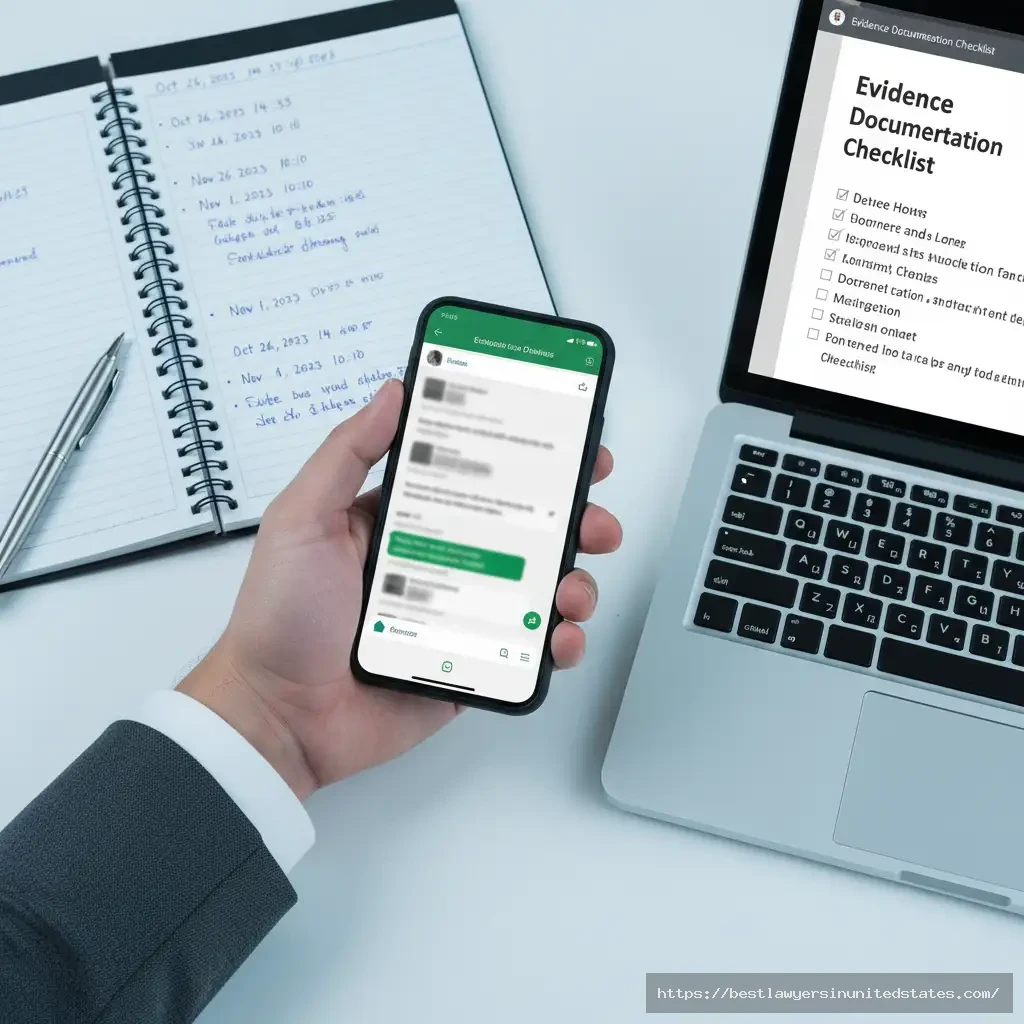
Evidence That Strengthens Your Case
1. Written or Digital Evidence (Strongest)
- WhatsApp messages, SMS, emails with threatening content
- Screenshots of social media posts or comments
- Recorded phone calls (must comply with privacy laws)
- CCTV footage showing threatening behavior
- Letters or written notes
Pro Tip: Take screenshots immediately. Include timestamps, sender information, and full message threads. Don’t rely on just saving messages—devices can be wiped or accounts deleted.
2. Witness Testimony
- People who heard the threat being made
- Individuals who observed your distressed state after receiving the threat
- Character witnesses who can testify about the accused’s behavior pattern
3. Documentary Evidence of Impact
- Medical records if the threat caused anxiety, panic attacks, or psychological harm
- Police complaints filed immediately after the threat
- Journal entries documenting each incident (with dates and details)
- Records showing you changed your behavior due to the threat (canceled travel, hired security, moved residence)
4. Expert Evidence
- Forensic analysis of digital messages to prove authenticity
- Handwriting analysis for written threats
- Voice analysis for recorded calls
- Psychological evaluation showing trauma caused by the threat
What Courts Consider: The “Reasonable Person” Test
Indian courts don’t require that the victim was actually frightened. Instead, they ask: “Would a reasonable person in the victim’s position feel alarmed by this threat?”
This is crucial because it prevents accused persons from arguing “but they weren’t really scared” as a defense.
Landmark Case Principle: In Ramesh Chandra Arora v. State (1960), the Supreme Court held that even if the victim claims they weren’t alarmed, the offense is complete if the threat was made with the intent to cause alarm or coercion.
Common Defense Arguments (And How to Counter Them)
Defense: “It was just a joke or figure of speech” Counter: Document the context. Was this said during an argument? Were there prior incidents? Did the accused have a history of violence? Courts look at the totality of circumstances.
Defense: “I never intended to actually carry out the threat” Counter: Intent to cause alarm is sufficient. You don’t need to prove the accused could or would execute the threat. A person without a gun can still threaten to shoot someone.
Defense: “The message was taken out of context” Counter: Provide full conversation history. Let the court see the entire exchange, not cherry-picked portions.
Defense: “This is a false complaint filed due to personal enmity” Counter: Consistency is key. If your story remains the same across police complaint, court statements, and witness testimonies, it strengthens credibility.
Real-World Scenarios: When Does 351 BNS Apply?
Scenario 1: Workplace Intimidation
Situation: Rajesh files a sexual harassment complaint against his boss. The boss sends him a WhatsApp message: “Withdraw your complaint by tomorrow, or I’ll make sure you never get a job in this industry again. I know people everywhere.”
Legal Analysis:
- Threat exists: Destroying career prospects
- Target: Reputation and livelihood
- Intent: To force Rajesh to withdraw a legally filed complaint
- Section applicable: 351(2) BNS (general intimidation)
- Bailable: Yes
- Action: Rajesh should screenshot the message, file an FIR, and the complaint likely succeeds because the boss is trying to coerce withdrawal of a legal action
Scenario 2: Loan Recovery Threat
Situation: Priya borrowed money from a private moneylender. When she struggles to repay on time, the lender sends her a voice note: “I will burn down your parents’ house if I don’t get my money by Friday. I’ve done it before.”
Legal Analysis:
- Threat exists: Property destruction by fire
- Target: Priya’s family property
- Intent: To cause alarm and force payment
- Section applicable: 351(3) BNS (threat of fire)
- Bailable: No
- Punishment: Up to 7 years
- Additional charges: Extortion under BNS Section 308 may also apply
Scenario 3: Anonymous Cyber Threat
Situation: Anjali, a journalist, receives an email from an anonymous account: “Stop writing about our organization or you’ll face consequences. We know where your children go to school.”
Legal Analysis:
- Threat exists: Harm to children (implicit death/injury threat)
- Target: Children’s safety
- Intent: To stop legal activity (journalism)
- Section applicable: 351(3) + 351(4) BNS (serious threat + anonymous)
- Bailable: No
- Punishment: Up to 9 years (7 base + 2 for anonymity)
- Action: Report to cybercrime cell immediately, as digital forensics can trace sender
Scenario 4: Domestic Intimidation
Situation: During a divorce proceeding, Vikram tells his wife Meera: “If you ask for custody of our daughter, I will tell everyone you had an affair and destroy your reputation in your community.”
Legal Analysis:
- Threat exists: Reputational damage (false character assassination)
- Target: Reputation
- Intent: To prevent Meera from exercising legal right to custody
- Section applicable: 351(2) BNS (general intimidation)
- Bailable: Yes
- Note: If Vikram’s threat implies sexual unchastity, it could elevate to 351(3)
Scenario 5: Political Intimidation
Situation: A local political worker threatens a voter: “If our candidate doesn’t win, we’ll see that your ration card gets canceled and your family doesn’t get any government benefits.”
Legal Analysis:
- Threat exists: Economic harm through government benefit denial
- Target: Property/livelihood
- Intent: To coerce voting behavior
- Section applicable: 351(2) BNS + election-related offenses under Representation of the People Act
- Significance: Election-related intimidation often leads to faster trials
What to Do If You’re a Victim of Criminal Intimidation
Time is critical. Here’s your step-by-step action plan:
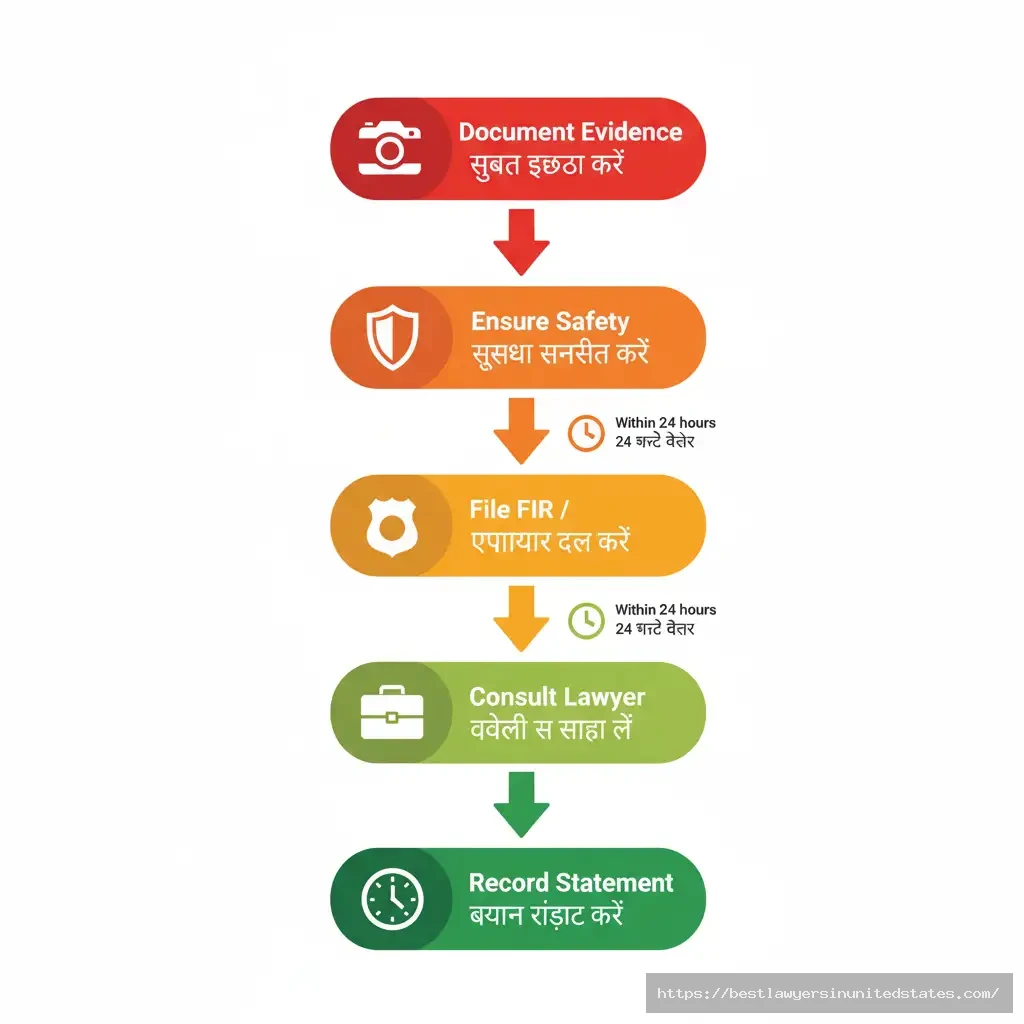
Immediate Actions (First 24 Hours)
1. Document Everything
- Screenshot messages, emails, social media posts immediately
- Record the date, time, location, and exact words of verbal threats
- Save voicemails and call recordings (if legally recorded)
- Write down names of witnesses who saw or heard the threat
- Do NOT delete the original evidence
2. Ensure Your Safety
- If you feel immediate danger, move to a safe location
- Inform trusted family members or friends
- For serious threats (death, violence), consider temporary relocation
- Avoid confronting the accused directly
3. File a Police Complaint (FIR)
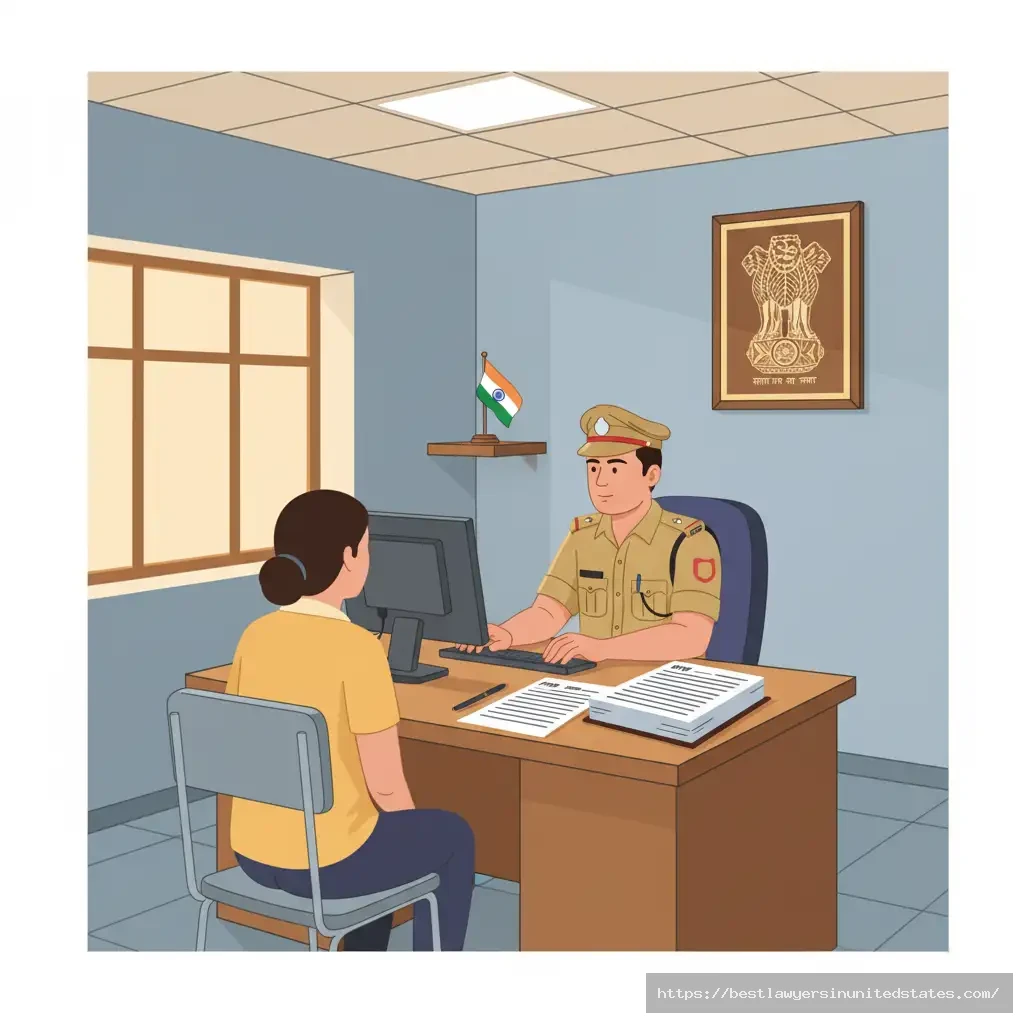
Go to your nearest police station or use your state’s online FIR system. Your complaint should include:
- Your details and the accused’s details (name, address, contact)
- Date, time, and place of the threat
- Exact words or description of the threat
- Details of any witnesses
- Copy of evidence (screenshots, recordings)
- Statement of how the threat affected you
Police must register your FIR under Section 351 BNS if it’s cognizable. If they refuse, approach the Superintendent of Police or use your state’s Chief Minister/DGP helpline.
4. Consult a Criminal Lawyer Within 48 Hours
Even if police have registered your FIR, get legal advice immediately. A lawyer can:
- Ensure proper sections are applied in the FIR
- Guide you on evidence preservation
- Apply for protection orders if needed
- Prepare you for police statement recording
- Advise on whether to seek anticipatory bail denial for the accused
Follow-Up Actions
5. Record Your Police Statement Carefully When police call you to record your statement under Section 154 CrPC:
- Stick to facts, avoid speculation
- Be specific about dates, times, and exact words
- Mention all evidence you’ve provided
- Read the statement before signing
- Keep a copy for your records
6. Consider Court Protection If the threats continue or you fear the accused will harm you during the case:
- File an application for protection under Section 164 CrPC
- Request restraining orders
- In domestic cases, use Protection of Women from Domestic Violence Act
7. Maintain a Threat Log Keep a detailed diary of any ongoing intimidation:
- Date and time of each incident
- Description of what happened
- Any witnesses present
- Your emotional/physical response
- Steps you took in response
This log becomes powerful evidence of a pattern of harassment.
What to Do If You’re Accused Under Section 351 BNS
Being accused of criminal intimidation is serious. Your response in the first 72 hours can significantly impact your case.

Critical Don’ts
❌ Don’t ignore police notices or summons. Non-cooperation creates an adverse inference.
❌ Don’t contact the complainant. Any contact can be twisted as “further intimidation” and worsen your case.
❌ Don’t destroy evidence. Deleting messages, formatting devices, or tampering with evidence is a separate crime.
❌ Don’t post about the case on social media. Anything you say publicly can be used against you.
❌ Don’t give statements to police without your lawyer present. You have the right to remain silent until your lawyer arrives.
Critical Do’s
✅ Engage a Criminal Defense Lawyer Immediately
This is not a matter for general practice lawyers. You need someone experienced in criminal defense who knows local courts and police procedures.
✅ Apply for Anticipatory Bail (If Under Section 351(3))
Section 351(3) is non-bailable and cognizable. Police can arrest you without a warrant. File for anticipatory bail immediately under Section 438 CrPC with an experienced criminal defense lawyer. This must be done before arrest.
Your lawyer will argue:
- You’re ready to cooperate with investigation
- You’re not a flight risk
- The allegations are false/exaggerated
- Custodial interrogation is unnecessary
Timing matters: Anticipatory bail applications should be filed within 2-3 days of learning about the complaint.
✅ Gather Counter-Evidence
Start building your defense:
- Full message history showing context (not just the alleged threat)
- Evidence of prior conflicts with the complainant
- Proof you were elsewhere when the threat was allegedly made (alibi)
- Witnesses who can testify about your character
- Evidence showing the complaint is motivated by malice
✅ Cooperate With Investigation
If police call you for questioning:
- Go with your lawyer
- Answer truthfully but don’t volunteer unnecessary information
- Don’t sign any document without reading it completely
- Ask for copies of all documents you sign
✅ Understand Your Legal Options
If Accused Under 351(2) (Bailable):
- Police can arrest but you have the right to bail
- If arrested, you or your lawyer can approach the duty magistrate for bail immediately
- Bail is typically granted in bailable offenses unless there’s a serious reason to deny it
If Accused Under 351(3) (Non-bailable):
- Police can arrest without warrant
- You must apply for bail before a Magistrate or Sessions Court
- Bail decisions consider factors like evidence strength, criminal history, and flight risk
- If bail is denied, you can appeal to higher courts
Building Your Defense Strategy
Your lawyer will explore these defense lines:
1. No Threat Was Made The words/actions don’t constitute a threat under law. Normal expressions of anger or frustration aren’t criminal.
2. No Intent to Intimidate Even if words seem threatening, you didn’t intend to cause alarm or coercion. Context matters.
3. False Complaint The complainant has fabricated the allegation due to personal enmity, business dispute, or to gain advantage in civil matters.
4. Alibi You weren’t present when the threat was allegedly made, or technological evidence proves you couldn’t have sent the message.
5. Mistaken Identity Someone else sent the threat using your identity, or the complainant misidentified you.
Section 351 BNS vs Related Sections: Understanding the Differences
Criminal intimidation often overlaps with other offenses. Understanding these distinctions helps identify all applicable charges:
351 BNS vs 352 BNS (Intentional Insult)
| Aspect | 351 BNS | 352 BNS |
|---|---|---|
| Nature | Threat to harm | Insult to provoke breach of peace |
| Intent | Cause alarm/coercion | Provoke the person to break public peace |
| Example | “I’ll destroy your shop” | “You’re a coward who won’t do anything” (said publicly) |
| Punishment | 2-7 years | 2 years or fine or both |
Key Difference: Section 351 involves a threat of future harm. Section 352 involves present insults intended to provoke immediate retaliation.
351 BNS vs 308 BNS (Extortion)
| Aspect | 351 BNS (Intimidation) | 308 BNS (Extortion) |
|---|---|---|
| Nature | Threat alone | Threat + obtaining property/valuable security |
| Criminal Act | Making the threat | Actually obtaining something through threat |
| Example | “Pay me or I’ll harm you” | “Pay me or I’ll harm you” + victim pays money |
| Punishment | 2-7 years | 3-10 years |
Key Difference: If the victim actually hands over property/money due to the threat, it becomes extortion (more serious). If they refuse or the accused only threatens without receiving anything, it’s criminal intimidation.
Practical Note: Both charges can be filed simultaneously. Section 351 for making the threat and Section 308 if anything was obtained.
351 BNS vs 356 BNS (Defamation)
| Aspect | 351 BNS | 356 BNS |
|---|---|---|
| Nature | Threat to defame | Actual defamation already done |
| Timing | Future harm | Past/present harm |
| Example | “I will tell everyone you’re a thief unless you do this” | Publishing a statement claiming someone is a thief |
| Punishment | 2-7 years | 2 years or fine or both |
Key Difference: Threatening to defame is criminal intimidation. Actually defaming is a separate offense under Section 356 BNS.
351 BNS vs 115(2) BNS (Voluntarily Causing Hurt)
| Aspect | 351 BNS | 115(2) BNS |
|---|---|---|
| Nature | Threat to harm | Actual physical harm caused |
| Action | Words/communication | Physical violence |
| Example | “I will break your arm” | Actually breaking someone’s arm |
| Punishment | 2-7 years depending on threat severity | Varies by injury severity |
Key Difference: Threats are under 351. Actual physical harm falls under assault/hurt provisions (Sections 114-128 BNS).
Important Supreme Court and High Court Judgments on Criminal Intimidation
Understanding case law helps predict how courts will interpret Section 351 BNS:
1. Manik Taneja v. State of Karnataka (2015) – Supreme Court
Facts: The accused threatened to implicate the complainant in a false criminal case unless money was paid.
Key Holding: The Supreme Court held that threatening to file a false criminal case constitutes criminal intimidation. The threat need not involve physical violence; harm to reputation or liberty is sufficient.
Why This Matters: Many people think only physical threats count. This judgment confirms that threatening someone’s legal standing or freedom is equally serious.
2. Ramesh Chandra Arora v. State (1960) – Supreme Court
Facts: The accused made threats, but argued the victim wasn’t actually frightened.
Key Holding: The offense is complete when the threat is made with intent to cause alarm, regardless of whether the victim was actually alarmed. The court applies an objective “reasonable person” test.
Why This Matters: Victims don’t need to prove they were psychologically damaged. The test is whether a reasonable person would feel alarmed.
3. State of Himachal Pradesh v. Mast Ram (2004) – Supreme Court
Facts: The accused threatened the victim’s family members, not the victim directly.
Key Holding: Threats to harm persons in whom the victim is interested (family, friends, business partners) constitute criminal intimidation of the victim.
Why This Matters: Indirect threats count. Threatening a person’s children, spouse, or parents is intimidating the person themselves.
Key Principles from Case Law
✅ The threat must be intentional. Accidental or negligent statements that cause fear aren’t criminal intimidation.
✅ The threat must be of an unlawful act. Threatening to file a legitimate legal case isn’t intimidation. Threatening to file a false case is.
✅ Context determines severity. Courts consider the relationship between parties, prior incidents, and the credibility of the threat.
✅ Electronic evidence is admissible. WhatsApp messages, emails, and social media posts are valid evidence if properly authenticated.
Bailable, Cognizable, and Compoundable: What These Terms Mean
These legal terms determine how your case proceeds:
Cognizable Offense (All 351 Subsections)
Meaning: Police can arrest without a warrant and start investigating without court permission.
Impact: If someone files a complaint under Section 351, police can immediately begin investigation and arrest the accused if evidence suggests the offense occurred.
Your Rights: Even in cognizable offenses, police must follow arrest procedures under Section 41 CrPC, including informing you of grounds for arrest and your right to bail.
Bailable vs Non-Bailable
351(2) is Bailable:
- The accused has the right to bail
- Police or court cannot deny bail except in exceptional circumstances
- If arrested, you can be released on bail by a police officer or court immediately
351(3) is Non-Bailable:
- Bail is not a right; it’s a privilege granted by courts
- You must apply before a Magistrate or Sessions Judge
- Courts consider factors like evidence strength, criminal history, likelihood of fleeing, and potential to tamper with witnesses
- If bail is denied, you remain in custody until trial or until a higher court grants bail
Non-Compoundable Offense
Meaning: The victim cannot “settle” the case privately and withdraw the complaint.
Impact: Even if the victim and accused reach a compromise, the criminal case continues. The state is the prosecutor, not the victim.
Exception: In some cases, courts have allowed compounding with permission under Section 320 CrPC, particularly for minor threats between family members or business partners, but this is rare and requires court approval.
Regional Language Explanations
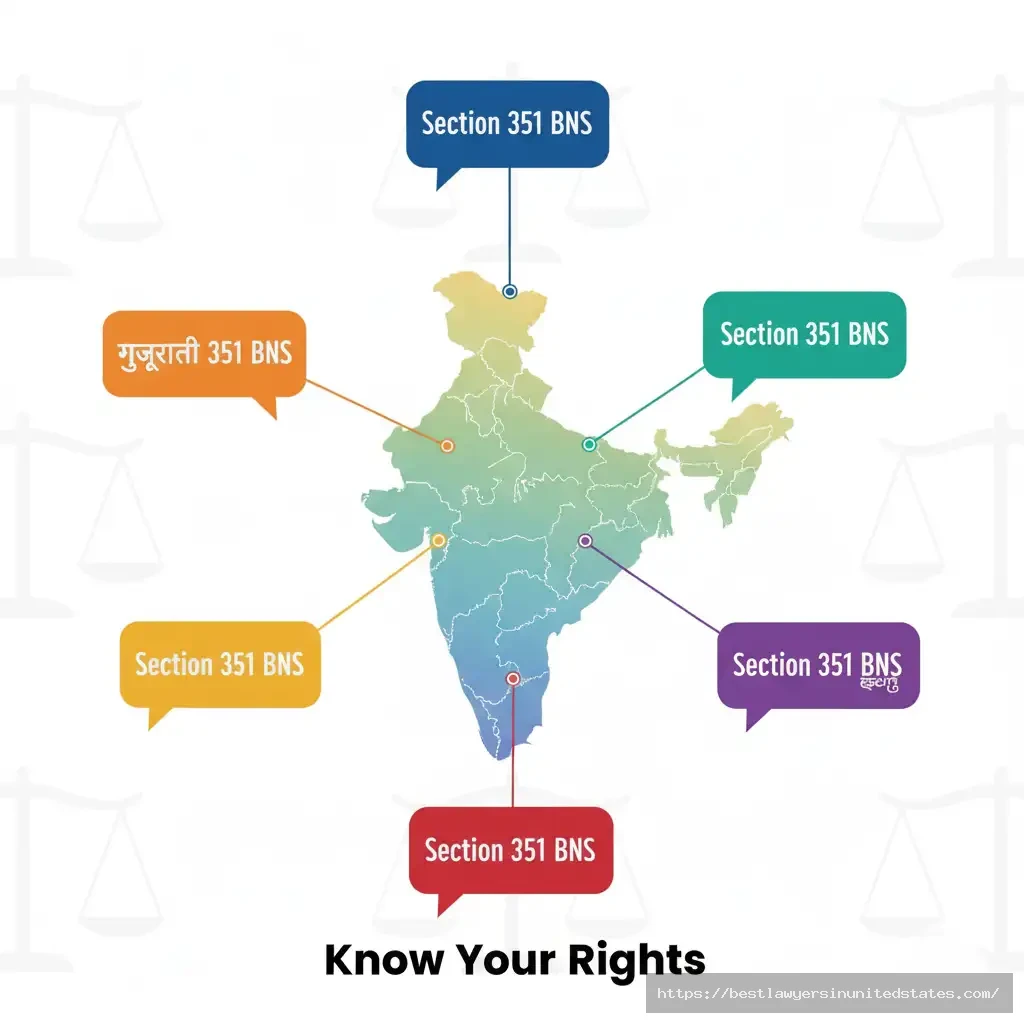
धारा 351 BNS (हिंदी में)
क्या है धारा 351 BNS?
धारा 351 आपराधिक धमकी (Criminal Intimidation) से संबंधित है। यदि कोई व्यक्ति किसी को धमकी देता है कि वह उसके शरीर, प्रतिष्ठा या संपत्ति को नुकसान पहुंचाएगा, तो यह अपराध माना जाता है।
सजा क्या है?
- साधारण धमकी (351(2)): 2 साल तक की जेल या जुर्माना या दोनों
- गंभीर धमकी (351(3)): जैसे मौत की धमकी, आग लगाने की धमकी – 7 साल तक की जेल
- गुमनाम धमकी (351(4)): अतिरिक्त 2 साल की सजा
जमानती है या नहीं?
- 351(2): जमानती (Bailable)
- 351(3): गैर-जमानती (Non-bailable)
पुलिस बिना वारंट के गिरफ्तार कर सकती है?
हाँ, यह संज्ञेय अपराध (Cognizable offense) है।
பிரிவு 351 BNS (தமிழில்)
பிரிவு 351 BNS என்றால் என்ன?
பிரிவு 351 குற்றவியல் மிரட்டல் (Criminal Intimidation) பற்றியது. யாராவது ஒருவரின் உடல், நற்பெயர் அல்லது சொத்துக்கு தீங்கு விளைவிப்பதாக மிரட்டினால், அது குற்றமாகும்.
தண்டனை என்ன?
- சாதாரண மிரட்டல் (351(2)): 2 ஆண்டுகள் வரை சிறை அல்லது அபராதம் அல்லது இரண்டும்
- தீவிர மிரட்டல் (351(3)): மரண மிரட்டல், தீ வைப்பு மிரட்டல் – 7 ஆண்டுகள் வரை சிறை
- அநாமதேய மிரட்டல் (351(4)): கூடுதல் 2 ஆண்டுகள் தண்டனை
ஜாமீன் கிடைக்குமா?
- 351(2): ஜாமீன் கிடைக்கும் (Bailable)
- 351(3): ஜாமீன் கிடைக்காது (Non-bailable)
காவல்துறை வாரண்ட் இல்லாமல் கைது செய்ய முடியுமா?
ஆம், இது அறியக்கூடிய குற்றம் (Cognizable offense).
कलम 351 BNS (मराठीमध्ये)
कलम 351 BNS म्हणजे काय?
कलम 351 गुन्हेगारी धमकी (Criminal Intimidation) संबंधित आहे। कोणी एखाद्याला त्याच्या शरीराला, प्रतिष्ठेला किंवा मालमत्तेला हानी पोहोचवण्याची धमकी दिली तर तो गुन्हा आहे।
शिक्षा काय आहे?
- सामान्य धमकी (351(2)): 2 वर्षांपर्यंत तुरुंगवास किंवा दंड किंवा दोन्ही
- गंभीर धमकी (351(3)): मृत्यूची धमकी, आग लावण्याची धमकी – 7 वर्षांपर्यंत तुरुंगवास
- अनामिक धमकी (351(4)): अतिरिक्त 2 वर्षांची शिक्षा
जामीन मिळेल का?
- 351(2): जामीन मिळेल (Bailable)
- 351(3): जामीन मिळणार नाही (Non-bailable)
पोलिस वॉरंटशिवाय अटक करू शकतात का?
होय, हा दखलपात्र गुन्हा (Cognizable offense)
ಸೆಕ್ಷನ್ 351 BNS (ಕನ್ನಡದಲ್ಲಿ)
ಸೆಕ್ಷನ್ 351 BNS ಎಂದರೇನು?
ಸೆಕ್ಷನ್ 351 ಕ್ರಿಮಿನಲ್ ಬೆದರಿಕೆ (Criminal Intimidation) ಬಗ್ಗೆ. ಯಾರಾದರೂ ಒಬ್ಬರ ದೇಹ, ಖ್ಯಾತಿ ಅಥವಾ ಆಸ್ತಿಗೆ ಹಾನಿ ಮಾಡುವುದಾಗಿ ಬೆದರಿಕೆ ಹಾಕಿದರೆ, ಅದು ಅಪರಾಧವಾಗಿದೆ.
ಶಿಕ್ಷೆ ಏನು?
- ಸಾಮಾನ್ಯ ಬೆದರಿಕೆ (351(2)): 2 ವರ್ಷಗಳವರೆಗೆ ಜೈಲು ಅಥವಾ ದಂಡ ಅಥವಾ ಎರಡೂ
- ಗಂಭೀರ ಬೆದರಿಕೆ (351(3)): ಮರಣ ಬೆದರಿಕೆ, ಬೆಂಕಿ ಹಚ್ಚುವ ಬೆದರಿಕೆ – 7 ವರ್ಷಗಳವರೆಗೆ ಜೈಲು
- ಅನಾಮಧೇಯ ಬೆದರಿಕೆ (351(4)): ಹೆಚ್ಚುವರಿ 2 ವರ್ಷಗಳ ಶಿಕ್ಷೆ
ಜಾಮೀನು ಸಿಗುತ್ತದೆಯೇ?
- 351(2): ಜಾಮೀನು ಸಿಗುತ್ತದೆ (Bailable)
- 351(3): ಜಾಮೀನು ಸಿಗುವುದಿಲ್ಲ (Non-bailable)
ಪೊಲೀಸರು ವಾರಂಟ್ ಇಲ್ಲದೆ ಬಂಧಿಸಬಹುದೇ?
ಹೌದು, ಇದು ಅರಿವಿನ ಅಪರಾಧ (Cognizable offense).
సెక్షన్ 351 BNS (తెలుగులో)
సెక్షన్ 351 BNS అంటే ఏమిటి?
సెక్షన్ 351 క్రిమినల్ బెదిరింపు (Criminal Intimidation) గురించి. ఎవరైనా ఒకరి శరీరం, పేరు లేదా ఆస్తికి హాని కలిగిస్తానని బెదిరించినట్లయితే, అది నేరం.
శిక్ష ఏమిటి?
- సాధారణ బెదిరింపు (351(2)): 2 సంవత్సరాల వరకు జైలు లేదా జరిమానా లేదా రెండూ
- తీవ్రమైన బెదిరింపు (351(3)): మరణ బెదిరింపు, అగ్ని ప్రమాదం – 7 సంవత్సరాల వరకు జైలు
- అనామక బెదిరింపు (351(4)): అదనంగా 2 సంవత్సరాల శిక్ష
బెయిల్ లభిస్తుందా?
- 351(2): బెయిల్ లభిస్తుంది (Bailable)
- 351(3): బెయిల్ లభించదు (Non-bailable)
పోలీసులు వారెంట్ లేకుండా అరెస్ట్ చేయవచ్చా?
అవును, ఇది కాగ్నిజబుల్ నేరం (Cognizable offense).
કલમ 351 BNS (ગુજરાતીમાં)
કલમ 351 BNS શું છે?
કલમ 351 ક્રિમિનલ ધમકી (Criminal Intimidation) વિશે છે. જો કોઈ વ્યક્તિ કોઈને તેના શરીર, પ્રતિષ્ઠા અથવા મિલકતને નુકસાન પહોંચાડવાની ધમકી આપે, તો તે ગુનો છે.
સજા શું છે?
- સામાન્ય ધમકી (351(2)): 2 વર્ષ સુધી જેલ અથવા દંડ અથવા બંને
- ગંભીર ધમકી (351(3)): મૃત્યુની ધમકી, આગ લગાડવાની ધમકી – 7 વર્ષ સુધી જેલ
- અનામી ધમકી (351(4)): વધારાની 2 વર્ષની સજા
જામીન મળશે?
- 351(2): જામીન મળશે (Bailable)
- 351(3): જામીન નહીં મળે (Non-bailable)
પોલીસ વોરંટ વિના ધરપકડ કરી શકે છે?
હા, આ કોગ્નિઝેબલ ગુનો છે (Cognizable offense).
Frequently Asked Questions (FAQs)
1. What is the difference between Section 351 BNS and Section 503 IPC?
Section 351 BNS is the updated version of IPC Section 503 under India’s new criminal code implemented in July 2023. The core legal principles remain identical, but Section 351 organizes the offense and punishments more clearly across four subsections. Cases registered before July 2023 continue under IPC 503, while new cases are filed under BNS 351.
2. Is Section 351(2) BNS bailable or non-bailable?
Section 351(2) BNS is bailable. If arrested, the accused has a legal right to bail. They can be released on bail by police at the station or by approaching a magistrate. Bail can only be denied in exceptional circumstances.
3. Is Section 351(3) BNS bailable or non-bailable?
Section 351(3) BNS is non-bailable. This covers serious threats involving death, grievous hurt, fire, or unchastity imputation. The accused must apply for bail before a court, which will decide based on evidence, flight risk, and other factors. If you’re accused under 351(3), file for anticipatory bail immediately.
4. Is Section 351 BNS cognizable or non-cognizable?
All subsections of Section 351 BNS are cognizable offenses. This means police can arrest without a warrant and begin investigation without requiring court permission. However, police must still follow proper arrest procedures under Section 41 CrPC.
5. Can a Section 351 BNS case be withdrawn or settled?
Section 351 BNS is non-compoundable, meaning the victim cannot legally withdraw the case through private settlement. The state is the prosecutor in criminal cases. However, courts occasionally permit compounding under Section 320 CrPC in minor cases, particularly between family members, but this requires judicial approval and is rare.
6. What is the maximum punishment under Section 351 BNS?
The maximum punishment depends on the subsection:
- 351(2): 2 years imprisonment + fine
- 351(3): 7 years imprisonment + fine
- 351(4): Additional 2 years beyond the base punishment (making the maximum 9 years for serious anonymous threats)
7. Does Section 351 BNS cover threats made on WhatsApp or social media?
Yes, absolutely. Section 351 BNS covers threats made “by any means,” which includes digital platforms like WhatsApp, Facebook, Instagram, email, SMS, and any other communication method. Digital evidence such as screenshots and message records are admissible in court.
8. Can I file a case under Section 351 BNS if someone threatened my family member?
Yes. The law explicitly covers threats to “any person in whom that person is interested.” This includes threats to harm your family members, close friends, business partners, or anyone you care about. Threatening your loved ones is treated as intimidating you.
9. What if the person who threatened me says it was just a joke?
Courts apply an objective “reasonable person” test. The question isn’t whether the accused intended it as a joke, but whether a reasonable person in your position would feel intimidated. Context matters—the nature of your relationship, prior incidents, tone, and circumstances all play a role. Document everything and let the court decide.
10. Do I need a lawyer to file a complaint under Section 351 BNS?
No, you don’t need a lawyer to file an FIR at a police station. Any citizen can approach police and register a complaint. However, consulting a criminal lawyer is highly recommended within 24-48 hours to ensure proper legal sections are applied, evidence is preserved correctly, and your rights are protected throughout the investigation and trial.
11. How long does a Section 351 BNS case take in court?
Criminal cases in India typically take 2-5 years to reach final judgment, depending on court backlog, evidence complexity, and witness availability. However, some cases are fast-tracked, especially those involving serious threats, vulnerable victims, or when the accused is in custody. Plea bargaining under Section 265A CrPC can also expedite resolution in eligible cases.
12. What happens if someone files a false case against me under Section 351 BNS?
If you can prove the complaint is false and malicious, you have legal remedies:
- During investigation: Provide counter-evidence to police showing the complaint is fabricated
- After charge sheet: File for discharge under Section 239 CrPC
- After acquittal: File a complaint against the complainant under Section 250 CrPC for giving false evidence, or under Section 211 BNS (false charge of offense with intent to injure)
- Civil remedy: Sue for damages for malicious prosecution
Document everything that proves your innocence and the complainant’s motive to falsely implicate you.
13. Can police arrest me immediately if someone files a complaint under Section 351 BNS?
Technically yes, since it’s cognizable. However, police must follow Section 41 CrPC guidelines, which require them to:
- Assess whether arrest is necessary
- Consider the seriousness of the offense
- Consider whether you’re likely to flee or tamper with evidence
- Inform you of grounds for arrest and your right to bail
For Section 351(2), police often issue a notice to appear rather than arresting immediately, since it’s bailable. For 351(3), risk of arrest is higher due to its non-bailable nature—this is why anticipatory bail is critical.
14. Does the threat have to be written or can it be verbal?
Both verbal and written threats fall under Section 351 BNS. The law says “by any means”—this includes face-to-face verbal threats, phone calls, gestures, letters, emails, or any other form of communication. The challenge with verbal threats is proving they occurred, which is why witness testimony becomes crucial.
15. What if I threatened someone in self-defense?
Indian law recognizes the right of private defense under Sections 34-44 BNS (formerly IPC 96-106). If you can prove:
- You faced imminent danger
- Your response was proportionate to the threat
- You had no reasonable means of escape or seeking help
Then you may have a valid defense. However, “self-defense” doesn’t justify making threats in most situations—it typically covers immediate physical defense actions. Consult a lawyer to evaluate whether this defense applies to your specific situation.
Expert Insights: What Criminal Lawyers Want You to Know
From Defense Lawyers:
“Most Section 351 cases are filed during ongoing disputes—property, divorce, business conflicts. The intimidation charge becomes a pressure tactic. If you’re accused, don’t panic. Gather evidence showing the context: prior conflicts, the complainant’s motive, and your version with supporting documents. Courts understand that people in heated disputes sometimes say things they don’t mean.”
— Advocate specializing in criminal defense
“The biggest mistake accused persons make is contacting the complainant to ‘sort things out.’ Never do this. Any contact—even a polite apology—can be portrayed as further intimidation or witness tampering. Stay silent, get legal help, and communicate only through proper legal channels.”
— Senior Criminal Lawyer, Delhi High Court
From Prosecution Lawyers:
“Victims often wait too long to report intimidation, thinking threats will stop. Document every incident immediately. The strongest cases we’ve prosecuted had detailed evidence: screenshots with timestamps, witnesses, medical records showing anxiety, and consistent victim statements. Don’t minimize threats hoping they’ll go away—they usually escalate.”
— Public Prosecutor
“In digital intimidation cases, authentication is key. Courts scrutinize WhatsApp screenshots. We recommend victims also file a complaint with the platform, get technical evidence from cybercrime cells, and have forensic experts verify digital evidence. This prevents the accused from claiming messages were fabricated.”
— Special Prosecutor, Cyber Crimes
Common Myths About Section 351 BNS (Debunked)
Myth 1: “Only physical threats count as criminal intimidation”
Reality: Threats to reputation, property, livelihood, or anyone you care about also constitute criminal intimidation. You don’t need to be threatened with violence.
Myth 2: “If I didn’t actually harm anyone, I can’t be prosecuted”
Reality: Section 351 punishes the threat itself, not the execution of the threat. You can be convicted even if you never intended to carry out the threat or never had the ability to do so.
Myth 3: “WhatsApp messages aren’t valid evidence”
Reality: Digital evidence is admissible under Section 65B of the Indian Evidence Act. Properly documented screenshots, forensically verified messages, and platform records are regularly used to convict accused persons.
Myth 4: “I can withdraw my complaint if we settle privately”
Reality: Section 351 BNS is non-compoundable. Criminal cases belong to the state, not the victim. Even if you forgive the accused, the prosecution continues unless a court permits compounding (rare).
Myth 5: “Small threats don’t matter—police won’t take action”
Reality: Any threat meeting the legal definition of criminal intimidation can be prosecuted. Even a single threatening message can lead to arrest and conviction if it caused reasonable alarm or was intended to coerce.
Myth 6: “Section 351 cases always result in jail time”
Reality: Many accused persons receive bail and eventually get probation, suspended sentences, or acquittal depending on evidence quality, prior criminal record, and case circumstances. Not every case ends in imprisonment.
Practical Tips for Victims: Strengthening Your Case
Evidence Collection Best Practices
For Digital Threats:
- Screenshot immediately with visible date, time, sender details
- Don’t crop the screenshot—show full context
- Back up to cloud storage and email yourself copies
- Record your screen if taking screenshots of videos or stories
- Note the platform (WhatsApp, Instagram, email, etc.)
- Don’t delete original messages even after taking screenshots
For Verbal Threats:
- Write down immediately: Date, time, exact location, exact words
- Identify witnesses: Get names and contact details of anyone who heard
- Record your emotional state: Did you feel fear? Document it
- Report promptly: The sooner you report, the more credible your account
For Written Threats (Letters/Notes):
- Don’t handle excessively: Preserve fingerprints
- Photograph in place before moving
- Store in envelope/bag: Protect from damage
- Note delivery details: How it arrived, when, who delivered
What Strengthens Your Credibility
✅ Immediate reporting: Filing FIR within 24-48 hours shows genuine fear
✅ Consistent statements: Your story should match across FIR, police statement, and court testimony
✅ Corroborating evidence: Witnesses, medical records, changed behavior patterns
✅ No prior false complaints: A clean record of not making false accusations
✅ Logical motive: Can you explain why the accused would threaten you?
What Weakens Your Case
❌ Delayed reporting: Waiting weeks or months raises questions
❌ No supporting evidence: Only your word against theirs
❌ Prior disputes: If you have a history of conflicts with the accused, they’ll claim the complaint is revenge
❌ Contradictions: Changing details between statements
❌ Concurrent civil cases: If you’re suing the accused, they’ll argue this is litigation strategy
Practical Tips for the Accused: Protecting Your Rights
Immediate Damage Control
Within 24 Hours of Learning About the Complaint:
- Stop all communication with the complainant immediately
- Preserve evidence on your side: Full message history, emails, call logs
- Identify alibi witnesses if you weren’t present when threat allegedly occurred
- Secure financial records if this is related to money disputes
- Contact a criminal defense lawyer before police contact you
During Police Investigation
✅ Cooperate but cautiously: Don’t appear evasive, but don’t volunteer unnecessary information
✅ Bring your lawyer: You have the right to legal representation during questioning
✅ Read before signing: Never sign police statements without reading carefully
✅ Stay calm: Aggressive behavior during investigation harms your case
✅ Request copies: Get copies of all documents you sign
Building Your Defense
Strong defense strategies include:
1. Complete Context: Show the full conversation/relationship, not just the alleged threat
2. Lack of Intent: Prove you didn’t intend to cause alarm (e.g., it was a figure of speech in your culture/language)
3. Provocation: Show the complainant provoked you, though this doesn’t fully excuse intimidation
4. Prior Enmity: Document the complainant’s motive to falsely implicate you
5. Impossibility: Prove you couldn’t have made the threat (wrong location, no access to device, etc.)
When to Involve Higher Authorities
If Police Refuse to Register Your FIR
- Submit written complaint: Give a written application at the police station
- Get acknowledgment: Force them to receive it and stamp received
- Approach Superintendent of Police (SP): File complaint at SP office
- Use State Helplines: Many states have Chief Minister/DGP helplines
- File Section 156(3) application: Approach Magistrate Court to direct police to investigate
If Police Harass the Accused Without Evidence
- File anticipatory bail immediately
- Complaint to Police Commissioner/DGP
- Approach State Human Rights Commission
- File writ petition in High Court under Article 226 for protection of fundamental rights
If Case is Pending for Years Without Progress
- File application for speedy trial under Article 21
- Approach High Court for monitoring pending case
- Request case transfer if you suspect local influence
- Consider plea bargaining (if applicable and you’re guilty) under Section 265A CrPC
Related Legal Resources
Government Resources
- National Legal Services Authority (NALSA): Free legal aid for eligible persons – nalsa.gov.in
- e-Courts Services: Check case status, cause lists – ecourts.gov.in
- Cybercrime Reporting Portal: For digital threats – cybercrime.gov.in
- Official BNS Text: Read full Bharatiya Nyaya Sanhita – legislative.gov.in
Legal Databases for Case Law Research
- Indian Kanoon: indiankanoon.org (Free access to judgments)
- SCC Online: scconline.com (Subscription-based, comprehensive)
- Manupatra: manupatrafast.com (Legal research platform)
Finding Legal Help
- State Bar Council Directories: Find registered lawyers in your state
- District Legal Services Authority: Free legal aid for economically weaker sections
- Online Legal Consultation Platforms: Consult lawyers remotely for initial advice
Victims of criminal intimidation (urgent help-seeking), accused individuals (bail and defense guidance), criminal lawyers (case law research, IPC-BNS transition). If you need legal representation, find experienced lawyers in your area.
Final Thoughts: Understanding Your Rights and Responsibilities
Section 351 BNS serves a critical purpose in society: protecting individuals from coercion and fear-based control. Whether you’re a victim seeking justice or an accused defending against allegations, understanding the law empowers you to make informed decisions.
For victims: You don’t have to live in fear. The law provides robust mechanisms to protect you. Document everything, report promptly, and seek legal guidance. Your safety and mental peace matter.
For the accused: False accusations do happen, and they’re traumatic. Don’t lose hope. The burden of proof lies with the prosecution. With proper legal defense, factual evidence, and procedural compliance, you can defend yourself effectively.
For everyone: Words have power and consequences. In heated moments, threats may seem like just expressions of anger, but they carry serious legal implications. Think before you speak, type, or communicate anything that could be perceived as intimidation.
Need Legal Help? Next Steps
If You’re a Victim
- Immediate danger? Call local police emergency number or 112
- Document the threat following guidelines in this article
- File FIR at nearest police station within 24-48 hours
- Consult a criminal lawyer for guidance on evidence and protection
- Consider counseling if the threats caused psychological trauma
If You’re Accused
- Do NOT panic or contact the complainant
- Engage a criminal defense lawyer immediately
- File anticipatory bail if threatened with arrest under 351(3)
- Gather counter-evidence and alibi documentation
- Prepare for cooperative investigation with legal representation
For Legal Professionals
This article can serve as a client education resource. Share it with clients facing Section 351 BNS matters to help them understand their legal position, rights, and realistic expectations.
