
Quick Answer: A divorce in Montana costs between $1,700 and $35,000+ depending on whether it’s contested or uncontested. The filing fee is $200, but total costs vary based on attorney fees, case complexity, and whether children or significant assets are involved.
Getting divorced in Montana doesn’t have to drain your bank account, but understanding the real costs upfront helps you plan financially and avoid surprises. Whether you’re facing an uncontested divorce or preparing for a lengthy contested battle, this guide breaks down exactly what you’ll pay in 2026.
What Are the Basic Filing Fees for Divorce in Montana?
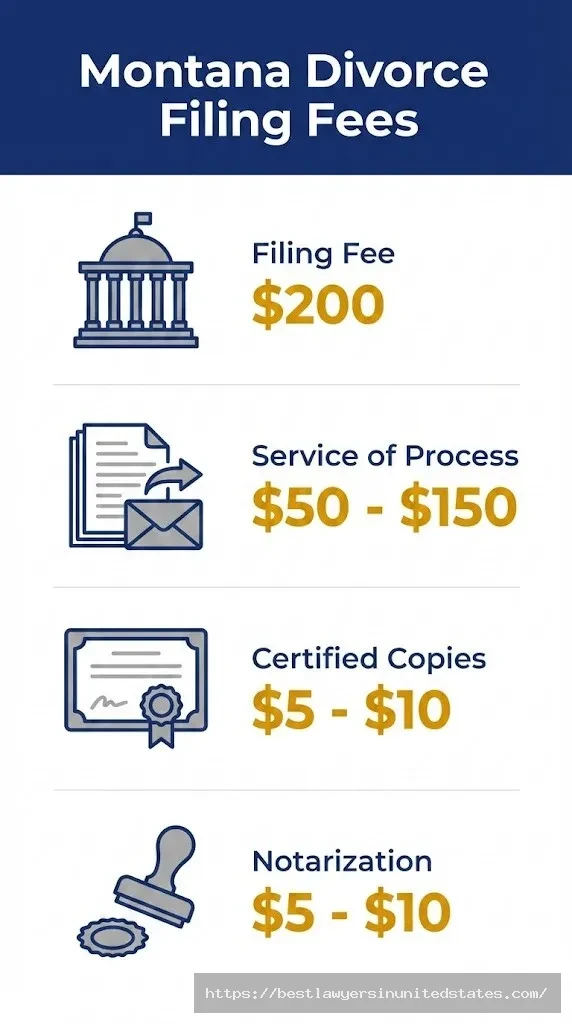
Montana’s District Court charges a $200 filing fee to initiate a dissolution of marriage. This is a mandatory cost you’ll pay when submitting your divorce petition, regardless of whether you hire an attorney or file yourself.
Beyond the basic filing fee, expect these additional court-related costs:
- Service of process: $50-$150 (depending on whether you use certified mail or a process server)
- Certified copies of decree: $5-$10 per copy
- Notarization fees: $5-$10 per document
- Parenting class fees (if children involved): $40-$75 per person
County-specific note: Filing fees are consistent across Montana counties including Yellowstone County (Billings), Gallatin County (Bozeman), and Missoula County, but service fees may vary slightly by location.
How Much Does an Uncontested Divorce Cost in Montana?
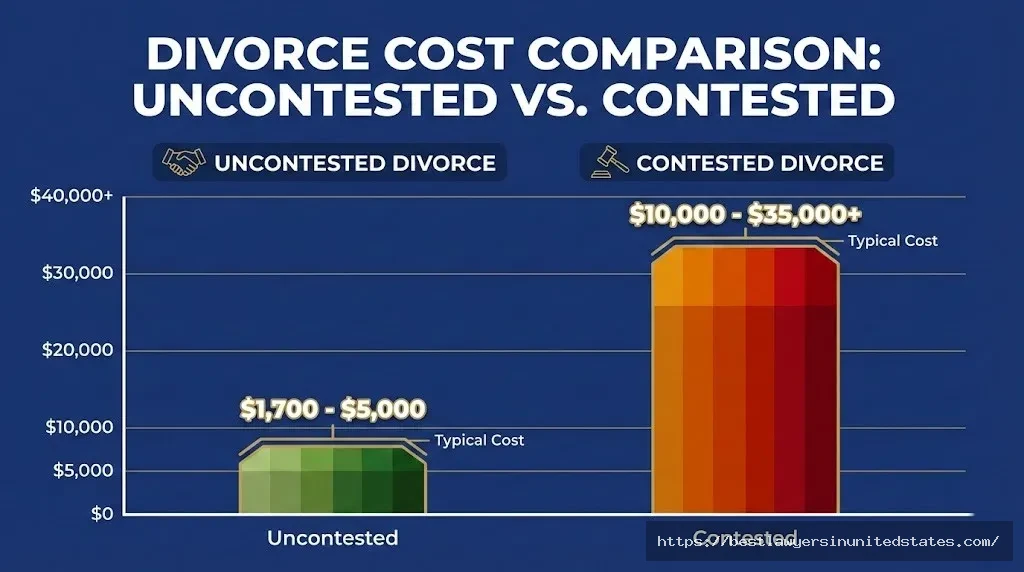
An uncontested divorce in Montana typically costs $1,700-$5,000 total when both spouses agree on all terms.
Cost breakdown for uncontested divorce:
| Expense Category | Cost Range |
|---|---|
| Court filing fee | $200 |
| Service of process | $50-$150 |
| Attorney flat fee (if used) | $1,500-$3,500 |
| Mediation (if needed) | $100-$300/hour |
| Document preparation | $0-$500 |
| Total estimated cost | $1,700-$5,000 |
Many Montana attorneys offer flat-fee packages for uncontested divorces, which can save you money compared to hourly billing. If you and your spouse can reach agreements on property division, child custody, and support issues, you’ll stay on the lower end of this range.
For those considering a DIY divorce, Montana allows self-representation, which could reduce your costs to just the $200 filing fee plus service costs—typically $250-$350 total if you handle paperwork yourself.
What Does a Contested Divorce Cost in Montana?
Contested divorces in Montana range from $10,000 to $35,000+, with high-asset or custody battles potentially exceeding $50,000.
Cost breakdown for contested divorce:
| Expense Category | Cost Range |
|---|---|
| Court filing fee | $200 |
| Attorney retainer | $3,000-$10,000 |
| Attorney hourly fees | $150-$400/hour |
| Discovery costs | $500-$3,000 |
| Expert witnesses | $1,500-$5,000 each |
| Court reporter fees | $500-$2,000 |
| Trial preparation | $5,000-$15,000 |
| Total estimated cost | $10,000-$35,000+ |
The primary cost driver in contested cases is attorney fees. If your case requires multiple court hearings, extensive discovery, custody evaluations, or business valuations, costs escalate quickly.
How Much Do Divorce Lawyers Charge in Montana?
Montana divorce attorneys typically charge $150-$400 per hour depending on their experience, location, and case complexity.

Attorney fee structure options:
Hourly billing: Most common for contested cases. Lawyers track time spent on calls, emails, document preparation, court appearances, and research. A typical contested divorce might require 40-100+ billable hours.
Flat fees: Available for uncontested divorces, usually $1,500-$3,500. This covers document preparation, filing, and basic negotiations but excludes contested hearings or trials.
Retainer requirements: Expect to pay $3,000-$10,000 upfront. The attorney bills against this retainer and may request additional funds if your case runs longer than anticipated.
Payment plans: Some Montana family law firms offer payment plans or work with financing companies like iQualify to make attorney fees more manageable. Always ask about payment options during your initial consultation.
What Factors Affect Divorce Costs in Montana?
Several key factors determine whether your divorce costs $2,000 or $30,000:
Contested vs. uncontested status: This is the biggest cost driver. If you and your spouse agree on major issues, your costs drop dramatically. Every disputed issue that requires court intervention adds thousands in attorney fees.
Children and custody disputes: Cases involving parenting plans, custody evaluations, and child support calculations cost more. A custody evaluation alone can run $2,000-$5,000.
Property and asset complexity: Dividing retirement accounts, businesses, or significant real estate requires financial experts and appraisers. Montana follows equitable distribution principles, meaning courts divide property fairly but not necessarily equally.
Case duration: Every additional month of legal proceedings adds attorney hours. Montana’s 20-day waiting period after service is mandatory, but contested cases can stretch 12-18+ months.
Geographic location: Urban attorneys in Billings, Bozeman, or Missoula typically charge $250-$400/hour, while rural area attorneys may charge $150-$250/hour.
[Insert Divorce Cost Calculator – Pre-filled for Montana]
Use this calculator to estimate your Montana divorce costs based on your specific situation. Input your case details to get a personalized cost breakdown.
What Are the Hidden Costs of Divorce in Montana?
Beyond obvious attorney and filing fees, these hidden costs catch many people off guard:
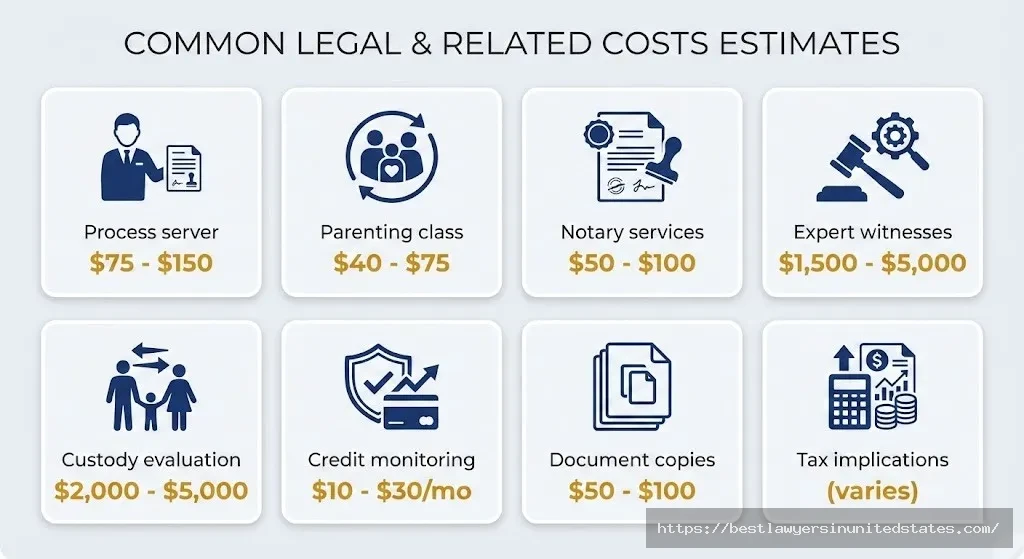
Process server fees: $75-$150 if your spouse is difficult to locate or refuses certified mail service.
Parenting class requirements: Montana courts often require divorcing parents to complete a parenting class. Cost: $40-$75 per person.
Document copying and notarization: Divorce paperwork requires multiple certified copies and notarized signatures. Budget $50-$100 for these administrative costs.
Temporary orders hearings: If you need immediate orders for temporary custody, support, or property use, each hearing adds $1,000-$3,000 in attorney fees.
Expert witness fees: Custody evaluators ($2,000-$5,000), business appraisers ($3,000-$7,000), or vocational experts ($1,500-$3,000) significantly increase costs in complex cases.
Post-decree modifications: If circumstances change after your divorce, filing for custody or support modifications costs $500-$2,500+ in additional legal fees.
Tax implications: Montana divorce settlements can trigger capital gains taxes on property transfers or retirement account divisions. Consult a tax professional to understand your specific obligations.
Credit report monitoring: Protect yourself by monitoring credit after divorce to ensure your ex doesn’t open accounts in your name. Cost: $10-$30/month.
How Can You Reduce Divorce Costs in Montana?
Follow these proven strategies to minimize your Montana divorce expenses:
Consider divorce mediation: A neutral mediator helps you and your spouse reach agreements without expensive litigation. Mediation costs $100-$300/hour but typically saves $5,000-$15,000 compared to contested court proceedings.
Organize financial documents early: Gather bank statements, tax returns, property deeds, and retirement account statements before hiring an attorney. This reduces billable hours spent tracking down information.
File jointly for dissolution: Montana allows joint petitions where both spouses sign the initial paperwork together. This eliminates service costs and signals cooperation, often leading to faster, cheaper resolutions.
Use limited scope representation: Also called “unbundled services,” this lets you hire an attorney for specific tasks (like reviewing your settlement agreement) while handling simpler tasks yourself. Saves 50-70% compared to full representation.
Respond promptly to requests: Every delayed response extends your case and adds attorney fees. Answer discovery requests, attend scheduled appointments, and communicate clearly with your lawyer.
Avoid unnecessary court motions: Each motion filed adds $500-$2,000 in attorney fees. Only pursue motions for truly urgent matters like safety concerns or financial emergencies.
Apply for fee waivers if eligible: Low-income filers may qualify to waive the $200 court filing fee. Income limits vary by household size. Ask your county clerk about fee waiver applications.
Explore legal aid resources: Montana Legal Services Association provides free assistance to eligible low-income residents. Income guidelines typically require earnings below 125% of federal poverty level.
Negotiate directly when possible: If you have a cordial relationship with your spouse, try discussing major issues directly before involving attorneys. Even resolving 1-2 disputed items saves thousands.
Stay organized and responsive: Keep detailed records, meet deadlines, and maintain open communication with your attorney. Disorganization leads to duplicate work and wasted billable hours.
Do Montana Courts Offer Fee Waivers for Divorce?
Yes, Montana courts provide fee waivers for qualifying low-income individuals who cannot afford the $200 filing fee.
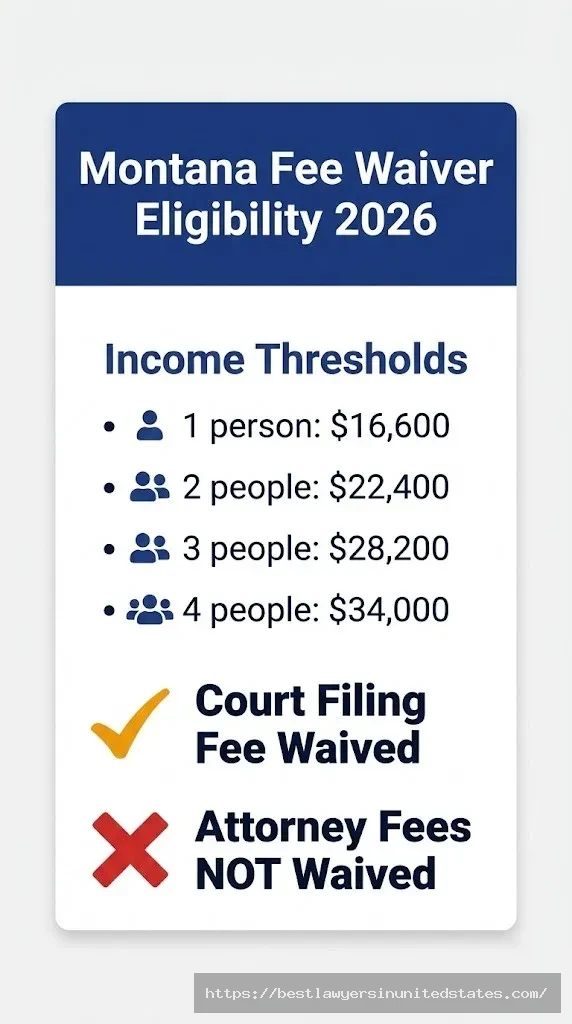
Eligibility requirements: Generally, your household income must fall below 125% of the federal poverty guidelines. For 2026, this means:
- 1 person: ~$16,600 annual income
- 2 people: ~$22,400 annual income
- 3 people: ~$28,200 annual income
- 4 people: ~$34,000 annual income
How to apply: Complete the “Application for Waiver of Filing Fees” form available at your county District Court clerk’s office or on the Montana Courts website. You’ll need to provide proof of income such as pay stubs, tax returns, or benefit statements.
What gets waived: The fee waiver covers court filing fees but doesn’t eliminate attorney costs, service fees, or other expenses.
Where Can You Get Financial Help for Montana Divorce Costs?
Several resources help Montanans afford divorce expenses:
Montana Legal Services Association: Provides free civil legal assistance to eligible low-income residents. Services include divorce representation, document preparation, and court guidance. Visit mtlsa.org or call their hotline for intake screening.
Attorney payment plans: Many Montana family law attorneys offer payment plans allowing you to spread costs over several months. Ask about this option during your initial consultation.
Legal aid clinics: Some Montana law schools and bar associations host free legal clinics where you can get basic advice and document review.
Financing options: Companies like iQualify partner with law firms to offer litigation financing specifically for family law cases. Interest rates and terms vary, so compare options carefully.
Pro bono programs: The Montana State Bar Association coordinates pro bono services for qualifying individuals. Visit montanabar.org for more information.
How Does Montana Compare to Neighboring States for Divorce Costs?
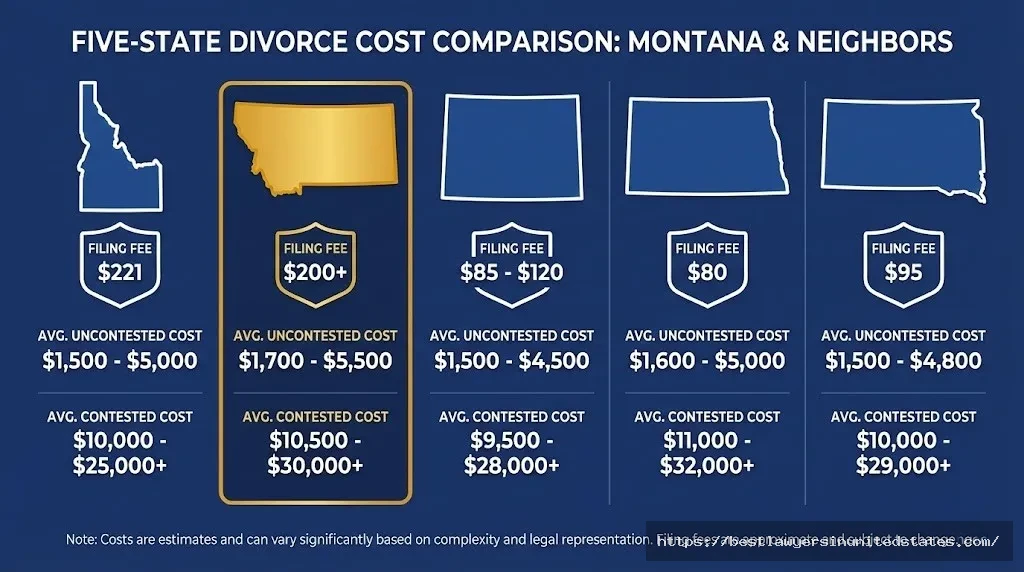
Montana’s divorce costs are competitive compared to surrounding states:
| State | Filing Fee | Avg. Uncontested Cost | Avg. Contested Cost |
|---|---|---|---|
| Montana | $200 | $1,700-$5,000 | $10,000-$35,000 |
| Idaho | $207 | $1,800-$5,500 | $11,000-$30,000 |
| Wyoming | $70 | $1,500-$4,500 | $9,000-$28,000 |
| North Dakota | $80 | $1,600-$4,800 | $10,000-$32,000 |
| South Dakota | $95 | $1,500-$4,200 | $8,500-$25,000 |
Montana’s filing fee is higher than some neighboring states, but overall divorce costs align closely with regional averages. Wyoming offers the lowest filing fee in the region, while Montana and Idaho have the highest base court costs.
Should You Hire an Attorney or File for Divorce Yourself in Montana?
The decision to hire an attorney depends on your specific circumstances.
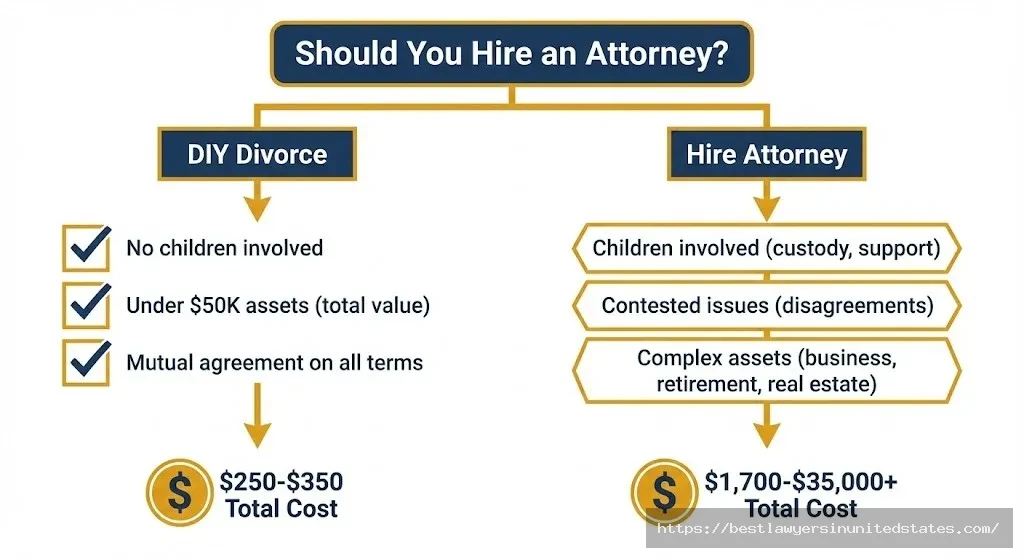
When DIY divorce makes sense:
- You and your spouse agree on all major issues
- No minor children involved
- Minimal assets to divide (less than $50,000 combined)
- No retirement accounts or real estate
- Neither spouse seeks alimony
- Both parties have similar earning capacity
- No domestic violence concerns
When you need an attorney:
- Any disagreement on custody, property, or support
- Significant assets or debts to divide
- Retirement accounts (401k, PERS) need division
- One spouse owns a business
- Domestic violence or abuse history
- Complex financial situations
- Your spouse hired an attorney (never face opposing counsel alone)
Limited scope representation option: Montana allows “unbundled” legal services where attorneys handle specific tasks while you manage the rest. This middle-ground approach costs $500-$2,000 and provides professional guidance on critical issues while keeping overall expenses lower.
For comparison with other states’ DIY divorce options, check our comprehensive DIY divorce state-by-state guide.
How Long Does a Montana Divorce Take and How Does That Affect Costs?
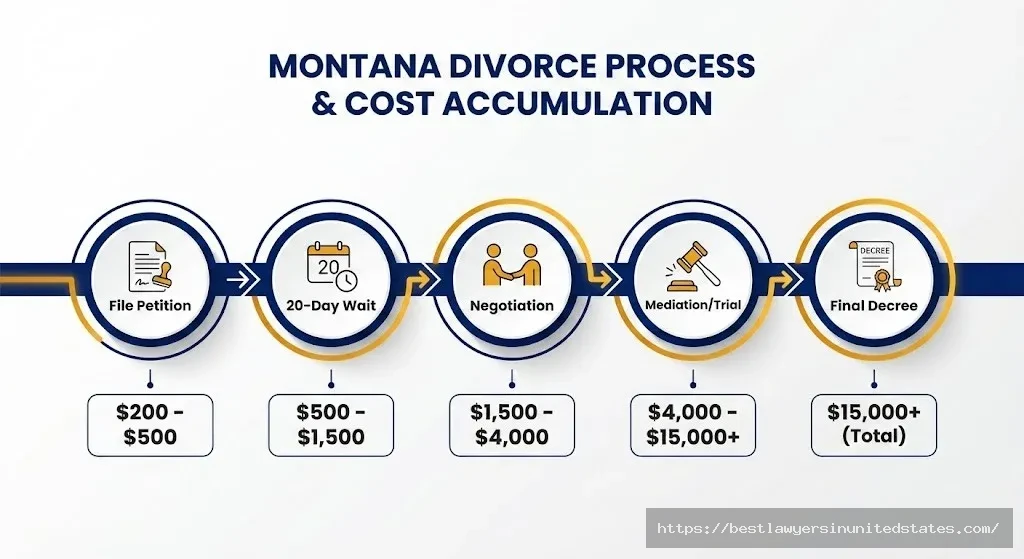
Montana divorce timelines directly impact your total costs because attorney fees accumulate monthly.
Mandatory waiting period: Montana requires a 20-day waiting period after serving divorce papers before the court can finalize your divorce. This applies to all cases, even uncontested divorces.
Uncontested divorce timeline: 2-4 months total, assuming paperwork is properly completed and both parties cooperate. Cost impact: minimal, as most time passes during the mandatory waiting period without significant legal work.
Contested divorce timeline: 9-18+ months depending on complexity. Cost impact: significant. Each additional month typically adds $1,000-$3,000 in attorney fees for ongoing negotiations, court appearances, and document preparation.
Factors that extend timelines:
- Discovery disputes over financial information
- Scheduling conflicts for court hearings (rural courts may have limited docket space)
- Custody evaluations (add 60-90 days)
- Business valuations (add 30-60 days)
- Appeals (add 12+ months)
Cost control tip: Every month of delay adds approximately $1,000-$3,000 in attorney fees for active contested cases. Agreeing to reasonable settlement terms quickly often saves more money than fighting for marginally better outcomes.
What Divorce Costs Do You Pay in Yellowstone County (Billings)?
Yellowstone County, Montana’s most populous county, follows standard Montana divorce procedures:
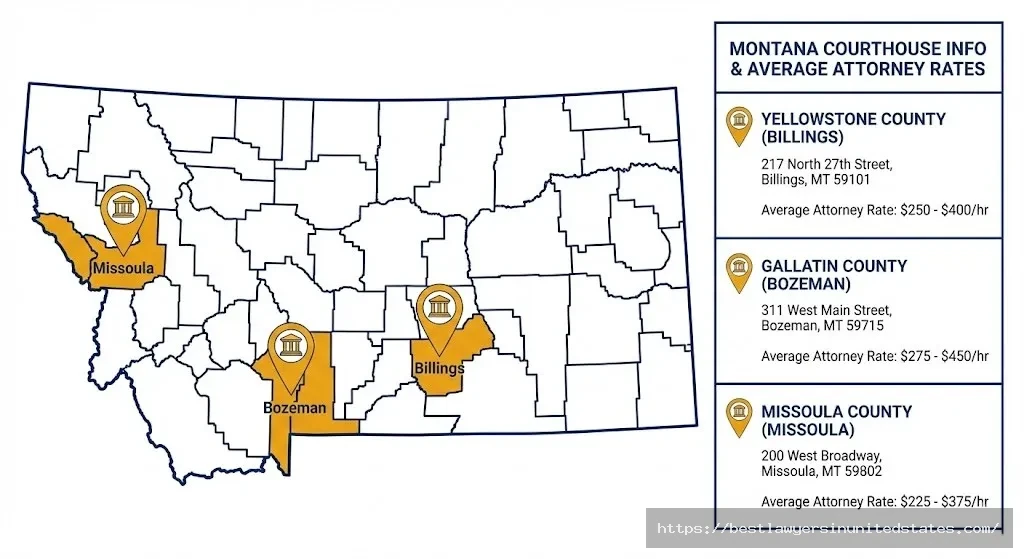
Filing location: Yellowstone County District Court, 217 N 27th St, Billings, MT 59101
Filing fee: $200 (standard statewide rate)
Local considerations: Billings attorneys typically charge $250-$400/hour given the urban market. Court dockets move reasonably quickly compared to smaller counties, potentially reducing overall case duration.
Service options: Yellowstone County Sheriff’s Office provides process service for approximately $50-$75, or you can hire private process servers for $100-$150.
What Divorce Costs Do You Pay in Gallatin County (Bozeman)?
Gallatin County serves the Bozeman area with similar filing requirements:
Filing location: Gallatin County District Court, 615 S 16th Ave, Bozeman, MT 59715
Filing fee: $200 (standard statewide rate)
Local considerations: Bozeman’s growing population and higher cost of living mean attorney fees range $275-$400/hour. The county’s family court can experience scheduling backlogs during peak filing periods, potentially extending contested case timelines.
What Divorce Costs Do You Pay in Missoula County?
Missoula County procedures mirror statewide standards:
Filing location: Missoula County District Court, 200 W Broadway, Missoula, MT 59802
Filing fee: $200 (standard statewide rate)
Local considerations: As a college town and regional hub, Missoula has numerous experienced family law attorneys charging $225-$375/hour. The courthouse handles high case volumes, so expect standard processing times for uncontested cases.
Frequently Asked Questions
How much does a divorce cost in Montana if both parties agree? An uncontested divorce where both spouses agree on all terms costs $1,700-$5,000 total in Montana, including the $200 filing fee and attorney fees if you hire one. Many couples spend $2,000-$3,000 for a straightforward uncontested case with limited legal representation.
What is the cheapest way to get divorced in Montana? File for divorce yourself without an attorney. You’ll pay only the $200 filing fee plus service costs (around $50-$150), totaling $250-$350. Montana provides free forms through the Montana Courts Self-Help Center. This works best when both spouses agree on all issues and have no children or significant assets.
Can I get a fee waiver for Montana divorce costs? Yes, if your household income is below 125% of federal poverty guidelines. Complete the fee waiver application at your county District Court clerk’s office with proof of income. The waiver covers court filing fees but not attorney costs or other expenses.
How much do divorce lawyers charge per hour in Montana? Montana divorce attorneys charge $150-$400 per hour depending on experience and location. Urban attorneys in Billings, Bozeman, or Missoula typically charge $250-$400/hour, while rural area attorneys charge $150-$250/hour.
What does equitable distribution mean in Montana divorce? Montana courts divide marital property equitably (fairly) but not necessarily equally. Judges consider factors like each spouse’s economic situation, earning capacity, contributions to the marriage, and duration of marriage when dividing assets and debts.
Does Montana have a divorce waiting period? Yes, Montana requires a 20-day waiting period after serving divorce papers before the court can finalize your divorce. This applies to all cases regardless of whether they’re contested or uncontested.
How long do you have to live in Montana to file for divorce? One spouse must be a Montana resident for at least 90 days (3 months) before filing for divorce. This residency requirement ensures Montana courts have jurisdiction over your case.
What is a wife entitled to in a Montana divorce? Montana follows equitable distribution, meaning assets are divided fairly based on multiple factors rather than automatically 50/50. Courts consider each spouse’s economic situation, contributions to marital property, earning capacity, and needs when dividing assets. There’s no automatic entitlement—outcomes depend on your specific circumstances.
Do I need grounds for divorce in Montana? No. Montana is a no-fault divorce state. You can file based on “irreconcilable differences” or living separately for 180+ days without maintaining a marital relationship. You don’t need to prove wrongdoing to get divorced.
How are 401k and retirement accounts divided in Montana divorce? Retirement accounts accumulated during marriage are marital property subject to equitable division. Courts typically use a Qualified Domestic Relations Order (QDRO) to divide 401(k) plans, pensions, and IRAs without triggering early withdrawal penalties. Pre-marital retirement savings generally remain separate property.
Can I stop my spouse from getting a divorce in Montana? No. Montana law doesn’t allow one spouse to prevent divorce. If one spouse wants to end the marriage, the divorce will proceed even if the other spouse objects. You can contest specific terms (property division, custody) but cannot block the divorce itself.
What does divorce mediation cost in Montana? Divorce mediation in Montana costs $100-$300 per hour. Most couples complete mediation in 4-8 sessions, totaling $800-$2,400. While mediation adds upfront costs, it typically saves $5,000-$15,000 compared to contested litigation.
Are legal separation and divorce the same in Montana? No. Legal separation allows couples to live apart with court-ordered arrangements for property, support, and custody while remaining legally married. Divorce permanently ends the marriage. Some couples choose legal separation for religious reasons or to maintain health insurance benefits.
What is a joint dissolution of marriage in Montana? Joint dissolution is when both spouses sign and file the divorce petition together, indicating mutual agreement to end the marriage. This eliminates service requirements and demonstrates cooperation, often resulting in faster, less expensive proceedings.
How much does it cost to modify a Montana divorce decree? Post-decree modifications for child custody, support, or parenting plans typically cost $500-$2,500 in attorney fees if uncontested. Contested modifications requiring hearings can cost $3,000-$10,000+. Court filing fees for modifications are usually $50-$100.
Can I represent myself in Montana divorce court? Yes. Montana allows self-representation (pro se) in divorce cases. The Montana Courts Self-Help Center provides forms and instructions. However, self-representation is risky in contested cases, cases involving children, or complex financial situations. Consider at least consulting an attorney before proceeding alone.
What happens if I can’t afford a divorce lawyer in Montana? Contact Montana Legal Services Association to see if you qualify for free representation. Apply for court fee waivers if low-income. Ask attorneys about payment plans or limited scope representation. Some law firms offer sliding scale fees based on income.
Does filing first in Montana divorce affect costs? Not significantly. Filing first doesn’t impact the $200 filing fee or overall costs. However, being the petitioner (filer) lets you present your case first in court, which some attorneys consider a minor strategic advantage. The real cost factors are whether the case is contested and how cooperative both spouses are.
How are divorce costs split between spouses in Montana? Typically, each spouse pays their own attorney fees. However, Montana courts can order one spouse to pay the other’s attorney fees if there’s a significant income disparity and one spouse lacks resources to afford adequate representation. Courts consider both spouses’ financial situations when making these determinations.
What is the Montana PERS divorce process? Montana Public Employees Retirement System (PERS) accounts are marital property if contributions were made during marriage. Division requires a Qualified Domestic Relations Order (QDRO) prepared by your attorney. QDRO preparation costs $500-$1,500 and ensures retirement division without tax penalties.
Next Steps: Getting Started with Your Montana Divorce
Understanding costs is just the first step. Here’s what to do next:

Gather financial documents: Collect three years of tax returns, recent bank statements, retirement account statements, property deeds, vehicle titles, and debt statements. Having these organized saves attorney fees.
Consult with Montana family law attorneys: Most offer free initial consultations. Interview 2-3 attorneys to compare fees, experience, and communication styles before making a decision.
Consider your goals: Decide what matters most—keeping the house, protecting retirement accounts, or securing favorable custody terms. Clear priorities help you make strategic decisions and avoid fighting over less important issues.
Explore alternatives to litigation: If possible, discuss mediation or collaborative divorce with your spouse. These approaches cost significantly less than traditional contested divorce while giving you more control over outcomes.
Check eligibility for assistance: If money is tight, apply for court fee waivers and contact Montana Legal Services immediately. Don’t delay divorce proceedings because of cost concerns—waiting often makes situations worse.
Protect your finances: Open individual bank accounts, monitor credit reports, and document all marital assets and debts. Financial preparation prevents costly disputes later.
Understand your budget: Use our divorce cost calculator to estimate your specific costs, then create a realistic budget for managing divorce expenses over several months.
For more information about divorce costs across the United States, visit our comprehensive divorce cost guide covering all 50 states.
Note: This article provides general information about Montana divorce costs current as of 2026. Costs vary based on individual circumstances, and this guide should not be considered legal advice. Consult with a licensed Montana family law attorney for guidance specific to your situation.
