Meta Description: Connecticut minimum wage rises to $16.94 in 2026. Learn CT wage laws, tipped rates, overtime rules, and use our free calculators to estimate your earnings.
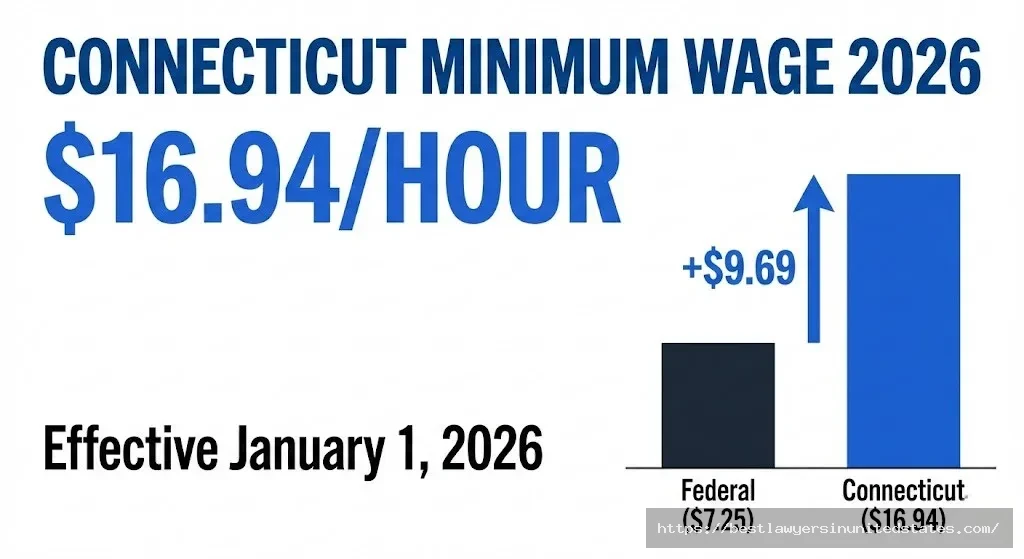
Connecticut’s minimum wage will increase to $16.94 per hour on January 1, 2026. This makes Connecticut one of the highest minimum wage states in America, significantly above the federal rate of $7.25. The increase comes from Public Act 19-4, which automatically adjusts Connecticut’s minimum wage each year based on the federal Employment Cost Index.
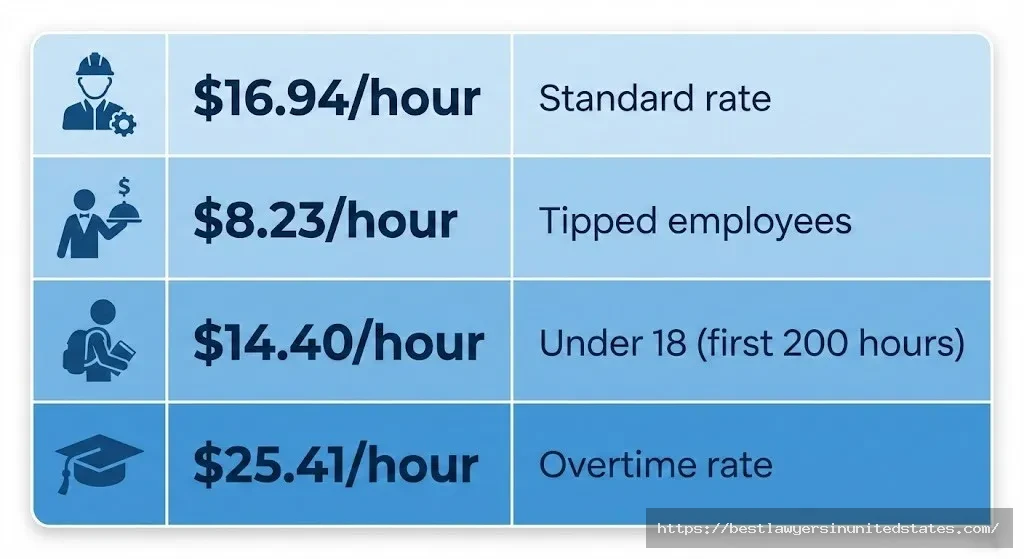
Governor Ned Lamont announced the 2026 increase in September 2025. Workers earning minimum wage will see a 3.6% raise from the current $16.35 rate. Tipped employees will earn $8.23 per hour, while workers under 18 receive 85% of the standard rate during their first 200 hours of employment.
This guide covers everything you need to know about Connecticut wage laws in 2026. You’ll learn about tipped worker rules, overtime requirements, youth wages, the state’s unique 4-hour rule, and how to file wage complaints. We’ve also included three free calculators to help you estimate your earnings, overtime pay, and potential wage theft recovery.
Calculate Your Earnings in Connecticut
Want to know exactly how much you’ll earn at Connecticut’s $16.94 minimum wage? Use our free calculator to estimate your weekly, monthly, and annual income based on your hours worked.
💰 Minimum Wage Earnings Calculator
Calculate your weekly, monthly, and annual earnings with overtime and tax estimates
📊 Your Earnings Breakdown
💰 Gross Earnings
Calculator features:
- Automatic Connecticut wage rates for 2026
- Weekly, monthly, and annual earnings
- Overtime calculations
- Tax withholding estimates
- Take-home pay breakdown
Full calculator with all features: Calculate your Connecticut minimum wage earnings
Questions about your wages or need legal help?
Find Employment Lawyers in Connecticut - Free Consultation
Email: [email protected]
What Is Connecticut's Minimum Wage in 2026?
Quick Answer: Connecticut's minimum wage is $16.94 per hour starting January 1, 2026, making it one of the five highest state minimum wages in America.
How Connecticut's Rate Compares
Connecticut's $16.94 rate sits well above the federal minimum wage of $7.25 per hour. This means Connecticut employers must pay the higher state rate regardless of federal law. The difference of $9.69 per hour translates to significant additional income for minimum wage workers.
Key comparison:
| Jurisdiction | Minimum Wage | Annual Earnings (Full-Time) |
|---|---|---|
| Connecticut 2026 | $16.94/hour | $35,235 |
| Federal | $7.25/hour | $15,080 |
| Difference | +$9.69/hour | +$20,155 |
Who Must Pay Connecticut's Minimum Wage?
All Connecticut employers must pay the state minimum wage. This includes:
- Private companies of any size
- Nonprofit organizations
- State and local government agencies
- Seasonal businesses
- Agricultural employers (with limited exceptions)
The only workers exempt from Connecticut's minimum wage are those specifically listed in state statute, such as certain agricultural workers during harvest, outside salespeople, and properly classified independent contractors.
When Does the 2026 Rate Take Effect?
The new $16.94 rate becomes effective at 12:01 AM on January 1, 2026. Employers must begin paying the increased rate for all hours worked on or after this date. Connecticut law requires employers to post updated minimum wage notices in workplaces by January 1.
Connecticut Minimum Wage History & Future Increases
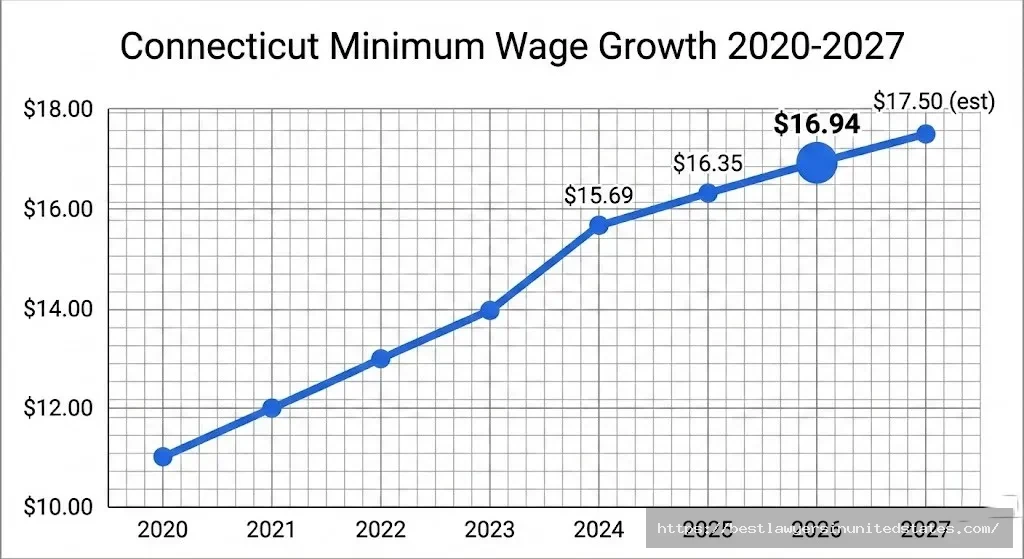
Connecticut has raised its minimum wage significantly since 2019. The state moved from $10.10 per hour in 2019 to $15.00 by June 2023, then continued increases through automatic indexing.
How Connecticut Calculates Annual Increases
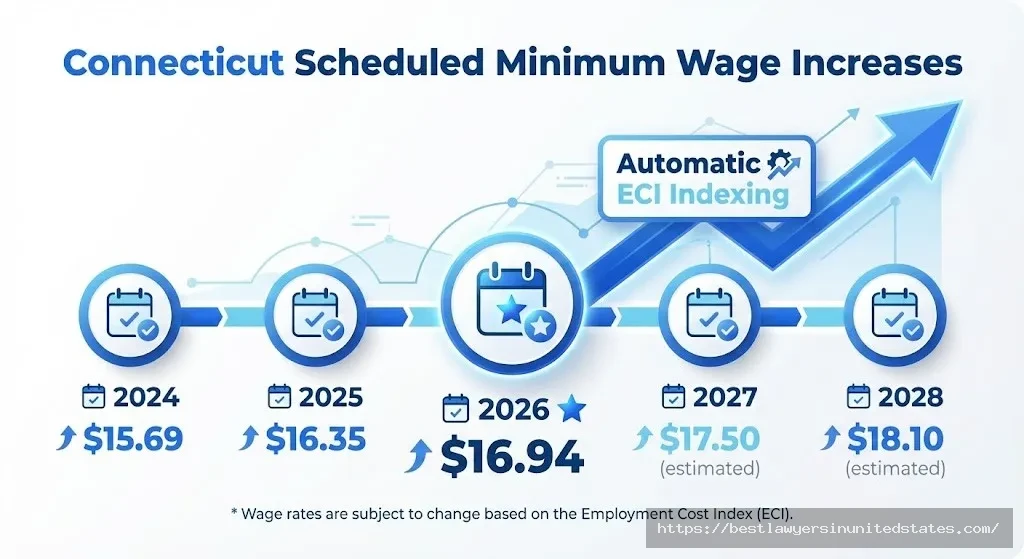
Public Act 19-4, passed in 2019, created Connecticut's automatic wage adjustment system. Each year, the state calculates the Employment Cost Index increase from the previous year. The Connecticut Department of Labor then announces the new minimum wage rate by October 1 for implementation the following January.
This system ensures Connecticut wages keep pace with inflation. Workers don't need to wait for legislative action to see increases. The predictable adjustment schedule helps both employees plan finances and employers budget labor costs.
Historical Rates and Future Projections
| Effective Date | Minimum Wage | Increase | Notes |
|---|---|---|---|
| January 1, 2024 | $15.69 | $0.69 | ECI adjustment |
| January 1, 2025 | $16.35 | $0.66 | ECI adjustment |
| January 1, 2026 | $16.94 | $0.59 | Current |
| January 1, 2027 | $17.50 (est.) | $0.56 (est.) | Projected based on historical ECI |
Note: 2027 and beyond are estimates based on average Employment Cost Index growth of 3-3.5% annually. Actual rates depend on federal ECI calculations.
Why Connecticut Increased Wages Aggressively
Connecticut lawmakers passed aggressive minimum wage increases from 2019-2023 to address several concerns:
- Cost of living: Connecticut ranks among the most expensive states for housing, healthcare, and daily expenses
- Worker retention: Higher wages help employers compete with neighboring states like New York and Massachusetts for workers
- Economic inequality: Raising the floor helps reduce income gaps
- Federal inaction: Congress hasn't raised the federal minimum wage since 2009
The state reached its initial $15 target in June 2023, ahead of the original schedule. The automatic indexing system now maintains wage growth without requiring new legislation each year.
Connecticut Tipped Minimum Wage 2026
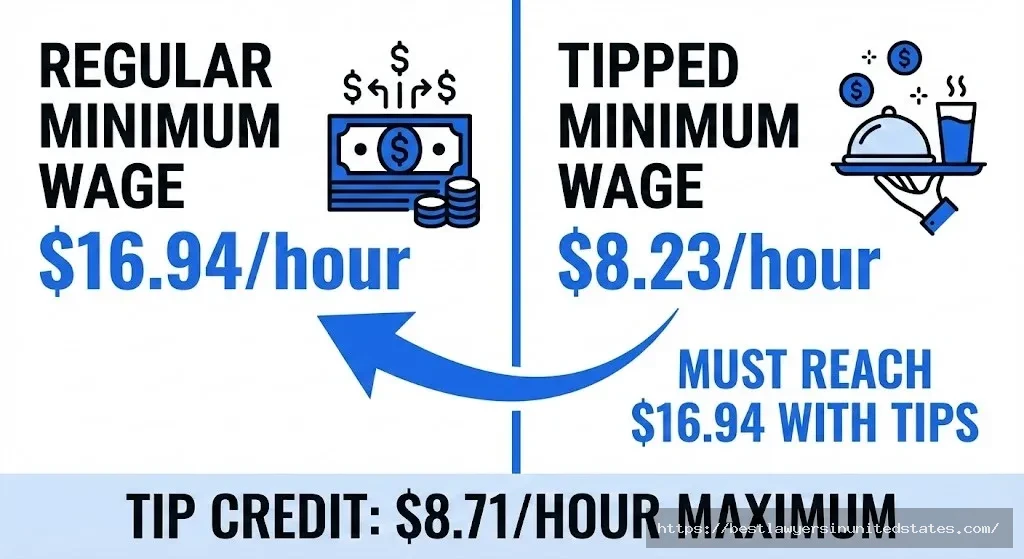
Quick Answer: Connecticut's tipped minimum wage is $8.23 per hour in 2026, but employers must ensure tipped workers earn at least $16.94 per hour when tips are included.
What Is Connecticut's Tip Credit?
Connecticut allows employers to pay tipped employees a lower base wage, then count tips toward reaching the full minimum wage. This system is called a "tip credit." Connecticut's tip credit rules differ significantly from federal law.
Connecticut's tipped wage structure:
- Base wage: $8.23 per hour (49% of regular minimum wage)
- Required total: $16.94 per hour (including tips)
- Maximum tip credit: $8.71 per hour
If a tipped employee's hourly tips don't bring them to $16.94 per hour, the employer must pay the difference. Employers cannot keep any portion of tips to cover the difference.
Who Qualifies as a Tipped Employee in Connecticut?
Connecticut defines tipped employees as workers who regularly receive more than $10 per week in tips. This typically includes:
Common tipped positions:
- Restaurant servers and bartenders
- Hotel bellhops and housekeeping staff
- Hairdressers and barbers
- Valet parking attendants
- Food delivery drivers
- Casino dealers
Workers who occasionally receive tips but don't regularly earn more than $10 weekly in tips must receive the full $16.94 minimum wage without tip credits.
Connecticut Tip Pooling Rules
Connecticut law allows voluntary tip pooling among employees who regularly receive tips. However, strict rules govern how tip pools work:
Legal tip pooling in Connecticut:
- ✅ Servers can share tips with bartenders
- ✅ Busboys and hosts can participate
- ✅ Food runners can receive pooled tips
- ✅ Participation must be voluntary
Illegal tip practices:
- ❌ Managers and supervisors cannot participate in tip pools
- ❌ Employers cannot take any portion of tips for business expenses
- ❌ Tips cannot cover cash register shortages
- ❌ Mandatory tip-out systems that reduce wages below minimum
Service Charges vs. Gratuities
Connecticut distinguishes between service charges and tips. This matters because service charges belong to the employer, not the worker.
Service charge: A mandatory fee added to a bill (like an automatic 18% gratuity for large parties). Connecticut law treats this as revenue belonging to the employer unless clearly stated otherwise.
Tip/Gratuity: A voluntary payment left by customers. This belongs entirely to the employee who received it.
Employers must clearly label service charges on menus and receipts. If customers believe a service charge is a tip for staff, Connecticut courts may rule the employer must distribute it to workers. Smart employers distribute service charges to avoid confusion and potential workplace disputes.
What If You're Not Making Minimum Wage?
If your hourly wages plus tips don't reach $16.94 per hour, your employer breaks Connecticut law. You have several options:
Immediate steps:
- Track your hours and tips daily in writing
- Calculate your effective hourly rate (wages + tips ÷ hours)
- Talk to your employer first if you're comfortable
- File a complaint with Connecticut Department of Labor if the problem continues
Connecticut protects workers who report wage violations. Employers cannot fire, demote, or retaliate against employees who assert their wage rights.
Connecticut Youth Wages (Workers Under 18)
Quick Answer: Workers under 18 in Connecticut can be paid 85% of the minimum wage ($14.40 in 2026) for their first 200 hours of employment only.
How Connecticut's Youth Wage Works
Connecticut allows employers to pay a training wage to minors. This reduced rate applies only during a worker's first 200 hours with an employer. After 200 hours, the employer must pay the full $16.94 minimum wage.
2026 youth wage calculation:
- Regular minimum wage: $16.94
- Youth rate (85%): $14.40
- Maximum hours at youth rate: 200
The 200-hour threshold typically equals about 5 weeks of full-time work or 10 weeks of part-time work. Employers must track hours carefully and switch to the full rate at exactly 200 hours.
Youth Wage Requirements and Restrictions
Connecticut's youth wage comes with strict rules. Employers cannot abuse the system to pay lower wages indefinitely.
Key restrictions:
- Applies only to workers under age 18
- Limited to first 200 hours with each employer
- Cannot be used for returning employees (even after time off)
- Employers must pay overtime on the youth wage rate
- Must track hours precisely and notify workers
If an employer fires a youth worker just before they hit 200 hours and hires a replacement, Connecticut may consider this wage theft. The pattern of cycling through youth workers to avoid paying full wages violates the spirit of the law.
Work Permits for Connecticut Minors
Connecticut requires work permits for most workers under 18. This applies regardless of whether employers pay youth or full minimum wage.
Work permit basics:
- Who needs one: All workers under 18 (with limited exceptions)
- How to get one: Apply through your school or local board of education
- Cost: Free
- Validity: Good until you turn 18 or leave school
Employers must keep the work permit on file. Working without a valid permit can result in fines for both the employer and potentially the minor's parents.
Child Labor Law Restrictions
Connecticut limits when and how long minors can work. These rules protect young workers regardless of the wage paid.
For workers age 16-17:
- No more than 8 hours per day when school is in session
- No more than 48 hours per week
- Cannot work during school hours without school permission
- No work between 10 PM and 6 AM on school nights (can work until midnight on non-school nights)
For workers age 14-15:
- Maximum 3 hours per day on school days, 8 hours on non-school days
- Maximum 18 hours per week during school, 40 hours when school is not in session
- Cannot work during school hours
- Cannot work before 7 AM or after 7 PM (extended to 9 PM from June 1 to Labor Day)
Employers who violate child labor laws face serious penalties from Connecticut's Department of Labor.
Calculate Your Overtime Pay in Connecticut
Working more than 40 hours per week? Calculate your overtime earnings based on Connecticut's overtime laws. This calculator accounts for Connecticut's time-and-a-half rules and helps you understand your full compensation.
⏰ Overtime Pay Calculator
Calculate your overtime earnings based on your state's specific labor laws
📍 Select Your State
💰 Your Hourly Wage
📊 Calculation Method
📅 Weekly Hours
💵 Your Weekly Overtime Pay
📊 Earnings Breakdown
📅 Pay Period Estimates
⚖️ State vs Federal Comparison
Calculator features:
- Connecticut-specific overtime rules
- Daily and weekly overtime calculations
- Time-and-a-half pay computations
- Pay period breakdowns
- Comparison with federal law
Full overtime calculator: Calculate your Connecticut overtime pay
Questions about your wages or need legal help?
Find Employment Lawyers in Connecticut - Free Consultation
Email: [email protected]
Overtime Pay Requirements in Connecticut
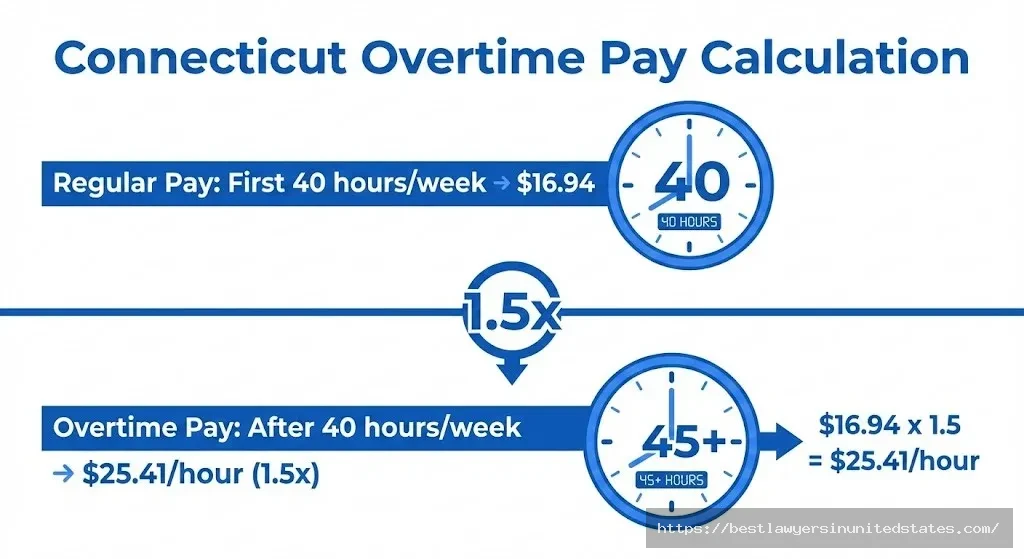
Quick Answer: Connecticut requires time-and-a-half pay (1.5x regular rate) for hours worked over 40 in a week, following federal Fair Labor Standards Act rules.
When Does Overtime Apply in Connecticut?
Connecticut follows the Fair Labor Standards Act for overtime. This means most workers earn 1.5 times their regular rate for hours beyond 40 in a workweek.
Overtime calculation for minimum wage workers in 2026:
- Regular rate: $16.94/hour
- Overtime rate: $25.41/hour ($16.94 × 1.5)
Unlike some states such as California or Colorado, Connecticut does not require daily overtime. A worker could theoretically work 10 hours on Monday and 10 hours on Tuesday (20 hours total) without triggering overtime if they work fewer than 40 hours that week.
Connecticut Overtime Rules for Different Workers
| Worker Type | Regular Rate | Overtime Rate | Notes |
|---|---|---|---|
| Minimum wage | $16.94/hour | $25.41/hour | Standard |
| Tipped employee | $8.23 base + tips | Calculate using actual rate | Must include tips in calculation |
| Youth (<18) | $14.40/hour | $21.60/hour | First 200 hours only |
| Salaried exempt | No overtime | No overtime | Must meet salary threshold |
Who Is Exempt from Connecticut Overtime?
Not every worker qualifies for overtime. Connecticut follows federal exemptions, which include:
Common overtime exemptions:
- Executive, administrative, and professional employees earning above $35,568 annually
- Outside salespeople
- Computer professionals earning above specific thresholds
- Certain commissioned retail employees
- Some transportation workers
- Agricultural workers (limited exemption)
Employers often misclassify workers as exempt to avoid paying overtime. Job titles don't determine exemption status. Connecticut courts look at actual job duties and pay structure. If you have questions about your classification, consider speaking with an employment attorney.
Calculating Overtime for Tipped Workers
Tipped employees earn overtime too, but the calculation gets complex. Connecticut requires overtime based on the worker's actual hourly rate, not just the $8.23 tipped minimum.
Example overtime calculation for tipped worker:
- Regular hours (40): 40 × $8.23 = $329.20
- Tips received: $400
- Total regular pay: $729.20
- Actual hourly rate: $729.20 ÷ 40 = $18.23/hour
- Overtime rate: $18.23 × 1.5 = $27.35/hour
This ensures tipped workers receive fair overtime based on their true earnings, not just the reduced base wage.
Connecticut's 4-Hour Rule Explained
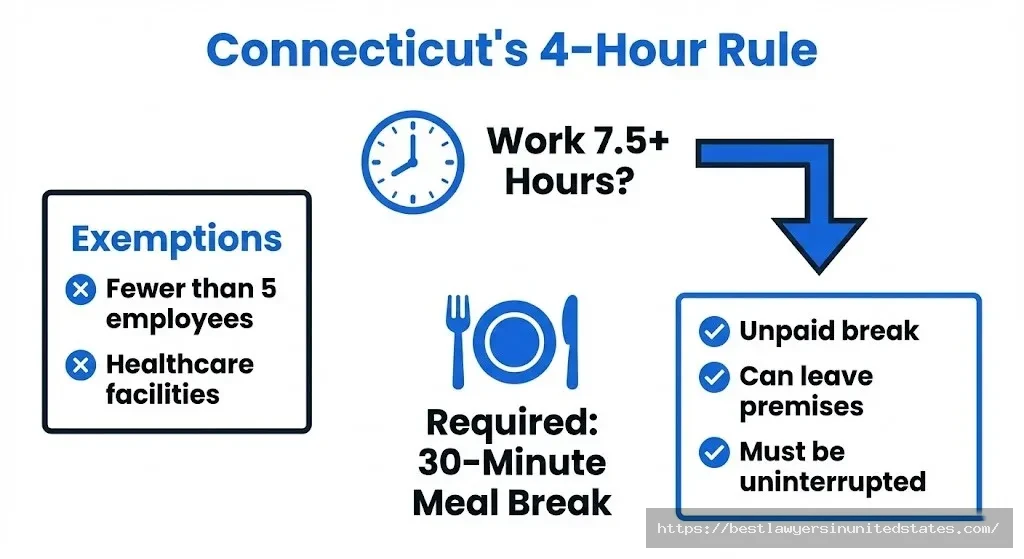
Quick Answer: Connecticut's "4-hour rule" requires employers to give a 30-minute meal break to workers who work 7.5 or more consecutive hours.
What Is the 4-Hour Rule?
Connecticut's break law says workers must receive a 30-minute meal period after working 7.5 hours. Many people call this the "4-hour rule" because employees typically get the break roughly 4 hours into their shift, though state law doesn't specify exact timing.
Connecticut General Statutes § 31-51ii governs this requirement. The law applies to most Connecticut employers and protects workers from being forced to work long shifts without breaks.
When Must Employers Provide Meal Breaks?
Break requirements:
- Who qualifies: Any employee working 7.5+ consecutive hours
- Break length: Minimum 30 minutes
- Break type: Unpaid (employees can leave the premises)
- Timing: No specific requirement, but typically after first 4-5 hours
The break must be uninterrupted. Employers cannot require workers to remain on-call or respond to work matters during the 30-minute period. If an employer interrupts a meal break, they must pay for that time and provide a new uninterrupted break.
Exemptions from Connecticut's Meal Break Law
Not every workplace must provide meal breaks under Connecticut law. Exemptions include:
Industries exempt from meal break requirements:
- Employers with fewer than 5 employees on a shift
- Healthcare facilities where patient care could be jeopardized
- Security services where continuous coverage is essential
- Manufacturing plants with rotating shifts and collective bargaining agreements
- Certain transportation operations
Even if an employer qualifies for an exemption, they should provide breaks when possible. Workers who don't receive adequate breaks experience more workplace injuries and lower productivity.
Penalties for Violating Break Laws
Connecticut takes meal break violations seriously. Workers who don't receive required breaks can file complaints with the Connecticut Department of Labor Wage and Workplace Standards Division.
Potential consequences for employers:
- Civil penalties up to $100 per violation
- Back pay for any breaks where employees worked without compensation
- Attorney fees if employee files a lawsuit
- Retaliation penalties if employer fires worker who complains
Repeated violations can result in increased penalties. Connecticut may also require employers to post notices about break rights if they have a pattern of violations.
Break Laws & Rest Periods in Connecticut
Connecticut's break requirements extend beyond just meal periods. Understanding your full break rights helps you identify violations and protect your time.
Short Rest Breaks in Connecticut
Connecticut law does not require employers to provide short rest breaks (like 10 or 15-minute breaks). However, many Connecticut employers voluntarily provide these breaks, and federal law says if they do, the breaks must be paid.
Rest break guidelines:
- Short breaks (under 20 minutes) must be paid if provided
- Bathroom breaks are always required and must be paid
- Coffee breaks or smoke breaks are at employer discretion
- Employers can prohibit short breaks if they choose
If your employer provides short breaks, they cannot require you to work during that time. A "break" where you must monitor a machine or answer phones isn't really a break under federal law.
The 7-Minute Rule in Connecticut
Connecticut permits time clock rounding under the federal "7-minute rule." This rule helps employers manage time tracking but can't be used to shortchange workers.
How the 7-minute rule works:
- Minutes 1-7: Round down to previous quarter hour
- Minutes 8-14: Round up to next quarter hour
- Must average out fairly over time
Example: An employee clocks in at 8:07 AM. The system rounds to 8:00 AM. The same employee clocks out at 5:05 PM. The system rounds to 5:00 PM. This is legal.
However, if a system always rounds against employees (always down at clock-in, always down at clock-out), Connecticut may consider this wage theft. The rounding must work both ways fairly.
Nursing Mother Break Rights
Federal law requires employers to provide reasonable break time for nursing mothers to express milk. Connecticut law provides additional protections.
Connecticut nursing break requirements:
- Reasonable unpaid break time for milk expression
- Private space (not a bathroom) for expressing milk
- Protection from discrimination or retaliation
- Applies for one year after child's birth
Employers with fewer than 50 employees can claim undue hardship, but must still try to accommodate nursing mothers. Most Connecticut employers provide paid break time for milk expression even though state law doesn't require payment.
Exempt vs. Non-Exempt Employees in Connecticut
Quick Answer: Connecticut employees earning less than $35,568 per year ($684 per week) are non-exempt and must receive overtime pay. Higher earners may be exempt if they meet specific duties tests.
Understanding Salary Thresholds in Connecticut
Connecticut follows federal Fair Labor Standards Act standards for determining exempt status. This means Connecticut uses the federal salary threshold of $684 per week or $35,568 annually.
However, simply earning above this threshold doesn't automatically make you exempt. You must also meet strict duties tests based on your job responsibilities.
White Collar Exemptions in Connecticut
Three main categories of workers can be classified as exempt from overtime if they meet both salary and duties requirements.
Executive exemption:
- Earns at least $35,568 annually
- Manages an enterprise or department
- Regularly directs work of at least two full-time employees
- Has authority to hire/fire or influence employment decisions
Administrative exemption:
- Earns at least $35,568 annually
- Performs office or non-manual work
- Work relates to business operations or management
- Exercises discretion and independent judgment on significant matters
Professional exemption:
- Earns at least $35,568 annually
- Work requires advanced knowledge
- Knowledge primarily intellectual in nature
- Acquired through prolonged specialized instruction
Simply having a title like "manager" or "assistant manager" doesn't create exempt status. Connecticut courts examine actual job duties, not titles on business cards.
Common Misclassification Issues
Many Connecticut employers incorrectly classify workers as exempt to avoid paying overtime. This often happens in these situations:
Red flags for misclassification:
- You're called a "manager" but spend most time doing the same work as hourly employees
- You earn just above $35,568 but work 50-60 hours weekly
- You have no authority to hire, fire, or discipline others
- You follow detailed procedures with little independent decision-making
- Your employer recently changed you to salary to avoid overtime pay
If you believe you're misclassified, track your actual work duties for several weeks. Then compare your responsibilities against the official duties tests. Many workers discover they should have been receiving overtime for years.
What If You're Misclassified?
Workers who were improperly classified as exempt can recover unpaid overtime going back two years (or three years if the violation was willful). Connecticut wage laws provide strong protections.
Steps to address misclassification:
- Document your actual daily job duties in detail
- Calculate your unpaid overtime hours
- Request proper classification in writing
- File a complaint with Connecticut Department of Labor if employer refuses
- Consider consulting an employment attorney
Connecticut prohibits retaliation against workers who raise misclassification concerns. However, many people prefer consulting an attorney before approaching their employer.
Calculate Your Wage Theft Recovery in Connecticut
Think your employer owes you money? Use our wage theft calculator to estimate how much you could recover, including unpaid wages, penalties, and interest under Connecticut law.
Wage Theft Recovery Calculator
Estimate how much you can recover in unpaid wages, penalties, and damages based on your state's laws
💵 Estimated Total Recovery
💰 Unpaid Wages
⚖️ Penalties & Damages
📋 Total Summary
Calculator features:
- Multiple violation types (unpaid wages, overtime, tips)
- Connecticut-specific penalties and damages
- Filing deadline tracker
- Total recovery estimate
- Next steps guidance
Full wage theft calculator: Calculate your Connecticut wage theft recovery
Need help with unpaid wages? Contact Connecticut Department of Labor or consult with an employment attorney.
Email: [email protected]
Wage Theft & Employee Rights in Connecticut
Quick Answer: Connecticut workers who don't receive proper wages can file complaints with the Connecticut Department of Labor within two years of the violation and may recover double damages plus attorney fees.
Common Wage Violations in Connecticut
Wage theft takes many forms beyond simply not paying workers. Connecticut law protects employees from various illegal pay practices.
Types of wage theft:
- Not paying minimum wage ($16.94 in 2026)
- Refusing to pay earned overtime
- Taking illegal deductions from paychecks
- Not providing final paychecks after termination
- Stealing tips from tipped employees
- Misclassifying employees as independent contractors
- Requiring off-the-clock work
- Not paying for all hours worked (including short tasks)
Connecticut employers must pay wages at least weekly unless they obtain a special permit from the Connecticut Department of Labor. Most Connecticut workers receive paychecks weekly or biweekly.
How to File a Wage Complaint in Connecticut
Connecticut makes it relatively simple to file wage complaints through the Department of Labor Wage and Workplace Standards Division.
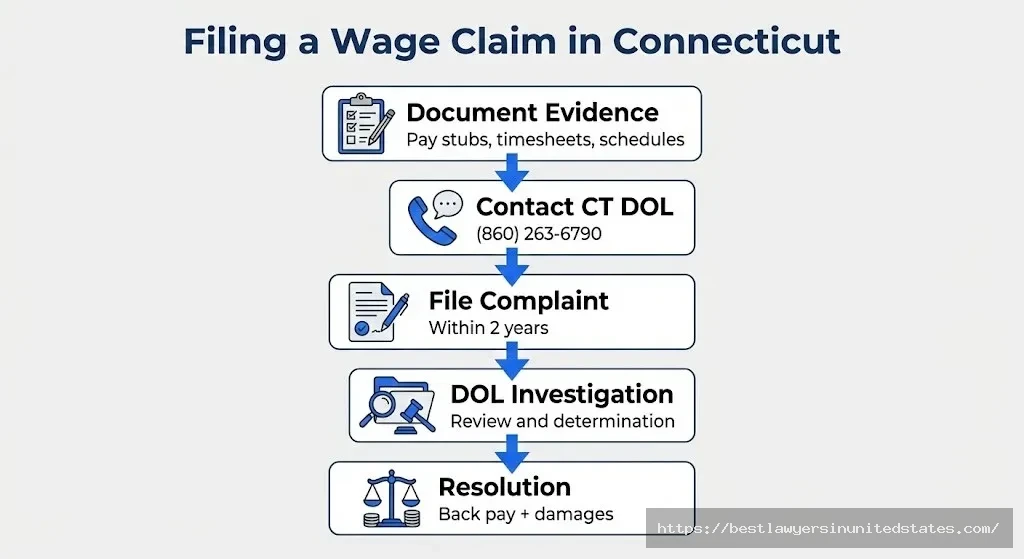
Filing process:
- Gather documentation
- Pay stubs showing actual payments
- Time sheets or work schedules
- Written communications about pay
- Your own records of hours worked
- Bank statements showing deposits
- Contact Connecticut DOL
- Online: [Connecticut Department of Labor Website]
- Phone: (860) 263-6790
- Mail: Connecticut DOL, 200 Folly Brook Boulevard, Wethersfield, CT 06109
- In person: Visit any regional office
- Submit your complaint
- Complete the wage claim form
- Attach supporting documentation
- Provide detailed description of violations
- Include dates and amounts owed
- DOL investigation
- Connecticut DOL reviews your claim
- May contact employer for response
- Conducts investigation if needed
- Issues determination
- Resolution
- DOL may order employer to pay
- You receive back wages if successful
- Can appeal if you disagree with determination
Connecticut Wage Claim Deadlines
Connecticut law sets strict time limits for filing wage claims. Missing these deadlines can mean losing your right to recover unpaid wages.
| Claim Type | Filing Deadline | Statute of Limitations |
|---|---|---|
| Unpaid wages | 2 years | 2 years from last payment due |
| Unpaid overtime | 2 years | 3 years if willful violation |
| Unpaid tips | 2 years | 2 years from violation |
| Final paycheck | 2 years | Within 3 days of discharge |
| Retaliation | 90 days | 90 days from retaliatory act |
The clock typically starts running from when each payment was due, not when you discovered the problem. If you suspect wage theft, act quickly.
Penalties and Damages for Wage Violations
Connecticut provides strong remedies for workers who experience wage theft. Courts can award multiple types of damages to make workers whole.
What you can recover:
- Back wages: Full amount of unpaid wages owed
- Liquidated damages: Equal to back wages (double recovery)
- Interest: On unpaid amounts from due date
- Attorney fees: If you hire a lawyer and win
- Court costs: Filing fees and related expenses
- Civil penalties: Paid to state (doesn't go to worker)
Example calculation:
- Unpaid overtime: $5,000
- Liquidated damages: $5,000
- Interest (3 years): $300
- Attorney fees: $8,000
- Total recovery: $18,300
Connecticut also provides criminal penalties for willful wage theft. Employers who intentionally refuse to pay wages can face fines up to $5,000 and potential jail time for repeat offenses.
Protection Against Retaliation
Connecticut law specifically prohibits employer retaliation against workers who assert wage rights. This protection covers various actions.
Protected activities:
- Filing a wage complaint with Connecticut DOL
- Asking employer about wage discrepancies
- Testifying in wage claim proceedings
- Discussing wages with coworkers
- Refusing to sign illegal wage agreements
Prohibited retaliation:
- Firing or threatening to fire
- Reducing hours or wages
- Demoting or transferring to worse position
- Creating hostile work environment
- Reporting to immigration authorities
If your employer retaliates, you have only 90 days to file a retaliation complaint with Connecticut DOL. This shorter deadline makes quick action essential. Many workers benefit from consulting with an employment attorney who understands workplace disputes in Connecticut before filing complaints.
Connecticut vs. Neighboring States
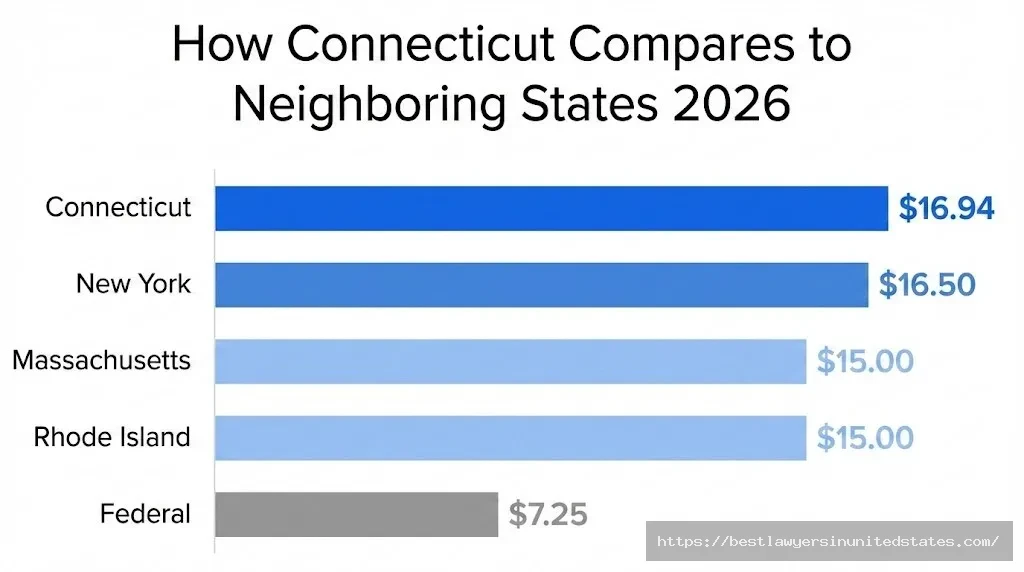
Connecticut's minimum wage compares favorably to surrounding states, though several factors affect which state offers the best pay and working conditions.
State-by-State Minimum Wage Comparison
| State | 2026 Minimum Wage | Tipped Wage | Annual Earnings (Full-Time) |
|---|---|---|---|
| Connecticut | $16.94 | $8.23 | $35,235 |
| New York | $16.50 (most areas) | $11.00 | $34,320 |
| Massachusetts | $15.00 | $6.75 | $31,200 |
| Rhode Island | $15.00 | $3.89 | $31,200 |
| Federal | $7.25 | $2.13 | $15,080 |
Connecticut leads neighboring New England states in 2026. However, some areas within New York state have higher local minimum wages that exceed Connecticut's rate.
New York City and Regional Variations
While Connecticut maintains a single statewide minimum wage, neighboring New York uses regional rates that vary significantly.
New York minimum wage rates (2026):
- New York City: $16.50/hour
- Long Island & Westchester: $16.50/hour
- Rest of New York State: $15.50/hour
Workers in New York City and its suburbs earn less per hour than Connecticut workers under state minimum wage laws. However, some New York cities have passed local ordinances with higher rates. New York's complex wage system creates different pay levels based on geography and industry.
Which State Offers the Best Deal for Workers?
Comparing minimum wage rates alone doesn't tell the full story. Cost of living, taxes, and worker protections matter too.
Connecticut advantages:
- Highest minimum wage in region
- Strong overtime protections
- Automatic annual increases via ECI indexing
- No state income tax on Social Security benefits
- Required meal breaks for long shifts
Connecticut disadvantages:
- High cost of living in Fairfield County
- State income tax (3% to 6.99%)
- High property taxes
- Expensive housing market
Massachusetts advantages:
- No sales tax on clothing under $175
- Strong healthcare system (RomneyCare)
- Growing job market in Boston area
Massachusetts disadvantages:
- Lower minimum wage ($15.00 vs. Connecticut's $16.94)
- High cost of living in Boston
- Competitive housing market
For minimum wage workers, Connecticut's higher rate generally provides better take-home pay. However, workers should consider total cost of living, not just wages, when deciding where to live and work.
Living Wage vs. Minimum Wage in Connecticut
Quick Answer: Connecticut's $16.94 minimum wage falls short of a true "living wage" for most workers. A single adult needs approximately $17-22 per hour to cover basic expenses in Connecticut, while families need significantly more.
What Is a Living Wage?
A living wage represents the income needed to afford basic necessities without government assistance. This includes housing, food, transportation, healthcare, and other essential costs. Living wage calculations consider local cost of living rather than using national averages.
The Massachusetts Institute of Technology maintains a living wage calculator that estimates these costs for every U.S. county. For Connecticut, the numbers reveal a significant gap between minimum wage and actual living costs.
Connecticut Living Wage Estimates by County
Connecticut's cost of living varies dramatically from rural northeastern counties to wealthy Fairfield County suburbs near New York City.
Estimated annual living wage (single adult, 2026):
| County | Living Wage (Hourly) | Annual Income Needed | Gap vs. Minimum Wage |
|---|---|---|---|
| Fairfield | $22.50 | $46,800 | -$5.56/hour |
| Hartford | $18.75 | $39,000 | -$1.81/hour |
| New Haven | $19.25 | $40,040 | -$2.31/hour |
| New London | $17.50 | $36,400 | -$0.56/hour |
| Tolland | $17.25 | $35,880 | -$0.31/hour |
| Windham | $16.75 | $34,840 | +$0.19/hour |
These estimates assume full-time work (40 hours weekly, 52 weeks annually). Part-time minimum wage workers face even larger gaps between earnings and living costs.
Cost Breakdown for Connecticut Workers
Understanding where money goes helps explain why minimum wage often falls short of meeting basic needs.
Monthly budget for single adult in Hartford County:
| Expense Category | Monthly Cost | Annual Cost | % of Income |
|---|---|---|---|
| Housing | $1,200 | $14,400 | 41% |
| Food | $350 | $4,200 | 12% |
| Transportation | $450 | $5,400 | 15% |
| Healthcare | $300 | $3,600 | 10% |
| Other necessities | $625 | $7,500 | 21% |
| Total | $2,925 | $35,100 | 100% |
| Minimum wage income | $2,936 | $35,235 |
This single adult barely breaks even in Hartford, one of Connecticut's more affordable cities. Fairfield County workers face housing costs often exceeding $2,000 monthly for a basic apartment, making minimum wage insufficient.
Living Wage for Families
Families face even steeper challenges. Connecticut's cost of living becomes particularly burdensome for single parents or families with one wage earner.
Living wage estimates (2026):
| Family Type | Hourly Rate Needed | Annual Income | Adults Working |
|---|---|---|---|
| Single adult | $18.75 | $39,000 | 1 |
| Single adult + 1 child | $32.50 | $67,600 | 1 |
| Single adult + 2 children | $41.25 | $85,800 | 1 |
| 2 adults + 2 children | $25.00 each | $104,000 total | 2 |
A single parent with one child needs nearly double Connecticut's minimum wage to afford basic necessities. Two working adults with two children need both parents earning well above minimum wage.
Bridging the Gap
Connecticut workers earning minimum wage often rely on several strategies to make ends meet.
Common approaches:
- Working multiple jobs or extensive overtime
- Sharing housing with roommates or family
- Qualifying for state assistance (SNAP, Medicaid, childcare subsidies)
- Commuting from more affordable areas
- Reducing healthcare and other essential spending
The wage gap also explains why Connecticut continues raising minimum wage through automatic indexing. Even at $16.94, the state acknowledges workers need additional support. Future increases through the Employment Cost Index will slowly close the gap between minimum wage and actual living costs.
Employer Compliance Requirements in Connecticut
Quick Answer: Connecticut employers must post minimum wage notices, maintain payroll records for at least three years, provide itemized pay stubs, and follow strict wage payment schedules.
Connecticut Minimum Wage Posting Requirements
Connecticut General Statutes § 31-58c requires every employer to post current minimum wage information where employees can easily see it. This means break rooms, time clock areas, or other common spaces.
Posting requirements:
- Official Connecticut minimum wage poster
- Posted in English and Spanish (if applicable to workforce)
- Updated by January 1 each year when rates change
- Visible to all employees
- Penalties for non-compliance: $100 to $500 per violation
Connecticut Department of Labor provides free downloadable posters on their website. Employers cannot simply type their own notice. They must use the official poster.
Payroll Record-Keeping in Connecticut
Connecticut requires employers to maintain detailed payroll records for every employee. These records must be available for inspection by Connecticut Department of Labor investigators.
Required records (keep for 3 years):
- Employee name, address, and Social Security number
- Hours worked each day and week
- Rate of pay
- Total wages paid each pay period
- Deductions from wages
- Dates of employment
- Date of birth (if under 19)
Employers who fail to maintain proper records face penalties and lose credibility in wage disputes. If records are missing or inadequate, Connecticut courts often accept the employee's version of hours and wages as true.
Pay Stub Requirements
Connecticut mandates itemized pay statements for all employees. These statements must show exactly how pay was calculated and what deductions were taken.
Required information on pay stubs:
- Employee name
- Employer name and address
- Hours worked (for hourly employees)
- Rate of pay
- Gross wages
- All deductions (taxes, insurance, etc.)
- Net wages
- Pay period covered
- Payment date
Electronic pay stubs are acceptable if employees can easily access and print them. However, employers must provide paper stubs if employees request them.
Wage Payment Schedules in Connecticut
Connecticut requires more frequent wage payments than many states. Employers must pay employees at least weekly unless they obtain special permission for different schedules.
Payment schedule options:
- Weekly: Default requirement, wages must be paid within 8 days of work week end
- Biweekly: Requires permit from Connecticut DOL
- Semimonthly: Requires permit from Connecticut DOL
- Monthly: Generally not permitted for hourly workers
Manufacturing and certain other industries have special payment schedule rules under Connecticut law. Professional employees earning above certain thresholds can be paid monthly without special permission.
Final Paycheck Requirements
Connecticut requires employers to pay terminated employees quickly. The deadline depends on whether the employee was fired or quit voluntarily.
Final paycheck deadlines:
- Fired/laid off: Next business day
- Quit without notice: Next regular payday
- Quit with 5+ days notice: Next regular payday or within 5 days, whichever comes first
Employers who fail to pay final wages on time face penalties. Connecticut workers can file wage claims for late final paychecks, potentially recovering penalties beyond just the wages owed.
Penalties for Connecticut Wage Law Violations
Connecticut imposes various penalties on employers who violate wage and hour laws. These penalties serve both to compensate workers and deter future violations.
| Violation Type | Civil Penalty | Criminal Penalty | Employee Recovery |
|---|---|---|---|
| Minimum wage violation | $100-$500 | $500-$5,000 fine | Back pay + liquidated damages |
| Overtime violation | $100-$500 | $500-$5,000 fine | Back pay + liquidated damages |
| Record-keeping failure | $100-$500 | $500-$5,000 fine | Presumption in favor of employee |
| Retaliation | $500-$2,500 | Misdemeanor | Reinstatement + back pay + damages |
| Willful wage theft | $500-$2,500 | Up to 1 year jail | Triple damages + attorney fees |
Repeat violators face enhanced penalties. Connecticut DOL can also seek injunctions to prevent ongoing violations and require employers to undergo wage and hour training.
Exemptions & Special Cases
Connecticut law provides limited exemptions from minimum wage requirements for specific categories of workers. However, these exemptions are narrowly defined.
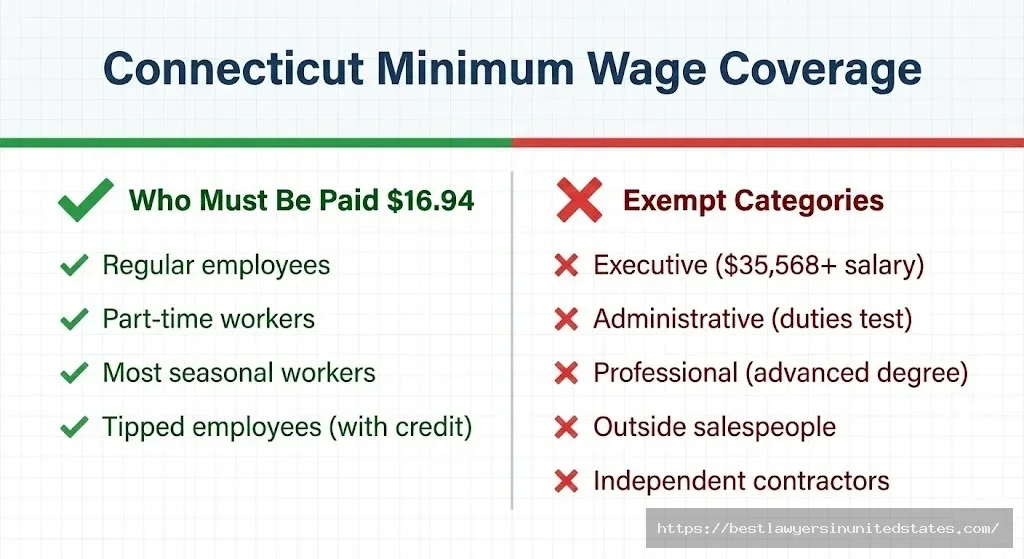
Agricultural Worker Exemptions
Farm workers receive some exemptions from Connecticut's minimum wage law, though less than under federal law. Most agricultural employees still must receive minimum wage.
Agricultural minimum wage rules:
- Most farm workers receive full $16.94 minimum wage
- Hand harvest workers paid piece rate must average minimum wage
- Small farms (limited revenue) have limited exemptions
- Immediate family members working on family farm exempt
- H-2A temporary workers covered by federal rules
Connecticut agriculture represents a small portion of the state's economy. Most farm stands and plant nurseries operate as regular businesses subject to full minimum wage requirements.
Learner and Trainee Wages
Connecticut allows employers to pay 85% of minimum wage to certain learners and apprentices during training periods. This differs from the youth wage.
Learner wage rules:
- 85% of minimum wage ($14.40 in 2026)
- Maximum 90 days per employer
- Must be learning new occupation
- Cannot be used for regular work
- Requires advance approval from Connecticut DOL in some cases
Few employers use learner wages because most training periods last less than 90 days anyway. The paperwork and approval requirements make the small savings not worth the effort for many businesses.
Student Worker Provisions
Connecticut allows certain educational institutions to pay students reduced wages in specific circumstances. This typically applies to work-study programs and student employment on campus.
Student wage rules:
- Educational institutions can pay 85% of minimum wage
- Student must be enrolled at the institution
- Work must be part of educational program
- Cannot displace regular workers
- Limited hours permitted
These rules primarily affect colleges and universities. Most student workers at Connecticut schools actually receive full minimum wage because institutions want to compete for student employees.
Workers with Disabilities
Federal law permits subminimum wage certificates for workers with disabilities that affect productivity. Connecticut generally follows federal rules but adds protections.
Disability wage provisions:
- Requires federal Section 14(c) certificate
- Wage based on productivity compared to able workers
- Subject to regular review and evaluation
- Worker must receive support services
- Connecticut DOL monitors for compliance
Connecticut increasingly limits use of subminimum wages for workers with disabilities. State policy encourages inclusive employment at full minimum wage rather than segregated workshops with reduced pay. Many advocacy groups oppose subminimum wage certificates as discriminatory and work toward eliminating them entirely.
Independent Contractor Classification
Independent contractors are not employees and therefore not covered by Connecticut minimum wage laws. However, Connecticut aggressively pursues employers who misclassify employees as independent contractors.
True independent contractor factors:
- Free from employer control over work methods
- Works for multiple clients
- Provides own tools and equipment
- Can refuse work assignments
- Bills for services rendered
- Assumes business risk
Connecticut uses the "ABC test" for determining employment status in some contexts. All three factors must be met:
- (A) Free from control and direction
- (B) Work performed outside usual course of employer's business
- (C) Engaged in independently established business
Misclassifying employees as independent contractors to avoid minimum wage is illegal and subjects employers to significant penalties. Workers concerned about misclassification should contact Connecticut Department of Labor or consult an employment attorney.
Frequently Asked Questions
What is Connecticut's minimum wage in 2026?
Quick Answer: Connecticut's minimum wage is $16.94 per hour starting January 1, 2026, making it one of the highest state minimum wages in America.
This rate applies to most employees in Connecticut. The increase from 2025's $16.35 rate comes from Public Act 19-4, which automatically adjusts Connecticut minimum wage annually based on the federal Employment Cost Index. Employers must pay this rate regardless of the federal minimum wage of $7.25.
Is minimum wage going up in Connecticut in 2026?
Quick Answer: Yes, Connecticut's minimum wage increases from $16.35 to $16.94 on January 1, 2026, a raise of 59 cents per hour.
This increase happens automatically through Connecticut's wage indexing system. The Connecticut Department of Labor calculates the adjustment each fall based on Employment Cost Index growth. Future increases will continue automatically each January based on the same formula, ensuring Connecticut wages keep pace with inflation.
What is the tipped minimum wage in Connecticut?
Quick Answer: Connecticut's tipped minimum wage is $8.23 per hour in 2026, but total pay including tips must reach $16.94 per hour.
Employers can claim a tip credit of up to $8.71 per hour for workers who regularly receive tips. However, if an employee's tips don't bring them to $16.94 hourly, the employer must pay the difference. Connecticut protects tipped workers more than federal law, which allows a $2.13 tipped minimum.
Do 16-year-olds get full minimum wage in Connecticut?
Quick Answer: Workers under 18 can be paid 85% of minimum wage ($14.40 in 2026) for their first 200 hours only, then must receive the full $16.94 rate.
Connecticut's youth wage applies only during the first 200 hours of employment with each employer. After reaching 200 hours, typically about 5 weeks of full-time work, employers must pay the standard minimum wage. The reduced rate cannot be used for returning employees or to avoid paying full wages.
What is the 4-hour rule in Connecticut?
Quick Answer: Connecticut's "4-hour rule" requires employers to provide a 30-minute unpaid meal break to workers who work 7.5 or more consecutive hours.
The break typically occurs roughly 4 hours into a shift, though Connecticut law doesn't specify exact timing. Employers with fewer than 5 employees per shift and certain industries like healthcare have limited exemptions. The meal period must be uninterrupted, and employees can leave the workplace during this time.
How do I calculate my earnings at Connecticut's minimum wage?
Quick Answer: Use our free minimum wage calculator to estimate weekly, monthly, and annual earnings based on hours worked at Connecticut's $16.94 rate.
At 40 hours per week, Connecticut's 2026 minimum wage equals $677.60 weekly, $2,936 monthly, or $35,235 annually before taxes. Our calculator accounts for overtime, tax withholding, and Connecticut-specific rates. You can adjust hours worked to see exactly how much you'll earn.
How much overtime pay am I entitled to in Connecticut?
Quick Answer: Connecticut requires time-and-a-half pay ($25.41 per hour for minimum wage workers) for hours worked over 40 in a week.
Use our overtime calculator to calculate your specific overtime earnings. Connecticut follows federal overtime rules, meaning you earn 1.5 times your regular rate for hours beyond 40 weekly. Unlike some states, Connecticut doesn't require daily overtime, only weekly.
How do I calculate wage theft recovery in Connecticut?
Quick Answer: Our wage theft calculator estimates recovery including unpaid wages, liquidated damages equal to your back pay, interest, and potential attorney fees.
Connecticut workers can recover double damages for wage violations plus attorney fees if they win. You have two years to file most wage claims. The calculator helps you estimate total recovery based on hours and pay owed, but consult Connecticut Department of Labor or an employment attorney for exact amounts.
When does Connecticut's minimum wage increase in 2026?
Quick Answer: Connecticut's minimum wage increases to $16.94 on January 1, 2026, at 12:01 AM.
All hours worked on or after January 1, 2026, must be paid at the new rate. Employers must post updated minimum wage notices by this date. Connecticut announces the next year's rate by October 1 each year, giving employers time to adjust payroll systems and budgets.
What is the exempt salary threshold in Connecticut?
Quick Answer: Connecticut follows the federal exempt salary threshold of $35,568 per year ($684 per week) as of 2026.
Earning above this threshold doesn't automatically make you exempt from overtime. You must also meet strict duties tests for executive, administrative, or professional work. Job titles don't determine exempt status. Connecticut courts examine your actual daily responsibilities when deciding if you're properly classified.
How does Connecticut minimum wage compare to surrounding states?
Quick Answer: Connecticut's $16.94 minimum wage is the highest in New England, exceeding New York ($16.50 in NYC, $15.50 elsewhere), Massachusetts ($15.00), and Rhode Island ($15.00).
However, some local minimum wages in neighboring states may exceed Connecticut's rate. For example, certain New York cities have higher local rates. Workers should also consider cost of living, taxes, and benefits when comparing states, not just minimum wage rates. States like Alaska and Arizona also have competitive wages adjusted for regional economics.
How do I file a wage complaint in Connecticut?
Quick Answer: Contact Connecticut Department of Labor Wage and Workplace Standards Division at (860) 263-6790 or visit their website to file a wage complaint within two years of the violation.
Gather documentation including pay stubs, timesheets, and written communications before filing. Connecticut DOL investigates complaints and can order employers to pay back wages plus penalties. You're protected from retaliation for filing complaints. Many workers benefit from consulting an employment attorney if their claim involves substantial unpaid wages.
Key Takeaways
Connecticut offers strong wage protections for workers in 2026. The state's $16.94 minimum wage ranks among the nation's highest and applies to nearly all employees. Automatic annual increases through Employment Cost Index indexing ensure wages keep pace with inflation without requiring new legislation.
Tipped workers receive $8.23 per hour base pay but must reach $16.94 including tips. Youth workers earn 85% of minimum wage for their first 200 hours only. Connecticut requires time-and-a-half overtime pay after 40 weekly hours and mandates 30-minute meal breaks for shifts lasting 7.5 hours or more.
Workers who don't receive proper wages can file complaints with Connecticut Department of Labor within two years and potentially recover double damages plus attorney fees. The state actively enforces wage laws and prohibits retaliation against employees who assert their rights.
Use our free calculators to estimate your minimum wage earnings, overtime pay, and potential wage theft recovery. Understanding your rights helps you identify violations and take action when employers break the law.
Questions about your wages? Contact Connecticut Department of Labor at (860) 263-6790 or visit their offices in Hartford, Bridgeport, Norwich, or Danbury. For legal assistance with workplace issues, consult with a Connecticut employment attorney.
Email: [email protected]
Additional Resources:
- Connecticut Department of Labor Official Website
- File a Wage Complaint Online
- Connecticut Minimum Wage Poster (2026 PDF)
- Compare Other State Minimum Wages: Alabama | Arkansas | Colorado