
Calculate your potential recovery Now:
Wage Theft Recovery Calculator
Estimate how much you can recover in unpaid wages, penalties, and damages based on your state’s laws
💵 Estimated Total Recovery
💰 Unpaid Wages
⚖️ Penalties & Damages
📋 Total Summary
Wage theft happens when your employer doesn't pay you the full wages you've legally earned. It's not a minor issue or an accounting error—it's a serious violation of labor law that affects millions of workers every year. If you've been paid less than minimum wage, denied overtime, had tips stolen, forced to work off the clock, or experienced illegal paycheck deductions, you're a victim of wage theft. The good news: you can recover what you're owed, often including penalties and damages that double or triple your back pay.
Wage theft is shockingly common. Workers lose over $50 billion annually to wage theft—more than all robberies, burglaries, and auto thefts combined. The most common violations include unpaid overtime, minimum wage violations, off-the-clock work, tip theft, and illegal deductions. Many workers don't realize they're victims because employers disguise wage theft through misclassification ("you're a contractor"), fake exemptions ("you're a manager"), or simply counting on workers not knowing their rights.
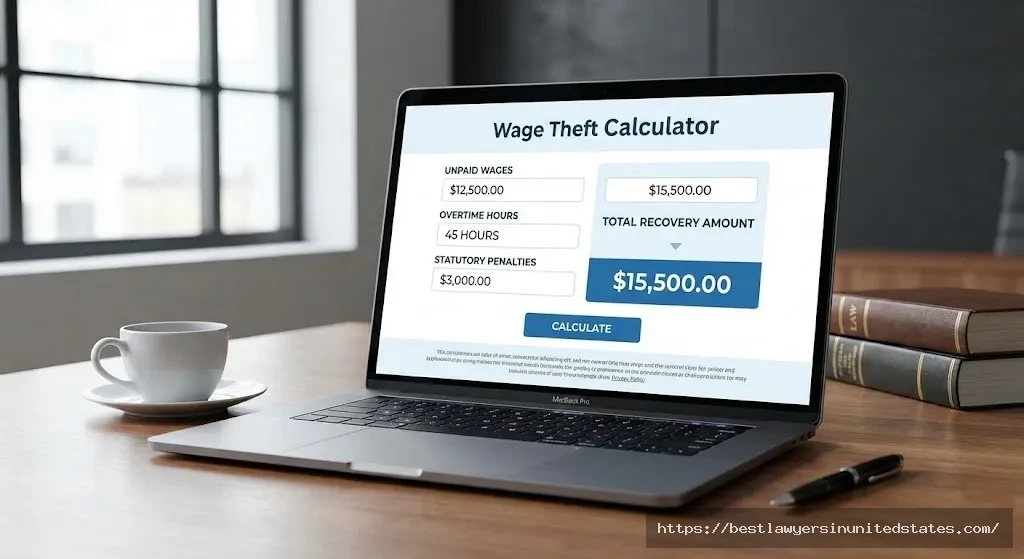
This wage theft calculator helps you estimate your total recovery under federal and state law. It calculates your unpaid wages (back pay), liquidated damages (often double your unpaid amount), state-specific penalties like waiting time penalties for late final paychecks, interest on unpaid wages, and your total potential recovery. The calculator uses your state's laws, which often provide stronger protections and higher penalties than federal minimums.
Using this calculator is free, confidential, and takes just minutes. You'll get an immediate estimate showing what you could recover, the filing deadline for your state, and next steps to claim what you're owed. This is an empowering tool that helps you understand your rights and the value of your claim. Don't let your employer get away with stealing your wages—calculate what you're owed and take action.
How to Use the Wage Theft Recovery Calculator
This unpaid wages calculator is designed to give you an accurate estimate of what you can recover based on your state's wage theft laws. Understanding the full scope of your claim helps you make informed decisions about whether to pursue it and what to expect. Here's how to use the calculator step by step.
Step 1: Select Your State
Start by choosing your state from the dropdown menu. This is critical because wage theft laws vary dramatically by state. Some states like California, New York, and Massachusetts have strong worker protections with substantial penalties, while others follow only federal minimums. The calculator automatically loads your state's specific rules for liquidated damages, penalty rates, interest calculations, and filing deadlines.
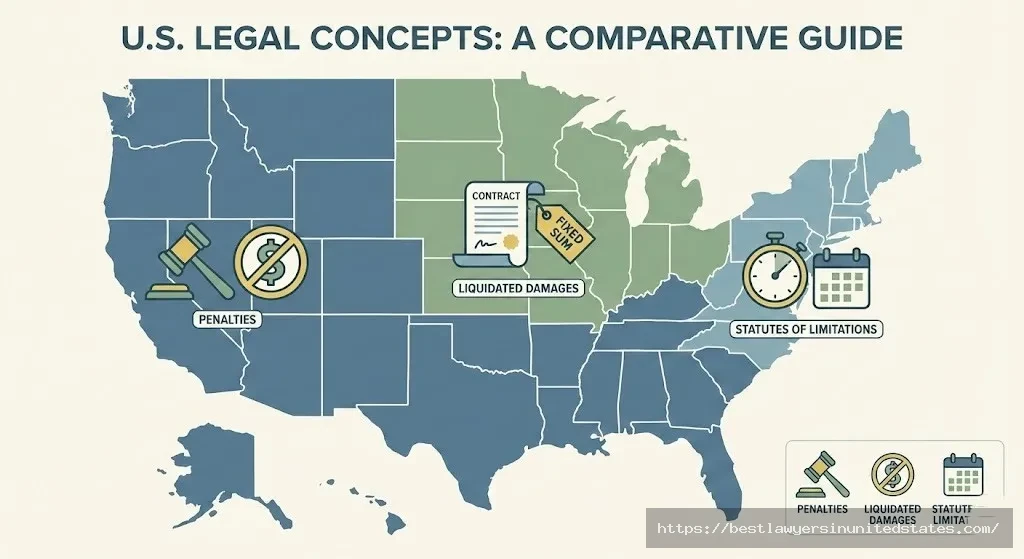
Different states also have different statutes of limitations—the time limit for filing claims. Federal law typically allows 2-3 years, but some states like New York allow up to 6 years for certain violations. Your state selection determines all of these factors, so choose carefully to get an accurate estimate.
Step 2: Select Violation Types
Choose all types of wage theft you've experienced. You can select multiple violation types if your employer committed several different violations. The calculator handles complex scenarios where workers face multiple types of wage theft simultaneously.
Common violation types include:
Unpaid regular wages: Your employer simply didn't pay you for hours you worked, or paid you late repeatedly.
Unpaid overtime: You worked over 40 hours per week (or over daily thresholds in states like California) but weren't paid time-and-a-half or double-time as required.
Unpaid minimum wage: You were paid less than your state's or the federal minimum wage for hours worked.
Stolen tips: Your employer took a portion of your tips, forced you to share tips with managers or owners, or used tip credit improperly.
Unpaid final paycheck: Your employer withheld or delayed your final paycheck when you quit or were terminated.
Illegal deductions: Your employer made unauthorized deductions for uniforms, equipment, cash register shortages, breakage, or other business costs.
Unpaid meal/rest break premiums: In California and Colorado, you're entitled to premium pay if you don't get required meal or rest breaks. This is a separate violation worth significant money.
Select every violation type that applies to your situation. The calculator will walk you through entering details for each type you select, then combine everything into a total recovery estimate.
Step 3: Enter Details for Each Violation
For each violation type you selected, the calculator prompts you for specific information needed to calculate what you're owed. The inputs vary by violation type but typically include hours or amounts involved, the time period over which violations occurred, your wage rate, and other relevant details.
For example, if you selected unpaid overtime, you'll enter your regular hourly rate, how many overtime hours you worked per week on average, and how many weeks or months this occurred. If you selected stolen tips, you'll enter how much in tips was taken and over what period. The calculator guides you through each violation type systematically.
Be as accurate as possible, but don't worry if you can't remember exact figures. Reasonable estimates based on typical work patterns are acceptable—courts understand that employees don't always have perfect records, especially when employers failed to keep proper records themselves.
Step 4: Answer Additional Questions
The calculator asks several questions that affect the damages and penalties you can recover. These questions help determine whether you qualify for enhanced damages beyond just back pay.
Was the violation willful? If your employer knew they were violating wage laws or showed reckless disregard for whether their conduct was legal, the violation is "willful." Willful violations often allow for longer recovery periods (3 years instead of 2 under federal law) and increased damages in some states. Signs of willfulness include: prior wage violations, ignoring employee complaints about pay, intentional misclassification, or deliberately failing to keep time records.
Did your employer retaliate against you? If you complained about wage issues and your employer fired you, cut your hours, demoted you, or otherwise punished you, that's illegal retaliation. Retaliation triggers separate damages and penalties beyond your wage theft claim.
Are you still employed? This affects certain calculations, particularly waiting time penalties in states like California where penalties accrue daily until the employer pays your final wages.
Answer these questions honestly. They can significantly increase your recovery and help paint a complete picture of your employer's conduct.
Step 5: Review Your Recovery Estimate
Once you've entered all information, the calculator displays a comprehensive breakdown of your potential recovery. You'll see each component clearly explained so you understand where the money comes from.
The results include:
Back pay: The actual unpaid wages you're owed—your foundation recovery amount. This is hours worked times rates owed minus what you were actually paid.
Liquidated damages: Additional damages equal to or greater than your back pay, required under federal law and many state laws. These damages penalize employers for wage violations and compensate you for the delay in receiving your wages. Often called "double damages" because they double your back pay.
State penalties: Special penalties your state imposes for wage violations. California's waiting time penalties for late final paychecks can be substantial—up to 30 days of wages. Other states have statutory penalties per violation, per paycheck, or based on other factors.
Interest: Most states allow interest on unpaid wages, calculated from when wages were due until payment. Interest rates vary by state (typically 5-12% annually) and compound over time. For older claims, interest can add thousands to your recovery.
Total potential recovery: Your complete estimate showing what you could recover if you successfully pursue your claim. This represents the maximum you might get, assuming you have adequate evidence and the employer doesn't successfully challenge any elements.
Filing deadline: Your state's statute of limitations showing how much longer you have to file a claim. This deadline is critical—missing it means you lose your right to recover, so pay close attention. The calculator shows this prominently so you understand the urgency.
What Is Wage Theft?
Wage theft is any situation where your employer fails to pay you the full wages and benefits you've legally earned. It's not just about completely unpaid work—it includes being paid below minimum wage, denied overtime premiums, having tips stolen, forced to work off the clock, or suffering illegal paycheck deductions. Wage theft is a violation of federal and state labor laws, and it's illegal regardless of whether it's intentional or a "mistake."
The scope of wage theft in America is staggering. It affects workers across all industries but hits low-wage workers, immigrants, and vulnerable populations hardest. Many victims don't realize they're experiencing wage theft because employers use sophisticated methods to disguise it, or workers simply don't know their rights under wage laws.
Common Forms of Wage Theft
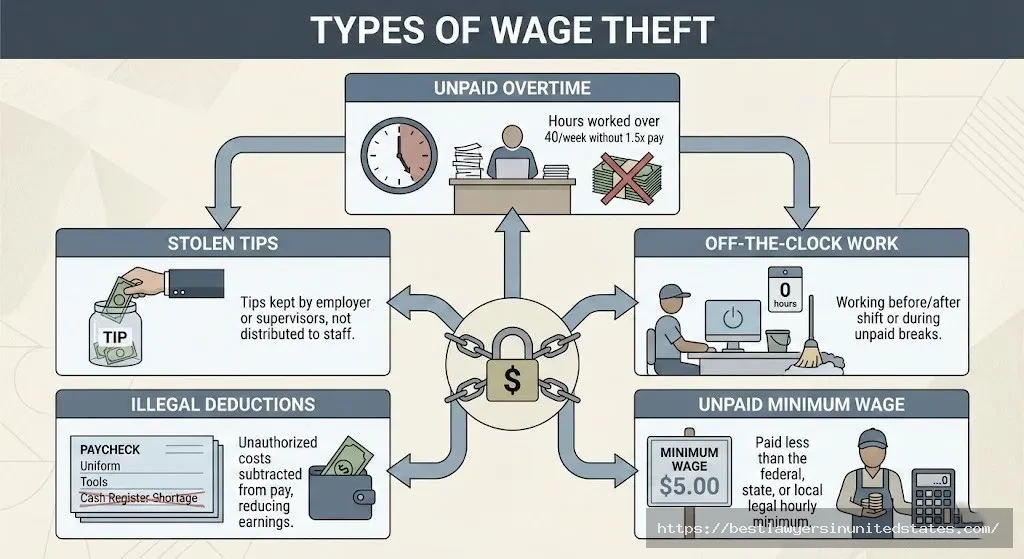
Wage theft takes many forms, and employers often commit multiple violations simultaneously. Understanding these common types helps you recognize when you're being cheated out of wages you've earned.
Not Paying Minimum Wage
Paying you less than the legally required minimum wage is one of the most basic forms of wage theft. This includes paying below the federal minimum of $7.25/hour or below your state's higher minimum wage. Some employers pay cash "under the table" at rates far below minimum wage, counting on workers not reporting it.
Minimum wage violations also occur through improper tip credits. If you're a tipped employee, your employer can pay you less than minimum wage only if your tips bring you up to at least minimum wage. If they don't, your employer must make up the difference. Employers who take illegal tip credits or who keep tips that should go to employees are stealing wages. The impact on workers is severe—minimum wage is already barely enough to survive, so getting paid even less creates genuine hardship.
Not Paying Overtime
Failing to pay overtime premiums is the most common form of wage theft, affecting millions of workers annually. Federal law requires time-and-a-half (1.5 times your regular rate) for hours over 40 in a workweek. States like California, Alaska, and Colorado have daily overtime requirements that make violations even more costly.
Employers violate overtime laws by claiming you're "salary" when you're not legally exempt, paying straight time for all hours, averaging hours across pay periods (illegal), or simply refusing to track or pay overtime. Some employers pressure workers to work off the clock for overtime hours, or misclassify them as independent contractors to avoid overtime entirely. If you regularly work over 40 hours per week and don't receive time-and-a-half pay, you're likely a victim of overtime wage theft. Our Overtime Calculator can help you determine exactly what you're owed.
Stealing Tips
Tip theft affects millions of restaurant workers, delivery drivers, hairdressers, and other tipped employees. Federal and state laws are clear: tips belong to the employees who earn them, not to employers or managers. Yet tip theft is rampant.
Common tip theft scenarios include employers keeping a portion of credit card tips, forcing tip pools that include managers or owners (illegal), taking tips to cover broken dishes or customer walkouts, paying less than minimum wage without proper tip credit procedures, or simply pocketing tips entirely. Some employers claim tips are "optional" or part of a service charge that doesn't go to workers. All of these practices are illegal. Tips are your property, earned through your service, and stealing them is wage theft that you can recover through legal action.
Forcing "Off the Clock" Work
Making you work without pay is blatant wage theft, yet it's extremely common. Employers require or expect work before you clock in, after you clock out, or during unpaid breaks, then don't compensate you for this time.
Examples include mandatory pre-shift meetings or equipment setup before you can clock in, closing duties or cleaning after clocking out, answering work emails, calls, or texts after hours, attending required training without pay, working through meal breaks while time is automatically deducted, and security screening or bag checks before leaving. Federal law requires employers to pay you for all time you're "suffered or permitted to work." If your employer knows or should know you're working, they must pay you—regardless of whether you're "on the clock." These unpaid minutes add up to hours each week, often triggering overtime violations on top of the unpaid regular time.
Not Paying Final Paycheck
Withholding or delaying your final paycheck when you quit or are fired is illegal in most states. Many states require immediate payment or payment within a few days, and some impose significant penalties for late payment.
Employers violate final paycheck laws by refusing to pay until the next regular payday, withholding final pay to recover alleged "debts" or equipment, making illegal deductions from final pay for uniforms or tools, or simply not paying at all, hoping you won't pursue it. Your final paycheck must include all wages earned through your last day of work, including accrued vacation in states that require it. Some states like California impose waiting time penalties—up to 30 days of additional wages—for late payment, making this violation extremely costly for employers.
Illegal Paycheck Deductions
Your employer generally cannot deduct money from your paycheck for business expenses, mistakes, or other reasons without your written consent and compliance with state law. Yet illegal deductions are common, especially in retail, restaurant, and service industries.
Illegal deductions include charges for uniforms, work tools, or required equipment, deductions for cash register shortages or till imbalances, charges for broken or damaged equipment, deductions for customer walkouts or bad checks, mandatory purchases of company products, and fines or "disciplinary" deductions for performance issues. While employers can make some deductions legally (taxes, court-ordered garnishments, voluntary retirement contributions), they cannot deduct business costs from your wages. These are expenses of running a business and cannot be shifted to employees. If you see unexpected or questionable deductions on your pay stub, you may have a wage theft claim.
Misclassifying Workers
Misclassification is a sophisticated form of wage theft where employers label you incorrectly to avoid paying wages and benefits you've earned. The two most common types are independent contractor misclassification and exempt employee misclassification.
Independent contractor misclassification: Your employer calls you a "contractor" or "1099 worker" when you're actually an employee under the law. True independent contractors control how, when, and where they work. If your employer controls your schedule, provides tools and equipment, tells you how to do your job, and treats you like an employee, you're an employee—regardless of what label they use. Misclassified workers lose overtime pay, minimum wage protections, and benefits.
Exempt employee misclassification: Your employer labels you "salary exempt" or gives you a manager/supervisor title to avoid paying overtime, when you don't actually meet the legal requirements for exemption. Simply calling you "manager" or paying you a salary doesn't make you exempt—you must meet strict salary level and duties tests. If you earn less than $58,656/year (2026 threshold) or your job doesn't involve genuine management or professional duties, you're likely misclassified and owed overtime.
Not Paying for All Hours Worked
Some employers manipulate time records to avoid paying for all hours you actually worked. This creates systematic wage theft that can affect dozens of employees.
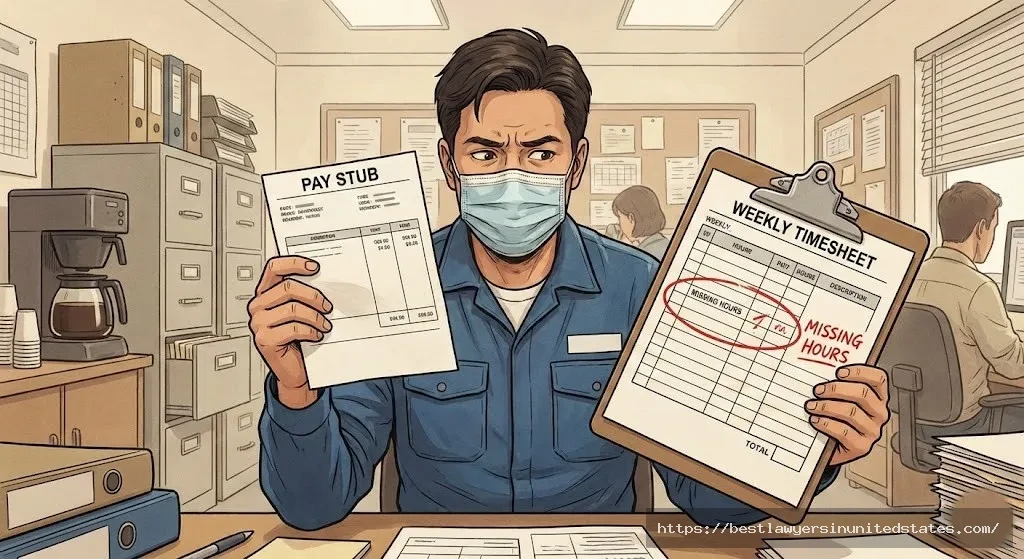
Common tactics include time shaving (rounding down your clock-in times or rounding up clock-out times excessively), automatically deducting meal breaks even when you work through them, requiring workers to clock out but continue working, manually altering time cards to reduce hours, and failing to pay for short periods like 5-10 minutes before or after shifts. Federal law requires employers to pay for all time worked, including periods under 15 minutes. While some rounding is permissible if it evens out over time, systematic rounding that always favors the employer is illegal and constitutes wage theft.
The Scope of Wage Theft in America
Wage theft is an epidemic affecting American workers at every income level, though low-wage workers suffer most. Understanding the scale of the problem helps you realize you're not alone and that taking action is both justified and necessary.
Staggering statistics: Workers lose more than $50 billion annually to wage theft according to Economic Policy Institute research. That's more than all robberies, burglaries, larcenies, and motor vehicle thefts combined. The average worker who experiences wage theft loses over $3,000 per year—a devastating amount for families already struggling to make ends meet. In some low-wage industries, more than 60% of workers experience at least one pay-related violation in any given week.
Wage theft is more common than most workplace hazards. You're more likely to experience wage theft than to be injured on the job. Despite this, wage theft is rarely prosecuted criminally, and many employers view penalties as simply a cost of doing business. Most violations go unreported because workers fear retaliation, don't know their rights, or believe nothing will change.
Who is most affected: Wage theft disproportionately impacts hourly workers who lack bargaining power and workplace protections. Restaurant, retail, construction, home care, janitorial, and other service industries have the highest rates of violations. Immigrant workers face even higher rates of wage theft because employers count on language barriers and fear of immigration consequences to prevent reporting. Young workers and workers in their first jobs often don't know they're being cheated. Low-wage workers can least afford to lose money yet are most likely to be victims of systematic wage theft.
How Much Can You Recover?
Understanding the components of wage theft recovery helps you appreciate the full value of your claim. Wage theft claims often recover much more than just the unpaid wages themselves thanks to federal and state laws that impose damages and penalties on violators.
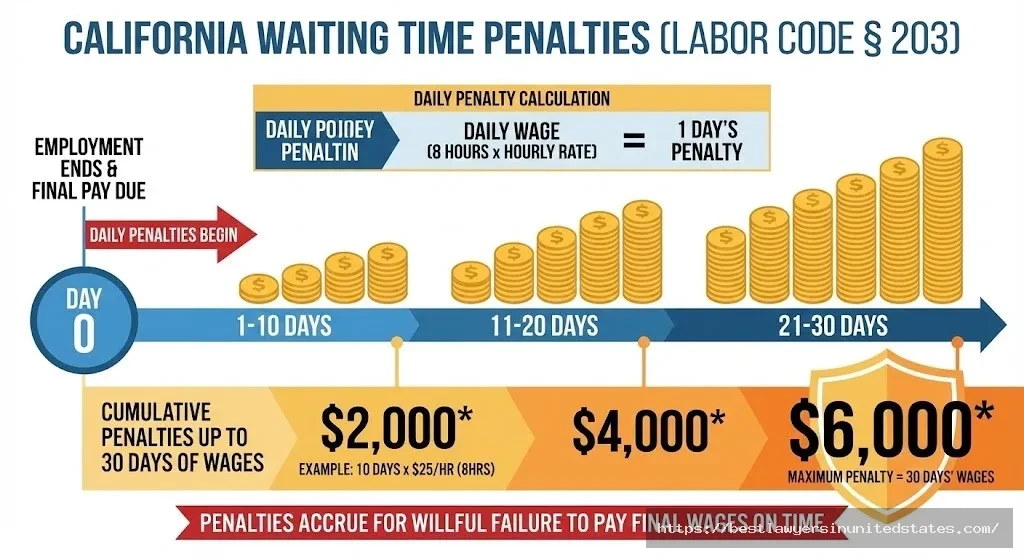
Back Pay (Unpaid Wages)
Back pay is the foundation of your recovery—it's the actual wages you should have been paid but weren't. This includes unpaid regular wages for hours worked, unpaid overtime premiums (the difference between what you were paid and the time-and-a-half or double-time rate you should have received), unpaid minimum wage (the difference between what you were paid and legal minimum wage), stolen tips that should have gone to you, and wages from your final paycheck if withheld.
How it's calculated: The formula is straightforward: hours worked multiplied by the rate you should have been paid, minus what you were actually paid, equals back pay owed. For overtime, it's the overtime hours times your overtime rate (1.5× or 2× your regular rate) minus any straight-time pay you received for those hours. For minimum wage violations, it's your total hours times minimum wage minus what you were paid.
Look-back period: You can typically recover back pay for 2-3 years depending on your state and whether violations were willful. Federal law allows 2 years for most wage violations, extended to 3 years for willful violations. Some states like New York allow up to 6 years for certain wage claims. The statute of limitations in your state determines how far back you can recover, but every month you wait is another month of wages you can't recover, so file promptly.
Liquidated Damages
Liquidated damages are additional money awarded on top of your back pay as a penalty for wage violations and compensation for your loss of use of the money. Federal law and many state laws require or allow liquidated damages equal to your back pay, effectively doubling your recovery.

What they are: Liquidated damages serve two purposes: they penalize employers for violating wage laws and compensate you for not having access to money you earned when you should have received it. They're not based on proving actual harm—they're automatic or presumed once wage theft is established.
When they're awarded: Under the Fair Labor Standards Act (FLSA), liquidated damages equal to back pay are mandatory unless the employer proves they acted in "good faith" with reasonable grounds for believing they weren't violating the law (extremely difficult to prove). Many state wage laws also provide liquidated damages, sometimes at even higher rates. California, New York, Massachusetts, Illinois, and other states have provisions for liquidated or similar damages.
The impact: Liquidated damages transform wage theft cases. Instead of recovering just the $5,000 in unpaid overtime you're owed, you recover $10,000 ($5,000 back pay + $5,000 liquidated damages). For a worker owed $15,000 in wage theft over three years, liquidated damages mean a $30,000 total recovery. This doubling effect makes pursuing wage theft claims financially worthwhile and punishes employers sufficiently to deter future violations.
Waiting Time Penalties
Some states impose special "waiting time penalties" when employers fail to pay final wages promptly after termination. California has the most significant waiting time penalty, but other states have similar provisions.
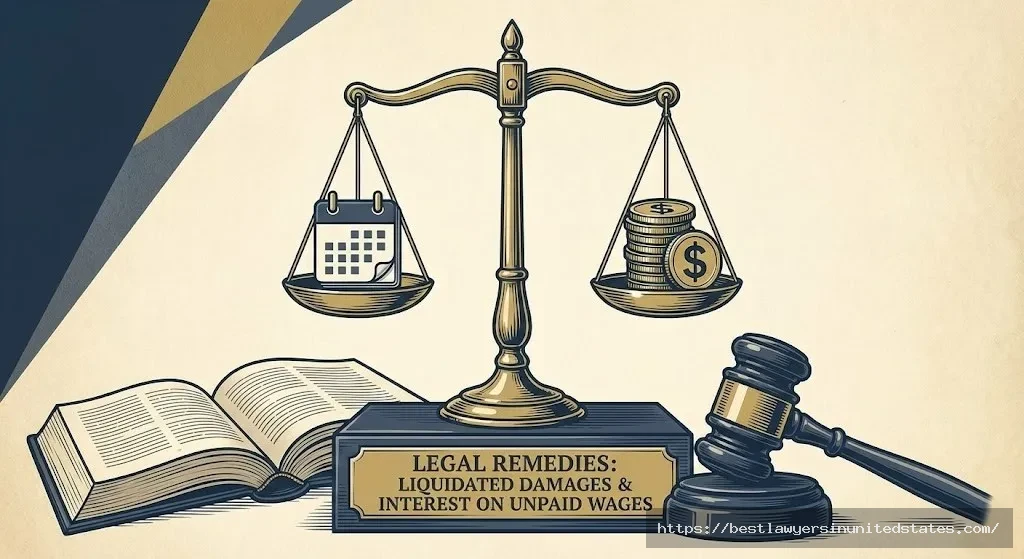
California's waiting time penalties: If your employer doesn't pay all wages due immediately upon termination (or within 72 hours if you quit without notice), you're entitled to a penalty equal to one day's pay for each day payment is late, up to 30 days maximum. This penalty is in addition to the unpaid wages themselves.
Example calculation: Your daily pay rate is $160 (based on 8 hours at $20/hour). Your employer doesn't pay your final check for 20 days after termination. You're entitled to $3,200 in waiting time penalties ($160 × 20 days) plus the actual unpaid wages from your final check plus liquidated damages on those wages. Waiting time penalties can make even a modest final paycheck dispute worth $5,000-$10,000 total recovery.
Other state penalties: Some states have flat penalties for late final paychecks (like $100-$500 per day), while others use different multiplier schemes. The calculator applies your state's specific penalty structure when you select "unpaid final paycheck" as a violation type.
Interest on Unpaid Wages
Most states allow you to collect interest on unpaid wages from the date they were due until payment. Interest rates vary by state, typically ranging from 5% to 12% annually, and some states compound interest while others apply simple interest.
Why interest matters: For wage theft that occurred years ago, interest can add significant amounts to your recovery. If you're owed $10,000 in unpaid wages from three years ago and your state applies 10% annual interest compounded, you could recover an additional $3,000+ in interest alone. Interest compensates you for the time value of money—you didn't have access to wages you earned, so the employer must pay you for that loss.
State variations: Some states like California apply 10% interest. New York applies 9% on certain wage claims. Other states follow their general prejudgment interest statutes. A few states don't provide interest on wage claims, relying instead on liquidated damages to compensate for delayed payment. The calculator uses your state's interest rate and method to estimate your interest recovery.
State-Specific Penalties
Many states impose additional penalties for wage violations beyond back pay and liquidated damages. These penalties vary widely but can substantially increase your recovery.
Examples of state penalties:
Massachusetts: Provides for treble (triple) damages for wage violations, meaning you can recover three times your unpaid wages. A $5,000 wage theft claim could result in $15,000 recovery before adding attorney fees.
California: Imposes $100 penalty for initial meal or rest break violation and $200 for each subsequent violation, per pay period. These add up quickly—if your employer denied you meal breaks for a year (52 pay periods), you could recover over $10,000 in meal break penalties alone.
New York: Allows liquidated damages equal to 100% of unpaid wages for minimum wage and overtime violations, plus additional civil penalties of up to $1,000 per violation.
Illinois: Provides 2% of unpaid wages per month for late wage payments, plus 5% penalty for certain violations.
Pennsylvania: Awards 25% of unpaid wages as liquidated damages in addition to the back pay itself.
Each state's penalty structure rewards workers for enforcing wage laws and punishes employers who violate them. The calculator incorporates these state-specific penalties when estimating your total recovery.
Attorney Fees and Costs
One of the most important provisions of wage theft law is that employers must pay your attorney fees and court costs if you win. This "fee-shifting" makes wage theft cases accessible even if you can't afford a lawyer upfront.
Major benefit for workers: Federal and state wage laws typically provide that prevailing employees recover their reasonable attorney fees and litigation costs from the employer. This means you can hire an experienced employment attorney without upfront payment or concern about legal bills. Most wage theft attorneys work on contingency (you pay only if you win, typically 30-40% of recovery) knowing that attorney fees will be paid separately by the employer.
What this covers: Recoverable attorney fees include all time your lawyer spends on your case—investigation, negotiation, court appearances, legal research, drafting documents, and trial if necessary. Costs include filing fees, deposition expenses, expert witness fees, and other litigation expenses. In significant wage theft cases, attorney fees can reach tens of thousands of dollars, all paid by your employer if you prevail.
Note on calculator: The wage theft calculator doesn't include attorney fees in your estimated recovery because these fees don't go to you—they go to your attorney and are calculated separately. However, knowing that your employer pays your attorney fees if you win makes pursuing wage theft claims risk-free from a legal cost perspective.
State-by-State Wage Theft Laws
Wage theft laws vary significantly by state. Some states have strong worker protections with substantial penalties and long statutes of limitations, while others provide only federal minimum protections. Understanding your state's laws helps you know what you can recover.
States determine their own minimum wage (which can be higher than federal), overtime rules (some have daily overtime), statutes of limitations for wage claims (2-6 years), liquidated damages provisions (some states provide 100-300% of unpaid wages), waiting time or other special penalties, interest rates on unpaid wages, and procedures for filing claims. When state and federal law differ, you're entitled to whichever provides greater protections and benefits.
States with Strongest Worker Protections
These states have enacted particularly strong wage theft laws that provide significant protections and penalties beyond federal minimums. If you work in one of these states, your potential recovery may be substantially higher than federal law alone would provide.
| State | Back Pay Period | Liquidated Damages | Special Penalties | Filing Deadline |
|---|---|---|---|---|
| California | 3 years (4 if fraud) | Yes (equal to back pay) | Waiting time penalties (up to 30 days' wages), meal/rest break penalties ($100-$200 each) | 3 years (4 if fraud) |
| New York | 6 years | 100% of unpaid wages | Civil penalties up to $1,000 per violation, strong anti-retaliation | 6 years |
| Massachusetts | 3 years | Treble (3×) damages | Triple damages for most wage violations, attorney fees mandatory | 3 years |
| Illinois | 3 years (5 if fraud) | 2% per month interest | Additional 5% penalty on unpaid wages | 3 years |
| Pennsylvania | 3 years | 25% of unpaid wages | Liquidated damages, criminal penalties possible | 3 years |
Why these states stand out:
California offers the most comprehensive wage protections in the nation with daily overtime rules, double-time requirements, waiting time penalties that can reach $5,000-$10,000 for a single late paycheck, meal and rest break premium pay, robust enforcement mechanisms, and strong anti-retaliation protections. California workers who experience wage theft can often recover 2-3 times their actual unpaid wages through these combined protections. Learn more: California Minimum Wage Laws
New York provides a 6-year statute of limitations (longest in the nation), 100% liquidated damages on top of back pay, strong protections for all workers including domestic workers and farm workers, robust anti-retaliation provisions with separate causes of action, and aggressive state enforcement through the Department of Labor. New York's long statute of limitations means workers can recover six years of wage theft, creating massive liability for employers who engaged in systematic violations. Learn more: New York Minimum Wage Laws
Massachusetts awards treble (triple) damages for most wage violations, meaning a $10,000 wage theft case can result in $30,000 recovery before attorney fees. Massachusetts law presumes willful violations and places the burden on employers to prove good faith. Combined with mandatory attorney fees, Massachusetts wage law is among the most worker-friendly in America. Learn more: Massachusetts Minimum Wage Laws
Illinois provides 2% interest per month on unpaid wages (24% annually), plus 5% penalty on the total amount owed, plus liquidated damages in some cases. These provisions mean older wage theft claims accumulate substantial additional damages. Illinois also has strong protections against wage theft in its Wage Payment and Collection Act. Learn more: Illinois Minimum Wage Laws
Pennsylvania awards 25% liquidated damages on top of all unpaid wages, plus attorney fees and costs. Pennsylvania's Wage Payment and Collection Law covers final paychecks, deductions, and timing of wage payments strictly. Violations can result in criminal prosecution in addition to civil recovery. Learn more: Pennsylvania Minimum Wage Laws
Federal Protections (FLSA)
The Fair Labor Standards Act (FLSA) is the federal law establishing minimum wage, overtime pay, recordkeeping, and child labor standards. The FLSA sets a baseline that all states must meet, though states can provide stronger protections.
FLSA provides nationwide coverage for: Minimum wage of $7.25/hour (states can set higher rates), overtime pay at 1.5× regular rate for hours over 40 per week, liquidated damages equal to unpaid wages, attorney fees for prevailing employees, and protection from retaliation for asserting rights or filing claims.
Statute of limitations: The FLSA provides a 2-year statute of limitations for most wage violations, extended to 3 years if the violation was "willful" (employer knew or showed reckless disregard for whether conduct violated the law). This means you can typically recover 2-3 years of unpaid wages under federal law.
When federal law applies: The FLSA covers most employers engaged in interstate commerce (nearly all businesses) and their employees. If your state has weaker protections than federal law, FLSA provides the floor. Many workers can bring claims under both federal FLSA and state wage laws simultaneously, recovering under whichever provides better relief.
Liquidated damages: FLSA requires employers to pay liquidated damages equal to the amount of unpaid wages unless the employer proves it acted in good faith and had reasonable grounds for believing it wasn't violating the law. This is a high burden that most employers cannot meet, so liquidated damages are nearly automatic, effectively doubling your recovery.
Warning Signs of Wage Theft
Trust your instincts. If something feels wrong with your pay, it probably is. Many workers sense they're not being paid correctly but second-guess themselves or fear retaliation. These warning signs help you identify wage theft so you can take action.
Red Flags in Your Pay
□ Paid less than minimum wage
If your hourly rate is below your state's minimum wage or the federal minimum of $7.25/hour, that's illegal wage theft. Some employers claim "training wages" or "probationary rates" below minimum—these are illegal unless specifically authorized by law (legitimate training wages apply only to workers under 20 for their first 90 days). If you're a tipped employee, your base pay can be lower, but your tips plus base pay must reach at least minimum wage—if they don't, your employer must make up the difference. Being paid "under the table" in cash doesn't exempt your employer from minimum wage laws.
□ No overtime pay despite working 40+ hours
If you regularly work more than 40 hours per week (or more than 8 hours per day in states like California) and receive only straight-time pay, you're experiencing wage theft. Common excuses employers give include "you're salary" (doesn't automatically exempt you), "your position doesn't qualify" (most positions do qualify), or "we don't pay overtime" (illegal—wage laws aren't optional). Unless you meet strict exemption tests (salary over $58,656/year plus executive/administrative/professional duties), you're entitled to overtime premiums.
□ Automatic break deductions even when you work through breaks
If your employer automatically deducts 30 or 60 minutes for meal breaks but you routinely work through those breaks, you're not being paid for time worked. Many employers have policies like "we deduct 30 minutes for lunch" but then require you to answer phones, help customers, or perform other work during that time. If you're not completely relieved of duties during your break, it's not a legal unpaid break—you must be paid. This practice creates systematic wage theft that adds up to hours per week.
□ Hours "rounded down" significantly on timesheet
While some time rounding is legal if it evens out over time, systematic rounding that always favors the employer is illegal. If you clock in at 8:57 AM but your time sheet shows 9:00 AM, and you clock out at 5:03 PM but your timesheet shows 5:00 PM, you're losing minutes every shift. If this happens consistently, you're losing hours per week—all unpaid time worked that constitutes wage theft. Employers cannot systematically shave time off your hours worked.
□ Told you're "salary" but make less than $58,656/year
Being paid a salary doesn't make you exempt from overtime. To be legally exempt, you must meet three tests: salary basis (fixed amount regardless of hours), salary level (at least $58,656/year in 2026), and duties test (genuine executive, administrative, or professional responsibilities). If you earn less than the threshold, you're automatically non-exempt and entitled to overtime regardless of your job title or duties. Many employers misclassify workers as salary-exempt simply by paying them a fixed amount per week, which is illegal if you're below the salary threshold.
□ Required to work "off the clock"
If your employer expects or requires you to arrive early for meetings or setup but you can't clock in until your shift starts, requires you to perform closing duties or cleaning after clocking out, expects you to answer work calls or emails after hours without pay, or holds mandatory training or meetings without compensation, you're experiencing off-the-clock wage theft. All time your employer "suffers or permits" you to work must be paid. If they know you're working (or should know), they must pay you—whether you're clocked in or not.
□ Tips taken by employer or managers
Tips belong to the employees who earn them, not to employers or managers. If your employer keeps a portion of credit card tips for "processing fees," requires you to tip out managers or owners (illegal—tip pools can only include employees who customarily receive tips), takes tips to cover broken dishes, customer walkouts, or till shortages, or pays you less than minimum wage without proper tip credit disclosures, they're stealing your tips. Tip theft is wage theft and can be recovered with penalties.
□ Illegal deductions from paycheck
While some deductions are legal (taxes, court-ordered garnishments, voluntary retirement contributions), many are not. Illegal deductions include charges for uniforms, work tools, or safety equipment required for your job, deductions for cash register shortages or missing inventory, charges for broken or damaged equipment unless you were grossly negligent, fees for mandatory background checks or drug tests, forced purchases of company products, and "fines" for performance issues or disciplinary purposes. Employers cannot shift business costs to employees through paycheck deductions.
□ Final paycheck withheld or delayed
When you quit or are terminated, most states require your employer to pay all wages due either immediately or within a few days. If your employer says you'll get your final check "on the next regular payday" in a state requiring faster payment, withholds your check pending return of company property, makes deductions for alleged "debts" or equipment, or simply refuses to pay your final wages, they're violating wage payment laws. Final paycheck violations can trigger substantial waiting time penalties in states like California, making even modest final paychecks worth thousands in recovery.
□ Called "independent contractor" but treated like employee
If you're labeled a "contractor" or "1099 worker" but your employer controls when, where, and how you work, provides all tools and equipment, sets your schedule, trains you on their methods, and treats you like an employee in every way except on paper, you're likely misclassified. True independent contractors have autonomy over their work and usually serve multiple clients. Misclassification allows employers to avoid paying minimum wage, overtime, and benefits—making it a form of wage theft that can cost you thousands per year.
If Any Apply: You May Have a Claim
If you recognized yourself in any of these warning signs, you may be a victim of wage theft with a valid claim for unpaid wages and damages. Don't dismiss your concerns or convince yourself it's not worth pursuing. Even wage theft that seems small adds up over weeks and months, and with liquidated damages and penalties, your total recovery may be substantial.
You deserve to be paid correctly for your work. Wage theft isn't just an accounting error—it's illegal, and you have rights. Use this calculator to estimate what you're owed, then take the next step. Talk to an employment attorney, file a claim with your state labor department, or both. The law protects you from retaliation, so don't let fear prevent you from recovering wages you've earned.
What to Do If You're a Victim of Wage Theft
Discovering you've been cheated out of wages is frustrating and often scary, especially if you're still employed by the company. But you have options and legal protections. Taking action to recover your wages is your right, and the law prohibits retaliation. Here's what to do step by step.
Step 1: Document Everything
Strong documentation makes or breaks wage theft cases. Even if your employer hasn't given you records, you can create documentation that courts and labor departments will accept as evidence. Start documenting immediately and be thorough.
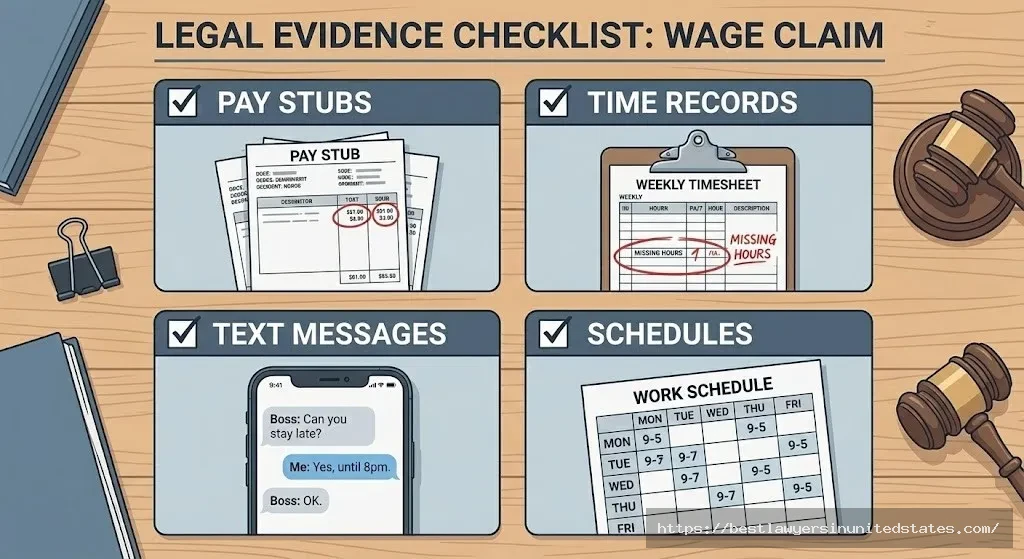
Critical evidence to gather:
Time records are your foundation. If you have access to company time records, save copies or take photos of everything showing hours you worked—time cards, digital punch records, schedules, shift assignments. If your employer won't provide access or doesn't keep records (itself a violation), create your own contemporaneous records. Starting today, keep a simple log of your hours—date, time in, time out, breaks taken. Use a notebook, phone app, or spreadsheet. Courts understand employees can't have perfect memory of past hours, so your best recollection documented as soon as possible is valuable evidence.
Save all pay records. Keep every pay stub you receive, even if the amounts seem wrong—these show what you were paid versus what you should have been paid. Keep bank statements showing deposit amounts and dates. If you're paid cash, note the amount and date each time you're paid. Never throw away pay records, no matter how old—wage claims can go back years.
Preserve communication evidence. Save every text message, email, or written communication about your work hours, schedule changes, overtime, pay rates, or complaints about wages. Screenshot text conversations with supervisors about working late, coming in early, or handling work after hours. Print and save emails showing after-hours work expectations. These communications often prove off-the-clock work and employer knowledge of wage violations.
Identify witnesses. Your coworkers likely face the same wage theft. Note names and contact information of coworkers who can verify your hours, wage rates, or similar pay issues they've experienced. Written statements from witnesses strengthen your case. Even if coworkers are reluctant to get involved initially, knowing who can corroborate your claims helps your attorney or labor department investigator.
Document your job duties. If misclassification is an issue (told you're exempt when you're not, or labeled an independent contractor), document your actual job duties. Save your official job description if you have one, but more importantly, write down what you actually do every day—percentages of time on different tasks, whether you supervise anyone, what discretion and independent judgment you exercise. This evidence proves whether you meet exemption tests or whether you're truly an independent contractor versus an employee.
Step 2: Calculate What You're Owed
Before deciding how to proceed, understand the value of your claim. Use this wage theft calculator to estimate your total potential recovery including back pay, liquidated damages, state penalties, and interest. Having a clear number helps you make informed decisions.
Why calculation matters: A claim worth $2,000 might be pursued directly with your employer or through your state labor department. A claim worth $25,000 likely justifies hiring an attorney for maximum recovery. Understanding your potential recovery also helps during settlement negotiations—you'll know whether an employer's settlement offer is reasonable or insultingly low.
Be realistic but don't undervalue: Estimate conservatively based on solid evidence, but don't shortchange yourself. Include all violation types you experienced. Remember that liquidated damages double your back pay, and state penalties can add thousands more. What seems like $5,000 in unpaid overtime might be a $15,000 total claim after damages and penalties.
Step 3: Decide Your Approach
You have several options for pursuing wage theft claims. Each has advantages and disadvantages, and you can combine approaches. Choose based on your situation, claim value, and comfort level.
Option 1: Talk to Your Employer
Sometimes wage theft results from honest mistakes or payroll errors rather than intentional theft. If you have a reasonable relationship with your employer and believe they might not realize they're violating wage laws, consider raising the issue directly.
Advantages: Fastest potential resolution—could be resolved in days or weeks. No formal process or filing required. May preserve your job and working relationship. Some employers, once informed of violations, will correct going forward and pay back wages to avoid legal trouble.
Disadvantages and risks: Employer may retaliate despite legal protections. Even "good" employers sometimes react badly to wage complaints. Employer may deny everything and refuse to pay. You might tip them off to start covering up evidence. Without formal filing, you have less protection and no official record of your complaint.
Best practices if you choose this route: Document the conversation in writing—send an email summarizing what you discussed after any in-person conversation. Be specific about violations and amounts owed. Request a timeline for resolution. Watch carefully for retaliation. If your employer doesn't resolve it quickly or reacts negatively, move to formal options immediately.
Option 2: File with State Labor Department
Every state has a labor department or labor commissioner that investigates wage claims. This is a free process that provides strong protections and official enforcement.
Advantages: Completely free—no attorney needed. State investigators do the work of gathering evidence and pursuing your employer. Protection from retaliation is strong because it's an official government proceeding. You don't have to confront your employer directly—the state does. Employers often settle quickly when state investigators get involved to avoid further scrutiny. Some states can order penalties beyond what you'd recover in a lawsuit.
Disadvantages: Can take many months or over a year to reach resolution. You have less control over the process and timeline. Some state labor departments are underfunded and overwhelmed, leading to delays. You may recover less than you would with an attorney because labor departments use simpler calculations and may not pursue all available damages.
How to file: Search "[Your State] wage claim" or "[Your State] labor department unpaid wages" to find your state's process. Most states have online filing or downloadable claim forms. Provide all documentation you gathered. Be thorough and specific. Once filed, the state will investigate, contact your employer, review records, and may hold a hearing. They'll issue a decision ordering payment if you prevail. The process typically takes 6-18 months depending on your state and case complexity.
Option 3: Hire an Employment Attorney
Employment attorneys specializing in wage and hour law can maximize your recovery and provide the strongest protection against retaliation. This is often the best option for significant claims or complex situations.
Advantages: Attorneys can recover more money than you could alone—they know all available damages, penalties, and legal theories. Free consultations mean you can discuss your case at no cost. Most work on contingency (you pay nothing upfront, attorney gets 30-40% of recovery). Employer pays your attorney fees if you win, so the employer pays for both your damages AND your lawyer. Fastest resolution in many cases—attorneys can pressure employers effectively through settlement negotiation or lawsuits. Strongest protection from retaliation because employers fear lawsuits. Attorney handles everything—investigation, negotiation, filing, litigation.
Disadvantages: You pay a contingency percentage (typically 30-40% of your recovery), though you wouldn't get that money without the attorney anyway. Employer fees are paid separately. Not all cases are worth an attorney's time—small claims (under $3,000-$5,000) may not interest attorneys because the recovery doesn't justify their work.
How it works: Contact employment attorneys for free consultations (most offer them). Explain your situation and provide documentation. Attorney will evaluate whether you have a strong case and estimate potential recovery. If they take your case, you'll sign a contingency agreement (you pay nothing unless you win). Attorney investigates, demands payment from employer, negotiates settlement, or files lawsuit if necessary. Most cases settle before trial. You receive your share of recovery (typically 60-70% after attorney's contingency fee), plus employer pays your attorney's fees and costs on top of that.
Finding an attorney: Email [email protected] for referrals to experienced wage and hour attorneys in your state, or use our Find Employment Lawyers by State directory.
Option 4: Combine Approaches
You can often combine approaches for maximum pressure and protection. File with your state labor department AND hire an attorney. This dual approach maximizes leverage—employers face both government investigation and private lawsuit, creating strong incentive to settle quickly and fully.
Some attorneys recommend filing a state claim first, then pursuing a lawsuit if the state process stalls or doesn't achieve full recovery. Others prefer filing both simultaneously. Discuss strategy with an attorney to determine the best approach for your specific situation.
Step 4: File Within the Deadline
Time limits for wage theft claims are strict, and missing the deadline means you lose your right to recover—forever. Each state has a statute of limitations determining how long you have to file after violations occurred.
Critical deadlines: Federal FLSA claims have a 2-year statute of limitations, extended to 3 years if violations were willful. State deadlines vary from 2 years to 6 years. California allows 3 years (4 years if fraud). New York allows 6 years for wage claims. Most states allow 2-3 years. The wage theft calculator shows your state's filing deadline prominently.
Deadlines are firm and unforgiving. Even one day late means your claim is barred. Courts rarely make exceptions. If you're close to a deadline, file immediately even if your documentation isn't perfect—you can supplement evidence later, but you can't revive a dead claim.
Why timing matters beyond deadlines: Every month you wait is another month of wages you might not be able to recover. Evidence disappears over time—time records get destroyed, witnesses leave or forget, businesses close. Employers who know they're violating wage laws sometimes drag out investigations hoping workers will give up. Filing stops the clock and preserves your rights while investigation proceeds.
Filing itself stops the clock. Once you file a state claim or lawsuit, the statute of limitations generally stops running on your claims. This means even if resolution takes two years, you haven't lost additional recovery time—your filing preserved everything up to that date.
Step 5: Know Your Protections
Understanding your legal protections helps you act confidently without fear. Federal and state laws provide strong anti-retaliation protections that apply from the moment you raise wage concerns.
Retaliation is illegal and triggers separate claims. Your employer cannot fire you, reduce your hours or pay, demote you, give you poor evaluations, create a hostile work environment, or take any adverse action against you because you asked about wages, complained about wage theft, filed a wage claim, cooperated with a labor department investigation, or testified in a wage case.
Retaliation itself is a separate violation that triggers additional damages—often including compensatory damages for lost wages, emotional distress damages, punitive damages to punish the employer, reinstatement to your job if you were fired, and attorney fees for pursuing the retaliation claim. Some workers recover more from retaliation claims than from their original wage theft claims because retaliation damages can be substantial.
Protection applies regardless of outcome. Even if your wage claim is ultimately unsuccessful (though most aren't), you're still protected from retaliation for filing it. The law protects your right to assert claims in good faith, not just successful claims. As long as you genuinely believed you weren't being paid correctly, you're protected.
Protection starts immediately. Retaliation protection begins the moment you raise wage concerns with your employer, file a claim, or cooperate with an investigation. You don't have to win first to be protected—the protection is ongoing throughout the process.
What to do if retaliation occurs: Document everything—dates, witnesses, specific adverse actions. Report the retaliation immediately to your attorney or the labor department investigator handling your case. Consider filing a separate retaliation claim. Retaliation often strengthens your overall case because it shows consciousness of guilt and increases your total recovery substantially.
How Long Does a Wage Theft Case Take?
Understanding timeline expectations helps you plan and stay patient through the process. Wage theft cases can resolve in weeks or take over a year depending on the approach you choose and your employer's cooperation.
State Labor Department Process
Filing with your state labor department is free and accessible, but it's generally the slowest option due to government bureaucracy and caseload.
Typical timeline breakdown:
Initial filing (Day 1): You submit your wage claim online or by mail with documentation. Most states provide confirmation of receipt within days.
Assignment to investigator (2-8 weeks): Your claim goes into a queue and gets assigned to an investigator based on department workload. Understaffed departments may take longer. Some states prioritize certain types of cases (like minimum wage violations) over others.
Investigation period (3-6 months): The investigator contacts your employer requesting records and explanations. Your employer has a deadline to respond (typically 2-4 weeks). The investigator reviews employer records against your claims. They may request additional information from you. They may attempt to facilitate settlement between you and your employer. Complex cases or uncooperative employers extend this phase.
Hearing if needed (6-12 months from filing): If your employer disputes your claim and settlement fails, most states schedule a formal hearing or conference. Both sides present evidence and testimony. This is like a simplified trial before an administrative law judge or hearing officer. The hearing itself may last a few hours, but getting on the calendar can take months depending on backlog.
Decision and payment (2-4 weeks after hearing): The hearing officer or labor commissioner issues a written decision. If you win, the employer is ordered to pay specific amounts within a deadline (typically 30 days). If the employer doesn't pay voluntarily, you may need to pursue enforcement through courts or wage liens.
Total typical timeline: 6 months to 1.5 years from initial filing to final payment. Simpler cases with cooperative employers may resolve faster. Complex cases, uncooperative employers, or backlogged departments can stretch to 2+ years.
Lawsuit Timeline
Hiring an attorney to file a lawsuit is often faster than the labor department process, despite what people assume about courts. Attorneys can pressure employers into quick settlements.
Typical lawsuit timeline:
Attorney consultation and investigation (Immediate to 1 month): Free initial consultation where attorney evaluates your case. If they take it, they spend 2-4 weeks investigating, gathering evidence, calculating damages, and preparing demand letter or lawsuit.
Demand letter and settlement negotiation (1-3 months): Attorney sends formal demand letter to employer outlining violations and demanding payment. Many employers settle at this stage to avoid litigation costs. Negotiation can resolve in weeks or drag for months depending on employer's stance.
Filing lawsuit if necessary (Month 3): If settlement fails, attorney files lawsuit in court. Employer must be served and has time to respond (typically 21-30 days).
Discovery period (3-9 months after filing): Both sides exchange documents, take depositions, and gather evidence through formal discovery process. This is the longest phase but settlement negotiations continue throughout. Many cases settle during discovery once employer sees the strength of evidence against them.
Settlement negotiations (Ongoing): In parallel with litigation, attorneys negotiate settlement. Most wage theft cases settle before trial—employers want to avoid jury trials where sympathetic workers often win large verdicts. Settlement can happen any time from demand letter through eve of trial.
Trial if necessary (1-2 years from filing): If no settlement is reached, case goes to trial. Trials typically last 2-5 days for wage cases. Judge or jury decides liability and damages. This is rare—70-80% of wage cases settle before trial.
Payment (30-60 days after settlement or judgment): Once settlement is signed or judgment entered, employer typically has 30-60 days to pay. Payment comes to your attorney's trust account, attorney deducts their contingency fee and costs, then sends you your share.
Total typical timeline: 4 months to 2 years, but most cases settle within 6-12 months. Cases with strong evidence and clear violations settle faster. Employers who fight aggressively can drag cases toward trial, but this usually backfires as they rack up attorney fees they'll have to pay when workers win.
Factors Affecting Timeline
Several factors speed up or slow down wage theft cases regardless of which approach you choose.
Case complexity: Simple unpaid overtime claims resolve faster than complex misclassification cases involving detailed exemption analysis. Cases with one violation type are simpler than cases with multiple violations spanning years. Clear documentation speeds everything—cases where workers have detailed time records settle much faster than cases relying on estimates.
Number of employees involved: Individual claims typically move faster than class actions involving dozens of workers. However, class actions create more pressure on employers and often result in higher settlements per worker.
Employer cooperation: Employers who acknowledge violations and negotiate in good faith can settle cases in weeks. Employers who fight every aspect, hide records, or refuse to negotiate drag cases out for months or years. However, fighting usually costs employers far more in the end through attorney fees and accumulated interest.
Court or agency backlog: Some states have well-funded, efficient labor departments that process claims quickly. Others have severe backlogs with year-long waits for hearings. Similarly, court dockets vary—some jurisdictions have fast-moving employment dockets while others have significant delays.
Statute of limitations pressure: If you're approaching your filing deadline, you may have to file quickly with less preparation. Cases filed near deadlines may take longer to develop evidence. Ideally, file well before deadlines to allow thorough preparation.
Common Employer Defenses (and Why They Fail)
Employers facing wage theft claims often raise predictable defenses to avoid paying what they owe. Understanding these defenses and why they fail helps you pursue your claim confidently. Don't be discouraged by these arguments—courts and labor departments have heard them all and routinely reject them.
"You Knew the Pay When You Took the Job"
Employers argue that since you agreed to the wage and accepted the job, you can't complain now about being underpaid. This defense appears in minimum wage cases ("you knew we pay $6/hour") and overtime cases ("we told you this is a salaried position with no overtime").
Why it fails completely: Wage laws establish minimum standards that cannot be waived or negotiated away. You cannot legally agree to be paid below minimum wage—such an agreement is void as against public policy. You cannot sign away your right to overtime pay—waivers of FLSA rights are unenforceable. The law protects workers even from their own agreements because of the inherent power imbalance between employers and workers.
Courts recognize that workers facing unemployment often "agree" to whatever terms employers offer, but this doesn't make illegal pay legal. Whether you knew about the illegal pay when you accepted the job is irrelevant—wage theft is wage theft. If anything, an employer who openly admits they told you about illegal pay before hiring proves willfulness, increasing your damages.
"We're Too Small / We Can't Afford It"
Employers claim they're a small business that can't afford to pay overtime or minimum wage, or that paying your claim would put them out of business. This defense appeals to sympathy but has no legal merit.
Why it fails: Size doesn't matter for most wage laws—FLSA and state wage laws cover very small employers (often any employer with even one employee). Financial hardship is not a defense to wage violations. If a business can't afford to pay legal wages, it has a failed business model. Workers shouldn't subsidize businesses by accepting illegal wages.
Courts consistently rule that inability to pay is irrelevant to liability. The employer may request payment plans or bankruptcy protection, but they still owe the wages. Many wage laws specifically prohibit considering employer's financial condition when determining worker's recovery. Your employer's poor business decisions or financial problems are not your responsibility—you earned your wages and deserve to be paid.
"You're Salary / You're a Manager"
This is the most common defense to overtime claims. Employers claim you don't get overtime because you're "salaried" or because your title is "manager" or "supervisor."
Why it fails: Title and pay structure alone don't determine exemption. To be exempt from overtime, you must meet ALL THREE tests: (1) Salary basis—paid a fixed salary not subject to deductions for quality or quantity of work, (2) Salary level—at least $58,656/year in 2026, and (3) Duties test—your primary duties must be executive, administrative, or professional in nature with specific requirements for each category.
Simply calling you "manager" fails the duties test if you spend most of your time doing the same work as non-management employees. Paying you a salary fails the salary level test if you earn under the threshold. Courts look at what you actually do every day, not your title. Evidence of your real job duties defeats this defense.
The burden is on the employer to prove exemption, not on you to prove you're non-exempt. If your employer can't produce detailed evidence that you meet all three exemption tests, you win. This defense fails in most cases because employers use the "manager" title too loosely or misunderstand exemption requirements.
"You're an Independent Contractor"
Employers defend wage claims by asserting you were an independent contractor, not an employee, so wage laws don't apply. They point to contracts you signed or 1099 forms they issued.
Why it fails: Labels don't determine status—the actual working relationship does. Courts and agencies use multi-factor tests examining degree of control, opportunity for profit/loss, permanency of relationship, and integration into business operations. If the employer controlled when, where, and how you worked, provided tools and training, set your schedule, and treated you like an employee in practice, you're an employee regardless of what paperwork says.
Many states use an "ABC test" for employment status with a presumption that workers are employees unless the employer proves all three elements: (A) worker is free from control, (B) work is outside the hiring entity's usual business, and (C) worker is engaged in an independently established trade. This test is very hard for employers to meet.
Even a signed contract saying you're a contractor is not determinative. Courts routinely find that workers labeled as contractors are actually misclassified employees. The economic realities of your relationship, not labels or paperwork, determine your status. This defense fails when evidence shows employer control over your work.
"You Never Complained Before"
Employers argue that since you worked for months or years without complaining about wages, you must have accepted the arrangement and can't complain now.
Why it fails spectacularly: You're not required to complain before filing a wage claim. Workers often don't complain during employment because they fear retaliation, don't know their rights, or can't afford to lose their jobs. The law recognizes this power imbalance and doesn't require workers to risk their livelihoods by complaining before seeking legal recourse.
Additionally, wage theft is a continuing violation—each pay period creates a new violation. Even if you didn't complain about past violations, you can still recover for them within the statute of limitations. Your failure to complain doesn't waive your rights or constitute acceptance of illegal wages.
Courts view this defense as particularly weak because employers essentially argue "you let us cheat you before, so we should be allowed to keep the stolen wages." This argument offends basic fairness and has no legal basis. If anything, the fact that an employer continued violating wage laws after you raised concerns strengthens your case by proving willfulness.
Wage Theft by Industry
Wage theft occurs across all industries, but certain sectors have higher violation rates due to industry practices, worker vulnerability, and enforcement gaps. Recognizing industry-specific patterns helps workers identify violations and know what to watch for.
Restaurant and Food Service
The restaurant industry has one of the highest rates of wage theft, affecting an estimated 80% of workers in some studies. Multiple factors contribute: tipped wages create complexity, irregular schedules make tracking difficult, young workers don't know their rights, and high turnover limits accountability.
Most common violations: Tip theft is rampant—employers taking portions of credit card tips for "processing," forcing illegal tip pools with managers or kitchen staff, or simply pocketing tips. Off-the-clock work is standard practice—required prep before shifts, cleaning after clocking out, mandatory meetings without pay. Minimum wage violations occur through improper tip credits—employers pay tipped minimum wage but don't ensure total pay (tips plus wage) reaches regular minimum. Illegal deductions for uniforms, cash register shortages, dine-and-dash customers, or broken dishes.
If you work in restaurants, watch for automatic tip distribution that doesn't make sense, pressure to work off the clock before or after shifts, and deductions from paychecks for business losses. [Learn more: Food Service Worker Rights]
Retail
Retail workers face systematic wage theft through misclassification and off-the-clock work expectations. The combination of customer service demands and cost-cutting creates conditions where wage theft thrives.
Most common violations: Fake "manager" titles to avoid overtime—assistant managers and shift leaders who spend 90% of time on sales floor are often entitled to overtime despite titles. Unpaid closing duties—workers required to clean, restock, and secure the store after clocking out. Off-the-clock training and meetings—mandatory staff meetings or computer training without pay. No overtime despite long hours—retail workers frequently work 45-55 hours during busy seasons but receive only straight time if misclassified as exempt.
Seasonal overtime during holidays should be carefully tracked and properly compensated. If your retail employer calls you a manager but you mostly work the register and stock shelves, you likely deserve overtime for every hour over 40. [Learn more: Retail Worker Rights]
Construction
Construction workers experience wage theft through misclassification as independent contractors and straight wage violations. The industry's reliance on subcontracting and cash payment creates opportunities for abuse.
Most common violations: Misclassification as independent contractors—workers labeled 1099 contractors despite working regular schedules with company tools and supervision. No overtime pay—workers regularly working 50-60 hour weeks at straight time. Cash payments with no records—making it hard to prove hours and wages later. Prevailing wage violations on government contracts—federal and state construction projects often require specific wage rates including overtime that employers ignore.
If you work construction and receive a 1099 form but your employer controls your schedule, provides tools, and supervises your work, you're likely misclassified. Travel time beyond normal commuting may count as work time. On government projects, check if prevailing wage requirements apply—you may be owed far more than you received. [Learn more: Construction Worker Rights]
Home Care / Healthcare
Healthcare and home care workers face unique wage theft issues related to sleep time, travel time, and long shifts. The 24-hour nature of care creates gray areas employers exploit.
Most common violations: Sleep time not paid during overnight shifts—home care workers "live-in" are often told sleep hours don't count, even though they must remain on premises and responsive. Travel time between clients—home care workers driving between patient homes often aren't paid for travel time between assignments. 24-hour shifts without proper overtime—some healthcare workers work 24-hour shifts but are paid for only 16 hours or given straight time instead of overtime. Misclassification of RNs—registered nurses are generally non-exempt unless they have genuine management responsibilities, but many employers classify them as exempt incorrectly.
Healthcare workers should ensure all hours on duty are paid, even sleep time if you're required to stay on premises. In states with daily overtime like California, 12-hour shifts trigger substantial overtime pay. [Learn more: Healthcare Worker Rights]
Janitorial / Cleaning
Janitorial workers experience some of the highest wage theft rates in America. The industry's reliance on subcontractors and immigrant labor creates an environment where violations flourish.
Most common violations: Below minimum wage—many janitorial workers are paid far below legal minimums, often in cash. No overtime despite long hours—working 50-60 hours per week at straight time. Misclassification as independent contractors—workers treated as contractors to avoid wage laws despite employer control. Contractor violations—when multiple layers of subcontractors are involved, all may claim they're not the "real employer" responsible for wages.
Janitorial workers often face language barriers and immigration concerns that employers exploit to prevent wage claims. However, wage laws protect all workers regardless of immigration status. If you clean buildings for a company that controls your schedule, provides equipment, and supervises your work, you're an employee entitled to minimum wage and overtime. [Learn more: Janitorial Worker Rights]
Frequently Asked Questions
What is wage theft?
Quick Answer: Wage theft is when an employer doesn't pay you the full wages you've earned, including minimum wage violations, unpaid overtime, stolen tips, illegal deductions, or not paying for all hours worked.
Wage theft is any situation where your employer fails to pay wages required by law. It's not just completely unpaid work—it includes being underpaid relative to minimum wage, not receiving overtime premiums, having tips taken, being forced to work off the clock, or suffering illegal paycheck deductions. All of these violate federal and state wage laws, and all constitute wage theft you can recover through legal action.
How much can I recover for wage theft?
Quick Answer: Typically, you can recover your unpaid wages (back pay) plus an equal amount in liquidated damages, meaning double your unpaid wages. Some states add additional penalties and interest.
Your recovery has multiple components. Back pay is the actual wages owed—hours worked times rates you should have been paid minus what you actually received. Liquidated damages under federal law and many state laws equal your back pay, doubling your recovery. State penalties vary—California's waiting time penalties can add thousands, Massachusetts provides treble (triple) damages for many violations, and other states have their own penalty structures. Interest accrues on unpaid wages at rates set by state law. Together, these components often result in total recovery of 2-3 times your actual unpaid wages, sometimes more.
How long do I have to file a wage theft claim?
Quick Answer: It varies by state, typically 2-3 years. Some states like New York allow up to 6 years. File as soon as possible because evidence gets lost and witnesses leave.
Statutes of limitations for wage claims vary by jurisdiction. Federal FLSA claims have a 2-year limit, extended to 3 years for willful violations. States set their own deadlines: California allows 3 years (4 if fraud involved), New York allows 6 years for most wage claims, most other states allow 2-3 years. The clock typically runs from when each wage violation occurred, not from when you discover it. Every month you wait is another month of wages you may not be able to recover. File promptly once you discover wage theft to preserve maximum recovery.
Will I get fired if I file a wage claim?
Quick Answer: Retaliation is illegal under federal and state law. Employers cannot fire you, reduce your hours, or retaliate in any way for filing a wage claim. If they do, you can recover additional damages.
Federal and state laws prohibit employers from retaliating against employees who file wage claims, complain about wages, or participate in investigations. Retaliation includes firing, demotion, hour reduction, poor evaluations, hostile treatment, or any adverse action. If your employer retaliates, you have a separate legal claim for damages including lost wages, emotional distress, punitive damages, and potential reinstatement. Retaliation often results in higher total recovery than the original wage claim. Employers who retaliate typically face severe penalties, making most employers careful not to take obvious retaliatory actions.
Do I need a lawyer for a wage theft claim?
Quick Answer: Not required, but recommended. Most employment attorneys offer free consultations and work on contingency (no upfront costs). The employer pays your attorney fees if you win.
You can file wage claims yourself through state labor departments without an attorney, and many workers do. However, attorneys typically recover more money because they understand all available damages and know how to pressure employers effectively. Most employment lawyers offer free consultations to evaluate your case. They work on contingency—you pay nothing upfront, typically 30-40% of recovery only if you win. Crucially, federal and state wage laws require employers to pay your attorney fees and costs separately if you prevail, so the employer pays for both your damages and your legal representation. For significant claims (over $5,000), an attorney is almost always worth it.
Can I file a claim if I was paid cash?
Quick Answer: Yes. Wage laws apply whether you were paid by check, direct deposit, or cash. Even if you worked "under the table," you're still entitled to proper wages.
Method of payment is irrelevant to your wage rights. Wage laws protect all workers regardless of how they're paid. If you were paid cash "under the table," you may actually have stronger evidence of violations—employers paying cash often do so to hide wage theft. The fact that your employer didn't properly report your wages or withhold taxes doesn't eliminate your right to minimum wage, overtime, and other protections. If anything, paying cash suggests employer knew they were violating wage laws (willfulness), which can increase your damages and extend the statute of limitations.
What if I signed a paper saying I'm a contractor?
Quick Answer: The label doesn't matter. Courts look at the actual working relationship. If your employer controlled your work, schedule, and methods, you're likely an employee entitled to wage protections.
Contracts and labels don't determine employment status—the economic reality of your working relationship does. Courts use multi-factor tests examining who controls the work, who provides tools and equipment, permanency of relationship, opportunity for profit or loss, and whether the work is integral to the business. If your employer set your schedule, told you how to do your work, provided training and equipment, and treated you like an employee in practice, you're an employee regardless of signed paperwork. Many workers signed as "contractors" are actually misclassified employees entitled to full wage protections including minimum wage and overtime.
Can my employer take money from my paycheck for mistakes?
Quick Answer: In most states, no. Employers cannot deduct for cash register shortages, broken equipment, uniforms, or customer walkouts. These are business costs, not employee responsibility.
Most states prohibit employers from making deductions from wages for business expenses, losses, or damages. You cannot be charged for cash register shortages, till imbalances, broken dishes or equipment (unless you were grossly negligent or intentionally caused damage), customer walkouts or bad checks, required uniforms or tools, or mistakes in your work. These are costs of doing business that employers cannot shift to employees through paycheck deductions. Some states allow certain deductions only with written consent, but even consent doesn't make illegal deductions legal. If you see questionable deductions on your paycheck, you likely have a wage theft claim.
What if I'm undocumented - do I still have rights?
Quick Answer: Yes. Wage laws protect all workers regardless of immigration status. You can file claims and recover unpaid wages. Immigration status should not be used against you in wage cases.
Federal courts have consistently held that wage and hour protections apply to all workers, including undocumented immigrants. The FLSA and state wage laws contain no immigration status requirement. You have the same right to minimum wage, overtime pay, and other wage protections as any worker. Employers cannot use immigration status to avoid paying proper wages or to retaliate against workers who file wage claims. While immigration status may affect some remedies (like reinstatement), it doesn't affect your right to recover unpaid wages and damages. Many undocumented workers have successfully pursued wage theft claims and recovered substantial amounts.
How do I prove wage theft if I don't have records?
Quick Answer: Your own contemporaneous notes, text messages, emails, photos of schedules, coworker testimony, and even your memory can be evidence. The burden is on the employer to keep accurate records.
Under federal law, employers are required to keep accurate time and payroll records. If they fail to do so, courts accept employee testimony and reasonable estimates as evidence. Your own records created at or near the time (notes, calendar entries, text messages about hours) are valuable evidence. Photos of posted schedules, texts from supervisors about hours, and emails showing after-hours work all help prove your case. Coworker testimony corroborating your hours strengthens claims. Even if you only have your memory and estimates, courts understand employees can't have perfect records when employers failed in their recordkeeping duty. The burden then shifts to the employer to prove your estimates wrong.
Related Resources
Minimum Wage Calculator
Calculate your earnings based on your state's minimum wage to ensure you're being paid correctly. This calculator helps you verify that your pay meets legal minimums and shows you what you should earn weekly, monthly, and annually at your state's rate.
Overtime Pay Calculator
Calculate overtime pay based on your state's overtime laws, including daily overtime and double-time requirements. Determine exactly what you should be earning for hours over 40 per week (or over daily thresholds in states with daily OT rules) and compare with what you're actually being paid.
State Minimum Wage Laws
Find detailed wage laws, filing procedures, labor department contact information, and specific wage protections for your state. Each state guide includes minimum wage rates, overtime rules, penalty provisions, and how to file wage claims.
Top state resources:
- California Minimum Wage & Overtime Laws
- New York Minimum Wage & Overtime Laws
- Texas Minimum Wage & Overtime Laws
- Florida Minimum Wage & Overtime Laws
- Pennsylvania Minimum Wage & Overtime Laws
- Illinois Minimum Wage & Overtime Laws
- Ohio Minimum Wage & Overtime Laws
- Georgia Minimum Wage & Overtime Laws
- Massachusetts Minimum Wage & Overtime Laws
- Washington Minimum Wage & Overtime Laws
Get Free Legal Help
Wage theft is serious, and you deserve the wages you earned. Don't let your employer get away with stealing your money. You have legal rights and powerful remedies available.

You may be entitled to substantial recovery including:
✓ Full back pay for all unpaid wages going back 2-6 years depending on your state
✓ Liquidated damages often equal to double your unpaid wages under federal law
✓ State penalties including waiting time penalties, meal break violations, and statutory damages
✓ Interest on all unpaid wages accumulating since they were due
✓ Attorney fees and court costs paid by your employer if you win
✓ Protection from retaliation with additional damages if your employer retaliates
Most employment attorneys offer:
✓ Free consultations to evaluate your case at no charge
✓ Contingency fee arrangements (you pay nothing unless you win, typically 30-40% of recovery)
✓ No upfront costs because they know employer will pay attorney fees separately
✓ Fast results through skilled negotiation and litigation when necessary
Free Legal Consultation:
Don't wait. Every month you delay is another month of wages you may not be able to recover. Contact experienced employment attorneys who specialize in wage and hour law to discuss your case confidentially and at no charge.
Email: [email protected]
Find Employment Lawyers by State - Free Consultation →
Time limits apply to wage theft claims. The sooner you act, the more you can recover. Contact an attorney today to protect your rights and get the wages you've earned.
Taking Action Against Wage Theft
Wage theft is not your fault. You didn't cause it, and you're not being unreasonable for wanting to be paid correctly. Your employer violated the law—not you. You have every right to pursue the wages you've earned, and the law is on your side.
Don't let fear stop you from taking action. Fear of being fired is natural, but retaliation is illegal and triggers substantial additional damages. Fear of rocking the boat or being seen as a troublemaker is understandable, but you're standing up for yourself and helping other workers who face the same violations. Fear that your claim isn't big enough or won't matter is misplaced—every wage theft claim matters, and with liquidated damages and penalties, even modest unpaid wages can result in significant recovery.
The truth is: Many workers recover substantial amounts—thousands or tens of thousands of dollars—for wage violations they initially thought weren't worth pursuing. Standing up to wage theft helps not just you but other workers at your company and throughout your industry. Employers who get away with wage theft keep doing it to every new employee until someone stops them. Most wage theft cases settle quickly once employers realize workers know their rights and have legal representation.
Your next steps:
- Use this calculator to estimate your total recovery. Understanding the value of your claim empowers you to take action.
- Document everything starting today. Keep your own time records, save all pay stubs and communications, and note any violations you observe.
- Take action before your deadline. Contact an employment attorney for a free consultation, file a claim with your state labor department, or both. Don't wait until it's too late.
- Trust that you're protected. Retaliation is illegal. The law is designed to protect workers who stand up for their rights.
You earned these wages through your hard work. Your employer took money that belongs to you. Taking legal action to recover what you're owed is not asking for a favor—it's demanding what you've earned and what the law guarantees you. Don't let anyone, including yourself, convince you that you should accept wage theft.
The law is on your side. Use this calculator, know your rights, and take action. You deserve to be paid fairly for every hour you work.
Disclaimer
This wage theft recovery calculator provides estimates based on federal and state wage laws as of 2026. Actual recovery depends on your specific circumstances including the strength of your evidence, your employer's defenses, your attorney's skill, and how courts or agencies apply the law to your particular facts. This calculator uses typical penalty rates and interest calculations, but actual awards may vary.
Results are estimates only and are not guaranteed. Your actual recovery may be higher or lower depending on factors the calculator cannot assess. This calculator and the information provided are for informational and educational purposes only and do not constitute legal advice. Using this calculator does not create an attorney-client relationship.
For advice about your specific situation, including whether you have a valid wage theft claim, what evidence you need, how to file, and what you can realistically expect to recover, consult with a qualified employment attorney in your state. Many offer free consultations and work on contingency, making legal advice accessible at no upfront cost.
Time limits apply to wage theft claims. The calculator provides general statute of limitations information, but exact deadlines depend on your state, the type of violation, and when violations occurred. Don't rely solely on calculator estimates for deadline purposes—consult an attorney to confirm your filing deadline.
