
If you’re searching for divorce costs in Wisconsin, you’re likely facing one of life’s most challenging decisions. The reality is that divorce expenses vary widely depending on your situation, but Wisconsin divorce costs are more predictable than you might think.
Whether you’re considering an uncontested divorce for around $2,500 or preparing for a contested case that could exceed $15,000, this guide breaks down exactly what you’ll pay—and practical ways to keep costs manageable.
Quick Answer: What Does Divorce Cost in Wisconsin?
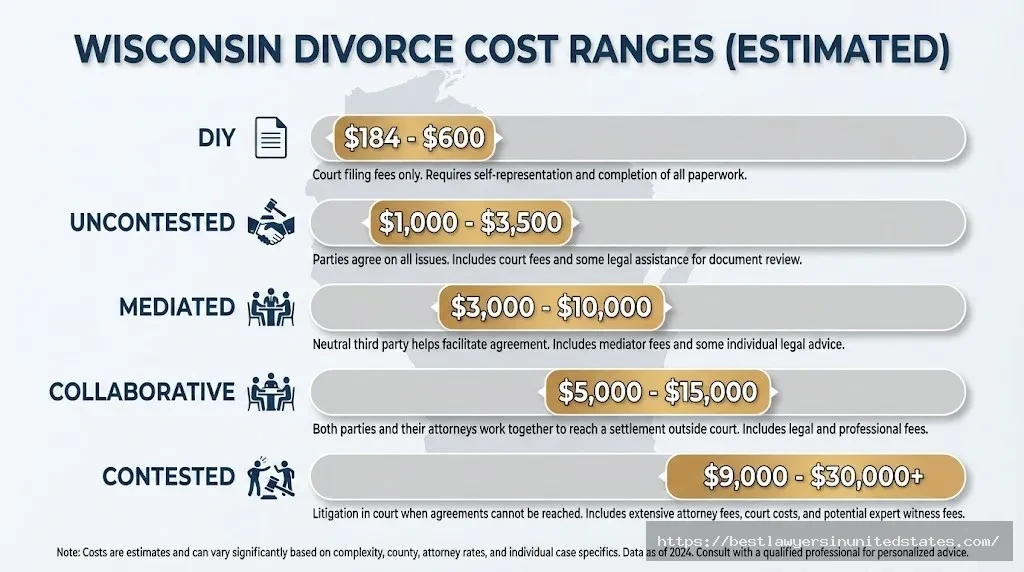
Here’s what most Wisconsin couples can expect to pay in 2026:
| Divorce Type | Total Cost Range | Timeline |
|---|---|---|
| DIY/Pro Se Divorce | $184 – $600 | 4-6 months |
| Uncontested Divorce | $1,000 – $3,500 | 4-6 months |
| Mediated Divorce | $3,000 – $10,000 | 6-9 months |
| Collaborative Divorce | $5,000 – $15,000 | 6-12 months |
| Contested Divorce | $9,000 – $30,000+ | 12-24+ months |
The fastest answer: Most Wisconsin divorces without major disputes cost between $2,000-$5,000 total. Your biggest expense will be attorney fees if you hire one, followed by the $184 Circuit Court filing fee.
Divorce Cost Calculator
Get an estimated cost for your divorce based on your specific situation
Your Estimated Divorce Cost
Cost Breakdown
📧 Get a Personalized Consultation
Have questions about your specific situation? Contact our legal experts for guidance tailored to your needs.
Contact Us via EmailWisconsin Divorce Filing Fees by County (2026)
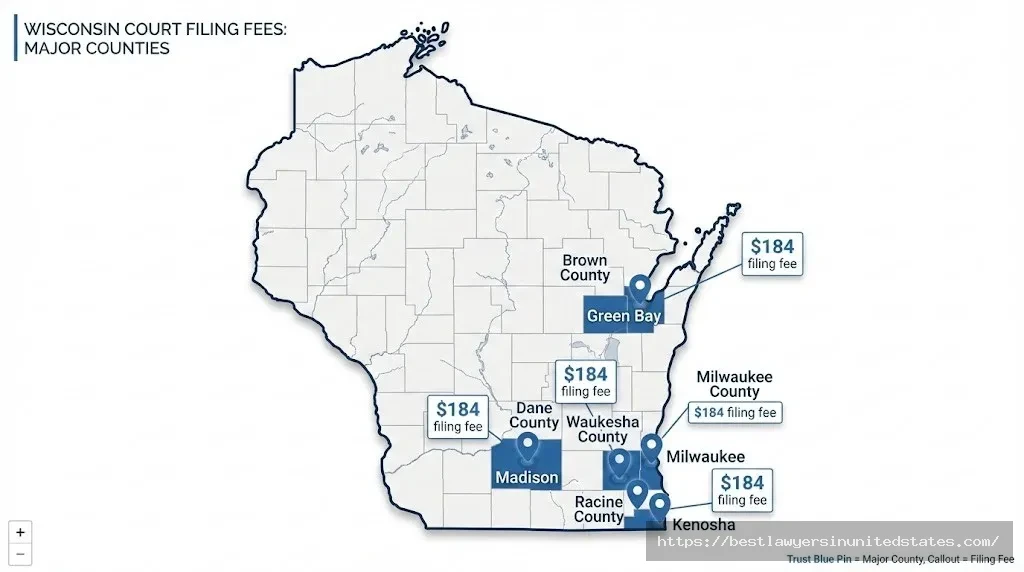
The Wisconsin Circuit Court filing fee is standardized across most counties, but some variations exist:
| County | Filing Fee | Service Fee | Notes |
|---|---|---|---|
| Milwaukee County | $184.00 | $40-60 | Most common venue |
| Dane County (Madison) | $184.00 | $45-65 | Capital region |
| Waukesha County | $184.00 | $40-60 | Suburban Milwaukee |
| Brown County (Green Bay) | $184.00 | $40-55 | Northeastern WI |
| Kenosha County | $184.00 | $35-50 | Southern border |
| Racine County | $184.00 | $40-55 | Lake Michigan area |
Filing fee waiver available: If your household income is at or below 200% of federal poverty guidelines, you may qualify to have the $184 filing fee waived. Complete Wisconsin Circuit Court Form CV-410 to apply.
What’s Included in Wisconsin Divorce Costs?
Understanding where your money goes helps you budget effectively and identify potential savings.
Court Filing Fees
The Clerk of Circuit Court charges $184 to file your Summons and Petition for Divorce. This fee is mandatory unless you qualify for a fee waiver based on income. Both spouses filing a Joint Petition only pay one $184 fee, while separate filings mean the responding spouse doesn’t pay an additional filing fee.
Attorney Fees Explained
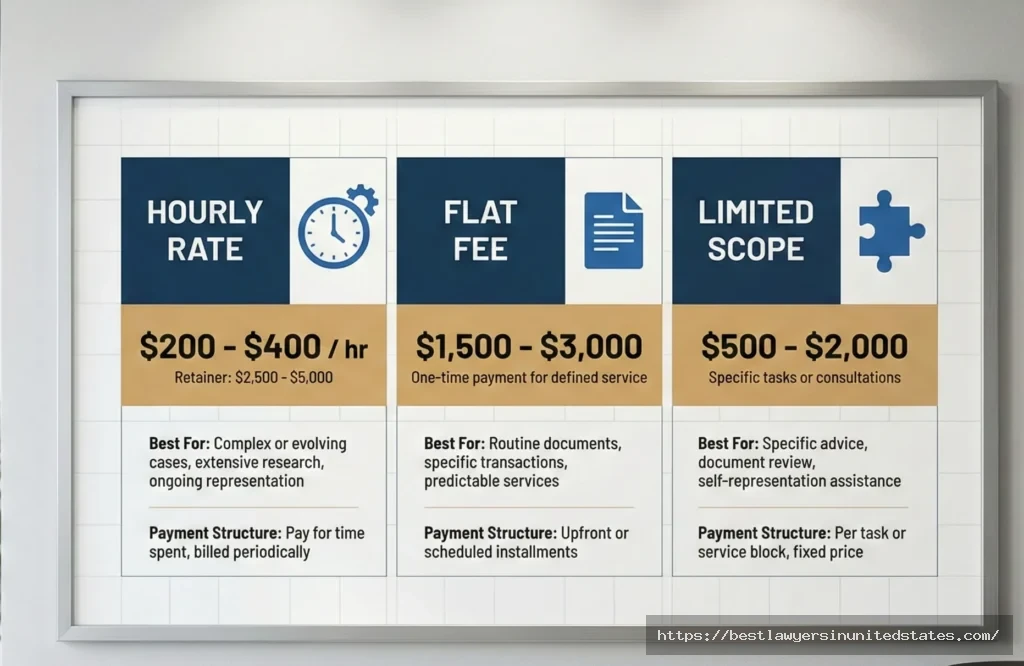
Most Wisconsin divorce attorneys use one of three billing structures:
Hourly Rate (Most Common): Expect $200-$400 per hour depending on the attorney’s experience and location. Milwaukee and Madison attorneys typically charge $250-$400/hour, while attorneys in smaller communities may charge $175-$275/hour. You’ll pay an initial retainer (typically $2,500-$5,000) that the attorney draws from as they work.
Flat Fee: Some attorneys offer flat fees for straightforward uncontested divorces, usually $1,500-$3,000. This covers document preparation, filing, and finalization. Additional disputes or court appearances cost extra.
Limited Scope Representation: You handle some tasks yourself while the attorney helps with specific issues. This “unbundled” approach costs $500-$2,000 depending on what you need help with.
Service of Process Fees
After filing, your spouse must be officially notified. Service options include:
- Sheriff’s Service: $40-$60 (most counties)
- Private Process Server: $50-$100
- Certified Mail: $8-$15 (if spouse agrees to accept service)
Mandatory Parenting Class Fees
Wisconsin requires parents with minor children to complete a parenting education program before divorce finalization. Each parent pays separately:
- In-person classes: $40-$75 per person
- Online programs: $35-$60 per person (check if your county allows online completion)
Classes typically take 4-6 hours and cover co-parenting strategies, child impact, and conflict reduction.
How Much Does Each Type of Divorce Cost in Wisconsin?
The type of divorce process you choose dramatically affects your total costs.

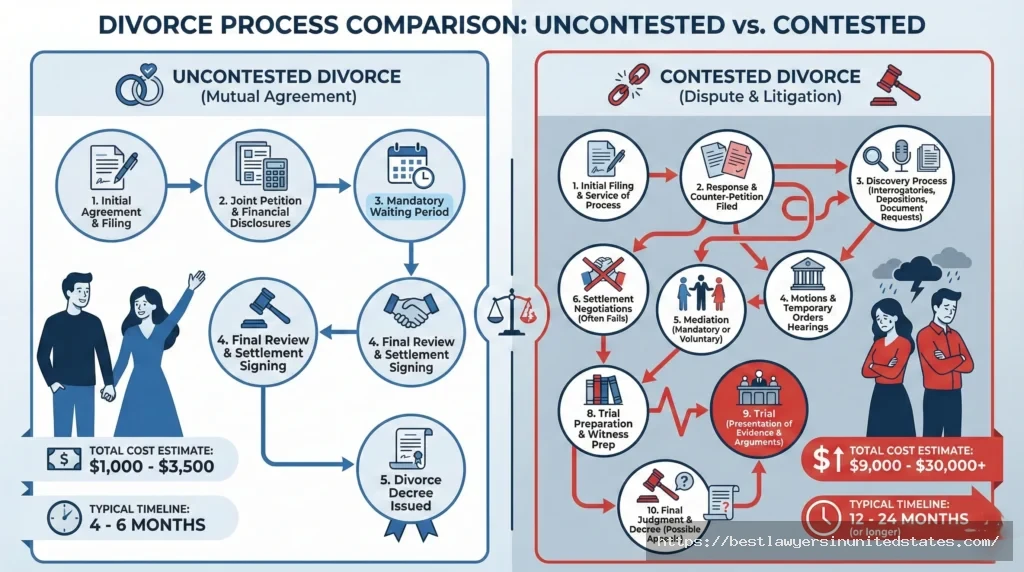
Uncontested Divorce Costs: $1,000-$3,500
An uncontested divorce means you and your spouse agree on all major issues: property division, custody arrangements, child support, and spousal maintenance. This is the most cost-effective option beyond DIY.
Typical breakdown:
- Filing fee: $184
- Attorney flat fee: $1,500-$2,500
- Service of process: $50
- Parenting classes (if children): $80-$150
- Total: $1,814-$2,884
Most uncontested divorces take 4-6 months, with the Wisconsin 120-day waiting period being the primary timeline factor. Similar uncontested divorce costs apply in neighboring states like Illinois and Michigan, though Wisconsin’s flat fee structures tend to be slightly lower.
Contested Divorce Costs: $9,000-$30,000+
When you can’t agree on custody, property, or support, expect significantly higher costs. Contested divorces require extensive attorney time for negotiations, discovery, depositions, and potentially trial.
Typical breakdown:
- Filing fee: $184
- Attorney retainer: $3,500-$7,500
- Additional attorney fees: $5,000-$20,000+
- Guardian ad litem: $1,500-$5,000 (if appointed)
- Expert witnesses: $1,000-$5,000
- Court reporter/transcripts: $500-$2,000
- Total: $11,684-$40,000+
High-conflict divorces involving business valuations, custody evaluations, or forensic accounting can easily exceed $50,000 per spouse. The longest contested divorce in Wisconsin court history lasted over three years and cost both parties more than $200,000 combined.
Mediated Divorce Costs: $3,000-$10,000
Divorce mediation involves a neutral third-party mediator who helps you reach agreements. Many Wisconsin couples find this middle-ground option saves both money and emotional stress.
Typical breakdown:
- Filing fee: $184
- Mediator fees: $2,000-$6,000 (typically $150-$300/hour for 10-20 hours)
- Attorney review: $500-$2,000 (advisable even in mediation)
- Service costs: $50
- Parenting classes: $80-$150
- Total: $2,814-$8,384
Mediation works best when both spouses are willing to negotiate in good faith. Wisconsin courts often order mediation before allowing contested cases to proceed to trial.
Collaborative Divorce Costs: $5,000-$15,000
Collaborative divorce involves both spouses hiring specially-trained collaborative attorneys who commit to settling without going to court. If collaboration fails, both attorneys must withdraw, incentivizing settlement.
Typical breakdown:
- Filing fee: $184
- Collaborative attorney fees (both spouses): $4,000-$12,000
- Financial specialist: $1,000-$3,000
- Divorce coach/therapist: $500-$2,000
- Child specialist (if needed): $1,000-$3,000
- Total: $6,684-$20,184
While more expensive than basic uncontested divorce, collaborative approaches often cost less than full litigation and provide better outcomes for families with children.
Pro Se (DIY) Divorce Costs: $184-$600
Representing yourself without an attorney—called pro se representation—is Wisconsin’s cheapest option. However, it’s only advisable for very simple situations with no children, minimal assets, and complete agreement.
Typical breakdown:
- Filing fee: $184 (or $0 with fee waiver)
- Service of process: $50
- Document preparation service (optional): $200-$400
- Certified copies: $5 per copy
- Total: $184-$639
Many Wisconsin counties offer pro se resource centers with free forms and guidance. However, mistakes in DIY divorces can cost thousands to fix later. Consider at least consulting with an attorney for a few hours to review your documents before filing.
What Factors Increase Divorce Costs in Wisconsin?
Several key factors drive costs higher. Understanding these helps you anticipate expenses and make strategic decisions.
Child Custody and Placement Disputes
Disagreements about legal custody (decision-making) and physical placement (where children live) significantly increase costs. Wisconsin courts prioritize children’s best interests, which often requires:
Guardian ad Litem Fees: Courts may appoint an attorney to represent your child’s interests, costing $1,500-$5,000 or more. Both parents typically split this cost equally.
Custody Evaluations: Professional psychological evaluations cost $2,000-$5,000 and involve interviews, home visits, and detailed reports to the court.
Expert Witness Testimony: Child psychologists or custody evaluators may testify at trial for $250-$500/hour plus preparation time.
Each additional hearing or motion related to custody adds $1,000-$3,000 in attorney fees. The more you can cooperate on parenting arrangements, the more you’ll save.
Property and Asset Division Complexity
Wisconsin follows community property principles, meaning marital property is typically divided equally. However, determining what’s marital versus individual property—and valuing it—creates costs:
Real Estate Appraisals: Professional home appraisals cost $300-$600 per property. Investment properties require commercial appraisals at $500-$2,000 each.
Business Valuations: If you or your spouse own a business, certified valuations cost $3,000-$15,000 depending on complexity. Small businesses with simple financials run cheaper; complex corporations with multiple locations and intricate ownership structures cost significantly more.
Retirement Account Valuations: Pensions and deferred compensation plans may require actuarial valuations at $500-$2,000 each. Qualified Domestic Relations Orders (QDROs) to divide 401(k)s or pensions cost $500-$1,500 to prepare.
Forensic Accounting: If you suspect hidden assets or income manipulation, forensic accountants charge $200-$400/hour and typically require 10-30 hours of work ($2,000-$12,000 total).
Spousal Maintenance (Alimony) Disagreements
Wisconsin courts can award spousal maintenance based on factors like marriage length, earning capacity, age, and health. Disputes over maintenance increase costs through:
Income Verification: Extensive discovery to determine actual income, especially for self-employed spouses or those with variable income.
Vocational Evaluations: If one spouse claims inability to work, the other may hire vocational experts ($1,500-$3,000) to assess employability and earning capacity.
Tax Analysis: CPAs may analyze tax implications of different maintenance scenarios ($500-$2,000).
Maintenance disputes often extend litigation by months, adding $3,000-$10,000 in attorney fees. In Wisconsin, marriages under 10 years rarely result in long-term maintenance, while marriages over 20 years often do.
Business Ownership
Divorce involving business ownership creates unique challenges. Beyond valuation costs, issues include:
- Determining if the business is marital or separate property
- Calculating marital interest if one spouse started the business before marriage
- Assessing the other spouse’s contributions (direct or indirect)
- Structuring buyouts or continued co-ownership
- Protecting business operations during litigation
Business-related divorces typically cost $15,000-$40,000 per spouse due to extensive financial discovery and expert testimony.
Level of Conflict and Communication
Your ability to communicate with your spouse directly impacts costs. High-conflict cases with:
- Frequent emergency motions
- Violations of temporary orders
- Refusal to provide financial documents
- Harassment or threatening behavior
- Unreasonable demands or positions
…can double or triple attorney fees. Every contempt motion, protective order, or unnecessary court appearance adds $1,000-$5,000 to your bill.
Hidden Divorce Costs Wisconsin Couples Often Overlook
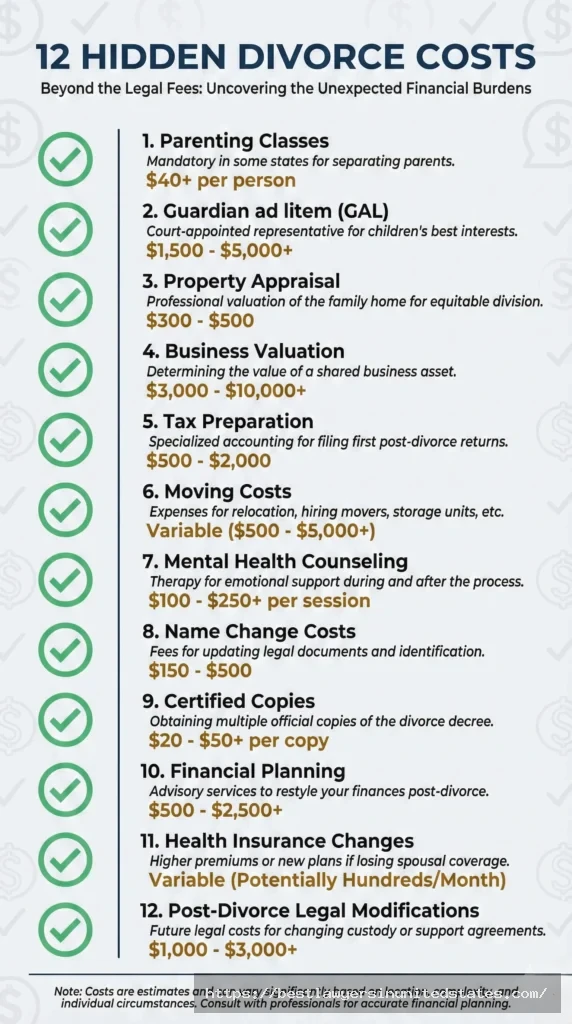
Beyond obvious expenses, budget for these commonly forgotten costs:
Court and Administrative Fees
- Certified copies of divorce decree: $5 per copy (get several—you’ll need them for name changes, property transfers, etc.)
- Recording fees for property transfers: $25-$50 per document with your County Register of Deeds
- Notary fees: $10-$20 for sworn statements and affidavits
Professional Service Fees
- Tax preparation: Filing taxes during divorce year costs $500-$2,000 depending on complexity
- Financial advisor consultation: $200-$500/hour to understand tax implications and future planning
- Credit report and monitoring: $20-$30/month to track joint accounts and protect credit
Post-Divorce Documentation
- Name change costs: Court filing ($50-$100), new driver’s license ($34), passport ($130), Social Security card (free)
- Updated estate documents: New will, power of attorney, and healthcare directive cost $500-$1,500 with an attorney
Moving and Living Expenses
- Moving costs: $500-$3,000 depending on distance and belongings
- Deposits and first month’s rent: $1,500-$4,000 if leasing new housing
- Furnishing new residence: $2,000-$10,000 for basics if you’re splitting household items
- Utility deposits: $200-$500 for electric, gas, internet
Mental Health Support
- Individual therapy: $100-$200 per session, typically 10-20 sessions during divorce
- Child therapy: $80-$150 per session if children struggle with the transition
- Support groups: $20-$50 per session or free through community organizations
Child-Related Adjustments
- Duplicate items for two homes: Car seats, clothing, school supplies ($500-$2,000)
- Increased childcare: Transportation between homes, different work schedules ($200-$800/month)
Total hidden costs often add $5,000-$15,000 to your divorce expenses. Planning for these prevents financial surprises during an already stressful time.
Real Wisconsin Divorce Cost Examples
These actual case scenarios (with identifying details changed) show how different situations affect total costs:
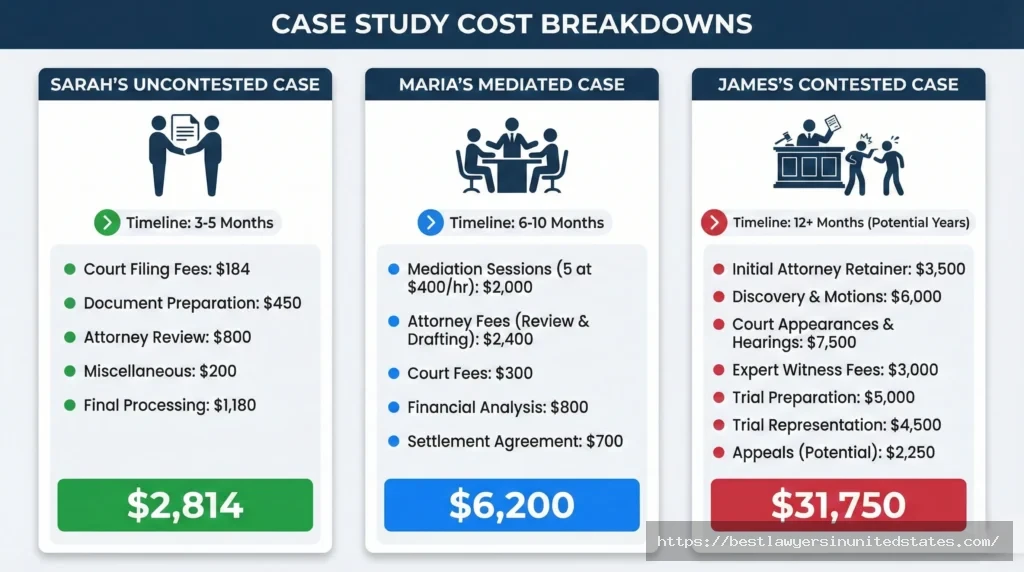
Case Study 1: Sarah’s Uncontested Divorce – $2,814
Situation: Married 8 years, two children (ages 4 and 6), both employed, owned a home with minimal equity, agreed on all terms.
Cost Breakdown:
- Circuit Court filing fee: $184
- Attorney flat fee (Joint Petition): $2,400
- Sheriff’s service: $50
- Parenting classes ($40 each): $80
- Certified copies (3): $15
- Notary fees: $15
- Property appraisal (for home sale): $450
- Recording deed transfer: $30
- Total: $3,224
Timeline: 4.5 months from filing to final judgment
Key to low cost: Complete agreement before filing, used Joint Petition process, minimal assets to divide, cooperative communication.
Case Study 2: James’s Contested Divorce – $31,750
Situation: Married 14 years, three children (ages 5, 9, 12), owned home and small business, disputed custody and property division.
Cost Breakdown:
- Circuit Court filing fee: $184
- Attorney retainer: $5,000
- Additional attorney fees (18 months): $19,500
- Guardian ad litem: $3,500
- Business valuation: $4,500
- Home appraisal: $500
- Forensic accountant: $2,800
- Custody evaluation: $3,500
- Court reporter/transcripts: $850
- Parenting classes: $80
- Expert witness testimony: $1,800
- Certified copies: $25
- Post-decree modifications: $2,500
- Total: $44,739
Timeline: 18 months from filing to final judgment, plus 3 additional months for post-decree motions
Cost drivers: Business valuation disputes, contested custody requiring GAL and evaluation, spouse’s refusal to compromise, two trial dates (one continued).
Case Study 3: Maria’s Mediated Divorce – $6,200
Situation: Married 11 years, one child (age 8), owned home, disagreed on spousal maintenance and property split but committed to mediation.
Cost Breakdown:
- Circuit Court filing fee: $184
- Mediator fees (16 hours at $200/hour): $3,200
- Attorney review of agreement: $1,200
- Financial advisor consultation: $400
- Service of process: $45
- Parenting class: $40
- Home appraisal: $475
- Certified copies: $20
- Recording fees: $35
- QDRO preparation for 401(k) split: $600
- Total: $6,199
Timeline: 7 months from filing to final judgment
Key to moderate cost: Mediation resolved disputes without litigation, each spouse had consulting attorney but not full representation, maintained focus on children’s needs.
How Can You Reduce Your Wisconsin Divorce Costs?
Strategic choices significantly impact what you’ll spend. Here are proven cost-reduction strategies:
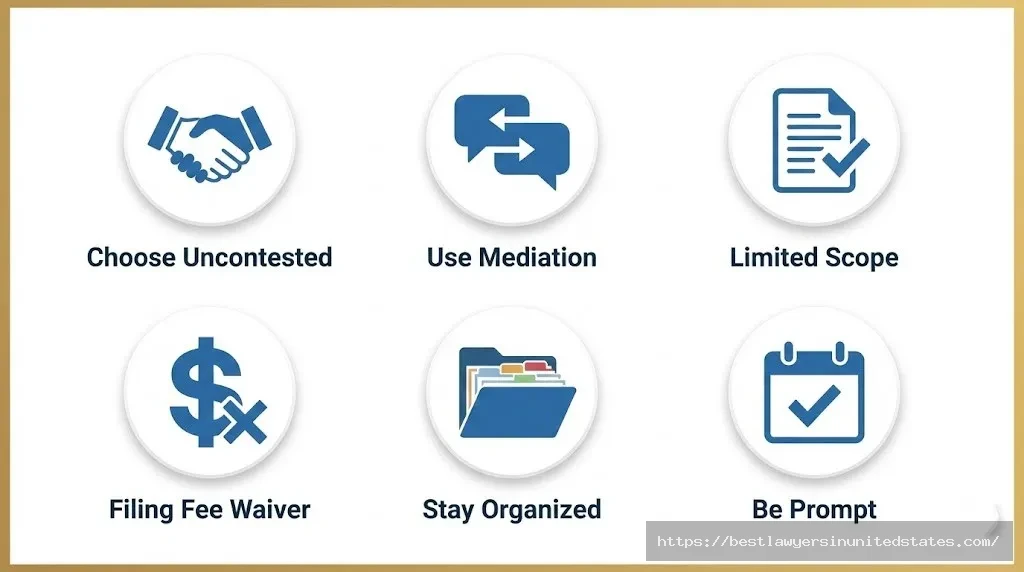
Choose Uncontested Divorce When Possible
If you can reach agreements on your own or with minimal help, uncontested divorce saves thousands. Consider:
Temporary separation with counseling: Sometimes a trial separation with couples counseling helps resolve issues before filing, leading to smoother uncontested divorce.
Pre-divorce planning: Work out major issues informally before involving attorneys. Consider using a neutral financial advisor to propose fair property divisions.
Joint Petition filing: Filing together as a Joint Petition signals cooperation to the court and often results in faster processing.
Use Mediation Before Litigation
Even if you have disputes, mediation costs far less than litigation. Many Wisconsin counties require mediation attempts before contested hearings.
Wisconsin Circuit Court mediation programs: Many counties offer low-cost mediation through the court system ($50-$150 per session). Private mediators cost more but offer flexible scheduling.
Mediation-arbitration hybrid: Some mediators offer med-arb services where unresolved issues go to binding arbitration rather than court trial.
Consider Limited Scope Representation
You don’t need full attorney representation for everything. Limited scope representation—also called “unbundled services”—lets you hire an attorney for specific tasks:
- Document review and drafting
- Court appearance preparation
- Negotiation assistance
- Legal advice on specific issues
This approach costs $500-$2,000 versus $5,000-$15,000 for full representation. Particularly useful for pro se filers who need expert guidance on complex issues.
Apply for a Filing Fee Waiver
If your household income is at or below 200% of federal poverty guidelines, you can request a fee waiver using Wisconsin Form CV-410. Income thresholds for 2026:
| Household Size | Annual Income Limit (200% FPL) |
|---|---|
| 1 person | $30,120 |
| 2 people | $40,880 |
| 3 people | $51,640 |
| 4 people | $62,400 |
| 5 people | $73,160 |
Courts grant most fee waiver requests when proper documentation is provided. This saves the $184 filing fee—significant when budgets are tight.
Stay Organized and Prepared
Attorney time is expensive. Reduce billable hours by:
Gathering documents proactively: Collect tax returns, bank statements, retirement account statements, mortgage documents, and credit card records before your attorney requests them.
Creating organized summaries: Prepare asset and debt lists with current balances and account numbers. Document monthly expenses in detail.
Communicating efficiently: Send one comprehensive email instead of multiple short messages. Prepare written questions for calls rather than rambling conversations.
Being realistic: Listen to your attorney’s advice about likely outcomes. Fighting for positions the court likely won’t grant wastes money.
Responding promptly: Delays in providing information or responding to settlement offers increase costs as your attorney must repeatedly follow up.
Well-prepared clients save $2,000-$5,000 in attorney fees compared to those who require extensive hand-holding and document gathering.
Use Online Document Preparation Services
If you’re pursuing DIY divorce, online services like Wisconsin’s I-CAN! E-filing system provide step-by-step guidance and court-approved forms. Commercial services like 3StepDivorce and DivorceWriter cost $150-$400 and help ensure proper document completion.
However, these services don’t provide legal advice. For anything beyond simple uncontested divorce, attorney consultation is worth the investment.
Payment Options for Your Wisconsin Divorce
Divorce costs money you may not have readily available. Here are realistic financing options:
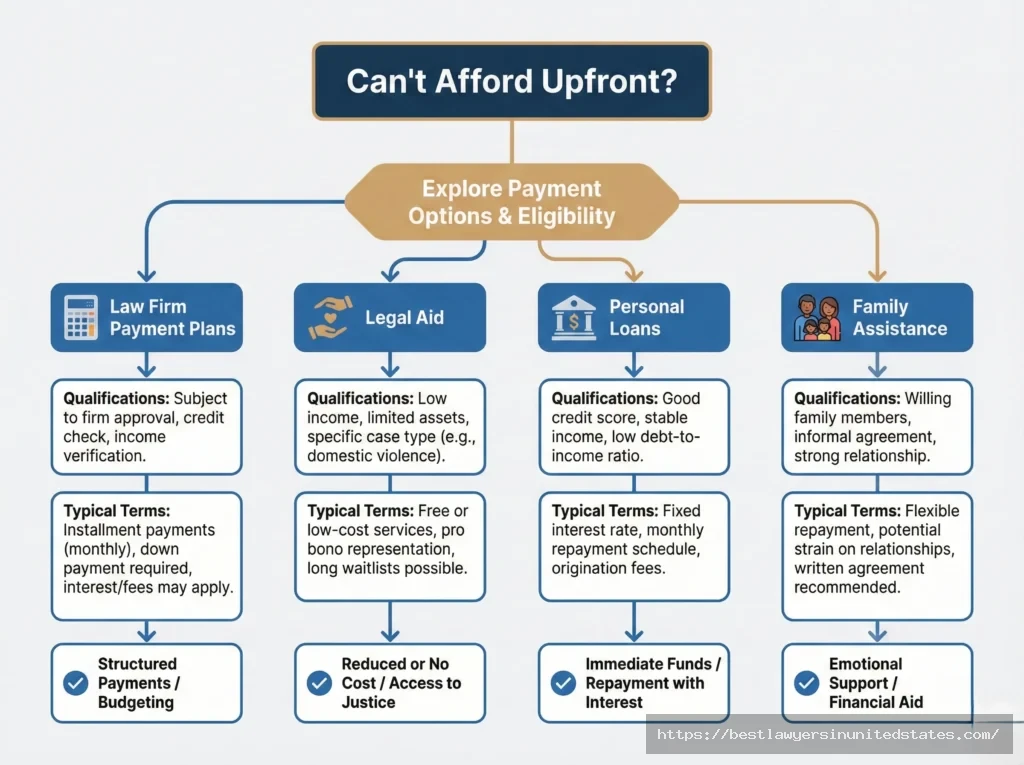
Law Firm Payment Plans
Many Wisconsin family law attorneys offer payment plans for clients who can’t pay large retainers upfront. Common arrangements include:
- Monthly installments: Pay retainer over 3-6 months while case proceeds
- Cost-plus payment: Pay filing fee and initial consultation, then monthly payments based on ongoing work
- Credit card payments: Most firms accept credit cards, though interest rates make this expensive long-term
Ask potential attorneys about payment flexibility during initial consultations. Some attorneys won’t take cases without full retainer payment, while others work with clients on financial constraints.
Legal Aid Organizations
If you meet income requirements (typically below 125% of federal poverty level), Wisconsin Legal Aid organizations provide free legal assistance:
- Legal Action of Wisconsin: Serves low-income Milwaukee area residents
- Wisconsin Judicare: Covers northern and western Wisconsin
- ABC for Health: Focuses on family law and public benefits
These organizations have limited capacity and prioritize cases involving domestic violence, child welfare, or particularly vulnerable clients. Apply early as waiting lists can be several months.
Personal Loans and Lines of Credit
If you have decent credit, personal loans or home equity lines of credit may provide divorce funding at lower rates than credit cards:
- Personal loans: 7%-15% APR for qualified borrowers, $5,000-$50,000 amounts
- Home equity lines: 6%-10% APR, up to 80% of home equity
- 401(k) loans: Borrow from your retirement plan (not recommended due to tax implications if divorce finalizes before repayment)
Avoid payday loans or title loans with predatory 300%+ interest rates. High-interest debt creates post-divorce financial burdens that may take years to resolve.
Family Assistance
Some clients receive financial help from parents or other family members for divorce costs. If you go this route:
- Document it as a loan: Create written loan agreement with repayment terms to avoid gift tax issues or claims from your spouse
- Consider tax implications: Large gifts may require IRS Form 709 disclosure
- Maintain independence: Don’t let family funding influence your decisions in ways that aren’t in your best interest
Negotiating Fees with Your Spouse
Wisconsin law allows courts to order one spouse to pay the other’s attorney fees in cases with significant income disparity. If your spouse earns substantially more, your attorney can file a motion requesting fee contribution. Courts consider:
- Income and asset differences
- Who caused increased costs through unreasonable positions
- Ability to pay
- Good faith negotiation efforts
Fee orders typically require the higher-earning spouse to contribute to the other’s attorney fees, not pay them entirely. Expect 30%-70% contribution depending on circumstances.
What’s the Timeline for Wisconsin Divorce and How Does It Affect Costs?
Wisconsin’s mandatory 120-day waiting period means no divorce finalizes faster than 4 months. However, most take longer, and timeline directly impacts cost.
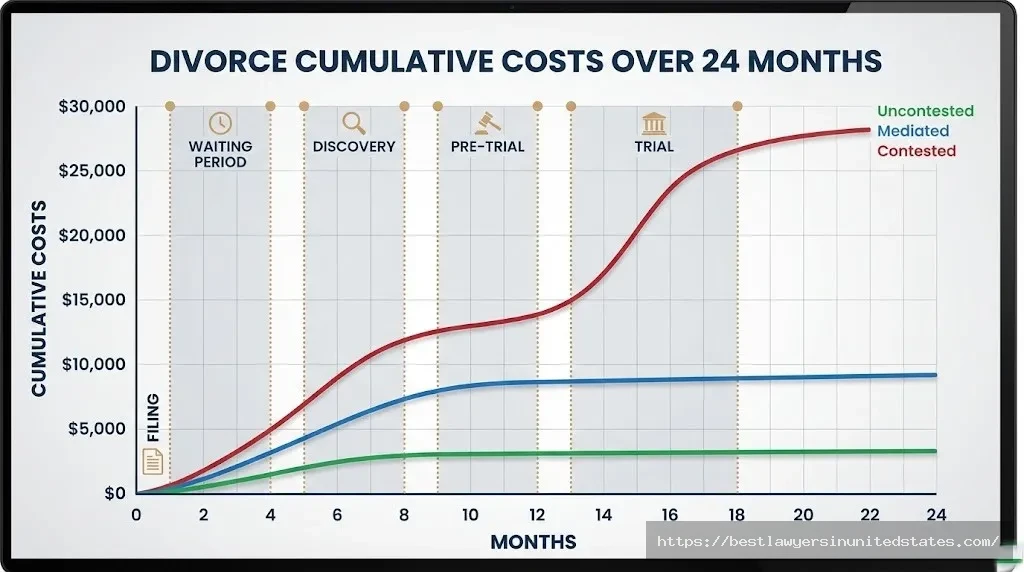
Months 1-4: Initial Filing and Waiting Period
Typical costs this phase: $2,500-$5,000
Activities include filing the Summons and Petition, serving your spouse, exchanging initial financial disclosures, and potentially requesting temporary orders for custody, support, and property use.
Cost drivers: Attorney retainer, filing fee, service costs, temporary order hearings if needed. Emergency temporary orders add $1,500-$3,000 to this phase.
Most uncontested divorces complete shortly after the 120-day waiting period ends, keeping costs in this range.
Months 5-8: Discovery and Negotiation
Typical costs this phase: $3,000-$8,000 additional
If your case isn’t resolved during the waiting period, formal discovery begins:
- Interrogatories: Written questions both parties must answer under oath
- Document requests: Formal demands for financial records, communications, etc.
- Depositions: In-person testimony under oath with court reporter ($500-$1,500 each)
Settlement negotiations intensify as parties exchange proposals. Mediation often occurs during this window.
Cost drivers: Attorney time for discovery preparation and review, mediation fees, expert consultations for property valuation or custody issues.
Months 9-12: Pre-Trial and Settlement Conferences
Typical costs this phase: $4,000-$10,000 additional
Courts schedule pre-trial conferences to discuss settlement and trial readiness. Your attorney prepares:
- Trial witness lists
- Exhibit lists and evidence organization
- Pre-trial motions addressing legal issues
- Settlement conference materials
Most cases settle during this phase as trial approaches and costs escalate. Judges strongly encourage settlement at pre-trial conferences.
Cost drivers: Extensive attorney preparation time, expert witness preparation, mounting pressure leads to settlement (usually good outcome but requires attorney time to finalize).
Months 13-24+: Trial and Post-Trial
Typical costs this phase: $8,000-$20,000+ additional
Only 5-10% of Wisconsin divorces reach trial. Trials typically last 1-5 days depending on complexity.
Trial costs include:
- Attorney trial preparation: $3,000-$8,000
- Trial days (attorney hourly rate × 8-10 hours/day × trial days): $4,000-$16,000
- Expert witness testimony: $1,500-$5,000
- Court reporter daily fees: $300-$500/day
- Trial exhibits and demonstrative aids: $500-$2,000
After trial, the judge issues a written decision (days to weeks later). Either party can appeal to the Wisconsin Court of Appeals within specified timeframes, adding $10,000-$30,000 if pursued.
The cost-time relationship is clear: Every month beyond 6 months typically adds $1,000-$3,000 in costs. Cases extending past one year rarely cost less than $15,000 per party.
Frequently Asked Questions About Wisconsin Divorce Costs
How much does it cost to file for divorce in Wisconsin?
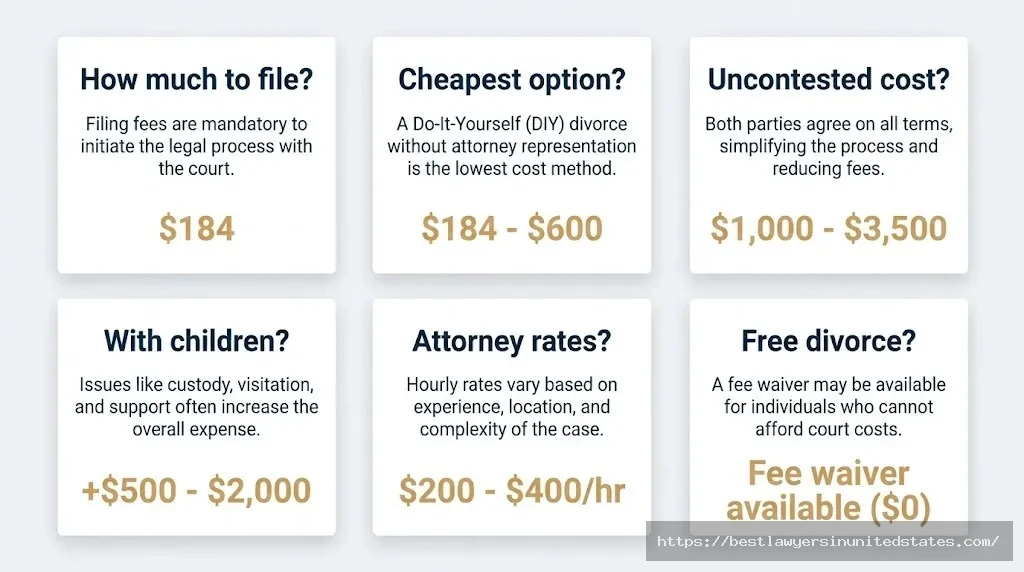
The Wisconsin Circuit Court filing fee is $184 in all counties. This covers filing your Summons and Petition for Divorce with the Clerk of Circuit Court. If you qualify based on low income, you can request a fee waiver using Form CV-410, which eliminates this cost.
What is the cheapest way to get a divorce in Wisconsin?
The cheapest option is DIY pro se divorce when you and your spouse agree on everything, have no children, and minimal assets. Total costs can be as low as $184 (just the filing fee) if you qualify for fee waiver and your spouse accepts service by mail. However, this is only advisable for very simple situations. Most couples benefit from at least consulting an attorney to review their agreement before filing, adding $500-$1,000 but preventing costly mistakes.
How much does an uncontested divorce cost in Wisconsin?
Expect to pay $1,000-$3,500 total for an uncontested divorce with attorney assistance. This includes the $184 filing fee, $1,500-$2,500 attorney flat fee, service costs around $50, and mandatory parenting class fees of $80-$150 if you have children. If you handle it yourself without an attorney, costs drop to $184-$600.
How much do divorce attorneys charge in Wisconsin?
Wisconsin divorce attorney hourly rates range from $175-$400 per hour depending on experience and location. Milwaukee and Madison attorneys typically charge $250-$400/hour. Smaller cities and rural areas see $175-$275/hour. Most require an initial retainer of $2,500-$5,000. Some offer flat fees of $1,500-$3,000 for straightforward uncontested divorces.
Does it cost more to get divorced with children in Wisconsin?
Yes, divorces involving children cost more due to mandatory parenting classes ($40-$75 per parent), more complex custody and placement negotiations, and potential Guardian ad Litem appointments ($1,500-$5,000). Child support calculations are standardized but determining placement schedules requires more attorney time. Overall, expect $500-$2,000 additional costs for divorces with minor children compared to childless divorces, and potentially much more if custody is contested.
Can I get a free divorce in Wisconsin?
Free divorce is possible only if you qualify for a filing fee waiver based on low income and represent yourself pro se without attorney help. Wisconsin Legal Aid organizations provide free attorney assistance for qualifying low-income individuals, but services are limited to those below 125% of federal poverty level and prioritize cases involving domestic violence or urgent child welfare concerns. Most people will pay at least a few hundred dollars even in the simplest cases.
What is Wisconsin’s 120-day waiting period?
Wisconsin law requires a mandatory 120-day waiting period from the date you file your divorce petition before the court can grant your divorce. This gives couples time to reconsider and complete required steps like parenting classes and financial disclosures. No divorce can be finalized faster than 120 days, regardless of agreement level. The waiting period starts when you file, not when your spouse is served.
How can I reduce my divorce costs in Wisconsin?
The most effective cost-reduction strategies include: choosing uncontested divorce by reaching agreements before filing, using mediation instead of litigation for disputes, considering limited scope attorney representation for specific tasks only, being organized and prepared with all financial documents, communicating efficiently with your attorney, responding promptly to requests and settlement offers, and being realistic about likely court outcomes rather than fighting for positions judges rarely grant. Each of these can save $2,000-$10,000 compared to high-conflict litigation.
Is Wisconsin a 50/50 divorce state?
Wisconsin follows community property principles, which generally means equal division of marital property and debts. However, courts can deviate from 50/50 split based on factors like marriage length, each spouse’s contribution, earning capacity, and child custody arrangements. Property owned before marriage or received by gift/inheritance remains separate property. The 50/50 presumption provides a starting point, but final divisions vary based on each case’s specific circumstances.
Who pays for divorce in Wisconsin?
Generally, each spouse pays their own attorney fees and shares court filing costs if filing jointly ($184 total). However, Wisconsin courts can order one spouse to contribute to the other’s attorney fees when there’s significant income disparity or when one spouse’s unreasonable litigation conduct increased costs unnecessarily. The higher-earning spouse may be ordered to pay 30%-70% of the other’s legal fees depending on circumstances. Property settlements often factor in attorney fee obligations.
How much does contested divorce cost compared to uncontested in Wisconsin?
Contested divorces cost dramatically more—typically $9,000-$30,000+ per person versus $1,000-$3,500 for uncontested. The cost difference comes from extensive attorney time for discovery, depositions, motion practice, expert witnesses, and trial preparation. A single trial day can cost $3,000-$5,000 in attorney fees alone. Most of this money goes toward fighting about issues that judges will likely split fairly close to 50/50 anyway, making contested divorce one of the worst financial investments you can make.
What hidden costs should I budget for in Wisconsin divorce?
Budget for certified copies of your divorce decree ($5 each—get at least 5), recording fees for property transfers ($25-$50), notary fees ($10-$20), tax preparation during divorce year ($500-$2,000), name change costs if applicable ($200-$300 total for license, passport, etc.), moving expenses ($500-$3,000), new household setup ($2,000-$10,000), duplicate children’s items for two homes ($500-$2,000), and therapy or counseling ($1,000-$4,000 total). These often add $5,000-$15,000 to your divorce costs beyond obvious legal fees.
How long does divorce take in Wisconsin?
Minimum 120 days due to mandatory waiting period, but most take 4-12 months depending on complexity and cooperation level. Simple uncontested divorces often finalize within 5-6 months. Mediated divorces take 6-9 months. Contested divorces with trials typically require 12-24 months, sometimes longer for complex cases involving business valuations or extensive property disputes. Every additional month generally adds $1,000-$3,000 in costs, making prolonged conflict expensive.
Can I use my 401(k) to pay for divorce?
While technically possible through 401(k) loans or hardship withdrawals, this is generally inadvisable. Loans from your 401(k) must be repaid within 5 years, and if the divorce finalizes before repayment, the outstanding balance becomes taxable income plus 10% early withdrawal penalty if you’re under age 59½. Hardship withdrawals are immediately taxable plus 10% penalty. These options should be last resort—explore payment plans with your attorney, personal loans, or family assistance first to avoid devastating your retirement savings.
What happens if I can’t afford my divorce attorney?
Communicate with your attorney immediately if you’re struggling with payments. Options include requesting payment plan modifications, switching to limited scope representation for remaining work, seeking court-ordered contribution from your higher-earning spouse, applying for legal aid assistance, or in some cases, continuing pro se (representing yourself) for portions of the case. Don’t simply stop paying without discussion—this may result in your attorney withdrawing from your case, which creates complications and delays. Proactive communication allows your attorney to work with you on solutions.
Get Professional Help with Your Wisconsin Divorce
Divorce costs vary significantly based on your unique situation. While this guide provides typical ranges, your actual expenses depend on factors like cooperation level, asset complexity, and whether children are involved.

Smart next steps:
- Calculate your estimated costs using the breakdowns above based on your situation
- Consult with 2-3 attorneys to compare rates and approaches (most offer free initial consultations)
- Gather financial documents now to reduce billable attorney time later
- Consider mediation seriously even if you have disputes—the cost savings are substantial
- Be realistic about outcomes so you don’t waste money fighting for unlikely results
Remember that divorce is a legal process with financial implications, but it’s also a major life transition. While controlling costs matters, making decisions that protect your long-term interests and your children’s wellbeing matters more.
For comparison with other states’ divorce costs, see our comprehensive guides on divorce costs in Illinois, Michigan divorce costs, and divorce costs in Missouri. You can also explore our detailed breakdown of divorce attorney fees and use our divorce cost calculator to estimate expenses specific to your situation.
