
Getting arrested for DUI in Maryland triggers two separate legal processes that run at the same time. You face criminal charges in court and an administrative license suspension through the Maryland Motor Vehicle Administration (MVA). Maryland also distinguishes between DUI and DWI as separate offenses with different penalties.
This guide explains Maryland’s DUI laws, penalties, legal process, and your options for defense in 2026.
Is DWI or DUI Worse in Maryland?
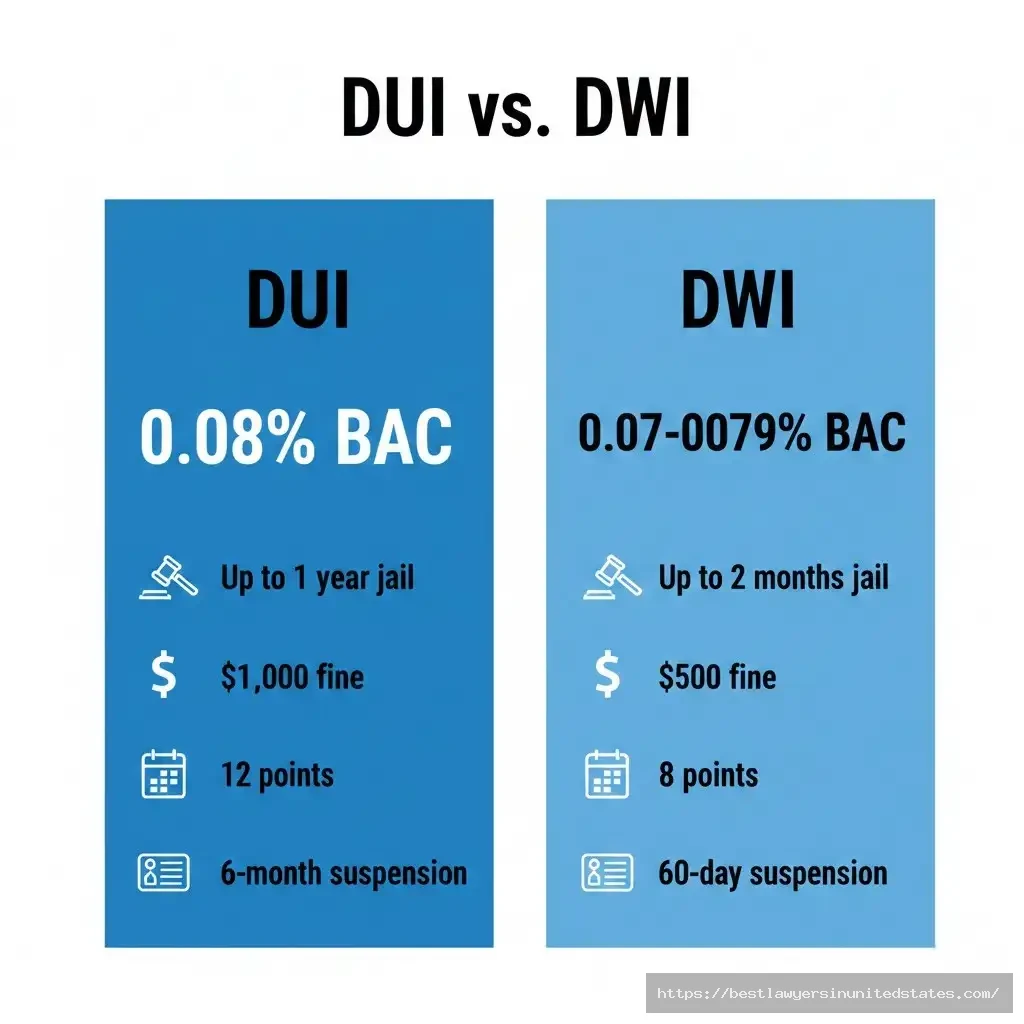
Quick Answer: DUI is worse than DWI in Maryland. DUI requires a BAC of 0.08% or higher and carries stiffer penalties including up to 1 year in jail and 12 points on your license.
Maryland is one of the few states that prosecutes DUI and DWI as two distinct charges under separate statutes.
Maryland DUI vs DWI: Key Differences
| Charge | BAC Level | Max Jail (1st) | Max Fine (1st) | License Points | Suspension (1st) |
|---|---|---|---|---|---|
| DUI | 0.08%+ | 1 year | $1,000 | 12 points | 6 months |
| DWI | 0.07-0.079% | 2 months | $500 | 8 points | 60 days |
Maryland Transportation Code § 21-902 defines DUI as operating a vehicle with a BAC of 0.08% or higher, or while impaired by alcohol or drugs.
Maryland Transportation Code § 21-902.1 defines DWI as operating a vehicle with a BAC between 0.07% and 0.079%, or while impaired by alcohol to a lesser degree.
Why Maryland Has Both Charges
Prosecutors use the two-tier system for plea bargaining. If you’re arrested with a BAC of 0.09% or 0.10%, your attorney may negotiate a reduction from DUI to DWI. This results in lower fines, fewer points, and a shorter license suspension.
The distinction also affects insurance rates. A DUI conviction typically increases premiums by 80-100% for three years, while a DWI may result in a 50-60% increase.
Special BAC Limits in Maryland
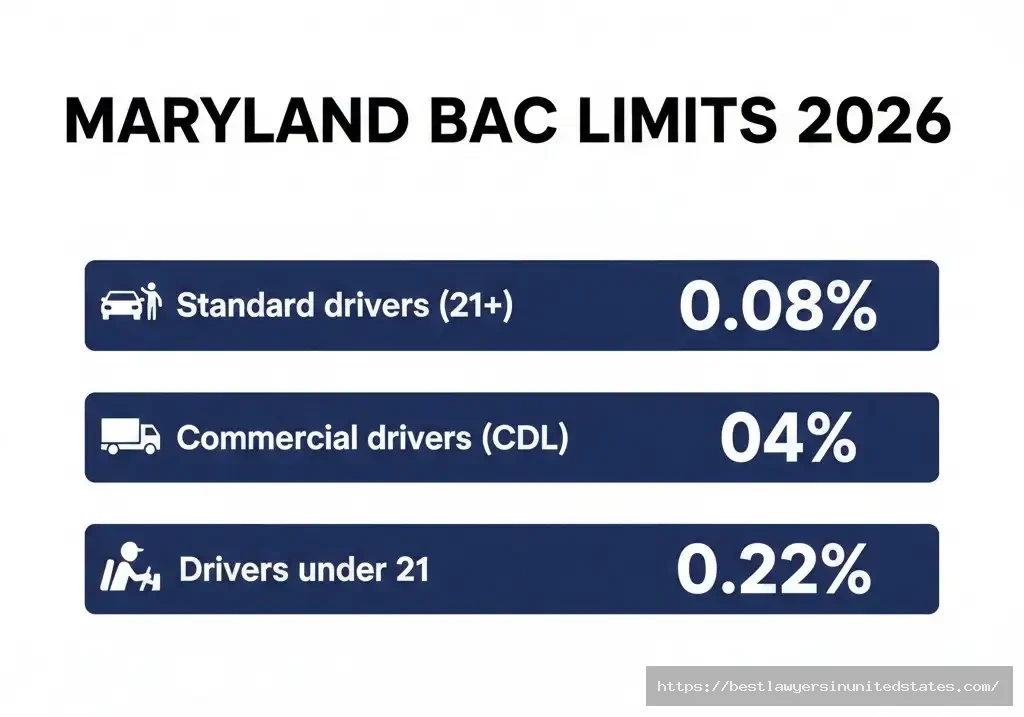
Not everyone faces the standard 0.08% threshold:
Commercial drivers: 0.04% BAC triggers DUI charges and federal disqualification from commercial driving.
Drivers under 21: Maryland’s zero tolerance law sets the limit at 0.02% BAC for anyone under 21 years old.
Check Your BAC Level
Not sure if you’re over Maryland’s 0.08% legal limit? Use our BAC calculator to estimate your blood alcohol content based on your weight, drinks consumed, and time elapsed.
BAC Calculator
Estimate your Blood Alcohol Content
• Commercial Driver (CDL): 0.04% BAC
• Drivers Under 21: 0.00-0.02% BAC (Zero Tolerance)
• Enhanced Penalties: 0.15% BAC or higher in most states
What Happens After Your First DUI in Maryland?
Quick Answer: Most first-time DUI offenders in Maryland receive Probation Before Judgment (PBJ), which means no criminal conviction on your record. You’ll still face license suspension, ignition interlock requirements, and mandatory alcohol education.
Immediate Consequences (First 24 Hours)
Police take you to the station for booking and fingerprinting. You’ll provide a breath or blood sample for BAC testing. Most first-time offenders are released within 4-12 hours on personal recognizance without posting bail.
The officer confiscates your Maryland driver’s license and issues a temporary 45-day license. This temporary license lets you drive legally while you decide whether to request an MVA administrative hearing.
First Offense DUI Penalties in Maryland
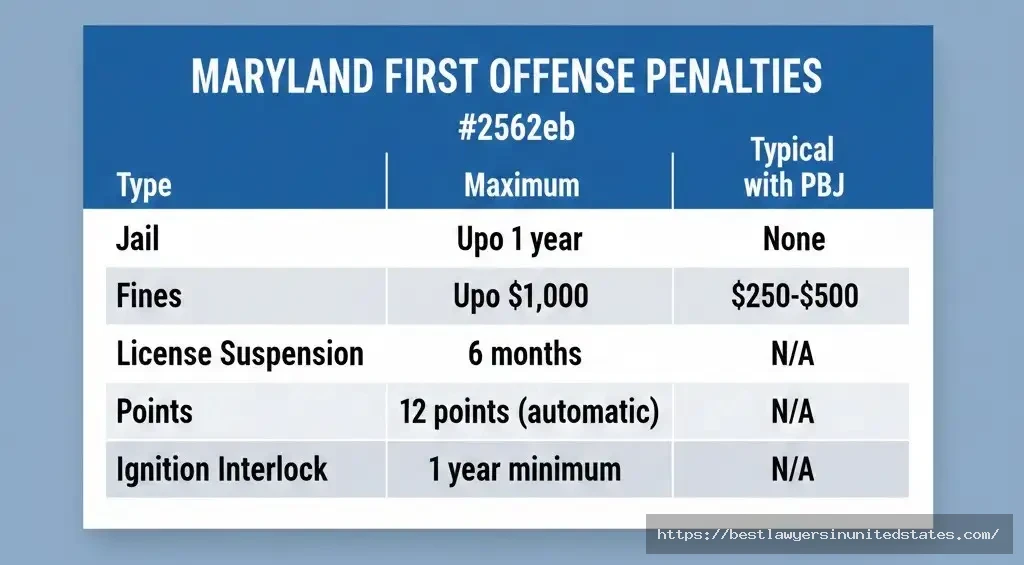
Maryland law sets maximum penalties, but actual outcomes vary significantly based on your BAC level, behavior during arrest, and whether you hire an attorney.
| Penalty Type | Maximum Allowed | Typical Outcome with PBJ |
|---|---|---|
| Jail time | Up to 1 year | None (probation instead) |
| Fines | Up to $1,000 | $250-$500 |
| License suspension | 6 months | 6 months (can drive with IID) |
| Ignition interlock | 1 year minimum | 1 year required |
| License points | 12 points | 12 points (automatic) |
How Likely Is Jail Time for First DUI in Maryland?
Actual jail time is rare for first offenders. Maryland courts grant Probation Before Judgment to 60-70% of first-time DUI defendants. PBJ means you serve probation instead of jail and avoid a criminal conviction on your record.
When judges impose jail time:
- BAC over 0.20% (more than twice the legal limit)
- Accident causing injury or property damage
- Child passenger in the vehicle
- Refused breath or blood test
- Prior criminal record or hostile behavior
Even without PBJ, judges typically suspend jail sentences and impose probation for first offenders with BAC levels under 0.15%.
First Offense DWI Penalties
DWI carries lighter penalties than DUI in Maryland:
- Maximum jail: 2 months
- Maximum fine: $500
- License suspension: 60 days
- License points: 8 points (doesn’t trigger automatic suspension)
- Ignition interlock: Required under Noah’s Law
Probation Before Judgment: Maryland’s First-Offender Advantage
Quick Answer: PBJ means you receive probation instead of a conviction. After completing probation successfully, you can expunge the case from your record after 3 years. About 60-70% of first-time Maryland DUI offenders receive PBJ.
What Is PBJ in Maryland?
Probation Before Judgment is a special disposition available in Maryland and only a few other states. When a judge grants PBJ, you plead guilty or nolo contendere, but the court doesn’t enter a conviction. Instead, you serve a probation period.
This matters because you can honestly answer “no” when job applications ask if you’ve been convicted of a crime. Background checks will show the arrest and PBJ disposition, but not a conviction.
Who Qualifies for PBJ?
Maryland judges have discretion to grant PBJ based on several factors:
Eligibility requirements:
- First-time DUI offender
- No prior PBJ for DUI (you can only use it once)
- BAC under 0.15% (judges rarely grant PBJ for higher levels)
- No accident involving injury
- Cooperative behavior during arrest
Judges consider your employment status, family circumstances, and whether you show remorse and accept responsibility.
How to Request PBJ
Your attorney requests PBJ at your arraignment or during plea negotiations. The prosecutor may recommend PBJ, oppose it, or remain neutral. The judge makes the final decision.
You must plead guilty or nolo contendere (no contest) to receive PBJ. You cannot go to trial and then request PBJ if you lose.
PBJ Requirements and Restrictions
PBJ comes with strict conditions you must follow during probation:
Mandatory requirements:
- Probation period: 1-3 years (typically 18 months)
- Alcohol education: 26-hour Maryland Alcohol Education Program
- Ignition interlock device: 1 year minimum installation
- No new arrests or criminal charges
- Pay all fines, fees, and court costs
Monthly probation supervision: You report to a probation officer and may submit to random drug/alcohol testing. Probation costs $40 per month.
Violating any condition can result in the judge revoking PBJ and entering a conviction with jail time.
Benefits of PBJ
PBJ provides significant advantages over a conviction:
Employment: You can answer “no” to conviction questions on most job applications. Some employers specifically ask about PBJ, so read questions carefully.
Professional licenses: Maryland licensing boards view PBJ more favorably than convictions. Doctors, nurses, lawyers, and teachers may keep their licenses.
Insurance rates: Insurance companies still increase premiums after PBJ, but typically less than after conviction (50-70% increase vs 80-100%).
Housing: Landlords conducting background checks see the arrest and PBJ but not a conviction.
PBJ Expungement After 3 Years
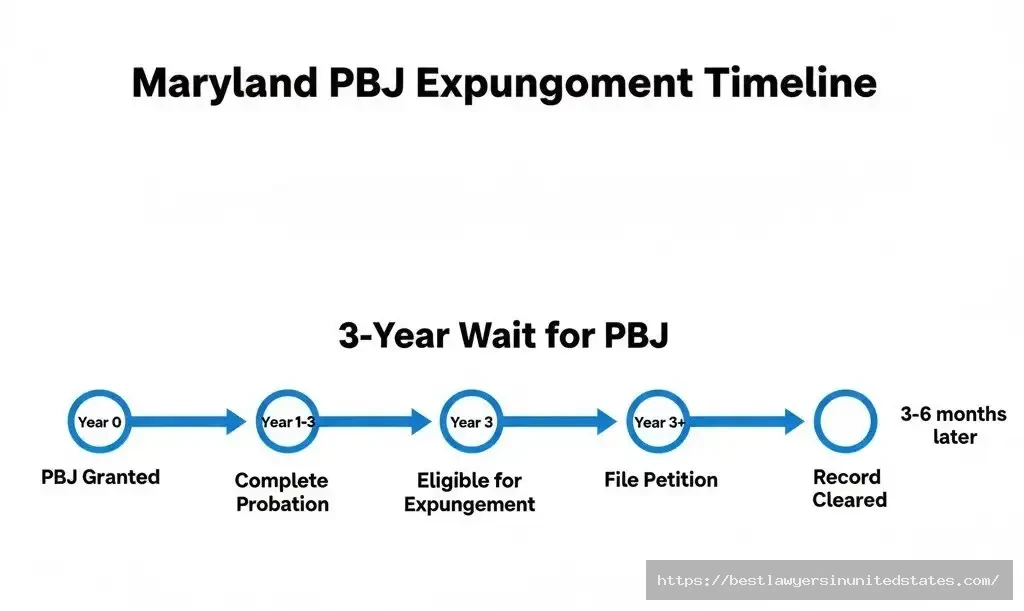
Three years after completing probation, you can petition the court to expunge the DUI case completely. The expungement removes the arrest and PBJ from:
- Maryland Judiciary Case Search (public records)
- Court records
- State criminal databases
- FBI background check systems
Filing process:
- Wait 3 years after completing probation
- Obtain case disposition from the court
- Complete Form CC-DC-CR-072 (Petition for Expungement)
- File with Circuit Court ($30 filing fee)
- Wait 3-6 months for processing
After expungement, you can legally state you were never arrested for DUI in most situations.
The Two-Track DUI System in Maryland
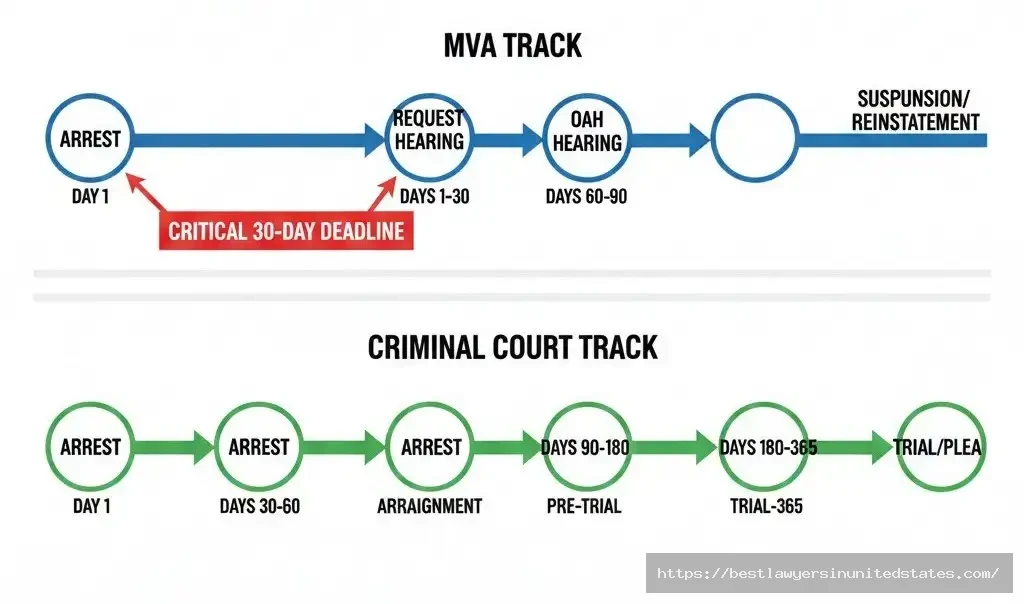
Quick Answer: Maryland DUI creates two separate cases. The MVA handles administrative license suspension through a hearing at the Office of Administrative Hearings. Criminal courts handle fines, jail, and conviction. You can win one case and lose the other.
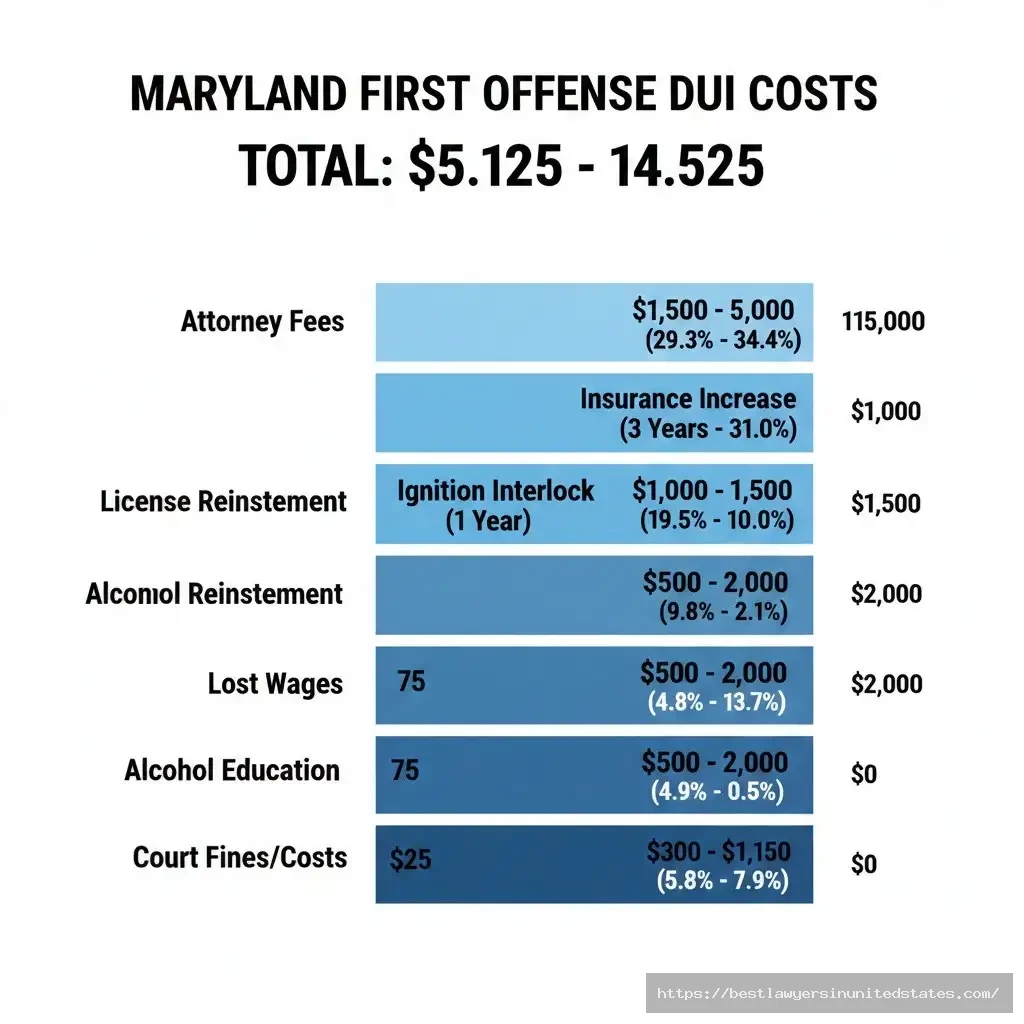
Track 1: MVA Administrative License Suspension
The administrative process starts immediately after arrest and runs independently from your criminal case.
Timeline:
- Day 1: Officer confiscates license and issues 45-day temporary permit
- Days 1-30: Request MVA hearing (you must act within 30 days!)
- Days 30-60: Office of Administrative Hearings schedules hearing
- Days 60-90: Hearing held to determine suspension
Critical deadline: You have only 30 days from arrest to request an MVA hearing. Missing this deadline results in automatic suspension with no opportunity to contest it.
MVA Hearing Outcomes
The administrative law judge decides only whether to suspend your license. The hearing focuses on three questions:
- Did police have reasonable grounds to stop and arrest you?
- Did police properly advise you of implied consent rights?
- Did you refuse testing or test over the legal limit?
If you win: Your license returns immediately with no suspension.
If you lose: Suspension begins immediately. First offense DUI suspensions last 6 months. Refusal suspensions last 270 days.
Modified License During Suspension
Maryland allows you to drive with restrictions during your suspension if you install an ignition interlock device. This “modified license” lets you drive to:
- Work (including work-related driving)
- Alcohol education classes
- Medical appointments
- Ignition interlock service appointments
- Religious services
You cannot use a modified license for personal errands, shopping, or social activities.
Track 2: Criminal Court Process
Your criminal DUI case follows a separate timeline from the MVA process.
Criminal court timeline:
- Day 1: Arrest and citation issued
- Days 30-60: Arraignment at District Court
- Days 90-180: Pre-trial conferences and motions
- Days 180-365: Trial or plea agreement
- If trial: Sentencing follows conviction
At arraignment, you enter your plea and your attorney requests PBJ if you’re eligible. Most cases resolve through plea agreements rather than trials.
Why the Two Tracks Are Independent
The MVA suspension operates under civil law with a lower standard of proof. Criminal court requires proof beyond reasonable doubt. This creates several possibilities:
- Win MVA hearing but get convicted in criminal court
- Lose MVA hearing but win dismissal in criminal court
- Win both cases
- Lose both cases
Even if the prosecutor drops your criminal charges, the MVA suspension remains in effect unless you won your administrative hearing.
The 30-Day MVA Deadline
This is the most critical deadline in Maryland DUI cases. You must request your MVA hearing within 30 days of arrest.
How to request:
- Online: mva.maryland.gov
- By mail: MVA Office of Administrative Hearings, P.O. Box 17835, Baltimore, MD 21297
- Filing fee: $150
Missing this deadline means automatic suspension with no hearing and no chance to contest it later.
Maryland DUI Penalties by Offense
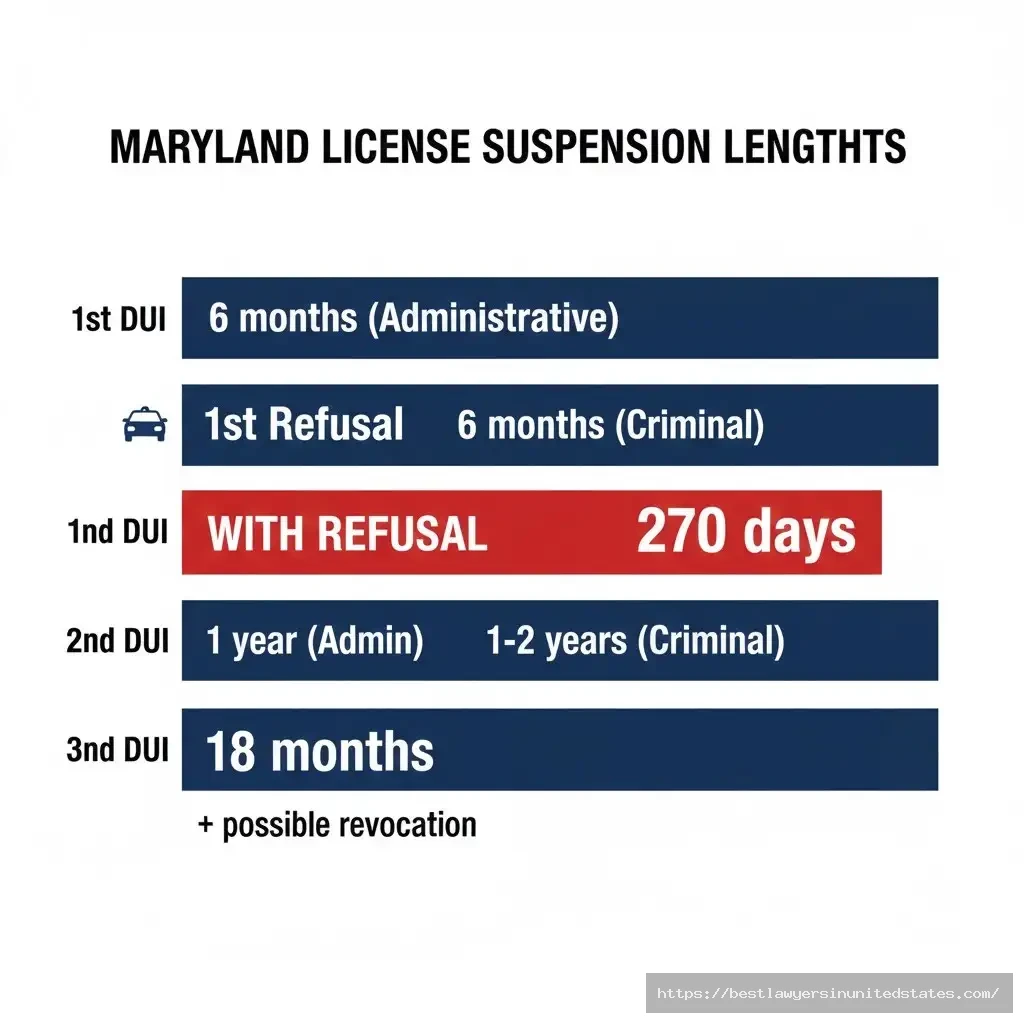
Maryland increases penalties dramatically for repeat offenders. Second and third DUI convictions carry mandatory minimum jail sentences.
Second Offense DUI Penalties
| Penalty | Second Offense |
|---|---|
| Jail time | Up to 2 years |
| Mandatory minimum | 5 days jail OR 30 days home detention |
| Fines | Up to $2,000 |
| License suspension | 1 year minimum |
| Ignition interlock | 2 years minimum |
| License points | 12 points |
PBJ not available: Judges cannot grant PBJ for second DUI offenses.
Third Offense DUI Penalties
| Penalty | Third Offense |
|---|---|
| Jail time | Up to 3 years |
| Mandatory minimum | 10 days jail |
| Fines | Up to $3,000 |
| License suspension | 18 months |
| Ignition interlock | 3 years minimum |
| License points | 12 points |
When DUI Becomes a Felony
Maryland treats most DUI cases as misdemeanors. DUI only becomes a felony when:
Life-threatening injury: DUI causing serious injury carries up to 5 years in prison and $5,000 in fines.
Vehicular manslaughter: DUI causing death results in felony charges with sentences ranging from 5 years to life imprisonment depending on circumstances.
Multiple DUI convictions alone don’t create felony charges in Maryland, unlike some other states.
What Does a DUI Really Cost in Maryland?
Quick Answer: First-time DUI costs range from $3,500 to $10,000 when you add up all expenses. The total includes fines, attorney fees, ignition interlock, insurance increases, and alcohol education.
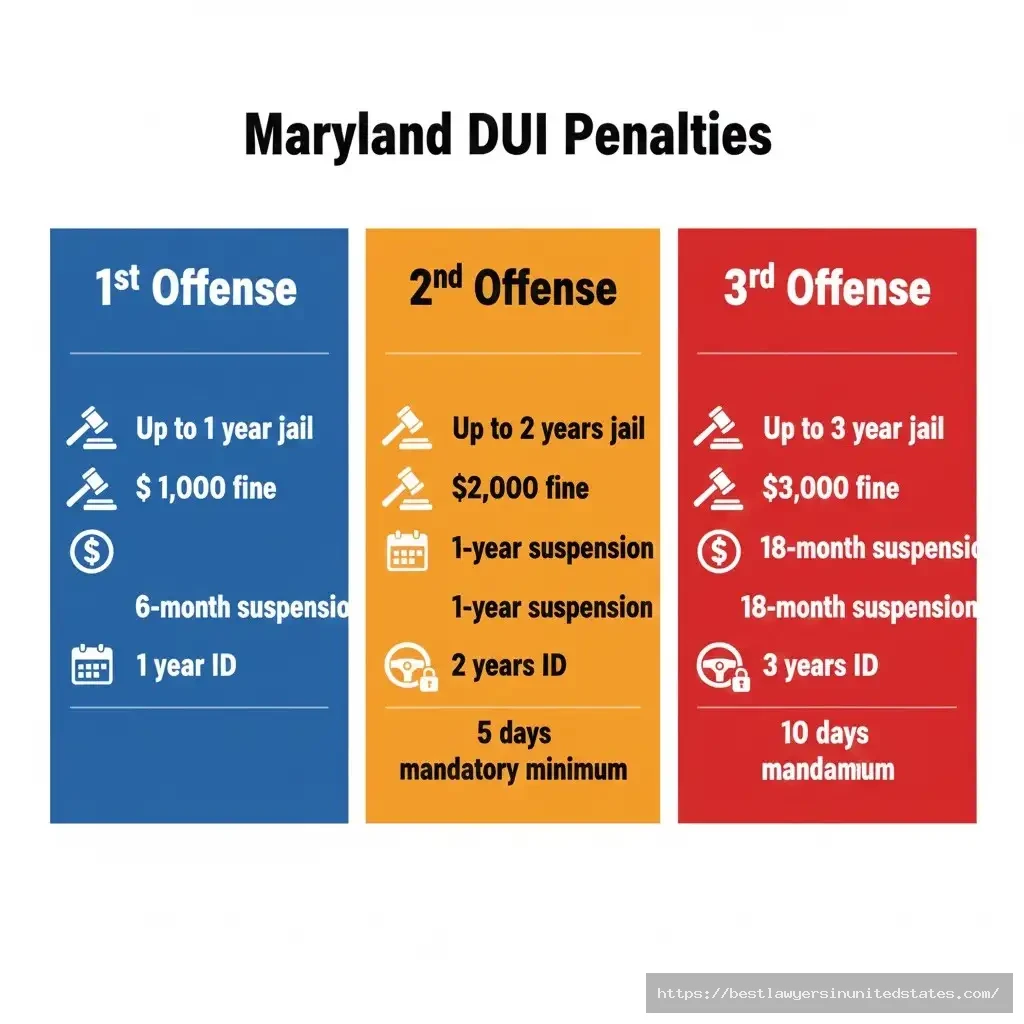
Use our DUI cost calculator to estimate your specific situation.
DUI Cost Calculator
Estimate total DUI expenses by state and offense
Detailed Cost Breakdown
Payment Timeline
Bail bond, towing fees, car impound, attorney retainer
Initial court fines, DMV fees, DUI school enrollment, ignition interlock installation
Monthly probation fees, ignition interlock fees, DUI school payments, attorney balance
Insurance premium increases, license reinstatement, SR-22 filing fees
- Lost wages from missed work (court dates, jail time, DUI school) – $2,000-$10,000
- Job loss or difficulty finding employment – Varies
- Professional license suspension (doctors, lawyers, nurses, pilots) – Career ending
- Rideshare and transportation costs during suspension – $1,500-$5,000
- Travel restrictions and visa denials – Varies
- Security clearance loss – Career impact
- Child custody implications – Legal costs
- Rental car restrictions – Varies
- Personal relationships and mental health costs – Priceless
Immediate Costs (First 30 Days)
| Expense | Cost |
|---|---|
| Bail/bond | $0-$2,500 |
| Towing and impound | $150-$300 |
| Attorney retainer | $1,500-$5,000 |
| MVA hearing filing fee | $150 |
Most first-time offenders are released without bail, but repeat offenders or high BAC cases may require posting bond.
Court-Ordered Costs
| Expense | Cost |
|---|---|
| Court fines (DUI) | Up to $1,000 |
| Court fines (DWI) | Up to $500 |
| Court costs | $50-$100 |
| Probation supervision | $40/month x 12-36 months |
Alcohol Education and Treatment
Maryland requires completion of the Alcohol Education Program:
- DWI: 12-hour program ($150-$200)
- DUI: 26-hour program ($250-$300)
- Additional counseling (if ordered): $50-$150 per session
Ignition Interlock Device Costs
Noah’s Law requires ignition interlock installation for all DUI convictions:
| IID Expense | Cost |
|---|---|
| Installation | $100-$150 |
| Monthly monitoring | $75-$100 |
| Removal | $50-$75 |
| Total (1 year) | $1,000-$1,500 |
Maryland certifies multiple ignition interlock vendors. You pay all costs directly to the vendor.
License Reinstatement
Getting your license back requires several fees:
- MVA reinstatement fee: $45
- License reapplication: $20
- New license photo: $10
Insurance Rate Increases
Maryland requires SR-22 insurance filing after DUI. Your premiums increase significantly for 3 years:
| Insurance Impact | Cost |
|---|---|
| SR-22 filing fee | $25-$50 |
| Annual premium increase | $500-$1,500 |
| 3-year total increase | $1,500-$4,500 |
Insurance companies view DUI as a major risk factor. Some insurers drop DUI drivers entirely, forcing them to find high-risk coverage.
Total DUI Cost Breakdown
| Cost Category | First Offense Range |
|---|---|
| Court fines/costs | $300-$1,150 |
| Attorney fees | $1,500-$5,000 |
| Alcohol education | $250-$300 |
| Ignition interlock (1 year) | $1,000-$1,500 |
| License reinstatement | $75 |
| Insurance increase (3 years) | $1,500-$4,500 |
| Lost wages (court/appointments) | $500-$2,000 |
| TOTAL | $5,125-$14,525 |
Hidden costs to consider:
- Rideshare and public transit during suspension
- Job loss from license suspension
- Professional license impacts
- Security clearance issues
Second Offense Costs
Second DUI offenses cost substantially more due to mandatory jail time, longer ignition interlock requirements, and higher insurance premiums. Total costs typically range from $8,000 to $20,000.
Maryland DUI License Suspension
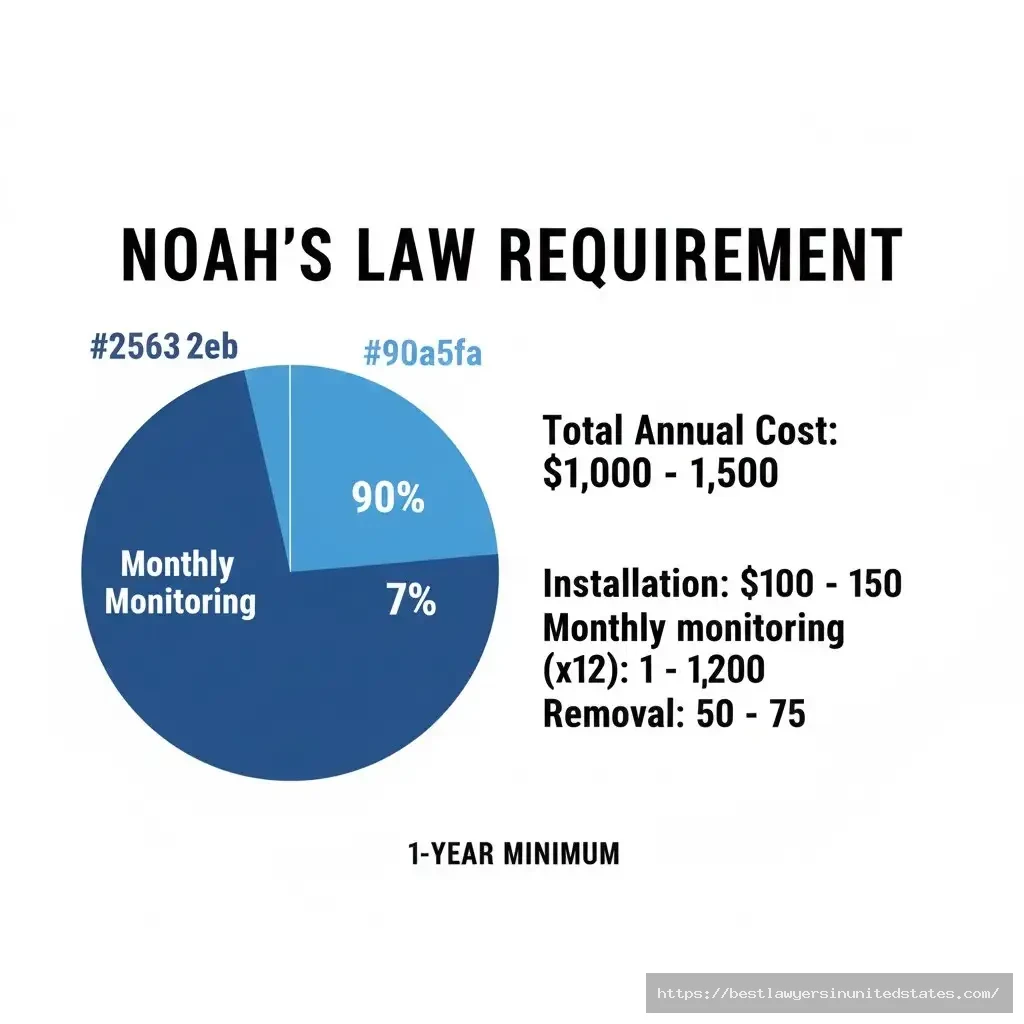
Maryland imposes two separate license suspensions for DUI: administrative suspension through the MVA and court-ordered suspension after conviction.
License Suspension Durations
| Offense | Administrative | Criminal Court | With Refusal |
|---|---|---|---|
| First DUI | 6 months | 6 months | 270 days |
| Second DUI | 1 year | 1-2 years | 1-2 years |
| Third DUI | 18 months | 18 months-revocation | 2+ years |
These suspensions can run concurrently or consecutively depending on timing and court orders.
Maryland Ignition Interlock Program (Noah’s Law)
Maryland’s Noah’s Law requires ignition interlock devices for all DUI convictions since October 1, 2016. The law is named after Montgomery County Police Officer Noah Leotta, who was killed by a drunk driver.
How ignition interlock works:
- Device connects to your vehicle’s ignition system
- You blow into the device before starting the car
- Car won’t start if BAC exceeds 0.025%
- Random rolling tests required while driving
- All tests recorded and reported to MVA and courts
Violations: Failing a test, attempting to tamper with the device, or driving without the device extends your ignition interlock requirement and can result in additional charges.
Installation: You must use a Maryland-certified vendor. Major providers include:
- Smart Start
- Intoxalock
- LifeSafer
- Guardian Interlock
Modified License During Suspension
Maryland offers modified licenses that let you drive with ignition interlock during your suspension period. This option significantly reduces the impact on employment and daily life.
Approved driving purposes:
- Employment and work-related driving
- Alcohol education program
- Medical appointments
- Ignition interlock service and maintenance
- Religious services
- Educational activities
Restrictions:
- Must follow designated routes
- No personal errands or social activities
- No driving between midnight and 5 AM (unless work-related)
- Violations result in extended suspension
To apply for a modified license, install ignition interlock first, then submit Form DR-92 to the MVA with proof of installation.
Maryland License Restriction Codes
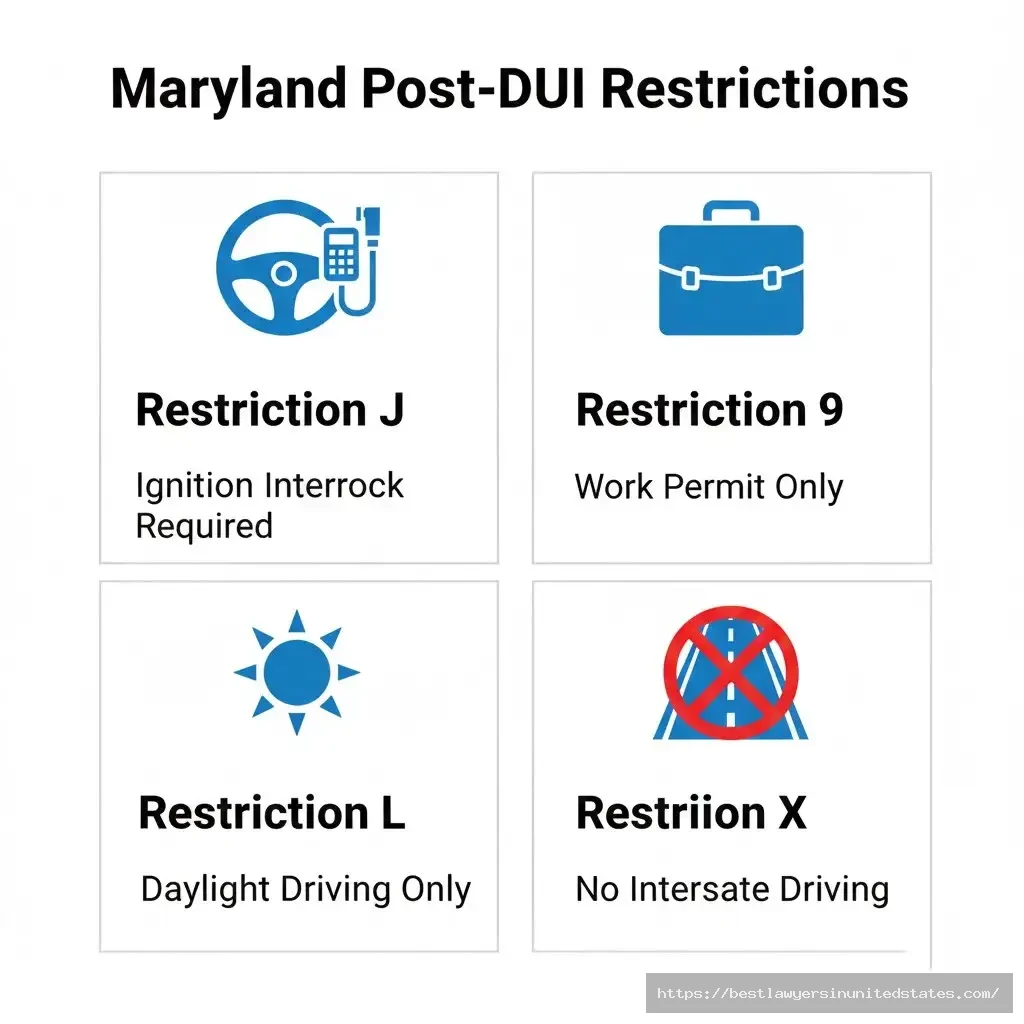
After DUI, Maryland adds restriction codes to your license. These codes tell police and employers about your driving limitations.
| Code | Meaning | When Applied |
|---|---|---|
| J | Ignition interlock required | All DUI convictions under Noah’s Law |
| 9 | Work permit only | Modified license during suspension |
| L | Daylight driving only | Some modified license cases |
| B | Corrective lenses | Vision-related (not DUI) |
| X | No interstate driving | Serious or repeat offenses |
Restriction J remains on your license for the duration of your ignition interlock requirement, typically 1-3 years depending on offense number.
How to Remove License Restrictions
After completing your ignition interlock requirement:
- Complete full probation period
- Pay all outstanding fines and fees
- Complete alcohol education program
- Submit certification of IID completion from vendor
- Submit MVA Form DL-85
- Pay $45 reinstatement fee
Processing takes 2-4 weeks. The MVA will mail your unrestricted license.
Employment Impact of Restrictions
Company vehicles: Most employers prohibit installation of ignition interlock on company vehicles. You may need to use your personal vehicle or face termination.
CDL holders: Commercial drivers license holders cannot operate commercial vehicles with Restriction J. Federal law permanently disqualifies CDL drivers with DUI convictions from driving commercial vehicles in many cases.
Professional drivers: Uber, Lyft, delivery services, and transportation companies typically prohibit hiring drivers with DUI convictions or active license restrictions.
Special Maryland DUI Circumstances
Commercial Driver License (CDL) DUI
Maryland enforces federal regulations for commercial drivers that are much stricter than standard DUI laws.
BAC limit: 0.04% triggers DUI charges for CDL holders, half the standard limit.
Federal disqualification:
- First CDL DUI: 1-year disqualification from commercial driving
- Second CDL DUI: Lifetime disqualification
- DUI while transporting hazmat: Lifetime disqualification
The disqualification applies even if you were driving your personal vehicle at the time of arrest. A single DUI ends most trucking and commercial driving careers.
Underage DUI (Under 21)
Maryland enforces zero tolerance for drivers under 21 under the “Cinderella Law.”
BAC limit: 0.02% (essentially zero tolerance). Two drinks can exceed this threshold.
Penalties for under-21 DUI:
- License suspension: 6 months minimum
- $500 fine
- Alcohol education program
- Work permit available after 90 days
Cinderella Law restrictions: Provisional license holders under 18 face curfew restrictions:
- Midnight on weekdays (Sunday-Thursday)
- 1 AM on weekends (Friday-Saturday)
Passenger restrictions: New drivers cannot transport non-family passengers for the first 5 months unless a supervising driver age 21+ is present.
Drug-Impaired Driving (DUID)
Maryland’s 2023 marijuana legalization created new questions about cannabis DUI. The law prohibits driving while impaired by any drug, including legal marijuana.
No THC per se limit: Unlike alcohol, Maryland has no specific THC blood concentration that automatically triggers DUI. Prosecutors must prove actual impairment.
Drug Recognition Experts: Police use specially trained Drug Recognition Experts who conduct 12-step evaluations including:
- Pupil examination
- Blood pressure and pulse
- Muscle tone tests
- Balance and coordination tasks
- Examination for injection sites
Blood testing required: Drug impairment requires blood tests. Breath tests don’t detect drugs. Refusal to provide blood carries the same 270-day suspension as alcohol test refusal.
Prescription medications: You can be charged with DUID for driving while impaired by prescription medications like Ambien, Xanax, or opioids, even with a valid prescription.
Medical marijuana card: Possessing a Maryland medical marijuana card does not give you immunity from DUID charges. The law prohibits impaired driving regardless of prescription status.
Out-of-State Drivers
Maryland has reciprocal agreements with most states regarding DUI convictions.
License suspension: Maryland suspends your privilege to drive in Maryland. Your home state receives notification through the Interstate Driver’s License Compact and typically imposes its own suspension.
Conviction reporting: Maryland DUI convictions appear on your driving record in your home state. This affects insurance rates and penalties for any future DUI regardless of where it occurs.
Multiple suspensions: You may face suspension in both Maryland and your home state simultaneously. You must satisfy requirements in both jurisdictions to regain full driving privileges.
How to Look Up Your Maryland DUI Case Online
Quick Answer: Maryland provides free public access to all criminal cases through the Maryland Judiciary Case Search at mdcourts.gov/caseSearch. Anyone can search by name and see your DUI arrest, charges, and disposition.
Step-by-Step Case Search Guide
Maryland’s case search system makes all court records publicly accessible:
Step 1: Go to mdcourts.gov/caseSearch
Step 2: Select “District Court” (most DUI cases) or “Circuit Court” (serious cases)
Step 3: Click “Party Name” search option
Step 4: Enter last name and first name (middle initial optional)
Step 5: Select county where arrested or leave blank for statewide search
Step 6: Click “Search” to see all matching cases
Understanding Your Case Information
The search results display key information about your DUI case:
Case number format: D-XX-CR-XXXX (District Court criminal case)
Charge codes:
- 21-902: DUI
- 21-902.1: DWI
- 16-205.1: Implied consent violation
Disposition codes:
- PBJ: Probation Before Judgment (no conviction)
- Guilty: Conviction entered
- Not Guilty: Acquitted at trial
- Nolle Prosequi: Charges dropped by prosecutor
- Stet: Case inactive/postponed
Court dates: All scheduled hearings, arraignment, and trial dates appear chronologically.
Fines and costs: Total amounts ordered by the court appear after disposition.
What Shows Up on Background Checks
Employers, landlords, and licensing boards commonly search the Maryland Judiciary Case Search during background checks.
What’s visible:
- Arrest information
- All charges filed
- PBJ disposition
- Conviction
- Sentence details
- Outstanding warrants
What’s not visible:
- Expunged cases (removed completely)
- Sealed juvenile records
- Cases from other states
Important: PBJ cases remain visible on background checks until you file for expungement after 3 years. Employers see the arrest and PBJ disposition even though it’s not technically a conviction.
Privacy Concerns
Maryland DUI records are fully public. You cannot remove information from Case Search without formal expungement through the court.
Google indexing: Case Search results often appear in Google searches of your name. Expungement removes the information from courts, but Google may cache old results for months.
Notification: Maryland doesn’t notify you when someone searches your criminal record. Anyone can search at any time without your knowledge or consent.
Maryland DUI Cases by County
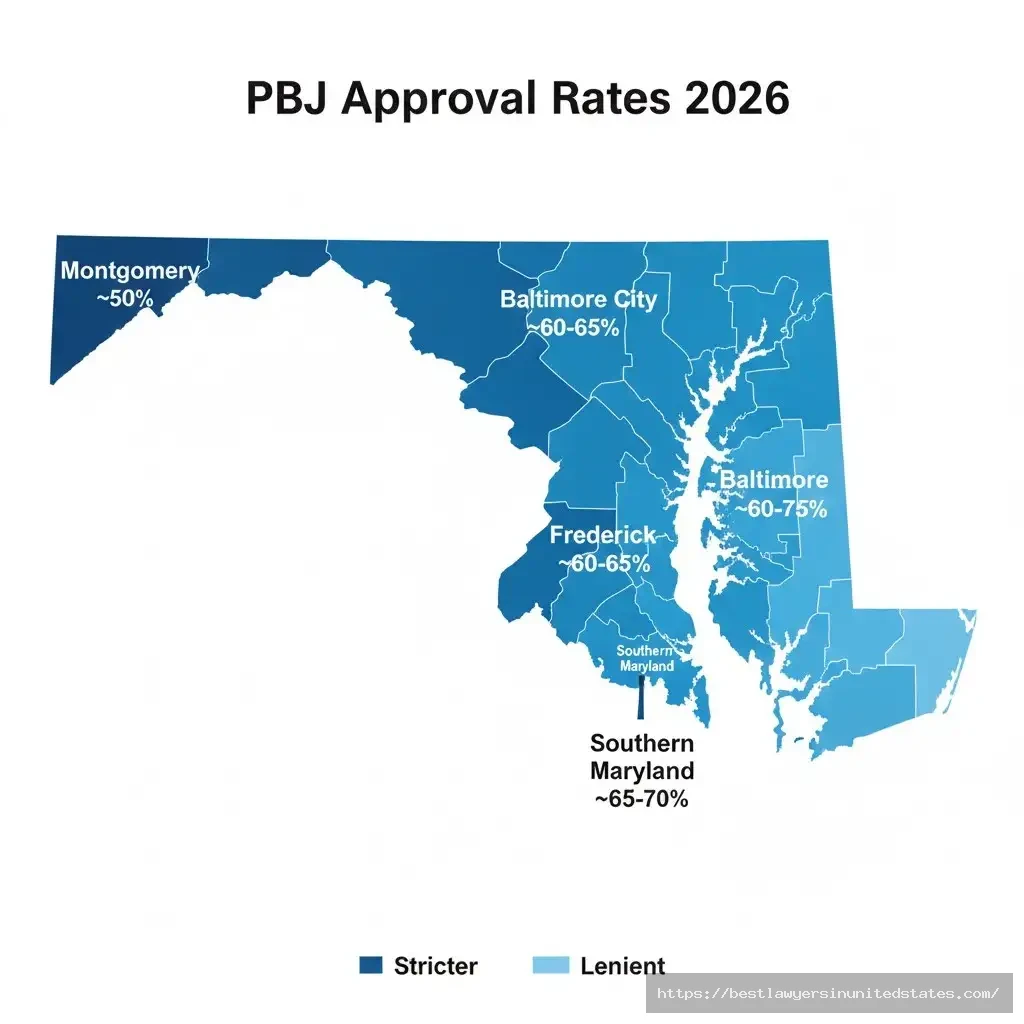
Maryland’s 23 counties and Baltimore City handle DUI cases differently. Prosecutors, judges, and enforcement priorities vary significantly by location.
Montgomery County DUI Cases
Montgomery County has Maryland’s strictest DUI enforcement and prosecution.
Enforcement:
- Frequent checkpoints on Route 355, Route 29, and I-270
- Rockville City Police and Montgomery County Police very active
- High arrest volume (2,500+ annually)
Court process:
- District Court: 50 Maryland Ave, Rockville, MD 20850
- Circuit Court: 50 Maryland Ave (separate entrance)
- Prosecutors less likely to offer DWI plea deals
- PBJ rate approximately 50% (lower than state average)
Sentencing tendencies:
- Judges impose jail time more often for BAC over 0.15%
- Higher fines typically requested ($500-$1,000)
- 26-hour alcohol education program standard
Baltimore City DUI Cases
Baltimore City processes the highest DUI volume in Maryland with more lenient outcomes.
Enforcement:
- 3,000+ DUI arrests annually
- Downtown checkpoints common (Inner Harbor, Fells Point, Canton)
- Baltimore City Police jurisdiction
Court process:
- District Court: 5800 Wabash Ave, Baltimore, MD 21215
- Circuit Court: Courthouse East, 111 N Calvert St
- Overworked prosecutors offer more plea deals
- PBJ rate approximately 70-75%
Sentencing tendencies:
- Jail time rare for first offense (system overloaded)
- Fines often at lower end ($250-$500)
- Weekend jail programs available for mandatory sentences
Baltimore County DUI Cases
Baltimore County operates separately from Baltimore City with suburban enforcement patterns.
Court locations:
- District Court: 120 E Chesapeake Ave, Towson, MD 21286
- Circuit Court: 401 Bosley Ave, Towson, MD 21204
- PBJ rate approximately 60-65%
Anne Arundel County (Annapolis)
Anne Arundel County handles both local DUI cases and hosts the MVA Office of Administrative Hearings.
Court location:
- District Court: 251 Rowe Blvd, Glen Burnie, MD 21061
- Also processes MVA administrative hearings for entire state
Frederick County
Frederick County’s growing suburban population has increased DUI enforcement.
Enforcement:
- Active DUI task force
- Frequent checkpoints on Route 15 and Route 270
- Growing arrest numbers
Court process:
- District Court: 100 W Patrick St, Frederick, MD 21701
- PBJ rate approximately 60-65%
Southern Maryland (Charles, Calvert, St. Mary’s Counties)
Southern Maryland’s rural character results in more lenient DUI outcomes.
Enforcement:
- Lower arrest volume
- Route 301 corridor primary enforcement area
- Fewer checkpoints
Court locations:
- Charles County: 200 Charles St, La Plata, MD 20646
- Calvert County: 175 Main St, Prince Frederick, MD 20678
- St. Mary’s County: 41770 Baldridge St, Leonardtown, MD 20650
- PBJ rates approximately 65-70%
Finding Your Local Court
Each Maryland county operates its own District Court with specific procedures and local rules. Contact information for all Maryland courts is available at mdcourts.gov/district/directories.
Call the clerk’s office before your court date to confirm location, parking, and any local requirements.
Noah’s Law: How Maryland DUI Changed in 2016
Quick Answer: Noah’s Law took effect October 1, 2016, requiring ignition interlock devices for all first-time DUI offenders in Maryland. Before this law, only repeat offenders and high BAC cases required ignition interlock.
What Is Noah’s Law?
Noah’s Law mandates ignition interlock for every DUI conviction in Maryland regardless of BAC level or offense number. The law is named after Officer Noah Leotta, a Montgomery County Police officer struck and killed by a drunk driver in December 2015.
Before vs After Noah’s Law
| Aspect | Before 2016 | After 2016 |
|---|---|---|
| First DUI (0.08-0.14 BAC) | No IID required | IID mandatory 1 year |
| First DUI (0.15+ BAC) | IID required | IID mandatory 1 year |
| Modified license option | Not available | Available with IID |
| Repeat offense | IID required | IID 2-3 years |
Modified License Breakthrough
Noah’s Law’s biggest practical impact is the modified license option. Before 2016, DUI suspension meant zero driving. You couldn’t drive at all during the 6-month suspension.
Now you can install ignition interlock immediately, request a modified license, and drive to work and other approved activities during your suspension. This reduces job loss and economic hardship significantly.
Noah Leotta’s Story
Five-year-old Noah Leotta was killed, and his father Officer Rich Leotta was seriously injured when a drunk driver struck them in December 2015. The driver had a prior DUI conviction.
Noah’s family advocated for stronger DUI laws. Maryland’s legislature passed Noah’s Law with bipartisan support in 2016. Governor Larry Hogan signed it into law, and it took effect October 1, 2016.
Impact of Noah’s Law (2016-2026)
IID installations: Maryland ignition interlock installations increased 300% after Noah’s Law took effect.
Repeat arrests: Second DUI arrests decreased approximately 20% in the five years following Noah’s Law.
Modified licenses: About 70% of suspended DUI drivers now maintain some driving privileges through modified licenses with ignition interlock.
Financial burden: Average annual ignition interlock costs of $1,200 create hardship for low-income offenders.
Recent Maryland DUI Law Changes
2020: Maryland allowed virtual MVA hearings during COVID-19 pandemic. This option continues for certain circumstances.
2023: Marijuana legalization created new challenges for DUID enforcement. Maryland developed Drug Recognition Expert training programs.
2024: Federal regulations increased CDL DUI penalties. Maryland implemented automated CDL disqualification reporting.
Your Rights After Maryland DUI Arrest
Can You Refuse a Breathalyzer in Maryland?
Quick Answer: Yes, you can refuse breathalyzer or blood testing in Maryland. However, refusal triggers automatic 270-day license suspension compared to 180 days for failing the test.
Maryland’s implied consent law under Transportation Code § 16-205.1 means you automatically consent to chemical testing when you accept a Maryland driver’s license. Refusal has consequences.
Refusal penalties:
| Offense | Refusal Suspension | Failed Test Suspension |
|---|---|---|
| First | 270 days | 180 days |
| Second | 2 years | 1 year |
| Third+ | 2+ years | 1.5 years |
Refusal in court: Prosecutors use test refusal as evidence of “consciousness of guilt.” Juries often interpret refusal as admission that you knew you were over the limit.
When refusal might make sense:
- BAC clearly over 0.15% (already facing maximum penalties)
- Prior DUI convictions (fewer negotiation options)
- Evidence of impairment is weak without test
Field Sobriety Tests in Maryland
Field sobriety tests are not mandatory in Maryland. You can politely decline without automatic penalties.
Standard tests:
- Horizontal Gaze Nystagmus (eye movement)
- Walk-and-turn
- One-leg stand
Police use these tests to build probable cause for arrest. They’re subjective and many sober people fail due to nervousness, medical conditions, or poor balance.
Declining FSTs: Say “I respectfully decline to perform field sobriety tests. I would like to speak with an attorney.” This doesn’t trigger license suspension like breathalyzer refusal.
Common DUI Defenses in Maryland
Experienced Maryland DUI attorneys use several defenses depending on your case facts:
Illegal traffic stop: Police need reasonable suspicion to stop your vehicle. If the stop was illegal, all evidence gets suppressed.
Improper testing procedures: Breathalyzer machines require regular calibration and certified operators. Technical errors can invalidate results.
Rising BAC defense: Your BAC may have been under 0.08% while driving but rose above the limit by the time of testing 30-90 minutes later.
Medical conditions: Diabetes, acid reflux, and other conditions can create false breathalyzer readings or mimic impairment symptoms.
Mouth alcohol contamination: Breathalyzers detect alcohol in your mouth from recent drinks, not deep lung air representing true BAC.
When to Hire a Maryland DUI Lawyer
Hire an attorney immediately if:
- First offense and want PBJ
- Second or third offense (facing mandatory jail)
- High BAC over 0.15%
- Accident involved
- CDL holder
- Professional license at risk
Attorneys negotiate better outcomes than self-representation. PBJ requires attorney advocacy. Many Maryland DUI lawyers offer free consultations.
Average attorney costs: $1,500-$5,000 for first offense, $3,000-$10,000 for trial cases.
How to Expunge a Maryland DUI
Quick Answer: You can expunge a PBJ after 3 years. Maryland law prohibits expungement of DUI convictions except in rare circumstances where charges were dropped or you were acquitted.
PBJ Expungement Eligibility
Requirements:
- Received Probation Before Judgment (not conviction)
- 3 years passed since completing probation
- No new criminal convictions during probation
- All fines and fees paid in full
- Completed alcohol education program
- Completed ignition interlock requirement
Step-by-Step Expungement Process
Step 1: Wait 3 years after finishing all probation requirements.
Step 2: Obtain your case disposition showing PBJ and completion date. You can print this from Maryland Judiciary Case Search or request it from the courthouse clerk.
Step 3: Complete Petition for Expungement (Form CC-DC-CR-072). Download the form from mdcourts.gov/courtforms. Fill it out completely and sign before a notary.
Step 4: File with the Circuit Court in the county where you were convicted. Include:
- Completed petition
- Copy of case disposition
- $30 filing fee (check or money order)
Step 5: Wait 3-6 months for processing. The court may schedule a hearing, but most PBJ expungements are granted automatically without hearings.
Step 6: Verify expungement completion by checking Maryland Judiciary Case Search. Your case should no longer appear.
What Gets Removed After Expungement
Removed from:
- Maryland Judiciary Case Search (public records)
- Court records
- Maryland criminal databases
- FBI NCIC database (eventually)
- State police records
Not removed from:
- MVA driving record (separate system)
- Insurance company records
- Private background check databases (must request removal separately)
Conviction Expungement (Very Rare)
Maryland law generally prohibits expungement of DUI convictions. The only exceptions are:
Charges dismissed: If prosecutors dropped charges or the judge dismissed your case.
Acquittal: If you went to trial and were found not guilty.
Conviction overturned: If an appeals court reversed your conviction.
If you were convicted (not PBJ), the DUI stays on your record permanently in Maryland.
Employment After Expungement
After expungement, you can legally answer “no” when asked “Have you ever been convicted of a crime?” Most private employers won’t see expunged records on background checks.
Exceptions:
- Federal government jobs may see sealed records
- Law enforcement applications typically require disclosure
- Some professional licenses require disclosure of expunged records
Read application questions carefully. Some specifically ask about expunged records or arrests, not just convictions.
Cost of Expungement
DIY expungement: $30-$50 (court fees plus notary and copies)
Attorney assistance: $500-$1,500 for help with paperwork and filing
Most first-time PBJ expungements are straightforward enough to handle yourself without an attorney.
Maryland DUI Frequently Asked Questions
Which is worse, DUI or DWI in Maryland?
Quick Answer: DUI is worse. It requires BAC of 0.08% or higher and carries penalties of up to 1 year jail, $1,000 fine, and 12 points compared to DWI’s 2 months jail, $500 fine, and 8 points.
Maryland is one of few states with two separate drunk driving charges. Prosecutors sometimes offer DWI as a plea deal to reduce penalties from DUI charges.
How likely is jail time for first DUI in Maryland?
Quick Answer: Very unlikely. About 60-70% of first-time offenders receive Probation Before Judgment with no jail time. Actual jail is rare unless BAC exceeds 0.20% or an accident occurred.
Even without PBJ, judges typically suspend jail sentences and impose probation for first offenders. Actual incarceration usually requires aggravating factors like injury, high BAC, or child passengers.
How many points is a DUI in Maryland?
Quick Answer: DUI adds 12 points to your Maryland driving record. This automatically triggers license suspension since Maryland’s threshold is 12 points.
DWI adds 8 points, which doesn’t trigger automatic suspension but severely damages your driving record. Points remain on your record for 2 years, though the conviction stays much longer.
Can you get a DUI on a bicycle in Maryland?
Quick Answer: Yes. Maryland law defines “vehicle” to include bicycles. You can be arrested and charged with DUI or DWI for riding a bicycle while intoxicated.
However, penalties differ slightly. You won’t face license suspension since bicycles don’t require licenses, but you still face fines, possible jail time, and a criminal record.
How long does a DUI stay on your record in Maryland?
Quick Answer: Permanently unless expunged. DUI convictions remain on your Maryland criminal record forever. PBJ dispositions can be expunged after 3 years.
MVA driving records show DUI for 5 years for insurance purposes, but the criminal record remains indefinitely on Maryland Judiciary Case Search until expunged.
What is the penalty for refusing a breathalyzer in Maryland?
Quick Answer: 270-day license suspension for first refusal compared to 180 days for failing the test. Refusal typically results in longer suspension than testing over the limit.
Prosecutors also use refusal as evidence of guilt at trial. Juries interpret refusal as consciousness that you were intoxicated.
Can you get a work permit after DUI in Maryland?
Quick Answer: Yes. Maryland offers modified licenses that allow driving to work, alcohol education, medical appointments, and other essential activities if you install ignition interlock.
Modified licenses are available even during your suspension period. You must install ignition interlock first, then apply through the MVA using Form DR-92.
How much does a DUI lawyer cost in Maryland?
Quick Answer: $1,500-$5,000 for most first-offense cases. Complex cases requiring trial cost $3,000-$10,000 or more.
Many Maryland DUI attorneys offer free initial consultations. Payment plans are often available. Hiring an attorney significantly increases your chances of getting PBJ.
Get Legal Help for Your Maryland DUI
Maryland DUI cases involve complex legal procedures with two separate court systems and strict deadlines. The 30-day MVA hearing deadline alone makes early legal consultation critical.
Find experienced Maryland DUI attorneys – Free Consultation
Email: [email protected]
Most Maryland DUI attorneys offer free case evaluations. They can advise you on PBJ eligibility, MVA hearing defense, and your best path forward based on your specific circumstances.
Related DUI Resources:
- Alabama DUI Laws
- Alaska DUI Laws
- Arizona DUI Laws
- Arkansas DUI Laws
- California DUI Laws
- Colorado DUI Laws
- Connecticut DUI Laws
- Delaware DUI Laws
- Florida DUI Laws
- Georgia DUI Laws
