
Quick Answer: Montana’s minimum wage for 2026 is projected at $10.85 per hour (pending official September 2025 announcement), automatically adjusted annually based on the Consumer Price Index. Montana requires the full minimum wage for all workers including servers and bartenders with no tip credit allowed.
Montana stands out among U.S. states for its worker-friendly wage laws. The state’s minimum wage adjusts automatically each year without requiring new legislation. This means workers receive cost-of-living increases to keep pace with inflation.
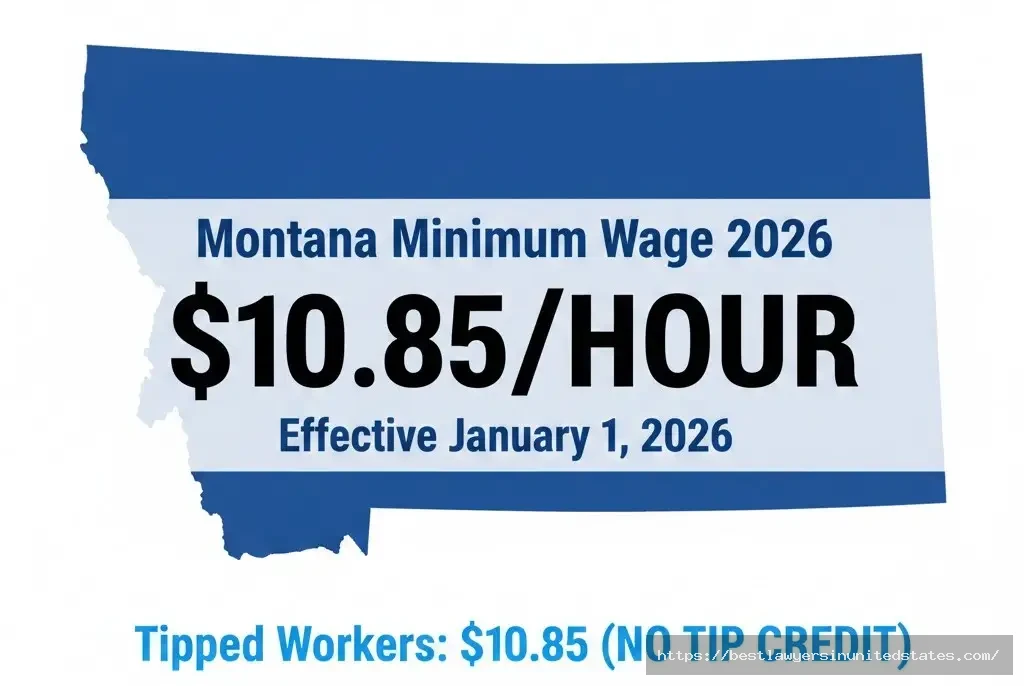
Unlike most states, Montana prohibits tip credits entirely. Restaurant servers, bartenders, and other tipped employees must receive the full state minimum wage before tips. This policy places Montana among just seven states that protect tipped workers with the same wage floor as all other employees.
Calculate Your Earnings in Montana
Want to know exactly how much you’ll earn at Montana’s $10.85 minimum wage? Use our free calculator to estimate your weekly, monthly, and annual income based on your hours worked.
💰 Minimum Wage Earnings Calculator
Calculate your weekly, monthly, and annual earnings with overtime and tax estimates
📊 Your Earnings Breakdown
💰 Gross Earnings
Calculator features:
- Automatic Montana wage rates for 2026
- Weekly, monthly, and annual earnings
- Overtime calculations
- Tax withholding estimates
- Take-home pay breakdown
Full calculator with all features: Montana Minimum Wage Calculator
Questions about your wages or need legal help? Find Employment Lawyers in Montana - Free Consultation Email: [email protected]
Montana Minimum Wage Rates for 2026
Montana's minimum wage system uses automatic annual adjustments tied to inflation. The Montana Department of Labor & Industry announces each year's rate by September 30, with the new wage taking effect January 1.
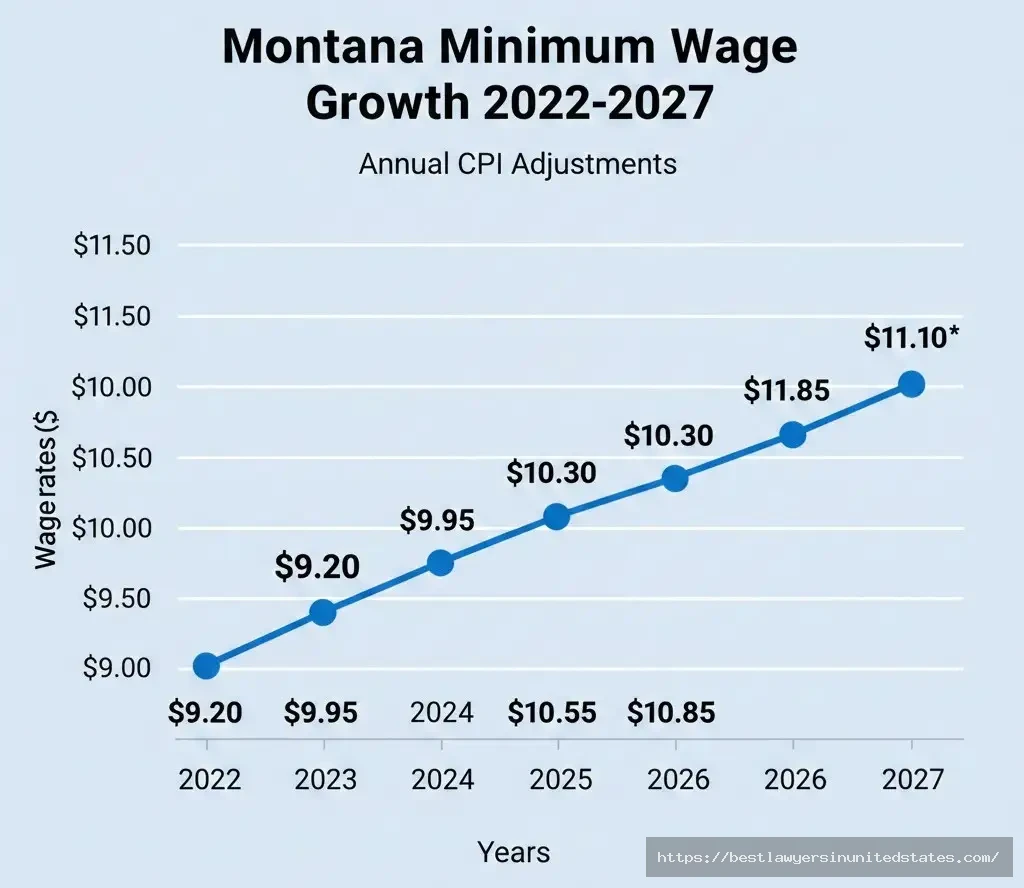
Current and Projected Rates
2026 Projected Rate: $10.85/hour (pending official confirmation) 2025 Current Rate: $10.55/hour Increase from 2025: Approximately $0.30/hour
The actual 2026 rate depends on Consumer Price Index data from August 2024 to August 2025. Montana uses the CPI-U (Consumer Price Index for All Urban Consumers) to calculate the adjustment. Historical patterns suggest increases between 2.5% and 3.5% annually.
Montana Minimum Wage History
| Effective Date | Minimum Wage | Annual Increase | CPI Adjustment |
|---|---|---|---|
| Jan 1, 2022 | $9.20 | +$0.15 | 1.7% |
| Jan 1, 2023 | $9.95 | +$0.75 | 8.2% |
| Jan 1, 2024 | $10.30 | +$0.35 | 3.5% |
| Jan 1, 2025 | $10.55 | +$0.25 | 2.4% |
| Jan 1, 2026 | $10.85* | +$0.30* | 2.8%* |
| Jan 1, 2027 | TBD | TBD | TBD |
*Projected based on current inflation trends
How Montana's Automatic Increase Works
Montana passed Initiative 151 in 2006, establishing automatic wage adjustments. The law requires Montana's minimum wage to equal the greater of federal minimum wage ($7.25) or the state rate adjusted for inflation.
Key dates in the adjustment process:
- August: CPI-U data collection period ends
- September 30: Montana DOL announces next year's rate
- January 1: New minimum wage takes effect
This system protects workers from wage erosion due to inflation. Alaska and Florida use similar CPI-based adjustment mechanisms.
Montana vs Federal Minimum Wage
| Jurisdiction | 2026 Minimum Wage | Tipped Wage | Difference |
|---|---|---|---|
| Montana | $10.85 | $10.85 | Base rate |
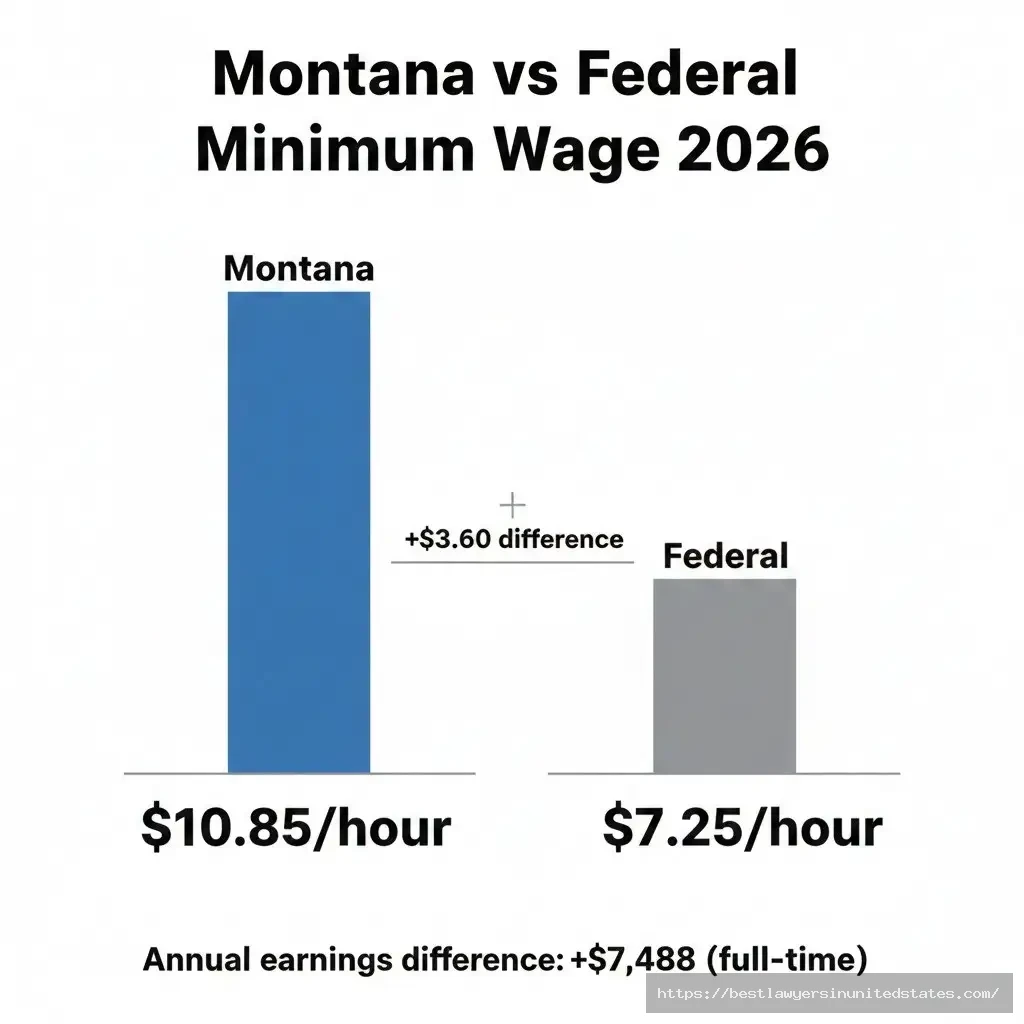
| Federal | $7.25 | $2.13 | +$3.60 |
| Advantage | +$3.60 | +$8.72 | Montana higher |
Montana's rate exceeds federal minimum wage by $3.60 per hour. For a full-time worker (40 hours/week), this equals an additional $7,488 annually compared to federal minimum wage.
Montana Tipped Minimum Wage: No Tip Credit Allowed
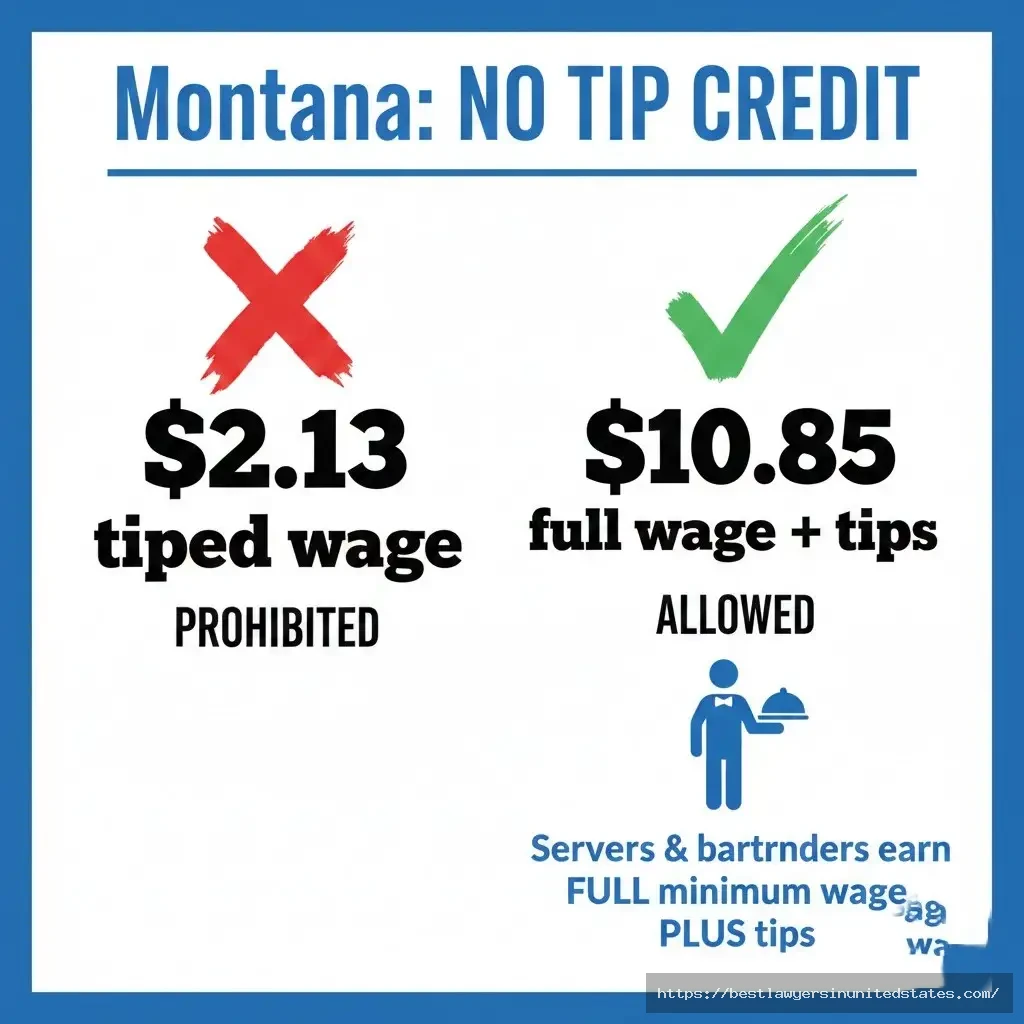
Montana requires employers to pay tipped employees the full state minimum wage. This means servers, bartenders, and delivery drivers earn $10.85/hour plus any tips they receive.
Why Montana Restaurant Workers Earn More
Most states allow "tip credits" where employers pay tipped workers as little as $2.13/hour if tips make up the difference to minimum wage. Montana prohibits this practice entirely.
Montana's rule is simple: All employees must receive at least $10.85/hour in direct wages from their employer. Tips come on top of this base pay, not instead of it.
Comparison to Neighboring States
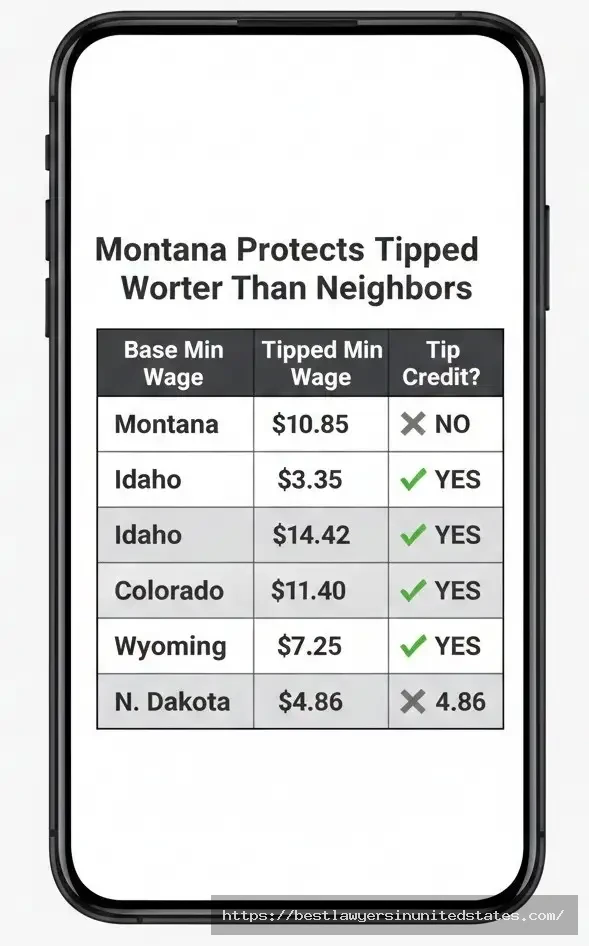
Montana's tipped wage policy stands out in the region:
| State | Base Min Wage | Tipped Min Wage | Tip Credit Allowed? |
|---|---|---|---|
| Montana | $10.85 | $10.85 | ❌ No |
| Idaho | $7.25 | $3.35 | ✅ Yes ($3.90 credit) |
| Colorado | $14.42 | $11.40 | ✅ Yes ($3.02 credit) |
| Wyoming | $7.25 | $2.13 | ✅ Yes ($5.12 credit) |
| North Dakota | $7.25 | $4.86 | ✅ Yes ($2.39 credit) |
A Montana server working 30 hours per week earns $16,830 in base wages annually before tips. The same server in Idaho would earn only $5,226 in base wages, relying heavily on tips to reach minimum wage.
What "No Tip Credit" Means for Workers
Benefits for Montana tipped employees:
- Predictable base income regardless of tip volume
- Protection during slow business periods
- Full minimum wage for all hours worked
- Tips provide additional income, not replacement income
- Stronger financial stability
Employer obligations:
- Pay $10.85/hour minimum to all tipped workers
- Cannot count tips toward minimum wage requirement
- Must pay full wage even if tips exceed minimum wage
- No meal credit or uniform deductions allowed
Who Keeps the Tips?
Montana law protects tip ownership:
✅ Allowed:
- Employees keep 100% of their direct tips
- Voluntary tip pooling among service staff
- Equal distribution in valid tip pools
❌ Prohibited:
- Managers taking any portion of employee tips
- Employers claiming tips as wage credits
- Mandatory tip-outs to non-service staff
- Deductions from tips for breakage or walk-outs
The $4.00 Minimum Wage Exception (Small Business Rule)
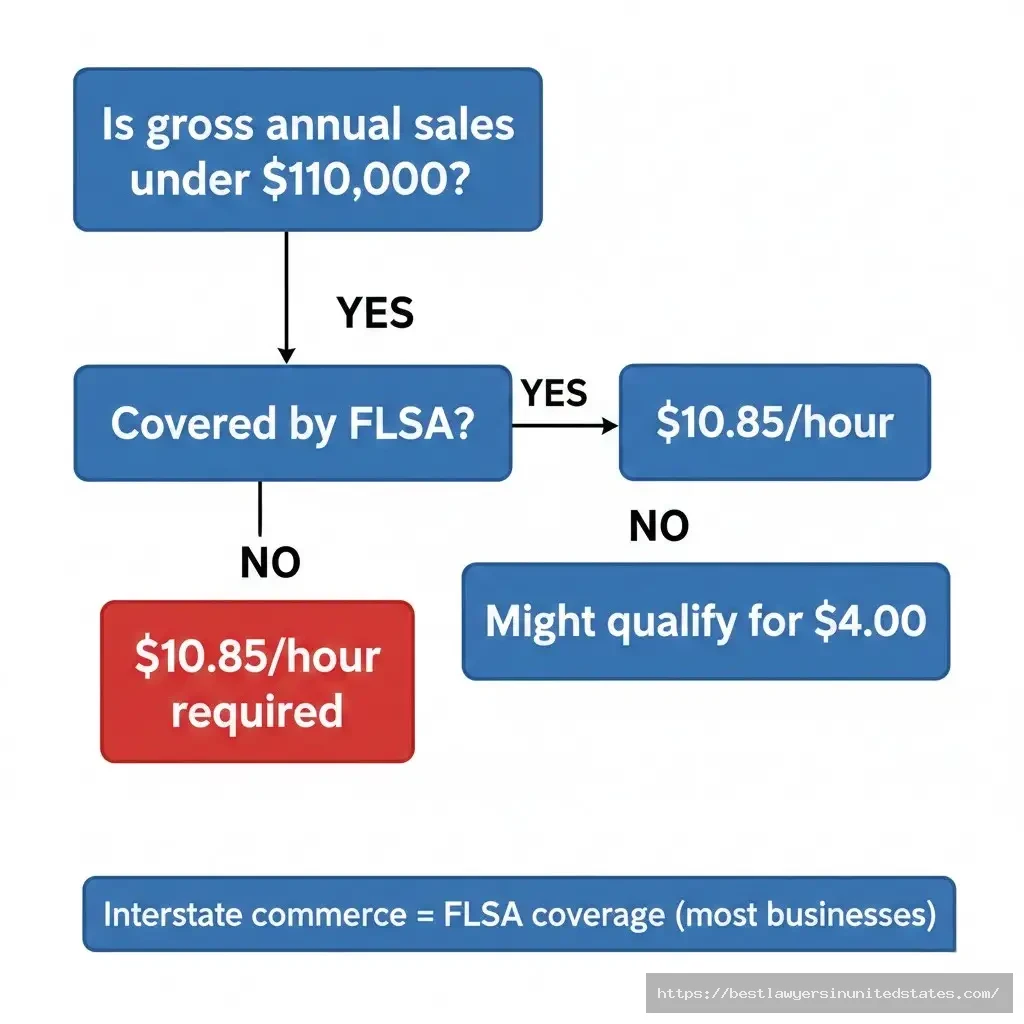
Montana law includes a narrow exception allowing certain small businesses to pay $4.00/hour. This exception applies only in very specific circumstances.
Who Qualifies for the Small Business Exemption
Requirements for $4.00 wage:
- Business has gross annual sales under $110,000
- Business is NOT covered by Fair Labor Standards Act (FLSA)
- No interstate commerce activities
This exemption is rare in practice. Most businesses engage in some form of interstate commerce, triggering FLSA coverage and requiring full minimum wage.
The $110,000 Gross Sales Threshold
Gross annual sales include all revenue before deductions. The calculation uses the business's fiscal year, not calendar year.
Gross sales include:
- All product and service sales
- Online transactions
- Delivery services
- Gift card sales
- Returns reduce gross sales
Example: A small café with $95,000 in annual sales might qualify for the exception. However, if they sell coffee beans roasted out of state or accept credit cards (interstate banking), FLSA coverage applies and they must pay $10.85/hour.
Interstate Commerce Exception
The "interstate commerce" test is broader than most employers realize. Any employee who handles goods or services that cross state lines must receive full minimum wage.
Interstate commerce triggers:
- Selling products shipped from other states
- Processing credit card payments (interstate banking system)
- Making business phone calls across state lines
- Using internet services for business purposes
- Receiving supplies from out-of-state vendors
Critical point: Even if the business qualifies for the $4.00 exception, individual employees engaged in interstate commerce must receive $10.85/hour. This often means all employees at a business qualify for full minimum wage even if the business itself is under the $110,000 threshold.
When Does the $4.00 Wage Actually Apply?
In practice, the $4.00 wage applies to very few Montana workers. Most scenarios that might seem to qualify actually don't:
Does NOT qualify:
- Retail stores selling any manufactured goods (products cross state lines)
- Restaurants accepting credit cards (interstate banking)
- Service businesses using internet for scheduling (interstate communication)
- Businesses with out-of-state customers
- Companies using email or online payment systems
Might qualify:
- Local cash-only farm stand selling only Montana-grown produce
- Neighborhood lawn care service operating locally with local customers
- Small craft seller at local markets accepting only cash
Even in these cases, using a smartphone for business, accepting any electronic payments, or advertising online likely triggers FLSA coverage.
Minimum Wage Across Montana Cities
Montana applies its state minimum wage uniformly across all cities and counties. Unlike California, Montana has no local ordinances creating higher city-specific minimum wages.
Statewide Application
All Montana workers earn: $10.85/hour minimum (2026)
This applies equally in:
- Billings
- Missoula
- Great Falls
- Bozeman
- Butte
- Helena
- Kalispell
- Anaconda
- Havre
- Miles City
Billings Minimum Wage & Living Wage
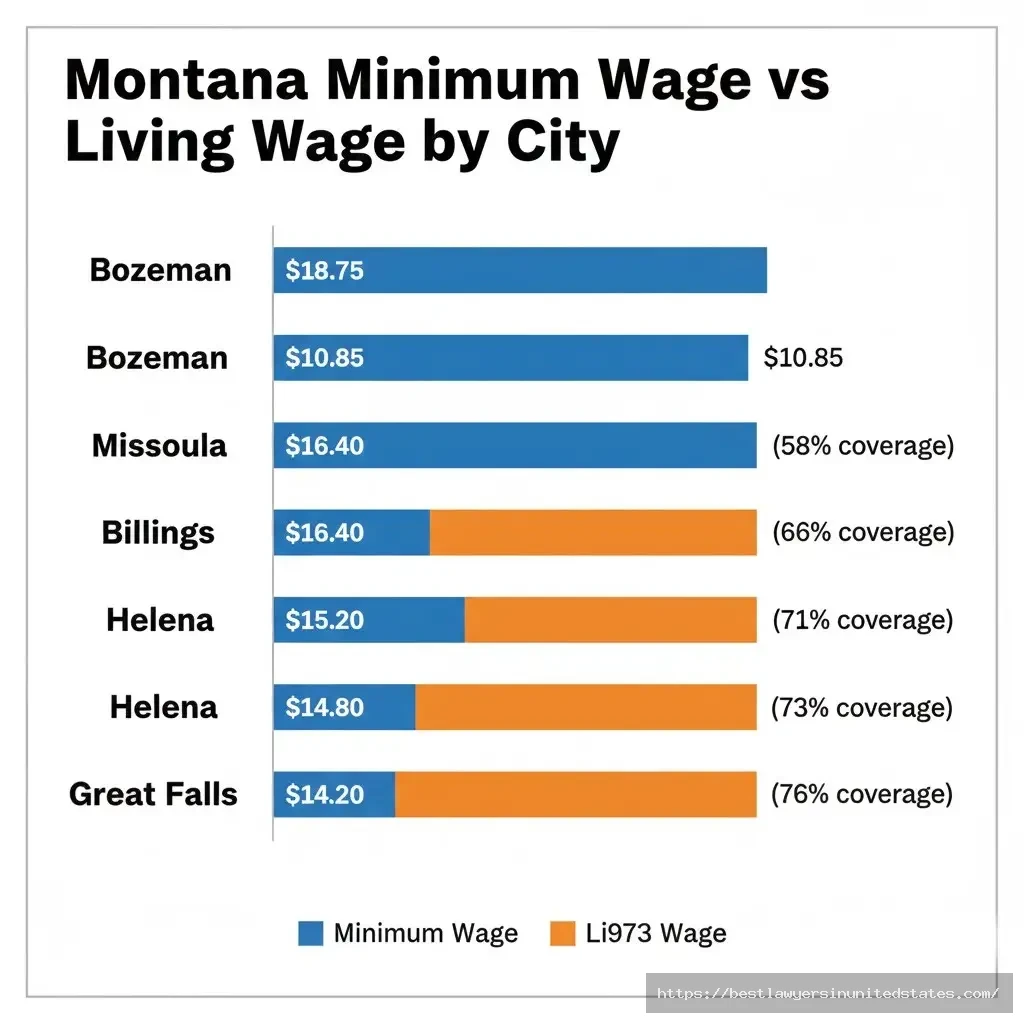
Billings, Montana's largest city, follows the state minimum wage of $10.85/hour. However, living wage calculations suggest higher earnings are necessary for financial stability.
Billings cost of living context:
- 1-bedroom apartment median rent: $950/month
- Living wage for single adult: $15.20/hour
- Living wage for adult + 1 child: $31.50/hour
- Full-time minimum wage earnings: $1,807/month (before taxes)
At $10.85/hour, a full-time worker in Billings earns approximately 71% of a living wage for a single adult.
Bozeman Minimum Wage & Cost of Living
Bozeman has become one of Montana's most expensive cities due to growth and tourism. The state minimum wage of $10.85/hour creates challenges for workers in Bozeman's high-cost market.
Bozeman cost of living:
- 1-bedroom apartment median rent: $1,450/month
- Living wage for single adult: $18.75/hour
- Minimum wage covers: 58% of living wage
- Full-time minimum wage earnings: $1,807/month (before taxes)
Bozeman's rental costs exceed Billings by approximately 50%. Workers earning minimum wage in Bozeman often need roommates or second jobs to afford housing.
Missoula Minimum Wage & Affordability
Missoula, home to the University of Montana, balances student employment with a growing professional workforce. The state minimum wage applies across the city.
Missoula economic context:
- 1-bedroom apartment median rent: $1,100/month
- Living wage for single adult: $16.40/hour
- Minimum wage covers: 66% of living wage
- Large student workforce affects rental market
Helena & Great Falls Wage Context
Montana's capital city (Helena) and Great Falls both follow state minimum wage with relatively moderate costs of living compared to Bozeman and Missoula.
Helena:
- 1-bedroom rent: $875/month
- Living wage: $14.80/hour
- Minimum wage covers: 73% of living wage
Great Falls:
- 1-bedroom rent: $750/month
- Living wage: $14.20/hour
- Minimum wage covers: 76% of living wage
These cities offer better affordability ratios for minimum wage workers compared to Montana's more expensive markets.
Montana Overtime Pay Laws
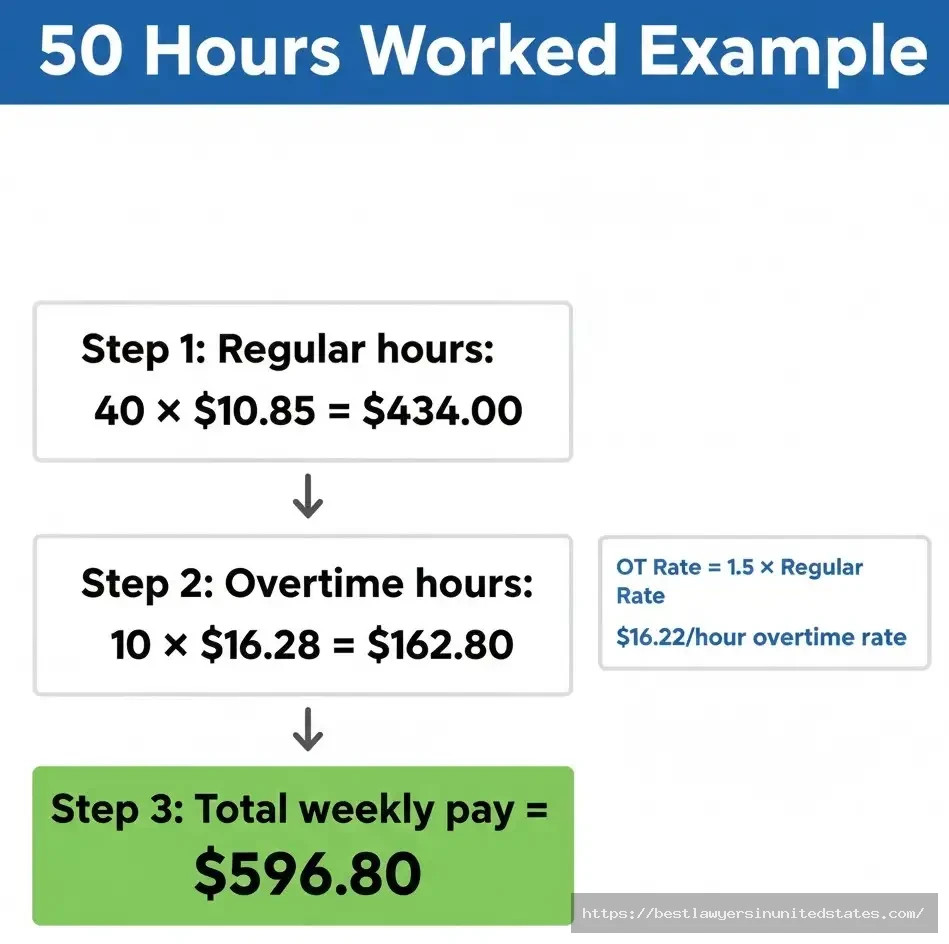
Montana requires overtime pay for hours worked beyond 40 in a workweek. The overtime rate is 1.5 times the employee's regular hourly rate.
Overtime Rate: 1.5x After 40 Hours
Montana overtime rules:
- Overtime triggers at 40 hours per week
- Rate: 1.5 times regular hourly wage
- Calculated weekly, not daily
- No daily overtime requirement (unlike California)
Example calculation:
- Regular rate: $10.85/hour
- Overtime rate: $16.28/hour (1.5 × $10.85)
- 50 hours worked: (40 × $10.85) + (10 × $16.28) = $434.00 + $162.80 = $596.80
Who Is Exempt from Overtime?
Montana follows Federal Labor Standards Act exemptions for certain employee categories. These workers are not entitled to overtime pay.
Common overtime exemptions:
- Executive employees earning $684+/week
- Administrative employees with independent judgment duties
- Professional employees requiring advanced knowledge
- Computer employees earning $27.63+/hour
- Outside sales employees
- Certain agricultural workers
- Some transportation workers
Not exempt (must receive overtime):
- Most hourly workers
- Retail employees
- Restaurant workers
- Healthcare support staff
- Manual laborers
- Customer service representatives
Important: Job titles alone don't determine exemption status. Employers must prove employees meet specific salary and duty requirements under FLSA regulations.
Montana vs Federal Overtime Rules
| Rule | Montana | Federal (FLSA) |
|---|---|---|
| Weekly threshold | 40 hours | 40 hours |
| Daily threshold | None | None |
| Overtime rate | 1.5x regular | 1.5x regular |
| Minimum salary (exempt) | $684/week | $684/week |
| Double-time required | No | No |
Montana's overtime laws align closely with federal standards. The state doesn't require daily overtime (unlike California's 8-hour daily threshold) or double-time pay for holidays.
Calculate Your Overtime Pay in Montana
Working more than 40 hours per week? Calculate your overtime earnings based on Montana's overtime laws. This calculator accounts for Montana's weekly 40-hour threshold and 1.5x overtime rate.
⏰ Overtime Pay Calculator
Calculate your overtime earnings based on your state's specific labor laws
📍 Select Your State
💰 Your Hourly Wage
📊 Calculation Method
📅 Weekly Hours
💵 Your Weekly Overtime Pay
📊 Earnings Breakdown
📅 Pay Period Estimates
⚖️ State vs Federal Comparison
Calculator features:
- Montana-specific overtime rules
- Weekly overtime calculations
- Pay period breakdowns
- Comparison with standard pay
- Annual overtime earnings projections
Full overtime calculator: Montana Overtime Calculator
Questions about your wages or need legal help? Find Employment Lawyers in Montana - Free Consultation Email: [email protected]
What to Do If You're Not Paid Minimum Wage
Montana provides several enforcement mechanisms for workers who don't receive proper wages. The Montana Department of Labor & Industry handles wage complaints and can recover unpaid wages on behalf of employees.
Filing a Wage Complaint with Montana DOL
Workers have three years from the date of violation to file a wage claim in Montana. The process is free and doesn't require an attorney.
Steps to file a wage complaint:
- Document everything: Collect pay stubs, time sheets, work schedules, and any written communications about pay rates or hours worked.
- Contact Montana DOL: Reach the Employment Relations Division at (406) 444-6543 or email [email protected].
- Submit complaint form: Complete the wage claim form available at dli.mt.gov. Include all documentation of unpaid wages.
- Investigation begins: Montana DOL investigates within 30-60 days. They may contact your employer to request records and explanations.
- Resolution or hearing: Most cases settle during investigation. If not, DOL may schedule a hearing or issue a determination.
Penalties for Employer Violations
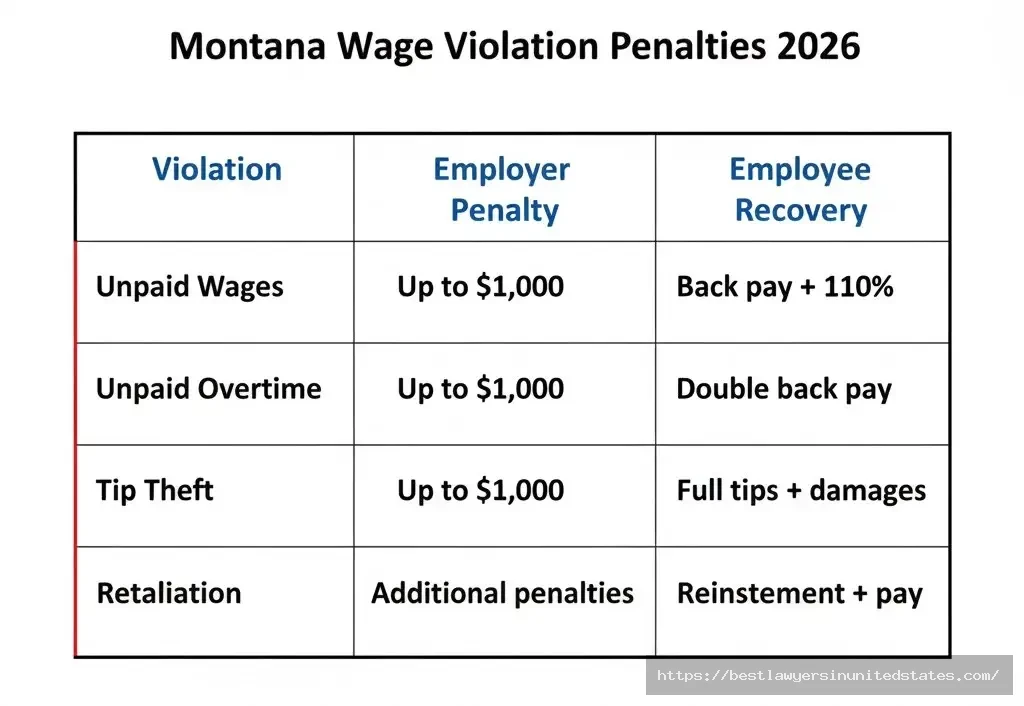
Montana law provides strong penalties to deter wage violations and compensate workers.
| Violation Type | Employer Penalty | Employee Recovery |
|---|---|---|
| Unpaid minimum wage | Up to $1,000 per violation | Full back pay + 110% penalty |
| Unpaid overtime | Up to $1,000 per violation | Double back pay |
| Tip theft/violations | Up to $1,000 per violation | Full tips + damages |
| Willful violations | Criminal misdemeanor | Treble damages possible |
| Retaliation | Additional penalties | Reinstatement + back pay |
Liquidated damages: Montana allows employees to recover 110% of unpaid wages, meaning workers receive the wages owed plus an additional 10% penalty.
Montana Wage Claim Deadlines
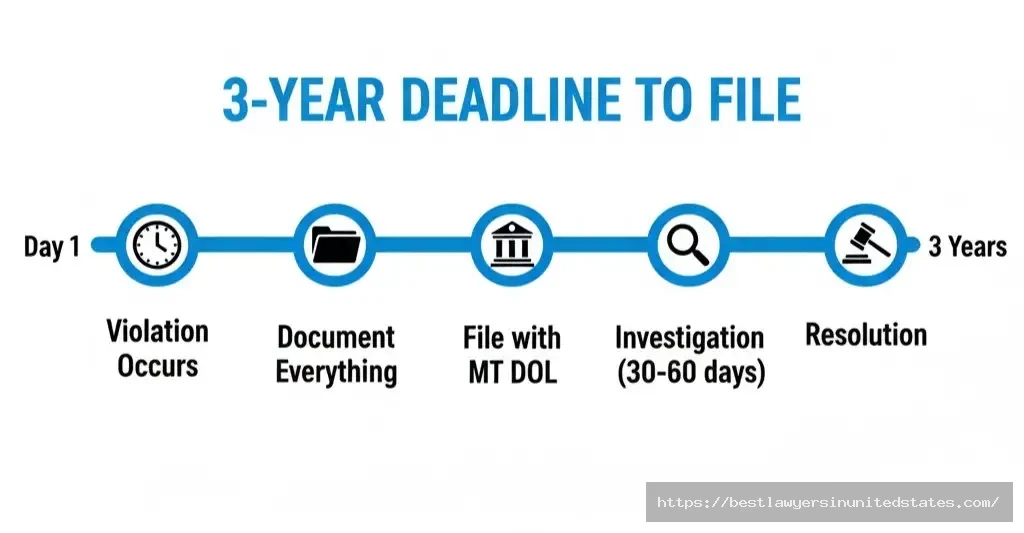
| Claim Type | Filing Deadline | Statute of Limitations |
|---|---|---|
| Unpaid wages | 3 years | 3 years from violation |
| Overtime violations | 3 years | 3 years from violation |
| Tip violations | 3 years | 3 years from violation |
| Retaliation | 1 year | 1 year from adverse action |
Critical: The three-year statute of limitations applies to each unpaid pay period separately. Workers can only recover unpaid wages from the most recent three years, even if violations occurred earlier.
How to Calculate Unpaid Wages
Montana workers can calculate their wage claim using actual hours worked and the difference between what they received and what they were legally owed.
Unpaid wage calculation:
- Document all hours worked
- Multiply hours by Montana minimum wage ($10.85)
- Add overtime (hours over 40 × $16.28)
- Subtract what you actually received
- Add 110% penalty for liquidated damages
Example:
- Hours worked: 45 hours/week × 4 weeks = 180 hours
- Regular hours: 160 hours × $10.85 = $1,736.00
- Overtime hours: 20 hours × $16.28 = $325.60
- Total owed: $2,061.60
- Paid only: $8.00/hour = $1,440.00
- Unpaid wages: $621.60
- With 110% penalty: $621.60 × 1.10 = $683.76
Calculate Your Wage Theft Recovery in Montana
Think your employer owes you money? Use our wage theft calculator to estimate how much you could recover, including unpaid wages, penalties, and interest under Montana law.
Wage Theft Recovery Calculator
Estimate how much you can recover in unpaid wages, penalties, and damages based on your state's laws
💵 Estimated Total Recovery
💰 Unpaid Wages
⚖️ Penalties & Damages
📋 Total Summary
Calculator features:
- Multiple violation types (unpaid wages, overtime, tips)
- Montana-specific penalties and damages
- 110% liquidated damages calculation
- Filing deadline tracker
- Total recovery estimate
- Next steps guidance
Full wage theft calculator: Montana Wage Theft Calculator
Need help with unpaid wages? Contact Montana Department of Labor or consult with an employment attorney. Learn more about your legal options for workplace disputes.
Questions about your wages or need legal help? Find Employment Lawyers in Montana - Free Consultation Email: [email protected]
When Must Montana Employers Pay Wages?
Montana enforces strict payment timing requirements. Employers who miss these deadlines face penalties and potential wage claims.
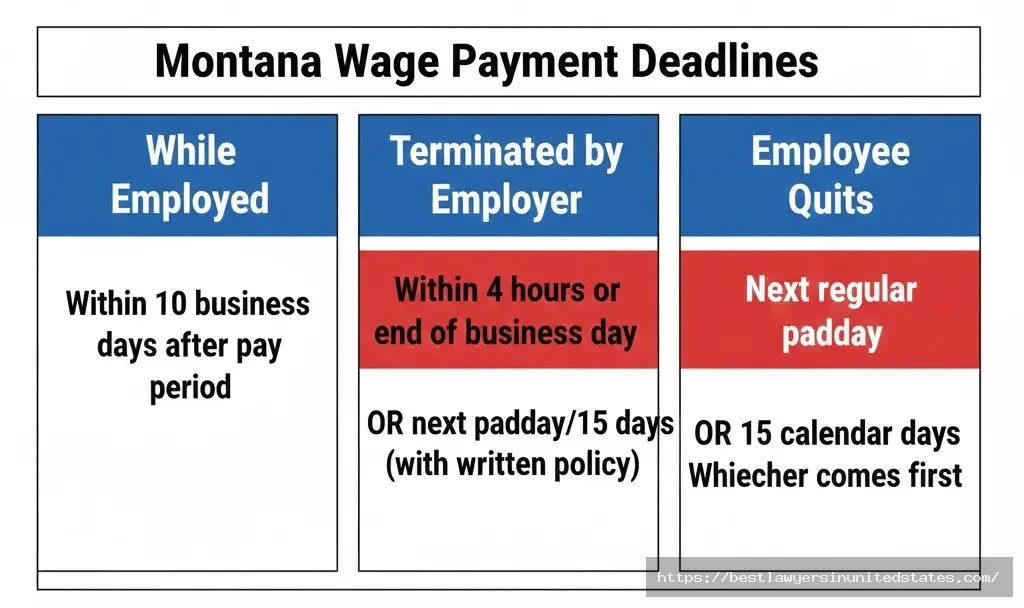
Payment Timing for Regular Payroll
While employed:
- Employees must receive payment within 10 business days after the end of each pay period
- Employers can choose pay frequency (weekly, bi-weekly, semi-monthly, monthly)
- Electronic deposits and paper checks both acceptable
- Payment must be in U.S. currency or negotiable check
Payment Timing for Terminated Employees
When employer fires employee: Montana requires immediate wage payment for terminated employees. "Immediate" means within four hours of termination or by the end of the business day, whichever comes first.
Exception: If employer has a pre-existing written policy, payment can be delayed until the next regular payday or 15 calendar days from separation, whichever occurs first.
Failure to pay: Employers who don't pay terminated employees on time face penalty wages. Montana may award the employee up to 55 days of wages as a penalty.
Payment Timing for Employees Who Quit
When employee quits:
- Wages due on next regular payday for the pay period when employee quit
- OR 15 calendar days from last day worked
- Whichever comes first
Example: Employee quits on June 5. Regular payday is June 15. Employer must pay by June 15. If regular payday were June 25, employer must pay by June 20 (15 days from June 5).
Withholding Final Paychecks
Employers CANNOT withhold final paychecks for:
- Unreturned uniforms
- Unreturned keys or equipment
- Cash register shortages
- Damaged equipment
- Incomplete exit paperwork
Montana law requires immediate wage payment regardless of these circumstances. Employers must pay all wages earned, then pursue separate civil remedies for property disputes.
Allowed deductions:
- Court-ordered wage garnishments
- Tax withholdings
- Previously authorized deductions in writing
- Deductions for employee benefit programs
Montana vs Federal Minimum Wage
Montana's minimum wage exceeds federal minimum wage by a significant margin. Understanding both systems helps workers and employers ensure compliance.
Why Montana's Wage Exceeds Federal $7.25
Federal minimum wage has remained $7.25/hour since 2009. Congress has not passed legislation to increase it. Montana voters chose to tie state minimum wage to inflation through Initiative 151 in 2006.
Key differences:
| Feature | Montana | Federal |
|---|---|---|
| 2026 Rate | $10.85 | $7.25 |
| Last increase | Annual (CPI) | 2009 |
| Tipped wage | $10.85 (no credit) | $2.13 |
| Adjustment method | Automatic CPI | Congressional action |
| Coverage | All Montana employers | Interstate commerce |
Montana's approach protects workers from inflation erosion. While federal minimum wage purchasing power has declined approximately 29% since 2009, Montana's wage adjusts annually.
FLSA Compliance Requirements
The Fair Labor Standards Act (FLSA) sets federal minimum standards. States can exceed federal standards but cannot go below them.
FLSA requirements for Montana employers:
- Pay greater of state ($10.85) or federal ($7.25) minimum wage
- Maintain accurate time records for all employees
- Display required labor law posters
- Follow overtime rules (1.5x after 40 hours)
- Comply with child labor restrictions
When Federal Law Applies
Federal minimum wage ($7.25) applies only when it exceeds state minimum wage. Since Montana's rate ($10.85) is higher, Montana employers must pay the state rate.
Scenarios where federal law matters:
- Employers not covered by Montana law
- Federal contractors and subcontractors
- Specific industries regulated by federal agencies
- Cases involving interstate commerce questions
Most Montana employers must follow Montana law because it provides greater protection than federal law. When state and federal law conflict, the law more favorable to employees applies.
Montana Worker Categories & Special Rules
Montana applies its minimum wage broadly with few exceptions. Understanding worker classifications helps ensure proper payment.
Youth Employment
Montana has NO youth minimum wage. Workers under age 18 must receive the full $10.85/hour minimum wage.
This differs from states like Alabama where employers can pay reduced rates to younger workers. Montana rejected this approach, requiring equal pay regardless of age.
Youth worker protections:
- Same $10.85/hour minimum as adults
- Full overtime protections (1.5x after 40 hours)
- Additional child labor restrictions on hours and job duties
- Enhanced workplace safety requirements
Agricultural Workers
Montana extends minimum wage coverage to most agricultural workers. Farm employees must receive $10.85/hour with limited exceptions.
Covered agricultural workers:
- Farm laborers
- Ranch hands
- Seasonal harvest workers
- Agricultural processing employees
Potential exemptions:
- Small farm operations (under 500 man-days of labor annually)
- Immediate family members of farm owner
- Range production of livestock workers (case-by-case)
Agricultural employers should verify coverage requirements with Montana DOL, as most farm operations meet the threshold for minimum wage compliance.
Independent Contractors
True independent contractors are not covered by minimum wage laws. However, misclassifying employees as independent contractors violates Montana law.
True independent contractor indicators:
- Controls how work is performed
- Provides own tools and equipment
- Works for multiple clients
- Bears financial risk of the work
- Can earn profit or suffer loss
- Has distinct business entity
Employee indicators:
- Employer controls work methods and hours
- Uses employer's equipment and workspace
- Works exclusively for one employer
- Receives regular wages regardless of business conditions
- No opportunity for profit/loss beyond wages
Montana uses the "ABC test" for unemployment insurance purposes and similar standards for wage claims. Misclassified workers can file complaints to recover unpaid wages and benefits.
Salaried Employees
Salaried employees in Montana must still receive minimum wage protection. The salary must equal at least minimum wage multiplied by all hours worked.
Salary requirements:
- Must exceed $684/week for FLSA exemption
- Actual hours worked cannot reduce hourly rate below $10.85
- Non-exempt salaried employees entitled to overtime
- Salary cannot be used to avoid minimum wage obligations
Example: Salaried employee works 50 hours per week. Weekly salary is $500. Hourly equivalent is $10.00/hour, which violates Montana's $10.85 minimum wage. Employer must increase salary to at least $596.80 ($10.85 × 40 hours + $16.28 × 10 overtime hours).
Frequently Asked Questions About Montana Minimum Wage
What is Montana's minimum wage in 2026?
Quick Answer: Montana's minimum wage is $10.85 per hour as of January 1, 2026, which is $3.60 higher than the federal minimum wage of $7.25.
This rate applies to all workers including tipped employees. Montana adjusts its minimum wage annually based on the Consumer Price Index, with official announcements made by September 30 each year.
Does Montana have a tipped minimum wage?
Quick Answer: No. Montana requires employers to pay all workers, including tipped employees, the full $10.85 minimum wage with no tip credit allowed.
Servers, bartenders, and delivery drivers must receive $10.85/hour in direct wages before tips. Tips are additional income on top of the base wage, not a substitute for wages. This makes Montana one of seven states prohibiting tip credits.
When will Montana minimum wage increase in 2026?
Quick Answer: Montana's minimum wage increased to $10.85/hour on January 1, 2026, following the annual CPI adjustment announced in September 2025.
The next increase will occur January 1, 2027. Montana DOL will announce the 2027 rate by September 30, 2026, based on Consumer Price Index data from August 2025 to August 2026.
Can Montana businesses pay $4.00/hour?
Quick Answer: Only businesses with gross annual sales under $110,000 that are not covered by FLSA can pay $4.00/hour, but this exception rarely applies in practice.
Most businesses engage in interstate commerce through credit card processing, internet use, or out-of-state supply purchases, which triggers FLSA coverage requiring the full $10.85/hour minimum wage.
What is the living wage in Montana?
Quick Answer: Living wage estimates for Montana range from $14.20/hour in Great Falls to $18.75/hour in Bozeman for single adults, significantly higher than the $10.85 minimum wage.
Living wage calculations factor housing, food, transportation, healthcare, and other essential expenses. Montana's minimum wage covers 58-76% of estimated living wage depending on location, with expensive cities like Bozeman presenting greater challenges.
How do I file a wage complaint in Montana?
Quick Answer: Contact Montana Department of Labor & Industry at (406) 444-6543 or email [email protected] to file a wage complaint within three years of the violation.
Complete the wage claim form at dli.mt.gov with documentation of hours worked and wages received. The process is free and doesn't require an attorney. Montana DOL investigates complaints and can recover unpaid wages plus penalties.
What is Montana's overtime rate?
Quick Answer: Montana requires overtime pay at 1.5 times the regular hourly rate for all hours worked over 40 in a workweek.
For minimum wage workers, overtime pay is $16.28/hour (1.5 × $10.85). Montana doesn't require daily overtime or double-time pay. Certain executive, administrative, and professional employees may be exempt from overtime under FLSA standards.
Do minors get paid less in Montana?
Quick Answer: No. Montana requires the same $10.85/hour minimum wage for all workers regardless of age, with no youth or training wage allowed.
Workers under 18 receive identical wage protections as adults. Montana also enforces additional restrictions on minor work hours and hazardous occupations, but these don't affect the wage rate.
Is there a training wage in Montana?
Quick Answer: No. Montana does not allow reduced training wages, subminimum wages, or any wage below $10.85/hour for new employees.
All workers must receive full minimum wage from their first day of employment. Some states permit 90-day training periods at reduced rates, but Montana prohibits this practice.
How is Montana's minimum wage calculated?
Quick Answer: Montana's minimum wage adjusts annually based on the Consumer Price Index for All Urban Consumers (CPI-U), with the rate equaling the greater of federal minimum wage or the CPI-adjusted state rate.
Montana DOL calculates the percentage change in CPI-U from August to August, then applies that percentage increase to the current minimum wage. The calculation rounds to the nearest $0.05 increment. For 2026, the 2.8% CPI increase raised the wage from $10.55 to $10.85.
How do I calculate my earnings at Montana minimum wage?
Quick Answer: Use a Montana minimum wage calculator to multiply your hourly rate ($10.85) by hours worked, accounting for overtime at 1.5x rate ($16.28) for hours over 40 per week.
Full-time workers (40 hours/week) earn $434/week, $1,880/month, or $22,568/year before taxes at Montana's minimum wage. Our minimum wage calculator provides detailed breakdowns including tax withholdings and take-home pay.
How much overtime pay am I entitled to in Montana?
Quick Answer: Montana overtime pay is 1.5 times your regular rate for all hours over 40 per week, calculated weekly not daily.
A worker earning minimum wage receives $16.28/hour for overtime hours. Use our overtime calculator to estimate overtime earnings based on your specific hours and pay rate.
How do I calculate wage theft recovery in Montana?
Quick Answer: Calculate unpaid wages by multiplying hours worked by Montana's $10.85 minimum wage, subtract what you received, then add 110% liquidated damages for willful violations.
Montana law allows workers to recover unpaid wages plus an additional 10% penalty. Our wage theft calculator estimates total recovery including penalties, interest, and potential attorney fees.
Montana Wage & Hour Resources
Montana Department of Labor & Industry
Employment Relations Division Address: PO Box 201503, Helena, MT 59620-1503 Phone: (406) 444-6543 Email: [email protected] Website: dli.mt.gov
Office hours: Monday-Friday, 8:00 AM - 5:00 PM Mountain Time
Required Workplace Posters
Montana employers must display the official minimum wage poster in a conspicuous location where all employees can view it.
Download 2026 Montana Wage Poster: Visit dli.mt.gov/wage-hour to download the current year's poster. Posters must be updated annually when the minimum wage changes.
Additional required posters:
- Montana Wage Payment Act notice
- FLSA minimum wage poster (federal)
- OSHA workplace safety poster
- Workers' compensation notice
- Discrimination and harassment policies
Legal Assistance
Workers with wage disputes can contact:
Montana Legal Services Association Provides free legal help to low-income Montanans Phone: 1-800-666-6899 Website: mtlsa.org
Private employment attorneys: Consider consultation with employment law specialists for complex cases involving significant unpaid wages or retaliation. Many offer free initial consultations.
U.S. Department of Labor Wage & Hour Division Montana District Office Address: 10 W. 15th Street, Suite 1300, Helena, MT 59626 Phone: (406) 441-1192
Additional Online Resources
Interactive wage calculators: Montana Minimum Wage Calculator
Compare neighboring state rates:
Employment law guidance: Legal options for workplace disputes
Key Takeaways: Montana Minimum Wage 2026
Montana's $10.85/hour minimum wage for 2026 provides stronger worker protections than federal law. The state's automatic CPI adjustment system maintains purchasing power as inflation rises, while the prohibition on tip credits ensures restaurant workers receive predictable base income.
Most important points to remember:
- All workers receive $10.85/hour including servers, bartenders, and tipped employees
- No tip credit allowed means tips come on top of full minimum wage
- Automatic annual increases tied to Consumer Price Index keep pace with inflation
- Three-year deadline to file wage complaints with Montana DOL
- Overtime required at 1.5x rate for hours over 40 per week
- Youth workers protected with same minimum wage as adults
- Small business exception rarely applies due to interstate commerce rules
Workers who believe they're not receiving proper wages should document hours worked, save pay stubs, and contact Montana Department of Labor & Industry within three years. Free wage calculators and legal resources can help determine if violations occurred and estimate potential recovery amounts.
Questions about your wages or need legal help? Find Employment Lawyers in Montana - Free Consultation Email: [email protected]
