
Quick Answer: No, prostitution is illegal throughout Florida. There are no counties, cities, or special zones where prostitution is legal—including Miami, Orlando, Tampa, Jacksonville, or the Florida Keys. Florida law criminalizes buying, selling, and facilitating prostitution under Florida Statute 796.07.
If you’re researching this topic because of confusion about Nebraska Avenue in Tampa or wondering if certain Florida cities have different rules, this guide will clear up those misconceptions and explain exactly what the law says, what penalties you face, and how Florida compares to states like Nevada where some forms of prostitution are legal.
Where is Prostitution Legal in Florida?
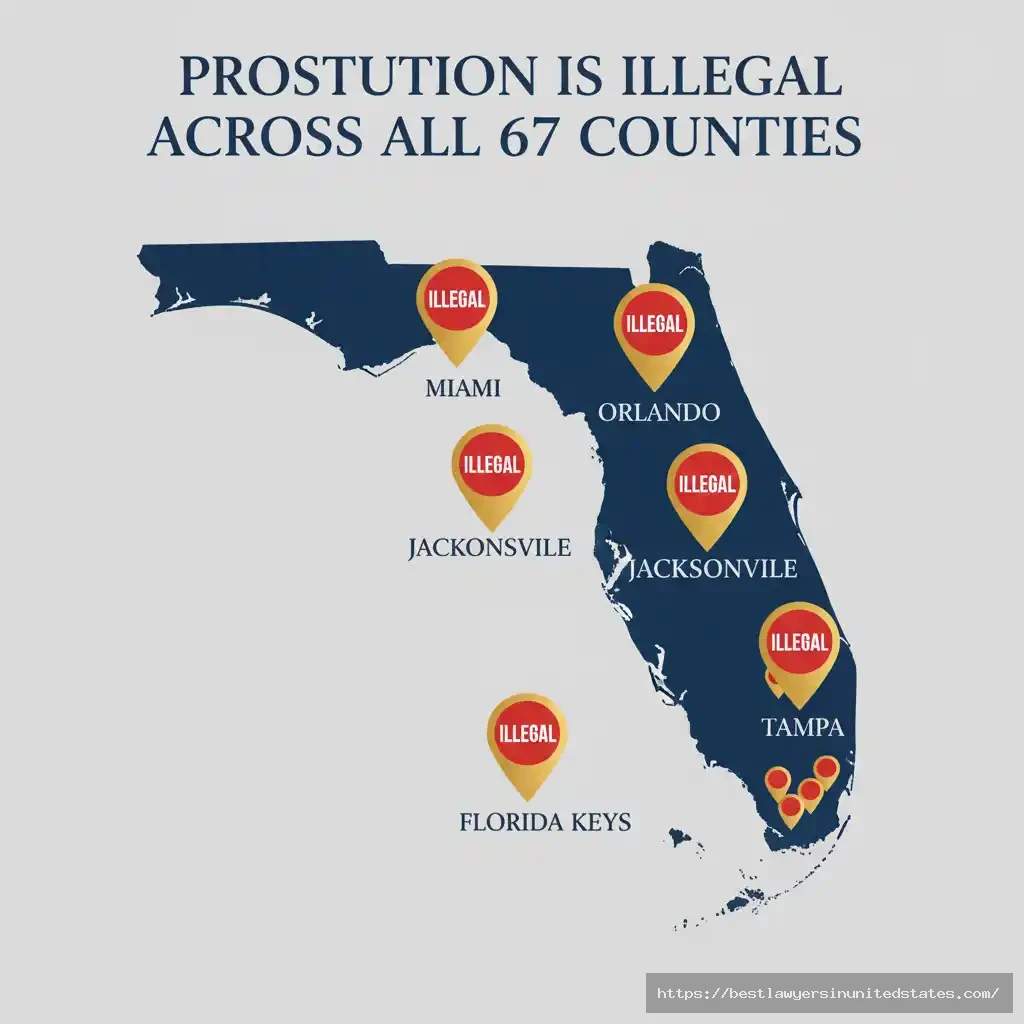
Nowhere. Prostitution is illegal in all 67 Florida counties. Unlike Nevada, which permits licensed brothels in certain rural counties, Florida has no legal prostitution anywhere in the state.
Is Prostitution Legal in Miami?
No. Despite Miami’s reputation as an international city with a vibrant nightlife, prostitution remains completely illegal. Miami-Dade County enforces the same statewide laws found in Florida Statute 796.07. Local police and vice units conduct regular sting operations targeting both buyers and sellers.
Is Prostitution Legal in Orlando?
No. Orlando follows Florida’s statewide prohibition on prostitution. The city’s tourist-heavy economy doesn’t create any legal exceptions. Orange County law enforcement actively prosecutes prostitution cases.
Is Prostitution Legal in Jacksonville?
No. Jacksonville, Florida’s largest city by area, maintains strict enforcement of prostitution laws. Duval County treats prostitution as a criminal offense with the same penalties as elsewhere in Florida.
Why Does Nebraska Avenue Appear in Searches?
Nebraska Avenue in Tampa has a historical reputation as a red-light district dating back decades. This area became known for street prostitution, which is why it appears frequently in searches. However, prostitution has never been legal there. Tampa Police conduct ongoing enforcement operations in this area, and charges carry the same penalties as anywhere else in Florida.
What About the Florida Keys?
The Florida Keys have no special exemptions. Monroe County, which encompasses the Keys, follows identical state laws. The misconception may arise from the area’s laid-back reputation, but prostitution remains a criminal offense there just as it is in Miami or Orlando.
Bottom line: If you’re in Florida, prostitution is illegal regardless of which city, county, or neighborhood you’re in.
What Does Florida Law Say About Prostitution?
Florida Statute 796.07 is the primary law governing prostitution. Understanding the legal definitions helps clarify what specific acts are prohibited.
Legal Definition of Prostitution
Under Florida law, prostitution means “the giving or receiving of the body for sexual activity for hire.” The statute specifically excludes sexual activity between spouses.
“Sexual activity” is defined as:
- Oral, anal, or vaginal penetration by or union with the sexual organ of another
- Anal or vaginal penetration by any object
- Handling or fondling of sexual organs for masturbation purposes
The key element is exchange—something of value (typically money) given in return for sexual activity.
What is Solicitation in Florida?
Solicitation is the act of offering, agreeing to engage in, or requesting prostitution. This includes:
- Offering to pay for sexual services
- Agreeing to provide sexual services for payment
- Negotiating prices or terms
- Making arrangements to meet for prostitution
You don’t have to complete the act to be charged with solicitation. Simply agreeing to the exchange can result in arrest.
What is Lewdness?
Florida law defines lewdness as “any indecent or obscene act.” This is a broader term that can apply to public sexual behavior beyond prostitution.
What is Assignation?
Assignation means “making any appointment or engagement for prostitution or lewdness, or any act in furtherance of such appointment or engagement.” This covers:
- Setting up meetings
- Arranging locations
- Coordinating timing
- Any preparatory acts
Related Offenses Under Florida Law
Florida’s prostitution laws extend beyond the basic exchange. Related criminal offenses include:
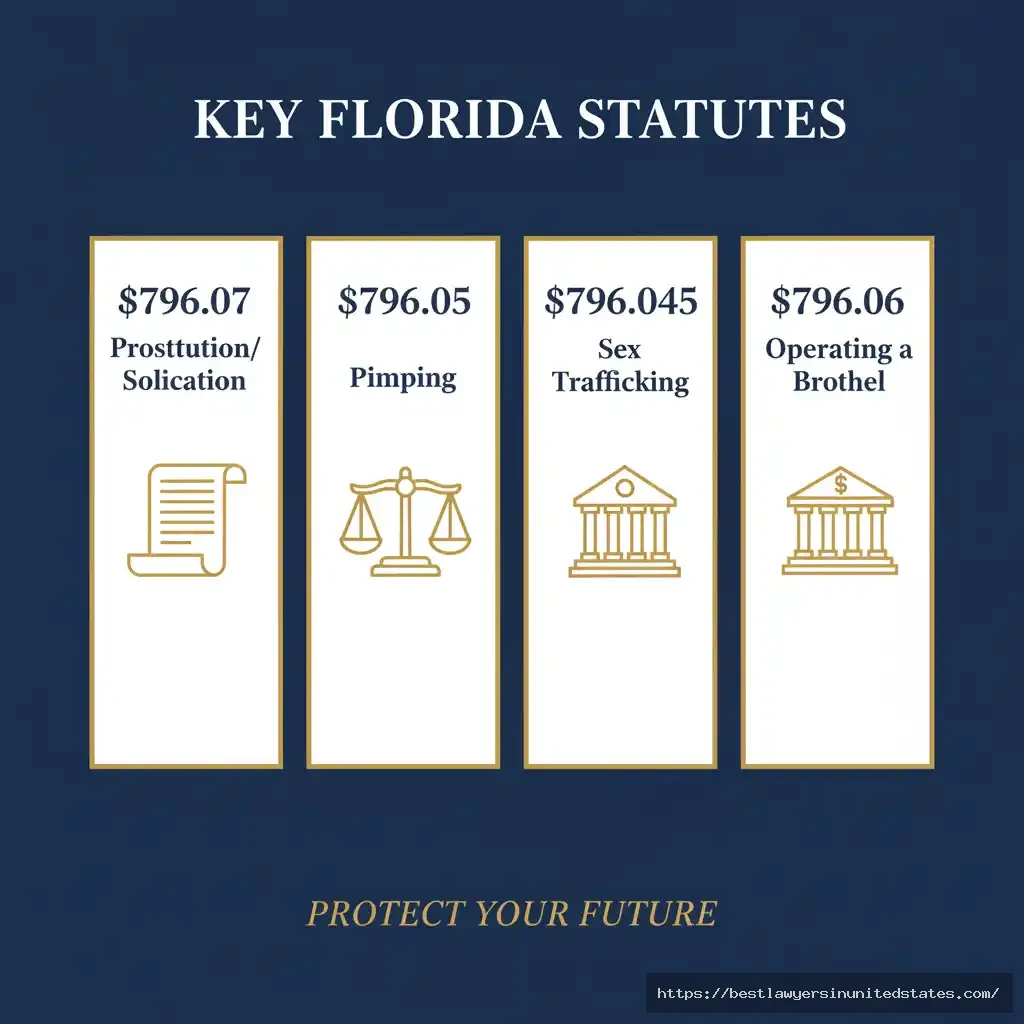
Pimping (Florida Statute 796.05) – Deriving support or maintenance from the earnings of someone engaged in prostitution. This carries harsher penalties than prostitution itself.
Sex Trafficking (Florida Statute 796.045) – Recruiting, enticing, harboring, transporting, or obtaining another person for prostitution through force, fraud, or coercion. This is a serious felony with lengthy prison sentences.
Operating a Place of Prostitution (Florida Statute 796.06) – Owning, establishing, maintaining, or operating any place, structure, or building for prostitution purposes.
Forcing Someone into Prostitution (Florida Statute 796.04) – Using force, intimidation, or threats to compel another person into prostitution.
What is the Penalty for Prostitution in Florida?
Florida imposes escalating penalties based on the number of offenses and who’s involved in the transaction. Importantly, buyers face harsher mandatory penalties than sellers.
Penalties for Engaging in Prostitution (Selling)
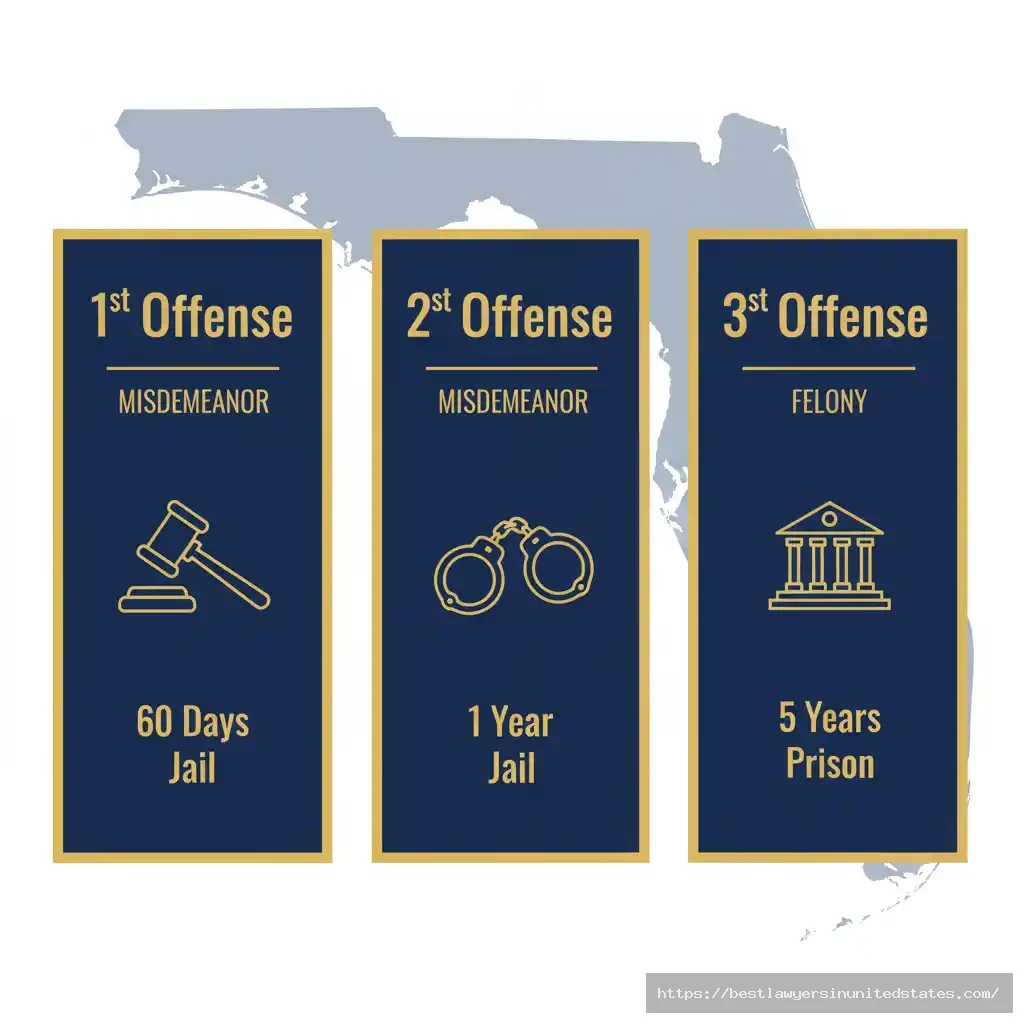
If you’re charged with engaging in prostitution (selling sexual services), penalties escalate with each offense:
| Offense | Classification | Maximum Jail/Prison | Maximum Fine |
|---|---|---|---|
| First | 2nd-degree misdemeanor | 60 days | $500 |
| Second | 1st-degree misdemeanor | 1 year | $1,000 |
| Third+ | 3rd-degree felony | 5 years | $5,000 |
A third or subsequent violation becomes a felony, creating a permanent criminal record that impacts employment, housing, and professional licenses.
Penalties for Buying Prostitution (Solicitation Under Paragraph 2(f))
If you’re charged with soliciting or purchasing prostitution services, Florida law imposes significantly harsher penalties:
| Offense | Classification | Jail Time | Additional Penalties |
|---|---|---|---|
| First | 1st-degree misdemeanor | Up to 1 year | • 100 hours community service (mandatory)<br>• Educational program (mandatory)<br>• Up to $1,000 fine |
| Second | 3rd-degree felony | Up to 5 years + 10 days mandatory minimum | • $5,000 civil penalty (mandatory)<br>• Vehicle impoundment possible (up to 60 days)<br>• Up to $5,000 fine |
| Third+ | 2nd-degree felony | Up to 15 years + 10 days mandatory minimum | • $5,000 civil penalty (mandatory)<br>• Vehicle impoundment possible (up to 60 days)<br>• Up to $10,000 fine |
Key differences for buyers:
- Educational programs are mandatory even for first offenses
- Community service requirement (100 hours minimum)
- $5,000 civil penalty for any conviction (this is separate from criminal fines)
- Possible vehicle impoundment if your car was used during the offense
- Mandatory minimum jail time for second and subsequent offenses
Why Florida Treats Buyers Harsher Than Sellers
Florida’s legislative approach focuses on reducing demand for prostitution. The reasoning is that without buyers, the market for prostitution would collapse. By imposing harsher penalties on those purchasing services, lawmakers aim to:
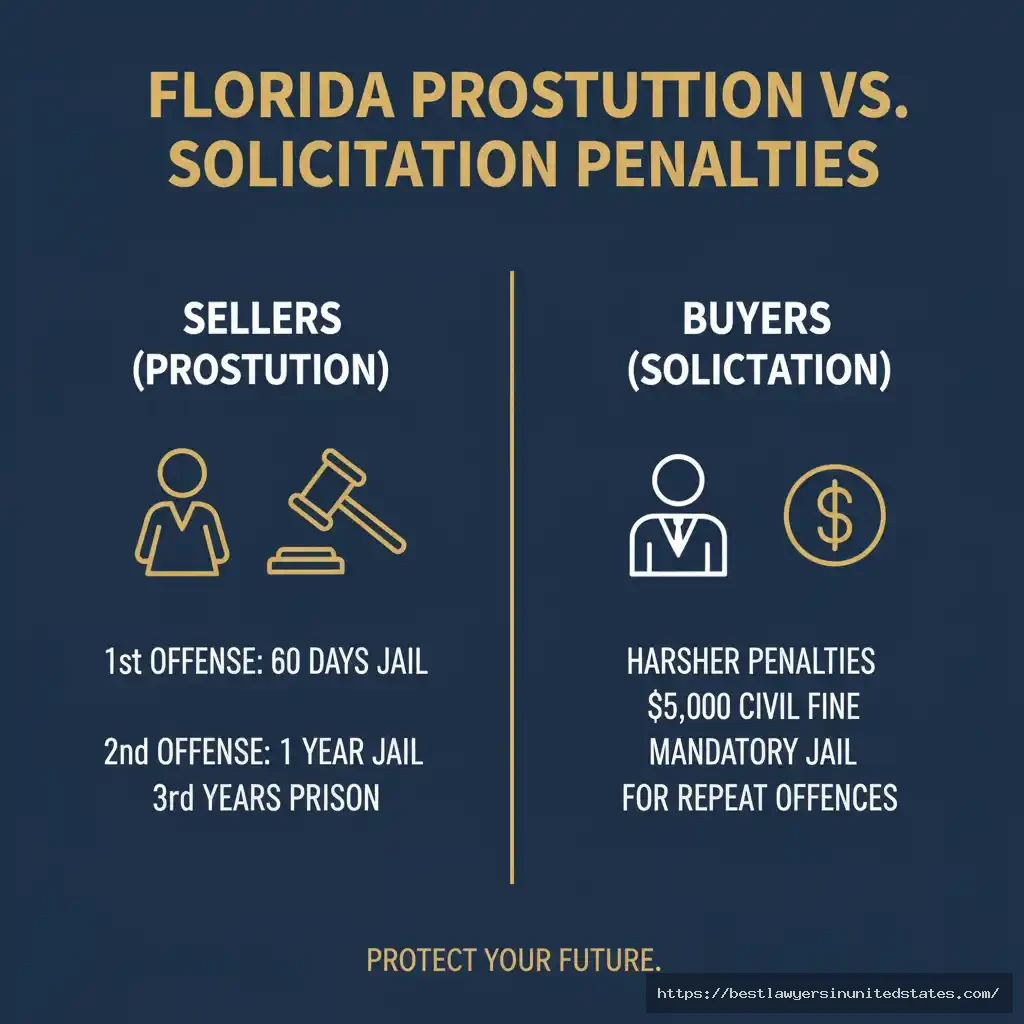
- Discourage solicitation through financial and social consequences
- Recognize that many individuals selling services may be victims of trafficking or economic desperation
- Target the demand side rather than criminalizing vulnerable populations
The $5,000 civil penalty collected from buyers specifically funds programs for trafficking victims, safe houses, and treatment-based drug courts.
Enhanced Penalties for Massage Parlors
If prostitution occurs at a massage establishment (or a location that should be licensed as one under Florida Statute 480.043), penalties automatically increase to the next higher degree:
| Standard Penalty | Enhanced Penalty for Massage Establishments |
|---|---|
| 2nd-degree misdemeanor | 1st-degree misdemeanor |
| 1st-degree misdemeanor | 3rd-degree felony |
| 3rd-degree felony | 2nd-degree felony |
This enhancement targets businesses operating under the guise of legitimate massage services while engaging in prostitution. High-profile cases, including the 2019 Robert Kraft investigation in Jupiter, Florida, highlighted this issue and led to increased enforcement.
Pimping, Pandering, and Sex Trafficking in Florida
Florida treats those who profit from or facilitate prostitution more severely than those directly engaged in it.
Penalties for Pimping (Florida Statute 796.05)
“Deriving support from the proceeds of prostitution” means living off earnings from someone else’s prostitution. This includes:
- Taking money from someone engaged in prostitution
- Managing or controlling someone’s prostitution activities
- Receiving financial benefit from prostitution
Penalties:
- First offense: 2nd-degree misdemeanor
- Second offense: 1st-degree misdemeanor
- Third offense: 3rd-degree felony
However, if the person being pimped is a minor, charges escalate to sex trafficking (see below).
Penalties for Operating a Brothel (Florida Statute 796.06)
Operating, maintaining, or renting space for prostitution purposes is illegal. This applies to:
- Homeowners who knowingly rent to someone using the property for prostitution
- Hotel operators who facilitate prostitution
- Apartment landlords aware of prostitution activities
Penalties follow the same escalating structure as standard prostitution charges but can be enhanced if multiple people are involved or if minors are present.
Sex Trafficking Charges (Florida Statute 796.045)
Sex trafficking is one of Florida’s most serious crimes. It involves:
- Recruiting, enticing, harboring, transporting, or providing a person for prostitution
- Using force, fraud, or coercion
- Involvement of minors (anyone under 18)
Penalties for trafficking an adult:
- 2nd-degree felony: up to 15 years prison, $10,000 fine
Penalties for trafficking a minor:
- 1st-degree felony: up to 30 years prison, $10,000 fine
- Life felony if aggravating factors exist
Forcing Someone into Prostitution (Florida Statute 796.04)
Using force, intimidation, or threats to compel someone into prostitution is a separate offense from sex trafficking but carries similar severe penalties. This recognizes that coercion eliminates any element of voluntary participation.
Is Happy Ending Legal in Florida?
No. “Happy ending” massages—where sexual services are provided at the conclusion of a massage—constitute prostitution under Florida law. These activities meet the definition of “sexual activity for hire” under Florida Statute 796.07.
Why Massage Parlors Face Enhanced Penalties
As noted earlier, when prostitution occurs at a massage establishment, Florida law reclassifies the offense to the next higher degree. This means:
- A first offense becomes a 1st-degree misdemeanor instead of a 2nd-degree misdemeanor
- A second offense becomes a 3rd-degree felony instead of a 1st-degree misdemeanor
- A third offense becomes a 2nd-degree felony instead of a 3rd-degree felony
The Robert Kraft Case
In February 2019, New England Patriots owner Robert Kraft was charged with soliciting prostitution at a Jupiter, Florida day spa. Law enforcement had installed surveillance cameras as part of a human trafficking investigation. While Kraft’s charges were eventually dropped due to questions about the legality of the surveillance, the case brought national attention to prostitution enforcement in Florida massage establishments.
The case highlighted several realities:
- Police actively investigate massage parlors suspected of offering sexual services
- Buyers from all socioeconomic backgrounds face prosecution
- Video evidence is commonly used in these cases
- Even high-profile individuals aren’t exempt from charges
Massage therapists and business owners operating legitimate establishments should ensure strict compliance with Florida’s massage therapy licensing laws to avoid any association with illegal activities.
What is Donna’s Law in Florida?
Donna’s Law, named after a Florida trafficking victim, established safe harbor provisions for minors involved in prostitution. The law recognizes that children cannot legally consent to prostitution and should be treated as victims rather than criminals.
Key Provisions
Under Donna’s Law and related Florida statutes:
- Minors found in prostitution situations are directed to dependency proceedings rather than criminal prosecution
- Safe houses and safe foster homes receive funding (from the civil penalties collected from those convicted of solicitation)
- Victims of trafficking may have immunity from prosecution if they can demonstrate coercion or duress
How It Affects Prostitution Charges
If someone claims they were forced or coerced into prostitution, they may qualify for protections under Donna’s Law and Florida’s trafficking victim statutes. This requires evidence of:
- Threats or violence
- Psychological coercion
- Economic control (such as debt bondage)
- Being a minor at the time
Adults who voluntarily engage in prostitution do not qualify for these protections, but those who can prove they were trafficking victims may avoid criminal penalties.
Can Police Pose as Prostitutes in Florida?
Yes. Florida law enforcement agencies regularly conduct undercover sting operations where police officers pose as either prostitutes or potential clients. This is a legal investigative technique.
How Sting Operations Work
Online stings: Police create profiles on websites, dating apps, or classified platforms, engage in conversations with potential buyers or sellers, and arrange meetings where arrests occur.
Street-level stings: Undercover officers pose as streetwalkers or johns in known prostitution areas like Nebraska Avenue in Tampa. When someone offers or agrees to an exchange, officers move in for arrest.
Vice squad operations: Specialized units monitor hotels, massage parlors, and other locations suspected of prostitution activity.
The Entrapment Defense
Many people arrested in sting operations claim entrapment, but this defense rarely succeeds in Florida. Entrapment occurs only when:
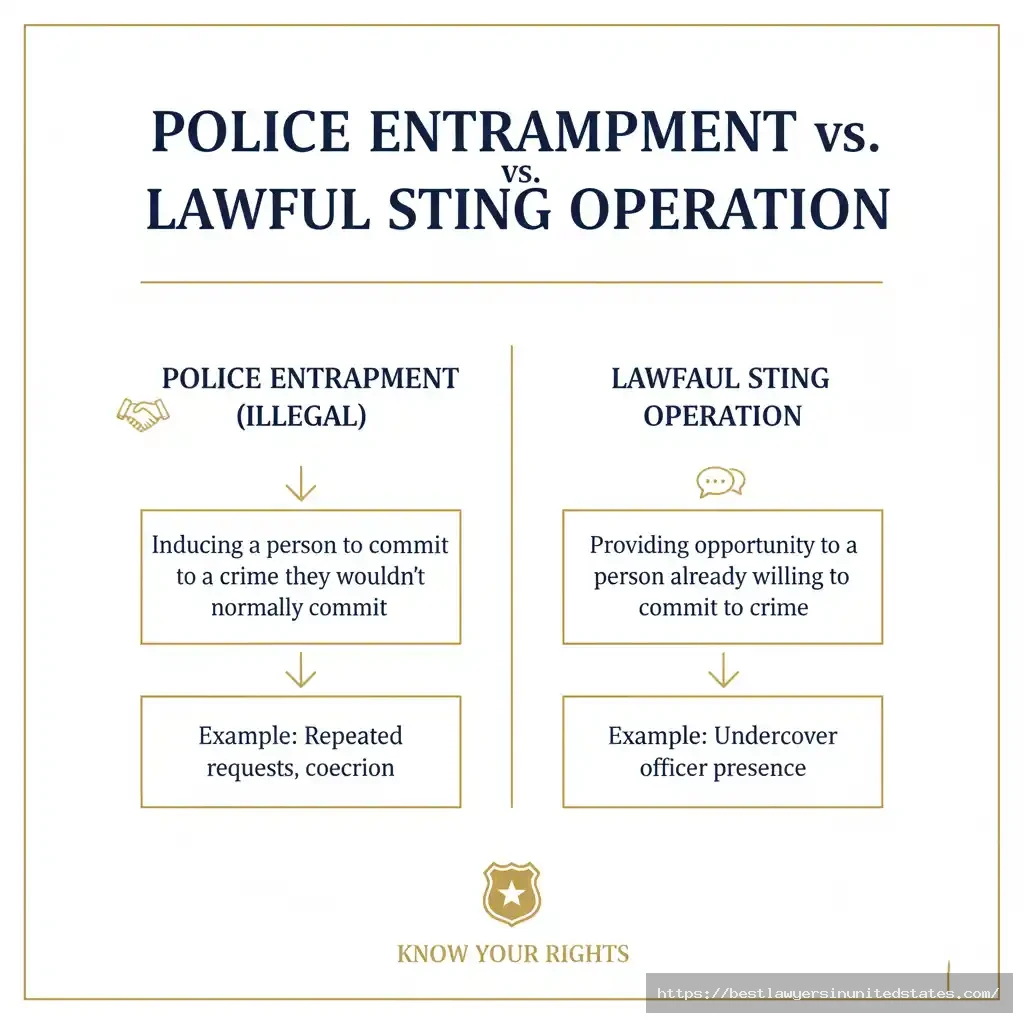
- Law enforcement induces you to commit a crime you weren’t predisposed to commit
- The idea originated entirely with police
- You wouldn’t have committed the crime without police pressure or persuasion
Entrapment does NOT apply when:
- Police simply provide an opportunity (like posing as a willing participant)
- You initiate contact
- You’re the first to suggest money or sexual acts
- You have a prior history of similar behavior
If an undercover officer posts an ad and you respond offering money for sex, that’s not entrapment—you made the decision independently. If an officer repeatedly pressures someone with no interest in prostitution until they reluctantly agree, that might constitute entrapment, but prosecutors rarely bring charges in such clear-cut cases.
Legal Defenses Against Prostitution Charges in Florida
If you’re facing prostitution or solicitation charges, several defenses may apply depending on your specific circumstances.
Entrapment by Law Enforcement
As discussed above, entrapment is difficult to prove but remains a valid defense if police induced you to commit a crime you wouldn’t otherwise have committed.
Lack of Agreement or Exchange
Prostitution requires an agreement to exchange something of value for sexual activity. If no such agreement existed, you may have a defense. For example:
- Conversations that never progressed to an actual agreement
- Vague or ambiguous communications that don’t establish clear terms
- Situations where money was offered for something other than sexual services (like companionship at a social event)
The burden is on the prosecution to prove an agreement existed.
Insufficient Evidence
Florida prosecutors must prove every element of the crime beyond a reasonable doubt. Common evidentiary issues include:
- No recording or documentation of the alleged agreement
- Conflicting witness testimony
- Lack of physical evidence
- Questions about identification
If the evidence is weak, your attorney may file a motion to dismiss or negotiate reduced charges.
Mistaken Identity
In cases involving online communications or crowded public spaces, misidentification can occur. If you can demonstrate you weren’t the person who made the agreement or weren’t present at the alleged location, you have a valid defense.
Constitutional Violations
If police violated your rights during the investigation or arrest, evidence may be suppressed. Common violations include:
- Illegal searches without warrants or probable cause
- Coerced confessions
- Denial of right to counsel
- Improper surveillance methods
Pretrial Intervention Programs in Florida
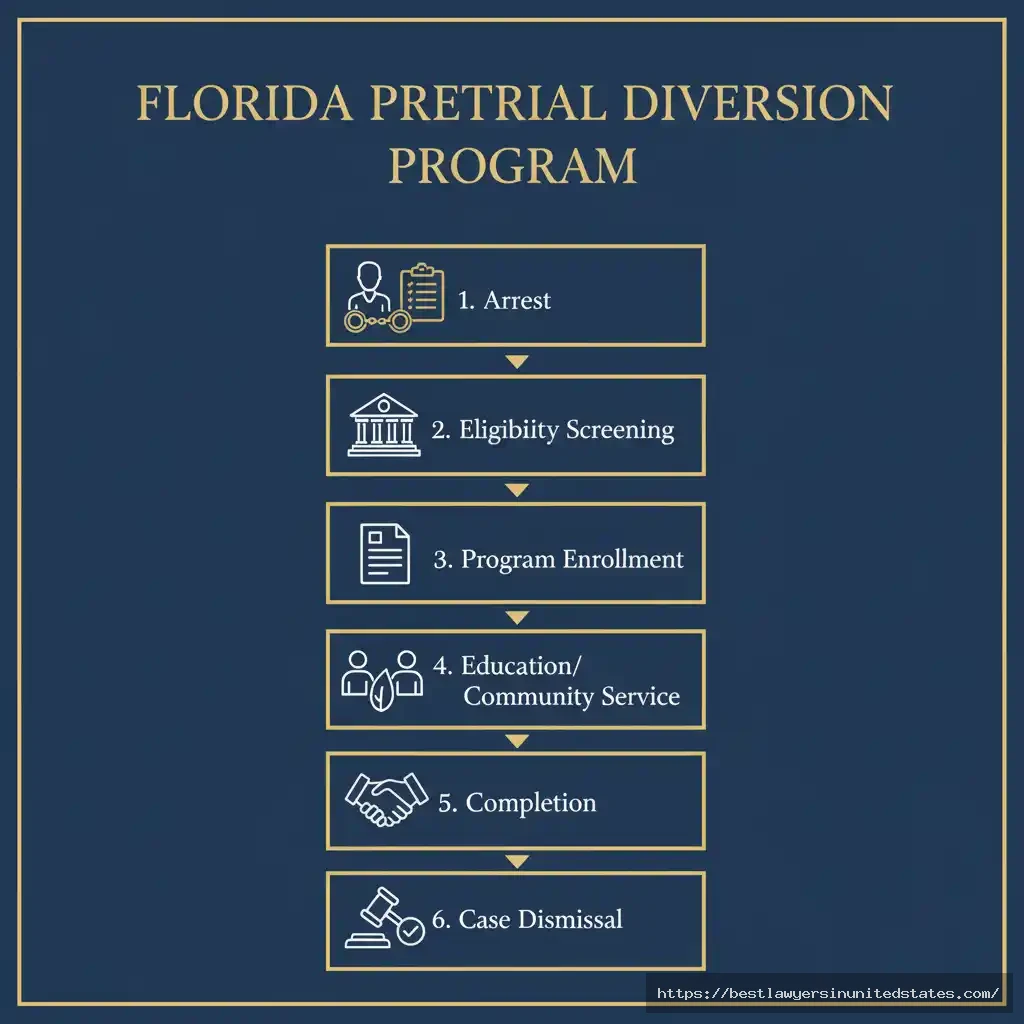
Florida law requires courts to offer pretrial intervention or substance abuse treatment programs to anyone charged with a third or subsequent prostitution offense (other than solicitation/paragraph 2(f) violations).
What is Pretrial Intervention?
Pretrial intervention (PTI) is a diversion program that allows eligible defendants to avoid prosecution by completing requirements such as:
- Educational programs
- Community service
- Counseling or treatment
- Regular check-ins with program supervisors
If you successfully complete the program, charges are dismissed and you avoid a conviction on your record.
Eligibility Under Florida Statute 948.08
To qualify for pretrial intervention in prostitution cases:
- You must be charged with a third or subsequent violation
- The offense must not be a solicitation charge under paragraph 2(f)
- The court must determine you’re suitable for the program
- You cannot have prior convictions for violent crimes or sex offenses (in most cases)
Treatment-Based Drug Court
Some Florida circuits offer specialized treatment-based drug courts that address underlying substance abuse issues. Many individuals arrested for prostitution struggle with addiction, and these courts provide:
- Intensive supervision
- Regular drug testing
- Access to treatment programs
- Gradual reduction of court oversight as you progress
Successfully completing drug court results in charge dismissal or significantly reduced sentences.
Educational Programs
First-time solicitation offenders must attend educational programs about the negative effects of prostitution and human trafficking. These programs cover:
- The connection between prostitution and sex trafficking
- Health risks
- Legal consequences
- Community impact
The court orders and oversees completion of these programs as a condition of sentencing.
How to Request Admission
If you’re eligible for pretrial intervention, your attorney should request admission early in the case. The process involves:
- Filing a motion for pretrial intervention
- Meeting with program administrators
- Undergoing evaluation (possibly including substance abuse assessment)
- Agreeing to program terms
- Attending an acceptance hearing
Not everyone is accepted, and completing the program requires consistent effort and compliance with all requirements.
Should You Hire a Criminal Defense Lawyer?
Prostitution and solicitation charges carry serious consequences beyond just fines and jail time. A conviction creates a permanent criminal record that impacts:
Employment: Many employers conduct background checks. A prostitution conviction can disqualify you from jobs in education, healthcare, government, and positions requiring professional licenses.
Housing: Landlords often deny rental applications for those with criminal records.
Professional licenses: Doctors, nurses, lawyers, teachers, and other licensed professionals may face disciplinary action or license revocation.
Immigration status: Non-citizens may face deportation or be barred from naturalization.
Personal relationships: Criminal records are public. Friends, family, and potential romantic partners may discover the conviction.
If you’re also facing related charges like criminal intimidation or assault stemming from a prostitution arrest, understanding Florida’s criminal statutes becomes even more critical.
What a Lawyer Can Do
A qualified Florida criminal defense attorney can:
Challenge the evidence: Review police reports, recordings, and witness statements for weaknesses or constitutional violations.
Negotiate reduced charges: Work with prosecutors to reduce felonies to misdemeanors or secure dismissals in exchange for program completion.
Explore diversion options: Argue for pretrial intervention, treatment-based drug court, or alternative sentencing.
Protect your rights: Ensure police followed proper procedures and your constitutional rights were respected.
Present mitigating factors: Highlight circumstances like first-time offender status, good character, or evidence of coercion.
Minimize publicity: Handle court appearances and filings to reduce public exposure of your case.
When Legal Representation is Critical
You should consult an attorney immediately if:
- You’re facing felony charges (second or third offense)
- You’re accused of pimping, trafficking, or related offenses
- Police conducted a search of your home, vehicle, or electronic devices
- You’re a professional license holder
- You’re not a U.S. citizen (criminal convictions can trigger deportation)
- Charges involve allegations against a minor
Even for misdemeanor first offenses, having an attorney can mean the difference between a conviction and dismissal, or between jail time and probation.
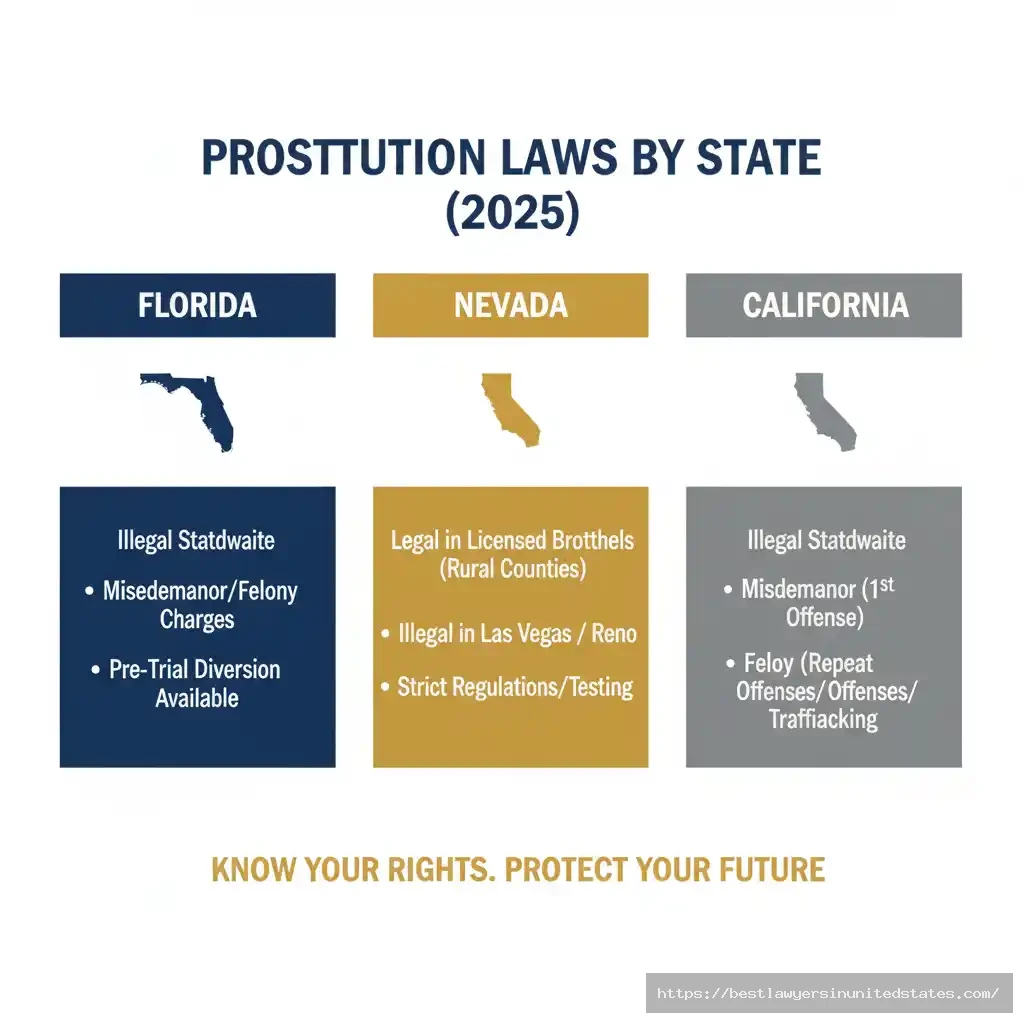
How Does Florida Compare to Nevada and California?
Understanding how different states approach prostitution helps contextualize Florida’s strict enforcement.
| State | Legal Status | Key Differences |
|---|---|---|
| Florida | Illegal statewide | •No legal prostitution anywhere• Buyers face harsher penalties than sellers• Mandatory educational programs and community service• Enhanced penalties for massage parlors |
| Nevada | Legal in some counties | • Licensed brothels permitted in counties with populations under 700,000• Illegal in Las Vegas and Reno• Workers must register and undergo health testing• Street prostitution illegal even in brothel counties(See our Nevada prostitution guide) |
| California | Illegal statewide | • Illegal in all counties and cities• Penalties similar to Florida for first offenses• Some jurisdictions exploring decriminalization. Focus on prosecuting buyers and traffickers(See our California prostitution guide) |
Why Nevada’s Model Doesn’t Apply to Florida
Nevada allows legal brothels in rural counties (like Lyon, Storey, and Nye Counties) because:
- State law gives counties local control over prostitution regulation
- Legal brothels require licensing, health inspections, and worker registration
- Most of Nevada’s population lives in Clark County (Las Vegas) and Washoe County (Reno), where prostitution is illegal
Florida has no similar framework. The state maintains uniform prohibition across all jurisdictions.
The Nationwide Trend
Most states criminalize prostitution. Only Nevada permits any form of legal prostitution, and even there, it’s limited to specific licensed establishments in rural counties. Rhode Island briefly decriminalized indoor prostitution from 1980-2009 (unintentionally, due to a drafting error in the law), but recriminalized it after discovering the loophole.
Federal law doesn’t directly criminalize prostitution, leaving it to states. However, federal laws against sex trafficking (18 U.S.C. § 1591) can apply when:
- Someone is transported across state lines for prostitution
- Force, fraud, or coercion is involved
- Minors are involved
For a broader understanding of how prostitution laws vary across the United States, see our complete U.S. prostitution legal guide.
Frequently Asked Questions About Prostitution in Florida
Is prostitution legal in Florida?
No. Prostitution is illegal throughout Florida under Florida Statute 796.07. There are no cities, counties, or zones where it’s permitted.
Where is prostitution legal in Florida?
Nowhere. All 67 Florida counties prohibit prostitution. Unlike Nevada, Florida has no legal brothels or red-light districts.
What is the penalty for prostitution in Florida?
First offense: 2nd-degree misdemeanor (up to 60 days jail, $500 fine). Second offense: 1st-degree misdemeanor (up to 1 year jail, $1,000 fine). Third offense: 3rd-degree felony (up to 5 years prison, $5,000 fine).
Is soliciting prostitution illegal in Florida?
Yes. Solicitation carries harsher penalties than engaging in prostitution. First-time buyers face mandatory community service and educational programs. Second and subsequent offenses include mandatory jail time and a $5,000 civil penalty.
Is swinging legal in Florida?
Yes, if it involves only consenting adults and no exchange of money for sexual services. Private sexual activities between consenting adults aren’t illegal. However, if money changes hands, it becomes prostitution regardless of how the arrangement is characterized.
Is happy ending legal in Florida?
No. Sexual services provided at massage establishments constitute prostitution and carry enhanced penalties under Florida law.
What is the 7-year law in Florida?
This typically refers to Florida’s statute of limitations for certain crimes. For most misdemeanors, prosecution must begin within 2 years. For most third-degree felonies, within 3 years. However, prostitution cases are usually charged immediately after arrest, so statute of limitations rarely factors into these cases.
Is prostitution legal in all 50 states?
No. Only Nevada permits legal prostitution, and only in licensed brothels in certain rural counties. All other states criminalize prostitution. See our U.S. prostitution laws guide for state-by-state details.
Is backpage illegal in Florida?
Backpage.com was shut down by federal authorities in 2018 for facilitating sex trafficking. Using similar classified sites or platforms to arrange prostitution is illegal in Florida. Police monitor these sites and conduct sting operations.
What are the three types of prostitution?
The three common categories are: (1) Street prostitution (soliciting in public areas), (2) Escort or outcall prostitution (advertising services online or through agencies), and (3) Brothel prostitution (working from a fixed location). All three are illegal in Florida.
Is sexting illegal in Florida?
Sexting between consenting adults is legal. However, sexting involving anyone under 18 constitutes child pornography under Florida and federal law, even if both parties are minors. This is a separate issue from prostitution.
Finding a Florida Criminal Defense Attorney
If you need immediate legal representation for prostitution charges in Florida, our directory includes experienced criminal defense attorneys throughout the state. Whether you’re in Miami, Tampa, Orlando, or Jacksonville, finding qualified legal counsel is your first step toward protecting your rights.
Conclusion
Prostitution is illegal everywhere in Florida. There are no legal red-light districts, no cities with exemptions, and no special zones where prostitution is permitted. Whether you’re in Miami, Orlando, Tampa, Jacksonville, or the Florida Keys, state law prohibits buying, selling, and facilitating prostitution.
Florida takes an aggressive approach to enforcement, with penalties that escalate rapidly for repeat offenses. Buyers face particularly harsh consequences, including mandatory jail time, community service, educational programs, and civil penalties that fund victim services. Enhanced penalties apply when massage establishments are involved, reflecting the state’s focus on combating human trafficking.
If you’re facing prostitution or solicitation charges, the consequences extend far beyond fines and jail time. A criminal record can impact your employment, housing, professional licenses, and immigration status. Pretrial intervention programs offer alternatives for some defendants, but eligibility is limited and requires experienced legal guidance.
Florida’s approach contrasts sharply with Nevada’s regulated brothel system and reflects the nationwide trend of criminalizing prostitution while increasingly focusing enforcement on buyers and traffickers rather than individuals selling services. Understanding these laws helps clarify your rights and the serious nature of these charges.
If you’ve been arrested or are under investigation for prostitution-related offenses in Florida, consult a qualified criminal defense attorney immediately to protect your rights and explore all available defense options.
A prostitution conviction can also impact family law matters, including custody disputes and divorce proceedings. If you’re concerned about how these charges might affect your family situation, consulting both a criminal defense attorney and a family law specialist may be necessary.
Related Resources:
- Is Prostitution Legal in the US? Complete Legal Guide (2025)
- Is Prostitution Legal in Nevada? [2025 Complete Guide]
- Is Prostitution Legal in California? [2025 Complete Guide]
- Is Prostitution Legal in Las Vegas, Nevada?
Related Articles:
Is Prostitution Legal in Japan? A Legal Analysis (2025)
Is Prostitution Legal in Amsterdam? Complete 2025 Legal Guide
Is Prostitution Legal in New York 2025? Complete Guide to NYC Laws & Penalties
Is Prostitution Legal in Mexico? Complete 2025 Guide to Sex Work Laws by State
Is Prostitution Legal in Europe? 2025 Complete Guide
Is Prostitution Legal in Canada? 2025 Laws Explained
