
Yes, prostitution is legal in many European countries, but the laws vary dramatically from nation to nation. Some countries like Germany, Netherlands, and Switzerland have fully legalized and regulated sex work, while others like Sweden have criminalized buying (but not selling) sexual services. Meanwhile, several European nations maintain complete bans on all forms of prostitution.
The landscape of sex work legislation across Europe is complex, much like the patchwork in the United States, see how it works in is prostitution legal in Nevada.
What’s legal in Amsterdam’s famous red light district could land you in legal trouble just across the border in France, similar to how laws differ across states, as discussed in our guide on is prostitution legal in Florida.
Understanding these differences is crucial whether you’re researching legal frameworks, planning travel, or simply curious about how different societies approach this contentious issue.
Legal Disclaimer: This article provides general information only and does not constitute legal advice. Laws change frequently and vary by jurisdiction. Consult a qualified attorney for specific legal guidance.
📌 2026 Update: This guide has been updated for January 2026. No major legislative changes occurred in European prostitution laws in late 2025, though enforcement patterns continue to evolve. France’s buyer criminalization law (enacted 2016) remains in effect, and Germany’s 2017 regulatory reforms are still being implemented with ongoing compliance challenges.
Read About: DailyNewsLaw
Quick Answer: Which European Countries Allow Prostitution?
Here’s the breakdown of prostitution laws across Europe as of 2026:
| Legal Status | Countries |
|---|---|
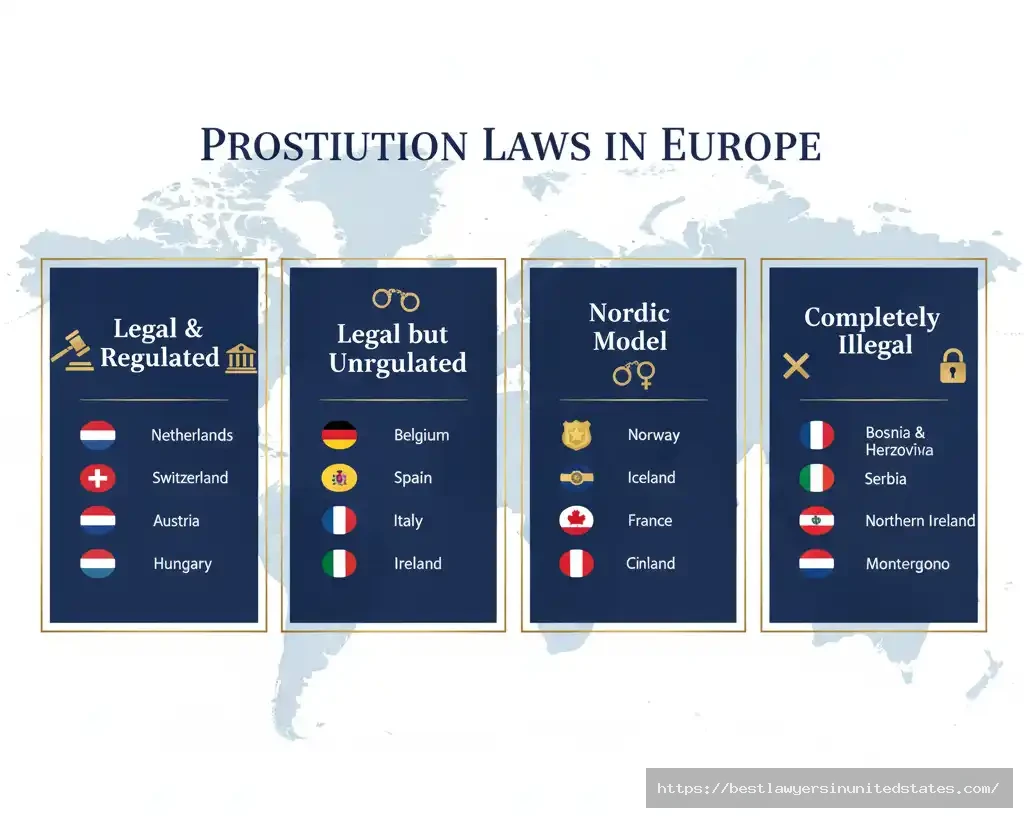
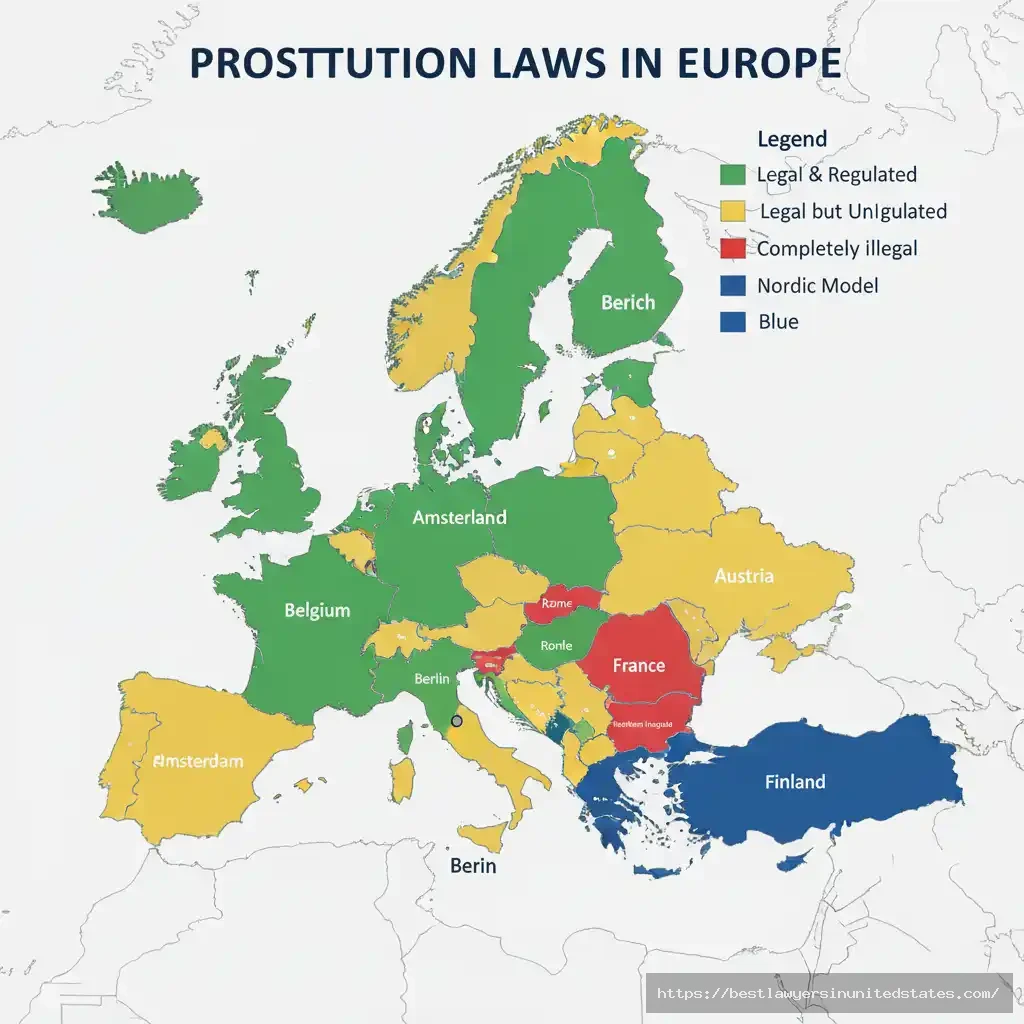
| Legal & Regulated | Germany, Netherlands, Switzerland, Austria, Greece, Turkey, Hungary, Latvia |
| Legal but Unregulated | Spain, Italy, Portugal, Belgium, Czech Republic, Poland, Bulgaria |
| Nordic Model (Buying Illegal) | Sweden, Norway, Iceland, France, Ireland, Northern Ireland |
| Completely Illegal | Croatia, Slovenia, Lithuania, Romania, Albania, Malta |
Key Takeaway: Roughly 60% of European countries permit some form of sex work, but only about 15% have comprehensive regulatory frameworks in place.
Prostitution Legal Status: Quick Reference Table (2026)
| Country | Legal Status | Can You Buy Sex? | Brothels Allowed? |
|---|---|---|---|
| Germany | ✅ Legal & Regulated | Yes | Yes |
| Netherlands | ✅ Legal & Regulated | Yes | Yes |
| Switzerland | ✅ Legal & Regulated | Yes | Yes |
| Spain | ⚠️ Legal but Unregulated | Yes | No (illegal) |
| Italy | ⚠️ Legal but Unregulated | Yes | No (illegal) |
| France | ❌ Buying Illegal (since 2016) | No (€1,500 fine) | No |
| Sweden | ❌ Buying Illegal (since 1999) | No (criminal) | No |
| Ireland | ❌ Buying Illegal (since 2017) | No (€1,000 fine) | No |
| UK (England/Wales) | ⚠️ Complex | Technically yes | No (2+ workers = brothel) |
Last updated: January 2026
Understanding the Different Legal Models
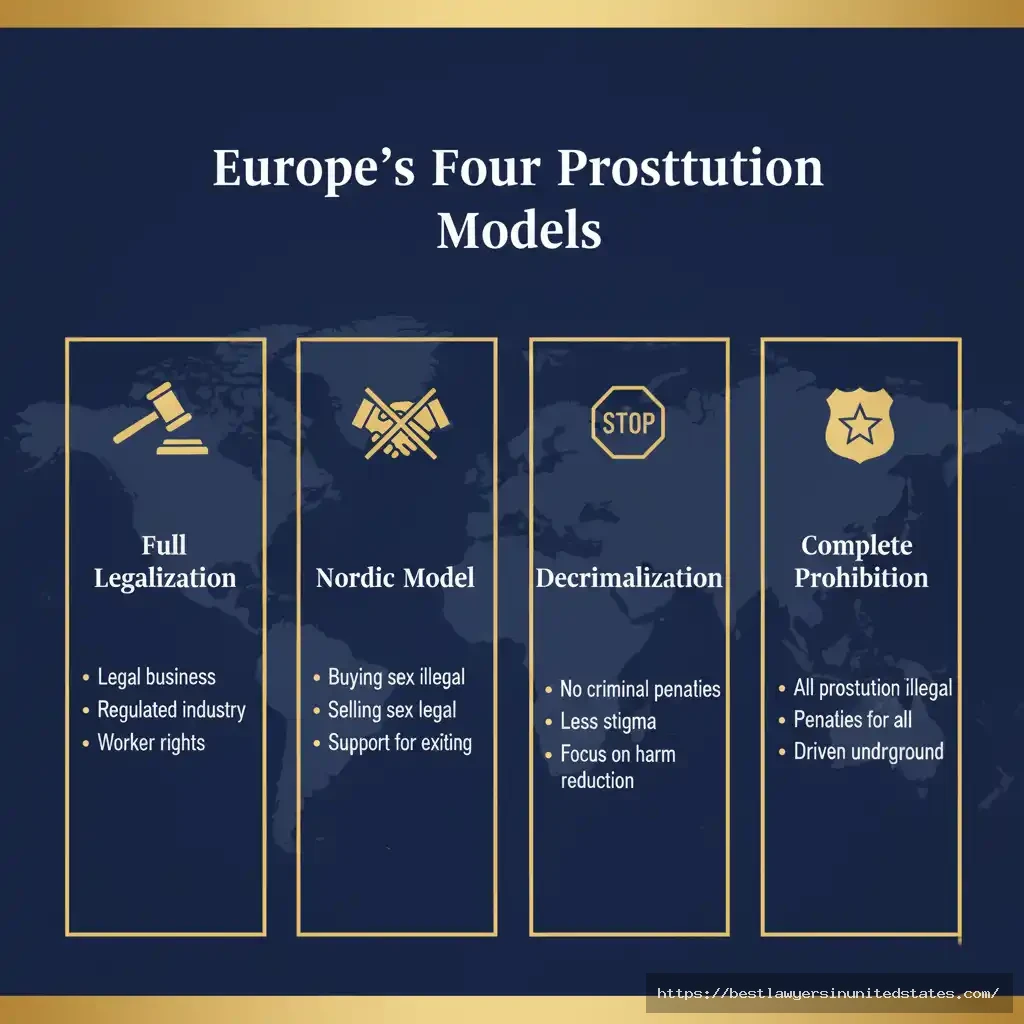
European countries have adopted four distinct approaches to prostitution, each reflecting different social values and policy goals.
Full Legalization Model
Countries like Germany and the Netherlands treat sex work as a legitimate profession. Workers must register with authorities, pay taxes, and comply with health regulations. Brothels operate legally under business licenses, and sex workers receive labor protections including social security benefits.
Germany legalized prostitution in 2002, creating what some call “Europe’s biggest brothel.” The industry generates approximately $16.3 billion annually, with an estimated 400,000 to 1 million sex workers. Workers rent rooms in licensed establishments like eros centers, negotiate their own rates, and theoretically enjoy the same protections as any other worker.
Nordic Model (Swedish Model)
Sweden pioneered this approach in 1999, making it illegal to buy sexual services but legal to sell them. The logic: sex workers are victims who shouldn’t be criminalized, while buyers create the demand that fuels exploitation.
This model treats all prostitution as inherently harmful and seeks to eliminate it by targeting demand. Buyers face fines starting at several hundred euros. Norway, Iceland, France, Ireland, and Northern Ireland have since adopted similar laws.
Decriminalization
Some countries like Spain and the Czech Republic don’t criminalize prostitution itself but regulate certain aspects. Street solicitation might be banned in specific zones, or running a brothel could be illegal while independent sex work remains permitted. These countries occupy a gray area between legalization and prohibition.
Complete Prohibition
A smaller group of European nations, including Croatia and Romania, criminalize all forms of prostitution. Both buyers and sellers face criminal penalties, though enforcement varies significantly.
Legal Status by European Region
Western Europe
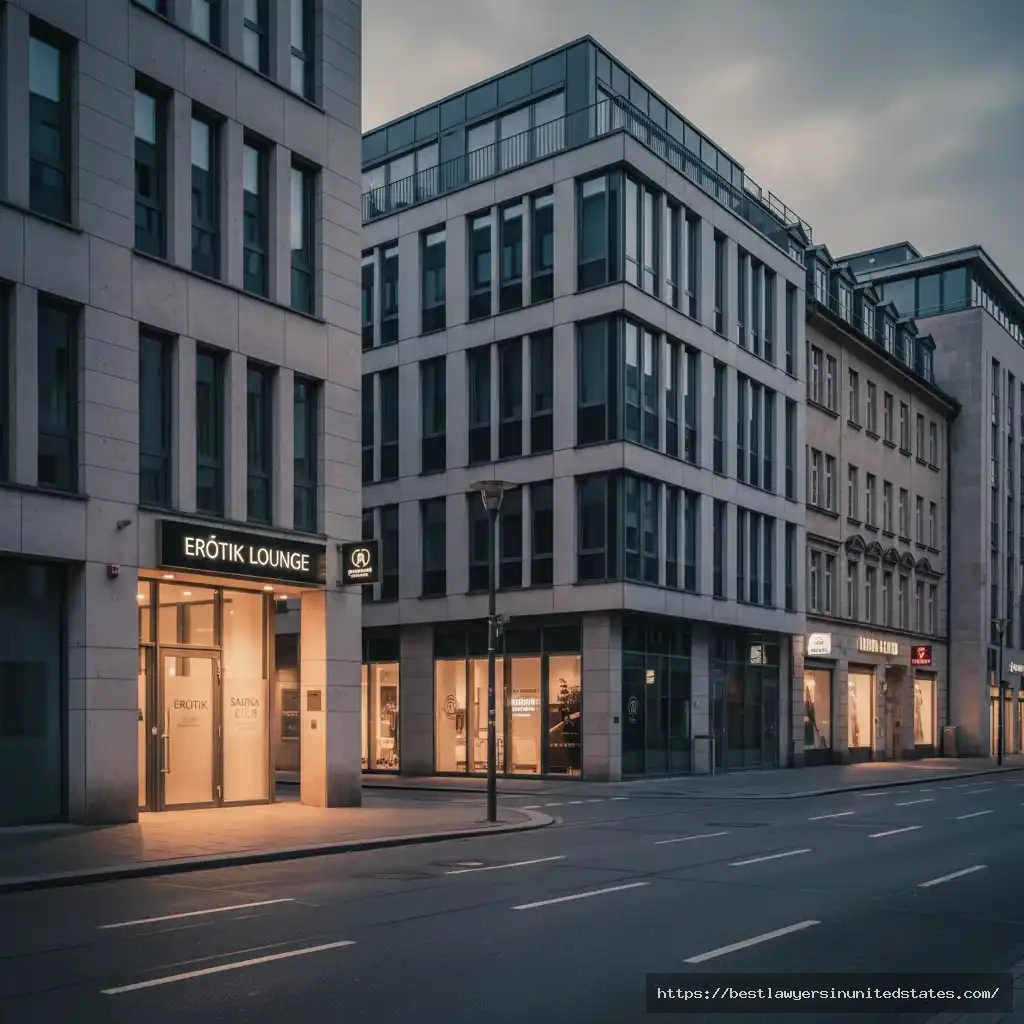
Germany stands as Europe’s most permissive jurisdiction. After legalizing prostitution in 2002, the country implemented the Prostitution Act Reform in 2017, requiring sex workers to register with authorities and undergo regular health screenings. Major cities feature designated red light districts, with Hamburg’s Reeperbahn and Frankfurt’s Bahnhofsviertel among the most famous.
Workers typically operate from eros centers—multi-story buildings where they rent rooms for $90-$160 daily. Mega-brothels like Pascha in Cologne span 12 floors and house over 100 workers. Paradise, a chain of five establishments, opened a 15,000 square-foot location near the French border in 2014.
Despite legalization, only about 76 women have registered for social security benefits. Authorities estimate Hamburg alone has 6,000 sex workers, but only 600 registered as required by law.
Netherlands legalized and regulated prostitution in 2000, aiming to combat human trafficking and improve worker safety. Amsterdam’s De Wallen district features the iconic window displays where sex workers solicit clients for approximately 30-minute sessions.
However, Dutch authorities have grown increasingly concerned about trafficking and exploitation. Amsterdam’s mayor has called for reforms, noting the industry is “increasingly linked to the humiliation of women by large groups of tourists” who take photos without consent.
Switzerland has permitted prostitution since 1942, protecting it under the constitution. The country pioneered “sex boxes”—drive-through facilities where clients negotiate with workers, park in private garages, and complete transactions. These facilities, which cost Zurich $2 million to build, include security cameras and on-site social services. Officials report the system has reduced violence against sex workers and street-level trafficking.
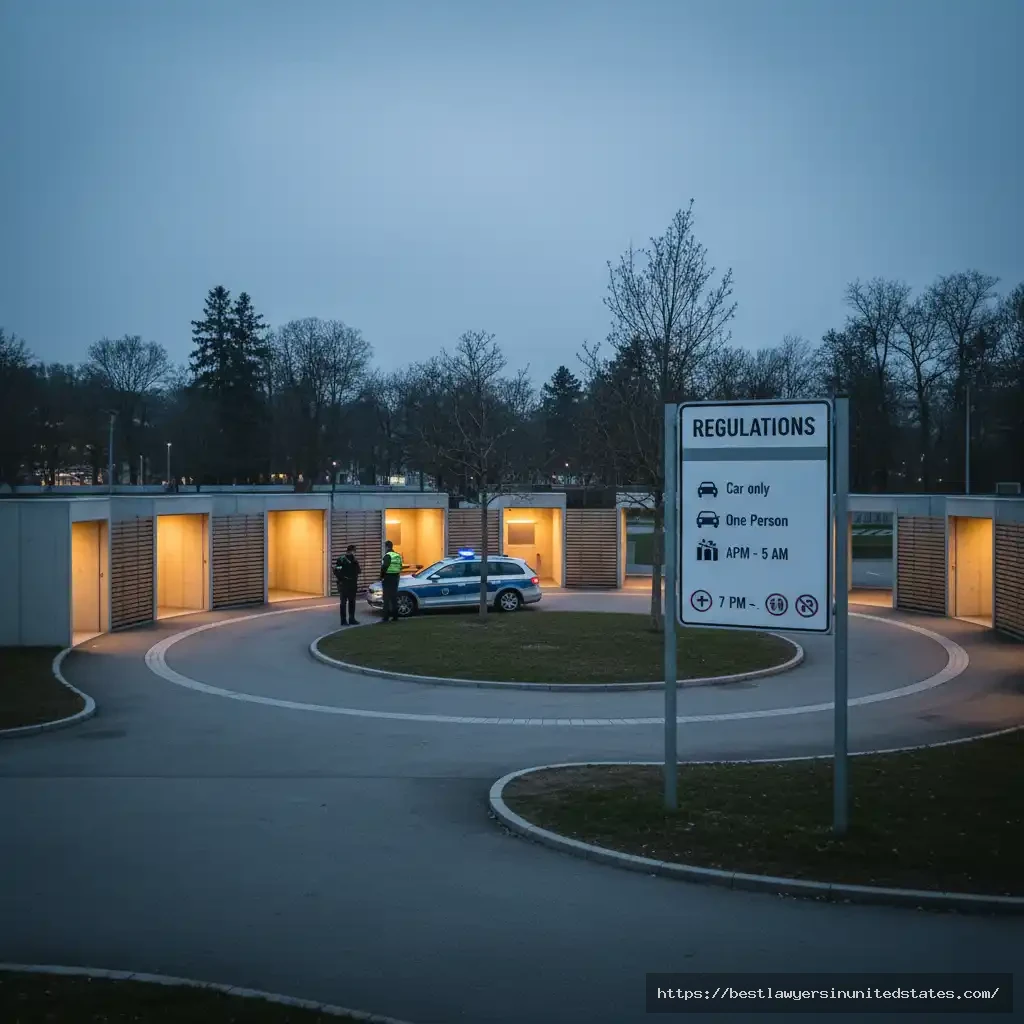
Workers either operate from licensed brothels or purchase daily “tickets” to work in designated street areas. The approach emphasizes harm reduction and worker safety over moral considerations.
Austria permits regulated prostitution with mandatory health checks and registration. Vienna’s red light districts operate openly, with workers paying taxes and receiving health insurance.
Belgium allows sex work but prohibits third-party exploitation (pimping and brothel operation). Individual sex workers can operate legally but cannot work together in organized establishments. This creates a confusing legal landscape where the work itself is permitted but its practical organization often isn’t.
France adopted the Nordic model in 2016, criminalizing the purchase of sexual services. Buyers face fines of €1,500 for first offenses, rising to €3,750 for repeat violations. Sex workers themselves cannot be prosecuted for selling services, but solicitation and pimping remain illegal.
Northern Europe
Sweden implemented the world’s first “buyer criminalization” law in 1999. The Swedish Sex Purchase Act makes it illegal to obtain sexual services, with penalties including fines and up to one year imprisonment. The law explicitly states its purpose: to reduce prostitution by eliminating demand.
Studies on the policy’s effectiveness show mixed results. Police report fewer street-level sex workers, but critics argue the trade simply moved online where workers face greater risks without legal protection.
Norway and Iceland followed Sweden’s lead in 2009 and 2009 respectively, implementing similar buyer-focused laws. Both countries view prostitution as a form of violence against women that should be eradicated rather than regulated.
Denmark takes a more moderate approach. Prostitution itself is legal, but operating brothels and pimping are prohibited. Street prostitution is banned in some municipalities but permitted in others.
Finland allows selling sexual services but criminalizes purchasing them as of 2006. The law specifically targets those who buy services from trafficked or pimped individuals, with penalties up to six months imprisonment.
Ireland and Northern Ireland both adopted Nordic-style legislation, making it illegal to purchase sexual services while decriminalizing sellers. The 2017 law in Ireland imposes fines up to €1,000 for buying sex.
United Kingdom (England, Wales, Scotland) maintains a complex patchwork of laws. Selling sex is legal, but related activities like soliciting in public, running brothels, and kerb crawling are criminal offenses. More than two sex workers sharing premises constitutes a brothel under UK law.
Scotland criminalizes the purchase of sex with someone who has been trafficked or controlled for gain.
Latvia and Estonia permit regulated prostitution, though the industries remain relatively small compared to Western European counterparts.
Lithuania prohibits prostitution entirely, with both buyers and sellers subject to administrative fines.
Southern Europe
Spain sits in a legal gray zone. Prostitution itself isn’t illegal, but pimping and running brothels are criminal offenses. This creates a situation where sex work happens openly—Spain hosts an estimated 300,000 sex workers—but without legal protections or regulations.
Spanish brothels operate in a legal paradox: everyone knows they exist, yet they technically shouldn’t under current law. A 2024 proposal to criminalize clients similar to the Nordic model sparked intense debate but hasn’t yet passed.
Italy similarly allows prostitution but prohibits organized exploitation. Street prostitution is visible in major cities, though local ordinances in places like Milan ban solicitation in certain areas.
The Italian approach creates precarious conditions. Workers cannot legally share apartments or employ drivers, forcing them to work alone in potentially dangerous situations.
Portugal decriminalized all drugs in 2001 and maintains a similarly liberal stance on prostitution. Sex work is legal but unregulated, with neither licensing requirements nor explicit protections. Brothels remain illegal, though independent work is permitted.
Greece requires sex workers to register with authorities and carry health cards showing regular STD testing. Registered workers operate legally from licensed establishments, though unregistered prostitution also exists.
Turkey licenses brothels in certain zones, requiring workers to hold health cards and undergo regular medical examinations. However, no new licenses have been issued since the 1980s, and many existing brothels have closed. The legal sex industry has shrunk significantly while informal prostitution persists.
Cyprus, Malta, and Croatia maintain prohibition, criminalizing both buyers and sellers to varying degrees.
Central and Eastern Europe
Czech Republic allows prostitution but doesn’t regulate it, creating a thriving but legally ambiguous industry. Prague attracts significant sex tourism, with workers operating from clubs, massage parlors, and apartments.
Multiple attempts to regulate the industry have failed in parliament. The current situation leaves workers without legal protections while the trade operates openly.
Poland decriminalized prostitution in 1997, making it legal to sell sex but illegal to organize or profit from someone else’s prostitution. Like Italy and Belgium, this creates a situation where individual work is permitted but practical business operation isn’t.
Hungary regulates prostitution, requiring registration and health checks. Designated zones exist where street prostitution is permitted, though workers must carry identification and health certificates.
Romania, Bulgaria, and Albania prohibit prostitution, though enforcement varies and informal sex work persists in all three countries.
Slovakia doesn’t criminalize prostitution itself but outlaws promoting or organizing it. Individual sex work exists in a legal limbo.
Russia and Ukraine technically prohibit prostitution, but enforcement is notoriously lax. Both countries have substantial sex industries operating despite legal bans.
Europe’s Most Famous Red Light Districts
Amsterdam’s De Wallen
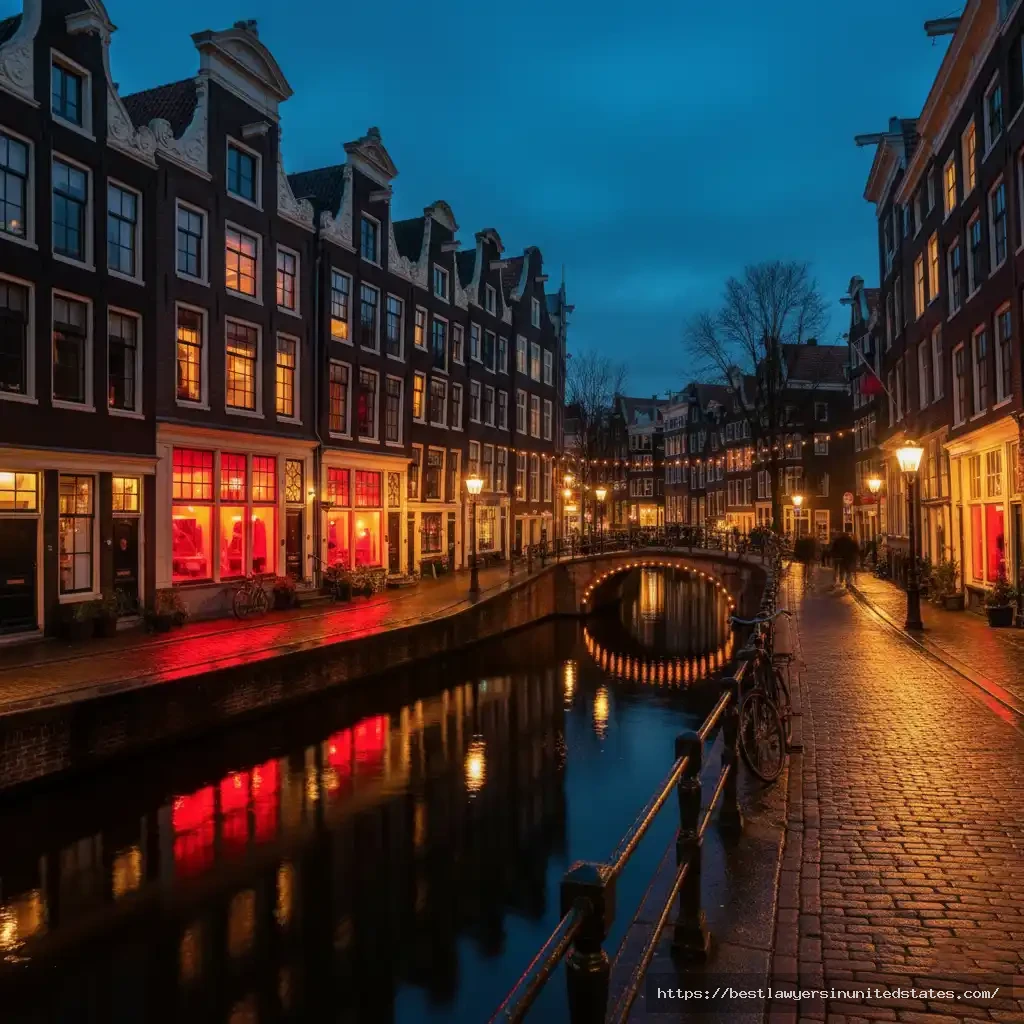
The world’s most iconic red light district spans several blocks in Amsterdam’s oldest neighborhood. Sex workers display themselves in window storefronts illuminated by red neon lights, a practice dating back decades.
The Dutch government legalized this in 2000, bringing window prostitution under regulatory oversight. Workers must be at least 21 years old, pay taxes, and obtain work permits if they’re non-EU citizens. Sessions typically cost €50-€100 for 15-30 minutes.
However, the district faces increasing pressure. Mayor Femke Halsema has proposed reforms to combat “overtourism,” noting that masses of tourists taking photos humiliate workers. Some windows have closed as the city attempts to balance its liberal heritage with concerns about trafficking and neighborhood disruption.
Hamburg’s Reeperbahn
Germany’s most famous red light district has operated for over a century. During its 1980s peak, the Reeperbahn hosted over 1,000 sex workers. Today, the area attracts tourists for its nightlife and entertainment as much as its sex industry.
The main prostitution street features 12-foot barriers at both ends. Men under 18 and all women are prohibited from entering—a policy that generates regular protests from feminist groups who call it discriminatory.
Hotel Luxor, Hamburg’s oldest brothel, operated for 60 years before closing in 2008 due to declining business from internet competition.
Frankfurt’s Bahnhofsviertel
The Train Station Quarter hosts one of Germany’s most visible sex industries. Street prostitution concentrates along specific roads, while eros centers offer indoor options. The district even celebrates its heritage with “Bahnhofsviertelnacht,” an annual festival running through the red light zone.
Athens, Greece
Greece’s economic crisis pushed more women into sex work, with Athens seeing a 7% increase in registered sex workers between 2012 and 2015. Simultaneously, prices dropped dramatically—from approximately €41 in 2012 to €20 in 2017, according to researcher data.
Greek law requires registration and health cards, but enforcement struggles as economic desperation drives informal prostitution.
Safety and Human Trafficking: The Ongoing Debate
The question of whether legalization helps or harms sex workers remains contentious, with compelling arguments on both sides, a debate also reflected in North America, where you can explore more in is prostitution legal in Canada.
The Case for Legalization
Proponents argue that bringing sex work into the legal system provides crucial protections. In countries with regulation, workers can report violence to police without fear of arrest. They receive labor rights, access to healthcare, and can form unions to advocate for their interests.
Switzerland’s sex box experiment demonstrates potential benefits. Officials report the facilities reduced street violence and trafficking by moving transactions into controlled environments with security cameras and social workers present.
Germany’s system allows workers to access social security, health insurance, and retirement benefits—protections unavailable in prohibition systems.
The Case Against Legalization
Critics point to alarming trafficking statistics. An EU-funded report found over 23,000 people trafficked between 2008-2010, with the vast majority forced into prostitution. Germany and the Netherlands, despite their regulatory frameworks, rank among Europe’s worst trafficking destinations.
Opponents argue legalization creates cover for traffickers. Among hundreds of legal sex workers, identifying coerced individuals becomes nearly impossible. Police raids on German brothels frequently uncover trafficking victims working alongside willing participants.
Only 76 women in Germany’s entire system have registered for social security benefits—suggesting most workers either can’t or won’t engage with the legal framework. Hamburg authorities believe only 10% of the city’s sex workers have registered as required.
The Nordic Model’s Mixed Results
Sweden reports reduced street prostitution since implementing buyer criminalization. Police data shows fewer visible sex workers and increased social stigma around purchasing sex.
However, critics note the trade simply moved online. Sex workers report that criminalization of buyers makes their work more dangerous—clients insist on meeting in isolated locations to avoid police, and workers have less time to screen potentially violent customers.
Research by Max Waltman at Stockholm University found the law reduced overall prostitution levels but acknowledged gaps in data about online markets.
The Safest Approach?
New Zealand’s full decriminalization model—where neither buying nor selling is criminalized, but trafficking and coercion remain illegal—shows promising results. A government-commissioned report found workers felt safer, were more likely to report violence, and had better relationships with police.
However, European countries have been reluctant to adopt New Zealand’s approach, with moral and cultural factors influencing policy more than empirical evidence.
Economic Impact of Europe’s Sex Industry
The prostitution industry represents a significant economic force across Europe, though exact figures remain difficult to verify due to the nature of the work.
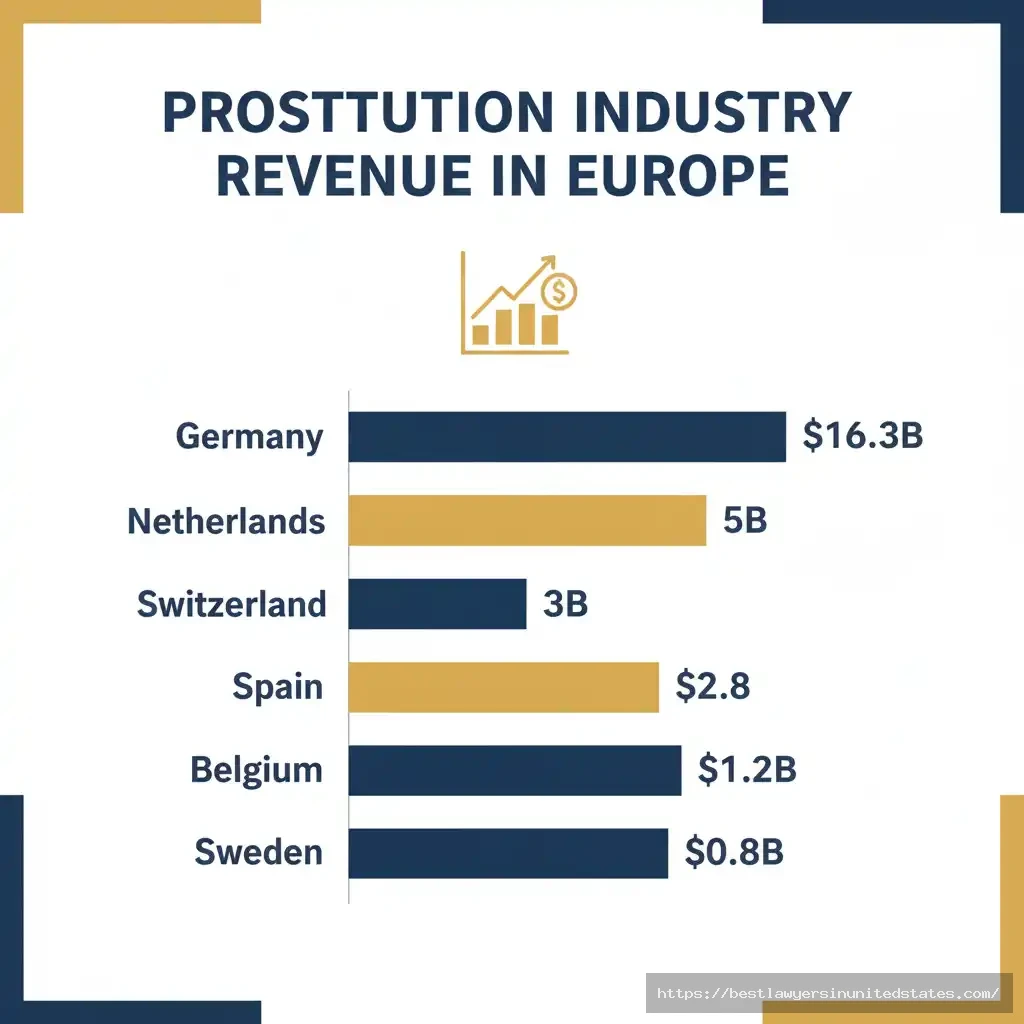
Germany’s $16 Billion Industry
Germany’s sex trade generates approximately $16.3 billion annually, making it one of the country’s larger service industries. With an estimated 400,000 to 1 million workers, the sector employs more people than Germany’s car manufacturing plants.
The government collects tax revenue from registered workers and licensed establishments, though widespread non-compliance limits actual collections. Workers typically earn between €50-€150 per client, with busy establishments handling dozens of transactions daily.
Netherlands’ Tourism Revenue
Amsterdam’s red light district attracts millions of tourists annually, generating substantial revenue for surrounding businesses. Hotels, restaurants, bars, and coffee shops all benefit from visitor traffic, though authorities increasingly question whether this tourism model is sustainable.
Economic Desperation in Southern Europe
Greece’s financial crisis demonstrated prostitution’s relationship to economic conditions. As unemployment soared and austerities bit, both the number of sex workers and client volumes increased while prices fell. Researchers documented this “race to the bottom” where desperate women undercut each other’s rates.
Spain’s large informal sector—estimated at 300,000 workers—operates outside tax systems, representing significant underground economic activity.
Legal Consequences and Penalties
Understanding what happens when you violate prostitution laws is crucial for assessing different systems’ approaches.
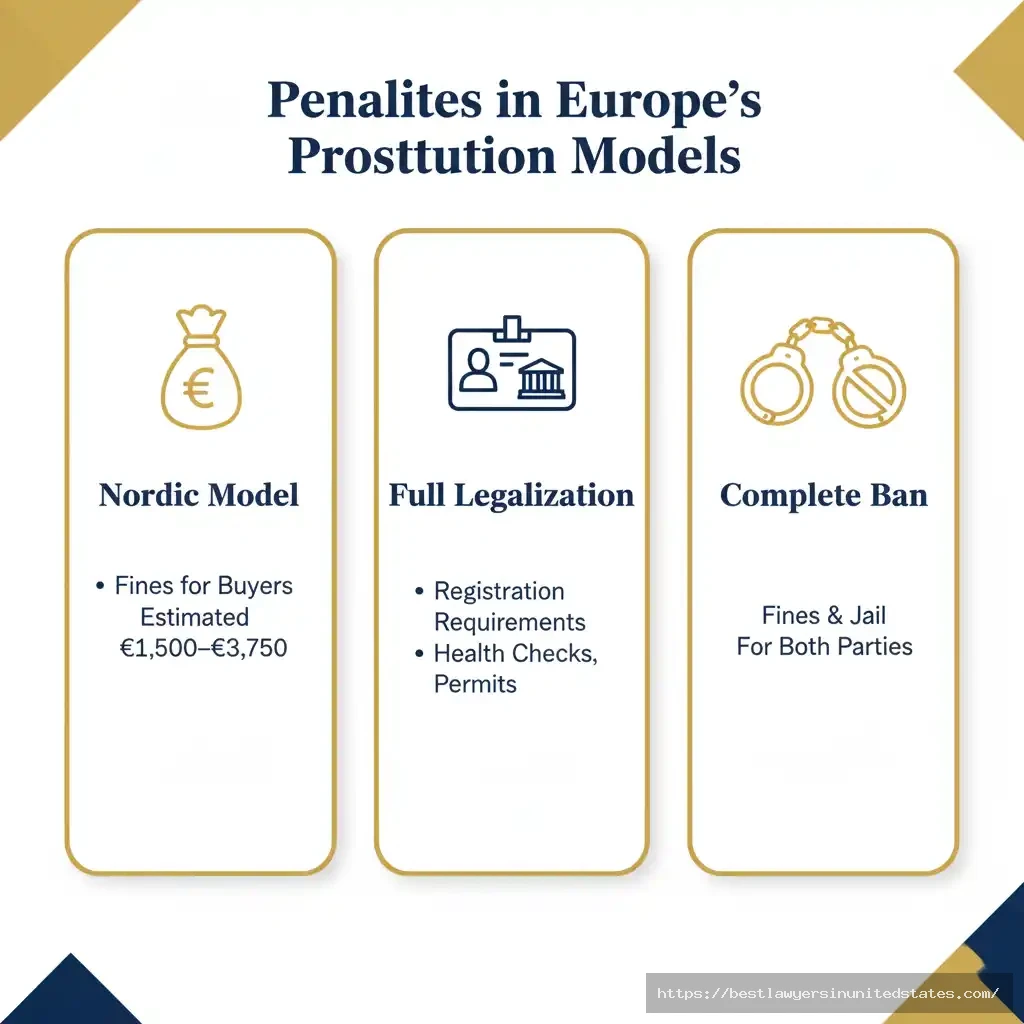
Nordic Model Countries
In Sweden, buyers face fines of several hundred euros for first offenses. Repeat offenders can receive sentences up to one year imprisonment, though jail time remains rare. Prosecutors must prove the person knowingly purchased sexual services.
France imposes €1,500 fines for first violations, doubling to €3,750 for repeat offenses. The law also requires offenders to attend awareness classes about prostitution’s harms.
Fully Legal Countries
Germany penalizes unregistered sex work with administrative fines rather than criminal charges. Operating without proper licenses can result in business closures and larger fines. However, enforcement focuses mainly on obvious commercial establishments rather than individual workers.
Workers who fail to pay taxes on earnings face the same penalties as any tax evader—fines and potential criminal prosecution for large-scale evasion.
Complete Prohibition Countries
Romania criminalizes prostitution with fines up to several hundred euros for both buyers and sellers. Repeat offenses can lead to short jail sentences.
Croatia similarly fines both parties, with penalties increasing for repeated violations or organized prostitution.
Tourist-Specific Concerns
Foreign visitors aren’t exempt from local laws. Americans arrested for buying sex in Sweden face the same penalties as Swedish citizens, unlike the regulated system explored in is prostitution legal in Las Vegas Nevada. A prostitution conviction can affect future visa applications or entry to other countries.
Several high-profile cases have involved tourists arrested in Nordic model countries, unaware that purchasing sex was illegal despite its legality in their home countries or previous destinations.
What Terminology Should You Use?
Language matters significantly in discussions about sex work, with strong preferences among those involved in the industry.
Sex Worker vs. Prostitute
Most people engaged in the trade prefer “sex worker” over “prostitute.” The term emphasizes that it’s work—a service provided in exchange for payment—rather than a moral judgment about the person.
Major human rights organizations including Amnesty International and the World Health Organization use “sex worker” in their official documents. The term acknowledges agency and labor rights rather than viewing the person as defined by their occupation.
High-End Terminology
Terms like “escort,” “courtesan,” or “companion” typically describe higher-priced, more selective sex work. These workers often provide broader services including companionship at events, travel, or extended engagements beyond just sexual services.
The term “prostitute” increasingly carries stigma and is avoided by many in the industry and by researchers, though it remains common in legal statutes and news coverage.
Legal Considerations for Visitors and Tourists
If you’re traveling to Europe and considering engaging with the sex industry, understanding legal risks is essential.
Know the Local Laws
Legal status changes at borders. What’s legal in Germany becomes a criminal offense in France. Before engaging with sex workers in any country, research current local laws—they change frequently and can carry serious consequences.
Amsterdam’s famous red light district welcomes tourists to observe, but photographing workers without permission is prohibited and can lead to confrontations or police involvement.
Age Verification Laws
All European countries strictly enforce age-of-consent and sex trafficking laws. Engaging with anyone under 18 is illegal throughout Europe, with severe criminal penalties including imprisonment.
Some countries require sex workers to carry identification proving their age and legal status. In Greece and Hungary, workers must show health cards. Authorities can fine or arrest clients who engage with unregistered workers.
Trafficking Awareness
Many European countries criminalize knowingly purchasing sex from trafficked individuals. In Scotland and France, you can face prosecution if authorities believe you should have known the person was coerced, even if you didn’t explicitly know.
Signs of trafficking include workers who seem controlled by others, can’t leave freely, don’t have their own documents, or show signs of physical abuse. If you suspect trafficking, you can report it to local police or international hotlines.
Immigration Consequences
A prostitution-related arrest or conviction can affect immigration status, visa applications, and future travel. Even in countries where prostitution is legal, associated crimes like public nuisance or solicitation can create legal records that impact border crossings.
Current Legislative Debates and Future Trends
European prostitution laws continue evolving as societies grapple with competing values around autonomy, exploitation, public health, and human trafficking.
Movement Toward the Nordic Model
Several countries are considering buyer criminalization. Spain’s government proposed Nordic-style legislation in 2024, sparking fierce debate between sex worker rights advocates and anti-prostitution feminists.
Belgium and Portugal have also discussed similar reforms, though implementation faces political obstacles. The trend suggests growing influence of the Nordic approach’s framing that all prostitution is inherently harmful.
Regulatory Reform in Legalized Countries
Germany implemented significant reforms in 2017 after concluding its 2002 framework failed to protect workers or combat trafficking effectively. The new law requires:
- Mandatory registration of all sex workers
- Health consultations every six months
- Restrictions on flat-rate pricing (to prevent exploitation)
- Penalties for establishments that don’t verify workers’ status
However, compliance remains low. Most workers avoid registration to maintain privacy, skip tax obligations, or because they work temporarily.
EU-Level Coordination
The European Parliament has passed non-binding resolutions calling for unified approaches to prostitution and trafficking. However, the EU lacks authority to override national policies on this issue, leaving each country free to maintain its own approach.
Anti-trafficking directives do require cross-border cooperation in investigating and prosecuting trafficking operations, creating some harmonization in enforcement if not in base policy.
Technology’s Impact
Online platforms have transformed how sex work operates. Websites connect clients with workers directly, bypassing traditional street solicitation and brothels. This creates enforcement challenges for all legal models.
Some countries attempt to regulate online prostitution advertising, but international websites operating from permissive jurisdictions remain accessible. This technological shift may ultimately force policy convergence as geographic borders become less relevant to the actual practice.
Frequently Asked Questions 2026
Which country has the safest prostitution?
New Zealand consistently ranks as having the safest legal framework for sex workers, though it’s not in Europe. Among European nations, Switzerland’s system appears to provide strong safety protections through its sex box facilities, mandatory health services, and constitutional protections for sex workers. Germany and the Netherlands have comprehensive legal frameworks, but high trafficking rates raise concerns, a topic explored more broadly in is prostitution legal for a global overview.
Nordic model countries report reduced street prostitution but potentially increased risks for workers who continue operating.
Is prostitution legal in Spain?
Prostitution in Spain exists in a legal gray area. Selling sex is not illegal, but pimping and running brothels are criminal offenses. This means individual sex workers can operate legally, but organized establishments technically can’t. In practice, brothels operate openly throughout Spain, though they face periodic enforcement actions. Spain is currently debating whether to adopt Nordic model legislation that would criminalize buyers.
Is prostitution legal in Italy?
Yes, but with significant restrictions. Italian law allows individuals to sell sexual services but prohibits “exploitation of prostitution,” which includes pimping, running brothels, or any organized prostitution activities. Sex workers cannot legally share apartments or employ drivers, forcing them to work alone. Street prostitution is visible in major cities, though local ordinances in some municipalities ban solicitation in certain areas.
Can tourists use the red light district in Amsterdam?
Yes, tourists can visit Amsterdam’s red light district and legally purchase services from sex workers. The area welcomes visitors, though you must follow local rules: no photography of workers without permission, no blocking doorways, and no disrespectful behavior. You must be over 18, and workers may refuse service for any reason. Be aware that pickpocketing and tourist scams are common in the crowded district.
Which European cities have red light districts?
Major red light districts include Amsterdam’s De Wallen (Netherlands), Hamburg’s Reeperbahn (Germany), Frankfurt’s Bahnhofsviertel (Germany), Pigalle in Paris (France, though buying is illegal), Prague’s various zones (Czech Republic), and Athens’ neighborhoods (Greece). Berlin, Vienna, Barcelona, and Brussels also have known areas where sex work concentrates, though legality and openness vary by location.
What are high-end prostitutes called?
The term “escort” most commonly describes higher-priced sex workers who typically provide broader companionship services alongside or instead of purely sexual services. Other terms include “courtesan,” “companion,” or “independent provider.” In German-speaking countries, “high-class call girl” is common. However, the most respectful term remains simply “sex worker,” regardless of pricing tier. Many people in the industry object to hierarchical terminology that implies some forms of sex work are more legitimate than others.
Where is prostitution completely illegal in Europe?
Countries where all forms of prostitution are prohibited include Croatia, Romania, Lithuania, Albania, Malta, and Slovenia. In these nations, both buying and selling sexual services face legal penalties, though enforcement varies. Some maintain criminal penalties while others impose administrative fines. However, sex work continues in all these countries through underground markets despite prohibition.
Does legalization increase human trafficking?
Research shows conflicting results. Some studies suggest legal markets create cover for traffickers by making it harder to distinguish coerced workers from willing ones. Germany and Netherlands, despite regulation, have significant trafficking problems. However, prohibition countries also experience trafficking, and the underground nature makes accurate measurement nearly impossible. New Zealand’s decriminalization approach shows that removing penalties for sex work while maintaining strong anti-trafficking enforcement may offer the best balance, but European countries have largely not adopted this model.
How much does prostitution cost in Europe?
Prices vary enormously by country, location, and type of service. In Germany’s eros centers, rates typically start around €50-€100 for 30 minutes. Amsterdam’s window workers charge similar amounts. In Greece following the economic crisis, prices dropped to around €20. High-end escorts in major cities charge several hundred euros per hour. Street prostitution is generally cheapest but carries the highest risks. Economic conditions heavily influence pricing—areas with financial crises see price competition and lower rates.
What is the Nordic model and why is it controversial?
The Nordic model criminalizes buying sexual services but not selling them, a sharp contrast to U.S. state laws such as those explained in is prostitution legal in California. Sweden pioneered this in 1999, treating sex workers as victims who shouldn’t be punished while targeting buyers who create demand. Supporters argue it reduces prostitution and challenges sexist attitudes. Critics contend it drives the industry underground, making sex work more dangerous by forcing workers and clients into isolated locations to avoid police. Sex worker rights organizations overwhelmingly oppose the Nordic model, arguing it harms rather than helps those it claims to protect.
Q: What European countries is prostitution legal in 2026?
A: As of 2026, prostitution is fully legal and regulated in Germany, Netherlands, Switzerland, Austria, Greece, Turkey, Hungary, and Latvia. It’s legal but unregulated in Spain, Italy, Portugal, Belgium, Czech Republic, Poland, and Bulgaria.
Q: Is buying sex illegal in Europe?
A: Yes in some countries. Sweden (1999), Norway (2009), Iceland (2009), France (2016), and Ireland (2017) have criminalized buying sex while not criminalizing sellers (Nordic Model).
Q: What is the safest country for sex work in Europe in 2026?
A: Switzerland and Germany maintain the most comprehensive safety regulations, including licensed facilities, mandatory health checks, and legal protections for workers.
Q: Can tourists legally visit prostitutes in Amsterdam in 2026?
A: Yes, if you’re over 18. However, photographing workers without permission is prohibited and Amsterdam’s mayor continues to propose reforms to reduce “overtourism” impacts on the red-light district.
Q: Have any European countries changed their prostitution laws recently?
A: No major changes in 2025-2026. The most recent significant changes were France (2016), Ireland (2017), and Northern Ireland (2019) adopting the Nordic Model.
🔄 Current Trends in 2026
Ongoing Debates:
- Spain continues debating Nordic Model adoption (proposal from 2024 still under discussion)
- Germany faces persistent challenges with sex worker registration compliance
- Amsterdam intensifies efforts to reform red-light district tourism
Enforcement Focus:
- Increased online platform monitoring across EU countries
- Stronger cross-border trafficking cooperation
- Post-COVID-19 recovery of in-person sex markets nearly complete
Technology Impact:
- Online platforms remain primary method for client-worker connection
- Digital payment systems create new regulatory challenges
- Virtual sex work continues growing but remains legally undefined in most countries
Key Takeaways
European prostitution laws reflect fundamentally different philosophies about autonomy, exploitation, public health, and gender equality. No consensus exists on the “right” approach, with each model claiming moral high ground while facing practical challenges.
If you’re researching for academic purposes, considering travel, or evaluating policy options, remember that prostitution laws intersect with human trafficking, organized crime, public health, labor rights, and deeply held cultural values. Simple answers rarely capture these complexities.
Laws change regularly as countries experiment with different approaches and respond to emerging evidence about what works. Before making decisions based on this information, verify current legal status in your specific location, for instance, explore the Latin American perspective in is prostitution legal in Colombia.
The debate over prostitution policy will likely continue for years, with European countries serving as laboratories for different regulatory models. Whether future trends favor Nordic-style prohibition, full legalization, or new approaches entirely remains to be seen.
Related Articles:
Is Prostitution Legal in Japan? A Legal Analysis (2025)
Is Prostitution Legal in Amsterdam? Complete 2025 Legal Guide
Is Prostitution Legal in New York 2025? Complete Guide to NYC Laws & Penalties
