
Oregon uses the term “DUII” (Driving Under the Influence of Intoxicants) instead of “DUI.” The state enforces some of America’s strictest impaired driving laws, including an absolute ban on plea bargaining and mandatory ignition interlock devices for all offenses. This guide covers Oregon’s 2026 DUII laws, penalties, costs, and legal processes.
Oregon stands out for prohibiting any plea deals under ORS 813.170. You cannot reduce a DUII charge to reckless driving or any lesser offense. First-time offenders face mandatory consequences including diversion program fees, license suspension, and ignition interlock installation.
What is a DUII in Oregon?
Oregon defines DUII under ORS 813.010 as operating a vehicle while impaired by alcohol, drugs, inhalants, or any controlled substance. The law covers more than just alcohol—prescription medications, over-the-counter drugs, marijuana, and even inhalants fall under DUII statutes.
Quick Answer: DUII means Driving Under the Influence of Intoxicants. Oregon’s definition includes any substance that impairs your ability to drive safely.
DUII vs. DUI: Oregon’s Unique Terminology
Most states use “DUI” (Driving Under the Influence), but Oregon specifically uses “DUII” to emphasize the broader scope of intoxicants covered. This distinction reflects Oregon’s comprehensive approach to impaired driving beyond just alcohol.
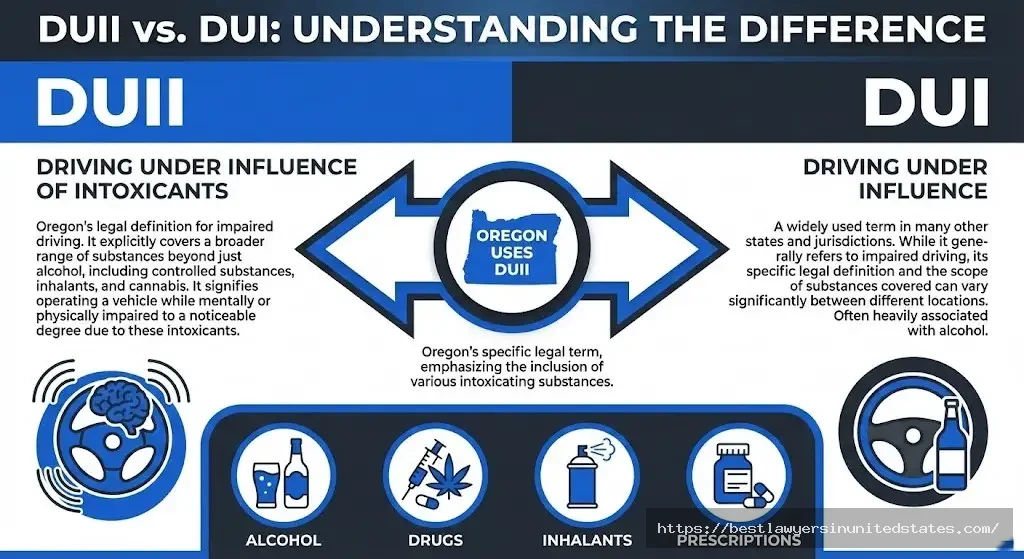
The “intoxicants” category includes:
- Alcohol above legal limits
- Marijuana (regardless of medical/recreational status)
- Prescription medications (opioids, benzodiazepines, muscle relaxants)
- Over-the-counter drugs (cold medicines with sedating effects)
- Inhalants and controlled substances
What Substances Can Lead to DUII Charges?
Oregon employs hundreds of specially trained Drug Recognition Experts (DREs) who can identify impairment from substances beyond alcohol. These officers conduct standardized evaluations to detect drug impairment during traffic stops.
Key point: You can face DUII charges even with legally prescribed medications if they impair your driving ability.
Oregon BAC Limits and Testing
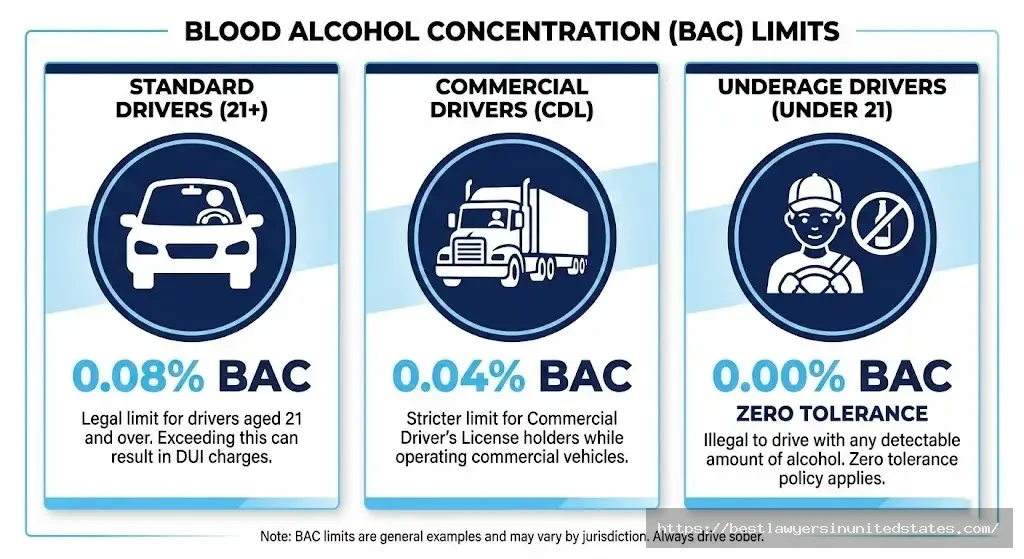
Oregon sets different blood alcohol content limits depending on driver type. Understanding these limits helps you know when you might face charges after drinking.
| Driver Type | Legal BAC Limit | Penalties Start At |
|---|---|---|
| Standard drivers (21+) | 0.08% | 0.08% or higher |
| Commercial drivers (CDL) | 0.04% | 0.04% or higher |
| Underage drivers (under 21) | 0.00% | Any detectable amount |
Critical point: Oregon law allows DUII arrests below 0.08% if you show visible impairment. The legal limit isn’t a safe harbor—officers can arrest you at lower BAC levels if your driving appears impaired.
How Officers Measure BAC in Oregon
Law enforcement uses multiple testing methods under Oregon’s implied consent law. When you accept an Oregon driver’s license, you automatically agree to chemical testing if arrested for DUII.
Testing methods include:
- Breathalyzer: Most common roadside and station testing
- Blood test: Used when breath testing isn’t available or in serious crashes
- Urine test: Primarily for drug detection
Want to estimate your BAC before driving? Use our BAC calculator to understand how drinks affect your blood alcohol level based on weight, gender, and consumption time.
BAC Calculator
Estimate your Blood Alcohol Content
• Commercial Driver (CDL): 0.04% BAC
• Drivers Under 21: 0.00-0.02% BAC (Zero Tolerance)
• Enhanced Penalties: 0.15% BAC or higher in most states
Oregon’s Implied Consent Law
ORS 813.100 requires all drivers to submit to chemical testing when lawfully arrested for DUII. Refusing testing triggers automatic administrative penalties separate from any criminal charges.
Refusal consequences:
- 1-year license suspension (first refusal)
- 3-year license suspension (second refusal)
- Additional $650 fine for breath test refusal
Oregon DUII Penalties by Offense
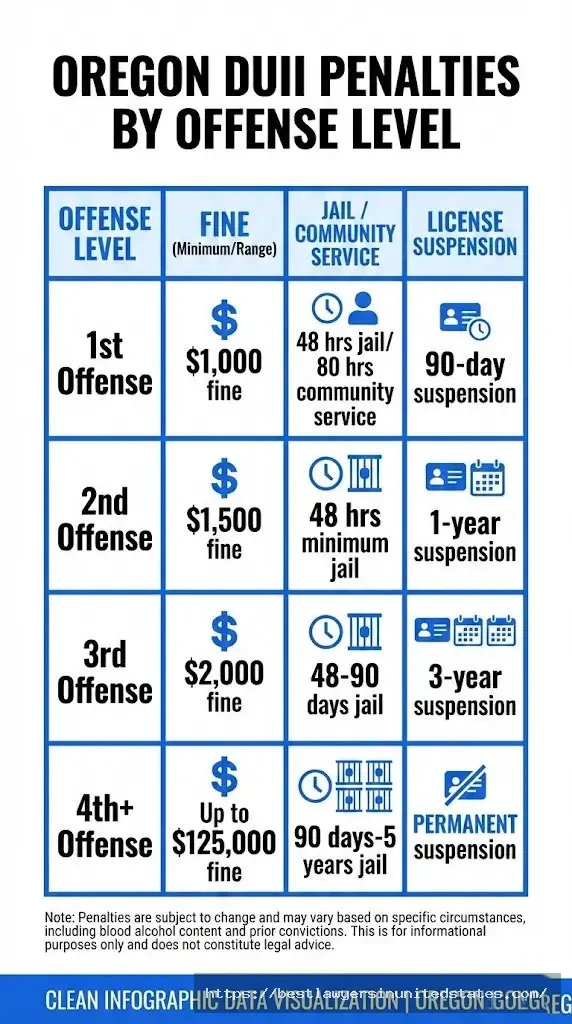
Oregon imposes escalating penalties for repeat DUII offenses. Each conviction brings harsher consequences, with permanent license loss possible after multiple convictions.
First Offense DUII in Oregon
First-time DUII offenders face misdemeanor charges but may qualify for diversion programs that avoid conviction.
| Penalty Category | First Offense Details |
|---|---|
| Criminal Charge | Class A Misdemeanor |
| Fines | $1,000 base fine + court costs |
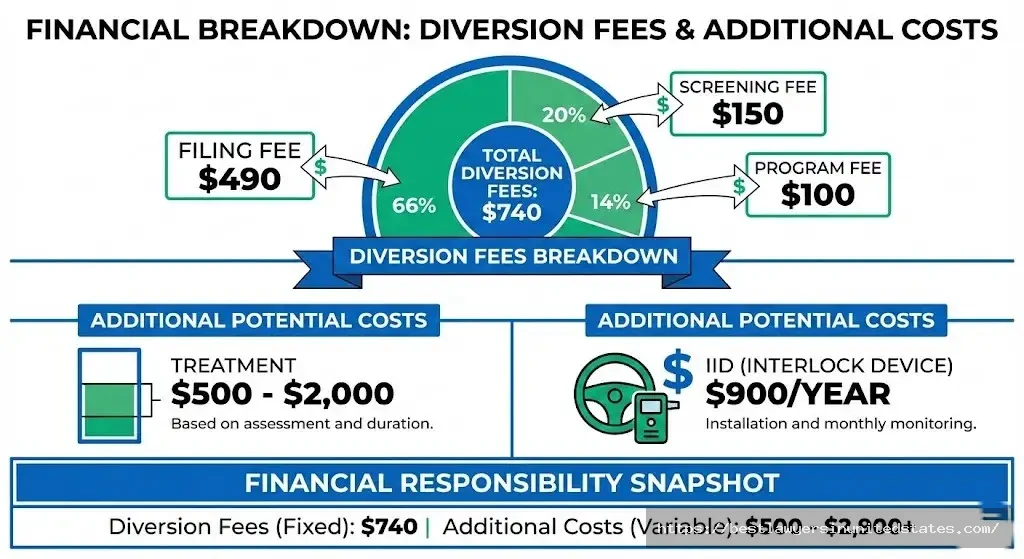
| Diversion Fees | $490 filing + $100 program + $150 screening = $740 |
| License Suspension | 90 days (failed test) / 1 year (refused test) |
| Jail Time | 48 hours minimum OR 80 hours community service |
| Ignition Interlock | Mandatory up to 1 year ($65 install + $70/month) |
| Hardship Permit Wait | 30-90 days before eligibility |
Quick Answer: First-time DUII in Oregon costs between $2,500-$5,000 total when you include fines, diversion fees, ignition interlock, and insurance increases.
Oregon DUII Diversion Program Details
Oregon offers diversion for first-time offenders with no prior DUII convictions. Successfully completing diversion avoids a criminal conviction on your record.
Diversion eligibility requirements:
- First DUII offense
- No DUII convictions in past 15 years
- No commercial vehicle involved
- No serious injuries or fatalities
- You plead guilty or no contest
Program requirements (1-year duration):
- Complete alcohol/drug evaluation ($150)
- Attend victim impact panel
- Complete treatment program if recommended
- Install ignition interlock device
- No new criminal charges
- Pay all fees ($740 total)
Critical deadline: You must request diversion at arraignment or within the timeframe specified by the court.
Second Offense DUII in Oregon
Second DUII convictions eliminate diversion eligibility and mandate court conviction proceedings.
| Penalty Category | Second Offense Details |
|---|---|
| Criminal Charge | Class A Misdemeanor |
| Fines | $1,500 base fine + $650 refusal fine (if applicable) |
| License Suspension | 1 year (conviction) / 1 year (failed test) / 3 years (refused test) |
| Jail Time | 48 hours minimum (possible probation) |
| Ignition Interlock | Mandatory 1 year |
| Hardship Permit Wait | 1 year minimum before eligibility |
Quick Answer: Second DUII in Oregon costs $5,000-$10,000 including fines, legal fees, ignition interlock, and dramatically increased insurance rates.
Third Offense DUII in Oregon
Third DUII offenses may qualify as felonies under Oregon’s “3-in-10-years” rule explained in ORS 813.011.
| Penalty Category | Third Offense (Misdemeanor) | Third Offense (Felony) |
|---|---|---|
| Criminal Charge | Class A Misdemeanor | Class C Felony |
| Fines | $2,000 + $650 refusal | $2,000 + $650 refusal |
| License Suspension | 3 years | Permanent |
| Jail Time | 48 hours minimum | 90 days minimum |
| Ignition Interlock | Mandatory 2 years | Mandatory 2 years (if reinstated) |
| Hardship Permit | 1-3 year wait | Not eligible |
Critical point: Three DUII convictions within 10 years automatically elevates the third charge to a Class C felony, regardless of BAC level or circumstances.
Fourth and Subsequent DUII Offenses
Fourth DUII offenses result in permanent driver’s license revocation in Oregon with extremely limited reinstatement possibilities.
| Penalty Category | Fourth+ Offense Details |
|---|---|
| Criminal Charge | Class C Felony (5th+) |
| Fines | Up to $125,000 |
| License Status | Permanent revocation |
| Jail Time | 90 days minimum / up to 5 years |
| Ignition Interlock | 5 years if reinstated (rare) |
| Hardship Permit | Not eligible |
Quick Answer: Fourth DUII conviction means permanent loss of driving privileges in Oregon with minimal chance of reinstatement.
Oregon’s Unique 3-in-10-Years Felony Rule
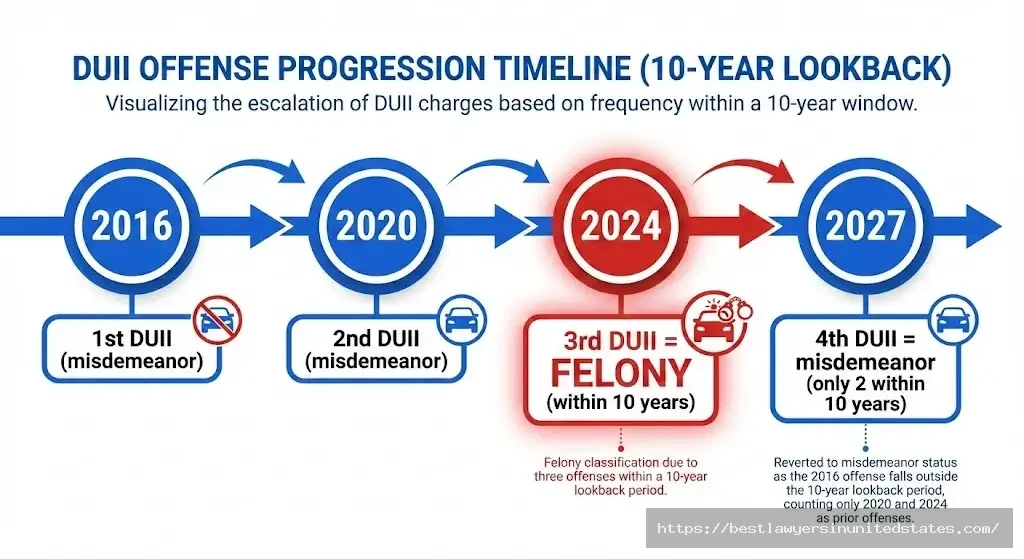
ORS 813.011 creates felony DUII charges when you accumulate three or more DUII convictions within a 10-year period. This differs from states that count all lifetime convictions.
How Oregon Counts Prior Offenses
Oregon uses a rolling 10-year window from the date of arrest, not conviction. The state counts convictions from any jurisdiction, not just Oregon DUII convictions.
Qualifying prior convictions include:
- Oregon DUII convictions
- Out-of-state DUI/DWI/OWI convictions
- Federal DUII convictions
- Juvenile adjudications for DUII
Example timeline:
- 2016: First DUII conviction
- 2020: Second DUII conviction
- 2024: Third DUII arrest = felony charge (three within 10 years)
- 2027: Fourth DUII arrest = misdemeanor (only 2020 and 2024 within 10 years)
Class C Felony Consequences
Felony DUII under ORS 813.011 carries dramatically harsher penalties than misdemeanor charges.
Key felony consequences:
- Loss of voting rights while incarcerated
- Loss of firearm possession rights
- Federal employment restrictions
- Professional license impacts
- Immigration consequences for non-citizens
- Permanent criminal record
States with similar strict DUI laws include Arizona and Alaska, though Oregon’s 10-year lookback period differs from their lifetime counting systems.
Why Oregon Bans Plea Bargaining (ORS 813.170)
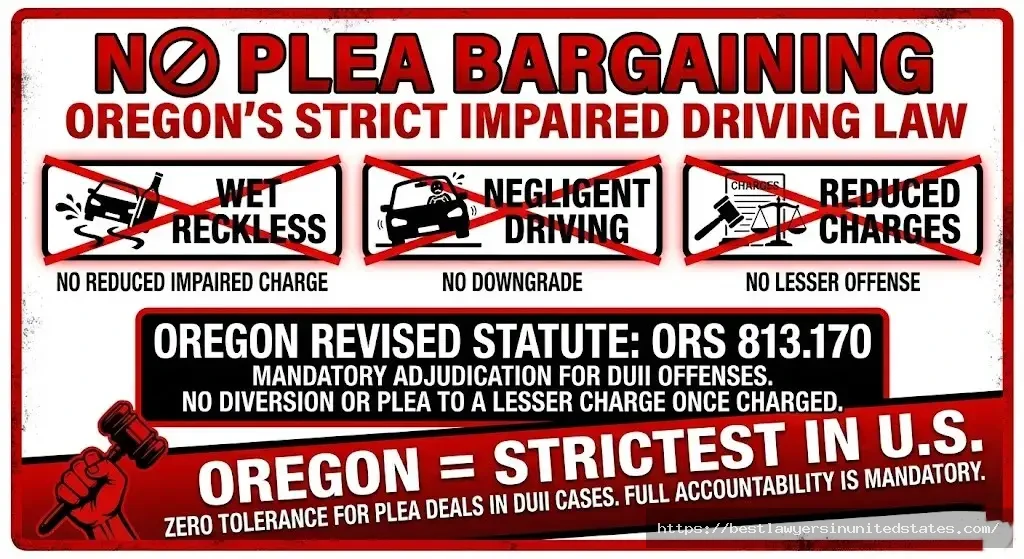
ORS 813.170 explicitly prohibits prosecutors from offering or accepting plea agreements that reduce DUII charges to lesser offenses. This makes Oregon one of the strictest states for DUII prosecution.
What ORS 813.170 Prohibits
Quick Answer: You cannot plea bargain a DUII charge in Oregon to any lesser offense, including reckless driving, negligent driving, or any reduced charge.
The statute states prosecutors cannot dismiss DUII charges or allow pleas to lesser offenses in exchange for guilty pleas, cooperation, or any other consideration. Courts cannot accept such plea agreements even if both sides agree.
Banned plea options that work in other states:
- ❌ Wet reckless driving
- ❌ Reckless driving involving alcohol
- ❌ Negligent driving first degree
- ❌ Driving while impaired
- ❌ Reckless endangerment
Strategic Implications for Defendants
The plea bargaining ban means your only options after DUII arrest are:
- Diversion (first offense only)
- Trial (challenge the charges)
- Guilty plea (accept full DUII conviction)
This differs dramatically from states like California where “wet reckless” plea deals routinely reduce DUI charges.
Defense strategy focus shifts to:
- Challenging the traffic stop legality
- Disputing BAC test accuracy
- Questioning field sobriety test administration
- Proving lack of operation/control
- Seeking outright dismissal
Administrative vs. Criminal Penalties in Oregon
Oregon operates a dual-track system where you face both administrative DMV penalties and separate criminal court penalties. These proceedings run independently.
Two Separate Legal Processes
Quick Answer: Oregon DUII creates two separate cases—one with the DMV for your license and one in criminal court for your conviction record.
| Process Type | Authority | Timeline | Purpose |
|---|---|---|---|
| Administrative | Oregon DMV | 10 days to request hearing | License suspension |
| Criminal | County/Circuit Court | Arraignment within weeks | Conviction, fines, jail |
Critical deadline: You have only 10 days from arrest to request an administrative hearing with the DMV to challenge license suspension.
How Suspensions Stack
Both administrative and criminal suspensions can apply simultaneously, though Oregon credits time served on administrative suspensions toward criminal suspension requirements.
Example scenario:
- Day 1: DUII arrest, failed breath test
- Day 30: Administrative suspension begins (90 days for failed test)
- Day 120: Administrative suspension ends
- Day 150: Criminal conviction, 1-year suspension ordered
- Result: Criminal suspension runs 1 year from conviction date, but DMV credits the 90 days already served
ORS 813.470 Acquittal Notation
If you win your criminal DUII case at trial, Oregon law requires the DMV to note the acquittal on your driving record under ORS 813.470. However, this notation does not automatically reverse administrative suspensions.
Key point: Beating the criminal charge doesn’t eliminate the administrative suspension. You must fight both battles separately.
Ignition Interlock Device Requirements
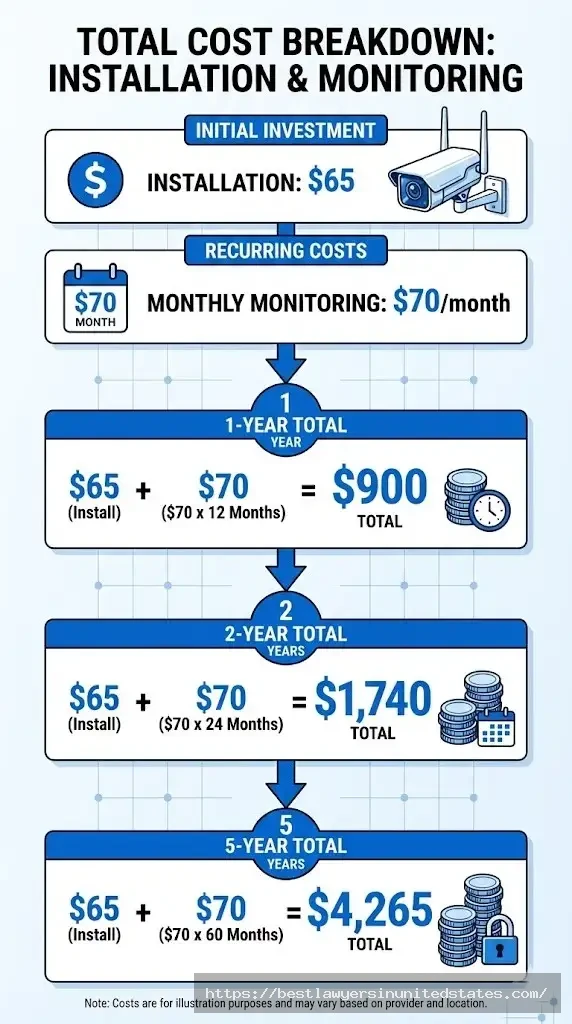
Oregon mandates ignition interlock devices (IID) for all DUII convictions, including first-time offenses. This makes Oregon one of the strictest IID requirement states.
Mandatory IID Installation Timeline
Quick Answer: All Oregon DUII offenders must install ignition interlock devices, even first-time offenders.
| Offense | IID Duration | Cost |
|---|---|---|
| First DUII | Up to 1 year | $65 install + $70/month = $900/year |
| Second DUII | 1 year minimum | $65 install + $70/month = $900/year |
| Third DUII | 2 years minimum | $65 install + $70/month = $1,740 total |
| Fourth+ DUII | 5 years if reinstated | $65 install + $70/month = $4,265 total |
How Ignition Interlock Devices Work
IID requires you to blow into a tube before starting your vehicle. The device measures your BAC and prevents engine ignition if alcohol is detected above preset limits (typically 0.02%).
Device features:
- Random rolling retests while driving (every 5-30 minutes)
- Camera documentation of all tests
- GPS tracking and data recording
- Automatic lockout for failed tests
- Tamper detection systems
Monthly monitoring includes:
- Calibration appointments
- Data downloads to monitoring agency
- Violation reports to DMV
- Compliance verification
ORS 813.606 Employer Vehicle Exemption
Oregon law provides limited exemptions for work-related driving under ORS 813.606. You can operate employer-owned vehicles without IID if you meet specific requirements.
Exemption requirements:
- Vehicle owned by employer (not leased to you)
- Operation required for employment duties
- Employer has written policy against employee IID installation
- Employer notified of your DUII conviction
- You carry proof of exemption while driving
Restriction: The exemption applies only during work hours for work purposes. You cannot use this vehicle for personal errands or commuting.
Medical Exemptions for IID
Oregon allows medical exemptions from IID requirements for documented respiratory conditions like severe asthma or COPD. You must provide medical documentation to the DMV and may receive alternative restricted driving privileges.
License Suspension Timeline
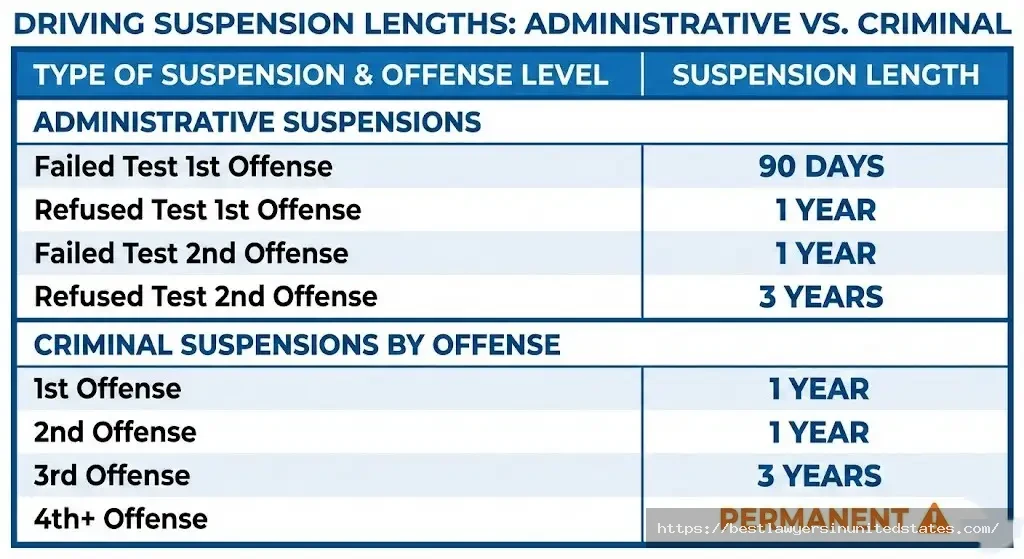
Oregon imposes license suspensions through both administrative and criminal processes with varying timelines based on offense and test results.
Administrative Suspension Timeline
Failing or refusing chemical testing triggers immediate administrative suspension starting 30 days after arrest.
| Test Result | First Incident | Second Incident | Third+ Incident |
|---|---|---|---|
| Failed Test | 90 days | 1 year | 1 year |
| Refused Test | 1 year | 3 years | 3 years |
Critical point: Refusal suspensions last significantly longer than failed test suspensions. First refusal brings 1-year suspension versus only 90 days for failing the test.
Criminal Conviction Suspension Timeline
Court-ordered suspensions begin after conviction and run separately from administrative suspensions.
| Conviction | Suspension Length | Hardship Wait Period |
|---|---|---|
| First DUII | 1 year | 30-90 days |
| Second DUII | 1 year | 1 year |
| Third DUII | 3 years | 1 year minimum |
| Fourth+ DUII | Permanent | Not eligible |
How to Request Administrative Hearing
You must request an administrative hearing within 10 days of arrest to challenge DMV suspension. Missing this deadline forfeits your hearing rights.
Hearing request process:
- Call Oregon DMV Administrative Hearings at (503) 945-5278
- Send written request to: DMV Administrative Hearings, 1905 Lana Ave NE, Salem, OR 97314
- Pay $150 hearing fee
- Receive temporary driving permit pending hearing
Hardship Permits in Oregon
Oregon offers hardship permits for limited driving privileges during suspension periods. Eligibility and restrictions vary by offense level.
Hardship Permit Eligibility
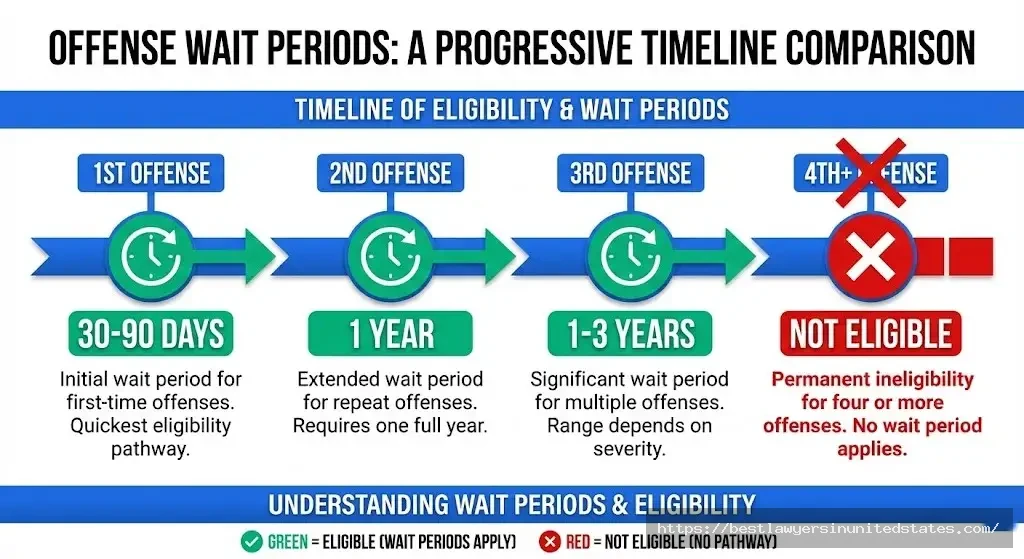
Quick Answer: First-time DUII offenders can apply for hardship permits after 30-90 days. Second offenders wait 1 year. Third offenders may wait 1-3 years.
| Offense Level | Wait Period | Eligible Purposes |
|---|---|---|
| First DUII | 30-90 days | Work, medical, treatment |
| Second DUII | 1 year | Work, medical, treatment |
| Third DUII | 1-3 years | Work, medical only |
| Fourth+ DUII | Not eligible | None |
Hardship Permit Application Process
Required documentation:
- Proof of enrollment in treatment program
- SR-22 insurance certificate
- Ignition interlock installation certificate
- Employment verification letter
- $75 reinstatement fee
Restrictions:
- ✅ Drive to/from work
- ✅ Drive to/from treatment programs
- ✅ Drive to/from medical appointments
- ❌ No personal errands
- ❌ No recreational driving
- ❌ No driving outside specified hours
Can You Get a DUII on Non-Car Vehicles in Oregon?
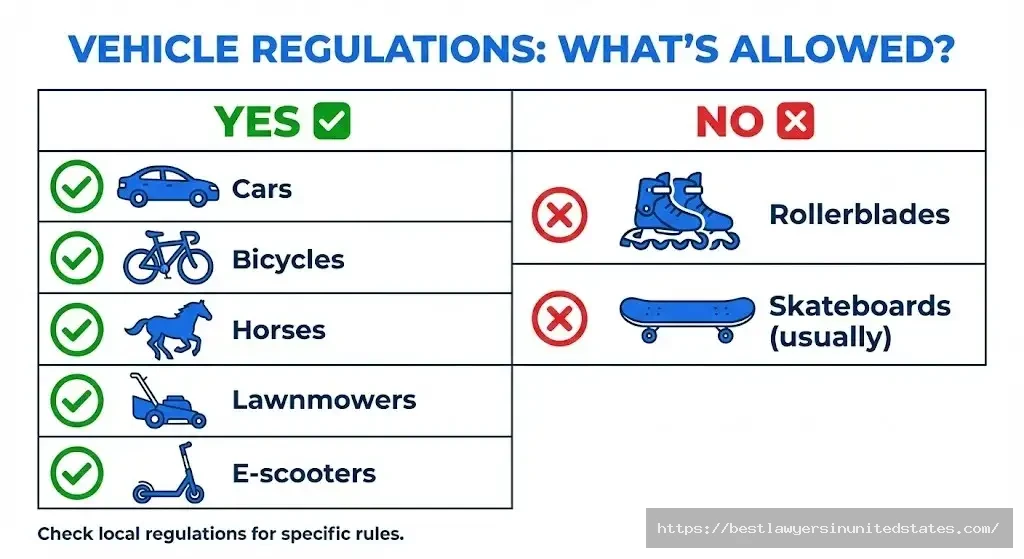
Oregon’s DUII statutes apply to more vehicle types than most states. The law covers any device used for transportation, not just traditional motor vehicles.
Vehicles Covered Under Oregon DUII Law
Quick Answer: Yes, you can get a DUII on bicycles, horses, lawnmowers, and other non-traditional vehicles in Oregon.
| Vehicle Type | DUII Applies? | Notes |
|---|---|---|
| Bicycles | ✅ Yes | ORS 813.010 covers all vehicles |
| Horses | ✅ Yes | Considered vehicle under statute |
| Riding Lawnmowers | ✅ Yes | If operated on public roads |
| Electric Scooters | ✅ Yes | Treated as vehicles |
| Skateboards | ⚠️ Maybe | Case-by-case, generally no |
| Rollerblades | ❌ No | Not considered vehicles |
Bicycle DUII Prosecutions
Oregon courts have upheld DUII convictions for bicycle riders. A bicycle meets the statutory definition of “vehicle” under ORS 801.590, making bicycle riders subject to the same DUII laws as car drivers.
Key differences for bicycle DUII:
- Same criminal penalties (fines, probation, treatment)
- No driver’s license suspension (no license required)
- No ignition interlock requirement
- Same diversion program eligibility
Oregon’s Drug Recognition Expert (DRE) Program
Oregon employs hundreds of specially trained Drug Recognition Experts who can identify impairment from substances beyond alcohol. These officers conduct 12-step evaluations to detect drug influence.
How DRE Evaluations Work
When officers suspect drug impairment, they request DRE evaluation at the police station or jail. The DRE conducts a standardized protocol to determine substance categories.
12-step DRE evaluation:
- Breath alcohol test
- Interview with arresting officer
- Preliminary examination and eye tests
- Divided attention tests
- Eye examination (pupil size, reaction to light)
- Vital signs (pulse, blood pressure, temperature)
- Dark room eye examinations
- Muscle tone examination
- Injection site examination
- Subject’s statements and observations
- Toxicological examination request
- DRE opinion and conclusion
Drug categories DREs identify:
- Central nervous system depressants
- Central nervous system stimulants
- Hallucinogens
- Phencyclidine (PCP)
- Narcotic analgesics
- Inhalants
- Cannabis
Special Circumstances and Enhanced Penalties
Certain factors increase DUII penalties beyond standard consequences. Oregon imposes enhanced penalties for aggravating circumstances.
DUII with Minor Passengers
Operating a vehicle while intoxicated with passengers under 18 years old creates separate child endangerment charges under Oregon law.
Additional consequences:
- Separate criminal endangerment charge (Class A misdemeanor)
- Up to $6,250 fine
- Up to 364 days jail
- Child Protective Services investigation
- Possible custody implications
DUII Causing Injury or Death
DUII crashes causing serious injury or death elevate charges to felony levels regardless of prior offense count.
| Outcome | Charge | Maximum Penalty |
|---|---|---|
| Serious Injury | Assault III (ORS 163.165) | 5 years prison |
| Death | Manslaughter II (ORS 163.125) | 10 years prison |
| Multiple Deaths | Multiple counts | Consecutive sentences |
Commercial Drivers (CDL)
Commercial driver’s license holders face stricter BAC limits and permanent CDL disqualification after certain DUII convictions.
CDL-specific rules:
- BAC limit: 0.04% (half the standard limit)
- First DUII: 1-year CDL disqualification
- Second DUII: Lifetime CDL disqualification
- DUII in CMV with hazmat: Lifetime disqualification
This differs significantly from CDL rules in states like Texas or Florida.
Underage Drivers (Zero Tolerance)
Oregon enforces zero tolerance for drivers under 21. Any detectable BAC above 0.00% triggers administrative penalties under ORS 813.300.
Underage DUII consequences:
- Automatic 1-year license suspension
- $500 maximum fine
- Alcohol evaluation and treatment
- Up to $300 in fees and costs
- Potential criminal DUII charges if BAC exceeds 0.08%
Out-of-State Drivers and License Reciprocity
Oregon participates in the Interstate Driver License Compact, sharing DUII conviction information with other states. Out-of-state drivers face consequences in both Oregon and their home states.
ORS 809.400 Out-of-State License Suspension
Oregon can suspend out-of-state driving privileges for DUII convictions under ORS 809.400. Your home state typically imposes additional penalties after receiving notification from Oregon.
Quick Answer: Oregon DUII arrests affect your home state license through interstate compact reporting.
Interstate compact provisions:
- Oregon reports convictions to your home state
- Home state treats Oregon DUII as local conviction
- Double jeopardy does not apply (separate jurisdictions)
- You face penalties in both states
What Happens to Your License?
Immediate: Oregon confiscates physical license and issues temporary permit
30 days: Oregon administrative suspension begins
After conviction: Oregon notifies your home state DMV
Home state response: Applies penalties according to local law
Example for California resident:
- DUII arrest in Portland
- Oregon suspends Oregon driving privileges
- Oregon reports to California DMV
- California suspends California license per California law
- Driver faces consequences in both states
Some states with strict reciprocity include Washington, Idaho, and Nevada.
Professional License Implications
Oregon DUII convictions create reporting obligations and potential discipline for licensed professionals. ORS 676.150 requires certain professionals to report arrests and convictions to licensing boards.
ORS 676.150 Reporting Requirements
Quick Answer: Oregon health professionals must report DUII arrests to their licensing boards within 10 days.
Affected professions include:
- Physicians and surgeons
- Nurses (RN, LPN, NP)
- Dentists and dental hygienists
- Pharmacists
- Psychologists
- Physical therapists
- Occupational therapists
- Counselors and therapists
Reporting timeline:
- 10 days from arrest to report to licensing board
- Board reviews for potential disciplinary action
- Possible outcomes: probation, suspension, revocation
OLCC Servers Permit Impact
Oregon Liquor Control Commission servers permit holders may face permit suspension or revocation after DUII convictions.
OLCC considerations:
- DUII conviction demonstrates poor judgment with alcohol
- Commission reviews on case-by-case basis
- Possible permit probation or revocation
- New permit applications affected
Pilot and Mariner Licenses
Federal Aviation Administration (FAA) pilot certificate holders and U.S. Coast Guard mariner license holders face federal reporting requirements and potential disciplinary action.
FAA requirements:
- Report DUII convictions to FAA within 60 days
- Submit to FAA medical review
- Possible certificate suspension or revocation
Coast Guard requirements:
- Report all alcohol-related convictions
- Suspension of Merchant Mariner Credential
- Required substance abuse professional evaluation
Legal Process After DUII Arrest
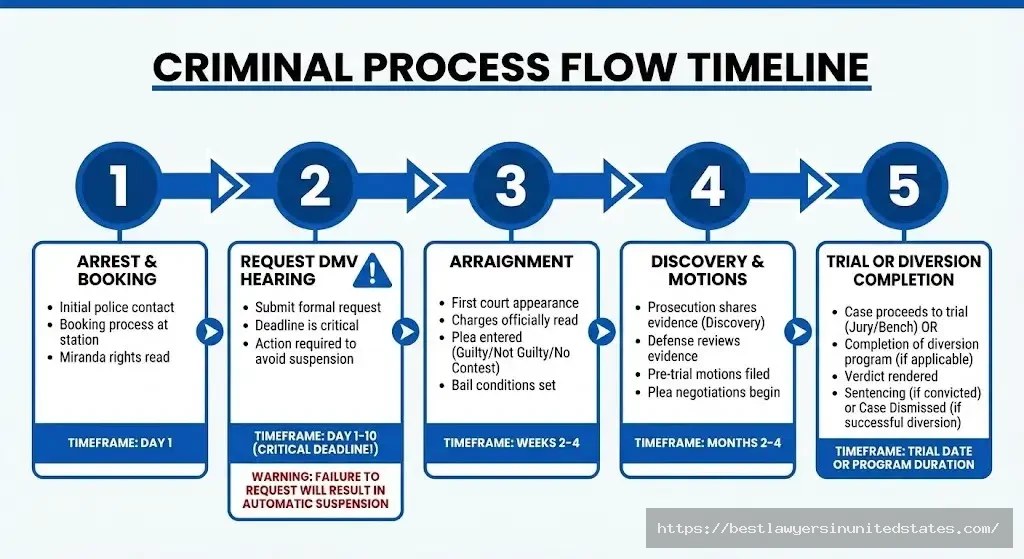
Understanding the criminal justice timeline helps you meet critical deadlines and protect your rights throughout the DUII process.
What Happens Immediately After Arrest
Hour 1-4: Booking process
- Transport to police station or county jail
- Fingerprinting and photographing
- Chemical testing (breath, blood, or urine)
- License confiscation (replaced with temporary permit)
- Release on recognizance or bail
Day 1-10: Critical deadline
- Request DMV administrative hearing (10-day deadline)
- Contact DUII defense attorney
- Begin documenting arrest circumstances
Arraignment and First Court Appearance
Quick Answer: Arraignment occurs within 2-4 weeks of arrest where you enter your initial plea and learn about charges.
Arraignment procedures:
- Judge reads charges and maximum penalties
- You enter plea (guilty, not guilty, no contest)
- Judge sets bail conditions and release terms
- Court appoints attorney if you cannot afford one
- Next hearing date scheduled
Plea options at arraignment:
- Not guilty: Case proceeds to trial or diversion
- No contest: Accept conviction without admitting guilt
- Guilty: Accept conviction and proceed to sentencing
Critical decision: Request diversion at arraignment if you qualify (first offense only).
Pre-Trial Process
Discovery phase (2-4 months):
- Attorney obtains police reports
- Review breathalyzer calibration records
- Obtain body camera/dashboard camera footage
- Interview witnesses
- Review field sobriety test administration
Motion hearings:
- Challenge traffic stop legality
- Suppress illegally obtained evidence
- Challenge BAC test procedures
- File dismissal motions for procedural violations
Trial or Diversion
Your case resolves through one of three paths:
1. Diversion (first offense only)
- Enter guilty or no contest plea
- Complete 1-year program requirements
- Dismissal upon successful completion
2. Trial
- Jury trial (6 or 12 jurors in Oregon)
- Prosecution must prove guilt beyond reasonable doubt
- Verdict: guilty or not guilty
3. Guilty/No Contest Plea
- Waive trial rights
- Proceed directly to sentencing
- Accept full DUII conviction
Sentencing
Sentencing hearing (if convicted):
- Judge imposes penalties within statutory ranges
- Consider mitigating and aggravating factors
- Order treatment programs and probation
- Set payment schedules for fines and fees
Total Cost of a DUII in Oregon
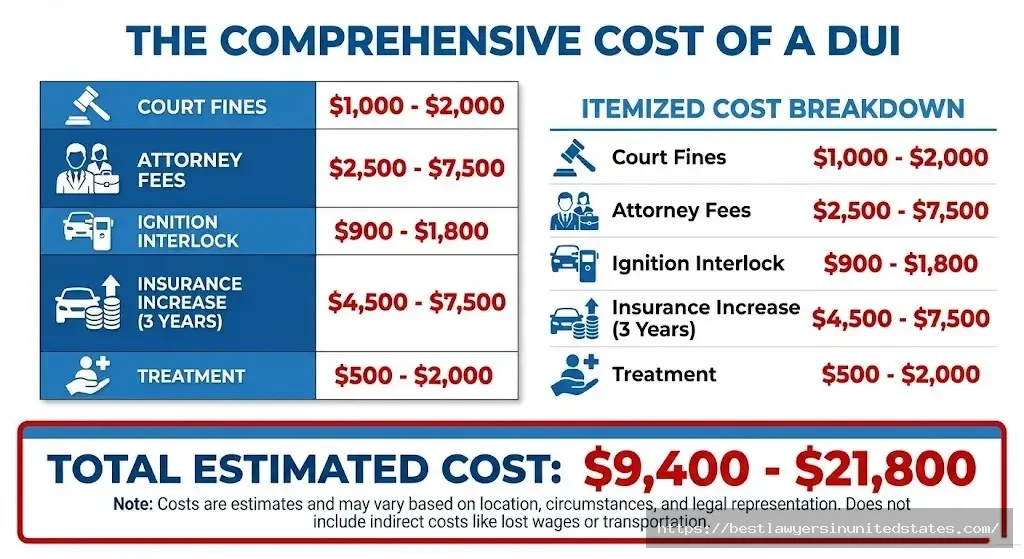
Oregon DUII convictions create substantial financial burdens extending far beyond court fines. Understanding total costs helps you prepare for the financial impact.
Complete Cost Breakdown
Quick Answer: Total first-time DUII costs in Oregon range from $4,500 to $15,000 depending on whether you complete diversion or face conviction.
| Cost Category | Diversion Route | Conviction Route |
|---|---|---|
| Court Fines | $0 (dismissed) | $1,000-$2,000 |
| Diversion Fees | $740 | N/A |
| Court Costs | $200-$400 | $300-$500 |
| Attorney Fees | $2,500-$5,000 | $3,000-$7,500 |
| Ignition Interlock | $900 (1 year) | $900-$1,800 |
| License Reinstatement | $75 | $75 |
| Treatment Program | $500-$2,000 | $500-$2,000 |
| SR-22 Insurance | $500-$1,000 | $500-$1,000 |
| Insurance Increase | $1,500/year (3 years) | $2,000/year (3 years) |
| TOTAL MINIMUM | $4,500 | $6,000 |
| TOTAL MAXIMUM | $10,915 | $15,875 |
Use our DUI cost calculator to estimate your specific financial impact based on offense level, insurance rates, and other factors.
DUI Cost Calculator
Estimate total DUI expenses by state and offense
Detailed Cost Breakdown
Payment Timeline
Bail bond, towing fees, car impound, attorney retainer
Initial court fines, DMV fees, DUI school enrollment, ignition interlock installation
Monthly probation fees, ignition interlock fees, DUI school payments, attorney balance
Insurance premium increases, license reinstatement, SR-22 filing fees
- Lost wages from missed work (court dates, jail time, DUI school) – $2,000-$10,000
- Job loss or difficulty finding employment – Varies
- Professional license suspension (doctors, lawyers, nurses, pilots) – Career ending
- Rideshare and transportation costs during suspension – $1,500-$5,000
- Travel restrictions and visa denials – Varies
- Security clearance loss – Career impact
- Child custody implications – Legal costs
- Rental car restrictions – Varies
- Personal relationships and mental health costs – Priceless
Insurance Rate Increases
Oregon DUII convictions dramatically increase auto insurance premiums for 3-5 years. Insurers view DUII convictions as high-risk behavior.
Average rate increases:
- First DUII: 80-120% increase ($1,500-$2,500 annually)
- Second DUII: 150-200% increase ($3,000-$4,000 annually)
- Some insurers cancel policies entirely
SR-22 filing requirement:
- Oregon requires SR-22 (proof of financial responsibility)
- Filed by insurance company with DMV
- Maintained for 3 years after license reinstatement
- Filing fee: $25-$50
- Higher insurance rates while SR-22 active
Hidden Costs
Additional expenses to consider:
- Lost wages from jail time or court appearances: $500-$2,000
- Rideshare/taxi costs during suspension: $100-$500/month
- Professional license defense costs: $2,000-$5,000
- Immigration attorney (non-citizens): $3,000-$10,000
- Victim impact panel fee: $50-$75
- Alcohol evaluation fee: $150-$300
Common DUII Defenses in Oregon
Despite Oregon’s prohibition on plea bargaining under ORS 813.170, numerous defenses can result in charge dismissals or not guilty verdicts.
Challenging the Traffic Stop
Quick Answer: Police must have reasonable suspicion to stop your vehicle. Illegal stops result in case dismissal.
Valid stop reasons:
- Traffic violations (speeding, failure to signal, equipment violations)
- Driving pattern suggesting impairment (weaving, braking issues)
- Sobriety checkpoint (must meet constitutional requirements)
Invalid stop reasons:
- Anonymous tips without corroboration
- “Hunch” or “gut feeling” without specific facts
- Stops based solely on leaving bar parking lot
- Pretextual stops for minor violations to investigate DUII
Defense strategy: File motion to suppress all evidence obtained after illegal stop.
Disputing BAC Test Accuracy
Breathalyzer machines require precise calibration and proper administration. Technical errors create reasonable doubt about BAC results.
Common BAC test challenges:
- Improper calibration or maintenance of breathalyzer
- Operator error or lack of certification
- 15-minute observation period not maintained
- Mouth alcohol contamination (dental work, GERD, recent vomiting)
- Radio frequency interference affecting results
- Blood sample handling and storage issues
Expert testimony: Defense attorneys hire toxicologists to challenge BAC evidence validity.
Field Sobriety Test Issues
Oregon officers typically administer Standardized Field Sobriety Tests (SFSTs) developed by National Highway Traffic Safety Administration. Tests must follow strict protocols.
The three NHTSA-approved tests:
- Horizontal Gaze Nystagmus (HGN): Eye movement test
- Walk-and-Turn: Divided attention test
- One-Leg Stand: Balance test
Challenges to FST results:
- Medical conditions affecting balance (inner ear, leg injuries, back problems)
- Improper test surface (gravel, uneven pavement, sloped road)
- Weather conditions (rain, ice, strong wind)
- Improper footwear (high heels, boots)
- Officer failed to follow NHTSA protocols
- Inadequate lighting for proper observation
Rising BAC Defense
Blood alcohol concentration continues rising for 30-90 minutes after your last drink. You may have been under the legal limit while driving but over the limit when tested.
Rising BAC argument:
- BAC below 0.08% while operating vehicle
- BAC rose above 0.08% during arrest/testing delay
- Requires expert testimony on absorption rates
- More effective with blood tests (longer delay)
Refusing a Breath Test in Oregon
Oregon’s implied consent law requires chemical testing but does not criminalize refusal. However, refusal triggers severe administrative penalties.
Consequences of Refusing Testing
Quick Answer: Refusing breath tests results in 1-year license suspension for first refusal, 3 years for second refusal, plus additional $650 fine.
| Refusal Count | License Suspension | Additional Fine |
|---|---|---|
| First refusal | 1 year | $650 |
| Second refusal | 3 years | $650 |
| Third+ refusal | 3 years | $650 |
Compare to test results:
- Failed test (1st): 90-day suspension
- Refused test (1st): 1-year suspension
- Difference: 9 additional months of suspension
Can Refusal Help Your Case?
Some defendants refuse testing believing it helps their criminal defense. The strategy involves trade-offs.
Potential advantages:
- No BAC evidence for prosecution
- Forces state to rely on observation evidence
- May create reasonable doubt without scientific proof
Significant disadvantages:
- Longer administrative suspension
- Additional $650 fine
- Prosecutor uses refusal as “consciousness of guilt”
- Jury instructions allow negative inference
- Judge may admit refusal as evidence
Critical consideration: Oregon law allows prosecutors to introduce refusal evidence at trial, unlike some states that prohibit mentioning refusal.
Warrant for Blood Draw
You cannot be physically forced to provide breath samples, but officers increasingly obtain search warrants for mandatory blood draws in serious cases.
Warrant blood draw scenarios:
- Crashes involving serious injury or death
- Crashes involving minors
- Suspected felony DUII (third+ offense)
- Refusal in combination with aggravating factors
Your rights: Police must obtain judicial warrant before forced blood draw in most circumstances (exceptions for exigent circumstances like medical treatment).
SR-22 Insurance Requirements
Oregon requires SR-22 certificates (proof of financial responsibility) after DUII convictions. This filing proves you maintain minimum liability insurance.
What is SR-22 Insurance?
Quick Answer: SR-22 isn’t actually insurance—it’s a certificate your insurance company files with Oregon DMV proving you carry required coverage.
SR-22 filing requirements:
- Minimum $25,000 per person bodily injury liability
- Minimum $50,000 per accident bodily injury liability
- Minimum $20,000 property damage liability
- Continuous coverage for 3 years
Filing process:
- Contact insurance company after conviction
- Request SR-22 certificate filing
- Insurance company files electronically with Oregon DMV
- Pay filing fee ($25-$50)
- Maintain coverage for 3 years
How SR-22 Affects Insurance Rates
SR-22 filing signals high-risk status to insurers, triggering substantial rate increases independent of the DUII conviction itself.
Rate impact factors:
- Base premium increase: 80-150%
- SR-22 filing fee: $25-$50 annually
- Limited insurer options (many don’t accept SR-22 drivers)
- Potential policy cancellation requiring high-risk pool coverage
Cost comparison example:
- Pre-DUII premium: $1,200/year
- Post-DUII with SR-22: $2,160-$3,000/year
- Additional cost: $960-$1,800/year for 3 years
SR-22 Termination
Maintaining continuous coverage:
- Any lapse triggers DMV notification
- License automatically suspended for coverage gaps
- Must restart 3-year SR-22 requirement
- New filing fees apply
After 3 years:
- Insurance company files SR-26 (termination notice)
- SR-22 requirement ends
- Rates typically decrease but remain elevated
- DUII surcharge may continue 5+ years
Expungement and Record Sealing
Oregon severely restricts DUII record sealing and expungement. Most DUII convictions remain permanently visible on criminal and driving records.
Can You Seal a DUII Record in Oregon?
Quick Answer: No, Oregon law prohibits sealing or expunging DUII convictions. Diversion dismissals may be eligible for limited expungement.
Oregon expungement restrictions:
- ORS 137.225 excludes DUII convictions from expungement
- Traffic offenses including DUII are specifically prohibited
- Conviction remains permanently on criminal record
- DMV driving record retains DUII notation permanently
Diversion Dismissals
Successfully completing DUII diversion results in case dismissal, which may qualify for expungement after waiting period.
Diversion expungement process:
- Complete diversion successfully (no conviction entered)
- Wait 3 years from dismissal
- File petition for expungement of arrest record
- Court may grant expungement of arrest records
- DUII still appears on DMV driving record
Important limitation: Even expunged diversion counts as prior DUII for purposes of calculating future offense levels. You cannot complete diversion twice.
How Long Does DUII Stay on Driving Record?
Oregon DMV retention:
- DUII convictions: Permanent
- Diversion dismissals: Permanent notation (marked as dismissed)
- Administrative suspensions: Permanent record
Background check visibility:
- Employment background checks: Permanent
- Professional license applications: Permanent disclosure required
- Insurance inquiries: 10 years typical lookback
- Future DUII offense calculations: 10-15 years depending on context
Neighboring states like Washington and California offer more expungement options than Oregon.
Frequently Asked Questions
What’s the difference between DUI and DUII in Oregon?
Quick Answer: DUII (Driving Under the Influence of Intoxicants) is Oregon’s specific legal term that covers alcohol, drugs, inhalants, and controlled substances. Most other states use “DUI” (Driving Under the Influence). The broader “intoxicants” terminology reflects Oregon’s comprehensive approach to impaired driving beyond just alcohol.
Can I get jail time for a first DUII offense in Oregon?
Quick Answer: Yes, first DUII carries minimum 48 hours jail OR 80 hours community service. Most first-time offenders avoid jail through diversion programs or by completing community service instead.
Judges typically allow community service for first offenders with no aggravating factors. However, crashes involving injury, high BAC levels (above 0.15%), or minor passengers in the vehicle often result in actual jail time even for first offenses.
How long does a DUII stay on my record in Oregon?
Quick Answer: DUII convictions remain permanently on both your criminal record and Oregon DMV driving record. Oregon law prohibits expungement of DUII convictions under ORS 137.225.
Even successfully completed diversion programs result in permanent DMV notation (marked as dismissed). The only difference is that diversion avoids criminal conviction. Background checks will show the arrest and resolution permanently.
What happens if I’m arrested for DUII while on probation?
Quick Answer: New DUII arrest while on probation for any offense violates probation conditions and results in probation revocation hearing. You face penalties for both the new DUII and the probation violation.
Probation violation consequences include:
- Jail time for original offense
- Enhanced penalties for new DUII
- No diversion eligibility (prior DUII precludes diversion)
- Felony charges if third DUII within 10 years
The court may impose full suspended sentences from the original case in addition to new DUII penalties.
How much does a first-time DUII cost in Oregon?
Quick Answer: First DUII in Oregon costs $4,500-$15,000 total including diversion fees ($740), fines ($1,000+), ignition interlock ($900/year), attorney fees ($2,500-$5,000), and insurance increases ($1,500-$2,500/year for 3 years).
Cost varies significantly based on whether you complete diversion or face conviction. Use our DUI cost calculator for personalized estimates based on your specific circumstances.
Can I refuse a breathalyzer test in Oregon?
Quick Answer: Yes, you can legally refuse, but refusal triggers 1-year license suspension (versus 90 days for failing) plus $650 fine. Prosecutors can also use your refusal as evidence of guilt at trial.
Oregon’s implied consent law (ORS 813.100) requires testing when lawfully arrested, but refusal is not a separate crime. Many defendants refuse believing it helps their case, but the administrative penalties are substantially harsher than test failure penalties.
Is Oregon a zero-tolerance state for underage drinking and driving?
Quick Answer: Yes, Oregon enforces zero tolerance for drivers under 21. Any BAC above 0.00% triggers automatic 1-year license suspension plus fines up to $500.
Underage drivers can face both zero-tolerance administrative penalties and criminal DUII charges if BAC exceeds 0.08%. The zero-tolerance violation applies even to trace amounts of alcohol (0.01-0.07% BAC).
Do I need an attorney for my first DUII in Oregon?
Quick Answer: While not legally required, hiring an experienced DUII attorney is strongly recommended. Oregon’s no-plea-bargaining rule means your only options are diversion, trial, or guilty plea—all benefit from professional legal guidance.
Attorneys can:
- Negotiate diversion terms
- Challenge stop legality and testing procedures
- Identify technical defenses
- Represent you at DMV hearings
- Minimize total costs and consequences
The typical $2,500-$5,000 attorney investment often saves thousands in reduced penalties and insurance costs.
Can I get a DUII on a bicycle in Oregon?
Quick Answer: Yes, Oregon DUII laws apply to bicycles because bicycles meet the statutory definition of “vehicle” under ORS 801.590. You face the same criminal penalties as car drivers, but no license suspension or ignition interlock requirements.
Oregon courts have upheld bicycle DUII convictions. Penalties include fines, probation, treatment programs, and diversion eligibility. However, since no driver’s license is required for bicycle operation, the DMV cannot suspend non-existent driving privileges.
What is Oregon’s diversion program and who qualifies?
Quick Answer: Oregon’s diversion program allows first-time DUII offenders to avoid conviction by completing a 1-year program including treatment, victim impact panel, ignition interlock, and fees ($740 total). Successful completion results in case dismissal.
Eligibility requirements:
- First DUII offense
- No DUII convictions in past 15 years
- No commercial vehicle involved
- No serious injuries or fatalities
- Guilty or no contest plea entered
You must request diversion at arraignment or within the court-specified deadline. Missing this deadline eliminates diversion eligibility.
How does an Oregon DUII affect commercial driver’s licenses?
Quick Answer: DUII in any vehicle (personal or commercial) disqualifies CDL for 1 year minimum. Second DUII results in lifetime CDL disqualification. CDL holders face 0.04% BAC limit (half the standard 0.08%).
Commercial drivers cannot receive hardship CDL permits. Even first DUII convictions in personal vehicles during off-duty hours trigger full CDL disqualification, effectively ending most commercial driving careers.
Specific rules apply in states like Montana and North Dakota, though Oregon’s standards are similarly strict.
Can Oregon DUII conviction affect immigration status?
Quick Answer: Yes, DUII convictions can have serious immigration consequences including deportation, inadmissibility, and denial of naturalization applications. Non-citizens should consult immigration attorneys before pleading to DUII charges.
Immigration impacts:
- Multiple DUII convictions may constitute aggravated felony
- Single DUII with aggravating factors (high BAC, accident, minors) increases deportation risk
- Affects visa renewals and green card applications
- Can prevent naturalization for “good moral character” requirement
Immigration law changes frequently, making specialized legal advice essential for non-citizens facing DUII charges.
Conclusion
Oregon maintains some of America’s strictest DUII laws with unique provisions including absolute plea bargaining prohibition, mandatory ignition interlock for all offenses, and the “3-in-10-years” felony rule. First-time offenders may qualify for diversion programs that avoid conviction, but subsequent offenses bring escalating consequences up to permanent license revocation.
Understanding Oregon’s dual administrative and criminal processes helps you protect your driving privileges and minimize long-term consequences. The 10-day deadline to request administrative hearings and arraignment diversion requests are critical decision points requiring immediate attention after arrest.
Key takeaways:
- Oregon uses “DUII” terminology covering all intoxicants
- No plea bargaining allowed under ORS 813.170
- Mandatory ignition interlock for all convictions
- Three DUII convictions within 10 years = automatic felony
- Total costs range from $4,500-$15,000+ for first offense
If you’re facing DUII charges in Oregon, contact an experienced attorney immediately. Early intervention can preserve diversion options and protect your rights throughout the administrative and criminal processes.
Need legal help with Oregon DUII charges?
Email: [email protected]
Calculate your potential costs using our DUI cost calculator and estimate BAC levels with our BAC calculator to understand how drinks affect your blood alcohol content.
For related legal matters in Oregon, explore our guides on divorce costs in Oregon and other legal topics affecting Oregon residents.
