
Quick Answer: What You’ll Pay for Divorce in Washington State
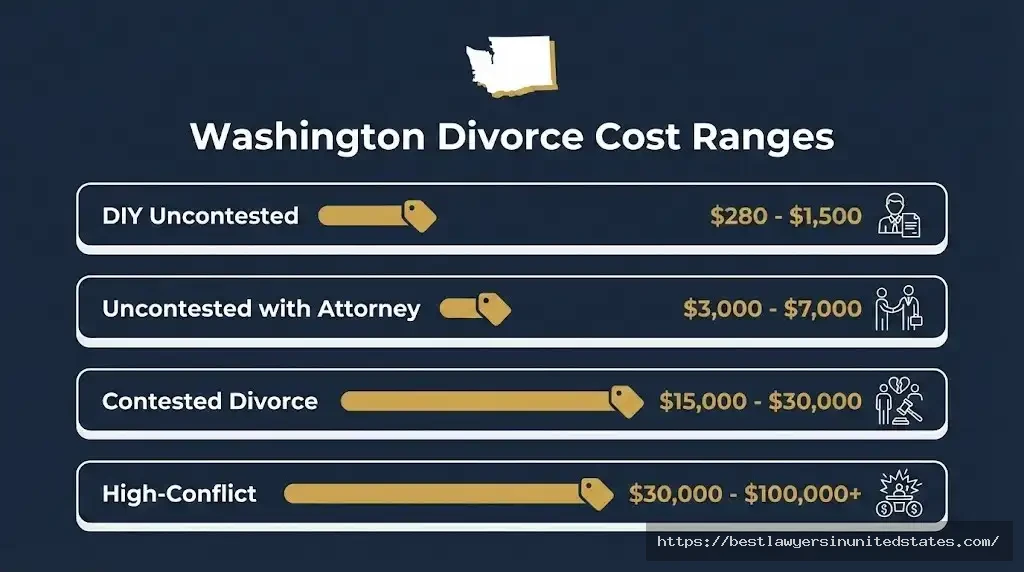
💰 2026 Washington Divorce Costs at a Glance:
| Divorce Type | Cost Range | Timeline |
|---|---|---|
| DIY Uncontested (No Kids) | $280-$1,500 | 90+ days |
| Uncontested with Attorney | $3,000-$7,000 | 3-6 months |
| Uncontested with Mediation | $2,500-$5,500 | 3-5 months |
| Contested Divorce | $15,000-$30,000+ | 12-18 months |
| High-Conflict/Complex Assets | $30,000-$100,000+ | 18+ months |
The biggest factor? Whether you and your spouse agree on everything. If yes, you’re looking at the lower end. If you’re fighting over property, custody, or support, costs skyrocket.
Divorce Cost Calculator
Get an estimated cost for your divorce based on your specific situation
Your Estimated Divorce Cost
Cost Breakdown
📧 Get a Personalized Consultation
Have questions about your specific situation? Contact our legal experts for guidance tailored to your needs.
Contact Us via EmailWhat Determines How Much Your Washington Divorce Will Cost?
Not all divorces cost the same. Your final bill depends on several critical factors that either keep costs manageable or send them through the roof.

Level of Agreement Between Spouses
This is the single biggest cost driver. When both spouses agree on asset division, child custody, and support arrangements, you can file an uncontested divorce for a fraction of what contested cases cost. If you’re fighting over who gets the house or primary custody, expect legal fees to multiply quickly.
Whether You Have Children
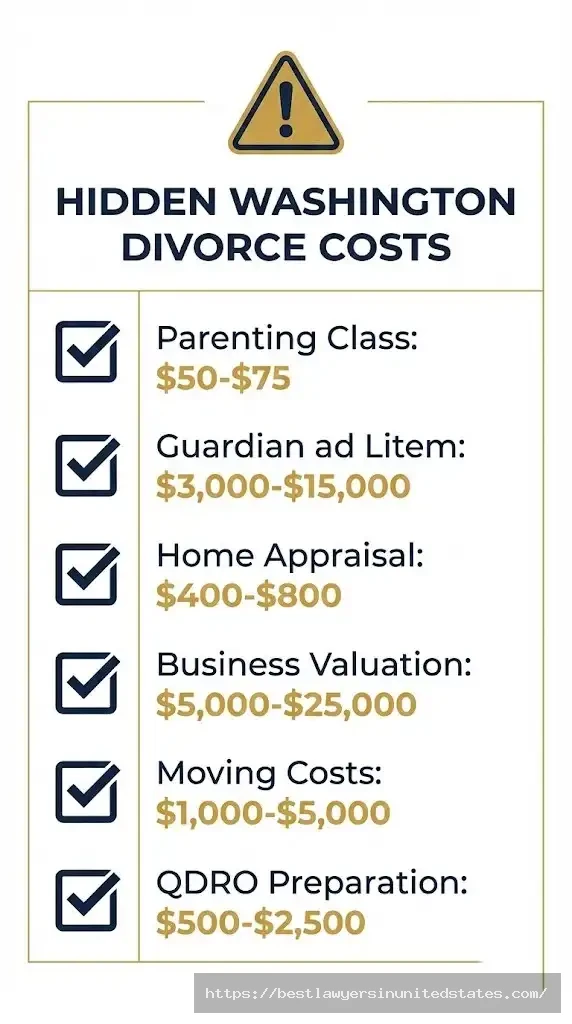
Divorces involving minor children automatically become more complex and expensive. Washington State requires parents to complete parenting classes ($50-$75 per person), create detailed parenting plans, and potentially hire Guardian ad Litem evaluators ($3,000-$15,000) if custody is disputed. Child support calculations add another layer of complexity that often requires attorney involvement.
Complexity of Your Marital Assets
Own a home together? Business interests? Retirement accounts? Multiple properties? Each asset type requires proper valuation and division under Washington’s community property laws. A simple divorce with minimal assets might need basic paperwork, while complex estates require appraisers, forensic accountants, and extensive legal work that pushes costs into five figures.
Your County’s Filing Fees
Divorce filing fees vary by county in Washington State. While most counties charge around $280-$314, knowing your specific county’s fees helps you budget accurately from day one.
Attorney Involvement Level
You have options ranging from complete DIY (just filing fees) to full representation (attorney handles everything). Limited scope representation, where an attorney helps with specific tasks only, falls somewhere in the middle cost-wise. Your choice here dramatically impacts your total expenses.
Washington State Divorce Filing Fees by County (2026 Updated)
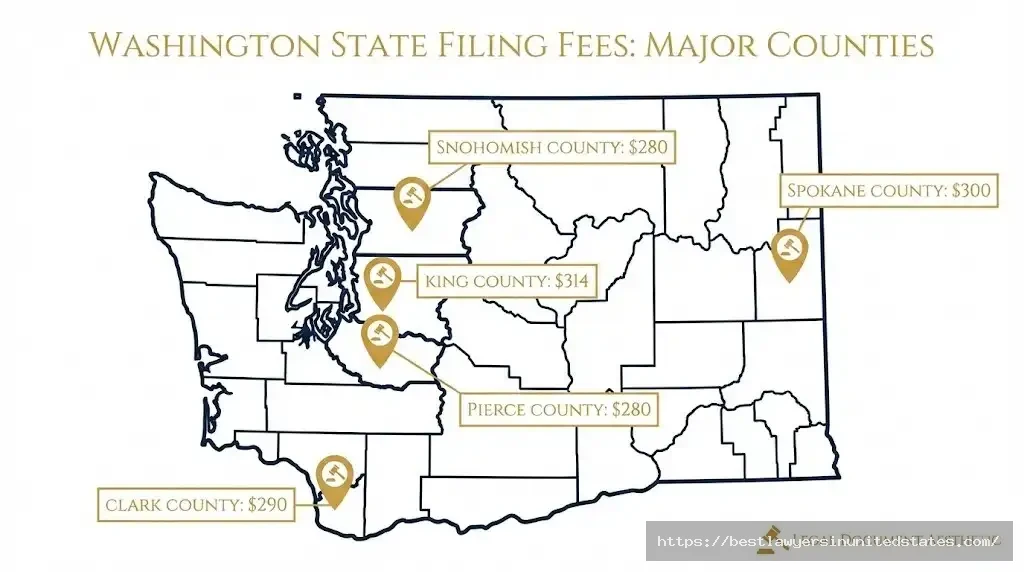
Filing your Petition for Dissolution of Marriage with your county’s Superior Court triggers the first required expense. Here’s what each major Washington county charges:
| County | Filing Fee | Additional Response Fee |
|---|---|---|
| King County | $314 | $0 (included) |
| Pierce County | $280 | $0 (included) |
| Snohomish County | $280 | $0 (included) |
| Spokane County | $300 | $0 (included) |
| Clark County | $290 | $0 (included) |
| Thurston County | $280 | $0 (included) |
| Kitsap County | $280 | $0 (included) |
| Whatcom County | $280 | $0 (included) |
| Yakima County | $280 | $0 (included) |
| Benton County | $280 | $0 (included) |
These fees cover processing your initial divorce petition through the Washington State Superior Court system. The respondent (person being served) typically doesn’t pay additional filing fees if they agree to the divorce terms.
Can’t afford the filing fee? Low-income filers can request a fee waiver. More on that below.
How Much Does an Uncontested Divorce Cost in Washington State?
An uncontested divorce happens when both spouses agree on all major issues including property division, debt allocation, child custody arrangements, child support, and spousal maintenance. This is the most affordable divorce option in Washington.
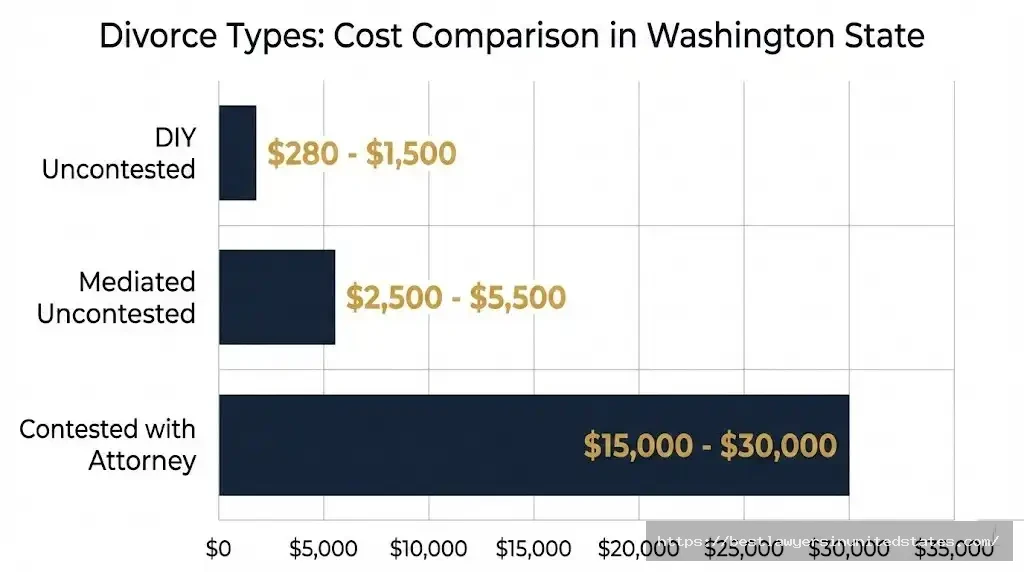
DIY Uncontested Divorce: $280-$1,500
If you and your spouse can complete the paperwork yourselves and agree on everything, you’ll only pay court filing fees plus minor costs:
Total Cost Breakdown:
- King County filing fee: $314
- Process server (if needed): $40-$150
- Notary fees: $10-$30
- Document copies: $10-$25
- Parenting class (if children): $50-$75 per parent
- Total: $424-$664 without kids, $524-$814 with kids
This works best for short marriages, minimal assets, no children, and complete agreement. You’ll need to download forms from Washington Courts website, complete them accurately, file with your county Superior Court, and attend a final hearing.
Uncontested Divorce with Attorney: $3,000-$7,000
Hiring an attorney for an uncontested case provides peace of mind that paperwork is correct and your interests are protected. Most divorce attorneys charge flat fees for straightforward uncontested divorces.
What’s Included:
- Document preparation and filing
- Review of financial declarations
- Parenting plan drafting (if applicable)
- Court appearance representation
- Final decree preparation
Expect to pay around $3,500-$5,000 for simple cases without children, or $5,000-$7,000 when children and more complex asset division are involved. This is still significantly cheaper than contested divorce costs.
Uncontested Divorce with Mediation: $2,500-$5,500
Divorce mediation involves hiring a neutral third-party mediator to help you and your spouse reach agreements. Mediators in Washington typically charge $150-$400 per hour, with most uncontested cases requiring 5-15 hours of mediation.
Mediation Cost Breakdown:
- Mediator fees: $1,500-$6,000 (depending on complexity)
- Filing fees: $280-$314
- Attorney review (optional but recommended): $500-$1,500
- Total: $2,280-$7,814
Mediation works well when spouses are willing to compromise but need help structuring agreements fairly, especially around parenting plans and property division.
How Much Does a Contested Divorce Cost in Washington State?
A contested divorce occurs when spouses disagree on one or more major issues. These disagreements require court intervention, extensive legal work, and potentially a trial, which dramatically increases costs.
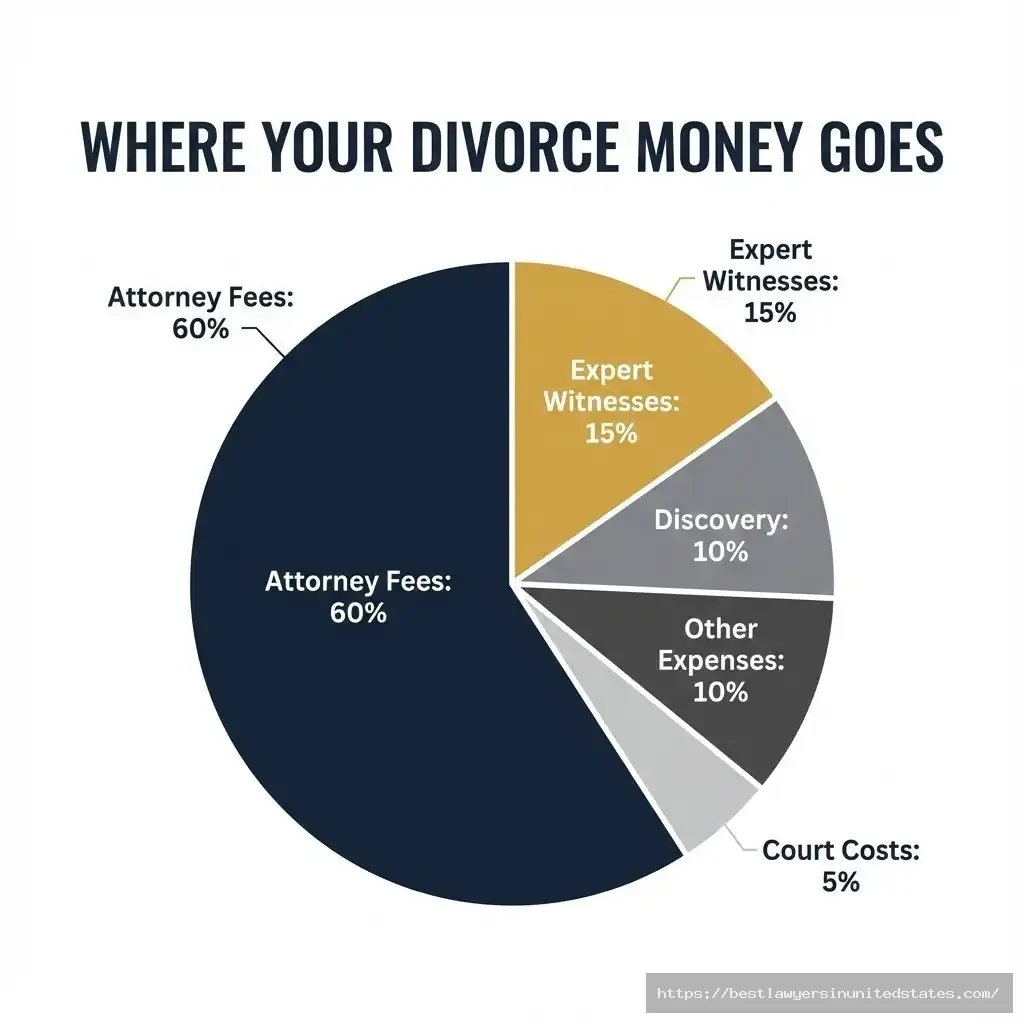
Moderately Contested Divorce: $15,000-$30,000
When you disagree on some issues but can resolve others through negotiation or limited court hearings, expect costs in this range.
Cost Components:
- Attorney retainer: $5,000-$10,000
- Hourly attorney fees: $250-$450/hour (typical WA rates)
- Court filing fees: $280-$314
- Process server: $40-$150
- Discovery costs: $500-$3,000
- Depositions: $500-$1,500 each
- Expert witnesses (if needed): $2,000-$10,000
- Guardian ad Litem (custody disputes): $3,000-$15,000
- Mediation attempts: $1,500-$4,000
- Total: $15,000-$30,000+
Most contested divorces in Washington fall into this category. Attorneys bill hourly, so the more you fight, the more you pay.
High-Conflict Contested Divorce: $30,000-$100,000+
Cases involving substantial assets, business valuations, complex custody battles, or spouses who refuse to cooperate can exceed $50,000 per person.
Additional High-Cost Factors:
- Business valuation experts: $5,000-$25,000
- Real estate appraisals: $400-$800 each
- Forensic accountants: $5,000-$20,000
- Parenting evaluators: $5,000-$15,000
- Multiple court hearings: $2,000-$5,000 each
- Trial preparation: $10,000-$30,000
- Actual trial: $5,000-$15,000 per day
These cases often drag on for 18-24 months or longer. Attorney fees accumulate quickly when disputes escalate to trial before a Washington Family Court judge.
How Much Does a Divorce Lawyer Cost in Washington State?
Understanding attorney fee structures helps you budget and choose the right representation level for your situation. Washington divorce attorney fees vary based on experience, location, and case complexity.

Hourly Rate Structure
Most family law attorneys in Washington charge hourly rates:
| Experience Level | Seattle/Bellevue | Spokane/Tacoma | Smaller Cities |
|---|---|---|---|
| Junior Attorney (1-5 years) | $200-$300/hour | $175-$250/hour | $150-$225/hour |
| Mid-Level Attorney (5-10 years) | $300-$400/hour | $250-$325/hour | $200-$275/hour |
| Senior Attorney (10+ years) | $400-$600/hour | $300-$450/hour | $250-$350/hour |
Paralegal work typically costs $100-$175/hour. Administrative tasks may be billed at $50-$100/hour.
Attorney Retainer Fees
Attorneys require upfront payment called a retainer, which serves as a deposit against future hourly billing.
Typical Washington Retainers:
- Uncontested divorce: $2,500-$5,000
- Moderately contested: $5,000-$10,000
- High-conflict cases: $10,000-$25,000+
When your retainer runs low, attorneys request replenishment. Any unused retainer funds are refunded when your case concludes.
Flat Fee Arrangements
Some attorneys offer flat fees for straightforward uncontested divorces. These typically range from $2,500-$5,000 depending on whether children are involved and asset complexity.
What Flat Fees Usually Cover:
- Initial consultation
- Document preparation and filing
- Limited court appearances
- Final decree preparation
Flat fees don’t cover contested issues. If disputes arise, attorneys switch to hourly billing.
Limited Scope Representation
Also called unbundled services, this option lets you hire an attorney for specific tasks only, keeping costs manageable.
Common Limited Scope Services:
- Document review only: $500-$1,500
- Court appearance representation: $1,500-$3,000
- Strategy consultation: $300-$800
- Parenting plan drafting: $800-$2,000
This works well for capable individuals who need expert help on complex aspects while handling routine paperwork themselves.
Real Washington Divorce Cost Examples: What People Actually Pay
Understanding costs becomes clearer through real-world scenarios that match common situations Washington residents face.
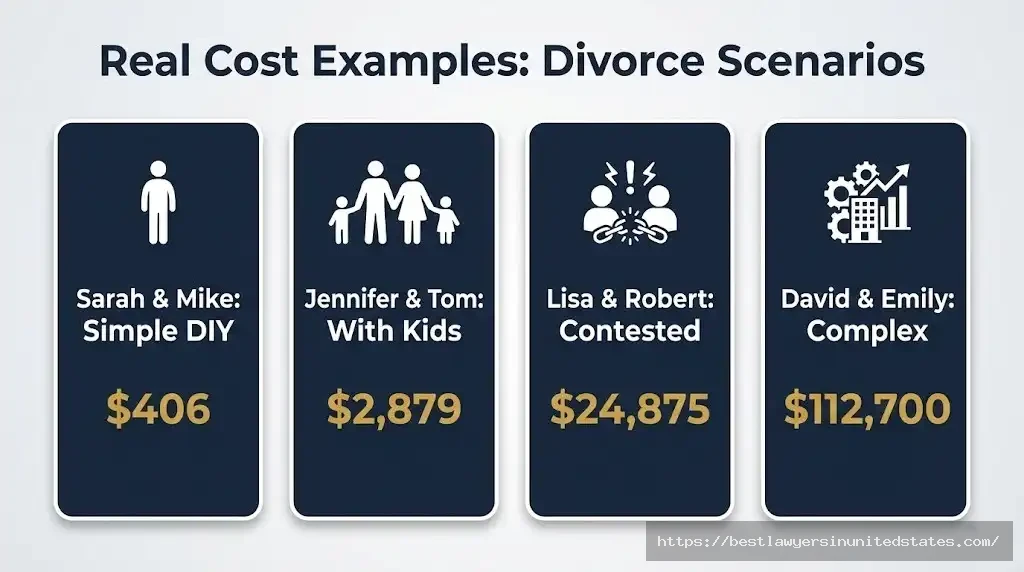
Scenario 1: Sarah & Mike – Simple Uncontested, No Children
Situation: Married 4 years, no children, renting apartment, minimal assets (one car each, $8,000 in joint savings), both employed, amicable split.
Approach: DIY divorce using Washington Courts forms.
Actual Costs:
- King County filing fee: $314
- Process server: $65
- Notary: $15
- Document copies: $12
- Total: $406
Timeline: 93 days (minimum 90-day waiting period in Washington)
Key Takeaway: Simple cases with full agreement need minimal investment beyond court filing fees.
Scenario 2: Jennifer & Tom – Uncontested with Two Children
Situation: Married 9 years, two children (ages 5 and 7), own home with equity, 401(k) accounts, both working, agree on parenting plan and asset split.
Approach: Hired mediator to help structure agreements, then DIY filing.
Actual Costs:
- Mediation (8 hours @ $200/hour): $1,600
- King County filing fee: $314
- Parenting classes (both parents): $140
- Attorney review of final documents: $750
- Process server: $75
- Total: $2,879
Timeline: 4.5 months
Key Takeaway: Even with children and assets, staying uncontested keeps costs under $3,000 when you use mediation strategically.
Scenario 3: Lisa & Robert – Contested Property and Custody
Situation: Married 14 years, one child (age 10), own home ($550,000 value, $200,000 equity), retirement accounts ($180,000 combined), Lisa wants primary custody, dispute over spousal maintenance, Robert started divorce proceedings.
Approach: Both hired attorneys, attempted mediation (failed), Guardian ad Litem appointed for custody evaluation, settled before trial.
Lisa’s Costs:
- Attorney retainer: $7,500
- Additional attorney fees: $11,200 (46 hours @ $325/hour)
- Guardian ad Litem (split): $4,500
- Home appraisal: $450
- Retirement account valuation: $800
- Filing fees and costs: $425
- Lisa’s Total: $24,875
Robert’s Costs: Similar, approximately $23,500
Timeline: 16 months
Key Takeaway: Custody disputes and asset disagreements quickly push costs past $20,000 per person, even without going to trial.
Scenario 4: David & Emily – High-Net-Worth Complex Case
Situation: Married 22 years, three children (ages 12, 15, 17), two properties (primary home + vacation property), David owns small business ($2M value), significant retirement accounts ($850,000), stock portfolio, contested custody and property division.
Approach: Both hired experienced attorneys, business valuation expert, forensic accountant, custody evaluator, multiple court hearings, settled on trial eve.
David’s Costs:
- Attorney fees (senior partner): $68,500
- Business valuation: $18,000
- Forensic accountant: $12,500
- Custody evaluator (split): $7,500
- Real estate appraisals: $1,200
- Expert witness depositions: $3,200
- Filing and court costs: $1,800
- David’s Total: $112,700
Emily’s Costs: Approximately $95,000
Timeline: 26 months
Key Takeaway: Business ownership and substantial assets require expensive experts and extensive legal work, often exceeding $100,000 per spouse.
Complete Checklist: Every Possible Divorce Cost in Washington State
Budget comprehensively by understanding all potential expenses beyond attorney fees. Here’s what you might encounter:
Required Court and Filing Costs
- Initial petition filing: $280-$314 (county-dependent)
- Service of process: $40-$150
- Additional motions filing: $20-$50 each
- Certified copies: $5-$10 per document
- Court reporter (hearings): $300-$500 per session
Mandatory Washington-Specific Costs
- Parenting Seminar (required with children): $50-$75 per parent
- Financial declaration preparation: $0 (DIY) or $200-$500 (professional)
Legal Representation Expenses
- Attorney consultation: $0-$400 (many offer free initial consults)
- Attorney retainer: $2,500-$25,000+
- Hourly attorney fees: $150-$600/hour
- Paralegal fees: $100-$175/hour
Alternative Resolution Costs
- Mediation: $150-$400/hour (typically 5-20 hours total)
- Collaborative divorce team: $15,000-$40,000
- Arbitration: $200-$500/hour plus filing fees
Expert and Professional Fees
- Guardian ad Litem (GAL): $3,000-$15,000
- Parenting evaluator: $5,000-$15,000
- Custody evaluator: $8,000-$20,000
- Home appraisal: $400-$800
- Business valuation: $5,000-$25,000
- Retirement account valuation (QDRO): $500-$2,500
- Forensic accountant: $5,000-$20,000
- Vocational evaluator (earning capacity): $2,000-$5,000
- Real estate appraiser: $400-$600 per property
- Tax professional consultation: $200-$500/hour
Discovery and Investigation Costs
- Document production: $500-$2,000
- Interrogatories preparation: $300-$1,000
- Depositions: $500-$1,500 each
- Subpoena fees: $50-$150 each
- Private investigator (if needed): $75-$200/hour
Post-Divorce Administrative Costs
- Name change (separate petition): $150-$200
- Title transfers (vehicles): $15-$85
- Deed preparation and recording: $200-$500
- Credit report monitoring: $10-$30/month
- New bank accounts: $0-$50
Moving and Transition Costs
- Moving expenses: $1,000-$5,000
- Security deposit (new housing): $1,000-$3,000
- Furniture and household items: $2,000-$10,000
- Therapy/counseling: $100-$250/session
Hidden Soft Costs
- Time off work: varies by income
- Childcare during meetings: $15-$30/hour
- Travel to attorney appointments: varies
- Emotional stress impact: immeasurable
Total Potential Range: From $424 (simplest DIY) to $150,000+ (complex high-conflict cases with trials)
How to Get Your Divorce Filing Fees Waived in Washington State
Washington State offers fee waivers for low-income individuals who cannot afford court filing fees. This can save you $280-$314 right from the start.
Who Qualifies for Fee Waivers?
You may qualify if you receive public assistance or your household income falls below these thresholds:
2026 Washington Fee Waiver Income Limits (125% of federal poverty guidelines):
| Household Size | Monthly Income Limit | Annual Income Limit |
|---|---|---|
| 1 person | $1,549 | $18,588 |
| 2 people | $2,092 | $25,104 |
| 3 people | $2,635 | $31,620 |
| 4 people | $3,178 | $38,136 |
| 5 people | $3,721 | $44,652 |
| 6 people | $4,264 | $51,168 |
| 7 people | $4,807 | $57,684 |
| 8 people | $5,350 | $64,200 |
Add $543/month ($6,516/year) for each additional household member.
Automatic Qualification Categories
You automatically qualify if you currently receive:
- Temporary Assistance for Needy Families (TANF)
- Supplemental Security Income (SSI)
- Food Stamps/SNAP benefits
- General Assistance – Unemployable
- Aged, Blind, or Disabled (ABD) cash assistance
- Pregnant Women Assistance
- Refugee Assistance
- Alcohol/Drug Addiction Treatment Support
How to Request a Fee Waiver
Complete and file Washington State form “Order Regarding Adequate Notice and Waiving Filing Fee” (form FL All Family 120) with your divorce petition.
Required Documentation:
- Pay stubs (last 2 months)
- Public assistance award letters
- Tax returns (most recent year)
- Proof of all household income sources
- Bank statements
File these with your Petition for Dissolution of Marriage. The court clerk reviews and typically approves qualifying applications immediately.
Important: Fee waivers only cover court filing fees. You still pay for service of process, parenting classes, copies, and any attorney fees.
How to Finance Your Divorce: Payment Plans, Loans & Creative Solutions
Can’t afford thousands upfront? You have several financing options beyond draining savings or retirement accounts.

Attorney Payment Plans
Many Washington family law attorneys offer payment arrangements for qualified clients. Ask about:
- Monthly installments on retainers ($500-$1,000/month)
- Post-settlement payment (attorney takes portion of settlement)
- Sliding scale fees based on income
- Reduced retainers for straightforward cases
Always get payment terms in writing. Some attorneys charge interest on payment plans while others don’t.
Legal Aid and Pro Bono Services
Several Washington organizations provide free or reduced-cost legal help:
Northwest Justice Project
- Provides free civil legal aid to low-income Washington residents
- Income must be below 125% of federal poverty level
- Website: nwjustice.org
- Statewide hotline: 1-888-201-1014
Washington LawHelp
- Free legal information and self-help forms
- Website: washingtonlawhelp.org
- No income restrictions
Local Bar Association Pro Bono Programs
- King County Bar Association: kcba.org
- Spokane County Bar Association: spokanebar.org
- Check your county bar association website

Credit Cards and Personal Loans
Using credit should be your last resort due to interest rates, but it’s an option when necessary.
Pros:
- Immediate access to funds
- Some cards offer 0% APR introductory periods (12-18 months)
- Rewards/cash back on large purchases
Cons:
- High interest rates (18-25% typical)
- Adds debt during financially unstable time
- May impact credit score if balances run high
Better Alternative: Personal loans through banks or credit unions often offer lower rates (8-15%) than credit cards for amounts over $5,000.
401(k) Loans
Your retirement plan may allow borrowing against your balance. Typically you can borrow up to 50% of vested balance or $50,000, whichever is less.
Pros:
- Lower interest rates (typically prime + 1-2%)
- You pay interest to yourself
- No credit check required
- No tax penalty if repaid on time
Cons:
- Must repay within 5 years
- If you leave your job, often due immediately
- Reduces retirement savings
- Opportunity cost of investment growth
Important: Consult a financial advisor before taking 401(k) loans during divorce. Your retirement accounts are subject to division, which complicates borrowing against them.
Home Equity Lines of Credit (HELOC)
If you own your home with equity, a HELOC provides lower-interest borrowing (currently 7-10%).
Pros:
- Lower rates than credit cards
- Only pay interest on what you use
- May be tax deductible (consult tax professional)
Cons:
- Your home serves as collateral
- May complicate property division in divorce
- Requires decent credit score
- Application process takes weeks
Critical Warning: Never take out a HELOC without informing your spouse and attorney. Hiding debt or unilaterally borrowing against joint assets can harm your divorce case.
Crowdfunding Legal Fees
Increasingly common, some people turn to platforms like GoFundMe to raise divorce legal fees, especially in cases involving:
- Domestic violence situations
- Child safety concerns
- Extreme power imbalances
- Unjust situations garnering public sympathy
Tips for Success:
- Be honest but not vindictive in your story
- Explain why you need legal representation
- Provide documentation of financial hardship
- Share widely through social media
- Offer updates as case progresses
Reality Check: Most divorce crowdfunding campaigns raise $1,000-$5,000, not the full cost. View this as supplemental funding, not your primary solution.
Family Assistance
Borrowing from family members can provide interest-free financing, but always:
- Put agreements in writing
- Specify repayment terms clearly
- Discuss what happens if you can’t repay
- Consider gift tax implications (over $17,000/year may require reporting)
- Understand this may become evidence in your divorce case
How to Negotiate Lower Attorney Fees in Washington Divorce Cases
Attorney costs don’t have to be take-it-or-leave-it. Strategic negotiation can save thousands while still getting quality representation.
Questions to Ask During Initial Consultations
Most Washington family law attorneys offer free or low-cost initial consultations. Use this time to discuss fees openly:
Essential Fee Questions:
- “What’s your hourly rate and how often do you bill?”
- “Can you estimate total costs for my specific situation?”
- “Do you offer flat fees for uncontested divorces?”
- “What tasks can I handle myself to reduce billable hours?”
- “Will associates or paralegals handle routine work at lower rates?”
- “How do you handle unexpected costs that exceed the retainer?”
- “Do you offer payment plans or reduced retainers?”
Compare at least 3-5 attorneys before deciding. Rates vary significantly, and the most expensive isn’t always the best fit.
Negotiating Retainer Amounts
Attorneys often have flexibility on retainer requirements, especially for employed clients with stable income.
Strategies That Work:
- Split retainers: Pay half upfront, half within 30-60 days
- Reduced initial retainer: $3,000 instead of $5,000 with agreement to replenish as billed
- Payment plan retainers: $1,000/month until retainer is met
- No retainer/hourly only: Some attorneys bill monthly for very straightforward cases
Always get negotiated terms in your written fee agreement.
Limited Scope Representation Reduces Costs
Instead of full representation, hire an attorney for specific high-value tasks only:
Smart Limited Scope Uses:
- Draft parenting plan only ($800-$1,500)
- Review settlement agreement before signing ($500-$1,000)
- Court appearance for one hearing ($1,500-$3,000)
- Consult on legal strategy ($300-$800)
- Document review and filing ($1,000-$2,000)
Handle routine paperwork yourself using DIY divorce resources, saving thousands in legal fees.
Tasks You Can Do Yourself to Lower Bills
Attorneys bill for every minute they work. Reduce billable hours by handling these tasks:
Easy DIY Tasks:
- Gather all financial documents (bank statements, tax returns, pay stubs)
- Create detailed asset and debt lists with values
- Organize documents into clearly labeled folders
- Complete draft versions of forms for attorney review
- Handle routine communication with spouse (document everything)
- Research basic legal questions online first
- Track your own case timeline and deadlines
Time Savings Example: If your attorney charges $350/hour and you spend 10 hours organizing documents instead of them doing it, you save $3,500.
When to Switch Attorneys
Sometimes your attorney isn’t the right fit. Warning signs you might need to change:
- Consistently being billed for tasks that seem unnecessary
- Poor communication or failure to return calls/emails
- Bills that seem excessive compared to work done
- Personality conflicts that hinder case progress
- Unexplained cost overruns beyond estimates
Washington allows you to change attorneys at any time. Your new attorney will request your file from the old one. You’re only responsible for paying for work actually completed.
Washington State Divorce Cost-Saving Strategies That Actually Work
Smart decisions throughout the process can save you thousands without sacrificing important rights or outcomes.
Stay Organized from Day One
Disorganization costs money. Attorneys bill hundreds per hour to organize what you should have organized yourself.
Create These Systems Immediately:
Financial Documents Folder:
- Last 3 years tax returns
- 6 months bank statements (all accounts)
- Credit card statements
- Loan documents
- Pay stubs
- Investment account statements
- Property deeds
- Vehicle titles
- Business records (if applicable)
Asset and Debt Inventory:
- Spreadsheet with every asset (current value, purchase date, whose name)
- Separate sheet for all debts (balance, whose name, monthly payment)
- Photos of significant assets
Communication Log:
- Date, time, method (email/text/phone), summary of all spouse communications
- Keep emotions out; stick to facts
This preparation alone can save $2,000-$5,000 in attorney time.
Pick Your Battles Wisely
Fighting over every minor issue costs far more than the item’s worth. Before digging in, ask:
- “Is this worth $500-$2,000 in attorney fees to fight over?”
- “Will this matter in 5 years?”
- “Am I being strategic or emotional?”
Example: Fighting over $2,000 worth of furniture might cost $5,000 in legal fees. Compromise and move forward.
When to Fight: Child custody, significant assets (home, retirement), business interests, and spousal support warrant vigorous representation.
Use Your Attorney Strategically, Not as a Therapist
Attorneys are legal advisors, not emotional support. At $300-$500/hour, therapy sessions disguised as legal consultations drain your retainer fast.
Don’t Call Your Attorney To:
- Vent about your spouse’s behavior
- Rehash the same issues repeatedly
- Discuss every minor interaction with your ex
- Get emotional support
Do Call Your Attorney To:
- Discuss legal strategy
- Review settlement offers
- Prepare for hearings
- Address actual legal questions
- Discuss significant case developments
For Emotional Support: Hire a therapist ($100-$200/hour) or join divorce support groups (often free).
Consider Collaborative Divorce for Complex Cases
Collaborative divorce uses a team approach where both spouses commit to resolving issues outside court. While upfront costs seem high ($15,000-$40,000), it’s often cheaper than litigation for complex cases.
Collaborative Team May Include:
- Attorney for each spouse
- Neutral financial specialist
- Divorce coach
- Child specialist
Everyone signs an agreement to negotiate in good faith. If anyone files for court, all collaborative professionals must withdraw (financial incentive to settle).
Cooperate on Reasonable Requests
Every time you say “no” to reasonable requests, you add billable hours for attorneys to argue about it.
Expensive Non-Cooperation:
- Refusing reasonable document requests (forces motions to compel)
- Canceling scheduled mediations (wastes everyone’s time)
- Ignoring temporary agreement offers (requires court hearings)
- Making scheduling difficult (extends timeline = more fees)
Cost-Saving Cooperation:
- Respond to information requests promptly
- Attend scheduled sessions
- Consider reasonable proposals seriously
- Communicate directly when possible (document it)
What’s the Cheapest Way to Get a Divorce in Washington State?
If minimizing costs is your top priority and your situation allows, here’s the absolute lowest-cost path.
Requirements for DIY Divorce Success
You can handle divorce yourself (pro se) if ALL of these apply:
✓ Both spouses agree to divorce ✓ Agreement on all asset and debt division ✓ Agreement on child custody and support (if applicable) ✓ Neither spouse contests anything ✓ No complex assets (businesses, stock options, pensions) ✓ No domestic violence protection orders ✓ Both spouses capable of completing paperwork ✓ Willing to do legal research and follow procedures
If any don’t apply, hiring an attorney becomes cost-effective risk management.
Step-by-Step DIY Process
Step 1: Determine Your County and Gather Information
File in the county where either spouse lives. You’ll need:
- Marriage certificate
- Children’s birth certificates (if applicable)
- Complete financial information for both spouses
- Property deeds, vehicle titles
- Retirement account statements
Step 2: Download Forms from Washington Courts
Visit washingtonlawhelp.org and search for:
- Petition for Dissolution of Marriage
- Summons
- Confidential Information Form
- Vital Statistics Form
- Parenting Plan (if children)
- Child Support Worksheets (if children)
- Decree of Dissolution
Step 3: Complete Forms Accurately
Common mistakes that cause delays:
- Incorrect legal names (use full names exactly as on marriage certificate)
- Missing Social Security numbers
- Incomplete financial declarations
- Math errors on child support worksheets
- Unsigned forms
Step 4: File with Superior Court
Take completed forms to your county Superior Court clerk’s office.
What to Bring:
- Original forms (3 copies recommended)
- Filing fee ($280-$314 depending on county)
- Valid photo ID
- Marriage certificate copy
Court clerk stamps your forms “filed” and assigns a case number. They’ll give you copies and keep the originals.
Step 5: Serve Your Spouse
Washington law requires “service of process” – officially delivering divorce papers to your spouse. Even if you’re cooperating, this step is mandatory.
Service Options:
- Process server: $40-$150 (professional delivers and provides proof)
- Sheriff’s service: $50-$100 (varies by county)
- Acknowledgment of Service: $0 (spouse signs voluntarily, then notarized)
The cheapest method: Have your spouse sign an Acknowledgment of Service form in front of a notary ($10-$15). File this with the court as proof of service.
Step 6: Wait 90 Days (Mandatory Waiting Period)
Washington requires a minimum 90-day waiting period from service date to final hearing. Use this time to:
- Finalize parenting plan details
- Complete parenting seminar (required if you have children)
- Organize asset transfers
- Draft your Decree of Dissolution
- Prepare for final hearing
Step 7: Attend Parenting Seminar (If You Have Children)
Both parents must complete an approved parenting seminar before the final hearing. Classes cost $50-$75 per person and are available online or in-person.
Topics covered: co-parenting strategies, child development, reducing conflict, effective communication. Most classes take 4-6 hours.
Step 8: Schedule Final Hearing
After 90 days, contact the court to schedule your final hearing (also called “prove-up”). Some counties allow uncontested divorces without hearings if paperwork is perfect.
Hearing Preparation:
- Arrive 15 minutes early
- Bring original Decree of Dissolution for judge to sign
- Dress professionally
- Bring witness (friend/family who knows you’re married)
Step 9: Present Your Case to Judge
Uncontested hearings are brief (10-15 minutes). The judge will ask:
- Are you both Washington residents?
- Do you want to dissolve this marriage?
- Did you complete the parenting seminar? (if applicable)
- Have you agreed on all terms?
- Is the Decree fair and adequate?
If everything’s in order, the judge signs your Decree of Dissolution on the spot.
Step 10: File Certified Copy and Complete Administrative Tasks
Get certified copies of your Decree ($5-$10 each, get 3-4 copies). You’ll need these to:
- Transfer vehicle titles at DOL
- Change bank accounts
- Update insurance
- File name change (if applicable)
- Update Social Security records
Total DIY Cost: $424-$664 without children, $524-$814 with children.
Time Investment: Expect to spend 15-30 hours on research, form completion, and procedures.
Online Divorce Services Worth Considering
Online platforms help with paperwork for flat fees lower than attorneys charge. These work well for straightforward uncontested cases.
Popular Services (Prices as of 2026):
Washington Divorce Online – $299
- State-specific forms
- Step-by-step instructions
- Phone support
- Court filing instructions
DivorceWriter – $159
- Prepares all forms based on your answers
- Unlimited revisions
- No attorney review
It’s Over Easy – $749-$1,499
- Includes attorney review
- Mediation services available
- Document preparation assistance
CompleteCase – $299
- Court-approved forms
- Personalized to your situation
- Support throughout process
What These Don’t Include: Court filing fees, service costs, attorney representation if disputes arise.
Bottom Line: These services save money over attorneys ($3,000-$7,000) while reducing DIY mistakes. Good middle-ground option.
How Long Does a Divorce Take in Washington State?
Timeline directly impacts costs because longer cases mean higher attorney fees. Understanding typical timelines helps you budget appropriately.
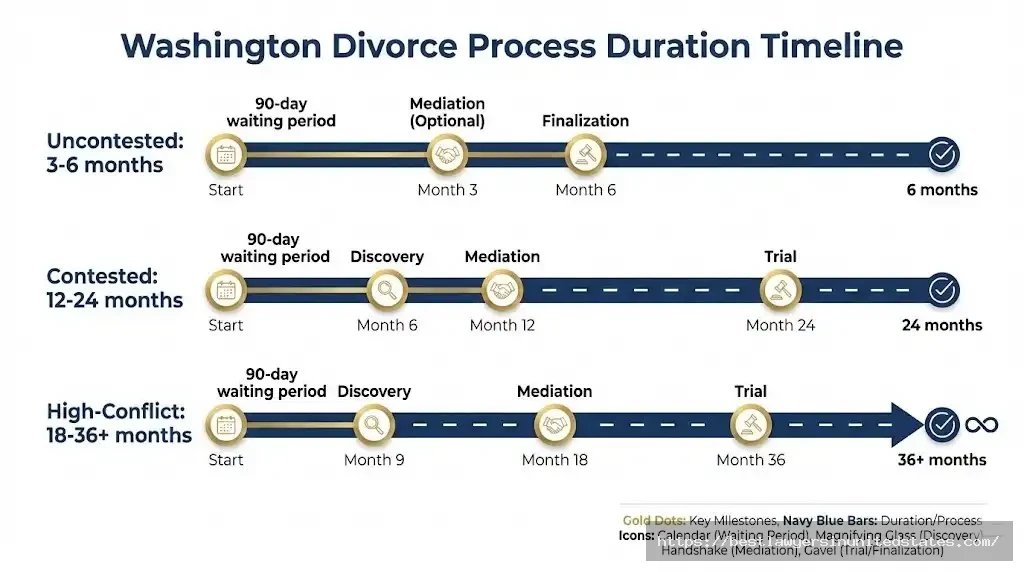
Minimum Timeline: 90 Days
Washington law mandates a 90-day waiting period from the date your spouse is served until your divorce can be finalized. This “cooling off” period applies to every divorce, no exceptions.
The clock starts: When your spouse receives the Summons and Petition (not when you file)
The clock ends: 90 days later, when the court can sign your final Decree of Dissolution
Even if you and your spouse agree on everything day one, you cannot finalize your divorce any faster than 90 days.
Uncontested Divorce Timeline: 3-6 Months
Most uncontested divorces finalize within 3-6 months from filing to final decree.
Typical Timeline:
- Week 1-2: Prepare and file paperwork
- Week 2-3: Serve spouse
- Day 1 of 90-day wait: Service completed
- Weeks 3-12: Complete parenting seminars, finalize agreements, organize asset transfers
- Day 90+: Schedule and attend final hearing
- Day 95-120: Receive signed Decree, complete administrative tasks
Factors That Speed It Up:
- Both spouses cooperate fully
- No children involved
- Minimal assets to divide
- Prompt completion of required seminars
- Efficient court scheduling
Factors That Slow It Down:
- Court scheduling delays (busy counties may not have hearing dates for 4-6 weeks past day 90)
- Delays completing parenting seminars
- Last-minute disagreements
- Paperwork errors requiring corrections
Contested Divorce Timeline: 12-24 Months
Contested divorces take significantly longer because of discovery, motion hearings, evaluations, and settlement negotiations.
Typical Timeline:
Months 1-3: Initial Phase
- File petition and serve spouse
- Spouse files response
- Temporary orders hearing (child custody, support, property use)
- Exchange preliminary financial information
Months 4-9: Discovery Phase
- Written discovery (interrogatories, requests for production)
- Depositions
- Expert evaluations ordered (custody, business valuations, etc.)
- Multiple attorney meetings and negotiations
Months 10-15: Resolution Attempts
- Mediation sessions
- Settlement conferences
- Expert reports completed
- Continued negotiations
Months 16-20: Trial Preparation (If Needed)
- Pretrial motions
- Witness preparation
- Trial briefs filed
- Final settlement discussions
Months 20-24: Trial or Final Settlement
- Trial (2-10 days depending on complexity)
- Judge’s ruling
- Decree preparation and signing
Cost Impact: At $300/hour, a 24-month case with moderate attorney involvement (10 hours/month) costs $72,000 in legal fees alone. This is why settling is almost always financially smarter than going to trial.
High-Conflict Divorce Timeline: 18-36+ Months
Complex cases with business valuations, extensive assets, custody battles, or uncooperative spouses can drag on for years.
What Extends Timeline:
- Business valuation disputes (6-12 months for complete evaluation)
- Custody evaluations (4-8 months)
- Forensic accounting (4-10 months)
- Multiple motions requiring hearings (2-4 months each)
- Discovery disputes (ongoing)
- Continuances and rescheduled hearings
- Appeals (adds 12-18 months)
The Longest Cases: Divorces involving international assets, hidden assets requiring extensive investigation, or continuous litigation can exceed 3 years and $200,000+ in combined legal fees.
Reality Check: Every month your divorce extends costs an additional $1,500-$5,000+ in attorney fees. The financial incentive to settle is enormous.
Is Washington a 50/50 Divorce State?
Understanding Washington’s property division laws helps you anticipate costs related to asset valuation and division disputes.
Washington is a community property state, meaning all assets and debts acquired during marriage are presumed equally owned by both spouses, regardless of whose name is on titles or accounts.
What Gets Divided in Washington Divorce?
Community Property (Split 50/50):
- Income earned by either spouse during marriage
- Real estate purchased during marriage (even if only one name on deed)
- Retirement accounts and pensions earned during marriage
- Vehicles purchased during marriage
- Business interests acquired or grown during marriage
- Bank accounts (even separate accounts if funded with marital income)
- Debts incurred during marriage
- Tax refunds
Separate Property (Keeps Separate):
- Property owned before marriage
- Inheritances received by one spouse (if kept separate)
- Gifts given specifically to one spouse
- Personal injury settlements
- Property acquired after legal separation date
The Gray Area: Separate property can become community property through “commingling.” Example: If you owned a home before marriage but used marital income to pay the mortgage, your spouse may have a community property interest in equity built during marriage.
Does 50/50 Mean Exactly Half?
Not always. Washington law requires “just and equitable” division, which usually means 50/50 but allows judges to deviate based on:
- Length of marriage (shorter marriages may not split 50/50)
- Economic circumstances of each spouse
- Nature and extent of community vs separate property
- Custody arrangements (primary custodial parent might get house)
- Whether one spouse wasted marital assets
Cost Impact: Disputes over whether assets are community or separate property require attorney work and potentially expert valuations, adding thousands to your divorce costs.
How Community Property Affects Divorce Costs
The 50/50 presumption actually helps reduce costs when spouses accept it. Disputes arise when:
- One spouse believes they deserve more than half
- Disagreement over asset values (house worth $400K vs $450K)
- Complicated commingling issues
- Business valuations needed
- Pension division calculations required
Each valuation dispute adds $500-$5,000+ to your legal bills. Understanding and accepting Washington’s community property laws upfront saves money.
Who Pays Attorney Fees in a Washington Divorce?
Generally, each spouse pays their own attorney fees in Washington. However, the court can order one spouse to pay the other’s legal fees under specific circumstances.
Standard Practice: Each Party Pays Their Own
Most Washington divorces operate under the “American Rule” where each side bears their own legal costs. If you hire an attorney, you pay their fees regardless of the divorce outcome.
This applies even when one spouse earns significantly more than the other, though income disparity can justify fee-shifting orders.
When Courts Order Fee Shifting
Washington courts can require one spouse to pay some or all of the other’s attorney fees when:
Income Disparity: One spouse has significantly greater income or access to funds, creating an unfair advantage in hiring legal representation. Courts balance the playing field by ordering the higher-earning spouse to contribute to the other’s legal fees.
Bad Faith Conduct: If one spouse unnecessarily prolongs the case, files frivolous motions, hides assets, or acts in bad faith, courts may order them to pay the other’s attorney fees as a sanction.
Failure to Disclose: Hiding assets or income can result in fee-shifting orders as punishment and to compensate the other spouse for additional legal work required to uncover the deception.
Violation of Court Orders: Repeatedly violating temporary orders or failing to comply with discovery requests can trigger fee awards.
How to Request Attorney Fees
File a motion requesting attorney fees with specific justification:
Required Information:
- Detailed explanation of income disparity
- Documentation of bad faith conduct (if applicable)
- Itemized attorney fee statement
- Financial declarations showing inability to pay
Court Considerations:
- Relative income and assets of both parties
- Reasonableness of fees requested
- Conduct of both parties during the case
- Need for fees to ensure fair representation
Typical Awards: Courts rarely order full attorney fee reimbursement. Partial awards ($5,000-$15,000) are more common, helping the lower-income spouse afford adequate representation.
Cost Impact: Fee-shifting motions themselves cost $1,000-$3,000 in attorney time to prepare and argue. Only pursue if you have strong grounds and the potential award justifies the cost.
Hidden Costs Most Washington Divorces Face
Beyond obvious attorney fees and filing costs, several expenses catch people off guard. Budget for these to avoid financial surprises mid-process.
Parenting Class Fees (Mandatory with Children)
Washington requires parents with minor children to complete approved parenting seminars before finalizing divorce. Both parents must attend separately.
Costs: $50-$75 per parent Options: Online courses or in-person classes Time: 4-6 hours When: Must complete before final hearing
Pro tip: Complete this early during the 90-day waiting period so it doesn’t delay your final hearing.
Guardian ad Litem Costs
When parents can’t agree on custody or judges have concerns about children’s welfare, courts appoint a Guardian ad Litem (GAL) to investigate and make recommendations.
GAL Responsibilities:
- Interview both parents
- Interview children (age-appropriate)
- Visit both homes
- Review relevant documents
- Talk to teachers, doctors, therapists
- Prepare written report with custody recommendations
- Testify at trial if needed
Typical Costs: $3,000-$15,000 depending on case complexity and investigation time required
Who Pays: Usually split 50/50 between parents, though courts can order different proportions based on income disparity
Cost Control: The more cooperative you are with the GAL investigation, the less time they spend (lower costs). Arguing with the GAL or obstructing their work increases hours billed.
Parenting Evaluator Fees
More extensive than GAL services, parenting evaluators conduct psychological testing and comprehensive assessments when custody disputes are complex.
Evaluation Includes:
- Psychological testing of parents
- Age-appropriate child interviews and testing
- Home visits
- Collateral interviews
- Review of records
- 30-50 page written report
Typical Costs: $5,000-$15,000 Timeline: 3-6 months to complete Who Pays: Split between parents or as court orders
When Ordered: High-conflict custody cases, mental health concerns, abuse allegations, relocation disputes.
Real Estate Appraisals
When spouses disagree on home values or need official valuations for equitable division, professional appraisals become necessary.
Typical Costs: $400-$800 per property Timeline: 1-2 weeks When Needed: Buyout negotiations, refinancing, significant equity disputes
Cost-Saving Tip: If your home value isn’t hotly disputed, use recent comparable sales (Zillow, Redfin) or broker price opinions ($100-$200) instead of full appraisals.
Business Valuations
If either spouse owns a business or professional practice, determining its value for division purposes requires expert analysis.
Valuation Methods:
- Asset-based approach
- Income approach
- Market approach
Typical Costs: $5,000-$25,000+ depending on business complexity
What Impacts Cost:
- Business size and revenue
- Number of locations
- Financial record organization
- Industry complexity
- Goodwill valuation needs
Timeline: 2-6 months for complete valuation
Alternative: For small businesses, both parties can agree to use tax returns and simplified calculations, avoiding expensive valuations.
Retirement Account Division (QDRO)
Dividing 401(k)s, pensions, and other retirement accounts requires Qualified Domestic Relations Orders (QDROs) – specialized legal documents meeting IRS requirements.
QDRO Preparation Costs: $500-$2,500 per account Who Handles: Specialized QDRO attorneys or services Why Necessary: Ensures tax-free transfer of retirement assets per divorce decree
Common Mistake: Forgetting to execute QDROs after divorce finalizes. Always complete these promptly to avoid complications.
Forensic Accounting
When one spouse suspects the other is hiding assets, underreporting income, or engaging in financial misconduct, forensic accountants trace money trails.
What They Investigate:
- Hidden bank accounts
- Cash business income
- Asset transfers to third parties
- Unusual spending patterns
- Offshore accounts
- Cryptocurrency holdings
Typical Costs: $5,000-$20,000 Timeline: 2-4 months
When Worth It: Cases with substantial assets ($500K+), business ownership, or clear red flags of hidden assets. The accountant should recover more than they cost.
Moving and Transition Costs
One or both spouses typically move out during or after divorce. These transition costs add up quickly:
Common Expenses:
- Moving company or truck rental: $500-$3,000
- Security deposit (new housing): $1,000-$3,000
- First/last month rent: $2,000-$6,000
- Utility deposits and setup: $200-$500
- Furniture and household items: $2,000-$10,000
- Kitchen supplies and basics: $500-$1,500
Budget Impact: Plan for $5,000-$15,000 in transition costs beyond legal fees.
Credit Monitoring and Financial Protection
Divorce creates financial vulnerability. Protect yourself with:
- Credit monitoring service: $10-$30/month (watch for unauthorized accounts)
- Credit freeze: Free (prevents new accounts being opened)
- Annual credit reports: Free at annualcreditreport.com
Why Necessary: Spouses sometimes open credit cards in the other’s name, increase debt limits, or take loans during divorce proceedings. Monitor proactively.
Therapy and Mental Health Support
Divorce takes an emotional toll. Professional support isn’t a luxury, it’s a necessity for many.
Individual therapy: $100-$250/session Child therapy: $100-$200/session Support groups: Often free through churches, community centers
Cost-Benefit: Therapy helps you make better decisions, communicate more effectively, and manage stress, potentially reducing conflict-driven legal costs.
Name Change Costs
If you want to return to your maiden name or change your name for other reasons, budget for:
- Court petition filing: $150-$200
- Publication requirement (some counties): $40-$100
- Certified copies: $10-$25 each
- ID updates (driver’s license, passport): $54-$200
Easier Option: Request name restoration in your divorce decree (free). This serves as legal documentation for changing IDs without separate court proceedings.
When You SHOULD Spend More on Your Divorce
While minimizing costs makes sense for straightforward cases, some situations warrant investing in quality legal representation. Saving money upfront can cost far more long-term.
High-Asset Divorces Require Expert Representation
When your marital estate exceeds $500,000, the stakes are too high for DIY approaches or inexperienced attorneys.
What’s At Risk:
- Retirement accounts totaling six figures
- Real estate holdings
- Business ownership interests
- Investment portfolios
- Stock options and equity compensation
- Inherited wealth (keeping it separate)
Why Spend More: An experienced family law attorney who negotiates an extra $50,000 in your property division easily justifies their $15,000-$25,000 fee. The ROI is clear.
Penny-Wise, Pound-Foolish Example: Using a $2,500 flat-fee attorney for a divorce involving a $2M business often results in unfavorable valuations or division that costs you $200,000+. The $20,000 specialist would have saved you $180,000.
Complex Custody Situations Need Skilled Advocacy
Your relationship with your children is priceless. When custody is contested, don’t cut corners on representation.
Red Flag Situations:
- One parent has substance abuse issues
- Mental health concerns affect parenting
- History of domestic violence
- Abuse or neglect allegations
- Relocation disputes
- Special needs children requiring detailed plans
- Parents live far apart
- Grandparent custody claims
Quality Attorney Benefits:
- Experience with Guardian ad Litem and evaluator processes
- Strategic presentation of evidence
- Knowledge of what judges value in custody decisions
- Ability to negotiate detailed parenting plans protecting your time
Investment Worth It: Paying $15,000-$25,000 for a custody-focused attorney to secure equal or primary custody time is money well spent when the alternative is limited access to your children for the next 10-15 years.
Business Ownership Requires Specialized Knowledge
Dividing business interests is among the most complex divorce issues, requiring attorneys who understand:
- Business valuation methodologies
- Goodwill (personal vs enterprise)
- Buy-out structuring
- Tax implications
- Non-compete agreements
- Ongoing business operations during divorce
General family law attorneys may handle your divorce competently but lack specific business division expertise. Business divorce specialists cost more ($400-$600/hour) but prevent expensive mistakes.
Example: Properly structured business buyouts can save $50,000-$200,000 in taxes compared to poorly planned divisions.
Domestic Violence Cases Demand Strong Advocacy
Victims of domestic violence face safety risks and power imbalances that DIY or minimal representation doesn’t address adequately.
Critical Protection Needs:
- Restraining orders
- Emergency custody orders
- Safe exchange arrangements
- Address confidentiality
- Financial disclosure enforcement (abusers often hide assets)
Free Resources: Domestic violence victims often qualify for free legal aid through:
- Northwest Justice Project
- Local domestic violence organizations
- Pro bono attorney programs
- Legal clinic services
Don’t go it alone. Safety and protection justify whatever legal costs are necessary.
Retirement Division Requires Precision
Mistakes dividing retirement accounts cost tens of thousands in taxes and penalties.
Common Errors:
- Improperly drafted QDROs
- Missing beneficiary designations
- Tax consequences not considered
- Early withdrawal penalties triggered
- Social Security coordination ignored
Specialist Value: QDRO specialists and retirement-focused attorneys ensure tax-efficient divisions that preserve wealth. Their fees ($1,500-$5,000) are tiny compared to the $10,000-$50,000 in unnecessary taxes poor planning creates.
Washington State Divorce Cost Myths Debunked
Misconceptions about divorce costs lead to poor planning and unrealistic expectations. Here’s the truth behind common myths.
Myth: “Whoever Files First Pays More”
Reality: Filing first doesn’t increase your costs. Court filing fees are the same whether you’re petitioner or respondent. Attorney fees depend on case complexity and your legal needs, not who filed.
Why This Myth Exists: Some people assume taking action first means paying more, but Washington doesn’t penalize initiative. In fact, filing first can provide strategic advantages (controlling initial narrative, setting temporary order terms) without additional costs.
Myth: “Wives Always Get More Money in Washington”
Reality: Washington is a community property state with gender-neutral laws. Judges split marital property 50/50 regardless of gender. Both husbands and wives can receive spousal maintenance based on need and ability to pay.
Historical Context: Decades ago, courts presumed women needed financial support. Modern Washington law treats spouses equally, focusing on economic circumstances rather than gender.
Myth: “You Always Need a Lawyer”
Reality: Uncontested divorces with minimal assets and no children can be handled pro se (without attorneys) successfully. Washington provides free forms and resources specifically for self-represented litigants.
When True: You do need an attorney for contested divorces, significant assets, business ownership, complex custody disputes, or when your spouse has representation.
The Nuance: While you technically don’t need an attorney for uncontested cases, having one review your agreement ($500-$1,000) often catches issues that could cause problems later.
Myth: “Divorce Always Takes Years”
Reality: Uncontested divorces finalize in 3-6 months typically. The mandatory 90-day waiting period is the minimum, not the standard timeline.
Contested divorces take longer (12-24 months), but cooperative spouses reach settlements much faster than this myth suggests.
Myth: “Mediation is Always Cheaper Than Attorneys”
Reality: Mediation costs less than litigation but isn’t always cheaper than attorney-negotiated settlements. If mediation fails and you still need attorneys, you’ve paid for both.
Best Use: Mediation works well for spouses who can communicate reasonably but need structured help reaching agreements. It’s less effective when power imbalances or high conflict exist.
Myth: “The Parent Who Makes More Pays for Everything”
Reality: While the higher-earning parent typically pays child support, divorce costs (attorney fees, filing fees, expert costs) are usually split proportionally based on income.
Washington judges can order fee-shifting in cases of income disparity, but both parties generally bear their own legal costs.
Myth: “Men Always Pay Alimony”
Reality: Either spouse can receive spousal maintenance based on need, ability to pay, and marriage duration. Gender plays no role. Women with higher incomes pay maintenance to lower-earning husbands regularly.
Modern Trend: Courts increasingly favor time-limited rehabilitative maintenance over permanent support, regardless of which spouse receives it.
Myth: “You Can’t Afford to Get Divorced”
Reality: Options exist at every price point from DIY ($280 filing fees) to full representation. Fee waivers help low-income filers. Payment plans spread costs over time. Legal aid provides free services to qualifying individuals.
While divorce isn’t free, the belief that it’s financially impossible keeps people in unhappy or unsafe marriages unnecessarily.
Frequently Asked Questions About Washington Divorce Costs
How much does it cost to get divorced in Washington State?
Divorce costs in Washington range from $280 (DIY uncontested with no complications) to $100,000+ (high-conflict cases with trials). Most uncontested divorces with attorney representation cost $3,000-$7,000. Contested divorces typically run $15,000-$30,000 per person. Your specific cost depends on whether you have children, assets to divide, and the level of agreement with your spouse.
What’s the cheapest way to get a divorce in Washington State?
The cheapest option is DIY uncontested divorce where both spouses agree on all terms, have no children or minimal assets, and can complete court forms themselves. This costs only the filing fee ($280-$314) plus service costs ($40-$150) and minor expenses, totaling $400-$700. This works only when both parties cooperate fully and the case is genuinely simple.
How long does a divorce take in Washington?
Washington requires a minimum 90-day waiting period from service date to finalization. Uncontested divorces typically finalize in 3-6 months total. Contested divorces take 12-24 months on average, depending on complexity and court schedules. High-conflict cases with extensive assets or custody battles can exceed 24 months.
Can I get a divorce without a lawyer in Washington State?
Yes, Washington allows pro se (self-represented) divorce. This works best for uncontested cases where both spouses agree on asset division, custody, and support. You’ll need to complete all required forms correctly, file them properly, serve your spouse, and represent yourself at hearings. Washington Courts provides free forms and instructions at washingtonlawhelp.org.
Is Washington a 50/50 divorce state?
Yes, Washington is a community property state where assets and debts acquired during marriage are split 50/50 unless there’s a compelling reason for unequal division. Judges can deviate from 50/50 based on factors like marriage length, economic circumstances, and the nature of assets, but equal division is the starting presumption.
Who pays the divorce fees in Washington?
Generally, each spouse pays their own attorney fees and shares court costs. However, judges can order one spouse to pay some or all of the other’s legal fees when significant income disparity exists or when one party acts in bad faith. File a motion requesting fee-shifting with supporting financial documentation if you believe you qualify.
Do I need a lawyer for an uncontested divorce in Washington?
Legally, no—you can handle an uncontested divorce yourself. Practically, having an attorney review your agreement ($500-$1,000) catches issues that could cause problems later. For uncontested divorces with children, significant assets, or retirement accounts, attorney involvement is worth the investment even when everyone agrees.
How much does a divorce lawyer cost per hour in Washington?
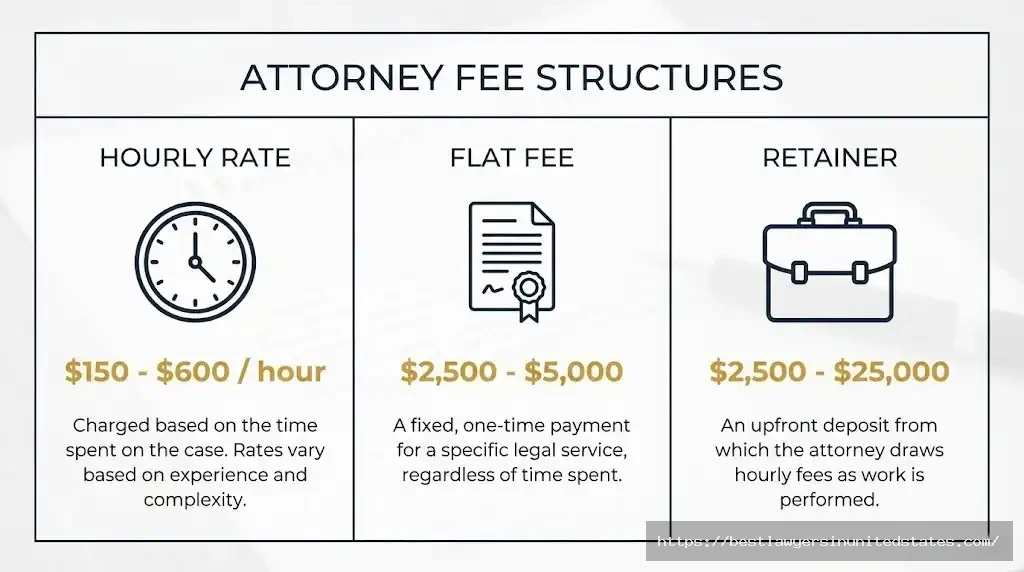
Washington divorce attorney hourly rates range from $150-$600/hour depending on experience and location. Seattle and Bellevue attorneys typically charge $300-$500/hour, while attorneys in smaller cities charge $200-$350/hour. Junior attorneys and paralegals charge less. Most family law attorneys require $2,500-$10,000 retainers upfront.
Can I get a fee waiver for divorce filing in Washington?
Yes, if your household income is below 125% of federal poverty guidelines or you receive public assistance (TANF, SSI, Food Stamps), you qualify for fee waivers covering court filing fees. File form FL All Family 120 with your divorce petition along with proof of income or benefit award letters. Fee waivers don’t cover attorney fees, service costs, or other expenses.
How much does divorce mediation cost in Washington State?
Divorce mediators in Washington charge $150-$400 per hour. Most uncontested cases require 5-15 hours of mediation ($750-$6,000 total). Complex cases with significant assets or custody issues may need 15-25 hours. Some mediators offer package pricing. Mediation costs are typically split 50/50 between spouses unless otherwise agreed.
Final Thoughts: Making Smart Financial Decisions During Your Washington Divorce
Divorce is expensive, but smart decisions throughout the process prevent unnecessary costs while protecting your interests and future.
Key Takeaways:
Know Your Options: From $280 DIY divorces to $100,000 complex litigation, understanding the full spectrum helps you choose the right approach for your situation and budget.
Cooperate When Possible: The difference between contested and uncontested divorce often means $20,000-$50,000 in attorney fees. Fighting over every small issue costs far more than the items’ value.
Invest Strategically: Spend money on high-value services (experienced attorneys for complex assets, custody specialists when children are involved) while handling routine tasks yourself.
Plan for Hidden Costs: Budget comprehensively including filing fees, expert costs, transition expenses, and post-divorce administrative tasks to avoid financial surprises mid-process.
Use Resources Available: Washington provides free legal forms, fee waivers for low-income filers, legal aid services, and online tools. Take advantage of these before assuming you can’t afford divorce.
The path you choose—DIY, mediation, collaborative, or traditional representation—should match your case complexity, your spouse’s cooperativeness, and your financial resources. There’s no one-size-fits-all answer, but understanding real costs empowers you to make informed decisions rather than letting fear or uncertainty guide you.
For more information about divorce costs across different states, additional divorce planning resources, and attorney selection guidance, explore the related articles on this site. If you need help calculating your specific situation, use our divorce cost calculator pre-filled with Washington State data.
