
A divorce in Tennessee typically costs between $300 and $15,000+, depending on whether you and your spouse agree on everything or end up fighting in court. Filing fees run $150 to $350 depending on your county, while attorney fees can add anywhere from $1,500 for a simple agreed divorce to $25,000+ for contested cases involving children, property disputes, or trial.

Below, we break down every cost you’ll face—filing fees by county, attorney rates, hidden expenses most people miss, and exactly how to keep your divorce affordable.
Divorce Cost Calculator
Get an estimated cost for your divorce based on your specific situation
Your Estimated Divorce Cost
Cost Breakdown
📧 Get a Personalized Consultation
Have questions about your specific situation? Contact our legal experts for guidance tailored to your needs.
Contact Us via EmailTennessee Divorce Costs at a Glance
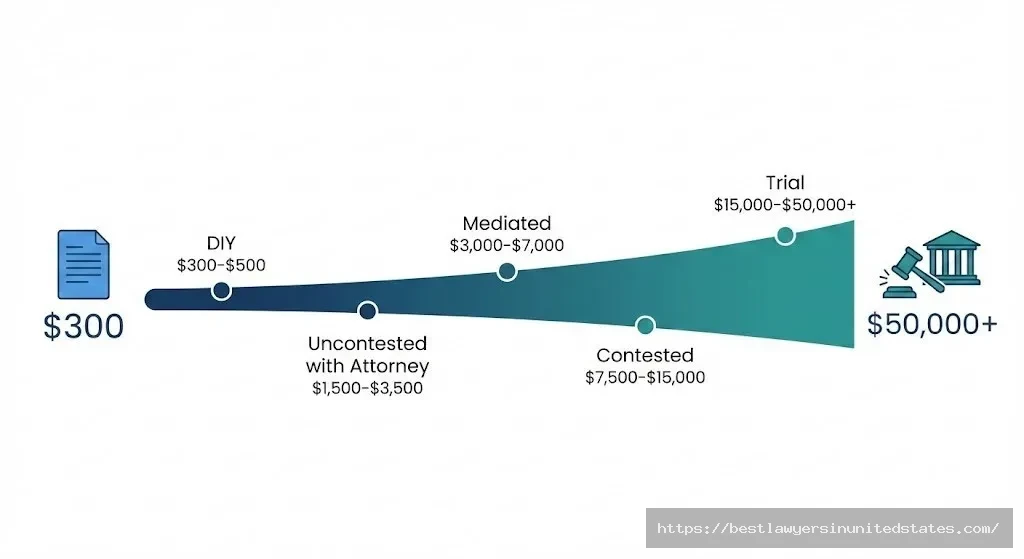
| Divorce Type | Total Cost Range | Timeframe |
|---|---|---|
| DIY Uncontested (no attorney) | $300 – $500 | 60–90 days |
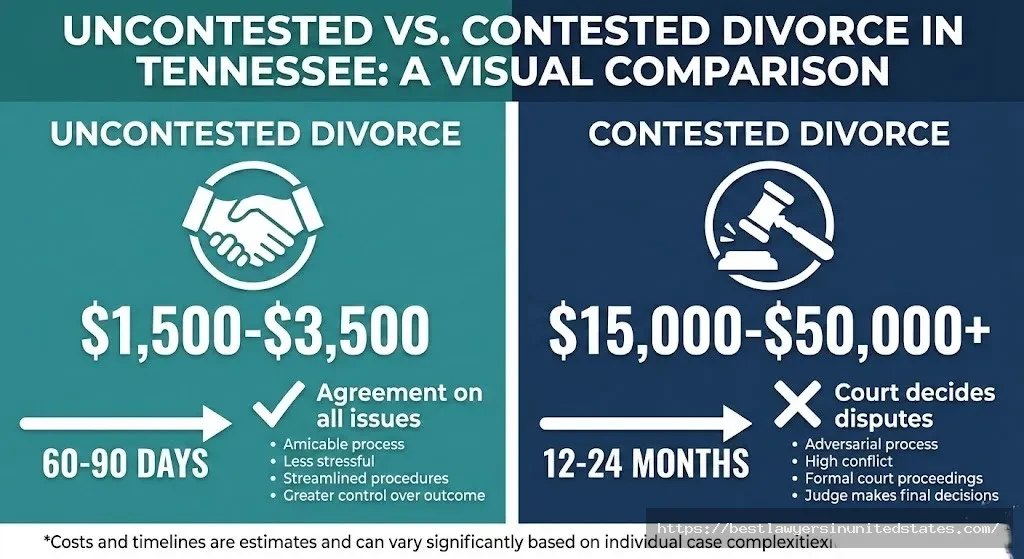
| Uncontested with Attorney | $1,500 – $3,500 | 60–90 days |
| Mediated Divorce | $3,000 – $7,000 | 3–6 months |
| Contested (no trial) | $7,500 – $15,000 | 6–12 months |
| Contested with Trial | $15,000 – $50,000+ | 12–24 months |
Most Tennessee divorces fall into the uncontested category, meaning both spouses agree on property division, child custody, and support. If that’s your situation, you’re looking at the lower end of these ranges.
How Much Are Tennessee Divorce Filing Fees by County?
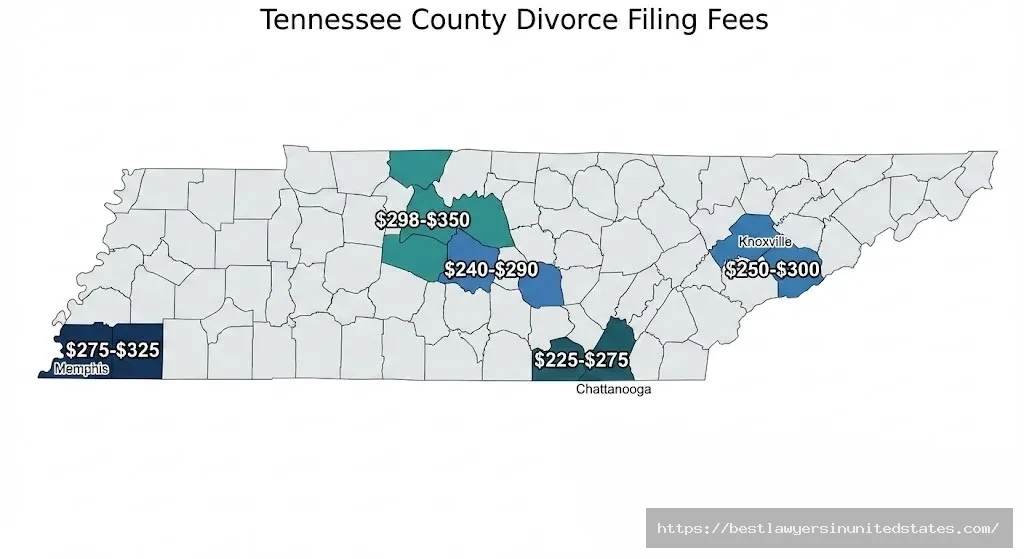
Every divorce starts with a filing fee paid to your county court. Tennessee doesn’t have a single statewide fee—each county sets its own rates. Here’s what you’ll pay in the state’s largest counties:
| County | Filing Fee | Court Type |
|---|---|---|
| Davidson (Nashville) | $298 – $350 | Circuit/Chancery |
| Shelby (Memphis) | $275 – $325 | Circuit/Chancery |
| Knox (Knoxville) | $250 – $300 | Circuit/Chancery |
| Hamilton (Chattanooga) | $250 – $295 | Circuit/Chancery |
| Rutherford (Murfreesboro) | $260 – $310 | Circuit/Chancery |
| Williamson (Franklin) | $275 – $320 | Circuit/Chancery |
| Montgomery (Clarksville) | $245 – $290 | Circuit/Chancery |
| Sumner (Gallatin) | $250 – $300 | Circuit/Chancery |
Pro tip: Call your county clerk’s office directly for the exact current fee. These amounts change periodically, and some counties charge different rates for Circuit Court versus Chancery Court filings.
You’ll file your Complaint for Divorce in either Circuit Court or Chancery Court—both handle divorces in Tennessee. The choice often comes down to which court has a shorter wait time in your county.
How Much Does an Uncontested Divorce Cost in Tennessee?
An uncontested divorce is the most affordable option. You and your spouse agree on everything—who gets what, how you’ll handle the kids, and whether anyone pays support.
What Qualifies as Uncontested?
Your divorce is uncontested when you and your spouse agree on:
- Division of all property and debts
- Child custody and visitation schedule
- Child support amount
- Spousal support (alimony), if any
- Who keeps the marital home
If you’re nodding yes to all of these, you’re a candidate for an agreed divorce under Tennessee law.
Cost Breakdown for Uncontested Divorce
| Expense | Cost Range |
|---|---|
| Filing fee | $150 – $350 |
| Service of process | $0 – $75 |
| Attorney fee (flat rate) | $1,000 – $2,500 |
| Parenting class (if children) | $30 – $50 per person |
| Certified copies of decree | $15 – $30 |
| Total (with attorney) | $1,500 – $3,000 |
| Total (DIY/pro se) | $300 – $500 |
Uncontested Divorce with Children: Extra Costs
If you have minor children, Tennessee requires:
- Permanent Parenting Plan – A detailed custody and visitation schedule filed with the court
- Child Support Worksheet – Calculation based on Tennessee’s Child Support Guidelines
- Parenting Education Class – Mandatory 4-hour course for both parents (around $30–$50 each)
These requirements add complexity even to agreed divorces, which is why many couples with children still hire an attorney for $1,500–$2,500 to make sure everything is done correctly.
How Much Does a Contested Divorce Cost in Tennessee?
When you and your spouse can’t agree, costs escalate quickly. A contested divorce means the court decides disputed issues—and that takes time, attorney hours, and money.
What Makes a Divorce Contested?
Any disagreement that requires court intervention makes your divorce contested:
- Who gets the house
- How retirement accounts get divided
- Child custody arrangements
- Amount of child support or alimony
- Division of a business
- Disputes over debts
Factors That Drive Up Contested Divorce Costs
| Factor | How It Increases Cost |
|---|---|
| Discovery process | $2,000 – $10,000 for document requests, interrogatories, depositions |
| Custody disputes | $5,000 – $15,000+ for guardian ad litem, evaluations, expert witnesses |
| Business valuation | $3,000 – $10,000 for forensic accountant |
| Real estate appraisals | $300 – $500 per property |
| Expert witnesses | $2,000 – $5,000+ per expert |
| Trial preparation | $5,000 – $20,000 in additional attorney time |
Average Costs for Contested Tennessee Divorces
| Complexity Level | Typical Total Cost |
|---|---|
| Minor disputes (settle before trial) | $7,500 – $15,000 |
| Moderate conflict (custody or property) | $15,000 – $30,000 |
| High-conflict with trial | $30,000 – $75,000+ |
The difference between a $15,000 divorce and a $75,000 divorce usually comes down to one thing: whether you go to trial. Settlement saves money. Every time.
How Much Do Tennessee Divorce Lawyers Charge?
Attorney fees make up the biggest chunk of most divorce budgets. Here’s what to expect from Tennessee family law attorneys.
Hourly Rates by Experience Level
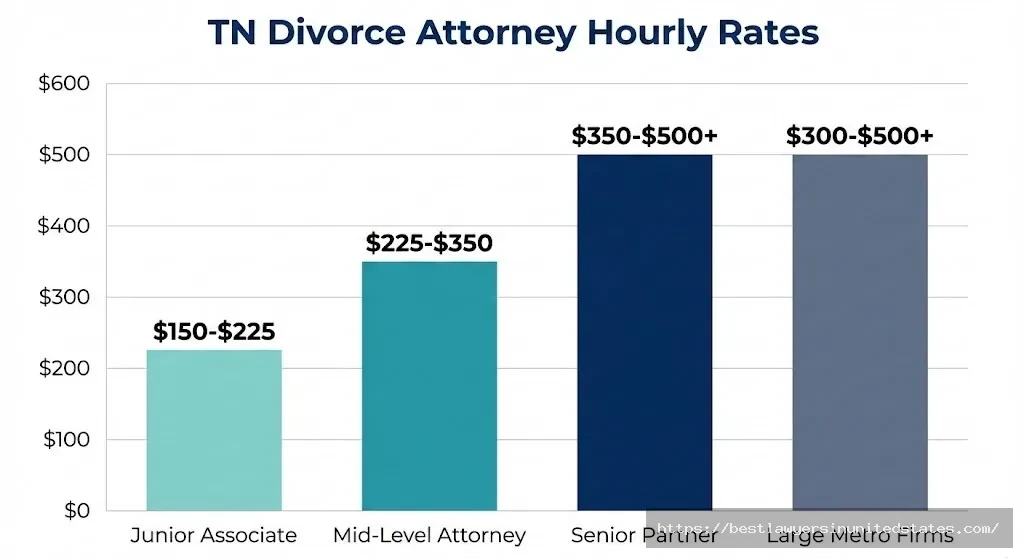
| Attorney Type | Hourly Rate |
|---|---|
| Junior associate (1–3 years) | $150 – $225 |
| Mid-level attorney (4–10 years) | $225 – $350 |
| Senior partner/specialist | $350 – $500+ |
| Large metro firms (Nashville, Memphis) | $300 – $500+ |
| Rural/smaller markets | $150 – $275 |
Flat Fees vs. Hourly Billing
Many Tennessee attorneys offer flat-fee arrangements for uncontested divorces:
- Simple uncontested (no children): $1,000 – $1,500
- Uncontested with children: $1,500 – $2,500
- Uncontested with property: $2,000 – $3,500
For contested cases, expect hourly billing with a retainer upfront—typically $2,500 to $10,000 depending on anticipated complexity.

How Retainer Fees Work
A retainer is an upfront deposit against future work. Your attorney bills against this amount hourly. When it runs low, you’ll be asked to replenish it.
Example: You pay a $5,000 retainer. Your attorney charges $275/hour. After 18 hours of work, your retainer is nearly depleted, and you’ll need to add more funds to continue.
For a deeper breakdown, see our complete guide to divorce lawyer costs.
Hidden Divorce Costs Most People Forget
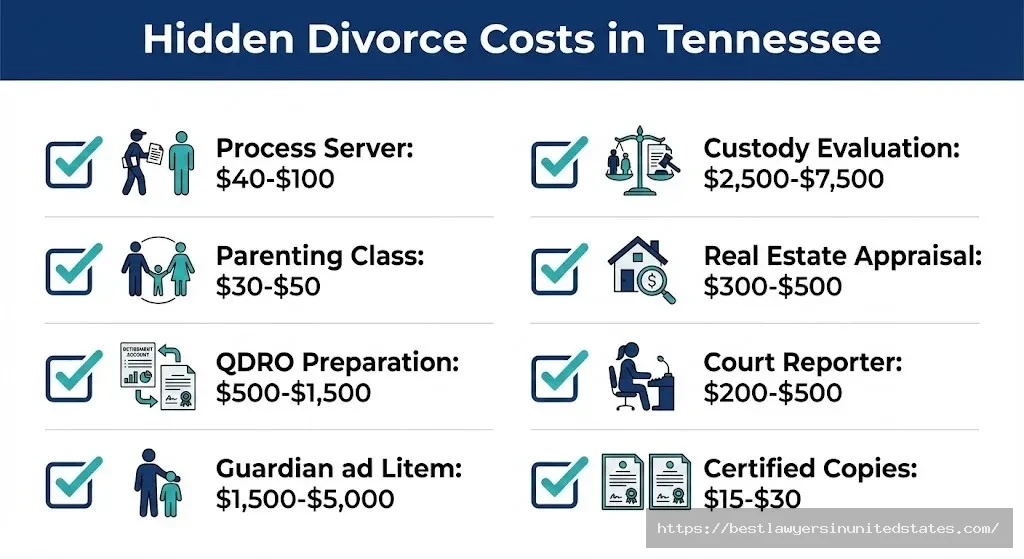
Beyond filing fees and attorney bills, these expenses catch many Tennessee couples off guard:
Court and Process Costs
- Process server or sheriff service: $40 – $100
- Certified mail (waiver of service): $10 – $25
- Certified copies of final decree: $15 – $30
- Court reporter fees (depositions): $200 – $500 per session
Required Classes and Evaluations
- Parenting education class: $30 – $50 per parent (mandatory with children)
- Guardian ad Litem fees: $1,500 – $5,000 (court-appointed child advocate)
- Custody evaluation: $2,500 – $7,500 (psychological evaluation of parents)
- Co-parenting app (OurFamilyWizard, etc.): $100 – $200/year
Financial Division Costs
- QDRO preparation (retirement accounts): $500 – $1,500
- Real estate appraisal: $300 – $500
- Business valuation: $3,000 – $10,000+
- Title transfer fees: $100 – $300
- Refinancing costs (if one spouse keeps home): $3,000 – $6,000
Post-Divorce Modifications
If circumstances change after your divorce, modifying custody or support costs additional attorney fees—typically $1,500 – $5,000 per modification.
How to Get a Cheap Divorce in Tennessee
Tight budget? Here are legitimate ways to reduce your divorce costs.
File Pro Se (Without an Attorney)
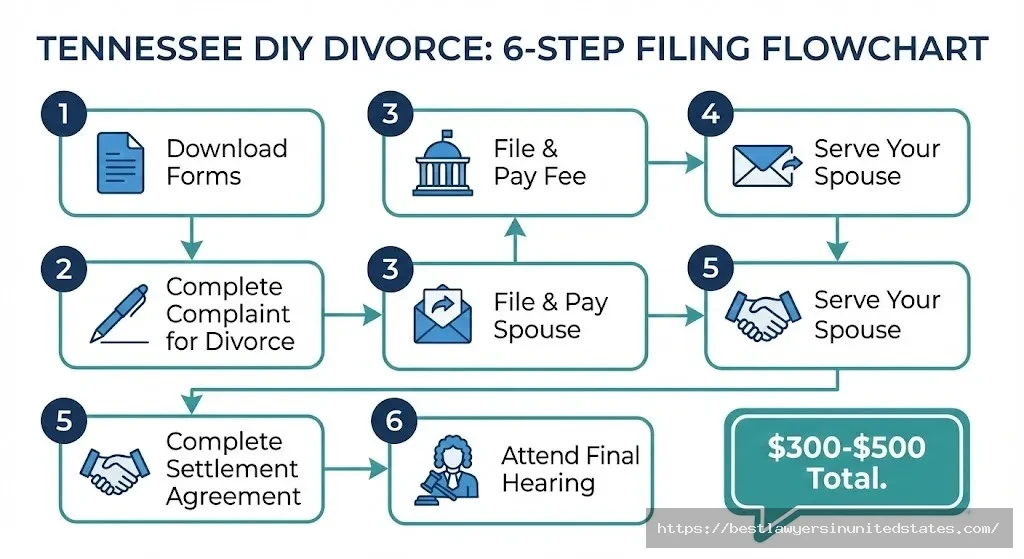
Tennessee allows you to represent yourself. For a truly simple, uncontested divorce with no children and minimal assets, DIY divorce can work.
You’ll need to:
- Download forms from your county clerk or Tennessee court website
- Complete the Complaint for Divorce
- File with the court and pay the filing fee
- Serve your spouse (or have them sign a waiver)
- Complete the Marital Dissolution Agreement
- Attend your final hearing
Best for: Couples married briefly, no children, no real estate, no retirement accounts, and complete agreement on all issues.
Use Online Divorce Services
Online divorce platforms prepare your paperwork for $150–$500. They’re essentially form-completion services—you still file everything yourself.
Limitations: These services can’t give legal advice. If your situation involves children, significant assets, or any complexity, the DIY forms may miss important protections.
Request a Fee Waiver
If your income is below federal poverty guidelines, you may qualify to have filing fees waived. Ask your county clerk for an “Affidavit of Indigency” or fee waiver application.
Try Mediation First
Divorce mediation costs $3,000–$7,000 total (split between spouses), which is far less than two attorneys fighting in court. A neutral mediator helps you negotiate agreements on custody, support, and property division.
Consider Collaborative Divorce
In collaborative divorce, both spouses hire attorneys committed to settling outside court. If negotiations fail, both attorneys must withdraw—creating strong incentive to reach agreement.
Legal Aid Resources in Tennessee
If you can’t afford any attorney, these organizations may help:
- Tennessee Legal Aid Society – Free legal help for qualifying low-income residents
- Tennessee Alliance for Legal Services – Statewide referral network
- Local bar association pro bono programs – Free consultations and limited representation
- Law school clinics – University of Tennessee, Vanderbilt, and Memphis law schools offer supervised student assistance
How Long Does a Divorce Take in Tennessee?
Time is money in divorce—the longer your case drags on, the more you’ll pay in attorney fees.
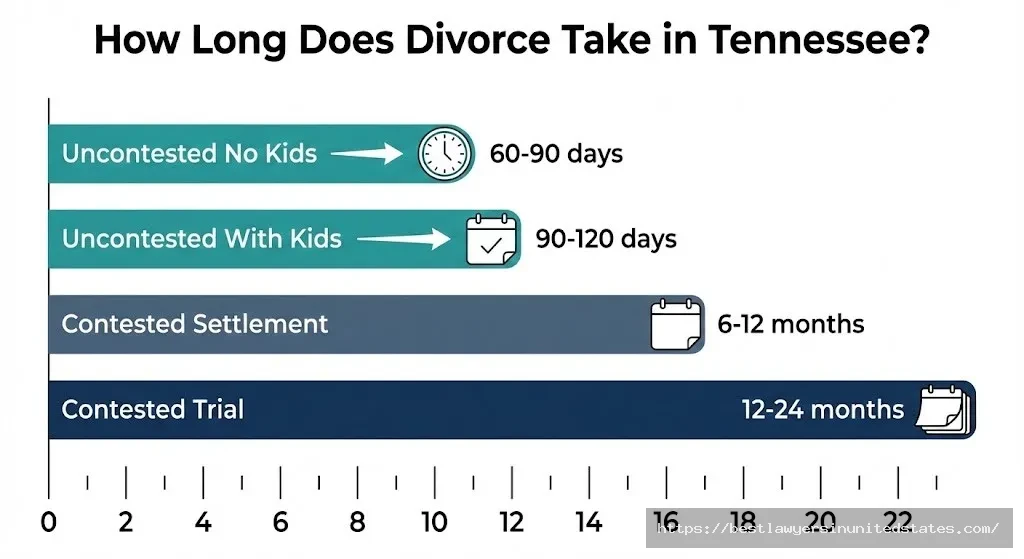
Tennessee Divorce Timeline
| Divorce Type | Typical Timeline |
|---|---|
| Uncontested (no children) | 60–90 days |
| Uncontested (with children) | 90–120 days |
| Contested (settles before trial) | 6–12 months |
| Contested (goes to trial) | 12–24 months |
Mandatory Waiting Periods
Tennessee imposes waiting periods before your divorce can be finalized:
- No minor children: 60 days from filing
- With minor children: 90 days from filing
These are minimums—contested cases take much longer due to discovery, negotiations, and court scheduling.
What Slows Down Divorce Cases
- Disagreements requiring multiple hearings
- Discovery disputes
- Difficulty scheduling depositions
- Crowded court calendars
- One spouse delaying tactics
Who Pays for Divorce in Tennessee?
Tennessee courts can order one spouse to pay the other’s attorney fees, but it’s not automatic.
When Courts Award Attorney Fees
Judges consider:
- Income disparity between spouses
- Which spouse has access to marital funds
- Whether one spouse acted in bad faith
- Ability to pay
In practice, the higher-earning spouse sometimes pays a portion of the other’s fees—especially when one spouse controlled all finances during the marriage.
Can Divorce Costs Be Split?
Yes. Many couples agree to split filing fees and mediator costs. Some even share one attorney for truly uncontested cases (though the attorney technically represents only one spouse).
Does Adultery Affect Divorce Costs in Tennessee?
Tennessee is a mixed state—you can file on no-fault grounds (irreconcilable differences) or fault grounds including adultery.
How adultery impacts costs:
- Proving adultery takes time and money – Hiring investigators, subpoenaing records, and presenting evidence at trial adds thousands to your legal bill
- Adultery can affect alimony – Courts may award more (or less) spousal support based on marital misconduct
- Property division impact is limited – Tennessee courts focus on equitable distribution regardless of fault
Most attorneys recommend filing no-fault unless adultery directly impacts custody concerns or you’re seeking enhanced alimony. Fighting over fault rarely justifies the cost.
How Do Children Affect Divorce Costs in Tennessee?
Adding children to the equation increases costs—even in uncontested cases.
Additional Requirements with Children
| Requirement | Cost Impact |
|---|---|
| Permanent Parenting Plan | Attorney time to draft |
| Child Support Worksheet | Calculation and documentation |
| Mandatory parenting class | $30–$50 per parent |
| 90-day waiting period (vs. 60) | Extended timeline |
When Custody Is Disputed
Contested custody cases are the most expensive divorces. You may face:
- Guardian ad Litem: $1,500–$5,000 for court-appointed child advocate
- Custody evaluation: $2,500–$7,500 for professional assessment
- Child psychologist: $150–$300/hour for testimony
- Multiple hearings: Each court appearance costs attorney fees
If at all possible, reach a custody agreement through mediation before litigating. The financial and emotional costs of custody battles far exceed other divorce disputes.
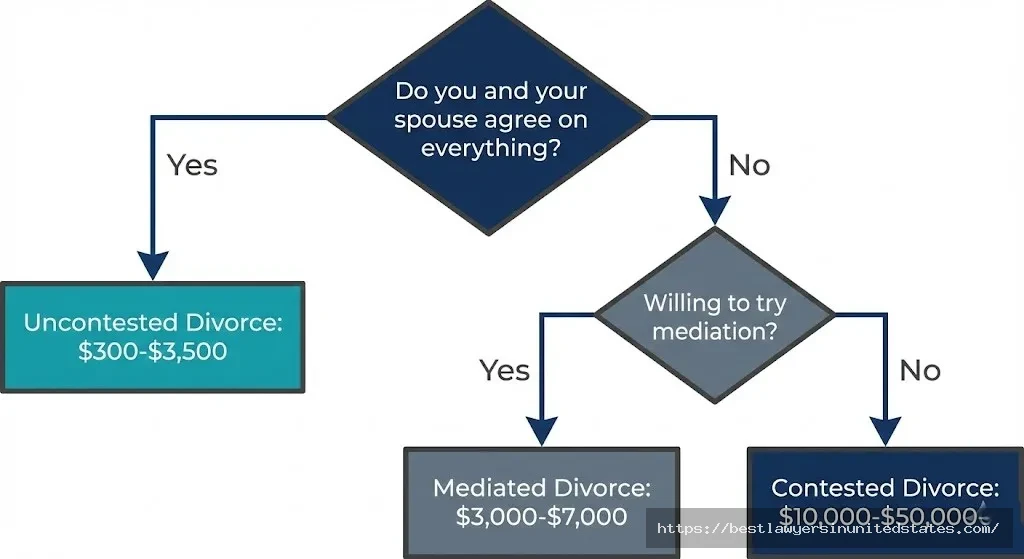
Tennessee Divorce Cost Comparison: Your Options
| Option | Best For | Cost | Attorney Involvement |
|---|---|---|---|
| DIY/Pro Se | Simple cases, complete agreement, no children | $300–$500 | None |
| Online Divorce | Simple cases, help with paperwork | $400–$700 | None |
| Limited Scope Attorney | Specific tasks only (document review, court appearance) | $500–$1,500 | Partial |
| Mediation | Couples willing to negotiate | $3,000–$7,000 | Optional |
| Collaborative Divorce | Motivated to settle, complex issues | $5,000–$15,000 | Full |
| Traditional Uncontested | Agreement reached, want attorney guidance | $1,500–$3,500 | Full |
| Traditional Contested | Significant disputes | $10,000–$50,000+ | Full |
FAQs About Divorce Costs in Tennessee
How much does it cost to file for divorce in Tennessee?
Filing fees range from $150 to $350 depending on your county. Davidson County (Nashville) charges around $298–$350, while smaller counties may charge $200–$250. Call your county clerk for the exact current fee.
Can I get a divorce in Tennessee without a lawyer?
Yes. Tennessee allows pro se (self-represented) divorce. This works best for simple, uncontested cases with no children and minimal assets. Download forms from your county court website, complete them accurately, and attend your hearing. However, mistakes can be costly—consider at least a consultation with an attorney.
How much is an uncontested divorce in Tennessee?
An uncontested divorce typically costs $300–$500 if you handle everything yourself, or $1,500–$3,500 if you hire an attorney for a flat fee. Add $30–$50 per person for mandatory parenting classes if you have children.
How long does a divorce take in Tennessee?
Minimum 60 days without children, 90 days with children. Uncontested cases finalize in 60–120 days total. Contested divorces take 6–24 months depending on complexity and whether you go to trial.
Who pays attorney fees in a Tennessee divorce?
Each spouse typically pays their own attorney. However, courts can order one spouse to contribute to the other’s fees based on income disparity, access to marital funds, and fairness. This is more common when one spouse earns significantly more or controlled finances during the marriage.
Is online divorce legitimate in Tennessee?
Online divorce services are legitimate for preparing paperwork, but they’re just form-completion platforms—not legal representation. They work for simple uncontested cases. For anything involving children, significant assets, or disputes, you need actual legal advice.
What’s the cheapest way to get divorced in Tennessee?
File pro se (without an attorney) for an uncontested divorce. Your only costs will be the filing fee ($150–$350), service of process ($0–$75 if your spouse signs a waiver), and certified copies of your decree ($15–$30). Total: under $500.
Does cheating affect divorce costs in Tennessee?
Proving adultery requires evidence—which means investigator fees, subpoenas, and potentially trial testimony. Unless adultery directly impacts custody or you’re pursuing enhanced alimony, most attorneys recommend filing no-fault to save money.
How does Tennessee divide property in divorce?
Tennessee follows “equitable distribution,” meaning property is divided fairly (not necessarily 50/50). Courts consider marriage length, each spouse’s contributions, earning capacity, and other factors. Complex property division requires more attorney time, increasing costs.
Can my spouse refuse to sign divorce papers in Tennessee?
Your spouse can’t stop the divorce, but they can make it contested by refusing to agree on terms. If they won’t respond at all, you can proceed with a default divorce after proper service. However, contested proceedings cost more and take longer.
Next Steps: Finding the Right Tennessee Divorce Attorney
Ready to move forward? Here’s how to find affordable, qualified help:
Get multiple consultations. Most Tennessee divorce attorneys offer free or low-cost initial consultations. Meet with 2–3 lawyers to compare approaches and fees.
Ask the right questions:
- Do you offer flat fees for uncontested cases?
- What’s your hourly rate and typical retainer?
- How many Tennessee divorces have you handled?
- What’s your approach to settlement vs. litigation?
- How do you communicate with clients?
Check credentials. Verify any attorney through the Tennessee Board of Professional Responsibility. Look for family law experience and positive client reviews.
Consider your options. Not every divorce needs a high-priced litigator. For uncontested cases, a newer attorney charging $175/hour may serve you just as well as a senior partner at $400/hour.
For more information on divorce costs nationwide, visit our complete guide to divorce costs or explore costs in neighboring states like Georgia and North Carolina.
Disclaimer: This article provides general information about divorce costs in Tennessee and should not be considered legal advice. Divorce laws and court fees change periodically. Consult with a licensed Tennessee family law attorney for advice specific to your situation.
